CN115073733A - A kind of ultra-low thermal expansion coefficient polyimide/nano phosphotungstic zirconium composite material and preparation method - Google Patents
A kind of ultra-low thermal expansion coefficient polyimide/nano phosphotungstic zirconium composite material and preparation method Download PDFInfo
- Publication number
- CN115073733A CN115073733A CN202210778321.9A CN202210778321A CN115073733A CN 115073733 A CN115073733 A CN 115073733A CN 202210778321 A CN202210778321 A CN 202210778321A CN 115073733 A CN115073733 A CN 115073733A
- Authority
- CN
- China
- Prior art keywords
- polyimide
- thermal expansion
- nano zirconium
- composite material
- zirconium phosphotungstate
- Prior art date
- Legal status (The legal status is an assumption and is not a legal conclusion. Google has not performed a legal analysis and makes no representation as to the accuracy of the status listed.)
- Granted
Links
Images


Classifications
-
- C—CHEMISTRY; METALLURGY
- C08—ORGANIC MACROMOLECULAR COMPOUNDS; THEIR PREPARATION OR CHEMICAL WORKING-UP; COMPOSITIONS BASED THEREON
- C08G—MACROMOLECULAR COMPOUNDS OBTAINED OTHERWISE THAN BY REACTIONS ONLY INVOLVING UNSATURATED CARBON-TO-CARBON BONDS
- C08G73/00—Macromolecular compounds obtained by reactions forming a linkage containing nitrogen with or without oxygen or carbon in the main chain of the macromolecule, not provided for in groups C08G12/00 - C08G71/00
- C08G73/06—Polycondensates having nitrogen-containing heterocyclic rings in the main chain of the macromolecule
- C08G73/10—Polyimides; Polyester-imides; Polyamide-imides; Polyamide acids or similar polyimide precursors
- C08G73/1085—Polyimides with diamino moieties or tetracarboxylic segments containing heterocyclic moieties
-
- C—CHEMISTRY; METALLURGY
- C08—ORGANIC MACROMOLECULAR COMPOUNDS; THEIR PREPARATION OR CHEMICAL WORKING-UP; COMPOSITIONS BASED THEREON
- C08G—MACROMOLECULAR COMPOUNDS OBTAINED OTHERWISE THAN BY REACTIONS ONLY INVOLVING UNSATURATED CARBON-TO-CARBON BONDS
- C08G73/00—Macromolecular compounds obtained by reactions forming a linkage containing nitrogen with or without oxygen or carbon in the main chain of the macromolecule, not provided for in groups C08G12/00 - C08G71/00
- C08G73/06—Polycondensates having nitrogen-containing heterocyclic rings in the main chain of the macromolecule
- C08G73/10—Polyimides; Polyester-imides; Polyamide-imides; Polyamide acids or similar polyimide precursors
- C08G73/1003—Preparatory processes
- C08G73/1007—Preparatory processes from tetracarboxylic acids or derivatives and diamines
-
- C—CHEMISTRY; METALLURGY
- C08—ORGANIC MACROMOLECULAR COMPOUNDS; THEIR PREPARATION OR CHEMICAL WORKING-UP; COMPOSITIONS BASED THEREON
- C08J—WORKING-UP; GENERAL PROCESSES OF COMPOUNDING; AFTER-TREATMENT NOT COVERED BY SUBCLASSES C08B, C08C, C08F, C08G or C08H
- C08J5/00—Manufacture of articles or shaped materials containing macromolecular substances
- C08J5/18—Manufacture of films or sheets
-
- C—CHEMISTRY; METALLURGY
- C08—ORGANIC MACROMOLECULAR COMPOUNDS; THEIR PREPARATION OR CHEMICAL WORKING-UP; COMPOSITIONS BASED THEREON
- C08K—Use of inorganic or non-macromolecular organic substances as compounding ingredients
- C08K3/00—Use of inorganic substances as compounding ingredients
- C08K3/32—Phosphorus-containing compounds
-
- C—CHEMISTRY; METALLURGY
- C08—ORGANIC MACROMOLECULAR COMPOUNDS; THEIR PREPARATION OR CHEMICAL WORKING-UP; COMPOSITIONS BASED THEREON
- C08J—WORKING-UP; GENERAL PROCESSES OF COMPOUNDING; AFTER-TREATMENT NOT COVERED BY SUBCLASSES C08B, C08C, C08F, C08G or C08H
- C08J2379/00—Characterised by the use of macromolecular compounds obtained by reactions forming in the main chain of the macromolecule a linkage containing nitrogen with or without oxygen, or carbon only, not provided for in groups C08J2361/00 - C08J2377/00
- C08J2379/04—Polycondensates having nitrogen-containing heterocyclic rings in the main chain; Polyhydrazides; Polyamide acids or similar polyimide precursors
- C08J2379/08—Polyimides; Polyester-imides; Polyamide-imides; Polyamide acids or similar polyimide precursors
-
- C—CHEMISTRY; METALLURGY
- C08—ORGANIC MACROMOLECULAR COMPOUNDS; THEIR PREPARATION OR CHEMICAL WORKING-UP; COMPOSITIONS BASED THEREON
- C08K—Use of inorganic or non-macromolecular organic substances as compounding ingredients
- C08K2201/00—Specific properties of additives
- C08K2201/011—Nanostructured additives
-
- Y—GENERAL TAGGING OF NEW TECHNOLOGICAL DEVELOPMENTS; GENERAL TAGGING OF CROSS-SECTIONAL TECHNOLOGIES SPANNING OVER SEVERAL SECTIONS OF THE IPC; TECHNICAL SUBJECTS COVERED BY FORMER USPC CROSS-REFERENCE ART COLLECTIONS [XRACs] AND DIGESTS
- Y02—TECHNOLOGIES OR APPLICATIONS FOR MITIGATION OR ADAPTATION AGAINST CLIMATE CHANGE
- Y02E—REDUCTION OF GREENHOUSE GAS [GHG] EMISSIONS, RELATED TO ENERGY GENERATION, TRANSMISSION OR DISTRIBUTION
- Y02E60/00—Enabling technologies; Technologies with a potential or indirect contribution to GHG emissions mitigation
- Y02E60/10—Energy storage using batteries
Landscapes
- Chemical & Material Sciences (AREA)
- Health & Medical Sciences (AREA)
- Chemical Kinetics & Catalysis (AREA)
- Medicinal Chemistry (AREA)
- Polymers & Plastics (AREA)
- Organic Chemistry (AREA)
- Engineering & Computer Science (AREA)
- Manufacturing & Machinery (AREA)
- Materials Engineering (AREA)
- Macromolecular Compounds Obtained By Forming Nitrogen-Containing Linkages In General (AREA)
Abstract
Description
技术领域technical field
本发明涉及高性能聚酰亚胺复合材料技术领域,更具体地,涉及一种超低热胀系数聚酰亚胺/纳米磷钨酸锆复合材料及制备方法。The invention relates to the technical field of high-performance polyimide composite materials, and more particularly, to an ultra-low thermal expansion coefficient polyimide/nano zirconium phosphotungstate composite material and a preparation method.
背景技术Background technique
聚酰亚胺具有优异的耐热性能、介电性能和良好的化学稳定性能,因此被广泛的应用在微电子和航天航空等领域。但是,现有的电子产品逐渐向高密度、小型化、高可靠发展,聚酰亚胺因具有较大的热膨胀系数(40-80*10-6/K),极大地限制了其应用范围。Polyimide has excellent heat resistance, dielectric properties and good chemical stability, so it is widely used in microelectronics, aerospace and other fields. However, the existing electronic products are gradually developing towards high density, miniaturization and high reliability. Polyimide has a large thermal expansion coefficient (40-80*10 -6 /K), which greatly limits its application range.
特别是在目前微电子的电路基材中,常常使用聚酰亚胺薄膜与基板复合封装电路,但是由于聚酰亚胺与基板的热膨胀系数存在很大的差异,如铜的热膨胀系数为16-18*10-6/K,二氧化硅的热膨胀系数为14*10-6/K,硅的热膨胀系数为3-6*10-6/K,聚酰亚胺的热膨胀系数与基板热膨胀系数的不匹配会导致聚酰亚胺与基板的分离、开裂,导致器件的失效。Especially in the current microelectronic circuit substrates, polyimide films and substrates are often used to encapsulate circuits. However, due to the great difference in thermal expansion coefficients between polyimide and substrates, for example, the thermal expansion coefficient of copper is 16- 18*10 -6 /K, the thermal expansion coefficient of silicon dioxide is 14*10 -6 /K, the thermal expansion coefficient of silicon is 3-6*10 -6 /K, the thermal expansion coefficient of polyimide and the thermal expansion coefficient of the substrate are different. Mismatches can lead to separation and cracking of the polyimide from the substrate, resulting in device failure.
为了降低聚酰亚胺的热膨胀系数,现有多采用石墨、蒙脱土等无机粒子进行改善,采用该方法降低聚酰亚胺的热膨胀系数有限。而在CN201510264639.5一种低热膨胀系数Zr2WP2O12/聚酰亚胺复合材料及其制备方法中公开该复合材料由基体材料聚酰亚胺与具有负热膨胀性能的Zr2WP2O12采用原位聚合法复合而成,产品复合材料具有低热膨胀系数、良好的热稳定性和介电性能,能够较好的满足于集成电路和芯片封装技术方面对硅基材料热匹配的要求。但是,在该专利中,其所述的聚酰亚胺基体是由4,4二氨基二苯醚单体ODA和均苯四甲酸酐PMDA聚合,该聚酰亚胺材料在与负热膨胀性能的Zr2WP2O12复合后,其热膨胀系数从45.67*10-6/K降低至30.81*10-6/K,该复合材料的热膨胀系数仍与金属铜、二氧化硅存在一定的差距,特别是与硅材料的热膨胀系数仍然相差较大,难以满足日益发展的电子产品需求。In order to reduce the thermal expansion coefficient of polyimide, inorganic particles such as graphite and montmorillonite are often used to improve the thermal expansion coefficient of polyimide, and this method is limited to reduce the thermal expansion coefficient of polyimide. And in CN201510264639.5 a low thermal expansion coefficient Zr 2 WP 2 O 12 /polyimide composite material and its preparation method, it is disclosed that the composite material is composed of a matrix material polyimide and Zr 2 WP 2 O having negative thermal expansion properties 12. It is compounded by in-situ polymerization. The product compound material has low thermal expansion coefficient, good thermal stability and dielectric properties, which can better meet the requirements for thermal matching of silicon-based materials in integrated circuit and chip packaging technology. However, in this patent, the polyimide matrix described in it is polymerized by 4,4 diaminodiphenyl ether monomer ODA and pyromellitic anhydride PMDA, and the polyimide material has a negative thermal expansion performance. After Zr 2 WP 2 O 12 is compounded, its thermal expansion coefficient is reduced from 45.67*10 -6 /K to 30.81*10 -6 /K, and the thermal expansion coefficient of this composite material still has a certain gap with metal copper and silica, especially It is still quite different from the thermal expansion coefficient of silicon materials, which is difficult to meet the growing demand for electronic products.
发明内容SUMMARY OF THE INVENTION
本发明要解决的技术问题是针对聚酰亚胺的热膨胀系数与基板热膨胀系数相差较大,容易引起聚酰亚胺与基板的分离、开裂,难以满足现在电子产品需求的不足,提供一种超低热胀系数聚酰亚胺/纳米磷钨酸锆复合材料。The technical problem to be solved by the present invention is that the thermal expansion coefficient of polyimide differs greatly from the thermal expansion coefficient of the substrate, which is easy to cause separation and cracking of the polyimide and the substrate, and it is difficult to meet the deficiencies of current electronic product requirements. Low thermal expansion coefficient polyimide/nano phosphotungstic zirconium composite material.
本发明要解决的另一技术问题是提供一种超低热胀系数聚酰亚胺/纳米磷钨酸锆复合材料的制备方法。Another technical problem to be solved by the present invention is to provide a method for preparing an ultra-low thermal expansion coefficient polyimide/nano zirconium phosphotungstate composite material.
本发明的目的通过以下技术方案予以实现:The object of the present invention is achieved through the following technical solutions:
一种超低热胀系数聚酰亚胺/纳米磷钨酸锆复合材料,所述超低热胀系数聚酰亚胺/纳米磷钨酸锆复合材料由聚酰亚胺和纳米磷钨酸锆制备而成。所述纳米磷钨酸锆的质量为聚酰亚胺材料质量的0.05~30%。An ultra-low coefficient of thermal expansion polyimide/nano zirconium phosphotungstate composite material, the ultra-low coefficient of thermal expansion polyimide/nano zirconium phosphotungstate composite material is prepared from polyimide and nano zirconium phosphotungstate. to make. The mass of the nano-zirconium phosphotungstate is 0.05-30% of the mass of the polyimide material.
所述聚酰亚胺分子结构式如下所示:The molecular structural formula of the polyimide is as follows:

其中,n为1~10000,Y的结构为:Among them, n is 1 to 10000, and the structure of Y is:

X选自以下结构通式中的一种或一种以上:X is selected from one or more of the following general structural formulas:

即,所述二胺单体为4,4'-((5,11-二氢吲哚[3,2-b]咔唑-3.9-二基)二(硫))二苯胺,所述芳香二酐为均苯四酸二酐、4,4'-氧双邻苯二甲酸酐、3,3',4,4'-二苯甲酮四甲酸二酐、3,3',4,4'-联苯四甲酸二酐、3,4,9,10-苝四羧酸二酐和1,4,5,8-萘四甲酸酐中的一种或多种。That is, the diamine monomer is 4,4'-((5,11-indoline[3,2-b]carbazole-3.9-diyl)bis(thio))diphenylamine, the aromatic The dianhydride is pyromellitic dianhydride, 4,4'-oxybisphthalic anhydride, 3,3',4,4'-benzophenone tetracarboxylic dianhydride, 3,3',4,4 One or more of '-biphenyltetracarboxylic dianhydride, 3,4,9,10-perylenetetracarboxylic dianhydride and 1,4,5,8-naphthalenetetracarboxylic anhydride.
进一步地,所述纳米磷钨酸锆的粒径为20~200nm。Further, the particle size of the nano-zirconium phosphotungstate is 20-200 nm.
进一步地,所述纳米磷钨酸锆的质量为聚酰亚胺材料质量的5~10%。Further, the mass of the nano-zirconium phosphotungstate is 5-10% of the mass of the polyimide material.
根据上述超低热胀系数聚酰亚胺/纳米磷钨酸锆复合材料的制备方法,制备步骤包括:According to the preparation method of the above-mentioned ultra-low thermal expansion coefficient polyimide/nano phosphotungstate composite material, the preparation steps include:
S1.在氩气气氛中,将纳米磷钨酸锆在强极性非质子有机溶剂中分散,将二胺与二酐按摩尔比为1:0.9~1.1加入到分散液中,在-10~40℃搅拌反应0.5~72h,得到均相、粘稠的聚酰胺酸复合胶液;S1. In an argon atmosphere, the nano-zirconium phosphotungstate is dispersed in a strong polar aprotic organic solvent, and the diamine and dianhydride are added to the dispersion in a molar ratio of 1:0.9 to 1.1. The reaction is stirred at 40°C for 0.5 to 72 hours to obtain a homogeneous and viscous polyamic acid composite glue;
S2.对含纳米磷钨酸锆的聚酰胺酸复合胶液中的聚酰胺酸进行脱水,得到聚酰亚胺/纳米磷钨酸锆复合材料。S2. Dehydrate the polyamic acid in the polyamic acid composite glue solution containing nano-zirconium phosphotungstate to obtain a polyimide/nano zirconium phosphotungstate composite material.
进一步地,S1中所述纳米磷钨酸锆采用超声分散0.5~10h。Further, the nano-zirconium phosphotungstate in S1 is dispersed by ultrasonic for 0.5-10 h.
进一步地,S1中所述强极性非质子有机溶剂为N-甲基吡咯烷酮、二甲基亚砜、二甲基砜、环丁砜、1,4-二氧六环、N,N-二甲基乙酰胺、N,N-二甲基甲酰胺、间甲酚、四氢呋喃中的一种或多种。Further, the strongly polar aprotic organic solvent described in S1 is N-methylpyrrolidone, dimethyl sulfoxide, dimethyl sulfone, sulfolane, 1,4-dioxane, N,N-dimethyl sulfone One or more of acetamide, N,N-dimethylformamide, m-cresol, and tetrahydrofuran.
进一步地,S1中所述二胺与二酐总质量为胶液质量的1~40%。Further, the total mass of the diamine and dianhydride in S1 is 1-40% of the mass of the glue solution.
进一步地,S2中所述聚酰胺酸采用热酰亚胺化或化学酰亚胺化进行脱水。Further, the polyamic acid in S2 is dehydrated by thermal imidization or chemical imidization.
进一步地,所述热酰亚胺化的步骤包括:将涂覆有聚酰胺酸胶液刮涂在基板上,再将玻璃板置于真空烘箱中,抽真空,升温进行热酰亚胺化,冷却后即得超低热胀系数聚酰亚胺/纳米磷钨酸锆复合材料。Further, the step of thermal imidization includes: scraping the glue solution coated with polyamic acid on the substrate, then placing the glass plate in a vacuum oven, vacuuming, heating up to perform thermal imidization, After cooling, the ultra-low thermal expansion coefficient polyimide/nano phosphotungstic zirconium composite material is obtained.
进一步地,所述热酰亚胺化的升温程序为:室温升温至100℃后恒温0.8~3小时,从100℃升温至200℃后恒温0.8~2小时,从200℃升温至300℃恒温0.8~2小时,从300℃升温至350℃~500℃后恒温0.5~2小时。Further, the heating procedure of the thermal imidization is as follows: the temperature is raised from room temperature to 100°C, and then the temperature is kept constant for 0.8 to 3 hours; For ~2 hours, the temperature is raised from 300°C to 350°C to 500°C and then kept at a constant temperature for 0.5 to 2 hours.
进一步地,所述化学酰亚胺化法的步骤包括:在聚酰胺酸胶液中加入脱水剂,在室温下搅拌0.5~1h后将胶液刮涂到基板上,再放入烘箱中加热除去溶剂并完成亚胺化。冷却后可从玻璃板上剥离即得到聚酰亚胺。Further, the steps of the chemical imidization method include: adding a dehydrating agent to the polyamic acid glue solution, stirring at room temperature for 0.5 to 1 hour, and then scraping the glue solution onto the substrate, and then placing it in an oven to heat and remove solvent and complete the imidization. After cooling, the polyimide can be obtained by peeling off the glass plate.
进一步地,所述脱水剂为吡啶/乙酸酐、或三乙胺/乙酸酐、或乙酸钠/乙酸酐。Further, the dehydrating agent is pyridine/acetic anhydride, or triethylamine/acetic anhydride, or sodium acetate/acetic anhydride.
进一步地,所述4,4'-((5,11-二氢吲哚[3,2-b]咔唑-3.9-二基)二(硫))二苯胺的制备步骤包括:Further, the preparation steps of the 4,4'-((5,11-indoline[3,2-b]carbazole-3.9-diyl)di(thio))diphenylamine include:
Y1.利用3,9-二溴-5,11-二氢吲哚[3,2-b]咔唑与4-硝基苯硫酚通过Ullmann偶联反应得到二硝基单体。Y1. Ullmann coupling reaction of 3,9-dibromo-5,11-indoline[3,2-b]carbazole and 4-nitrothiophenol is used to obtain dinitro monomer.
Y2.将步骤Y1中的二硝基单体还原成二胺,获得4,4'-((5,11-二氢吲哚[3,2-b]咔唑-3.9-二基)二(硫))二苯胺。Y2. The dinitro monomer in step Y1 is reduced to diamine to obtain 4,4'-((5,11-indoline[3,2-b]carbazole-3.9-diyl)bis( Sulfur)) diphenylamine.
上述超低热胀系数聚酰亚胺/纳米磷钨酸锆复合材料可应用于航天航空和微电子行业。The above-mentioned ultra-low thermal expansion coefficient polyimide/nano zirconium phosphotungstate composite material can be applied to aerospace and microelectronics industries.
与现有技术相比,有益效果是:Compared with the prior art, the beneficial effects are:
本发明以4,4'-((5,11-二氢吲哚[3,2-b]咔唑-3.9-二基)二(硫))二苯胺和芳香二酐为聚酰亚胺基体原料,在通过掺杂负热膨胀材料磷钨酸锆纳米颗粒,降低聚酰亚胺的热膨胀系数,从而获得具有超低热膨胀系数的聚酰亚胺薄膜。本发明的聚酰亚胺分子结构中含有高平面性和较强的刚性的吲哚并咔唑结构,且吲哚并咔唑结构含有仲胺,易形成较强的分子内氢键,有利于降低聚酰亚胺的热膨胀系数和提高其热稳定性。同时聚酰亚胺结构中含有硫醚基团,利用硫原子上的孤对电子与金属有良好的亲和性,改善其与金属铜的粘结性能,避免聚酰亚胺因粘接能力差或热膨胀系数差距大引起的分层、脱落等问题。The present invention uses 4,4'-((5,11-indoline[3,2-b]carbazole-3.9-diyl)di(thio))diphenylamine and aromatic dianhydride as polyimide matrix The raw material is doped with zirconium phosphotungstate nanoparticles, a negative thermal expansion material, to reduce the thermal expansion coefficient of the polyimide, thereby obtaining a polyimide film with an ultra-low thermal expansion coefficient. The molecular structure of the polyimide of the present invention contains an indolocarbazole structure with high planarity and strong rigidity, and the indolocarbazole structure contains a secondary amine, which is easy to form a strong intramolecular hydrogen bond, which is beneficial to Reduce the thermal expansion coefficient of polyimide and improve its thermal stability. At the same time, the polyimide structure contains thioether groups, which use the lone pair electrons on the sulfur atom to have good affinity with metals, improve its bonding performance with metal copper, and avoid polyimide due to poor bonding ability. Or problems such as delamination and shedding caused by a large difference in thermal expansion coefficient.
附图说明Description of drawings
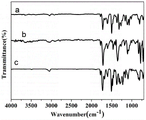
图1是实施例2~4所得聚酰亚胺的红外光谱图,其中:Fig. 1 is the infrared spectrogram of the obtained polyimide of embodiment 2~4, wherein:
a对应实施例2(PI-1);a corresponds to Example 2 (PI-1);
b对应实施例3(PI-2);b corresponds to Example 3 (PI-2);
c对应实施例4(PI-3);c corresponds to Example 4 (PI-3);
图2是热机械分析图;Figure 2 is a thermomechanical analysis diagram;
图3是热重曲线图。Figure 3 is a thermogravimetric graph.
具体实施方式Detailed ways
下面结合实施例进一步解释和阐明,但具体实施例并不对本发明有任何形式的限定。若未特别指明,实施例中所用的方法和设备为本领常规方法和设备,所用原料均为常规市售原料,The following is further explained and illustrated in conjunction with the examples, but the specific examples do not limit the present invention in any form. Unless otherwise specified, the methods and equipment used in the examples are conventional methods and equipment in this area, and the raw materials used are conventional commercially available raw materials,
实施例1Example 1
本实施例提供实施例2-实施例4中合成聚酰亚胺的二胺单体4,4'-((5,11-二氢吲哚[3,2-b]咔唑-3.9-二基)二(硫))二苯胺(4,4'-DCBSDA)的制备方法,制备步骤包括:This example provides the diamine monomer 4,4'-((5,11-indoline[3,2-b]carbazole-3.9-diamine for the synthesis of polyimide in Example 2-Example 4) base) two (sulfur)) the preparation method of diphenylamine (4,4'-DCBSDA), the preparation step comprises:
Y1.3,9-bis((4-nitrophenyl)thio)-5,11-dihydroindolo[3,2-b]carbazole的中间体合成:Intermediate synthesis of Y1.3,9-bis((4-nitrophenyl)thio)-5,11-dihydroindolo[3,2-b]carbazole:
将0.01mol的3,9-二溴-5,11-二氢吲哚[3,2-b]咔唑、0.022mol的4-硝基苯硫酚、20mol%CuI、40mol%L-脯氨酸和48mmol K3PO4,添加到约100ml溶剂(60ml水和40ml EtOH)中,80℃回流8小时。将反应液冷却至室温,过滤,用乙酸乙酯萃取滤液,减压至-101.325kPa蒸去溶剂,产物以乙酸乙酯:石油醚=1:5(体积比)为流动相、硅胶为固定相作柱色谱提纯,收集产物并旋干,在80℃真空中干燥24h,得到产物。该中间体结构如下:0.01mol of 3,9-dibromo-5,11-indoline[3,2-b]carbazole, 0.022mol of 4-nitrothiophenol, 20mol% CuI, 40mol% L-proline Acid and 48 mmol K 3 PO 4 were added to about 100 ml solvent (60 ml water and 40 ml EtOH) and refluxed at 80°C for 8 hours. The reaction solution was cooled to room temperature, filtered, the filtrate was extracted with ethyl acetate, the solvent was evaporated under reduced pressure to -101.325kPa, and the product used ethyl acetate: petroleum ether=1:5 (volume ratio) as the mobile phase and silica gel as the stationary phase Purify by column chromatography, collect the product, spin dry, and dry in vacuo at 80 °C for 24 h to obtain the product. The intermediate structure is as follows:

Y2.4,4'-((5,11-二氢吲哚[3,2-b]咔唑-3.9-二基)二(硫))二苯胺的合成:Synthesis of Y2.4,4'-((5,11-indoline[3,2-b]carbazole-3.9-diyl)bis(thio))diphenylamine:
将0.01mol3,9-bis((4-nitrophenyl)thio)-5,11-dihydroindolo[3,2-b]carbazole加入到三口瓶中,加入450mL无水乙醇,磁力搅拌并通氩气,油浴加热至80℃后,加入10%wt的钯碳0.1g,并加入10mL水合肼,回流反应24h后,将反应液抽滤,将滤液冷却结晶,再次抽滤所得滤饼80℃真空干燥24h,得到目标产物。本步骤得到的含吲哚并咔唑结构和硫醚键的二胺结构如下所示:Add 0.01mol of 3,9-bis((4-nitrophenyl)thio)-5,11-dihydroindolo[3,2-b]carbazole into a three-necked flask, add 450mL of absolute ethanol, stir magnetically and pass argon gas, oil bath After heating to 80 °C, 0.1 g of 10% wt palladium carbon was added, and 10 mL of hydrazine hydrate was added. After refluxing for 24 h, the reaction solution was suction filtered, the filtrate was cooled and crystallized, and the filter cake obtained by suction filtration was vacuum-dried at 80 °C for 24 h. obtain the target product. The diamine structure containing indolocarbazole structure and thioether bond obtained in this step is shown below:

实施例2Example 2
本实施例以实施例1中合成的二胺单体为原料,采用100nm左右的磷钨酸锆为原料,制备超低热胀系数聚酰亚胺/磷钨酸锆复合材料,步骤包括:In this embodiment, the diamine monomer synthesized in Example 1 is used as the raw material, and the zirconium phosphotungstate with a thickness of about 100 nm is used as the raw material to prepare an ultra-low thermal expansion coefficient polyimide/zirconium phosphotungstate composite material. The steps include:
室温下,在氩气氛围下,将0.3794g磷钨酸锆纳米颗粒在58.2ml N,N-二甲基甲酰胺中超声2h,再将0.01mol的4,4'-((5,11-二氢吲哚[3,2-b]咔唑-3.9-二基)二(硫))二苯胺(4,4'-DCBSDA)和60.7mlN,N-二甲基甲酰胺加入至100ml的三口烧瓶中,通入氩气,搅拌,完全溶解后,加入0.01mol的1,2,4,5-Benzenetetracarboxylic anhydride(1,2,4,5-均苯四甲酸二酐,PMDA),继续搅拌,反应6h,获得均相透明粘稠的聚酰胺酸/磷钨酸锆复合溶液。再将聚酰胺酸/磷钨酸锆复合溶液除气泡后刮涂在玻璃板上,再将玻璃板置于真空烘箱中,抽真空,升温程序为:室温升温至100℃后恒温1h,100℃升温至200℃后恒温1h,200℃升温至300℃恒温1h,300℃升温至400℃后恒温1h,冷却后可取出聚酰亚胺/磷钨酸锆复合膜。At room temperature, under an argon atmosphere, 0.3794 g of zirconium phosphotungstate nanoparticles were sonicated in 58.2 ml of N,N-dimethylformamide for 2 h, and then 0.01 mol of 4,4'-((5,11- Indoline[3,2-b]carbazole-3.9-diyl)bis(thio))diphenylamine (4,4'-DCBSDA) and 60.7ml of N,N-dimethylformamide were added to 100ml of three Into the flask, pass argon gas, stir, after complete dissolution, add 0.01mol of 1,2,4,5-Benzenetetracarboxylic anhydride (1,2,4,5-pyromellitic dianhydride, PMDA), continue to stir, After 6 hours of reaction, a homogeneous, transparent and viscous polyamic acid/zirconium phosphotungstate composite solution was obtained. Then, the polyamic acid/zirconium phosphotungstate composite solution is scraped and coated on a glass plate after removing air bubbles, and then the glass plate is placed in a vacuum oven and evacuated. The temperature was raised to 200 °C and then kept at a constant temperature for 1 h, at 200 °C to 300 °C for 1 h, at 300 °C to 400 °C and then at a constant temperature for 1 h. After cooling, the polyimide/zirconium phosphotungstate composite film can be taken out.
其中,本实施例中聚酰亚胺基材(PI-1)的的分子结构式如下:Wherein, the molecular structural formula of the polyimide substrate (PI-1) in this embodiment is as follows:

实施例3Example 3
本实施例以实施例1中合成的二胺单体为原料,采用100nm左右的磷钨酸锆为原料,制备超低热胀系数聚酰亚胺/磷钨酸锆复合材料,步骤包括:In this embodiment, the diamine monomer synthesized in Example 1 is used as the raw material, and the zirconium phosphotungstate with a thickness of about 100 nm is used as the raw material to prepare an ultra-low thermal expansion coefficient polyimide/zirconium phosphotungstate composite material. The steps include:
室温下,在氩气氛围下,将0.4341g磷钨酸锆纳米颗粒在62.4ml N,N-二甲基甲酰胺中超声2h,再将0.01mol的4,4'-DCBSDA和58.4mlN,N-二甲基甲酰胺加入至三口烧瓶中,通入氩气,搅拌,完全溶解后,加入0.01mol的3,3',4,4'-Benzophenonetetracarboxylicdianhydride(3,3',4,4'-二苯甲酮四甲酸二酐,BTDA),继续搅拌,反应6h,获得均相透明粘稠的聚酰胺酸/磷钨酸锆复合溶液。再将聚酰胺酸/磷钨酸锆复合溶液除气泡后刮涂在玻璃板上,再将玻璃板置于真空烘箱中,抽真空,升温程序为:室温升温至100℃后恒温1h,100℃升温至200℃后恒温1h,200℃升温至300℃恒温1h,300℃升温至400℃后恒温1h,冷却后可取出聚酰亚胺/磷钨酸锆复合膜。At room temperature, under an argon atmosphere, 0.4341 g of zirconium phosphotungstate nanoparticles were sonicated in 62.4 ml of N,N-dimethylformamide for 2 h, and then 0.01 mol of 4,4'-DCBSDA and 58.4 ml of N,N - Dimethylformamide was added to a three-necked flask, argon was introduced, stirred, and after it was completely dissolved, 0.01 mol of 3,3',4,4'-Benzophenonetetracarboxylicdianhydride(3,3',4,4'-di benzophenone tetracarboxylic dianhydride, BTDA), continue to stir, and react for 6 h to obtain a homogeneous transparent and viscous polyamic acid/zirconium phosphotungstate composite solution. Then, the polyamic acid/zirconium phosphotungstate composite solution is scraped and coated on a glass plate after removing air bubbles, and then the glass plate is placed in a vacuum oven and evacuated. The temperature was raised to 200 °C and then kept at a constant temperature for 1 h, at 200 °C to 300 °C for 1 h, at 300 °C to 400 °C and then at a constant temperature for 1 h. After cooling, the polyimide/zirconium phosphotungstate composite film can be taken out.
其中,本实施例中聚酰亚胺基材(PI-2)的分子结构式如下:Wherein, the molecular structural formula of the polyimide substrate (PI-2) in this embodiment is as follows:

实施例4Example 4
本实施例以实施例1中合成的二胺单体为原料,采用100nm左右的磷钨酸锆为原料,制备超低热胀系数聚酰亚胺/磷钨酸锆复合材料,步骤包括:In this embodiment, the diamine monomer synthesized in Example 1 is used as the raw material, and the zirconium phosphotungstate with a thickness of about 100 nm is used as the raw material to prepare an ultra-low thermal expansion coefficient polyimide/zirconium phosphotungstate composite material. The steps include:
室温下,在氩气氛围下,将0.4194g磷钨酸锆纳米颗粒在60.3ml N,N-二甲基甲酰胺中超声2h,再将0.01mol的4,4'-DCBSDA和67.7ml的N,N-二甲基甲酰胺加入至三口烧瓶中,通入氩气,搅拌,完全溶解后,加入0.01mol的3,3’,4,4’-Biphenyl tetracarboxylicdiandhydride(3,3',4,4'-联苯四甲酸二酐,BPDA),继续搅拌,反应6h,获得均相透明粘稠的聚酰胺酸/磷钨酸锆复合溶液。在所得聚酰胺酸/磷钨酸锆复合溶液中加入5mL乙酸酐,继续搅拌,再缓慢加入2.5mL三乙胺,并升温至70℃,继续搅拌6h后溶液刮涂在洁净玻璃板上,再将玻璃板置于真空烘箱中,抽真空,100℃干燥12h,冷却后可取出聚酰亚胺/磷钨酸锆复合膜。At room temperature, under an argon atmosphere, 0.4194 g of zirconium phosphotungstate nanoparticles were sonicated in 60.3 ml of N,N-dimethylformamide for 2 h, and then 0.01 mol of 4,4'-DCBSDA and 67.7 ml of N ,N-dimethylformamide was added to the three-necked flask, argon was introduced, stirred, and after it was completely dissolved, 0.01mol of 3,3',4,4'-Biphenyl tetracarboxylicdiandhydride(3,3',4,4 '-biphenyltetracarboxylic dianhydride, BPDA), continue to stir, and react for 6h to obtain a homogeneous transparent and viscous polyamic acid/zirconium phosphotungstate composite solution. Add 5 mL of acetic anhydride to the obtained polyamic acid/zirconium phosphotungstate composite solution, continue to stir, slowly add 2.5 mL of triethylamine, and heat up to 70°C, continue stirring for 6 hours, and then scrape the solution onto a clean glass plate, and then add 2.5 mL of triethylamine slowly. The glass plate was placed in a vacuum oven, evacuated, dried at 100 °C for 12 h, and the polyimide/zirconium phosphotungstate composite film could be taken out after cooling.
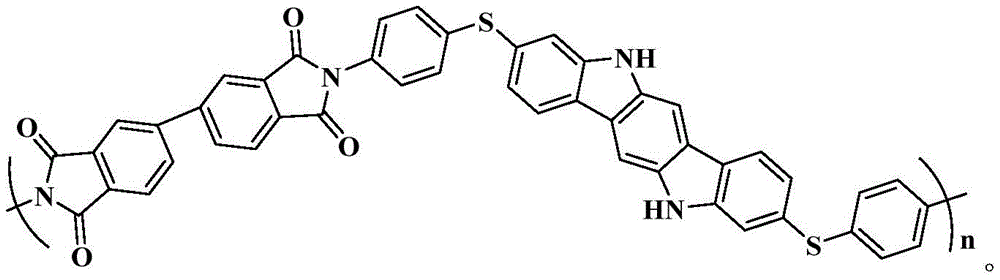
其中,本实施例中聚酰亚胺基材(PI-3)的分子结构式如下:Wherein, the molecular structural formula of the polyimide substrate (PI-3) in this embodiment is as follows:
对比例1Comparative Example 1
本对比例的基本工艺步骤与实施例2相同,其区别在于本对比例中未添加磷钨酸锆纳米颗粒。The basic process steps of this comparative example are the same as those of Example 2, and the difference is that zirconium phosphotungstate nanoparticles are not added in this comparative example.
对比例2Comparative Example 2
室温下,在氩气氛围下,将0.01mol的4,4'-二胺基二苯醚(ODA)和0.01mol的1,2,4,5-Benzenetetracarboxylic anhydride(1,2,4,5-均苯四甲酸二酐,PMDA)加入至N,N-二甲基甲酰胺中,继续搅拌反应6h,获得均相透明粘稠的聚酰胺酸溶液。再将聚酰胺酸溶液除气泡后刮涂在玻璃板上,再将玻璃板置于真空烘箱中,抽真空,升温程序为:室温升温至100℃后恒温1h,100℃升温至200℃后恒温1h,200℃升温至300℃恒温1h,300℃升温至400℃后恒温1h,冷却后可取出聚酰亚胺膜(PMDA-ODA)。At room temperature, under an argon atmosphere, 0.01 mol of 4,4'-diaminodiphenyl ether (ODA) and 0.01 mol of 1,2,4,5-Benzenetetracarboxylic anhydride (1,2,4,5- Pyromellitic dianhydride, PMDA) was added to N,N-dimethylformamide, and the reaction was continued to stir for 6 h to obtain a homogeneous, transparent and viscous polyamic acid solution. Then remove the bubbles of the polyamic acid solution and scrape it on the glass plate, then place the glass plate in a vacuum oven, and vacuumize. 1h, 200 ℃ to 300 ℃ constant temperature for 1 h, 300 ℃ to 400 ℃ and then constant temperature for 1 h, after cooling, the polyimide film (PMDA-ODA) can be taken out.
对比例3Comparative Example 3
本对比例以201510264639.5一种低热膨胀系数Zr2WP2O12/聚酰亚胺复合材料及其制备方法所记载的方案制备的Zr2WP2O12/聚酰亚胺复合材料性能作为比较。In this comparative example, the performance of Zr 2 WP 2 O 12 /polyimide composite material prepared by the scheme described in 201510264639.5, a low thermal expansion coefficient Zr2WP2O12/polyimide composite material and its preparation method, is used as a comparison.
1.红外光谱检测1. Infrared spectrum detection
从图1中的红外光谱图中可以看到,1723cm-1和1778cm-1特征峰分别为酰亚胺环中C=O键的对称和不对称伸缩振动,1600cm-1处出现明显的N-H的弯曲振动吸收峰,1370cm-1处出现明显的C-N键伸缩振动特征吸收峰,而在3500~3300cm-1之间没有出现-NH2的特征吸收峰,,这些都说明实施例1~3都已成功合成。It can be seen from the infrared spectrum in Figure 1 that the characteristic peaks at 1723 cm -1 and 1778 cm -1 are the symmetric and asymmetric stretching vibrations of the C=O bond in the imide ring, respectively, and there is an obvious NH at 1600 cm -1 . The bending vibration absorption peak, the obvious CN bond stretching vibration characteristic absorption peak appears at 1370cm- 1 , and the characteristic absorption peak of -NH2 does not appear between 3500 and 3300cm -1 . successfully synthesized.
2.性能检测2. Performance testing
分别检测实施例2~4、对比例1和对比例2中的聚酰亚胺膜的热膨胀系数以及热失重数据。The thermal expansion coefficient and thermal weight loss data of the polyimide films in Examples 2 to 4, Comparative Example 1 and Comparative Example 2 were respectively detected.
其中,聚酰亚胺与挠性覆铜板复合的步骤包括:将实施例和对比例中聚酰胺酸溶液除气泡后刮涂在铜板上,再将铜板置于真空烘箱中,抽真空,升温程序为:室温升温至100℃后恒温1h→100℃升温至200℃后恒温1h→200℃升温至300℃恒温1h~300℃升温至400℃后恒温1h,冷却后得到聚酰亚胺复合挠性覆铜板。Wherein, the steps of compounding the polyimide and the flexible copper clad laminate include: removing the bubbles of the polyamic acid solution in the examples and the comparative examples, scraping and coating the copper plate on the copper plate, then placing the copper plate in a vacuum oven, vacuuming, and heating the plate It is as follows: the room temperature is heated to 100°C, then kept constant for 1h → 100°C, heated to 200°C, then kept constant for 1h → 200°C, heated to 300°C, kept constant for 1h ~ 300°C, heated to 400°C, kept constant for 1h, and cooled to obtain a polyimide composite flexible copper clad laminate.
以PMDA-ODA型聚酰亚胺为对照组,分别检测实施例2~4中的聚酰亚胺/纳米磷钨酸锆膜的热膨胀系数以及热失重数据,结果如图2和图3所示,结果如表1所示。Taking the PMDA-ODA type polyimide as the control group, the thermal expansion coefficient and thermal weight loss data of the polyimide/nano phosphotungstic acid films in Examples 2 to 4 were detected respectively. The results are shown in Figure 2 and Figure 3 , the results are shown in Table 1.
表1实施例和对比例中聚酰亚胺薄膜的性能对比Performance comparison of polyimide films in the examples and comparative examples of Table 1
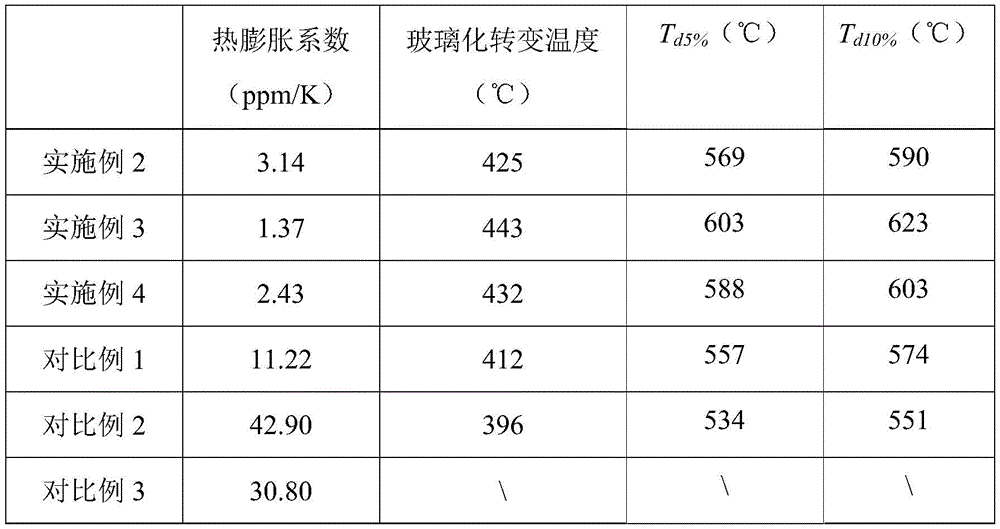
综上所述,本发明制备的聚酰亚胺/磷钨酸锆材料的热膨胀系数大大降低,极大的减小了与基板热膨胀系数的差距,能够满足耐锡焊浴温度(350℃)的要求。To sum up, the thermal expansion coefficient of the polyimide/zirconium phosphotungstate material prepared by the present invention is greatly reduced, the gap with the thermal expansion coefficient of the substrate is greatly reduced, and the thermal expansion coefficient of the tin-resistant soldering bath temperature (350°C) can be satisfied. Require.
显然,本发明的上述实施例仅仅是为清楚地说明本发明所作的举例,而并非是对本发明的实施方式的限定。对于所属领域的普通技术人员来说,在上述说明的基础上还可以做出其它不同形式的变化或变动。这里无需也无法对所有的实施方式予以穷举。凡在本发明的精神和原则之内所作的任何修改、等同替换和改进等,均应包含在本发明权利要求的保护范围之内。Obviously, the above-mentioned embodiments of the present invention are only examples for clearly illustrating the present invention, and are not intended to limit the embodiments of the present invention. For those of ordinary skill in the art, changes or modifications in other different forms can also be made on the basis of the above description. There is no need and cannot be exhaustive of all implementations here. Any modifications, equivalent replacements and improvements made within the spirit and principle of the present invention shall be included within the protection scope of the claims of the present invention.
Claims (10)
Priority Applications (1)
| Application Number | Priority Date | Filing Date | Title |
|---|---|---|---|
| CN202210778321.9A CN115073733B (en) | 2022-06-29 | 2022-06-29 | Polyimide/nano zirconium phosphotungstate composite material with ultralow thermal expansion coefficient and preparation method thereof |
Applications Claiming Priority (1)
| Application Number | Priority Date | Filing Date | Title |
|---|---|---|---|
| CN202210778321.9A CN115073733B (en) | 2022-06-29 | 2022-06-29 | Polyimide/nano zirconium phosphotungstate composite material with ultralow thermal expansion coefficient and preparation method thereof |
Publications (2)
| Publication Number | Publication Date |
|---|---|
| CN115073733A true CN115073733A (en) | 2022-09-20 |
| CN115073733B CN115073733B (en) | 2023-10-20 |
Family
ID=83257304
Family Applications (1)
| Application Number | Title | Priority Date | Filing Date |
|---|---|---|---|
| CN202210778321.9A Active CN115073733B (en) | 2022-06-29 | 2022-06-29 | Polyimide/nano zirconium phosphotungstate composite material with ultralow thermal expansion coefficient and preparation method thereof |
Country Status (1)
| Country | Link |
|---|---|
| CN (1) | CN115073733B (en) |
Cited By (1)
| Publication number | Priority date | Publication date | Assignee | Title |
|---|---|---|---|---|
| CN118956017A (en) * | 2024-07-02 | 2024-11-15 | 长虹美菱股份有限公司 | A high-performance water pipe plug for freezer and preparation method thereof |
Citations (3)
| Publication number | Priority date | Publication date | Assignee | Title |
|---|---|---|---|---|
| US3609123A (en) * | 1968-03-21 | 1971-09-28 | Inst Francais Du Petrole | New aromatic polyimides, their manufacture and uses |
| CN104974523A (en) * | 2015-05-21 | 2015-10-14 | 郑州大学 | A low thermal expansion coefficient Zr2WP2O12/polyimide composite material and its preparation method |
| CN105482116A (en) * | 2016-01-12 | 2016-04-13 | 湖南工业大学 | Polyimide nanometer composite with carbazole structure and preparation method and application of polyimide nanometer composite |
-
2022
- 2022-06-29 CN CN202210778321.9A patent/CN115073733B/en active Active
Patent Citations (3)
| Publication number | Priority date | Publication date | Assignee | Title |
|---|---|---|---|---|
| US3609123A (en) * | 1968-03-21 | 1971-09-28 | Inst Francais Du Petrole | New aromatic polyimides, their manufacture and uses |
| CN104974523A (en) * | 2015-05-21 | 2015-10-14 | 郑州大学 | A low thermal expansion coefficient Zr2WP2O12/polyimide composite material and its preparation method |
| CN105482116A (en) * | 2016-01-12 | 2016-04-13 | 湖南工业大学 | Polyimide nanometer composite with carbazole structure and preparation method and application of polyimide nanometer composite |
Cited By (1)
| Publication number | Priority date | Publication date | Assignee | Title |
|---|---|---|---|---|
| CN118956017A (en) * | 2024-07-02 | 2024-11-15 | 长虹美菱股份有限公司 | A high-performance water pipe plug for freezer and preparation method thereof |
Also Published As
| Publication number | Publication date |
|---|---|
| CN115073733B (en) | 2023-10-20 |
Similar Documents
| Publication | Publication Date | Title |
|---|---|---|
| CN102757560B (en) | A kind of soluble functional polyimide containing carbazole structure and its preparation method and application | |
| CN108864454B (en) | A kind of highly transparent, highly flexible polyimide film for electronic devices and preparation method thereof | |
| CN114230791B (en) | Intrinsic low-dielectric fluorine-containing polyimide film and preparation method thereof | |
| CN105461925B (en) | A kind of polyimides and its preparation method and application containing carbazole structure | |
| CN100999589A (en) | Process for synthesizing composite film of polyacylimide/nano barium phthalate with high deelectric constant | |
| CN110818951A (en) | A kind of modified graphene oxide, slurry, composite film and preparation method and application thereof | |
| CN111072960B (en) | Polyimide with high barrier property and preparation method and application thereof | |
| CN113501984A (en) | Graphene in-situ modified polyimide film and preparation method thereof | |
| CN108586740A (en) | A kind of polyimides and its preparation method and application containing fluorenes or Fluorenone structure | |
| WO2022242547A1 (en) | Polyimide porous membrane and preparation method therefor | |
| CN115073733B (en) | Polyimide/nano zirconium phosphotungstate composite material with ultralow thermal expansion coefficient and preparation method thereof | |
| CN115926457B (en) | Polyimide film with low thermal expansion coefficient and preparation method thereof | |
| CN115490853B (en) | A high-performance polyimide flexible copper-clad laminate and its preparation method | |
| CN1117133C (en) | Soluble polyimide coating glue and its preparation and use | |
| CN115612097B (en) | A low dielectric and high strength nanocomposite material and preparation method | |
| CN1580095A (en) | Polyimide material, and its preparing method and use | |
| CN113754571A (en) | Diamine monomer, intrinsic high-dielectric low-loss polyimide, and preparation method and application thereof | |
| CN115960375B (en) | A high thermal conductivity polyimide-based adhesive-free flexible copper-clad laminate and its preparation method | |
| CN117623951B (en) | Diamine monomer, preparation method of diamine monomer, polyimide and preparation method of polyimide | |
| CN118599113A (en) | Ultra-high barrier polyimide/montmorillonite nanosheet composite material and preparation method thereof | |
| CN112979582A (en) | Preparation method of diamine containing phenothiazine structure and synthetic polyimide | |
| CN110387041A (en) | A kind of polyimide composite film and preparation method thereof | |
| CN115521456B (en) | Polyimide for glue-free flexible copper-clad plate and preparation method thereof | |
| CN115850699B (en) | A low dielectric blended polyimide and its preparation method and application | |
| CN115490854B (en) | Polyimide with low dielectric, high heat resistance and low water absorption and high performance, and preparation method and application thereof |
Legal Events
| Date | Code | Title | Description |
|---|---|---|---|
| PB01 | Publication | ||
| PB01 | Publication | ||
| SE01 | Entry into force of request for substantive examination | ||
| SE01 | Entry into force of request for substantive examination | ||
| GR01 | Patent grant | ||
| GR01 | Patent grant |