CN114088788B - Sweat composition detection device - Google Patents
Sweat composition detection device Download PDFInfo
- Publication number
- CN114088788B CN114088788B CN202111371360.9A CN202111371360A CN114088788B CN 114088788 B CN114088788 B CN 114088788B CN 202111371360 A CN202111371360 A CN 202111371360A CN 114088788 B CN114088788 B CN 114088788B
- Authority
- CN
- China
- Prior art keywords
- sweat
- electrochemical
- current
- sensor
- enzyme
- Prior art date
- Legal status (The legal status is an assumption and is not a legal conclusion. Google has not performed a legal analysis and makes no representation as to the accuracy of the status listed.)
- Active
Links
Images


Classifications
-
- G—PHYSICS
- G01—MEASURING; TESTING
- G01N—INVESTIGATING OR ANALYSING MATERIALS BY DETERMINING THEIR CHEMICAL OR PHYSICAL PROPERTIES
- G01N27/00—Investigating or analysing materials by the use of electric, electrochemical, or magnetic means
- G01N27/26—Investigating or analysing materials by the use of electric, electrochemical, or magnetic means by investigating electrochemical variables; by using electrolysis or electrophoresis
- G01N27/28—Electrolytic cell components
- G01N27/30—Electrodes, e.g. test electrodes; Half-cells
- G01N27/327—Biochemical electrodes, e.g. electrical or mechanical details for in vitro measurements
- G01N27/3271—Amperometric enzyme electrodes for analytes in body fluids, e.g. glucose in blood
- G01N27/3272—Test elements therefor, i.e. disposable laminated substrates with electrodes, reagent and channels
Landscapes
- Life Sciences & Earth Sciences (AREA)
- Health & Medical Sciences (AREA)
- Chemical & Material Sciences (AREA)
- Physics & Mathematics (AREA)
- Molecular Biology (AREA)
- Hematology (AREA)
- Chemical Kinetics & Catalysis (AREA)
- Electrochemistry (AREA)
- Biophysics (AREA)
- Analytical Chemistry (AREA)
- Biochemistry (AREA)
- General Health & Medical Sciences (AREA)
- General Physics & Mathematics (AREA)
- Immunology (AREA)
- Pathology (AREA)
- Measurement Of The Respiration, Hearing Ability, Form, And Blood Characteristics Of Living Organisms (AREA)
Abstract
本发明提供的汗液成分检测装置,将多个单点感知的无酶电化学传感器进行整合,利用电化学传感器对某一种或一类物质的反应强度(灵敏度)大于对其它对物质的反应强度(灵敏度),将多种不同电化学材料制成阵列传感,对混合物质中的单一物质含量进行交叉验证使其能够快速、精确的在复杂体系中获取汗液各成分的含量信息,解决了电化学传感器特异性差,无法在复杂体系中应用的难题,可应用于环境、消费、工业等领域。
The sweat composition detection device provided by the present invention integrates a plurality of single-point sensing enzyme-free electrochemical sensors, and utilizes the electrochemical sensor to have a greater reaction intensity (sensitivity) to a certain substance or a type of substance than to other substances. (sensitivity), a variety of different electrochemical materials are made into an array sensor, and the cross-validation of the content of a single substance in a mixed substance enables it to quickly and accurately obtain the content information of each component of sweat in a complex system. Chemical sensors have poor specificity and cannot be applied in complex systems. They can be applied in the fields of environment, consumption, industry and so on.
Description
技术领域technical field
本发明涉及汗液检测技术领域,特别是涉及一种汗液成分检测装置。The invention relates to the technical field of sweat detection, in particular to a sweat component detection device.
背景技术Background technique
汗液是人体生理机制内调节温度的重要方式。在大量体育活动时,人体的代谢率会陡然上升从而导体温升高,生理反应会使人体出汗率增加。检测汗液组分能够以无创的方式获得一定的生理信息。所以说对汗液的分析是很有价值的诊断工具之一,而且利用了汗液有无创、容易获取、组分稳定等优点。Sweat is an important way of regulating temperature within the body's physiological mechanism. During a lot of physical activity, the metabolic rate of the human body will rise sharply and the temperature of the conductor will rise, and the physiological reaction will increase the sweating rate of the human body. Detection of sweat composition can obtain certain physiological information in a non-invasive way. Therefore, the analysis of sweat is one of the most valuable diagnostic tools, and it takes advantage of the advantages of non-invasive, easy to obtain, and stable components of sweat.
汗液的组分含量是与人体的健康息息相关。一般包括葡萄糖、乳酸、抗坏血酸、尿酸、电解质(钠、钾、钙、重金属离子)等。汗液中组分的浓度随出汗率成正比,电解质的含量与高血压关系密切。葡萄糖的含量与血糖关系密切,乳酸的过度积累会导致细胞无法顺利吸收营养和氧气,导致血液循环不良。因此汗液的组分含量检测是十分重要的。The composition content of sweat is closely related to the health of the human body. Generally include glucose, lactic acid, ascorbic acid, uric acid, electrolytes (sodium, potassium, calcium, heavy metal ions), etc. The concentration of components in sweat is directly proportional to the sweat rate, and the content of electrolytes is closely related to high blood pressure. The content of glucose is closely related to blood sugar. Excessive accumulation of lactic acid will cause cells to fail to absorb nutrients and oxygen smoothly, resulting in poor blood circulation. Therefore, the detection of the component content of sweat is very important.
酶传感器是最早应用于生物物质分析的一类传感器。利用酶能催化底物反应,使得特定物质的量发生变化,再将这种量的变化转换为电信号的装置系统构成酶传感器。酶具有非常好的特异性,一种酶只能对一种物质或者一类结构相似的物质产生反应,从而保证了传感器准确性。但是酶很脆弱,只能在特定的温度区间种使用,一但脱离对应的温度区间,就会失去自身活性,失去催化反应功能;酶的价格较高,不利于大规模使用;Enzyme sensors are the first type of sensors used in the analysis of biological substances. The enzyme sensor is a device system that uses enzymes to catalyze the substrate reaction to change the amount of a specific substance, and then converts this amount change into an electrical signal. Enzymes have very good specificity, and an enzyme can only react to one substance or a class of substances with similar structures, thus ensuring the accuracy of the sensor. However, enzymes are very fragile and can only be used in a specific temperature range. Once they leave the corresponding temperature range, they will lose their activity and catalytic reaction function; the price of enzymes is high, which is not conducive to large-scale use;
电化学传感器是以离子导电为基础制成的。利用被测物质进入传感器,在其内部发生电化学反应,从而把被测物质含量转化为电流(或电压)信号输出。一般有三个电极,参比电极RE,工作电极WE、辅助电极RE,利用在参比电极与工作电极之间施加一个固定电压,从而在工作电极上产生反应电流输出。由于其结构简单、成术低廉、寿命较酶传感器有大幅提高,使其越来越受到工业与消费领域的欢迎。但是电化学传感器的特异性较差,能对与多物质反应,很难区分出混合物质中的某一物质含量,这也限制了其在复杂环境中的应用。Electrochemical sensors are based on ion conduction. The measured substance enters the sensor, and an electrochemical reaction occurs inside it, thereby converting the measured substance content into a current (or voltage) signal output. Generally, there are three electrodes, the reference electrode RE, the working electrode WE, and the auxiliary electrode RE. A fixed voltage is applied between the reference electrode and the working electrode to generate a reaction current output on the working electrode. Due to its simple structure, low cost of fabrication, and greatly improved lifespan compared with enzyme sensors, it is more and more popular in the industrial and consumer fields. However, the specificity of electrochemical sensors is poor, it can react with multiple substances, and it is difficult to distinguish the content of a certain substance in a mixture of substances, which also limits its application in complex environments.
发明内容Contents of the invention
为解决现有技术存在的上述问题,本发明提供了一种汗液成分检测装置,能够实现汗液成分含量的快速、准确测量。In order to solve the above-mentioned problems in the prior art, the present invention provides a sweat component detection device, which can realize rapid and accurate measurement of sweat component content.
为实现上述目的,本发明提供了如下方案:To achieve the above object, the present invention provides the following scheme:
一种汗液成分检测装置,包括:多个非酶电化学传感器、基底和检测器;A sweat component detection device, comprising: a plurality of non-enzymatic electrochemical sensors, substrates and detectors;
多个所述非酶电化学传感器在所述基底上阵列式排布;多个所述非酶电化学传感器间的汗液成分测量灵敏度均不相同;多个所述非酶电化学传感器均与所述检测器连接。A plurality of the non-enzyme electrochemical sensors are arranged in an array on the substrate; the sensitivity of sweat composition measurement among the plurality of non-enzyme electrochemical sensors is different; a plurality of the non-enzyme electrochemical sensors are all the same as the connected to the detector described above.
优选地,所述非酶电化学传感器包括:参比电极、工作电极和辅助电极;Preferably, the non-enzyme electrochemical sensor comprises: a reference electrode, a working electrode and an auxiliary electrode;
所述工作电极通过电流通道与所述检测器连接;所述参比电极和所述辅助电极均与检测器的后端电路连接。The working electrode is connected to the detector through a current channel; both the reference electrode and the auxiliary electrode are connected to the back-end circuit of the detector.
优选地,所述参比电极为特定线宽的圆弧状结构。Preferably, the reference electrode is an arc-shaped structure with a specific line width.
优选地,所述工作电极为特定面积的圆形结构。Preferably, the working electrode is a circular structure with a specific area.
优选地,所述辅助电极为特定线宽的圆弧结构。Preferably, the auxiliary electrode has a circular arc structure with a specific line width.
优选地,所述非酶电化学传感器由非酶电化学材料制备得到。Preferably, the non-enzymatic electrochemical sensor is prepared from non-enzymatic electrochemical materials.
优选地,所述基底的制备材料为聚酰亚胺。Preferably, the preparation material of the substrate is polyimide.
优选地,多个所述非酶电化学传感器间粘附有绝缘层。Preferably, an insulating layer is adhered between a plurality of said non-enzymatic electrochemical sensors.
根据本发明提供的具体实施例,本发明公开了以下技术效果:According to the specific embodiments provided by the invention, the invention discloses the following technical effects:
本发明提供的汗液成分检测装置,将多个单点感知的无酶电化学传感器进行整合,利用电化学传感器对某一种或一类物质的反应强度(灵敏度)大于对其它对物质的反应强度(灵敏度),将多种不同电化学材料制成阵列传感,对混合物质中的单一物质含量进行交叉验证使其能够快速、精确的在复杂体系中获取汗液各成分的含量信息,解决了电化学传感器特异性差,无法在复杂体系中应用的难题,可应用于环境、消费、工业等领域。The sweat component detection device provided by the present invention integrates a plurality of single-point sensing enzyme-free electrochemical sensors, and uses the electrochemical sensor to have a greater reaction intensity (sensitivity) to a certain substance or a type of substance than to other substances. (sensitivity), a variety of different electrochemical materials are made into an array sensor, and the cross-validation of the content of a single substance in a mixed substance enables it to quickly and accurately obtain the content information of each component of sweat in a complex system. Chemical sensors have poor specificity and cannot be applied in complex systems. They can be applied in the fields of environment, consumption, industry and so on.
附图说明Description of drawings
为了更清楚地说明本发明实施例或现有技术中的技术方案,下面将对实施例中所需要使用的附图作简单地介绍,显而易见地,下面描述中的附图仅仅是本发明的一些实施例,对于本领域普通技术人员来讲,在不付出创造性劳动性的前提下,还可以根据这些附图获得其他的附图。In order to more clearly illustrate the technical solutions in the embodiments of the present invention or the prior art, the following will briefly introduce the accompanying drawings required in the embodiments. Obviously, the accompanying drawings in the following description are only some of the present invention. Embodiments, for those of ordinary skill in the art, other drawings can also be obtained according to these drawings without paying creative labor.
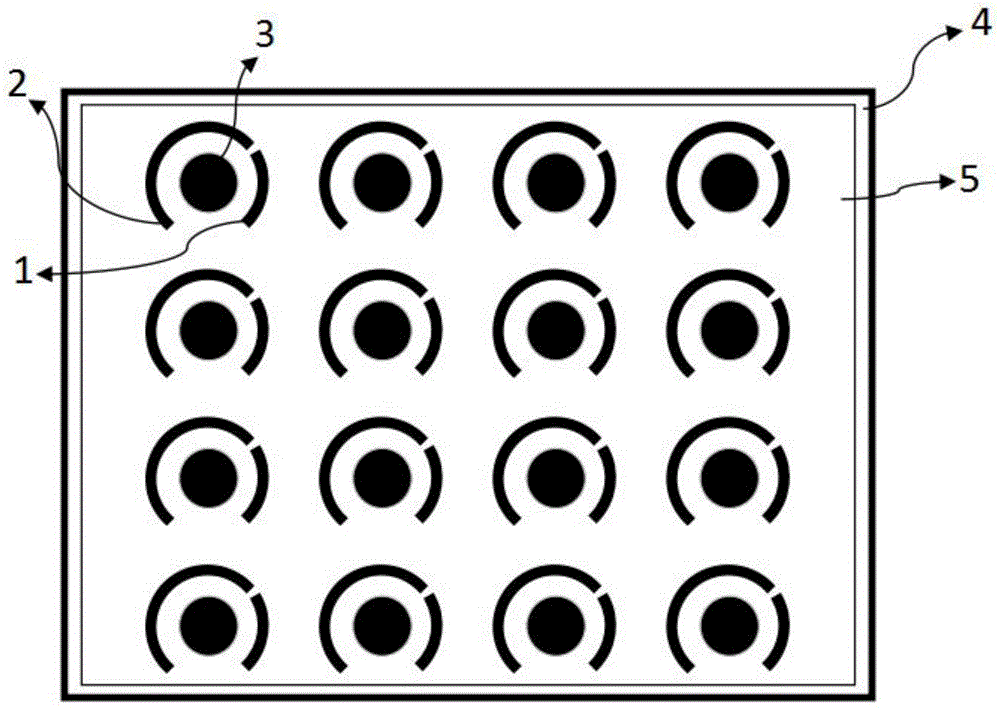
图1为本发明提供的汗液成分检测装置的结构示意图;Fig. 1 is the structural representation of the sweat component detection device provided by the present invention;
图2为本发明实施例提供的制备无酶电化学传感器的流程框图;Fig. 2 is the flow chart diagram of the preparation enzyme-free electrochemical sensor provided by the embodiment of the present invention;
图3为本发明实施例提供的进行汗液成分检测的流程框图。Fig. 3 is a block diagram of a flow chart for detecting sweat components provided by an embodiment of the present invention.
符号说明:Symbol Description:
1-参比电极,2-工作电极,3-辅助电极,4-基底,5-绝缘层。1-reference electrode, 2-working electrode, 3-auxiliary electrode, 4-substrate, 5-insulating layer.
具体实施方式Detailed ways
下面将结合本发明实施例中的附图,对本发明实施例中的技术方案进行清楚、完整地描述,显然,所描述的实施例仅仅是本发明一部分实施例,而不是全部的实施例。基于本发明中的实施例,本领域普通技术人员在没有做出创造性劳动前提下所获得的所有其他实施例,都属于本发明保护的范围。The following will clearly and completely describe the technical solutions in the embodiments of the present invention with reference to the accompanying drawings in the embodiments of the present invention. Obviously, the described embodiments are only some, not all, embodiments of the present invention. Based on the embodiments of the present invention, all other embodiments obtained by persons of ordinary skill in the art without making creative efforts belong to the protection scope of the present invention.
本发明的目的是提供一种汗液成分检测装置,能顾实现汗液成分含量的快速、准确测量。The object of the present invention is to provide a sweat component detection device, which can realize fast and accurate measurement of sweat component content.
为使本发明的上述目的、特征和优点能够更加明显易懂,下面结合附图和具体实施方式对本发明作进一步详细的说明。In order to make the above objects, features and advantages of the present invention more comprehensible, the present invention will be further described in detail below in conjunction with the accompanying drawings and specific embodiments.
如图1所示,本发明汗液成分检测装置,包括:多个非酶电化学传感器、基底4和检测器(图1中未示出)。As shown in FIG. 1 , the sweat component detection device of the present invention includes: a plurality of non-enzymatic electrochemical sensors, a
多个非酶电化学传感器在基底4上阵列式排布。多个非酶电化学传感器间的汗液成分测量灵敏度均不相同。多个非酶电化学传感器均与检测器连接。在这一实施例中,非酶电化学传感器由非酶电化学材料制备得到。基底4的制备材料为聚酰亚胺。具体使用的传感器阵列总数由待测成分的种类数确定。对于获得的原始非酶电化学传感阵列检测数据,使用特定的计算方法进行数据处理后得到混合物质中各物质含量。A plurality of non-enzyme electrochemical sensors are arranged in an array on the
其中,非酶电化学传感器包括:参比电极1、工作电极2和辅助电极3。Wherein, the non-enzyme electrochemical sensor includes: a reference electrode 1 , a working electrode 2 and an
工作电极2通过电流通道与检测器连接。参比电极1和辅助电极3均与检测器的后端电路连接。在该实施例中,参比电极1为特定线宽的圆弧状结构。工作电极2为特定面积的圆形结构。辅助电极3为特定线宽的圆弧结构。各电极的线宽或面积可以依据实际测量需要进行设定。具体的,多个电化学传感器的阵列式封装在同一平面上,并且引出每一个电化学传感器的辅助电极3、工作电极2、参比电极1。The working electrode 2 is connected to the detector through a current channel. Both the reference electrode 1 and the
在这一实施例中,将多个电化学传感器均匀间隔封装在同一聚酰亚胺基底4上。进一步,为确保多个非酶电化学传感器之间互不干扰,再将绝缘层5粘附在表面,形成三明治结构,从底部到顶部依次为聚酰亚胺基底4、非酶电化学传感器及其电连接线、绝缘层5。在各非酶电化学传感器之间采用分割绝缘层5,每个非酶电化学传感器仅从表面露出参比电极1(RE)、工作电极2(WE)和辅助电极3(CE),用于与汗液发生反应。In this embodiment, a plurality of electrochemical sensors are evenly spaced and packaged on the
为了使本发明上述提供的非酶电化学传感器能够精确检测汗液成分,如图2所示,本发明采用的非酶电化学传感器由以下方法制备得到:In order to enable the above-mentioned non-enzymatic electrochemical sensor provided by the present invention to accurately detect sweat components, as shown in Figure 2, the non-enzymatic electrochemical sensor used in the present invention is prepared by the following method:
(1)编号待测汗液中成分,将汗液中被测成分编号为a、b、c、…、n。测量编号为1的单个电化学薄膜材料对于汗液中所包含成分的灵敏度并标注为Ka1、Kb1、Kc1、…、Kn1。(1) Number the components in the sweat to be tested, and number the components to be tested in the sweat as a, b, c, ..., n. The sensitivity of the single electrochemical thin film material numbered 1 to the components contained in sweat is measured and marked as Ka1, Kb1, Kc1, ..., Kn1.
(2)更换编号为2的单个电化学薄膜材料重复步骤(1)并标注灵敏度为Ka2、Kb2、Kc2、…、Kn2。(2) Replace the single electrochemical thin film material numbered 2, repeat step (1) and mark the sensitivity as Ka2, Kb2, Kc2, ..., Kn2.
(3)更换编号为n的单个电化学薄膜材料重复步骤(1)、(2),以获取多个不同电化学薄膜材料对于汗液中所包含成分对应的灵敏度。(3) Repeat steps (1) and (2) by replacing a single electrochemical thin film material numbered n, so as to obtain the sensitivity of multiple different electrochemical thin film materials to the components contained in sweat.
(4)将步骤(3)中所测完的所有电化学薄膜感应面在同一平面上进行阵列式封装并引出各电极。(4) All the electrochemical thin film sensing surfaces measured in step (3) are packaged in an array on the same plane and each electrode is drawn out.
(5)制作后端对应阵列数量通道的电流感算电路,并将所有的传感器电极连接到相应的电流通道。(5) Make a current sensing calculation circuit corresponding to the number of channels in the array at the back end, and connect all sensor electrodes to the corresponding current channels.
(6)将需要观察的汗液均匀转移到阵列式非酶电化学薄膜上,从后端电流感算电路输出对应通道的电流值I1、I2、I3、…、In。(6) Evenly transfer the sweat to be observed to the arrayed non-enzymatic electrochemical film, and output the current values I1, I2, I3, ..., In of the corresponding channels from the back-end current sensing circuit.
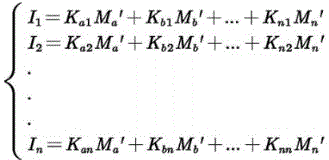
(7)将步骤(6)所获得的电流值按照以下公式进行运算,从而的到汗液中的各组分含量。其中,在进行汗液检测的过程中数据处理方式如图3所示。(7) Calculate the current value obtained in step (6) according to the following formula to obtain the content of each component in the sweat. Wherein, the data processing method in the process of sweat detection is shown in FIG. 3 .


综上,本发明采用的非酶电化学传感器制备方法简单、成功率高、周期短、寿命长、对环境要求低。可以高效方便地实时测量出汗液组分的含量。避免了含酶传感器寿命短、环境要求高不易制备等劣势。改善了电化学传感器特异性差,无法在复合成分中分辨单一物质能力,大大降低了汗液组分含量检测的复杂性和高难度性。此外,本发明采用的非酶电化学传感器还可以应用于医疗、消费行业对人体汗液组分的实时检测、预警等,同时也可以用来观察复合生物物质。In summary, the preparation method of the non-enzyme electrochemical sensor adopted in the present invention is simple, has a high success rate, a short cycle, a long life, and low environmental requirements. The content of sweat components can be measured efficiently and conveniently in real time. The disadvantages of short life, high environmental requirements and difficult preparation of the enzyme-containing sensor are avoided. It improves the poor specificity of the electrochemical sensor and the ability to distinguish a single substance in the composite component, and greatly reduces the complexity and difficulty of detecting the content of sweat components. In addition, the non-enzymatic electrochemical sensor used in the present invention can also be used in real-time detection and early warning of human sweat components in medical and consumer industries, and can also be used to observe complex biological substances.
下面以制备一个以2x2非酶电化学传感器阵列为例,对本发明上述提供的汗液成分检测装置的优点进行说明。Taking the preparation of a 2x2 non-enzymatic electrochemical sensor array as an example, the advantages of the sweat component detection device provided above in the present invention will be described below.
将4个电化学传感器编号:左上为1号非酶电化学传感器、右上为2号非酶电化学传感器、左下为3号非酶电化学传感器、右下为4号非酶电化学传感器。测量成分为汗液中葡萄糖、乳酸、抗坏血酸和尿酸。将葡萄糖编号为a、乳酸编号为b、抗坏血酸编号为c、尿酸编号为d。Number the 4 electrochemical sensors: the upper left is the No. 1 non-enzymatic electrochemical sensor, the upper right is the No. 2 non-enzymatic electrochemical sensor, the lower left is the No. 3 non-enzymatic electrochemical sensor, and the lower right is the No. 4 non-enzymatic electrochemical sensor. The components measured are glucose, lactic acid, ascorbic acid and uric acid in sweat. Glucose is numbered a, lactic acid is numbered b, ascorbic acid is numbered c, and uric acid is numbered d.
第一种非酶电化学材料对汗液中上述物质(汗液中葡萄糖、乳酸、抗坏血酸和尿酸)都会反应产生电流,但是在同浓度下对葡萄糖的反应电流远大于乳酸、抗坏血酸、尿酸的反应电流。第二种非酶电化学材料对汗液中上述物质都会反应产生电流,但是在同浓度下对乳酸的反应电流远大于葡萄糖、抗坏血酸、尿酸的反应电流。第三种非酶电化学材料对汗液中上述物质都会反应产生电流,但是在同浓度下对抗坏血酸的反应电流远大于葡萄糖、乳酸、尿酸的反应电流。第四种非酶电化学材料对汗液中上述物质都会反应产生电流,但是在同浓度下对尿酸的反应电流远大于葡萄糖、乳酸、抗坏血酸的反应电流。The first non-enzyme electrochemical material will react to the above substances in sweat (glucose, lactic acid, ascorbic acid and uric acid in sweat) to generate current, but the reaction current to glucose is much larger than that of lactic acid, ascorbic acid and uric acid at the same concentration. The second non-enzyme electrochemical material reacts to the above substances in sweat to generate current, but the reaction current to lactic acid is much greater than that of glucose, ascorbic acid, and uric acid at the same concentration. The third non-enzyme electrochemical material will react to the above substances in sweat to generate current, but the reaction current of ascorbic acid is much larger than that of glucose, lactic acid and uric acid at the same concentration. The fourth non-enzyme electrochemical material will react to the above substances in sweat to generate current, but the reaction current to uric acid is much greater than that of glucose, lactic acid, and ascorbic acid at the same concentration.
制作6组葡萄糖浓度由低至高分别是5umol/L、50umol/L、100umol/L、150umol/L、200umol/L、250umol/L。制作6组乳酸浓度由低至高分别是5mmol/L、10mmol/L、15mmol/L、20mmol/L、25mmol/L、30mmol/L。制作6组抗坏血酸浓度由低至高分别是5umol/L、10umol/L、15umol/L、20umol/L、25umol/L、30umol/L。制作6组尿酸浓度由低至高分别是0.5mmol/L、1.5mmol/L、2.5mmol/L、3.5mmol/L、4.5mmol/L、5.5mmol/L。Make 6 groups of glucose concentrations from low to high, respectively 5umol/L, 50umol/L, 100umol/L, 150umol/L, 200umol/L, 250umol/L. Make 6 groups of lactic acid concentrations from low to high, respectively 5mmol/L, 10mmol/L, 15mmol/L, 20mmol/L, 25mmol/L, 30mmol/L. Make 6 groups of ascorbic acid concentration from low to high respectively 5umol/L, 10umol/L, 15umol/L, 20umol/L, 25umol/L, 30umol/L. Make 6 groups of uric acid concentrations from low to high, respectively 0.5mmol/L, 1.5mmol/L, 2.5mmol/L, 3.5mmol/L, 4.5mmol/L, 5.5mmol/L.
将第一种非酶电化学材料制作成1号非酶电化学传感器,将1号非酶电化学传感器的三个电极与电化学工作站(或检测器)连接起来,将1号非酶电化学传感器放入葡萄糖浓度为5umol/L溶液中保持30秒后读出电化学工作站显示的电流为0.3uA,将1号非酶电化学传感器放入葡萄糖浓度为50umol/L溶液中保持30秒后读出电化学工作站显示的电流为3.6uA,将1号非酶电化学传感器放入葡萄糖浓度为100umol/L溶液中保持30秒后读出电化学工作站显示的电流为7.5uA,将1号非酶电化学传感器放入葡萄糖浓度为150umol/L溶液中保持30秒后读出电化学工作站显示的电流为11.8uA,将1号非酶电化学传感器放入葡萄糖浓度为200umol/L溶液中保持30秒后读出电化学工作站显示的电流为15.3uA,将1号非酶电化学传感器放入葡萄糖浓度为250umol/L溶液中保持30秒后读出电化学工作站显示的电流为19.6uA。Make the first non-enzyme electrochemical material into No. 1 non-enzyme electrochemical sensor, connect the three electrodes of No. 1 non-enzyme electrochemical sensor with the electrochemical workstation (or detector), and connect the No. 1 non-enzyme electrochemical sensor Put the sensor in a solution with a glucose concentration of 5umol/L and keep it for 30 seconds and read the current displayed by the electrochemical workstation as 0.3uA. The current displayed by the electrochemical workstation is 3.6uA. Put the No. 1 non-enzyme electrochemical sensor into the glucose concentration of 100umol/L solution and keep it for 30 seconds. After reading the current displayed by the electrochemical workstation, it is 7.5uA. Put the electrochemical sensor into the solution with a glucose concentration of 150umol/L for 30 seconds and read the current displayed by the electrochemical workstation as 11.8uA. Put the No. 1 non-enzyme electrochemical sensor into the solution with a glucose concentration of 200umol/L for 30 seconds After reading the current displayed by the electrochemical workstation is 15.3uA, the No. 1 non-enzyme electrochemical sensor is put into the glucose concentration of 250umol/L solution and kept for 30 seconds, and the current displayed by the electrochemical workstation is 19.6uA.
将上述10组数据在坐标系中表示,其中,横坐标为葡萄糖浓度M,单位为umol/L,纵坐标为电流值I,单位uA,并利用matlab进行线性拟合得到直线的斜率为3.88,斜率即为电流/浓度,线性相关率R>0.98,设此斜率为1号非酶电化学传感器对于葡萄糖的灵敏度Ka1,即Ka1=3.88。The above 10 sets of data are expressed in a coordinate system, wherein the abscissa is the glucose concentration M, the unit is umol/L, and the ordinate is the current value I, the unit is uA, and the slope of the straight line obtained by using matlab for linear fitting is 3.88, The slope is the current/concentration, the linear correlation ratio R>0.98, and this slope is the sensitivity Ka1 of the No. 1 non-enzymatic electrochemical sensor for glucose, ie Ka1=3.88.
将1号非酶电化学传感器放入乳酸浓度为5mmol/L溶液中保持30秒后读出电化学工作站显示的电流为1.7uA,将1号非酶电化学传感器放入乳酸浓度为10mmol/L溶液中保持30秒后读出电化学工作站显示的电流为2.6uA,将1号非酶电化学传感器放入乳酸浓度为15mmol/L溶液中保持30秒后读出电化学工作站显示的电流为3.7uA,将1号非酶电化学传感器放入乳酸浓度为20mmol/L溶液中保持30秒后读出电化学工作站显示的电流为4.2uA,将1号非酶电化学传感器放入乳酸浓度为25mmol/L溶液中保持30秒后读出电化学工作站显示的电流为4.9uA,将1号非酶电化学传感器放入乳酸浓度为30mmol/L溶液中保持30秒后读出电化学工作站显示的电流为5.8uA。Put the No. 1 non-enzyme electrochemical sensor into the lactic acid concentration of 5mmol/L solution and keep it for 30 seconds, read the current displayed by the electrochemical workstation as 1.7uA, put the No. 1 non-enzyme electrochemical sensor into the lactic acid concentration of 10mmol/L After being kept in the solution for 30 seconds, the current displayed by the electrochemical workstation is 2.6uA, and the No. 1 non-enzyme electrochemical sensor is placed in a lactic acid solution with a concentration of 15mmol/L, and the current displayed by the electrochemical workstation is 3.7uA after being kept for 30 seconds. uA, put the No. 1 non-enzyme electrochemical sensor into the lactic acid concentration of 20mmol/L solution for 30 seconds, read the current displayed by the electrochemical workstation as 4.2uA, put the No. 1 non-enzyme electrochemical sensor into the lactic acid concentration of 25mmol /L solution for 30 seconds and read the current displayed by the electrochemical workstation as 4.9uA, put the No. 1 non-enzyme electrochemical sensor into the lactic acid solution with a concentration of 30mmol/L and keep for 30 seconds and read the current displayed by the electrochemical workstation It is 5.8uA.
将上述10组数据在坐标系中表示,横坐标为乳酸浓度M,单位为mmol/L,纵坐标为电流值I,单位uA,并利用MatLab进行线性拟合得到直线的斜率为0.18,斜率即为电流/浓度,线性相关率R>0.98,设此斜率为1号非酶电化学传感器对于乳酸的灵敏度Kb1,即Kb1=0.18。Express the above 10 sets of data in the coordinate system, the abscissa is the concentration of lactic acid M, the unit is mmol/L, the ordinate is the current value I, the unit is uA, and use MatLab to perform linear fitting to obtain a straight line with a slope of 0.18, the slope is is the current/concentration, the linear correlation ratio R>0.98, and the slope is the sensitivity Kb1 of the No. 1 non-enzymatic electrochemical sensor for lactic acid, that is, Kb1=0.18.
将1号非酶电化学传感器放入抗坏血酸浓度为5umol/L溶液中保持30秒后读出电化学工作站显示的电流为0.3uA,将1号非酶电化学传感器放入抗坏血酸浓度为10umol/L溶液中保持30秒后读出电化学工作站显示的电流为0.5uA,将1号非酶电化学传感器放入抗坏血酸浓度为15umol/L溶液中保持30秒后读出电化学工作站显示的电流为0.8uA,将1号非酶电化学传感器放入抗坏血酸浓度为20mol/L溶液中保持30秒后读出电化学工作站显示的电流为1.3uA,将1号非酶电化学传感器放入抗坏血酸浓度为25mol/L溶液中保持30秒后读出电化学工作站显示的电流为1.6uA,将1号非酶电化学传感器放入抗坏血酸浓度为30mol/L溶液中保持30秒后读出电化学工作站显示的电流为1.7uA。Put the No. 1 non-enzyme electrochemical sensor into the ascorbic acid concentration of 5umol/L solution and keep it for 30 seconds, read the current displayed by the electrochemical workstation as 0.3uA, put the No. 1 non-enzyme electrochemical sensor into the ascorbic acid concentration of 10umol/L After keeping in the solution for 30 seconds, read the current displayed by the electrochemical workstation as 0.5uA, put the No. 1 non-enzyme electrochemical sensor into the ascorbic acid concentration of 15umol/L solution and keep for 30 seconds, read the current displayed by the electrochemical workstation as 0.8 uA, put the No. 1 non-enzyme electrochemical sensor into the ascorbic acid concentration of 20mol/L solution for 30 seconds, read the current displayed by the electrochemical workstation as 1.3uA, put the No. 1 non-enzyme electrochemical sensor into the ascorbic acid concentration of 25mol /L solution for 30 seconds and read the current displayed by the electrochemical workstation as 1.6uA, put the No. 1 non-enzyme electrochemical sensor into the ascorbic acid concentration of 30mol/L solution for 30 seconds and read the current displayed by the electrochemical workstation is 1.7uA.
将上述10组数据在坐标系中表示,其中,横坐标为抗坏血酸浓度M,单位为mmol/L,纵坐标为电流值I,单位uA,并利用MatLab进行线性拟合得到直线的斜率为0.30,斜率即为电流/浓度,线性相关率R>0.98,设此斜率为1号非酶电化学传感器对于抗坏血酸的灵敏度kc1,即Kc1=0.30。The above-mentioned 10 groups of data are represented in a coordinate system, wherein, the abscissa is the ascorbic acid concentration M, the unit is mmol/L, and the ordinate is the current value I, the unit is uA, and utilize MatLab to carry out linear fitting to obtain the slope of the straight line to be 0.30, The slope is the current/concentration, the linear correlation ratio R>0.98, and this slope is the sensitivity kc1 of the No. 1 non-enzyme electrochemical sensor to ascorbic acid, that is, Kc1=0.30.
将1号非酶电化学传感器放入抗尿酸浓度为0.5mmol/L溶液中保持30秒后读出电化学工作站显示的电流为1.2uA,将1号非酶电化学传感器放入尿酸浓度为1.5mmol/L溶液中保持30秒后读出电化学工作站显示的电流为1.8uA,将1号非酶电化学传感器放入尿酸浓度为2.5mmol/L溶液中保持30秒后读出电化学工作站显示的电流为2.2uA,将1号非酶电化学传感器放入尿酸浓度为3.5mmol/L溶液中保持30秒后读出电化学工作站显示的电流为2.7uA,将1号非酶电化学传感器放入尿酸浓度为4.5mmol/L溶液中保持30秒后读出电化学工作站显示的电流为3.2uA,将1号非酶电化学传感器放入尿酸浓度为5.5mmol/L溶液中保持30秒后读出电化学工作站显示的电流为3.9uA。Put the No. 1 non-enzyme electrochemical sensor into the solution with an anti-uric acid concentration of 0.5mmol/L and keep it for 30 seconds. After reading the current displayed by the electrochemical workstation, it is 1.2uA. Put the No. 1 non-enzyme electrochemical sensor into the uric acid concentration of 1.5 After keeping in the mmol/L solution for 30 seconds, read the current displayed by the electrochemical workstation as 1.8uA, put the No. 1 non-enzyme electrochemical sensor into the uric acid concentration of 2.5mmol/L solution and keep for 30 seconds, read the display of the electrochemical workstation The current is 2.2uA, put the No. 1 non-enzyme electrochemical sensor into the uric acid concentration of 3.5mmol/L solution for 30 seconds, read the current displayed by the electrochemical workstation as 2.7uA, put the No. 1 non-enzyme electrochemical sensor into After entering the uric acid concentration of 4.5mmol/L solution and keeping it for 30 seconds, read the current displayed by the electrochemical workstation as 3.2uA. The current displayed by the electrochemical workstation is 3.9uA.
将上述10组数据在坐标系中表示,其中,横坐标为尿酸浓度M,单位为mmol/L,纵坐标为电流值I,单位uA,并利用MatLab进行线性拟合得到直线的斜率为0.52,斜率即为电流/浓度,线性相关率R>0.98,设此斜率为1号非酶电化学传感器对于尿酸的灵敏度Kd1,即Kd1=0.52。The above 10 sets of data are expressed in a coordinate system, wherein the abscissa is the concentration of uric acid M, the unit is mmol/L, and the ordinate is the current value I, the unit is uA, and the slope of the straight line obtained by using MatLab for linear fitting is 0.52, The slope is the current/concentration, the linear correlation ratio R>0.98, and this slope is the sensitivity Kd1 of the No. 1 non-enzymatic electrochemical sensor for uric acid, that is, Kd1=0.52.
至此测得以第一种非酶电化学材料制作的1号非酶电化学传感器对汗液中葡萄糖、乳酸、抗坏血酸、尿酸的灵敏度Ka1、Kb1、Kc1、Kd1分别为3.88、0.18、0.30、0.52,可以看出以第一种非酶电化学材料制作的1号非酶电化学传感器对葡萄糖的灵敏度远大于其它三种成分。So far, the sensitivity Ka1, Kb1, Kc1, and Kd1 of the No. 1 non-enzyme electrochemical sensor made of the first non-enzyme electrochemical material to glucose, lactic acid, ascorbic acid, and uric acid in sweat are 3.88, 0.18, 0.30, and 0.52, respectively. It can be seen that the No. 1 non-enzyme electrochemical sensor made of the first non-enzyme electrochemical material is much more sensitive to glucose than the other three components.
同理将第二种非酶电化学材料制作成2号非酶电化学传感器,将2号非酶电化学传感器的三个电极与后端读出电路连接起来,重复上述测量灵敏度步骤可测得第二种非酶电化学材料制作的2号非酶电化学传感器对汗液中葡萄糖、乳酸、抗坏血酸、尿酸的灵敏度Ka2、Kb2、Kc2、Kd2分别为0.76、3.24、0.32、0.17,可以看出以第二种非酶电化学材料制作的2号非酶电化学传感器对乳酸的灵敏度远大于其它三种成分。In the same way, the second non-enzyme electrochemical material is made into the No. 2 non-enzyme electrochemical sensor, and the three electrodes of the No. 2 non-enzyme electrochemical sensor are connected to the back-end readout circuit, and the above-mentioned measurement sensitivity steps can be measured. The sensitivity Ka2, Kb2, Kc2, and Kd2 of No. 2 non-enzyme electrochemical sensor made of the second non-enzyme electrochemical material to glucose, lactic acid, ascorbic acid, and uric acid in sweat are 0.76, 3.24, 0.32, and 0.17, respectively. It can be seen that The No. 2 non-enzyme electrochemical sensor made of the second non-enzyme electrochemical material is much more sensitive to lactic acid than the other three components.
同理将第三种非酶电化学材料制作成3号非酶电化学传感器,将三电极与后端读出电路连接起来,重复上述测量灵敏度步骤可测得第一种非酶电化学材料制作的3号非酶电化学传感器对汗液中葡萄糖、乳酸、抗坏血酸、尿酸的灵敏度Ka3、Kb3、Kc3、Kd3分别为0.45、0.76、4.13、0.61,可以看出以第三种非酶电化学材料制作的3号非酶电化学传感器对抗坏血酸的灵敏度远大于其它三种成分。Similarly, make the third non-enzyme electrochemical material into the No. 3 non-enzyme electrochemical sensor, connect the three electrodes with the back-end readout circuit, and repeat the above steps of measuring sensitivity to measure the first non-enzyme electrochemical material. The sensitivities Ka3, Kb3, Kc3, and Kd3 of No. 3 non-enzyme electrochemical sensor to glucose, lactic acid, ascorbic acid, and uric acid in sweat are 0.45, 0.76, 4.13, and 0.61, respectively. It can be seen that it is made of the third non-enzyme electrochemical material The No. 3 non-enzymatic electrochemical sensor is much more sensitive to ascorbic acid than the other three components.
同理将第四种非酶电化学材料制作成4号非酶电化学传感器,将4号非酶电化学传感器的三个电极与后端读出电路连接起来,重复上述测量灵敏度步骤可测得第四种非酶电化学材料制作的4号非酶电化学传感器对汗液中葡萄糖、乳酸、抗坏血酸、尿酸的灵敏度Ka4、Kb4、Kc4、Kd4分别为0.26、0.32、0.94、2.69,可以看出以第四种非酶电化学材料制作的4号非酶电化学传感器对尿酸的灵敏度远大于其它三种成分。In the same way, the fourth non-enzyme electrochemical material is made into the No. 4 non-enzyme electrochemical sensor, and the three electrodes of the No. 4 non-enzyme electrochemical sensor are connected to the back-end readout circuit, and the above-mentioned measurement sensitivity steps can be measured. The sensitivity Ka4, Kb4, Kc4, and Kd4 of the No. 4 non-enzyme electrochemical sensor made of the fourth non-enzyme electrochemical material to glucose, lactic acid, ascorbic acid, and uric acid in sweat were 0.26, 0.32, 0.94, and 2.69, respectively. It can be seen that The No. 4 non-enzyme electrochemical sensor made of the fourth non-enzyme electrochemical material is much more sensitive to uric acid than the other three components.
制作由葡萄糖、乳酸、抗坏血酸、尿酸组成的混合溶液,溶液中葡萄糖、乳酸、抗坏血酸、尿酸的浓度分别为Ma=150umol/L、Mb=10mmol/L、Mc=20umol/L、Md=3.5mmol/L。将1-4号非酶电化学传感器按上述编号规则封装在同一聚酰亚胺封装层正面上。在本实施例中,聚酰亚胺厚度为20.54um,辅助电极3尺寸为线宽1.5mm圆弧,工作电极2尺寸为5mm直径圆,参比电极1尺寸为线宽1.5mm圆弧。Make a mixed solution composed of glucose, lactic acid, ascorbic acid, and uric acid. The concentrations of glucose, lactic acid, ascorbic acid, and uric acid in the solution are respectively M a =150umol/L, M b =10mmol/L, M c =20umol/L, M d = 3.5 mmol/L. Package No. 1-4 non-enzyme electrochemical sensors on the front side of the same polyimide packaging layer according to the above numbering rules. In this embodiment, the polyimide thickness is 20.54um, the size of the
将四个传感器的辅助电极3全部接在一起后用一根铜线从封装层平面最下侧引出,参比电极1全部接在一起后用一根铜线从封装层最下侧引出,工作电极2全部单独引铜线线出封装层最下策,并且整个整面除传感器电极部分裸露,其余部分全部做绝缘封胶处理,将1号非酶电化学传感器的工作电极2连接至后端感算电路1号电流通道,将2号非酶电化学传感器的工作电极2连接至后端感算电路2号电流通道,将3号非酶电化学传感器的工作电极2连接至后端感算电路3号电流通道,将4号非酶电化学传感器的工作电极2连接至后端感算电路4号电流通道,将引出的辅助电极3、参比电极1分别与后端电路连接。至此后端电路与传感器的感算一体融合电路搭建完成。Connect all the
将制作好的混合溶液均匀转移至阵列平面(工作电极2的圆形结构)上,可以由后端电路(即检测器)读出1号非酶电化学传感器电流I1=19.3uA,2号非酶电化学传感器电流I2=21.7mA,3号非酶电化学传感器电流I3=16.7mA,4号非酶电化学传感器I4=23.4mA。电流I1是1号非酶电化学传感器对葡萄糖、乳酸、抗坏血酸、尿酸的反应电流和,即I1=Ia1+Ib1+Ic1+Id1。电流I2是2号非酶电化学传感器对葡萄糖、乳酸、抗坏血酸、尿酸的反应电流和,即I2=Ia2+Ib2+Ic2+Id2。电流I3是3号非酶电化学传感器对葡萄糖、乳酸、抗坏血酸、尿酸的反应电流和,即I3=Ia3+Ib3+Ic3+Id3。电流I4是4号非酶电化学传感器对葡萄糖、乳酸、抗坏血酸、尿酸的反应电流和,即I4=Ia4+Ib4+Ic4+Id4。Evenly transfer the prepared mixed solution to the array plane (the circular structure of the working electrode 2), and the current I 1 of the No. The current I 2 of the non-enzyme electrochemical sensor is 21.7 mA, the current I 3 of the No. 3 non-enzyme electrochemical sensor is 16.7 mA, and the
对Ia1进行分析,可得Ia1=Ka1*Ma′,Ma′即为传感器测出的混合溶液葡萄糖浓度,待算法解出后可与真实制作浓度Ma进行误差对比。同理可得Ib1=Kb1*Mb′。Ic1=Kc1*Mc′。Id1=Kd1*Md′,即有:Analyzing I a1 , we can get I a1 =K a1 *M a ′, where Ma ′ is the glucose concentration of the mixed solution measured by the sensor. After the algorithm is solved, the error can be compared with the actual production concentration Ma . Similarly, I b1 =K b1 *M b ′ can be obtained. I c1 =K c1 *M c '. I d1 =K d1 *M d ′, namely:

由上述计算方法可得Ma′=146.7umol/L,Mb′=10.3mmol/L,Mc′=19.3umol/L,Md′=3.3mmol/L。将真实含量浓度M与测量含量浓度进行误差对比可计算出误差值在5%内,综合以上可得测量误差与真实浓度相关性R>0.97。From the above calculation method, M a '=146.7umol/L, Mb '=10.3mmol/L, Mc ' =19.3umol/L, Md '=3.3mmol/L. Comparing the error between the real content concentration M and the measured content concentration can calculate that the error value is within 5%. Based on the above, the correlation between the measurement error and the real concentration can be obtained R>0.97.
作为对比,在不使用该计算方法的情况下,由于1号非酶电化学传感器对葡萄糖的灵敏度最大,由I1计算可得Ma′=171.9umol/L。由于2号非酶电化学传感器对乳酸的灵敏度最大,由I2计算可得Mb′=18.9mmol/L。由于3号非酶电化学传感器对抗坏血酸的灵敏度最大,由I3计算可得Mc′=26.7umol/L。由于4号非酶电化学传感器对尿酸的灵敏度最大,由I4计算可得Md′=6.9mmol/L。将真实含量浓度M与此组测量含量浓度进行误差对比可计算出误差值大于20%,测量误差与真实浓度相关性R<0.73。As a comparison, without using this calculation method, since No. 1 non-enzyme electrochemical sensor has the highest sensitivity to glucose, Ma ' =171.9umol/L can be calculated from I 1 . Since No. 2 non-enzyme electrochemical sensor has the highest sensitivity to lactic acid, M b '=18.9mmol/L can be calculated from I 2 . Since No. 3 non-enzyme electrochemical sensor has the highest sensitivity to ascorbic acid, M c '=26.7umol/L can be calculated from I 3 . Since No. 4 non-enzyme electrochemical sensor has the highest sensitivity to uric acid, M d '=6.9mmol/L can be calculated from I 4 . Comparing the error of the actual concentration M with the measured concentration of this group can calculate that the error value is greater than 20%, and the correlation between the measurement error and the actual concentration is R<0.73.
由上述对比可以看出,单个非酶电化学传感器无法分辨出混合溶液中的成分浓度,采用阵列式非酶电化学传感器能够得到很好的解决。It can be seen from the above comparison that a single non-enzyme electrochemical sensor cannot distinguish the concentration of components in the mixed solution, and the array non-enzyme electrochemical sensor can be used to solve the problem well.
本说明书中各个实施例采用递进的方式描述,每个实施例重点说明的都是与其他实施例的不同之处,各个实施例之间相同相似部分互相参见即可。Each embodiment in this specification is described in a progressive manner, each embodiment focuses on the difference from other embodiments, and the same and similar parts of each embodiment can be referred to each other.
本文中应用了具体个例对本发明的原理及实施方式进行了阐述,以上实施例的说明只是用于帮助理解本发明的方法及其核心思想;同时,对于本领域的一般技术人员,依据本发明的思想,在具体实施方式及应用范围上均会有改变之处。综上所述,本说明书内容不应理解为对本发明的限制。In this paper, specific examples have been used to illustrate the principle and implementation of the present invention. The description of the above embodiments is only used to help understand the method of the present invention and its core idea; meanwhile, for those of ordinary skill in the art, according to the present invention Thoughts, there will be changes in specific implementation methods and application ranges. In summary, the contents of this specification should not be construed as limiting the present invention.
Claims (7)

Priority Applications (1)
| Application Number | Priority Date | Filing Date | Title |
|---|---|---|---|
| CN202111371360.9A CN114088788B (en) | 2021-11-18 | 2021-11-18 | Sweat composition detection device |
Applications Claiming Priority (1)
| Application Number | Priority Date | Filing Date | Title |
|---|---|---|---|
| CN202111371360.9A CN114088788B (en) | 2021-11-18 | 2021-11-18 | Sweat composition detection device |
Publications (2)
| Publication Number | Publication Date |
|---|---|
| CN114088788A CN114088788A (en) | 2022-02-25 |
| CN114088788B true CN114088788B (en) | 2023-03-17 |
Family
ID=80302059
Family Applications (1)
| Application Number | Title | Priority Date | Filing Date |
|---|---|---|---|
| CN202111371360.9A Active CN114088788B (en) | 2021-11-18 | 2021-11-18 | Sweat composition detection device |
Country Status (1)
| Country | Link |
|---|---|
| CN (1) | CN114088788B (en) |
Family Cites Families (5)
| Publication number | Priority date | Publication date | Assignee | Title |
|---|---|---|---|---|
| WO2012054683A2 (en) * | 2010-10-21 | 2012-04-26 | Carnegie Mellon University | Two-dimensional electron gas (2deg)-based chemical sensors |
| CN103196977A (en) * | 2013-04-12 | 2013-07-10 | 中国科学院上海应用物理研究所 | Multichannel printing electrode array chip as well as preparation method and application thereof |
| CN105445339B (en) * | 2014-07-31 | 2018-07-06 | 天津大学 | A kind of flexibility differential type array electrochemical glucose sensor and application method |
| CN109540984A (en) * | 2018-11-23 | 2019-03-29 | 苏州麦米医疗科技有限公司 | A kind of human sweat's real-time monitoring sensor-based system |
| TWI730504B (en) * | 2019-11-19 | 2021-06-11 | 奇異平台股份有限公司 | Percutaneous microneedle monitoring system |
-
2021
- 2021-11-18 CN CN202111371360.9A patent/CN114088788B/en active Active
Also Published As
| Publication number | Publication date |
|---|---|
| CN114088788A (en) | 2022-02-25 |
Similar Documents
| Publication | Publication Date | Title |
|---|---|---|
| CA2724911C (en) | Fill sufficiency method and system | |
| Shi et al. | Wireless and battery-free wearable biosensing of riboflavin in sweat for precision nutrition | |
| CN104407124A (en) | Oxidizable species as an internal reference in control solutions for biosensors | |
| ES2555215T3 (en) | Compositions of reagent of low total saline content and systems for biosensors | |
| Lai et al. | Carbon fiber-based multichannel solid-contact potentiometric ion sensors for real-time sweat electrolyte monitoring | |
| CN117288820B (en) | Triplex electrochemical sensing equipment and triplex electrochemical sensing method based on Internet of things communication | |
| CN108982617A (en) | A kind of uric acid electrochemical test strip and preparation method thereof | |
| CN111239229B (en) | Dual-channel electrochemical biosensor and method for measuring heme concentration | |
| CN105241930A (en) | Multiparameter all-solid-state blood analysis sensor | |
| Zhang et al. | Integrated solid-state wearable sweat sensor system for sodium and potassium ion concentration detection | |
| CN215263243U (en) | Microelectrode integrated sensing chip | |
| CN113358726B (en) | Electrode, test paper and preparation method thereof for detecting creatinine by electrochemical method | |
| Seker et al. | Decentralized touch-based micronutrition sensor towards personalized nutrition: Parallel detection of sweat ascorbic acid and zinc ions | |
| Ma et al. | Label-free and highly-sensitive detection of calcium ions using a silicon-on-sapphire light-addressable potentiometric sensor | |
| KR102083979B1 (en) | Sensor strip and Apparatus for measuring biomaterial using the sensor strip | |
| TWM467058U (en) | Biochemical sensor | |
| CN105784814A (en) | Sensor based on concentration cell principle | |
| TW201007164A (en) | Potentiometric biosensor and the forming method thereof | |
| CN215493305U (en) | Electrodes, test strips and biosensors for electrochemical detection of creatinine | |
| CN115201299A (en) | Detector for glucose and lactic acid | |
| Uemura et al. | Development of Small-sized Lysine Enzyme Sensor for Clinical Use. | |
| Wang et al. | Multi Parameter Sweat Detection System Based on Screen Printed Electrodes | |
| CN114088788A (en) | Sweat composition detection device | |
| Wang et al. | A flexible electrochemical sensor system for sweat pH detection | |
| CN202956358U (en) | Potential of hydrogen (PH) detector |
Legal Events
| Date | Code | Title | Description |
|---|---|---|---|
| PB01 | Publication | ||
| PB01 | Publication | ||
| SE01 | Entry into force of request for substantive examination | ||
| SE01 | Entry into force of request for substantive examination | ||
| GR01 | Patent grant | ||
| GR01 | Patent grant |