CN112166318B - Electrical circuit and measuring device for electrochemical measurement - Google Patents
Electrical circuit and measuring device for electrochemical measurement Download PDFInfo
- Publication number
- CN112166318B CN112166318B CN201980028946.XA CN201980028946A CN112166318B CN 112166318 B CN112166318 B CN 112166318B CN 201980028946 A CN201980028946 A CN 201980028946A CN 112166318 B CN112166318 B CN 112166318B
- Authority
- CN
- China
- Prior art keywords
- circuit
- capacitor
- solution
- electrode
- output
- Prior art date
- Legal status (The legal status is an assumption and is not a legal conclusion. Google has not performed a legal analysis and makes no representation as to the accuracy of the status listed.)
- Active
Links
Images




Classifications
-
- G—PHYSICS
- G01—MEASURING; TESTING
- G01N—INVESTIGATING OR ANALYSING MATERIALS BY DETERMINING THEIR CHEMICAL OR PHYSICAL PROPERTIES
- G01N27/00—Investigating or analysing materials by the use of electric, electrochemical, or magnetic means
- G01N27/26—Investigating or analysing materials by the use of electric, electrochemical, or magnetic means by investigating electrochemical variables; by using electrolysis or electrophoresis
- G01N27/416—Systems
- G01N27/48—Systems using polarography, i.e. measuring changes in current under a slowly-varying voltage
-
- G—PHYSICS
- G01—MEASURING; TESTING
- G01N—INVESTIGATING OR ANALYSING MATERIALS BY DETERMINING THEIR CHEMICAL OR PHYSICAL PROPERTIES
- G01N27/00—Investigating or analysing materials by the use of electric, electrochemical, or magnetic means
- G01N27/26—Investigating or analysing materials by the use of electric, electrochemical, or magnetic means by investigating electrochemical variables; by using electrolysis or electrophoresis
- G01N27/416—Systems
- G01N27/4161—Systems measuring the voltage and using a constant current supply, e.g. chronopotentiometry
-
- G—PHYSICS
- G01—MEASURING; TESTING
- G01N—INVESTIGATING OR ANALYSING MATERIALS BY DETERMINING THEIR CHEMICAL OR PHYSICAL PROPERTIES
- G01N27/00—Investigating or analysing materials by the use of electric, electrochemical, or magnetic means
- G01N27/02—Investigating or analysing materials by the use of electric, electrochemical, or magnetic means by investigating impedance
- G01N27/22—Investigating or analysing materials by the use of electric, electrochemical, or magnetic means by investigating impedance by investigating capacitance
- G01N27/226—Construction of measuring vessels; Electrodes therefor
-
- G—PHYSICS
- G01—MEASURING; TESTING
- G01N—INVESTIGATING OR ANALYSING MATERIALS BY DETERMINING THEIR CHEMICAL OR PHYSICAL PROPERTIES
- G01N27/00—Investigating or analysing materials by the use of electric, electrochemical, or magnetic means
- G01N27/02—Investigating or analysing materials by the use of electric, electrochemical, or magnetic means by investigating impedance
- G01N27/22—Investigating or analysing materials by the use of electric, electrochemical, or magnetic means by investigating impedance by investigating capacitance
- G01N27/228—Circuits therefor
-
- G—PHYSICS
- G01—MEASURING; TESTING
- G01N—INVESTIGATING OR ANALYSING MATERIALS BY DETERMINING THEIR CHEMICAL OR PHYSICAL PROPERTIES
- G01N27/00—Investigating or analysing materials by the use of electric, electrochemical, or magnetic means
- G01N27/26—Investigating or analysing materials by the use of electric, electrochemical, or magnetic means by investigating electrochemical variables; by using electrolysis or electrophoresis
- G01N27/28—Electrolytic cell components
- G01N27/30—Electrodes, e.g. test electrodes; Half-cells
- G01N27/301—Reference electrodes
-
- G—PHYSICS
- G01—MEASURING; TESTING
- G01N—INVESTIGATING OR ANALYSING MATERIALS BY DETERMINING THEIR CHEMICAL OR PHYSICAL PROPERTIES
- G01N33/00—Investigating or analysing materials by specific methods not covered by groups G01N1/00 - G01N31/00
- G01N33/48—Biological material, e.g. blood, urine; Haemocytometers
- G01N33/483—Physical analysis of biological material
- G01N33/487—Physical analysis of biological material of liquid biological material
- G01N33/48707—Physical analysis of biological material of liquid biological material by electrical means
Landscapes
- Health & Medical Sciences (AREA)
- Chemical & Material Sciences (AREA)
- Life Sciences & Earth Sciences (AREA)
- Physics & Mathematics (AREA)
- General Physics & Mathematics (AREA)
- Pathology (AREA)
- Immunology (AREA)
- Analytical Chemistry (AREA)
- Biochemistry (AREA)
- General Health & Medical Sciences (AREA)
- Electrochemistry (AREA)
- Chemical Kinetics & Catalysis (AREA)
- Molecular Biology (AREA)
- Engineering & Computer Science (AREA)
- Biomedical Technology (AREA)
- Biophysics (AREA)
- Hematology (AREA)
- Urology & Nephrology (AREA)
- Food Science & Technology (AREA)
- Medicinal Chemistry (AREA)
- Investigating Or Analyzing Materials By The Use Of Electric Means (AREA)
Abstract
提供一种使用于溶液的电化学测定的电气电路,具备:电压产生电路;运算放大器,具有输出(OUT)、非反相输入(+IN)、反相输入(‑IN),输出(OUT)构成为连接于与溶液接触的对电极(CE),反相输入(‑IN)构成为连接于与溶液接触的参比电极(RE),非反相输入(+IN)连接于电压产生电路;电容器,连接在输出(OUT)与反相输入(‑IN)之间,具有1μF以上的容量;电流测定电路,构成为和与溶液接触的工作电极(WE)连接。

An electrical circuit for electrochemical determination of solutions is provided, comprising: a voltage generating circuit; an operational amplifier having an output (OUT), a non-inverting input (+IN), an inverting input (-IN), and an output (OUT) It is configured to be connected to the counter electrode (CE) in contact with the solution, the inverting input (-IN) is configured to be connected to the reference electrode (RE) in contact with the solution, and the non-inverting input (+IN) is connected to the voltage generating circuit; The capacitor is connected between the output (OUT) and the inverting input (-IN), and has a capacity of 1 μF or more; the current measurement circuit is configured to be connected to the working electrode (WE) in contact with the solution.
Description
技术领域technical field
本公开涉及电化学测定用电气电路及测定装置。The present disclosure relates to an electrical circuit and a measurement device for electrochemical measurement.
背景技术Background technique
在电化学领域中,测定由于溶液中的化学物质或生物体物质在电极表面或其附近发生的化学反应或生物化学反应而在溶液中流动的电流,从而对化学物质或生物体物质进行检测或定量。这样的测定广泛地使用例如三电极法等手法。In the field of electrochemistry, the current flowing in the solution is determined due to the chemical reaction or biochemical reaction of the chemical substance or biological substance in the solution on or near the electrode surface, so as to detect or detect the chemical substance or biological substance Quantitative. For such measurement, techniques such as the three-electrode method are widely used.
三电极法是在容器内设置对电极、参比电极及工作电极,使对电极与工作电极之间具有规定的电位差,测定从对电极向工作电极流动的电流的方法。通常,当金属或金属氧化物等物质进入电解液时,在该物质与电解液之间产生称为界面电位的电位差。在考虑了该电位差的基础上,当向对电极与工作电极之间施加电压时,电流从对电极流动,对电极与溶液之间的电位差会变化。由于该电位差的变化,存在未能将所希望的电压向溶液准确地施加的情况。在三电极法中,为了避免该情况,测定参比电极处的电位,能够以该电位确定为所希望的值的方式控制向对电极施加的电压。而且,存在有将在参比电极处测定的电位向控制对电极的电路返回(反馈)的反馈电路。The three-electrode method is a method in which a counter electrode, a reference electrode, and a working electrode are installed in a container so that there is a predetermined potential difference between the counter electrode and the working electrode, and the method of measuring the current flowing from the counter electrode to the working electrode. Generally, when a substance such as a metal or metal oxide enters the electrolyte, a potential difference called interface potential is generated between the substance and the electrolyte. In consideration of this potential difference, when a voltage is applied between the counter electrode and the working electrode, a current flows from the counter electrode, and the potential difference between the counter electrode and the solution changes. Due to the change in the potential difference, a desired voltage may not be accurately applied to the solution in some cases. In the three-electrode method, in order to avoid this, the potential at the reference electrode is measured, and the voltage applied to the counter electrode can be controlled so that the potential becomes a desired value. Also, there is a feedback circuit that returns (feeds back) the potential measured at the reference electrode to the circuit that controls the counter electrode.
发明内容Contents of the invention
在本公开的一实施方式中,使用于溶液的电化学测定的电气电路具备:电压产生电路;运算放大器,具有输出(OUT)、非反相输入(+IN)、反相输入(-IN),输出(OUT)构成为连接于与溶液接触的第一电极,反相输入(-IN)构成为连接于与溶液接触的第二电极,非反相输入(+IN)连接于电压产生电路;电容器,连接在输出(OUT)与反相输入(-IN)之间。In one embodiment of the present disclosure, an electrical circuit used for electrochemical measurement of a solution includes: a voltage generating circuit; an operational amplifier having an output (OUT), a non-inverting input (+IN), and an inverting input (-IN) , the output (OUT) is configured to be connected to the first electrode in contact with the solution, the inverting input (-IN) is configured to be connected to the second electrode in contact with the solution, and the non-inverting input (+IN) is connected to the voltage generating circuit; Capacitor, connected between the output (OUT) and the inverting input (-IN).
本公开的某实施方式是使用于溶液的电化学测定的电气电路。该电气电路具备:电压产生电路;运算放大器,具有输出(OUT)、非反相输入(+IN)、反相输入(-IN),输出(OUT)构成为连接于与溶液接触的对电极(CE),反相输入(-IN)构成为连接于与溶液接触的参比电极(RE),非反相输入(+IN)连接于电压产生电路;电容器,连接在输出(OUT)与反相输入(-IN)之间;电流测定电路,构成为连接于与溶液接触的工作电极(WE)。An embodiment of the present disclosure is an electrical circuit used for electrochemical measurement of a solution. The electric circuit has: a voltage generating circuit; an operational amplifier having an output (OUT), a non-inverting input (+IN), and an inverting input (-IN), and the output (OUT) is configured to be connected to a counter electrode ( CE), the inverting input (-IN) is configured to be connected to the reference electrode (RE) in contact with the solution, the non-inverting input (+IN) is connected to the voltage generating circuit; the capacitor is connected between the output (OUT) and the inverting Between the input (-IN); the current measurement circuit is configured to be connected to the working electrode (WE) in contact with the solution.
本公开的某实施方式是使用于溶液的电化学测定的电气电路。该电气电路具备:运算放大器,具有输出(OUT)、非反相输入(+IN)、反相输入(-IN),输出(OUT)构成为连接于与溶液接触的对电极(CE),反相输入(-IN)构成为连接于与溶液接触的参比电极(RE),非反相输入(+IN)连接于电压产生电路;电容器,连接在输出(OUT)与反相输入(-IN)之间;配线,构成为将与溶液接触的工作电极(WE)和电流测定电路连接。电压产生电路可以连接于运算放大器的非反相输入(+IN)。电流测定电路可以与构成为与工作电极(WE)连接的配线连接。An embodiment of the present disclosure is an electrical circuit used for electrochemical measurement of a solution. The electrical circuit has: an operational amplifier with an output (OUT), a non-inverting input (+IN), an inverting input (-IN), the output (OUT) is configured to be connected to a counter electrode (CE) in contact with the solution, and the opposite The phase input (-IN) is connected to the reference electrode (RE) in contact with the solution, the non-inverting input (+IN) is connected to the voltage generating circuit; the capacitor is connected between the output (OUT) and the inverting input (-IN ); the wiring is configured to connect the working electrode (WE) in contact with the solution with the current measurement circuit. A voltage generating circuit may be connected to the non-inverting input (+IN) of the operational amplifier. The current measurement circuit can be connected to wiring configured to be connected to the working electrode (WE).
本公开的另一实施方式是溶液的电化学测定装置。该电化学测定装置具备:对电极(CE),构成为与溶液接触;参比电极(RE),构成为与溶液接触;工作电极(WE),构成为与溶液接触;电压产生电路;运算放大器,具有输出(OUT)、非反相输入(+IN)、反相输入(-IN),在输出(OUT)连接于对电极(CE),在反相输入(-IN)连接于参比电极(RE),在非反相输入(+IN)连接于电压产生电路;电容器,连接于运算放大器的输出(OUT)与反相输入(-IN)之间;电流测定电路,与工作电极(WE)连接。Another embodiment of the present disclosure is an electrochemical measurement device for a solution. The electrochemical measuring device is provided with: a counter electrode (CE) configured to be in contact with the solution; a reference electrode (RE) configured to be in contact with the solution; a working electrode (WE) configured to be in contact with the solution; a voltage generating circuit; an operational amplifier , with output (OUT), non-inverting input (+IN), inverting input (-IN), the output (OUT) is connected to the counter electrode (CE), and the inverting input (-IN) is connected to the reference electrode (RE), the non-inverting input (+IN) is connected to the voltage generation circuit; the capacitor is connected between the output (OUT) of the operational amplifier and the inverting input (-IN); the current measurement circuit is connected to the working electrode (WE )connect.
根据本公开,潜在性地或者作为一例,降低噪声对测定造成的影响,在溶液中的电化学测定中,能够提高由于化学反应及生物化学反应而产生的微小电流的测定精度。According to the present disclosure, potentially or as an example, the influence of noise on measurement can be reduced, and the measurement accuracy of minute currents generated by chemical reactions and biochemical reactions can be improved in electrochemical measurements in solutions.
附图说明Description of drawings
图1是表示第一实施方式的测定装置的结构的一例的电路框图。FIG. 1 is a circuit block diagram showing an example of the configuration of a measurement device according to a first embodiment.
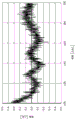
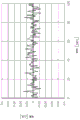
图2是表示未采取噪声对策地测定的电流的一例的波形图。FIG. 2 is a waveform diagram showing an example of a current measured without noise countermeasures.
图3是表示仅采取针对外部噪声的对策地测定的电流的一例的波形图。FIG. 3 is a waveform diagram showing an example of a current measured with only measures taken against external noise.
图4是表示第一实施方式的采取噪声对策地测定的电流的一例的波形图。4 is a waveform diagram showing an example of a current measured with noise countermeasures in the first embodiment.
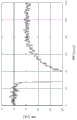
图5是表示仅采取针对外部噪声的对策地测定的电流的一例的波形图。FIG. 5 is a waveform diagram showing an example of a current measured with only measures taken against external noise.
图6是表示第一实施方式的采取噪声对策地测定的电流的一例的波形图。FIG. 6 is a waveform diagram showing an example of current measured with noise countermeasures in the first embodiment.
图7是表示第二实施方式的测定装置的结构的一例的电路框图。FIG. 7 is a circuit block diagram showing an example of the configuration of a measurement device according to a second embodiment.
图8是构成电流测定电路的典型的电路的一例。FIG. 8 is an example of a typical circuit constituting the current measurement circuit.
图9是用于说明反馈电路将噪声放大的机理的电路框图。FIG. 9 is a circuit block diagram for explaining the mechanism by which the feedback circuit amplifies noise.
图10是说明电气等效电路的转换的电路图。FIG. 10 is a circuit diagram illustrating conversion of an electrical equivalent circuit.
具体实施方式Detailed ways
通常,进行电气测定的测定系统受到噪声的影响。作为噪声源,例如,可列举商用电源、开关电源、时钟脉冲、外部设备、静电及通信电波等。这些噪声的产生源能够确定。它们不是以下所述的电极或反馈环路等那样内置于测定系统的结构,而是存在于其外部的结构。因此,在本公开中,将它们总称为“外部噪声”。Generally, measurement systems that perform electrical measurements are affected by noise. Examples of noise sources include commercial power supplies, switching power supplies, clock pulses, external devices, static electricity, and communication radio waves. The origin of these noises can be determined. These are not built into the measurement system like electrodes or feedback loops described below, but exist outside of it. Therefore, in this disclosure, they are collectively referred to as "external noise".
外部噪声的产生源比较容易确定。因此,如果切断从噪声的产生源向测定部传播的传播路径,则能够减少其影响。例如,如果通过屏蔽件覆盖测定系统,则能够大幅减少从外部设备传播的噪声、静电及通信电波产生的影响。而且,进入到测定设备的内部的以商用电源、开关电源、时钟脉冲等为起因的噪声的影响通过适当地配置测定设备的地线而能够减少。或者,除了静电和商用电源之外,上述的噪声的频率高,因此通过低通滤波器(LPF)等能够减少。而且,商用电源的频率在国家或地域中确定,决定为50Hz或60Hz。因此,通过进行与其周期相符的平均处理(例如,当对0.1秒钟的数据进行平均时,50Hz/60Hz的信号成为0),能够进一步减少该噪声。静电虽然频率未确定,但是通常通过适当地实施屏蔽而能够充分地采取对策。The source of external noise is relatively easy to determine. Therefore, if the propagation path from the source of the noise to the measurement unit is cut off, the influence thereof can be reduced. For example, if the measurement system is covered with a shield, the influence of noise, static electricity, and communication radio waves transmitted from external equipment can be greatly reduced. Furthermore, the influence of noise caused by commercial power supplies, switching power supplies, clock pulses, and the like entering the inside of the measurement equipment can be reduced by properly arranging the ground of the measurement equipment. Alternatively, since the above-mentioned noise has a high frequency other than static electricity and commercial power, it can be reduced by a low-pass filter (LPF) or the like. Furthermore, the frequency of a commercial power supply is determined in a country or region, and is determined to be 50 Hz or 60 Hz. Therefore, this noise can be further reduced by performing averaging processing in accordance with the cycle (for example, when averaging data of 0.1 second, the signal of 50 Hz/60 Hz becomes 0). Although the frequency of static electricity is not determined, adequate countermeasures can usually be taken by shielding properly.
另一方面,除了外部噪声以外,在测定装置内还存在热噪声、散粒噪声、闪变噪声(1/f噪声)等噪声。这些噪声作为物理现象而存在于测定装置内的器件、电气或电子元件的内部,因此屏蔽或地线的适当配置的话无法减少。而且,这些噪声由于遍及低频,因此通过平均处理的减少也变得困难。特别是闪变噪声(1/f噪声)由于在低频下噪声电力升高,因此通过平均处理难以减少。On the other hand, in addition to external noise, noise such as thermal noise, shot noise, and flicker noise (1/f noise) exists in the measurement device. These noises exist as physical phenomena inside devices and electrical or electronic components in the measurement device, and therefore cannot be reduced by proper placement of shielding or grounding. Furthermore, since these noises spread over low frequencies, it is also difficult to reduce them by averaging. In particular, flicker noise (1/f noise) is difficult to reduce by averaging because noise power increases at low frequencies.
在电化学测定中,测定由于化学反应或生物化学反应而向工作电极流动的电流。在测定对象物质为低浓度的情况下,流动的电流微小。在这样的情况下,如果噪声大,则岂止是测定对象物质的定量,就连检测有时都无法进行。即使能够定量,定量后的值有时也极不准确。In electrochemical measurements, the current flowing to the working electrode due to chemical or biochemical reactions is measured. When the concentration of the substance to be measured is low, the current flowing is very small. In such a case, if the noise is large, not only the quantification of the substance to be measured but also the detection may not be possible. Even if it can be quantified, the quantified value is sometimes extremely inaccurate.
进行电化学性的测定的溶液可以是从生物体提取的液体。溶液可以是从生物体提取的液体其本身,也可以是从人体提取的液体。还可以是对于从生物体提取的液体进行了精制、稀释、与其他的液体的混合等处置后的液体或生物体由来的液体。进行电化学性的测定的溶液可以为体液。体液可以是细胞内液(ICF),也可以是细胞外液(ECF)。体液可以为淋巴液,也可以为组织间液、细胞间液、间质液组等组织液,还可以为体腔液、浆膜腔液、胸水、腹水、心包液、脑脊髓液(髓液)、关节液(滑液)、眼房水(房水)。体液可以为唾液、胃液、胆汁、胰液、肠液等消化液,也可以为汗、泪、鼻涕、尿、精液、阴道液、羊水、乳汁。溶液可以是包含测定对象物质的磷酸缓冲生理食盐水(PBS)或N-三(羟甲基)甲基-2-氨基乙磺酸缓冲液(TES)等生理缓冲液。The solution for electrochemical measurement may be a liquid extracted from a living body. The solution may be a liquid itself extracted from a living body, or a liquid extracted from a human body. It may also be a liquid obtained by refining, diluting, mixing with another liquid, or a liquid derived from a living body. The solution for electrochemical measurement may be body fluid. Body fluid can be either intracellular fluid (ICF) or extracellular fluid (ECF). Body fluid can be lymph fluid, interstitial fluid, interstitial fluid, interstitial fluid, etc., body cavity fluid, serous cavity fluid, pleural effusion, ascites, pericardial fluid, cerebrospinal fluid (spinal fluid), Joint fluid (synovial fluid), aqueous humor (aqueous humor). Body fluids can be saliva, gastric juice, bile, pancreatic juice, intestinal juice and other digestive juices, as well as sweat, tears, nasal mucus, urine, semen, vaginal fluid, amniotic fluid, and milk. The solution may be a physiological buffer such as phosphate-buffered saline (PBS) or N-tris(hydroxymethyl)methyl-2-aminoethanesulfonic acid buffer (TES) containing the substance to be measured.
溶液可以包含测定对象物质。例如,溶液为泪,测定对象物质为泪含有的糖化白蛋白。或者,测定对象物可以为血液或血清中的葡萄糖、白蛋白、糖化白蛋白、尿酸、糖化血红蛋白、间质液中的葡萄糖、泪的葡萄糖、白蛋白、尿的白蛋白、葡萄糖等。溶液只要包含测定对象物质即可,没有特别限定。The solution may contain a substance to be measured. For example, the solution is tears, and the substance to be measured is glycated albumin contained in tears. Alternatively, the measurement object may be glucose in blood or serum, albumin, glycated albumin, uric acid, glycated hemoglobin, glucose in interstitial fluid, glucose in tears, albumin, albumin in urine, glucose, or the like. The solution is not particularly limited as long as it contains the substance to be measured.
电化学测定法可以是电解时的电流测定法。在使用电解的测定法中,可以是测定将电位维持为恒定时的电流值的电流分析法,也可以是测定使电位变动时的电流量的变动(伏安测量法)。电化学测定法可以为三电极法。The electrochemical assay may be amperometric during electrolysis. The measurement method using electrolysis may be an amperometry method for measuring a current value when the potential is kept constant, or may be a measurement method for measuring changes in the amount of current when the potential is varied (voltammetric method). The electrochemical measurement method may be a three-electrode method.
电压产生电路(电压产生器、电压产生部)可以包含电源,也可以是将来自设置于其外部的电源的电压转换成所希望的电压的结构。可以通过包含将电源电压分割的电路而构成,也可以通过包含能够产生所希望的电压的集成电路(IC)而构成。电压产生电路可以通过具有低通滤波电路和缓冲电路而构成。The voltage generating circuit (voltage generator, voltage generating unit) may include a power supply, or may be configured to convert a voltage from a power supply provided outside the circuit into a desired voltage. It may be configured by including a circuit for dividing the power supply voltage, or may be configured by including an integrated circuit (IC) capable of generating a desired voltage. The voltage generating circuit can be constituted by including a low-pass filter circuit and a buffer circuit.
在本公开中,“连接”只要没有特别的说明,就是指电连接。“连接”可以是直接的连接,即连接的元件等之间实质上不介有其他的电气或电子元件等的连接,只要本申请公开包含的发明或实施方式发挥功能,也可以为间接的连接,即在连接的元件等之间介有其他的电气或电子元件等的连接。例如,运算放大器的输出(OUT)与对电极(CE)可以直接连接,或者为了避免发生连接错误使得电路内的电子元件损坏而在运算放大器的输出(OUT)与对电极(CE)之间串联地连接例如100Ω(欧姆)的电阻。而且,例如,可以不将运算放大器的输出直接连接于对电极。在某实施方式中,可以在后段再加入并连接放大电路或衰减电路。在另一实施方式中,可以使用连接多个运算放大器。在某实施方式中,可以串联地加入保护用的电阻而形成连接。In the present disclosure, "connection" refers to electrical connection unless otherwise specified. "Connection" may be a direct connection, that is, a connection between the connected elements, etc., substantially without intervening other electrical or electronic elements, etc., as long as the invention or embodiment disclosed in this application functions, it may also be an indirect connection , that is, there are other electrical or electronic components, etc. connected between the connected components, etc. For example, the output (OUT) of the operational amplifier and the counter electrode (CE) can be directly connected, or in series between the output (OUT) of the operational amplifier and the counter electrode (CE) in order to avoid damage to electronic components in the circuit due to connection errors A resistance of, for example, 100Ω (ohm) is connected to the ground. Also, for example, the output of the operational amplifier may not be directly connected to the counter electrode. In a certain implementation manner, an amplification circuit or an attenuation circuit may be added and connected at a later stage. In another embodiment, multiple op amps connected may be used. In a certain embodiment, a protection resistor may be added in series to form a connection.
在某实施方式中,电容器连接在输出(OUT)与反相输入(-IN)之间。电容器在一端连接于输出(OUT),在另一端连接于反相输入(-IN)。In one embodiment, a capacitor is connected between the output (OUT) and the inverting input (-IN). The capacitor is connected at one end to the output (OUT) and at the other end to the inverting input (-IN).
在某实施方式中,电容器可以具有1μF以上的容量。在另一实施方式中,电容器可以具有比1μF大的容量。电容器的容量可以为2μF、3μF、4μF、5μF、6μF、7μF、8μF、9μF或10μF以上,也可以为比它们的任一值大的值。电容器的容量可以为10μF、20μF、30μF、40μF、50μF、60μF、70μF、80μF、90μF或100μF以上,也可以为比它们的任一值大的值。In a certain embodiment, the capacitor may have a capacity of 1 μF or more. In another embodiment, the capacitor may have a capacity greater than 1 μF. The capacitance of the capacitor may be 2 μF, 3 μF, 4 μF, 5 μF, 6 μF, 7 μF, 8 μF, 9 μF, or 10 μF or more, or a value larger than any of these values. The capacitance of the capacitor may be 10 μF, 20 μF, 30 μF, 40 μF, 50 μF, 60 μF, 70 μF, 80 μF, 90 μF, or 100 μF or more, or a value larger than any of these values.
在某实施方式中,电容器的容量可以比测定过程中的对电极的界面的等效电路的静电容量大。在某实施方式中,电容器可以是噪声降低用电容器。电极的与溶液的接触面积可以为100平方毫米以下。电极界面的静电容量通常可以为10μF左右以下。双电荷层的厚度为薄的厚度,可以为1nm左右,也可以比1nm大。作为一例,电极界面的静电容量可以为C=εS/D=70μF(水的相对介电常数ε=80)。或者,在另一例中,可以为几μF左右。对应于此,电容器的容量如果为10μF,则能够充分地降低噪声。而且,电容器的容量如果为100μF,则能够进一步降低噪声。例如,如果电极面积更小,则电容器的容量可以为0.1μF。In a certain embodiment, the capacity of the capacitor may be larger than the electrostatic capacity of the equivalent circuit at the interface of the counter electrode during measurement. In a certain embodiment, the capacitor may be a noise reduction capacitor. The contact area of the electrode with the solution may be 100 square millimeters or less. The electrostatic capacitance at the electrode interface can be generally about 10 μF or less. The thickness of the electric double layer is thin, and may be about 1 nm or larger than 1 nm. As an example, the capacitance of the electrode interface may be C=εS/D=70 μF (relative permittivity of water ε=80). Or, in another example, it may be about several μF. Correspondingly, if the capacitance of the capacitor is 10 μF, noise can be sufficiently reduced. Furthermore, if the capacity of the capacitor is 100 μF, noise can be further reduced. For example, if the electrode area is smaller, the capacitance of the capacitor can be 0.1 μF.
在本公开中,电容器的容量在理论上没有上限,但是实际上可以设置上限。电容器的容量可以为100mF(毫法)、10mF、1mF、500μF、400μF、300μF、200μF、100μF以下,也可以为比它们的任一个值小的值。电容器的容量可以为350μF,也可以为330μF。In the present disclosure, the capacity of the capacitor has no upper limit in theory, but an upper limit can be set practically. The capacitance of the capacitor may be 100 mF (millifarads), 10 mF, 1 mF, 500 μF, 400 μF, 300 μF, 200 μF, 100 μF or less, or a value smaller than any of these values. The capacitance of the capacitor can be 350μF or 330μF.
电容器可以是陶瓷电容器。电容器可以通过将两个以上的电容器组合而构成。例如,可以将两个电解电容器反向地串联连接。电容器可以具有极性,也可以没有极性。无极性的电容器在向其施加的电压可能在正负之间变动的情况下有用。The capacitors may be ceramic capacitors. A capacitor can be configured by combining two or more capacitors. For example, two electrolytic capacitors can be reversely connected in series. Capacitors can be polarized or non-polarized. Nonpolar capacitors are useful in situations where the voltage applied to them may vary between positive and negative.
可以将对电极、参比电极、工作电极也称为电极,也可以分别称为对电极、参照电极、工作电极。工作电极的至少与溶液接触的表面可以由铂(Pt)、金(Au)、银(Ag)、铜(Cu)等金属形成,也可以是包含碳纳米管、石墨烯、金刚石等的碳电极,也可以是氧化钽等金属氧化物,也可是导电性聚合物。对电极的至少与溶液接触的表面可以由铂(Pt)、金(Au)、银(Ag)、铜(Cu)等金属形成,也可以由碳电极或导电性聚合物等形成。参比电极的至少与溶液接触的表面可以由银/氯化银(Ag/AgCl)、饱和KCl盐桥、汞(Hg)、氯化汞(HgCl)、标准氢电极等形成。这些材料为一例,不特定本公开的电极的原材料。The counter electrode, reference electrode, and working electrode can also be called electrodes, or they can also be called counter electrode, reference electrode, and working electrode respectively. At least the surface of the working electrode in contact with the solution can be formed of metals such as platinum (Pt), gold (Au), silver (Ag), copper (Cu), or a carbon electrode containing carbon nanotubes, graphene, diamond, etc. , It can also be a metal oxide such as tantalum oxide, or a conductive polymer. At least the surface of the counter electrode in contact with the solution may be formed of metals such as platinum (Pt), gold (Au), silver (Ag), or copper (Cu), or may be formed of a carbon electrode or a conductive polymer. At least the surface of the reference electrode in contact with the solution may be formed of silver/silver chloride (Ag/AgCl), a saturated KCl salt bridge, mercury (Hg), mercury chloride (HgCl), a standard hydrogen electrode, or the like. These materials are examples, and the raw material of the electrode of this disclosure is not specified.
电流测定电路可以具有电流电压转换电路。在某实施方式中,电流测定电路可以通过将电流电压转换电路与电压测定电路串联连接而构成。在某实施方式中,电压测定电路可以为A/D转换器。The amperometric circuit may have a current-voltage conversion circuit. In a certain embodiment, the current measurement circuit can be configured by connecting a current-voltage conversion circuit and a voltage measurement circuit in series. In a certain embodiment, the voltage measurement circuit may be an A/D converter.
通常,在电气电路中,将多个电路元件或配线连接的点多通过被称为节点或结点(node)的黑圈的点表示。然而,在本公开中,将上述节点或结点和除了明示地表示的电气电子电路或元件之外在电路功能上实质上可以作为相同电位处理的配线部等部位合在一起称为结点。Usually, in an electric circuit, a point connecting a plurality of circuit elements or wiring is often represented by a dot called a node or a black circle (node). However, in this disclosure, the above-mentioned nodes or junctions and parts such as wiring parts that can be treated as substantially the same potential in terms of circuit function except for explicitly indicated electrical and electronic circuits or elements are collectively referred to as nodes. .
以下,基于附图,详细说明本发明的实施方式。需要说明的是,在用于说明实施方式的全部的图中,对于同一部分,原则上标注同一符号,省略其重复的说明。Hereinafter, embodiments of the present invention will be described in detail based on the drawings. It should be noted that, in all the drawings for describing the embodiments, the same parts are in principle given the same symbols, and overlapping descriptions thereof will be omitted.
<第一实施方式><First Embodiment>
<测定装置的结构><Structure of Measuring Device>
图1是表示本公开的某实施方式(第一实施方式)的测定装置的结构的电路框图。测定装置1是进行溶液的电化学测定的装置。测定装置1也可以对溶液中的测定对象的物质进行检测、定量。图1所示的测定装置1具备电气电路10、收容溶液的容器90、配置于容器90并在测定时与溶液95接触的对电极91、参比电极92、工作电极93。电气电路10具备电压产生电路(电压产生部、电压产生器)20、运算放大器30、电容器40、电流测定电路(电流测定部、电流测定器)50。电压产生电路20、运算放大器30、电容器40、电流测定电路50将其一部分或全部形成在基板(未图示)上。在某实施方式中,基板可以是纸酚醛、玻璃环氧等原材料的基板。FIG. 1 is a circuit block diagram showing the configuration of a measurement device according to an embodiment (first embodiment) of the present disclosure. The measuring device 1 is a device for electrochemically measuring a solution. The measurement device 1 can also detect and quantify a substance to be measured in a solution. The measurement device 1 shown in FIG. 1 includes an
电压产生电路20的输出连接于运算放大器30的非反相输入(+IN),供给基准电压Vref。电压产生电路20向测定装置1的接地电位供给具有稳定的电位差Vref的输出信号。The output of the
运算放大器30的输出(OUT)连接于对电极91,反相输入(-IN)连接于参比电极92。电容器40连接于对电极91与参比电极92之间、或运算放大器30的输出(OUT)与反相输入(-IN)之间。换言之,电容器40在一端连接于运算放大器30的输出(OUT)和对电极91,在另一端连接于运算放大器30的反相输入(-IN)和参比电极92。The output (OUT) of the operational amplifier 30 is connected to the counter electrode 91 , and the inverting input (−IN) is connected to the
电流测定电路50连接于工作电极93,接收来自工作电极93的电流的值而将输出信号向电气电路10外部输出。The
将运算放大器30的输出(OUT)与电容器40之间、或者运算放大器30的输出(OUT)、电容器40、对电极91之间的实质上等电位的配线部称为结点(第一结点)11。将运算放大器30的反相输入(-IN)与电容器40之间、或者运算放大器30的反相输入(-IN)、电容器40、参比电极92之间的实质上等电位的配线部称为结点(第二结点)12。将工作电极93与电流测定电路之间的实质上等电位的配线部称为结点(第三结点)13。The wiring part between the output (OUT) of the operational amplifier 30 and the
在某实施方式中,收容溶液95的容器90、对电极91、参比电极92、工作电极93构成为可以从测定装置1拆卸。收容溶液95的容器90、对电极91、参比电极92、工作电极93可以按照各测定,根据使用频度或时间间隔而设为一次性。在某实施方式中,可以构成为将收容溶液的容器90、对电极91、参比电极92、工作电极93嵌入于测定装置1,对电极91、参比电极92、工作电极93分别与第一结点11、第二结点12、第三结点13形成电接触。在另一实施方式中,收容溶液的容器90、对电极91、参比电极92、工作电极93可以与测定装置1一体地形成或制造。In a certain embodiment, the container 90 containing the solution 95 , the counter electrode 91 , the
在图1中,测定装置1具备屏蔽件60。屏蔽件60能够降低外部噪声。在图1中,屏蔽件60以包围电气电路10、容器90、对电极91、参比电极92、工作电极93的方式配置,屏蔽件60的配置并不局限于此。屏蔽件60可以沿着或包围第二结点12地配置。In FIG. 1 , the measurement device 1 includes a
第一结点11~第三结点13可以配置于上述的基板。屏蔽件60可以通过金属或导电性的原材料制作。屏蔽件60可以连结于测定装置1的接地电位。在某实施方式中,与对电极、参比电极、工作电极连接的结点分别或全部可以局部性地由同轴线缆(未图示)形成。可以是该同轴线缆的内部导体作为各结点的配线而连接于各电极,外部导体连接于屏蔽件60。结点在物理上长的情况下,能够降低结点捡拾的外部噪声。在某实施方式中,同轴线缆构成为经由能够拆卸的连接器(未图示),将电气电路与电极间连接。在本公开中,测定装置1的第一结点11、第二结点12、第三结点13以何种形式与对电极91、参比电极92、工作电极93连结没有限定。The first node 11 to the
在某实施方式中,以与运算放大器30的输出(OUT)、运算放大器30的反相输入(-IN)、电流测定电路50连接的方式构成的配线分别可以构成为和在电化学测定时与溶液接触的对电极91(CE)、参比电极92(RE)、工作电极93(WE)连接。在某实施方式中,可以是包含电气电路的部件与包含对电极(CE)、参比电极(RE)、工作电极(WE)的部件以机械嵌入等的形式接触或合体,由此以形成对电极91(CE)、参比电极92(RE)、工作电极93(WE)与各配线的电接触的方式构成测定装置1和电气电路10。In a certain embodiment, the wiring configured to be connected to the output (OUT) of the operational amplifier 30, the inverting input (-IN) of the operational amplifier 30, and the
在某实施方式中,收容溶液95的容器90可以构成为以盒式相对于测定装置1能够拆卸。容器90可以具有导入溶液95或其他的液体的导入口。容器90可以具有排出溶液95或其他的液体的排出口。导入口和排出口可以分别为一个或多个,而且,可以构成作为同一孔。在某实施方式中,对电极91(CE)、参比电极92(RE)、工作电极93(WE)可以固定于容器90,也可以能够拆卸地固定于容器90。在某实施方式中,容器90可以构成为将溶液95收容成在测定中实质上不流动的状态。在另一实施方式中,容器90可以构成作为流路。In a certain embodiment, the container 90 containing the solution 95 may be detachable from the measurement device 1 in a cassette type. The container 90 may have an inlet for introducing the solution 95 or other liquids. Container 90 may have a discharge port for discharging solution 95 or other liquid. The introduction port and the discharge port may be one or more, and may be constituted as the same hole. In a certain embodiment, the counter electrode 91 (CE), the reference electrode 92 (RE), and the working electrode 93 (WE) may be fixed to the container 90 or detachably fixed to the container 90 . In a certain embodiment, the container 90 may be configured to store the solution 95 in a state where it does not substantially flow during measurement. In another embodiment, the container 90 may be configured as a flow path.
图1所示的测定装置1具备框体70。在某实施方式中,框体70可以构成为收纳或支承容器90及电气电路10。测定装置1可以是台式的装置,也可以是手提(便携)式的装置。The measurement device 1 shown in FIG. 1 includes a
在测定时,溶液95从导入部或入口(未图示)向容器90流入或导入。During measurement, the solution 95 flows into or is introduced into the container 90 from an introduction part or an inlet (not shown).
测定对象物质或被测定物质可以预先包含于溶液,也可以在将不包含测定对象物质的溶液导入到容器90之后,在不同的时机向溶液95混合。测定对象物质与溶液混合的时机没有限定于此。例如,在某实施方式中,可以从对电极91、参比电极92及工作电极93未与溶液95相接的状态,即,干燥的状态开始,将溶解了测定对象物质的溶液95向容器90注入。在另一实施方式中,可以将不包含测定对象物质的溶液向容器90导入而将对电极91、参比电极92及工作电极93浸渍之后,与溶解了测定对象物质的溶液置换。在又一实施方式中,可以将对电极91、参比电极92及工作电极93预先浸入于不包含测定对象物质的溶液,将测定对象物质其本身溶入于容器90内的溶液。在再一实施方式中,可以将对电极91、参比电极92及工作电极93预先浸入于不包含测定对象物质的溶液,将混入有测定对象物质的被测定样品溶入于溶液。The substance to be measured or the substance to be measured may be contained in the solution in advance, or may be mixed with the solution 95 at a different timing after introducing the solution not containing the substance to be measured into the container 90 . The timing at which the substance to be measured is mixed with the solution is not limited thereto. For example, in a certain embodiment, the solution 95 in which the substance to be measured is dissolved can be poured into the container 90 from the state where the counter electrode 91, the
被导入的溶液95与对电极91、参比电极92、工作电极93的表面的至少一部分接触。当从电压产生器20提供电压时,形成从运算放大器30的输出经由第一结点11、对电极91、溶液95、参比电极92、第二结点12而再次返回运算放大器30的反相输入(-IN)的反馈环路。在该反馈环路的作用下,以从参比电极92向第二结点12传递的电压与基准电压Vref相等的方式控制对电极91的电压。运算放大器30是反馈电路的一个构成要素,但是在另一实施方式中,可以使用具有同样的功能的其他的电路部件。The introduced solution 95 contacts at least a part of the surfaces of the counter electrode 91 , the
通过电容器40,能够降低热噪声、散粒噪声、闪变噪声等的装置的结构部件固存的噪声(以下,称为“物理噪声”)的影响。The
在图1那样的反馈电路中,物理噪声固存于电压产生电路20的结构部件或运算放大器30。固存于电压产生电路20的结构部件的物理噪声作为电压噪声而与基准电压信号重叠,向运算放大器30的非反相输入端子(+IN)输入。固存于运算放大器30的物理噪声存在于反相输入(-IN)和非反相输入(+IN)这两方,但是可以等价地作为其和集中地存在于运算放大器30的非反相输入(+IN)来计算。该运算放大器30的噪声与基准电压信号重叠。由此,存在于各种场所的物理噪声可以考虑为与基准电压Vref重叠而汇集于运算放大器30的非反相输入(+IN)的一个噪声。以下,将其表现为“汇集的物理噪声”。In the feedback circuit as in FIG. 1 , physical noise is inherent in the components of the
在此,简单地说明电极与溶液的界面的物性和电气性的性质。电极与溶液的界面由复杂的现象包围。当向界面施加交流电压时,与之相应的电流流动,因此通过其比能够定义界面的阻抗。在本公开中将其称为界面阻抗。构成界面阻抗的是氧化还原反应和双电荷层。氧化还原反应使溶液与电极之间的电子的交接产生,由此直流电流流动。双电荷层由集中于界面的离子形成,不产生电子的交接。然而,如果电极的电位变化,则溶液中的离子浓度分布的变化发生,对应于此而电极的电子的状态变化,将其检测作为交流电流。由此,可以电气性地将氧化还原反应表现为电阻,将双电荷层表现为电容器。因此,界面阻抗可以近似性地表现作为它们的并联电路。此外,在界面中,存在有由扩散限速支配的沃伯格阻抗等复杂的要素。然而,这些不会对本公开造成大的影响,因此省略说明。对电极91、参比电极92、工作电极93分别具有界面阻抗,分别可以近似性地表现为电阻与静电容量的并联电路。Here, the physical and electrical properties of the interface between the electrode and the solution will be briefly described. The electrode-solution interface is surrounded by complex phenomena. When an alternating voltage is applied to the interface, a corresponding current flows, and thus the impedance of the interface can be defined by its ratio. It is referred to as interfacial impedance in this disclosure. It is the redox reaction and the electric double layer that make up the interfacial impedance. The oxidation-reduction reaction causes exchange of electrons between the solution and the electrodes, whereby a direct current flows. The electric double layer is formed by ions concentrated at the interface, and no exchange of electrons occurs. However, when the potential of the electrode changes, the ion concentration distribution in the solution changes, and the state of electrons in the electrode changes accordingly, which is detected as an alternating current. Thereby, the oxidation-reduction reaction can be expressed electrically as a resistance, and the electric double layer can be expressed as a capacitor. Therefore, the interface impedance can be approximated as their parallel circuit. In addition, in the interface, there are complicated elements such as the Warburg impedance governed by the rate of diffusion. However, these do not have a great influence on the present disclosure, so explanations are omitted. The counter electrode 91 , the
汇集的物理噪声由反馈环路放大。以下说明其机理。从运算放大器输出至反相输入的反馈量通过对电极91与溶液95的界面阻抗Zc和工作电极93与溶液95的界面阻抗Zw的阻抗分割Zw/(Zc+Zw)来决定。The pooled physical noise is amplified by the feedback loop. The mechanism is explained below. The amount of feedback from the output of the operational amplifier to the inverting input is determined by the impedance division Zw/(Zc+Zw) between the interface impedance Zc between the electrode 91 and the solution 95 and the interface impedance Zw between the working electrode 93 and the solution 95 .
实际上,存在有经由参比电极92与溶液95的界面的等效电路的阻抗Zr的路径。然而,由于其前处的运算放大器30的反相输入(-IN)的输入阻抗充分大,因此可认为参比电极92的阻抗Zr不会对反馈路径的阻抗分割造成影响。而且,通常的运算放大器的输入阻抗远大于现实得到的Zc、Zw的值。而且,电流测定电路50的输入阻抗可以认为充分小。这是因为电流计的输入阻抗低的情况成为要件的情况。例如,在图8所示的电流测定电路50中,电流电压转换电路51通过输入部而成为假想接地,输入阻抗可以看作为0。Actually, there is a path of impedance Zr via the equivalent circuit of the interface of the
当观察将运算放大器30、对电极91、工作电极93的等价阻抗Zc、Zw及成为假想接地的电流测定电路50的仅输入进行了模型化的图9时,该反馈电路的配置构成典型的非反相放大器。因此,向运算放大器30的非反相输入(+IN)汇集的物理噪声被放大成(Zc+Zw)/Zw倍而出现于运算放大器30的输出,可以原封不动地考虑为经由第一结点11而出现于对电极91。When looking at FIG. 9 in which the equivalent impedances Zc and Zw of the operational amplifier 30, the counter electrode 91, and the working electrode 93, and only the input of the
在三电极法等电化学测定中,测定溶液包含的微小量的物质的化学反应或生物化学反应产生的电流。为了得到更多的电流,增大工作电极的与溶液的接触面积的情况有效。通常,工作电极的面积比对电极的面积大。当接触面积大时,界面的阻抗减小,静电容量增大。In electrochemical measurements such as the three-electrode method, currents generated by chemical reactions or biochemical reactions of minute amounts of substances contained in a solution are measured. In order to obtain more current, it is effective to increase the contact area of the working electrode with the solution. Typically, the working electrode has a larger area than the counter electrode. When the contact area is large, the impedance of the interface decreases and the electrostatic capacity increases.
以下具体地通过计算进行考察。例如,在通过实施例进行了实测时,工作电极的面积为对电极的面积的约2.5倍,对电极、参比电极及工作电极的界面的等效电路分别为35MΩ//2.8μF、2MΩ//1.4μF、14MΩ//7μF。在此,“//”表示其左右的元件被并联连接。In the following, it will be examined specifically by calculation. For example, when carrying out the actual measurement through the embodiment, the area of the working electrode is about 2.5 times the area of the counter electrode, and the equivalent circuits of the interfaces of the counter electrode, the reference electrode and the working electrode are respectively 35MΩ//2.8μF, 2MΩ/ /1.4μF, 14MΩ//7μF. Here, "//" indicates that the left and right elements are connected in parallel.
当考虑化学反应的速度时,测定所需的时间为0.1秒左右~1分钟左右,在频率下,大致成为0.01Hz(赫兹)~10Hz的范围。在该频带下,在界面的等效电路中,静电容量为支配性的,因此阻抗实质上与静电容量的倒数成比例。运算放大器30的反相输入(-IN)的输入阻抗充分大时,在电容器40不存在的情况下,Zr可以忽视,反馈环路内噪声的放大率可以表现为(Zc+Zw)/Zw。When considering the speed of the chemical reaction, the time required for the measurement is about 0.1 second to about 1 minute, and the frequency is roughly in the range of 0.01 Hz (Hertz) to 10 Hz. In this frequency band, since the capacitance is dominant in the equivalent circuit of the interface, the impedance is substantially proportional to the reciprocal of the capacitance. When the input impedance of the inverting input (-IN) of the operational amplifier 30 is sufficiently large, Zr can be ignored in the absence of the
在上述的情况下,对电极91的阻抗Zc与工作电极93的阻抗Zw的比率计算为Zc/Zw≈(1/Cc)/(1/Cw)=Cw/Cc=7μF/2.8μF=2.5。因此,电容器40不存在时的反馈环路内噪声的放大率为(Zc+Zw)/Zw=(1+2.5)/1=3.5。In the above case, the ratio of the impedance Zc of the counter electrode 91 to the impedance Zw of the working electrode 93 is calculated as Zc/Zw≈(1/Cc)/(1/Cw)=Cw/Cc=7 μF/2.8 μF=2.5. Therefore, the amplification factor of the noise in the feedback loop when the
另一方面,在本公开中,电容器40以与运算放大器30的输出即第一结点11和运算放大器30的反相输入(-IN)即第二结点12连结的方式连接。电容器40在反馈环路的内部,并联配置于从运算放大器30的输出(OUT)即第一结点11经由对电极91、溶液95及参比电极92向运算放大器30的反相输入(-IN)即第二结点12返回的路径。因此,与电容器40不存在时相比,反馈环路的返回量增大。由此,经由第一结点11出现于对电极91的噪声电力减小,能够提高微小电流的测定精度。On the other hand, in the present disclosure, the
当反馈环路的返回量增大时,噪声的放大率减小的情况可以如下考虑来理解。首先,将Zc、Zr及电容器40的阻抗Zn的连接当作为π型连接(图10A),将其转换成T型连接(图10B)。更具体而言,图10C所示的Zc、Zr、Zn的π型连接可以转换成图10D所示的Z1、Z2、Z3的T型连接。此时,可以表现为Z1=(Zc×Zn)/(Zr+Zn+Zc),Z2=(Zr×Zc)/(Zr+Zn+Zc),Z3=(Zn×Zr)/(Zr+Zn+Zc)。图10B所示的T型连接的Z1、Z2、Z3也同样可以表现。这样的话,如果配置运算放大器30且运算放大器30的输入阻抗充分大,则Z3可以忽视,因此可以将反馈环路的返回量表现为(Z2+Zw)/(Z1+Z2+Zw),将噪声的放大率表现为(Z1+Z2+Zw)/(Z2+Zw)。在此,在电容器40的阻抗Zn远小于对电极91的阻抗Zc的情况下,成为Z2>>Z1,因此噪声的放大率成为(Z1+Z2+Zw)/(Z2+Zw)≈(Z2+Zw)/(Z2+Zw)=1。或者,由于反馈环路构成的非反相放大器的放大率减小,可以理解为运算放大器30的非反相输入(+IN)存在的汇集的物理噪声的放大率减小。The fact that the amplification factor of noise decreases when the return amount of the feedback loop increases can be understood as follows. First, the connection of Zc, Zr, and the impedance Zn of the
当电容器40的容量Cn大于对电极91的界面的静电容量Cc时,返回量增大。例如,如果直接使用上述的对电极91和工作电极93的静电容量Cc、Cw,将电容器40的容量Cn设为100μF,则大部分的返回通过电容器40进行,因此返回量大致成为1,噪声未被放大。即,与电容器40不存在的情况相比,带来3.5倍的噪声降低。When the capacity Cn of the
频率比较高的外部杂音产生的噪声对应于屏蔽件、地线的对策而通过平均处理能够降低。然而,频率比较低的噪声通过平均处理等的手法的话无法期待降低。例如,物理噪声固存于部件,因此通过屏蔽件或地线无法降低。此外,如果要通过平均处理来降低频率低的物理噪声,则本来的信号也会降低。在物理噪声之中,与频率成反比例地增大的闪变噪声是低频率下的支配性的噪声。处于电化学反应的时间常数的附近的闪变噪声通过以往的方法的话非常难以除去。Noise generated by relatively high-frequency external noise can be reduced by averaging processing in response to countermeasures for shields and ground wires. However, noise with a relatively low frequency cannot be expected to be reduced by means such as averaging processing. For example, physical noise is inherent in the component and therefore cannot be reduced by shielding or grounding. Also, if low-frequency physical noise is reduced by averaging, the original signal will also be reduced. Among physical noises, flicker noise, which increases in inverse proportion to frequency, is the dominant noise at low frequencies. Flicker noise in the vicinity of the time constant of the electrochemical reaction is very difficult to remove by conventional methods.
相对于此,具有电容器40的电气电路及其反馈电路在例如0.01Hz~10Hz左右的频率范围内,能够显著地提高该噪声降低的效果。或者,具有电容器40的电气电路及其反馈电路能够使例如具有0.01Hz~10Hz左右的频率的噪声的返回量增大,因此能抑制反馈电路中的噪声的放大。在电化学测定中,化学反应有时花费0.1秒~1分钟左右或其以上。因此,本公开的包含电容器40的电气电路能够提高电化学测定的精度。On the other hand, the electric circuit including the
如图8所示,电流测定电路50可以具备电流电压转换电路51。在某实施方式中,电流电压转换电路51可以通过使用运算放大器和电阻构成。此时,运算放大器的反相输入成为假想接地。第三结点13的输入阻抗低,可以看作为0。测定装置1可以在电流电压转换电路50的内部(图8)或其外侧具有模拟数字(A/D)转换电路52。在图8所示的电流测定电路50中,来自工作电极93的电流信号由电流电压转换电路51进行电流-电压转换,由A/D转换器52转换成数字数据,作为数字信号向电气电路10外部输出。As shown in FIG. 8 , the
对电极91是与工作电极93之间具有规定的电压差的电极。电压差可以根据测定使用的电极的种类或测定对象物质来确定。在某实施方式中,在电极或电极表面设置分子识别膜的情况下,可以向该分子识别膜在未作用有过度的负载的范围内施加尽可能高的电压。对电极91与溶液95的电位差根据流动的电流量而变化。因此,为了将溶液95的电位保持为规定的值,通过参比电极92测定溶液的电位,通过反馈电路控制对电极91的电位。The counter electrode 91 is an electrode having a predetermined voltage difference from the working electrode 93 . The voltage difference can be determined according to the type of electrode used for measurement or the substance to be measured. In a certain embodiment, when a molecular recognition membrane is provided on the electrode or on the surface of the electrode, a voltage as high as possible can be applied to the molecular recognition membrane within a range where no excessive load is applied. The potential difference between the counter electrode 91 and the solution 95 changes according to the amount of current flowing. Therefore, in order to keep the potential of the solution 95 at a predetermined value, the potential of the solution is measured by the
在某实施方式中,在工作电极93的表面上设置与测定对象物质特异性地发生反应的分子识别膜(未图示)。分子识别膜可以包含高分子膜。高分子膜根据测定对象物质,可以为例如抗原、抗体、酶等的生物体分子、自我组织化单分子膜(SAM:Self-AssembledMonolayer)、分子铸模聚合物(MIP:Molecular Imprinted Polymer)等的高分子膜。在被施加来自对电极91的电压的环境下,如果分子识别膜与测定对象物质发生反应,则产生电流。例如,当测定对象物质在分子识别膜中被分解时,可认为由于氧化还原等的电子的交接而产生电流。当测定对象物质在分子识别膜中被结合时,可认为由于表面电荷变化而产生电流。可认为分子识别膜中的测定对象物质的某些变化通过工作电极被检测作为电气信号。以上的机理为例示而且为推定,没有限定本公开,也可以为其他的机理。In a certain embodiment, a molecular recognition film (not shown) that specifically reacts with a substance to be measured is provided on the surface of the working electrode 93 . The molecular recognition membrane may include a polymer membrane. The polymer membrane can be a biomolecule such as an antigen, an antibody, or an enzyme, a self-assembled monomolecular membrane (SAM: Self-Assembled Monolayer), a molecularly molded polymer (MIP: Molecular Imprinted Polymer), etc. depending on the substance to be measured. Molecular membrane. In an environment where a voltage is applied from the counter electrode 91 , when the molecular recognition membrane reacts with the substance to be measured, a current is generated. For example, when a substance to be measured is decomposed in the molecular recognition membrane, it is considered that a current is generated due to exchange of electrons such as redox. When a substance to be measured is bound to the molecular recognition membrane, it is considered that a current is generated due to a change in surface charge. It is considered that some change of the substance to be measured in the molecular recognition membrane is detected as an electrical signal by the working electrode. The above-mentioned mechanism is an illustration and an assumption, and does not limit the present disclosure, and other mechanisms may be used.
屏蔽件60通过例如包含金属的具有导电性的材料构成。在某实施方式中,屏蔽件60能够隔断从设备外部进入的噪声。在某实施方式中,通过将屏蔽件设为与地线电位相同,也能够降低商用电源噪声或开关噪声等在内部电路产生的噪声。The
在测定时,电压产生电路20生成基准电压Vref,将其向运算放大器30供给。运算放大器30以参比电极92成为基准电压Vref的方式进行输出电压的控制。在工作电极93中,发生化学反应。During measurement, the
<实施例1><Example 1>
在此,说明本公开包含的一个实施例。作为对电极91,使用了面积约4平方毫米的铂电极。作为工作电极93,使用约10平方毫米的铂电极,在其表面形成了用于测定糖化白蛋白的果糖氨基酸氧化(FAOD)酶膜。作为参比电极92,使用约2平方毫米的铂电极,在其表面配置了银氯化银。Here, one embodiment included in the present disclosure will be described. As the counter electrode 91, a platinum electrode having an area of about 4 square millimeters was used. As the working electrode 93, a platinum electrode of about 10 square millimeters was used, and a fructoamino acid oxidation (FAOD) enzyme film for measuring glycated albumin was formed on the surface thereof. As the
在向对电极91与工作电极93之间施加了450mV的电压的状态下,以将三个电极浸入于作为良好的缓冲剂的300mM的三羟甲基甲胺基乙磺酸(TES)溶液的状态进行了测定。此时的噪声波形如图2、图3、图4所示。图2示出未实施本公开的噪声对策地测定的噪声波形。图3示出通过进行屏蔽或适当的地线配置等而实施了降低外部噪声的对策时的噪声波形。图4示出配置有10μF的电容器作为本公开的电容器40时的噪声波形。In the state where a voltage of 450 mV was applied between the counter electrode 91 and the working electrode 93, the three electrodes were immersed in a 300 mM trimethylolmethylaminoethanesulfonic acid (TES) solution as a good buffer. status was measured. The noise waveforms at this time are shown in Figure 2, Figure 3, and Figure 4. FIG. 2 shows noise waveforms measured without implementing the noise countermeasures of the present disclosure. FIG. 3 shows noise waveforms when countermeasures are taken to reduce external noise by shielding or appropriate ground arrangement. FIG. 4 shows a noise waveform when a capacitor of 10 μF is arranged as the
如图2所示,在未实施噪声对策的情况下,观测到0.7nA(纳安)p-p(峰值tо峰值)程度的噪声。如图3所示,在实施了降低外部噪声的对策的情况下,观测到0.12nAp-p左右的噪声。外部噪声的影响大致消失,观测的噪声被物理噪声支配。然而,观察到反馈环路中的放大效果。如图4所示,在使用了包含噪声降低用电容器的电气电路的情况下,噪声降低至0.04nAp-p左右。确认到噪声的放大效果降低。As shown in Fig. 2, when noise countermeasures were not implemented, noise of the order of 0.7nA (nanoampere) p-p (peak tо peak) was observed. As shown in FIG. 3 , when measures to reduce external noise were implemented, noise of about 0.12 nAp-p was observed. The influence of external noise largely disappears, and the observed noise is dominated by physical noise. However, an amplification effect in the feedback loop was observed. As shown in FIG. 4 , when an electric circuit including a noise reduction capacitor is used, the noise is reduced to about 0.04 nAp-p. It was confirmed that the amplification effect of noise was reduced.
接下来,说明本公开包含的另一实施例。Next, another embodiment included in the present disclosure will be described.
<实施例2><Example 2>
在本实施例中,将不包含糖化白蛋白的TES向容器90导入,浸入于对电极91、参比电极92及工作电极93之后,置换(更换)为溶解有1mg/mL的糖化白蛋白的TES。对于该溶液,以与实施例1相同的条件测定的电流波形如图5、图6所示。图5示出通过进行屏蔽或适当的地线配置等而实施了降低外部噪声的对策时的电流波形的一例。图6示出配置有10μF的电容器作为电容器40时的电流波形。In this example, TES not containing glycated albumin was introduced into container 90, immersed in counter electrode 91,
图5、图6在各自的坐标图中,在28秒、32秒的时点进行了溶液的更换。在溶液更换时,电流值急剧增加(在这些图中,由于测定系统的关系而坐标图下方向是指电流的增加)。然后,当成为80秒附近时,电流稳定。这样的峰值电流可认为由于双电荷层的形成或溶液内的离子的浓度分布的变动等所希望的化学反应以外的要因而产生。由于该峰值电流而难以测定与应测定的化学反应对应的电流。因此,优选在峰值电流或电流的急剧的变化消失之后,测定稳定的电流。In FIG. 5 and FIG. 6 , in the respective graphs, the solutions were replaced at the time points of 28 seconds and 32 seconds. When the solution was changed, the current value increased sharply (in these figures, the direction below the graph refers to the increase in current due to the relationship of the measurement system). Then, the electric current stabilized around 80 seconds. Such a peak current is considered to be generated by factors other than the desired chemical reaction, such as the formation of an electric double layer or a change in the concentration distribution of ions in the solution. Due to this peak current, it is difficult to measure the current corresponding to the chemical reaction to be measured. Therefore, it is preferable to measure a stable current after the peak current or a sudden change in current disappears.
例如10μL左右的泪包含的糖化白蛋白的浓度为1mg/mL左右。因此,在泪的糖化白蛋白的定量中,要求准确地测定该程度的电流。稳定时的电流值为5~10nA左右。要求以1%单位的精度,即0.05nA~0.1nA左右的精度测定该值。在图5的测定中,几乎不可能确保电流值的1%的精度。另一方面,在图6的测定中,能够将噪声的影响降低为1%以下。此外,可以使用时间平均。由此能够进一步提高测定精度。For example, the concentration of glycated albumin contained in about 10 μL of tears is about 1 mg/mL. Therefore, to quantify glycated albumin in tears, it is required to accurately measure a current of this level. The stable current value is about 5 to 10nA. It is required to measure this value with an accuracy of 1% unit, that is, an accuracy of about 0.05 nA to 0.1 nA. In the measurement of FIG. 5 , it is almost impossible to ensure the accuracy of 1% of the current value. On the other hand, in the measurement of FIG. 6 , the influence of noise can be reduced to 1% or less. Additionally, time averaging can be used. Thereby, measurement accuracy can be further improved.
如本实施例的情况那样,如果向不包含测定对象物质的溶液追加测定对象物质,则从对电极向工作电极流动的电流变化,对应于此而对电极91的电位变化。参比电极92的电位恒定,因此向电容器40的两端施加的电位差变化。该变化需要电荷的注入,因此电容器40在测定中途需要被充电。此时,向电容器40注入的电荷从参比电极92仅经由第二结点12。从参比电极92注入的电流受到参比电极92的电阻的限制。即,向电容器40的电荷的注入时间通过参比电极92的电阻和电容器40的静电容量来决定。As in the case of this embodiment, when the measurement target substance is added to the solution not containing the measurement target substance, the current flowing from the counter electrode to the working electrode changes, and the potential of the counter electrode 91 changes accordingly. Since the potential of the
例如,如本实施例那样电容器40的容量为10μF而参比电极92的电阻为约2MΩ的情况下,电容器40的充电的时间常数成为20秒。因此,该结构能够发挥抑制噪声的效果,并避免或降低电容器40的充电的等待时间对于测定造成大的障碍的情况。换言之,能够同时实现微小电流的测定精度的提高和测定时间的抑制。For example, when the capacitance of the
在另一实施方式中,电容器40的容量可以为100μF以上。电容器40的阻抗Zn变得更小,更进一步提高噪声的返回量,能够更进一步抑制噪声的放大。由此,能够更进一步提高微小电流的测定精度。In another embodiment, the capacity of the
<第二实施方式><Second Embodiment>
接下来,使用图7,说明本公开的另一实施方式(第二实施方式)。以下,关于与前述的实施方式重复的部位,原则上省略其说明。Next, another embodiment (second embodiment) of the present disclosure will be described using FIG. 7 . Hereinafter, descriptions of parts that overlap with those of the above-mentioned embodiment will be omitted in principle.
图7是表示第二实施方式的测定装置的结构的一例的电路框图。图7所示的测定装置101具备电气电路110、收容溶液95的容器90、对电极91、参比电极92、工作电极93、屏蔽件60、框体70。电气电路110具备电压产生电路20、运算放大器30、电容器40、开关(开关电路)180、缓冲电路181。在某实施方式中,电气电路110可以具备电压产生电路20、运算放大器30、电容器40、电流测定电路50、电容器充电用电路(未图示)。电容器充电电路对电容器40进行充电的时间可以小于或为1秒、5秒、10秒、30秒、1分钟、2分钟、3分钟、4分钟、5分钟、10分钟、15分钟、30分钟、60分钟中的任一值以下。FIG. 7 is a circuit block diagram showing an example of the configuration of a measurement device according to a second embodiment. The measurement device 101 shown in FIG. 7 includes an
图7所示的电容器40设置在第一结点11与开关180之间。即,该电容器40在一端连接于运算放大器的输出(OUT)和第一结点11,在另一端连接于开关电路180的输出端180c。The
开关180是具备第一输入端180a、第二输入端180b及输出端180c的电路块。开关180具有控制部(未图示),通过该控制部能够切换两个输入端的连接。第一输入端180a连接于缓冲电路181的输出端。第二输入端180b连接于运算放大器30的反相输入(-IN)和参比电极92,即连接于第二结点12。输出端180c连接于电容器40的一端。开关180通过切换输入端的连接,能够切换电容器40的连接目的地。The
缓冲电路181是以高阻抗接收输入电压,以低阻抗输出与输入电压相同的电压的电路。图7所示的缓冲电路181在输出端与开关电路180的第一输入端180a连接。输入端连接于反相输入(-IN)和参比电极92,即连接于第二结点12。缓冲电路181在通过第一输入端180a将开关180连接时,能够以高阻抗接收参比电极92和第二结点12的电压,以低阻抗对电容器40充电。缓冲电路181可以是使用了运算放大器的电压跟随器。然而,缓冲电路181并不局限于此,可以是不同的结构。The
电容器40的容量存在大于对电极91的界面容量及参比电极92的界面容量的情况。在该情况下,电容器40的充电时间有时比化学反应成为稳定为止的时间长。也存在电容器40使化学反应的进展延迟的情况。在电容器40被充电期间无法正确地进行电化学测定。因此,电容器40被充电期间成为等待时间。因此,与电容器40不存在的情况相比,需要将测定时间设定得长,换言之,需要保护电容器40的充电的等待时间而充分长地设定测定时间。例如,在电容器40的容量为10μF、100μF而参比电极92的界面处的电阻成分为2MΩ(兆欧)的情况下,作为单纯的CR积而计算的时间常数分别为20秒、200秒。这些时间常数存在对化学反应及生物化学反应造成影响的可能性。The capacitance of the
另外,噪声的放大率的降低与对反应的影响的极小化或测定时间的短时间化成为此消彼长的关系。因此,即使在最佳化的结构中,也会一点点地牺牲噪声降低效果和测定时间这两方。此外,根据使用的电极而最佳的噪声降低用电容器的容量不同。例如,根据测定对象物质、使用的电极、分子识别膜、测定时的溶液或溶液中的测定物质的浓度、想要测定的浓度而应使用的电极有时不同,因此需要替换噪声降低用电容器。In addition, there is a trade-off relationship between the reduction of the amplification factor of the noise and the minimization of the influence on the reaction or the shortening of the measurement time. Therefore, even in an optimized configuration, both the noise reduction effect and the measurement time are slightly sacrificed. In addition, the optimum noise reduction capacitor has a different capacity depending on the electrodes used. For example, the electrode to be used may differ depending on the substance to be measured, the electrode used, the molecular recognition membrane, the solution used for measurement, the concentration of the substance to be measured in the solution, and the concentration to be measured. Therefore, it is necessary to replace the capacitor for noise reduction.
相对于此,通过本实施方式那样的具有缓冲电路181和开关180的电气电路110,潜在地发挥以下的效果。即,在化学反应变得稳定之前,即,在开始测定之前的等待时间中,通过来自控制部的信号而将开关180的输出端180c与输入端180a连接。由此,开关180将电容器40与缓冲电路181的输出端连接。因此,在化学反应稳定之前,通过具有缓冲电路181的电气电路的结构,能够将电容器40急速地充电至规定的电压。在充电过程中,电容器40未成为反馈环路的构成要素,因此既不会对化学反应及生物化学反应造成影响,也不会对反馈电路的收敛时间造成影响。在某实施方式中,缓冲电路181的输出阻抗可以设为1Ω以下,由此能够使电容器40的充电时间成为100μ秒(微妙)以下。例如,在图5或图6所示的实施例中,化学反应在1分钟左右平息。在这样的情况下,如果将充电时间设为1秒至几秒左右,则对测定来说不会成为大的问题。在化学反应以5秒左右平息的情况下,也可以将电路的时间常数设为100msec(毫秒)。On the other hand, with the
当化学反应变得稳定时,控制部切换开关180,将电容器40与第二结点12连接。此时,电容器40通过缓冲电路181充电至与第二结点12的电压相同的电压为止。因此,不需要基于开关切换的反馈电路的再收敛,发挥测定时的噪声降低作为一个效果。When the chemical reaction becomes stable, the control unit switches the
本公开非限定性地包含以下的实施方式:This disclosure includes, but is not limited to, the following embodiments:
1.一种电气电路,使用于溶液的电化学测定,其中,具备:1. An electrical circuit for electrochemical determination of a solution, wherein:
电压产生电路;voltage generating circuit;
运算放大器,具有输出(OUT)、非反相输入(+IN)以及反相输入(-IN),Operational amplifier with output (OUT), non-inverting input (+IN), and inverting input (-IN),
所述输出(OUT)构成为连接于与所述溶液接触的对电极(CE),said output (OUT) is configured to be connected to a counter electrode (CE) in contact with said solution,
所述反相输入(-IN)构成为连接于与所述溶液接触的参比电极(RE),said inverting input (-IN) is configured to be connected to a reference electrode (RE) in contact with said solution,
所述非反相输入(+IN)连接于所述电压产生电路;The non-inverting input (+IN) is connected to the voltage generating circuit;
电容器,连接于所述输出(OUT)与所述反相输入(-IN)之间,具有1μF以上的容量;及a capacitor connected between said output (OUT) and said inverting input (-IN), having a capacity of 1 μF or more; and
电流测定电路,构成为和与所述溶液接触的工作电极(WE)连接。An amperometric circuit is configured to be connected to a working electrode (WE) in contact with the solution.
2.根据实施方式1所述的电气电路,其中,2. The electrical circuit according to embodiment 1, wherein,
所述电容器的容量为10μF以上。The capacity of the capacitor is above 10 μF.
3.根据实施方式2所述的电气电路,其中,3. The electrical circuit of
所述电容器的容量为100μF以上。The capacity of the capacitor is above 100 μF.
4.根据实施方式1~3中任一项所述的电气电路,其中,4. The electrical circuit according to any one of embodiments 1 to 3, wherein:
所述电容器的容量比测定过程中的对电极的界面的等效电路的静电容量大。The capacity of the capacitor is larger than the electrostatic capacity of the equivalent circuit at the interface of the counter electrode during measurement.
5.一种电气电路,使用于溶液的电化学测定,其中,具备:5. An electrical circuit for electrochemical determination of a solution, wherein:
电压产生电路;voltage generating circuit;
电流测定电路,构成为连接于与所述溶液接触的工作电极(WE);an amperometric circuit configured to be connected to a working electrode (WE) in contact with said solution;
运算放大器,具有输出(OUT)、非反相输入(+IN)以及反相输入(-IN),Operational amplifier with output (OUT), non-inverting input (+IN), and inverting input (-IN),
所述输出(OUT)构成为连接于与所述溶液接触的对电极(CE),said output (OUT) is configured to be connected to a counter electrode (CE) in contact with said solution,
所述反相输入(-IN)构成为连接于与所述溶液接触的参比电极(RE),said inverting input (-IN) is configured to be connected to a reference electrode (RE) in contact with said solution,
所述非反相输入(+IN)连接于所述电压产生电路;The non-inverting input (+IN) is connected to the voltage generating circuit;
电容器,具有1μF以上的容量;Capacitors, having a capacity of 1 μF or more;
开关电路,具有第一输入端、第二输入端以及输出端;及a switch circuit having a first input, a second input and an output; and
缓冲电路,具有输入端和输出端,buffer circuit, having an input terminal and an output terminal,
所述电容器在一端连接于所述运算放大器的输出(OUT),在另一端连接于所述开关电路的输出端,The capacitor is connected at one end to the output (OUT) of the operational amplifier and at the other end to the output of the switching circuit,
所述开关电路在第一输入端连接于所述缓冲电路的输出端,在第二输入端连接于与所述运算放大器的反相输入(-IN)之间,The switch circuit is connected at the first input end to the output end of the buffer circuit, and at the second input end is connected to the inverting input (-IN) of the operational amplifier,
所述缓冲电路在输入端连接于与所述运算放大器的反相输入(-IN)之间。The buffer circuit is connected at an input terminal to an inverting input (-IN) of the operational amplifier.
6.一种溶液的电化学测定装置,其中,具备:6. An electrochemical assay device for a solution, wherein:
对电极(CE),构成为与所述溶液接触;a counter electrode (CE) configured to contact said solution;
参比电极(RE),构成为与所述溶液接触;a reference electrode (RE) configured to contact said solution;
工作电极(WE),构成为与所述溶液接触;a working electrode (WE) configured to contact said solution;
电压产生电路;voltage generating circuit;
运算放大器,具有输出(OUT)、非反相输入(+IN)以及反相输入(-IN),Operational amplifier with output (OUT), non-inverting input (+IN), and inverting input (-IN),
在所述输出(OUT)连接于所述对电极(CE),where the output (OUT) is connected to the counter electrode (CE),
在所述反相输入(-IN)连接于所述参比电极(RE),where the inverting input (-IN) is connected to the reference electrode (RE),
在所述非反相输入(+IN)连接于所述电压产生电路;The non-inverting input (+IN) is connected to the voltage generating circuit;
电容器,连接于所述运算放大器的输出(OUT)与所述反相输入(-IN)之间,具有1μF以上的容量;及a capacitor connected between the output (OUT) of the operational amplifier and the inverting input (-IN), having a capacity of 1 μF or more; and
电流测定电路,与所述工作电极(WE)连接。An amperometric circuit connected to the working electrode (WE).
7.根据实施方式6所述的电化学测定装置,其中,7. The electrochemical measurement device according to embodiment 6, wherein
所述溶液包含测定对象物质,The solution contains the substance to be measured,
所述电化学测定装置还具备分子识别膜,该分子识别膜至少设置在所述工作电极的与所述溶液接触的表面,与所述测定对象物质特异性地发生反应。The electrochemical measurement device further includes a molecular recognition film provided at least on a surface of the working electrode that is in contact with the solution, and reacts specifically with the substance to be measured.
8.一种溶液的电化学测定装置,其中,具备:8. An electrochemical assay device for a solution, wherein:
对电极(CE),构成为与所述溶液接触;a counter electrode (CE) configured to contact said solution;
参比电极(RE),构成为与所述溶液接触;a reference electrode (RE) configured to contact said solution;
工作电极(WE),构成为与所述溶液接触;a working electrode (WE) configured to contact said solution;
电压产生电路;voltage generating circuit;
电流测定电路,与所述工作电极(WE)连接;An amperometric circuit connected to the working electrode (WE);
运算放大器,具有输出(OUT)、非反相输入(+IN)以及反相输入(-IN),Operational amplifier with output (OUT), non-inverting input (+IN), and inverting input (-IN),
所述输出(OUT)连接于所述对电极(CE),said output (OUT) is connected to said counter electrode (CE),
所述反相输入(-IN)连接于所述参比电极(RE),The inverting input (-IN) is connected to the reference electrode (RE),
所述非反相输入(+IN)连接于所述电压产生电路;The non-inverting input (+IN) is connected to the voltage generating circuit;
电容器,具有1μF以上的容量;Capacitors, having a capacity of 1 μF or more;
开关电路,具有第一输入端、第二输入端以及输出端;及a switch circuit having a first input, a second input and an output; and
缓冲电路,具有输入端和输出端,buffer circuit, having an input terminal and an output terminal,
所述电容器在一端连接于所述运算放大器的输出(OUT)和所述对电极(CE),在另一端连接于所述开关电路的输出端,The capacitor is connected at one end to the output (OUT) of the operational amplifier and the counter electrode (CE), and at the other end to the output of the switching circuit,
所述开关电路在第一输入端连接于所述缓冲电路的输出端,在第二输入端连接于所述运算放大器的反相输入(-IN)和所述参比电极(RE),The switch circuit is connected at the first input end to the output end of the buffer circuit, at the second input end is connected to the inverting input (-IN) of the operational amplifier and the reference electrode (RE),
所述缓冲电路在输入端连接于所述运算放大器的反相输入(-IN)和所述参比电极(RE)。The buffer circuit is connected at the input to the inverting input (-IN) of the operational amplifier and the reference electrode (RE).
9.根据实施方式8所述的电化学测定装置,其中,9. The electrochemical measurement device according to embodiment 8, wherein
所述溶液包含测定对象物质,The solution contains the substance to be measured,
所述电化学测定装置还具备分子识别膜,该分子识别膜至少设置在所述工作电极的与所述溶液接触的表面,与所述测定对象物质特异性地发生反应。The electrochemical measurement device further includes a molecular recognition film provided at least on a surface of the working electrode that is in contact with the solution, and reacts specifically with the substance to be measured.
以上,说明了本公开的若干的实施方式及实施例,但是这些实施方式及实施例是例示性地说明本公开的实施方式及实施例。例如,上述各实施方式是为了便于理解地说明本发明而详细说明的实施方式,根据需要可以追加电路。请求保护的范围包括在不脱离本公开的技术思想的范围内对于实施方式的多个变形方式。因此,本说明书公开的实施方式及实施例是为了例示而表示的实施方式及实施例,不应考虑限定本公开的范围。Although some embodiments and examples of the present disclosure have been described above, these embodiments and examples are illustrative of the embodiments and examples of the present disclosure. For example, each of the above-described embodiments is described in detail to explain the present invention for easy understanding, and circuits may be added as necessary. The scope of the claimed protection includes many modifications to the embodiments within the range of not departing from the technical idea of the present disclosure. Therefore, the embodiment and the examples disclosed in this specification are the embodiment and the examples shown for the sake of illustration, and should not be considered as limiting the scope of the present disclosure.
符号说明Symbol Description
1、101…测定装置1. 101...measuring device
10、110…电气电路10, 110...Electrical circuit
11、12、13…结点11, 12, 13... nodes
20…电压产生电路20...Voltage generating circuit
30…反馈电路30...feedback circuit
40…电容器40…capacitor
50…电流测定电路50...current measuring circuit
51…电流电压转换电路51...Current-voltage conversion circuit
52…模拟数字转换电路52…Analog-to-digital conversion circuit
60…屏蔽件60…shield
70…框体70…frame
90…容器90…container
91…对电极91…counter electrode
92…参比电极92...reference electrode
93…工作电极93…working electrode
95…溶液95…solution
180…开关180…Switch
181…缓冲电路181...Snubber circuit
Claims (9)
Applications Claiming Priority (3)
| Application Number | Priority Date | Filing Date | Title |
|---|---|---|---|
| JP2018066582 | 2018-03-30 | ||
| JP2018-066582 | 2018-03-30 | ||
| PCT/JP2019/012350 WO2019188896A1 (en) | 2018-03-30 | 2019-03-25 | Electrical circuit for electrochemical measurement and measurement device |
Publications (2)
| Publication Number | Publication Date |
|---|---|
| CN112166318A CN112166318A (en) | 2021-01-01 |
| CN112166318B true CN112166318B (en) | 2023-06-23 |
Family
ID=68059141
Family Applications (1)
| Application Number | Title | Priority Date | Filing Date |
|---|---|---|---|
| CN201980028946.XA Active CN112166318B (en) | 2018-03-30 | 2019-03-25 | Electrical circuit and measuring device for electrochemical measurement |
Country Status (5)
| Country | Link |
|---|---|
| US (1) | US11536690B2 (en) |
| EP (1) | EP3779426B1 (en) |
| JP (1) | JP7239201B2 (en) |
| CN (1) | CN112166318B (en) |
| WO (1) | WO2019188896A1 (en) |
Citations (7)
| Publication number | Priority date | Publication date | Assignee | Title |
|---|---|---|---|---|
| US4500391A (en) * | 1983-10-13 | 1985-02-19 | Allied Corporation | Method of and system for real time differential pulse detection |
| US5470484A (en) * | 1994-01-13 | 1995-11-28 | Buckman Laboratories International, Inc. | Method and apparatus for controlling the feed of water treatment chemicals using a voltammetric sensor |
| US6228237B1 (en) * | 1998-03-13 | 2001-05-08 | Eastman Kodak Company | Automatic measuring device for the concentration of a developing agent |
| JP2012034144A (en) * | 2010-07-30 | 2012-02-16 | Hioki Ee Corp | Integration circuit and voltage detection device |
| JP2013117469A (en) * | 2011-12-05 | 2013-06-13 | Jvc Kenwood Corp | Electrochemical measuring device |
| JP2013160707A (en) * | 2012-02-08 | 2013-08-19 | Seiko Epson Corp | Capacitance detection circuit, optical module and electronic apparatus |
| JP2017051593A (en) * | 2015-09-10 | 2017-03-16 | セイコーエプソン株式会社 | Analysis apparatus and analysis method |
Family Cites Families (6)
| Publication number | Priority date | Publication date | Assignee | Title |
|---|---|---|---|---|
| US4496454A (en) * | 1983-10-19 | 1985-01-29 | Hewlett-Packard Company | Self cleaning electrochemical detector and cell for flowing stream analysis |
| US5180968A (en) * | 1991-03-01 | 1993-01-19 | Research Foundation Of State University Of New York | Method and apparatus for compensation of double layer charging current in electrochemical cells |
| GB9708786D0 (en) | 1997-05-01 | 1997-06-25 | Central Research Lab Ltd | Elecrochemical sensing circuits |
| US7914655B2 (en) * | 2003-05-13 | 2011-03-29 | Siemens Aktiengesellschaft | Potentiostatic circuit arrangement on a biosensor for digitisation of the measured current |
| WO2016144266A1 (en) * | 2015-03-11 | 2016-09-15 | Agency For Science, Technology And Research | Method and circuit for providing an accurate voltage for electrochemical sensing |
| EP3642603B1 (en) * | 2017-06-22 | 2026-04-01 | ProbiusDx | Nanoscale electrochemical system for detection of analytes |
-
2019
- 2019-03-25 WO PCT/JP2019/012350 patent/WO2019188896A1/en not_active Ceased
- 2019-03-25 EP EP19774494.9A patent/EP3779426B1/en active Active
- 2019-03-25 CN CN201980028946.XA patent/CN112166318B/en active Active
- 2019-03-25 US US17/044,204 patent/US11536690B2/en active Active
- 2019-03-25 JP JP2020510027A patent/JP7239201B2/en active Active
Patent Citations (8)
| Publication number | Priority date | Publication date | Assignee | Title |
|---|---|---|---|---|
| US4500391A (en) * | 1983-10-13 | 1985-02-19 | Allied Corporation | Method of and system for real time differential pulse detection |
| US5470484A (en) * | 1994-01-13 | 1995-11-28 | Buckman Laboratories International, Inc. | Method and apparatus for controlling the feed of water treatment chemicals using a voltammetric sensor |
| CN1138899A (en) * | 1994-01-13 | 1996-12-25 | 巴科曼实验室国际公司 | Method and device for controlling feeding of water treatment agent by using voltammetry sensor |
| US6228237B1 (en) * | 1998-03-13 | 2001-05-08 | Eastman Kodak Company | Automatic measuring device for the concentration of a developing agent |
| JP2012034144A (en) * | 2010-07-30 | 2012-02-16 | Hioki Ee Corp | Integration circuit and voltage detection device |
| JP2013117469A (en) * | 2011-12-05 | 2013-06-13 | Jvc Kenwood Corp | Electrochemical measuring device |
| JP2013160707A (en) * | 2012-02-08 | 2013-08-19 | Seiko Epson Corp | Capacitance detection circuit, optical module and electronic apparatus |
| JP2017051593A (en) * | 2015-09-10 | 2017-03-16 | セイコーエプソン株式会社 | Analysis apparatus and analysis method |
Also Published As
| Publication number | Publication date |
|---|---|
| JP7239201B2 (en) | 2023-03-14 |
| JPWO2019188896A1 (en) | 2021-08-12 |
| WO2019188896A1 (en) | 2019-10-03 |
| US20210293747A1 (en) | 2021-09-23 |
| CN112166318A (en) | 2021-01-01 |
| US11536690B2 (en) | 2022-12-27 |
| EP3779426A4 (en) | 2021-12-15 |
| EP3779426B1 (en) | 2023-12-27 |
| EP3779426A1 (en) | 2021-02-17 |
Similar Documents
| Publication | Publication Date | Title |
|---|---|---|
| US8329012B2 (en) | Method and apparatus for measuring oxidation-reduction potential | |
| JPH0736274Y2 (en) | Improved flow cell | |
| US4927502A (en) | Methods and apparatus using galvanic immunoelectrodes | |
| US9671432B2 (en) | Nanowire electrode sensor | |
| KR20150013146A (en) | Multiple layer gel | |
| JP5106306B2 (en) | Method for diagnosing an electrochemical measuring device | |
| Olthuis et al. | A new probe for measuring electrolytic conductance | |
| JP6236449B2 (en) | Use of a reference system for electrochemical analysis and electrochemical deposition. | |
| US11536690B2 (en) | Electrical circuit for electrochemical measurement and measurement device | |
| JP6607437B2 (en) | Biosensor | |
| JP2012517606A (en) | Investigation of electrode / solution interface | |
| Chen | Electrochemistry for biomedical researchers | |
| CN115372428B (en) | Electrochemical sensor based on redundant electrode and attenuation compensation method thereof | |
| Choudhury et al. | Challenges of implementing impedance spectroscopy | |
| TWI274154B (en) | Electrochemical biosensor | |
| Lobert et al. | Common Reference Potetiostat for Reducing Interference in Simultaneous Multi-Technique Electrochemical Arrays | |
| CN120778577A (en) | Pore equipment and microparticle measurement system | |
| JPH0996620A (en) | Ion electrode and ion concentration measuring method | |
| CN120778576A (en) | Pore equipment, microparticle measurement system, and pore equipment manufacturing method | |
| JPH04310842A (en) | Electrochemical measuring system | |
| HK1188823A (en) | Apparatus for measuring oxidation-reduction potential | |
| HK1188823B (en) | Apparatus for measuring oxidation-reduction potential |
Legal Events
| Date | Code | Title | Description |
|---|---|---|---|
| PB01 | Publication | ||
| PB01 | Publication | ||
| SE01 | Entry into force of request for substantive examination | ||
| SE01 | Entry into force of request for substantive examination | ||
| GR01 | Patent grant | ||
| GR01 | Patent grant |