CN111663002B - A SSR marker for distinguishing the genetic background of chromosome 2 among sugarcane species and its application - Google Patents
A SSR marker for distinguishing the genetic background of chromosome 2 among sugarcane species and its application Download PDFInfo
- Publication number
- CN111663002B CN111663002B CN202010672153.6A CN202010672153A CN111663002B CN 111663002 B CN111663002 B CN 111663002B CN 202010672153 A CN202010672153 A CN 202010672153A CN 111663002 B CN111663002 B CN 111663002B
- Authority
- CN
- China
- Prior art keywords
- species
- sugarcane
- ssr
- noble
- primers
- Prior art date
- Legal status (The legal status is an assumption and is not a legal conclusion. Google has not performed a legal analysis and makes no representation as to the accuracy of the status listed.)
- Active
Links
- 240000000111 Saccharum officinarum Species 0.000 title claims abstract description 69
- 210000000349 chromosome Anatomy 0.000 title claims abstract description 26
- 230000002068 genetic effect Effects 0.000 title claims abstract description 17
- 239000003550 marker Substances 0.000 title abstract description 8
- 241000894007 species Species 0.000 claims abstract description 86
- 235000007201 Saccharum officinarum Nutrition 0.000 claims abstract description 66
- 239000003147 molecular marker Substances 0.000 claims abstract description 12
- 238000005520 cutting process Methods 0.000 claims abstract description 10
- 238000002264 polyacrylamide gel electrophoresis Methods 0.000 claims abstract description 10
- 230000003321 amplification Effects 0.000 claims abstract description 7
- 238000003199 nucleic acid amplification method Methods 0.000 claims abstract description 7
- 238000012252 genetic analysis Methods 0.000 claims abstract description 3
- 230000002194 synthesizing effect Effects 0.000 claims abstract 2
- 238000000034 method Methods 0.000 claims description 7
- 238000012408 PCR amplification Methods 0.000 claims description 5
- 238000002474 experimental method Methods 0.000 claims description 4
- 239000002773 nucleotide Substances 0.000 claims description 3
- 125000003729 nucleotide group Chemical group 0.000 claims description 3
- 238000000137 annealing Methods 0.000 claims description 2
- 238000004925 denaturation Methods 0.000 claims description 2
- 230000036425 denaturation Effects 0.000 claims description 2
- 238000012257 pre-denaturation Methods 0.000 claims description 2
- 238000003860 storage Methods 0.000 claims description 2
- 238000011144 upstream manufacturing Methods 0.000 claims 4
- 238000012163 sequencing technique Methods 0.000 claims 1
- 239000000463 material Substances 0.000 abstract description 17
- 108091092878 Microsatellite Proteins 0.000 abstract description 8
- 238000001962 electrophoresis Methods 0.000 abstract description 5
- 238000012795 verification Methods 0.000 abstract description 4
- 241000207901 Cuscuta Species 0.000 abstract 3
- 108020004414 DNA Proteins 0.000 description 18
- 230000002759 chromosomal effect Effects 0.000 description 10
- 238000013461 design Methods 0.000 description 8
- 238000009395 breeding Methods 0.000 description 7
- 230000001488 breeding effect Effects 0.000 description 7
- 239000012634 fragment Substances 0.000 description 5
- 108090000623 proteins and genes Proteins 0.000 description 4
- 239000000203 mixture Substances 0.000 description 3
- 102000054765 polymorphisms of proteins Human genes 0.000 description 3
- 238000012216 screening Methods 0.000 description 3
- 238000004088 simulation Methods 0.000 description 3
- LFQSCWFLJHTTHZ-UHFFFAOYSA-N Ethanol Chemical compound CCO LFQSCWFLJHTTHZ-UHFFFAOYSA-N 0.000 description 2
- 208000020584 Polyploidy Diseases 0.000 description 2
- 240000004155 Saccharum barberi Species 0.000 description 2
- 241000826915 Saccharum officinarum complex Species 0.000 description 2
- 240000005382 Saccharum spontaneum Species 0.000 description 2
- 238000004458 analytical method Methods 0.000 description 2
- 238000000605 extraction Methods 0.000 description 2
- 238000013507 mapping Methods 0.000 description 2
- 108700028369 Alleles Proteins 0.000 description 1
- 241000609240 Ambelania acida Species 0.000 description 1
- LZZYPRNAOMGNLH-UHFFFAOYSA-M Cetrimonium bromide Chemical compound [Br-].CCCCCCCCCCCCCCCC[N+](C)(C)C LZZYPRNAOMGNLH-UHFFFAOYSA-M 0.000 description 1
- 240000008067 Cucumis sativus Species 0.000 description 1
- 208000035240 Disease Resistance Diseases 0.000 description 1
- 108091028043 Nucleic acid sequence Proteins 0.000 description 1
- 241000209051 Saccharum Species 0.000 description 1
- 244000130271 Saccharum robustum Species 0.000 description 1
- 240000007267 Stephania hernandifolia Species 0.000 description 1
- 101000832077 Xenopus laevis Dapper 1-A Proteins 0.000 description 1
- 239000000980 acid dye Substances 0.000 description 1
- 239000010905 bagasse Substances 0.000 description 1
- 230000009286 beneficial effect Effects 0.000 description 1
- 230000006696 biosynthetic metabolic pathway Effects 0.000 description 1
- 230000001413 cellular effect Effects 0.000 description 1
- 229920002678 cellulose Polymers 0.000 description 1
- 239000001913 cellulose Substances 0.000 description 1
- 239000003153 chemical reaction reagent Substances 0.000 description 1
- 239000002131 composite material Substances 0.000 description 1
- 230000007812 deficiency Effects 0.000 description 1
- 238000001514 detection method Methods 0.000 description 1
- 238000011161 development Methods 0.000 description 1
- 230000018109 developmental process Effects 0.000 description 1
- 238000009826 distribution Methods 0.000 description 1
- 239000012154 double-distilled water Substances 0.000 description 1
- 239000000835 fiber Substances 0.000 description 1
- 238000004519 manufacturing process Methods 0.000 description 1
- 230000037353 metabolic pathway Effects 0.000 description 1
- 238000012986 modification Methods 0.000 description 1
- 230000004048 modification Effects 0.000 description 1
- 108020004707 nucleic acids Proteins 0.000 description 1
- 102000039446 nucleic acids Human genes 0.000 description 1
- 150000007523 nucleic acids Chemical class 0.000 description 1
- 229920002401 polyacrylamide Polymers 0.000 description 1
- 238000004321 preservation Methods 0.000 description 1
- 230000006798 recombination Effects 0.000 description 1
- 238000005215 recombination Methods 0.000 description 1
- 230000008929 regeneration Effects 0.000 description 1
- 238000011069 regeneration method Methods 0.000 description 1
- 238000011160 research Methods 0.000 description 1
- 238000002791 soaking Methods 0.000 description 1
- 230000002269 spontaneous effect Effects 0.000 description 1
- 238000010186 staining Methods 0.000 description 1
- 238000009827 uniform distribution Methods 0.000 description 1
Images


Classifications
-
- C—CHEMISTRY; METALLURGY
- C12—BIOCHEMISTRY; BEER; SPIRITS; WINE; VINEGAR; MICROBIOLOGY; ENZYMOLOGY; MUTATION OR GENETIC ENGINEERING
- C12Q—MEASURING OR TESTING PROCESSES INVOLVING ENZYMES, NUCLEIC ACIDS OR MICROORGANISMS; COMPOSITIONS OR TEST PAPERS THEREFOR; PROCESSES OF PREPARING SUCH COMPOSITIONS; CONDITION-RESPONSIVE CONTROL IN MICROBIOLOGICAL OR ENZYMOLOGICAL PROCESSES
- C12Q1/00—Measuring or testing processes involving enzymes, nucleic acids or microorganisms; Compositions therefor; Processes of preparing such compositions
- C12Q1/68—Measuring or testing processes involving enzymes, nucleic acids or microorganisms; Compositions therefor; Processes of preparing such compositions involving nucleic acids
- C12Q1/6876—Nucleic acid products used in the analysis of nucleic acids, e.g. primers or probes
- C12Q1/6888—Nucleic acid products used in the analysis of nucleic acids, e.g. primers or probes for detection or identification of organisms
- C12Q1/6895—Nucleic acid products used in the analysis of nucleic acids, e.g. primers or probes for detection or identification of organisms for plants, fungi or algae
-
- C—CHEMISTRY; METALLURGY
- C12—BIOCHEMISTRY; BEER; SPIRITS; WINE; VINEGAR; MICROBIOLOGY; ENZYMOLOGY; MUTATION OR GENETIC ENGINEERING
- C12Q—MEASURING OR TESTING PROCESSES INVOLVING ENZYMES, NUCLEIC ACIDS OR MICROORGANISMS; COMPOSITIONS OR TEST PAPERS THEREFOR; PROCESSES OF PREPARING SUCH COMPOSITIONS; CONDITION-RESPONSIVE CONTROL IN MICROBIOLOGICAL OR ENZYMOLOGICAL PROCESSES
- C12Q1/00—Measuring or testing processes involving enzymes, nucleic acids or microorganisms; Compositions therefor; Processes of preparing such compositions
- C12Q1/68—Measuring or testing processes involving enzymes, nucleic acids or microorganisms; Compositions therefor; Processes of preparing such compositions involving nucleic acids
- C12Q1/6809—Methods for determination or identification of nucleic acids involving differential detection
-
- G—PHYSICS
- G16—INFORMATION AND COMMUNICATION TECHNOLOGY [ICT] SPECIALLY ADAPTED FOR SPECIFIC APPLICATION FIELDS
- G16B—BIOINFORMATICS, i.e. INFORMATION AND COMMUNICATION TECHNOLOGY [ICT] SPECIALLY ADAPTED FOR GENETIC OR PROTEIN-RELATED DATA PROCESSING IN COMPUTATIONAL MOLECULAR BIOLOGY
- G16B20/00—ICT specially adapted for functional genomics or proteomics, e.g. genotype-phenotype associations
- G16B20/30—Detection of binding sites or motifs
-
- G—PHYSICS
- G16—INFORMATION AND COMMUNICATION TECHNOLOGY [ICT] SPECIALLY ADAPTED FOR SPECIFIC APPLICATION FIELDS
- G16B—BIOINFORMATICS, i.e. INFORMATION AND COMMUNICATION TECHNOLOGY [ICT] SPECIALLY ADAPTED FOR GENETIC OR PROTEIN-RELATED DATA PROCESSING IN COMPUTATIONAL MOLECULAR BIOLOGY
- G16B30/00—ICT specially adapted for sequence analysis involving nucleotides or amino acids
- G16B30/10—Sequence alignment; Homology search
-
- C—CHEMISTRY; METALLURGY
- C12—BIOCHEMISTRY; BEER; SPIRITS; WINE; VINEGAR; MICROBIOLOGY; ENZYMOLOGY; MUTATION OR GENETIC ENGINEERING
- C12Q—MEASURING OR TESTING PROCESSES INVOLVING ENZYMES, NUCLEIC ACIDS OR MICROORGANISMS; COMPOSITIONS OR TEST PAPERS THEREFOR; PROCESSES OF PREPARING SUCH COMPOSITIONS; CONDITION-RESPONSIVE CONTROL IN MICROBIOLOGICAL OR ENZYMOLOGICAL PROCESSES
- C12Q2600/00—Oligonucleotides characterized by their use
- C12Q2600/156—Polymorphic or mutational markers
-
- Y—GENERAL TAGGING OF NEW TECHNOLOGICAL DEVELOPMENTS; GENERAL TAGGING OF CROSS-SECTIONAL TECHNOLOGIES SPANNING OVER SEVERAL SECTIONS OF THE IPC; TECHNICAL SUBJECTS COVERED BY FORMER USPC CROSS-REFERENCE ART COLLECTIONS [XRACs] AND DIGESTS
- Y02—TECHNOLOGIES OR APPLICATIONS FOR MITIGATION OR ADAPTATION AGAINST CLIMATE CHANGE
- Y02E—REDUCTION OF GREENHOUSE GAS [GHG] EMISSIONS, RELATED TO ENERGY GENERATION, TRANSMISSION OR DISTRIBUTION
- Y02E50/00—Technologies for the production of fuel of non-fossil origin
- Y02E50/10—Biofuels, e.g. bio-diesel
Landscapes
- Chemical & Material Sciences (AREA)
- Life Sciences & Earth Sciences (AREA)
- Engineering & Computer Science (AREA)
- Analytical Chemistry (AREA)
- Health & Medical Sciences (AREA)
- Proteomics, Peptides & Aminoacids (AREA)
- Organic Chemistry (AREA)
- Physics & Mathematics (AREA)
- Bioinformatics & Cheminformatics (AREA)
- Biotechnology (AREA)
- Zoology (AREA)
- Biophysics (AREA)
- General Health & Medical Sciences (AREA)
- Wood Science & Technology (AREA)
- Genetics & Genomics (AREA)
- Molecular Biology (AREA)
- Biochemistry (AREA)
- Microbiology (AREA)
- General Engineering & Computer Science (AREA)
- Immunology (AREA)
- Bioinformatics & Computational Biology (AREA)
- Evolutionary Biology (AREA)
- Medical Informatics (AREA)
- Spectroscopy & Molecular Physics (AREA)
- Theoretical Computer Science (AREA)
- Mycology (AREA)
- Botany (AREA)
- Measuring Or Testing Involving Enzymes Or Micro-Organisms (AREA)
Abstract
Description
技术领域technical field
本发明属于甘蔗分子育种技术领域,特别涉及一种区分甘蔗高贵种和割手密种二号染色体遗传背景的微卫星分子标记与应用。The invention belongs to the technical field of sugarcane molecular breeding, and in particular relates to a microsatellite molecular marker and application for distinguishing the genetic background of the No.
背景技术Background technique
甘蔗(Saccharum hybrids)是世界上重要的糖料作物,也是我国南方主要的经济作物之一,甘蔗榨糖约占世界总糖产量的 80%,同时甘蔗榨糖后的副产品中,甘蔗渣约有50%的纤维可以用来造纸,甘蔗渣中的纤维素可转化为糖,制成酒精,全球40%的酒精都是甘蔗生产而来。甘蔗属(Saccharum)包含热带种(S. officinarum)、中国种(S. sinense)、印度种(S. barberi)、大茎野生种(S. robustum)以及割手密种(S. spontaneum)等原始野生种和栽培种。Sugarcane (Saccharum hybrids) is an important sugar crop in the world and one of the main economic crops in southern my country. Sugarcane extraction accounts for about 80% of the world's total sugar production. 50% of the fiber can be used to make paper, and the cellulose in bagasse can be converted into sugar to make alcohol. 40% of the world's alcohol is produced from sugarcane. The genus Saccharum includes tropical species (S. officinarum), Chinese species (S. sinense), Indian species (S. barberi), large-stem wild species (S. robustum), and S. spontaneum, etc. Original wild and cultivated species.
现代栽培甘蔗是多倍体种间杂种,而且整合了甘蔗热带种的高含糖量与割手密耐寒性,抗病性和自发再生性的特征,实现了甘蔗育种史上的重大突破,也产生了十分复杂的甘蔗遗传背景。现代甘蔗栽培品种绝大多数都是由热带种(S. officinarum L., 2n = 80,x = 10)和割手密(S. spontaneum L., 2n =40~128, x = 8)种间杂交而来,且与热带种进行了多次回交,其染色体数目在 2n = 100~130 之间,其中 80%~90%的染色体来自于热带种,10%~20%来自于割手密,而染色体的 5%~17%为两个种间的染色体重组类型。甘蔗每条染色体都携带不同的遗传信息,分清现代甘蔗栽培种中高贵种不同染色体及其对应的割手密种染色体血缘背景,对现代甘蔗起源及扩大现代甘蔗育种的应用遗传资源研究具有重要指导意义。Modern cultivated sugarcane is a polyploid interspecific hybrid, and it integrates the high sugar content of sugarcane tropical species with the characteristics of cold tolerance, disease resistance and spontaneous regeneration, which has achieved a major breakthrough in the history of sugarcane breeding. The very complex genetic background of sugarcane. The vast majority of modern sugarcane cultivars are interspecific between tropical species (S. officinarum L., 2n = 80, x = 10) and S. spontaneum L., 2n =40~128, x = 8). Hybrid and backcrossed with tropical species, the number of chromosomes is between 2n = 100~130, of which 80%~90% of the chromosomes are from tropical species, 10%~20% are from Cuoshoumi, And 5% to 17% of the chromosome is the type of chromosomal recombination between the two species. Each chromosome of sugarcane carries different genetic information, distinguishing the different chromosomes of noble species in modern sugarcane cultivars and their corresponding chromosomal backgrounds of cutting hand dense species has important guidance for the origin of modern sugarcane and the expansion of applied genetic resources research on modern sugarcane breeding significance.
SSR(Simple Sequence Repeat, SSR) 即简单重复序列,又叫微卫星标记,它是指基因组中存在的由1-6个核苷酸为重复单位组成的长达几十个核苷酸的串联重复序列,广泛分布于真核生物基因组。由于串联重复序列的不同重复次数就产生了等位基因之间的多态性,两端多为相对保守的单拷贝序列,通过设计引物可以进行扩增,经聚丙烯酰胺凝胶电泳实验或毛细管电泳实验即可显示不同基因型个体在某个 SSR 位点上的多态性。SSR标记是一种理想的分子标记,具有共显性、多态性高、数量丰富、分布均匀、易于检测等优点,被广泛应用于许多作物的基因定位和分析、指纹、品种鉴定以及分子标记辅助育种等领域。SSR (Simple Sequence Repeat, SSR) is a simple repeat sequence, also known as a microsatellite marker, which refers to a tandem repeat of dozens of nucleotides consisting of 1-6 nucleotides as repeat units in the genome sequences, widely distributed in eukaryotic genomes. Due to the different number of repetitions of the tandem repeat sequence, polymorphisms between alleles are generated, and the two ends are mostly relatively conserved single-copy sequences, which can be amplified by designing primers. Polyacrylamide gel electrophoresis experiments or capillary tubes Electrophoresis experiments can show the polymorphisms of individuals with different genotypes at a certain SSR locus. SSR marker is an ideal molecular marker with the advantages of codominance, high polymorphism, abundant quantity, uniform distribution, and easy detection. It is widely used in gene mapping and analysis, fingerprinting, variety identification and molecular markers of many crops. Assisted breeding, etc.
近年来,SSR分子标记在甘蔗上的应用逐步展开,但是可公开获得的甘蔗SSR分子标记数量有限、多态性低,无法满足甘蔗分子标记辅助育种和遗传作图等工作的要求。传统的SSR标记开发方法存在诸多缺点,如耗费人力、物力、且效率低下,尤其是对于多倍体的甘蔗,开发难度更加大。不过随着目前甘蔗基因组序列测定的完成,将使得甘蔗实施分子育种策略成为可能,本发明基于我们破译的甘蔗全基因组序列,利用生物信息学手段来分析SSR的分布特点和规律,设计、合成甘蔗高贵种和割手密种种间特异性SSR引物,通过实验验证引物的多态性进而开发相关的标记,这显然是效率最高、费用最低的一种方法。In recent years, the application of SSR molecular markers in sugarcane has been gradually expanded, but the number of publicly available sugarcane SSR molecular markers is limited and the polymorphism is low, which cannot meet the requirements of molecular marker-assisted breeding and genetic mapping in sugarcane. The traditional SSR marker development method has many shortcomings, such as labor-intensive, material-intensive, and low-efficiency, especially for polyploid sugarcane, which is more difficult to develop. However, with the completion of the current sugarcane genome sequence determination, it will be possible to implement molecular breeding strategies for sugarcane. The present invention is based on our deciphered sugarcane whole genome sequence, and uses bioinformatics means to analyze the distribution characteristics and laws of SSR, design and synthesize sugarcane. The specific SSR primers between noble species and close-cut hands are used to verify the polymorphism of the primers through experiments and then develop related markers. This is obviously the most efficient and least expensive method.
发明内容SUMMARY OF THE INVENTION
本发明的目的是针对现有技术中缺乏甘蔗全基因组扫描开发SSR标记引物的不足,提供一组与甘蔗高贵种二号染色体位置相关联的、尤其适合于甘蔗属的资源遗传分析和品种鉴定的SSR标记引物组及其应用。具体为分清SSR所在高贵种、割手密种基因组染色体的位置,进而分清甘蔗高贵种和割手密种的遗传背景,对现代甘蔗起源及扩大现代甘蔗育种的应用遗传资源提供技术支撑。The purpose of the present invention is to aim at the deficiency of the lack of SSR marker primers in the prior art to scan the whole genome of sugarcane, and to provide a set of sugarcane noble species associated with the
为了实现上述目的,本发明提供的技术方案为:In order to achieve the above object, the technical scheme provided by the invention is:
第一方面,提供一种区分甘蔗高贵种和割手密种二号染色体(对应高贵种)遗传背景的的SSR分子标记,包括4对多态性引物,其引物核苷酸序列及所在高贵种、割手密种染色体位置如下:In the first aspect, there is provided an SSR molecular marker for distinguishing the genetic background of sugarcane noble species and cutting hand dense species on chromosome 2 (corresponding to noble species), including 4 pairs of polymorphic primers, the nucleotide sequences of the primers and the noble species where they are located. The chromosomal locations of the cut-hand dense species are as follows:
引物对1:Primer pair 1:
So.2A.Ss(AATCT)8-F:5’-GATGAAGTCCACACGCACAG-3’;SEQ ID NO .1,So.2A.Ss(AATCT)8-F: 5'-GATGAAGTCCACACGCACAG-3'; SEQ ID NO. 1,
So.2A.Ss(AATCT)8-R:5’-TCATAGGAAGCCGCATGAAT-3’;SEQ ID NO .2,So.2A.Ss(AATCT)8-R: 5'-TCATAGGAAGCCGCATGAAT-3'; SEQ ID NO. 2,
所在染色体位置:高贵种2号染色体/割手密2号染色体。Chromosomal location:
引物对2:Primer pair 2:
So.2E.Ss(GAG)6-F:5’-TCACCCGCTTGTTTCTATTT-3’;SEQ ID NO .3,So.2E.Ss(GAG)6-F: 5'-TCACCCGCTTGTTTCTATTT-3'; SEQ ID NO.3,
So.2E.Ss(GAG)6-R:5’-GTATACGCTACCACGACGCC-3’;SEQ ID NO .4,So.2E.Ss(GAG)6-R: 5'-GTATACGCTACCACGACGCC-3'; SEQ ID NO.4,
所在染色体位置:高贵种2号染色体/割手密2号染色体。Chromosomal location:
引物对3:Primer pair 3:
So.2G.Ss(TA)62-F:5’-TTTTGTCCGTCTTCCTCTGG’;SEQ ID NO .5,So.2G.Ss(TA)62-F: 5'-TTTTGTCCGTCTTCCTCTGG'; SEQ ID NO. 5,
So.2G.Ss(TA)62-R:5’-TTCTAACTCGTATGAGCACGG-3’;SEQ ID NO .6,So.2G.Ss(TA)62-R: 5'-TTCTAACTCGTATGAGCACGG-3'; SEQ ID NO. 6,
所在染色体位置:高贵种2号染色体/割手密8号染色体。Chromosomal location:
引物对4:Primer pair 4:
So.2G.Ss(TA)49-F:5’-ACCAAGATGGCAGGAATCAG-3’;SEQ ID NO .7,So.2G.Ss(TA)49-F: 5'-ACCAAGATGGCAGGAATCAG-3'; SEQ ID NO.7,
So.2G.Ss(TA)49-R:5’-TCATAGATCCTTTGCCCTACG-3’;SEQ ID NO .8,So.2G.Ss(TA)49-R: 5'-TCATAGATCCTTTGCCCTACG-3'; SEQ ID NO. 8,
所在染色体位置:高贵种2号染色体/割手密4号染色体。Chromosome location:
第二方面,提供一种开发能区分甘蔗高贵种和割手密种二号染色体(对应高贵种)遗传背景的微卫星分子标记的方法,包括以下步骤:In a second aspect, a method for developing a microsatellite molecular marker capable of distinguishing the genetic backgrounds of the sugarcane noble species and the cut hand dense species chromosome 2 (corresponding to the noble species) is provided, comprising the following steps:
(1)基于已经完成测序的甘蔗高贵种和割手密种全基因组数据开发SSR引物,使用MISA 软件包中的 Perl 脚本分别进行批量扫描甘蔗高贵种和割手密种基因组的SSR 位点。(1) Develop SSR primers based on the sequenced genome-wide data of Noble spp. and S. chiatalis, and use the Perl script in the MISA software package to scan the SSR loci of S.
(2)利用SSR位点信息从基因组上截取SSR起始终止位点前后各150 bp 的侧翼序列,将候选的SSR序列与全基因组序列进行BLASTN比对,筛选出的命中序列即为本研究中的候选SSR位点。(2) Use the SSR site information to intercept the flanking sequences of 150 bp before and after the SSR start and stop site from the genome, and compare the candidate SSR sequences with the whole genome sequence by BLASTN, and the selected hit sequences are the ones in this study. candidate SSR sites.
(3)采用批量引物设计软件Primer3对候选SSR位点设计两侧引物,引物设计完成后将引物提取出并将重复的引物去除。(3) Use the batch primer design software Primer3 to design flanking primers for the candidate SSR sites. After the primer design is completed, the primers are extracted and the duplicate primers are removed.
(4)将高贵种设计好的引物在自身基因组上进行e-PCR 模拟扩增,同时也在割手密基因组上进行e-PCR 模拟扩增;后对割手密种设计好的引物也做相同处理。筛选甘蔗高贵种和割手密种均存在但片段大小存在差异的SSR即甘蔗高贵种和割手密种种间特异性SSR能够区分其遗传背景。(4) Perform e-PCR simulation amplification on the genome of Noble species with the designed primers, and also perform e-PCR simulation amplification on the genome of Cuoshoumi; then do the primers designed for Cuoshoumi as well. Same treatment. Screening of SSRs, which both exist in Noble S. and S. japonica but differ in fragment size, that is, SSR between S. S. S. S. and S. S. gauzeii, can distinguish their genetic backgrounds.
(5)选择有代表性的5份甘蔗高贵种、4份割手密种材料、2份栽培种材料,提取其基因组DNA,用甘蔗种间特异性SSR引物对提取的基因组DNA进行PCR扩增,得到扩增产物。(5)
(6)将得到的扩增产物通过聚丙烯酰胺凝胶电泳进行验证。(6) Verify the amplified product obtained by polyacrylamide gel electrophoresis.
本发明的有益效果是:The beneficial effects of the present invention are:
本发明提供了4对区分甘蔗高贵种和割手密种二号染色体(对应高贵种)遗传背景的微卫星分子标记,可明确分清SSR所在基因组染色体的位置,进而分析甘蔗高贵种和割手密种的遗传背景,从分子标记的角度分析现代甘蔗的起源进化过程,为现代甘蔗的进化分析提供新的思路和依据。The present invention provides 4 pairs of microsatellite molecular markers for distinguishing the genetic background of Noble Species of Sugarcane and Species of Cuoshou Density (corresponding to Noble Species), which can clearly distinguish the position of the genome chromosome where SSR is located, and then analyze Noble Species of Sugarcane and Species of Cuoshou Density The genetic background of the species, the origin and evolution of modern sugarcane are analyzed from the perspective of molecular markers, and new ideas and basis for the evolutionary analysis of modern sugarcane are provided.
附图说明Description of drawings
图1为四对SSR标记两侧基因的GO项富集。Figure 1 shows the GO term enrichment of the genes flanking the four pairs of SSR markers.
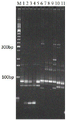
图2 So.2A.Ss(AATCT)8引物在11个甘蔗材料上的聚丙烯酰胺凝胶电泳结果图,其中1-5为甘蔗高贵种、6-9为割手密种、10-11为栽培种材料,M为50 bp DNA Ladder。Fig. 2 Polyacrylamide gel electrophoresis results of So.2A.Ss(AATCT)8 primers on 11 sugarcane materials, of which 1-5 are sugarcane noble species, 6-9 are cut-hand dense species, 10-11 are Cultivated material, M is 50 bp DNA Ladder.
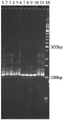
图3 So.2E.Ss(GAG)6引物在11个甘蔗材料上的聚丙烯酰胺凝胶电泳结果图,其中1-5为甘蔗高贵种、6-9为割手密种、10-11为栽培种材料,M为50 bp DNA Ladder。Fig. 3 The results of polyacrylamide gel electrophoresis of So.2E.Ss(GAG)6 primers on 11 sugarcane materials, of which 1-5 are sugarcane noble species, 6-9 are cut-hand dense species, 10-11 are Cultivated material, M is 50 bp DNA Ladder.
图4 So.2G.Ss(TA)62引物在11个甘蔗材料上的聚丙烯酰胺凝胶电泳结果图,其中1-5为甘蔗高贵种、6-9为割手密种、10-11为栽培种材料,M为50 bp DNA Ladder。Fig. 4 Polyacrylamide gel electrophoresis results of So.2G.Ss(TA)62 primers on 11 sugarcane materials, of which 1-5 are sugarcane noble species, 6-9 are cut-hand dense species, and 10-11 are Cultivated material, M is 50 bp DNA Ladder.
图5 So.2G.Ss(TA)49引物在11个甘蔗材料上的聚丙烯酰胺凝胶电泳结果图,其中1-5为甘蔗高贵种、6-9为割手密种、10-11为栽培种材料,M为50 bp DNA Ladder。Fig. 5 Polyacrylamide gel electrophoresis results of So.2G.Ss(TA)49 primers on 11 sugarcane materials, of which 1-5 are sugarcane noble species, 6-9 are cut-hand dense species, 10-11 are Cultivated material, M is 50 bp DNA Ladder.
具体实施方式Detailed ways
实施例1Example 1
1.甘蔗高贵种和割手密种全基因组序列中SSR序列的查找和SSR引物的设计及验证1. The search of SSR sequences in the whole genome sequences of sugarcane Noble species and Cucumber species and the design and verification of SSR primers
1.1 SSR 位点扫描1.1 SSR site scan
利用 Micro Satellite identification tool-MISA 软件包中的 Perl 脚本进行批量扫描甘蔗基因组的SSR 位点,本研究设定是否为 SSR 的标准为:1) 一单元至少十次重复,二单元至少七次重复,三单元至少六次重复,四单元至少五次重复,五单元至少四次重复,六单元至少四次重复。2) 两个 SSR 之间距离小于 100 bp 时组合为一个复合SSR。Using the Perl script in the Micro Satellite identification tool-MISA package to scan the SSR loci of the sugarcane genome in batches, the criteria for SSR in this study are: 1) at least ten repeats for one unit, at least seven repeats for two units, Three units at least six repetitions, four units at least five repetitions, five units at least four repetitions, and six units at least four repetitions. 2) When the distance between two SSRs is less than 100 bp, they are combined into a composite SSR.
1.2 序列截取1.2 Sequence interception
计算每个SSR位点在基因组序列上的物理位置,利用SSR位置信息从甘蔗基因组上截取SSR起始终止位点前后各150 bp 的侧翼序列,将候选的SSR序列与全基因组序列进行BLASTN搜索(E取值1e-5),序列相似度100%,侧翼序列长度100%对齐,筛选出的命中序列即为本研究中的候选SSR位点。Calculate the physical position of each SSR site on the genome sequence, use the SSR position information to intercept the flanking sequence of 150 bp before and after the SSR start and stop site from the sugarcane genome, and perform BLASTN search between the candidate SSR sequence and the whole genome sequence ( E is 1e- 5 ), the sequence similarity is 100%, and the flanking sequence length is 100% aligned. The selected hit sequence is the candidate SSR site in this study.
1.3 引物设计1.3 Primer Design
SSR位点两侧引物设计采用的是批量引物设计软件Primer3,该软件可以在网站http://frodo.wi.mit.edu/cgi.bin/primer3/primer3_www.cgi下载。设置参数为:引物长度18-23bp,最佳为20bp,最大、最小GC含量分别为60%、40%,产物目标片段大小在100-300bp,引物设计时要确保产物序列中包括SSR位点。引物设计完成后将引物提取出并将重复的引物去除。高贵种有63415个SSR设计到引物,割手密种有68214个设计到引物。Primers flanking the SSR site were designed using the batch primer design software Primer3, which can be downloaded from the website http://frodo.wi.mit.edu/cgi.bin/primer3/primer3_www.cgi. Set the parameters as follows: primer length is 18-23bp, the best is 20bp, the maximum and minimum GC contents are 60% and 40% respectively, and the target fragment size of the product is 100-300bp. When designing primers, ensure that the product sequence includes the SSR site. After the primer design is completed, the primers are extracted and the duplicate primers are removed. Noble species had 63,415 SSR designs into primers, and hand-cut compact species had 68,214 designs into primers.
1.4 引物验证1.4 Primer verification
利用 Electronic PCR(https://www.animalgenome.org/bioinfo/resources/Using Electronic PCR (https://www.animalgenome.org/bioinfo/resources/
manuals/ePCR.html)将设计好的引物在基因组上进行电子 PCR 模拟扩增,将能够在基因组上扩增出特异性片段的引物提取出来作为甘蔗 SSR的储备引物。最终高贵种获得44048个引物,割手密获得45412个引物。之后将高贵种获得的引物比对到割手密种,同时将割手密种获得的引物比对到高贵种,筛选甘蔗高贵种和割手密种均存在但片段大小存在差异的SSR即甘蔗高贵种和割手密种种间特异性SSR进行验证。manuals/ePCR.html) The designed primers are amplified by electronic PCR simulation on the genome, and the primers that can amplify specific fragments on the genome are extracted as reserve primers for sugarcane SSR. In the end, 44,048 primers were obtained from Noble Species, and 45,412 primers were obtained from Shou Mi. Then, align the primers obtained from Noble species to Cuoshou compact species, and at the same time, align the primers obtained from Cuoshou compact species to Noble species, and screen sugarcane Noble species and Cuoshou compact species for SSRs with different fragment sizes, namely sugarcane. Noble species and hand-cutting compact interspecies-specific SSR were validated.
2.甘蔗高贵种和割手密种种间特异性SSR引物的筛选2. Screening of specific SSR primers between sugarcane noble species and cutting hand compact species
2.1提取基因组DNA2.1 Extraction of genomic DNA
选择有代表性的5份甘蔗高贵种、4份割手密种、2份栽培种材料(表1),用于检测甘蔗全基因组SSR标记的扩增效率及种间特异性,采用CTAB法提取基因组DNA。
表1 11份甘蔗材料信息Table 1 11 sugarcane material information

2.2 PCR扩增2.2 PCR amplification
采用合成的引物,在11份材料的基因组DNA进行扩增,根据扩增结果,筛选出扩增结果稳定、种间特异性高及多态性丰富的引物。PCR反应体系20μL,其中25 ng/μL DNA样品0.5μL、10 μmol L-1 正向、反向引物各0 .5μL、2× Taq Master Mix 10μL,最后用ddH2O补足20μL。PCR扩增程序为94℃预变性1min30s;94℃变性20S,59.5℃退火20S,72℃延伸30S,共34个循环;最后72℃延伸5min,4℃保存。2× Taq Master Mix试剂购自铂尚生物科技有限公司。Using synthetic primers, the genomic DNAs of 11 materials were amplified. According to the amplification results, primers with stable amplification results, high interspecies specificity and abundant polymorphisms were screened. The PCR reaction system was 20 μL, including 0.5 μL of 25 ng/μL DNA sample, 0.5 μL of 10 μmol L-1 forward and reverse primers, 10 μL of 2× Taq Master Mix, and finally supplemented with ddH2O to 20 μL. The PCR amplification program was pre-denaturation at 94°C for 1 min for 30 s; denaturation at 94°C for 20S, annealing at 59.5°C for 20S, and extension at 72°C for 30S, a total of 34 cycles; the final extension at 72°C for 5 min, and storage at 4°C. 2× Taq Master Mix reagent was purchased from Boshang Biotechnology Co., Ltd.
2.3 聚丙烯酰胺凝胶电泳2.3 Polyacrylamide gel electrophoresis
所有PCR产物在9%的聚丙烯酰胺凝胶中进行分离,160V恒压下,电泳2h30min,电泳结束后,采用核酸染料(GelStain,购自北京全式金生物技术有限公司,货号:GS101-01),泡染法进行染色、拍照及保存。All PCR products were separated in a 9% polyacrylamide gel, electrophoresed for 2h30min at a constant voltage of 160V, and after electrophoresis, a nucleic acid dye (GelStain, purchased from Beijing Quanshijin Biotechnology Co., Ltd., catalog number: GS101-01) was used. ), soaking method for staining, photographing and preservation.
根据11个甘蔗属材料的条带情况,筛选出4对位于高贵种二号染色体的带型清晰且明显存在种间特异性的目标引物,表2为目标引物序列SEQ ID NO .1-SEQ ID NO .8及其所在染色体位置。后根据染色体位置寻找SSR标记两侧基因,GO富集显示(附图1),这些SSR两侧的基因主要富集到细胞组成、生物合成和代谢通路上。According to the bands of 11 sugarcane materials, 4 pairs of target primers with clear band patterns and obvious interspecies specificity located on
表2 4对SSR引物所在染色体位置及序列Table 2 Chromosomal locations and sequences of the four pairs of SSR primers
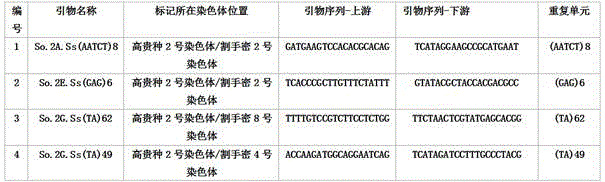
筛选获得4对引物其电泳结果如图2-5,从电泳图中可看到在甘蔗高贵种和割手密种中存在共显性标记,即两个品种均存在条带,且条带对应片段大小存在差异;在栽培种中可能存在其中一种条带,或者两种类型条带均存在,可以辅助验证,由此可知,4对引物是可以区分甘蔗高贵种和割手密种遗传背景的SSR分子标记,且能够分清现代甘蔗栽培种中高贵种和割手密种的染色体血缘背景。聚丙烯酰胺凝胶电泳的结果显示,通过生物信息学得到的种间特异性SSR与实验结果完全一致,证明此研究确实提高了开发SSR标记的效率。The electrophoresis results of 4 pairs of primers obtained by screening are shown in Figure 2-5. From the electrophoresis images, it can be seen that there are co-dominant markers in sugarcane noble species and cut hand dense species, that is, there are bands in both varieties, and the bands correspond to There are differences in fragment size; one or both types of bands may exist in cultivars, which can assist verification. It can be seen that the four pairs of primers can distinguish the genetic background of sugarcane noble species and cutting hand dense species. SSR molecular markers, and can distinguish the chromosomal background of noble species and close-cut species in modern sugarcane cultivars. The results of polyacrylamide gel electrophoresis showed that the cross-species-specific SSR obtained by bioinformatics was completely consistent with the experimental results, proving that this study indeed improved the efficiency of developing SSR markers.
以上所述仅为本发明的较佳实施例,凡依本发明申请专利范围所做的均等变化与修饰,皆应属本发明的涵盖范围。The above descriptions are only preferred embodiments of the present invention, and all equivalent changes and modifications made according to the scope of the patent application of the present invention shall fall within the scope of the present invention.
SEQUENCE LISTINGSEQUENCE LISTING
<110> 福建农林大学<110> Fujian Agriculture and Forestry University
<120> 一种区分甘蔗高贵种和割手密种二号染色体遗传背景的微卫星分子标记与应用<120> A Microsatellite Molecular Marker and Application for Distinguishing the
<130> 1<130> 1
<160> 8<160> 8
<170> PatentIn version 3.5<170> PatentIn version 3.5
<210> 1<210> 1
<211> 20<211> 20
<212> DNA<212> DNA
<213> 人工序列<213> Artificial sequences
<400> 1<400> 1
gatgaagtcc acacgcacag 20gatgaagtcc acacgcacag 20
<210> 2<210> 2
<211> 20<211> 20
<212> DNA<212> DNA
<213> 人工序列<213> Artificial sequences
<400> 2<400> 2
tcataggaag ccgcatgaat 20tcataggaag ccgcatgaat 20
<210> 3<210> 3
<211> 20<211> 20
<212> DNA<212> DNA
<213> 人工序列<213> Artificial sequences
<400> 3<400> 3
tcacccgctt gtttctattt 20tcacccgctt gtttctattt 20
<210> 4<210> 4
<211> 20<211> 20
<212> DNA<212> DNA
<213> 人工序列<213> Artificial sequences
<400> 4<400> 4
gtatacgcta ccacgacgcc 20gtatacgcta ccacgacgcc 20
<210> 5<210> 5
<211> 20<211> 20
<212> DNA<212> DNA
<213> 人工序列<213> Artificial sequences
<400> 5<400> 5
ttttgtccgt cttcctctgg 20ttttgtccgt cttcctctgg 20
<210> 6<210> 6
<211> 21<211> 21
<212> DNA<212> DNA
<213> 人工序列<213> Artificial sequences
<400> 6<400> 6
ttctaactcg tatgagcacg g 21ttctaactcg tatgagcacg g 21
<210> 7<210> 7
<211> 20<211> 20
<212> DNA<212> DNA
<213> 人工序列<213> Artificial sequences
<400> 7<400> 7
accaagatgg caggaatcag 20accaagatgg caggaatcag 20
<210> 8<210> 8
<211> 21<211> 21
<212> DNA<212> DNA
<213> 人工序列<213> Artificial sequences
<400> 8<400> 8
tcatagatcc tttgccctac g 21tcatagatcc tttgccctac g 21
Claims (2)
Priority Applications (1)
| Application Number | Priority Date | Filing Date | Title |
|---|---|---|---|
| CN202010672153.6A CN111663002B (en) | 2020-07-14 | 2020-07-14 | A SSR marker for distinguishing the genetic background of chromosome 2 among sugarcane species and its application |
Applications Claiming Priority (1)
| Application Number | Priority Date | Filing Date | Title |
|---|---|---|---|
| CN202010672153.6A CN111663002B (en) | 2020-07-14 | 2020-07-14 | A SSR marker for distinguishing the genetic background of chromosome 2 among sugarcane species and its application |
Publications (2)
| Publication Number | Publication Date |
|---|---|
| CN111663002A CN111663002A (en) | 2020-09-15 |
| CN111663002B true CN111663002B (en) | 2022-10-11 |
Family
ID=72391687
Family Applications (1)
| Application Number | Title | Priority Date | Filing Date |
|---|---|---|---|
| CN202010672153.6A Active CN111663002B (en) | 2020-07-14 | 2020-07-14 | A SSR marker for distinguishing the genetic background of chromosome 2 among sugarcane species and its application |
Country Status (1)
| Country | Link |
|---|---|
| CN (1) | CN111663002B (en) |
Families Citing this family (2)
| Publication number | Priority date | Publication date | Assignee | Title |
|---|---|---|---|---|
| CN113584184B (en) * | 2021-08-04 | 2023-07-28 | 南通大学 | Molecular marker system for identifying authenticity of sugarcane hybrid and development method thereof |
| CN118726634B (en) * | 2024-06-14 | 2025-01-10 | 广西大学 | SSR molecular marker primer for distinguishing sugarcane noble species and cut-hand compact species cytoplasmic types and application |
Family Cites Families (5)
| Publication number | Priority date | Publication date | Assignee | Title |
|---|---|---|---|---|
| BRPI1106959A2 (en) * | 2011-12-15 | 2018-07-31 | Agco Do Brasil Comercio E Industria Ltda. | SUGAR CANE HARVESTING DIRECTION SYSTEM |
| CN106755481B (en) * | 2016-09-26 | 2020-07-17 | 山西省农业科学院生物技术研究中心 | SSR molecular marker VI for identifying progeny plants of Gala apples and application thereof |
| CN107312827B (en) * | 2017-03-22 | 2021-06-25 | 新疆农业科学院经济作物研究所 | SSR molecular marker method for identifying authenticity of conventional cotton varieties |
| CN108504771A (en) * | 2018-06-22 | 2018-09-07 | 福建农林大学 | A method of exploitation sugarcane SSR marker and identification Sugarcane Breeding affiliation |
| CN110551844B (en) * | 2019-09-30 | 2020-11-17 | 福建农林大学 | Sugarcane cultivar genome SSR molecular marker development method and application |
-
2020
- 2020-07-14 CN CN202010672153.6A patent/CN111663002B/en active Active
Also Published As
| Publication number | Publication date |
|---|---|
| CN111663002A (en) | 2020-09-15 |
Similar Documents
| Publication | Publication Date | Title |
|---|---|---|
| Sanseverino et al. | Transposon insertions, structural variations, and SNPs contribute to the evolution of the melon genome | |
| Shao et al. | A new deletion mutation of fragrant gene and the development of three molecular markers for fragrance in rice | |
| CN103667275B (en) | Camellia oleifera SSR molecular marker | |
| CN105695572A (en) | Method for massively and efficiently developing molecular markers on basis of Indel and SSR (simple sequence repeat) site techniques | |
| CN103642912A (en) | Method for developing mung bean simple sequence repeat (SSR) primer based on transcriptome sequencing | |
| CN107345256B (en) | Transcriptome sequencing-based EST-SSR primer group for developing mucuna pruriens, method and application | |
| CN113684301B (en) | SNP (Single nucleotide polymorphism) marker and primer for identifying apricot pericarp Mao Xingzhuang and application of SNP marker and primer | |
| CN105008599A (en) | Rice whole genome breeding chip and application thereof | |
| CN109468405B (en) | SSR primer pair and screening method and application of Rhododendron yunnanensis developed based on transcriptome sequencing | |
| Blanca et al. | Melon transcriptome characterization: Simple sequence repeats and single nucleotide polymorphisms discovery for high throughput genotyping across the species | |
| CN111321241B (en) | Molecular marker of wheat thousand-grain weight and grain length gene TaGS3-4A and application thereof | |
| CN104673884B (en) | Utilize full-length genome and the method for EST data mining polymorphism EST SSR markers | |
| CN111663002B (en) | A SSR marker for distinguishing the genetic background of chromosome 2 among sugarcane species and its application | |
| CN110628930A (en) | The dCAPS Molecular Marker and Its Application for Identifying Rice Panicle Length Traits | |
| CN114990249A (en) | SSR Molecular Markers, Molecular ID Cards for Identification of Pecan Varieties and Their Applications | |
| CN110894542A (en) | A primer for identifying rice GS5 gene and GLW7 gene type and its application | |
| CN104611435B (en) | A kind of Leymus chinensis (Trin.) Tzvel. to matter the most of the same race carries out SNP primer and the application thereof of gene type | |
| CN108192893B (en) | A method for developing Ainaxiang SSR primers based on transcriptome sequencing | |
| CN111663001B (en) | SSR marker for distinguishing genetic background of No. three chromosomes between sugarcane species and application | |
| CN108103237B (en) | InDel molecular marker co-separated from rice bacterial leaf blight disease-resistant gene xa34(t), and detection primer and application thereof | |
| CN110205329B (en) | Saccharomyces cerevisiae specific sequence and identification method thereof | |
| CN113151575B (en) | An InDel molecular marker GW6a-InDel, a major QTL for grain shape in rice, and its detection primers and applications | |
| CN119120735B (en) | Highly polymorphic microsatellite markers and their application in Litopenaeus vannamei | |
| CN114350845A (en) | Rice storage-resistant gene excavation and molecular marker development | |
| CN119433036A (en) | A SNP molecular marker ITPR3 associated with reproductive traits of goats and its application |
Legal Events
| Date | Code | Title | Description |
|---|---|---|---|
| PB01 | Publication | ||
| PB01 | Publication | ||
| SE01 | Entry into force of request for substantive examination | ||
| SE01 | Entry into force of request for substantive examination | ||
| GR01 | Patent grant | ||
| GR01 | Patent grant |