CN108130552B - Polyaniline cuprous oxide composite material and preparation method and application thereof - Google Patents
Polyaniline cuprous oxide composite material and preparation method and application thereof Download PDFInfo
- Publication number
- CN108130552B CN108130552B CN201711444831.8A CN201711444831A CN108130552B CN 108130552 B CN108130552 B CN 108130552B CN 201711444831 A CN201711444831 A CN 201711444831A CN 108130552 B CN108130552 B CN 108130552B
- Authority
- CN
- China
- Prior art keywords
- polyaniline
- acid
- mixed solution
- cuprous oxide
- composite material
- Prior art date
- Legal status (The legal status is an assumption and is not a legal conclusion. Google has not performed a legal analysis and makes no representation as to the accuracy of the status listed.)
- Active
Links
Images


Classifications
-
- C—CHEMISTRY; METALLURGY
- C25—ELECTROLYTIC OR ELECTROPHORETIC PROCESSES; APPARATUS THEREFOR
- C25B—ELECTROLYTIC OR ELECTROPHORETIC PROCESSES FOR THE PRODUCTION OF COMPOUNDS OR NON-METALS; APPARATUS THEREFOR
- C25B11/00—Electrodes; Manufacture thereof not otherwise provided for
- C25B11/04—Electrodes; Manufacture thereof not otherwise provided for characterised by the material
-
- C—CHEMISTRY; METALLURGY
- C25—ELECTROLYTIC OR ELECTROPHORETIC PROCESSES; APPARATUS THEREFOR
- C25B—ELECTROLYTIC OR ELECTROPHORETIC PROCESSES FOR THE PRODUCTION OF COMPOUNDS OR NON-METALS; APPARATUS THEREFOR
- C25B1/00—Electrolytic production of inorganic compounds or non-metals
-
- C—CHEMISTRY; METALLURGY
- C25—ELECTROLYTIC OR ELECTROPHORETIC PROCESSES; APPARATUS THEREFOR
- C25B—ELECTROLYTIC OR ELECTROPHORETIC PROCESSES FOR THE PRODUCTION OF COMPOUNDS OR NON-METALS; APPARATUS THEREFOR
- C25B3/00—Electrolytic production of organic compounds
- C25B3/20—Processes
- C25B3/25—Reduction
Landscapes
- Chemical & Material Sciences (AREA)
- Organic Chemistry (AREA)
- Engineering & Computer Science (AREA)
- Chemical Kinetics & Catalysis (AREA)
- Electrochemistry (AREA)
- Materials Engineering (AREA)
- Metallurgy (AREA)
- Inorganic Chemistry (AREA)
- Electrolytic Production Of Metals (AREA)
Abstract
本发明涉及一种聚苯胺氧化亚铜复合材料及其制备方法和应用,所述方法如下:S1:将亲水碳纸装于铂电极夹上作为工作电极,以铂电极为对电极,饱和甘汞电极为参比电极,置于电解池中;S2:将苯胺与酸的混合溶液加入至S1中的电解池中,以循环伏安法进行氧化还原反应制备聚苯胺模板;S3:将S2所得聚苯胺模板置于铜盐与酸的混合溶液中,采用恒电位电沉积法制备聚苯胺氧化亚铜复合材料;其中,S3中,所述混合溶液中铜盐的浓度为0.01~0.5mol/L,酸的浓度为0.05~0.5mol/L;恒电位为‑0.05~‑0.3V,沉积时间为150~1800s。本发明提供的方法制备得到的聚苯胺氧化亚铜复合材料的形貌、尺寸可控,具有良好的电催化性能,可应用于电还原CO2领域。
The invention relates to a polyaniline cuprous oxide composite material and a preparation method and application thereof. The method is as follows: S1: A hydrophilic carbon paper is mounted on a platinum electrode clip as a working electrode, the platinum electrode is used as a counter electrode, and a saturated sweetener is used as a working electrode. The mercury electrode is the reference electrode, which is placed in the electrolytic cell; S2: The mixed solution of aniline and acid is added to the electrolytic cell in S1, and the polyaniline template is prepared by cyclic voltammetry for redox reaction; S3: The obtained from S2 The polyaniline template is placed in a mixed solution of copper salt and acid, and a polyaniline cuprous oxide composite material is prepared by a potentiostatic electrodeposition method; wherein, in S3, the concentration of the copper salt in the mixed solution is 0.01-0.5 mol/L , the acid concentration is 0.05~0.5mol/L; the constant potential is ‑0.05~‑0.3V, and the deposition time is 150~1800s. The polyaniline cuprous oxide composite material prepared by the method provided by the invention has controllable morphology and size, has good electrocatalytic performance, and can be applied to the field of electroreduction of CO 2 .
Description
技术领域technical field
本发明涉及复合材料技术领域,具体地,涉及一种聚苯胺氧化亚铜复合材料及其制备方法和应用。The invention relates to the technical field of composite materials, in particular to a polyaniline cuprous oxide composite material and a preparation method and application thereof.
背景技术Background technique
二氧化碳(CO2)是引起全球温室效应的主要气体,自工业革命以来,人类消耗了大量的化石能源(煤、石油、天然气),进而导致空气中的CO2急剧上升。在现代社会中,通过利用可再生的电能来对二氧化碳进行电化学还原,产生可持续燃料或化学品,将使得碳循环变得更为容易。这种转化形式还有利于缓解CO2的释放与全球经济的可持续增长。在电化学还原CO2的研究中,Cu基纳米材料仍是研究最多的阴极材料之一,而两种或多种材料的复合可以提高材料的电催化性能。Carbon dioxide (CO 2 ) is the main gas that causes the global greenhouse effect. Since the industrial revolution, humans have consumed a large amount of fossil energy (coal, oil, natural gas), which has led to a sharp rise in CO 2 in the air. In modern society, the electrochemical reduction of carbon dioxide using renewable electricity to produce sustainable fuels or chemicals will make the carbon cycle easier. This form of conversion is also beneficial for mitigating CO2 release and sustainable growth of the global economy. In the electrochemical reduction of CO , Cu-based nanomaterials are still one of the most studied cathode materials, and the composite of two or more materials can improve the electrocatalytic performance of the materials.
因此,亟需研发一种具有良好电催化性能,同时制备方法简单的复合Cu基纳米材料。Therefore, it is urgent to develop a composite Cu-based nanomaterial with good electrocatalytic performance and simple preparation method.
发明内容SUMMARY OF THE INVENTION
本发明的目的在于克服现有技术的不足,提供一种聚苯胺氧化亚铜复合材料的制备方法,本发明提供的方法制备得到的聚苯胺氧化亚铜复合材料的形貌、尺寸可控,具有良好的电催化性能,可应用于电还原CO2领域。The purpose of the present invention is to overcome the deficiencies of the prior art and provide a method for preparing a polyaniline cuprous oxide composite material. The polyaniline cuprous oxide composite material prepared by the method provided by the present invention has Good electrocatalytic performance, which can be applied in the field of electroreduction of CO2 .
本发明的另一目的在于提供上述制备方法制备得到的聚苯胺氧化亚铜复合材料。Another object of the present invention is to provide the polyaniline cuprous oxide composite material prepared by the above preparation method.
本发明的另一目的在于提供聚苯胺氧化亚铜复合材料在电还原CO2中的应用。Another object of the present invention is to provide the application of the polyaniline cuprous oxide composite material in the electroreduction of CO 2 .
为实现上述目的,本发明采用如下技术方案:To achieve the above object, the present invention adopts the following technical solutions:
一种聚苯胺氧化亚铜复合材料的制备方法,所述方法如下:A preparation method of a polyaniline cuprous oxide composite material, the method is as follows:
S1:将亲水碳纸装于铂电极夹上作为工作电极,以铂电极为对电极,饱和甘汞电极为参比电极,置于电解池中;S1: The hydrophilic carbon paper is mounted on the platinum electrode clip as the working electrode, the platinum electrode is used as the counter electrode, and the saturated calomel electrode is used as the reference electrode, which is placed in the electrolytic cell;
S2:将苯胺与酸的混合溶液加入至S1中的电解池中,以循环伏安法进行氧化还原反应制备聚苯胺模板;S2: adding the mixed solution of aniline and acid to the electrolytic cell in S1, and performing redox reaction by cyclic voltammetry to prepare a polyaniline template;
S3:将S2所得聚苯胺模板置于铜盐与酸的混合溶液中,采用恒电位电沉积法制备聚苯胺氧化亚铜复合材料;S3: the polyaniline template obtained in S2 is placed in a mixed solution of copper salt and acid, and a polyaniline cuprous oxide composite material is prepared by a potentiostatic electrodeposition method;
其中,S3中,所述混合溶液中铜盐的浓度为0.01~0.5mol/L,酸的浓度为0.05~0.5mol/L;恒电位为-0.05~-0.3V,沉积时间为150~1800s。Wherein, in S3, the concentration of copper salt in the mixed solution is 0.01-0.5mol/L, the concentration of acid is 0.05-0.5mol/L; the potentiostatic is -0.05--0.3V, and the deposition time is 150-1800s.
本发明以通过循环伏安法制备得到的多孔蓬松聚苯胺结构为模板,通过聚苯胺与铜盐的酸混合溶液进行电沉积反应,从而制备得到具有规整多面体形貌的纳米聚苯胺氧化亚铜复合材料。本发明利用Cu金属良好的电催化CO2性能,加上聚苯胺(PANI)独特的导电性、易于合成及成本低廉等特性,通过电化学方法制备了形貌、尺寸可控的PANI/Cu2O纳米复合材料,该复合材料可应用于电还原CO2领域。In the invention, the porous and fluffy polyaniline structure prepared by cyclic voltammetry is used as a template, and an acid mixed solution of polyaniline and copper salt is used for electrodeposition reaction, so as to prepare nano-polyaniline cuprous oxide composite with regular polyhedral morphology. Material. The invention utilizes the good electrocatalytic CO 2 performance of Cu metal, and the unique properties of polyaniline (PANI), such as electrical conductivity, easy synthesis and low cost, to prepare PANI/Cu 2 with controllable morphology and size by an electrochemical method. O nanocomposite material, which can be applied in the field of electroreduction of CO2 .
在本发明中,铜盐和酸的浓度过低会影响沉积出来铜晶体结构,无法出现规整的晶体形貌;若浓度过高,生成的晶体会团聚在一起,影响了整体结构。因此优选地,S3中,所述混合溶液中铜盐的浓度为0.05~0.2mol/L,酸的浓度为0.05~0.2mol/L。In the present invention, if the concentration of copper salt and acid is too low, the crystal structure of the deposited copper will be affected, and regular crystal morphology cannot appear; if the concentration is too high, the resulting crystals will agglomerate together, affecting the overall structure. Therefore, preferably, in S3, the concentration of the copper salt in the mixed solution is 0.05-0.2 mol/L, and the concentration of the acid is 0.05-0.2 mol/L.
在本发明中,恒电位和沉积时间对生成铜晶体的大小尺寸有影响,过低或过高会使生成的铜晶体材料形貌不规整,大小不均一。因此优选地,S3中,所述恒电位为-0.05~-0.2 V,沉积时间为600~1800s。In the present invention, the constant potential and the deposition time have an influence on the size of the generated copper crystals, and if too low or too high, the resulting copper crystals will be irregular in shape and non-uniform in size. Therefore, preferably, in S3, the constant potential is -0.05~-0.2 V, and the deposition time is 600~1800s.
优选地,S3中,所述铜盐为硝酸铜、硫酸铜、氯化铜中的一种或几种。Preferably, in S3, the copper salt is one or more of copper nitrate, copper sulfate, and copper chloride.
优选地,所述酸为硫酸、硝酸、盐酸中的一种或几种。Preferably, the acid is one or more of sulfuric acid, nitric acid and hydrochloric acid.
优选地,S3中,电沉积反应的温度为25℃。Preferably, in S3, the temperature of the electrodeposition reaction is 25°C.
优选地,S2中,所述混合溶液中苯胺的浓度为0.01~0.5 mol/L;所述混合溶液中酸的浓度为0.05~2 mol/L。Preferably, in S2, the concentration of aniline in the mixed solution is 0.01-0.5 mol/L; the concentration of acid in the mixed solution is 0.05-2 mol/L.
优选地,S2中,循环伏安法的起始电位为-0.1~-0.5 V,终止电位为0.5~1.2V,扫描圈数为10~100圈。Preferably, in S2, the starting potential of the cyclic voltammetry is -0.1-0.5 V, the ending potential is 0.5-1.2 V, and the number of scanning turns is 10-100 turns.
优选地,S1中,所述亲水碳纸预先依次在去离子水、乙醇、去离子水中分别超声清洗。更为优选地,清洗时间各位10分钟。Preferably, in S1, the hydrophilic carbon paper is ultrasonically cleaned in deionized water, ethanol and deionized water in sequence in advance. More preferably, the cleaning time is 10 minutes for each.
优选地,S1中,所述亲水碳纸的厚度为0.1~0.3mm。Preferably, in S1, the thickness of the hydrophilic carbon paper is 0.1-0.3 mm.
在本发明S1中,工作电极的几何尺寸为1cm×1cm,对电极为铂网电极、铂片电极、铂丝电极中的一种,几何尺寸为1 cm ´ 1 cm。In the present invention S1, the geometric size of the working electrode is 1 cm×1 cm, the counter electrode is one of a platinum mesh electrode, a platinum sheet electrode, and a platinum wire electrode, and the geometric size is 1 cm ´ 1 cm.
与现有技术相比,本发明具有如下有益效果:Compared with the prior art, the present invention has the following beneficial effects:
本发明提供了一种聚苯胺氧化亚铜复合材料的制备方法,以采用循环伏安法制备的聚苯胺多孔结构为模板,通过其与铜盐的酸混合溶液进行电沉积反应,制备得到具有规整多面体结构的纳米聚苯胺氧化亚铜复合材料。本发明提供的方法保持了氧化亚铜的规整多面体结构,能够在常温常压下进行,原料廉价易得、制备方法简单。The invention provides a preparation method of a polyaniline cuprous oxide composite material. The polyaniline porous structure prepared by cyclic voltammetry is used as a template, and an acid mixed solution of copper salt is used for electrodeposition reaction to prepare a polyaniline with regular Nano-polyaniline cuprous oxide composites with polyhedral structure. The method provided by the invention maintains the regular polyhedral structure of cuprous oxide, can be carried out at normal temperature and pressure, has cheap and easy-to-obtain raw materials, and a simple preparation method.
附图说明Description of drawings
图1为实施例1制备得到的聚苯胺模板的SEM图;Fig. 1 is the SEM image of the polyaniline template prepared in Example 1;
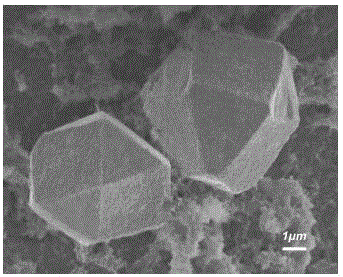
图2为实施例1制备得到的聚苯胺氧化亚铜复合材料SEM图;Fig. 2 is the SEM image of the polyaniline cuprous oxide composite material prepared in Example 1;
图3为实施例1制备得到的聚苯胺氧化亚铜复合材料的电化学还原二氧化碳线性扫描(LSV)图。3 is a linear scan (LSV) diagram of electrochemical reduction of carbon dioxide for the polyaniline cuprous oxide composite prepared in Example 1.
具体实施方式Detailed ways
以下结合具体实施例和附图来进一步说明本发明,但实施例并不对本发明做任何形式的限定。除非特别说明,本发明采用的试剂、方法和设备为本技术领域常规试剂、方法和设备。The present invention will be further described below with reference to specific embodiments and accompanying drawings, but the embodiments do not limit the present invention in any form. Unless otherwise specified, the reagents, methods and equipment used in the present invention are conventional reagents, methods and equipment in the technical field.
除非特别说明,本发明所用试剂和材料均为市购。Unless otherwise specified, the reagents and materials used in the present invention are commercially available.
实施例1Example 1
一种聚苯胺氧化亚铜复合材料的制备方法,包括如下步骤:A preparation method of a polyaniline cuprous oxide composite material, comprising the following steps:
(1)将取0.1mm厚度的亲水碳纸依次在去离子水、乙醇、去离子水中分别超声清洗,各清洗10分钟;将经过清洗的亲水碳纸装于铂电极夹上当作工作电极;以铂网当对电极、饱和甘汞电极(SCE)当参比电极,置于电解池中;(1) The hydrophilic carbon paper with a thickness of 0.1 mm was ultrasonically cleaned in deionized water, ethanol and deionized water in turn for 10 minutes; the cleaned hydrophilic carbon paper was placed on the platinum electrode clip as a working electrode ; The platinum mesh is used as the counter electrode and the saturated calomel electrode (SCE) is used as the reference electrode, which is placed in the electrolytic cell;
(2)配制苯胺与酸的混合溶液,其中苯胺浓度为0.05mol/L,所选酸为硝酸,其浓度为0.1mol/L;将配制的苯胺与酸的混合溶液加入到步骤(1)中的电解池中,以循环伏安法(CV)进行氧化还原制备聚苯胺模板,循环伏安法的起始电位为-0.1v,终止电位为0.8v,扫描圈数为60圈。(2) prepare a mixed solution of aniline and acid, wherein the concentration of aniline is 0.05mol/L, the selected acid is nitric acid, and its concentration is 0.1mol/L; the prepared mixed solution of aniline and acid is added to step (1) In the electrolytic cell of , the polyaniline template was prepared by redox by cyclic voltammetry (CV), the starting potential of cyclic voltammetry was -0.1v, the stop potential was 0.8v, and the number of scan cycles was 60 cycles.
(3)配制铜盐与酸的混合溶液,所选铜盐为硝酸铜,其浓度为0.1mol/L,所选的酸为硝酸,浓度为0.2mol/L;将(2)制备的聚苯胺材料置于硫酸铜与硼酸的混合溶液中,在25℃条件下,电沉积制备具有规整形貌的氧化亚铜颗粒。其中,恒电位为-0.16V,沉积时间为600s。(3) Prepare a mixed solution of copper salt and acid. The selected copper salt is copper nitrate with a concentration of 0.1 mol/L, and the selected acid is nitric acid with a concentration of 0.2 mol/L; The material is placed in a mixed solution of copper sulfate and boric acid, and copper oxide particles with regular morphology are prepared by electrodeposition at 25°C. Among them, the potentiostat was -0.16V, and the deposition time was 600s.
将步骤(5)中制备得到的聚苯胺氧化亚铜材料取出后,用去离子水冲洗干净,即得到聚苯胺-氧化亚铜复合材料。After taking out the polyaniline cuprous oxide material prepared in step (5), rinse with deionized water to obtain the polyaniline-cuprous oxide composite material.
图1为本实施例制备得到的聚苯胺模板的SEM图,从图1中可以看出,在碳纸的模板上生成了蓬松多孔的聚苯胺材料,这种蓬松多空的结构,增加了催化的接触面积。Fig. 1 is an SEM image of the polyaniline template prepared in this example. It can be seen from Fig. 1 that a fluffy and porous polyaniline material is formed on the template of carbon paper. contact area.
图2为制备得到的聚苯胺氧化亚铜复合材料SEM图,从图2中可以看出,生成的氧化亚铜晶体结构为规整的14面体,尺寸大小为约6μm,表面光滑,晶体结构规整,菱角分明。Figure 2 is the SEM image of the prepared polyaniline cuprous oxide composite material. It can be seen from Figure 2 that the resulting cuprous oxide crystal structure is a regular 14-hedron, the size is about 6 μm, the surface is smooth, and the crystal structure is regular. Water chestnut is distinct.
图3为聚苯胺氧化亚铜复合材料的电化学还原二氧化碳线性扫描(LSV)图。从图3可以看出,聚苯胺氧化亚铜复合材料在氩气中的起波电位为-1.1V(vs. Ag/AgCl),在CO2中的起波电位高于其在氩气氛围中的电位,为-0.9V(vs. Ag/AgCl)。聚苯胺氧化亚铜复合材料在CO2中的电流密度高于其在氩气氛围中的电流密度,两者差值约为1mA·cm-2。该图表明制备的聚苯胺氧化亚铜复合材料具有良好的还原CO2性能。Figure 3 is a linear scan (LSV) diagram of electrochemical reduction of carbon dioxide for polyaniline cuprous oxide composites. It can be seen from Figure 3 that the starting potential of the polyaniline cuprous oxide composite material in argon is -1.1V (vs. Ag/AgCl), and the starting potential in CO2 is higher than that in argon atmosphere The potential of -0.9V (vs. Ag/AgCl). The current density of polyaniline cuprous oxide composites in CO 2 is higher than that in argon atmosphere, and the difference between the two is about 1 mA·cm -2 . This figure shows that the prepared polyaniline cuprous oxide composites have good CO2 reduction performance.
实施例2Example 2
一种聚苯胺氧化亚铜复合材料的制备方法,包括如下步骤:A preparation method of a polyaniline cuprous oxide composite material, comprising the following steps:
(1)将取0.3mm厚度的亲水碳纸依次在去离子水、乙醇、去离子水中分别超声清洗,各清洗10分钟;将经过清洗的亲水碳纸装于铂电极夹上当作工作电极;以铂片当对电极、饱和甘汞电极(SCE)当参比电极,置于电解池中;(1) The hydrophilic carbon paper with a thickness of 0.3 mm was ultrasonically cleaned in deionized water, ethanol and deionized water in turn for 10 minutes; the cleaned hydrophilic carbon paper was placed on the platinum electrode clip as a working electrode ;Pt platinum sheet as the counter electrode, saturated calomel electrode (SCE) as the reference electrode, placed in the electrolytic cell;
(2)配制苯胺与酸的混合溶液,其中苯胺浓度为0.1mol/L,所选酸为硫酸,其浓度为0.1mol/L;将配制的苯胺与酸的混合溶液加入到步骤(1)中的电解池中,以循环伏安法(CV)进行氧化还原制备聚苯胺模板。循环伏安法的起始电位为-0.2v,终止电位为0.9v,扫描圈数为30圈。(2) Prepare a mixed solution of aniline and acid, wherein the concentration of aniline is 0.1 mol/L, the selected acid is sulfuric acid, and its concentration is 0.1 mol/L; the prepared mixed solution of aniline and acid is added to step (1) The polyaniline template was prepared by redox by cyclic voltammetry (CV) in the electrolytic cell of . The starting potential of cyclic voltammetry was -0.2v, the stop potential was 0.9v, and the number of scan cycles was 30.
(3)配制铜盐与酸的混合溶液,所选铜盐为硫酸铜,其浓度为0.01mol/L,所选的酸为硫酸,浓度为0.05mol/L;将(2)制备的聚苯胺材料置于硫酸铜与硼酸的混合溶液中,在25℃条件下,电沉积制备具有规整形貌的氧化亚铜颗粒。其中,恒电位为-0.05V,沉积时间为150s。(3) Prepare a mixed solution of copper salt and acid, the selected copper salt is copper sulfate, and its concentration is 0.01mol/L, and the selected acid is sulfuric acid, and its concentration is 0.05mol/L; The material is placed in a mixed solution of copper sulfate and boric acid, and copper oxide particles with regular morphology are prepared by electrodeposition at 25°C. Among them, the constant potential is -0.05V, and the deposition time is 150s.
将步骤(3)中得到的聚苯胺-氧化亚铜材料取出后,用去离子水冲洗干净,即得到聚苯胺氧化亚铜复合材料。After taking out the polyaniline-cuprous oxide material obtained in step (3), rinse it with deionized water to obtain a polyaniline cuprous oxide composite material.
实施例3Example 3
一种聚苯胺氧化亚铜复合材料的制备方法,包括如下步骤:A preparation method of a polyaniline cuprous oxide composite material, comprising the following steps:
(1)将取0.2mm厚度的亲水碳纸依次在去离子水、乙醇、去离子水中分别超声清洗,各清洗10分钟;将经过清洗的亲水碳纸装于铂电极夹上当作工作电极;以铂丝当对电极、饱和甘汞电极(SCE)当参比电极,置于电解池中;(1) The hydrophilic carbon paper with a thickness of 0.2 mm was ultrasonically cleaned in deionized water, ethanol and deionized water in turn for 10 minutes; the cleaned hydrophilic carbon paper was placed on the platinum electrode clip as a working electrode ; Use platinum wire as the counter electrode, saturated calomel electrode (SCE) as the reference electrode, and place it in the electrolytic cell;
(2)配制苯胺与酸的混合溶液,其中苯胺浓度为0.03mol/L,所选酸为硫酸,其浓度为0.05mol/L;将配制的苯胺与酸的混合溶液加入到步骤(1)中的电解池中,以循环伏安法(CV)进行氧化还原制备聚苯胺模板。循环伏安法的起始电位为-0.2v,终止电位为1.0v,扫描圈数为90圈。(2) prepare a mixed solution of aniline and acid, wherein the concentration of aniline is 0.03mol/L, the selected acid is sulfuric acid, and its concentration is 0.05mol/L; the prepared mixed solution of aniline and acid is added to step (1) The polyaniline template was prepared by redox by cyclic voltammetry (CV) in the electrolytic cell of . The starting potential of cyclic voltammetry was -0.2v, the stop potential was 1.0v, and the number of scan cycles was 90.
(3)配制铜盐与酸的混合溶液,所选铜盐为硫酸铜,其浓度为0.05mol/L,所选的酸为硼酸,浓度为0.5mol/L。将步骤(2)中制备的聚苯胺材料置于硫酸铜与硼酸的混合溶液中,在25℃条件下,电沉积制备具有规整形貌的氧化亚铜颗粒。其中,恒电位为-0.3V,沉积时间为1800s。(3) To prepare a mixed solution of copper salt and acid, the selected copper salt is copper sulfate with a concentration of 0.05mol/L, and the selected acid is boric acid with a concentration of 0.5mol/L. The polyaniline material prepared in step (2) is placed in a mixed solution of copper sulfate and boric acid, and copper oxide particles with regular morphology are prepared by electrodeposition at 25°C. Among them, the potentiostat was -0.3V and the deposition time was 1800s.
将步骤(3)中得到的聚苯胺氧化亚铜材料取出后,用去离子水冲洗干净,即得到聚苯胺-氧化亚铜复合材料。After taking out the polyaniline cuprous oxide material obtained in step (3), rinse it with deionized water to obtain the polyaniline-cuprous oxide composite material.
以上所述实施例仅表达了本发明的优选实施方式,其描述较为具体和详细,但并不能因此而理解为对本发明专利范围的限制。应当指出的是,对于本领域的普通技术人员来说,在不脱离本发明构思的前提下,还可以做出若干变形和改进,这些都属于本发明的保护范围。因此,本发明专利的保护范围应以所附权利要求为准。The above-mentioned embodiments only represent the preferred embodiments of the present invention, and the descriptions thereof are specific and detailed, but should not be construed as limiting the scope of the patent of the present invention. It should be pointed out that for those skilled in the art, without departing from the concept of the present invention, several modifications and improvements can be made, which all belong to the protection scope of the present invention. Therefore, the protection scope of the patent of the present invention should be subject to the appended claims.
Claims (6)
Priority Applications (1)
| Application Number | Priority Date | Filing Date | Title |
|---|---|---|---|
| CN201711444831.8A CN108130552B (en) | 2017-12-27 | 2017-12-27 | Polyaniline cuprous oxide composite material and preparation method and application thereof |
Applications Claiming Priority (1)
| Application Number | Priority Date | Filing Date | Title |
|---|---|---|---|
| CN201711444831.8A CN108130552B (en) | 2017-12-27 | 2017-12-27 | Polyaniline cuprous oxide composite material and preparation method and application thereof |
Publications (2)
| Publication Number | Publication Date |
|---|---|
| CN108130552A CN108130552A (en) | 2018-06-08 |
| CN108130552B true CN108130552B (en) | 2020-11-06 |
Family
ID=62393312
Family Applications (1)
| Application Number | Title | Priority Date | Filing Date |
|---|---|---|---|
| CN201711444831.8A Active CN108130552B (en) | 2017-12-27 | 2017-12-27 | Polyaniline cuprous oxide composite material and preparation method and application thereof |
Country Status (1)
| Country | Link |
|---|---|
| CN (1) | CN108130552B (en) |
Families Citing this family (9)
| Publication number | Priority date | Publication date | Assignee | Title |
|---|---|---|---|---|
| CN113061902A (en) * | 2019-12-14 | 2021-07-02 | 中国科学院大连化学物理研究所 | Molybdenum carbide catalytic hydrogen evolution electrode and preparation method and application thereof |
| CN111495425B (en) * | 2020-03-26 | 2023-06-09 | 东莞理工学院 | Polyaniline-gold composite material, preparation and application |
| CN113804738B (en) * | 2021-08-26 | 2023-04-25 | 宁德师范学院 | Polyaniline-loaded cuprous oxide sensing electrode and preparation thereof |
| CN113804737B (en) * | 2021-08-26 | 2024-02-13 | 宁德师范学院 | Preparation method of polyaniline supported silver/cuprous oxide multi-component nanocomposite and modified electrode |
| CN113957480B (en) * | 2021-11-09 | 2022-11-22 | 深圳先进技术研究院 | Electrochemical catalytic carbon dioxide reduction energy storage copper-based catalyst, electrode, preparation method and application thereof |
| CN114277402B (en) * | 2021-12-15 | 2023-01-06 | 华南理工大学 | A kind of conjugated conductive polymer modified copper-based catalyst and its preparation method and application |
| CN114487065B (en) * | 2022-01-27 | 2024-04-26 | 中国石油大学(华东) | Independent enzyme-free electrode capable of simultaneously detecting glucose and cholesterol and preparation method thereof |
| CN114985003B (en) * | 2022-06-07 | 2023-11-17 | 西安理工大学 | Preparation method and application of chlorine doped cuprous oxide/polyaniline/ITO photocatalytic film |
| CN119332279B (en) * | 2024-10-28 | 2025-11-21 | 中国石油大学(华东) | Preparation and application of heat-activated modified polyaniline-loaded cuprous oxide integral electrode |
Citations (3)
| Publication number | Priority date | Publication date | Assignee | Title |
|---|---|---|---|---|
| CN102284293A (en) * | 2011-06-24 | 2011-12-21 | 余颖 | Cu/Cu2O film material for reducing CO2 into organic fuel under catalysis |
| CN103361704A (en) * | 2013-07-22 | 2013-10-23 | 兰州理工大学 | Preparation method and use of copper ion electrochemical doped polyaniline material |
| CN104031414A (en) * | 2014-06-05 | 2014-09-10 | 刘剑洪 | Preparation method of carbon-coated cuprous oxide and carbon-coated cuprous oxide |
-
2017
- 2017-12-27 CN CN201711444831.8A patent/CN108130552B/en active Active
Patent Citations (3)
| Publication number | Priority date | Publication date | Assignee | Title |
|---|---|---|---|---|
| CN102284293A (en) * | 2011-06-24 | 2011-12-21 | 余颖 | Cu/Cu2O film material for reducing CO2 into organic fuel under catalysis |
| CN103361704A (en) * | 2013-07-22 | 2013-10-23 | 兰州理工大学 | Preparation method and use of copper ion electrochemical doped polyaniline material |
| CN104031414A (en) * | 2014-06-05 | 2014-09-10 | 刘剑洪 | Preparation method of carbon-coated cuprous oxide and carbon-coated cuprous oxide |
Non-Patent Citations (2)
| Title |
|---|
| "Electrochemical reduction of carbon dioxide at low overpotential on a polyaniline/Cu2O nanocomposite based electrode";Andrews Nirmala Grace et al.;《Applied Energy》;20140214;第120卷(第1期);第85-94页 * |
| "Electrochemical reduction of CO2 on a Cu2O/polyaniline/stainless steel based electrode";Qin Zhang et al.;《Journal of Advanced Oxidation Technologies》;20170216;第20卷(第1期);"Experiment and methods"部分 * |
Also Published As
| Publication number | Publication date |
|---|---|
| CN108130552A (en) | 2018-06-08 |
Similar Documents
| Publication | Publication Date | Title |
|---|---|---|
| CN108130552B (en) | Polyaniline cuprous oxide composite material and preparation method and application thereof | |
| CN107376958B (en) | NiFeP difunctional transition metal phosphide catalyst and preparation and application thereof | |
| Chen et al. | Stainless steel mesh-supported NiS nanosheet array as highly efficient catalyst for oxygen evolution reaction | |
| CN110205636B (en) | Preparation method of self-supporting three-dimensional porous structure bifunctional catalytic electrode | |
| CN107904614B (en) | A Ni3S2@Ni-Fe LDH oxygen evolution electrocatalytic electrode and its preparation method and application | |
| WO2021213338A1 (en) | Nickel phosphide composite with multi-level pore structure, preparation method therefor and use thereof | |
| CN107670667B (en) | A nanoporous Ni-Fe bimetallic hydroxide electrocatalytic material for oxygen evolution and its preparation method and application | |
| CN109225270B (en) | A Ni3S2@NiV-LDH heterostructure bifunctional electrocatalyst, preparation method and use | |
| Liang et al. | Bifunctional NiFe layered double hydroxide@ Ni3S2 heterostructure as efficient electrocatalyst for overall water splitting | |
| CN109267089B (en) | Nano forest-like V-doped Ni3S2/NF self-supporting electrode and preparation method thereof | |
| CN109621981B (en) | A metal oxide-sulfide composite oxygen evolution electrocatalyst and its preparation method and application | |
| CN104862758B (en) | Preparation method of NiS/Ni(OH)2 electrocatalyst for decomposing water to produce hydrogen | |
| CN111701607A (en) | MnCo2O4@Ni2P/NF bifunctional catalyst for total water splitting and its preparation method and application | |
| CN105970265A (en) | Preparation method of sulfur doped Ni-Fe hydroxide nano-film catalyst for decomposing water to produce oxygen | |
| CN112921351A (en) | Preparation method and application of self-supporting catalytic electrode | |
| CN113584517A (en) | Preparation method of non-noble metal Ni-Mo-P-B efficient electro-catalytic hydrogen evolution electrode | |
| Tu et al. | Ultra-thin bismuth nanosheets on copper foam enabling high-efficiency electrocatalytic nitrogen reduction for ammonia synthesis | |
| CN110306204A (en) | A kind of layered nickel hydroxide composite electrode material doped with silver and its preparation method and application | |
| CN109112566A (en) | Three Raney nickel of curing of trace iron (III) ion doping for electrolysis water oxygen evolution reaction | |
| CN110791769A (en) | Electrode based on halogen salt corrosion and preparation method thereof | |
| CN110629248A (en) | A kind of preparation method of Fe-doped Ni(OH)2/Ni-BDC electrocatalyst | |
| CN109985630A (en) | A kind of preparation method of copper-nickel electrocatalyst | |
| CN109402654B (en) | A MoS2/Ni3Se2 composite hydrogen evolution electrocatalyst with substrate protection function and preparation method thereof | |
| JP6384887B2 (en) | Method for producing lead dioxide electrode | |
| CN113718290B (en) | Cu-CuS/BM electrode material for preparing formate by electrocatalytic oxidation of glycerol and preparation method thereof |
Legal Events
| Date | Code | Title | Description |
|---|---|---|---|
| PB01 | Publication | ||
| PB01 | Publication | ||
| SE01 | Entry into force of request for substantive examination | ||
| SE01 | Entry into force of request for substantive examination | ||
| CB03 | Change of inventor or designer information | ||
| CB03 | Change of inventor or designer information |
Inventor after: Liu Peng Inventor after: Tan Wei Inventor after: Cheng Faliang Inventor after: Zhang Min Inventor after: Xie Shilei Inventor after: Wang Shoushan Inventor before: Liu Peng Inventor before: Tan Wei Inventor before: Cheng Faliang Inventor before: Zhang Min Inventor before: Xie Shilei Inventor before: Wang Shoushan |
|
| GR01 | Patent grant | ||
| GR01 | Patent grant |