CN101633552B - Quartz glass manufacturing method and quartz glass manufacturing apparatus - Google Patents
Quartz glass manufacturing method and quartz glass manufacturing apparatus Download PDFInfo
- Publication number
- CN101633552B CN101633552B CN2009101650311A CN200910165031A CN101633552B CN 101633552 B CN101633552 B CN 101633552B CN 2009101650311 A CN2009101650311 A CN 2009101650311A CN 200910165031 A CN200910165031 A CN 200910165031A CN 101633552 B CN101633552 B CN 101633552B
- Authority
- CN
- China
- Prior art keywords
- hydrogen
- burner
- silica glass
- manufacture method
- supply
- Prior art date
- Legal status (The legal status is an assumption and is not a legal conclusion. Google has not performed a legal analysis and makes no representation as to the accuracy of the status listed.)
- Active
Links
Images


Classifications
-
- C—CHEMISTRY; METALLURGY
- C03—GLASS; MINERAL OR SLAG WOOL
- C03B—MANUFACTURE, SHAPING, OR SUPPLEMENTARY PROCESSES
- C03B37/00—Manufacture or treatment of flakes, fibres, or filaments from softened glass, minerals, or slags
- C03B37/01—Manufacture of glass fibres or filaments
- C03B37/012—Manufacture of preforms for drawing fibres or filaments
- C03B37/014—Manufacture of preforms for drawing fibres or filaments made entirely or partially by chemical means, e.g. vapour phase deposition of bulk porous glass either by outside vapour deposition [OVD], or by outside vapour phase oxidation [OVPO] or by vapour axial deposition [VAD]
- C03B37/01413—Reactant delivery systems
-
- C—CHEMISTRY; METALLURGY
- C03—GLASS; MINERAL OR SLAG WOOL
- C03B—MANUFACTURE, SHAPING, OR SUPPLEMENTARY PROCESSES
- C03B37/00—Manufacture or treatment of flakes, fibres, or filaments from softened glass, minerals, or slags
- C03B37/01—Manufacture of glass fibres or filaments
- C03B37/012—Manufacture of preforms for drawing fibres or filaments
- C03B37/014—Manufacture of preforms for drawing fibres or filaments made entirely or partially by chemical means, e.g. vapour phase deposition of bulk porous glass either by outside vapour deposition [OVD], or by outside vapour phase oxidation [OVPO] or by vapour axial deposition [VAD]
- C03B37/01413—Reactant delivery systems
- C03B37/0142—Reactant deposition burners
-
- C—CHEMISTRY; METALLURGY
- C03—GLASS; MINERAL OR SLAG WOOL
- C03B—MANUFACTURE, SHAPING, OR SUPPLEMENTARY PROCESSES
- C03B2201/00—Type of glass produced
- C03B2201/02—Pure silica glass, e.g. pure fused quartz
-
- C—CHEMISTRY; METALLURGY
- C03—GLASS; MINERAL OR SLAG WOOL
- C03B—MANUFACTURE, SHAPING, OR SUPPLEMENTARY PROCESSES
- C03B2201/00—Type of glass produced
- C03B2201/06—Doped silica-based glasses
- C03B2201/30—Doped silica-based glasses doped with metals, e.g. Ga, Sn, Sb, Pb or Bi
- C03B2201/31—Doped silica-based glasses doped with metals, e.g. Ga, Sn, Sb, Pb or Bi doped with germanium
-
- C—CHEMISTRY; METALLURGY
- C03—GLASS; MINERAL OR SLAG WOOL
- C03B—MANUFACTURE, SHAPING, OR SUPPLEMENTARY PROCESSES
- C03B2207/00—Glass deposition burners
- C03B2207/36—Fuel or oxidant details, e.g. flow rate, flow rate ratio, fuel additives
-
- C—CHEMISTRY; METALLURGY
- C03—GLASS; MINERAL OR SLAG WOOL
- C03B—MANUFACTURE, SHAPING, OR SUPPLEMENTARY PROCESSES
- C03B2207/00—Glass deposition burners
- C03B2207/70—Control measures
-
- C—CHEMISTRY; METALLURGY
- C03—GLASS; MINERAL OR SLAG WOOL
- C03B—MANUFACTURE, SHAPING, OR SUPPLEMENTARY PROCESSES
- C03B2207/00—Glass deposition burners
- C03B2207/80—Feeding the burner or the burner-heated deposition site
- C03B2207/85—Feeding the burner or the burner-heated deposition site with vapour generated from liquid glass precursors, e.g. directly by heating the liquid
-
- C—CHEMISTRY; METALLURGY
- C03—GLASS; MINERAL OR SLAG WOOL
- C03B—MANUFACTURE, SHAPING, OR SUPPLEMENTARY PROCESSES
- C03B2207/00—Glass deposition burners
- C03B2207/80—Feeding the burner or the burner-heated deposition site
- C03B2207/85—Feeding the burner or the burner-heated deposition site with vapour generated from liquid glass precursors, e.g. directly by heating the liquid
- C03B2207/87—Controlling the temperature
-
- Y—GENERAL TAGGING OF NEW TECHNOLOGICAL DEVELOPMENTS; GENERAL TAGGING OF CROSS-SECTIONAL TECHNOLOGIES SPANNING OVER SEVERAL SECTIONS OF THE IPC; TECHNICAL SUBJECTS COVERED BY FORMER USPC CROSS-REFERENCE ART COLLECTIONS [XRACs] AND DIGESTS
- Y02—TECHNOLOGIES OR APPLICATIONS FOR MITIGATION OR ADAPTATION AGAINST CLIMATE CHANGE
- Y02P—CLIMATE CHANGE MITIGATION TECHNOLOGIES IN THE PRODUCTION OR PROCESSING OF GOODS
- Y02P40/00—Technologies relating to the processing of minerals
- Y02P40/50—Glass production, e.g. reusing waste heat during processing or shaping
- Y02P40/57—Improving the yield, e-g- reduction of reject rates
Landscapes
- Chemical & Material Sciences (AREA)
- Engineering & Computer Science (AREA)
- Chemical Kinetics & Catalysis (AREA)
- General Chemical & Material Sciences (AREA)
- Life Sciences & Earth Sciences (AREA)
- General Life Sciences & Earth Sciences (AREA)
- Geochemistry & Mineralogy (AREA)
- Manufacturing & Machinery (AREA)
- Materials Engineering (AREA)
- Organic Chemistry (AREA)
- Manufacture, Treatment Of Glass Fibers (AREA)
- Glass Melting And Manufacturing (AREA)
Abstract
本发明公开一种石英玻璃的制造方法,是使用1个以上的燃烧器,在向该燃烧器供给氧和氢生成的氢氧火焰中导入硅化合物,堆积由于火焰水解反应生成的二氧化硅,形成多孔质母材,将该多孔质母材加热及烧结,形成透明玻璃的石英玻璃的制造方法,其特征为:对燃烧器供给以常温制造或者储藏的氢;使用以气体的热容测量作为测量原理的测量装置或控制装置控制该氢的流量;把用低温贮槽储藏的液体氢汽化作为备用氢提供给燃烧器,将氢转换成备用氢,转换时,即将被转换的氢流量乘以预先设定的校正系数,调整氢的流量。
The invention discloses a method for producing quartz glass, which uses more than one burner, introduces a silicon compound into an oxyhydrogen flame generated by supplying oxygen and hydrogen to the burner, and accumulates silicon dioxide generated by flame hydrolysis reaction, A method for producing quartz glass that forms a porous base material, heats and sinters the porous base material to form transparent glass, and is characterized in that hydrogen produced or stored at normal temperature is supplied to the burner; The measurement device or control device of the measurement principle controls the flow rate of the hydrogen; the vaporized liquid hydrogen stored in the cryogenic storage tank is provided to the burner as spare hydrogen, and the hydrogen is converted into spare hydrogen. When converting, the hydrogen flow rate to be converted is multiplied by Pre-set correction coefficients to adjust the flow rate of hydrogen.
Description
本说明书主张2008年7月18日申请的申请号第2008-187924号的日本专利优先权。并且通过参照将其内容纳入本申请。 This specification claims the priority of Japanese Patent Application No. 2008-187924 filed on July 18, 2008. And the content is incorporated into this application by reference. the
技术领域 technical field
本发明涉及堆积火焰水解反应生成的二氧化硅(SiO2)的光纤用母材等的石英玻璃的制造。本发明尤其涉及将使液体氢汽化后的氢作为备份使用的石英玻璃的制造方法及石英玻璃的制造装置。 The present invention relates to the production of silica glass such as a base material for optical fiber which deposits silica (SiO 2 ) produced by a flame hydrolysis reaction. In particular, the present invention relates to a method for producing quartz glass and an apparatus for producing quartz glass using hydrogen obtained by vaporizing liquid hydrogen as backup.
背景技术 Background technique
用低温贮槽储藏液体氢,将其升温及汽化后,提供给在后段连接的设备的氢供给设备已经被实际应用。比如,有制造高纯度石英玻璃的例子,在这些中,所使用的方法包括VAD法和OVD法,但任何方法都是向燃烧器供给氢和氧,使之燃烧的氢氧火焰供给四氯化硅(SiCl4)等的硅化合物,通过水解反应生成二氧化硅(SiO2),堆积制造多孔质母材,用电炉将其加热后得到透明的高纯度的石英玻璃。 A hydrogen supply facility that stores liquid hydrogen in a low-temperature storage tank, heats it up and vaporizes it, and then supplies it to equipment connected at a later stage has been put into practical use. For example, there are examples of manufacturing high-purity quartz glass. In these, the methods used include the VAD method and the OVD method, but any method is to supply hydrogen and oxygen to the burner, and the hydrogen-oxygen flame that makes it burn supplies tetrachloride Silicon compounds such as silicon (SiCl 4 ) are hydrolyzed to produce silicon dioxide (SiO 2 ), which is deposited to produce a porous base material, which is heated in an electric furnace to obtain transparent high-purity quartz glass.
采用VAD法的石英玻璃的制造方法,是通过使火焰水解反应生成的SiO2堆积在边转动边提升的原始材料上,形成多孔质母材。在VAD法中,堆积中,检测出多孔质母材的堆积顶端位置,根据其增长调整拉升速度,不过,按照专利文献1所述,堆积中,如果拉升速度保持固定的话,可以稳定地获得具有所希望的折射率分布的光纤用母材,所以,检测每个预先设定的时间相对于提升速度的设定值的偏差,根据被查出的偏差量,进行SiCl4等的原料气体的流量校正。同时,专利文献2,为了保持拉升速度固定,控制多个外包用燃烧器中的邻接核心用燃烧器的外包用燃烧器的氢供给量。 The method of manufacturing quartz glass using the VAD method is to deposit SiO 2 produced by the flame hydrolysis reaction on the raw material that is lifted while rotating to form a porous base material. In the VAD method, during stacking, the stacking top position of the porous base material is detected, and the pulling speed is adjusted according to its growth. To obtain the base material for optical fiber with the desired refractive index distribution, the deviation from the set value of the lifting speed is detected every preset time, and the raw material gas such as SiCl 4 is carried out according to the detected deviation. flow correction. Meanwhile, in Patent Document 2, in order to keep the pulling speed constant, the amount of hydrogen supplied to the sheath burner adjacent to the core burner among the plurality of sheath burners is controlled.
采用OVD法的石英玻璃的制造方法,是通过使原始材料转动,堆积用燃烧器沿着往返移动同时,使二氧化硅堆积在原始材料周围,形成多孔质母材。 The method of producing quartz glass by the OVD method is to make a porous base material by depositing silicon dioxide around the original material while rotating the original material and moving the accumulation burner back and forth. the
通过这样的方法制造出的多孔质母材,然后在加热炉内加热到1500℃左右,成为透明的石英玻璃。此时,往往为了减少玻璃中的残留气泡,而炉内形成氦气环境。必要时,在透明玻璃化之前在含有氯气气体环境中从1000℃加热到1200℃温度左右,进行加热脱水处理。 The porous base material produced by this method is then heated to about 1500°C in a heating furnace to become transparent quartz glass. At this time, in order to reduce the residual air bubbles in the glass, a helium atmosphere is formed in the furnace. If necessary, before transparent vitrification, it is heated from 1000°C to about 1200°C in an environment containing chlorine gas to perform heating and dehydration treatment. the
为了用VAD法制造由折射率高的核心部和,折射率比核心部低的外包部构成的石英玻璃制造光纤用预制件的时候,在纤芯堆积用燃烧器中,作为提高石英玻璃的折射率的添加剂,多数使用锗。锗是以化合物的形式被供给,比如,使用四氯化锗(GeCl4)。GeCl4在氢氧火焰中水解而生成GeO2。SiCl4和GeCl4在常温下是液体,是用载体气起跑并使之汽化后提供,或是加热到高于沸点的温度,使之直接汽化后提供。 In order to manufacture a preform for an optical fiber by the VAD method using silica glass consisting of a core part with a higher refractive index and a clad part with a lower refractive index than the core part, in the burner for core accumulation, as a method to improve the refraction of the silica glass Most of the high-rate additives use germanium. Germanium is supplied in the form of a compound, for example, germanium tetrachloride (GeCl 4 ) is used. GeCl 4 is hydrolyzed in an oxygen-hydrogen flame to generate GeO 2 . SiCl 4 and GeCl 4 are liquids at normal temperature, and they are provided after being vaporized by starting with a carrier gas, or provided after being heated to a temperature higher than the boiling point and directly vaporized.
另外,在采用VAD法和OVD法的制造设备中,向燃烧器所供给的气体流量,是采用热动式的质量流量计(MFC)来控制。 In addition, in manufacturing facilities using the VAD method and the OVD method, the gas flow rate supplied to the burner is controlled by a thermal mass flow meter (MFC). the
在这里使用的氢是在常温下制造的氢,或是以常温储藏的氢,作为其供给中断时候的备用品,可考虑使用低温贮槽储藏的液体氢升温及汽化后供给的液体氢。 The hydrogen used here is hydrogen produced at normal temperature or hydrogen stored at normal temperature. As a backup in case of interruption of its supply, liquid hydrogen stored in a cryogenic storage tank can be considered to be supplied after heating and vaporizing liquid hydrogen. the
【专利文献1】特开平1-239033号公报 [Patent Document 1] Japanese Patent Application Laid-Open No. 1-239033
【专利文献2】特开平3-242341号公报 [Patent Document 2] Japanese Patent Laid-Open No. 3-242341
通过使用以常温制造的氢的VAD装置,在该氢的供给被阻断而切换成提供将液体氢汽化后的氢的时候,拉升速度自动上升2%左右,使核心的直径变小。 With the VAD device using hydrogen produced at normal temperature, when the supply of hydrogen is cut off and the supply of hydrogen vaporized from liquid hydrogen is switched, the pulling speed is automatically increased by about 2%, and the diameter of the core is reduced. the
用OVD装置进行了同样的氢转换,被制造的多孔质母材的密度下降。 The same hydrogen conversion was performed with an OVD device, and the density of the manufactured porous base material decreased. the
这样,如果母材的核心的直径或密度发生变化,则不能稳定获得所希望的折射率分布的光纤用母材,存在产生次品的比例变高的问题。 As described above, if the diameter or density of the core of the base material changes, the base material for an optical fiber with a desired refractive index distribution cannot be stably obtained, and there is a problem that the ratio of defective products increases. the
发明内容 Contents of the invention
因此,根据本说明书中包含的技术革新的1个方面,目的在于提供能够解决上述问题的石英玻璃的制造方法及石英玻璃的制造装置。该目的由权利要求范围的独立项中记载的特征组合而达成。从属权利要求规定了本发明的更有利的具体例。 Therefore, according to one aspect of the technical innovation included in the present specification, it is an object to provide a method for producing quartz glass and an apparatus for producing quartz glass capable of solving the above-mentioned problems. This object is achieved by the combination of features stated in the independent clauses of the scope of the claims. The dependent claims define further advantageous embodiments of the invention. the
即,根据本说明书包含的革新相关的一方面的石英玻璃的制造方法之一例,提供使用1个以上的燃烧器,在该燃烧器供给氧和氢生成的氧氢火焰 焰中导入硅化合物,堆积由于火焰水解反应生成的二氧化硅,形成多孔质母材,将该多孔质母材加热并烧结,形成透明玻璃的石英玻璃的制造方法,特征为:是供给燃烧器以常温制造或储藏的氢,使用以气体的热容测量作为测量原理的测量装置或控制装置控制该氢的流量,汽化用低温贮槽储藏的液体氢,作为备用氢供给燃烧器,将氢转换成备用氢,在进行转换的时候,将即将转换之前的氢流量乘以预先设定的校正系数,调整氢的流量。 That is, according to one example of the manufacturing method of quartz glass according to the aspect related to the innovation included in the present specification, it is provided that one or more burners are used, a silicon compound is introduced into the oxyhydrogen flame flame generated by supplying oxygen and hydrogen to the burner, and deposited The silica produced by the flame hydrolysis reaction forms a porous base material, and the porous base material is heated and sintered to form a quartz glass manufacturing method of transparent glass, which is characterized by supplying hydrogen produced or stored at room temperature to a burner , use the measurement device or control device based on the measurement principle of the heat capacity of the gas to control the flow rate of the hydrogen, vaporize the liquid hydrogen stored in the cryogenic storage tank, supply the burner as the spare hydrogen, convert the hydrogen into the spare hydrogen, and perform the conversion , multiply the hydrogen flow immediately before the conversion by the preset correction coefficient to adjust the hydrogen flow. the
同时,根据本说明书包含的革新相关的一个方面的石英玻璃的制造装置的一例,提供使用1个以上的燃烧器,在该燃烧器供给氧和氢生成的氧氢火焰中导入硅化合物,堆积由火焰水解反应生成的二氧化硅,形成多孔质母材,将该多孔质母材加热及烧结,形成透明玻璃的石英玻璃的制造装置,其特征为包括:对燃烧器供给以常温制造或储藏的氢的第1氢供给设备;至少具有低温贮槽及汽化器,作为以常温制造或储藏的氢的备用品,提供通过汽化器将被低温贮槽储藏的液体氢汽化后的备用品氢的第2氢供给设备;把为了控制氢的流量的气体热容测量作为测量原理的测量装置或控制装置;在转换成备用氢的时候工作,将即将转换之前的氢流量乘以预先设定的校正系数,校正氢的流量的设定值的校正装置。 Meanwhile, according to an example of the manufacturing apparatus of quartz glass according to one aspect related to the innovation included in the present specification, it is provided that one or more burners are used, and a silicon compound is introduced into an oxyhydrogen flame generated by supplying oxygen and hydrogen to the burner, and deposited by The silicon dioxide produced by the flame hydrolysis reaction forms a porous base material, and the porous base material is heated and sintered to form a quartz glass manufacturing device of transparent glass, which is characterized in that it includes: A first hydrogen supply facility for hydrogen; having at least a low-temperature storage tank and a vaporizer, as a backup of hydrogen produced or stored at normal temperature, and a second hydrogen that supplies hydrogen as a backup after vaporizing liquid hydrogen stored in a low-temperature storage tank through a vaporizer Supply equipment; a measurement device or control device that uses gas heat capacity measurement for controlling the flow of hydrogen as the measurement principle; works when converting to standby hydrogen, and multiplies the hydrogen flow immediately before the conversion by a preset correction coefficient to correct Correction device for setting value of hydrogen flow rate. the
另外,上述发明的概要,并未列举出本发明的必要的特征的全部,这些特征群的辅助结合也能构成本发明。 In addition, the above summary of the invention does not enumerate all the essential features of the present invention, and auxiliary combinations of these feature groups can also constitute the present invention. the
附图说明 Description of drawings
图1是表示正氢和仲氢的旋转状态的示意图。 FIG. 1 is a schematic diagram showing the rotational state of orthohydrogen and parahydrogen. the
图2表现在各温度中的平衡状态的仲氢浓度,纵轴是仲氢浓度(%)、横轴是温度(K)。 FIG. 2 shows the parahydrogen concentration in the equilibrium state at each temperature, the vertical axis is the parahydrogen concentration (%), and the horizontal axis is the temperature (K). the
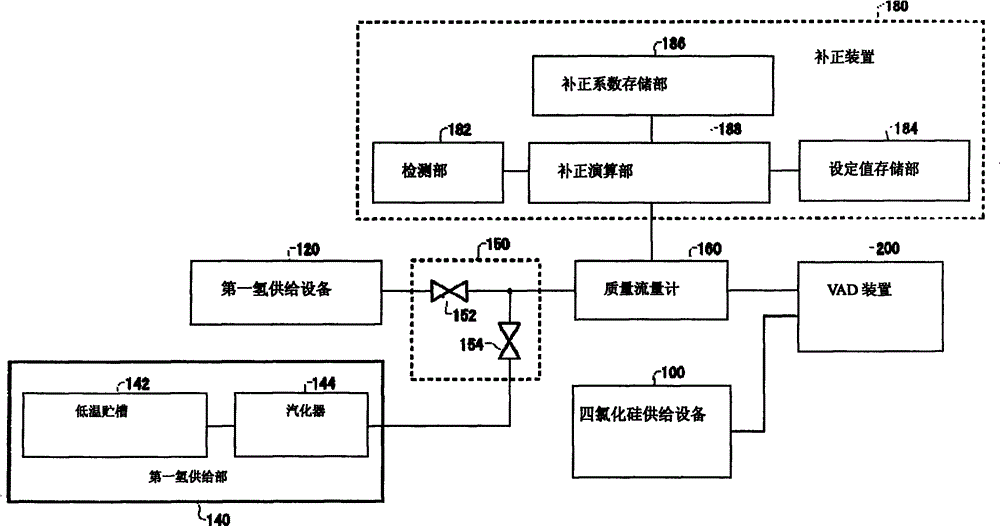
图3表示本发明的石英玻璃制造装置的具体的构成例。 FIG. 3 shows a specific configuration example of the quartz glass manufacturing apparatus of the present invention. the
图4是说明氢供给形态的示意图。 Fig. 4 is a schematic diagram illustrating a hydrogen supply form. the
图5是通过VAD的制造光纤用母材的制造方法的示意图。 Fig. 5 is a schematic diagram of a method of manufacturing an optical fiber preform by VAD. the
图6是表示根据VAD法制造的光纤用母材的折射率分布的概略图,纵轴表示比折射率差,横轴表示预制品的径向位置。 6 is a schematic diagram showing the distribution of the refractive index of the preform for optical fiber produced by the VAD method, the vertical axis represents the specific refractive index difference, and the horizontal axis represents the radial position of the preform. the
图7A是表示在本发明的实施例中的将用VAD法的光纤用母材制造装置供给氢,从常态氢转化成液体氢汽化后的氢时的拉升速度变化示意图,纵轴表示粉末堆积体的拉升速度(mm/min),横轴是从左向右推进的时间(一 刻度2.4小时)。 Fig. 7A is a schematic view showing the change in the pulling speed when hydrogen is supplied to the optical fiber base material manufacturing apparatus using the VAD method in an embodiment of the present invention, and the normal hydrogen is converted into liquid hydrogen vaporized hydrogen, and the vertical axis represents powder accumulation The lifting speed of the body (mm/min), the horizontal axis is the time of advancing from left to right (one scale is 2.4 hours). the
图7B是表示在比较例中的拉升速度变化的示意图。 Fig. 7B is a schematic diagram showing changes in the pulling speed in the comparative example. the
图8是说明采用OVD法的光纤用母材的制造方法示意图。 Fig. 8 is a schematic diagram illustrating a method of manufacturing a preform for an optical fiber by the OVD method. the
具体实施方式 Detailed ways
以下,通过发明的实施形态说明本发明的(一)方面,不过,以下的实施形态不限定专利要求范围涉及的发明,而在实施方式中说明的特征组合并非全部都是发明的解决手段所必须的。 Hereinafter, the (1) aspect of the present invention will be described through the embodiments of the invention. However, the following embodiments do not limit the inventions related to the scope of the patent claims, and not all the combinations of features described in the embodiments are necessary for the solutions of the invention. of. the
对使用以常温制造的氢的VAD装置,转换成供给将液体氢汽化后的氢时,拉升速度提高2%左右,核心直径变小。经调查,该拉升速度的上升和核心的细径化的变化,与不改变SiCl4流量并使氢的流量减少了1%左右时的变化相当。另外,拉升速度是根据核心堆积用燃烧器供给的SiCl4和氢的流量大致决定的,核心直径是根据核心堆积用燃烧器供给的氢的流量决定的。 When a VAD device using hydrogen produced at room temperature is switched to supplying hydrogen after vaporizing liquid hydrogen, the pulling speed increases by about 2%, and the core diameter becomes smaller. According to investigations, the change in the increase in the pulling speed and the reduction in the diameter of the core is equivalent to the change in the case where the flow rate of SiCl 4 is reduced by about 1% without changing the flow rate of SiCl 4 . In addition, the pulling speed is approximately determined by the flow rates of SiCl 4 and hydrogen supplied to the burner for core deposition, and the core diameter is determined by the flow rate of hydrogen supplied by the burner for core deposition.
同时,在OVD装置,如果也进行对液体氢汽化后的氢的转换的话,则母材的密度下降,不过,这仍然相当于使氢的流量减少时的变化。 At the same time, in the OVD apparatus, if the conversion of hydrogen after vaporization of liquid hydrogen is also performed, the density of the base material decreases, but this is still equivalent to the change when the flow rate of hydrogen is reduced. the
在被MFC供给的阶段,氢的压力及温度被保持在氢的转换前后同等程度,没有发现以常温制造的氢和液体氢的纯度及杂质浓度产生与这样的氢流量的变化有关的差别。 At the stage of being supplied by the MFC, the pressure and temperature of hydrogen are kept at the same level before and after the conversion of hydrogen, and there is no difference in the purity and impurity concentration of hydrogen produced at room temperature and liquid hydrogen related to such a change in hydrogen flow rate. the
因此,本发明者等着眼于氢分子的异构体。 Therefore, the present inventors focused on isomers of hydrogen molecules. the
象图1示意性地表示的那样,在氢分子中存在核旋转的方向不相同的2种异构体。作为2原子分子的氢分子有着2个质子(氢核),把这2个质子的旋转方向相同的叫做正氢,方向相反的称为仲氢。 As schematically shown in FIG. 1 , there are two isomers in which the direction of nuclear rotation is different in the hydrogen molecule. The hydrogen molecule, which is a 2-atom molecule, has 2 protons (hydrogen nuclei). If the two protons rotate in the same direction, they are called orthohydrogen, and if they rotate in the opposite direction, they are called parahydrogen. the
图2表示在各温度下的平衡状态中的仲氢浓度,在200k以上的常温中的平衡状态下,氢的正氢和仲氢比率为3∶1。不过,在液体氢的沸点(20k)附近的平衡状态中,大体上全部变为仲氢。另外,称在常温下正和仲处于平衡状态的氢为常态氢。因为从正氢向仲氢转换既缓慢,又发热反应,所以如果在不改变正氢和仲氢的比率的状态下,把常温的氢转换成液体氢时,在低温贮槽内进行从正氢向仲氢的转换,会引起发热,而使大量的液体氢蒸发。 FIG. 2 shows the concentration of parahydrogen in the equilibrium state at each temperature. In the equilibrium state at room temperature above 200K, the ratio of hydrogen to parahydrogen is 3:1. However, in an equilibrium state near the boiling point (20k) of liquid hydrogen, almost all of them are converted to parahydrogen. In addition, the hydrogen that is in equilibrium with the secondary at normal temperature is called normal hydrogen. Because the conversion from orthohydrogen to parahydrogen is slow and exothermic, if the hydrogen at normal temperature is converted into liquid hydrogen without changing the ratio of orthohydrogen and parahydrogen, the conversion from orthohydrogen to parahydrogen is carried out in a low-temperature storage tank. The conversion to parahydrogen causes heat, which evaporates large quantities of liquid hydrogen. the
为了防止这样的反应,以稳定的状态储藏液体氢,通常,在氢的液化工序进行仲正转换,大体上全部为仲氢的液体氢被制造,被运输及储藏。 In order to prevent such a reaction and store liquid hydrogen in a stable state, para-normal conversion is usually performed in the hydrogen liquefaction process, and liquid hydrogen that is almost entirely para-hydrogen is produced, transported, and stored. the
汽化液体氢后的氢,在被提供给之后使用氢的设备为止的期间,由于与金属制配管内表面的磁性体原子的接触,仲氢某种程度被转换成正氢。然而,在数百米左右的配管内的通过时,被供给的仲氢的浓度是比常态氢还高的比率的状态。 The hydrogen after vaporizing liquid hydrogen is converted to orthohydrogen to some extent due to the contact with the magnetic substance atoms on the inner surface of the metal piping until the hydrogen after vaporization is supplied to the equipment that uses hydrogen later. However, the concentration of parahydrogen to be supplied is in a state of a higher ratio than that of normal hydrogen when passing through a pipe of about several hundreds of meters. the
另外,正氢和仲氢其物性值不同,在0℃中的定压比热,仲氢是30.35[J/(mol·K)],常态氢是28.59[J/(mol·K)],具有6%左右的差别。 In addition, orthohydrogen and parahydrogen have different physical properties. The specific heat at constant pressure at 0°C is 30.35 [J/(mol K)] for parahydrogen, and 28.59 [J/(mol K)] for normal hydrogen. There is a difference of about 6%. the
另一方面,为了控制氢的流量而使用的MFC,因为测量并控制以热动式通过的流体的热容量,所以,需要对比热不同的流体,使用其每一个流体适合的转换系数(conversion factor)保证流量的精度。 On the other hand, the MFC used to control the flow rate of hydrogen measures and controls the heat capacity of the fluid passing through it thermally, so it is necessary to use a conversion factor (conversion factor) suitable for each fluid with different specific heat. Ensure flow accuracy. the
为此,使用适于常态氢用的转换系数的MFC,控制仲氢的浓度比常态氢还高的氢流量的话,则仲氢的浓度的实际流量与常态氢比较,在0~6%的范围变少。比如,确认了仲氢的浓度为37%左右的时候,氢的实际流量比常态氢少1%左右。 Therefore, if the MFC with a conversion factor suitable for normal hydrogen is used to control the hydrogen flow rate at which the concentration of parahydrogen is higher than that of normal hydrogen, the actual flow rate of the concentration of parahydrogen is in the range of 0 to 6% compared with normal hydrogen. Fewer. For example, it was confirmed that when the concentration of parahydrogen is about 37%, the actual flow rate of hydrogen is about 1% less than that of normal hydrogen. the
这样的0~6%的氢的实际流量的变化,对被制造的产品的光学特性带来影响,从而提高不良品的比例。 Such a change in the actual flow rate of 0 to 6% of hydrogen affects the optical properties of the manufactured product, thereby increasing the ratio of defective products. the
同时,还可以考虑以常态氢的状态储藏液体氢,不过,该方法,通过外加磁场抑制正氢向仲氢的转换,不但液体氢制造设备附随的低温贮槽,还需要对运输使用的货车、氢供给设备附随的低温贮槽全部设置同样的外加磁场的装置,成本较高不易使用。 At the same time, it can also be considered to store liquid hydrogen in the state of normal hydrogen. However, this method suppresses the conversion of orthohydrogen to parahydrogen by applying an external magnetic field. The cryogenic storage tanks attached to the hydrogen supply equipment are all equipped with the same external magnetic field device, which is expensive and difficult to use. the
其次,将液体氢汽化之后的氢供给各制造设备,调查在各制造设备附设的热动式的MFC的控制值与实际流量的差。在实际流量测量中使用了科里奥利式质量流量计。 Next, hydrogen after vaporization of liquid hydrogen was supplied to each manufacturing facility, and the difference between the control value and the actual flow rate of the thermal-type MFC attached to each manufacturing facility was investigated. Coriolis mass flow meters are used in actual flow measurement. the
其结果,即使实际运转,在能取得的范围使全体的氢使用量变化,常态氢用的被校正后的热动式MFC测量的流量相对于实际流量变化-1±0.2%左右。该值表示每个装置相同的数值。 As a result, even if the actual operation changes the overall hydrogen usage within the obtainable range, the flow rate measured by the calibrated thermal MFC for normal hydrogen changes by about -1±0.2% relative to the actual flow rate. This value represents the same value for each device. the
本发明,用MFC的控制值,为了在由常态氢转换成将备用的液体氢汽化后的氢的时候,每个装置氢流量增加1±0.2%左右,针对每个流量预先设定了校正系数。通过将这样设定的校正系数乘以即将转换之前的氢流量,控制转换后的MFC的氢流量,能保持核心堆积用燃烧器及外包堆积用燃烧器的氢的实际流量固定,获得长度方向的光学特性稳定的光纤用母材。另 外,也可以在每个装置进行伴随该转换的调整,也可以设置集中管理。集中管理能更易于使用。 In the present invention, using the control value of MFC, in order to increase the hydrogen flow rate of each device by about 1±0.2% when converting from normal hydrogen to hydrogen after vaporizing the standby liquid hydrogen, a correction coefficient is preset for each flow rate . By multiplying the correction coefficient set in this way by the hydrogen flow rate immediately before the conversion, the hydrogen flow rate of the converted MFC can be controlled, and the actual hydrogen flow rate of the core stacking burner and the outer stacking burner can be kept constant, and the longitudinal direction can be obtained. Base material for optical fiber with stable optical properties. In addition, it is also possible to perform adjustments accompanying this conversion for each device, and it is also possible to set centralized management. Centralized management can be easier to use. the
另外,优选将SiCl4和GeCl4加温到比沸点高的温度直接使之汽化后供给。根据这个方法,可以正确获得任意的原料气体的浓度。另外,为了避免在到达燃烧器之前的时间内凝结再次液化,可以供给其他气体,比如用He稀释。还有,在SiCl4和GeCl4的供给中,用载气起跑使之汽化供给的方法,不过,载气和原料气体的混合气体,由于混合气中的原料气体的浓度受大气压左右,所以不是优选方法。 In addition, it is preferable to heat SiCl 4 and GeCl 4 to a temperature higher than the boiling point, vaporize them as they are, and then supply them. According to this method, any concentration of the raw material gas can be accurately obtained. In addition, in order to avoid condensation and re-liquefaction in the time before reaching the burner, other gases can be supplied, such as diluted with He. Also, in the supply of SiCl 4 and GeCl 4 , the carrier gas is used to vaporize and supply the gas. However, the mixed gas of the carrier gas and the raw material gas is not controlled by the atmospheric pressure because the concentration of the raw material gas in the mixed gas is controlled. preferred method.
图3表示本发明的石英玻璃的制造装置10具体的构成例。石英玻璃的制造装置10包括四氯化硅供给设备100、第1氢供给设备120、第2氢供给设备140、氢供给源转换器150、质量流量计160、校正装置180,和VAD装置200。光纤用母材的制造装置,根据VAD法,通过在边转边提升的原始材料顶端依次堆积玻璃微粒子制造光纤用母材。
FIG. 3 shows a specific configuration example of the quartz glass manufacturing apparatus 10 of the present invention. The quartz glass manufacturing apparatus 10 includes a silicon
四氯化硅供给设备100,向VAD装置200供给四氯化硅(SiCl4)。第1氢供给设备120,将以常温制造的氢或以常温储藏的氢供给VAD装置200配备的燃烧器。第2氢供给设备140,具有低温贮槽142和汽化器144,低温贮槽142储藏的液体氢被汽化器144汽化,供给VAD装置200具有的燃烧器。从第2氢供给设备140供给的氢可以作为从第1氢供给设备120供给的氢的备用品使用。
The silicon
氢供给源转换器150,用于将供给VAD装置200氢的供给源转换为第1氢供给设备120还是转换为第2氢供给设备140的转换。氢供给源转换器150,比如,可以在来自第一氢供给设备120的氢供给路径上设置第1阀门152,并在来自第2氢供给设备120的氢供给路径上设置第2阀门154。
The hydrogen
质量流量计160测量氢的流量,控制该流量使之与设定值相符。质量流量计160,优选是以气体的热容测量作为测量原理的控制器。
The
校正装置180具有检测部182、设定值存储部184、校正系数存储部186和校正演算部188。控制装置180在适宜校正对VAD装置200的氢供给量的设定值的同时,设定质量流量计160。校正装置180在从第1氢供给设备120转换成第2氢供给设备140氢供给源的时候,将即将转换之前的氢流量乘以预先设定的校正系数,校正氢流量的设定值。
The
检测部182用于检测氢的供给源在第1氢供给设备120和第2氢供给 设备140之间是否发生转换。检测部182监视第1阀门152及第2阀门154中哪个已打开,从而可以检测出氢供给源的转换。另外,检测部182,监视在被质量流量计160供给的氢中的正氢和仲氢的比率,从而可以检测出氢供给源已转换。
The
设定值存储部184用于存储氢的流量设定值。校正系数存储部186,存储在校正VAD装置200供给的氢的流量时使用的校正系数。校正氢的流量时,校正演算部188,将被设定值存储部184存储的氢的流量设定值乘以被校正系数存储部186存储的系数,把乘法结果作为校正后的设定值,在质量流量计160设定。校正演算部188,还可以在不校正氢的流量的情况下,将设定值存储部184存储的氢的流量设定值直接设定在质量流量计160。
The set
VAD装置200具有核心堆积用燃烧器及外包堆积用燃烧器,让被供给的四氯化硅和氢反应,使之堆积玻璃微粒子。
The
以下,围绕本发明的实施形态,通过列举的实施例及比较例,进一步详细说明本发明,不过,本发明不受这些所限定。 Hereinafter, the present invention will be further described in detail through enumerated examples and comparative examples around the embodiments of the present invention, but the present invention is not limited thereto. the
实施例 Example
实施例1 Example 1
如图4示意的那样,将被商业性开发并提供的液体氢储藏在液体氢集装箱内,在通过汽化器使之汽化,生成氢气的氢供给设备的后段,与供给以常温制造的氢(以下称常态氢)的配管合流,连接到使用氢的设备上。在液体氢供给线的配管和供给常态氢的配管上,分别在即将合流之前设置阀门,使得单独使用各线成为可能。 As shown schematically in FIG. 4, commercially developed and provided liquid hydrogen is stored in a liquid hydrogen container, and is vaporized by a evaporator to generate hydrogen at the rear stage of the hydrogen supply facility, and hydrogen produced at room temperature (hereinafter The pipes called normal hydrogen) are connected to the equipment using hydrogen. Valves are installed in the pipes for the liquid hydrogen supply line and the pipes for the normal hydrogen supply immediately before they merge, making it possible to use each line independently. the
图5表示本实施例使用的VAD装置的概略图。VAD装置具有核心堆积用燃烧器及在其上方外包层堆积用燃烧器,供给分别由MFC进行流量控制的氢、氧、惰性气体、作为原料被汽化后的SiCl4。 FIG. 5 shows a schematic diagram of the VAD apparatus used in this embodiment. The VAD device has a burner for core deposition and a burner for clad deposition above it, and supplies hydrogen, oxygen, inert gas, and vaporized SiCl 4 as raw materials whose flow rates are controlled by the MFC.
对VAD装置的氢供给,关闭液体氢供给线侧的阀门,供给常态氢。在氢氧火焰中被提供的SiCl4通过水解反应变成为SiO2,在一边旋转一边提升的靶顶端依次堆积,形成粉末堆积体。堆积中,在粉末堆积体顶端附近由照相机(CCD)进行监视,配合粉末堆积体的增长,由PID控制器调整提升速度,以使其顶端位置不上下颠倒。 For the hydrogen supply to the VAD device, the valve on the side of the liquid hydrogen supply line is closed, and normal hydrogen is supplied. SiCl 4 supplied in the oxyhydrogen flame is converted into SiO 2 by a hydrolysis reaction, and is sequentially deposited on the tip of the rotating and lifted target to form a powder accumulation body. During the accumulation, the camera (CCD) monitors near the top of the powder accumulation body, and the PID controller adjusts the lifting speed in accordance with the growth of the powder accumulation body so that the position of the top end does not turn upside down.
在下方核心用堆积燃烧器中,除了SiCl4以外也供给GeCl4。GeCl4还是 通过火焰水解成为GeO2,添加到最终制造的石英玻璃中而提高了折射率。由于只在核心用的燃烧器供给GeCl4,使得只在核心部的折射率被提高,制造出如图6所示的,具有作为光纤用的折射率分布的光纤用预制品。同时,在该图中,纵轴是比折射率差,横轴表示预制品的径向位置。 In the stack burner for the lower core, GeCl 4 is also supplied in addition to SiCl 4 . GeCl 4 is also converted into GeO 2 by flame hydrolysis, which is added to the final manufactured quartz glass to increase the refractive index. Since GeCl 4 was supplied only to the burner for the core, the refractive index was increased only at the core, and an optical fiber preform having a refractive index distribution for an optical fiber as shown in FIG. 6 was produced. Meanwhile, in the figure, the vertical axis is the specific refractive index difference, and the horizontal axis represents the radial position of the preform.
在堆积进行到某种程度时,将向核心堆积用燃烧器及外包堆积用燃烧器的氢的供给,从常态氢转换成液体氢被汽化后的氢的同时,用将即将转换之前的氢流量乘以校正系数而得到的值,让各制造设备的MFC的控制值一律增加1%。 When the accumulation progresses to a certain extent, the supply of hydrogen to the burner for core accumulation and the burner for outer accumulation is converted from normal hydrogen to hydrogen after liquid hydrogen is vaporized, and the hydrogen flow rate immediately before the conversion is used. By multiplying the value obtained by the correction coefficient, the control value of the MFC of each manufacturing facility is uniformly increased by 1%. the
其结果,在转换前后的氢的实际流量无丝毫变化,如图7A所示,在转换前后,没有发现拉升速度的异常,所得到的粉末堆积体透明玻璃化后得到的光纤用预制品,在长度方向的光学特性稳定。另外,图7A及图7B的纵轴,表示粉末堆积体的拉升速度(mm/min),横轴是从左向右推进的时间(一刻度为2.4小时)。 As a result, the actual flow rate of hydrogen before and after the conversion did not change at all. As shown in FIG. 7A, no abnormality in the pulling speed was found before and after the conversion, and the preform for an optical fiber obtained after transparent vitrification of the obtained powder accumulation The optical properties in the length direction are stable. 7A and 7B, the vertical axis represents the lifting speed (mm/min) of the powder accumulation, and the horizontal axis represents the time for advancing from left to right (one scale is 2.4 hours). the
同时,就OVD装置而言,从常态氢转换成使液体氢汽化后的氢的时候,同样,各制造设备的MFC的控制值一律增加了1%。其结果,没有发现使用常态氢时和使用液体氢汽化后的氢时,制造出的多孔质母材的密度之差。 At the same time, for the OVD device, when switching from normal hydrogen to hydrogen after vaporizing liquid hydrogen, the control value of the MFC of each manufacturing equipment also increased by 1% uniformly. As a result, there was no difference in the density of the porous base material produced between the case of using normal hydrogen and the case of using hydrogen vaporized from liquid hydrogen. the
比较例1 Comparative example 1
除了从常态氢转换成使液体氢汽化后的氢时,没有进行氢流量的校正以外,均与实施例1相同地进行了光纤用备用品的制造。 Production of optical fiber spares was carried out in the same manner as in Example 1, except that the hydrogen flow rate was not corrected when switching from normal hydrogen to hydrogen obtained by vaporizing liquid hydrogen. the
其结果,在氢的转换前后中,氢的实际流量发生变化,如图7B所示,提升速度快了2%。在将得到的粉末堆积体作透明玻璃化时,发现由于这个变化,折射率分布和核心直径及外包直径变动,而不能作为光纤预制品使用。同时,在一部分装置中的粉末堆积体破碎。可以认为,这是因为在转换前后,氢的实际流量突然发生变化,致使密度发生急剧地变化而造成的。 As a result, the actual flow rate of hydrogen changes before and after hydrogen switching, and as shown in FIG. 7B , the lifting speed becomes faster by 2%. When the obtained powder deposit was transparently vitrified, it was found that the refractive index distribution, the core diameter and the cladding diameter fluctuated due to this change, and it was found that it could not be used as an optical fiber preform. Simultaneously, the powder accumulation in a part of the device was broken. It can be considered that this is caused by a sudden change in the actual flow rate of hydrogen before and after the conversion, resulting in a sharp change in the density. the
在各OVD装置也不进行MFC的控制值的变更的状态下,进行了氢的转换。结果,所制造的多孔质母材的密度减少了1.5%左右。其结果,外径变大,致使其粗细达到在以后工序无法进入加热炉的程度,因此,出现了不能进行透明玻璃化的情况。 In the state where each OVD device did not change the control value of the MFC, the conversion of hydrogen was performed. As a result, the density of the manufactured porous base material decreased by about 1.5%. As a result, the outer diameter becomes large, and the thickness becomes so thick that it cannot enter a heating furnace in a subsequent process, so transparent vitrification may not be performed. the
以上,用实施形态说明了本发明的(一)方面,不过,本发明的技术的范围不受上述实施形态记载的范围所限定。对上述实施形态可以加以多种多 样的变形和改良。从专利权利要求的范围的记载可以明确,这样的变形和改良也包含在本发明的技术范围中。 As mentioned above, (1) aspect of this invention was demonstrated using embodiment, However, the technical scope of this invention is not limited to the range described in the said embodiment. Various modifications and improvements can be added to the above-mentioned embodiment. It is clear from the description of the scope of patent claims that such modifications and improvements are also included in the technical scope of the present invention. the
请注意的是,权利要求书、说明书和在附图中表示的装置、系统、程序、和在方法中的操作、次序、步骤,和阶段等的各处理的实行顺序,只要没有特别注明“比...先”、“在...之前”等,或者只要不是后边的处理必须使用前面的处理的输出,就可以以任意的顺序实施。有关权利要求的范围、说明书和附图中的操作流程,为了说明上的方便,使用了“首先”、“其次”等字样加以说明,但即使这样也不意味着以这个程序实施是必须的条件。 Please note that the execution order of each processing of the devices, systems, programs, and operations, sequences, steps, and stages in the methods shown in the claims, description, and drawings, unless otherwise specified " Before", "before", etc., or as long as the output of the previous processing does not have to be used by the later processing, they can be performed in any order. Regarding the scope of the claims, the operation process in the description and the drawings, for the convenience of description, words such as "first" and "second" are used to explain, but even this does not mean that the implementation of this procedure is a necessary condition . the
从上述说明可以明确,根据本发明的(一)实施形态,即使将氢的供给切换到将备用的液体氢汽化后的氢的时候,也可通过将即将转换之前的氢流量乘以预先设定的校正系数,调整氢的流量,得以将氢的实际流量保持固定,能使用VAD法制造的石英玻璃制光纤备用品的光学特性稳定。同时,通过OVD法制造的石英玻璃的也能抵御起因于密度的变化的不良品发生。因此,本发明的(一)实施形态,以高收获率得到了光学特性稳定的光纤用母材,为生产率的提高做出贡献。 As can be clearly seen from the above description, according to the (1) embodiment of the present invention, even when the supply of hydrogen is switched to the hydrogen after vaporizing the standby liquid hydrogen, the hydrogen flow rate immediately before the switch can be multiplied by the preset By adjusting the hydrogen flow rate, the actual flow rate of hydrogen can be kept constant, and the optical characteristics of the quartz glass optical fiber spare parts manufactured by the VAD method are stable. At the same time, quartz glass produced by the OVD method is also resistant to the occurrence of defective products due to changes in density. Therefore, in the (1) embodiment of the present invention, a base material for an optical fiber with stable optical characteristics is obtained at a high yield, contributing to an improvement in productivity. the
Claims (12)
Applications Claiming Priority (3)
| Application Number | Priority Date | Filing Date | Title |
|---|---|---|---|
| JP2008187924 | 2008-07-18 | ||
| JP2008187924A JP4809401B2 (en) | 2008-07-18 | 2008-07-18 | Method and apparatus for producing quartz glass |
| JP2008-187924 | 2008-07-18 |
Publications (2)
| Publication Number | Publication Date |
|---|---|
| CN101633552A CN101633552A (en) | 2010-01-27 |
| CN101633552B true CN101633552B (en) | 2013-10-02 |
Family
ID=41201385
Family Applications (1)
| Application Number | Title | Priority Date | Filing Date |
|---|---|---|---|
| CN2009101650311A Active CN101633552B (en) | 2008-07-18 | 2009-07-20 | Quartz glass manufacturing method and quartz glass manufacturing apparatus |
Country Status (4)
| Country | Link |
|---|---|
| US (2) | US20100011813A1 (en) |
| EP (1) | EP2145864B1 (en) |
| JP (1) | JP4809401B2 (en) |
| CN (1) | CN101633552B (en) |
Families Citing this family (10)
| Publication number | Priority date | Publication date | Assignee | Title |
|---|---|---|---|---|
| JP5187893B2 (en) * | 2008-07-18 | 2013-04-24 | 信越化学工業株式会社 | Hydrogen supply equipment |
| JP4750866B2 (en) * | 2009-02-18 | 2011-08-17 | 信越化学工業株式会社 | Method and apparatus for producing quartz glass |
| WO2012145733A1 (en) | 2011-04-22 | 2012-10-26 | Vanderbilt University | Para-hydrogen polarizer |
| CN103058512B (en) * | 2012-12-19 | 2015-04-08 | 江苏亨通光电股份有限公司 | Device and method for controlling gaseous raw material flow when optical fiber preform rod is manufactured |
| JP6441152B2 (en) * | 2015-04-06 | 2018-12-19 | 信越化学工業株式会社 | Method for producing porous glass base material |
| CN105948468B (en) * | 2016-06-07 | 2021-01-08 | 长飞光纤光缆股份有限公司 | Preparation device of quartz glass |
| CN106830665B (en) * | 2017-02-28 | 2019-05-24 | 天津富通集团有限公司 | Production process of optical fiber preform and optical fiber preform |
| JP7310373B2 (en) * | 2019-07-03 | 2023-07-19 | 住友電気工業株式会社 | Frit feeder and filter replacement method for frit feeder |
| CN112408776B (en) * | 2020-11-24 | 2022-04-12 | 江苏亨通光导新材料有限公司 | Control method for improving parameter uniformity of optical fiber preform |
| CN117488532B (en) * | 2023-10-07 | 2025-12-16 | 南京玻璃纤维研究设计院有限公司 | Method and device for cutting preform |
Citations (3)
| Publication number | Priority date | Publication date | Assignee | Title |
|---|---|---|---|---|
| CN86202877U (en) * | 1986-05-13 | 1987-04-08 | 国家建筑材料工业局建筑材料科学研究院 | Oxy-hydrogen burner for making silica glass lump |
| US4729779A (en) * | 1987-04-20 | 1988-03-08 | Liquid Air Corporation | Method and apparatus for manufacturing glass articles |
| CN1509984A (en) * | 2002-12-25 | 2004-07-07 | 刘寄声 | Combing preparing method for silicon tetrachloride, polycrystalline silicon and fused silica |
Family Cites Families (15)
| Publication number | Priority date | Publication date | Assignee | Title |
|---|---|---|---|---|
| JP2517052B2 (en) * | 1988-03-18 | 1996-07-24 | 信越化学工業株式会社 | Graded Index Optical Fiber-Manufacturing Method of Base Material |
| JPH03242341A (en) * | 1990-02-19 | 1991-10-29 | Shin Etsu Chem Co Ltd | Production of porous glass preform for single-mode optical fiber |
| DE19501733C1 (en) * | 1995-01-20 | 1996-05-15 | Heraeus Quarzglas | Gas flow distributor |
| JP2000034131A (en) * | 1998-07-16 | 2000-02-02 | Fujikura Ltd | Apparatus and method for producing porous glass body |
| JP2000256034A (en) * | 1999-03-10 | 2000-09-19 | Fujikura Ltd | Manufacturing method of preform for optical fiber |
| JP2000272929A (en) * | 1999-03-26 | 2000-10-03 | Mitsubishi Cable Ind Ltd | Manufacturing method of optical fiber preform |
| JP3705169B2 (en) * | 2000-09-14 | 2005-10-12 | 住友電気工業株式会社 | Method for producing porous glass body |
| US6789401B1 (en) * | 2001-06-28 | 2004-09-14 | Asi/Silica Machinery, Llc | Particle deposition system and method |
| CN100425955C (en) * | 2002-05-24 | 2008-10-15 | 迅捷公司 | System and method for calibration of a material flow detection apparatus |
| JP2005343714A (en) * | 2004-06-01 | 2005-12-15 | Sumitomo Electric Ind Ltd | Method and apparatus for producing mixed gas, and method and apparatus for producing glass |
| JP2006009917A (en) * | 2004-06-25 | 2006-01-12 | Railway Technical Res Inst | Apparatus for storing liquid hydrogen |
| JP4017081B1 (en) | 2007-02-01 | 2007-12-05 | 久俊 浅岡 | Soil disinfection apparatus and method using exhaust gas |
| US7805981B2 (en) * | 2007-02-13 | 2010-10-05 | The Trustees Of The University Of Pennsylvania | Gaseous nuclear symmetric state and quantification thereof |
| JP5399798B2 (en) * | 2008-07-18 | 2014-01-29 | 信越化学工業株式会社 | Optical fiber preform manufacturing method and optical fiber preform manufacturing apparatus |
| JP4750866B2 (en) * | 2009-02-18 | 2011-08-17 | 信越化学工業株式会社 | Method and apparatus for producing quartz glass |
-
2008
- 2008-07-18 JP JP2008187924A patent/JP4809401B2/en active Active
-
2009
- 2009-07-16 EP EP09165709.8A patent/EP2145864B1/en active Active
- 2009-07-16 US US12/504,414 patent/US20100011813A1/en not_active Abandoned
- 2009-07-20 CN CN2009101650311A patent/CN101633552B/en active Active
-
2014
- 2014-05-19 US US14/280,691 patent/US9527764B2/en active Active
Patent Citations (3)
| Publication number | Priority date | Publication date | Assignee | Title |
|---|---|---|---|---|
| CN86202877U (en) * | 1986-05-13 | 1987-04-08 | 国家建筑材料工业局建筑材料科学研究院 | Oxy-hydrogen burner for making silica glass lump |
| US4729779A (en) * | 1987-04-20 | 1988-03-08 | Liquid Air Corporation | Method and apparatus for manufacturing glass articles |
| CN1509984A (en) * | 2002-12-25 | 2004-07-07 | 刘寄声 | Combing preparing method for silicon tetrachloride, polycrystalline silicon and fused silica |
Also Published As
| Publication number | Publication date |
|---|---|
| US9527764B2 (en) | 2016-12-27 |
| JP4809401B2 (en) | 2011-11-09 |
| EP2145864A3 (en) | 2012-03-14 |
| EP2145864A2 (en) | 2010-01-20 |
| CN101633552A (en) | 2010-01-27 |
| JP2010024102A (en) | 2010-02-04 |
| EP2145864B1 (en) | 2013-04-24 |
| US20140283557A1 (en) | 2014-09-25 |
| US20100011813A1 (en) | 2010-01-21 |
Similar Documents
| Publication | Publication Date | Title |
|---|---|---|
| CN101633552A (en) | Quartz glass manufacturing method and quartz glass manufacturing apparatus | |
| JP4750866B2 (en) | Method and apparatus for producing quartz glass | |
| CN101629674B (en) | Hydrogen supply equipment | |
| CN102099307B (en) | Manufacturing method of base material for optical fiber and manufacturing apparatus of base material for optical fiber | |
| AU675543B2 (en) | Gas producing apparatus and method and apparatus for manufacturing optical waveguide and optical fiber preform | |
| US20240270624A1 (en) | Enhanced particle deposition system and method | |
| JP2003252635A (en) | Method and apparatus for producing porous base material | |
| US20050069638A1 (en) | System for forming a gas flow of reactants for a doped glass material | |
| JP6746528B2 (en) | Optical fiber porous base material manufacturing equipment | |
| JP2012197208A (en) | Method for producing glass fine particle deposit for optical fiber | |
| JPH08259239A (en) | Production of silica glass based deposited body | |
| CN112533879A (en) | Method and device for the reproducible production of preforms for glass fiber production | |
| JPH01239033A (en) | Production of optical fiber preform | |
| JP2003171138A (en) | Optical fiber preform manufacturing equipment | |
| JPH0226849A (en) | Production of optical fiber bace material | |
| JP2010173923A (en) | Method for manufacturing porous glass preform | |
| JP2012254893A (en) | Method for producing glass fine particle deposited body |
Legal Events
| Date | Code | Title | Description |
|---|---|---|---|
| C06 | Publication | ||
| PB01 | Publication | ||
| C10 | Entry into substantive examination | ||
| SE01 | Entry into force of request for substantive examination | ||
| C14 | Grant of patent or utility model | ||
| GR01 | Patent grant |