WO2025104878A1 - 連携装置 - Google Patents
連携装置 Download PDFInfo
- Publication number
- WO2025104878A1 WO2025104878A1 PCT/JP2023/041302 JP2023041302W WO2025104878A1 WO 2025104878 A1 WO2025104878 A1 WO 2025104878A1 JP 2023041302 W JP2023041302 W JP 2023041302W WO 2025104878 A1 WO2025104878 A1 WO 2025104878A1
- Authority
- WO
- WIPO (PCT)
- Prior art keywords
- virtual space
- unit
- external service
- posting
- metaverse
- Prior art date
- Legal status (The legal status is an assumption and is not a legal conclusion. Google has not performed a legal analysis and makes no representation as to the accuracy of the status listed.)
- Pending
Links
Images


Classifications
-
- G—PHYSICS
- G06—COMPUTING OR CALCULATING; COUNTING
- G06T—IMAGE DATA PROCESSING OR GENERATION, IN GENERAL
- G06T19/00—Manipulating three-dimensional [3D] models or images for computer graphics
Definitions
- the present invention relates to a linked device.
- Patent Document 1 discloses a technology in which, when a photo is taken in the metaverse space, a hashtag is added according to what is captured in the photo.
- Patent Document 2 discloses a technology in which messages are exchanged between users of a message dialogue server and users of a three-dimensional virtual space server.
- the metaverse is a service that is used by logging in to a virtual space.
- users of external services such as SNS (Social Networking Service)
- SNS Social Networking Service
- the users of the virtual space In order for users of external services to grasp the situation in the virtual space, the users of the virtual space must transmit the situation in the virtual space to the external service.
- transmitting information to an external service is time-consuming and offers few benefits.
- collaboration between the virtual space and external services has not progressed. Therefore, a mechanism to promote the activation of virtual spaces and external services is desired.
- the purpose of this disclosure is to provide a collaborative device that promotes the activation of virtual spaces and external services.
- a collaboration device includes a posting unit that posts content indicating the status of the virtual space from the virtual space to an external service that is a service different from the virtual space, a reaction acquisition unit that acquires a reaction from the external service to the posted content, and a reflection unit that reflects an expression corresponding to the reaction in the virtual space.
- posted content indicating the status of the virtual space is posted to an external service. That is, the posted content related to the virtual space becomes visible to users of the external service. Then, an expression corresponding to the reaction of the external service is reflected in the virtual space. That is, the reaction of the external service to the posted content becomes visible to users of the virtual space.
- This allows the virtual space and the external service to be linked and to influence each other. As a result, it is possible to promote the activation of the virtual space and the external service.
- This disclosure can promote the revitalization of virtual spaces and external services.
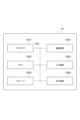
- FIG. 1 is a block diagram showing an example of an overall configuration including a linkage system.
- FIG. 2 is a flowchart showing an example of the operation of the linkage system.
- FIG. 3 is a flowchart showing another example of the operation of the link system.
- FIG. 4 is a flowchart showing yet another example of the operation of the link system.
- FIG. 5 is a flowchart showing an example of the login process.
- FIG. 6 is a diagram showing an example of a screen of the metaverse.
- FIG. 7 is a diagram showing another example of a screen of the metaverse.
- FIG. 8 is a diagram illustrating an example of a hardware configuration of a collaboration system according to an embodiment of the present disclosure.
- FIG. 1 is a block diagram showing an example of an overall configuration including a linking system 1.
- the linking system 1 is configured to include a linking device 10.
- the linking device 10 is a device that manages a metaverse.
- the metaverse is a virtual space constructed on a network. In this disclosure, an example of a virtual space will be described as the metaverse.
- the linking device 10 is connected to an external system S and a terminal 100 via a network N so as to be able to communicate with them.
- the configuration of the network N is not limited.
- the external system S provides an external service that is a service different from the metaverse.
- the configuration of the external system S is not limited. Examples of external services include, but are not limited to, SNS that uses text, video, images, or a combination of these.
- the terminal 100 is a computer used by a user who uses at least one of the metaverse and an external service.
- the type of the terminal 100 is not limited.
- the terminal 100 may be a personal computer.
- the terminal 100 may also be a high-function mobile phone (smartphone), a tablet terminal, a wearable terminal, or the like.
- a metaverse user can use the metaverse provided by the linked device 10 using the terminal 100.
- a metaverse screen is displayed on the terminal 100.
- a metaverse user experiences the metaverse by operating an avatar, which is a virtual object corresponding to the user.
- a metaverse user can participate in an event in the metaverse. The type of event is not limited.
- a user of an external service can use the terminal 100 to use an external service provided by an external system S.
- the linked device 10 includes, as functional elements, a login processing unit 11, a virtual space control unit 12, a position determination unit 13, a coordinate acquisition unit 14, a hashtag creation unit 15, a posting unit 16, a reaction acquisition unit 17, a reflection unit 18, and a determination unit 19.
- the login processing unit 11 performs login processing to use the metaverse.
- the login processing is not limited.
- the login processing unit 11 determines the position where the avatar corresponding to the user is placed.
- the virtual space control unit 12 manages the virtual space. Specifically, the virtual space control unit 12 defines and models a three-dimensional virtual space, and places various objects and user avatars in the virtual space based on their respective control information. The virtual space control unit 12 also provides the terminal 100 with images rendered based on a virtual camera.
- the position determination unit 13 determines a reference position, which is a predetermined position in the metaverse. For example, the position determination unit 13 accepts an input from a user of the metaverse to select a reference position. In one example, the position determination unit 13 accepts an input as to whether the reference position is an event or an avatar, and determines the reference position according to the selection. If an "event" is determined as the reference position, the position determination unit 13 may create a list of multiple events being held in the metaverse. The position determination unit 13 may accept an input from a user of the metaverse to select a specific event from the list of events.
- the coordinate acquisition unit 14 acquires coordinate information of the reference position. If an "event" is determined as the reference position, the coordinates of the selected event are acquired. The event's coordinates may be coordinates of a position within an event area where the event is held, or close to the event area. If an "avatar" is determined as the reference position, the coordinate acquisition unit 14 acquires the coordinates of an avatar corresponding to a user in the metaverse. For example, the coordinates of the avatar may be the coordinates where the avatar is located at a certain point in time (e.g., the point in time when the coordinates are acquired).
- the hashtag creation unit 15 creates a hashtag that includes coordinate information of a reference position.
- the hashtag creation unit 15 creates a URL (Uniform Resource Locator), which includes coordinate information of a reference position and is link information that can access the metaverse.
- the hashtag creation unit 15 creates a hashtag with an embedded URL.
- the hashtag can be represented, for example, by a combination of "#" and a character string. In one example, the hashtag can be represented as "#MetaMeCafeJack", etc.
- the hashtag creation unit 15 may create a URL by including information about participation in the event in the URL parameters.
- the information about participation may include, but is not limited to, the mode of participation in the event or the attributes of the user for participating in the event.
- the parameter indicating the red team indicates that a user who participates in the metaverse event belongs to the red team within the event.
- the posting unit 16 may check with the metaverse user whether or not the posted content can be posted to the external service. For example, the posting unit 16 may display a question regarding whether or not the content can be posted on the metaverse screen and accept input from the metaverse user. The posting unit 16 posts the posted content to the external service by sending the posted content to the external system S. In the external service, it becomes possible to make comments on the posted content, etc. The posting unit 16 may check that the posted content has been posted to the external service.
- the reaction acquisition unit 17 acquires reactions from external services to the posted content. Examples of reactions include, but are not limited to, comments, stamps, likes, hearts, thumbs up, shares, follows, bookmarks, and number of views.
- the reaction acquisition unit 17 may determine the validity of a hashtag.
- the reaction acquisition unit 17 accesses the external service by referring to a list of external services.
- the reaction acquisition unit 17 may search using hashtags from posts posted to external services to acquire reactions.
- the reflection unit 18 reflects an expression corresponding to the reaction of the external service in the metaverse.
- the reflection unit 18 may create an avatar of an NPC (non player character) in response to the reaction.
- the reflection unit 18 may reflect an expression corresponding to the reaction of the external service in the metaverse via the avatar of the NPC.
- the reflection unit 18 may reflect the expression at a position determined using coordinate information.
- the reflection unit 18 places the avatar of the NPC in an area including the reference position.
- the area including the reference position may be, for example, within an event area, or a specified area near the coordinates of the avatar.
- the reflection unit 18 may cause the NPC's avatar to speak the comment. In one example, if the response is a comment, the reflection unit 18 may display the comment above the head of the NPC's avatar. If the response is a stamp, the reflection unit 18 may display a stamp corresponding to the stamp. In one example, if the response is a stamp indicating "like", the reflection unit 18 may display a stamp indicating "like" above the head of the NPC's avatar. In another example, if the response is a stamp indicating "like”, the reflection unit 18 may cause the NPC's avatar to perform an action indicating "like". An example of an action indicating "like” is, but is not limited to, putting one or both arms out in front of the body with a thumb up.
- the determination unit 19 determines whether to automatically post depending on the automatic link setting (e.g., ON/OFF) that indicates whether posting to an external service is to be performed automatically. If the automatic link setting is "OFF", posting to an external service may be performed by manual operation of a metaverse user. If the automatic link setting is "ON”, the determination unit 19 further determines the posting trigger. The posting unit 16 may post the post content to the external service in response to the determined posting trigger.
- the automatic link setting e.g., ON/OFF
- the posting unit 16 may post the post content to the external service in response to the determined posting trigger.
- the determination unit 19 may detect an increase in excitement at the reference position and determine the detection as a trigger for posting.
- the determination unit 19 may determine the increase in excitement using information related to the increase in excitement in an area including the reference position.
- the determination unit 19 may determine the excitement using the number of characters present in an area including the reference position as information regarding the excitement.
- the number of characters may be the number of avatars corresponding to users of the metaverse and/or the number of avatars of NPCs, or an increase in the number of these.
- the determination unit 19 may determine the excitement based on the number of characters and a threshold value corresponding to the number of characters.
- the determination unit 19 may determine the excitement using the number of reactions in an area including the reference position as information regarding the excitement.
- the reaction may be the number of comments, the number of stamps, the number of effects, or an increase in these.
- the effects may be, for example, the actions of an NPC.
- the determination unit 19 may determine the excitement based on the number of reactions and a threshold value corresponding to the number of reactions.
- the determination unit 19 may receive an operation by an administrator of the linked system 1 and determine the operation as a posting trigger.
- the determination unit 19 may determine the posting trigger using AI (Artificial Intelligence) that has learned the correspondence between past posting triggers in the metaverse and responses from external services.
- AI Artificial Intelligence
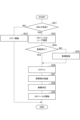
- FIG. 2 is a flowchart showing an example of the operation of the linkage system 1.
- FIG. 2 shows the process when a user of the metaverse manually posts to an external service.
- step S1 the position determination unit 13 receives an input from a user of the metaverse to select a reference position.
- the position determination unit 13 receives an input as to whether the reference position is to be an event or an avatar, and determines the reference position in accordance with the selection.
- step S2 the position determination unit 13 assigns processing depending on the reference position selected in step S1. If “event” is determined as the reference position ("event” in step S2), the processing proceeds to step S3. If “avatar” is determined as the reference position ("avatar” in step S2), the processing proceeds to step S4.
- the position determination unit 13 accepts a selection of an event.
- the position determination unit 13 may create a list of multiple events being held in the metaverse.
- the position determination unit 13 may accept input from a user of the metaverse who selects a particular event from the list of events.
- step S4 the coordinate acquisition unit 14 acquires coordinate information of the reference position. If an "event” is determined as the reference position, the coordinate acquisition unit 14 acquires the position coordinates of the selected event. If an "avatar” is determined as the reference position, the coordinate acquisition unit 14 acquires the position coordinates of the avatar corresponding to the user in the metaverse.
- the hashtag creation unit 15 creates a hashtag including coordinate information of the reference position.
- the hashtag creation unit 15 creates a URL that includes the coordinate information of the reference position and is link information that can access the metaverse.
- the hashtag creation unit 15 creates a hashtag with an embedded URL.
- the hashtag creation unit 15 may create a URL by including information related to event participation in the URL parameters.
- step S6 the posting unit 16 creates a post indicating the status of the metaverse.
- the posting unit 16 may add coordinate information of a reference position to the post.
- the posting unit 16 may add a hashtag created based on the position coordinates of an event or a hashtag created based on the position coordinates of an avatar to the post.
- step S7 the posting unit 16 checks with the metaverse user whether or not the posting content can be posted to an external service, and assigns the processing. If posting to an external service is to be executed ("YES" in step S7), the processing proceeds to step S8. If posting to an external service is not to be executed ("YES" in step S7), the processing ends.
- step S8 the posting unit 16 posts the post content to the external service.
- the posting unit 16 posts the post content to the external service by sending the post content to the external system S.
- step S9 the posting unit 16 confirms that the post content has been posted to an external service.
- FIG. 3 is a flowchart showing another example of the operation of the linkage system 1.
- FIG. 3 shows the process when automatically posting to an external service.
- step S11 the determination unit 19 determines the trigger for posting.
- the determination unit 19 may determine the trigger for posting based on the automatic link settings, the operation of the administrator, and the excitement in the metaverse. Below, the process of allocating the trigger for posting will be described in steps S12 to S14.
- step S12 the determination unit 19 assigns processing depending on the automatic link setting. If the automatic link setting is "ON” ("ON” in step S12), the processing proceeds to step S13. If the automatic link setting is "OFF” ("OFF" in step S12), the processing ends.
- step S13 the determination unit 19 assigns processing depending on whether or not the operator has performed an operation. If the operator has not performed an operation ("YES" in step S13), the processing proceeds to step S14. If the operator has performed an operation ("NO" in step S13), the processing proceeds to step S15.
- the determination unit 19 may determine the excitement using the number of characters present in an area including the reference position as information regarding the excitement.
- the determination unit 19 may determine the excitement based on the number of characters and a threshold value corresponding to the number of characters.
- the determination unit 19 may determine the excitement using the number of reactions in an area including the reference position as information regarding the excitement.
- the determination unit 19 may determine the excitement based on the number of reactions and a threshold value corresponding to the number of reactions.
- step S14 If it is determined that there is excitement ("Yes” in step S14), the process proceeds to step S15. If it is determined that there is no excitement (“No” in step S14), the process ends.
- step S15 the posting unit 16 checks with the metaverse user whether or not the posting content can be posted to the external service. If posting to the external service is to be executed ("YES" in step S15), the process proceeds to step S16. If posting to the external service is not to be executed ("NO" in step S15), the process ends.
- step S16 the coordinate acquisition unit 14 acquires coordinate information of the reference position.
- the reference position may be a position specified by an operator's operation, or may be a position where an excitement is detected in the metaverse.
- steps S17, S18, and S19 is similar to the processing of steps S5, S6, and S8 in FIG. 2, so a description thereof will be omitted.
- FIG. 4 is a flowchart showing yet another example of the operation of the linked system 1.
- FIG. 4 shows the process of reflecting a reaction to a post from an external service in the metaverse.
- step S21 the linked system 1 assigns processing depending on the reflection setting (e.g., ON/OFF).
- the reflection setting can be set by the operator of the linked system 1 or a metaverse user. If the reflection setting is "ON” ("ON” in step S21), processing proceeds to step S22. If the reflection setting is "OFF” ("OFF" in step S21), processing ends.
- step S22 the reaction acquisition unit 17 determines the validity of the hashtag and assigns the process. In one example, the reaction acquisition unit 17 determines the validity of the hashtag including the location coordinates of the event based on the duration of the event. If the event has ended, the reaction acquisition unit 17 determines the hashtag to be invalid. If the event is continuing, the reaction acquisition unit 17 determines the hashtag to be valid. In another example, the reaction acquisition unit 17 determines the validity of the hashtag including the location coordinates of the avatar corresponding to the metaverse user according to the login status of the user. If the metaverse user has logged out, the reaction acquisition unit 17 determines the hashtag to be invalid. If the metaverse user is logged in, the reaction acquisition unit 17 determines the hashtag to be valid. If the hashtag is valid ("valid" in step S22), the process proceeds to step S23. If the hashtag is invalid ("invalid" in step S22), the process ends.
- step S23 reactions from external services to the posted content are acquired.
- the reaction acquisition unit 17 refers to a list of external services and accesses the external services.
- the reaction acquisition unit 17 searches the posts posted to the external services using hashtags to acquire reactions.
- step S24 the reflection unit 18 assigns processing depending on whether or not there is a new reaction that has not been reflected in the metaverse. If there is a new reaction ("Yes” in step S24), the processing proceeds to step S25. If there is no new reaction (“No” in step S24), the processing ends.
- step S25 the collaboration system 1 creates a metaverse process.
- step S26 the collaboration system 1 performs coordinate conversion.
- step S27 the reflection unit 18 creates avatars of NPCs in response to the reactions.
- the reflection unit 18 may create avatars for six NPCs.
- step S28 the reflection unit 18 creates an action of the NPC.
- the reaction is a stamp indicating "like”
- the reflection unit 18 may create an action indicating "like.”
- the reflection unit 18 reflects an expression corresponding to the reaction of the external service in the metaverse.
- the reflection unit 18 may reflect an expression corresponding to the reaction of the external service in the metaverse via an avatar of the NPC.
- the reflection unit 18 may reflect an expression at a position determined using coordinate information.
- steps S21 to S29 may be repeated at predetermined intervals.
- Figure 5 is a flowchart showing an example of the login process.
- Figure 5 shows the process for a user of an external service (hereinafter referred to as an "external user") who has accessed the metaverse via a hashtag added to the content of a post.
- an external user hereinafter referred to as an "external user”
- step S31 the login processing unit 11 determines the validity of the URL embedded in the hash tag. For example, the login processing unit 11 may determine the validity of the URL based on whether or not the URL string contains unnecessary characters. If the URL is valid (YES in step S31), the process proceeds to step S32. If the URL is invalid (NO in step S31), the process proceeds to step S33.
- step S32 the login processing unit 11 determines whether an external user is registered as a metaverse user.
- step S33 the login processing unit 11 displays an error screen indicating that the login process is not possible, and ends the process.
- step S34 If the external user is already registered as a metaverse user (YES in step S34), processing proceeds to step S36. If the external user is not yet registered as a metaverse user (NO in step S34), processing proceeds to step S35.
- step S35 the login processing unit 11 performs a process of registering a user in the metaverse. For example, the login processing unit 11 displays a new user registration screen on the external user's terminal 100 and accepts input of various information. The login processing unit 11 stores the various information in a specified storage device.
- step S36 the login processing unit 11 performs login processing.
- the login processing unit 11 performs user authentication using an identifier and a password that identify the user.
- step S37 the virtual space control unit 12 avoids the avatar corresponding to the external user from interfering with obstacles.
- the virtual space control unit 12 avoids overlapping with obstacles such as avatars or virtual objects of other users in the vicinity of the reference position.
- step S39 the virtual space control unit 12 starts the metaverse.
- the virtual space control unit 12 provides the metaverse to the terminal 100 of the external user.
- the external user starts experiencing the metaverse from a start position determined using the reference position.
- FIG. 6 is a diagram showing an example of a metaverse screen.
- Screen V1 shown in FIG. 6 shows an example of a screen displayed on the terminal 100 of a metaverse user.
- Screen V1 displays avatar A1, which corresponds to a metaverse user, and six NPC avatars N1 to N6.
- Screen V1 displays the account name of the metaverse user corresponding to avatar A1 as "User A”.
- Screen V1 shows the screen after a post has been posted to an external service by the metaverse user account corresponding to avatar A1, for example. Specifically, a hashtag including the location coordinates of avatar A1 is created, and a post with the hashtag is made to the external service. Six reactions are then made to the post with the hashtag.
- screen V1 displays six NPC avatars N1 to N6 around avatar A1.
- Text T1 indicating "That's good” is displayed above the head of avatar A1.
- Text T1 is, for example, the content of a conversation entered by a metaverse user in chat T.
- a stamp P1 indicating "OK! is displayed above the head of NPC avatar N1.
- Stamp P1 is an example of an expression corresponding to a response from an external service.
- Screen V1 displays, for example, chat T, which allows metaverse users to converse with other users.
- Screen V1 displays an interface F1 for operating avatar A1.
- a metaverse user can use interface F1 to cause avatar A1 to perform various actions, such as movement.
- FIG. 7 is a diagram showing another example of a metaverse screen. Screen V2 shown in FIG. 7 shows an example of an event in the metaverse.
- Screen V2 displays avatar A2 of a metaverse user and avatar A3 of an external user.
- Screen V2 is displayed, for example, on the terminal 100 of a metaverse user corresponding to avatar A2.
- Screen V2 shows the screen after a post has been posted to an external service by the account of the metaverse user corresponding to avatar A2, for example.
- a hashtag including the location coordinates of an event in which avatar A2 is participating is created, and a post with the hashtag is made to the external service.
- the external user logs in to the metaverse via the hashtag. Immediately after logging in, the external user can participate in the event in which avatar A2 is participating.
- Screen V2 displays an interface F2 for operating avatar A2.
- a metaverse user can use interface F2 to cause avatar A2 to perform actions related to participating in an event.
- a metaverse user can use interface F2 to display stamps.
- stamp P2 On screen V2, stamp P2 indicating "no! is displayed above the head of avatar A2.
- Stamp P2 is an example of a stamp displayed by operation of a metaverse user.
- stamp P3 indicating "like” is displayed above the head of avatar A3 of an external user.
- Stamp P3 is an example of a stamp displayed by operation of an external user.
- the linking device 10 includes a posting unit 16 that posts content indicating the status of the virtual space from the virtual space to an external service that is a service different from the virtual space, a reaction acquisition unit 17 that acquires a reaction from the external service to the posted content, and a reflection unit 18 that reflects an expression corresponding to the reaction in the virtual space.
- a linking device 10 In a linking device 10 according to one aspect of the present disclosure, posted content indicating the status of the virtual space is posted to an external service. That is, the posted content related to the virtual space becomes visible to users of the external service. Then, an expression corresponding to the reaction of the external service is reflected in the virtual space. That is, the reaction of the external service to the posted content becomes visible to users of the virtual space. This allows the virtual space and the external service to be linked and to influence each other. As a result, it is possible to promote the activation of the virtual space and the external service.
- the posted content is provided with coordinate information of a reference position, which is a specified position in the virtual space.
- the reflection unit 18 reflects the expression at a position determined using the coordinate information. In this case, the reaction of the external service to the posted content becomes visible to users of the virtual space at the reference position. This improves convenience for users of the virtual space.
- the linked device 10 includes a determination unit 19 that detects excitement at a reference position. In response to the detection of excitement, the posting unit 16 posts the post content to an external service. In this case, in response to the detection of excitement, the post content can be automatically posted to an external service. In addition, an expression corresponding to the reaction of the external service is fed back to the virtual space, so that the virtual space can be further livened up.
- the determination unit 19 determines the excitement using information about the excitement in the area including the reference position. In this case, the area for determining the excitement is narrowed down, improving the accuracy of the excitement determination.
- the determination unit 19 determines the excitement level using the number of characters in the virtual space as information related to the excitement level. In this case, the number of characters contributes to the excitement level. This allows automatic posting to an external service in response to a direct determination of the excitement level in the virtual space. As a result, it is possible to further promote collaboration between the virtual space and external services.
- the determination unit 19 determines the level of excitement using the number of reactions as information regarding the excitement. In this case, reactions from external services contribute to the excitement. This allows automatic posting to external services in response to the indirect determination of the excitement from the external service. As a result, it is possible to further promote collaboration between the virtual space and external services.
- the linked device 10 includes a hashtag creation unit 15 that creates a hashtag including coordinate information.
- a posting unit 16 posts the post content with the hashtag attached to the external service.
- the post content posted to the external service can be identified by the hashtag.
- the post content with the hashtag attached can be confirmed by users of the external service, improving convenience for users of the external service.
- the linking device 10 includes a login processing unit 11 that places an avatar corresponding to a user of an external service who has accessed the virtual space via a hashtag at a start position determined using a reference position.
- the user of the external service can immediately participate in the virtual space from the start position.
- the login position is fixed. Therefore, a user of a conventional virtual space had to move through the virtual space from the login position of the virtual space to a desired location.
- a user of an external service can immediately start experiencing the virtual space from a desired location.
- the posting unit 16 posts the content to the external service using the location coordinates of the event in the virtual space as coordinate information.
- an avatar corresponding to a user of the external service is placed at a start position related to the event. This allows the user of the external service to immediately participate in the event in the virtual space.
- the posting unit 16 posts the content to the external service using the position coordinates of the avatar corresponding to the user in the virtual space as coordinate information.
- the avatar corresponding to the user of the external service is placed at the start position associated with the avatar. This allows the user of the external service to immediately communicate with the user in the virtual space.
- the linked device 10 of the present disclosure may have the following configuration.
- a posting unit that posts a posting content indicating a state of a virtual space from the virtual space to an external service that is a service different from the virtual space;
- a reaction acquisition unit that acquires a reaction of the external service to the posted content;
- a reflection unit that reflects an expression corresponding to the reaction in the virtual space.
- the posted content is provided with coordinate information of a reference position which is a predetermined position in the virtual space, The reflection unit reflects the representation at a position determined using the coordinate information.
- the linked device according to [1].
- a determination unit that detects a rise at the reference position, The posting unit posts the post content to the external service in response to the detection of the excitement.
- the linked device determines the excitement by using information regarding the excitement in an area including the reference position.
- the linked device determines the excitement level using the number of characters in the virtual space as the information regarding the excitement level.
- the linked device determines the excitement level using the number of reactions as information regarding the excitement.
- the linked device determines [7] a hashtag creation unit that creates a hashtag including the coordinate information, The posting unit posts the post content to which the hashtag has been added to the external service.
- the linked device any one of [1] to [6].
- a login processing unit that places an avatar corresponding to a user of the external service who has accessed the virtual space via the hashtag at a start position determined using the reference position;
- the linked device according to [7].
- the posting unit posts the post content to the external service using position coordinates of the event in the virtual space as the coordinate information.
- the posting unit posts the post content to the external service using position coordinates of an avatar corresponding to the user in the virtual space as the coordinate information.
- each functional block may be realized using one device that is physically or logically coupled, or may be realized using two or more devices that are physically or logically separated and connected directly or indirectly (for example, using wires, wirelessly, etc.) and these multiple devices.
- the functional blocks may be realized by combining the one device or the multiple devices with software.
- Functions include, but are not limited to, judgement, determination, judgment, calculation, computation, processing, derivation, investigation, search, confirmation, reception, transmission, output, access, resolution, selection, election, establishment, comparison, assumption, expectation, regarding, broadcasting, notifying, communicating, forwarding, configuring, reconfiguring, allocating, mapping, and assignment.
- a functional block (component) that performs the transmission function is called a transmitting unit or transmitter.
- the collaboration system 1 in one embodiment of the present disclosure may function as a computer that performs the information processing of the present disclosure.
- FIG. 8 is a diagram showing an example of a hardware configuration of the collaboration system 1 according to one embodiment of the present disclosure.
- the above-mentioned collaboration system 1 may be physically configured as a computer device including a processor 1001, memory 1002, storage 1003, a communication device 1004, an input device 1005, an output device 1006, a bus 1007, etc.
- the hardware configuration of the terminal 100 may also be as described here.
- the term "apparatus” can be interpreted as a circuit, device, unit, etc.
- the hardware configuration of the linkage system 1 may be configured to include one or more of the apparatuses shown in the figure, or may be configured to exclude some of the apparatuses.
- Each function in the linked system 1 is realized by loading specific software (programs) onto hardware such as the processor 1001 and memory 1002, causing the processor 1001 to perform calculations, control communications via the communication device 1004, and control at least one of the reading and writing of data in the memory 1002 and storage 1003.
- the processor 1001 for example, operates an operating system to control the entire computer.
- the processor 1001 may be configured as a central processing unit (CPU) including an interface with peripheral devices, a control device, an arithmetic unit, registers, etc.
- CPU central processing unit
- each function in the above-mentioned linkage system 1 may be realized by the processor 1001.
- the processor 1001 also reads out programs (program codes), software modules, data, etc. from at least one of the storage 1003 and the communication device 1004 into the memory 1002, and executes various processes according to these.
- the programs used are those that cause a computer to execute at least some of the operations described in the above-mentioned embodiments.
- each function in the linkage system 1 may be realized by a control program stored in the memory 1002 and running on the processor 1001.
- each function in the linkage system 1 may be realized by a control program stored in the memory 1002 and running on the processor 1001.
- the processor 1001 may be implemented by one or more chips.
- the programs may be transmitted from a network via a telecommunications line.
- Memory 1002 is a computer-readable recording medium, and may be composed of at least one of, for example, ROM (Read Only Memory), EPROM (Erasable Programmable ROM), EEPROM (Electrically Erasable Programmable ROM), RAM (Random Access Memory), etc.
- Memory 1002 may also be called a register, cache, main memory (primary storage device), etc.
- Memory 1002 can store executable programs (program codes), software modules, etc., for performing information processing related to one embodiment of the present disclosure.
- Storage 1003 is a computer-readable recording medium, and may be composed of at least one of, for example, an optical disk such as a CD-ROM (Compact Disc ROM), a hard disk drive, a flexible disk, a magneto-optical disk (e.g., a compact disk, a digital versatile disk, a Blu-ray (registered trademark) disk), a smart card, a flash memory (e.g., a card, a stick, a key drive), a floppy (registered trademark) disk, a magnetic strip, etc.
- Storage 1003 may also be called an auxiliary storage device.
- the storage medium provided by linkage system 1 may be, for example, a database, a server, or other appropriate medium that includes at least one of memory 1002 and storage 1003.
- the communication device 1004 is hardware (transmitting/receiving device) for communicating between computers via at least one of a wired network and a wireless network, and is also called, for example, a network device, a network controller, a network card, a communication module, etc.
- the input device 1005 is an input device (e.g., a keyboard, a mouse, a microphone, a switch, a button, a sensor, etc.) that accepts input from the outside.
- the output device 1006 is an output device (e.g., a display, a speaker, an LED lamp, etc.) that performs output to the outside. Note that the input device 1005 and the output device 1006 may be integrated into one structure (e.g., a touch panel).
- each device such as the processor 1001 and memory 1002 is connected by a bus 1007 for communicating information.
- the bus 1007 may be configured using a single bus, or may be configured using different buses between each device.
- the collaboration system 1 may also be configured to include hardware such as a microprocessor, a digital signal processor (DSP), an application specific integrated circuit (ASIC), a programmable logic device (PLD), or a field programmable gate array (FPGA), and some or all of the functional blocks may be realized by the hardware.
- DSP digital signal processor
- ASIC application specific integrated circuit
- PLD programmable logic device
- FPGA field programmable gate array
- the processor 1001 may be implemented using at least one of these pieces of hardware.
- the input and output information may be stored in a specific location (e.g., memory) or may be managed using a management table.
- the input and output information may be overwritten, updated, or added to.
- the output information may be deleted.
- the input information may be sent to another device.
- the determination may be based on a value represented by one bit (0 or 1), a Boolean value (true or false), or a numerical comparison (e.g., a comparison with a predetermined value).
- notification of specific information is not limited to being done explicitly, but may be done implicitly (e.g., not notifying the specific information).
- Software shall be construed broadly to mean instructions, instruction sets, code, code segments, program code, programs, subprograms, software modules, applications, software applications, software packages, routines, subroutines, objects, executable files, threads of execution, procedures, functions, etc., whether referred to as software, firmware, middleware, microcode, hardware description language, or otherwise.
- Software, instructions, information, etc. may also be transmitted and received via a transmission medium.
- a transmission medium For example, if the software is transmitted from a website, server, or other remote source using at least one of wired technologies (such as coaxial cable, fiber optic cable, twisted pair, Digital Subscriber Line (DSL)), and/or wireless technologies (such as infrared, microwave), then at least one of these wired and wireless technologies is included within the definition of a transmission medium.
- wired technologies such as coaxial cable, fiber optic cable, twisted pair, Digital Subscriber Line (DSL)
- wireless technologies such as infrared, microwave
- system and “network” are used interchangeably.
- information, parameters, etc. described in this disclosure may be expressed using absolute values, may be expressed using relative values from a predetermined value, or may be expressed using other corresponding information.
- determining may encompass a wide variety of actions.
- Determining and “determining” may include, for example, judging, calculating, computing, processing, deriving, investigating, looking up, search, inquiry (e.g., searching in a table, database, or other data structure), and considering ascertaining as “judging” or “determining.”
- determining and “determining” may include receiving (e.g., receiving information), transmitting (e.g., sending information), input, output, accessing (e.g., accessing data in memory), and considering ascertaining as “judging” or “determining.”
- judgment” and “decision” can include considering resolving, selecting, choosing, establishing, comparing, etc., to have been “judged” or “decided.” In other words, “judgment” and “decision” can include considering some action to have been “judged” or “decided.” Additionally, “judgment (decision)” can be interpreted as “assuming,” “ex
- connection refers to any direct or indirect connection or coupling between two or more elements, and may include the presence of one or more intermediate elements between two elements that are “connected” or “coupled” to each other.
- the coupling or connection between elements may be physical, logical, or a combination thereof.
- “connected” may be read as "access.”
- two elements may be considered to be “connected” or “coupled” to each other using at least one of one or more wires, cables, and printed electrical connections, as well as electromagnetic energy having wavelengths in the radio frequency range, microwave range, and optical (both visible and invisible) range, as some non-limiting and non-exhaustive examples.
- the phrase “based on” does not mean “based only on,” unless expressly stated otherwise. In other words, the phrase “based on” means both “based only on” and “based at least on.”
- any reference to an element using a designation such as "first,” “second,” etc., used in this disclosure does not generally limit the quantity or order of those elements. These designations may be used in this disclosure as a convenient method of distinguishing between two or more elements. Thus, a reference to a first and a second element does not imply that only two elements may be employed or that the first element must precede the second element in some way.
- a and B are different may mean “A and B are different from each other.”
- the term may also mean “A and B are each different from C.”
- Terms such as “separate” and “combined” may also be interpreted in the same way as “different.”
Landscapes
- Engineering & Computer Science (AREA)
- Computer Graphics (AREA)
- Computer Hardware Design (AREA)
- General Engineering & Computer Science (AREA)
- Software Systems (AREA)
- Physics & Mathematics (AREA)
- General Physics & Mathematics (AREA)
- Theoretical Computer Science (AREA)
- Information Transfer Between Computers (AREA)
Priority Applications (2)
| Application Number | Priority Date | Filing Date | Title |
|---|---|---|---|
| PCT/JP2023/041302 WO2025104878A1 (ja) | 2023-11-16 | 2023-11-16 | 連携装置 |
| JP2025557436A JPWO2025104878A1 (https=) | 2023-11-16 | 2023-11-16 |
Applications Claiming Priority (1)
| Application Number | Priority Date | Filing Date | Title |
|---|---|---|---|
| PCT/JP2023/041302 WO2025104878A1 (ja) | 2023-11-16 | 2023-11-16 | 連携装置 |
Publications (1)
| Publication Number | Publication Date |
|---|---|
| WO2025104878A1 true WO2025104878A1 (ja) | 2025-05-22 |
Family
ID=95742406
Family Applications (1)
| Application Number | Title | Priority Date | Filing Date |
|---|---|---|---|
| PCT/JP2023/041302 Pending WO2025104878A1 (ja) | 2023-11-16 | 2023-11-16 | 連携装置 |
Country Status (2)
| Country | Link |
|---|---|
| JP (1) | JPWO2025104878A1 (https=) |
| WO (1) | WO2025104878A1 (https=) |
Citations (4)
| Publication number | Priority date | Publication date | Assignee | Title |
|---|---|---|---|---|
| JP2013061889A (ja) * | 2011-09-14 | 2013-04-04 | Namco Bandai Games Inc | プログラム、情報記憶媒体、端末装置及びサーバ |
| JP2015036836A (ja) * | 2013-08-12 | 2015-02-23 | ソニー株式会社 | 情報処理装置、情報処理方法およびプログラム |
| WO2019216249A1 (ja) * | 2018-05-07 | 2019-11-14 | 株式会社エクシヴィ | 所定のコンテンツを有する仮想空間を提供する方法 |
| JP2023061551A (ja) * | 2021-10-20 | 2023-05-02 | 株式会社カプコン | 情報処理システム、情報処理方法及びプログラム |
-
2023
- 2023-11-16 WO PCT/JP2023/041302 patent/WO2025104878A1/ja active Pending
- 2023-11-16 JP JP2025557436A patent/JPWO2025104878A1/ja active Pending
Patent Citations (4)
| Publication number | Priority date | Publication date | Assignee | Title |
|---|---|---|---|---|
| JP2013061889A (ja) * | 2011-09-14 | 2013-04-04 | Namco Bandai Games Inc | プログラム、情報記憶媒体、端末装置及びサーバ |
| JP2015036836A (ja) * | 2013-08-12 | 2015-02-23 | ソニー株式会社 | 情報処理装置、情報処理方法およびプログラム |
| WO2019216249A1 (ja) * | 2018-05-07 | 2019-11-14 | 株式会社エクシヴィ | 所定のコンテンツを有する仮想空間を提供する方法 |
| JP2023061551A (ja) * | 2021-10-20 | 2023-05-02 | 株式会社カプコン | 情報処理システム、情報処理方法及びプログラム |
Also Published As
| Publication number | Publication date |
|---|---|
| JPWO2025104878A1 (https=) | 2025-05-22 |
Similar Documents
| Publication | Publication Date | Title |
|---|---|---|
| US9448781B2 (en) | Application installer transmission system, server, and program | |
| US10667013B2 (en) | Information processing method, terminal and server | |
| KR20130050871A (ko) | 인스턴트 메시징 서비스 및 인스턴트 메시징 서비스로부터 확장된 복수의 서비스들을 제공하는 방법 | |
| CN111159587A (zh) | 用户访问信息处理方法、装置及终端设备 | |
| JP7348260B2 (ja) | ユーザプロフィール管理方法及び装置 | |
| CN105574745A (zh) | 一种信息处理方法、服务器及第一终端 | |
| CN113079078A (zh) | 消息服务器的操作方法及装置 | |
| CN109040049B (zh) | 用户注册方法和装置、电子设备 | |
| CN105991888A (zh) | 服务器装置、操作画面数据的提供方法、信息处理系统 | |
| KR20220154646A (ko) | 대화 서비스 제공 방법 및 장치 | |
| CN114828000A (zh) | 一种登录方法、装置及计算机可读存储介质 | |
| WO2025104878A1 (ja) | 連携装置 | |
| CN111314201A (zh) | 一种应用数据处理方法、系统及相关设备 | |
| CN107800612B (zh) | 用户匹配方法、装置、存储介质和计算机设备 | |
| WO2025224919A1 (ja) | 装置及び方法 | |
| WO2024106051A1 (ja) | アバター管理装置 | |
| JP2003058481A (ja) | 多言語チャットシステム | |
| CN115022861B (zh) | 近场通信卡片切换方法、装置、存储介质以及终端 | |
| CN114602169B (zh) | 游戏交互方法及装置、可读存储介质及电子设备 | |
| JP2025086754A (ja) | 会議生成装置 | |
| KR102479764B1 (ko) | 게임 파티 생성을 위한 방법 및 장치 | |
| CN113645129A (zh) | 即时通信客户端的数据处理方法和数据处理装置 | |
| CN112202904A (zh) | 信息交互方法、装置及介质 | |
| CN119316624B (zh) | 互动方法、装置、设备及存储介质 | |
| JP2026064491A (ja) | 情報処理装置および情報処理方法 |
Legal Events
| Date | Code | Title | Description |
|---|---|---|---|
| 121 | Ep: the epo has been informed by wipo that ep was designated in this application |
Ref document number: 23958883 Country of ref document: EP Kind code of ref document: A1 |
|
| ENP | Entry into the national phase |
Ref document number: 2025557436 Country of ref document: JP Kind code of ref document: A |
|
| WWE | Wipo information: entry into national phase |
Ref document number: 2025557436 Country of ref document: JP |