WO2025100034A1 - 異物検知装置及び異物検知方法 - Google Patents
異物検知装置及び異物検知方法 Download PDFInfo
- Publication number
- WO2025100034A1 WO2025100034A1 PCT/JP2024/029903 JP2024029903W WO2025100034A1 WO 2025100034 A1 WO2025100034 A1 WO 2025100034A1 JP 2024029903 W JP2024029903 W JP 2024029903W WO 2025100034 A1 WO2025100034 A1 WO 2025100034A1
- Authority
- WO
- WIPO (PCT)
- Prior art keywords
- foreign object
- scrap
- images
- unit
- camera
- Prior art date
- Legal status (The legal status is an assumption and is not a legal conclusion. Google has not performed a legal analysis and makes no representation as to the accuracy of the status listed.)
- Pending
Links
Images

Classifications
-
- G—PHYSICS
- G06—COMPUTING OR CALCULATING; COUNTING
- G06T—IMAGE DATA PROCESSING OR GENERATION, IN GENERAL
- G06T7/00—Image analysis
- G06T7/0002—Inspection of images, e.g. flaw detection
- G06T7/0004—Industrial image inspection
-
- G—PHYSICS
- G06—COMPUTING OR CALCULATING; COUNTING
- G06T—IMAGE DATA PROCESSING OR GENERATION, IN GENERAL
- G06T7/00—Image analysis
- G06T7/0002—Inspection of images, e.g. flaw detection
- G06T7/0004—Industrial image inspection
- G06T7/0008—Industrial image inspection checking presence/absence
-
- G—PHYSICS
- G01—MEASURING; TESTING
- G01N—INVESTIGATING OR ANALYSING MATERIALS BY DETERMINING THEIR CHEMICAL OR PHYSICAL PROPERTIES
- G01N21/00—Investigating or analysing materials by the use of optical means, i.e. using sub-millimetre waves, infrared, visible or ultraviolet light
- G01N21/84—Systems specially adapted for particular applications
- G01N21/88—Investigating the presence of flaws or contamination
-
- G—PHYSICS
- G06—COMPUTING OR CALCULATING; COUNTING
- G06T—IMAGE DATA PROCESSING OR GENERATION, IN GENERAL
- G06T1/00—General purpose image data processing
- G06T1/0007—Image acquisition
-
- G—PHYSICS
- G06—COMPUTING OR CALCULATING; COUNTING
- G06T—IMAGE DATA PROCESSING OR GENERATION, IN GENERAL
- G06T2207/00—Indexing scheme for image analysis or image enhancement
- G06T2207/20—Special algorithmic details
- G06T2207/20081—Training; Learning
-
- Y—GENERAL TAGGING OF NEW TECHNOLOGICAL DEVELOPMENTS; GENERAL TAGGING OF CROSS-SECTIONAL TECHNOLOGIES SPANNING OVER SEVERAL SECTIONS OF THE IPC; TECHNICAL SUBJECTS COVERED BY FORMER USPC CROSS-REFERENCE ART COLLECTIONS [XRACs] AND DIGESTS
- Y02—TECHNOLOGIES OR APPLICATIONS FOR MITIGATION OR ADAPTATION AGAINST CLIMATE CHANGE
- Y02P—CLIMATE CHANGE MITIGATION TECHNOLOGIES IN THE PRODUCTION OR PROCESSING OF GOODS
- Y02P10/00—Technologies related to metal processing
- Y02P10/20—Recycling
Definitions
- This disclosure relates to a foreign object detection device and a foreign object detection method. This disclosure particularly relates to a foreign object detection device and a foreign object detection method for detecting foreign objects contained in scrap.
- Patent Document 1 proposes a system that uses a camera installed in a scrap yard to detect sealed objects contained in a collection of iron scrap.
- Patent Document 1 uses multiple cameras to capture images of iron scrap piled up in a scrap yard, iron scrap lifted by a crane, and iron scrap loaded onto a truck or ship.
- scrap yards are vast and contain multiple piles of scrap. This makes it difficult to capture images of only the target scrap with the camera.
- the target scrap is far away from the camera, it is difficult to capture a high-precision image of the scrap, which reduces the accuracy of detecting foreign objects from the captured images.
- the purpose of this disclosure is to provide a foreign object detection device and a foreign object detection method that can identify foreign objects with a high degree of accuracy from photographed images of the target scrap.
- a foreign object detection device for detecting foreign objects contained in scrap, comprising: an image acquisition unit that moves following a working unit that performs a predetermined operation on the scrap and acquires images taken by a camera that captures images of the surroundings of the working unit;
- the image processing device further includes a determination unit that detects the candidate foreign object based on the image and determines the presence or absence of a foreign object based on a result of the detection of the candidate foreign object.
- the working unit is an arm of a heavy machine, and the camera is attached to the heavy machine or the arm.
- the image is a plurality of images captured by the camera with different fields of view
- the determination unit detects the foreign object candidate in each of the plurality of images, and determines the presence or absence of the foreign object based on a detection result of the foreign object candidate in the plurality of images.
- the image acquisition unit acquires the images at time intervals of 30 seconds or less.
- a foreign object detection method for detecting foreign objects contained in scrap comprising the steps of: acquiring an image captured by a camera that moves following a working unit that performs a predetermined operation on the scrap and captures an image of the surroundings of the working unit; Detecting the candidate foreign object based on the image, and determining the presence or absence of a foreign object based on a result of detecting the candidate foreign object.
- the present disclosure provides a foreign object detection device and a foreign object detection method that can identify foreign objects with high accuracy from photographed images of the target scrap.
- FIG. 1 is a schematic diagram illustrating an example of the configuration of a foreign object detection system including a foreign object detection device according to an embodiment of the present disclosure.
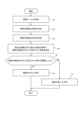
- FIG. 2 is a flowchart showing a process of a foreign object detection method according to an embodiment of the present disclosure.
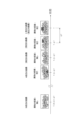
- FIG. 3 is a diagram showing an example of N images.
- Fig. 1 is a schematic diagram showing an example of the configuration of a foreign object detection system including a foreign object detection device 10 according to this embodiment.
- the foreign object detection device 10 is shown in a block diagram illustrating an example of the internal configuration.
- the foreign object detection device 10 is a device that detects foreign objects contained in scraps based on images of the scraps.
- the foreign object detection device 10 is used to inspect iron-based scrap using heavy machinery with an arm.
- Iron-based scrap is used as an iron raw material in the manufacture of steel products.
- the foreign object detection device 10 determines whether or not there is a foreign object in the scrap.
- a lifting magnet for transporting and moving the scrap is provided at the tip of the arm of the heavy machinery. The scrap is placed on the ground (yard) as a scrap pile.
- a scrap pile means a collection of a lump of scrap piled up in a mountain shape.
- the part that performs the specified work on the scrap is called the working unit.
- the working unit is the arm of the heavy machinery that performs the leveling work.
- the working unit is not limited to the arm of the heavy equipment, but may be, for example, a lifting magnet that moves along a rail.
- the predetermined work is not limited to leveling work, but may be, for example, work such as transporting, moving, and lifting scrap.
- the worker is also the driver who operates the heavy equipment.
- the foreign object detection device 10 includes a communication unit 11, a storage unit 12, and a control unit 13.
- the control unit 13 includes an image acquisition unit 131, a determination unit 132, and an output unit 133.
- the foreign object detection device 10 may be, for example, a computer as a hardware configuration.
- the computer may be a server computer or a portable computer such as a laptop or tablet. Details of the components of the foreign object detection device 10 will be described later.
- the foreign object detection device 10 may not be a single device, but may be composed of multiple devices that are placed in multiple locations and can send and receive data to each other via a network. In other words, multiple devices connected by a network may function as the foreign object detection device 10 shown in FIG. 1 as a whole.
- the foreign object detection device 10 may be composed of one computer as a hardware configuration, or may be composed of multiple computers connected by a network.
- the storage unit 12 may be a shared memory that can be accessed by each computer.
- the foreign object detection device 10 is described as a server computer installed at a location away from the yard where the scrap pile is placed, but it may be any type of computer located in the yard.
- the foreign object detection device 10 may be a small computer built into a camera, or a terminal device used by an operator may be integrated with the foreign object detection device 10.
- the foreign object detection device 10 may constitute a foreign object detection system together with devices connected to the network.
- the network may be, for example, the Internet.
- the network may also be configured to include, for example, a LAN (Local Area Network) in part.
- the foreign object detection system is configured to include a camera attached to a heavy machine or an arm. The camera moves following the working unit (arm) and captures images of the surroundings of the working unit. Since the heavy machine or arm moves relative to the scrap pile during work, the images captured by the camera also capture the scrap pile from multiple different directions (angles). In other words, the worker can capture the scrap pile from multiple different directions (angles) simply by operating the heavy machine to perform normal work (in other words, without the need to operate the camera separately).
- the camera has a communication function, and the captured images can be output to the foreign object detection device 10 via the network.
- the camera may also be configured to output captured images to the foreign object detection device 10 via a terminal device.
- the foreign object detection system is configured to include a terminal device used by workers performing work in the yard.
- the terminal device has at least a function for transmitting information regarding the presence or absence of a foreign object (specific examples include determination results, etc.) to the worker.
- the terminal device may be, but is not limited to, a general-purpose mobile terminal such as a smartphone or tablet.
- the terminal device has a communication function, and can obtain information regarding the presence or absence of a foreign object from the foreign object detection device 10 via a network.
- the camera has a communication function, and takes an image of the scrap to be worked on during the leveling work, and outputs the image data to the foreign object detection device 10 via the network.
- the camera takes multiple images of the scrap to be worked on at a predetermined time interval, with different fields of view (orientation and angle of view).
- the camera is installed on the arm of the heavy equipment, so the position and orientation of the camera change in response to the operator manipulating the position and orientation of the arm during the leveling work.
- multiple images may be taken while spreading out the scrap pile, or may be taken while changing the field of view with the scrap pile unchanged.
- the result of the determination of the presence or absence of foreign objects based on multiple images is notified to the terminal device used by the operator. Therefore, the operator who is also the driver of the heavy equipment can detect foreign objects with high accuracy without increasing the workload (i.e., by simply operating the heavy equipment as usual), and can efficiently inspect the iron-based scrap.
- the communication unit 11 includes one or more communication modules that connect to a network.
- the communication unit 11 may include a communication module that supports mobile communication standards such as 4G (4th Generation) and 5G (5th Generation).
- the communication unit 11 may include a communication module that supports a wired or wireless LAN standard.
- the storage unit 12 is one or more memories.
- the memory may be, for example, a semiconductor memory, a magnetic memory, or an optical memory, but is not limited to these and may be any type of memory.
- the storage unit 12 is, for example, built into the foreign object detection device 10, but may also be configured to be accessed from the outside by the foreign object detection device 10 via any interface.
- the storage unit 12 stores various data used in the various calculations performed by the control unit 13.
- the storage unit 12 may also store the results and intermediate data of the various calculations performed by the control unit 13.
- the storage unit 12 may temporarily store various information from devices connected via a network.
- the storage unit 12 stores multiple images of the scrap pile with different fields of view captured by a camera at a predetermined time interval.
- the storage unit 12 stores the presence or absence of a foreign object candidate determined by the determination unit 132 in association with each of the multiple images.
- the storage unit 12 may store the presence or absence and position of a foreign object determined by the determination unit 132.
- a foreign object candidate means a foreign object determined in one image.
- the final presence or absence of a foreign object is determined in multiple images. Therefore, in order to distinguish it from the final foreign object, a foreign object determined in one image is called a "foreign object candidate."
- the control unit 13 is one or more processors.
- the processor may be, for example, a general-purpose processor or a dedicated processor specialized for a particular process, but is not limited to these and may be any processor.
- the control unit 13 controls the overall operation of the foreign object detection device 10.
- the foreign object detection device 10 may have the following software configuration.
- One or more programs used to control the operation of the foreign object detection device 10 are stored in the memory unit 12.
- the programs stored in the memory unit 12 are loaded by the processor of the control unit 13, they cause the control unit 13 to function as an image acquisition unit 131, a determination unit 132, and an output unit 133.
- the image acquisition unit 131 acquires images captured by a camera.
- the image acquisition unit 131 acquires multiple images with different fields of view captured by the camera.
- the interval (acquisition interval) at which the image acquisition unit 131 acquires images may be the above-mentioned predetermined time interval, i.e., the shooting interval of the camera, but may be longer than the predetermined time interval.
- the acquisition interval of the image acquisition unit 131 may be set based on the moving speed of the heavy equipment or the operating speed of the arm. However, it is preferable that the acquisition interval is short enough that there is no change in the target scrap pile in the predetermined work (leveling work in this embodiment). For example, the acquisition interval is within 30 seconds.
- the image acquisition unit 131 acquires multiple images at a time interval of 30 seconds or less.
- the determination unit 132 detects potential foreign objects based on the images acquired by the image acquisition unit 131, and determines the presence or absence of foreign objects in the scrap pile based on the detection results of the potential foreign objects.
- the number of images acquired by the image acquisition unit 131 is at least N (N is an integer equal to or greater than 2).
- the determination unit 132 detects potential foreign objects in each of the multiple images, and determines the presence or absence of a foreign object based on the detection results of the potential foreign objects in the multiple images. In addition to the presence or absence of a foreign object, the position of the foreign object may also be determined. Details of determining the presence or absence of a foreign object will be described later.
- the output unit 133 outputs information regarding the presence or absence of a foreign object, including the result of the determination by the determination unit 132, to a terminal device or the like.
- the information regarding the presence or absence of a foreign object may be audio, image, or text information. If the terminal device is equipped with, for example, a speaker, and can convey information to the worker by audio, the output unit 133 may output audio information regarding the presence or absence of a foreign object. If the terminal device is equipped with, for example, a display, and can convey information to the worker by image, the output unit 133 may output image information regarding the presence or absence of a foreign object.
- the output unit 133 may also output a control signal to the terminal device to cause it to perform a predetermined operation according to the presence or absence of a foreign object.
- the output unit 133 may output a control signal to the terminal device to cause it to generate an alarm sound.
- the output unit 133 may also send an email or the like including the determination result to the terminal device or the smartphone of the yard manager or the like.
- (Foreign object detection method) 2 is a flowchart showing the process of the foreign object detection method according to this embodiment.
- the process of the foreign object detection method is executed by the foreign object detection device 10, and may be started, for example, when at least N images have been captured after the camera has started capturing images.
- the image acquisition unit 131 acquires data of an image captured by a camera (step S1).
- the determination unit 132 determines whether or not there is a candidate for a foreign object for the image acquired by the image acquisition unit 131 (step S2). Then, the determination result by the determination unit 132 (whether or not there is a candidate for a foreign object) is recorded (step S3). In other words, the presence or absence of a candidate for a foreign object is linked to the acquired image and stored in the memory unit 12.
- the detection of potential foreign objects by the determination unit 132 may use a known method for object recognition in an image.
- a model generated by machine learning using past images containing foreign objects and images not containing foreign objects as learning data may be used.
- a pre-trained deep learning model may be used.
- the position of a foreign object may also be determined using such a model.
- the judgment unit 132 judges whether or not there is a foreign object using not only one image (the most recently obtained image), but N (multiple) images. As described above, the judgment results (whether or not there is a foreign object candidate) by the judgment unit 132 are stored in the memory unit 12. The judgment unit 132 acquires the judgment results of the past N images, including the most recent image, from the memory unit 12. The judgment unit 132 then calculates the number of times that it has been determined that there is a foreign object candidate in the N images (step S4). In the following description, it is assumed that the number of times that it has been determined that there is a foreign object candidate in step S4 is k. The judgment unit 132 also calculates the proportion of times that it has been determined that there is a foreign object candidate (k/N).
- FIG. 3 is a diagram showing an example of N images.
- the time when the most recent image was obtained is "T", and the above-mentioned acquisition interval is " ⁇ T".
- the judgment unit 132 acquires from the memory unit 12 the presence or absence of foreign object candidates for the past N images up to T-(N-1) ⁇ T.
- T time when the most recent image was obtained
- ⁇ T acquisition interval
- the judgment unit 132 acquires from the memory unit 12 the presence or absence of foreign object candidates for the past N images up to T-(N-1) ⁇ T.
- there is no foreign object candidate in the third and Nth images In the example of FIG. 3, if N is 5 in the example of FIG. 3, the number of times that it was judged that there is a foreign object candidate is 3, and the above-mentioned ratio (k/N) is 60%.
- the determination unit 132 determines whether the ratio (k/N) of the number of candidates for a foreign object is equal to or greater than a threshold (step S5). If the ratio (k/N) is equal to or greater than the threshold (Yes in step S5), the determination unit 132 determines that a foreign object is present in the target scrap pile (step S6). If the ratio (k/N) is less than the threshold (No in step S5), the determination unit 132 determines that no foreign object is present in the target scrap pile (step S7).
- the determination result may be output to a terminal device by the output unit 133.
- the threshold is 50% as an example, but is not limited to this and may be changed according to, for example, the value of N.
- the interval (acquisition interval) at which the image acquisition unit 131 acquires images i.e., ⁇ T
- the threshold is 50%
- N is 5.
- the ratio (k/N) is 60%, which is equal to or greater than the threshold, so the determination unit 132 determines that a foreign object is present.
- the foreign object detection method of this embodiment multiple images with different fields of view are taken of the same scrap, and foreign object detection is performed based on the multiple images. Therefore, foreign objects that are difficult to see from one direction can be detected in an image seen from another direction, preventing them from being overlooked. Furthermore, because foreign object detection is performed based on multiple images, erroneous detection of objects other than foreign objects as foreign objects can also be prevented. Furthermore, because foreign object detection is possible using only multiple images from the camera, the processing load is reduced and the time until a judgment result is obtained can be shortened. Since workers can obtain judgment results almost in real time, they can efficiently proceed with inspection work, etc.
- the foreign object detection device 10 and foreign object detection method according to this embodiment can identify foreign objects with high accuracy from captured images of the target scrap.
- it is possible to prevent quality degradation due to the inclusion of impurity elements in steel products manufactured by melting scrap. It is also possible to prevent steam explosions and other problems caused by the inclusion of sealed objects in the manufacturing of steel products.
- the camera was attached to the arm of the heavy equipment.
- the camera may be attached somewhere other than the arm of the heavy equipment (for example, above the driver's seat, etc.). Even if the camera is attached somewhere other than the arm, the camera moves with the heavy equipment when it moves forward, backward, and turns, so the camera can always capture the tip of the arm. Also, the camera does not have to be attached to the heavy equipment as long as it can follow the movement of the arm.
- the camera may be attached to an unmanned aerial vehicle, and the unmanned aerial vehicle may fly around the heavy equipment so that the camera is always pointing at the tip of the arm.
Landscapes
- Engineering & Computer Science (AREA)
- General Physics & Mathematics (AREA)
- Physics & Mathematics (AREA)
- Theoretical Computer Science (AREA)
- Computer Vision & Pattern Recognition (AREA)
- Quality & Reliability (AREA)
- Analytical Chemistry (AREA)
- General Health & Medical Sciences (AREA)
- Immunology (AREA)
- Pathology (AREA)
- Biochemistry (AREA)
- Chemical & Material Sciences (AREA)
- Life Sciences & Earth Sciences (AREA)
- Health & Medical Sciences (AREA)
- Geophysics And Detection Of Objects (AREA)
- Investigating Materials By The Use Of Optical Means Adapted For Particular Applications (AREA)
- Image Analysis (AREA)
Abstract
Description
スクラップの中に含まれる異物を検知する異物検知装置であって、
前記スクラップに対して所定の作業を行う作業部に追随して移動するとともに前記作業部の周囲の画像を撮影するカメラによって撮影された画像を取得する画像取得部と、
前記画像に基づいて前記異物の候補を検知し、前記異物の候補の検知結果に基づいて異物の有無を判定する判定部と、を備える。
前記作業部は重機のアームであり、前記カメラは前記重機又は前記アームに取り付けられている。
前記画像は、前記カメラによって撮影された視野が異なる複数の画像であって、
前記判定部は、前記複数の画像のそれぞれについて前記異物の候補を検知するとともに、前記複数の画像における前記異物の候補の検知結果に基づいて前記異物の有無を判定する。
前記画像取得部は、30秒以内の時間間隔で前記複数の画像を取得する。
スクラップの中に含まれる異物を検知する異物検知方法であって、
前記スクラップに対して所定の作業を行う作業部に追随して移動するとともに前記作業部の周囲の画像を撮影するカメラによって撮影された画像を取得することと、
前記画像に基づいて前記異物の候補を検知し、前記異物の候補の検知結果に基づいて異物の有無を判定することと、を含む。
図1は、本実施形態に係る異物検知装置10を備える異物検知システムの構成例を示す概略図である。図1において、異物検知装置10は内部構成を例示するブロック図で示されている。異物検知装置10は、スクラップの画像に基づいて、スクラップの中に含まれる異物を検知する装置である。
以下、異物検知装置10の構成要素の詳細が説明される。通信部11は、ネットワークに接続する1つ以上の通信モジュールを含んで構成される。通信部11は、例えば4G(4th Generation)、5G(5th Generation)などの移動体通信規格に対応する通信モジュールを含んでよい。通信部11は、例えば有線又は無線のLAN規格に対応する通信モジュールを含んでよい。
図2は、本実施形態に係る異物検知方法の処理を示すフローチャートである。異物検知方法の処理は異物検知装置10によって実行され、例えばカメラの撮影が始まってから少なくともN枚の画像が撮影されたタイミングで開始されてよい。
11 通信部
12 記憶部
13 制御部
131 画像取得部
132 判定部
133 出力部
Claims (5)
- スクラップの中に含まれる異物を検知する異物検知装置であって、
前記スクラップに対して所定の作業を行う作業部に追随して移動するとともに前記作業部の周囲の画像を撮影するカメラによって撮影された画像を取得する画像取得部と、
前記画像に基づいて前記異物の候補を検知し、前記異物の候補の検知結果に基づいて異物の有無を判定する判定部と、を備える、異物検知装置。 - 前記作業部は重機のアームであり、前記カメラは前記重機又は前記アームに取り付けられている、請求項1に記載の異物検知装置。
- 前記画像は、前記カメラによって撮影された視野が異なる複数の画像であって、
前記判定部は、前記複数の画像のそれぞれについて前記異物の候補を検知するとともに、前記複数の画像における前記異物の候補の検知結果に基づいて前記異物の有無を判定する、
請求項1又は2に記載の異物検知装置。 - 前記画像取得部は、30秒以内の時間間隔で前記複数の画像を取得する、請求項3に記載の異物検知装置。
- スクラップの中に含まれる異物を検知する異物検知方法であって、
前記スクラップに対して所定の作業を行う作業部に追随して移動するとともに前記作業部の周囲の画像を撮影するカメラによって撮影された画像を取得することと、
前記画像に基づいて前記異物の候補を検知し、前記異物の候補の検知結果に基づいて異物の有無を判定することと、を含む、異物検知方法。
Priority Applications (4)
| Application Number | Priority Date | Filing Date | Title |
|---|---|---|---|
| CN202480065321.1A CN122029567A (zh) | 2023-11-10 | 2024-08-22 | 异物检测装置及异物检测方法 |
| JP2025502464A JP7655460B1 (ja) | 2023-11-10 | 2024-08-22 | 異物検知装置及び異物検知方法 |
| KR1020267007138A KR20260049281A (ko) | 2023-11-10 | 2024-08-22 | 이물질 검지 장치 및 이물질 검지 방법 |
| EP24888336.5A EP4779561A1 (en) | 2023-11-10 | 2024-08-22 | Foreign matter detection device and foreign matter detection method |
Applications Claiming Priority (2)
| Application Number | Priority Date | Filing Date | Title |
|---|---|---|---|
| JP2023-192560 | 2023-11-10 | ||
| JP2023192560 | 2023-11-10 |
Publications (1)
| Publication Number | Publication Date |
|---|---|
| WO2025100034A1 true WO2025100034A1 (ja) | 2025-05-15 |
Family
ID=95695120
Family Applications (1)
| Application Number | Title | Priority Date | Filing Date |
|---|---|---|---|
| PCT/JP2024/029903 Pending WO2025100034A1 (ja) | 2023-11-10 | 2024-08-22 | 異物検知装置及び異物検知方法 |
Country Status (5)
| Country | Link |
|---|---|
| EP (1) | EP4779561A1 (ja) |
| JP (1) | JP7655460B1 (ja) |
| KR (1) | KR20260049281A (ja) |
| CN (1) | CN122029567A (ja) |
| WO (1) | WO2025100034A1 (ja) |
Cited By (1)
| Publication number | Priority date | Publication date | Assignee | Title |
|---|---|---|---|---|
| CN120543532A (zh) * | 2025-05-28 | 2025-08-26 | 广东铂崛科技有限公司 | 一种基于机器视觉的金属粉末杂质分析方法及系统 |
Citations (4)
| Publication number | Priority date | Publication date | Assignee | Title |
|---|---|---|---|---|
| CN208868062U (zh) * | 2018-07-23 | 2019-05-17 | 中国安全生产科学研究院 | 一种城市轨道交通自动巡检系统 |
| JP2021086285A (ja) | 2019-11-26 | 2021-06-03 | 株式会社神鋼エンジニアリング&メンテナンス | 密閉物検出システム、密閉物検出方法、推定装置、及びプログラム |
| JP2021163078A (ja) * | 2020-03-31 | 2021-10-11 | Jfeスチール株式会社 | 異物検出装置、異物除去装置および異物検出方法 |
| JP2021174785A (ja) * | 2020-04-17 | 2021-11-01 | 東京エレクトロン株式会社 | 異物検査システム、異物検査方法、プログラム及び半導体製造装置 |
-
2024
- 2024-08-22 KR KR1020267007138A patent/KR20260049281A/ko active Pending
- 2024-08-22 CN CN202480065321.1A patent/CN122029567A/zh active Pending
- 2024-08-22 EP EP24888336.5A patent/EP4779561A1/en active Pending
- 2024-08-22 JP JP2025502464A patent/JP7655460B1/ja active Active
- 2024-08-22 WO PCT/JP2024/029903 patent/WO2025100034A1/ja active Pending
Patent Citations (4)
| Publication number | Priority date | Publication date | Assignee | Title |
|---|---|---|---|---|
| CN208868062U (zh) * | 2018-07-23 | 2019-05-17 | 中国安全生产科学研究院 | 一种城市轨道交通自动巡检系统 |
| JP2021086285A (ja) | 2019-11-26 | 2021-06-03 | 株式会社神鋼エンジニアリング&メンテナンス | 密閉物検出システム、密閉物検出方法、推定装置、及びプログラム |
| JP2021163078A (ja) * | 2020-03-31 | 2021-10-11 | Jfeスチール株式会社 | 異物検出装置、異物除去装置および異物検出方法 |
| JP2021174785A (ja) * | 2020-04-17 | 2021-11-01 | 東京エレクトロン株式会社 | 異物検査システム、異物検査方法、プログラム及び半導体製造装置 |
Cited By (1)
| Publication number | Priority date | Publication date | Assignee | Title |
|---|---|---|---|---|
| CN120543532A (zh) * | 2025-05-28 | 2025-08-26 | 广东铂崛科技有限公司 | 一种基于机器视觉的金属粉末杂质分析方法及系统 |
Also Published As
| Publication number | Publication date |
|---|---|
| JP7655460B1 (ja) | 2025-04-02 |
| KR20260049281A (ko) | 2026-04-13 |
| CN122029567A (zh) | 2026-05-12 |
| EP4779561A1 (en) | 2026-07-22 |
| JPWO2025100034A1 (ja) | 2025-05-15 |
Similar Documents
| Publication | Publication Date | Title |
|---|---|---|
| Yang et al. | Vision-based tower crane tracking for understanding construction activity | |
| JP5263694B2 (ja) | 物体位置推定用情報作成装置、物体位置推定用情報作成方法およびプログラム | |
| CN114972421B (zh) | 车间物料识别追踪与定位方法、系统 | |
| US20220327676A1 (en) | Method and system for detecting change to structure by using drone | |
| CN116048011B (zh) | 工作状况监视系统、工作状况监视方法、及存储有工作状况监视程序的计算机可读存储介质 | |
| JP7655460B1 (ja) | 異物検知装置及び異物検知方法 | |
| JP2016224547A (ja) | 画像処理装置、画像処理システム及び画像処理方法 | |
| KR20170050448A (ko) | 이미지 상의 객체 검출 방법 및 객체 검출 장치 | |
| Kim et al. | Sequential pattern learning of visual features and operation cycles for vision-based action recognition of earthmoving excavators | |
| CN107767399B (zh) | 叉车监控方法及监控系统 | |
| CN116091932A (zh) | 巡检机器人的图像处理方法、装置和计算机设备 | |
| US20110304730A1 (en) | Pan, tilt, and zoom camera and method for aiming ptz camera | |
| JPWO2020003764A1 (ja) | 画像処理装置、移動装置、および方法、並びにプログラム | |
| CN117475397A (zh) | 基于多模态传感器的目标标注数据获取方法、介质及设备 | |
| US20230039203A1 (en) | Information processing apparatus, moving body, method for controlling information processing apparatus, and recording medium | |
| CN116142981A (zh) | 吊装作业人员预警方法、装置、系统及吊装设备 | |
| CN114596239B (zh) | 装卸货事件检测方法、装置、计算机设备和存储介质 | |
| CN118283424B (zh) | 一种抓拍方法、装置、电子设备及存储介质 | |
| CN114241404A (zh) | 卸料小车定位方法、装置、设备及存储介质 | |
| CN120431700A (zh) | 火灾预警方法、装置、介质以及电子设备 | |
| CN117710463A (zh) | 复杂环境下广视角高精度的机器人乘梯方法 | |
| CN114666476B (zh) | 机器人智能录像方法、装置、设备及存储介质 | |
| US20240428446A1 (en) | Intelligent projection point prediction for overhead objects | |
| KR102626346B1 (ko) | 공작 기계의 공구 마모 및 파손 상태 여부를 감지하는 방법 및 장치 | |
| KR20230079716A (ko) | 자동차부품용 프레스 공정의 실시간 데이터 수집이 가능한 사물인터넷 기반의 공정 토탈 관리 시스템 |
Legal Events
| Date | Code | Title | Description |
|---|---|---|---|
| ENP | Entry into the national phase |
Ref document number: 2025502464 Country of ref document: JP Kind code of ref document: A |
|
| WWE | Wipo information: entry into national phase |
Ref document number: 2025502464 Country of ref document: JP |
|
| 121 | Ep: the epo has been informed by wipo that ep was designated in this application |
Ref document number: 24888336 Country of ref document: EP Kind code of ref document: A1 |
|
| ENP | Entry into the national phase |
Ref document number: 1020267007138 Country of ref document: KR Free format text: ST27 STATUS EVENT CODE: A-0-1-A10-A15-NAP-PA0105 (AS PROVIDED BY THE NATIONAL OFFICE) |
|
| WWE | Wipo information: entry into national phase |
Ref document number: 1020267007138 Country of ref document: KR |
|
| WWE | Wipo information: entry into national phase |
Ref document number: 202617027949 Country of ref document: IN |
|
| WWP | Wipo information: published in national office |
Ref document number: 202617027949 Country of ref document: IN |
|
| WWP | Wipo information: published in national office |
Ref document number: 1020267007138 Country of ref document: KR |
|
| REG | Reference to national code |
Ref country code: BR Ref legal event code: B01A Ref document number: 112026010998 Country of ref document: BR |
|
| NENP | Non-entry into the national phase |
Ref country code: DE |