WO2025047318A1 - 表面保護フィルム - Google Patents
表面保護フィルム Download PDFInfo
- Publication number
- WO2025047318A1 WO2025047318A1 PCT/JP2024/027963 JP2024027963W WO2025047318A1 WO 2025047318 A1 WO2025047318 A1 WO 2025047318A1 JP 2024027963 W JP2024027963 W JP 2024027963W WO 2025047318 A1 WO2025047318 A1 WO 2025047318A1
- Authority
- WO
- WIPO (PCT)
- Prior art keywords
- weight
- urethane
- manufactured
- parts
- glass plate
- Prior art date
- Legal status (The legal status is an assumption and is not a legal conclusion. Google has not performed a legal analysis and makes no representation as to the accuracy of the status listed.)
- Pending
Links
Images
Classifications
-
- C—CHEMISTRY; METALLURGY
- C09—DYES; PAINTS; POLISHES; NATURAL RESINS; ADHESIVES; COMPOSITIONS NOT OTHERWISE PROVIDED FOR; APPLICATIONS OF MATERIALS NOT OTHERWISE PROVIDED FOR
- C09J—ADHESIVES; NON-MECHANICAL ASPECTS OF ADHESIVE PROCESSES IN GENERAL; ADHESIVE PROCESSES NOT PROVIDED FOR ELSEWHERE; USE OF MATERIALS AS ADHESIVES
- C09J175/00—Adhesives based on polyureas or polyurethanes; Adhesives based on derivatives of such polymers
- C09J175/04—Polyurethanes
-
- C—CHEMISTRY; METALLURGY
- C09—DYES; PAINTS; POLISHES; NATURAL RESINS; ADHESIVES; COMPOSITIONS NOT OTHERWISE PROVIDED FOR; APPLICATIONS OF MATERIALS NOT OTHERWISE PROVIDED FOR
- C09J—ADHESIVES; NON-MECHANICAL ASPECTS OF ADHESIVE PROCESSES IN GENERAL; ADHESIVE PROCESSES NOT PROVIDED FOR ELSEWHERE; USE OF MATERIALS AS ADHESIVES
- C09J7/00—Adhesives in the form of films or foils
- C09J7/30—Adhesives in the form of films or foils characterised by the adhesive composition
- C09J7/38—Pressure-sensitive adhesives [PSA]
Definitions
- the present invention relates to a surface protection film.
- a surface protective film is generally applied to the exposed surfaces of the optical and electronic components to prevent the surfaces of the optical and electronic components from being damaged during processing, assembly, inspection, transportation, etc.
- Such a surface protective film is peeled off from the optical and electronic components when surface protection is no longer necessary (Patent Document 1).
- Patent Document 2 In order to prevent the generation of static electricity as described above, a technique has been reported in which an antistatic treatment is applied to a surface protection film. For example, a technique has been reported in which an ionic compound such as an alkali metal salt or an ionic liquid that functions as an antistatic agent is contained in the adhesive layer of the surface protection film (Patent Document 2).
- the adherend when an antistatic agent is contained in the adhesive layer, there is a possibility that the adherend may be contaminated by the antistatic agent. If such contamination occurs, when the surface protection film attached to the adherend is peeled off from the adherend and then another member is attached to the peeled surface of the adherend, this can easily cause process defects such as the member peeling off from the adherend.
- the object of the present invention is to provide a surface protection film that includes an adhesive layer and that is capable of simultaneously achieving excellent antistatic properties and inhibiting contamination of the adherend.
- a surface protection film is a surface protection film including an adhesive layer composed of a urethane-based adhesive, the urethane-based adhesive including a urethane polymer, the urethane-based adhesive being formed from a urethane-based adhesive composition, the urethane-based adhesive composition including a base polymer (A), a silicone-based compound (B), and an ionic compound (C), and after the surface protection film is attached to a glass plate and left for 4 hours in an environment of a temperature of 23°C and a humidity of 50% RH, the surface protection film is peeled off from the glass plate, and then a voltage of 250 V is applied to the center of the peeled surface of the glass plate for 10 seconds, resulting in a surface resistance value of 5.0 x 10¹⁰ ⁇ or more.
- the fluorine content in the pressure-sensitive adhesive layer may be 0.20 wt % or less.
- the urethane polymer may be a prepolymer type urethane polymer, and the adhesive layer may be attached to a glass plate, left for 30 minutes at an environmental temperature of 23° C., and then the surface protective film is peeled from the glass plate at a peel angle of 180° and a peel speed of 300 mm/min.
- the average peel strength when the adhesive layer is attached to a glass plate, left for 1 day at an environmental temperature of 50° C., and then the average peel strength when the surface protective film is peeled from the glass plate at a peel angle of 180° and a peel speed of 300 mm/min is defined as adhesive strength (I)
- adhesive strength (II) the average peel strength when the adhesive layer is attached to a glass plate, left for 1 day at an environmental temperature of 50° C., and then the surface protective film is peeled from the glass plate at a peel angle of 180° and a peel speed of 300 mm/min.
- the adhesive strength over time may be increased by less than 210%, as defined by [adhesive strength (II)/adhesive strength (I)] ⁇ 100(%).
- the urethane polymer may be a one-shot type urethane polymer, and the adhesive layer may be attached to a glass plate, left for 30 minutes at an environmental temperature of 23° C., and then the surface protective film is peeled from the glass plate at a peel angle of 180° and a peel speed of 300 mm/min.
- the average peel strength when the adhesive layer is attached to a glass plate, left for 1 day at an environmental temperature of 50° C., and then the average peel strength when the surface protective film is peeled from the glass plate at a peel angle of 180° and a peel speed of 300 mm/min is defined as adhesive strength (I)
- adhesive strength (II) the average peel strength when the adhesive layer is attached to a glass plate, left for 1 day at an environmental temperature of 50° C., and then the surface protective film is peeled from the glass plate at a peel angle of 180° and a peel speed of 300 mm/min.
- the adhesive strength to the glass plate may have an increase rate over time of less than 160%, defined as [adhesive strength (II)/adhesive strength (I)] ⁇ 100(%).
- the content of the ionic compound (C) relative to 100 parts by weight of the base polymer (A) may be 0.01 parts by weight to 2.8 parts by weight.
- the silicone-based compound (B) may contain a silicone-based compound having a polyether structure.
- the silicone-based compound having a polyether structure may be at least one selected from the group consisting of reactive silicone oils and non-reactive silicone oils having an HLB value of 15 or less.
- An optical member according to an embodiment of the present invention includes the surface protection film according to any one of [1] to [7] above.
- An electronic device according to an embodiment of the present invention includes the surface protection film according to any one of [1] to [7] above.
- the present invention provides a surface protection film that includes an adhesive layer and is capable of achieving both excellent antistatic performance and suppression of contamination of the adherend.
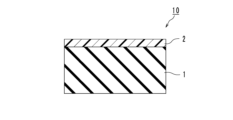
- FIG. 1 is a schematic cross-sectional view of a surface protection film according to one embodiment of the present invention.
- weight Whenever the term “weight” appears in this specification, it may be read as “mass,” which is the commonly used SI unit for indicating weight.
- (meth)acrylic means “acrylic and/or methacrylic
- the term “(meth)acrylate” means “acrylate and/or methacrylate
- the term “(meth)allyl” means “allyl and/or methallyl”
- the term “(meth)acrolein” means "acrolein and/or methacrolein”.
- the surface protection film according to the embodiment of the present invention includes a pressure-sensitive adhesive layer composed of a urethane-based pressure-sensitive adhesive.
- the urethane-based pressure-sensitive adhesive includes a urethane polymer.
- the urethane-based adhesive is formed from a urethane-based adhesive composition, which contains a base polymer (A), a silicone-based compound (B), and an ionic compound (C).
- the total content of the base polymer (A), silicone compound (B) and ionic compound (C) in the urethane-based adhesive composition is preferably 50% by weight to 100% by weight, more preferably 70% by weight to 99% by weight, even more preferably 80% by weight to 98% by weight, and particularly preferably 90% by weight to 97% by weight, calculated on a solid content basis.
- the content of the base polymer (A) in the urethane-based adhesive composition is preferably 60% by weight to 99.9% by weight, more preferably 70% by weight to 99% by weight, even more preferably 80% by weight to 98% by weight, and particularly preferably 90% by weight to 97% by weight, calculated as solids. If the content of the base polymer (A) in the urethane-based adhesive composition is within the above range, calculated as solids, the effects of the present invention can be more effectively achieved.
- the surface protection film according to an embodiment of the present invention may contain any other appropriate components as long as the effects of the present invention are not impaired, so long as it contains an adhesive layer composed of a urethane-based adhesive.
- the surface protection film according to an embodiment of the present invention contains a substrate and the above-mentioned adhesive layer.
- the surface of the adhesive layer opposite the substrate may be provided with any appropriate release liner (sometimes called a release sheet or separator) for protection until use, etc.
- FIG. 1 is a schematic cross-sectional view of a surface protection film according to one embodiment of the present invention.
- the surface protection film 10 comprises a substrate 1 and an adhesive layer 2.
- the substrate 1 and the adhesive layer 2 are directly laminated together.
- the surface of the adhesive layer 2 opposite the substrate 1 may be provided with any suitable release liner (sometimes called a release sheet or separator) for protection until use (not shown).
- release liners include release liners in which the surface of a substrate (liner substrate) such as paper or plastic film is silicone-treated, and release liners in which the surface of a substrate (liner substrate) such as paper or plastic film is laminated with a polyolefin resin.
- the thickness of the release liner is preferably 1 ⁇ m to 500 ⁇ m, more preferably 3 ⁇ m to 450 ⁇ m, even more preferably 5 ⁇ m to 400 ⁇ m, and particularly preferably 10 ⁇ m to 300 ⁇ m.
- the thickness of the surface protection film according to the embodiment of the present invention may be any appropriate thickness within a range that does not impair the effects of the present invention.
- Such a thickness is preferably 5 ⁇ m to 500 ⁇ m, more preferably 10 ⁇ m to 450 ⁇ m, even more preferably 15 ⁇ m to 400 ⁇ m, and particularly preferably 20 ⁇ m to 300 ⁇ m.
- the surface protection film in an environment of a temperature of 23° C. and a humidity of 50% RH, the surface protection film is attached to a glass plate, left for 4 hours, and then the surface protection film is peeled off from the glass plate. After a voltage of 250 V is applied to the center of the peeled surface of the glass plate for 10 seconds, the surface resistance (surface resistance to glass plate) is preferably 5.0 ⁇ 10 10 ⁇ or more, more preferably 1.0 ⁇ 10 11 ⁇ or more, particularly preferably 5.0 ⁇ 10 11 ⁇ or more, and most preferably 1.0 ⁇ 10 12 ⁇ or more. The larger the surface resistance, the better, and the upper limit is not limited.
- the measurable upper limit may be the upper limit of the measurement limit of the measurement device, so for example, the surface resistance may exceed the measurement limit of the measurement device.
- the surface protective film according to the embodiment of the present invention includes a pressure-sensitive adhesive layer composed of a urethane-based pressure-sensitive adhesive formed from a urethane-based pressure-sensitive adhesive composition containing a urethane polymer (A), a silicone-based compound (B), and an ionic compound (C), and the glass plate surface resistance value is adjusted within the above range, thereby providing a surface protective film that can simultaneously exhibit excellent antistatic performance and contamination suppression of the adherend.
- the present inventors have found that, in a surface protective film including a pressure-sensitive adhesive layer, an unexpected effect is exhibited in which excellent antistatic performance and contamination suppression of the adherend can be simultaneously exhibited by adopting a pressure-sensitive adhesive layer composed of a urethane-based pressure-sensitive adhesive formed from a urethane-based pressure-sensitive adhesive composition containing a urethane polymer (A), a silicone-based compound (B), and an ionic compound (C) as described above, and adjusting the glass plate surface resistance value within the above range.
- a pressure-sensitive adhesive layer composed of a urethane-based pressure-sensitive adhesive formed from a urethane-based pressure-sensitive adhesive composition containing a urethane polymer (A), a silicone-based compound (B), and an ionic compound (C) as described above, and adjusting the glass plate surface resistance value within the above range.
- the peel electrification voltage of the glass plate surface is preferably 7.5 kV or less, more preferably 0 kV to 6.5 kV, even more preferably 0 kV to 5.5 kV, even more preferably 0 kV to 4.5 kV, even more preferably 0 kV to 3.5 kV, even more preferably 0 kV to 3.0 kV, even more preferably 0 kV to 2.5 kV, particularly preferably 0 kV to 2.0 kV, and most preferably 0 kV to 1.5 kV.
- the above-mentioned glass plate peel electrification voltage is within the above-mentioned range, a surface protective film with excellent antistatic performance can be provided. If the glass peeling charge voltage is too large outside the above range, for example, static electricity may be easily generated when peeling the surface protective film from an optical component or electronic component to which the surface protective film is attached. The method for measuring the glass peeling charge voltage will be described in detail later.
- the amount of elemental sulfur transferred to the peeled surface of the glass plate is preferably 3.5 atomic% or less, more preferably 0 atomic% to 3.0 atomic%, even more preferably 0 atomic% to 2.5 atomic%, even more preferably 0 atomic% to 2.0 atomic%, even more preferably 0 atomic% to 1.5 atomic%, even more preferably 0 atomic% to 1.0 atomic%, particularly preferably 0 atomic% to 0.5 atomic%, and most preferably 0 atomic% to 0.1 atomic%.
- the amount of elemental sulfur transferred is an index of the degree of contamination of the adherend, and the smaller the value, the less contamination of the peeled surface of the adherend when the surface protection film is attached to the adherend and then peeled off. If the amount of elemental sulfur transferred is within the above range, a surface protection film capable of suppressing contamination of the adherend can be provided. If the amount of elemental sulfur transferred is too large outside the above range, for example, there is a risk that the degree of contamination of the adherend will increase. The method for measuring the amount of elemental sulfur transferred will be described in detail below.
- the fluorine content in the adhesive layer is preferably 0.20% by weight or less, more preferably 0% by weight to 0.15% by weight, even more preferably 0% by weight to 0.10% by weight, particularly preferably 0% by weight to 0.07% by weight, and most preferably 0% by weight to 0.05% by weight.
- the fluorine content in the adhesive layer is too large outside the above range, for example, when the surface protection film attached to the adherend is peeled off from the adherend and another member is attached to the peeled surface of the adherend and exposed to high temperature conditions, the member may be easily peeled off from the adherend.
- the method for measuring the fluorine content in the adhesive layer will be described in detail later.
- the surface protection film according to the embodiment of the present invention has an adhesive strength (I) which is the average peel strength when the adhesive layer is attached to a glass plate, left at an environmental temperature of 23°C for 30 minutes, and then peeled from the glass plate at a peel angle of 180 degrees and a peel speed of 300 mm/min.
- the adhesive strength (I) is preferably 5.0 gf/25 mm or less, more preferably 4.0 gf/25 mm or less, even more preferably 3.5 gf/25 mm or less, and particularly preferably 3.0 gf/25 mm or less. From the viewpoint of being able to function appropriately as a surface protection film, the lower limit of the adhesive strength (I) is preferably 0.3 gf/25 mm or more in reality.
- the adhesive strength (I) is within the above range, a surface protection film that is moderately adhesive to an adherend and easy to peel can be provided. If the adhesive strength (I) is too large outside the above range, for example, the adhesive strength to an adherend may be too high and the surface protection film may be difficult to peel. The method for measuring the adhesive strength (I) will be described in detail later.
- the average peel strength is defined as adhesive strength (II), which is the degree of increase in adhesive strength from the adhesive strength (I), i.e., the rate of increase in adhesive strength to the glass plate over time defined as [adhesive strength (II)/adhesive strength (I)] x 100 (%), is preferably less than 210%, more preferably 200% or less, even more preferably 190% or less, even more preferably 180% or less, even more preferably 170% or less, even more preferably 160% or less, particularly preferably 150% or less, and most preferably 140% or less.
- the lower limit of the rate of increase in adhesive strength to the glass plate over time is preferably 100% or more. If the rate of increase in adhesive strength to glass plate over time is within the above range, the increase in adhesive strength to the adherend over time is suppressed, and a surface protection film that adheres appropriately even after a long time has passed after being attached to the adherend and is easy to peel off can be provided. If the rate of increase in adhesive strength to glass plate over time is too large outside the above range, for example, the adhesive strength to the adherend may increase over time, and after a long time has passed after being attached to the adherend, the adhesive strength may become strong and difficult to peel off. Details of the method for measuring the adhesive strength (II) will be described later.
- the rate of increase over time of the adhesive strength to the glass plate is preferably less than 210%, more preferably 180% or less, even more preferably 170% or less, even more preferably 160% or less, even more preferably 150% or less, even more preferably 140% or less, particularly preferably 135% or less, and most preferably 130% or less.
- the lower limit of the rate of increase over time of the adhesive strength to the glass plate is preferably 100% or more.
- the above-mentioned rate of increase in adhesive strength to glass plate over time is preferably less than 210%, more preferably 180% or less, even more preferably 160% or less, even more preferably 150% or less, even more preferably 140% or less, even more preferably 130% or less, particularly preferably 125% or less, and most preferably 120% or less.
- the lower limit of the above-mentioned rate of increase in adhesive strength to glass plate over time is preferably 100% or more.
- the surface protection film according to an embodiment of the present invention is prepared by attaching an adhesive layer to a glass plate and leaving it at an environmental temperature of 23°C for one day, peeling the surface protection film from the glass plate, and then applying No. 31B adhesive tape (manufactured by Nitto Denko Corporation) to the peeled surface of the glass plate.
- No. 31B adhesive tape manufactured by Nitto Denko Corporation
- 31B high-temperature low-speed adhesive strength to the glass plate is preferably 1.0 gf/25 mm or more, more preferably 1.5 gf/25 mm or more, even more preferably 2.0 gf/25 mm or more, particularly preferably 2.5 gf/25 mm or more, and most preferably 3.0 gf/25 mm or more.
- 31B high-temperature/low-speed adhesive strength against glass plates is too small, for example, when the surface protection film attached to the adherend is peeled off from the adherend and then another member is attached to the peeled surface of the adherend and exposed to high temperature conditions, the member may be easily peeled off from the adherend.
- the details of the method for measuring the No. 31B high-temperature/low-speed adhesive strength against glass plates will be described later.
- the surface protection film according to the embodiment of the present invention preferably has a haze of 5.0% or less, more preferably 4.0% or less, even more preferably 3.0% or less, particularly preferably 2.0% or less, and most preferably 1.0% or less.
- the lower limit of the haze is preferably 0% or more. If the haze is within the above range, the transparency of the surface protection film is high, and it becomes possible to accurately perform inspections, for example, when the surface protection film is attached to the surface of an adherend such as an optical component or electronic component. If the haze is too large outside the above range, for example, the transparency of the surface protection film decreases, which may cause problems in the above-mentioned inspections. The method for measuring the haze will be described in detail later.
- the surface protective film according to the embodiment of the present invention can be produced by any suitable method.
- a production method include (1) A method of applying a solution or a hot melt of a material for forming the adhesive layer onto a substrate, (2) A method of applying a solution or a hot melt of a material for forming an adhesive layer onto a release liner to form an adhesive layer, and then transferring the adhesive layer onto a substrate; (3) A method of forming and coating a pressure-sensitive adhesive layer by extruding a material for forming the pressure-sensitive adhesive layer onto a substrate; (4) A method of extruding a substrate and a pressure-sensitive adhesive layer in two or more layers, (5) A method of laminating a single layer of a pressure-sensitive adhesive layer on a substrate, or a method of laminating a double layer of a pressure-sensitive adhesive layer together with a laminate layer, (6) A method of laminating a pressure-sensitive adhesive layer and a substrate-forming material such as a film or a laminate layer in a two-
- the pressure-sensitive adhesive layer is composed of a urethane-based pressure-sensitive adhesive.
- the urethane-based pressure-sensitive adhesive is formed from a urethane-based pressure-sensitive adhesive composition. That is, the pressure-sensitive adhesive layer is composed of a urethane-based pressure-sensitive adhesive, and the urethane-based pressure-sensitive adhesive is formed from a urethane-based pressure-sensitive adhesive composition.
- the urethane-based pressure-sensitive adhesive formed from the urethane-based pressure-sensitive adhesive composition forms a layer shape to become the pressure-sensitive adhesive layer.
- the adhesive layer may be formed by any suitable method.
- a method may be used in which a urethane adhesive composition is applied to any suitable substrate, heated and dried as necessary, and cured as necessary to form an adhesive layer on the substrate.
- the application method, heating and drying conditions, curing conditions, etc. may be appropriately selected from methods commonly known for forming adhesive layers.
- the thickness of the adhesive layer can be set appropriately according to the purpose of the present invention, as long as it does not impair the effects of the present invention.
- the thickness of the adhesive layer is typically 5 ⁇ m to 150 ⁇ m.
- the thickness of the adhesive layer is typically 5 ⁇ m to 150 ⁇ m, preferably 10 ⁇ m to 120 ⁇ m, more preferably 20 ⁇ m to 110 ⁇ m, even more preferably 30 ⁇ m to 100 ⁇ m, and particularly preferably 40 ⁇ m to 90 ⁇ m.
- the thickness of the adhesive layer is typically 5 ⁇ m to 150 ⁇ m, preferably 7 ⁇ m to 100 ⁇ m, more preferably 10 ⁇ m to 50 ⁇ m, even more preferably 13 ⁇ m to 40 ⁇ m, and particularly preferably 15 ⁇ m to 30 ⁇ m.
- the urethane-based adhesive contains a urethane polymer.
- the urethane polymer in the urethane-based adhesive may be of only one type, or of two or more types.
- the content of the urethane polymer in the urethane adhesive is preferably 60% by weight to 99.9% by weight, more preferably 70% by weight to 99.9% by weight, even more preferably 80% by weight to 99.9% by weight, particularly preferably 85% by weight to 99.9% by weight, and most preferably 90% by weight to 99.9% by weight, calculated as solids. If the content of the urethane polymer in the urethane adhesive is within the above range, calculated as solids, the effects of the present invention can be more effectively achieved.
- urethane polymers Two types are known: "prepolymer-type urethane polymers,” which are produced by reacting a urethane prepolymer with a polyfunctional isocyanate compound, and “one-shot-type urethane polymers,” which are produced by directly reacting a polyol with a polyfunctional isocyanate compound without using a urethane prepolymer.
- Urethane prepolymers are typically obtained by reacting a polyol with an excess of a polyfunctional isocyanate compound, and have isocyanate groups at the molecular terminals.
- the urethane polymer contained in the urethane-based adhesive is typically at least one type selected from the group consisting of prepolymer type urethane polymers and one-shot type urethane polymers.
- the prepolymer type urethane polymer may be of only one type or of two or more types.
- the one-shot type urethane polymer may be of only one type or of two or more types.
- the prepolymer type urethane polymer is obtained by reacting a urethane prepolymer as the base polymer (A) contained in the urethane-based adhesive composition with a polyfunctional isocyanate compound. Therefore, when the urethane polymer is a prepolymer type urethane polymer, the urethane-based adhesive composition forming the urethane-based adhesive typically contains a urethane prepolymer as the base polymer (A), a polyfunctional isocyanate compound, a silicone-based compound (B), and an ionic compound (C).
- the prepolymer type urethane polymer can be prepared by any appropriate method that is used in the urethane reaction between the urethane prepolymer as the base polymer (A) and a polyfunctional isocyanate compound, as long as the effect of the present invention is not impaired.
- the one-shot urethane polymer is obtained by reacting a polyol (not a urethane prepolymer) as the base polymer (A) contained in the urethane adhesive composition with a polyfunctional isocyanate compound. Therefore, when the urethane polymer is a one-shot urethane polymer, the urethane adhesive composition forming the urethane adhesive typically contains a polyol (not a urethane prepolymer) as the base polymer (A), a polyfunctional isocyanate compound, a silicone compound (B), and an ionic compound (C).
- the one-shot urethane polymer can be prepared by any appropriate method that is used in the urethane reaction between a polyol as the base polymer (A) and a polyfunctional isocyanate compound, as long as the effect of the present invention is not impaired.
- the urethane prepolymer may be of one type or of two or more types.
- the urethane prepolymer is preferably a polyurethane polyol, and more preferably is obtained by reacting a polyol with a polyfunctional isocyanate compound.
- the number average molecular weight Mn of the urethane prepolymer is, for example, 3,000 to 1,000,000.
- the polyol includes at least one selected from the group consisting of polyester polyols and polyether polyols. Typically, the polyol is at least one selected from the group consisting of polyester polyols and polyether polyols.
- the polyester polyol may be of only one type or of two or more types.
- the polyether polyol may be of only one type or of two or more types.
- polyester polyols that can be normally used in the preparation of urethane prepolymers can be appropriately used.
- polyester polyols include polyester polyols obtained by reacting an acid component with a glycol component.
- the acid component include terephthalic acid, adipic acid, azelaic acid, sebacic acid, phthalic anhydride, isophthalic acid, and trimellitic acid.
- glycol component examples include ethylene glycol, propylene glycol, diethylene glycol, butylene glycol, 1,6-hexane glycol, 3-methyl-1,5-pentanediol, 3,3'-dimethylolheptane, polyoxyethylene glycol, polyoxypropylene glycol, 1,4-butanediol, neopentyl glycol, butylethylpentanediol, glycerin, trimethylolpropane, and pentaerythritol.
- polyester polyols include polyester polyols obtained by ring-opening polymerization of lactones such as polycaprolactone, poly( ⁇ -methyl- ⁇ -valerolactone), and polyvalerolactone.
- the molecular weight of the polyester polyol can range from low to high.
- the number average molecular weight Mn of the polyester polyol is, for example, 100 to 100,000, and preferably 100 to 10,000.
- polyether polyols that can be normally used in the preparation of urethane prepolymers can be appropriately used.
- examples of such polyether polyols include polyether polyols containing two or more functional groups, such as polyethylene glycol, polypropylene glycol, and polytetramethylene glycol, and representative examples include polyether polyols containing two or more groups of at least one type selected from the group consisting of methylene groups and methine groups. If necessary, polyether polyols can be used in combination by replacing a portion of them with glycols such as ethylene glycol, or polyvalent amines such as ethylenediamine, etc.
- Polyether polyols of various molecular weights can be used, from low to high.
- the number average molecular weight Mn of the polyether polyol is, for example, 100 to 100,000, and preferably 100 to 10,000.
- polyol is embodiment (A) which includes both a polyester polyol and a polyether polyol.
- the polyol is composed of both a polyester polyol and a polyether polyol.
- the content of polyester polyol in the polyol is preferably 0.1% by weight to 99.9% by weight, more preferably 0.1% by weight to 80% by weight, even more preferably 0.2% by weight to 60% by weight, even more preferably 0.2% by weight to 40% by weight, particularly preferably 0.3% by weight to 30% by weight, and most preferably 0.3% by weight to 20% by weight.
- the content of polyether polyol in the polyol is preferably 0.1% by weight to 99.9% by weight, more preferably 20% by weight to 99.9% by weight, even more preferably 40% by weight to 99.8% by weight, even more preferably 60% by weight to 99.8% by weight, particularly preferably 70% by weight to 99.7% by weight, and most preferably 80% by weight to 99.7% by weight.
- the polyether polyol is typically a polyether polyol containing two or more of at least one type of group selected from the group consisting of methylene groups and methine groups.
- it may be only a polyether polyol containing two of at least one type of group selected from the group consisting of methylene groups and methine groups, or it may be composed of a polyether polyol containing two of at least one type of group selected from the group consisting of methylene groups and methine groups and a polyether polyol containing three or more of at least one type of group selected from the group consisting of methylene groups and methine groups.
- polyether polyols containing two of at least one type of group selected from the group consisting of methylene groups and methine groups include polyethylene glycol and polypropylene glycol.
- polyether polyols containing three or more of at least one type of group selected from the group consisting of methylene groups and methine groups include polytetramethylene glycol.
- polyol Another embodiment of the polyol is embodiment (B) which does not contain a polyester polyol but contains a polyether polyol.
- the polyol typically consists of a polyether polyol.
- the polyether polyol is typically a polyether polyol containing two or more of at least one type of group selected from the group consisting of methylene groups and methine groups.
- it may be only a polyether polyol containing two of at least one type of group selected from the group consisting of methylene groups and methine groups, or it may be composed of a polyether polyol containing two of at least one type of group selected from the group consisting of methylene groups and methine groups and a polyether polyol containing three or more of at least one type of group selected from the group consisting of methylene groups and methine groups.
- polyether polyols containing two of at least one type of group selected from the group consisting of methylene groups and methine groups include polyethylene glycol and polypropylene glycol.
- polyether polyols containing three or more of at least one type of group selected from the group consisting of methylene groups and methine groups include polytetramethylene glycol.
- the polyfunctional isocyanate compound that is reacted with the polyol may be of only one type, or of two or more types.
- polyfunctional isocyanate compound any suitable polyfunctional isocyanate compound that can be used in the preparation of a urethane prepolymer can be used.
- polyfunctional isocyanate compounds include polyfunctional aliphatic isocyanate compounds, polyfunctional alicyclic isocyanate compounds, polyfunctional aromatic isocyanate compounds, and polyfunctional aromatic aliphatic isocyanate compounds.
- polyfunctional aliphatic isocyanate compounds include trimethylene diisocyanate, tetramethylene diisocyanate, hexamethylene diisocyanate, pentamethylene diisocyanate, 1,2-propylene diisocyanate, 1,3-butylene diisocyanate, 2,3-butylene diisocyanate, dodecamethylene diisocyanate, and 2,4,4-trimethylhexamethylene diisocyanate.
- polyfunctional alicyclic isocyanate compounds include 3-isocyanatomethyl-3,5,5-trimethylcyclohexyl isocyanate, 1,3-cyclopentane diisocyanate, 1,3-cyclohexane diisocyanate, 1,4-cyclohexane diisocyanate, isophorone diisocyanate, methyl-2,4-cyclohexane diisocyanate, methyl-2,6-cyclohexane diisocyanate, 4,4'-methylenebis(cyclohexyl isocyanate), 1,4-bis(isocyanatomethyl)cyclohexane, 1,4-bis(isocyanatomethyl)cyclohexane, hydrogenated diphenylmethane diisocyanate, hydrogenated xylylene diisocyanate, hydrogenated tolylene diisocyanate, and hydrogenated tetramethylxylylene diisocyanate.
- polyfunctional aromatic isocyanate compounds include 1,3-phenylene diisocyanate, 1,4-phenylene diisocyanate, 2,4-tolylene diisocyanate, 2,6-tolylene diisocyanate, 2,2'-diphenylmethane diisocyanate, 4,4'-diphenylmethane diisocyanate, 4,4'-toluidine diisocyanate, 2,4,6-triisocyanate toluene, 1,3,5-triisocyanate benzene, 4,4'-diphenylether diisocyanate, 4,4'-diphenyl diisocyanate, 1,5-naphthalene diisocyanate, 4,4',4"-triphenylmethane triisocyanate, dianisidine diisocyanate, and xylylene diisocyanate.
- polyfunctional aromatic aliphatic isocyanate compounds include ⁇ , ⁇ '-diisocyanate-1,3-dimethylbenzene, ⁇ , ⁇ '-diisocyanate-1,4-dimethylbenzene, ⁇ , ⁇ '-diisocyanate-1,4-diethylbenzene, 1,4-tetramethylxylylene diisocyanate, and 1,3-tetramethylxylylene diisocyanate.
- polyfunctional isocyanate compounds include trimethylolpropane adducts of the various polyfunctional isocyanate compounds mentioned above, biuret adducts reacted with water, and trimers having an isocyanurate ring. These may also be used in combination.
- the polyfunctional isocyanate compound is preferably used in an equivalent ratio such that the isocyanate groups (NCO groups) of the compound are in excess of the hydroxyl groups (OH groups) of the polyol.
- an equivalent ratio of NCO groups/OH groups ([NCO]/[OH]) is preferably 1.01 to 5.0, more preferably 1.1 to 3.0, even more preferably 1.1 to 2.0, particularly preferably 1.1 to 1.8, and most preferably 1.2 to 1.6.
- a catalyst When preparing the urethane prepolymer, a catalyst may be used. Any appropriate catalyst may be used as long as it does not impair the effects of the present invention. Examples of such catalysts include tertiary amine catalysts and organometallic catalysts. Only one type of catalyst may be used, or two or more types may be used.
- Tertiary amine catalysts include, for example, triethylamine, triethylenediamine, and 1,8-diazabicyclo(5,4,0)-undecene-7 (DBU).
- DBU 1,8-diazabicyclo(5,4,0)-undecene-7
- Organometallic catalysts include, for example, bismuth-based catalysts such as bismuth octoate, bismuth neodecanoate, bismuth naphthenate, and bismuth rosinate; tin-based catalysts such as dibutyltin dilaurate (DBTDL) and dioctyltin dilaurate (DOTDL); titanium-based catalysts such as dibutyltitanium dichloride, tetrabutyl titanate, butoxytitanium trichloride, and titanium tetraacetylacetonate; iron-based catalysts such as iron 2-ethylhexanoate and iron acetylacetonate; cobalt-based catalysts such as cobalt benzoate and cobalt 2-ethylhexanoate; zinc-based catalysts such as zinc octoate, zinc naphthenate, and zinc 2-ethylhexanoate; and zirconium
- the amount of catalyst used is preferably 0.0001% by weight to 1.0% by weight, more preferably 0.001% by weight to 1.0% by weight, even more preferably 0.003% by weight to 1.0% by weight, and particularly preferably 0.005% by weight to 1.0% by weight, based on the total amount of the polyol and the polyfunctional isocyanate compound.
- the reaction temperature is preferably less than 100°C, and more preferably 85°C to 95°C. If the temperature is above 100°C, it may become difficult to control the reaction rate and crosslinking structure.
- the reaction temperature is preferably 100°C or higher, and more preferably 110°C or higher.
- Any appropriate method may be used to prepare the urethane prepolymer as long as it does not impair the effects of the present invention.
- Examples of such methods include 1) a method in which the entire amount of polyol, catalyst, and polyfunctional isocyanate compound are charged into a reaction vessel, and 2) a method in which the polyol and catalyst are charged into a reaction vessel and the polyfunctional isocyanate compound is added dropwise.
- method 2) after the polyfunctional isocyanate compound has been added dropwise, additional polyol and polyfunctional isocyanate compound may be added.
- Any suitable solvent may be used to prepare the urethane prepolymer.
- suitable solvents include methyl ethyl ketone, ethyl acetate, toluene, xylene, and acetone.
- any appropriate other components may be used as long as they do not impair the effects of the present invention.
- other components include antioxidants, UV absorbers, light stabilizers, resin components, tackifiers, crosslinking retarders, inorganic fillers, organic fillers, metal powders, pigments, foil-like materials, softeners, anti-aging agents, conductive agents, surface lubricants, leveling agents, corrosion inhibitors, heat stabilizers, polymerization inhibitors, and lubricants.
- the other components may be one type only, or two or more types.
- antioxidants, UV absorbers, and light stabilizers are preferred embodiments.
- antioxidants include radical chain inhibitors and peroxide decomposers.
- radical chain inhibitors include phenol-based antioxidants and amine-based antioxidants.
- peroxide decomposers include sulfur-based antioxidants and phosphorus-based antioxidants.
- ultraviolet absorbers examples include benzophenone-based ultraviolet absorbers, benzotriazole-based ultraviolet absorbers, salicylic acid-based ultraviolet absorbers, anilide oxalate-based ultraviolet absorbers, cyanoacrylate-based ultraviolet absorbers, and triazine-based ultraviolet absorbers.
- Examples of light stabilizers include hindered amine light stabilizers.
- the polyol may be one type or two or more types.
- the polyol may be, for example, at least one selected from the group consisting of polyester polyols, polyether polyols, polycaprolactone polyols, polycarbonate polyols, and castor oil polyols, and is preferably at least one selected from the group consisting of polyester polyols and polyether polyols.
- the polyester polyol can be obtained, for example, by an esterification reaction between a polyol component and an acid component.
- the polyol component include ethylene glycol, diethylene glycol, 1,3-butanediol, 1,4-butanediol, neopentyl glycol, 3-methyl-1,5-pentanediol, 2-butyl-2-ethyl-1,3-propanediol, 2,4-diethyl-1,5-pentanediol, 1,2-hexanediol, 1,6-hexanediol, 1,8-octanediol, 1,9-nonanediol, 2-methyl-1,8-octanediol, 1,8-decanediol, octadecanediol, glycerin, trimethylolpropane, pentaerythritol, hexanet
- acid components include succinic acid, methylsuccinic acid, adipic acid, pimelic acid, azelaic acid, sebacic acid, 1,12-dodecanedioic acid, 1,14-tetradecanedioic acid, dimer acid, 2-methyl-1,4-cyclohexanedicarboxylic acid, 2-ethyl-1,4-cyclohexanedicarboxylic acid, terephthalic acid, isophthalic acid, phthalic acid, isophthalic acid, terephthalic acid, 1,4-naphthalenedicarboxylic acid, 4,4'-biphenyldicarboxylic acid, and acid anhydrides thereof.
- polyether polyols examples include polyether polyols obtained by addition polymerization of alkylene oxides such as ethylene oxide, propylene oxide, and butylene oxide using water, low molecular weight polyols (ethylene glycol, propylene glycol, glycerin, trimethylolpropane, pentaerythritol, etc.), bisphenols (bisphenol A, etc.), and dihydroxybenzenes (catechol, resorcin, hydroquinone, etc.) as initiators.
- polyether polyols include at least one selected from the group consisting of polyethylene glycol, polypropylene glycol, and polytetramethylene glycol.
- polycarbonate polyols obtained by subjecting the above-mentioned various polycarbonate polyols to an etherification reaction with a hydroxyl group-containing compound polycarbonate polyols obtained by subjecting the above-mentioned various polycarbonate polyols to an ester exchange reaction with an ester compound; polycarbonate polyols obtained by subjecting the above-mentioned various polycarbonate polyols to an ester exchange reaction with a hydroxyl group-containing compound; polyester-based polycarbonate polyols obtained by subjecting the above-mentioned various polycarbonate polyols to a polycondensation reaction with a dicarboxylic acid compound; and copolymerized polyether-based polycarbonate polyols obtained by copolymerizing the above-mentioned various polycarbonate polyols with an alkylene oxide.
- castor oil-based polyols examples include castor oil-based polyols obtained by reacting castor oil fatty acids with the above-mentioned polyol components.
- examples of castor oil-based polyols include castor oil-based polyols obtained by reacting castor oil fatty acids with polypropylene glycol.
- the number average molecular weight Mn of the polyol is preferably 300 to 100,000, more preferably 400 to 75,000, even more preferably 450 to 50,000, and particularly preferably 500 to 30,000, in order to better demonstrate the effects of the present invention.
- the polyol preferably contains a polyol (a) having three OH groups and a number average molecular weight Mn of 300 to 100,000, in order to further exert the effects of the present invention.
- the polyol (a) may be one type or two or more types.
- the content of polyol (a) in the polyol is preferably 5% by weight or more, more preferably 25% by weight to 100% by weight, even more preferably 50% by weight to 100% by weight, particularly preferably 70% by weight to 100% by weight, and most preferably 90% by weight to 100% by weight, in order to further exert the effects of the present invention.
- Polyol (a) preferably contains polyol (a1) having three OH groups and a number average molecular weight Mn of 8,000 to 20,000, in order to further exert the effects of the present invention.
- Polyol (a1) may be of only one type, or of two or more types.
- the number average molecular weight Mn of polyol (a1) is preferably 8,000 to 18,000, more preferably 8,500 to 16,000, even more preferably 8,500 to 14,000, particularly preferably 9,000 to 13,000, and most preferably 9,000 to 12,000, in order to better demonstrate the effects of the present invention.
- the content of polyol (a1) in the polyol is preferably 50% by weight or more, more preferably 60% by weight to 100% by weight, even more preferably 70% by weight to 95% by weight, particularly preferably 75% by weight to 93% by weight, and most preferably 80% by weight to 90% by weight, in order to further exert the effects of the present invention.
- Polyol (a) may contain polyol (a2) having three or more OH groups and a number average molecular weight Mn of 5000 or less.
- Polyol (a2) is preferably at least one selected from the group consisting of polyols having three OH groups (triols), polyols having four OH groups (tetraols), polyols having five OH groups (pentaols), and polyols having six OH groups (hexaols).
- Polyol (a2) may be of only one type or of two or more types.
- the number average molecular weight Mn of polyol (a2) is preferably 500 to 5000, more preferably 600 to 4500, even more preferably 700 to 4000, particularly preferably 800 to 3500, and most preferably 900 to 3300, in order to better demonstrate the effects of the present invention.
- the content of polyol (a2) in the polyol is preferably 50% by weight or less, more preferably 0% by weight to 40% by weight, even more preferably 5% by weight to 30% by weight, particularly preferably 7% by weight to 25% by weight, and most preferably 10% by weight to 20% by weight, in order to further exert the effects of the present invention.
- the content of polyol having three OH groups (triol) in polyol (a2) is preferably 80% by weight to 100% by weight, more preferably 90% by weight to 100% by weight, even more preferably 95% by weight to 100% by weight, particularly preferably 97% by weight to 100% by weight, and most preferably 99% by weight to 100% by weight, in order to further exert the effects of the present invention.
- triol having a number average molecular weight Mn of 500 or more and less than 2000, and a triol having a number average molecular weight Mn of 2000 to 5000, in order to further exert the effects of the present invention.
- the number average molecular weight Mn of the triol having a number average molecular weight Mn of 500 or more and less than 2000 is preferably 600 to 1800, more preferably 700 to 1500, even more preferably 800 to 1300, and particularly preferably 900 to 1100.
- the number average molecular weight Mn of a triol having a number average molecular weight Mn of 2000 to 5000 is preferably 2200 to 4500, more preferably 2400 to 4000, even more preferably 2600 to 3500, and particularly preferably 2800 to 3300.
- the content of triols having a number average molecular weight Mn of 500 or more and less than 2000 in the polyol is preferably 0.01% by weight to 20% by weight, more preferably 0.05% by weight to 15% by weight, even more preferably 0.1% by weight to 10% by weight, particularly preferably 0.5% by weight to 5% by weight, and most preferably 1% by weight to 3% by weight, in order to further exert the effects of the present invention.
- the content of triol having a number average molecular weight Mn of 2000 to 5000 in the polyol is preferably 1% by weight to 30% by weight, more preferably 2% by weight to 25% by weight, even more preferably 5% by weight to 20% by weight, particularly preferably 7% by weight to 20% by weight, and most preferably 9% by weight to 17% by weight, in order to further exert the effects of the present invention.
- the polyol may contain a polyol having 4 or more OH groups and a number average molecular weight Mn of 20,000 or less. There may be only one type of polyol having 4 or more OH groups and a number average molecular weight Mn of 20,000 or less, or two or more types of polyol.
- the urethane-based pressure-sensitive adhesive composition typically contains a polyfunctional isocyanate compound.
- the polyfunctional isocyanate compound reacts with the base polymer (A) to form a urethane polymer.
- the polyfunctional isocyanate compound can react with a urethane prepolymer as the base polymer (A) to form a prepolymer-type urethane polymer, and can react with a polyol as the base polymer (A) to form a one-shot-type urethane polymer.
- the polyfunctional isocyanate compound that reacts with the base polymer (A) may be of only one type, or of two or more types.
- any suitable polyfunctional isocyanate compound that can be used in a urethane reaction can be used.
- a polyfunctional isocyanate compound for example, the polyfunctional isocyanate compound that can be used in the preparation of a urethane prepolymer, as described above, can be used.
- the equivalent ratio ([NCO]/[OH]) of the isocyanate group (NCO group) of the polyfunctional isocyanate compound to the hydroxyl group (OH group) of the urethane prepolymer is preferably 0.60 to 1.70, more preferably 0.70 to 1.70, even more preferably 0.75 to 1.70, even more preferably 1.00 to 1.70, even more preferably 1.10 to 1.65, particularly preferably 1.15 to 1.62, most preferably 1.15 to 1.60, or even 1.20 to 1.60, 1.25 to 1.60, 1.30 to 1.60, 1.35 to 1.60, 1.40 to 1.60, or 1.45 to 1.60.
- the equivalent ratio ([NCO]/[OH]) of the isocyanate group (NCO group) of the polyfunctional isocyanate compound to the hydroxyl group (OH group) of the polyol is preferably 1.00 to 3.00, more preferably 1.10 to 2.50, even more preferably 1.20 to 2.00, and particularly preferably 1.30 to 1.90.
- the proportion of the polyfunctional isocyanate compound used per 100 parts by weight of the urethane prepolymer is preferably 1.0 to 15 parts by weight, more preferably 2.0 to 13 parts by weight, even more preferably 2.3 to 11 parts by weight, particularly preferably 2.6 to 10 parts by weight, and most preferably 2.8 to 9 parts by weight.
- the proportion of the polyfunctional isocyanate compound used per 100 parts by weight of the polyol is preferably 1 to 30 parts by weight, more preferably 5 to 25 parts by weight, even more preferably 8 to 22 parts by weight, particularly preferably 10 to 20 parts by weight, and most preferably 12 to 18 parts by weight.
- Any appropriate method may be used to prepare the urethane polymer, so long as it is a method of curing a urethane-based adhesive composition containing a base polymer (A) and a polyfunctional isocyanate compound to form a urethane polymer, as long as the effects of the present invention are not impaired.
- Such a method includes, for example, a method in which a urethane-based adhesive composition containing a base polymer (A) and a polyfunctional isocyanate compound is applied to any appropriate substrate, heated and dried as necessary, and cured as necessary, to prepare the urethane polymer in an adhesive layer formed on the substrate.
- the application method, heating and drying conditions, curing conditions, etc. may be appropriately selected from methods commonly known for forming adhesive layers.
- the urethane-based pressure-sensitive adhesive composition may contain a catalyst to promote the reaction between the base polymer (A) and the polyfunctional isocyanate compound.
- a catalyst to promote the reaction between the base polymer (A) and the polyfunctional isocyanate compound.
- Any suitable catalyst may be used as the catalyst as long as it does not impair the effects of the present invention. Examples of such catalyst include the catalysts that can be used in the preparation of the urethane prepolymer described above.
- the content of the catalyst in the urethane-based adhesive composition is, in terms of solid content, preferably 0.0001 to 1.0 parts by weight, more preferably 0.001 to 1.0 parts by weight, even more preferably 0.003 to 1.0 parts by weight, and particularly preferably 0.005 to 1.0 parts by weight, per 100 parts by weight of the base polymer (A).
- the urethane-based pressure-sensitive adhesive composition contains a silicone-based compound (B).
- the silicone-based compound (B) may be of only one type, or of two or more types.
- the content of the silicone compound (B) in the urethane adhesive composition is, in terms of solid content, preferably 0.001 to 20 parts by weight, more preferably 0.005 to 10 parts by weight, even more preferably 0.01 to 7 parts by weight, even more preferably 0.02 to 4 parts by weight, particularly preferably 0.03 to 2 parts by weight, and most preferably 0.04 to 1 part by weight, per 100 parts by weight of the base polymer (A).
- the content of the silicone compound (B) in the urethane adhesive composition is within the above range, the effects of the present invention can be more effectively achieved.
- the silicone-based compound (B) typically contains at least one selected from the group consisting of reactive silicone oils and non-reactive silicone oils.
- the content of at least one selected from the group consisting of reactive silicone oils and non-reactive silicone oils in the silicone-based compound (B) is preferably 50% to 100% by weight, more preferably 70% to 100% by weight, even more preferably 90% to 100% by weight, particularly preferably 95% to 100% by weight, and most preferably 98% to 100% by weight.
- the silicone-based compound (B) may contain at least one type selected from the group consisting of reactive silicone oils and non-reactive silicone oils, as well as any other appropriate silicone-based compound within a range that does not impair the effects of the present invention.
- reactive silicone oils examples include side-chain reactive silicone oils in which an organic group is bonded as a side chain to a Si atom that is used for siloxane bonding; both-end reactive silicone oils in which an organic group is bonded to a Si atom located at both ends of the structure; one-end reactive silicone oils in which an organic group is bonded to only one of the Si atoms located at both ends of the structure; and both-end side-chain reactive silicone oils in which an organic group is bonded as a side chain to a Si atom that is used for siloxane bonding and an organic group is bonded to a Si atom located at both ends of the structure.
- Side-chain reactive silicone oils include, for example, amino-modified side-chain reactive silicone oils, epoxy-modified side-chain reactive silicone oils, carbinol-modified side-chain reactive silicone oils, mercapto-modified side-chain reactive silicone oils, carboxyl-modified side-chain reactive silicone oils, and methylhydrogen silicone oil-type side-chain reactive silicone oils.
- Commercially available products include, for example, the various silicone oils sold as side-chain reactive silicone oils manufactured by Shin-Etsu Chemical Co., Ltd.
- both-end reactive silicone oils examples include amino-modified both-end reactive silicone oils, epoxy-modified both-end reactive silicone oils, carbinol-modified both-end reactive silicone oils, methacrylic-modified both-end reactive silicone oils, polyether-modified both-end reactive silicone oils, mercapto-modified both-end reactive silicone oils, carboxyl-modified both-end reactive silicone oils, phenol-modified both-end reactive silicone oils, silanol-end reactive silicone oils, acrylic-modified both-end reactive silicone oils, and carboxylic anhydride-modified both-end reactive silicone oils.
- Commercially available products include, for example, the various silicone oils available as both-end reactive silicone oils manufactured by Shin-Etsu Chemical Co., Ltd.
- single-end reactive silicone oils include single-end reactive modified type single-end reactive silicone oils, average single-end carboxyl modified type single-end reactive silicone oils, and more specifically, carbinol modified type single-end reactive silicone oils.
- Commercially available products of these include, for example, the various silicone oils available as single-end reactive silicone oils manufactured by Shin-Etsu Chemical Co., Ltd.
- side chain both-end reactive silicone oils examples include side chain both-end reactive silicone oils with amino and methoxy modified side chains, and epoxy modified side chain both-end reactive silicone oils.
- Examples of commercially available products include various silicone oils sold as side chain both-end reactive silicone oils manufactured by Shin-Etsu Chemical Co., Ltd.
- non-reactive silicone oils examples include side-chain non-reactive silicone oils in which organic groups are bonded as side chains to the Si atoms that contribute to siloxane bonds, and double-end non-reactive silicone oils in which organic groups are bonded to the Si atoms located at both ends of the structure.
- Side-chain non-reactive silicone oils include, for example, polyether-modified side-chain non-reactive silicone oils, aralkyl-modified side-chain non-reactive silicone oils, fluoroalkyl-modified side-chain non-reactive silicone oils, long-chain alkyl-modified side-chain non-reactive silicone oils, higher fatty acid ester-modified side-chain non-reactive silicone oils, higher fatty acid-containing side-chain non-reactive silicone oils, and phenyl-modified side-chain non-reactive silicone oils.
- Commercially available products include, for example, the various silicone oils available as side-chain non-reactive silicone oils manufactured by Shin-Etsu Chemical Co., Ltd.
- a dual-end non-reactive silicone oil is a polyether-modified dual-end non-reactive silicone oil.
- examples of commercially available products include various silicone oils sold as dual-end non-reactive silicone oils manufactured by Shin-Etsu Chemical Co., Ltd.
- a preferred embodiment of the silicone compound (B) includes at least one selected from the group consisting of silicone compounds having a polyether structure and silicone compounds having a carbinol structure.
- the content of at least one selected from the group consisting of silicone compounds having a polyether structure and silicone compounds having a carbinol structure in the silicone compound (B) is preferably 50% to 100% by weight, more preferably 70% to 100% by weight, even more preferably 90% to 100% by weight, particularly preferably 95% to 100% by weight, and most preferably 98% to 100% by weight.
- a more preferred embodiment of the silicone-based compound (B) includes a silicone-based compound having a polyether structure.
- the content of the silicone-based compound having a polyether structure in the silicone-based compound (B) is preferably 50% to 100% by weight, more preferably 70% to 100% by weight, even more preferably 90% to 100% by weight, particularly preferably 95% to 100% by weight, and most preferably 98% to 100% by weight.
- the silicone-based compound (B) includes a silicone-based compound having a polyether structure
- the surface protective film according to the embodiment of the present invention can exhibit better antistatic performance.
- silicone compounds having a polyether structure examples include the above-mentioned polyether-modified both-end reactive silicone oil, polyether-modified side-chain non-reactive silicone oil, and polyether-modified both-end non-reactive silicone oil.
- polyether-modified, double-ended reactive silicone oils include, for example, “X-22-4952,” “X-22-4272,” and “KF-6123” manufactured by Shin-Etsu Chemical Co., Ltd.
- polyether-modified side-chain non-reactive silicone oils include, for example, “KF-351A”, “KF-352A”, “KF-353”, “KF-354L”, “KF-355A”, “KF-615A”, “KF-945”, “KF-640", “KF-642”, “KF-643”, “KF-644", "KF-6020”, “KF-6204”, “X-22-4515”, “KF-6011”, “KF-6012”, “KF-6015”, “KF-6017”, and “X-22-2516” manufactured by Shin-Etsu Chemical Co., Ltd.
- silicone compounds having a carbinol structure include the above-mentioned carbinol-modified side-chain reactive silicone oil, carbinol-modified both-end reactive silicone oil, and carbinol-modified one-end reactive silicone oil.
- carbinol-modified side-chain reactive silicone oils include, for example, “X-22-4039” and “X-22-4015” manufactured by Shin-Etsu Chemical Co., Ltd.
- carbinol-modified, double-ended reactive silicone oils include, for example, “KF-6000,” “KF-6001,” “KF-6002,” and “KF-6003” manufactured by Shin-Etsu Chemical Co., Ltd.
- carbinol-modified single-terminated reactive silicone oils include, for example, “X-22-170BX” and “X-22-170DX” manufactured by Shin-Etsu Chemical Co., Ltd.
- the silicone-based compound having a polyether structure that can be used as the silicone-based compound (B) is preferably at least one selected from the group consisting of reactive silicone oils and non-reactive silicone oils having an HLB value of 15 or less. If the silicone-based compound (B) is a silicone-based compound having a polyether structure and at least one selected from the group consisting of reactive silicone oils and non-reactive silicone oils having an HLB value of 15 or less, for example, the aforementioned rate of increase in adhesive strength to glass plates over time can be further reduced, the increase in adhesive strength over time to the adherend can be further suppressed, and a surface protection film can be provided that adheres more appropriately even after a long time has passed after being attached to the adherend and is easier to peel off.
- An example of a silicone compound that has a polyether structure and is a reactive silicone oil is the polyether-modified, dual-end reactive silicone oil described above.
- examples of commercially available polyether-modified double-ended reactive silicone oils include “X-22-4952,” “X-22-4272,” and “KF-6123” manufactured by Shin-Etsu Chemical Co., Ltd.
- the urethane-based pressure-sensitive adhesive composition contains an ionic compound (C).
- the ionic compound (C) may be of only one type, or of two or more types.
- the content of the ionic compound (C) in the urethane-based adhesive composition is, in terms of solid content, preferably 0.01 to 5.0 parts by weight, more preferably 0.01 to 4.0 parts by weight, even more preferably 0.01 to 2.8 parts by weight, even more preferably 0.05 to 2.0 parts by weight, particularly preferably 0.1 to 1.0 parts by weight, and most preferably 0.1 to 0.5 parts by weight, relative to 100 parts by weight of the base polymer (A). If the content of the ionic compound (C) in the urethane-based adhesive composition is within the above range, the effects of the present invention can be more effectively achieved.
- the content of the ionic compound (C) in the urethane-based adhesive composition is too high outside the above range, the haze of the surface protective film may increase, and the transparency of the surface protective film may decrease. For example, there is a risk that the surface protective film cannot be accurately inspected in a state where it is attached to the surface of an adherend such as an optical member or an electronic member, or the degree of contamination of the adherend may increase. If the content of the ionic compound (C) in the urethane-based adhesive composition is too low and falls outside the above range, there is a risk that excellent antistatic properties will not be achieved.
- any appropriate ionic compound may be used as long as it does not impair the effects of the present invention.
- Such an ionic compound (C) is preferably an ionic liquid.
- ionic liquid we mean a molten salt (ionic compound) that is liquid at 25°C.
- any appropriate ionic liquid may be used as long as it does not impair the effects of the present invention.
- an ionic liquid an ionic liquid containing a fluoroorganic anion is preferable, and an ionic liquid composed of a fluoroorganic anion and an onium cation is more preferable, in terms of being able to further exert the effects of the present invention.
- 1-hexylpyridinium bis(fluorosulfonyl)imide 1-ethyl-3-methylpyridinium trifluoromethanesulfonate, 1-ethyl-3-methylpyridinium pentafluoroethanesulfonate, 1-ethyl-3-methylpyridinium heptafluoropropanesulfonate, 1-ethyl-3-methylpyridinium nonafluorobutanesulfonate, 1-butyl-3-methylpyridinium trifluoromethanesulfonate, 1-butyl-3-methylpyridinium bis(trifluoromethanesulfonyl)imide, 1-octyl-4-methylpyridinium bis(fluorosulfonyl)imide, 1-methyl-1-propylpyrrolidinium bis(trifluoromethanesulfonyl)
- Fluoromethanesulfonyl)imide 1-methyl-1-propylpiperidinium bis(fluorosulfonyl)imide, 1-ethyl-3-methylimidazolium trifluoromethanesulfonate, 1-ethyl-3-methylimidazolium heptafluoropropanesulfonate, 1-ethyl-3-methylimidazolium bis(trifluoromethanesulfonyl)imide, 1-ethyl-3-methylimidazolium bis(fluorosulfonyl)imide, 1-hexyl-3-methylimidazolium bis(fluorosulfonyl)imide, trimethylpropylammonium bis(trifluoromethanesulfonyl)imide, lithium bis(trifluoromethanesulfonyl)imide, lithium bis(fluorosulfonyl)imide, more preferably 1-butyl-3-methylpyridinium bis(tri
- Ionic liquids may be commercially available or synthesized. Methods for synthesizing ionic liquids include, for example, common synthesis methods using the halide method, hydroxide method, acid ester method, complex formation method, and neutralization method, as described in the literature "Ionic Liquids - The Frontline and Future of Development” (published by CMC Publishing Co., Ltd.).
- the urethane-based adhesive composition may contain any other suitable components as long as they do not impair the effects of the present invention.Such other components include, for example, solvents, crosslinking accelerators, silane coupling agents, fatty acid esters, antioxidants, ultraviolet absorbers, light stabilizers, resin components, tackifiers, crosslinking retarders, inorganic fillers, organic fillers, metal powders, colorants (pigments, dyes, etc.), chain transfer agents, plasticizers, softeners, anti-aging agents, conductive agents, foil-like materials, surface lubricants, leveling agents, corrosion inhibitors, heat stabilizers, polymerization inhibitors, and lubricants.Other components may be one type only, or two or more types.
- the substrate may be a single layer or may be two or more layers.
- the substrate may be a stretched substrate.
- the thickness of the substrate is preferably 4 ⁇ m to 450 ⁇ m, more preferably 8 ⁇ m to 400 ⁇ m, even more preferably 12 ⁇ m to 350 ⁇ m, and particularly preferably 16 ⁇ m to 250 ⁇ m.
- a release treatment can be performed by adding, for example, fatty acid amide, polyethyleneimine, long-chain alkyl additives, etc. to the substrate in order to form a roll that is easy to unwind, or a coating layer made of any suitable release agent, such as silicone-based, long-chain alkyl-based, or fluorine-based, can be provided.
- any suitable material may be used as the material for the substrate depending on the application. Examples include plastic, paper, metal film, nonwoven fabric, etc. Plastic is preferable. That is, the substrate is preferably a plastic film.
- the substrate may be made of one type of material, or may be made of two or more types of materials. For example, it may be made of two or more types of plastic.
- polyester resins examples include polyester resins, polyamide resins, polyolefin resins, etc.
- polyester resins examples include polyethylene terephthalate, polybutylene terephthalate, polyethylene naphthalate, etc.
- the substrate may contain any suitable additives as necessary.
- additives that may be contained in the substrate include antioxidants, UV absorbers, light stabilizers, antistatic agents, fillers, and pigments.
- the type, number, and amount of additives that may be contained in the substrate may be appropriately set depending on the purpose.
- the substrate is made of plastic, it is preferable to contain some of the above additives for the purpose of preventing deterioration, etc.
- particularly preferred additives include antioxidants, UV absorbers, light stabilizers, and fillers.
- the surface protective film according to the embodiment of the present invention is typically attached to an exposed surface of an optical member or electronic member in the manufacturing process of the optical member or electronic member to prevent the surface of the optical member or electronic member from being scratched during processing, assembly, inspection, transportation, etc., and can be suitably used for surface protection of the optical member or electronic member.
- the optical member of the present invention has the surface protective film of the present invention attached thereto.
- the electronic member of the present invention has the surface protective film of the present invention attached thereto.
- the end of the surface protection film protruding 30 mm from the glass plate was fixed to an automatic winding machine, and peeled at a peel angle of 150 degrees and a peel speed of 15 m/min.
- the electric potential of the glass plate surface generated at this time was measured with a potential meter (manufactured by Shishido Electrostatic Corporation, model "STATIRON DZ-4") fixed at a position 30 mm high from the center of the glass plate, and was taken as the peeling electrification voltage to the glass plate.
- the measurement was performed in an environment of 23°C and 50% RH.
- 31B adhesive tape (manufactured by Nitto Denko Corporation) was attached to the peeled surface of the glass plate after peeling using a 2 kg hand roller in one reciprocating motion to obtain a sample.
- the sample was set in a tensile tester with a thermostatic chamber, product name "Autograph AG-Xplus” manufactured by Shimadzu Corporation, and the temperature inside the thermostatic chamber was set to 85°C. After waiting for 5 minutes, the tensile test was started.
- the conditions for the tensile test were a peel angle of 180° and a peel speed (pulling speed) of 10 mm/min.
- the peel force (load) when the No. 31B adhesive tape was peeled from the glass plate was measured, and the average peel force (average load) at that time was taken as the high temperature/low speed adhesive force of No. 31B to the glass plate.
- HM-150N Murakami Color Research Laboratory
- hexamethylene diisocyanate product name "HDI", manufactured by Tosoh Corporation
- polymerization was carried out by maintaining the temperature of the solution in the experimental apparatus at 90 ⁇ 2°C in a water bath for 4 hours to obtain a solution of urethane prepolymer A.
- ethyl acetate was appropriately added dropwise to control the temperature during polymerization and to prevent a decrease in stirrability due to an increase in viscosity.
- the total amount of ethyl acetate added was 300 g.
- the solids concentration of the solution of urethane prepolymer A was 50% by weight.
- hexamethylene diisocyanate product name "HDI", manufactured by Tosoh Corporation
- HDI hexamethylene diisocyanate
- toluene was appropriately added dropwise during the polymerization to control the temperature during polymerization and to prevent a decrease in stirrability due to an increase in viscosity.
- the total amount of toluene added was 380 g.
- the solid content concentration of the solution of urethane prepolymer B was 50% by weight.
- a urethane prepolymer A 100 parts by weight, a polyfunctional isocyanate compound (Coronate HX (C / HX), manufactured by Nippon Polyurethane Co., Ltd.) as a crosslinking agent: 4.0 parts by weight, KF-640 (manufactured by Shin-Etsu Chemical Co., Ltd.) as a silicone-based compound: 0.10 parts by weight, AS100 (manufactured by Nippon Nyukazai Co., Ltd.) as an antistatic agent: 0.30 parts by weight, Irganox 1010 (manufactured by BASF Corporation) as an antioxidant: 0.50 parts by weight, and Nikka Octix Zinc 18% (manufactured by Nippon Chemical Industry Co., Ltd.) as a catalyst: 0.20 parts by weight were mixed and diluted with ethyl acetate so that the total solid content was 50% by weight, to obtain a urethane-based pressure-sensitive adhesive composition (2).
- Example 2 Except for using the urethane-based pressure-sensitive adhesive composition (2) instead of the urethane-based pressure-sensitive adhesive composition (1), the same procedure as in Example 1 was carried out to obtain a pressure-sensitive adhesive layer (2) and a surface protective film (2). Aging was carried out at room temperature for 5 days, and various evaluations were carried out. The results are shown in Tables 1 and 2.
- Urethane prepolymer A 100 parts by weight, polyfunctional isocyanate compound (Coronate HX (C / HX), manufactured by Nippon Polyurethane Co., Ltd.) as a crosslinking agent: 4.0 parts by weight, X-22-4515 (manufactured by Shin-Etsu Chemical Co., Ltd.) as a silicone-based compound: 0.10 parts by weight, AS100 (manufactured by Nippon Nyukazai Co., Ltd.) as an antistatic agent: 0.30 parts by weight, Irganox 1010 (manufactured by BASF Co., Ltd.) as an antioxidant: 0.50 parts by weight, and Nikka Octix Zinc 18% (manufactured by Nippon Chemical Industry Co., Ltd.) as a catalyst: 0.20 parts by weight were mixed and diluted with ethyl acetate so that the total solid content was 50% by weight, to obtain a urethane-based adhesive composition (3).
- Example 2 Except for using the urethane-based pressure-sensitive adhesive composition (3) instead of the urethane-based pressure-sensitive adhesive composition (1), the same procedure as in Example 1 was carried out to obtain a pressure-sensitive adhesive layer (3) and a surface protective film (3). Aging was carried out at room temperature for 5 days, and various evaluations were carried out. The results are shown in Tables 1 and 2.
- Urethane prepolymer A 100 parts by weight, polyfunctional isocyanate compound (Coronate HX (C / HX), manufactured by Nippon Polyurethane Co., Ltd.) as a crosslinking agent: 4.0 parts by weight, KF-6001 (manufactured by Shin-Etsu Chemical Co., Ltd.) as a silicone-based compound: 0.10 parts by weight, AS100 (manufactured by Nippon Nyukazai Co., Ltd.) as an antistatic agent: 0.30 parts by weight, Irganox 1010 (manufactured by BASF Corporation) as an antioxidant: 0.50 parts by weight, and Nikka Octix Zinc 18% (manufactured by Nippon Chemical Industry Co., Ltd.) as a catalyst: 0.20 parts by weight were mixed and diluted with ethyl acetate so that the total solid content was 50% by weight, to obtain a urethane-based pressure-sensitive adhesive composition (4).
- polyfunctional isocyanate compound (
- Example 2 Except for using the urethane-based pressure-sensitive adhesive composition (4) instead of the urethane-based pressure-sensitive adhesive composition (1), the same procedure as in Example 1 was carried out to obtain a pressure-sensitive adhesive layer (4) and a surface protective film (4). Aging was carried out at room temperature for 5 days, and various evaluations were carried out. The results are shown in Tables 1 and 2.
- Urethane prepolymer A 100 parts by weight, polyfunctional isocyanate compound (Coronate HX (C / HX), manufactured by Nippon Polyurethane Co., Ltd.) as a crosslinking agent: 4.0 parts by weight, X-22-4272 (manufactured by Shin-Etsu Chemical Co., Ltd.) as a silicone-based compound: 0.10 parts by weight, AS100 (manufactured by Nippon Nyukazai Co., Ltd.) as an antistatic agent: 0.30 parts by weight, Irganox 1010 (manufactured by BASF Co., Ltd.) as an antioxidant: 0.50 parts by weight, and Nikka Octix Zinc 18% (manufactured by Nippon Chemical Industry Co., Ltd.) as a catalyst: 0.20 parts by weight were mixed and diluted with ethyl acetate so that the total solid content was 50% by weight, to obtain a urethane-based adhesive composition (5).
- Example 2 Except for using the urethane-based pressure-sensitive adhesive composition (5) instead of the urethane-based pressure-sensitive adhesive composition (1), the same procedure as in Example 1 was carried out to obtain a pressure-sensitive adhesive layer (5) and a surface protective film (5). Aging was carried out at room temperature for 5 days, and various evaluations were carried out. The results are shown in Tables 1 and 2.
- Urethane prepolymer A 100 parts by weight, polyfunctional isocyanate compound (Coronate HX (C / HX), manufactured by Nippon Polyurethane Co., Ltd.) as a crosslinking agent: 4.0 parts by weight, KF-615A (manufactured by Shin-Etsu Chemical Co., Ltd.) as a silicone-based compound: 0.10 parts by weight, AS100 (manufactured by Nippon Nyukazai Co., Ltd.) as an antistatic agent: 0.30 parts by weight, Irganox 1010 (manufactured by BASF Corporation) as an antioxidant: 0.50 parts by weight, and Nikka Octix Zinc 18% (manufactured by Nippon Chemical Industry Co., Ltd.) as a catalyst: 0.20 parts by weight were mixed and diluted with ethyl acetate so that the total solid content was 50% by weight, to obtain a urethane-based pressure-sensitive adhesive composition (6).
- polyfunctional isocyanate compound
- Example 2 Except for using the urethane-based pressure-sensitive adhesive composition (7) instead of the urethane-based pressure-sensitive adhesive composition (1), the same procedure as in Example 1 was carried out to obtain a pressure-sensitive adhesive layer (7) and a surface protective film (7). Aging was carried out at room temperature for 5 days, and various evaluations were carried out. The results are shown in Tables 1 and 2.
- Urethane prepolymer A 100 parts by weight, polyfunctional isocyanate compound (Coronate HX (C / HX), manufactured by Nippon Polyurethane Co., Ltd.) as a crosslinking agent: 4.0 parts by weight, KF-615A (manufactured by Shin-Etsu Chemical Co., Ltd.) as a silicone-based compound: 0.10 parts by weight, AS100 (manufactured by Nippon Nyukazai Co., Ltd.) as an antistatic agent: 3.00 parts by weight, Irganox 1010 (manufactured by BASF Co., Ltd.) as an antioxidant: 0.50 parts by weight, and Nikka Octix Zinc 18% (manufactured by Nippon Chemical Industry Co., Ltd.) as a catalyst: 0.20 parts by weight were mixed and diluted with ethyl acetate so that the total solid content was 50% by weight, to obtain a urethane-based pressure-sensitive adhesive composition (8)
- Urethane prepolymer A 100 parts by weight, polyfunctional isocyanate compound (Coronate HX (C / HX), manufactured by Nippon Polyurethane Co., Ltd.) as a crosslinking agent: 4.0 parts by weight, KF-615A (manufactured by Shin-Etsu Chemical Co., Ltd.) as a silicone-based compound: 0.10 parts by weight, CIL312 (manufactured by Nippon Carlit Co., Ltd.) as an antistatic agent: 0.30 parts by weight, Irganox 1010 (manufactured by BASF Co., Ltd.) as an antioxidant: 0.50 parts by weight, and Nikka Octix Zinc 18% (manufactured by Nippon Chemical Industry Co., Ltd.) as a catalyst: 0.20 parts by weight were mixed and diluted with ethyl acetate so that the total solid content was 50% by weight, to obtain a urethane-based pressure-sensitive adhesive composition (10).
- Example 2 Except for using the urethane-based pressure-sensitive adhesive composition (10) instead of the urethane-based pressure-sensitive adhesive composition (1), the same procedure as in Example 1 was carried out to obtain a pressure-sensitive adhesive layer (10) and a surface protection film (10). Aging was carried out at room temperature for 5 days, and various evaluations were carried out. The results are shown in Tables 1 and 2.
- Urethane prepolymer B 100 parts by weight, polyfunctional isocyanate compound (Coronate HX (C / HX), manufactured by Nippon Polyurethane Co., Ltd.) as a crosslinking agent: 3.0 parts by weight, KF-615A (manufactured by Shin-Etsu Chemical Co., Ltd.) as a silicone-based compound: 0.10 parts by weight, AS100 (manufactured by Nippon Nyukazai Co., Ltd.) as an antistatic agent: 0.30 parts by weight, Irganox 1010 (manufactured by BASF Corporation) as an antioxidant: 0.50 parts by weight, and Nikka Octix Zinc 18% (manufactured by Nippon Chemical Industry Co., Ltd.) as a catalyst: 0.20 parts by weight were mixed and diluted with ethyl acetate so that the total solid content was 50% by weight, to obtain a urethane-based pressure-sensitive adhesive composition (11).
- polyfunctional isocyanate compound (
- Example 1 Except for using the urethane-based pressure-sensitive adhesive composition (11) instead of the urethane-based pressure-sensitive adhesive composition (1), the same procedure as in Example 1 was carried out to obtain a pressure-sensitive adhesive layer (11) and a surface protective film (11). Aging was carried out at room temperature for 5 days, and various evaluations were carried out. The results are shown in Tables 1 and 2.
- a pressure-sensitive adhesive layer (13) and a surface protective film (13) were obtained in the same manner as in Example 12, except that the urethane-based pressure-sensitive adhesive composition (12) was replaced with the urethane-based pressure-sensitive adhesive composition (13). Aging was carried out at room temperature for 5 days, and various evaluations were carried out. The results are shown in Tables 1 and 2.
- a pressure-sensitive adhesive layer (14) and a surface protective film (14) were obtained in the same manner as in Example 12, except that the urethane-based pressure-sensitive adhesive composition (12) was replaced with the urethane-based pressure-sensitive adhesive composition (14). Aging was carried out at room temperature for 5 days, and various evaluations were performed. The results are shown in Tables 1 and 2.
- polyfunctional isocyanate as a crosslinking agent
- a urethane-based pressure-sensitive adhesive composition (16) was obtained by blending 14.6 parts by weight of a compound (Coronate HX (C/HX), manufactured by Nippon Polyurethane Co., Ltd.), 0.12 parts by weight of Nursem ferric oxide (manufactured by Nippon Chemical Industry Co., Ltd.) as a catalyst, 0.10 parts by weight of X-22-4272 (manufactured by Shin-Etsu Chemical Co., Ltd.) as a silicone-based compound, and 1.00 parts by weight of AS100 (manufactured by Nippon Nyukazai Co., Ltd.) as an antistatic agent, and diluting with ethyl acetate to a total solids content of 35% by weight.
- a compound Coronate HX (C/HX), manufactured by Nippon Polyurethane Co., Ltd.
- Nursem ferric oxide manufactured by Nippon Chemical Industry Co., Ltd.
- AS100 manufactured by Nippon Nyukazai Co.
- a pressure-sensitive adhesive layer (16) and a surface protective film (16) were obtained in the same manner as in Example 12, except that the urethane-based pressure-sensitive adhesive composition (12) was replaced with the urethane-based pressure-sensitive adhesive composition (16). Aging was carried out at room temperature for 5 days, and various evaluations were carried out. The results are shown in Tables 1 and 2.
- a urethane-based pressure-sensitive adhesive composition (17) was obtained by blending 14.6 parts by weight of a silicone compound (Coronate HX (C/HX), manufactured by Nippon Polyurethane Industries Co., Ltd.), 0.12 parts by weight of Nursem ferric oxide (manufactured by Nippon Chemical Industries Co., Ltd.) as a catalyst, 0.10 parts by weight of KF-615A (manufactured by Shin-Etsu Chemical Co., Ltd.) as a silicone compound, and 1.00 parts by weight of AS100 (manufactured by Nippon Nyukazai Co., Ltd.) as an antistatic agent, and diluting with ethyl acetate to a total solids content of 35% by weight.
- a silicone compound Coronate HX (C/HX), manufactured by Nippon Polyurethane Industries Co., Ltd.
- Nursem ferric oxide manufactured by Nippon Chemical Industries Co., Ltd.
- KF-615A manufactured by Shin-Ets
- a pressure-sensitive adhesive layer (17) and a surface protective film (17) were obtained in the same manner as in Example 12, except that the urethane-based pressure-sensitive adhesive composition (12) was replaced with the urethane-based pressure-sensitive adhesive composition (17). Aging was carried out at room temperature for 5 days, and various evaluations were performed. The results are shown in Tables 1 and 2.
- a pressure-sensitive adhesive layer (18) and a surface protective film (18) were obtained in the same manner as in Example 12, except that the urethane-based pressure-sensitive adhesive composition (12) was replaced with the urethane-based pressure-sensitive adhesive composition (18). Aging was carried out at room temperature for 5 days, and various evaluations were performed. The results are shown in Tables 1 and 2.
- a urethane-based pressure-sensitive adhesive composition (19) was obtained by blending 14.6 parts by weight of a polyurethane compound (Coronate HX (C/HX), manufactured by Nippon Polyurethane Industries Co., Ltd.), 0.12 parts by weight of Nursem ferric oxide (manufactured by Nippon Chemical Industries Co., Ltd.) as a catalyst, 0.10 parts by weight of KF-615A (manufactured by Shin-Etsu Chemical Co., Ltd.) as a silicone compound, and 1.00 parts by weight of Elexel AS110 (manufactured by Dai-ichi Kogyo Seiyaku Co., Ltd.) as an antistatic agent, and diluting with ethyl acetate to a total solids content of 35% by weight.
- a polyurethane compound Coronate HX (C/HX), manufactured by Nippon Polyurethane Industries Co., Ltd.
- Nursem ferric oxide manufactured by Nippon Chemical Industries Co., Ltd
- a pressure-sensitive adhesive layer (19) and a surface protective film (19) were obtained in the same manner as in Example 12, except that the urethane-based pressure-sensitive adhesive composition (12) was replaced with the urethane-based pressure-sensitive adhesive composition (19). Aging was carried out at room temperature for 5 days, and various evaluations were performed. The results are shown in Tables 1 and 2.
- polyfunctional isocyanate as a crosslinking agent
- a urethane-based pressure-sensitive adhesive composition (20) was obtained by blending 14.6 parts by weight of a compound (Coronate HX (C/HX), manufactured by Nippon Polyurethane Co., Ltd.), 0.12 parts by weight of Nursem ferric oxide (manufactured by Nippon Chemical Industry Co., Ltd.) as a catalyst, 0.10 parts by weight of KF-615A (manufactured by Shin-Etsu Chemical Co., Ltd.) as a silicone-based compound, and 1.00 parts by weight of CIL312 (manufactured by Nippon Carlit Co., Ltd.) as an antistatic agent, and diluting with ethyl acetate to a total solids content of 35% by weight.
- C/HX Coronate HX
- Nursem ferric oxide manufactured by Nippon Chemical Industry Co., Ltd.
- KF-615A manufactured by Shin-Etsu Chemical Co., Ltd.
- CIL312 manufactured by Nippon Carlit Co
- a urethane-based pressure-sensitive adhesive composition (C1) was obtained by blending 100 parts by weight of urethane prepolymer A, 4.0 parts by weight of a polyfunctional isocyanate compound (Coronate HX (C/HX), manufactured by Nippon Polyurethane Industries Co., Ltd.) as a crosslinking agent, 0.50 parts by weight of Irganox 1010 (manufactured by BASF Co., Ltd.) as an antioxidant, and 0.20 parts by weight of Nikka Octix Zinc 18% (manufactured by Nippon Chemical Industries Co., Ltd.) as a catalyst, and diluting with ethyl acetate to a total solids content of 50% by weight.
- a polyfunctional isocyanate compound (Coronate HX (C/HX), manufactured by Nippon Polyurethane Industries Co., Ltd.)
- Irganox 1010 manufactured by BASF Co., Ltd.
- Nikka Octix Zinc 18% manufactured by Nippo
- a urethane prepolymer A 100 parts by weight, a polyfunctional isocyanate compound (Coronate HX (C/HX), manufactured by Nippon Polyurethane Co., Ltd.) as a crosslinking agent: 4.0 parts by weight, Megafac F-477 (manufactured by DIC Corporation) as a fluorine-based compound: 1.00 parts by weight, AS100 (manufactured by Nippon Nyukazai Co., Ltd.) as an antistatic agent: 0.30 parts by weight, Irganox 1010 (manufactured by BASF Corporation) as an antioxidant: 0.50 parts by weight, and Nikka Octix Zinc 18% (manufactured by Nippon Chemical Industry Co., Ltd.) as a catalyst: 0.20 parts by weight were mixed and diluted with ethyl acetate so that the total solid content was 50% by weight, to obtain a urethane-based pressure-sensitive adhesive composition (C2).
- C2 polyfunctional isocyanate compound
- Example 2 Except for using the urethane-based pressure-sensitive adhesive composition (C2) instead of the urethane-based pressure-sensitive adhesive composition (1), the same procedure as in Example 1 was carried out to obtain a pressure-sensitive adhesive layer (C2) and a surface protective film (C2). Aging was carried out at room temperature for 5 days, and various evaluations were carried out. The results are shown in Tables 1 and 2.
- a urethane prepolymer A 100 parts by weight, a polyfunctional isocyanate compound (Coronate HX (C/HX), manufactured by Nippon Polyurethane Co., Ltd.) as a crosslinking agent: 4.0 parts by weight, a fluorine-based compound: Megafac F-477 (manufactured by DIC Corporation): 1.00 parts by weight, an antistatic agent: Elexcel AS110 (manufactured by Dai-ichi Kogyo Seiyaku Co., Ltd.): 0.30 parts by weight, an antioxidant: Irganox 1010 (manufactured by BASF Corporation): 0.50 parts by weight, and a catalyst: Nikka Octix Zinc 18% (manufactured by Nippon Chemical Industry Co., Ltd.): 0.20 parts by weight were mixed, and the mixture was diluted with ethyl acetate so that the total solid content was 50% by weight, to obtain a urethane-based
- Example 3 Except for using the urethane-based pressure-sensitive adhesive composition (C3) instead of the urethane-based pressure-sensitive adhesive composition (1), the same procedure as in Example 1 was carried out to obtain a pressure-sensitive adhesive layer (C3) and a surface protective film (C3). Aging was carried out at room temperature for 5 days, and various evaluations were carried out. The results are shown in Tables 1 and 2.
- a pressure-sensitive adhesive layer (C4) and a surface protective film (C4) were obtained in the same manner as in Example 12, except that the urethane-based pressure-sensitive adhesive composition (12) was replaced with the urethane-based pressure-sensitive adhesive composition (C4). Aging was carried out at room temperature for 5 days, and various evaluations were performed. The results are shown in Tables 1 and 2.
- a pressure-sensitive adhesive layer (C5) and a surface protective film (C5) were obtained in the same manner as in Example 12, except that the urethane-based pressure-sensitive adhesive composition (12) was replaced with the urethane-based pressure-sensitive adhesive composition (C5). Aging was carried out at room temperature for 5 days, and various evaluations were carried out. The results are shown in Tables 1 and 2.
- polyfunctional isocyanate as a crosslinking agent
- a urethane-based pressure-sensitive adhesive composition (C6) was obtained by mixing 14.6 parts by weight of a mixture (Coronate HX:C/HX, manufactured by Nippon Polyurethane Co., Ltd.), 0.12 parts by weight of Nursem ferric (manufactured by Nippon Chemical Industry Co., Ltd.) as a catalyst, 2.00 parts by weight of Megafac F-477 (manufactured by DIC Corporation) as a fluorine-based compound, and 1.00 parts by weight of Elexel AS110 (manufactured by Dai-ichi Kogyo Seiyaku Co., Ltd.) as an antistatic agent, and diluting with ethyl acetate to a total solids content of 35% by weight.
- a mixture Coronate HX:C/HX, manufactured by Nippon Polyurethane Co., Ltd.
- Nursem ferric manufactured by Nippon Chemical Industry Co., Ltd.
- Megafac F-477 manufactured by DIC Corporation
- a pressure-sensitive adhesive layer (C6) and a surface protective film (C6) were obtained in the same manner as in Example 12, except that the urethane-based pressure-sensitive adhesive composition (12) was replaced with the urethane-based pressure-sensitive adhesive composition (C6). Aging was carried out at room temperature for 5 days, and various evaluations were carried out. The results are shown in Tables 1 and 2.
- Example 21 to 40 For each of the surface protection films (1) to (20) obtained in Examples 1 to 20, the release liner was peeled off, and the pressure-sensitive adhesive layer side was attached to a polarizing plate (manufactured by Nitto Denko Corporation, product name "TEG1465DUHC”), which is an optical component, to obtain an optical component with a surface protection film attached thereto.
- a polarizing plate manufactured by Nitto Denko Corporation, product name "TEG1465DUHC”
- Examples 41 to 60 For each of the surface protection films (1) to (20) obtained in Examples 1 to 20, the release liner was peeled off, and the pressure-sensitive adhesive layer side was attached to a conductive film (manufactured by Nitto Denko Corporation, product name "ELECRYSTA V270L-TFMP”), which is an electronic component, to obtain an electronic component having a surface protection film attached thereto.
- a conductive film manufactured by Nitto Denko Corporation, product name "ELECRYSTA V270L-TFMP"
- the surface protection film of the present invention can be used for any suitable application.
- the surface protection film of the present invention is used in the fields of optical components and electronic components.
Landscapes
- Chemical & Material Sciences (AREA)
- Organic Chemistry (AREA)
- Adhesive Tapes (AREA)
- Laminated Bodies (AREA)
- Adhesives Or Adhesive Processes (AREA)
Priority Applications (2)
| Application Number | Priority Date | Filing Date | Title |
|---|---|---|---|
| CN202480055643.8A CN121773173A (zh) | 2023-08-28 | 2024-08-05 | 表面保护膜 |
| JP2025542846A JPWO2025047318A1 (https=) | 2023-08-28 | 2024-08-05 |
Applications Claiming Priority (2)
| Application Number | Priority Date | Filing Date | Title |
|---|---|---|---|
| JP2023-137712 | 2023-08-28 | ||
| JP2023137712 | 2023-08-28 |
Publications (1)
| Publication Number | Publication Date |
|---|---|
| WO2025047318A1 true WO2025047318A1 (ja) | 2025-03-06 |
Family
ID=94818874
Family Applications (1)
| Application Number | Title | Priority Date | Filing Date |
|---|---|---|---|
| PCT/JP2024/027963 Pending WO2025047318A1 (ja) | 2023-08-28 | 2024-08-05 | 表面保護フィルム |
Country Status (4)
| Country | Link |
|---|---|
| JP (1) | JPWO2025047318A1 (https=) |
| CN (1) | CN121773173A (https=) |
| TW (1) | TW202513755A (https=) |
| WO (1) | WO2025047318A1 (https=) |
Citations (4)
| Publication number | Priority date | Publication date | Assignee | Title |
|---|---|---|---|---|
| JP2015098503A (ja) * | 2013-11-18 | 2015-05-28 | 日東電工株式会社 | ウレタン系粘着剤およびそれを用いた表面保護フィルム |
| JP2015200698A (ja) * | 2014-04-04 | 2015-11-12 | 日東電工株式会社 | 透明樹脂層、粘着剤層付偏光フィルムおよび画像表示装置 |
| JP2018104710A (ja) * | 2016-03-04 | 2018-07-05 | 日東電工株式会社 | 表面保護フィルム |
| JP2022098051A (ja) * | 2020-12-21 | 2022-07-01 | 日東電工株式会社 | 表面保護フィルム |
-
2024
- 2024-08-05 JP JP2025542846A patent/JPWO2025047318A1/ja active Pending
- 2024-08-05 WO PCT/JP2024/027963 patent/WO2025047318A1/ja active Pending
- 2024-08-05 CN CN202480055643.8A patent/CN121773173A/zh active Pending
- 2024-08-15 TW TW113130624A patent/TW202513755A/zh unknown
Patent Citations (4)
| Publication number | Priority date | Publication date | Assignee | Title |
|---|---|---|---|---|
| JP2015098503A (ja) * | 2013-11-18 | 2015-05-28 | 日東電工株式会社 | ウレタン系粘着剤およびそれを用いた表面保護フィルム |
| JP2015200698A (ja) * | 2014-04-04 | 2015-11-12 | 日東電工株式会社 | 透明樹脂層、粘着剤層付偏光フィルムおよび画像表示装置 |
| JP2018104710A (ja) * | 2016-03-04 | 2018-07-05 | 日東電工株式会社 | 表面保護フィルム |
| JP2022098051A (ja) * | 2020-12-21 | 2022-07-01 | 日東電工株式会社 | 表面保護フィルム |
Also Published As
| Publication number | Publication date |
|---|---|
| JPWO2025047318A1 (https=) | 2025-03-06 |
| TW202513755A (zh) | 2025-04-01 |
| CN121773173A (zh) | 2026-03-31 |
Similar Documents
| Publication | Publication Date | Title |
|---|---|---|
| CN103666360B (zh) | 聚氨酯基压敏胶粘剂和使用所述压敏胶粘剂的表面保护膜 | |
| CN106414644B (zh) | 粘着剂及粘着带 | |
| JP5628870B2 (ja) | 表面保護フィルム | |
| JP5975775B2 (ja) | 粘着剤 | |
| JP7503551B2 (ja) | ポリエステルポリオール及びそれから作製されるポリウレタンポリマー | |
| KR20140016835A (ko) | 표면 보호 필름, 광학 부재 및 전자 부재 | |
| JP6123145B2 (ja) | 粘着剤および粘着シート | |
| KR20180086131A (ko) | 점착제 및 점착 시트 | |
| CN116685468A (zh) | 表面保护薄膜 | |
| JP2023084267A (ja) | 表面保護フィルム | |
| JP2023004299A (ja) | 表面保護フィルム | |
| WO2025047318A1 (ja) | 表面保護フィルム | |
| JP6548239B2 (ja) | 帯電防止表面保護フィルム | |
| WO2025047319A1 (ja) | 表面保護フィルム | |
| KR20230158412A (ko) | 표면 보호 필름 | |
| KR20230158411A (ko) | 표면 보호 필름 | |
| KR20260056178A (ko) | 표면 보호 필름 | |
| KR20260056179A (ko) | 표면 보호 필름 | |
| WO2025047321A1 (ja) | 表面保護フィルム | |
| WO2025047322A1 (ja) | 表面保護フィルム | |
| KR20230122634A (ko) | 표면 보호 필름 | |
| WO2025047320A1 (ja) | 表面保護フィルム | |
| KR20260056181A (ko) | 표면 보호 필름 | |
| KR20260056180A (ko) | 표면 보호 필름 | |
| JP2019086788A (ja) | 帯電防止表面保護フィルム |
Legal Events
| Date | Code | Title | Description |
|---|---|---|---|
| 121 | Ep: the epo has been informed by wipo that ep was designated in this application |
Ref document number: 24859358 Country of ref document: EP Kind code of ref document: A1 |
|
| ENP | Entry into the national phase |
Ref document number: 2025542846 Country of ref document: JP Kind code of ref document: A |
|
| WWE | Wipo information: entry into national phase |
Ref document number: 2025542846 Country of ref document: JP |