WO2025041296A1 - Communication control system, communication control device, communication control method, and program - Google Patents
Communication control system, communication control device, communication control method, and program Download PDFInfo
- Publication number
- WO2025041296A1 WO2025041296A1 PCT/JP2023/030299 JP2023030299W WO2025041296A1 WO 2025041296 A1 WO2025041296 A1 WO 2025041296A1 JP 2023030299 W JP2023030299 W JP 2023030299W WO 2025041296 A1 WO2025041296 A1 WO 2025041296A1
- Authority
- WO
- WIPO (PCT)
- Prior art keywords
- communication
- control system
- communication control
- network
- communication terminal
- Prior art date
- Legal status (The legal status is an assumption and is not a legal conclusion. Google has not performed a legal analysis and makes no representation as to the accuracy of the status listed.)
- Pending
Links
Images


Classifications
-
- H—ELECTRICITY
- H04—ELECTRIC COMMUNICATION TECHNIQUE
- H04W—WIRELESS COMMUNICATION NETWORKS
- H04W24/00—Supervisory, monitoring or testing arrangements
- H04W24/02—Arrangements for optimising operational condition
-
- H—ELECTRICITY
- H04—ELECTRIC COMMUNICATION TECHNIQUE
- H04W—WIRELESS COMMUNICATION NETWORKS
- H04W28/00—Network traffic management; Network resource management
- H04W28/16—Central resource management; Negotiation of resources or communication parameters, e.g. negotiating bandwidth or QoS [Quality of Service]
- H04W28/24—Negotiating SLA [Service Level Agreement]; Negotiating QoS [Quality of Service]
-
- H—ELECTRICITY
- H04—ELECTRIC COMMUNICATION TECHNIQUE
- H04W—WIRELESS COMMUNICATION NETWORKS
- H04W48/00—Access restriction; Network selection; Access point selection
- H04W48/02—Access restriction performed under specific conditions
- H04W48/06—Access restriction performed under specific conditions based on traffic conditions
-
- H—ELECTRICITY
- H04—ELECTRIC COMMUNICATION TECHNIQUE
- H04W—WIRELESS COMMUNICATION NETWORKS
- H04W48/00—Access restriction; Network selection; Access point selection
- H04W48/16—Discovering, processing access restriction or access information
Definitions
- the present invention relates to a communication control system, a communication control device, a communication control method, and a program.
- a communication control method for solving the problem of communication terminals connecting to the communication network due to an increase in the amount of signals.
- a technology is known that sets priority/non-priority for signal transmission from an M2M (Machine to Machine) terminal during congestion, and probabilistically sets the timing of signal transmission depending on whether it is priority or non-priority (for example, see Non-Patent Document 1).
- Non-Patent Document 1 assumes that services have priorities, and implements control to uniformly delay the timing of calls made to low-priority services and connection requests from terminals.
- this method does not allow for flexible control when, for example, mission-critical services with extremely high requirements for communication quality arise in addition to the use of general applications such as web browsing. Conversely, this method also has the problem of being unable to provide flexible control when a situation arises in which devices with low requirements for communication quality are mixed, such as with the Internet of Things (IoT).
- IoT Internet of Things
- One embodiment of the present invention has been made in consideration of the above problems, and enables flexible control of the connection of communication terminals to the communication network even when communication terminals with different requirements for communication quality are mixed in a mobile network.
- a communication control system is a communication control system that controls the connection of a communication terminal to a communication network in a mobile network, and includes a discrimination unit that discriminates the type of the communication terminal and/or service in response to a connection request from the communication terminal to the communication network, a determination unit that collects metrics of the communication control system and determines an abnormality in the communication control system based on the collected metrics, and a message queue that controls the amount of signals in communication by the communication terminal based on the determination result by the discrimination unit and the determination result by the determination unit.
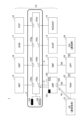
- FIG. 1 is a diagram for explaining a configuration example of a communication control system according to an embodiment of the present invention
- FIG. 4 is a sequence diagram showing an example of processing of the communication control system according to the embodiment.
- 5 is a flowchart illustrating an example of processing of the communication control system according to the present embodiment.
- FIG. 2 is a diagram illustrating an example of a hardware configuration of a computer according to the present embodiment.
- ⁇ Communication control system configuration> 1 is a diagram for explaining a configuration example of a communication control system according to the present embodiment.
- This diagram shows a configuration example in the case where the communication control system 1 is a core network of a 5G (5th Generation) mobile network (hereinafter referred to as a 5G core network).
- the 5G core network is an example of a communication control system 1 that controls connection of a UE (communication terminal) 21 to a DN (communication network) 24 in a 5G mobile network.
- the communication control system 1 includes a control plane (C-Plane) 10, a UE 21, a RAN 22, a UPF 23, and a DB 24, which perform a series of control processes exchanged to establish communication and perform authentication, etc.
- C-Plane control plane
- UE 21 a UE 21, a RAN 22, a UPF 23, and a DB 24, which perform a series of control processes exchanged to establish communication and perform authentication, etc.
- the control plane 10 includes multiple network functions (NFs), such as, for example, AMF 11, SMF 12, AUSF 13, NSSAAF 14, NEF 15, NRF 16, UDM 17, and PCF.
- NFs network functions
- AMF Access and Mobility Management Function 11 is a network function that is accessed first by UE 21, and performs, for example, access authentication, authorization, and mobility management.
- SMF Session Management Function
- SMF Session Management Function
- AUSF Authentication Server Function
- NSSAAF Network Slice Specific Authentication and Authorization Function
- NEF Network Exposure Function 15 is a network function that exposes the services of each network function.
- the NRF (Network Repository Function) 16 is a network function that registers the services of each network function.
- the UDM (Unified Data Management) 17 is a network function that performs integrated data management.
- the PCF (Policy Control Function) 18 is a network function that performs policy control.
- NFs network functions
- SBI Service Based Interface
- Each of the above network functions is realized, for example, by a server that executes a specific program, or a container.
- a container is a program execution environment in which a part of a running OS (Operating System) is separated and isolated from the rest in container-type virtualization, which is one method of computer virtualization.
- OS Operating System
- a program can be executed as if it were an individual, independent server.
- each of the network functions shown in Figure 1 may be realized by a server, or by a container on one or more communication control devices.
- the communication control system 1 also includes a discrimination unit 101, a determination unit 102, and a message queue 103.
- the discrimination unit 101 is realized, for example, by a program executed by a server or a container, and executes discrimination processing to discriminate the type of UE 21 and/or service in response to a connection request from UE (communication terminal) 21 to DN (communication network) 24, etc.
- the discrimination unit 101 prestores information such as the IP address, MAC address, or SUPI (Subscription Permanent Identifier) of the UE 21 in order to discriminate the UE 21 or the service type. In addition, the discrimination unit 101 discriminates the type of the UE 21, the type of the service, or the type of the UE 21 and the service type for an arriving signal, for example, when the UE 21 is connected.
- information such as the IP address, MAC address, or SUPI (Subscription Permanent Identifier) of the UE 21 in order to discriminate the UE 21 or the service type.
- the discrimination unit 101 discriminates the type of the UE 21, the type of the service, or the type of the UE 21 and the service type for an arriving signal, for example, when the UE 21 is connected.
- the discrimination unit 101 can also look at, for example, the N1 signal element (non-encrypted parts such as Message Type and Registration Type) to identify whether the call is a general call or a priority call, and prioritize the processing of priority calls.
- the N1 signal element non-encrypted parts such as Message Type and Registration Type
- the determination unit 102 is realized, for example, by a program executed by a server or a container, and collects metrics (indicators) of the communication control system 1 and determines abnormalities, etc., of the communication control system 1 based on the collected metrics.
- the metrics collected by the determination unit 102 include service metrics such as the number of mobile terminals in the control plane 10, the number of PDU sessions, and the number of authentication registration requests.
- the metrics collected by the determination unit 102 also include metrics for the server or container, such as CPU usage, memory usage, or disk I/O count.
- the determination unit 102 also aggregates the collected metrics and compares them with a predetermined threshold to determine whether an abnormality has occurred, such as an abnormal state of the control plane 10, a failure of a server or container, or congestion in the communication control system 1.
- the determination unit 102 uses numerical values collected for each message queue of each network function.
- the determination unit 102 uses server or container metrics corresponding to each network function.
- the determination unit 102 aggregates the service metrics and the server or container metrics corresponding to the service metrics as a set, and determines an abnormality in the communication control system 1.
- the determination unit 102 may also use these metrics to determine the occurrence of a failure that requires isolation of the cause of the failure, thereby detecting the failure location as well.
- Message queue 103 is realized, for example, by a program executed by a server or a container, and controls the amount of communication signals by UE 21 based on the determination results by determination unit 101 and determination unit 102.
- Message queue 103 has a signal control function, and has, for example, a FIFO (First In First Out) or LIFO (Last In First Out) function, and also performs prioritization processing. For example, in the prioritization processing, message queue 103 processes signals according to the priority of communication. For example, when signals become congested, message queue 103 can lower the priority of signal processing for low-priority UE 21 or services, and raise the priority of signal processing for high-priority UE 21 or services. This allows message queue 103 to, for example, postpone processing of low-priority signals and perform processing when high-priority signals are free, thereby enabling signal processing to be leveled out.
- FIFO First In First Out
- LIFO Layer In First Out
- message queue 103 may delete the signal itself. This makes it possible to avoid messages piling up in message queue 103, or unintended loss of messages due to message queue 103 overflowing, thereby alleviating the congestion state or maintaining the normality of the sequence.
- the amount of signals piling up in the queue, or the ratio of the amount of piling up signals to the queue length (buffer size), etc. are used.
- Message queue 103 may be set independently for each network function, or may be set commonly.
- a discrimination unit 101, a judgment unit 102, and a message queue 103 are provided within one network function, as in AMF 11 in FIG. 1.
- message queue 104 is set commonly, for example, as shown in FIG. 1, a discrimination unit 101, a judgment unit 102, and message queues 103a to 103h corresponding to each network function are provided on control bus 3.
- the discrimination unit 101, judgment unit 102, message queues 103a to 103h, etc. do not need to be provided on the control bus 3. Also, if the message queue 104 is set in common, the discrimination unit 101, judgment unit 102, and message queue 103 do not need to be provided in each network function.
- message queue 103 When message queue 103 is set independently for each network function, message queue 103 can easily control signals for each network function. Furthermore, message queue 103 can set a priority for each network function, so it is possible to control signals taking into account differences in processing load trends for different network functions.
- the message queue 103 can grasp the signal arrival status, so by grasping the state of each queue, it becomes easier to detect the problem area when a failure or malfunction occurs. For example, when a problem occurs with a specific function, the message queue 103 can speed up recovery from the failure by taking action limited to that specific function.
- the message queue 103 determines the priority of the communication by the UE 21 based on the result of the determination by the determination unit 101, and if an abnormality occurs in the communication control system 1, restricts the connection of the UE 21 to the DN 24 according to the priority of the communication by the UE 21.
- the message queue 103 delays the connection of the UE 21 to the DN 24. Also, when an abnormality occurs in the communication control system 1, if the priority of the communication by the UE 21 is low, the message queue 103 restricts the connection of the UE 21 to the DN 24.
- Non-Patent Document 1 on the assumption that services have priority, control is performed to uniformly delay the timing of transmission for low-priority services or connection requests from terminals.
- this method cannot flexibly control when a mission-critical service with extremely high communication quality requirements occurs in addition to the use of general applications such as web browsing.
- this method has the problem of not being able to flexibly control when a situation occurs in which terminals with low communication quality requirements are mixed, such as in the case of IoT.
- devices to be controlled such as sensor devices, simply controlling the timing of transmission is not sufficient. Control according to the type of terminal or service is required.
- the communication control system 1 has the discrimination unit 101, the determination unit 102, and the message queue 103 described above. As a result, the communication control system 1 can perform more flexible control than conventional systems, even in a situation where communication terminals or services with various requirements are mixed, and can alleviate degradation of user quality and congestion.
- the communication control system 1 collects metrics related to mobile services and metrics of servers or containers, and determines abnormalities in the communication control system 1. This enables the communication control system 1 to respond not only to simple physical failures such as server failures, but also to abnormal conditions resulting from the mechanisms of the mobile control plane.
- FIG. 2 is a sequence diagram showing an example of processing in the communication control system according to this embodiment. This processing shows an example of processing in the communication control system 1 when the AMF 11 has a discrimination unit 101, a determination unit 102, and a message queue 103.
- the AMF 11 is a network function that is always passed through when accessing from the UE 21, congestion due to concentrated access from the UE 21 is likely to occur. Therefore, it is desirable for the communication control system 1 to have a discrimination unit 101, a judgment unit 102, and a message queue 103 in the AMF 11.
- step S201 the UE 21 transmits a connection request to the AMF 11 to request a connection to the DN 24.
- This connection request includes information such as the SUPI.
- step S202 when the message queue 103 of the AMF 11 accepts a connection request from the UE 21, it requests, for example, the discrimination unit 101 to discriminate the terminal type and/or service type of the UE 21.
- the discrimination unit 101 discriminates the terminal type, service type, or the terminal type and service type of the UE 21 based on, for example, the SUPI included in the connection request.
- step S203 the discrimination unit 101 requests, for example, the determination unit 102 to make a metrics determination.
- this process may also be such that the message queue 103 requests the determination unit 102 to make a metrics determination.
- the determination unit 102 collects metrics of the communication control system 1 and determines whether there is an abnormality in the communication control system 1.
- the determination result by the determination unit 102 is, for example, "no abnormality.”
- step S204 the determination unit 102 notifies the message queue 103 of, for example, the determination result by the discrimination unit 101 and the determination result by the determination unit 102. Note that the determination result by the discrimination unit 101 may be notified to the message queue 103 by the discrimination unit 101.
- step S205 if the determination result by the determination unit 102 is "no abnormality", the message queue 103 sends a session establishment request to the SMF 12 to request the establishment of a session without restricting the connection of the UE 21 to the DN 24.
- the communication control system 1 restricts the connection of the UE 21 to the DN 24 according to the priority of the communication by the UE 21.
- the communication control system 1 executes the process of steps S211 to S215.
- step S211 UE21 sends a connection request to AMF11 to request connection to DN24.
- step S212 when the message queue 103 of the AMF 11 accepts a connection request from the UE 21, it requests, for example, the discrimination unit 101 to discriminate the terminal type and/or service type of the UE 21.
- the discrimination unit 101 discriminates the terminal type, service type, or the terminal type and service type of the UE 21 based on, for example, the SUPI included in the connection request.
- the discrimination unit 101 requests the determination unit 102 to make a metrics determination.
- this process may also be such that the message queue 103 requests the determination unit 102 to make a metrics determination.
- the determination unit 102 collects metrics of the communication control system 1 and determines whether there is an abnormality in the communication control system 1. In this case, as described above, an abnormality has occurred in the communication control system 1, and therefore the determination result by the determination unit 102 is "abnormality exists.”
- step S214 the determination unit 102 notifies the message queue 103 of, for example, the determination result by the discrimination unit 101 and the determination result by the determination unit 102. Note that the determination result by the discrimination unit 101 may be notified to the message queue 103 by the discrimination unit 101.
- step S215 if the determination result by determination unit 102 is "abnormal", message queue 103 determines the priority of communication by UE 21 based on the determination result by discrimination unit 101.
- the priority of communication by UE 21 is medium, so message queue 103 waits a specified outgoing waiting time and then transmits a session establishment request to SMF 12 to request the establishment of a session.
- communication control system 1 performs timing control to delay outgoing to SMF 12.
- step S215 if the priority of the communication by UE21 is higher than the predetermined priority, the message queue 103 sends a session establishment request to the SMF 12 without waiting for the predetermined call waiting time.
- the communication control system 1 executes the process of steps S221 to S225.
- step S221 UE21 sends a connection request to AMF11 to request connection to DN24.
- step S222 when the message queue 103 of the AMF 11 accepts a connection request from the UE 21, it requests, for example, the discrimination unit 101 to discriminate the terminal type and/or service type of the UE 21.
- the discrimination unit 101 discriminates the terminal type, service type, or the terminal type and service type of the UE 21 based on, for example, the SUPI included in the connection request.
- step S223 the discrimination unit 101, for example, requests the determination unit 102 to make a metrics determination.
- this process may also be such that the message queue 103 requests the determination unit 102 to make a metrics determination.
- the determination unit 102 collects metrics of the communication control system 1 and determines whether there is an abnormality in the communication control system 1. In this case, as described above, an abnormality has occurred in the communication control system 1, and therefore the determination result by the determination unit 102 is "abnormality present.”
- step S224 the determination unit 102 notifies the message queue 103 of, for example, the determination result by the discrimination unit 101 and the determination result by the determination unit 102. Note that the determination result by the discrimination unit 101 may be notified to the message queue 103 by the discrimination unit 101.
- step S225 if the determination result by the determination unit 102 is "abnormal", the message queue 103 determines the priority of communication by UE 21 based on the determination result by the determination unit 101.
- the message queue 103 restricts outgoing calls from UE 21. In this way, when an abnormality occurs in the communication control system 1, if the priority of communication by UE 21 is low, the communication control system 1 restricts outgoing calls on the UE 21 side without making a call to SMF 12.
- (Communication control system processing) 3 is a flowchart showing an example of processing of the communication control system according to the present embodiment.
- This processing shows an example of processing in which, when the communication control system 1 receives a connection request from a communication terminal to a communication network, the communication control system 1 controls the amount of communication signals of the communication terminal based on the determination result by the determination unit 101 and the determination result by the determination unit 102.
- the AMF 11 may have the discrimination unit 101, the judgment unit 102, and the message queue 103
- the control bus 3 may have the discrimination unit 101, the judgment unit 102, and the message queue 103. Also, detailed description of the process similar to the process described in FIG. 2 will be omitted here.
- step S301 the discrimination unit 101 discriminates the type of communication terminal and/or service in response to a connection request from the communication terminal (UE21) to the communication network (DN24).
- step S302 the determination unit 102 collects metrics for the communication control system 1, including metrics for network function services and metrics for servers or containers.
- step S303 the determination unit 102 determines whether or not there is an abnormality in the communication control system 1 based on the collected metrics. For example, if any of the collected metrics (indicators) exceeds a predetermined threshold, the determination unit 102 determines that there is an abnormality in the communication control system 1. If there is an abnormality in the communication control system 1, the communication control system 1 transitions the process to step S304. On the other hand, if there is no abnormality in the communication control system 1, the communication control system 1 ends the process of FIG. 3.
- the message queue 103 determines the priority of communication by the communication terminal based on the type of communication terminal and/or service determined by the determination unit 101.
- step S305 the message queue 103 determines whether the priority of the communication by the communication terminal is equal to or higher than a predetermined priority (first priority).
- the predetermined priority is, for example, a priority that corresponds to a communication that is more urgent than other communications or a communication that is more important, and is set in advance. If the priority of the communication by the communication terminal is not equal to or higher than the predetermined priority, the message queue 103 transitions the process to step S306. On the other hand, if the priority of the communication by the communication terminal is equal to or higher than the predetermined priority, the message queue 103 terminates the process of FIG. 3.
- the message queue 103 restricts communication by the communication terminal according to the priority of the communication by the communication terminal. For example, the message queue 103 delays the connection of the communication terminal to the communication network when the priority of the communication by the communication terminal is a second priority lower than the first priority, and restricts the connection of the communication terminal to the communication network when the priority of the communication by the communication terminal is a third priority lower than the second priority.
- the third priority is, for example, a priority that is set in advance to correspond to communication that is less urgent or less important than other communications.
- the communication control system 1 can flexibly control the connection of communication terminals to the communication network even when communication terminals with different requirements for communication quality are mixed in the mobile network.
- the communication control system 1 is described as a core network of a 5G mobile network, but this embodiment can also be applied to mobile networks of other generations.
- the communication control system 1 is configured by, for example, a communication control device having a hardware configuration of a computer 1000 as shown in FIG. 4, or by a plurality of communication control devices.
- FIG. 4 is a diagram showing an example of the hardware configuration of a computer according to this embodiment.
- a computer 1000 has a processor 1001, a memory 1002, a storage device 1003, a communication device 1004, an input device 1005, an output device 1006, and a bus B, etc.
- the processor 1001 is, for example, an arithmetic device such as a CPU (Central Processing Unit) that realizes various functions by executing a specific program.
- the memory 1002 is a storage medium readable by the computer 1000, and includes, for example, RAM (Random Access Memory) and ROM (Read Only Memory).
- the storage device 1003 is a computer-readable storage medium, and may include, for example, an HDD (Hard Disk Drive), an SSD (Solid State Drive), various optical disks, and magneto-optical disks.
- the communication device 1004 includes one or more pieces of hardware (communication devices) for communicating with other devices via a wireless or wired network.
- the input device 1005 is an input device (e.g., a keyboard, a mouse, a microphone, a switch, a button, a sensor, etc.) that accepts input from the outside.
- the output device 1006 is an output device (e.g., a display, a speaker, an LED lamp, etc.) that outputs to the outside. Note that the input device 1005 and the output device 1006 may be integrated into one configuration (e.g., an input/output device such as a touch panel display).
- the bus B is commonly connected to each of the above components and transmits, for example, address signals, data signals, and various control signals.
- the processor 1001 is not limited to a CPU, and may be, for example, a DSP (Digital Signal Processor), a PLD (Programmable Logic Device), or an FPGA (Field Programmable Gate Array).
- the communication control system 1 and the communication control device in this embodiment may be realized not only by a dedicated device but also by a general-purpose computer.
- a program for realizing the functions may be recorded on a computer-readable recording medium, and the program recorded on the recording medium may be read into a computer system and executed.
- the "computer system” here includes hardware such as an OS and peripheral devices.
- Computer-readable recording media also includes various storage devices such as portable media such as flexible disks, optical magnetic disks, ROMs, and CD-ROMs, as well as storage devices 1003 built into computer systems.
- “computer-readable recording media” may also include devices that dynamically hold a program for a short period of time, such as a communication line when transmitting a program via a network such as the Internet or a communication line such as a telephone line, and devices that hold a program for a certain period of time, such as volatile memory within a computer system that serves as a server or client in such cases.
- the above program may be for realizing some of the functions described above, or may be capable of realizing the functions described above in combination with a program already recorded in the computer system, or may be realized using hardware such as a PLD (Programmable Logic Device) or FPGA (Field Programmable Gate Array).
- PLD Programmable Logic Device
- FPGA Field Programmable Gate Array
- this technology makes it possible to control the amount of signals in each network function, making it possible to avoid degradation of user quality due to delays in signal processing. Furthermore, when signal congestion occurs, the communication control system 1 can alleviate the congestion, making it possible to ensure important communications.
- the type of communication terminal and/or the type of service are determined and controlled for the arriving signal, thereby making it possible to mitigate the effects of degradation of connection quality, etc., depending on the type of communication terminal and/or the type of service.
- the communication control system 1 collects metrics related to mobile services and metrics of servers or containers, and determines failures or abnormal conditions associated with failures based on the collected metrics. This enables the communication control system 1 to respond not only to simple physical failures of servers, etc., but also to failures caused by the mechanisms of the control plane of the mobile network.
- a communication control system for controlling connection of a communication terminal to a communication network in a mobile network comprising: a discrimination unit that discriminates a type of the communication terminal and/or a type of service in response to a connection request from the communication terminal to the communication network; a determination unit that collects metrics of the communication control system and determines an abnormality in the communication control system based on the collected metrics; a message queue that controls a signal amount of communication by the communication terminal based on a determination result by the determination unit and a determination result by the determination unit;
- a communication control system having the above configuration.
- the communication control system of claim 1 wherein the metrics of the communication control system include metrics of services in a control plane of the communication control system and metrics of servers or containers corresponding to the service metrics.
- the message queue includes: determining a priority of the communication by the communication terminal based on the determination result; when the abnormality occurs in the communication control system, restricting the connection of the communication terminal to the communication network according to a priority of the communication by the communication terminal. 3. The communication control system according to claim 1 or 2.
- the message queue includes: When the abnormality occurs in the communication control system, delaying a connection of the communication terminal to the communication network when the priority of the communication is a second priority lower than a first priority; restricting the connection of the communication terminal to the communication network when the priority of the communication is a third priority lower than the second priority. 4.
- a communication control system as recited in claim 3. (Section 5) The communication control system according to any one of claims 1 to 4, wherein the abnormality in the communication control system includes an abnormal state of a control plane of the communication control system, a failure of a server or container constituting the communication control system, or congestion in the communication control system.
- a communication control device that controls connection of a communication terminal to a communication network in a mobile network, comprising: a discrimination unit that discriminates a type of the communication terminal and/or a type of service in response to a connection request from the communication terminal to the communication network; A determination unit that collects and determines metrics of the communication control device; a message queue that controls a signal amount of communication by the communication terminal based on a determination result by the determination unit and a determination result by the determination unit; A communication control device having (Section 7) A communication control method for controlling connection of a communication terminal to a communication network in a mobile network, comprising: The communication control system a determination process of determining a type of the communication terminal and/or a type of service in response to a connection request from the communication terminal to the communication network; A determination process for collecting and determining metrics of the communication control system; a process of controlling a signal amount of communication by the communication terminal based on a determination result of the determination process and a determination result of the determination process; A
Landscapes
- Engineering & Computer Science (AREA)
- Computer Networks & Wireless Communication (AREA)
- Signal Processing (AREA)
- Computer Security & Cryptography (AREA)
- Quality & Reliability (AREA)
- Mobile Radio Communication Systems (AREA)
Abstract
Description
本発明は、通信制御システム、通信制御装置、通信制御方法、及びプログラムに関する。 The present invention relates to a communication control system, a communication control device, a communication control method, and a program.
モバイルネットワークにおいて、信号量の増加に伴う通信端末の通信網への接続の問題を解決するための通信制御方法がある。例えば、輻輳時にM2M(Machine to Machine)端末からの信号の送信に対して優先度/非優先度を設定し、優先度/非優先度に応じて信号送信のタイミングを確率的に設定する技術が知られている(例えば、非特許文献1参照)。 In mobile networks, there is a communication control method for solving the problem of communication terminals connecting to the communication network due to an increase in the amount of signals. For example, a technology is known that sets priority/non-priority for signal transmission from an M2M (Machine to Machine) terminal during congestion, and probabilistically sets the timing of signal transmission depending on whether it is priority or non-priority (for example, see Non-Patent Document 1).
非特許文献1に開示された技術では、サービスに優先度があることを前提として、優先度の低いサービスや端末の接続要求に対して、一律に発信のタイミングを遅らせるための制御を実施している。
The technology disclosed in Non-Patent
しかし、この方法では、例えば、ウェブブラウジングのような一般的なアプリケーションの利用に加えて、通信品質の要求条件が極めて高いミッションクリティカルなサービスが発生した場合に、柔軟に制御することができない。また、この方法では、逆に、IoT(Internet of Things)のように通信品質への要求条件の低い端末が混在する状況が発生した場合にも、柔軟に制御することができないという課題がある。 However, this method does not allow for flexible control when, for example, mission-critical services with extremely high requirements for communication quality arise in addition to the use of general applications such as web browsing. Conversely, this method also has the problem of being unable to provide flexible control when a situation arises in which devices with low requirements for communication quality are mixed, such as with the Internet of Things (IoT).
本発明の一実施形態は、上記の課題に鑑みてなされたものであって、モバイルネットワークにおいて、通信品質への要求条件が異なる通信端末が混在した場合でも、通信端末の通信網への接続を柔軟に制御できるようにする。 One embodiment of the present invention has been made in consideration of the above problems, and enables flexible control of the connection of communication terminals to the communication network even when communication terminals with different requirements for communication quality are mixed in a mobile network.
上記の課題を解決するため、本発明の一実施形態に係る通信制御システムは、モバイルネットワークにおいて、通信端末の通信網への接続を制御する通信制御システムであって、前記通信端末からの前記通信網への接続要求に応じて、前記通信端末及び/又はサービスの種別を判別する判別部と、前記通信制御システムのメトリクスを収集し、収集したメトリクスに基づいて前記通信制御システムの異常を判定する判定部と、前記判別部による判別結果と、前記判定部による判定結果とに基づいて、前記通信端末による通信の信号量を制御するメッセージキューと、を有する。 In order to solve the above problems, a communication control system according to one embodiment of the present invention is a communication control system that controls the connection of a communication terminal to a communication network in a mobile network, and includes a discrimination unit that discriminates the type of the communication terminal and/or service in response to a connection request from the communication terminal to the communication network, a determination unit that collects metrics of the communication control system and determines an abnormality in the communication control system based on the collected metrics, and a message queue that controls the amount of signals in communication by the communication terminal based on the determination result by the discrimination unit and the determination result by the determination unit.
本発明の一実施形態によれば、モバイルネットワークにおいて、通信品質への要求条件が異なる通信端末が混在した場合でも、通信端末の通信網への接続を柔軟に制御できるようになる。 According to one embodiment of the present invention, even when communication terminals with different requirements for communication quality are mixed in a mobile network, it becomes possible to flexibly control the connection of the communication terminals to the communication network.
以下、図面を参照して本発明の実施の形態(本実施形態)を説明する。以下で説明する実施形態は一例に過ぎず、本発明が適用される実施形態は、以下の実施形態に限られない。 Below, an embodiment of the present invention (the present embodiment) will be described with reference to the drawings. The embodiment described below is merely an example, and the embodiment to which the present invention is applicable is not limited to the following embodiment.
<通信制御システムの構成>
図1は、本実施形態に係る通信制御システムの構成例について説明するための図である。この図は、通信制御システム1が、5G(5th Generation)モバイルネットワークのコアネットワーク(以下、5Gコアネットワークと呼ぶ)である場合の構成例を示している。5Gコアネットワークは、5Gモバイルネットワークにおいて、UE(通信端末)21のDN(通信網)24への接続を制御する通信制御システム1の一例である。
<Communication control system configuration>
1 is a diagram for explaining a configuration example of a communication control system according to the present embodiment. This diagram shows a configuration example in the case where the
通信制御システム1は、通信の確立、及び認証等を行うためにやり取りされる一連の制御処理を行う制御プレーン(C-Plane)10、UE21、RAN22、UPF23、及びDB24等を含む。
The
制御プレーン10は、例えば、AMF11、SMF12、AUSF13、NSSAAF14、NEF15、NRF16、UDM17、及びPCF等の複数のネットワーク機能(NF: Network Function)を含む。
The
AMF(Access and Mobility Management Function)11は、UE21から最初にアクセスされるネットワーク機能であり、例えば、アクセスの認証、認可、及びモビリティの管理等を行う。SMF(Session Management Function)12は、AMF11に続いて機能するネットワーク機能であり、例えば、セッションの管理等を行う。AUSF(Authentication Server Function)13は、subscriber認証用のネットワーク機能である。NSSAAF(Network Slice Specific Authentication and Authorization Function)14は、ネットワークスライスの認証、及び認可等を行うネットワーク機能である。NEF(Network Exposure Function)15は、各ネットワーク機能のサービスを公開するネットワーク機能である。 AMF (Access and Mobility Management Function) 11 is a network function that is accessed first by UE 21, and performs, for example, access authentication, authorization, and mobility management. SMF (Session Management Function) 12 is a network function that functions following AMF 11, and performs, for example, session management. AUSF (Authentication Server Function) 13 is a network function for subscriber authentication. NSSAAF (Network Slice Specific Authentication and Authorization Function) 14 is a network function that performs network slice authentication and authorization. NEF (Network Exposure Function) 15 is a network function that exposes the services of each network function.
NRF(Network Repository Function)16は、各ネットワーク機能のサービスを登録するネットワーク機能である。UDM(Unified Data Management)17は、統合データ管理を行うネットワーク機能である。PCF(Policy Control Function)18は、ポリシー制御を行うネットワーク機能である。 The NRF (Network Repository Function) 16 is a network function that registers the services of each network function. The UDM (Unified Data Management) 17 is a network function that performs integrated data management. The PCF (Policy Control Function) 18 is a network function that performs policy control.
上記の各ネットワーク機能(NF)は、SBI(Service Based Interface)と呼ばれる統一的なインタフェースを介して、相互にサービスを利用することができる。なお、上記の各ネットワーク機能が提供するサービスは、一般的な5Gコアネットワークと同様でよいので、ここでは詳細な説明を省略する。 The above network functions (NFs) can share services with each other via a unified interface called SBI (Service Based Interface). Note that the services provided by the above network functions can be the same as those provided by a general 5G core network, so a detailed explanation will be omitted here.
上記の各ネットワーク機能は、例えば、所定のプログラムを実行するサーバ、又はコンテナ等によって実現される。ここで、コンテナとは、コンピュータの仮想化の方式の一つであるコンテナ型の仮想化において、稼働中のOS(Operating System)の一部を分離して、他と隔離したプログラムの実行環境である。コンテナでは、あたかも個別に独立したサーバようにプログラムを実行することができる。例えば、図1に示した各ネットワーク機能の各々は、サーバによって実現してもよいし、1つ以上の通信制御装置上のコンテナ等によって実現してもよい。 Each of the above network functions is realized, for example, by a server that executes a specific program, or a container. Here, a container is a program execution environment in which a part of a running OS (Operating System) is separated and isolated from the rest in container-type virtualization, which is one method of computer virtualization. In a container, a program can be executed as if it were an individual, independent server. For example, each of the network functions shown in Figure 1 may be realized by a server, or by a container on one or more communication control devices.
また、本実施形態に係る通信制御システム1は、判別部101、判定部102、及びメッセージキュー103を有している。
The
判別部101は、例えば、サーバ、又はコンテナによって実行されるプログラム等によって実現され、UE(通信端末)21からのDN(通信網)24への接続要求等に応じて、UE21及び/又はサービスの種別を判別する判別処理を実行する。
The
判別部101は、UE21、又はサービス種別の判別を行うために、例えば、UE21のIPアドレス、MACアドレス、又はSUPI(Subscription Permanent Identifier)等の情報を事前に記憶している。また、判別部101は、到達した信号に対して、例えば、UE21の接続時に、UE21の種別、サービスの種別、又はUE21の種別とサービス種別を判別する。
The
また、判別部101は、例えば、N1信号要素(Message Type, Registration Type等の非暗号化箇所)を見て、一般呼であるか、優先呼であるかを識別し、優先呼の処理を優先することも可能である。
The
判定部102は、例えば、サーバ、又はコンテナによって実行されるプログラム等によって実現され、通信制御システム1のメトリクス(指標)を収集し、収集したメトリクスに基づいて通信制御システム1の異常等を判定する。
The
判定部102が収集するメトリクスには、例えば、制御プレーン10におけるモバイル端末数、PDUセッション数、認証登録リクエスト数等のサービスのメトリクスが含まれる。また、判定部102が収集するメトリクスには、サーバ、又はコンテナにおける、例えば、CPU使用率、メモリ使用率、又はデスクI/O数等のメトリクスが含まれる。また、判定部102は、収集したメトリクスを集計し、予め定められた閾値との比較により、例えば、制御プレーン10の異常状態、サーバ、又はコンテナの故障、又は通信制御システム1における輻輳等の異常が発生しているか否かを判定する。
The metrics collected by the
好ましくは、判定部102は、サービスのメトリクスについては、各ネットワーク機能のメッセージキュー単位において収集した数値を用いる。また、サーバ、又はコンテナのメトリクスについては、各ネットワーク機能に対応したサーバ、又はコンテナのメトリクスを用いる。
Preferably, for service metrics, the
好ましくは、判定部102は、サービスのメトリクスと、当該サービスメトリクスに対応するサーバ、又はコンテナのメトリクスとをセットとして集計し、通信制御システム1の異常を判定する。また、判定部102は、故障の原因箇所の切り分けが必要な故障の発生についても、これらのメトリクスを用いて判定することによって、故障箇所を含めた検出を実施してもよい。
Preferably, the
メッセージキュー103は、例えば、サーバ、又はコンテナによって実行されるプログラム等によって実現され、判別部101による判別結果と、判定部102による判定結果とに基づいて、UE21による通信の信号量を制御する。
メッセージキュー103は、信号の制御機能であり、例えば、FIFO(First In First Out)、又はLIFO(Last In First Out)の機能を有し、優先度付け処理も実施する。例えば、メッセージキュー103は、優先度付け処理において、通信の優先度に応じて信号を処理する。例えば、メッセージキュー103は、信号が輻輳状態になった場合には、優先度の低いUE21、又はサービスについて、信号の処理の優先度を下げ、優先度の高いUE21、又はサービスについては信号の処理の優先度を上げる等の処理が可能である。これにより、メッセージキュー103は、例えば、優先度の低い信号については処理を後に回し、優先度の高い信号の処理が空いたタイミングで処理の実行に移す等の対応が可能となり、信号の処理の平準化が可能となる。
また、メッセージキュー103にメッセージが累積的に積滞し輻輳状態になっている、あるいは輻輳状態になりうる状況においては、メッセージキュー103は、信号自体を削除してもよい。これにより、メッセージキュー103でのメッセージの積滞、又はメッセージキュー103からのキュー溢れによるメッセージの意図せぬ損失等を回避することができるため、輻輳状態の緩和、又はシーケンスの正常性を維持することが可能となる。メッセージキュー103の状態を表すメトリクスとしては、キューに溜まっている信号の量、又はキュー長(バッファの大きさ)に対する積滞している信号量の比率等を用いる。
In addition, in a situation where messages are cumulatively piling up in
メッセージキュー103は、ネットワーク機能ごとに独立に設定してもよいし、共通に設定する場合がある。メッセージキュー103を独立に設定する場合には、例えば、図1のAMF11のように、1つのネットワーク機能内に、判別部101と、判定部102と、メッセージキュー103と設ける。一方、メッセージキュー104を共通に設定する場合には、例えば図1に示すように、制御バス3に、判別部101と、判定部102と、各ネットワーク機能に対応するメッセージキュー103a~103hを設ける。
なお、メッセージキュー103を、ネットワーク機能ごとに独立に設定する場合、制御バス3に、判別部101、判定部102、及びメッセージキュー103a~103h等を設けなくてもよい。また、メッセージキュー104を共通に設定する場合、各ネットワーク機能内に、判別部101、判定部102、及びメッセージキュー103を設けなくてもよい。
If the
メッセージキュー103を、ネットワーク機能ごとに独立に設定する場合、メッセージキュー103は、ネットワーク機能ごとの信号の制御を簡易に実施することが可能になる。また、メッセージキュー103は、ネットワーク機能ごとに優先度を設定することができるため、ネットワーク機能の違いに対する処理負荷の傾向に違いを考慮した信号の制御を実施することができる。
When
また、メッセージキュー103は、複数のメッセージキュー103の信号量を比較することにより、信号の到達状況を把握することが可能となるため、各キューの状態を把握することにより、故障や不具合等が発生した際の問題箇所の検知が容易となる。例えば、メッセージキュー103は、特定の機能に問題が発生している場合、特定の機能に限定して対処を実施することによって、故障の復旧を早めることも可能となる。
In addition, by comparing the signal volume of
好ましくは、メッセージキュー103は、判別部101による判別結果に基づいて、UE21による通信の優先度を判断し、通信制御システム1で異常が発生した場合、UE21による通信の優先度に応じて、UE21のDN24への接続を制限する。
Preferably, the
例えば、メッセージキュー103は、通信制御システム1で異常が発生したときに、UE21による通信の優先度が、中程度である場合、UE21のDN24への接続を遅延させる。また、メッセージキュー103は、通信制御システム1で異常が発生したときに、UE21による通信の優先度が低い場合、UE21のDN24への接続を規制する。
For example, when an abnormality occurs in the
(従来技術の課題について)
制御プレーンにおいて不具合が発生し、信号輻輳等が発生した場合に、ユーザやサービスに完全に影響しないためには、信号輻輳発生時にも信号の処理を可能とするための十分なリソース量を確保する必要がある。一方で、信号輻輳発生時に必要なリソース量を事前に見積もることは容易ではない。また、輻輳発生時に十分に対応可能なリソース量を確保することは、経済性の観点で適切でない。
(Problems with the prior art)
In order to completely avoid any impact on users and services when a fault occurs in the control plane and signal congestion occurs, it is necessary to secure a sufficient amount of resources to enable signal processing even when signal congestion occurs. However, it is not easy to estimate in advance the amount of resources required when signal congestion occurs. Moreover, securing a sufficient amount of resources to deal with congestion when it occurs is not economically appropriate.
そのため、非特許文献1に開示された方法では、サービスに優先度があることを前提として、優先度の低いサービス、又は端末の接続要求に対して、一律に発信のタイミングを遅らせるための制御を実施している。この方法で、発信のタイミングを遅らせることによって、重要な通信に対する発信の機会を増加することが可能となり、重要な通信の成功確率を増加させることで、サービス全体としての信頼性の低下を緩和することが可能である。一方で、この方法では、ウェブブラウジングのような一般的なアプリケーションの利用に加えて、通信品質の要求条件が極めて高いミッションクリティカルなサービスが発生した場合、柔軟に制御することができない。また、この方法では、逆に、IoTのように通信品質への要求条件の低い端末が混在する状況が発生した場合にも、柔軟に制御することができないという問題がある。さらに、センサー機器等、制御対象となる装置が極めて多い場合には、発信タイミングを制御するだけでは十分ではない。端末やサービスの種別に応じた制御が必要となる。
Therefore, in the method disclosed in
そこで、本実施形態に係る通信制御システム1は、上述した、判別部101、判定部102、及びメッセージキュー103を有する。これにより、通信制御システム1は、様々な要求条件の通信端末、又はサービスが混在した状況でも、従来に比べて柔軟な制御を行い、ユーザ品質の低下や輻輳状態を緩和することができる。
The
また、通信制御システム1は、モバイルのサービスに関わるメトリクス、及びサーバ又はコンテナのメトリクスを収集し、通信制御システム1の異常を判定する。これにより、通信制御システム1は、例えば、サーバ故障等の単純な物理的な故障だけでなく、モバイルの制御プレーンの仕組みに起因する異常状態の影響を考慮した対応が可能となる。
In addition, the
<処理の流れ>
続いて、本実施形態に係る通信制御方法の処理の流れについて説明する。
<Processing flow>
Next, the process flow of the communication control method according to this embodiment will be described.
図2は、本実施形態に係る通信制御システムの処理の例を示すシーケンス図である。この処理は、AMF11が、判別部101、判定部102、及びメッセージキュー103を有している場合の通信制御システム1の処理の例を示している。
FIG. 2 is a sequence diagram showing an example of processing in the communication control system according to this embodiment. This processing shows an example of processing in the
AMF11は、UE21からのアクセス時に必ず経由するネットワーク機能であるため、UE21からのアクセス集中による輻輳等が発生しやすい。従って、通信制御システム1は、AMF11に判別部101、判定部102、及びメッセージキュー103を有していることが望ましい。
Because the
(正常時の処理)
通信制御システム1で異常が発生していない正常時は、通信制御システム1は、例えば、ステップS201~S205に示す処理を実行する。
(Normal processing)
When the
ステップS201において、UE21が、AMF11に、DN24への接続を要求する接続要求を送信するものとする。この接続要求には、例えば、SUPI等の情報が含まれる。
In step S201, the
ステップS202において、AMF11のメッセージキュー103は、UE21から接続要求を受け付けると、例えば、判別部101に、UE21の端末種別、及び/又はサービス種別の判別を要求する。これにより、判別部101は、例えば、接続要求に含まれるSUPI等に基づいて、UE21の端末種別、サービス種別、又はUE21の端末種別とサービス種別を判別する。
In step S202, when the
ステップS203において、判別部101は、例えば、判定部102に、メトリクス判定を要求する。なお、この処理は、メッセージキュー103が、判定部102にメトリクス判定を要求するものであってもよい。これにより、判定部102は、通信制御システム1のメトリクスを収集し、通信制御システム1の異常を判定する。ここでは、前述したように、通信制御システム1では異常が発生していないので、判定部102による判定結果は、例えば、「異常なし」となる。
In step S203, the
ステップS204において、判定部102は、例えば、判別部101による判別結果、及び判定部102による判定結果を、メッセージキュー103に通知する。なお、判別部101による判別結果は、判別部101がメッセージキュー103に通知してもよい。
In step S204, the
ステップS205において、メッセージキュー103は、判定部102による判定結果が「異常なし」である場合、UE21によるDN24への接続を制限せずに、セッションの確立を要求するセッション確立要求をSMF12に送信する。
In step S205, if the determination result by the
(異常時の処理)
通信制御システム1で異常が発生している異常時は、通信制御システム1は、UE21による通信の優先度に応じて、UE21のDN24への接続を制限する。
(Handling Abnormal Events)
When an abnormality occurs in the
例えば、通信制御システム1で異常が発生しているときに、UE21による通信の優先度が中程度である場合、通信制御システム1は、ステップS211~S215の処理を実行する。
For example, if an abnormality occurs in the
ステップS211において、UE21が、AMF11に、DN24への接続を要求する接続要求を送信するものとする。 In step S211, UE21 sends a connection request to AMF11 to request connection to DN24.
ステップS212において、AMF11のメッセージキュー103は、UE21から接続要求を受け付けると、例えば、判別部101に、UE21の端末種別、及び/又はサービス種別の判別を要求する。これにより、判別部101は、例えば、接続要求に含まれるSUPI等に基づいて、UE21の端末種別、サービス種別、又はUE21の端末種別とサービス種別を判別する。
In step S212, when the
ステップS213において、判別部101は、例えば、判定部102に、メトリクス判定を要求する。なお、この処理は、メッセージキュー103が、判定部102にメトリクス判定を要求するものであってもよい。これにより、判定部102は、通信制御システム1のメトリクスを収集し、通信制御システム1の異常を判定する。ここでは、前述したように、通信制御システム1では異常が発生しているので、判定部102による判定結果は「異常あり」となる。
In step S213, the
ステップS214において、判定部102は、例えば、判別部101による判別結果、及び判定部102による判定結果を、メッセージキュー103に通知する。なお、判別部101による判別結果は、判別部101がメッセージキュー103に通知してもよい。
In step S214, the
ステップS215において、メッセージキュー103は、判定部102による判定結果が「異常あり」である場合、判別部101による判別結果に基づいて、UE21による通信の優先度を判断する。ここでは、前述したように、UE21による通信の優先度は中程度であるため、メッセージキュー103は、所定の発信待ち時間待機した後に、セッションの確立を要求するセッション確立要求をSMF12に送信する。このように、通信制御システム1は、通信制御システム1で異常が発生したときに、UE21による通信の優先度が中程度である場合、SMF12への発信を遅らせるタイミング制御を行う。
In step S215, if the determination result by
なお、ステップS215において、UE21による通信の優先度が、所定の優先度より高い場合、メッセージキュー103は、所定の発信待ち時間待機せずに、セッション確立要求をSMF12に送信する。
In step S215, if the priority of the communication by UE21 is higher than the predetermined priority, the
また、通信制御システム1で異常が発生しているときに、UE21による通信の優先度が低い場合、通信制御システム1は、ステップS221~S225の処理を実行する。
In addition, if an abnormality occurs in the
ステップS221において、UE21が、AMF11に、DN24への接続を要求する接続要求を送信するものとする。 In step S221, UE21 sends a connection request to AMF11 to request connection to DN24.
ステップS222において、AMF11のメッセージキュー103は、UE21から接続要求を受け付けると、例えば、判別部101に、UE21の端末種別、及び/又はサービス種別の判別を要求する。これにより、判別部101は、例えば、接続要求に含まれるSUPI等に基づいて、UE21の端末種別、サービス種別、又はUE21の端末種別とサービス種別を判別する。
In step S222, when the
ステップS223において、判別部101は、例えば、判定部102に、メトリクス判定を要求する。なお、この処理は、メッセージキュー103が、判定部102にメトリクス判定を要求するものであってもよい。これにより、判定部102は、通信制御システム1のメトリクスを収集し、通信制御システム1の異常を判定する。ここでは、前述したように、通信制御システム1では異常が発生しているので、判定部102による判定結果は「異常あり」となる。
In step S223, the
ステップS224において、判定部102は、例えば、判別部101による判別結果、及び判定部102による判定結果を、メッセージキュー103に通知する。なお、判別部101による判別結果は、判別部101がメッセージキュー103に通知してもよい。
In step S224, the
ステップS225において、メッセージキュー103は、判定部102による判定結果が「異常あり」である場合、判別部101による判別結果に基づいて、UE21による通信の優先度を判断する。ここでは、前述したように、UE21による通信の優先度が低いため、メッセージキュー103は、UE21に発信規制を行う。このように、通信制御システム1は、通信制御システム1で異常が発生したときに、UE21による通信の優先度が低い場合、SMF12への発信を行わずに、UE21側で発信を規制する。
In step S225, if the determination result by the
(通信制御システムの処理)
図3は、本実施形態に係る通信制御システムの処理の例を示すフローチャートである。この処理は、通信制御システム1が、通信端末からの通信網への接続要求を受け付けたときに、判別部101による判別結果と、102判定部による判定結果とに基づいて、通信端末による通信の信号量を制御する処理の例を示している。
なお、この処理では、AMF11が、判別部101と判定部102とメッセージキュー103を有していてもよいし、制御バス3が、判別部101と判定部102とメッセージキュー103を有していてもよい。また、ここでは、図2で説明した処理と同様の処理内容に対する詳細な説明は省略する。
(Communication control system processing)
3 is a flowchart showing an example of processing of the communication control system according to the present embodiment. This processing shows an example of processing in which, when the
In this process, the
ステップS301において、判別部101は、通信端末(UE21)からの通信網(DN24)への接続要求に応じて、通信端末及び/又はサービスの種別を判別する。
In step S301, the
ステップS302において、判定部102は、ネットワーク機能のサービスのメトリクスと、サーバ又はコンテナのメトリクスとを含む、通信制御システム1のメトリクスを収集する。
In step S302, the
ステップS303において、判定部102は、収集したメトリクスに基づいて、通信制御システム1に異常があるか否かを判定する。例えば、判定部102は、収集したメトリクス(指標)のいずれかが、予め定められた閾値を超えた場合、通信制御システム1に異常があると判断する。通信制御システム1に異常がある場合、通信制御システム1は、処理をステップS304に移行させる。一方、通信制御システム1に異常がない場合、通信制御システム1は、図3の処理を終了する。
In step S303, the
ステップS304に移行すると、メッセージキュー103は、判別部101が判別した通信端末及び/又はサービスの種別から、通信端末による通信の優先度を判断する。
When the process proceeds to step S304, the
ステップS305において、メッセージキュー103は、通信端末による通信の優先度が、所定の優先度(第1の優先度)以上であるか否かを判断する。ここで、所定の優先度(第1の優先度)は、例えば、他の通信より緊急性が高い通信、又は重要性が高い通信等に対応する優先度が、予め設定されているものとする。通信端末による通信の優先度が所定の優先度以上でない場合、メッセージキュー103は、処理をステップS306に移行させる。一方、通信端末による通信の優先度が所定の優先度以上である場合、メッセージキュー103は、図3の処理を終了する。
In step S305, the
ステップS306に移行すると、メッセージキュー103は、通信端末による通信の優先度に応じて、通信端末による通信を制限する。例えば、メッセージキュー103は、通信端末による通信の優先度が、第1の優先度より低い第2の優先度である場合、通信端末の通信網への接続を遅延させ、通信端末による通信の優先度が第2の優先度より低い第3の優先度である場合、通信端末の通信網への接続を規制する。ここで、第3の優先度は、例えば、他の通信より緊急性が低い通信、又は重要性が低い通信に対応する優先度が、予め設定されているものとする。
When the process proceeds to step S306, the
図3の処理により、通信制御システム1は、モバイルネットワークにおいて、通信品質への要求条件が異なる通信端末が混在した場合でも、通信端末の通信網への接続を柔軟に制御することができる。
By using the processing shown in FIG. 3, the
なお、上記の説明では、通信制御システム1が、5Gモバイルネットワークのコアネットワークであるものとして説明したが、本実施形態は、他の世代のモバイルネットワークにも適用可能である。
In the above description, the
<ハードウェア構成例>
通信制御システム1は、例えば、図4に示すようなコンピュータ1000のハードウェア構成を有する通信制御装置、又は複数の通信制御装置によって構成される。
<Hardware configuration example>
The
図4は、本実施形態に係るコンピュータのハードウェア構成の例を示す図である。図4の例では、コンピュータ1000は、プロセッサ1001、メモリ1002、ストレージデバイス1003、通信装置1004、入力装置1005、出力装置1006、及びバスB等を有する。
FIG. 4 is a diagram showing an example of the hardware configuration of a computer according to this embodiment. In the example of FIG. 4, a
プロセッサ1001は、例えば、所定のプログラムを実行することにより、様々な機能を実現するCPU(Central Processing Unit)等の演算装置である。メモリ1002は、コンピュータ1000が読み取り可能な記憶媒体であり、例えば、RAM(Random Access Memory)、ROM(Read Only Memory)等を含む。ストレージデバイス1003は、コンピュータ読み取り可能な記憶媒体であり、例えば、HDD(Hard Disk Drive)、SSD(Solid State Drive)、各種の光ディスク、及び光磁気ディスク等を含み得る。
The
通信装置1004は、無線、又は有線のネットワークを介して他の装置と通信を行うための1つ以上のハードウェア(通信デバイス)を含む。入力装置1005は、外部からの入力を受け付ける入力デバイス(例えば、キーボード、マウス、マイクロフォン、スイッチ、ボタン、センサー等)である。出力装置1006は、外部への出力を実施する出力デバイス(例えば、ディスプレイ、スピーカ、LEDランプ等)である。なお、入力装置1005と出力装置1006とは、一体となった構成(例えば、タッチパネルディスプレイ等の入出力装置)であってもよい。
The
バスBは、上記の各構成要素に共通に接続され、例えば、アドレス信号、データ信号、及び各種の制御信号等を伝送する。なお、プロセッサ1001は、CPUに限られず、例えば、DSP(Digital Signal Processor)、PLD(Programmable Logic Device)、又はFPGA(Field Programmable Gate Array)等であってもよい。
The bus B is commonly connected to each of the above components and transmits, for example, address signals, data signals, and various control signals. Note that the
(補足)
本実施形態における通信制御システム1、及び通信制御装置は、専用装置による実現に限らず、汎用コンピュータで実現するようにしてもよい。その場合、この機能を実現するためのプログラムをコンピュータ読み取り可能な記録媒体に記録して、この記録媒体に記録されたプログラムをコンピュータシステムに読み込ませ、実行することによって実現してもよい。なお、ここでいう「コンピュータシステム」とは、OSや周辺機器等のハードウェアを含むものとする。
(supplement)
The
また、「コンピュータ読み取り可能な記録媒体」とは、フレキシブルディスク、光磁気ディスク、ROM、CD-ROM等の可搬媒体、コンピュータシステムに内蔵されるストレージデバイス1003等の様々な記憶装置を含む。さらに「コンピュータ読み取り可能な記録媒体」とは、インターネット等のネットワークや電話回線等の通信回線を介してプログラムを送信する場合の通信線のように、短時間の間、動的にプログラムを保持するもの、その場合のサーバやクライアントとなるコンピュータシステム内部の揮発性メモリのように、一定時間プログラムを保持しているものも含んでもよい。
"Computer-readable recording media" also includes various storage devices such as portable media such as flexible disks, optical magnetic disks, ROMs, and CD-ROMs, as well as
また上記プログラムは、前述した機能の一部を実現するためのものであってもよく、さらに前述した機能をコンピュータシステムにすでに記録されているプログラムとの組み合わせで実現できるものであってもよく、PLD(Programmable Logic Device)やFPGA(Field Programmable Gate Array)等のハードウェアを用いて実現されるものであってもよい。 The above program may be for realizing some of the functions described above, or may be capable of realizing the functions described above in combination with a program already recorded in the computer system, or may be realized using hardware such as a PLD (Programmable Logic Device) or FPGA (Field Programmable Gate Array).
<実施形態の効果>
本実施形態によれば、モバイルネットワークにおいて、通信品質への要求条件が異なる通信端末が混在した場合でも、通信端末の通信網への接続を柔軟に制御できるようになる。
Effects of the embodiment
According to this embodiment, even when communication terminals with different requirements for communication quality are mixed in a mobile network, it becomes possible to flexibly control the connection of the communication terminals to the communication network.
例えば、本技術によって、各ネットワーク機能における信号量の制御が可能となり、信号処理の遅延に伴うユーザ品質の低下を回避することができる。また、通信制御システム1は、信号の輻輳状態が発生した際には、輻輳状態を緩和することが可能であり、重要な通信の確保が可能となる。
For example, this technology makes it possible to control the amount of signals in each network function, making it possible to avoid degradation of user quality due to delays in signal processing. Furthermore, when signal congestion occurs, the
また、本実施形態によれば、到達した信号に対して、通信端末の接続時に、通信端末の種別、及び/又はサービスの種別を判別して制御することによって、通信端末の種別、及び/又はサービスの種別に応じて接続品質の低下等の影響を緩和することができる。 Furthermore, according to this embodiment, when a communication terminal is connected, the type of communication terminal and/or the type of service are determined and controlled for the arriving signal, thereby making it possible to mitigate the effects of degradation of connection quality, etc., depending on the type of communication terminal and/or the type of service.
さらに、本実施形態に係る通信制御システム1は、モバイルのサービスに関わるメトリクスと、サーバ又はコンテナのメトリクスとを収集し、収集したメトリクスに基づいて、故障、又は故障に伴う異常状態を判別する。これにより、通信制御システム1は、サーバ等の単純な物理的な故障だけでなく、モバイルネットワークの制御プレーンの仕組みに起因する故障の影響を考慮した対応が可能となる。
Furthermore, the
<実施形態のまとめ>
本明細書には、少なくとも下記の各項の通信制御システム、通信制御装置、通信制御方法、及びプログラムが開示されている。
(第1項)
モバイルネットワークにおいて、通信端末の通信網への接続を制御する通信制御システムであって、
前記通信端末からの前記通信網への接続要求に応じて、前記通信端末及び/又はサービスの種別を判別する判別部と、
前記通信制御システムのメトリクスを収集し、収集したメトリクスに基づいて前記通信制御システムの異常を判定する判定部と、
前記判別部による判別結果と、前記判定部による判定結果とに基づいて、前記通信端末による通信の信号量を制御するメッセージキューと、
を有する、通信制御システム。
(第2項)
前記通信制御システムのメトリクスは、前記通信制御システムの制御プレーンにおけるサービスのメトリクスと、前記サービスメトリクスに対応するサーバ又はコンテナのメトリクスとを含む、第1項に記載の通信制御システム。
(第3項)
前記メッセージキューは、
前記判別結果に基づいて、前記通信端末による前記通信の優先度を判断し、
前記通信制御システムで前記異常が発生した場合、前記通信端末による前記通信の優先度に応じて、前記通信端末の前記通信網への接続を制限する、
第1項又は第2項に記載の通信制御システム。
(第4項)
前記メッセージキューは、
前記通信制御システムで前記異常が発生したときに、
前記通信の優先度が、第1の優先度より低い第2の優先度である場合、前記通信端末の前記通信網への接続を遅延させ、
前記通信の優先度が、前記第2の優先度より低い第3の優先度である場合、前記通信端末の前記通信網への接続を規制する、
第3項に記載の通信制御システム。
(第5項)
前記通信制御システムの異常は、前記通信制御システムの制御プレーンの異常状態、前記通信制御システムを構成するサーバ又はコンテナの故障、又は前記通信制御システムにおける輻輳を含む、第1項~第4項のいずれかに記載の通信制御システム。
(第6項)
モバイルネットワークにおいて、通信端末の通信網への接続を制御する通信制御装置であって、
前記通信端末からの前記通信網への接続要求に応じて、前記通信端末及び/又はサービスの種別を判別する判別部と、
前記通信制御装置のメトリクスを収集し、判定する判定部と、
前記判別部による判別結果と、前記判定部による判定結果とに基づいて、前記通信端末による通信の信号量を制御するメッセージキューと、
を有する、通信制御装置。
(第7項)
モバイルネットワークにおいて、通信端末の通信網への接続を制御する通信制御方法であって、
通信制御システムが、
前記通信端末からの前記通信網への接続要求に応じて、前記通信端末及び/又はサービスの種別を判別する判別処理と、
前記通信制御システムのメトリクスを収集し、判定する判定処理と、
前記判別処理による判別結果と、前記判定処理による判定結果とに基づいて、前記通信端末による通信の信号量を制御する処理と、
を実行する、通信制御方法。
(第8項)
第7項に記載の通信制御方法をコンピュータに実行させる、プログラム、又は前記プログラムを記憶した記憶媒体。
Summary of the embodiment
This specification discloses at least the following communication control system, communication control device, communication control method, and program.
(Section 1)
A communication control system for controlling connection of a communication terminal to a communication network in a mobile network, comprising:
a discrimination unit that discriminates a type of the communication terminal and/or a type of service in response to a connection request from the communication terminal to the communication network;
a determination unit that collects metrics of the communication control system and determines an abnormality in the communication control system based on the collected metrics;
a message queue that controls a signal amount of communication by the communication terminal based on a determination result by the determination unit and a determination result by the determination unit;
A communication control system having the above configuration.
(Section 2)
The communication control system of
(Section 3)
The message queue includes:
determining a priority of the communication by the communication terminal based on the determination result;
when the abnormality occurs in the communication control system, restricting the connection of the communication terminal to the communication network according to a priority of the communication by the communication terminal.
3. The communication control system according to
(Section 4)
The message queue includes:
When the abnormality occurs in the communication control system,
delaying a connection of the communication terminal to the communication network when the priority of the communication is a second priority lower than a first priority;
restricting the connection of the communication terminal to the communication network when the priority of the communication is a third priority lower than the second priority.
4. A communication control system as recited in
(Section 5)
The communication control system according to any one of
(Section 6)
A communication control device that controls connection of a communication terminal to a communication network in a mobile network, comprising:
a discrimination unit that discriminates a type of the communication terminal and/or a type of service in response to a connection request from the communication terminal to the communication network;
A determination unit that collects and determines metrics of the communication control device;
a message queue that controls a signal amount of communication by the communication terminal based on a determination result by the determination unit and a determination result by the determination unit;
A communication control device having
(Section 7)
A communication control method for controlling connection of a communication terminal to a communication network in a mobile network, comprising:
The communication control system
a determination process of determining a type of the communication terminal and/or a type of service in response to a connection request from the communication terminal to the communication network;
A determination process for collecting and determining metrics of the communication control system;
a process of controlling a signal amount of communication by the communication terminal based on a determination result of the determination process and a determination result of the determination process;
A communication control method for performing the above.
(Section 8)
8. A program for causing a computer to execute the communication control method according to claim 7, or a storage medium storing said program.
以上、本実施形態について説明したが、本発明はかかる特定の実施形態に限定されるものではなく、特許請求の範囲に記載された本発明の要旨の範囲内において、種々の変形・変更が可能である。 Although the present embodiment has been described above, the present invention is not limited to this specific embodiment, and various modifications and variations are possible within the scope of the gist of the present invention as described in the claims.
1 通信制御システム
10 制御プレーン
21 UE(通信端末)
24 DN(通信網)
101 判別部
102 判定部
103 メッセージキュー
1000 コンピュータ
1
24 DN (communications network)
101
Claims (8)
前記通信端末からの前記通信網への接続要求に応じて、前記通信端末及び/又はサービスの種別を判別する判別部と、
前記通信制御システムのメトリクスを収集し、収集したメトリクスに基づいて前記通信制御システムの異常を判定する判定部と、
前記判別部による判別結果と、前記判定部による判定結果とに基づいて、前記通信端末による通信の信号量を制御するメッセージキューと、
を有する、通信制御システム。 A communication control system for controlling connection of a communication terminal to a communication network in a mobile network, comprising:
a discrimination unit that discriminates a type of the communication terminal and/or a type of service in response to a connection request from the communication terminal to the communication network;
a determination unit that collects metrics of the communication control system and determines an abnormality in the communication control system based on the collected metrics;
a message queue that controls a signal amount of communication by the communication terminal based on a determination result by the determination unit and a determination result by the determination unit;
A communication control system having the above configuration.
前記判別結果に基づいて、前記通信端末による前記通信の優先度を判断し、
前記通信制御システムで前記異常が発生した場合、前記通信端末による前記通信の優先度に応じて、前記通信端末の前記通信網への接続を制限する、
請求項1に記載の通信制御システム。 The message queue includes:
determining a priority of the communication by the communication terminal based on the determination result;
when the abnormality occurs in the communication control system, restricting the connection of the communication terminal to the communication network according to a priority of the communication by the communication terminal.
The communication control system according to claim 1 .
前記通信制御システムで前記異常が発生したときに、
前記通信の優先度が、第1の優先度より低い第2の優先度である場合、前記通信端末の前記通信網への接続を遅延させ、
前記通信の優先度が、前記第2の優先度より低い第3の優先度である場合、前記通信端末の前記通信網への接続を規制する、
請求項3に記載の通信制御システム。 The message queue includes:
When the abnormality occurs in the communication control system,
delaying a connection of the communication terminal to the communication network when the priority of the communication is a second priority lower than a first priority;
restricting the connection of the communication terminal to the communication network when the priority of the communication is a third priority lower than the second priority.
The communication control system according to claim 3 .
前記通信端末からの前記通信網への接続要求に応じて、前記通信端末及び/又はサービスの種別を判別する判別部と、
前記通信制御装置のメトリクスを収集し、判定する判定部と、
前記判別部による判別結果と、前記判定部による判定結果とに基づいて、前記通信端末による通信の信号量を制御するメッセージキューと、
を有する、通信制御装置。 A communication control device that controls connection of a communication terminal to a communication network in a mobile network, comprising:
a discrimination unit that discriminates a type of the communication terminal and/or a type of service in response to a connection request from the communication terminal to the communication network;
A determination unit that collects and determines metrics of the communication control device;
a message queue that controls a signal amount of communication by the communication terminal based on a determination result by the determination unit and a determination result by the determination unit;
A communication control device having
通信制御システムが、
前記通信端末からの前記通信網への接続要求に応じて、前記通信端末及び/又はサービスの種別を判別する判別処理と、
前記通信制御システムのメトリクスを収集し、判定する判定処理と、
前記判別処理による判別結果と、前記判定処理による判定結果とに基づいて、前記通信端末による通信の信号量を制御する処理と、
を実行する、通信制御方法。 A communication control method for controlling connection of a communication terminal to a communication network in a mobile network, comprising:
The communication control system
a determination process of determining a type of the communication terminal and/or a type of service in response to a connection request from the communication terminal to the communication network;
A determination process for collecting and determining metrics of the communication control system;
a process of controlling a signal amount of communication by the communication terminal based on a determination result of the determination process and a determination result of the determination process;
A communication control method for performing the above.
Priority Applications (2)
| Application Number | Priority Date | Filing Date | Title |
|---|---|---|---|
| PCT/JP2023/030299 WO2025041296A1 (en) | 2023-08-23 | 2023-08-23 | Communication control system, communication control device, communication control method, and program |
| JP2025541242A JPWO2025041296A1 (en) | 2023-08-23 | 2023-08-23 |
Applications Claiming Priority (1)
| Application Number | Priority Date | Filing Date | Title |
|---|---|---|---|
| PCT/JP2023/030299 WO2025041296A1 (en) | 2023-08-23 | 2023-08-23 | Communication control system, communication control device, communication control method, and program |
Publications (1)
| Publication Number | Publication Date |
|---|---|
| WO2025041296A1 true WO2025041296A1 (en) | 2025-02-27 |
Family
ID=94731717
Family Applications (1)
| Application Number | Title | Priority Date | Filing Date |
|---|---|---|---|
| PCT/JP2023/030299 Pending WO2025041296A1 (en) | 2023-08-23 | 2023-08-23 | Communication control system, communication control device, communication control method, and program |
Country Status (2)
| Country | Link |
|---|---|
| JP (1) | JPWO2025041296A1 (en) |
| WO (1) | WO2025041296A1 (en) |
Citations (4)
| Publication number | Priority date | Publication date | Assignee | Title |
|---|---|---|---|---|
| JP2001078260A (en) * | 1999-09-06 | 2001-03-23 | Yrp Kokino Idotai Tsushin Kenkyusho:Kk | Congestion control method in mobile communication system, mobile terminal and base station |
| WO2013021757A1 (en) * | 2011-08-11 | 2013-02-14 | 株式会社 エヌ・ティ・ティ・ドコモ | Base station and system information notification method |
| WO2019208673A1 (en) * | 2018-04-26 | 2019-10-31 | 日本電気株式会社 | Network device, base station device, and communication control method |
| WO2021241500A1 (en) * | 2020-05-26 | 2021-12-02 | 株式会社Nttドコモ | Communication device communication method |
-
2023
- 2023-08-23 WO PCT/JP2023/030299 patent/WO2025041296A1/en active Pending
- 2023-08-23 JP JP2025541242A patent/JPWO2025041296A1/ja active Pending
Patent Citations (4)
| Publication number | Priority date | Publication date | Assignee | Title |
|---|---|---|---|---|
| JP2001078260A (en) * | 1999-09-06 | 2001-03-23 | Yrp Kokino Idotai Tsushin Kenkyusho:Kk | Congestion control method in mobile communication system, mobile terminal and base station |
| WO2013021757A1 (en) * | 2011-08-11 | 2013-02-14 | 株式会社 エヌ・ティ・ティ・ドコモ | Base station and system information notification method |
| WO2019208673A1 (en) * | 2018-04-26 | 2019-10-31 | 日本電気株式会社 | Network device, base station device, and communication control method |
| WO2021241500A1 (en) * | 2020-05-26 | 2021-12-02 | 株式会社Nttドコモ | Communication device communication method |
Also Published As
| Publication number | Publication date |
|---|---|
| JPWO2025041296A1 (en) | 2025-02-27 |
Similar Documents
| Publication | Publication Date | Title |
|---|---|---|
| JP2022506176A5 (en) | ||
| EP2466824B1 (en) | Service scheduling method and device | |
| CN109542659A (en) | Using more activating methods, equipment, data center's cluster and readable storage medium storing program for executing | |
| US11671881B2 (en) | Procedures for interaction between the radio controller and the subordinated base station | |
| CN109271259B (en) | Enterprise service bus system, data processing method, terminal and storage medium | |
| CN114064362A (en) | Data recovery method, system and computer readable storage medium for distributed storage | |
| KR20140014285A (en) | Traffic control method and traffic control apparatus | |
| US9749825B2 (en) | Connection-oriented messaging and signaling in mobile heath networks | |
| CN109089281B (en) | Cluster communication method, terminal equipment and storage medium | |
| CN118101568A (en) | CPU soft forwarding congestion processing method, system, equipment and readable storage medium | |
| CN101951571A (en) | Short message retrying method and short message gateway | |
| CN109327402B (en) | Congestion management method and device | |
| CN101442439A (en) | Method for reporting interruption and PCI bus system | |
| CN102882805A (en) | Method and device for preventing link aggregation group from state transition | |
| CN101841554B (en) | Resource downloading request method of terminal and terminal | |
| CN116962216A (en) | Request processing method, device, equipment and storage medium based on flow engine | |
| EP3806411A1 (en) | Message control method and node device | |
| CN104956614B (en) | Overload control method and device for peer network element | |
| CN111756650A (en) | Data processing method and device, operation chip and storage medium | |
| CN116827884A (en) | Message data processing methods, devices, storage media and equipment | |
| CN111338792B (en) | A cluster resource release method, device and medium | |
| CN118524063B (en) | A tenant multi-network access method and system | |
| CN116048826A (en) | Method, device, electronic device and storage medium for microservice message scheduling | |
| US12381979B2 (en) | Method and apparatus for processing requests from voice bots | |
| CN106612240B (en) | A kind of storage high-efficiency network connection system and method |
Legal Events
| Date | Code | Title | Description |
|---|---|---|---|
| 121 | Ep: the epo has been informed by wipo that ep was designated in this application |
Ref document number: 23949754 Country of ref document: EP Kind code of ref document: A1 |
|
| ENP | Entry into the national phase |
Ref document number: 2025541242 Country of ref document: JP Kind code of ref document: A |
|
| WWE | Wipo information: entry into national phase |
Ref document number: 2025541242 Country of ref document: JP |
|
| NENP | Non-entry into the national phase |
Ref country code: DE |