WO2025041282A1 - Dispositif d'apprentissage, dispositif d'élimination de bruit et dispositif de génération de données d'apprentissage - Google Patents
Dispositif d'apprentissage, dispositif d'élimination de bruit et dispositif de génération de données d'apprentissage Download PDFInfo
- Publication number
- WO2025041282A1 WO2025041282A1 PCT/JP2023/030226 JP2023030226W WO2025041282A1 WO 2025041282 A1 WO2025041282 A1 WO 2025041282A1 JP 2023030226 W JP2023030226 W JP 2023030226W WO 2025041282 A1 WO2025041282 A1 WO 2025041282A1
- Authority
- WO
- WIPO (PCT)
- Prior art keywords
- sound field
- noise
- image
- field image
- noise removal
- Prior art date
- Legal status (The legal status is an assumption and is not a legal conclusion. Google has not performed a legal analysis and makes no representation as to the accuracy of the status listed.)
- Pending
Links
Images

Classifications
-
- H—ELECTRICITY
- H04—ELECTRIC COMMUNICATION TECHNIQUE
- H04S—STEREOPHONIC SYSTEMS
- H04S7/00—Indicating arrangements; Control arrangements, e.g. balance control
Definitions
- the present invention relates to sound field imaging technology.
- Sound field imaging is a technique for measuring sound in a space and visualizing it as a moving image, and is performed using microphone arrays and optical measurement devices.
- Sound field moving images are discrete data in which the value of each pixel in the moving image corresponds to the amplitude of the sound in the measurement space, and are used to observe and measure the spatiotemporal behavior of sound and acoustic phenomena.
- Noise removal is one of the signal processing tasks related to sound field video images.
- noise removal is performed on sound field video images using spatio-temporal frequency filtering. By using a filter designed to match the physical properties of the sound being measured, it is possible to remove noise and enhance the sound signal.
- the present invention aims to provide a noise reduction device that can remove noise from sound field moving images with higher accuracy than conventional techniques and can perform good noise reduction even on data with unknown properties or data containing nonlinear noise, a learning device for a model used in the noise reduction device, and a training data generation device that generates training data to be used in the learning device.
- a noise reduction device is composed of a DNN, receives a sound field image as input, and outputs a sound field image from which noise contained in the sound field image has been removed.
- the learning device includes a noise removal unit that uses a noise removal model that is made of a DNN and receives as input information based on a complex amplitude sound field image for a sound field image and outputs information based on a complex amplitude sound field image for a sound field image from which noise contained in the sound field image has been removed, to remove noise from a sound field image for learning input data included in training data, thereby obtaining learning input data after noise removal, and an update unit that updates parameters of the noise removal model so as to reduce an error between the correct answer data included in the training data and the learning input data after noise removal.
- a noise removal unit that uses a noise removal model that is made of a DNN and receives as input information based on a complex amplitude sound field image for a sound field image and outputs information based on a complex amplitude sound field image for a sound field image from which noise contained in the sound field image has been removed, to remove noise from a sound field image for learning input data included in training data, thereby obtaining learning input
- the training data generation device includes a parameter generation unit that generates parameters used when generating correct answer data, and a training data generation unit that generates correct answer data by acoustic simulation using the parameters, and obtains training data consisting of a pair of correct answer data and learning input data by using the correct answer data to which arbitrary noise has been added as learning input data in accordance with a measurement system that acquires a sound field moving image, and the training data is made up of a DNN and is used when learning a noise removal model that receives information based on a complex amplitude sound field image for a sound field image as input and outputs information based on the complex amplitude sound field image for a sound field image from which noise contained in the sound field image has been removed.
- the present invention has the advantage that it is possible to remove noise from sound field moving images with higher accuracy than conventional techniques, and that it is possible to perform good noise removal even on data with unknown properties or data that contains nonlinear noise.
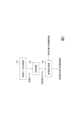
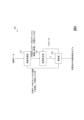
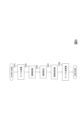
- FIG. 1 is a functional block diagram of a noise removal system according to a first embodiment.
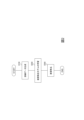
- FIG. 2 is a diagram showing an example of a processing flow of the noise removal system according to the first embodiment.
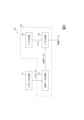
- FIG. 2 is a functional block diagram of a training data generating device.
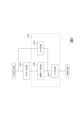
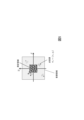
- FIG. 4 is a diagram showing an example of a processing flow of the training data generating device. Schematic diagram of the simulation used to generate training data.
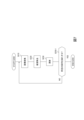
- FIG. 2 is a functional block diagram of the learning device.
- FIG. 11 is a diagram showing an example of a processing flow of a learning device.
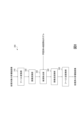
- FIG. 2 is a functional block diagram of a noise reduction device.
- FIG. 4 is a diagram showing an example of a processing flow of a noise removal device.
- FIG. 11 is a diagram showing an example of a noise removal result.
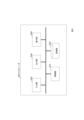
- FIG. 13 is a diagram showing an example of the configuration of a computer to which the present technique is applied.
- a highly accurate noise removal is achieved by using a deep neural network (DNN).
- DNN deep neural network
- the sound field moving image is expressed as a complex amplitude by Fourier transform, and in order to make it easier to handle with DNN, the sound field image expressed as a complex amplitude (hereinafter also referred to as a complex amplitude sound field image) is regarded as a two-channel image consisting of a real part and an imaginary part. This allows any DNN for image noise removal to be used for the purpose of sound field noise removal.
- training data is generated using acoustic simulation.
- FIG. 1 shows an example of the configuration of a noise reduction system according to a first embodiment
- Fig. 2 shows a process flow of the noise reduction system.
- the noise removal system includes a training data generating device 100, a learning device 200, and a noise removal device 300.
- the training data generating device 100 generates training data consisting of a set of correct answer data and learning input data (S100) and outputs the training data.
- the correct answer data is noise-free data generated using acoustic simulation
- the learning input data is noise-containing data.
- the learning device 200 receives training data as input, learns a noise removal model (S200), and outputs the learned noise removal model.
- the noise removal model is made of a DNN, receives information based on a complex amplitude sound field image for a sound field image as input, and outputs information based on the complex amplitude sound field image for a sound field image from which noise contained in the sound field image has been removed.
- the noise reduction device 300 receives a trained noise reduction model before noise reduction processing.
- the noise reduction device 300 receives as input a sound field moving image to be processed, removes noise contained in the sound field moving image (S300), and outputs the sound field moving image after noise reduction.
- a sound field moving image is composed of time-series sound field images, and it can also be said that the noise reduction device 300 receives as input sound field images constituting the sound field moving image to be processed, removes noise contained in the sound field images constituting the sound field moving image, and outputs sound field images constituting the sound field moving image after noise reduction.
- the training data generating device 100, the learning device 200, and the noise elimination device 300 are special devices configured by loading special programs into a publicly known or dedicated computer having, for example, a central processing unit (CPU), a main memory (RAM), etc.
- the training data generating device 100, the learning device 200, and the noise elimination device 300 execute each process under the control of, for example, the central processing unit.
- Data input to the training data generating device 100, the learning device 200, and the noise elimination device 300 and data obtained by each process are stored, for example, in the main memory, and the data stored in the main memory is read out to the central processing unit as necessary and used for other processes.
- each processing unit of the training data generating device 100, the learning device 200, and the noise elimination device 300 may be configured by hardware such as an integrated circuit.
- Each storage unit provided in the training data generating device 100, the learning device 200, and the noise reduction device 300 can be configured, for example, as a main storage device such as a RAM (Random Access Memory), or middleware such as a relational database or a key-value store.
- each storage unit does not necessarily need to be provided inside the training data generating device 100, the learning device 200, and the noise reduction device 300, but may be configured as an auxiliary storage device made up of a hard disk, optical disk, or semiconductor memory element such as a flash memory, and provided outside the training data generating device 100, the learning device 200, and the noise reduction device 300.
- FIG. 3 is a functional block diagram of the training data generating device 100, and FIG. 4 shows an example of the processing flow thereof.
- the training data generation device 100 includes a parameter generation unit 110, a correct answer data generation unit 120, a noise generation unit 130, and a noise addition unit 140.
- any theoretical formula or numerical simulation method that can numerically calculate the sound field data can be used.
- any parameter of the generation method is determined from a desired probability distribution to generate diverse learning data.
- One example is the following method.
- Figure 5 shows a schematic diagram of the simulation.
- the inner rectangle is the measurement area
- the outer rectangle is the sound source area, in which point sound sources are randomly placed.
- the number of point sound sources is set to 1 to 5, and the position and relative amplitude of each sound source are randomly assigned.
- the ground truth data is a superposition of sound waves generated from these point sound sources, and is calculated using the following formula.
- r (x, y) is the position
- k is the magnitude of the acoustic wave number
- A is a constant that determines the size of the entire sound field
- N is the number of sound sources
- a i and r i (x i , y i ) are the relative amplitude and position of the i-th sound source, respectively
- H (2) 0 is the zero-order second-order Hankel function.
- the part inside the summation symbol represents the product of the relative amplitude of the i-th sound source and the Green's function of the two-dimensional Helmholtz equation.
- Ground-truth data is generated by generating parameters from the desired probability distribution and calculating the sound pressure at each point based on the above equation.
- the parameter generating unit 110 generates and outputs parameters used when generating ground truth data (S110). Possible parameters include the relative amplitude a i and position r i of each sound source. For example, the position of each sound source is randomly assigned according to a desired probability distribution from within the sound source region, and the relative amplitude is randomly assigned to each sound source according to a desired probability distribution from within the range of expected relative amplitudes. Note that the number of measurement regions, sound source regions, and point sound sources is assumed to be given in advance.
- the correct data generating unit 120 receives the parameters generated by the parameter generating unit 110 as input, and generates correct data by acoustic simulation using the parameters (S120), and outputs it. For example, while changing the number N of sound sources from 1 to 5, the relative amplitude a i and position r i of each sound source are input, and the sound pressure at each point in the measurement area is calculated by equation (1), and correct data is generated.
- Noise Adder 140 Any noise can be added according to the measurement system that acquires the sound field moving image. For example, additive Gaussian white noise can be added. White noise with a desired amplitude is generated and added to the ground truth data to generate noisy data.
- the noise generation unit 130 generates and outputs any noise (S130) in accordance with the measurement system that acquires the sound field moving image. For example, additive Gaussian white noise is generated.
- the noise adding unit 140 receives the correct answer data and the generated noise as input, adds the generated noise to the correct answer data (S140), uses the correct answer data with the added noise as learning input data, and outputs training data consisting of a pair of the correct answer data and the learning input data.
- the noise is added by adding white noise.
- the supervised data generating unit 120, the noise generating unit 130 and the noise adding unit 140 are collectively referred to as a training data generating unit 150, and the processing in the training data generating unit 150 is also referred to as a training data generation process S150.
- speckle noise can be added.
- the speckle noise data can be generated using, for example, the method described in Reference 1.
- the method of generating data including noise is arbitrary and is not limited to these.
- the training data generation unit 150 receives the parameters generated by the parameter generation unit 110 as input, generates correct answer data by acoustic simulation using the parameters, and generates correct answer data to which speckle noise has been added in the middle of the algorithm for generating the correct answer data (S150).
- This configuration makes it possible to generate large amounts of training data through acoustic simulation without extensive, time-consuming experiments.
- FIG. 6 shows a functional block diagram of the learning device 200
- FIG. 7 shows an example of a processing flow thereof.
- the learning device 200 includes an image conversion unit 210, a noise removal unit 220, and an update unit 230.
- the image conversion unit 210 receives training data as input.
- the learning input data and the correct answer data included in the training data are complex amplitude sound field images.
- the elements of the complex amplitude sound field image represent complex amplitudes at corresponding spatial positions and Fourier frequencies.
- the image conversion unit 210 converts each complex amplitude sound field image into a two-channel image consisting of a real part and an imaginary part (S210).
- the image conversion unit 210 converts the complex amplitude sound field image [a 1 , ..., a K ] into an image consisting of a real part (hereinafter also referred to as a real part image) [b 1 , ..., b K ] and an image consisting of an imaginary part (hereinafter also referred to as an imaginary part image) [c 1 , ..., c K ].
- the image conversion unit 210 normalizes the two-channel images (real part image [ b1 , ..., bK ] and imaginary part image [ c1 , ..., cK ]) and outputs them.
- the normalization performed here is a process of preparing the data so that it can be easily handled by the noise removal model, and is a process of multiplying the data by a normalization coefficient.
- the noise removal unit 220 receives the learning input data included in the training data as input, removes noise from the learning input data using a noise removal model (S220), and obtains and outputs the learning input data after noise removal.
- S220 noise removal model
- the noise elimination unit 220 receives as input a two-channel image (real part image [b T,1 , ..., b T,K ] and imaginary part image [c T,1 , ..., c T,K ]) obtained by converting the learning input data (complex amplitude sound field image) included in the training data, and uses a noise elimination model to remove noise from the two-channel image (real part image [b T,1 , ..., b T,K ] and imaginary part image [c T,1 , ..., c T,K ]) to obtain a two-channel image (real part image [b' T,1 , ..., b' T,K ] and imaginary part image [c' T,1 , ..., c' T,K ]) after noise elimination.
- a two-channel image real part image [b T,1 , ..., b T,K ] and imaginary part image [c T,1 , ..., c' T,K ]
- the noise elimination model is made of a DNN, and receives as input information based on a complex amplitude sound field image for the sound field image, and outputs information based on the complex amplitude sound field image for the sound field image from which the noise included in the sound field image has been removed.
- the noise removal model is a model that receives normalized real part images and imaginary part images as input, removes noise contained in the real part images and imaginary part images, and outputs the real part images and imaginary part images after noise removal.
- any network that removes image noise can be used.
- a network with a Unet structure can be used.
- a nonlinear activation free network (NAFNet) (see Reference 2), which has excellent performance in removing image noise and can operate with relatively small memory and learning time, can also be used.
- NAFNet nonlinear activation free network
- the update unit 230 receives as input the correct answer data included in the training data and the learning input data after noise removal, and updates the parameters of the noise removal model so as to reduce the error between the correct answer data included in the training data and the learning input data after noise removal (S230).
- the ground truth data (complex amplitude sound field image) included in the training data is converted into a two-channel image, and the parameters of the noise removal model are updated so that the error between the normalized image and the two-channel image after noise removal (real part image [ b'T,1 , ..., b'T ,K ] and imaginary part image [c'T ,1 , ..., c'T ,K ]) is reduced.
- RMSE Root Mean Square Error
- the steepest descent method, Adam, etc. can be used for the optimization algorithm.
- the update unit 230 outputs the updated parameters to the noise reduction unit 220 and repeats S210 to S230.
- the update unit 230 outputs the noise removal model at that time as the trained noise removal model.
- the specified condition can be set to determine whether the parameter updates have converged. For example, conditions such as: has the learning been repeated a certain number of times (e.g., several times)? Is the difference in parameters before and after the update below a specified threshold? Is the loss below a specified threshold? can be used.
- any DNN for image noise removal can be used for the purpose of sound field noise removal.
- FIG. 8 shows a functional block diagram of the noise elimination device 300
- FIG. 9 shows an example of the processing flow thereof.
- the noise reduction device 300 includes a Fourier transform unit 310, an image conversion unit 320, a noise reduction unit 330, an image inverse conversion unit 340, and an inverse Fourier transform unit 350.
- the noise removal device 300 uses the trained noise removal model in the noise removal unit 330 during noise removal processing.
- the Fourier transform unit 310 receives the sound field moving image to be processed, performs a time domain Fourier transform on all pixels of the sound field moving image (S310), and obtains and outputs a complex amplitude sound field image for each frequency.
- a fast Fourier transform or the like can be used as the Fourier transform.
- the image conversion unit 320 receives a complex amplitude sound field image for each frequency, converts the complex amplitude sound field image into a two-channel image consisting of a real part and an imaginary part (S320), normalizes the two-channel image, and outputs it.
- the image conversion unit 320 performs the same process as the image conversion unit 210.
- the noise removal unit 330 receives as input a sound field image for the sound field moving image to be processed, removes noise from the sound field moving image to be processed using a noise removal model (S330), and obtains and outputs a sound field image for the sound field moving image to be processed after noise removal.
- S330 noise removal model
- the noise removal unit 330 receives as input two-channel images (real part image [b E,1 , ..., b E,K ] and imaginary part image [c E,1 , ..., c E,K ]) obtained by converting the complex amplitude sound field image for the sound field moving image to be processed, and uses a noise removal model to remove noise from the two-channel images to obtain two-channel images after noise removal (real part image [b' E,1 , ..., b' E,K ] and imaginary part image [c' E,1 , ..., c' E,K ]).
- the image inverse conversion unit 340 receives the two-channel image after noise removal (real part image [b' E,1 , ..., b' E,K ] and imaginary part image [c' E,1 , ..., c' E,K ]) as input, and in order to maintain the size of the sound field, multiplies the two-channel image after noise removal (real part image [b' E,1 , ..., b' E,K ] and imaginary part image [c' E,1 , ..., c' E,K ]) by the reciprocal of the normalization coefficient multiplied by the image conversion unit 210 described above.
- the image inverse conversion unit 340 converts the two-channel image after noise removal (real part image [b' E,1 , ..., b' E,K ] and imaginary part image [c' E,1 , ..., c' E,K ]) into a complex amplitude sound field image [a' E,1 , ..., a' E,K ] (S340) and outputs it.
- the image inverse conversion unit 340 converts an image consisting of a real part (hereinafter also referred to as the real part image) [ b1 , ..., bK ] and an image consisting of an imaginary part (hereinafter also referred to as the imaginary part image) [ c1 , ..., cK ] into a complex amplitude sound field image [ a1 , ..., aK ].
- the inverse Fourier transform unit 350 receives the complex amplitude sound field image [a'E ,1 ,...,a'E ,K ], performs inverse Fourier transform in the time direction (S350), and obtains and outputs a noise-removed sound field moving image.
- a transform method corresponding to the Fourier transform performed by the above-mentioned Fourier transform unit 310 may be used.
- NAFNet the same network as in Reference 1, except for the number of image channels.
- the network consisted of blocks 32 wide, with two image channels (real image, imaginary image), and an image size of 128 x 128.
- RMSE root mean square error
- Adam was used as the optimization algorithm, and the learning rate was set to 0.001.
- a total of 2,000 pieces of training data were created, with 400 pieces for each number of sound sources.
- the training batch size was 32, and the number of epochs was 50.
- Additive white Gaussian noise was used as noise.
- FIG. 10 shows an example of the noise removal result. It can be seen that the noise removal according to this embodiment significantly removes noise contained in the noisy data.
- the noise elimination device 300 receives a sound field moving image to be processed, removes noise contained in the sound field moving image (S300), and outputs the sound field moving image after the noise elimination.
- the processing target may be a single sound field image instead of a sound field moving image.
- the noise elimination device 300 receives a sound field image to be processed, removes noise contained in the sound field image (S300), and outputs the sound field image after the noise elimination.
- the noise elimination unit 220 receives at least the real part image [b T,1 , ..., b T,K ] included in the two-channel image (real part image [b T,1 , ..., b T,K ] and imaginary part image [c T,1 , ..., c T,K ]) obtained by converting the learning input data (complex amplitude sound field image) included in the training data as input, and removes noise from the real part image [b T,1 , ... , b T,K ] using a noise elimination model to obtain a real part image [b' T,1 , ..., b' T,K ] after noise elimination.
- the noise elimination model is made of a DNN, receives a sound field image (real part image) as input, and outputs a sound field image (real part image) from which noise contained in the sound field image (real part image) has been removed.
- the noise elimination model receives a normalized real part image as input, removes noise contained in the real part image, and outputs the real part image after noise elimination.
- a DNN is used to remove noise from a one-channel input image (real part image), so any network that removes noise from an image can be used, as in the first embodiment.
- the update unit 230 receives as input the correct answer data included in the training data and the learning input data after noise removal, and updates the parameters of the noise removal model so as to reduce the error between the real part of the correct answer data included in the training data and the learning input data after noise removal (real part image) (S230).
- the noise removal model is a model that receives as input the amplitude and phase corresponding to a complex amplitude sound field image, and outputs the amplitude and phase corresponding to a complex amplitude sound field image after noise removal.
- the image conversion unit 210 of the learning device 200 receives training data as input.
- the learning input data and correct answer data included in the training data are each a complex amplitude sound field image.
- the elements of the complex amplitude sound field image represent complex amplitudes at corresponding spatial positions and Fourier frequencies.
- the image conversion unit 210 converts each complex amplitude sound field image into amplitude and phase (S210).
- the image conversion unit 210 performs normalization processing (processing to arrange data so that it is easy to handle with a noise reduction model) as necessary.
- the noise removal unit 220 of the learning device 200 receives as input the learning input data included in the training data, removes noise from the learning input data using a noise removal model (S220), and obtains and outputs the learning input data after noise removal.
- S220 noise removal model
- the noise removal unit 220 receives as input the amplitude and phase obtained by converting the learning input data (complex amplitude sound field image) included in the training data, removes noise from the complex amplitude sound field image using a noise removal model, and obtains the amplitude and phase corresponding to the complex amplitude sound field image after noise removal.
- a network similar to that in the first embodiment can be used.
- a network with a Unet structure can be used, similar to that in the first embodiment. It is also possible to use NAFNet.
- the update unit 230 of the learning device 200 receives as input the correct answer data included in the training data and the learning input data after noise removal, and updates the parameters of the noise removal model so as to reduce the error between the correct answer data included in the training data and the learning input data after noise removal (S230).
- the parameters of the noise removal model are updated so that the error between the amplitude and phase corresponding to the correct answer data (complex amplitude sound field image) included in the training data and the amplitude and phase corresponding to the complex amplitude sound field image after noise removal is reduced.
- the parameters can be updated in the same manner as in the first embodiment.
- the image conversion unit 320 of the noise reduction device 300 receives a complex amplitude sound field image for each frequency, converts the complex amplitude sound field image into amplitude and phase (S320), and outputs the converted image.
- the image conversion unit 320 performs the same process as the image conversion unit 210.
- the noise removal unit 330 of the noise removal device 300 receives as input a sound field image for the sound field moving image to be processed, removes noise from the sound field moving image to be processed using a noise removal model (S330), and obtains and outputs a sound field image for the sound field moving image to be processed after noise removal.
- S330 noise removal model
- the noise removal unit 330 receives as input the amplitude and phase obtained by converting a complex amplitude sound field image for the sound field moving image to be processed, removes noise from the complex amplitude sound field image using a noise removal model, and obtains the amplitude and phase corresponding to the complex amplitude sound field image after noise removal.
- the image inverse conversion unit 340 receives the amplitude and phase corresponding to the complex amplitude sound field image after noise removal, converts the amplitude and phase corresponding to the complex amplitude sound field image after noise removal into a complex amplitude sound field image (S340), and outputs it. If normalization processing has been performed in the image conversion unit 210, a process of returning it to its original state is performed.
- the noise removal model is a DNN (complex neural network) that receives complex numbers as input, receives a complex amplitude sound field image as input, and outputs a complex amplitude sound field image after noise removal.
- the learning device 200 includes a noise removal unit 220 and an update unit 230.
- the noise elimination unit 220 receives the learning input data included in the training data as input, and removes noise from the learning input data using a noise elimination model (S220), obtains the learning input data after the noise elimination, and outputs it. Note that, if necessary, a normalization process (a process of adjusting the data to be easier to handle with the noise elimination model) is performed on the learning input data.
- the noise removal unit 220 receives learning input data (complex amplitude sound field image) included in the training data as input, removes noise from the complex amplitude sound field image using a noise removal model, and obtains a complex amplitude sound field image after noise removal.
- a DNN is used to remove noise from complex amplitude sound field images, so any complex neural network that removes noise from images can be used.
- the update unit 230 receives as input the correct answer data included in the training data and the learning input data after noise removal, and updates the parameters of the noise removal model so as to reduce the error between the correct answer data included in the training data and the learning input data after noise removal (S230).
- the parameters of the noise removal model are updated so that the error between the correct answer data (complex amplitude sound field image) included in the training data and the complex amplitude sound field image after noise removal is reduced.
- the noise reduction device 300 includes a Fourier transform section 310 , a noise reduction section 330 and an inverse Fourier transform section 350 .
- the noise elimination unit 330 receives a sound field image for the sound field moving image to be processed as an input, removes noise from the sound field moving image to be processed using a noise elimination model (S330), obtains a sound field image for the sound field moving image to be processed after the noise elimination, and outputs it. Note that, like the noise elimination unit 220, it performs normalization processing (processing to arrange data so that it is easy to handle by the noise elimination model) on the learning input data as necessary, and performs processing to restore the output of the noise elimination model.
- normalization processing processing to arrange data so that it is easy to handle by the noise elimination model
- the noise removal unit 330 receives as input a complex amplitude sound field image for the sound field moving image to be processed, removes noise from the complex amplitude sound field image using a noise removal model, and obtains a complex amplitude sound field image after noise removal.
- the noise removal model can be said to be a model that receives information based on a complex amplitude sound field image for a sound field image as input, and outputs information based on the complex amplitude sound field image for a sound field moving image from which noise contained in the sound field image has been removed.
- the real part image and the imaginary part image correspond to information based on the complex amplitude sound field image
- the real part image corresponds to information based on the complex amplitude sound field image
- the phase and amplitude correspond to information based on the complex amplitude sound field image
- the complex amplitude sound field image itself corresponds to information based on the complex amplitude sound field image.
- the image conversion unit 210 of the first embodiment may be considered as pre-processing and post-processing of the noise removal unit 220, and the image conversion unit 210 may be considered as part of the noise removal unit 220.
- the image conversion unit 320 and the image inverse conversion unit 340 of the first embodiment may be considered as pre-processing and post-processing of the noise removal unit 330, respectively, and the image conversion unit 320 and the image inverse conversion unit 340 may be considered as part of the noise removal unit 330.
- the second modification may be considered as pre-processing and post-processing of the noise removal unit 220, and the image conversion unit 210 may be considered as part of the noise removal unit 220.
- the image conversion unit 320 and the image inverse conversion unit 340 of the first embodiment may be considered as pre-processing and post-processing of the noise removal unit 330, respectively, and the image conversion unit 320 and the image inverse conversion unit 340 may be considered as part of the noise removal unit 330.
- the second modification may be considered as pre-
- the present invention is not limited to the above-mentioned embodiment and modified examples.
- the above-mentioned various processes may be executed not only in chronological order as described, but also in parallel or individually depending on the processing capacity of the device executing the processes or as necessary.
- appropriate modifications are possible within the scope of the present invention.
- ⁇ Program and recording medium> The various processes described above can be implemented by loading a program that executes each step of the above method into the recording unit 2020 of the computer 2000 shown in FIG. 11, and operating the control unit 2010, input unit 2030, output unit 2040, display unit 2050, etc.
- the program describing this processing can be recorded on a computer-readable recording medium.
- Examples of computer-readable recording media include magnetic recording devices, optical disks, magneto-optical recording media, and semiconductor memories.
- the program may be distributed, for example, by selling, transferring, or lending portable recording media such as DVDs or CD-ROMs on which the program is recorded. Furthermore, the program may be distributed by storing the program in a storage device of a server computer and transferring the program from the server computer to other computers via a network.
- a computer that executes such a program for example, first stores in its own storage device the program recorded on a portable recording medium or the program transferred from a server computer. Then, when executing a process, the computer reads the program stored on its own recording medium and executes the process according to the read program. As another execution form of the program, the computer may read the program directly from the portable recording medium and execute the process according to the program, or may execute the process according to the received program each time a program is transferred from the server computer to the computer.
- the above-mentioned process may also be executed by a so-called ASP (Application Service Provider) type service that does not transfer the program from the server computer to the computer, but realizes the processing function only by issuing an execution instruction and obtaining the results.
- ASP Application Service Provider
- the program in this form includes information used for processing by an electronic computer that is equivalent to a program (such as data that is not a direct command to the computer but has properties that specify the processing of the computer).
- the device is configured by executing a specific program on a computer, but at least a portion of the processing may be realized by hardware.
Landscapes
- Physics & Mathematics (AREA)
- Engineering & Computer Science (AREA)
- Acoustics & Sound (AREA)
- Signal Processing (AREA)
- Soundproofing, Sound Blocking, And Sound Damping (AREA)
Abstract
La présente invention propose un dispositif d'élimination de bruit et similaire qui peut effectuer une élimination de bruit sur des images vidéo de champ acoustique avec une précision supérieure à celle de l'état de la technique et effectuer une élimination de bruit favorable même sur des données d'une nature inconnue ou des données contenant un bruit non linéaire. Le dispositif d'élimination de bruit est formé à partir d'un DNN, accepte une image de champ acoustique en tant qu'entrée, et délivre une image de champ acoustique à partir de laquelle le bruit inclus dans l'image de champ acoustique a été retiré.
Priority Applications (2)
| Application Number | Priority Date | Filing Date | Title |
|---|---|---|---|
| PCT/JP2023/030226 WO2025041282A1 (fr) | 2023-08-23 | 2023-08-23 | Dispositif d'apprentissage, dispositif d'élimination de bruit et dispositif de génération de données d'apprentissage |
| JP2025541231A JPWO2025041282A1 (fr) | 2023-08-23 | 2023-08-23 |
Applications Claiming Priority (1)
| Application Number | Priority Date | Filing Date | Title |
|---|---|---|---|
| PCT/JP2023/030226 WO2025041282A1 (fr) | 2023-08-23 | 2023-08-23 | Dispositif d'apprentissage, dispositif d'élimination de bruit et dispositif de génération de données d'apprentissage |
Publications (1)
| Publication Number | Publication Date |
|---|---|
| WO2025041282A1 true WO2025041282A1 (fr) | 2025-02-27 |
Family
ID=94731774
Family Applications (1)
| Application Number | Title | Priority Date | Filing Date |
|---|---|---|---|
| PCT/JP2023/030226 Pending WO2025041282A1 (fr) | 2023-08-23 | 2023-08-23 | Dispositif d'apprentissage, dispositif d'élimination de bruit et dispositif de génération de données d'apprentissage |
Country Status (2)
| Country | Link |
|---|---|
| JP (1) | JPWO2025041282A1 (fr) |
| WO (1) | WO2025041282A1 (fr) |
Citations (2)
| Publication number | Priority date | Publication date | Assignee | Title |
|---|---|---|---|---|
| JP2021149937A (ja) * | 2020-03-15 | 2021-09-27 | インテル・コーポレーション | グラフィックスプロセッサの動き推定回路を使用して非局所平均フィルタリングを実行するための装置及び方法 |
| JP2023000446A (ja) * | 2021-06-18 | 2023-01-04 | 日本電信電話株式会社 | 音可視化システム、音可視化装置、音可視化方法、及びプログラム |
-
2023
- 2023-08-23 JP JP2025541231A patent/JPWO2025041282A1/ja active Pending
- 2023-08-23 WO PCT/JP2023/030226 patent/WO2025041282A1/fr active Pending
Patent Citations (2)
| Publication number | Priority date | Publication date | Assignee | Title |
|---|---|---|---|---|
| JP2021149937A (ja) * | 2020-03-15 | 2021-09-27 | インテル・コーポレーション | グラフィックスプロセッサの動き推定回路を使用して非局所平均フィルタリングを実行するための装置及び方法 |
| JP2023000446A (ja) * | 2021-06-18 | 2023-01-04 | 日本電信電話株式会社 | 音可視化システム、音可視化装置、音可視化方法、及びプログラム |
Also Published As
| Publication number | Publication date |
|---|---|
| JPWO2025041282A1 (fr) | 2025-02-27 |
Similar Documents
| Publication | Publication Date | Title |
|---|---|---|
| Comminiello et al. | Adaptive learning methods for nonlinear system modeling | |
| WO2018216207A1 (fr) | Dispositif, procédé et programme de traitement d'image | |
| CN115200702A (zh) | 基于复数神经网络的计算成像方法及装置 | |
| Miotello et al. | Reconstruction of sound field through diffusion models | |
| Ullah et al. | An efficient variational method for restoring images with combined additive and multiplicative noise | |
| CN113424203A (zh) | 图像处理设备及其操作方法 | |
| CN119850459B (zh) | 一种基于扩散采样的合成孔径雷达图像相干斑抑制方法 | |
| CN114221877A (zh) | 负载预测方法、装置、设备和计算机可读介质 | |
| CN115542703A (zh) | 一种优化全息图一级再现像的方法、系统、设备及介质 | |
| Grabinski et al. | As large as it gets–studying infinitely large convolutions via neural implicit frequency filters | |
| JP6815956B2 (ja) | フィルタ係数算出装置、その方法、及びプログラム | |
| CN115859048A (zh) | 一种局放信号的噪声处理方法及装置 | |
| US20230052111A1 (en) | Speech enhancement apparatus, learning apparatus, method and program thereof | |
| Su et al. | Deconvolution of defocused image with multivariate local polynomial regression and iterative wiener filtering in DWT domain | |
| WO2026042133A1 (fr) | Dispositif de traitement de signal et procédé de traitement de signal | |
| JP2020095202A (ja) | 音響信号処理装置、その方法、およびプログラム | |
| KR20210115772A (ko) | 음향 신호 시스템의 에코 억제 방법 | |
| KR102424811B1 (ko) | 홀로그램 패턴 이미지를 처리하는 방법 및 장치 | |
| CN115456891A (zh) | 一种基于u型动态网络的屏下相机图像复原方法 | |
| CN117275502A (zh) | 一种去混响的方法、系统及计算机可读存储介质 | |
| WO2023152895A1 (fr) | Système de génération de signal de forme d'onde, procédé de génération de signal de forme d'onde et programme | |
| Luo et al. | Self-diffusion for solving inverse problems | |
| Novikov-Borodin | Elimination of Systematic Distortions in the Signals of LTI Systems using Test Measurements | |
| Jiang | A multi-parameter regularization model for deblurring images corrupted by impulsive noise | |
| Grabinski et al. | As large as it gets: Learning infinitely large Filters via Neural Implicit Functions in the Fourier Domain |
Legal Events
| Date | Code | Title | Description |
|---|---|---|---|
| 121 | Ep: the epo has been informed by wipo that ep was designated in this application |
Ref document number: 23949743 Country of ref document: EP Kind code of ref document: A1 |
|
| ENP | Entry into the national phase |
Ref document number: 2025541231 Country of ref document: JP Kind code of ref document: A |
|
| WWE | Wipo information: entry into national phase |
Ref document number: 2025541231 Country of ref document: JP |
|
| NENP | Non-entry into the national phase |
Ref country code: DE |