WO2025041277A1 - 情報処理装置および方法 - Google Patents
情報処理装置および方法 Download PDFInfo
- Publication number
- WO2025041277A1 WO2025041277A1 PCT/JP2023/030191 JP2023030191W WO2025041277A1 WO 2025041277 A1 WO2025041277 A1 WO 2025041277A1 JP 2023030191 W JP2023030191 W JP 2023030191W WO 2025041277 A1 WO2025041277 A1 WO 2025041277A1
- Authority
- WO
- WIPO (PCT)
- Prior art keywords
- information
- message
- messages
- sent
- members
- Prior art date
- Legal status (The legal status is an assumption and is not a legal conclusion. Google has not performed a legal analysis and makes no representation as to the accuracy of the status listed.)
- Ceased
Links
Images



Classifications
-
- G—PHYSICS
- G06—COMPUTING OR CALCULATING; COUNTING
- G06F—ELECTRIC DIGITAL DATA PROCESSING
- G06F16/00—Information retrieval; Database structures therefor; File system structures therefor
- G06F16/90—Details of database functions independent of the retrieved data types
- G06F16/904—Browsing; Visualisation therefor
Definitions
- An embodiment of the present invention relates to an information processing device and method.
- a company's operations are made up of elements such as employees, facilities, and business processes. Operations are designed to suit the industry, business sector, and business model, and are improved daily. In particular, employees are an organic function that is important in operations, and they flexibly support uncertain and complex operations through an organizational structure.
- a “team” refers to a group of two or more people who work together or cooperate to achieve a shared goal or obtain value while dividing up roles, and the people (personnel) who belong to an organization are called “members.”
- An organization functions as a collection of multiple teams, and it is important to properly understand the formation status of these teams in accordance with the business situation, and to design and improve their operation.
- Non-Patent Document 4 discloses that business card-type sensor nodes are used to measure the amount of communication and behavior within a team, and an organizational network is constructed based on communication.
- Non-Patent Document 5 discloses a method for analyzing communication trends and relationships with groups by creating a graph structure of the spread and convergence of comments based on quotations, mention information, and contextual information between comments made in group chats, and then using information on the in-degree and out-degree of the graph structure to analyze communication trends and relationships with groups.
- Communication between team members involves interactions between members regarding (1) the messages and the addresses of members within the messages, (2) reactions to messages, and (3) relationships between messages.
- the method disclosed in the above-mentioned non-patent document 4 only deals with the relationship of face-to-face actions between members using a business card-type sensor, and is unable to handle the above-mentioned interactive relationships of the member's address in a message, the reaction to the message, and the relationship between messages, and is therefore unable to analyze these structural features.
- the method disclosed in the above-mentioned non-patent document 5 creates a graph structure of the spread and convergence of comments based on quotations and mention information regarding the content of comments made in a group chat, and information on the context between comments, but it cannot handle replies or reactions from other members to messages.
- This invention was made in light of the above-mentioned circumstances, and its purpose is to provide an information processing device and method that can generate information in which interaction relationships based on messages between members are structured.
- An information processing device includes a conversion unit that converts messages sent between multiple personnel into information that structures the interaction relationships between the multiple personnel, based on information about the sender of the message sent between the multiple personnel and information about the destination of the message sent.
- An information processing method is a method performed by an information processing device, and includes converting a message sent between each of a plurality of personnel into information in which the interaction relationships between the plurality of personnel are structured, based on information on the sender of the message sent between the plurality of personnel and information on the destination of the message sent, by a conversion unit of the information processing device.
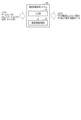
- FIG. 1 is a diagram showing an application example of a structural information acquisition system according to an embodiment of the present invention.
- FIG. 2 is a diagram showing an example of the result of conversion from the communication log to a graph structure of the interaction relationships between members.
- FIG. 3 is a diagram for explaining an example of a rule for expressing a graph structure of interaction relationships between members.
- FIG. 4 is a diagram showing an example of various types of information in a message.
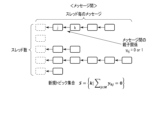
- FIG. 5 is a diagram showing an example of various types of information between messages.
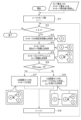
- FIG. 6 is a flowchart showing an example of a processing procedure for converting a communication log on a thread into a graph structure of interaction relationships between members.
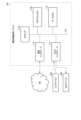
- Figure 7 is a block diagram showing an example of the hardware configuration of a structural information acquisition system according to one embodiment of the present invention.
- a structural information acquisition system converts a communication log between members of a team, such as the contents of voice or chat, into information in which interaction relations between members regarding (1) messages and member destinations within messages, (2) reactions to messages, and (3) relationships between messages are structured as a graph (sometimes referred to as a graph structure of interaction relations, etc.).
- This information is information in which interaction relations regarding actions performed by each of a plurality of members are structured.
- FIG. 1 is a diagram showing an application example of a structural information acquisition system according to an embodiment of the present invention.
- a structural information acquisition system (structural information acquisition device) 100 includes an input unit 10 and a structural information conversion unit 20 .
- the input unit 10 of the structural information acquisition system 100 inputs a communication log between members belonging to a team.
- Fig. 2 is a diagram showing an example of a result of conversion from a communication log to a graph structure of interaction relationships between members
- Fig. 3 is a diagram for explaining an example of an expression rule for the graph structure of interaction relationships between members.
- the structural information conversion unit 20 of the structural information acquisition system 100 converts the communication log input by the input unit 10 into information showing a graph structure of the interaction relationships between members as shown in Fig. 2, and outputs this to, for example, a display device (not shown). That is, the structural information conversion unit 20 converts messages sent between each of the multiple members into information in which the interaction relationships between the multiple members are structured, based on the information of the sender of the message sent between the multiple members and the information of the destination of the message.
- the conversion results by the structural information acquisition system 100 may include (1) the message of the new topic, which is the first message, and (2) the messages of each thread, which are messages at a lower level than the message of the new topic, that is, messages that correspond to children in a parent-child relationship.
- the results of this conversion include (1) a message with a mention from one member to another member, (2) a reaction from one member to another member, e.g., a message with a stamp-like mark, and (3) the relationship of messages from other members to messages sent from one member.
- the above-mentioned messages with mentions and reactions are structured information about the relationships within messages between members, and the above-mentioned message relationships are structured information about the parent-child relationships between messages.
- the structural information conversion unit 20 acquires the following pieces of information (1), (2), and (3) contained in the communication log input by the input unit 10.
- Member i ⁇ set N of members (2) A message set k from a member ⁇ a message set M (3)
- Parent-child relationships between multiple messages y kj The above parent-child relationship is the relationship when the parent message is message j and the child message is message k.
- the structural information conversion unit 20 acquires the following information (1) to (4) from the acquired information.
- ⁇ j ⁇ M y kj 0 ⁇ )
- FIG. 4 is a diagram showing an example of various types of information in a message.
- the sender of message k is "member A”
- the destination members of message k are “member B”, “member C”, and “member D”
- the member who reacted to message k is "member D”.
- FIG. 5 is a diagram showing an example of various types of information between messages. 5 shows (1) multiple threads, each of which is a collection of messages starting from a new topic message, (2) each message in each thread, and (3) messages j and k in the thread, which have a parent-child relationship. As shown above, message j is the parent message of message k.
- FIG. 6 is a flowchart showing an example of a processing procedure for converting a communication log on a thread into a graph structure of interaction relationships between members.
- the structural information conversion unit 20 takes as input information (1) a set N of members i ⁇ members, (2) a set M of messages k ⁇ messages from members, and (3) a parent-child relationship ykj between multiple messages, which are contained in the communication log input by the input unit 10, and assigns the number of acquired messages to variable m and 1 to variable k (S11).
- the structural information conversion unit 20 acquires information on the sender Hk of the message k from the input information (S13). In this embodiment, it is assumed that the information on the sender Hk of the message k is inherent in the input information.
- the structural information conversion unit 20 acquires information on the destination member Vk of the message k sent from the sender Hk when the input information includes this information (S14). In this embodiment, it is assumed that the input information includes information on the destination member Vk of the message k. When the relevant information is not included, acquisition in S14 is not performed.
- the structural information conversion unit 20 acquires information on a member R k who reacted to a message k sent by a message sender H k when the information is included in the input information (S15).
- the information on the member R k is inherent in the input information.
- acquisition in S15 is not performed.
- the structural information conversion unit 20 determines that message k is a message of a new topic (S17).
- the structural information conversion unit 20 determines that message k is not a new topic message, and obtains message j from the input information, which is a message related to message k and was generated earlier than the generation of message k, that is, a so-called parent message (S18).
- the structural information conversion unit 20 updates the variable k by incrementing it by 1 (S19), and returns to S12.
- the currently set value of k is no longer equal to or less than the value of m (No in S12)
- the series of processes by the structural information conversion unit 20 ends.
- FIG. 7 is a block diagram showing an example of a hardware configuration of a structural information acquisition system 100 according to an embodiment of the present invention.
- the structural information acquisition system 100 is configured, for example, by a server computer or a personal computer, and has a hardware processor 111A such as a CPU.
- a program memory 111B, a data memory 112, an input/output interface 113, and a communication interface 114 are connected to the hardware processor 111A via a bus 115.
- the communication interface 114 includes, for example, one or more wireless communication interface units, and enables the transmission and reception of information to and from a communication network NW.
- a wireless interface for example, an interface that adopts a low-power wireless data communication standard such as a wireless LAN (Local Area Network) is used.
- An input device 300 and an output device 400 that are attached to the structural information acquisition system 100 and are used by a user or the like are connected to the input/output interface 113 .
- the input/output interface 113 takes in operation data input by a user or the like through an input device 300 such as a keyboard, a touch panel, a touchpad, a mouse, or the like, and outputs output data to an output device 400 including a display device using liquid crystal or organic EL (Electro Luminescence), etc., for display.
- the input device 300 and the output device 400 may be devices built into the structural information acquisition system 100, or may be input devices and output devices of other information terminals that can communicate with the structural information acquisition system 100 via the network NW.
- the program memory 111B is a non-transient tangible storage medium that combines a non-volatile memory such as a HDD (Hard Disk Drive) or SSD (Solid State Drive) that can be written to and read from at any time, with a non-volatile memory such as a ROM (Read Only Memory), and stores the programs necessary to execute various control processes, etc. according to one embodiment.
- a non-volatile memory such as a HDD (Hard Disk Drive) or SSD (Solid State Drive) that can be written to and read from at any time
- a non-volatile memory such as a ROM (Read Only Memory)
- ROM Read Only Memory
- the data memory 112 is a tangible storage medium that combines, for example, the above-mentioned non-volatile memory with a volatile memory such as RAM (Random Access Memory), and is used to store various data acquired and created during various processing steps.
- RAM Random Access Memory
- the structural information acquisition system 100 can be configured as a data processing system or information processing device having a software-based processing function.
- the storage system used as a work memory or the like by the structural information acquisition system 100 can be configured by using the data memory 112 shown in Fig. 7.
- these configured storage areas are not essential components within the structural information acquisition system 100, and may be areas provided in a storage system such as an external storage medium such as a Universal Serial Bus (USB) memory, or a database server located in the cloud.
- USB Universal Serial Bus
- the above processing function unit can be realized by having the above hardware processor 111A read and execute a program stored in the program memory 111B. Note that this processing function unit may also be realized in a variety of other forms, including integrated circuits such as application specific integrated circuits (ASICs (Application Specific Integrated Circuits) or FPGAs (Field-Programmable Gate Arrays)).
- ASICs Application Specific Integrated Circuits
- FPGAs Field-Programmable Gate Arrays
- the methods described in each embodiment can be stored as a program (software means) that can be executed by a computer on a recording medium such as a magnetic disk (floppy disk, hard disk, etc.), optical disk (CD-ROM, DVD, MO, etc.), semiconductor memory (ROM, RAM, flash memory, etc.), and can be distributed by transmitting it via a communication medium.
- the programs stored on the medium also include a setting program that configures the software means (including not only execution programs but also tables and data structures) that the computer executes.
- the computer that realizes this device reads the program recorded on the recording medium, and in some cases configures the software means using the setting program, and executes the above-mentioned processing by having the operation controlled by this software means.
- the recording medium referred to in this specification is not limited to a recording medium for distribution, but also includes storage media such as a magnetic disk or semiconductor memory installed inside the computer or in a device connected via a network.
- the present invention is not limited to the above-described embodiments, and can be modified in various ways during implementation without departing from the gist of the invention.
- the embodiments may also be implemented in appropriate combination, in which case the combined effects can be obtained.
- the above-described embodiments include various inventions, and various inventions can be extracted by combinations selected from the multiple constituent elements disclosed. For example, if the problem can be solved and an effect can be obtained even if some constituent elements are deleted from all the constituent elements shown in the embodiments, the configuration from which these constituent elements are deleted can be extracted as an invention.
Landscapes
- Engineering & Computer Science (AREA)
- Databases & Information Systems (AREA)
- Theoretical Computer Science (AREA)
- Data Mining & Analysis (AREA)
- Physics & Mathematics (AREA)
- General Engineering & Computer Science (AREA)
- General Physics & Mathematics (AREA)
- Information Transfer Between Computers (AREA)
Abstract
一実施形態に係る情報処理装置は、複数の人員の間で送られたメッセージの発言者の情報、および前記送られたメッセージの宛先の情報に基づいて、複数の人員の各々との間で送られたメッセージを、前記複数の人員の間の相互作用関係が構造化された情報に変換する変換部を有する。
Description
本発明の実施形態は、情報処理装置および方法に関する。
企業のオペレーションは、従業員、設備、および業務プロセスなどの要素によって構成される。オペレーションは、業種、業界、およびビジネス形態などに沿った運用が設計され、日々改善されている。中でも、従業員の要素は有機的な機能であるとして、オペレーションの中では重要であり、不確実で複雑なオペレーションを組織的な体制で柔軟に支えている。
組織のパフォーマンスはオペレーションの安定性に大きく影響する。組織がとり得る形態は、この業務に求められる堅牢性、創造性、または緊急性等により異なるが、どの場合でも、従業員間で役割を持ち、協働することがポイントである。
以降では、「2人以上の人間が役割を分担しながら共有する目標達成や価値獲得のために協働または連携する集団」を「チーム」と呼び、組織に所属する人間(人員)を「メンバ」と呼ぶ。組織は複数のチームの集合体として機能しており、このチームの形成状況を業務の状況に合わせて適切に把握し、運用を設計および改善していくことが重要である。
労働人口の減少から、昨今では1名のメンバが複数のチームに所属して各チームの業務に関わることも増えてきている。対象の業務の状況または与えられた役割に応じて、メンバの態度または行動は変化すると考えられることから、業務実態の情報を基に、より客観的にチームの形成状況を分析できる技術が必要である。
非特許文献1には、組織ネットワーク分析により、組織が実際にどのように機能しているかを分析することが開示されている。
非特許文献2には、組織内の関わりを可視化することで、組織再編、部門間連携、新入社員のオンボーディング、離職リスクの早期発見などの施策をより効果的に実施する手法が開示されている。
非特許文献3には、共通名刺による企業内ネットワーク構築の試みについて開示されている。
非特許文献2には、組織内の関わりを可視化することで、組織再編、部門間連携、新入社員のオンボーディング、離職リスクの早期発見などの施策をより効果的に実施する手法が開示されている。
非特許文献3には、共通名刺による企業内ネットワーク構築の試みについて開示されている。
非特許文献4には、名刺型センサノードからチーム内のコミュニケーションの量や動作を計測し、コミュニケーションによる組織ネットワークを構築することが開示されている。
非特許文献5には、グループチャット内での発言内容に関する引用、メンションの情報、および発言間の前後関係の情報から、発言の広がりおよび収束をグラフ構造化し、グラフ構造の入次数および出次数の情報を用いてコミュニケーションの傾向分析と集団との関係性を分析する手法が開示されている。
Complete Coherence社、組織ネットワーク分析ソリューション<https://complete-coherence.com/complete-organisational-network-analysis-ona/>
リンカク/Link arc<https://www.coacha.com/info/news/20200914.html>
名刺データによる組織ネットワーク分析の可能性-SansanLabsビジネス万タイプ分析の事例<http://www.orsj.or.jp/archive2/or64-11/or64_11_655.pdf>
ビジネス顕微鏡<http://www.jfma.or.jp/award/05/pdf/paneldata07.pdf>
斉藤裕樹, and 谷森一貴. "チャットコミュニケーションの構造的特徴分析に基づく集団活動の生産性評価(Evaluation on Productivity of Group Activity Based on Structural Analysis of Chat Communications)." 情報処理学会論文誌63.2 (2022): 694-703.
チームに属するメンバ間のコミュニケーションには、(1)メッセージ間およびメッセージ内のメンバの宛先、(2)メッセージへのリアクション、ならびに(3)メッセージ間の関係、に関するメンバ間の相互作用関係、が発生する。
一方、上記非特許文献4に開示された手法では、名刺型センサを使った、メンバ間の対面動作の関係のみを扱っており、上記の、メッセージ内のメンバの宛先、メッセージへのリアクション、およびメッセージ間の関係、の相互作用関係を扱うことはできず、これらの構造的特徴を分析できない。
また、上記非特許文献5に開示された手法では、グループチャット内での発言内容に関する引用、メンションの情報、および発言間の前後関係の情報から、発言の広がりおよび収束をグラフ構造化するが、メッセージに対する他のメンバからの返信またはリアクションを扱うことはできない。
また、上記非特許文献5に開示された手法では、グループチャット内での発言内容に関する引用、メンションの情報、および発言間の前後関係の情報から、発言の広がりおよび収束をグラフ構造化するが、メッセージに対する他のメンバからの返信またはリアクションを扱うことはできない。
この発明は、上記事情に着目してなされたもので、その目的とするところは、メンバ間のメッセージに基づく相互作用関係が構造化された情報を生成することができるようにした情報処理装置および方法およびを提供することにある。
本発明の一態様に係る情報処理装置は、複数の人員の間で送られたメッセージの発言者の情報、および前記送られたメッセージの宛先の情報に基づいて、複数の人員の各々との間で送られたメッセージを、前記複数の人員の間の相互作用関係が構造化された情報に変換する変換部を備える。
本発明の一態様に係る情報処理方法は、情報処理装置により行なわれる方法であって、前記情報処理装置の変換部により、複数の人員の間で送られたメッセージの発言者の情報、および前記送られたメッセージの宛先の情報に基づいて、複数の人員の各々との間で送られたメッセージを、前記複数の人員の間の相互作用関係が構造化された情報に変換することを備える。
本発明によれば、メンバ間のメッセージに基づく相互作用関係が構造化された情報を生成することができる。
以下、図面を参照しながら、この発明に係わる一実施形態を説明する。
本発明の一実施形態に係る構造情報取得システムは、チームに属するメンバ間のコミュニケーションログ、例えば音声、またはチャットの内容を、(1)メッセージ間およびメッセージ内のメンバの宛先、(2)メッセージへのリアクション、ならびに(3)メッセージ間の関係、に関するメンバ間の相互作用関係がグラフとして構造化された情報(相互作用関係のグラフ構造などと称することもある)に変換する。この情報は、複数のメンバの各々が実行した行動に関する相互作用関係が構造化された情報である。
本発明の一実施形態に係る構造情報取得システムは、チームに属するメンバ間のコミュニケーションログ、例えば音声、またはチャットの内容を、(1)メッセージ間およびメッセージ内のメンバの宛先、(2)メッセージへのリアクション、ならびに(3)メッセージ間の関係、に関するメンバ間の相互作用関係がグラフとして構造化された情報(相互作用関係のグラフ構造などと称することもある)に変換する。この情報は、複数のメンバの各々が実行した行動に関する相互作用関係が構造化された情報である。
図1は、本発明の一実施形態に係る構造情報取得システムの適用例を示す図である。
図1に示されるように、構造情報取得システム(構造情報取得装置)100は、入力部10および構造情報変換部20を備える。
図1に示されるように、構造情報取得システム(構造情報取得装置)100は、入力部10および構造情報変換部20を備える。
<入力>
構造情報取得システム100の入力部10は、チームに属するメンバ間のコミュニケーションログを入力する。
<出力>
図2は、コミュニケーションログから、メンバ間の相互作用関係のグラフ構造への変換結果の一例を示す図である。図3は、メンバ間の相互作用関係のグラフ構造の表現ルールの一例を説明する図である。
構造情報取得システム100の構造情報変換部20は、入力部10により入力したコミュニケーションログを、図2に示されるような、メンバ間の相互作用関係のグラフ構造が示される情報に変換して、これを例えば図示しない表示装置に出力する。すなわち、構造情報変換部20は、複数の人員の間で送られたメッセージの発言者の情報、およびメッセージの宛先の情報に基づいて、複数の人員の各々との間で送られたメッセージを、複数の人員の間の相互作用関係が構造化された情報に変換する。
構造情報取得システム100の入力部10は、チームに属するメンバ間のコミュニケーションログを入力する。
<出力>
図2は、コミュニケーションログから、メンバ間の相互作用関係のグラフ構造への変換結果の一例を示す図である。図3は、メンバ間の相互作用関係のグラフ構造の表現ルールの一例を説明する図である。
構造情報取得システム100の構造情報変換部20は、入力部10により入力したコミュニケーションログを、図2に示されるような、メンバ間の相互作用関係のグラフ構造が示される情報に変換して、これを例えば図示しない表示装置に出力する。すなわち、構造情報変換部20は、複数の人員の間で送られたメッセージの発言者の情報、およびメッセージの宛先の情報に基づいて、複数の人員の各々との間で送られたメッセージを、複数の人員の間の相互作用関係が構造化された情報に変換する。
図2および図3に示されるように、構造情報取得システム100による変換結果は、(1)最初のメッセージである新規トピックのメッセージ、および(2)新規トピックのメッセージからみて下層のメッセージ、いわゆる親子関係の子に該当するメッセージとしての、各スレッドのメッセージ、を含み得る。
この変換結果は、(1)あるメンバから別のメンバへのメンション付きメッセージ、(2)あるメンバから別のメンバへのリアクション、例えばスタンプ状のマーク付きメッセージ、および(3)あるメンバから送信されたメッセージに対する、他のメンバからのメッセージの関係、を含む。
この変換結果は、(1)あるメンバから別のメンバへのメンション付きメッセージ、(2)あるメンバから別のメンバへのリアクション、例えばスタンプ状のマーク付きメッセージ、および(3)あるメンバから送信されたメッセージに対する、他のメンバからのメッセージの関係、を含む。
上記メンション付きメッセージ、およびリアクションは、メンバ間のメッセージ内の関係性が構造化された情報であり、上記メッセージの関係は、メッセージ間の親子関係が構造化された情報である。
これにより、本実施形態では、(1)メッセージ間、およびメッセージ内のメンバの宛先、(2)メッセージへのリアクション、ならびに(3)メッセージ間の関係、に関するメンバ間の相互作用関係を構造的に扱うことができる。
次に、上記グラフ構造化された情報の数理表現について説明する。
構造情報変換部20は、入力部10により入力したコミュニケーションログに含まれる、以下の(1)、(2)および(3)で示される情報を取得する。
(1)メンバi∈メンバの集合N
(2)メンバからのメッセージ集合k∈メッセージの集合M
(3)複数のメッセージ間の親子関係ykj
上記親子関係は、親のメッセージをメッセージjとして子のメッセージをメッセージkとしたときの関係である。ここでは、はメッセージjとメッセージkが親子関係を有しないときは「ykj=0」と表記し、メッセージjとメッセージkが親子関係を有するときは「ykj=1」と表記する。
構造情報変換部20は、入力部10により入力したコミュニケーションログに含まれる、以下の(1)、(2)および(3)で示される情報を取得する。
(1)メンバi∈メンバの集合N
(2)メンバからのメッセージ集合k∈メッセージの集合M
(3)複数のメッセージ間の親子関係ykj
上記親子関係は、親のメッセージをメッセージjとして子のメッセージをメッセージkとしたときの関係である。ここでは、はメッセージjとメッセージkが親子関係を有しないときは「ykj=0」と表記し、メッセージjとメッセージkが親子関係を有するときは「ykj=1」と表記する。
そして、構造情報変換部20は、上記取得した情報から、以下の(1)~(4)で示される情報を取得する。
(1)メッセージkの宛先メンバVkの情報
(2)メッセージkの発言者Hkの情報
(3)メッセージkにリアクションしたメンバRkの情報
(4)新規トピック集合S(={k│Σj∈Mykj=0})
(1)メッセージkの宛先メンバVkの情報
(2)メッセージkの発言者Hkの情報
(3)メッセージkにリアクションしたメンバRkの情報
(4)新規トピック集合S(={k│Σj∈Mykj=0})
図4は、メッセージ内の各種情報の一例を示す図である。
図4に示された例では、メッセージkの発言者は「メンバA」であり、このメッセージkの宛先メンバは「メンバB」、「メンバC」および「メンバD」であり、メッセージkへのリアクションをしたメンバは「メンバD」である。
図4に示された例では、メッセージkの発言者は「メンバA」であり、このメッセージkの宛先メンバは「メンバB」、「メンバC」および「メンバD」であり、メッセージkへのリアクションをしたメンバは「メンバD」である。
図5は、メッセージ間の各種情報の一例を示す図である。
図5に示された例では、(1)新規トピックのメッセージを起点とする、メッセージの集合を1つのスレッドとしたときの複数のスレッド、(2)スレッド毎の各メッセージ、および(3)スレッド内の、メッセージ間の親子関係を有するメッセージjとメッセージk、が示される。上記のように、メッセージjはメッセージkからみた親のメッセージである。
図5に示された例では、(1)新規トピックのメッセージを起点とする、メッセージの集合を1つのスレッドとしたときの複数のスレッド、(2)スレッド毎の各メッセージ、および(3)スレッド内の、メッセージ間の親子関係を有するメッセージjとメッセージk、が示される。上記のように、メッセージjはメッセージkからみた親のメッセージである。
図6は、スレッド上のコミュニケーションログから、メンバ間の相互作用関係のグラフ構造への変換に係る処理手順の一例を示すフローチャートである。
構造情報変換部20は、入力部10により入力したコミュニケーションログに含まれる、(1)メンバi∈メンバの集合N、(2)メンバからのメッセージk∈メッセージの集合M、および(3)複数のメッセージ間の親子関係ykj、を入力情報とし、変数mに、上記取得したメッセージの数を代入し、変数kに1を代入する(S11)。
構造情報変換部20は、入力部10により入力したコミュニケーションログに含まれる、(1)メンバi∈メンバの集合N、(2)メンバからのメッセージk∈メッセージの集合M、および(3)複数のメッセージ間の親子関係ykj、を入力情報とし、変数mに、上記取得したメッセージの数を代入し、変数kに1を代入する(S11)。
現在設定されるkの値がmの値以下であるとき(S12のYes)、構造情報変換部20は、上記入力情報から、メッセージkの発言者Hkの情報を取得する(S13)。本実施形態では、入力情報にメッセージkの発言者Hkの情報が内在されるとする。
構造情報変換部20は、上記入力情報に、発言者Hkから送られたメッセージkの宛先メンバVkの情報が含まれるときに、これを取得する(S14)。本実施形態では、入力情報にメッセージkの宛先メンバVkの情報が内在されるとする。該当の情報が含まれないときはS14での取得は行なわれない。
構造情報変換部20は、上記入力情報に、発言者Hkから送られたメッセージkにリアクションしたメンバRkの情報が含まれるときに、これを取得する(S15)。本実施形態では、入力情報にメンバRkの情報が内在されるとする。該当の情報が含まれないときはS15での取得は行なわれない。
上記入力情報に、メッセージkが新規トピックのメッセージであることを示す情報が含まれるときは(S16のYes)、構造情報変換部20は、メッセージkは新規トピックのメッセージであると判定する(S17)。
一方で、上記入力情報に、メッセージkが新規トピックのメッセージでないことを示す情報が含まれるときは(S16のNo)、構造情報変換部20は、メッセージkは新規トピックのメッセージではないと判定し、メッセージkと関係するメッセージであって、このメッセージkが生成されたタイミングより遡ったタイミングで生成された、いわゆる親のメッセージに該当するメッセージjを上記入力情報から取得する(S18)。
S17またはS18の後は、構造情報変換部20は、変数kを1増加させて更新し(S19)、S12に戻る。
現在設定されるkの値が、mの値以下でなくなったときは(S12のNo)、構造情報変換部20による一連の処理が終了する。
現在設定されるkの値が、mの値以下でなくなったときは(S12のNo)、構造情報変換部20による一連の処理が終了する。
図7は、本発明の一実施形態に係る構造情報取得システム100のハードウエア構成の一例を示すブロック図である。
図7に示された例では、上記の実施形態に係る構造情報取得システム100は、例えばサーバコンピュータ(server computer)またはパーソナルコンピュータ(personal computer)により構成され、CPU等のハードウエアプロセッサ(hardware processor)111Aを有する。そして、このハードウエアプロセッサ111Aに対し、プログラムメモリ(program memory)111B、データメモリ(data memory)112、入出力インタフェース113及び通信インタフェース114が、バス(bus)115を介して接続される。
図7に示された例では、上記の実施形態に係る構造情報取得システム100は、例えばサーバコンピュータ(server computer)またはパーソナルコンピュータ(personal computer)により構成され、CPU等のハードウエアプロセッサ(hardware processor)111Aを有する。そして、このハードウエアプロセッサ111Aに対し、プログラムメモリ(program memory)111B、データメモリ(data memory)112、入出力インタフェース113及び通信インタフェース114が、バス(bus)115を介して接続される。
通信インタフェース114は、例えば1つ以上の無線の通信インタフェースユニット(interface unit)を含んでおり、通信ネットワーク(network)NWとの間で情報の送受信を可能にする。無線インタフェースとしては、例えば無線LAN(Local Area Network)などの小電力無線データ通信規格が採用されたインタフェースが使用される。
入出力インタフェース113には、構造情報取得システム100に付設される、利用者などにより用いられる入力デバイス(device)300および出力デバイス400が接続される。
入出力インタフェース113は、キーボード(keyboard)、タッチパネル(touch panel)、タッチパッド(touchpad)、マウス(mouse)等の入力デバイス300を通じて利用者などにより入力された操作データを取り込むとともに、出力データを液晶または有機EL(Electro Luminescence)等が用いられた表示デバイスを含む出力デバイス400へ出力して表示させる処理を行なう。なお、入力デバイス300および出力デバイス400には、構造情報取得システム100に内蔵されたデバイスが使用されてもよく、また、ネットワークNWを介して構造情報取得システム100と通信可能である他の情報端末の入力デバイスおよび出力デバイスが使用されてもよい。
入出力インタフェース113は、キーボード(keyboard)、タッチパネル(touch panel)、タッチパッド(touchpad)、マウス(mouse)等の入力デバイス300を通じて利用者などにより入力された操作データを取り込むとともに、出力データを液晶または有機EL(Electro Luminescence)等が用いられた表示デバイスを含む出力デバイス400へ出力して表示させる処理を行なう。なお、入力デバイス300および出力デバイス400には、構造情報取得システム100に内蔵されたデバイスが使用されてもよく、また、ネットワークNWを介して構造情報取得システム100と通信可能である他の情報端末の入力デバイスおよび出力デバイスが使用されてもよい。
プログラムメモリ111Bは、非一時的な有形の記憶媒体として、例えば、HDD(Hard Disk Drive)またはSSD(Solid State Drive)等の随時書込みおよび読出しが可能な不揮発性メモリ(non-volatile memory)と、ROM(Read Only Memory)等の不揮発性メモリとが組み合わせて使用されたもので、一実施形態に係る各種制御処理等を実行する為に必要なプログラムが格納されている。
データメモリ112は、有形の記憶媒体として、例えば、上記の不揮発性メモリと、RAM(Random Access Memory)等の揮発性メモリ(volatile memory)とが組み合わせて使用されたもので、各種処理が行なわれる過程で取得および作成された各種データが記憶される為に用いられる。
本発明の一実施形態に係る構造情報取得システム100は、ソフトウエア(software)による処理機能部を有するデータ処理システムまたは情報処理装置として構成され得る。
構造情報取得システム100によるワークメモリなどとして用いられる記憶システムは、図7に示されたデータメモリ112が用いられることで構成され得る。ただし、これらの構成される記憶領域は構造情報取得システム100内に必須の構成ではなく、例えば、USB(Universal Serial Bus)メモリなどの外付け記憶媒体、又はクラウド(cloud)に配置されたデータベースサーバ(database server)等の記憶システムに設けられた領域であってもよい。
構造情報取得システム100によるワークメモリなどとして用いられる記憶システムは、図7に示されたデータメモリ112が用いられることで構成され得る。ただし、これらの構成される記憶領域は構造情報取得システム100内に必須の構成ではなく、例えば、USB(Universal Serial Bus)メモリなどの外付け記憶媒体、又はクラウド(cloud)に配置されたデータベースサーバ(database server)等の記憶システムに設けられた領域であってもよい。
上記の処理機能部は、プログラムメモリ111Bに格納されたプログラムを上記ハードウエアプロセッサ111Aにより読み出させて実行させることにより実現され得る。なお、この処理機能部は、特定用途向け集積回路(ASIC(Application Specific Integrated Circuit)またはFPGA(Field-Programmable Gate Array))などの集積回路を含む、他の多様な形式によって実現されてもよい。
また、各実施形態に記載された手法は、計算機(コンピュータ)に実行させることができるプログラム(ソフトウエア手段)として、例えば磁気ディスク(フロッピー(登録商標)ディスク(Floppy disk)、ハードディスク(hard disk)等)、光ディスク(optical disc)(CD-ROM、DVD、MO等)、半導体メモリ(ROM、RAM、フラッシュメモリ(Flash memory)等)等の記録媒体に格納し、また通信媒体により伝送して頒布され得る。なお、媒体側に格納されるプログラムには、計算機に実行させるソフトウエア手段(実行プログラムのみならずテーブル(table)、データ構造も含む)を計算機内に構成させる設定プログラムをも含む。本装置を実現する計算機は、記録媒体に記録されたプログラムを読み込み、また場合により設定プログラムによりソフトウエア手段を構築し、このソフトウエア手段によって動作が制御されることにより上述した処理を実行する。なお、本明細書でいう記録媒体は、頒布用に限らず、計算機内部あるいはネットワークを介して接続される機器に設けられた磁気ディスク、半導体メモリ等の記憶媒体を含むものである。
なお、本発明は、上記実施形態に限定されるものではなく、実施段階ではその要旨を逸脱しない範囲で種々に変形することが可能である。また、各実施形態は適宜組み合わせて実施してもよく、その場合組み合わせた効果が得られる。更に、上記実施形態には種々の発明が含まれており、開示される複数の構成要件から選択された組み合わせにより種々の発明が抽出され得る。例えば、実施形態に示される全構成要件からいくつかの構成要件が削除されても、課題が解決でき、効果が得られる場合には、この構成要件が削除された構成が発明として抽出され得る。
100…構造情報取得システム
10…入力部
20…構造情報変換部
10…入力部
20…構造情報変換部
Claims (4)
- 複数の人員の間で送られたメッセージの発言者の情報、および前記送られたメッセージの宛先の情報に基づいて、複数の人員の各々との間で送られたメッセージを、前記複数の人員の間の相互作用関係が構造化された情報に変換する変換部
を備える情報処理装置。 - 前記変換部は、
前記送られたメッセージが、前記複数の人員の間の新規のメッセージであるときに、前記複数の人員の間で送られたメッセージを、前記新規のメッセージと、当該メッセージを参照した人員により生成されたメッセージとの関係が構造化された情報を含む情報に変換する、
請求項1に記載の情報処理装置。 - 前記変換部は、
複数の人員の間で送られたメッセージの発言者の情報、前記送られたメッセージの宛先の情報、および前記送られたメッセージに反応した人員の情報に基づいて、前記複数の人員の間で送られたメッセージを、前記複数の人員の間の相互作用関係が構造化された情報に変換する、
請求項1に記載の情報処理装置。 - 情報処理装置により行なわれる方法であって、
前記情報処理装置の変換部により、複数の人員の間で送られたメッセージの発言者の情報、および前記送られたメッセージの宛先の情報に基づいて、複数の人員の各々との間で送られたメッセージを、前記複数の人員の間の相互作用関係が構造化された情報に変換すること、
を備える情報処理方法。
Priority Applications (1)
| Application Number | Priority Date | Filing Date | Title |
|---|---|---|---|
| PCT/JP2023/030191 WO2025041277A1 (ja) | 2023-08-22 | 2023-08-22 | 情報処理装置および方法 |
Applications Claiming Priority (1)
| Application Number | Priority Date | Filing Date | Title |
|---|---|---|---|
| PCT/JP2023/030191 WO2025041277A1 (ja) | 2023-08-22 | 2023-08-22 | 情報処理装置および方法 |
Publications (1)
| Publication Number | Publication Date |
|---|---|
| WO2025041277A1 true WO2025041277A1 (ja) | 2025-02-27 |
Family
ID=94731536
Family Applications (1)
| Application Number | Title | Priority Date | Filing Date |
|---|---|---|---|
| PCT/JP2023/030191 Ceased WO2025041277A1 (ja) | 2023-08-22 | 2023-08-22 | 情報処理装置および方法 |
Country Status (1)
| Country | Link |
|---|---|
| WO (1) | WO2025041277A1 (ja) |
Citations (2)
| Publication number | Priority date | Publication date | Assignee | Title |
|---|---|---|---|---|
| US8346864B1 (en) * | 2006-12-13 | 2013-01-01 | Qurio Holdings, Inc. | Systems and methods for social network based conferencing |
| US20190121866A1 (en) * | 2017-10-25 | 2019-04-25 | Facebook, Inc. | Generating a relevance score for direct digital messages based on crowdsourced information and social-network signals |
-
2023
- 2023-08-22 WO PCT/JP2023/030191 patent/WO2025041277A1/ja not_active Ceased
Patent Citations (2)
| Publication number | Priority date | Publication date | Assignee | Title |
|---|---|---|---|---|
| US8346864B1 (en) * | 2006-12-13 | 2013-01-01 | Qurio Holdings, Inc. | Systems and methods for social network based conferencing |
| US20190121866A1 (en) * | 2017-10-25 | 2019-04-25 | Facebook, Inc. | Generating a relevance score for direct digital messages based on crowdsourced information and social-network signals |
Similar Documents
| Publication | Publication Date | Title |
|---|---|---|
| O’Leary | Evolving information systems and technology research issues for COVID-19 and other pandemics | |
| Karsai et al. | Bursty human dynamics | |
| Monks et al. | Strengthening the reporting of empirical simulation studies: Introducing the STRESS guidelines | |
| Kumar et al. | Cloud computing and its implications for construction IT | |
| US11386379B2 (en) | Method, apparatus, and computer program product for low latency serving of interactive enterprise analytics within an enterprise group-based communication system | |
| Lew et al. | Trans-specialization understanding in international technology alliances: The influence of cultural distance | |
| US11706173B2 (en) | Method, apparatus and computer program product for metadata search in a group-based communication platform | |
| US20140257892A1 (en) | Social project collaboration through self-organizing teams | |
| CN104011753A (zh) | 电子邮件标签 | |
| Grajeda et al. | Experience constructing the artifact genome project (agp): managing the domain's knowledge one artifact at a time | |
| JP2020057067A (ja) | チャット分析装置、チャット分析方法、及びプログラム | |
| US9939994B2 (en) | Tracking and managing items in a collaborative exchange | |
| US10992488B2 (en) | System and method for an enhanced focus group platform for a plurality of user devices in an online communication environment | |
| Kumari et al. | The modern technology has disrupted today's world: an analytical review of how technology affected quality of human interaction | |
| US11636260B2 (en) | Methods, apparatuses and computer program products for formatting messages in a messaging user interface within a group-based communication system | |
| Nesmachnow et al. | Scheduling in heterogeneous computing and grid environments using a parallel CHC evolutionary algorithm | |
| Hansen et al. | Social network analysis in hci | |
| Darch | When scientists become social scientists: How citizen science projects learn about volunteers | |
| Makhubu et al. | The effectiveness of Twitter as a tertiary education stakeholder communication tool: A case of# FeesMustFall in South Africa | |
| Pozin et al. | An ability of Whatsapp usage in industrialised building system (IBS) construction project | |
| Manjarrez et al. | Industry interactions in innovation systems: A bibliometric study | |
| US10318873B2 (en) | System and method for determining an expert of a subject on a web-based platform | |
| Mabweazara et al. | Researching the fluid and multisited appropriations of digital technologies in African newsrooms | |
| Mergel | Introducing open collaboration in the public sector: The case of social coding on GitHub | |
| Hale et al. | Ecological theory of mutualism: Qualitative patterns in two-species population models |
Legal Events
| Date | Code | Title | Description |
|---|---|---|---|
| 121 | Ep: the epo has been informed by wipo that ep was designated in this application |
Ref document number: 23949738 Country of ref document: EP Kind code of ref document: A1 |
|
| NENP | Non-entry into the national phase |
Ref country code: DE |