WO2025028188A1 - 方法、情報処理装置、及び非一時的なコンピュータ読取可能な媒体 - Google Patents
方法、情報処理装置、及び非一時的なコンピュータ読取可能な媒体 Download PDFInfo
- Publication number
- WO2025028188A1 WO2025028188A1 PCT/JP2024/024810 JP2024024810W WO2025028188A1 WO 2025028188 A1 WO2025028188 A1 WO 2025028188A1 JP 2024024810 W JP2024024810 W JP 2024024810W WO 2025028188 A1 WO2025028188 A1 WO 2025028188A1
- Authority
- WO
- WIPO (PCT)
- Prior art keywords
- assistance
- level
- information
- care
- suggestion
- Prior art date
- Legal status (The legal status is an assumption and is not a legal conclusion. Google has not performed a legal analysis and makes no representation as to the accuracy of the status listed.)
- Pending
Links
Images




Classifications
-
- G—PHYSICS
- G06—COMPUTING OR CALCULATING; COUNTING
- G06Q—INFORMATION AND COMMUNICATION TECHNOLOGY [ICT] SPECIALLY ADAPTED FOR ADMINISTRATIVE, COMMERCIAL, FINANCIAL, MANAGERIAL OR SUPERVISORY PURPOSES; SYSTEMS OR METHODS SPECIALLY ADAPTED FOR ADMINISTRATIVE, COMMERCIAL, FINANCIAL, MANAGERIAL OR SUPERVISORY PURPOSES, NOT OTHERWISE PROVIDED FOR
- G06Q50/00—Information and communication technology [ICT] specially adapted for implementation of business processes of specific business sectors, e.g. utilities or tourism
- G06Q50/10—Services
- G06Q50/22—Social work or social welfare, e.g. community support activities or counselling services
Definitions
- This disclosure relates to a method, an information processing device, and a program.
- Patent Document 1 discloses a visit planning device that minimizes the impact of changes when a change is required to the schedule of a planned nursing care visit to a target person, making it possible to carry out visits more efficiently.
- Patent Document 1 The technology in Patent Document 1 is related to improving efficiency by changing the schedule of care visits, but it does not take into consideration improvements to the overall care management cycle, including care schedules. In other words, there is room for improvement in technology related to care support.
- the purpose of this disclosure is to improve technology related to nursing care support.
- a method is a method executed by an information processing device, Obtaining information regarding a preset level of care for a person requiring care; Acquiring actual information on assistance provided to the person requiring care; notifying a suggestion when the performance information relates to a level different from the assistance level; Includes.
- a method according to an embodiment of the present disclosure is a method according to (1), comprising:
- the information regarding the level of assistance includes at least one of independence, supervision, partial assistance, or full assistance.
- a method according to an embodiment of the present disclosure is a method according to (2), comprising: The information regarding the level of care includes at least one of independence, supervision, or partial care, The suggestion is notified when the performance information includes information regarding all assistance.
- a method according to an embodiment of the present disclosure is a method according to (2), comprising: The information regarding the level of care includes at least one of independence or supervision, The suggestion is notified when the performance information includes information regarding partial assistance or full assistance.
- a method according to an embodiment of the present disclosure is a method according to (3), comprising:
- the information regarding the level of assistance includes information regarding both daytime and nighttime.
- a method according to an embodiment of the present disclosure is a method according to (4), comprising:
- the information regarding the level of assistance includes information regarding both daytime and nighttime.
- a method according to an embodiment of the present disclosure is the method according to any one of (1) to (6),
- the information on the level of assistance relates to assistance with excretion.
- a method according to an embodiment of the present disclosure is a method according to (7), comprising: The suggestion is notified when the performance information includes information regarding incontinence, increased swinging errors, or calls.
- a method according to an embodiment of the present disclosure is the method according to any one of (1) to (8), A predetermined number of times is associated with the assistance level, When the performance information relates to a level different from the assistance level and the predetermined number of times differs from the number of times of assistance included in the performance information, the suggestion is notified.
- a method according to an embodiment of the present disclosure is the method according to any one of (1) to (8),
- the suggestions include information on assistance at a level different from the assistance level.
- a method according to an embodiment of the present disclosure is a method according to (10), comprising:
- the information on the assistance at a level different from the assistance level includes statistical information and individual detailed information.
- An information processing device is an information processing device including a control unit, The control unit is Obtaining information about the level of care preset for the person requiring care; Acquire information on the achievement of care for the person requiring care; When the performance information relates to a level different from the assistance level, a suggestion is notified.
- a program includes: Obtaining information regarding a preset level of care for a person requiring care; Acquiring actual information on assistance provided to the person requiring care; notifying a suggestion when the performance information relates to a level different from the assistance level; Execute the command.
- technology related to nursing care support can be improved.
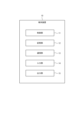
- FIG. 1 is a block diagram showing a schematic configuration of a system according to an embodiment of the present disclosure.
- FIG. 2 is a block diagram showing a schematic configuration of a terminal device.
- 1 is a block diagram showing a schematic configuration of an information processing device;
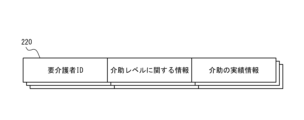
- FIG. 10 is a diagram illustrating an example of a nursing care database.
- 10 is a flowchart illustrating an operation of an information processing device according to an embodiment of the present disclosure.
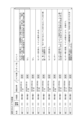
- FIG. 11 is a diagram illustrating an example of a user interface output by a terminal device.
- FIG. 11 is a diagram illustrating another example of a user interface output by the terminal device.
- FIG. 11 is a diagram illustrating another example of a user interface output by the terminal device.
- care management support system 1 according to an embodiment of the present disclosure will be described with reference to the drawings.
- the care management support system 1 includes a plurality of terminal devices 10 and an information processing device 20.
- the plurality of terminal devices 10 and the information processing device 20 are communicatively connected to a network 30 including, for example, a mobile communication network and the Internet.
- the multiple terminal devices 10 are any devices used by each user (e.g., care workers, caregivers, care managers, nurses, etc.).
- general-purpose electronic devices such as smartphones or tablet terminals, or dedicated electronic devices can be used as the terminal devices 10.
- FIG. 1 shows an example in which the care management support system 1 is equipped with three terminal devices 10, this is not limited to this.
- the care management support system 1 may be equipped with less than three terminal devices 10, or may be equipped with four or more terminal devices 10.
- the information processing device 20 is, for example, a server device installed in a data center or the like.
- the information processing device 20 is a server belonging to a cloud computing system or other computing system.
- the information processing device 20 is capable of communicating with the terminal device 10 via the network 30.
- FIG. 1 shows an example in which the care management support system 1 is equipped with one information processing device 20, this is not limited to this.
- the care management support system 1 may be equipped with two or more information processing devices 20.
- the information processing device 20 acquires information related to a preset level of assistance for the person requiring care.
- the information related to the level of assistance is information indicating the level of need for assistance for the person requiring care, as determined by an assessment.
- An assessment is an act of evaluating the condition or situation of the person requiring care, and is performed when using care services for the first time, when entering a care facility, or at any time.
- a person requiring care is someone who requires care or support in daily life.
- the information processing device 20 also acquires information on the history of assistance for the person requiring care. The information processing device 20 then notifies a suggestion when the history information relates to a level different from the level of assistance.
- the information processing device 20 acquires information related to the assistance level preset for the person requiring care and actual assistance information, and issues a suggestion if the actual information is at a level different from the assistance level.
- this embodiment improves technology related to care support in that it is possible to compare the actual information with the assistance level preset to see if it is at the same level and to issue appropriate suggestions to the user.
- the terminal device 10 includes a control unit 11, a storage unit 12, a communication unit 13, an input unit 14, and an output unit 15.
- the control unit 11 includes at least one processor, at least one dedicated circuit, or a combination of these.
- the processor is a general-purpose processor such as a CPU (central processing unit) or a GPU (graphics processing unit), or a dedicated processor specialized for a specific process.
- the dedicated circuit is, for example, an FPGA (field-programmable gate array) or an ASIC (application specific integrated circuit).
- the control unit 11 executes processes related to the operation of the terminal device 10 while controlling each part of the terminal device 10.
- the memory unit 12 includes at least one semiconductor memory, at least one magnetic memory, at least one optical memory, or a combination of at least two of these.
- the semiconductor memory is, for example, a random access memory (RAM) or a read only memory (ROM).
- the RAM is, for example, a static random access memory (SRAM) or a dynamic random access memory (DRAM).
- the ROM is, for example, an electrically erasable programmable read only memory (EEPROM).
- the memory unit 12 functions, for example, as a main memory device, an auxiliary memory device, or a cache memory.
- the memory unit 12 stores data used in the operation of the terminal device 10 and data obtained by the operation of the terminal device 10.
- the communication unit 13 includes at least one external communication interface.
- the communication interface may be either a wired or wireless communication interface.
- the communication interface is, for example, a LAN (Local Area Network) interface or a USB (Universal Serial Bus).
- the communication interface is, for example, an interface compatible with mobile communication standards such as LTE (Long Term Evolution), 4G (4th generation), or 5G (5th generation), or an interface compatible with short-range wireless communication such as Bluetooth (registered trademark).
- the communication unit 13 receives data used in the operation of the terminal device 10, and transmits data obtained by the operation of the terminal device 10.
- the input unit 14 includes at least one input interface.
- the input interface is, for example, a physical key, a capacitive key, a pointing device, or a touch screen that is integrated with a display.
- the input interface may also be, for example, a microphone that accepts voice input, or a camera that accepts gesture input.
- the input unit 14 accepts an operation to input data used in the operation of the terminal device 10.
- the input unit 14 may be connected to the terminal device 10 as an external input device.
- any method such as USB (Universal Serial Bus), HDMI (registered trademark) (High-Definition Multimedia Interface), or Bluetooth (registered trademark) can be used.
- the output unit 15 includes at least one output interface.
- the output interface is, for example, a display that outputs information as a video, or a speaker that outputs information as an audio.
- the display is, for example, an LCD (liquid crystal display) or an organic EL (electro luminescence) display.
- the output unit 15 displays and outputs data obtained by the operation of the terminal device 10.
- the output unit 15 may be connected to the terminal device 10 as an external output device.
- any method such as USB, HDMI (registered trademark), or Bluetooth (registered trademark) can be used.
- the functions of the terminal device 10 are realized by executing a program according to this embodiment on a processor equivalent to the terminal device 10. That is, the functions of the terminal device 10 are realized by software.
- the program causes a computer to execute the operations of the terminal device 10, thereby causing the computer to function as the terminal device 10. That is, the computer functions as the terminal device 10 by executing the operations of the terminal device 10 in accordance with the program.
- the program can be recorded on a computer-readable recording medium.
- Computer-readable recording media include non-transitory computer-readable media, such as a magnetic recording device, an optical disc, a magneto-optical recording medium, or a semiconductor memory.
- the program can be distributed, for example, by selling, transferring, or lending a portable recording medium, such as a DVD (digital versatile disc) or a CD-ROM (compact disc read only memory), on which the program is recorded.
- the program can also be distributed by storing the program in the storage of an external server and transmitting the program from the external server to other computers.
- the program can also be provided as a program product.
- Some or all of the functions of the terminal device 10 may be realized by a dedicated circuit equivalent to the control unit 11. In other words, some or all of the functions of the terminal device 10 may be realized by hardware.
- the information processing device 20 includes a control unit 21, a storage unit 22, and a communication unit 23.
- the control unit 21 includes at least one processor, at least one dedicated circuit, or a combination of these.
- the processor is a general-purpose processor such as a CPU or GPU, or a dedicated processor specialized for a specific process.
- the dedicated circuit is, for example, an FPGA or ASIC.
- the control unit 21 executes processes related to the operation of the information processing device 20 while controlling each part of the information processing device 20.
- the storage unit 22 includes at least one semiconductor memory, at least one magnetic memory, at least one optical memory, or a combination of at least two of these.
- the semiconductor memory is, for example, a RAM or a ROM.
- the RAM is, for example, an SRAM or a DRAM.
- the ROM is, for example, an EEPROM.
- the storage unit 22 functions as, for example, a main storage device, an auxiliary storage device, or a cache memory.
- the storage unit 22 stores data used in the operation of the information processing device 20 and data obtained by the operation of the information processing device 20.
- the storage unit 22 stores a care database 220.
- An example of the care database 220 is shown in FIG. 4.
- the care database 220 includes the ID of the person requiring care, information related to the level of assistance, and performance information.
- the care recipient ID is information that uniquely identifies the care recipient.
- the care recipient ID may be a number or symbol assigned to a resident of a care facility, such as a nursing home or elderly care facility.
- the care recipient is described as a resident of a facility, but the care recipient is not limited to this.
- the care recipient may be a person receiving home care.
- the information on the level of care includes at least one of independence, supervision, partial assistance, or full assistance for the specified assistance.
- independence refers to a state in which the care recipient can perform the actions set in the specified assistance by himself/herself without supervision by the care staff.
- Supervision refers to a state in which the care recipient can perform the actions set in the specified assistance by himself/herself, but the care staff supervises the actions just in case.
- Partial assistance refers to a state in which the care staff partially supports the actions of the care recipient, and full assistance is used when complete support is required.
- the support received from the care staff increases in the order of independence, supervision, partial assistance, and full assistance.
- the specified assistance includes, for example, excretion assistance.
- the specified assistance is excretion assistance.
- the specified assistance is not limited to excretion, and the specified assistance may be, for example, assistance related to moving, drinking water, taking medicine, grooming and hygiene, housework, and bathing.
- the information on the level of assistance may be information indicating the need for assistance for the care recipient during the day and at night.
- the information on the level of assistance may include daytime ADL and nighttime ADL.
- Daytime ADL may be information on at least one of independence, partial assistance, supervision, or full assistance during the day (e.g., 6:00-22:00).
- nighttime ADL may be information on at least one of independence, partial assistance, supervision, or full assistance during the night (e.g., 22:00-6:00 the next day).
- the performance information is information related to the performance of the assistance provided to each person requiring care during a specified period.
- the specified period is, for example, two weeks.
- the performance information includes information on the performance of the specific assistance provided in advance and performed in a schedule, as well as information on the performance of the assistance not scheduled in advance (hereinafter also referred to as non-regular assistance).
- non-regular assistance is assistance that was not originally scheduled in the schedule.
- non-regular assistance includes emergency excretion assistance or calls (nurse calls) from the person requiring care.
- the occurrence of non-regular assistance a specified number of times or more suggests that an appropriate schedule is not set for the person requiring care.
- a suggestion may be issued when non-regular assistance has occurred a first specified number of times in the past two weeks. That is, in this embodiment, the control unit 21 issues a suggestion when the performance information includes information on non-regular assistance.
- the first specified number of times is, for example, two times, but is not limited to this.
- the first specified number of times may be three or more times.
- the performance information may also include information related to the behavior or vital signs of each person requiring care during a specified period of time.
- the performance information may include the number of incontinence episodes during a specified period of time, the number of calls to urinate during a specified period of time, the number of missed calls during a specified period of time, the proportion of nighttime urination volumes (low/none) during a specified period of time, laxative intake status, duration of constipation, etc.
- the number of missed attempts is the number of times that a certain assistance was scheduled and a user such as a care staff member prepared to provide the assistance, but the assistance was not actually performed because it became unnecessary (hereinafter, also referred to as missed assistance).
- the care database 220 may store attribute information of the person requiring care.
- the care database 220 may include information such as the room, name, and level of care of the person requiring care.
- the care level is an arbitrary index that indicates the level of care or support required in daily life.
- the care level can be evaluated in seven stages, from care level 1 to 5, and support level 1 to 2.
- the care level may be an arbitrary index that indicates the level of care or support required in daily life, and includes those determined by the Japanese care level certification system as well as similar indexes determined in other countries.
- the care level may be information that can be classified into five stages (from mild to severe: "grade 5", "grade 4", “grade 3", "grade 2", and "grade 1") determined by the Korean system.
- the care level may be a seven-stage index (VV04-VV10) determined by the Dutch long-term care insurance.
- the care level may also be a five-stage index (care level 1 to 5) determined by the German public long-term care insurance. Note that the care level is a different index from the assistance level. Even for the same care level, assistance levels such as independence, partial assistance, supervision, or full assistance may be set for each specified assistance such as excretion.
- At least a portion of the data in the care database 220 is created or edited based on user input to multiple terminal devices 10 or information processing device 20. At least a portion of the data in the care database 220 may be created or edited automatically by a measuring device such as a wearable device carried by the person in need of care.
- the communication unit 23 includes at least one external communication interface.
- the communication interface may be either a wired or wireless communication interface.
- the communication interface is, for example, a LAN interface or a USB.
- the communication interface is, for example, an interface compatible with a mobile communication standard such as LTE, 4G, or 5G, or an interface compatible with short-range wireless communication such as Bluetooth (registered trademark).
- the communication unit 23 receives data used in the operation of the information processing device 20, and transmits data obtained by the operation of the information processing device 20.
- the functions of the information processing device 20 are realized by executing a program according to this embodiment in a processor corresponding to the control unit 21. That is, the functions of the information processing device 20 are realized by software.
- the program causes a computer to execute the operations of the information processing device 20, thereby causing the computer to function as the information processing device 20. That is, the computer functions as the information processing device 20 by executing the operations of the information processing device 20 in accordance with the program.
- the computer temporarily stores in the main storage device, for example, a program recorded on a portable recording medium or a program transmitted from a server.
- the computer then reads the program stored in the main storage device with a processor, and executes processing in accordance with the read program with the processor.
- the computer may read the program directly from the portable recording medium and execute processing in accordance with the program.
- the computer may execute processing in accordance with the received program each time it receives a program from an external server. Processing may be executed by a so-called ASP (application service provider) type service that does not transmit a program from the external server to the computer and achieves functions only by issuing execution instructions and obtaining results.
- Programs include information used for processing by a computer that is equivalent to a program. For example, data that is not a direct command to a computer but has properties that define computer processing falls under "something equivalent to a program.”
- Some or all of the functions of the information processing device 20 may be realized by a dedicated circuit equivalent to the control unit 21. In other words, some or all of the functions of the information processing device 20 may be realized by hardware.
- FIG. 5 is a flowchart showing an example of a method executed by the information processing device 20 according to this embodiment.
- Step S100 The control unit 21 of the information processing device 20 obtains information regarding the assistance level of each person requiring care from the care database 220.
- Step S200 The control unit 21 obtains information on the actual assistance provided to each person requiring care from the care database 220.
- Step S300 The control unit 21 determines whether the performance information is at a level different from the assistance level. In other words, the control unit 21 determines whether the performance information relates to a level different from the assistance level. Specifically, the control unit 21 determines whether the performance information exceeds or falls below the assistance level.
- the control unit 21 determines that the performance information is at a level different from the assistance level. Also, for example, when the information on the level of assistance for excretion of a certain care recipient is "supervision” or “independent,” and the performance information of the care recipient includes excretion with partial assistance or full assistance, the control unit 21 determines that the performance information is at a level different from the assistance level.
- the control unit 21 may determine that the performance information is at the same level as the assistance level.
- the control unit 21 may determine that the performance information is below the assistance level.
- the control unit 21 may further judge whether the assistance level associated with the care-requiring person matches the actual information based on the predetermined number of times stored in the storage unit 22 in association with the assistance level and the number of times of assistance included in the actual information. That is, when the actual information relates to a level different from the assistance level, the control unit 21 may judge whether the predetermined number of times associated with the assistance level differs from the number of times of assistance included in the actual information. Then, when it is determined that the predetermined number of times differs from the number of times of assistance, the control unit 21 may notify a suggestion. By making a judgment based on the number of times and not just the difference in level, a more appropriate suggestion can be notified.
- the control unit 21 compares these with the corresponding actual information to determine whether the actual information is at a level different from the assistance level. Specifically, for example, if the daytime ADL related to excretion of a certain care recipient is partial assistance, supervision, or independence, and the actual information of the daytime care recipient shows excretion with full assistance, the control unit 21 determines that the actual information is at a level different from the assistance level.
- the control unit 21 determines that the actual information is at a level different from the assistance level.
- step S400 If the performance information is at a level different from the assistance level, the process proceeds to step S400. On the other hand, if the performance information is at the same level as the assistance level, the process ends.
- Step S400 If the performance information is at a level different from the assistance level, the control unit 21 notifies a suggestion.
- the suggestion indicates that the performance information is at a level different from the assistance level. In other words, the control unit 21 notifies a suggestion based on the assistance level and the performance information.
- any method can be used to notify the suggestions.
- a user interface including the suggestions.
- Such a user interface may be provided by the terminal device 10 accessing the information processing device 20 or a web server via browser software.
- an application related to the care management support system 1 may be installed in the terminal device 10, and the terminal device 10 may communicate with the information processing device 20 or an application server via the application as appropriate to provide the user interface.
- user authentication processing, etc. may be performed as appropriate by the terminal device 10 and the information processing device 20, or the terminal device 10 and the web server.
- FIG. 6 is an example of a user interface displayed by the output unit 15 of the terminal device 10.
- the user interface 600 illustrated in FIG. 6 is provided to a user of a certain resident facility. As shown in FIG. 6, the user interface 600 includes a table 610.
- Table 610 shows various information corresponding to each person requiring care.
- the various information includes the room, name, level of care, daytime ADL, nighttime ADL, suggestions, number of incontinence episodes (last two weeks), number of calls to toilet (last two weeks), number of missed episodes (last two weeks), laxative dosage, period of constipation, and rate of nighttime urine volume (small/none). This information is generated based on the care database 220.
- the contents of the suggestions in table 610 are determined based on at least one of the performance information and the level of assistance for each person requiring care. As shown in FIG. 6, the contents of the suggestions include, for example, "ADL deviation,” “incontinence,” “calls,” “increased idle vibrations,” “increased partial assistance during the day,” and “increased partial assistance at night.”
- ADL Deviation is a suggestion that is notified when any of the following four conditions is met.
- the level of daytime assistance is partial assistance, supervision, or independence, and full assistance has been required for daytime excretion during the past week.
- the level of nighttime assistance is partial assistance, supervision, or independence, and the person has required full assistance to defecate at night within the past week.
- the level of daytime assistance is supervision or independence, and there has been some assistance with daytime excretion during the past week.
- the level of nighttime assistance is supervision or independence, and the child has had some assistance with nighttime excretion during the past week.
- Incontinence is a suggestion that is notified when incontinence (including involuntary leakage of urine, situations where the diaper leaks, and wetting oneself because one cannot make it to the toilet in time) has occurred a first predetermined number of times in the last two weeks. That is, in this embodiment, the control unit 21 notifies the suggestion when the historical information includes information regarding incontinence.
- the user who receives the suggestion can review the excretion assistance schedule (such as increasing the frequency).
- the first predetermined number of times is, for example, once, but is not limited to this. The first predetermined number of times may be two or more times.
- “Call” is a suggestion that is notified when the number of nurse calls for excretion care in the past week is equal to or greater than a second predetermined number. That is, in this embodiment, the control unit 21 notifies the suggestion when the performance information includes information related to calls.
- the second predetermined number is, for example, seven times, but is not limited to this. The second predetermined number may be eight times or more, or less than seven times.
- “Increased missed excretion” is a suggestion that is notified when the number of missed excretion care attempts per week has increased by a first predetermined percentage or more compared to the previous week.
- the first predetermined percentage is, for example, 50%, but is not limited to this.
- the first predetermined percentage may be greater than 50% or less than 50%. Because missed excretion care is likely to reduce productivity, by presenting a suggestion based on missed excretion care, it is possible to present a proposal to prevent a decrease in productivity.
- “Increased full assistance_daytime” is a suggestion that is notified when the daytime assistance level is partial assistance, supervision, or independence, and there has been full assistance-required excretion during the day in the past week.
- "Partial assistance increased - daytime” is a suggestion that is notified when the daytime assistance level is supervision or independence, and there has been partial assistance excretion during the day in the past week. The suggestion may be notified when the number of times of partial assistance or full assistance during the day per week has increased by more than a second predetermined percentage compared to the previous week.
- the second predetermined percentage is, for example, 50%, but is not limited to this.
- the second predetermined percentage may be greater than 50% or less than 50%.
- “Fully assisted increased_nighttime” is a suggestion that is notified when the nighttime assistance level is partial assistance, supervision, or independence, and there has been full assistance-required excretion at night in the past week.
- "Partial assistance increased_nighttime” is a suggestion that is notified when the level of assistance at night is supervision or independence, and there has been partial assistance excretion at night in the past week.
- the suggestion may be notified when the number of times of partial assistance or full assistance during the day per week has increased by a third predetermined percentage or more compared to the previous week.
- the third predetermined percentage is, for example, 50%, but is not limited to this.
- the third predetermined percentage may be greater than 50% or less than 50%.
- the third predetermined percentage is, for example, 50%, but is not limited to this.
- the third predetermined percentage may be greater than 50% or less than 50%.
- suggestions are notified by the user interface 600 illustrated in FIG. 6, and a list of suggestions for each of multiple individuals requiring care is displayed. In this manner, countermeasures for multiple individuals requiring care can be known in a timely manner.
- FIG. 7 is another example of a user interface displayed by the output unit 15 of the terminal device 10.
- the user interface 700 shown in FIG. 7 shows information about an individual care recipient (here, resident D).
- the user interface 700 may be displayed, for example, when a specific care recipient displayed in the table 610 of FIG. 6 is selected by clicking or tapping, etc.
- the user interface 700 includes objects 710 and graphs 720.
- the objects 710 include suggestions related to the care recipient, the number of incontinence episodes, the number of calls for excretion, the number of missed bowel movements, the period of constipation, daytime ADLs, and nighttime ADLs.
- the objects 710 include suggestions indicating that the ADLs related to excretion (hereinafter referred to as excretion ADLs) are out of sync with actual information, and suggestions indicating that partial assistance during the day and at night is increasing.
- excretion ADLs the ADLs related to excretion
- Graph 720 shows the number of times of assistance for each level of assistance during the most recent specified period.
- the specified period can be selected by the user.
- the number of times of assistance for each level includes the number of times of partial assistance, supervision, independence, non-excretion assistance, and assistance related to excretion confirmation.
- information on assistance at a level different from the set assistance level may be included as a suggestion.
- information on different levels of assistance may include statistical information such as graph 720.
- individual detailed information may be further included in the suggestion. For example, when a user clicks on any area of graph 720 (corresponding to a specific assistance), detailed information on the individual data included in that area may be displayed.
- Figure 8 is an example of detailed information to be included in the suggestion.
- Detailed information may include the person requiring care, the level of care, assistance classification, care staff, remarks entered by the care staff, etc., and may further include information on the level of assistance. This allows the user to easily understand the suggestions for each person requiring care through the user interface 700, and also to understand in detail the information on the past care records that are the basis for the suggestions.
- the information processing device 20 acquires information on the assistance level preset for the person requiring care and actual information on the assistance, and notifies the user of a suggestion if the actual information is at a level different from the assistance level.
- technology related to care support is improved in that the actual information can be compared to see if it is at the same level as the preset assistance level and appropriate suggestions can be notified to the user.
- there may be a discrepancy between the information set in advance and the actual situation such as when the preset assistance level is incorrect, or when the condition of the person requiring care has deteriorated or improved to the point where a higher level of assistance is required.
- the suggestions of this embodiment allow the user to modify and execute a more optimal care plan.
- the information on the level of assistance is expressed in four stages, namely, independent, supervision, partial assistance, or full assistance, for a specific assistance, but this is not limited to this.
- the level of assistance may be a level of gradually increasing (or decreasing) degrees of five or more stages, or it may be less than four stages.
- the information on the level of assistance may also be a numerical value (e.g., 1-4) representing each level, and a higher numerical value may indicate that a higher level of assistance is required.
- "a case in which the actual information relates to a level different from the level of assistance” corresponds to a case in which the assistance related to the actual information exceeds or falls short of the numerical value representing the level.
- the control unit 21 may determine that "a case in which the actual information relates to a level different from the level of assistance".
- the information regarding the level of assistance may include information for both daytime and nighttime.
- information regarding the level of assistance in this way for both daytime and nighttime, it is possible to present appropriate suggestions to a person requiring care who has different levels of assistance during the day and nighttime, for example.
- the nursing care database 220 is stored in the memory unit 22 of the information processing device 20, but this is not limited to the above.
- the nursing care database 220 may be stored in an external device such as a cloud server.
- the information processing device 20 acquires necessary information from the external device via the communication unit 23 in steps S100 and S200.
- a portion of the nursing care database 220 may be stored in an external device such as a cloud server.
- the information processing device 20 refers to the memory unit 22 and also acquires necessary information from the external device via the communication unit 23 in steps S100 and S200.
- an embodiment is also possible in which the configuration and operation of the information processing device 20 is distributed among multiple computers that can communicate with each other.
- an embodiment is also possible in which some or all of the components of the information processing device 20 are provided in the terminal device 10.
- the method according to this embodiment can be implemented by a care management support system 1 that includes one or more processors.
- the one or more processors may be provided in at least one of the terminal device 10 and the information processing device 20, and the method according to this embodiment may be executed by the one or more processors by performing distributed processing as necessary.
Landscapes
- Business, Economics & Management (AREA)
- Tourism & Hospitality (AREA)
- Health & Medical Sciences (AREA)
- Primary Health Care (AREA)
- Economics (AREA)
- General Health & Medical Sciences (AREA)
- Human Resources & Organizations (AREA)
- Marketing (AREA)
- Child & Adolescent Psychology (AREA)
- Strategic Management (AREA)
- Physics & Mathematics (AREA)
- General Business, Economics & Management (AREA)
- General Physics & Mathematics (AREA)
- Engineering & Computer Science (AREA)
- Theoretical Computer Science (AREA)
- Medical Treatment And Welfare Office Work (AREA)
Priority Applications (1)
| Application Number | Priority Date | Filing Date | Title |
|---|---|---|---|
| JP2025537798A JPWO2025028188A1 (https=) | 2023-08-01 | 2024-07-09 |
Applications Claiming Priority (2)
| Application Number | Priority Date | Filing Date | Title |
|---|---|---|---|
| JP2023125782 | 2023-08-01 | ||
| JP2023-125782 | 2023-08-01 |
Publications (1)
| Publication Number | Publication Date |
|---|---|
| WO2025028188A1 true WO2025028188A1 (ja) | 2025-02-06 |
Family
ID=94395139
Family Applications (1)
| Application Number | Title | Priority Date | Filing Date |
|---|---|---|---|
| PCT/JP2024/024810 Pending WO2025028188A1 (ja) | 2023-08-01 | 2024-07-09 | 方法、情報処理装置、及び非一時的なコンピュータ読取可能な媒体 |
Country Status (2)
| Country | Link |
|---|---|
| JP (1) | JPWO2025028188A1 (https=) |
| WO (1) | WO2025028188A1 (https=) |
Citations (3)
| Publication number | Priority date | Publication date | Assignee | Title |
|---|---|---|---|---|
| JP2003262535A (ja) * | 2002-12-25 | 2003-09-19 | Toshiba Corp | 福祉支援システム |
| WO2020003953A1 (ja) * | 2018-06-26 | 2020-01-02 | コニカミノルタ株式会社 | コンピューターで実行されるプログラム、情報処理装置、および、コンピューターで実行される方法 |
| WO2023017576A1 (ja) * | 2021-08-11 | 2023-02-16 | 芙蓉開発株式会社 | 介護支援プログラム、介護用支援装置及び介護用支援システム |
-
2024
- 2024-07-09 JP JP2025537798A patent/JPWO2025028188A1/ja active Pending
- 2024-07-09 WO PCT/JP2024/024810 patent/WO2025028188A1/ja active Pending
Patent Citations (3)
| Publication number | Priority date | Publication date | Assignee | Title |
|---|---|---|---|---|
| JP2003262535A (ja) * | 2002-12-25 | 2003-09-19 | Toshiba Corp | 福祉支援システム |
| WO2020003953A1 (ja) * | 2018-06-26 | 2020-01-02 | コニカミノルタ株式会社 | コンピューターで実行されるプログラム、情報処理装置、および、コンピューターで実行される方法 |
| WO2023017576A1 (ja) * | 2021-08-11 | 2023-02-16 | 芙蓉開発株式会社 | 介護支援プログラム、介護用支援装置及び介護用支援システム |
Also Published As
| Publication number | Publication date |
|---|---|
| JPWO2025028188A1 (https=) | 2025-02-06 |
Similar Documents
| Publication | Publication Date | Title |
|---|---|---|
| Pintye et al. | Defining gaps in pre-exposure prophylaxis delivery for pregnant and post-partum women in high-burden settings using an implementation science framework | |
| While et al. | Nursing and information and communication technology (ICT): a discussion of trends and future directions | |
| US12176077B1 (en) | Patient tracking and dynamic updating of patient profile | |
| Parmanto et al. | iMHere: a novel mHealth system for supporting self-care in management of complex and chronic conditions | |
| US7612679B1 (en) | Computerized method and system for providing alerts from a multi-patient display | |
| Manias et al. | Communicating about the management of medications as patients move across transition points of care: an observation and interview study | |
| US20170024523A1 (en) | Requirement Forecast for Health Care Services | |
| JP6608491B2 (ja) | 医療支援システム及び医療支援方法 | |
| AU2017313432A1 (en) | System and method for remote provision of healthcare | |
| Madubuonwu et al. | How telehealth can be used to improve maternal and child health outcomes: a population approach | |
| Lester et al. | Managing crisis: the role of primary care for people with serious mental illness | |
| WO2025028188A1 (ja) | 方法、情報処理装置、及び非一時的なコンピュータ読取可能な媒体 | |
| US20190392286A1 (en) | Integrated assistance platform | |
| Chin et al. | Women's health and behavioral health issues in health care reform | |
| JP7711260B2 (ja) | ケアマネジメント支援方法、情報処理装置、システム、及びプログラム | |
| AU2016101455A4 (en) | System and method for remote provision of healthcare | |
| US11189376B1 (en) | Patient tracking and dynamic updating of patient profile | |
| Erickson | A descriptive correlational study of rate and determinants of parental mhealth adherence to symptom home monitoring for infants with congenital heart disease during the single ventricle interstage period: The Domain Study | |
| WO2025028190A1 (ja) | 方法、情報処理装置、及び非一時的なコンピュータ読取可能な媒体 | |
| JP2024124393A (ja) | 方法、情報処理装置、及びプログラム | |
| Antony et al. | Predictors of acute care transfers from skilled nursing facilities: Recommendations for preventing unnecessary hospitalization | |
| Pherson et al. | Medication management through pharmacist‐provided home‐based services | |
| WO2025164134A1 (ja) | 方法、情報処理装置、及びプログラム | |
| JP7818939B2 (ja) | 業務支援装置、業務支援システム、業務支援方法、及び業務支援プログラム | |
| Latter et al. | ActMed: Improving access to medicines to support palliative care at home: challenges and opportunities |
Legal Events
| Date | Code | Title | Description |
|---|---|---|---|
| 121 | Ep: the epo has been informed by wipo that ep was designated in this application |
Ref document number: 24848847 Country of ref document: EP Kind code of ref document: A1 |
|
| ENP | Entry into the national phase |
Ref document number: 2025537798 Country of ref document: JP Kind code of ref document: A |
|
| WWE | Wipo information: entry into national phase |
Ref document number: 2025537798 Country of ref document: JP |
|
| NENP | Non-entry into the national phase |
Ref country code: DE |