WO2025018409A1 - 支援システム、プログラム、薬剤払出システム - Google Patents
支援システム、プログラム、薬剤払出システム Download PDFInfo
- Publication number
- WO2025018409A1 WO2025018409A1 PCT/JP2024/025874 JP2024025874W WO2025018409A1 WO 2025018409 A1 WO2025018409 A1 WO 2025018409A1 JP 2024025874 W JP2024025874 W JP 2024025874W WO 2025018409 A1 WO2025018409 A1 WO 2025018409A1
- Authority
- WO
- WIPO (PCT)
- Prior art keywords
- drug dispensing
- drug
- data
- dispensing
- processing unit
- Prior art date
- Legal status (The legal status is an assumption and is not a legal conclusion. Google has not performed a legal analysis and makes no representation as to the accuracy of the status listed.)
- Pending
Links
Images




Classifications
-
- A—HUMAN NECESSITIES
- A61—MEDICAL OR VETERINARY SCIENCE; HYGIENE
- A61J—CONTAINERS SPECIALLY ADAPTED FOR MEDICAL OR PHARMACEUTICAL PURPOSES; DEVICES OR METHODS SPECIALLY ADAPTED FOR BRINGING PHARMACEUTICAL PRODUCTS INTO PARTICULAR PHYSICAL OR ADMINISTERING FORMS; DEVICES FOR ADMINISTERING FOOD OR MEDICINES ORALLY; BABY COMFORTERS; DEVICES FOR RECEIVING SPITTLE
- A61J3/00—Devices or methods specially adapted for bringing pharmaceutical products into particular physical or administering forms
Definitions
- the present invention relates to a support system that assists in the dispensing of medicines.
- a system includes multiple drug dispensing systems that execute the process of dispensing drugs based on prescription information (see Patent Document 1).
- Patent Document 1 A system is known that includes multiple drug dispensing systems that execute the process of dispensing drugs based on prescription information.
- a technique is also known in which the prescription information input into the one drug dispensing system is transferred to the other drug dispensing system.
- drugs dispensed based on prescription information for multiple patients belonging to a preset group may be handled on a group basis.
- drugs dispensed based on prescription information for multiple patients hospitalized in the same ward may be transported to that ward together. Therefore, if prescription information for multiple patients belonging to the same group is input separately into multiple drug dispensing systems, problems may arise, such as the task of consolidating drugs dispensed from the multiple drug dispensing systems being a burden on the user and the risk of human error occurring in this task.
- the object of the present invention is to provide a support system, program, and drug dispensing system that can efficiently utilize multiple drug dispensing systems while minimizing the increase in the user's workload.
- the support system includes an allocation processing unit that allocates drug dispensing data to one of a plurality of drug dispensing systems, and a transfer processing unit that transfers the unprocessed drug dispensing data allocated to one of the drug dispensing systems to another of the drug dispensing systems on a group basis to which the drug dispensing data belongs when a preset transfer condition is satisfied.
- the program of the present invention is a program for causing one or more processors to execute the steps of assigning drug dispensing data to one of multiple drug dispensing systems, and, when a preset transfer condition is satisfied, transferring the unprocessed drug dispensing data assigned to one of the drug dispensing systems to another of the drug dispensing systems on a group basis to which the drug dispensing data belongs.
- the drug dispensing system is a drug dispensing system that includes a dispensing processing unit that dispenses drugs based on drug dispensing data, and includes a transfer processing unit that transfers the unprocessed drug dispensing data assigned to one of the drug dispensing systems to another of the drug dispensing systems in units of the group to which the drug dispensing data belongs when a preset transfer condition is satisfied.
- the present invention provides a support system, program, and drug dispensing system that can efficiently utilize multiple drug dispensing systems while minimizing the increase in the user's workload.
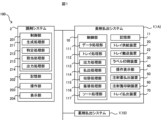
- FIG. 1 is a block diagram showing the configuration of a support system according to an embodiment of the present invention.
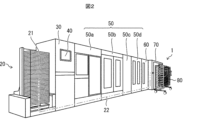
- FIG. 2 is a diagram showing the external appearance of the medicine dispensing system according to the embodiment of the present invention.
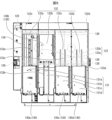
- FIG. 3 is a diagram showing a configuration of a first medicine dispensing device of the medicine dispensing system according to the embodiment of the present invention.
- FIG. 4 is a diagram showing a configuration of a first medicine dispensing device of the medicine dispensing system according to the embodiment of the present invention.
- FIG. 5 is a diagram showing a configuration of a first medicine dispensing device of the medicine dispensing system according to the embodiment of the present invention.
- FIG. 6 is a diagram showing an example of a cart used in the assistance system according to the embodiment of the present invention.
- FIG. 1 is a block diagram showing the configuration of a support system according to an embodiment of the present invention.
- FIG. 2 is a diagram showing the external appearance of the medicine dispensing system according to the embodiment of the present invention.
- FIG. 7 is a diagram showing an example of a cart used in the assistance system according to the embodiment of the present invention.
- FIG. 8 is a flowchart showing an example of a medicine dispensing data allocation process executed in the support system according to the embodiment of the present invention.
- FIG. 9 is a flowchart showing an example of a dispensing control process executed in the medicine dispensing system according to the embodiment of the present invention.
- FIG. 10 is a flowchart showing an example of an automatic load balancing process executed in the medicine dispensing system according to the embodiment of the present invention.
- FIG. 11 is a diagram showing an example of a result of the processing executed in the support system according to the embodiment of the present invention.
- FIG. 12 is a diagram showing an example of a result of the processing executed in the support system according to the embodiment of the present invention.
- the support system 100 includes a plurality of drug dispensing systems 1 and a dispensing system 2.
- the users of the support system 100 according to this embodiment are medical personnel such as doctors, pharmacists, technicians, and nurses.
- drugs such as injection drugs before being injected into an infusion bag are dispensed in a state where they are contained in a drug container such as an ampule or a vial.
- the drugs handled by the support system 100 are not limited to injection drugs, and may be tablets or powders.
- each drug dispensing system 1 and the dispensing system 2 are connected to be able to communicate wirelessly or wired.
- each drug dispensing system 1 is also connected to be able to communicate wirelessly or wired.
- each drug dispensing system 1 is identified by identification information such as a serial number assigned in advance to the drug dispensing system 1. Note that the execution entity of various processes in the support system 100 described below is merely an example, and it is sufficient that the various processes are executed by the support system 100 as a whole, and the execution entity of the various processes can be changed.
- the process executed by the control unit 201 described later in this embodiment may be executed by the control unit 10 described later, and the process executed by the control unit 10 described later may be executed by the control unit 201 described later.
- the various processes executed in the support system 100 may be executed by one or more processors.
- the dispensing system 2 is a computer including a control unit 201, a storage unit 202, an operation unit 203, and a display unit 204.
- the operation unit 203 is an operation means such as a keyboard, a mouse, and a touch panel for the control unit 201 to receive user operations.
- the display unit 204 is a display means such as a liquid crystal display or an organic EL display for presenting information to a user.
- the control unit 201 has one or more processors and memories that execute various processes according to various programs.
- the storage unit 202 is a storage means such as a hard disk that stores various programs and various information for causing the control unit 201 to execute various processes. Specifically, the storage unit 202 stores prescription data and drug dispensing data, which will be described later.
- the prescription data is registered in another system, such as an electronic medical record, and input to the dispensing system 2.
- the prescription data may also be input to the dispensing system 2 in response to a user operation using the operation unit 203 and the display unit 204 in the dispensing system 2.
- the control unit 201 stores the prescription data input to the dispensing system 2 in the memory unit 202.
- Prescription data includes information such as prescription number, patient name, ward name, drug name, number of doses, dosage, usage, administration time, and administration method.
- Drug dispensing data includes information such as prescription number, patient name, ward name, drug name, dispensed amount, administration time, and administration method.
- Prescription number is prescription identification information for identifying prescription data.
- Patient name is patient identification information for identifying the patient (the person taking the drug).
- Ward name is ward identification information for identifying the ward in which the patient is hospitalized.
- Drug name is drug identification information for identifying a drug such as an injection drug.
- Number of doses is the number of times a drug is administered to a patient in a preset unit period such as one day.
- Dispensed amount is information indicating the required amount of drug.
- Administration time is information including either or both of the date and time the drug is administered to the patient.
- Administration method is information indicating the method of administering the drug to the patient, such as infusion or injection.
- the control unit 201 includes various processing units such as a generation processing unit 211, a specific processing unit 212, an allocation processing unit 213, and an output processing unit 214.
- the control unit 201 functions as various processing units by executing various processes according to the programs stored in the storage unit 202 using a processor.
- the generation processing unit 211 When the current time reaches a preset closing time, the generation processing unit 211 completes the acceptance of prescription data.
- the generation processing unit 211 may also complete the acceptance of prescription data when a specific user operation is performed to start closing processing at any timing. In this case, the timing at which the user operation is performed is the closing processing time.
- the generation processing unit 211 selects some or all of the prescription data accepted during a preset period as the target for closing processing.
- the preset period is the period from the previous closing processing time to the current closing processing time.
- the selection of prescription data to be the target for the closing processing may be performed on a prescription data basis, or may be performed on a group basis such as a ward basis.
- the generation processing unit 211 selects prescription data corresponding to one or more wards selected by a user operation as the target for the closing processing.
- the generation processing unit 211 may also select prescription data corresponding to wards that are preset for each closing processing time as the target for the closing processing.
- the generation processing unit 211 then generates drug dispensing data corresponding to each prescription data based on each prescription data selected as the target of the closing process, and stores the prescription data and the drug dispensing data in association with each other in the storage unit 202.
- the identification processing unit 212 identifies the group to which the drug dispensing data belongs based on ward identification information such as the ward name included in the drug dispensing data.
- the ward name included in the drug dispensing data is group identification information indicating the group to which the drug dispensing data belongs, and drug dispensing data corresponding to the same ward name belongs to the same group. Two or more wards may be collectively classified into one group.
- the identification processing unit 212 may execute a process of classifying the drug dispensing data by the ward name included in the drug dispensing data, and may store each of the drug dispensing data in the storage unit 202 in association with group identification information such as a group number indicating the group to which the drug dispensing data is classified.
- the ward name indicates the name of a building, floor, or area to which the drug corresponding to the drug dispensing data is delivered.
- the ward name may also be the name of a building, floor, or area in a nursing home where the patient resides.
- the ward name may also be the name of the patient's home address or area.
- the allocation processing unit 213 allocates the drug dispensing data to one of the multiple drug dispensing systems 1 on a group basis. Specifically, in the dispensing system 2, allocation information indicating the correspondence between each ward name and identification information such as a unit number for identifying each drug dispensing system 1 is stored in the storage unit 202. Then, based on the allocation information, the allocation processing unit 213 allocates the drug dispensing data to the drug dispensing system 1 corresponding to the ward name included in the drug dispensing data, and stores in the storage unit 202 allocation correspondence information indicating the correspondence between the drug dispensing data and the unit number of the drug dispensing system 1 to which the drug dispensing data is allocated.
- the output processing unit 214 outputs the drug dispensing data stored in the memory unit 202 to one of the drug dispensing systems 1 in groups. Specifically, the output processing unit 214 outputs the drug dispensing data in groups to the drug dispensing system 1 to which the drug dispensing data is assigned based on the allocation correspondence information. In this embodiment, a case will be described in which the drug dispensing data is generated based on the prescription data in the dispensing system 2 and the drug dispensing data is output to the drug dispensing system 1. Meanwhile, in another embodiment, the prescription data input to the dispensing system 2 may be output to the drug dispensing system 1 as drug dispensing data.
- both the prescription data and the drug dispensing data may be output from the dispensing system 2 to the drug dispensing system 1.
- the output processing unit 214 may output data identification information such as a prescription ID for identifying the drug dispensing data to the drug dispensing system 1 to which the drug dispensing data is assigned, and the drug dispensing system 1 may acquire the drug dispensing data corresponding to the data identification information from the memory unit 202 of the dispensing system 2.
- the support system 100 is provided with two drug dispensing systems 1, but the support system 100 may be provided with three or more drug dispensing systems 1.
- the two drug dispensing systems 1 may be referred to below as drug dispensing systems 1A and 1B.
- the drug dispensing system 1 is a system that automatically dispenses drugs such as injections based on drug dispensing data acquired from the dispensing system 2.
- the drug dispensing system 1 may be a tablet dispensing device that dispenses tablets, a powder dispensing device that packages and dispenses powdered medicine, or a packaging device that packages and dispenses either or both of tablets and powdered medicine, etc.
- the drug dispensing system 1 includes a control unit 10, a memory unit 11, a tray supply device 20, a tray transport device 22, a label printing device 30, an operation display unit 40, an injection drug dispensing device 50, an injection prescription printing device 60, and a tray dispensing device 70.
- a cart 80 used to transport drugs and the like dispensed from the drug dispensing system 1 to a hospital ward is detachable from the tray dispensing device 70.
- the tray supply device 20 supplies trays 21 that contain the medicines, etc., dispensed by the medicine dispensing system 1 to the tray transport device 22.
- the trays 21 are an example of medicine containing members that contain medicines, etc., corresponding to each patient.
- the tray conveying device 22 has a conveying path that conveys the tray 21 supplied from the tray supplying device 20 to the tray dispensing device 70 via the label printing device 30, the injection drug dispensing device 50, and the injection prescription printing device 60. Then, on the tray 21 conveyed by the tray conveying device 22, labels, medicines, injection prescriptions, etc. dispensed from the label printing device 30, the injection drug dispensing device 50, and the injection prescription printing device 60 are placed while moving on the conveying path.
- the label printing device 30 prints preset label printing information on a label based on the drug dispensing data, and dispenses the label onto a tray 21 on the transport path of the tray transport device 22.
- the label printing information includes information such as the prescription number, patient name, ward name, drug name, dosage, usage, and administration method.
- the label is affixed to an infusion container such as an infusion bag into which the drug dispensed from the drug dispensing system 1 has been injected.
- the operation display unit 40 is a touch panel or the like that displays various information and accepts various user operations.
- the operation display unit 40 displays information such as the operating status of the medicine dispensing system 1.
- the operation display unit 40 also accepts user operations such as starting or stopping the operation of the medicine dispensing system 1.
- the injection drug dispensing device 50 dispenses drugs such as injection drugs corresponding to each patient onto a tray 21 on the transport path of the tray transport device 22 based on the drug dispensing data.
- the injection drug dispensing device 50 includes a returned drug dispensing device 50a, a first drug dispensing device 50b, a second drug dispensing device 50c, and a bottle dispensing device 50d.
- the returned drug dispensing device 50a stores drugs (returned drugs) returned from hospital wards, etc., after identifying the expiration date, and dispenses the returned drugs to the tray 21 if they can be reused.
- the first drug dispensing device 50b dispenses a first type of drug stored in advance by a user to the tray 21.
- the second drug dispensing device 50c dispenses a second type of drug, such as drugs that cannot be managed by the first drug dispensing device 50b (e.g. drugs with non-standard shapes), drugs used for complicated diseases, or relatively expensive drugs, to the tray 21.
- the bottle dispensing device 50d dispenses bottles that contain liquid drugs to the tray 21.
- the drug dispensing system 1 may be equipped with at least one of these injection drug dispensing devices 50.
- FIG. 3 is a diagram showing the state in which the exterior shown in FIG. 2 has been removed in order to visualize the inside of the first drug dispensing device 50b.
- the first drug dispensing device 50b is equipped with a drug cassette handling device 200 that dispenses drugs contained in drug cassettes Ca.
- the drug cassette handling device 200 is equipped with a cassette shelf 110, a specific processing unit 120, a cassette holding unit 130, a cassette transport unit 140, and a drug moving unit 150.
- FIG. 4 is a front view showing the configuration of the cassette shelf 110, the specific processing unit 120, and the cassette holding unit 130.
- the cassette shelf 110 is a shelf that stores m cassettes Ca that contain medicines. m is an integer of 2 or 3 or more.
- the direction in which the cassettes Ca are inserted into the cassette shelf 110 may be referred to as the depth direction.
- the direction perpendicular to the depth direction in a plane parallel to the horizontal plane may be referred to as the width direction.
- the cassette shelf 110 stores the cassettes Ca in a matrix in a vertical plane.
- Each of the m cassettes Ca contains medicines by medicine type in advance.
- at least two cassettes Ca contain medicines of different medicine types.
- multiple cassettes Ca may contain medicines of the same medicine type.
- the medicines contained in the cassettes Ca are medicines contained in containers such as ampoules or vials.
- the memory unit 11 also stores correspondence data indicating the relationship between cassette-specific information for identifying the cassette Ca and the type of drug contained in the cassette Ca.
- the correspondence data also stores the storage position of the cassette Ca on the cassette shelf 110 and the expiration date of the drug contained in the cassette Ca, in correspondence with each cassette-specific information for identifying the cassette Ca.
- the expiration date is information that is read from a barcode or the like attached to the drug, or is input by user operation.
- FIG. 5 is a plan view of the cassette holding section 130.
- the specific processing section 120 includes a drug transport section 121 and a specific camera 122.
- lighting members 128 and 129 are provided near the specific camera 122 to illuminate the cassette Ca when the cassette Ca is photographed by the specific camera 122.
- the drug delivery unit 121 has an adsorption mechanism 121a, a moving mechanism 121b, and a slider 121c.
- the adsorption mechanism 121a is an adsorption mechanism that adsorbs the injection drug and can be extended vertically downward.
- the moving mechanism 121b is a mechanism that moves the adsorption mechanism 121a in the depth direction and is capable of reciprocating in the width direction.
- the moving mechanism 121b moves reciprocating in the width direction along the slider 121c.
- the identification camera 122 is a camera provided below the cassette shelf 110.
- the identification camera 122 takes images to identify the position of the medicine to be removed from the cassette Ca.
- the first medicine dispensing device 50b is provided with two identification cameras 122a and 122b as the identification camera 122.
- the identification camera 122a is provided directly above the center of the boundary line between the processing positions 132a and 132b described below, and takes an image of the imaging area 122c including the processing positions 132a and 132b.
- the identification camera 122b is provided directly above the center of the boundary line between the processing positions 132c and 132d described below, and takes an image of the imaging area 122d including the processing positions 132c and 132d. Therefore, in the first medicine dispensing device 50b, the two identification cameras 122a and 122b can capture images of the inside of the cassettes Ca located at the four processing positions 132a to 132d.
- the specific processing unit 120 performs specific processing on the medicine contained in the cassette Ca by controlling the specific processing unit 120 by the control unit 10.
- the specific processing includes at least a process of taking out the cassette Ca containing the medicine to be dispensed from the cassette shelf 110 and identifying the position of the medicine in the cassette Ca based on the image captured by the identification camera 122.
- the specific processing unit 120 is also provided with a reading camera (not shown) that captures the expiration date of the medicine written on the medicine, and the specific processing also includes a process of identifying the expiration date and type of the medicine based on the image captured by the reading camera (not shown).
- the specific processing unit 120 stores the image captured by the reading camera (not shown) in the memory unit 11, and the control unit 10 can execute an image output process that displays the captured image stored in the memory unit 11 on the operation display unit 40, etc.
- the identification processing unit 120 stores the captured image in the storage unit 11 in association with the drug dispensing data or prescription data that is to be dispensed when the captured image is captured.
- the control unit 10 displays the captured image corresponding to any drug dispensing data or prescription data selected as a display target, for example, in response to a user operation, on a display device such as the operation display unit 40.
- the control unit 10 may also display, on a display device such as the operation display unit 40, a list of identification information such as prescription ID of the drug dispensing data or prescription data that is to be dispensed on any date or period, the captured image, and a drug dispensing history such as the number of drugs dispensed. This allows the user to check the drug that has actually been dispensed based on the drug dispensing data or prescription data by the captured image.
- the type of drug in the identification process may be identified based on drug identification information read from the drug by a barcode reader (not shown).
- the cassette holding unit 130 can temporarily hold up to n cassettes Ca that are to undergo specific processing by the specific processing unit 120, among the cassettes Ca stored in the cassette shelf 110.
- the value of n may be 2 or more and less than m (m>n ⁇ 2), and in this embodiment, the value of n is 4.
- the cassette holding unit 130 is a collection of four cassette holding units 130a to 130d. Note that the number of cassette holding units 130 is not limited to four, but is equal to the value of n described above, that is, the number of cassettes Ca that the cassette holding unit 130 can hold.
- the cassette Ca is held by being placed on one of the cassette holding units 130a to 130d.
- drive mechanisms 133a to 133d that reciprocate the cassette holding units 130a to 130d in the depth direction are provided below the cassette holding units 130a to 130d, respectively.
- the cassette holding unit 130 has a cassette receiving position 131 that receives the cassette Ca from the cassette transfer unit 140, and a processing position 132 where the cassette Ca undergoes a specific process by the specific processing unit 120.
- each of the cassette holding units 130a to 130d has a cassette receiving position 131a to 131d and a processing position 132a to 132d.
- the cassette holding units 130a to 130d reciprocate in the depth direction by the drive mechanisms 133a to 133d, thereby reciprocating the cassette Ca between the cassette receiving positions 131a to 131d and the processing positions 132a to 132d. In other words, the cassette holding unit 130 moves the cassette Ca horizontally toward the processing position 132.
- cassette holding unit 130b is located at processing position 132b, and the other cassette holding units 130a, 130c, and 130d are located at cassette receiving positions 131a, 131c, and 131d, respectively.
- each of cassette holding units 130a to 130d can reciprocate cassette Ca independently of the others.
- two or more of cassette holding units 130a to 130d may be located at the corresponding processing positions 132a to 132d.
- the cassette holding unit 130a is provided with a load cell 134 for measuring the weight of the cassette Ca.
- the weight of the cassette Ca itself i.e., not including the weight of the drug
- the control unit 10 can execute a calculation process to calculate the number of drugs contained in the cassette Ca, i.e., the drug inventory in the first drug dispensing device 50b, by measuring the weight of the entire cassette Ca using the load cell 134.
- the calculation process is executed, for example, in the evening of a certain day, after all the drug dispensing processes for the day's drugs are completed and each cassette Ca is filled with drugs, until the drug dispensing process for the drugs is started the next morning.
- control unit 10 stores the drug inventory in each cassette Ca calculated by the calculation process in the correspondence data stored in the memory unit 11. Furthermore, even if the drug is returned to the cassette Ca, the control unit 10 executes the calculation process for that cassette Ca and stores the drug inventory in that cassette Ca in the correspondence data stored in the storage unit 11.
- the load cell 134 may be provided not only in the cassette holding unit 130a, but also in each of the cassette holding units 130b to 130d.
- the cassette transfer unit 140 transfers the cassette Ca between the cassette shelf 110 and the cassette holding unit 130 in order to replace the cassette Ca held in the cassette holding unit 130.
- the cassette transfer unit 140 pulls out the cassette Ca from the cassette shelf 110, transfers it vertically, and places it on the cassette holding unit 130 at the cassette receiving position 131.
- the cassette transfer unit 140 transfers the cassette Ca containing the drug to the cassette holding unit 130 based on the drug dispensing data and the correspondence data.
- the drug dispensing data related to administration to one patient may include multiple drug recipes (combinations).
- the cassette transfer unit 140 may transfer each cassette Ca containing the drugs to the cassette holding unit 130.
- the drug moving unit 150 moves drugs contained in cassettes Ca located at processing positions 132a to 132d in the cassette holding unit 130, which have undergone specific processing by the specific processing unit 120, to the tray 21.
- the drug moving unit 150 adsorbs the drugs contained in the cassette Ca and moves the drugs to the tray 21.
- the configuration of the drug moving unit 150 is not limited to that described here, as long as it is capable of moving drugs from cassette Ca to the tray 21.
- the injection prescription printing device 60 prints preset injection prescription printing information on an injection prescription based on the drug dispensing data, and dispenses the injection prescription onto a tray 21 on the transport path of the tray transport device 22.
- the injection prescription printing information includes information such as the patient's name, ward name, room number, drug name, administration method, administration route or site, dosage, administration time, and administration speed, and the injection prescription printing information is information included in the drug dispensing data.
- the tray dispensing device 70 dispenses the tray 21 after one or more of the labels, injection drugs (medicines), and injection prescriptions have been stored therein, to the cart 80 attached to the tray dispensing device 70.
- the tray 21 may be provided with multiple divided trays as storage sections for storing medicines. In this case, it is also possible to store multiple medicines indicated in the medicine dispensing data for a certain patient in divided trays divided according to the administration time of the medicine. Specifically, it is possible to store medicines administered in the morning of the day in the first divided tray, medicines administered in the afternoon in the second divided tray, and medicines administered in the evening in the third divided tray. In other words, it is possible to store each administration amount of medicine, etc. in each divided tray provided on the tray 21.
- the cart 80 is a portable storage shelf equipped with multiple tray placement sections 81 on which multiple trays 21 can be placed.
- the cart 80 is attached to the tray dispensing device 70 by inserting at least a portion of it into the tray dispensing device 70.
- the control unit 10 controls the tray dispensing device 70 to dispense each of the trays 21 onto each of the tray placement sections 81 of the cart 80 so that one tray 21 is placed on each tray placement section 81.
- the cart 80 with at least one tray 21 placed on it is then removed from the tray dispensing device 70 by the user and transported to the destination hospital ward, etc.
- the control unit 10 has one or more processors and memories that execute various processes according to various programs.
- the storage unit 11 is a storage means such as a hard disk that stores various programs and various information for causing the control unit 10 to execute various processes.
- the storage unit 11 also stores a drug master that includes drug identification information such as the drug name of each drug and information such as the weight per unit amount of the drug.
- the drug master includes not only information on drugs that are stored in a cassette Ca provided in the drug dispensing system 1 and can be dispensed from the drug dispensing system 1, but also information on drugs that are not stored in the cassette Ca provided in the drug dispensing system 1 but can be handled by the drug dispensing system 1.
- the drug master also includes injection drug shape information corresponding to each drug.
- the injection drug shape information is data on the shape of a packaging container that contains the drug, and is data indicating the size, diameter, volume, etc. of the packaging container.
- the control unit 10 includes various processing units such as a data processing unit 111, a tray processing unit 112, an output processing unit 113, a dispensing processing unit 114, a storage processing unit 115, a transfer processing unit 116, and a sorting processing unit 117.
- the control unit 10 functions as the various processing units by executing various processes according to the programs stored in the memory unit 11 using a processor.
- the data processing unit 111 acquires drug dispensing data from the dispensing system 2 and stores it in the storage unit 11. Specifically, in the support system 100, the drug dispensing data stored in the storage unit 202 in the dispensing system 2 is assigned to one of the drug dispensing systems 1 in units of groups such as wards, and output to the drug dispensing system 1. Therefore, in each drug dispensing system 1, the data processing unit 111 acquires from the dispensing system 2 the drug dispensing data stored in the storage unit 202 of the dispensing system 2 that is assigned to the drug dispensing system 1, and stores it in the storage unit 11.
- each drug dispensing system 1 when the drug dispensing data stored in the storage unit 11 is released from being assigned to the drug dispensing system 1, the data processing unit 111 removes the drug dispensing data from the storage unit 11, for example, to exclude the drug dispensing data from being subjected to drug dispensing processing in the drug dispensing system 1.
- the tray processing unit 112 acquires placement order information (described later) from the memory unit 11 and determines the position for each tray 21 on the cart 80. For example, the tray processing unit 112 specifically determines the placement position for each tray 21 from the top to the bottom of the cart 80, and from the right to the left as viewed from the tray dispensing device 70.
- the drug dispensing system 1 can be set so that trays 21 corresponding to multiple groups are not placed on the same cart 80.
- the drug dispensing system 1 has a group-based exchange function that sets the timing of changing the group to which the drug dispensing data to be executed belongs as the timing of exchanging the cart 80.
- the control unit 10 can switch between enabling and disabling the group-based exchange function in response to a user operation.
- the tray processing unit 112 determines the placement position of each of the trays 21 so that only the trays 21 of the drug dispensing data belonging to the same group are placed on the same cart 80.
- the tray processing unit 112 determines the placement position of each of the trays 21 so that the trays 21 of the drug dispensing data belonging to different groups are not placed on the same cart 80.
- the tray processing unit 112 stores the determined placement position of the tray 21 in the memory unit 11 as tray position information.
- the tray processing unit 112 determines the placement position of the tray 21 for each cart 80 and stores this as tray position information in the memory unit 11.
- the memory unit 11 In addition to the aforementioned drug dispensing data and tray position information, the memory unit 11 also stores tray shape information, tray placement section information, placement order information, and free space information.
- Tray shape information is data about the shape of the storage section of the tray 21, and indicates the number, size, and volume of the divided trays, etc.
- the tray loading section information is data about the tray loading section 81 of the cart 80, and indicates the number of trays that can be loaded on the cart 80, the number of tiers, the number of rows, etc.
- the number of trays that can be loaded essentially means the maximum number of trays 21 that can be loaded on one cart 80, but it may be a number that is arbitrarily set by the user.
- the number of trays that can be loaded indicates the number of trays 21 that can be loaded on the cart 80, which is set for the cart 80 on which the trays 21 are to be loaded.
- the "number of trays that can be loaded” may be referred to as the "maximum number of trays that can be loaded.”
- the loading order information is data that specifies which tray loading section 81 out of the multiple tray loading sections 81 provided on the cart 80 to start loading the trays 21 on and in what order the trays 21 are loaded on the tray loading sections 81.
- the order in which the trays 21 are loaded is specified such that the trays 21 are loaded from the top to the bottom of the cart 80 and from the right to the left as viewed from the tray dispensing device 70.
- the loading order information is preset and can be changed as desired by the user.
- the free space information is data that indicates the tray loading sections 81 (hereinafter referred to as "free space 82") on which the trays 21 are not loaded in the cart 80 attached to the tray dispensing device 70.
- the tray processing unit 112 calculates the number of trays 21 corresponding to each group based on one or more drug dispensing data belonging to each group, and stores the calculated number of trays 21 in the memory unit 11.
- the tray processing unit 112 also calculates the number of carts 80 required for storing all the trays 21 corresponding to each group based on the calculated number of trays 21 and the maximum number of trays that can be loaded on the cart 80, and stores the calculated number in the memory unit 11. For example, if the maximum number of trays that can be loaded on the cart 80 is 48, and the number of trays 21 corresponding to a certain group is 42, the number of trays 21 corresponding to the certain group is equal to or less than the maximum number of trays that can be loaded.
- one cart 80 can load all the trays 21 of one group, so the number of carts 80 required for the certain group is calculated as 1.
- the maximum number of trays that can be loaded on the cart 80 is 48, and the number of trays 21 corresponding to a certain group is 70, the number of trays 21 corresponding to the certain group is greater than the maximum number of trays that can be loaded.
- one cart 80 cannot hold all the trays 21 of one group, but two carts 80 can hold all the trays 21 of one group, so the number of carts 80 required for that group is calculated as two.
- the tray processing unit 112 determines that the cart 80 has at least one or more free areas 82 in which no tray 21 is placed. Therefore, the tray processing unit 112 determines the loading position of the tray 21 based on the calculated number of trays 21, the number of carts 80, and the maximum number of trays that can be loaded. However, when determining the loading position of the tray 21 in the cart 80 in which the number of trays 21 loaded is less than the maximum number of trays that can be loaded, the tray processing unit 112 also determines the free area 82 in which no tray 21 is placed.
- the tray processing unit 112 stores the determined free area 82 in the storage unit 11 as free area information.
- the free area information is not limited to the area determined as the free area 82, and may include an area in the cart 80 that has not yet been assigned as a loading position for the tray 21.
- the dispensing processing unit 114 controls the operation of the tray supply device 20, tray transport device 22, label printing device 30, injection drug dispensing device 50, injection prescription printing device 60, and tray dispensing device 70 based on the unprocessed drug dispensing data stored in the memory unit 11, and dispenses drugs, labels, injection prescriptions, etc. corresponding to the drug dispensing data onto the tray 21.
- unprocessed drug dispensing data refers to a state in which the drug dispensing data has not been processed as a target for drug dispensing processing in the drug dispensing system 1.
- the storage processing unit 115 stores the tray 21 that contains the medicines, etc., dispensed based on the medicine dispensing data in the cart 80 corresponding to the group to which the medicine dispensing data belongs. Specifically, the storage processing unit 115 specifies the tray placement unit 81 on which the tray 21 containing the medicines, etc. should be placed, based on the tray position information stored in the memory unit 11. The storage processing unit 115 then controls the operation of the tray dispensing device 70 to move the tray 21 to a position facing the tray placement unit 81 on which the tray 21 should be placed, and places the tray 21 on the tray placement unit 81.
- the storage processing unit 115 waits for the cart 80 to be exchanged at the timing when the group of the medicine dispensing data to be subjected to the medicine dispensing process is switched, and after the cart 80 is exchanged, the tray 21 corresponding to the switched group is placed on the exchanged cart 80.
- the output processing unit 113 executes a notification process that outputs a message or a warning sound to prompt the user to replace the cart 80. Specifically, when two carts 80 are required to dispense the trays 21 corresponding to one group, the output processing unit 113 executes the notification process when the dispensing of the trays 21 to the first cart 80 is completed. In addition, when the group-based exchange function is enabled, the output processing unit 113 executes the notification process when the group corresponding to the trays 21 dispensed to the cart 80 by the dispensing processing unit 114 is switched.
- the output processing unit 113 determines the timing of switching the group of the drug dispensing data that is the target of the drug dispensing process as the timing of replacing the cart 80. In this way, the output processing unit 113 executes the notification process, so that the user can replace the cart 80 at an appropriate timing, and the carts 80 corresponding to each group can be transported to the destination of the group, such as a hospital ward.
- the storage processing unit 115 can place trays 21 corresponding to multiple groups on the same cart 80.
- the tray processing unit 112 may determine the placement positions of the trays 21 so that, in one cart 80, the trays 21 corresponding to the group of Ward A are placed on seven levels from level A to level G, and the trays 21 corresponding to the group of Ward B are placed on four levels from level H to level K, as shown in FIG. 7, and store the tray placement positions in the storage unit 11 as the tray position information.
- the output processing unit 113 determines whether all of the trays 21 corresponding to the next group can be placed on the same cart 80 based on the tray position information or the free space information.
- the output processing unit 113 does not determine the timing at which the group corresponding to the trays 21 placed on the cart 80 is switched as the timing to replace the cart 80.
- the output processing unit 113 does not execute the notification process at the timing of the group switch. Note that even in this case, the output processing unit 113 only needs to execute the notification processing when the number of trays 21 placed on the cart 80 reaches the upper limit number of trays that can be placed.
- the tray processing unit 112 before the tray processing unit 112 starts storing the trays 21 corresponding to a certain group in the cart 80, the number of carts 80 required to store the trays 21 corresponding to the certain group is calculated, and the placement positions of each tray 21 in the cart 80 are also determined.
- the placement positions of each tray 21 may not be determined in advance.
- the storage processing unit 115 sequentially stores the trays 21 in a certain cart 80 until the number of free spaces 82 in the cart 80 reaches a predetermined number or less.
- the storage processing unit 115 waits for the cart 80 to be replaced, and resumes placing the trays 21 on the cart 80 after the cart 80 is replaced.
- the output processing unit 113 determines the timing when the trays 21 are sequentially placed on the cart 80 and the number of trays 21 placed on the cart 80 reaches the tray placement upper limit number as the timing to replace the cart 80, and executes the notification process.
- the output processing unit 113 judges not only the timing when the number of free areas 82 in the cart 80 reaches a preset number or less, but also the timing when the group corresponding to the trays 21 sequentially placed on the cart 80 is switched as the timing to exchange the cart 80, and executes the notification process.
- the output processing unit 113 may not execute the notification process if the number of free areas 82 is greater than a preset value, even if the timing arrives when the group corresponding to the trays 21 sequentially placed on the cart 80 is switched.
- the default value is the number of trays 21 corresponding to the group after switching. As a result, when the trays 21 corresponding to multiple groups can fit in one cart 80, it is possible to accommodate and transport the trays 21 corresponding to the multiple groups in one cart 80.
- the default value may be a fixed value set in advance.
- the transfer processing unit 116 transfers unprocessed drug dispensing data assigned to one drug dispensing system 1 to another drug dispensing system 1 in units of groups when a preset transfer condition is satisfied.
- the transfer condition includes that when the drug dispensing data belonging to the group to be transferred among the unprocessed drug dispensing data assigned to the one drug dispensing system 1 is transferred to the other drug dispensing system 1, the relationship between the number of the unprocessed drug dispensing data assigned to the one drug dispensing system 1 and the number of the unprocessed drug dispensing data assigned to the other drug dispensing system 1 satisfies a preset first condition.
- the first condition is that the number of the unprocessed drug dispensing data assigned to the other drug dispensing system 1 is equal to or less than the number of the unprocessed drug dispensing data assigned to the one drug dispensing system 1.
- the first condition may be that the difference between the number of unprocessed drug dispensing data assigned to the one drug dispensing system and the number of unprocessed drug dispensing data assigned to the other drug dispensing system is equal to or less than a predetermined specific value.
- whether or not the transfer condition is satisfied is determined based on the number of drug dispensing data, but in another embodiment, whether or not the transfer condition is satisfied may be determined based on the time required for drug dispensing processing based on the drug dispensing data.
- the sorting processing unit 117 executes a sorting process for sorting the order of execution of the drug dispensing process based on the unprocessed drug dispensing data assigned to the drug dispensing system 1 (hereinafter referred to as the "execution order") by the group according to a first sorting rule set in advance.
- the first sorting rule is set so that the higher the group priority set in advance for each group, the earlier the execution order.
- the group priority may be set in advance for each ward corresponding to the group, or group priority information may be added to the drug dispensing data input from the dispensing system 2.
- the sorting processing unit 117 may also sort the execution order of the drug dispensing data by group based on the administration time included in the drug dispensing data.
- the sorting processing unit 117 sorts the execution order of the drug dispensing process based on the unprocessed drug dispensing data assigned to the other drug dispensing system 1, including the transferred unprocessed drug dispensing data, by the group according to the first sorting rule. At this time, the sorting processing unit 117 excludes from the sorting target the group to which the drug dispensing data for which the drug dispensing process is currently being performed belongs.
- the sorting processing unit 117 also sorts the execution order of drug dispensing processes based on drug dispensing data belonging to the same group according to a second sorting rule that has been set in advance. For example, the second sorting rule is set so that the earlier the administration time included in the drug dispensing data, the earlier the execution order.
- the sorting processing unit 117 sorts the execution order of the transferred drug dispensing data within the same group according to the second sorting rule. At this time, the sorting processing unit 117 excludes drug dispensing data for which drug dispensing processes are currently being performed from the sorting targets.
- Support System 100 it is also possible to transfer drug dispensing data once assigned to one drug dispensing system 1 to another drug dispensing system 1.
- problems such as the burden on the user of consolidating the drugs dispensed from the multiple drug dispensing systems 1 and the possibility of human error occurring in the work arise.
- various processes are executed by the drug dispensing system 1 and the dispensing system 2, and the transfer of drug dispensing data assigned to multiple drug dispensing systems 1 is performed in units of groups to which the drug dispensing data belongs. This makes it possible to efficiently use multiple drug dispensing systems while suppressing an increase in the user's workload.
- step S1 the generation processing unit 211 of the control unit 201 judges whether or not the timing to execute the closing process has arrived. Specifically, the generation processing unit 211 judges that the timing to execute the closing process has arrived when the current time reaches a preset closing process time, or when a user operation is performed to start the closing process. Then, if it is judged that the timing to execute the closing process has arrived (S1: Yes), the process proceeds to step S2. On the other hand, if it is judged that the timing to execute the closing process has not arrived (S1: No), the process proceeds to step S7.
- step S2 the generation processing unit 211 of the control unit 201 identifies prescription data to be subject to the closing process. For example, the generation processing unit 211 identifies prescription data corresponding to one or more wards selected by a user operation as the target of the closing process. The generation processing unit 211 may also identify prescription data corresponding to a ward that is preset for each closing process time as the target of the closing process.
- step S3 the generation processing unit 211 of the control unit 201 generates medicine dispensing data based on the prescription data specified as the target of the closing process in step S2, and stores the data in the storage unit 202.
- step S4 the identification processing unit 212 of the control unit 201 identifies a group to which each of the medicine dispensing data belongs based on the information of the ward name included in each of the medicine dispensing data generated in step S3.
- the identification processing unit 212 may store in the storage unit 11 a group number for identifying a group to which each of the medicine dispensing data belongs in association with the medicine dispensing data.
- step S5 the allocation processing unit 213 of the control unit 201 allocates each of the drug dispensing data to any one of the drug dispensing systems 1 in units of the group specified in step S4. That is, the allocation processing unit 213 collectively allocates the drug dispensing data belonging to the same group to the same drug dispensing system 1. As a result, the drug dispensing data belonging to the same group is not input separately to the multiple drug dispensing systems 1, and the drugs etc. corresponding to the multiple drug dispensing data are dispensed from the same drug dispensing system 1.
- Step S6 the output processing unit 214 of the control unit 201 outputs the medicine dispensing data assigned to each medicine dispensing system 1 in step S5 to the medicine dispensing system 1 in group units.
- step S7 the allocation processing unit 213 of the control unit 201 judges whether or not a transfer instruction described later has been received from any of the medicine dispensing systems 1.
- the transfer instruction is transmitted from the medicine dispensing system 1 to the dispensing system 2 in step S29 of the automatic load balancing process (see FIG. 10) described later.
- the transfer instruction includes identification information such as the prescription number of the medicine dispensing data to be transferred, identification information such as the machine number of the medicine dispensing system 1 to which the medicine dispensing data is to be transferred, and identification information such as the machine number of the medicine dispensing system 1 from which the medicine dispensing data is to be transferred. If it is judged that the transfer instruction has been received (S7: Yes), the process proceeds to step S8, and if it is judged that the transfer instruction has not been received (S7: No), the process proceeds to step S1.
- step S8 the allocation processing unit 213 of the control unit 201 executes a transfer process based on the transfer instruction to reallocate the drug dispensing data to be transferred among the drug dispensing data assigned to the drug dispensing system 1 of the transfer source to the drug dispensing system 1 of the transfer destination.
- the control unit 201 when executing the transfer process to transfer the drug dispensing data to be transferred among the drug dispensing data assigned to the drug dispensing system 1 of the transfer source to the drug dispensing system 1 of the transfer destination may be regarded as an example of a transfer processing unit according to the present invention, and in that case, the dispensing system 2 may be regarded as an example of a support system according to the present invention.
- step S9 the output processing unit 214 of the control unit 201 outputs the drug dispensing data assigned to the destination drug dispensing system 1 in the transfer process in step S8 to the destination drug dispensing system 1.
- the drug dispensing data once assigned to the source drug dispensing system 1 is input to the destination drug dispensing system 1, and the destination drug dispensing system 1 executes the drug dispensing process based on the drug dispensing data.
- Step S10 the output processing unit 214 of the control unit 201 notifies the user of the contents of the transfer process in step S8 by displaying them on the display unit 204 or the like.
- the output processing unit 214 may also notify the user of the contents of the transfer process in step S8 by displaying them on the operation display unit 40 or the like of either or both of the source drug dispensing system 1 and the destination drug dispensing system 1.
- the contents of the transfer process in step S8 notified in step S10 include identification information such as the unit number of the source drug dispensing system 1, identification information such as the unit number of the destination drug dispensing system 1, and identification information of the group of the drug dispensing data to be transferred (such as the ward name and group number).
- step S11 the data processing unit 111 of the control unit 10 judges whether or not the drug dispensing data has been acquired from the dispensing system 2. As described above, the drug dispensing data is input from the dispensing system 2 to the drug dispensing system 1A in groups and stored in the storage unit 11. If it is judged that the drug dispensing data has been acquired (S11: Yes), the process proceeds to step S12, and if the drug dispensing data has not been acquired (S11: No), the process proceeds to step S15.
- step S12 the data processing unit 111 of the control unit 10 identifies a group of the medicine dispensing data determined to have been acquired in step S11. Specifically, the data processing unit 111 identifies a group to which the medicine dispensing data belongs based on information on a ward name included in the medicine dispensing data. For example, the data processing unit 111 identifies medicine dispensing data having the same information on a ward name as medicine dispensing data belonging to the same group.
- step S13 the sorting processing unit 117 of the control unit 10 sorts the execution order of the drug dispensing process in the drug dispensing system 1A for the unprocessed drug dispensing data stored in the memory unit 11 of the drug dispensing system 1A by group in accordance with the first sorting rule, and stores it in the memory unit 11.
- the control unit 10 of the other drug dispensing system 1 acquires the drug dispensing data to be transferred (S11: Yes). Therefore, in step S13 in the other drug dispensing system 1, the sorting processing unit 117 of the control unit 10 sorts the execution order of all drug dispensing data, including the unprocessed drug dispensing data stored in the memory unit 11 and the drug dispensing data to be transferred, on a group basis according to the first sorting rule. At this time, the sorting processing unit 117 excludes the group to which the drug dispensing data for which drug dispensing processing is currently being performed belongs from the sorting target.
- step S14 the sorting processing unit 117 of the control unit 10 sorts the execution order of the unprocessed drug dispensing data stored in the memory unit 11 of the drug dispensing system 1A within the same group according to the second sorting rule, and stores the order in the memory unit 11. At this time, the sorting processing unit 117 excludes the drug dispensing data for which the drug dispensing process is currently being executed from the sorting target.
- the cassette Ca containing various drugs is moved between the cassette shelf 110 and the cassette holding section 130 as necessary.
- the cassette Ca held in the cassette holding section 130 is also moved between the cassette receiving position 131 and the processing position 132 as necessary.
- the cassette Ca is moved from the cassette shelf 110 to the cassette receiving position 131 of the cassette holding section 130, and then moved from the cassette receiving position 131 to the processing position 132.
- the number of cassette holding units 130 is smaller than the number of cassettes Ca, the number of cassettes Ca that can be continuously held in the cassette holding unit 130 without being returned to the cassette shelf 110 is limited to the number of the cassette holding units 130. Therefore, for example, in a drug dispensing process based on the drug dispensing data to be executed next to the specific drug dispensing data, if a drug different from the specific drug dispensing data is dispensed, the cassette Ca moved to the processing position 132 in the drug dispensing process based on the specific drug dispensing data is moved from the processing position 132 to the cassette receiving position 131 and then returned to the cassette shelf 110.
- the cassette Ca moved to the processing position 132 in the drug dispensing process based on the specific drug dispensing data can be used as it is. Therefore, in the second sorting rule, in the drug dispensing system 1A, it is set that drug dispensing data of the same type of drug to be dispensed is made as continuous as possible. That is, the data processing unit 11 sorts the execution order of the drug dispensing data so that drug dispensing data of the same type of drug to be dispensed is made as continuous as possible.
- the dispensing processing unit 114 maintains the cassette Ca containing the drug held by the cassette holding unit 130 at the processing position 132. That is, when drug dispensing data of the same type of drug to be dispensed is continuous, the cassette Ca is not moved from the processing position 132 to the cassette receiving position 131.
- the drug in the drug dispensing system 1, in the drug dispensing process based on a plurality of drug dispensing data to be executed continuously, the drug can be dispensed from the same cassette Ca continuously held by the cassette holding unit 130 located at the processing position 132, thereby reducing the number of times the cassette Ca is moved in the drug dispensing system 1 and shortening the time required for the drug dispensing process.
- step S15 the data processing unit 111 of the control unit 10 judges whether or not there is unprocessed drug dispensing data in the storage unit 11, which is drug dispensing data for which the execution timing of the drug dispensing process has already arrived. Specifically, in the drug dispensing system 1A, when drug dispensing data is input from the dispensing system 2, the data processing unit 111 judges that the execution timing of the drug dispensing process for the drug dispensing data has arrived. In addition, in the drug dispensing system 1A, when a user operation is performed on the unprocessed drug dispensing data stored in the storage unit 11, the data processing unit 111 may judge that the execution timing of the drug dispensing process for the drug dispensing data has arrived.
- step S15: Yes if it is judged that there is drug dispensing data for which the execution timing of the drug dispensing process has arrived (S15: Yes), the process proceeds to step S16. On the other hand, if it is judged that there is no drug dispensing data for which the execution timing of the drug dispensing process has arrived (S15: No), the dispensing control process is terminated, and the process is executed again from step S11.
- step S16 the output processing unit 113 of the control unit 10 judges whether or not the timing for replacing the cart 80 has arrived. Specifically, the output processing unit 113 judges that the timing for replacing the cart 80 has arrived when there is no free space in the cart 80. In addition, the output processing unit 113 judges that the timing for replacing the cart 80 has arrived when the group to be subjected to the execution of the medicine dispensing process has been switched. Here, if it is judged that the timing for replacing the cart 80 has arrived (S16: Yes), the process proceeds to step S17, and if it is judged that the timing for replacing the cart 80 has not arrived (S16: No), the process proceeds to step S18.
- step S17 the output processing unit 113 of the control unit 10 executes a notification process to output a message or a warning sound to prompt the user to replace the cart 80. This allows the user to replace the cart 80 at an appropriate timing. Note that the control unit 10 may put the process on hold until a user operation to the effect that the cart 80 has been replaced is performed.
- step S18 the transfer processing unit 116 of the control unit 10 executes an automatic load balancing process, which will be described later, for automatically balancing the load of the medicine dispensing system 1A to another medicine dispensing system 1B as necessary. After that, when the automatic load balancing process is completed, the process proceeds to step S19.
- step S19 the dispensing processing unit 114 and the storing processing unit 115 of the control unit 10 execute a medicine dispensing process to dispense medicines, labels, injection prescriptions, etc. onto the tray 21 based on the medicine dispensing data to be executed. Thereafter, the control unit 10 ends the dispensing control process and executes the next dispensing control process again from step S11.
- the dispensing processing unit 114 supplies an empty tray 21 from the tray supplying device 20 to the tray transporting device 22.
- the dispensing processing unit 114 transports the tray 21 to the label printing device 30, the injection drug dispensing device 50, and the injection prescription printing device 60 in that order by means of the tray transporting device 22.
- the dispensing processing unit 114 controls the label printing device 30 to print a label based on the drug dispensing data and store it in the tray 21 transported to the label printing device 30.
- the dispensing processing unit 114 also controls the injection drug dispensing device 50 to dispense drugs based on the drug dispensing data and store it in the tray 21 transported to the injection drug dispensing device 50.
- the dispensing processing unit 114 then controls the injection prescription printing device 60 to print an injection prescription based on the drug dispensing data and store it in the tray 21 transported to the injection prescription printing device 60.
- the dispensing processing unit 114 then transports the tray 21 containing the medicine, labels, injection prescription, etc. to the tray dispensing device 70, and the storage processing unit 115 controls the tray dispensing device 70 to place the tray 21 on the cart 80.
- the dispensing processing unit 114 controls the first drug dispensing device 50b to dispense a drug
- the dispensing processing unit 114 controls the cassette holding unit 130 to move the cassette Ca held by the cassette holding unit 130 from the cassette receiving position 131 to the processing position 132.
- the dispensing processing unit 114 controls the drug moving unit 150 to dispense the drug from the cassette Ca located at the processing position 132 to the tray 21.
- the dispensing processing unit 114 controls the cassette holding unit 130 to move the cassette Ca from the processing position 132 to the cassette receiving position 131, and then controls the cassette transport unit 140 to move the cassette Ca from the cassette holding unit 130 to the cassette shelf 110.
- the dispensing processing unit 114 does not move the cassette Ca from the processing position 132 to the cassette receiving position 131, but makes the cassette Ca wait at the processing position 132.
- the dispensing processing unit 114 dispenses the medicine to be dispensed from the cassette Ca waiting at the processing position 132 in the medicine dispensing process based on the medicine dispensing data to be executed next.
- step S21 the transfer processing unit 116 judges whether or not another drug dispensing system 1B exists in the support system 100. Specifically, the transfer processing unit 116 searches whether or not another drug dispensing system 1B having a machine number different from the machine number assigned to the system itself exists in the support system 100. In addition, even if another drug dispensing system 1B exists, the transfer processing unit 116 judges that the other drug dispensing system 1B does not exist when the other drug dispensing system 1B is not started or is not in a startable state, or the other drug dispensing system 1B is in a state in which the drug dispensing process cannot be executed.
- step S21: Yes if it is judged that the other drug dispensing system 1B exists (S21: Yes), the process proceeds to step S22, and if it is judged that the other drug dispensing system 1B does not exist (S21: No), the automatic load distribution process is terminated.
- step S22 the transfer processing unit 116 judges whether or not the group unit exchange function is enabled in the medicine dispensing system 1 A. If it is judged that the group unit exchange function is enabled (S22: Yes), the process proceeds to step S23, and if it is judged that the group unit exchange function is not enabled (S22: No), the automatic load distribution process is terminated.
- step S23 the transfer processing unit 116 judges whether the number of unprocessed cases among the medicine dispensing data stored in the memory unit 11 of the medicine dispensing system 1A is equal to or greater than a first predetermined value. If it is judged that the number of unprocessed cases is equal to or greater than the first predetermined value (S23: Yes), the process proceeds to step S23. If it is judged that the number of unprocessed cases is less than the first predetermined value (S23: No), the automatic load balancing process ends.
- the transfer processing unit 116 determines whether or not to execute a transfer process (step S29) for transferring the drug dispensing data assigned to the drug dispensing system 1A to another drug dispensing system 1B as necessary. In other words, the transfer processing unit 116 restricts the execution of the transfer process when it is determined that the conditions are not met in any of steps S21 to S23. Note that in other embodiments, any one or more of steps S21 to S23 may be omitted.
- step S24 the transfer processing unit 116 checks the processing status of the medicine dispensing data in the other medicine dispensing system 1B provided in the support system 100. Specifically, the transfer processing unit 116 acquires the number of unprocessed medicine dispensing data stored in the memory unit 11 of the other medicine dispensing system 1B provided in the support system 100.
- the transfer processing unit 116 of the drug dispensing system 1A refers to the unprocessed drug dispensing data stored in the memory unit 11 of the drug dispensing system 1A and acquires the number of the drug dispensing data.
- the transfer processing unit 116 of the drug dispensing system 1A may be configured to be able to refer to the unprocessed drug dispensing data stored in the memory unit 11 of the other drug dispensing system 1B.
- the transfer processing unit 116 can acquire the number of unprocessed drug dispensing data in the other drug dispensing system 1B by referring to the unprocessed drug dispensing data stored in the memory unit 11 of the other drug dispensing system B.
- the transfer processing unit 116 may also transmit an inquiry about the number of unprocessed drug dispensing data to the control unit 10 of the other drug dispensing system 1B, and acquire the number of unprocessed drug dispensing data in the other drug dispensing system 1B from the response of the number of unprocessed drug dispensing data from the control unit 10 of the other drug dispensing system 1B.
- control unit 10 of each drug dispensing system 1 may notify the control unit 201 of the dispensing system 2 of the end of the drug dispensing process when the drug dispensing process based on the drug dispensing data assigned to the drug dispensing system 1 is completed.
- the control unit 201 of the dispensing system 2 stores the notification of the end of each drug dispensing data in the storage unit 202. This allows the control unit 201 of the dispensing system 2 to grasp the number of unprocessed drug dispensing data items among the drug dispensing data assigned to each drug dispensing system 1.
- the transfer processing unit 116 of the drug dispensing system 1 may obtain the number of unprocessed drug dispensing data items in each drug support system 1 from the control unit 201 of the dispensing system 2. Also, the transfer processing unit 116 of the drug dispensing system 1 may access the storage unit 202 of the dispensing system 2 to obtain the number of unprocessed drug dispensing data items in each drug support system 1.
- step S25 the transfer processing unit 116 judges whether the unprocessed drug dispensing data in the other drug dispensing system 1B is less than a preset second predetermined value. That is, the transfer processing unit 116 acquires the magnitude of the current processing load in the other drug dispensing system 1B depending on whether the unprocessed drug dispensing data in the other drug dispensing system 1B is less than a preset second predetermined value.
- the first predetermined value and the second predetermined value may be the same value or different values.
- step S25: Yes if it is judged that the unprocessed drug dispensing data in the other drug dispensing system 1B is less than the second predetermined value (S25: Yes), the process proceeds to step S26, and if it is judged that the unprocessed drug dispensing data in the other drug dispensing system 1B is not less than the second predetermined value (S25: No), the automatic load distribution process is terminated.
- the transfer processing unit 116 specifies a transferable group that satisfies a first transfer condition set in advance among groups to which unprocessed drug dispensing data in the drug dispensing system 1A belongs.
- the first transfer condition is that, when the first predetermined value is X, the group is a group to which drug dispensing data belongs that is executed later than the group to which the drug dispensing data that will be "X-1" in the execution order of the drug dispensing process in the drug dispensing system 1A belongs.
- the transfer processing unit 116 restricts the transfer of the drug dispensing data for a group in which drug dispensing process based on at least a part of the drug dispensing data has been started in the one drug dispensing system.
- the first transfer condition may be a group to which the execution order is later than the group to which the drug dispensing data that is being executed in the drug dispensing system 1A belongs.
- FIG. 11 is a diagram showing the status of unprocessed drug dispensing data assigned to each of drug dispensing systems 1A and 1B. Note that "G1" to “G7” shown in FIG. 11 are group numbers for identifying groups. Consider a case where 15 pieces of drug dispensing data "D1" to "D15" with drug dispensing process execution orders of "1" to "15” are assigned to drug dispensing system 1A as shown in FIG. 11 (A).
- drug dispensing data "D1" to “D3” are classified into group “G1", drug dispensing data “D4" to “D8” into group “G2”, drug dispensing data “D9” to “D12” into group “G3”, and drug dispensing data "D13” to "D15” into group “G4".
- the first predetermined value is set to "7”.
- the transfer processing unit 116 identifies the groups “G3” to "G4" to which drug dispensing data that are executed later than the group "G2” to which the drug dispensing data "D6” that is the sixth or later in the execution order of the drug dispensing process in the drug dispensing system 1A belongs as the transferable groups.
- the transfer processing unit 116 excludes the groups "G1" to "G2" to which the drug dispensing data "D1 to D5" that are the fifth or earlier in the execution order of the drug dispensing process in the drug dispensing system 1A belong from the transferable groups.
- step S27 the transfer processing unit 116 selects the transferable groups as candidates for transfer in order of the execution order of the drug dispensing process in the drug dispensing system 1A. For example, when step S26 is executed first in the automatic load balancing process, the transfer processing unit 116 selects the transferable group that has the latest execution order of the drug dispensing process in the drug dispensing system 1A as a candidate for transfer. After that, when step S26 is executed next in the same automatic load balancing process, the transfer processing unit 116 selects the transferable group that has the second latest execution order of the drug dispensing process in the drug dispensing system 1A as a candidate for transfer.
- step S28 the transfer processing unit 116 judges whether the transferable group selected as a candidate for transfer in step S27 satisfies a second transfer condition set in advance.
- the second transfer condition is that when the transfer process of the drug dispensing data belonging to the transferable group selected as a candidate for transfer is performed, the number of unprocessed drug dispensing data in the other drug dispensing system 1B that is the transfer destination is equal to or less than the number of unprocessed drug dispensing data in the drug dispensing system 1A that is the transfer source.
- step S28: Yes if it is determined that the second transfer condition is satisfied (S28: Yes), the process proceeds to step S29, and if it is determined that the second transfer condition is not satisfied (S28: No), the process proceeds to step S281. That is, for the transferable group that does not satisfy the second transfer condition, the transfer processing unit 116 restricts the execution of the transfer process of transferring the drug dispensing data of the transferable group to the other drug dispensing system 1B.
- step S28 it is determined that the second transfer condition is satisfied.
- the control unit 10 sorts the execution order of the drug dispensing data, including the unprocessed drug dispensing data stored in the storage unit 11 and the drug dispensing data to be transferred, by group in accordance with the first sorting rule.
- the sorting processing unit 117 excludes the group to which the drug dispensing data currently being processed belongs from the sorting target. For example, if the priority of group "G4" of the drug dispensing data "D13" to "D15" to be transferred is higher than the priority of group "G7", as shown in FIG. 11(C), the execution order of the drug dispensing data belonging to group "G4" is sorted by group "G4" so that it is earlier than the execution order of the drug dispensing data belonging to group "G7".
- Figure 12 is a diagram showing another example of the status of unprocessed drug dispensing data assigned to each of drug dispensing systems 1A and 1B.
- eleven pieces of drug dispensing data "D1" to “D11” whose drug dispensing process execution orders are “1" to "11” are assigned to drug dispensing system 1A
- six pieces of drug dispensing data "D21" to “D26” whose drug dispensing process execution orders are “1" to "6” are assigned to drug dispensing system 1B.
- the drug dispensing data "D1" to “D3” are classified into group “G1", the drug dispensing data “D4" to “D8” into group “G2”, and the drug dispensing data “D9” to “D11” into group “G3”.
- the drug dispensing data "D21” to “D22” are classified into group “G5", the drug dispensing data “D23” to “D24” into group “G6”, and the drug dispensing data "D25” to "D26” into group “G7”.
- step S28 it is determined that the second transfer condition is not met.
- step S281 the transfer processing unit 116 judges whether or not there are any transferable groups other than the transferable groups selected as candidates for transfer in step S27. If it is judged that there are any transferable groups (S281: Yes), the process proceeds to step S27, and if it is judged that there are no transferable groups (S281: No), the automatic load balancing process ends.
- step S29 the transfer processing unit 116 executes a process for transferring the drug dispensing data of the transferable group selected as a candidate for transfer in step S26 to another drug dispensing system 1B. Specifically, the transfer processing unit 116 transmits a transfer instruction to the dispensing system 2 for transferring the drug dispensing data of the group selected as a candidate for transfer in step S26 to another drug dispensing system 1B. As a result, as described above, in the dispensing system 2, the control unit 201 transfers the drug dispensing data assigned to the drug dispensing system 1A to another drug dispensing system 1B based on the transfer instruction (S7 to S8).
- the transfer processing unit 116 may execute a transfer process for transferring the drug dispensing data by transmitting the drug dispensing data of the transferable group to another drug dispensing system 1B, and notify the dispensing system 2 of the result of the transfer process.
- drug dispensing data assigned to a drug dispensing system 1 by the dispensing system 2 may be transferred to another drug dispensing system 1 based on the processing load of each drug dispensing system 1. Therefore, in the support system 100, it is possible to efficiently use multiple drug dispensing systems 1 while suppressing an increase in the user's workload.
- step S26 may be omitted, that is, the transfer process may be executed for a group that satisfies the second transfer condition without determining whether the first transfer condition is satisfied.
- the support system 100 may be provided with three or more drug dispensing systems 1.
- the automatic load distribution process may be executed in each of the multiple drug support systems 1, so that the drug dispensing data assigned to the drug dispensing system 1 may be transferred to another drug dispensing system 1 in group units.
- the automatic load distribution process in step S24, the drug dispensing data processing status in the multiple drug dispensing systems 1 is confirmed, and a transfer destination of the drug dispensing data is selected.
- the transfer processing unit 116 of the control unit 10 selects the drug dispensing system 1 with the least amount of unprocessed drug dispensing data among the multiple drug dispensing systems 1 as the transfer destination of the drug dispensing data. This makes it possible to distribute the processing load of the drug dispensing system 1 as evenly as possible throughout the support system 100.
- other drug dispensing systems 1 that are candidates for transfer destinations may be set in advance for each drug dispensing system 1.
- the transfer destination of the drug dispensing systems 1A and 1B may be set to drug dispensing system 1C
- the transfer destination of the drug dispensing system 1C may be set to drug dispensing system 1B.
- the priority of other drug dispensing systems 1 that are candidates for transfer destinations may be set in advance for each drug dispensing system 1.
- the priority of the transfer destination of the drug dispensing system 1A may be set to drug dispensing system 1B higher than drug dispensing system 1C
- the priority of the transfer destination candidate of the drug dispensing system 1B may be set to drug dispensing system 1C higher than drug dispensing system 1A.
- control unit 10 of each of the drug dispensing systems 1A, 1B executes the automatic load balancing process in the dispensing control process.
- control unit 10 of one preset drug dispensing system 1 among the multiple drug dispensing systems 1A, 1B may execute the automatic load balancing process in the dispensing control process.
- control unit 10 of one of the multiple drug dispensing systems 1A, 1B that has been preset may execute an automatic load balancing process to transfer drug dispensing data on a group basis between both drug dispensing systems 1A, 1B as necessary.
- the control unit 10 acquires the status of the drug dispensing process based on the drug dispensing data in each of the multiple drug dispensing systems 1A, 1B, and transfers the drug dispensing data on a group basis between the drug dispensing systems 1A, 1B in both directions based on the status.
- the automatic load balancing process see FIG.
- the control unit 10 determines whether multiple drug dispensing systems 1 exist (S21), and determines whether the group-based exchange function is enabled in the multiple drug dispensing systems 1 (S22). Then, if the number of unprocessed drug dispensing data in drug dispensing system 1A is greater than or equal to a first predetermined value (S23: Yes), the number of unprocessed drug dispensing data in drug dispensing system 1B is less than a second predetermined value (S25: Yes), and even if some of the unprocessed drug dispensing data in drug dispensing system 1A is transferred to drug dispensing system 1B, the number of unprocessed drug dispensing data in drug dispensing system 1B does not become greater than that in drug dispensing system 1A (S27: No), the control unit 10 sends a transfer instruction to the dispensing system 2 to transfer the part of the drug dispensing data from drug dispensing system 1A to drug dispensing system 1B (S29).
- the control unit 10 transmits a transfer instruction to the dispensing system 2 to transfer the part of the drug dispensing data from the drug dispensing system 1B to the drug dispensing system 1A (S29).
- control unit 201 of the dispensing system 2 may execute an automatic load balancing process for transferring drug dispensing data between the drug dispensing systems 1A and 1B as necessary in groups as described above.
- the control unit 10 of the drug dispensing system 1 or the control unit 201 of the dispensing system 2 may be able to calculate or estimate the required time for drug dispensing processing based on each drug dispensing data in the drug dispensing system 1.
- the drug dispensing data may be transferred to another drug dispensing system 1 based on the required time for drug dispensing processing for the unprocessed drug dispensing data assigned to the drug dispensing system 1.
- the transfer processing unit 116 transfers the drug dispensing data belonging to the group to be transferred among the unprocessed drug dispensing data assigned to one drug dispensing system 1 to another drug dispensing system 1, if the relationship between the required time for the drug dispensing process based on the unprocessed drug dispensing data assigned to the one drug dispensing system 1 and the required time for the drug dispensing process based on the unprocessed drug dispensing data assigned to the other drug dispensing system 1 satisfies a preset second condition, the transfer processing unit 116 transfers the drug dispensing data belonging to the group from the one drug dispensing system 1 to the other drug dispensing system 1.
- the second condition is that the required time for the drug dispensing process based on the unprocessed drug dispensing data assigned to the other drug dispensing system is equal to or less than the required time for the drug dispensing process based on the unprocessed drug dispensing data assigned to the one drug dispensing system.
- the support system 100 may have the following functions.
- the support system 100 may have an exceptional dispensing function that enables an arbitrary amount of any drug to be dispensed from the drug dispensing system 1.
- a co-infusion device may be provided that automatically performs a co-infusion process based on prescription data to inject a drug stored in the device into an infusion container such as an infusion bag.
- the drug used in the co-infusion process is stored in the co-infusion device before the prescription data to be used in the co-infusion process is input.
- the control unit 201 of the dispensing system 2 may be able to accept input of the type of drug to be dispensed for filling the co-infusion device and the amount of the drug to be dispensed by a user operation.
- the control unit 201 generates drug dispensing data including the input type of drug and the amount of the drug to be dispensed, and outputs the data to the drug dispensing system 1.
- the control unit 10 executes a drug dispensing process to dispense the drug to be dispensed in the amount based on the drug dispensing data. Therefore, in the support system 100, any drug can be dispensed from the drug dispensing system 1 before prescription data is input to the dispensing system 2, and the user can fill the co-infusion device with the drug dispensed from the drug dispensing system 1.
- a fixed number of drugs of a specific type that is set in advance may be placed in a specific location such as a hospital ward or a pharmacy.
- the drug placed as a fixed number of drugs may be used exceptionally, for example, in an emergency.
- the specific number of drugs of the specific type are required for placement as the fixed number of drugs in a situation where prescription data is not input to the dispensing system 2. Therefore, in the support system 100, the control unit 201 of the dispensing system 2 may be able to accept input of the type of drug to be dispensed for use as the fixed number of drugs and the amount of drug dispensed by a user operation.
- the control unit 201 generates drug dispensing data including the input type of drug and the amount of drug dispensed, and outputs it to the drug dispensing system 1.
- the control unit 10 executes a drug dispensing process for dispensing the drug to be dispensed in the amount based on the drug dispensing data. Therefore, in the support system 100, any drug can be dispensed from the drug dispensing system 1 before the prescription data is input to the dispensing system 2, and the user can place the drug dispensed from the drug dispensing system 1 in the specific location as the fixed placement drug.
- the data processing unit 111 may have a sorting function for changing the execution order of drug dispensing in the drug dispensing system 1 for a plurality of drug dispensing data belonging to a group corresponding to the same ward.
- the cassette Ca can be moved between a cassette receiving position 131 (131a-131d) for receiving the cassette Ca from the cassette transport unit 140 and a processing position 132 (132a-132d) for the cassette Ca to undergo a specific process by the specific processing unit 120.
- the cassette Ca that was moved to the processing position 132 of the cassette holding unit 130 when dispensing the drug based on the drug dispensing data that was executed first among the multiple drug dispensing data can be used as is for dispensing the drug based on the drug dispensing data to be executed next.
- the second sorting rule is therefore considered to be set to sort the execution order of the drug dispensing process based on multiple drug dispensing data belonging to a group corresponding to the same ward so as to minimize the number of times the cassette Ca is moved between the cassette shelf 110 and the cassette holding unit 130.
- the data processing unit 111 sorts the execution order of multiple drug dispensing data belonging to the same group so that multiple drug dispensing data containing the same type of drug to be dispensed are consecutive.
- step S19 which is executed for multiple drug dispensing data in which the same type of drug is included as a dispensing target and the execution order is consecutive
- the cassette Ca containing the drug in the drug dispensing process based on the first drug dispensing data is moved to the processing position 132.
- the dispensing processing unit 114 keeps the cassette Ca waiting at the processing position 132 until the drug dispensing process for the multiple drug dispensing data in which the same type of drug is included as a dispensing target and the execution order is consecutive is completed.
- the cassette Ca containing the drug may be moved from the processing position 132 to the cassette receiving position 131.
- the dispensing processing unit 114 may repeatedly move the cassette Ca between the cassette receiving position 131 and the processing position 132 until the drug dispensing process for multiple drug dispensing data in which the same type of drug is included as a dispensing target and the execution order is consecutive is completed. Even in such a case, the time required for dispensing the drug is shortened compared to repeatedly moving the cassette Ca between the cassette shelf 110 and the cassette holding unit 130.
- the data processing unit 111 may change the dispensing order of the multiple drugs in the drug dispensing data.
- the control unit 10 can register the cassette-specific information of the cassette Ca and the medicine identification information of the medicine contained in the cassette Ca in the correspondence data according to a user input. At this time, the control unit 10 is considered to have a parent-child cassette function that can associate the medicine identification information of the same type of medicine with multiple cassettes Ca.
- multiple cassettes Ca associated with the medicine identification information of the same type of medicine are referred to as parent-child cassettes.
- the correspondence data also stores the number of medicines in stock contained in each cassette Ca and the expiration date of the medicine.
- step S19 it is determined based on the correspondence data whether or not there are multiple cassettes Ca corresponding to the drug to be dispensed in the drug dispensing process.
- the dispensing processing unit 114 moves the cassette Ca with the drug stored therein having the closest expiration date from the cassette shelf 110 to the cassette holding unit 130.
- the dispensing processing unit 114 identifies, from the parent-child cassette, a cassette Ca that contains more drugs than the number of drugs to be dispensed based on the drug dispensing data. Then, of the identified cassettes Ca, the cassette Ca with the drug's expiration date that is closest is moved from the cassette shelf 110 to the cassette holding unit 130, and the drug is dispensed from that cassette Ca. As a result, when dispensing the number of drugs to be dispensed that corresponds to the drug dispensing data, there is no need to move multiple cassettes Ca registered as the parent-child cassettes in sequence to the cassette holding unit 130, and the time required to dispense the drug can be shortened.
- the dispensing processing unit 114 may move multiple cassettes Ca, including the cassette Ca with the shortest drug expiration date among the multiple cassettes Ca registered as the parent-child cassettes, from the cassette shelf 110 to multiple cassette holding units 130. This makes it possible to dispense drugs from cassettes Ca held in multiple cassette holding units 130, thereby shortening the time required to dispense the drugs.
- the user of the drug dispensing system 1 performs a filling operation of filling a cassette Ca provided in the first drug dispensing device 50b with drugs as necessary.
- the filling operation also includes the user of the drug dispensing system 1 returning a drug (returned drug) that has been once dispensed from the drug dispensing system 1 and then returned to the cassette Ca corresponding to the type of drug.
- the control unit 10 manages the drug inventory in each cassette Ca using the correspondence data in the storage unit 11.
- the control unit 10 may accept the selection of a cassette Ca filled with drugs by a user operation and update the drug inventory in the cassette Ca.
- a user operation is required to select the cassette Ca.
- the control unit 10 may be provided with a filled cassette identification function that automatically identifies the cassette Ca filled with drugs.
- each cassette Ca is configured to be detachable from the cassette shelf 110, and a user fills the cassette Ca with drugs by inserting and removing the cassette Ca from the cassette shelf 110. Therefore, the first drug dispensing device 50b may be provided with a detection device (not shown) capable of individually detecting the cassette Ca inserted and removed from the cassette shelf 110.
- the detection device is an area sensor capable of individually detecting the passage of the cassette Ca in the direction in which the cassette Ca is pulled out of the cassette shelf 110.
- the detection device may be capable of individually detecting the insertion and removal of the cassette Ca by a switch that is brought into contact with and separated from the cassette Ca when the cassette Ca is inserted or removed.
- the control unit 10 determines that the cassette Ca whose removal was detected by the detection device is the target of the refilling operation. Then, when the cassette Ca is returned to the cassette shelf 110, the control unit 10 moves the cassette Ca to the cassette holding unit 130a, measures the weight of the cassette Ca with the load cell 134, executes the calculation process of calculating the number of drugs contained in the cassette Ca, and updates the inventory of drugs corresponding to the cassette Ca in the correspondence data based on the result of the calculation process.
- the control unit 10 may also specify the number of drugs filled into the cassette Ca based on the difference between the weight of the cassette Ca after the cassette Ca is inserted or removed and the weight of the cassette Ca last measured before the cassette Ca was inserted or removed, and store the determined number of drugs filled into the cassette Ca in the memory unit 11 as a refilling history.
- a user operation may be performed that can identify whether the refill into the cassette Ca is a new refill or a return, in which case information on whether the refill into the cassette Ca is a new refill or a return is also stored as the refill history.
- the control unit 201 of the dispensing system 2 executes a provisional closing process to identify the type of medicine to be dispensed by the medicine dispensing system 1 based on the prescription data already inputted to the dispensing system 2 before the closing process, and transmits the result of the provisional closing process to the medicine dispensing system 1.
- the medicine dispensing system 1 does not have cassettes Ca corresponding to all types of medicine registered in the medicine master, the medicine dispensing system 1 cannot dispense medicines that do not have corresponding cassettes Ca (hereinafter referred to as "non-implemented medicines").
- the control unit 10 may execute a medicine allocation process to allocate a non-implemented medicine to one of the cassettes Ca provided in the first medicine dispensing device 50b when the medicines to be dispensed include a non-implemented medicine based on the result of the provisional fastening process. Specifically, when an unused cassette Ca to which no medicine is currently allocated is present in the first medicine dispensing device 50b, the control unit 10 allocates a non-implemented medicine to the cassette Ca. The control unit 10 may also allocate a non-implemented medicine to one of the assigned cassettes Ca provided in the first medicine dispensing device 50b to which other medicines are currently allocated. The control unit 10 may automatically select the unused cassette Ca to which the non-implemented medicine is to be allocated or the assigned cassette Ca to which the non-implemented medicine is to be allocated, or may select the cassette Ca in response to a user operation.
- the control unit 10 causes the operation display unit 40 to display the identification information or mounting location of the cassette Ca to which the non-installed drug is assigned, and causes the operation display unit 40 to display information such as a message to encourage the loading of the non-installed drug into the cassette Ca.
- the control unit 10 manages the inventory of the non-installed drug using the correspondence data stored in the memory unit 11, in the same way as other drugs.
- the control unit 10 may have a refill notification function of outputting first information, such as a preset message, to a user when the difference between the stock number of the drug stored in the cassette shelf 110 of the first drug dispensing device 50b and the required number of drugs to be dispensed based on the drug dispensing data assigned to the drug dispensing system 1 is equal to or less than a first predetermined number.
- the first information is one or more of a message encouraging the user to refill the drug whose difference is equal to or less than the first predetermined number, a preset recommended refill number, or a current stock number.
- the recommended refill number may be, for example, the same number as the difference, or may be a number calculated based on the drug dispensing history and a preset arithmetic expression.
- the user will fill the first drug dispensing device 50b with drugs based on the first information notified by the notification process.
- the control unit 10 may also output second information, such as a message that is preset in the same manner as the first information, for other drugs contained in a cassette Ca different from the drug that is the target of the notification process, if the difference is equal to or less than a second predetermined number that is greater than the first predetermined number. This allows the user to simultaneously fill multiple drugs, improving work efficiency.
- the medicine dispensing system 1 is provided with various devices that use recording media such as labels and sheets to be printed, and consumables such as ink or toner used for printing, such as the label printing device 30 and the injection prescription printing device 60.
- consumables such as ink or toner used for printing, such as the label printing device 30 and the injection prescription printing device 60.
- the user needs to replace or replenish the consumables for the various devices as necessary.
- the control unit 10 may have a consumables notification function that predicts the timing of replacement or replenishment of the consumables based on preset prediction information and notifies the user.
- control unit 10 stores the usage history of each of the consumables of the label printing device 30 and the injection prescription printing device 60 for each predetermined period such as one day or one week in the storage unit 11 as the prediction information. Then, the control unit 10 predicts the timing of replacement or replenishment of each consumable in the label printing device 30 and the injection prescription printing device 60 based on the usage history and the current remaining amount or number of times that each consumable can be used. For example, the control unit 10 predicts the timing of replacement or replenishment of each consumable when the remaining amount or number of times that each consumable can be used reaches or falls below a first threshold value that is preset for each consumable.
- the control unit 10 can manage the current remaining amount or number of times that each consumable can be used by setting the current remaining amount or number of times that each consumable can be used to an initial value that is preset for each consumable at the time when the consumable in the label printing device 30 and the injection prescription printing device 60 is replaced or replenished, and subtracting it according to the use of the consumable.
- the prediction information may also include the number of drug dispensing data input to the drug dispensing system 1 for each season, day of the week, or time period, or the number of drugs to be dispensed.
- the control unit 10 notifies the user of the predicted timing for replacing or replenishing the consumable by outputting the timing for replacing or replenishing the consumable to the operation display unit 40 or the like.
- control unit 10 may be capable of storing and managing in the memory unit 11 the inventory of each consumable that is not filled in the drug dispensing system 1 in the facility where the drug dispensing system 1 is used (hereinafter referred to as "facility inventory").
- the control unit 10 may predict the timing when the facility inventory of each consumable will run short based on the facility inventory of each consumable and the predicted timing of replacement or replenishment for each consumable, and notify the user of the timing when the facility inventory of each consumable will run short by outputting to the operation display unit 40, etc. at a preset notification timing prior to the timing.
- the notification timing is a preset time of day, when the drug dispensing system 1 is started, or at the closing processing time.
Landscapes
- Health & Medical Sciences (AREA)
- Chemical & Material Sciences (AREA)
- Medicinal Chemistry (AREA)
- Pharmacology & Pharmacy (AREA)
- Life Sciences & Earth Sciences (AREA)
- Animal Behavior & Ethology (AREA)
- General Health & Medical Sciences (AREA)
- Public Health (AREA)
- Veterinary Medicine (AREA)
- Medical Treatment And Welfare Office Work (AREA)
- Medical Preparation Storing Or Oral Administration Devices (AREA)
Priority Applications (1)
| Application Number | Priority Date | Filing Date | Title |
|---|---|---|---|
| JP2025534109A JPWO2025018409A1 (https=) | 2023-07-20 | 2024-07-19 |
Applications Claiming Priority (2)
| Application Number | Priority Date | Filing Date | Title |
|---|---|---|---|
| JP2023-118309 | 2023-07-20 | ||
| JP2023118309 | 2023-07-20 |
Publications (1)
| Publication Number | Publication Date |
|---|---|
| WO2025018409A1 true WO2025018409A1 (ja) | 2025-01-23 |
Family
ID=94282130
Family Applications (1)
| Application Number | Title | Priority Date | Filing Date |
|---|---|---|---|
| PCT/JP2024/025874 Pending WO2025018409A1 (ja) | 2023-07-20 | 2024-07-19 | 支援システム、プログラム、薬剤払出システム |
Country Status (2)
| Country | Link |
|---|---|
| JP (1) | JPWO2025018409A1 (https=) |
| WO (1) | WO2025018409A1 (https=) |
Citations (4)
| Publication number | Priority date | Publication date | Assignee | Title |
|---|---|---|---|---|
| JP2018200726A (ja) * | 2018-09-13 | 2018-12-20 | 株式会社タカゾノテクノロジー | 調剤装置 |
| JP2020069273A (ja) * | 2018-11-01 | 2020-05-07 | 株式会社湯山製作所 | 薬剤分包システム |
| JP2021069914A (ja) * | 2019-10-28 | 2021-05-06 | 株式会社湯山製作所 | 調剤支援システム |
| JP2021171330A (ja) * | 2020-04-26 | 2021-11-01 | 株式会社湯山製作所 | 制御装置 |
-
2024
- 2024-07-19 JP JP2025534109A patent/JPWO2025018409A1/ja active Pending
- 2024-07-19 WO PCT/JP2024/025874 patent/WO2025018409A1/ja active Pending
Patent Citations (4)
| Publication number | Priority date | Publication date | Assignee | Title |
|---|---|---|---|---|
| JP2018200726A (ja) * | 2018-09-13 | 2018-12-20 | 株式会社タカゾノテクノロジー | 調剤装置 |
| JP2020069273A (ja) * | 2018-11-01 | 2020-05-07 | 株式会社湯山製作所 | 薬剤分包システム |
| JP2021069914A (ja) * | 2019-10-28 | 2021-05-06 | 株式会社湯山製作所 | 調剤支援システム |
| JP2021171330A (ja) * | 2020-04-26 | 2021-11-01 | 株式会社湯山製作所 | 制御装置 |
Also Published As
| Publication number | Publication date |
|---|---|
| JPWO2025018409A1 (https=) | 2025-01-23 |
Similar Documents
| Publication | Publication Date | Title |
|---|---|---|
| JP7667505B2 (ja) | 薬品払出装置、薬品払出プログラム | |
| CA2410397C (en) | System and method for management of pharmacy workflow | |
| KR101345543B1 (ko) | 약제 불출 장치 | |
| EP2896572B1 (en) | Medical pill dispensing system | |
| JP7578889B2 (ja) | 薬品払出装置、制御方法、制御プログラム | |
| JP6717292B2 (ja) | 薬品払出システム | |
| JP2023017100A (ja) | 調剤支援システム、調剤支援方法、及び調剤支援プログラム | |
| JPH06312010A (ja) | 調剤システム制御装置 | |
| WO2025018409A1 (ja) | 支援システム、プログラム、薬剤払出システム | |
| JP2022123798A (ja) | 薬剤払出システム、薬剤払出装置、情報処理装置、及び薬剤取扱装置 | |
| JP2025065446A (ja) | 秤量装置 | |
| JP7372552B2 (ja) | 制御装置 | |
| JP4432717B2 (ja) | 注射薬自動払出装置 | |
| JP7565638B2 (ja) | 散剤払出装置及び散剤払出装置と分包装置を組み合わせた装置 | |
| JP7779577B2 (ja) | 散剤払出装置 | |
| JP7818846B2 (ja) | 調剤方法 | |
| JP2023043187A (ja) | 制御装置、管理装置、表示制御装置、制御プログラム及び管理プログラム | |
| JP2025105140A (ja) | 制御装置 | |
| JP2022141563A (ja) | 薬剤取扱装置、及び薬剤払出装置 |
Legal Events
| Date | Code | Title | Description |
|---|---|---|---|
| 121 | Ep: the epo has been informed by wipo that ep was designated in this application |
Ref document number: 24843197 Country of ref document: EP Kind code of ref document: A1 |
|
| ENP | Entry into the national phase |
Ref document number: 2025534109 Country of ref document: JP Kind code of ref document: A |
|
| WWE | Wipo information: entry into national phase |
Ref document number: 2025534109 Country of ref document: JP |
|
| NENP | Non-entry into the national phase |
Ref country code: DE |