WO2025017785A1 - 中間装置および通信方法 - Google Patents
中間装置および通信方法 Download PDFInfo
- Publication number
- WO2025017785A1 WO2025017785A1 PCT/JP2023/026085 JP2023026085W WO2025017785A1 WO 2025017785 A1 WO2025017785 A1 WO 2025017785A1 JP 2023026085 W JP2023026085 W JP 2023026085W WO 2025017785 A1 WO2025017785 A1 WO 2025017785A1
- Authority
- WO
- WIPO (PCT)
- Prior art keywords
- packet
- queue
- retransmission
- node
- intermediate node
- Prior art date
- Legal status (The legal status is an assumption and is not a legal conclusion. Google has not performed a legal analysis and makes no representation as to the accuracy of the status listed.)
- Pending
Links
Images





Classifications
-
- G—PHYSICS
- G06—COMPUTING OR CALCULATING; COUNTING
- G06F—ELECTRIC DIGITAL DATA PROCESSING
- G06F15/00—Digital computers in general; Data processing equipment in general
- G06F15/16—Combinations of two or more digital computers each having at least an arithmetic unit, a program unit and a register, e.g. for a simultaneous processing of several programs
- G06F15/163—Interprocessor communication
- G06F15/173—Interprocessor communication using an interconnection network, e.g. matrix, shuffle, pyramid, star, snowflake
-
- H—ELECTRICITY
- H04—ELECTRIC COMMUNICATION TECHNIQUE
- H04L—TRANSMISSION OF DIGITAL INFORMATION, e.g. TELEGRAPHIC COMMUNICATION
- H04L1/00—Arrangements for detecting or preventing errors in the information received
- H04L1/12—Arrangements for detecting or preventing errors in the information received by using return channel
- H04L1/16—Arrangements for detecting or preventing errors in the information received by using return channel in which the return channel carries supervisory signals, e.g. repetition request signals
- H04L1/18—Automatic repetition systems, e.g. Van Duuren systems
- H04L1/1809—Selective-repeat protocols
-
- H—ELECTRICITY
- H04—ELECTRIC COMMUNICATION TECHNIQUE
- H04L—TRANSMISSION OF DIGITAL INFORMATION, e.g. TELEGRAPHIC COMMUNICATION
- H04L49/00—Packet switching elements
- H04L49/90—Buffering arrangements
Definitions
- This disclosure relates to an intermediate device and a communication method.
- Remote Direct Memory Access is a communications protocol that provides high-speed, reliable data transfer between remote communication terminals.
- RDMA allows for direct memory access from the memory area of the sending device to the memory area of the receiving device, enabling high-speed communications.
- RDMA has a credit-based flow control function, and performs retransmission control based on timer outs and packet loss detection, enabling highly reliable communications.
- RDMA is a model for transferring data using a Queue Pair (QP), which consists of a Send Queue (SQ) and a Receive Queue (RQ). Data transfer requests are made in units called Work Requests (WR), and these requests are stored as Work Queue Entries (WQE) in SQs and RQs. When processing of the WQE between QPs is completed, the WQE in the SQ or RQ is deleted, making it possible to process the next WR.
- QP Queue Pair
- SQ Send Queue
- RQ Receive Queue
- WQE Work Queue Entries
- an ACK In a connection-based service type, an ACK must be received from the receiving side in order for the sending side to complete the WQE. If a long-distance network exists between the sending and receiving sides, the exchange of requests and responses takes time, and incomplete WQEs accumulate in the SQ. This causes an increase in the number of WRs waiting to be processed, resulting in a decrease in transfer performance.
- This disclosure has been made in light of the above, and aims to prevent degradation of transfer performance in long-distance networks.
- An intermediate device is an intermediate device disposed between a first device and a second device that transfer data using remote direct memory access, and includes a first queue for storing transferred packets, a second queue for storing unprocessed packets, a control unit that receives and transfers packets transmitted from the first device to the second device and stores the packets in the first queue, and a retransmission unit that performs packet retransmission processing, in which the retransmission unit requests retransmission of the lost packet when packet loss is detected, and after detecting packet loss, the control unit stores packets received before receiving a retransmission packet in the second queue, and when a retransmission packet is received, forwards the retransmission packet and stores it in the first queue, and after forwarding the retransmission packet, forwards the packets stored in the second queue and stores them in the first queue.
- This disclosure makes it possible to suppress degradation of transfer performance in long-distance networks.
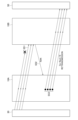
- FIG. 1 is a diagram illustrating an example of a configuration of a communication system.
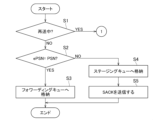
- FIG. 2 is a flowchart showing an example of the flow of a transfer process.
- FIG. 3 is a flowchart showing an example of the flow of a transfer process.
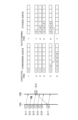
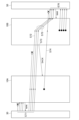
- FIG. 4 is a diagram for explaining the state of a queue when a packet loss occurs.
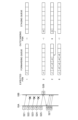
- FIG. 5 is a diagram for explaining the state of a queue when a packet loss occurs.
- FIG. 6 is a diagram for explaining the state of a queue when a packet loss occurs.
- FIG. 7 is a diagram for explaining an example of a retransmission process of Go-Back-N.
- FIG. 8 is a diagram for explaining an example of the selective retransmission process.
- FIG. 8 is a diagram for explaining an example of the selective retransmission process.
- FIG. 9 is a diagram for explaining an example in which the retransmission process to be adopted is changed depending on the location.
- FIG. 10 is a diagram showing an example in which intermediate nodes are configured on a NIC.
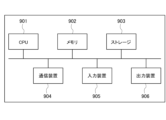
- FIG. 11 is a diagram illustrating an example of a hardware configuration of the intermediate node.
- the communication system shown in the figure includes a transmitting node 30 and a receiving node 50 that transfer data using RDMA, as well as intermediate nodes 10A and 10B that are arranged between the transmitting node 30 and the receiving node 50.
- the transmitting node 30 divides data into packets and transmits the packets to the receiving node 50 via the intermediate node 10A, the long-distance network, and the intermediate node 10B.
- the intermediate node 10A is arranged between the transmitting node 30 and the long-distance network
- the intermediate node 10B is arranged between the long-distance network and the receiving node 50.
- the intermediate nodes 10A and 10B are connected via the long-distance network.
- the transmitting node 30 and the receiving node 50 may be called a requester and a responder, respectively.
- the sending node 30 When transferring data from the sending node 30 to the receiving node 50, the sending node 30 specifies the memory area of the data it wants to send in the WQE and loads it into the SQ, and the receiving node 50 specifies the memory area it wants to receive data in the WQE and loads it into the RQ.
- WQEs can be loaded into the SQ or RQ up to the queue size of the SQ or RQ.
- the WQE is released from the SQ and RQ.
- the intermediate node 10A when transferring data, transmits a pseudo ACK to the transmitting node 30, and the transmitting node 30 releases the WQE of the SQ in response to the pseudo ACK. To prevent the transmitting node 30 from receiving duplicate responses, the intermediate node 10B discards the response from the receiving node 50.
- the transmitting node 30 will not be able to detect the packet retransmission request even if the receiving node 50 requests it.
- the intermediate node 10B will hold the packet in a queue until it receives an ACK from the receiving node 50, and will respond to the packet retransmission request from the receiving node 50 instead of the transmitting node 30.
- Go-Back-N is a method of retransmitting all packets following the packet that has lost.
- the intermediate node 10B holds the received packets following the packet loss in a queue rather than discarding them, and requests retransmission of only the lost packet, thereby suppressing the amount of retransmitted packets.
- Intermediate node 10A includes a forwarding unit 11 and a pseudo-response unit 12.
- Intermediate node 10B includes a forwarding unit 11 and a response discarding unit 13.
- the forwarding unit 11 forwards packets transmitted and received between the sending node 30 and the receiving node 50.
- the forwarding unit 11 of the intermediate node 10A receives packets from the sending node 30 and forwards them to the intermediate node 10B.
- the forwarding unit 11 of the intermediate node 10B receives packets from the intermediate node 10A and forwards them to the receiving node 50.
- the forwarding units 11 of the intermediate nodes 10A and 10B have almost the same functions, so the functions of the forwarding units 11 of the intermediate nodes 10A and 10B will be explained together below.
- the transfer unit 11 includes a control unit 111, a forwarding queue 112, a staging queue 113, and a retransmission unit 114.
- Forwarding queue 112 is a queue that temporarily holds packets that have been forwarded. When an ACK is received from the destination node, the packet in forwarding queue 112 is released. When a request to resend a packet is received from the destination node, the packet held in forwarding queue 112 is resent.
- the destination node is intermediate node 10B in the case of intermediate node 10A, and is receiving node 50 in the case of intermediate node 10B.
- Staging queue 113 is a queue that temporarily holds unprocessed packets that have been received but not forwarded. If a packet loss is detected, staging queue 113 holds packets received after the packet loss was detected until the lost packets are resent.
- the control unit 111 evaluates the received packet based on the sequence number assigned to it, and forwards the packet or requests retransmission of the packet. Data is divided into packets with consecutive Packet Sequence Numbers (PSNs) assigned to them, and transmitted in the order of the PSNs. If the PSN of the received packet is the same as the expected PSN (hereinafter referred to as ePSN), the control unit 111 stores the received packet in the forwarding queue 112 and then forwards it to the next node. If the PSN of the received packet is different from the ePSN, the control unit 111 stores the received packet in the staging queue 113.
- PSNs Packet Sequence Numbers
- the control unit 111 manages the PSN+1 of the packet last stored in the staging queue 113 as an unprocessed PSN (hereinafter referred to as oPSN).
- the oPSN indicates the PSN of a normal packet that may arrive before the retransmission packet is received. If the PSN of the received packet is neither ePSN nor oPSN, the control unit 111 determines that a packet loss has occurred.
- control unit 111 stores the retransmitted packet in the forwarding queue 112 and then forwards it to the next node, and moves the packet held in the staging queue 113 to the forwarding queue 112 and then forwards it to the next node.
- the retransmission unit 114 requests retransmission of lost packets and retransmits packets in response to retransmission requests.
- the retransmission unit 114 of intermediate node 10A retransmits a packet in response to a retransmission request from intermediate node 10B.
- the retransmission unit 114 of intermediate node 10B requests intermediate node 10A to retransmit a packet.
- the retransmission unit 114 of intermediate node 10A requests the transmitting node 30 to retransmit a packet
- the retransmission unit 114 of intermediate node 10B retransmits a packet in response to a retransmission request from the receiving node 50.
- the retransmission unit 114 requests retransmission of only the lost packets. Specifically, the retransmission unit 114 of the intermediate node 10B generates a Selective ACK (SACK) specifying the range of packets for which retransmission is requested, and transmits it to the intermediate node 10A.
- SACK Selective ACK
- NAK Negative ACK
- the AETH field is extended so that it can be identified as a SACK.
- the ePSN is entered into the PSN field, which specifies the requested packet, and the PSN of the packet in which packet loss was detected is entered into the MSN field.
- the retransmission unit 114 When the retransmission unit 114 receives a SACK, it removes the specified packet from the queue and retransmits it. Specifically, when the retransmission unit 114 of the intermediate node 10A receives a SACK from the intermediate node 10B, it retrieves packets from PSN to MSN-1 from the forwarding queue 112 and retransmits them to the intermediate node 10B.
- the retransmitting unit 114 of the intermediate nodes 10A and 10B has both a function for requesting packet retransmission and a function for retransmitting packets.
- the retransmitting unit 114 performs the retransmission process in a method that matches the retransmission method. For example, when the retransmission method between the transmitting node 30 and the intermediate node 10A is Go-Back-N, the retransmitting unit 114 transmits a retransmission request to the transmitting node 30 in a method conforming to Go-Back-N.
- the retransmitting unit 114 transmits the retransmitted packet to the receiving node 50 in a method conforming to Go-Back-N.
- the retransmitting unit 114 performs the retransmission process in the retransmission method using the SACK described above.
- the pseudo response unit 12 When the pseudo response unit 12 receives a request from the sending node 30 to the receiving node 50, it generates a pseudo ACK and returns it to the sending node 30. If a packet loss is detected, the intermediate node 10A requests the sending node 30 to retransmit the packet.
- the response discarding unit 13 When the response discarding unit 13 receives a response from the receiving node 50 to the transmitting node 30, it discards the received response. If a retransmission request is received, the intermediate node 10B executes a retransmission process to the receiving node 50.
- pseudo response unit 12 and the response discarding unit 13 are not essential components for the selective retransmission process by the forwarding unit 11, but the issues that arise when the intermediate nodes 10A and 10B are provided with the pseudo response unit 12 and the response discarding unit 13 can be resolved by providing the intermediate nodes 10A and 10B with the forwarding unit 11 described above.
- intermediate node 10 receives a packet
- processing in Figures 2 and 3 is executed.
- intermediate nodes 10A and 10B are not distinguished from each other and are referred to as intermediate node 10.
- step S1 the intermediate node 10 determines whether or not retransmission is in progress.
- "Retransmission in progress” means a state in which a lost packet is waiting to be retransmitted.
- the intermediate node 10 can determine whether or not retransmission is in progress based on whether or not a packet is being held in the staging queue 113. If retransmission is in progress, the process proceeds to the flowchart in FIG. 3.
- step S2 the intermediate node 10 determines whether the PSN of the received packet is ePSN.
- step S3 the intermediate node 10 stores the packet in the forwarding queue 112 and forwards the packet to the next node.
- the intermediate node 10 increments the ePSN by 1.
- the intermediate node 10 receives an ACK from the next node, it releases the packet stored in the forwarding queue 112.
- the intermediate node 10 stores the packet in the staging queue 113 in step S4, and transmits a SACK to the source node in step S5.
- the intermediate node 10 sets the PSN+1 of the packet stored in the staging queue 113 to the oPSN.
- step S6 of FIG. 3 the intermediate node 10 determines whether or not the retransmitted packet has been received. Whether or not the retransmitted packet has been received can be determined by whether or not the PSN of the received packet is ePSN.
- step S7 the intermediate node 10 stores the packet in the forwarding queue 112 and forwards the packet to the next node.
- step S8 the intermediate node 10 moves the packet stored in the staging queue 113 to the forwarding queue 112 and forwards the moved packet to the next node.
- the intermediate node 10 sets the PSN+1 of the last packet forwarded to the ePSN.
- packets moved from staging queue 113 to forwarding queue 112 are packets with consecutive PSNs starting from PSN+1 of the received packet. For example, if packets with PSNs of 3, 4, 5, and 7 are stored in staging queue 113 and a packet with PSN of 2 is received, the packets with PSNs of 3, 4, and 5 are moved from staging queue 113 to forwarding queue 112. The packet with PSN 7 remains in staging queue 113.
- the intermediate node 10 When the intermediate node 10 receives an ACK for the packet forwarded in steps S7 and S8, it releases the packet stored in the forwarding queue 112.
- step S9 the packet is stored in the staging queue 113.
- the intermediate node 10 sets the PSN+1 of the packet stored in the staging queue 113 to the oPSN.
- the intermediate node 10 repeats the above process to forward the packet to the next node.
- intermediate node 10A transmits request r1 (hereinafter referred to as r1), and intermediate node 10B receives r1.
- the PSN of r1 is 1.
- the PSN will be represented by the number following the r.
- the ePSN of intermediate node 10B is 1. Since the staging queue 113 of intermediate node 10B is empty, the oPSN is set to -1.
- Intermediate node 10B stores r1 in the forwarding queue 112 and forwards r1 to the next node. Intermediate node 10B sets the ePSN to 2.
- step S12 intermediate node 10A sends r2, but r2 is lost.
- intermediate node 10A transmits r3, and intermediate node 10B receives r3. Because the PSN and ePSN of r3 are different, intermediate node 10B stores r3 in the staging queue 113. Intermediate node 10B sets the oPSN to 4.
- step S14 intermediate node 10B sends a retransmission request n2 for the packet with PSN 2 to intermediate node 10A.
- step S15 intermediate node 10A transmits r4, and intermediate node 10B receives r4. Intermediate node 10B stores r4 in the staging queue 113. Intermediate node 10B sets the oPSN to 5.
- intermediate node 10A transmits r5, and intermediate node 10B receives r5.
- Intermediate node 10B stores r5 in the staging queue 113.
- Intermediate node 10B sets oPSN to 6.
- intermediate node 10A transmits r2 in response to retransmission request n2, and intermediate node 10B receives r2.
- Intermediate node 10B stores r2 in the forwarding queue 112 and transfers r2 to the next node.
- Intermediate node 10B stores r3, r4, and r5 stored in the staging queue 113 in the forwarding queue 112 and transfers r3, r4, and r5 to the next node.
- Intermediate node 10B sets ePSN to 6 and oPSN to -1.
- r1 to r5 sent by intermediate node 10A are forwarded to the next node, intermediate node 10B.
- intermediate node 10A transmits r1, and intermediate node 10B receives r1.
- Intermediate node 10B stores r1 in the forwarding queue 112 and forwards r1 to the next node.
- Intermediate node 10B sets the ePSN to 2.
- intermediate node 10A transmits r2, r3, and r4, but r2, r3, and r4 are lost.
- intermediate node 10A transmits r5, and intermediate node 10B receives r5. Because the PSN and ePSN of r5 are different, intermediate node 10B stores r5 in the staging queue 113. Intermediate node 10B sets the oPSN to 6.
- intermediate node 10B sends a retransmission request n2 for packets with PSNs of 2 through 4 to intermediate node 10A. Specifically, intermediate node 10B generates and sends a SACK that puts the ePSN 2 in the PSN field and the PSN 5 of r5 in the MSN field.
- intermediate node 10A transmits r2, r3, and r4 in response to retransmission request n2, and intermediate node 10B receives r2, r3, and r4.
- Intermediate node 10B stores r2, r3, and r4 in the forwarding queue 112, and forwards r2, r3, and r4 to the next node.
- Intermediate node 10B stores r5, which was stored in the staging queue 113, in the forwarding queue 112, and forwards r5 to the next node.
- Intermediate node 10B sets ePSN to 6 and oPSN to -1.
- r1 to r5 sent by intermediate node 10A are forwarded to the next node, intermediate node 10B.
- intermediate node 10A transmits r1, and intermediate node 10B receives r1.
- Intermediate node 10B stores r1 in the forwarding queue 112 and forwards r1 to the next node.
- Intermediate node 10B sets the ePSN to 2.
- step S32 intermediate node 10A sends r2, but r2 is lost.
- intermediate node 10A transmits r3, and intermediate node 10B receives r3. Because the PSN and ePSN of r3 are different, intermediate node 10B stores r3 in the staging queue 113. Intermediate node 10B sets the oPSN to 4.
- step S34 intermediate node 10B sends a retransmission request n2 for the packet with PSN 2 to intermediate node 10A.
- step S35 intermediate node 10A sends r4, but r4 is lost.
- intermediate node 10A transmits r5, and intermediate node 10B receives r5.
- Intermediate node 10B stores r5 in the staging queue 113 because the PSN and ePSN of r5 are different.
- Intermediate node 10B sets the oPSN to 6.
- step S37 intermediate node 10B sends a retransmission request n4 for the packet with PSN 4 to intermediate node 10A.
- intermediate node 10A transmits r6, and intermediate node 10B receives r6. Because the PSN and ePSN of r6 are different, intermediate node 10B stores r6 in the staging queue 113. Intermediate node 10B sets the oPSN to 7.
- intermediate node 10A transmits r2 in response to retransmission request n2, and intermediate node 10B receives r2.
- Intermediate node 10B stores r2 in the forwarding queue 112 and transfers r2 to the next node.
- Intermediate node 10B stores r3 stored in staging queue 113 in the forwarding queue 112 and transfers r3 to the next node.
- r5 and r6 stored in staging queue 113 are not included because their PSNs are not consecutive to r3.
- Intermediate node 10B sets the ePSN to 4.
- intermediate node 10A transmits r7, and intermediate node 10B receives r7. Because the PSN and ePSN of r7 are different, intermediate node 10B stores r7 in the staging queue 113. Intermediate node 10B sets the oPSN to 8.
- intermediate node 10A transmits r4 in response to retransmission request n4, and intermediate node 10B receives r4.
- Intermediate node 10B stores r4 in the forwarding queue 112 and transfers r4 to the next node.
- Intermediate node 10B stores r5, r6, and r7 stored in the staging queue 113 in the forwarding queue 112 and transfers r5, r6, and r7 to the next node.
- Intermediate node 10B sets ePSN to 8 and oPSN to -1.
- intermediate node 10A By the above process, r1 to r7 sent by intermediate node 10A are forwarded to the next node, intermediate node 10B.
- the packet transmitted from the transmitting node 30 is forwarded from the intermediate node 10A to the intermediate node 10B.
- the intermediate nodes 10A and 10B are provided with a retransmission queue, which temporarily holds the packet to be forwarded.
- the retransmission queue is the forwarding queue 112 described above.
- step S51 the intermediate node 10B detects packet loss.
- the intermediate node 10B discards packets received after detecting packet loss.
- intermediate node 10B sends a Negative ACK (NAK) to intermediate node 10A, specifying the lost PSN.
- NAK Negative ACK
- step S53 intermediate node 10A retransmits all packets from the specified PSN onwards, and intermediate node 10B forwards the received packets to receiving node 50.
- the packet transmitted from the transmitting node 30 is forwarded from the intermediate node 10A to the intermediate node 10B.
- the intermediate nodes 10A and 10B are provided with a retransmission queue, which temporarily holds the packet to be forwarded.
- the retransmission queue is the forwarding queue 112 described above.
- step S61 the intermediate node 10B detects packet loss.
- the intermediate node 10B stores the packets received after detecting packet loss in a queue.
- step S62 intermediate node 10B sends a SACK to intermediate node 10A, specifying the lost PSN.
- step S63 intermediate node 10A retransmits only the packet with the specified PSN, and intermediate node 10B forwards the received packet to receiving node 50.
- step S64 the intermediate node 10B transfers the packet following the retransmitted packet from the queue to the receiving node 50.
- Selective retransmission retransmits only lost packets, reducing the amount of retransmitted packets, improving transfer efficiency and shortening retransmission times.
- Go-Back-N is adopted near the sending node 30 and near the receiving node 50, and selective retransmission is adopted for intermediate nodes 10A and 10B because the retransmission cost is high.
- Retransmission processing is performed between the sending node 30 and the intermediate node 10A using Go-Back-N.
- step S71 when intermediate node 10A detects Out-of-Sequence, it sends a NAK to sending node 30.
- Sending node 30 resends all packets from the specified number onwards.
- intermediate node 10A receives all packets without omission, it stores the received packets in a queue and forwards them to intermediate node 10B.
- step S72 intermediate node 10B detects packet loss. Packets following the packet loss are stored in a queue.
- intermediate node 10B sends a SACK to intermediate node 10A requesting retransmission of the lost packet.
- step S74 intermediate node 10A takes the packet with the specified number from the queue and transmits it, and intermediate node 10B stores the retransmitted packet in the queue and forwards it to the receiving node 50.
- step S75 intermediate node 10B removes the packet following the retransmitted packet from the queue and transfers it to receiving node 50.
- Retransmission processing is performed between intermediate node 10B and receiving node 50 using Go-Back-N.
- step S76 when the receiving node 50 detects Out-of-Sequence, it sends a NAK to the intermediate node 10B.
- the intermediate node 10B removes all packets from the queue after the specified number and retransmits them.
- the intermediate nodes 10A and 10B are disposed between the first device and the second device that transfer data using remote direct memory access.
- the intermediate nodes 10A and 10B include a forwarding queue 112 that stores transferred packets, a staging queue 113 that stores unprocessed packets, a control unit 111 that receives and transfers packets transmitted from the transmitting node 30 to the receiving node 50 and stores the packets in the forwarding queue 112, and a retransmission unit 114 that performs retransmission processing of the packets.
- the retransmission unit 114 requests retransmission of the lost packet.
- the control unit 111 After detecting a packet loss, stores the packets received before receiving the retransmission packet in the staging queue 113, and when the retransmission packet is received, it transfers the retransmission packet and stores it in the forwarding queue 112, and after transferring the retransmission packet, it transfers the packets stored in the staging queue 113 and stores them in the forwarding queue 112. This reduces the amount of packets that need to be retransmitted, minimizing degradation of transfer performance, as only lost packets are retransmitted.
- the retransmission unit 114 retrieves the requested packet from the forwarding queue 112 and retransmits it. This makes it possible for the intermediate nodes 10A and 10B to handle the retransmission of the packet when a retransmission request is received. Even if the intermediate node 10A generates and transmits a pseudo ACK and the intermediate node 10B discards the response, it is possible to handle the retransmission request from the receiving node 50.
- intermediate nodes 10A and 10B are installed between the transmitting node 30 and the receiving node 50, but as shown in Figure 10, intermediate node 10A may be configured on the Network Interface Card (NIC) of the transmitting node 30, and intermediate node 10B may be configured on the NIC of the receiving node 50.
- NIC Network Interface Card
- intermediate nodes 10A and 10B may be configured as physical servers or virtual servers.
- Network devices such as switches or routers may have the functions of the intermediate nodes 10A and 10B.
- the intermediate nodes 10A and 10B described above may be, for example, a general-purpose computer system equipped with a central processing unit (CPU) 901, memory 902, storage 903, communication device 904, input device 905, and output device 906, as shown in FIG. 11.
- the intermediate nodes 10A and 10B are realized by the CPU 901 executing a predetermined program loaded onto the memory 902.
- This program can be recorded on a computer-readable recording medium such as a magnetic disk, optical disk, or semiconductor memory, or can be distributed via a network.
Landscapes
- Engineering & Computer Science (AREA)
- Computer Networks & Wireless Communication (AREA)
- Signal Processing (AREA)
- Physics & Mathematics (AREA)
- Computer Hardware Design (AREA)
- Theoretical Computer Science (AREA)
- Mathematical Physics (AREA)
- Software Systems (AREA)
- General Engineering & Computer Science (AREA)
- General Physics & Mathematics (AREA)
- Communication Control (AREA)
Priority Applications (2)
| Application Number | Priority Date | Filing Date | Title |
|---|---|---|---|
| PCT/JP2023/026085 WO2025017785A1 (ja) | 2023-07-14 | 2023-07-14 | 中間装置および通信方法 |
| JP2025533728A JPWO2025017785A1 (https=) | 2023-07-14 | 2023-07-14 |
Applications Claiming Priority (1)
| Application Number | Priority Date | Filing Date | Title |
|---|---|---|---|
| PCT/JP2023/026085 WO2025017785A1 (ja) | 2023-07-14 | 2023-07-14 | 中間装置および通信方法 |
Publications (1)
| Publication Number | Publication Date |
|---|---|
| WO2025017785A1 true WO2025017785A1 (ja) | 2025-01-23 |
Family
ID=94281651
Family Applications (1)
| Application Number | Title | Priority Date | Filing Date |
|---|---|---|---|
| PCT/JP2023/026085 Pending WO2025017785A1 (ja) | 2023-07-14 | 2023-07-14 | 中間装置および通信方法 |
Country Status (2)
| Country | Link |
|---|---|
| JP (1) | JPWO2025017785A1 (https=) |
| WO (1) | WO2025017785A1 (https=) |
Citations (3)
| Publication number | Priority date | Publication date | Assignee | Title |
|---|---|---|---|---|
| JP2013247632A (ja) * | 2012-05-29 | 2013-12-09 | Mitsubishi Electric Corp | Tcp通信高速化装置 |
| CN106936875A (zh) * | 2015-12-30 | 2017-07-07 | 南京理工大学 | 基于广域网数据压缩的改进tcp代理方法 |
| WO2023058232A1 (ja) * | 2021-10-08 | 2023-04-13 | 日本電信電話株式会社 | 通信システム、中間装置、通信方法、および、プログラム |
-
2023
- 2023-07-14 JP JP2025533728A patent/JPWO2025017785A1/ja active Pending
- 2023-07-14 WO PCT/JP2023/026085 patent/WO2025017785A1/ja active Pending
Patent Citations (3)
| Publication number | Priority date | Publication date | Assignee | Title |
|---|---|---|---|---|
| JP2013247632A (ja) * | 2012-05-29 | 2013-12-09 | Mitsubishi Electric Corp | Tcp通信高速化装置 |
| CN106936875A (zh) * | 2015-12-30 | 2017-07-07 | 南京理工大学 | 基于广域网数据压缩的改进tcp代理方法 |
| WO2023058232A1 (ja) * | 2021-10-08 | 2023-04-13 | 日本電信電話株式会社 | 通信システム、中間装置、通信方法、および、プログラム |
Also Published As
| Publication number | Publication date |
|---|---|
| JPWO2025017785A1 (https=) | 2025-01-23 |
Similar Documents
| Publication | Publication Date | Title |
|---|---|---|
| EP0454364B1 (en) | High speed transport protocol with two windows | |
| US9577791B2 (en) | Notification by network element of packet drops | |
| US10430374B2 (en) | Selective acknowledgement of RDMA packets | |
| US7369498B1 (en) | Congestion control method for a packet-switched network | |
| US6954797B1 (en) | Data Communication method, terminal equipment, interconnecting installation, data communication system and recording medium | |
| CN104025525B (zh) | 用于发送分组的方法和设备以及交换机装置 | |
| JP4714572B2 (ja) | ウェブサービスのための信頼性のあるメッセージングプロトコルを使用したメッセージの効率的な転送 | |
| US11799777B2 (en) | Method for transferring information across a data center network | |
| KR101610715B1 (ko) | 단방향 데이터 송수신 시스템 및 방법 | |
| JPWO2008023656A1 (ja) | 通信装置 | |
| CN116073959B (zh) | 基于双单向光闸系统的数据传输方法、装置、设备及介质 | |
| JP7086179B2 (ja) | パケット伝送方法、ネットワーク構成要素、およびコンピュータ可読記憶媒体 | |
| CN112383622B (zh) | 用于数据中心联网的可靠传输协议和硬件架构 | |
| WO2014194806A1 (zh) | 在多路传输控制协议中的链路处理方法和移动终端 | |
| WO2022259452A1 (ja) | 中間装置、通信方法、およびプログラム | |
| WO2023058232A1 (ja) | 通信システム、中間装置、通信方法、および、プログラム | |
| EP3809748B1 (en) | Data transmitting method and device | |
| US8150996B2 (en) | Method and apparatus for handling flow control for a data transfer | |
| EP3031159B1 (en) | Retransmission control network node and related method | |
| WO2025017785A1 (ja) | 中間装置および通信方法 | |
| JP3963321B2 (ja) | データ単位を処理する装置及びデータ単位処理装置を制御する方法 | |
| TWI839155B (zh) | 電腦裝置以及應用於電腦裝置的傳輸控制協定封包處理方法 | |
| JP3782308B2 (ja) | データ配信管理装置、これを用いたデータ配信管理システムおよびデータ配信管理方法ならびにその方法をコンピュータに実行させるプログラム | |
| CN100471197C (zh) | 用移动专用网络传输层有效发送/接收数据的方法、网络设备 | |
| TW202431824A (zh) | 電腦裝置以及應用於電腦裝置的傳輸控制協定封包處理方法 |
Legal Events
| Date | Code | Title | Description |
|---|---|---|---|
| 121 | Ep: the epo has been informed by wipo that ep was designated in this application |
Ref document number: 23945790 Country of ref document: EP Kind code of ref document: A1 |
|
| ENP | Entry into the national phase |
Ref document number: 2025533728 Country of ref document: JP Kind code of ref document: A |
|
| WWE | Wipo information: entry into national phase |
Ref document number: 2025533728 Country of ref document: JP |
|
| NENP | Non-entry into the national phase |
Ref country code: DE |