WO2025017299A1 - Hydrogen sulphide for topical treatment of nail infection - Google Patents
Hydrogen sulphide for topical treatment of nail infection Download PDFInfo
- Publication number
- WO2025017299A1 WO2025017299A1 PCT/GB2024/051864 GB2024051864W WO2025017299A1 WO 2025017299 A1 WO2025017299 A1 WO 2025017299A1 GB 2024051864 W GB2024051864 W GB 2024051864W WO 2025017299 A1 WO2025017299 A1 WO 2025017299A1
- Authority
- WO
- WIPO (PCT)
- Prior art keywords
- hydrogen sulphide
- nail
- topical
- source
- cover
- Prior art date
- Legal status (The legal status is an assumption and is not a legal conclusion. Google has not performed a legal analysis and makes no representation as to the accuracy of the status listed.)
- Pending
Links
Classifications
-
- A—HUMAN NECESSITIES
- A61—MEDICAL OR VETERINARY SCIENCE; HYGIENE
- A61K—PREPARATIONS FOR MEDICAL, DENTAL OR TOILETRY PURPOSES
- A61K31/00—Medicinal preparations containing organic active ingredients
- A61K31/095—Sulfur, selenium, or tellurium compounds, e.g. thiols
- A61K31/10—Sulfides; Sulfoxides; Sulfones
-
- A—HUMAN NECESSITIES
- A61—MEDICAL OR VETERINARY SCIENCE; HYGIENE
- A61K—PREPARATIONS FOR MEDICAL, DENTAL OR TOILETRY PURPOSES
- A61K33/00—Medicinal preparations containing inorganic active ingredients
- A61K33/04—Sulfur, selenium or tellurium; Compounds thereof
-
- A—HUMAN NECESSITIES
- A61—MEDICAL OR VETERINARY SCIENCE; HYGIENE
- A61P—SPECIFIC THERAPEUTIC ACTIVITY OF CHEMICAL COMPOUNDS OR MEDICINAL PREPARATIONS
- A61P31/00—Antiinfectives, i.e. antibiotics, antiseptics, chemotherapeutics
- A61P31/02—Local antiseptics
-
- A—HUMAN NECESSITIES
- A61—MEDICAL OR VETERINARY SCIENCE; HYGIENE
- A61P—SPECIFIC THERAPEUTIC ACTIVITY OF CHEMICAL COMPOUNDS OR MEDICINAL PREPARATIONS
- A61P31/00—Antiinfectives, i.e. antibiotics, antiseptics, chemotherapeutics
- A61P31/04—Antibacterial agents
Definitions
- This invention relates to a topical source of hydrogen sulphide for use in the treatment of a nail infections, for example fungal and bacterial nail infections, particularly onychomycosis. Also disclosed is a system comprising a topical source of hydrogen sulphide and a substantially airtight cover which adapted for topical application of hydrogen sulphide to an infected nail.
- oral treatments can require 4-6 months in fingernails and 12- 18 months in toenails to achieve a complete cure.
- oral therapy has renal and hepatic toxicity, thus it is often not used in the elderly, who show the greatest prevalence of the disease.
- topical antifungals which are associated with minimal side effects, are an important second-line therapy choice.
- Tavaborole studies report a mycological cure rate of 31.1-35.9% and a complete cure rate of 6.5-9.1% and efinaconazole studies have reported 83.3-87.2% and 15.8- 25.6% mycological and complete cure rates respectively (Elewski BE et al., Efficacy and safety of tavaborole topical solution, 5%, a novel boron-based antifungal agent, for the treatment of toenail onychomycosis: Results from 2 randomized phase-ill studies, J. Am. Acad. Dermatol.
- Hydrogen sulphide is an endogenously produced gasotransmitter (Wang et al. Two's company, three's a crowd: can H2S be the third endogenous gaseous transmitter? FASEB J. 2002;16(13):1792-8; and Abe et al., The possible role of hydrogen sulfide as an endogenous neuromodulator. J. Neurosci. 1996, 16, 1066-1071).
- Hydrogen sulphide plays a key role in multiple physiological processes including vasodilation, angiogenesis, and inflammation (Stein et al., Redox biology of hydrogen sulfide: Implications for physiology, pathophysiology, and pharmacology, Redox Biology, Volume 1 , Issue 1,2013, Pages 32-39).
- H2S exhibits antifungal properties and has been shown to inhibit spore germination, germ tube elongation, mycelial growth and increase intracellular reactive oxygen species (Fu et al., An antifungal role of hydrogen sulfide on the postharvest pathogens Aspergillus nigerand Penicillium italicum. PLoS One. 2014 Aug 7;9(8)).
- hydrogen sulphide is used as an antifungal agent for crop protection, there are currently no treatments available for nail infections based on hydrogen sulphide as an active agent.
- Cold plasma is typically generated by electrical discharges in gases at or near atmospheric pressure.
- Common techniques include dielectric barrier discharges and atmospheric pressure plasma jets (Attri et al., Atmospheric pressure plasma jet using a DC-powered microplasma torch: The operating characteristics. Plasma Sources Science and Technology, 2013, 22(2), 025003).
- Plasma jets are one of the most common cold plasma generation devices for medical applications.
- the needle electrode within the plasma jet is attached to the voltage source whereas the ground external electrode surrounds the needle.
- the carrier gas passes between the two electrodes at a high speed, it becomes ionised, excited, and dissociated to produce various reactive species before being accumulated and exiting through a nozzle as a beam.
- the beam stability is highly dependent on the type of carrier gas (llrnair etal. Recent advances in plasma technology: Influence of atmospheric cold plasma on spore inactivation. Food Rev. Int., 2021, 1(1):1— 23).
- the reactive oxygen and nitrogen species generated during the ionisation process have shown the ability to kill microorganisms and fungi (Brun etal. Antibacterial efficacy and mechanisms of action of low power atmospheric pressure cold plasma: membrane permeability, biofilm penetration and antimicrobial sensitization. Journal of Applied Microbiology, 2018, 125, 398-408).
- ROS reactive oxygen species
- RNS reactive nitrogen species
- CAPP cold atmospheric pressure plasma
- ROS and RNS involves the ionisation of high-energy electrons from the plasma, which collide with nitrogen and oxygen molecules in the air, creating ions (Laroussi, M. & Lu, X., Atmospheric pressure plasma jet for biomedical applications. Plasma Science, IEEE Transactions on, 2005, 33(2), 745-753). During this process, the air molecules are also excited, temporarily becoming more energetic. As these molecules return to their normal state, they emit light, contributing to the visible glow of the plasma (Laroussi & Lu, 2005).
- the cold plasma also generates ozone (O3), atomic oxygen (O), and hydroxyl radicals (OH), as well as RNS such as nitric oxide (NO) and nitrogen dioxide (NO2) (Attri et al., 2013).
- O3 ozone
- O atomic oxygen
- OH hydroxyl radicals
- RNS such as nitric oxide (NO) and nitrogen dioxide (NO2)
- Ti2 nitric oxide
- NO2 nitrogen dioxide
- Microorganisms are thought to be killed through oxidative stress. This can be induced by Lipid Peroxidation where ROS, especially hydroxyl radicals (OH*), attack the lipid molecules in microbial cell membranes, triggering lipid peroxidation (Fridman et al., Applied plasma medicine. Plasma Processes and Polymers, 2008, 5(6), 503-533). Organisms can also be killed using plasma via protein oxidation wherein reactive species oxidise amino acid residues in proteins, resulting in structural changes and loss of function, particularly in enzymes and structural proteins (Pawtat etal. Possibility of Humid Municipal Wastes Hygienisation Using Gliding Arc Plasma Reactor. Water, 2021, 13(2): 194).
- ROS especially hydroxyl radicals
- Cold plasma can also cause DNA damage whereby ROS induce single and double-strand breaks in DNA, as well as oxidative modifications to nucleotides., which leads to mutations, replication errors, and impaired transcription (Fridman et al., 2008).
- ROS reactive oxygen species
- NO nitric oxide
- ONOO- peroxynitrite
- nitrosative stress resulting in nitration and nitrosylation of proteins and nucleic acids which will cause inactivation of enzymes and structural proteins and disruption of cells.
- Cold plasma has several advantages in the treatment of topical infections in the skin and nails. For example, it is non-invasive unlike surgical treatments, cold plasma is painless, providing a more comfortable patient experience. It is effective against a wide range of pathogens, including bacteria, fungi, and viruses, reducing the likelihood of secondary infections. Cold plasma also does not rely on precise mechanism of action, making it an effective alternative for treating drug-resistant fungal strains. Furthermore, treatment sessions are typically short, and the effects can be seen relatively quickly compared to traditional chemical treatments. [0015] As a result of these advantages, cold plasma has been used to treat topical infections of the skin and nail.
- topical application of a topical source of hydrogen sulphide to the surface of a nail and maintaining the topical source of hydrogen sulphide under a substantially airtight cover results in rapid penetration of high concentrations of hydrogen sulphide into and through the nail plate to provide an anti-infective effect against pathogens (e.g. fungi) in the nail plate and/or underlying nail bed and surrounding tissues.
- pathogens e.g. fungi
- the Examples herein illustrate that the transungual mass-transfer rate of hydrogen sulphide using sodium hydrosulphide (also known as sodium hydrogen sulphide or NaHS) as a topical source of hydrogen sulphide is more than 175,000, times faster than topically applied efinaconazole (compared to published permeation rate) and approximately 640 times faster than topically applied ciclopirox and rapidly provides concentrations of hydrogen sulphide in excess of the minimum inhibitory concentration (MIC) of pathogens which cause nail infections, such as onychomycosis.
- the transungual delivery method described herein has the potential to provide much faster treatment of nail infections than currently known topical treatments for nail infections.
- Maintaining the topically source of hydrogen sulphide under a substantially air-tight cover during treatment reduces the loss of hydrogen sulphide gas into the atmosphere and enhances hydrogen sulphide penetration into and through the nail plate thereby maximising exposure to pathogens to the anti- infective (e.g. anti-fungal) effects of hydrogen sulphide.
- a topical source of hydrogen sulphide for use in a method of treating a nail infection in a subject, the method comprising applying the topical source of hydrogen sulphide to an infected nail, wherein the topical source of hydrogen sulphide is maintained under a substantially airtight cover during treatment, wherein the topical source of hydrogen sulphide comprises a composition comprising a hydrogen sulphide donor, wherein the hydrogen sulphide donor is selected from sodium hydrosulphide (NaHS), ammonium tetrathiomolybdate (ATTM), diallyl trisulphide (DATS) and 4- hydroxybenzothioamide (HBTA).
- NaHS sodium hydrosulphide
- ATTM ammonium tetrathiomolybdate
- DATS diallyl trisulphide
- HBTA 4- hydroxybenzothioamide
- a topical source of hydrogen sulphide for use in a method of treating a nail infection in a subject, the method comprising applying the topical source of hydrogen sulphide to an infected nail, wherein the topical source of hydrogen sulphide is maintained under a substantially airtight cover during treatment.
- the topical source of hydrogen sulphide provides a solution comprising hydrogen sulphide which is topically applied to the surface of the infected nail.
- the topical source of hydrogen sulphide comprises a solution comprising hydrogen sulphide.
- the topical source of hydrogen sulphide comprises a composition comprising a hydrogen sulphide donor.
- the topical source of hydrogen sulphide may be a plasma comprising ionised hydrogen sulphide, wherein the plasma is contacted with the surface of the infected nail.
- the topical source of hydrogen sulphide may be a plasma comprising ionised hydrogen sulphide or a composition comprising a hydrogen sulphide donor.
- the topical source of hydrogen sulphide comprises a composition comprising a hydrogen sulphide donor
- the hydrogen sulphide donor may be any agent which is capable of generating or releasing hydrogen sulphide into the composition.
- at least a proportion of the hydrogen sulphide generated or released by the hydrogen sulphide donor into the composition is dissolved in the composition to provide a hydrogen sulphide solution.
- Hydrogen sulphide donors are well-known to the skilled person, for example as described in Magli et al., H2S Donors and Their Use in Medicinal Chemistry.
- the hydrogen sulphide donor is selected from an inorganic sulphide salt (e.g. CaS, KHS, NaHS, Na2S, MgS, SrS, BaS, SiS2, preferably NaHS), ammonium tetrathiomolybdate, an allyl-substituted polysulphide (e.g. S-(prop-2- en-1-yl) prop-2-ene-1-sulfinothioate (allicin), diallyl sulphide, diallyl disulphide or diallyl trisulphide), an isothiocyanate derivative (e.g.
- an inorganic sulphide salt e.g. CaS, KHS, NaHS, Na2S, MgS, SrS, BaS, SiS2, preferably NaHS
- ammonium tetrathiomolybdate e.g. CaS, KHS, NaHS, Na2S, MgS, SrS, BaS, SiS2, preferably
- AITC allyl isothiocyanate
- erucin e.g. erucin
- aryl isothiocyanate e.g. benzyl isothiocyanate or 4-hydroxybenzyl isothiocyanate
- Lawessonn s Reagent and analogues thereof, a phosphonamidodithioate derivative (e.g. GYY4137), a phosphonodithioate derivative, a phosphonamidothioate derivative (e.g. a JK donor), a dithiolthione derivative (e.g. a 1 ,2-dithiole-3-thione derivative), an N-mercapto derivative (e.g.
- a phosphonamidodithioate derivative e.g. GYY4137
- a phosphonodithioate derivative e.g. a JK donor
- dithiolthione derivative e.g. a 1
- an N-benzoylthiobenzamide derivative an S-aroylthiooxime derivative, an acyl perthiol derivative, a dithioperoxy-anhydride, a tetrasulphide derivative, a thioamide derivative (e.g. an aryl thioamide derivative such as 4-hydroxybenzothioamide), a gem dithiol derivative, a N-thiocarboxyanhydride derivative, a thiocarbamate derivative, a phosphoramidodithioate derivative, thioamino acid and a thioester prodrug.
- a thioamide derivative e.g. an aryl thioamide derivative such as 4-hydroxybenzothioamide
- the hydrogen sulphide donor is selected from an inorganic sulphide salt (e.g. CaS, KHS, NaHS, MgS, SrS, BaS, SiS2, preferably NaHS), ammonium tetrathiomolybdate, an allyl-substituted polysulphide (e.g. diallyl sulphide, diallyl disulphide or diallyl trisulphide), an isothiocyanate derivative (e.g. an aryl isothiocyanate (e.g.
- benzyl isothiocyanate or 4-hydroxybenzyl isothiocyanate) Lawessonn’s Reagent and analogues thereof, a phosphonamidodithioate derivative (e.g. GYY4137), a phosphonodithioate derivative, a phosphonamidothioate derivative (e.g. a JK donor), a dithiolthione derivative (e.g. a 1 ,2-dithiole-3-thione derivative), an N-mercapto derivative (e.g.
- a phosphonamidodithioate derivative e.g. GYY4137
- a phosphonodithioate derivative e.g. a JK donor
- dithiolthione derivative e.g. a 1 ,2-dithiole-3-thione derivative
- an N-mercapto derivative e.g.
- an N-benzoylthiobenzamide derivative an S-aroylthiooxime derivative, an acyl perthiol derivative, a dithioperoxy-anhydride, a tetrasulphide derivative, a thioamide derivative (e.g. an aryl thioamide derivative such as 4-hydroxybenzothioamide), a gem dithiol derivative, a N-thiocarboxyanhydride derivative, a thiocarbamate derivative, a phosphoramidodithioate derivative, thioamino acid and a thioester prodrug.
- a thioamide derivative e.g. an aryl thioamide derivative such as 4-hydroxybenzothioamide
- the hydrogen sulphide donor is selected from an inorganic sulphide salt (e.g. CaS, KHS, NaHS, Na2S, MgS, SrS, BaS, SiS2, preferably NaHS), ammonium tetrathiomolybdate, Lawessonn’s Reagent and analogues thereof, a phosphonamidodithioate derivative (e.g. GYY4137), a phosphonodithioate derivative, a phosphonamidothioate derivative (e.g. a JK donor), a phosphoramidodithioate derivative, a gem dithiol derivative and a dithiolthione derivative (e.g. a 1 ,2-dithiole-3-thione derivative).
- an inorganic sulphide salt e.g. CaS, KHS, NaHS, Na2S, MgS, SrS, BaS, SiS2, preferably NaHS
- the hydrogen sulphide donor is selected from an inorganic sulphide salt (e.g. CaS, KHS, NaHS, MgS, SrS, BaS, SiS2, preferably NaHS), ammonium tetrathiomolybdate, Lawessonn’s Reagent and analogues thereof, a phosphonamidodithioate derivative (e.g. GYY4137), a phosphonodithioate derivative, a phosphonamidothioate derivative (e.g. a JK donor), a phosphoramidodithioate derivative, a gem dithiol derivative and a dithiolthione derivative (e.g. a 1 ,2-dithiole-3-thione derivative).
- an inorganic sulphide salt e.g. CaS, KHS, NaHS, MgS, SrS, BaS, SiS2, preferably NaHS
- the hydrogen sulphide donor is selected from ammonium tetrathiomolybdate, an N-mercapto derivative (e.g. an N-benzoylthiobenzamide derivative), an S-aroylthiooxime derivative, an acyl perthiol derivative, a dithioperoxy-anhydride, a tetrasulphide derivative, a thioamide derivative (e.g. an aryl thioamide derivative such as 4- hydroxybenzothioamide) an isothiocyanate derivative, and a gem dithiol derivative.
- an N-mercapto derivative e.g. an N-benzoylthiobenzamide derivative
- S-aroylthiooxime derivative e.g. an acyl perthiol derivative
- a dithioperoxy-anhydride e.g. an tetrasulphide derivative
- a thioamide derivative e.g. an aryl thioamide derivative such as 4- hydroxybenzo
- the hydrogen sulphide donor is selected from an N- thiocarboxyanhydride derivative and a thioester prodrug.
- the hydrogen sulphide donor is selected from a thioamino acid.
- the hydrogen sulphide donor is selected from a thiocarbamate derivative.
- the hydrogen sulphide donor is selected from sodium hydrosulphide (NaHS), disodium sulphide (Na2S), ammonium tetrathiomolybdate (ATTM), diallyl trisulphide (DATS) and 4-hydroxybenzothioamide (HBTA).
- NaHS sodium hydrosulphide
- Na2S disodium sulphide
- APM ammonium tetrathiomolybdate
- DATS diallyl trisulphide
- HBTA 4-hydroxybenzothioamide
- the hydrogen sulphide donor is selected from sodium hydrosulphide (NaHS), ammonium tetrathiomolybdate (ATTM), diallyl trisulphide (DATS) and 4-hydroxybenzothioamide (HBTA). It may be that the hydrogen sulphide donor is selected from sodium hydrosulphide (NaHS), ammonium tetrathiomolybdate (ATTM), and diallyl trisulphide (DATS).
- the hydrogen sulphide donor is sodium hydrosulphide (NaHS) or disodium sulphide.
- the hydrogen sulphide donor is sodium hydrosulphide (NaHS).
- the hydrogen sulphide donor is not disodium sulphide (Na 2 S).
- the composition topically applied to the infected nail suitably comprises a hydrogen sulphide donor and a hydrogen sulphide solution (e.g. an aqueous solution).
- a hydrogen sulphide donor e.g. an aqueous solution
- the hydrogen sulphide solution penetrates into and through the nail plate and provides an anti- infective effect on the pathogens present in the nail plate, the nail bed, and the surrounding tissues.
- hydrogen sulphide gas may be released from the hydrogen sulphide solution (see, for example, Example 3).
- the anti- infective effect may be provided by the hydrogen sulphide solution and/or hydrogen sulphide gas released in the nail plate and nail bed. It may be that the anti- infective effect of the composition topical applied to the nail is two-fold. Firstly, an antieffective effect may be provided by the hydrogen sulphide solution (e.g. NaHS solution) as it permeates through the nail plate. Once the hydrogen sulphide solution (e.g. NaHS solution) has permeated the nail plate, hydrogen sulphide gas is released (as shown in Example 3). Thus, secondly, an anti-effective effect may also be provided by the hydrogen sulphide gas as it permeates back through and out of the nail plate.
- the hydrogen sulphide solution e.g. NaHS solution
- Topical application of a composition comprising a hydrogen sulphide donor to the nail plate may also enable the hydrogen sulphide donor to penetrate into and through the nail plate and to release hydrogen sulphide directly at the site of infection in the nail plate and/or nail bed and surrounding tissues.
- the composition comprising the hydrogen sulphide donor comprises a liquid.
- the liquid is one in which hydrogen sulphide is soluble.
- the liquid may comprise water, a hydrocarbon solvent, a halogenated hydrocarbon solvent, an alcohol, an ether, a ketone, a carbonate ester, an alkyl sulphone, an alkyl phosphate, an alkyl amide, a lactam, a glycol, a glycol ether, acetonitrile or a sulfoxide.
- the composition comprising the hydrogen sulphide donor comprises a liquid selected from water and a polar organic solvent, or a mixture thereof.
- liquid comprises water and/or a polar organic solvent selected from, for example, an alcohol, a ketone, a carbonate ester, an alkyl sulphone, an alkyl phosphate, an alkyl amide, a lactam, a glycol, a glycol ether, acetonitrile or a sulfoxide.
- a polar organic solvent selected from, for example, an alcohol, a ketone, a carbonate ester, an alkyl sulphone, an alkyl phosphate, an alkyl amide, a lactam, a glycol, a glycol ether, acetonitrile or a sulfoxide.
- the liquid may be selected from one or more of water, methanol, ethanol, glycerol, acetone, propylene carbonate, sulfolane, tributyl phosphate, a glycol, a glycol ether and N-methylpyrrolidone.
- the composition comprising the hydrogen sulphide donor is an aqueous composition.
- the composition comprises a hydrogen sulphide donor, water and optionally one or more polar organic co-solvent(s).
- the composition comprises water and one or more co-solvents selected from methanol, acetone, propylene carbonate, sulfolane, tributyl phosphate, a glycol, a glycol ether and N-methylpyrrolidone.
- the composition comprises a hydrogen sulphide donor and water and methanol (e.g. a 1:1 v/v mixture of water and methanol).
- the composition comprises a hydrogen sulphide donor and water.
- the hydrogen sulphide donor provides a source of hydrogen sulphide in the composition and where the composition comprises a liquid (e.g. an aqueous liquid), at least a portion of the hydrogen sulphide is present in the composition as a hydrogen sulphide solution.
- a liquid e.g. an aqueous liquid
- the hydrogen sulphide donor is dispersed or dissolved in the composition.
- the hydrogen sulphide donor is dissolved in the composition.
- the composition is an aqueous composition comprising a solution of the hydrogen sulphide donor.
- the composition comprising the hydrogen sulphide donor further comprises an agent to activate or enhance release of hydrogen sulphide from the hydrogen sulphide donor.
- the composition further comprises a thiol (e.g. glutathione, cysteine, homocysteine or N-acetylcysteine), a catalyst, an enzyme, a pH adjusting agent, a base (e.g. a bicarbonate), or an oxidising agent (e.g. hydrogen peroxide).
- a thiol e.g. glutathione, cysteine, homocysteine or N-acetylcysteine
- a catalyst e.g. glutathione, cysteine, homocysteine or N-acetylcysteine
- an enzyme e.g. glutathione, cysteine, homocysteine or N-acetylcysteine
- a pH adjusting agent e.g. a bicarbonate
- an oxidising agent
- the topical source of hydrogen sulphide e.g. a solution comprising hydrogen sulphide or a composition comprising a hydrogen sulphide donor
- a solution comprising hydrogen sulphide or a composition comprising a hydrogen sulphide donor is in the form of a solution, a dispersion, an emulsion, a foam, a lotion, a cream or a gel.
- the composition comprising the hydrogen sulphide donor is in the form of a gel composition.
- the composition may be in the form of a hydrogel composition.
- the hydrogen sulphide donor may be present in the composition as a dispersion wherein at least a proportion of the available hydrogen sulphide is dissolved in the composition.
- the dispersion may comprise any suitable particle size of the hydrogen sulphide donor, including nano-dispersions.
- a hydrogen sulphide donor in the form of a solid e.g. a powder
- a suitable medium e.g. aqueous liquid or gel
- the topical source of hydrogen sulphide may comprise a hygroscopic hydrogen sulphide donor.
- the hygroscopic hydrogen sulphide donor absorbs water to provide a solution of hydrogen sulphide which penetrates into and/or through the nail plate.
- the topical source of hydrogen sulphide may be a composition comprising a hydrogen sulphide donor and hygroscopic material.
- the composition is applied to the surface of the nail (e.g. as a powder or a coating) where it absorbs water to provide a solution of hydrogen sulphide in contact with the nail to be treated.
- the composition may comprise, for example, a simple mixture or granule comprising the hydrogen sulphide donor and hygroscopic material.
- the hydrogen sulphide donor may be dispersed within a matrix formed by the hygroscopic material.
- Suitable hygroscopic materials are well known.
- the hygroscopic material may be a deliquescent salt (e.g. calcium chloride, magnesium chloride, zinc chloride or carnallite) or a desiccant (e.g. silica gel or sucrose).
- the topical source of hydrogen sulphide may be a composition comprising a hydrogen sulphide donor or hydrogen sulphide solution that is encapsulated in a lipid or polymer (e.g. as micro- or nano-particles). During treatment hydrogen sulphide is released from the encapsulated hydrogen sulphide donor or solution for absorption into and through the nail plate.
- Hydrogen sulphide solutions are therefore in an equilibrium between H2S, HS' and S 2 ', the predominant species being determined by, for example, pH and the temperature of the solution.
- the hydrogen sulphide in an aqueous hydrogen sulphide solution is volatile and is released as hydrogen sulphide gas from the solution. Accordingly, the concentration of hydrogen sulphide in a solution will rapidly reduce if the solution is open to the atmosphere as a result of volatilisation of H2S gas.
- the inventors have found that by maintaining the composition comprising a hydrogen sulphide donor under a substantially airtight cover after application to the nail minimises loss of hydrogen sulphide gas from the hydrogen sulphide solution present in the composition applied to the nail and also delays release of hydrogen sulphide from the solution until the hydrogen sulphide solution has penetrated into and/or through the nail plate.
- the Examples show that simply exposing a nail to hydrogen sulphide as a gas does not result any significant permeation of the hydrogen sulphide into and through the nail plate.
- topical application of a composition comprising a solution of hydrogen sulphide results in rapid permeation of hydrogen sulphide into and through the nail plate when the composition is maintained under a substantially airtight cover.
- the topical source of hydrogen sulphide applied to the infected nail comprises a solution of hydrogen sulphide. More particularly in preferred embodiments, the topical source of hydrogen sulphide in contact with the surface nail plate comprises a hydrogen sulphide donor and a solution (e.g. an aqueous solution) of hydrogen sulphide. In each case the composition applied to the infected nail is maintained under a substantially airtight cover during treatment.
- the cover is adapted to provide a substantially airtight chamber over the topical source of hydrogen sulphide on the infected nail.
- the cover may be adapted to provide a substantially airtight chamber enclosing at least a proportion of the topical source of hydrogen sulphide on the nail surface when the cover is placed over the topical source of hydrogen sulphide.
- the cover provides an airtight chamber over at least 50% of the topical source of hydrogen sulphide present on the surface of the nail.
- the cover provides a substantially airtight chamber over at least 60%, at least 70%, at least 80% at least 90% or still more preferably substantially all of the topical source of hydrogen sulphide on the surface of the nail.
- the cover is, or comprises, a substantially air- impermeable polymer.
- the cover is or comprises a substantially air- impermeable polymer selected from a polyester, a polyurethane, a polytetrafluoroethylene, a polyethylene, a polysiloxane, a polyisocyanate, a polycarbonate poly(ethylene terephthalate), an acrylic polymer (e.g. a poly(methyl methacrylate), a poly(ethyl methacrylate) or a polyacrylonitrile)) or a polyvinylchloride, or a co-polymers of two or more thereof.
- Polytetrafluoroethylene (PTFE) is particularly stable to hydrogen sulphide. Accordingly, in a preferred embodiment the cover is or comprises PTFE.
- the cover is adapted to be sealably attached to the subject over the topical source of hydrogen sulphide during treatment. Sealing the cover to the subject provides an airtight seal between the cover and the subject such that the topical source of hydrogen sulphide on the nail is maintained in an airtight environment during treatment.
- the cover is sealed to the subject using an adhesive.
- Adhesive may be applied to the surface of the nail so as to form a perimeter of adhesive which surrounds the topical source of hydrogen sulphide on the nail, the cover is then placed onto the adhesive thereby sealing the topical source of hydrogen sulphide in a substantially airtight environment.
- the cover is provided with an adhesive and is attached directly to the surface of the nail (and/or surrounding skin) so as to cover the topical source of hydrogen sulphide.
- the cover comprises a sealing surface, for example an elastomer, and provides a pressure seal between the sealing surface and the subject (e.g. the dorsal surface of the nail plate). In this configuration the cover may be secured in place using, for example, a suitable adhesive tape or strapping so as to maintain a substantially airtight seal between the cover and the nail.
- the cover is conveniently sealed to the surface of the nail over the topical source of hydrogen sulphide.
- the cover and topical source of hydrogen sulphide
- the cover extends over substantially the whole dorsal surface of the nail being treated to maximise the surface area of the nail in contact with the hydrogen sulphide solution.
- the rate of permeation of hydrogen sulphide into and through the nail plate and underlying nail bed is high it is also possible to place the cover on a smaller area of the nail. This is particularly advantageous in some subjects where the nail infection has damaged the integrity of the nail plate which may make it difficult to form a seal to the damaged nail plate, especially if the damage is at the edge of the nail plate.
- the cover extends over at least 20%, 30%, 40%, 50%, 60%, 70%, 80% or 95% of the dorsal surface of the nail plate. For example from 20% to 95%, 40% to 95%, 40% to 80% , 20% to 50% or 30 to 50% of the dorsal surface of the nail plate.
- the cover is an occlusive dressing or occlusive patch.
- the dressing or patch may be made from any material provided it provides a substantially air-impermeable cover over the topical source of hydrogen sulphide applied to the nail surface.
- the cover may comprise a substantially air-impermeable occlusive wound dressing or patch.
- the wound dressing or patch may comprise one or more air-impermeable polymer layers such as one of the air-impermeable polymers described herein.
- the cover comprises the topical source of hydrogen sulphide and the topical source of hydrogen sulphide is applied to the infected nail by contacting the cover with at least a portion of the surface of the infected nail.
- the cover is in the form of an artificial nail.
- an artificial nail as a cover enables the cover to resemble the natural shape and colour of the subject’s nail during treatment, thereby improving the visual appearance of the infected nail during treatment and potentially enhancing patient compliance with the treatment.
- the cover, e.g. artificial nail may be coloured to disguise or mask the topical source of hydrogen sulphide under the cover.
- the cover comprises one or more layer or reservoir containing the topical source of hydrogen sulphide, wherein the one or more layer or reservoir is in fluid communication with the dorsal surface of the infected nail when the cover is placed on the infected nail.
- the cover is in the form of a patch comprising a dorsal surface and a ventral surface; wherein the dorsal surface comprises a substantially air impermeable layer; the ventral surface comprises an adhesive layer; the patch comprises one or more layer or reservoir comprising the topical source of hydrogen sulphide in fluid communication with the ventral surface; and wherein the patch is sealably attached to the subject by means of the adhesive layer to provide a substantially air-tight chamber over at least a portion of the infected nail.
- the patch further comprises a removable substantially air impermeable backing layer over the adhesive layer which maintains the topical source of hydrogen sulphide in a substantially airtight environment within the patch prior to use.
- the backing layer is removed prior to sealably attaching the patch to the subject.
- a plasma comprising ionised hydrogen sulphide for use in a method of treating a nail infection in a subject, the method comprising applying the plasma to an infected nail.
- the plasma is formed from a gaseous mixture comprising hydrogen sulphide and one or more inert gases (e.g. helium, argon, krypton or neon).
- the plasma is not maintained under a substantially airtight cover during treatment. In other embodiments, the plasma is maintained under a substantially airtight cover during treatment.
- the topical source of hydrogen sulphide is a plasma comprising ionised hydrogen sulphide.
- the plasma is formed from a gaseous mixture comprising hydrogen sulphide.
- the plasma may be formed from a mixture of hydrogen sulphide gas and one or more inert gases (e.g. helium, argon, krypton or neon). It may be that the plasma is formed from a mixture of hydrogen sulphide gas and argon.
- the plasma is a non-thermal or “cold plasma” formed by providing an electrical discharge through gaseous hydrogen sulphide.
- the cover may be a chamber placed over the infected nail.
- the cover may also be formed by a conduit in gaseous communication with source of the plasma and the surface of the nail.
- the conduit may be provided with a means for providing an air-tight seal between the surface of the nail and the conduit, for example an elastomeric seal (e.g.
- the cover may also be in the form of a chamber wherein the subjects hand or foot is placed in the chamber containing the plasma and the chamber is sealed around the wrist or lower leg of the subject, thereby exposing the infected nail to the plasma.
- a method for treating a nail infection in a subject comprising applying an effective amount of a topical source of hydrogen sulphide to an infected nail, wherein the topical source of hydrogen sulphide is maintained under a substantially airtight cover during treatment.
- the method for treating the nail infection is a therapeutic treatment.
- the method for treating the nail infection is a non-therapeutic or cosmetic method for the treatment of a nail infection.
- the nail infection is a fungal, yeast and/or bacterial infection. It may be that the nail infection is in the form of a biofilm, for example a fungal, yeast and/or bacterial biofilm.
- the nail infection is a fungal nail infection. In certain embodiments the nail infection is onychomycosis.
- the nail infection is a bacterial nail infection. In certain embodiments the nail infection is paronychia.
- a system comprising: a cover; and a topical source of hydrogen sulphide; the cover being adapted to provide a substantially airtight chamber over the topical source of hydrogen when the topical source of hydrogen sulphide is applied to an infected nail in a subject.
- the cover comprises the topical source of hydrogen sulphide.
- the cover comprises one or more layer or reservoir containing the topical source of hydrogen sulphide.
- the cover further comprises a removable, substantially air impermeable backing layer which is adapted to maintain the topical source of hydrogen sulphide in the cover in a substantially airtight environment prior to use.
- system further comprising a means for affixing the cover to a surface tissue of a subject (for example a means for affixing the cover to the dorsal surface of a nail).
- a means for affixing the cover is an adhesive, for example an acrylic adhesive.
- the cover is in the form of a patch comprising a dorsal surface and a ventral surface; wherein the dorsal surface comprises a substantially air impermeable layer; the ventral surface comprises an adhesive layer; and the patch comprises one or more layer or reservoir comprising the composition in fluid communication with the ventral surface.
- the cover is an occlusive dressing or occlusive patch.
- the cover is in the form of an artificial nail.
- the cover is, or comprises, an air-impermeable polymer, for example PTFE.
- the cover further comprises a removable, substantially air impermeable backing layer which is adapted to maintain the topical source of hydrogen sulphide in the cover in a substantially airtight environment prior to use.
- Figure 1 is a schematic illustrating a cover in the form of an artificial nail containing a topical source of hydrogen sulphide for use the treatment of a nail infection.
- Stage 1 illustrates an infected nail and exemplary length and width dimensions of the nail.
- Stage 2 shows a cover in the form of an artificial nail dimensioned to overlay the dorsal surface of the infected nail.
- Stage 3 shows the topical source of hydrogen sulphide in the form of a gel containing a hydrogen sulphide donor located in a chamber formed by the convex shape of the inner surface of the artificial nail.
- the artificial nail has a peripheral edge which has a coating of a suitable adhesive (e.g.
- Stage 4 shows the artificial nail attached to the infected nail during treatment.
- the schematic on the right hand-side of Stage 4 illustrates the penetration of dissolved hydrogen sulphide (HS _ ) into the and through the nail plate and the equilibrium between dissolved and gaseous H2S within the nail plate and nail bed.
- Stage 5 shows the removal of the artificial nail following the completion of the treatment.
- Figure 2A shows the release of H2S from H2S donors over 24 hours under a constant airflow of 650 mL/min.
- Figure 2B shows the amounts of H2S gas and dissolved H2S following addition of solid H2S donor to an aqueous liquid medium after 2, 6 and 24 hours of holding in an airtight container with no air flow.
- the black bar represents the amount of H2S in the liquid and the grey bar the amount of H2S gas.
- NaHS sodium hydrosulphide
- HBTA hydroxybenzothioamide
- DATS diallyl trisulphide
- ATTM ammonium tetrathiomolybdate.
- Figure 3A shows the effect of pH on the kinetic release of H2S in the liquid phase from a solution of NaHS at pH 8.5 (large data points) and pH 4 (small data points).
- Figure 3B shows the effect of pH on the liquid-air equilibrium of H2S over 2 hours, 6 hours and 24 hours at pH 8.5, 6 and 4 after holding in an airtight container with no air flow.
- the black bars show the H2S in the liquid phase and the gray bars the H2S gas released (pg).
- the number of repeats was 3 for each value.
- the error bars represent the standard deviation between repeats.
- Figure 4A shows the permeation of H2S through a nail plate using an airtight microchamber on top of the nail surface with H2S gas (square data points) compared to HS' liquid (NaHS solution aplied to the nail surface, circular data points).
- the y-axis in Figure 4A shows the cumulative H2S mass/area (pg/cm 2 ).
- the donor concentration was NaHS concentration of 5.6 mg/200uL.
- Figure 4B shows the cumulative permeation of H2S through a nail plate using a NaHS solution in an airtight microchamber on top of the nail surface (circular data points) compared to NaHS solution aplied to the nail surface in a chamber that was open to the atmosphere (square data points).
- the y-axis in Figure 4B shows the cumulative H2S mass/area (pg/cm 2 ).
- the donor concentration was NaHS concentration of 11.2 mg/200uL.
- Figure 4C shows the cumulative permeation of H2S through a nail plate using comparison of two hydrogen sulphide donors, sodium hydrosulphide (NaHS, circular data points) and ammonium tetra thiomolybdate (ATTM, square data points).
- Figure 4C also shows the permeation of ciclopirox through the nail plate (triangular data points).
- n 8 and the human nail plates were standardised to 30 pm thickness.
- Figure 6 shows H2S gas released from human nail clippings after treatment with different H2S donor solutions as H2S mass/mg of nail.
- the minimum inhibitory concentration for T. rubrum (MIC) is the horizontal line and was calculated using the exemplar MIC from the NaHS donor.
- NaHS sodium hydrosulphide
- HBTA hydroxybenzothioamide
- DATS diallyl trisulphide
- ATTM ammonium tetrathiomolybdate.
- the upper panel shows visual observation and the lower panel with microscopy at 60x magnification.
- panel A shows the effects of NaHS applied in the liquid form on inhibiting the growth of T. rubrum isolates TR 188, TR719, TR420 and TR 936.
- Figure 12 shows viable cells (%) of T. rubrum conidia after treatment with H2S with and without an airtight chamber on the infected nail model described in the Examples. “LOD” is the limit of detection.
- Figure 13 shows the results of a human skin and human nail toxicity study.
- A, B, C, and D illustrate the confocal images of A. untreated human skin, B. Neg control (skin placed in cell culture media), C positive control (glycolic acid (10% w/v)), and D hydrogen sulphide treated skin (H2S, 3400 pg/mL), respectively. The application of all solutions was repeated in 2 hour intervals over 6 hours.
- E, F, G and H illustrate the skin integrity of E. untreated human skin, F. negative control, G positive control, and H treated skin, respectively.
- SC stratum corneum
- EP epidermis
- D dermis.
- I and J show the second derivative of the Amide I region and the Raman spectra of the disulphide and sulfhydryl regions of human nail keratin after I phosphate buffered saline (PBS) and J H2S treatment, respectively.
- the nails were incubated in PBS and H2S (680 pg/mL) solutions over 24 hours before testing in Raman spectroscopy and ATR-FTIR machines.
- Figure 14 shows the effect of H2S treatment on the production of ROS in T. rubrum conidia: A) untreated, B) treated with H2S (gas) and no microchamber, C) treated with H2S (liquid) (no) microchamber, D) treated with H2S (gas) with microchamber, and E) treated with H2S (liquid) with microchamber (Calcofluor white stained the fungal cell blue while DCFH-DA stained the ROS green. Images were taken at magnification x20).
- Figure 15 shows the effect of H2S treatment on the production of ROS in T. rubrum hyphae: A) untreated, and B) H2S (liquid) with microchamber (Calcofluor white stained the fungal cell blue while DCFH-DA stained the ROS green. Images were taken at magnification x20).
- Figure 16 illustrates artificial nails prepared using a 3D printer after measuring the dimensions and curvature of the nail of a subject.
- Each artificial nail included a cavity in the dorsal side of the artificial nail (the side to be applied to the subject’s nail when in use), wherein in use, the cavity accommodates the topical source of hydrogen sulphide.
- Panel A shows the dimensions of “large”, “medium” and “small” artificial nails.
- Panel B shows the artificial nails produced by 3D printing using a Formlab printer and clear resin.
- Panel C shows an artificial nail attached to the thumbnail of a subject (shown without the topical source of hydrogen sulphide in the cavity of the artificial nail).
- Figure 17 shows the gel stability of four different polymers with sodium hydrogen sulphide.
- the first row in Figure 17 shows the appearance of the gels formed using methylcellulose E4M (MC E4M), methylcellulose E15 (MC E15), hydroxyethylcellulose ( Natrosol M ((NM)) and Carbopol 934 (CP 934) immediately after preparing the gel.
- the lower row shows the appearance after 7 days at 45°C.
- the hydroxyethylcellulose gel was the most stable gel and maintained pH, appearance, and consistency over seven days.
- Methylcellulose E4M and E14 resulted in precipitation, while Carbopol 934 showed a yellow coloration indicating chemical reaction and gel instability.
- Figure 18 panels A and B illustrate two variants of artificial nail models, leaking and non-leaking designs, respectively.
- Each model was produced in three sizes: large, medium, and small, with nearly identical length, width, and curvature across each design.
- the distinguishing factor lies in the adhesive margin between the gel pocket (chamber) and the nail edge, highlighted on the right of each design.
- the non-leaking designs (B) featured a larger margin for adhesive application of 4.1 mm, 3.6 mm or 3.3 mm, thereby enhancing sealability of the artificial nail to the nail to be treated compared to the “leaking design” (A), which had adhesive margins of 1 mm.
- the black arrow in the illustration signifies the total width or length of the nail, while the red dotted line indicates one side margin, excluding the top and bottom.
- Figure 19 shows a comparative analysis of hydrogen sulphide leakage from different designs of artificial nails.
- Panel A shows a comparison of H2S gas release from a NaHS liquid and gel loaded onto unsealed artificial nail (i.e. covers that are open and acting as controls 100% leakage) vs a sealed nail cover (no leaking) and a nail cover that is not sealed (leaking gas).
- Panel B shows the Area Under Curve (AUC) for release of hydrogen sulphide gas into a sealed test vessel form a simple NaHS solution, a NaHS gel, a leaking artificial nail containing a NaHS gel that was glued to a model fingernail, and a non-leaking artificial nail containing a NaHS gel glued to a model fingernail.
- AUC Area Under Curve
- Panel C shows methylene blue dye containing gel in the leaking artificial nail, with noticeable dye leakage visualized, indicating poor sealing of the artificial nail to the model fingernail used in the experiment.
- Panel D demonstrates the successful sealing performance of an optimized artificial nail design with an NaHS gel and methylene blue dye in the chamber of the artificial nail glued to the model fingernail. No dye or H2S leakage was detected during the test, confirming the efficiency of this design and successful sealing of the artificial nail to a model fingernail.
- N 3 for each gas release profile.
- Figure 21 shows the effect of H2S against S.
- Figure 22A shows the raw ATP bioiluminescence data (au).
- Figure 22B shows the kill percentage.
- Figure 23A shows the kill effect (raw ATP bioluminescence data (au)) of Hydrogen sulphide (NaHS), Ciclopirox and Amorolfine against C. albicans after 24 h.
- Figure 23B shows the kill percentage of Hydrogen sulphide (NaHS), Ciclopirox and Amorolfine against C. al bicans.
- Figure 24 shows the effect of cold plasma treatment with argon and a combination of H2S with argon on the growth of T.rubrum under a cover.
- Figure 25 shows the effects of cold H2S plasma vs traditional chemical anti- infectives on C. albicans biofilms without a cover.
- Figure 26 shows the miniaturised H2S application system designed for the rat in vivo studies.
- the left panel shows the device design in CAD software 3DS max.
- the right panel shows the use of the 3D printed device on the rat’s paw.
- references to “substantially airtight” or “substantially air-impermeable” refer to the cover minimising the escape or leakage of hydrogen sulphide gas through, or out of, the cover during treatment. However, it is not essential that the cover completely eliminates hydrogen sulphide leakage and generally a cover is considered to be “substantially airtight” or “substantially air-impermeable” if, when the cover is sealed to the subject (e.g. the surface of the nail to be treated), no leakage of the topical source of hydrogen sulphide (e.g. solution or gel) from the cover is observed over a 12 hour period. Visualisation of leakage of the topical source of hydrogen sulphide (e.g.
- solution or gel can be enhanced by including a suitable dye (e.g. methylene blue) to indicate the presence of hydrogen sulphide as illustrated in the examples.
- a suitable dye e.g. methylene blue
- leakage of the topical source of hydrogen sulphide (e.g. solution or gel) from a cover to assess if the cover is “substantially airtight” may be simulated by attaching the cover to a suitable artificial substrate and monitoring if any leakage of the topical source of hydrogen sulphide (e.g. solution or gel) is observed over a 12-hour period.
- a substrate e.g. a 3D printed model finger prepared using FormLabs “Dental Model Resin” (a methyacrylate-based resin)
- a dye such as methylene blue
- a cover may be considered to be to “substantially airtight” or “substantially air-impermeable” when the cover is sealed onto the subject (e.g. glued to the dorsal surface of a nail) if the cover retains at least about 70% of the available H2S gas present in the topical source of hydrogen sulphide under the cover during treatment. Accordingly, the cover is “substantially airtight” or a layer in the cover is “substantially air- impermeable” when less than about 30% of the available H2S gas present in the topical source of hydrogen sulphide leaks from, or permeates through, the cover/layer into the atmosphere when the cover is secured to the subject during treatment.
- the cover or impermeable layer prevents less than about 25%, 20%, 15%, 10%, 5%, 2%, 1%, 0.5 % or 0.1% of the total available H2S gas present in the topical source of hydrogen sulphide leaking from the cover into the atmosphere during treatment. Accordingly, in some embodiments the cover is considered to be “substantially airtight” if it retains about 70% to about 100% (e.g. about 80% to about 100%, about 85% to about 100%, about 90% to about 100%, or about 95% to about 100%) of the available H2S gas present in the topical source of hydrogen sulphide under the cover when the cover is sealed to the subject.
- the amount of available H2S gas present in a topical source of hydrogen sulphide may be determined as described in Example 12. Accordingly, the total available H2S gas present in a topical source of hydrogen sulphide may be determined by placing a sample of the topical source of hydrogen sulphide in an airtight sealed chamber (the open sample) and measuring the concentration of H2S gas released from the topical source of hydrogen sulphide into the sealed chamber every minute for a period of 24 hours (or until evolution of H2S stops) using a suitable H2S gas analyser (e.g., using a Teledyne T101 gas analyser using a 10 V analogue output range, and a data output once every 1 min as in the examples).
- a suitable H2S gas analyser e.g., using a Teledyne T101 gas analyser using a 10 V analogue output range, and a data output once every 1 min as in the examples.
- the total H2S gas evolved by the topical source of hydrogen sulphide from the open sample is determined by calculating the AUC (pg/ml*h) of the H2S gas released.
- the amount of H2S gas that leaks from, or permeates through, the cover may be determined by sealing the cover comprising the topical source of hydrogen sulphide to a model of a human nail and placing the model nail with the attached cover in an sealed airtight chamber (the sealed sample).
- the concentration of H2S gas that escapes from the cover into the sealed container is determined by sampling the H2S concentration in the sealed chamber every minute for 2.8 days or until no further H2S gas evolution is detected and then calculating the AUC (pg/ml*h) of the H2S gas that leaks from the cover sealed to the model of the nail.
- the % of available H2S gas that leaks from, or permeates through, the cover is calculated as:
- the topical source of hydrogen sulphide used to determine the % H2S gas leakage should be identical in the open and the sealed samples, that is the concentration of the hydrogen sulphide donor and its formulation are the same in both the open sample and sealed sample.
- the measurement of H2S concentrations released from the open and sealed samples is suitably performed at room temperature (20°C) and atmospheric pressure (1 atmosphere, 101.325 kPa).
- the model of the human fingernail to which the cover is sealed in the closed sample may be any plastic material that can mimic the sealing of the nail cover to the human nail.
- a model finger prepared using a biomimetic dental model resin (e.g. FormLabs “Dental Model Resin” (a methyacrylate-based resin) as illustrated in the Examples.
- treating refers to any beneficial effect in the treatment or amelioration of an injury, disease, pathology or condition associated with a nail infection, for example a fungal or bacterial nail infection, including any objective or subjective parameter such as abatement; remission; diminishing of symptoms or making the injury, pathology or condition more tolerable to the patient; slowing in the rate of degeneration or decline; modifying the progression of a disease or condition, making the final point of degeneration less debilitating; improving a patient’s physical or mental well-being.
- the treatment or amelioration of symptoms can be based on objective or subjective parameters; including the results of a physical examination.
- treating includes prevention of an injury, pathology, condition, or disease (i.e., prophylaxis or prevention).
- the term “treating” and conjugations thereof include prevention of a pathology, condition, or disease associated with a nail infection (e.g., reducing or preventing symptoms or effects of the disease or condition or preventing or inhibiting progression of the disease or condition).
- the treatment of a nail infection herein may reduce or eliminate at least one clinical symptom associated with the infection (e.g. disfiguration, discoloration or breakage of the nail, or dry or scaly skin in the vicinity of the infected nail).
- the treatment may be result in the killing or reduction in cell viability of a fungus or bacteria.
- treatment of a fungal infection may kill the fungal colony, for example by preventing or inhibiting conidia or hyphae, killing fungal spores or preventing sporulation.
- the treatment of a fungal infection may also disrupt and/or eradicate a fungal biofilm.
- Treatment of bacterial infection may, for example kill bacteria or reduce their viability and or replication.
- an “effective amount” is an amount sufficient to accomplish a stated purpose. For example an amount sufficient to achieve the effect for which it is administered, treat a nail infection, or reduce one or more symptoms of a nail infection.
- An example of an “effective amount” is an amount sufficient to contribute to the treatment, prevention, or reduction of a symptom or symptoms of a nail infection or, or modify the progression of a nail infection, which could also be referred to as a “therapeutically effective amount.”
- a “reduction” of a symptom or symptoms means decreasing of the severity or frequency of the symptom(s), or elimination of the symptom(s) associated with a nail infection.
- the therapeutically effective amount of hydrogen sulphide and/or the topical source of hydrogen sulphide can be initially estimated from in-vitro determination of the MIC of active against the pathogen that has caused the nail infection using methods known in the art.
- Target concentrations will be those concentrations of active compound that are capable of achieving the therapeutic effect described herein, as measured using the methods described herein or known in the art.
- the topical source of hydrogen sulphide is administered in an amount sufficient to provide a hydrogen sulphide concentration at the site of infection in the nail and/or nail bed which exceeds the MIC of the pathogen, for example at a concentration of at least about 1x, 2x, 3x, 5x or 10x the MIC.
- Therapeutically effective amounts for use in humans can also be determined from animal models using known methods. For example, a dose for humans can be formulated to achieve a concentration that has been found to be effective in animals. The dosage in humans can be adjusted by monitoring compound effectiveness and adjusting the dosage upwards or downwards, as described above. Adjusting the dose to achieve maximal efficacy in humans based on the methods described above and other methods is well within the capabilities of the ordinarily skilled artisan.
- Dosages may be varied depending upon the requirements of the subject.
- the dose administered to a subject in the context of the present invention should be sufficient to effect a beneficial therapeutic and/or cosmetic response in the subject over time.
- the size of the dose also will be determined by the existence, nature, and extent of any adverse sideeffects. Determination of the proper dosage for a particular situation is within the skill of the practitioner. Dosage amounts and intervals can be adjusted individually to provide levels of the administered active compound effective for the particular indication being treated.
- gel refers to a semi-solid, apparently homogeneous substance that may be elastic and jelly-like (as in, for example, gelatin).
- the gel comprises a three-dimensional polymeric or inorganic matrix within which is dispersed a liquid phase.
- the liquid phase may comprise an aqueous (e.g. water to provide a hydrogel) or nonaqueous liquid (to provide an anhydrous gel).
- the matrix of the gel comprises a network of physically or chemical cross-linked polymers or copolymers that swell but do not dissolve in the presence of a solvent (for example water).
- the cross-linking within the gel matrix may be physical cross linking (for example by hydrogen bonding or ionic cross-linking) or may be covalently cross-linked.
- the gel may be prepared by forming a solution or dispersion of the hydrogen sulphide donor and/or hydrogen sulphide in the liquid and then mixing the solution or dispersion with a suitable gel-forming polymer.
- a hydrogen sulphide donor or hydrogen sulphide may be incorporated into a gel by simply dissolving or dispersing the hydrogen sulphide and/or hydrogen sulphide donor into a gel.
- the gels are preferably clear in appearance; however, turbid gels are also contemplated.
- the gel-forming agent for example gel-forming polymer
- the gel-forming agent is present in the gel in an amount of from about 0.5- 15% weight/volume (w/v), typically 0.5-5% w/v.
- w/v weight/volume
- the gel-forming agent is hydroxyethyl cellulose
- it may be present in the gel composition in an amount of about 3% w/v.
- non-aqueous composition e.g. a non-aqueous topical composition
- references to a “non-aqueous” composition includes compositions that are substantially water free.
- the non-aqueous compositions disclosed herein contain less than 5%, less than 1% or suitably less than 0.01 %, preferably less than 0.001% by weight water.
- Preferred non-aqueous compositions are those which are anhydrous and contain no detectable water.
- halo refers to one of the halogens, group 17 of the periodic table.
- the term refers to fluorine, chlorine, bromine and iodine.
- the term refers to fluorine or chlorine.
- C m -n refers to a group with m to n carbon atoms.
- Ci-e alkyl refers to a linear or branched hydrocarbon chain containing 1 , 2, 3, 4, 5 or 6 carbon atoms, for example methyl, ethyl, n-propyl, /so-propyl, n-butyl, /so- butyl, sec-butyl, terf-butyl, n-pentyl and n-hexyl.
- C1.4 alkyl similarly refers to such groups containing up to 4 carbon atoms.
- Alkylene groups are divalent alkyl groups and may likewise be linear or branched and have two points of attachment to the remainder of the molecule.
- an alkylene group may, for example, correspond to one of those alkyl groups listed in this paragraph.
- Ci-e alkylene may be -CH2-, -CH2CH2-, -CH2CH(CH 3 )- , -CH2CH2CH2- or -CH 2 CH(CH 3 )CH 2 -.
- Ci-e haloalkyl e.g., “C1.4 haloalkyl” refers to a hydrocarbon chain substituted with at least one halogen atom independently chosen at each occurrence, for example fluorine, chlorine, bromine, and iodine.
- the halogen atom may be present at any position on the hydrocarbon chain.
- Ci-e haloalkyl may refer to chloromethyl, fluoromethyl, trifluoromethyl, chloroethyl e.g., 1 -chloromethyl and 2-chloroethyl, trichloroethyl e.g., 1 ,2,2-trichloroethyl, 2,2,2-trichloroethyl, fluoroethyl e.g., 1 -fluoromethyl and 2-fluoroethyl, trifluoroethyl e.g., 1 ,2,2-trifluoroethyl and 2,2,2-trifluoroethyl, chloropropyl, trichloropropyl, fluoropropyl, trifluoropropyl.
- a haloalkyl group may be, for example, -CX 3 , -CHX 2 , -CH 2 CX 3 ,-CH 2 CHX2 or -CX(CH 3 )CH 3 wherein X is a halo (e.g., F, Cl, Br, or I).
- a fluoroalkyl group i.e. , a hydrocarbon chain substituted with at least one fluorine atom (e.g., -CF 3 , -CHF 2 , -CH 2 CF 3 or -CH2CHF2).
- heteroalkyl refers to a stable linear or branched chain alkyl, including at least one carbon atom and at least one heteroatom (e.g., O, N, P, Si, and S), and wherein the nitrogen and sulfur atoms may optionally be oxidized, and the nitrogen heteroatom may optionally be quaternized.
- the heteroatom(s) e.g., N, S, Si, or P
- the heteroalkyl is a non-cyclic group.
- “2 to 8 membered heteroalkyl” refers to a heteroalkyl in which there are a total of 1 , 2, 3, 4, 5, 6, 7 or 8 carbon atoms and heteroatoms (e.g., O, N, P, Si, and S) in the heteroalkyl group.
- a heteroalkyl moiety may include one heteroatom (e.g., O, N, S, Si, or P).
- a heteroalkyl moiety may include three optionally different heteroatoms (e.g.,
- a heteroalkyl moiety may include four optionally different heteroatoms (e.g., O, N, S, Si, or P).
- C2-6 alkenyl includes a branched or linear hydrocarbon chain containing at least one double bond and having 2, 3, 4, 5 or 6 carbon atoms.
- the double bond(s) may be present as the E or Z isomer.
- the double bond may be at any possible position of the hydrocarbon chain.
- the “C2-6 alkenyl” may be ethenyl, propenyl, butenyl, butadienyl, pentenyl, pentadienyl, hexenyl and hexadienyl.
- C2-6 alkynyl includes a branched or linear hydrocarbon chain containing at least one triple bond and having 2, 3, 4, 5 or 6 carbon atoms.
- the triple bond may be at any possible position of the hydrocarbon chain.
- the “C2-6 alkynyl” may be ethynyl, propynyl, butynyl, pentynyl and hexynyl.
- C3-6 cycloalkyl includes a saturated hydrocarbon ring system containing 3, 4, 5 or 6 carbon atoms.
- the “C3-C6 cycloalkyl” may be cyclopropyl, cyclobutyl, cyclopentyl, cyclohexyl, bicyclo[2.1.1]hexane or bicyclo[1.1.1]pentane.
- the “C3-C6 cycloalkyl” may be cyclopropyl, cyclobutyl, cyclopentyl or cyclohexyl.
- heterocyclyl includes a non-aromatic saturated or partially saturated monocyclic or fused, bridged, or spiro bicyclic heterocyclic ring system.
- Monocyclic heterocyclic rings may contain from about 3 to 12 (suitably from 3 to 7) ring atoms, with from 1 to 5 (suitably 1 , 2 or 3) heteroatoms selected from nitrogen, oxygen or sulfur in the ring.
- Bicyclic heterocycles may contain from 7 to 12-member atoms in the ring.
- Bicyclic heterocyclic(s) rings may be fused, spiro, or bridged ring systems.
- the heterocyclyl group may be a 3-12, for example, a 3- to 9- (e.g. a 3- to 7-) membered non- aromatic monocyclic or bicyclic saturated or partially saturated group comprising 1 , 2 or 3 heteroatoms independently selected from O, S and N in the ring system (in other words 1 , 2 or 3 of the atoms forming the ring system are selected from O, S and N).
- partially saturated it is meant that the ring may comprise one or two double bonds. This applies particularly to monocyclic rings with from 5 to 7 members. The double bond will typically be between two carbon atoms but may be between a carbon atom and a nitrogen atom.
- Bicyclic systems may be spiro-fused, i.e.
- rings are linked to each other through a single carbon atom; vicinally fused, i.e. where the rings are linked to each other through two adjacent carbon and/or nitrogen atoms; or they may be share a bridgehead, i.e. the rings are linked to each other through two non-adjacent carbon or nitrogen atoms (a bridged ring system).
- heterocyclic groups include cyclic ethers such as oxiranyl, oxetanyl, tetrahydrofuranyl, dioxanyl, and substituted cyclic ethers.
- Heterocycles comprising at least one nitrogen in a ring position include, for example, azetidinyl, pyrrolidinyl, piperidinyl, piperazinyl, morpholinyl, thiomorpholinyl, tetrahydrotriazinyl, tetrahydropyrazolyl, tetrahydropyridinyl, homopiperidinyl, homopiperazinyl, 2,5-diaza-bicyclo[2.2.1]heptanyl and the like.
- Typical sulfur containing heterocycles include tetrahydrothienyl, dihydro-1 , 3-dithiol, tetrahydro-2 H-thiopyran, and hexahydrothiepine.
- Other heterocycles include dihydro oxathiolyl, tetrahydro oxazolyl, tetrahydro-oxadiazolyl, tetrahydrodioxazolyl, tetrahydrooxathiazolyl, hexahydrotriazinyl, tetrahydro oxazinyl, tetrahydropyrimidinyl, dioxolinyl, octahydrobenzofuranyl, octahydrobenzimidazolyl, and octahydrobenzothiazolyl.
- the oxidized sulfur heterocycles containing SO or SO2 groups are also included.
- examples include the sulfoxide and sulfone forms of tetrahydrothienyl and thiomorpholinyl such as tetrahydrothiene 1 ,1 -dioxide and thiomorpholinyl 1 ,1 -dioxide.
- a suitable value for a heterocyclyl group which bears 1 or 2 oxo ( 0), for example, 2 oxopyrrolidinyl, 2-oxoimidazolidinyl, 2-oxopiperidinyl, 2,5- dioxopyrrolidinyl, 2,5-dioxoimidazolidinyl or 2,6-dioxopiperidinyl.
- heterocyclyl groups are saturated monocyclic 3 to 7 membered heterocyclyls containing 1 , 2 or 3 heteroatoms selected from nitrogen, oxygen or sulfur, for example azetidinyl, tetrahydrofuranyl, tetrahydropyranyl, pyrrolidinyl, morpholinyl, tetrahydrothienyl, tetrahydrothienyl 1 ,1-dioxide, thiomorpholinyl, thiomorpholinyl 1 ,1-dioxide, piperidinyl, homopiperidinyl, piperazinyl or homopiperazinyl.
- any heterocycle may be linked to another group via any suitable atom, such as via a carbon or nitrogen atom.
- piperidino or “morpholino” refers to a piperidin-1-yl or morpholin-4-yl ring that is linked via the ring nitrogen.
- bridged ring systems includes ring systems in which two rings share more than two atoms, see for example Advanced Organic Chemistry, by Jerry March, 4th Edition, Wiley Interscience, pages 131-133, 1992. Suitably the bridge is formed between two non- adjacent carbon or nitrogen atoms in the ring system.
- the bridge connecting the bridgehead atoms may be a bond or comprise one or more atoms.
- Examples of bridged heterocyclyl ring systems include, aza-bicyclo[2.2.1]heptane, 2-oxa-5-azabicyclo[2.2.1]heptane, aza- bicyclo[2.2.2]octane, aza-bicyclo[3.2.1]octane, and quinuclidine.
- spiro bi-cyclic ring systems includes ring systems in which two ring systems share one common spiro carbon atom, i.e., the heterocyclic ring is linked to a further carbocyclic or heterocyclic ring through a single common spiro carbon atom.
- spiro ring systems examples include 3,8-diaza-bicyclo[3.2.1]octane, 2,5-diaza-bicyclo[2.2.1]heptane, 6-azaspiro[3.4]octane, 2-oxa-6-azaspiro[3.4]octane, 2-azaspiro[3.3]heptane, 2-oxa-6- azaspiro[3.3]heptane, 6-oxa-2-azaspiro[3.4]octane, 2,7-diaza-spiro[4.4]nonane, 2- azaspiro[3.5]nonane, 2-oxa-7-azaspiro[3.5]nonane and 2-oxa-6-azaspiro[3.5]nonane.
- Heterocyclyl-Cm-n alkyl includes a heterocyclyl group covalently attached to a C m -n alkylene group, both of which are defined herein; and wherein the Heterocyclyl-Cm-n alkyl group is linked to the remainder of the molecule via a carbon atom in the alkylene group.
- the groups “aryl-C m -n alkyl”, “heteroaryl-C m -n alkyl” and “cycloalkyl-C m -n alkyl” are defined in the same way.
- “-Cm-n alkyl substituted by -NRR” and “C m -n alkyl substituted by -OR” similarly refer to an -NRR” or -OR” group covalently attached to a C m -n alkylene group and wherein the group is linked to the remainder of the molecule via a carbon atom in the alkylene group.
- aromatic when applied to a substituent as a whole includes a single ring or polycyclic ring system with 4n + 2 electrons in a conjugated TT system within the ring or ring system where all atoms contributing to the conjugated TT system are in the same plane.
- aryl includes an aromatic hydrocarbon ring system.
- the ring system has 4n +2 electrons in a conjugated TT system within a ring where all atoms contributing to the conjugated TT system are in the same plane.
- An aryl may be a single ring or multiple rings (preferably from 1 to 3 rings) that are fused together (i.e., a fused ring aryl) or linked covalently.
- a fused ring aryl refers to multiple rings fused together wherein at least one of the fused rings is an aryl ring.
- the “aryl” may be a Ce-12 aryl, suitably phenyl or naphthyl.
- the aryl system itself may be substituted with other groups.
- aryl also covers partially aromatic bi- or polycyclic ring systems wherein at least one ring is an aromatic ring and one or more of the other ring(s) is a non-aromatic, saturated or partially saturated ring.
- heteroaryl includes an aromatic mono- or bicyclic ring incorporating one or more (for example 1-4, particularly 1 , 2 or 3) heteroatoms selected from nitrogen, oxygen or sulfur.
- the ring or ring system has 4n + 2 electrons in a conjugated TT system where all atoms contributing to the conjugated TT system are in the same plane.
- heteroaryl groups are monocyclic and bicyclic groups containing from five to twelve ring members, and more usually from five to ten ring members.
- the heteroaryl group can be, for example, a 5- or 6-membered monocyclic ring or a 9- or 10-membered bicyclic ring, for example a bicyclic structure formed from fused five and six membered rings or two fused six membered rings, also referred to as a “fused bicyclic heteroaryl”.
- Bicyclic heteroaryl groups can be vicinally fused, i.e., where the rings are linked to each other through two adjacent carbon and/or nitrogen atoms.
- Each ring may contain up to about four heteroatoms typically selected from nitrogen, sulfur and oxygen.
- the heteroaryl ring will contain up to 4, for example up to 3 heteroatoms, more usually up to 2, for example a single heteroatom.
- the heteroaryl ring contains at least one ring nitrogen atom.
- the nitrogen atoms in the heteroaryl rings can be basic, as in the case of an imidazole or pyridine, or essentially non-basic as in the case of an indole or pyrrole nitrogen.
- the number of basic nitrogen atoms present in the heteroaryl group, including any amino group substituents of the ring, will be less than five.
- heteroaryl examples include furyl, pyrrolyl, thienyl, oxazolyl, isoxazolyl, imidazolyl, pyrazolyl, thiazolyl, isothiazolyl, oxadiazolyl, thiadiazolyl, triazolyl, tetrazolyl, pyridyl, pyridazinyl, pyrimidinyl, pyrazinyl, 1 ,3,5-triazenyl, benzofuranyl, indolyl, isoindolyl, benzothienyl, benzoxazolyl, benzimidazolyl, benzothiazolyl, benzothiazolyl, indazolyl, purinyl, benzofurazanyl, quinolyl, isoquinolyl, quinazolinyl, quinoxalinyl, cinnolinyl, pteridinyl, naphthy
- Heteroaryl also covers partially aromatic bi- or polycyclic ring systems wherein at least one ring is an aromatic ring and one or more of the other ring(s) is a non-aromatic, saturated or partially saturated ring, provided at least one ring contains one or more heteroatoms selected from nitrogen, oxygen or sulfur.
- Partially aromatic heteroaryl bicyclic ring systems can be vicinally fused, i.e., where the rings are linked to each other through two adjacent carbon and/or nitrogen atoms.
- partially aromatic heteroaryl groups include for example, tetrahydroisoquinolinyl, tetrahydroquinolinyl, 2-oxo-1, 2,3,4- tetrahydroquinolinyl, dihydrobenzthienyl, dihydrobenzfuranyl, 1,3-dihydroisobenzofuran, 2,3-dihydro-benzo[1 ,4]dioxinyl , benzo[1 , 3]dioxolyl , 2,2-dioxo-1 ,3-dihydro-2-benzothienyl, 4,5,6,7-tetrahydrobenzofuranyl, indolinyl, 1 ,2,3,4-tetrahydro-1 ,8-naphthyridinyl, 1 ,2,3,4-tetrahydropyrido[2,3-b]pyrazinyl and 3,4-dihydro-2/7-pyrido[3,2-b]
- Examples of five-membered heteroaryl groups include but are not limited to pyrrolyl, furanyl, thienyl, imidazolyl, furazanyl, oxazolyl, oxadiazolyl, oxatriazolyl, isoxazolyl, thiazolyl, isothiazolyl, pyrazolyl, triazolyl and tetrazolyl groups.
- Examples of six-membered heteroaryl groups include but are not limited to pyridyl, pyrazinyl, pyridazinyl, pyrimidinyl and triazinyl.
- bicyclic heteroaryl groups containing a six-membered ring fused to a five-membered ring include but are not limited to benzofuranyl, benzothiophenyl, benzimidazolyl, benzoxazolyl, benzisoxazolyl, benzothiazolyl, benzisothiazolyl, isobenzofuranyl, indolyl, isoindolyl, indolizinyl, indolinyl, isoindolinyl, purinyl (e.g., adeninyl, guaninyl), indazolyl, benzodioxolyl, pyrrolopyridine, and pyrazolopyridinyl groups.
- bicyclic heteroaryl groups containing two fused six membered rings include but are not limited to quinolinyl, isoquinolinyl, chromanyl, thiochromanyl, chromenyl, isochromenyl, chromanyl, isochromanyl, benzodioxanyl, quinolizinyl, benzoxazinyl, benzodiazinyl, pyridopyridinyl, quinoxalinyl, quinazolinyl, cinnolinyl, phthalazinyl, naphthyridinyl and pteridinyl groups.
- the invention contemplates pharmaceutically acceptable salts of the compounds disclosed herein. These may include the acid addition and base salts of the compounds. These may be acid addition and base salts of the compounds.
- Suitable acid addition salts are formed from acids which form non-toxic salts. Examples include the acetate, aspartate, benzoate, besylate, bicarbonate/carbonate, bisulfate/sulfate, borate, camsylate, citrate, edisylate, esylate, formate, fumarate, gluceptate, gluconate, glucuronate, hexafluorophosphate, hibenzate, hydrochloride/chloride, hydrobromide/bromide, hydroiodide/iodide, isethionate, lactate, malate, maleate, malonate, mesylate, methylsulfate, naphthylate, 1,5- naphthalenedisulfonate, 2-napsylate, nicotinate, nitrate, orotate, oxalate, palmitate, pamoate, phosphate/hydrogen phosphate/dihydrogen phosphate, saccharate,
- Suitable base salts are formed from bases which form non-toxic salts. Examples include the aluminium, arginine, benzathine, calcium, choline, diethylamine, diolamine, glycine, lysine, magnesium, meglumine, olamine, potassium, sodium, tromethamine and zinc salts. Hemisalts of acids and bases may also be formed, for example, hemisulfate and hemicalcium salts.
- suitable salts see "Handbook of Pharmaceutical Salts: Properties, Selection, and Use” by Stahl and Wermuth (Wiley-VCH, Weinheim, Germany, 2002).
- isomers Compounds that have the same molecular formula but differ in the nature or sequence of bonding of their atoms or the arrangement of their atoms in space are termed “isomers”. Isomers that differ in the arrangement of their atoms in space are termed “stereoisomers”. Stereoisomers that are not mirror images of one another are termed “diastereomers” and those that are non-superimposable mirror images of each other are termed “enantiomers”. When a compound has an asymmetric centre, for example, it is bonded to four different groups, a pair of enantiomers is possible.
- An enantiomer can be characterised by the absolute configuration of its asymmetric centre and is described by the R- and S-sequencing rules of Cahn and Prelog, or by the manner in which the molecule rotates the plane of polarized light and designated as dextrorotatory or levorotatory (i.e. , as (+) or (-)-isomers respectively).
- a chiral compound can exist as either individual enantiomer or as a mixture thereof.
- a mixture containing equal proportions of the enantiomers is called a “racemic mixture”. Where a compound of the invention has two or more stereo centres any combination of (R) and (S) stereoisomers is contemplated.
- the combination of (R) and (S) stereoisomers may result in a diastereomeric mixture or a single diastereoisomer.
- the compounds of the invention may be present as a single stereoisomer or may be mixtures of stereoisomers, for example racemic mixtures and other enantiomeric mixtures, and diasteroemeric mixtures. Where the mixture is a mixture of enantiomers the enantiomeric excess may be any of those disclosed above. Where the compound is a single stereoisomer, the compounds may still contain other diasteroisomers or enantiomers as impurities.
- a single stereoisomer does not necessarily have an enantiomeric excess (e.e.) or diastereomeric excess (d.e.) of 100% but could have an e.e. or d.e. of about at least 85%, for example at least 90%, at least 95%, at least 99%, or at least 99.9%.
- the compounds described herein may possess one or more asymmetric centres; such compounds can therefore be produced as individual (R) or (S)stereoisomers or as mixtures thereof. Unless indicated otherwise, the description or naming of a particular compound in the specification and claims is intended to include both individual enantiomers and mixtures, racemic or otherwise, thereof.
- the methods for the determination of stereochemistry and the separation of stereoisomers are well known in the art (see discussion in Chapter 4 of “Advanced Organic Chemistry”, 4th edition J. March, John Wiley and Sons, New York, 2001), for example by synthesis from optically active starting materials or by resolution of a racemic form.
- Some of the compounds of the invention may have geometric isomeric centres (E and Z isomers). It is to be understood that the present invention encompasses all optical, diastereoisomers and geometric isomers and mixtures thereof
- R 1 and R 2 are each independently selected from: H, C1.6 alkyl, C1.6 haloalkyl and Q 1 , wherein said C1.6 alkyl is optionally substituted by one or more R 4 ; each R 3 and R 4 is independently selected from: halo, -CN, -OR 1A , -S(O) X R 1A , - NR 1A R 1 B , C(O)R 1A , -OC(O)R 1A , -C(O)OR 1A , -NR 1A C(O)R 1B , -C(O)NR 1A R 1B and Q 2 ; each Q 1 and Q 2 is independently selected from: C3-6 cycloalkyl, 4- to 7-membered heterocyclyl, phenyl and 5- or 6-membered heteroaryl, wherein said C3-6 cycloalkyl, 4- to 7-membered heterocyclyl, phenyl and 5- or 6- membered heteroaryl is optionally substitute
- substituents are chosen from “one or more” groups it is to be understood that this definition includes all substituents being chosen from one of the specified groups or the substituents being chosen from two or more of the specified groups, which may be the same or different.
- substituents may refer to 1 or 2 or 3 substituents (e.g. 1 substituent or 2 substituents).
- a moiety may be substituted at any point on the moiety where chemically possible and consistent with atomic valency requirements.
- the moiety may be substituted by one or more substituents, e.g., 1 , 2, 3 or 4 substituents; optionally there are 1 or 2 substituents on a group. Where there are two or more substituents, the substituents may be the same or different.
- analogue or “derivative” includes variants of the compound referred to.
- one or more functional group or moiety in the original compound may be removed or be replaced by a different substituent; the core structure of the original compound may be substituted by one or more additional substituent; a substituent on a ring may be moved to a different position on the ring; an atom in a ring may be moved to a different position in the ring; and or a ring in the original compound may be fused with another ring (e.g. an aromatic, heteroaromatic, heterocyclic or cycloalkyl ring).
- the substituents added to the original compound is one or more of the “optional substituents” described above.
- the various functional groups and substituents making up the compounds described herein are typically chosen such that the molecular weight of the compound does not exceed 1000. More usually, the molecular weight of the compound will be less than 750, for example less than 700, or less than 650, or less than 600, or less than 550.
- the topical source of hydrogen sulphide is selected such that it is non-toxic (e.g. not corrosive or caustic) to the skin and nail after topical application (see, for example, Example 8 and Figure 13).
- the topical source of hydrogen sulphide only permeates the nail plate, but does not permeate the skin (e.g. nail bed) or surrounding tissues.
- the topical source of hydrogen sulphide comprises a solution comprising hydrogen sulphide.
- concentration of hydrogen sulphide in a solution may be varied by, for example, the use of co-solvents and/or altering the pH of the solution.
- the topical source of hydrogen sulphide is selected such that application of the topical source of hydrogen sulphide (e.g. a solution comprising hydrogen sulphide) to the surface of a nail results in rapid permeation of hydrogen sulphide into and through the nail plate.
- the hydrogen sulphide solution comprises hydrogen sulphide at a concentration of at least about 0.1%, 1%, 5% 10%, 20%, 30%, 40%, 50%, 60%, 70%, 80%, 90%, 95% or 99% of the saturation concentration.
- the solution comprising hydrogen sulphide comprises at least about 0.001 pg/mL hydrogen sulphide, for example, at least about 0.001 pg/mL, 0.003 pg/mL, 0.005 pg/mL, 0.01 pg/mL, 0.1 pg/mL, 1 pg/mL, 3 pg/mL, 5 pg/mL 0.1 mg/mL, 0.5 mg/mL, 1.0 mg/mL, 1.5 mg/mL, 2 mg/mL, 2.5 mg/mL, 3 mg/mL, 3.5 mg/mL, 4 mg/mL, 4.5 mg/mL, 5 mg/mL, 5.5 mg/mL, 6 mg/mL, 6.5 mg/mL, 7 mg/mL, 7.5 mg/mL, 8 mg/mL, 8.5 mg/mL, 9 mg/mL, 9.5 mg/mL, 10 mg/mL, 15 mg/mL, 20 mg/m
- the solution comprising hydrogen sulphide comprises about 0.003 pg/mL to about 100 mg/mL hydrogen sulphide.
- the solution may comprise about 0.003 pg/mL to about 95 mg/mL, about 0.005 pg/mL to about 95 mg/mL, about 0.01 pg/mL to about 95 mg/mL, about 0.1 pg/mL to about 95 mg/mL, about 1 pg/mL to about 95 mg/mL, about 3 pg/mL to about 95 mg/mL, about 5 pg/mL to about 95 mg/mL, about 1 pg/mL to about 95 mg/mL, about 0.01 pg/mL to about 95 mg/mL, about 0.1 mg/mL to about 95 mg/mL about 0.1 mg/mL to about 70 mg/mL, about 0.1 mg/mL to about 65 mg/mL, about 0.1 mg/mL to about 60 mg/mL, about
- the hydrogen sulphide may be dissolved in any suitable solvent.
- a solvent selected from water, a hydrocarbon solvent, a halogenated hydrocarbon solvent, and water-soluble organic solvent (e.g. an alcohol, an ether, a ketone, a glycol, or a glycol ether).
- the solution comprising hydrogen sulphide is an aqueous solution comprising hydrogen sulphide.
- the solution comprises hydrogen sulphide, water and optionally one or more additional water-soluble solvents.
- the solution comprises hydrogen sulphide, water and one or more water-soluble polar organic solvents.
- the solution comprises water and one or more solvents selected from an alcohol, a ketone, a carbonate ester, an alkyl sulphone, an alkyl phosphate, an alkyl amide, a lactam, a glycol, a glycol ether, acetonitrile and a sulfoxide.
- the solution comprises water and one or more solvents selected from methanol, ethanol, glycerol, acetone, propylene carbonate, sulfolane, tributyl phosphate, a glycol, a glycol ether and N-methylpyrrolidone.
- the solution comprises water and methanol, for example a 1:1 v/v mixture of water and ethanol.
- the solution comprising hydrogen sulphide is a nonaqueous solution comprising hydrogen sulphide.
- the solution may comprise hydrogen sulphide and a non-aqueous hydrogen sulphide solvent.
- the solution is a non-aqueous solution comprising hydrogen sulphide and one or more solvents selected from a hydrocarbon solvent, a halogenated hydrocarbon solvent, an alcohol, an ether, a ketone, a carbonate ester, an alkyl sulphone, an alkyl phosphate, an alkyl amide, a lactam, a glycol, a glycol ether, acetonitrile and a sulfoxide.
- the solution is a non-aqueous solution comprising hydrogen sulphide and one or more solvents selected an alcohol, an ether, a ketone, a carbonate ester, an alkyl sulphone, an alkyl phosphate, an alkyl amide, a lactam, a glycol, a glycol ether, acetonitrile and a sulfoxide.
- solvents selected an alcohol, an ether, a ketone, a carbonate ester, an alkyl sulphone, an alkyl phosphate, an alkyl amide, a lactam, a glycol, a glycol ether, acetonitrile and a sulfoxide.
- the solution has a pH in the range of about 1 to about 12, for example from about 2 to about 11 , from about 2 to about 10.
- the pH of the solution is greater than about 7, for example a pH of about 8.5, because this favours the presence of the hydrosulphide anion (HS _ ) in the solution.
- H2S hydrosulphide anion
- the pH of the solution comprising hydrogen sulphide is greater than about 7.0.
- the pH of the solution is greater than about 7.5, greater than about 8.0, greater than about 9.0 greater than about 10 or greater than about 11.
- the solution comprising hydrogen sulphide has a pH of about 7.2 to about 11.
- the solution comprising hydrogen sulphide has a pH of about 7.5 to about 11.
- the solution comprising hydrogen sulphide has a pH of about 7.5 to about 10.5.
- the solution comprising hydrogen sulphide has a pH of about 8.0 to about 9.0.
- the solution comprising hydrogen sulphide has a pH of about 8.0.
- the solution comprising hydrogen sulphide has a pH of about 8.5.
- the solution comprising hydrogen sulphide is selected such that it is non-toxic (e.g. not corrosive or caustic) to the skin and nail after topical application (see, for example, Example 8 and Figure 13).
- the solution comprising hydrogen sulphide has a pH of about 7.0 to about 9.0, for example, a pH of about 8.5.
- compositions Comprising a Hydrogen Sulphide Donor
- the topical source of hydrogen sulphide is a composition comprising a hydrogen sulphide donor.
- the hydrogen sulphide donor generates hydrogen sulphide in the composition applied to the nail.
- the hydrogen sulphide donor may be any agent which is capable of generating or releasing hydrogen sulphide into the composition.
- Hydrogen sulphide donors are well- known to the skilled person.
- Preferred hydrogen sulphide donors are water-soluble.
- donors which are insoluble or partially soluble in water provided the donor is capable of releasing hydrogen sulphide into the composition when the composition is applied to the nail.
- the composition comprising a hydrogen sulphide donor is selected such that application of the composition to the surface of a nail results in rapid permeation of hydrogen sulphide into and through the nail plate.
- the hydrogen sulphide donor is selected from an inorganic sulphide salt (e.g. CaS, KHS, NaHS, Na2S, MgS, SrS, BaS, SiS2, preferably NaHS), ammonium tetrathiomolybdate, an allyl-substituted polysulphide (e.g. diallyl sulphide, diallyl disulphide, diallyl trisulphide or S-(prop-2-en-1-yl) prop-2-ene-1- sulfinothioate (allicin)), an isothiocyanate (e.g.
- allyl isothiocyanate (AITC), erucin, benzyl isothiocyanate, 4-hydroxybenzyl isothiocyanate or an aryl isothiocyanate), Lawessonn’s Reagent and analogues thereof, a phosphonamidodithioate derivative (e.g. GYY4137), a phosphonodithioate derivative, a phosphonamidothioate derivative (e.g. a JK donor), a dithiolthione derivative (e.g. a 1 ,2-dithiole-3-thione derivative), an N-mercapto derivative (e.g.
- an N-benzoylthiobenzamide derivative an S-aroylthiooxime derivative, an acyl perthiol derivative, a dithioperoxy-anhydride, a tetrasulphide derivative, a thioamide derivative (e.g. an aryl thioamide derivative such as 4-hydroxybenzothioamide), a gem dithiol derivative, a N-thiocarboxyanhydride derivative, a thiocarbamate derivative, a phosphoramidodithioate derivative, thioamino acid and a thioester prodrug.
- a thioamide derivative e.g. an aryl thioamide derivative such as 4-hydroxybenzothioamide
- the hydrogen sulphide donor is selected from an inorganic sulphide salt.
- the inorganic sulphide salt may be, for example, a metal sulphide salt, for example an alkali metal sulphide or an alkaline earth metal sulphide.
- the hydrogen sulphide donor is a water-soluble inorganic sulphide salt.
- the hydrogen sulphide donor is selected from CaS, KHS, NaHS, Na2S, MgS, SrS, BaS and SiS2.
- the hydrogen sulphide donor is selected from CaS, NaHS, and Na2S.
- the hydrogen sulphide donor is NaHS, or Na2S.
- the hydrogen sulphide donor is sodium hydrosulphide (NaHS).
- the hydrogen sulphide donor is selected from CaS, KHS, NaHS, Na2S, MgS, SrS, BaS and SiS2, and the pH of the composition comprising the hydrogen sulphide donor has a pH in the range of about 7.0 to about 9.0, for example, a pH of about 8.5.
- the hydrogen sulphide donor is selected from CaS, NaHS, and Na2S, and the pH of the composition comprising the hydrogen sulphide donor has a pH in the range of about 7.0 to about 9.0, for example, a pH of about 8.5.
- the hydrogen sulphide donor is NaHS, or Na2S
- the pH of the composition comprising the hydrogen sulphide donor has a pH in the range of about 7.0 to about 9.0, for example, a pH of about 8.5.
- the hydrogen sulphide donor is Na2S
- the pH of the composition comprising Na2S has a pH in the range of about 7.0 to about 9.0, for example, a pH of about 8.5.
- the hydrogen sulphide donor is not Na2S.
- the hydrogen sulphide donor is selected from CaS, KHS, NaHS, MgS, SrS, BaS and SiS2. It may be that the hydrogen sulphide donor is selected from CaS, and NaHS. Preferably, the hydrogen sulphide donor is NaHS.
- the hydrogen sulphide donor is ammonium tetrathiomolybdate (ATTM).
- the hydrogen sulphide donor is an allyl-substituted polysulphide. It may be that the allyl substituted polysulphide is selected from diallyl sulphide, diallyl disulphide, diallyl trisulphide or S-(prop-2-en-1-yl) prop-2-ene-1- sulfinothioate (allicin).
- the hydrogen sulphide donor is not allicin (i.e. not S- (prop-2-en-1-yl) prop-2-ene-1-sulfinothioate).
- the hydrogen sulphide donor is an allyl-substituted polysulphide selected from diallyl sulphide, diallyl disulphide, or diallyl trisulphide.
- the hydrogen sulphide donor is diallyl trisulphide (DATS).
- the hydrogen sulphide donor is not a polysulphide (such as potassium polysulphide).
- the hydrogen sulphide donor is selected from the group consisting of: sodium hydrosulphide (NaHS), ammonium tetrathiomolybdate (ATTM) and diallyl trisulphide (DATS). More preferably, the hydrogen sulphide donor is NaHS.
- NaHS sodium hydrosulphide
- AHM ammonium tetrathiomolybdate
- DATS diallyl trisulphide
- NaHS sodium hydrosulphide
- NaHS sodium hydrosulphide
- AHM ammonium tetrathiomolybdate
- DATS diallyl trisulphide
- NaHS is advantageously non-toxic (e.g. not corrosive or caustic) to the skin and nail after topical application.
- NaHS only permeates the nail plate, but does not permeate the skin (e.g. nail bed) or surrounding tissues.
- the hydrogen sulphide donor is an isothiocyanate derivative, for example a compound of the formula (I): wherein R 1 is optionally substituted alkyl, optionally substituted alkenyl, optionally substituted alkynyl, optionally substituted heteroalkyl, optionally substituted cycloalkyl, optionally substituted heterocycloalkyl, optionally substituted aryl or optionally substituted heteroaryl.
- R 1 is optionally substituted alkyl, optionally substituted alkenyl, optionally substituted heteroalkyl, optionally substituted phenyl or optionally substituted 5- or 6-membered heteroaryl.
- the compound of formula (I) is selected from:
- the hydrogen sulphide donor is not an isothiocyanate derivative. In some embodiments, the hydrogen sulphide donor is not allyl isothiocyanate (AITC) and erucin. In some embodiments, the hydrogen sulphide donor is not AITC. In some embodiments, the hydrogen sulphide donor is not erucin.
- AITC allyl isothiocyanate
- the hydrogen sulphide donor is not AITC. In some embodiments, the hydrogen sulphide donor is not erucin.
- the hydrogen sulphide donor is Lawessonn’s Reagent or an analogue thereof.
- the hydrogen sulphide donor is an Lawessonn’s reagent analogue of the formula (II): wherein R 2 and R 3 are independently selected from optionally substituted aryl and optionally substituted heteroaryl.
- R 2 and R 3 are independently selected from optionally substituted phenyl and optionally substituted 5- or 6-membered heteroaryl.
- the hydrogen sulphide donor is Lawessonn’s Reagent of the formula : [00152] In certain embodiments the hydrogen sulphide donor is a phosphonamidodithioate derivative.
- the hydrogen sulphide donor is a compound of the formula (II), or a pharmaceutically acceptable salt thereof: wherein
- Ar 1 is optionally substituted aryl or optionally substituted heteroaryl
- R 4 and R 5 are independently selected from hydrogen, optionally substituted alkyl and optionally substituted heteroalkyl; or
- R 4 and R 5 together with the nitrogen to which they are attached form a 4- to 9-membered optionally substituted heterocyclyl.
- Ar 1 is optionally substituted phenyl or optionally substituted 5- or 6-membered heteroaryl.
- R 4 and R 5 are independently selected from hydrogen, optionally substituted alkyl; or R 4 and R 5 together with the nitrogen to which they are attached form a 4- to 7-membered optionally substituted heterocyclyl.
- the compound of formula (III) is the compound of formula (Illa), or a pharmaceutically acceptable salt thereof: or a pharmaceutically acceptable salt thereof.
- the compound of formula (Illa) is an addition salt with an organic amine, for example a morpholine addition salt.
- the morpholine salt of the compound of formula (Illa) is also known as GYY4137.
- the hydrogen sulphide donor is a phosphonodithioate derivative.
- the phosphonodithioate derivative is a compound of the formula (IV), or a pharmaceutically acceptable salt thereof: wherein
- Ar 2 is optionally substituted aryl or optionally substituted heteroaryl
- R 6 is selected from hydrogen, optionally substituted alkyl, optionally substituted heteroalkyl, optionally substituted cycloalkyl, optionally substituted heterocyclyl, optionally substituted aryl and optionally substituted heteroaryl.
- Ar 2 is optionally substituted phenyl or optionally substituted 5- or 6-membered heteroaryl.
- R 6 is optionally substituted alkyl.
- the compound of formula (IV) is of the formula (IVa), or a pharmaceutically acceptable salt thereof:
- R 6 is C1.4 alkyl or substituted C1.4 alkyl.
- the hydrogen sulphide donor is a phosphonamidothioate derivative.
- the phosphonamidothioate derivative is a compound of the formula (V), or a pharmaceutically acceptable salt thereof: wherein
- Ar 3 optionally substituted aryl or optionally substituted heteroaryl
- AA1 is a nitrogen linked amino acid.
- AA1 in formula (V) is a nitrogen-linked amino acid is of the formula: R 7
- R 7 is an amino acid side-chain.
- the amino acid side-chain represented by R 7 may be a natural of non-natural amino acid sidechain.
- the amino acid AAi may have the D- or L- configuration.
- AAi examples include: an N-linked amino acid selected from alanine, arginine, asparagine, aspartic acid, cysteine, glutamic acid, glutamine, histidine, hydroxyproline, isoleucine, leucine, lysine, methionine, proline, pyroglutamic acid, serine, threonine, tryptophan, tyrosine and valine.
- Ar 3 is optionally substituted phenyl or optionally substituted 5- or 6-membered heteroaryl.
- Examples of compounds of the formula (V) include: or a pharmaceutically acceptable salt thereof, for example an alkali metal salt (e.g. a lithium salt).
- an alkali metal salt e.g. a lithium salt.
- the hydrogen sulphide donor is a dithiolthione derivative.
- the dithiolthione derivative is a compound of the formula (VI), or a pharmaceutically acceptable salt thereof: wherein Ar 4 is optionally substituted aryl or optionally substituted heteroaryl.
- Ar 4 is optionally substituted phenyl or optionally substituted
- PEG is a polyethylene glycol and A' is an anion (e.g. a halide such as Br).
- the hydrogen sulphide donor is an N-mercapto derivative.
- the N-mercapto derivative is a compound of the formula (VII), or a pharmaceutically acceptable salt thereof: wherein Ar 5 and Ar 6 are independently optionally substituted aryl or optionally substituted heteroaryl.
- Ar 5 and Ar 6 are independently optionally substituted phenyl or optionally substituted 5- or 6-membered heteroaryl.
- Ar 5 and Ar 6 are independently phenyl or substituted phenyl.
- the hydrogen sulphide donor is an S-aroylthiooxime derivative.
- the S-aroylthiooxime derivative is a compound of the formula (VIII), or a pharmaceutically acceptable salt thereof: wherein
- Ar 7 is optionally substituted aryl or optionally substituted heteroaryl
- R 8 is hydrogen or optionally substituted alkyl
- R 9 is optionally substituted alkyl, optionally substituted alkenyl, optionally substituted heteroalkyl, optionally substituted aryl or optionally substituted heteroaryl.
- Ar 7 is selected from optionally substituted phenyl and optionally substituted 5- or 6- membered heteroaryl.
- Ar 7 is phenyl or substituted phenyl.
- R 8 is hydrogen or Ci-e alkyl.
- R 9 is selected from optionally substituted Ci-e alkyl, optionally substituted C2-6 alkenyl, optionally substituted phenyl and optionally substituted heteroaryl.
- Ar 7 is phenyl or substituted phenyl
- R 8 is hydrogen or Ci-e alkyl
- R 9 is selected from phenyl, substituted phenyl, furanyl and cinnamyl.
- VIII Further specific compounds of the formula (VIII) are disclosed in Foster J,. C et al., (2014). S- aroylthiooximes: a facile route to hydrogen sulfide releasing compounds with structuredependent release kinetics Org Lett. 2014;16(6):1558-1561 , which is incorporated herein by reference.
- the hydrogen sulphide donor is an acyl perthiol derivative.
- the an acyl perthiol derivative is a compound of the formula (IX), or a pharmaceutically acceptable salt thereof: wherein R 10 is selected from optionally substituted alkyl, optionally substituted heteroalkyl, optionally substituted cycloalkyl, optionally substituted heterocyclyl, optionally substituted aryl and optionally substituted heteroaryl; and
- R 11 is selected from hydrogen, optionally substituted alkyl, optionally substituted heteroalkyl, optionally substituted cycloalkyl, optionally substituted heterocyclyl, optionally substituted aryl and optionally substituted heteroaryl.
- R 10 is selected from optionally substituted alkyl, optionally substituted phenyl and optionally substituted 5- or 6- membered heteroaryl.
- R 11 is selected from hydrogen and optionally substituted alkyl.
- the hydrogen sulphide donor is a dithioperoxy-anhydride.
- the dithioperoxy-anhydride is a compound of the formula (X), or a pharmaceutically acceptable salt thereof: wherein R 12 is selected from optionally substituted alkyl, optionally substituted heteroalkyl, optionally substituted cycloalkyl, optionally substituted heterocyclyl, optionally substituted aryl and optionally substituted heteroaryl; and
- Y is R 13 or -OR 13 , wherein R 13 is selected from hydrogen, optionally substituted alkyl, optionally substituted heteroalkyl, optionally substituted cycloalkyl, optionally substituted heterocyclyl, optionally substituted aryl and optionally substituted heteroaryl.
- R 12 and R 13 are each independently selected from optionally substituted alkyl, optionally substituted phenyl and optionally substituted 5- or 6- membered heteroaryl.
- the compound of formula (X) is:
- the hydrogen sulphide donor is a tetrasulphide derivative.
- the tetrasulphide derivative is a compound of the formula (XI), or a pharmaceutically acceptable salt thereof: R /R' I 5 s s"
- R 14 and R 15 are each independently selected from hydrogen, optionally substituted alkyl, optionally substituted heteroalkyl, optionally substituted cycloalkyl, optionally substituted heterocyclyl, optionally substituted aryl and optionally substituted heteroaryl.
- R 14 and R 15 are each independently selected from optionally substituted alkyl, optionally substituted phenyl and optionally substituted 5- or 6- membered heteroaryl.
- the compound of formula (XI) is selected from:
- Tetrasulphide hydrogen sulphide donors are also described in Cerda MM et al., Applications of Synthetic Organic Tetrasulfides as H2S Donors. Org Lett. 2017;
- the hydrogen sulphide donor is a thioamide derivative.
- the thioamide derivative is a compound of the formula (XII), or a pharmaceutically acceptable salt thereof: wherein R 16 is selected from hydrogen, optionally substituted alkyl, optionally substituted heteroalkyl, optionally substituted cycloalkyl, optionally substituted heterocyclyl, optionally substituted aryl and optionally substituted heteroaryl.
- R 16 is selected from optionally substituted alkyl, optionally substituted 4-7-membered heterocyclyl, optionally substituted phenyl and optionally substituted 5- to 9- membered heteroaryl.
- the compound of formula is selected from optionally substituted alkyl, optionally substituted 4-7-membered heterocyclyl, optionally substituted phenyl and optionally substituted 5- to 9- membered heteroaryl.
- (XII) is: or a pharmaceutically acceptable salt thereof.
- the thioamide hydrogen sulphide donor is 4- hydroxybenzothioamide.
- the hydrogen sulphide donor is a gem dithiol derivative.
- the gem dithiol derivative is a compound of the formula (XIII), or a pharmaceutically acceptable salt thereof: wherein Ar 8 is optionally substituted aryl or optionally substituted heteroaryl; and
- R 17 and R 18 are independently selected from hydrogen, optionally substituted alkyl, optionally substituted heteroalkyl, optionally substituted cycloalkyl, optionally substituted heterocyclyl, optionally substituted aryl and optionally substituted heteroaryl.
- R 17 and R 18 are independently selected from optionally substituted alkyl, optionally substituted phenyl and optionally substituted 5- or e- membered heteroaryl. In some embodiments R 17 and R 18 are independently selected from optionally substituted C1.6 alkyl. In some embodiments Ar 8 is selected from optionally substituted phenyl and optionally substituted 5- or 6- membered heteroaryl. Examples of gem dithiol hydrogen sulphide donors are disclosed in Cairns, T.L.et al., gem-Dithiols. J. Am. Chem. Soc. 1952, 74, 3982-3989, which is incorporated herein by reference.
- the hydrogen sulphide donor is a thioester prodrug.
- the thioester prodrug is a compound of the formula (XIV), or a pharmaceutical salt thereof: wherein R 20 is selected from optionally substituted alkyl, optionally substituted heteroalkyl, optionally substituted cycloalkyl, optionally substituted heterocyclyl, optionally substituted aryl and optionally substituted heteroaryl;
- R 19 is an optional substituent; and n is 0, 1 , 2 or 3.
- R 20 is selected from optionally substituted alkyl, optionally substituted cycloalkyl, optionally substituted 4- to 7-membered heterocyclyl.
- thioester prodrugs include: or a pharmaceutically acceptable salt thereof.
- the compound may be in the form of an alkali metal salt, such as a sodium salt.
- thioester prodrug hydrogen sulphide donors are disclosed in Zheng Y et al., Esterase-Sensitive Prodrugs with Tunable Release Rates and Direct Generation of Hydrogen Sulfide. Angew Chem I nt Ed Engl. 2016 Mar 24;55(14):4514-8, which is incorporated herein by reference.
- the hydrogen sulphide donor is an N- thiocarboxyanhydride derivative.
- the N-thiocarboxyanhydride derivative is a compound of the formula (XV): wherein R 20 is hydrogen or optionally substituted alkyl.
- R 20 is optionally substituted Ci-e alkyl.
- N-thiocarboxyanhydride hydrogen sulphide donor is:
- N-thiocarboxyanhydride hydrogen sulphide donors are disclosed in Chadwick R. et al., Journal of the American Chemical Society 2016 138 (41), 13477-13480, which is incorporated herein by reference.
- the hydrogen sulphide donor is a thiocarbamate derivative.
- the thiocarbamate derivative is a compound of the formula (XVI), or a pharmaceutically acceptable salt thereof: wherein Xi is boronate or a boronate ester; and R 21 is optionally substituted aryl or optionally substituted heteroaryl.
- Examples of thiocarbamate hydrogen sulphide donors include:
- the hydrogen sulphide donor is a phosphoramidodithioate derivative.
- the phosphoramidodithioate derivative is a compound of the formula (XVII), or a pharmaceutically acceptable salt thereof:
- R 22 and R 23 are each independently selected from optionally substituted aryl and optionally substituted heteroaryl.
- R 22 and R 23 are independently selected from optionally substituted alkyl, optionally substituted phenyl and optionally substituted 5- or e- membered heteroaryl.
- the hydrogen sulphide donor is a thioamino acid, for example S-allylcysteine, S-propargyl-cysteine, thioglycine or thiovaline.
- thioamine acid hydrogen sulphide donors are disclosed in Zhou, Z. M et al, Thioglycine and L-thiovaline: Biologically active H2S donors. Bioorganic & Medicinal Chemistry 2012, 20 (8), 2675-2678, which is incorporated herein by reference.
- the hydrogen sulphide donor is not acetylcysteine, cysteine or mercaptoethanol.
- the hydrogen sulphide donor is present in the composition in an amount of about 0.1% to about 40% by weight of the composition.
- the hydrogen sulphide donor is present in the composition in an amount from about 0.1% to about 35%, about 0.1% to about 30%, about 0.1% to about 25%, about 0.1% to about 20%, about 0.1% to about 15%, about 0.1% to about 10%, about 0.1% to about 8%, about 0.1% to about 5%, about 0.1% to about 3%, about 1% to about 35%, about 1% to about 30%, about 1% to about 25%, about 1% to about 20%, about 1% to about 15%, about 1% to about 10%, about 1% to about 8%, about 1% to about 5% or about 0.1% to about 3%, wherein the % is by weight based on the weight of the composition.
- the hydrogen sulphide donor releases hydrogen sulphide into the composition to provide a solution comprising hydrogen sulphide.
- the composition may comprise the hydrogen sulphide donor and a liquid, wherein the liquid is a solvent for hydrogen sulphide. Suitable solvents include any of the solvents described herein in relation to solutions comprising hydrogen sulphide.
- the solution comprising hydrogen sulphide generated by the hydrogen sulphide donor is topically applied to the nail.
- the composition comprising the hydrogen sulphide donor is an aqueous composition.
- the composition comprises a hydrogen sulphide donor, water and optionally one or more water-soluble organic solvents.
- the composition comprises a hydrogen sulphide donor, water and one or more solvents selected from an alcohol, a ketone, a carbonate ester, an alkyl sulphone, an alkyl phosphate, an alkyl amide, a lactam, a glycol, a glycol ether, acetonitrile and a sulfoxide.
- the composition comprises a hydrogen sulphide donor, water and one or more solvents selected from methanol, ethanol, glycerol, acetone, propylene carbonate, sulfolane, tributyl phosphate, a glycol, a glycol ether and N- methylpyrrolidone.
- solvents selected from methanol, ethanol, glycerol, acetone, propylene carbonate, sulfolane, tributyl phosphate, a glycol, a glycol ether and N- methylpyrrolidone.
- the composition comprising the hydrogen sulphide donor is a non-aqueous composition comprising a hydrogen sulphide donor, and an organic solvent.
- the non-aqueous composition comprises the hydrogen sulphide donor and one or more solvents selected from an alcohol, a ketone, a carbonate ester, an alkyl sulphone, an alkyl phosphate, an alkyl amide, a lactam, a glycol, a glycol ether, acetonitrile and a sulfoxide.
- the composition comprises a hydrogen sulphide donor, water and one or more solvents selected from methanol, ethanol, glycerol, acetone, propylene carbonate, sulfolane, tributyl phosphate, a glycol, a glycol ether and N-methylpyrrolidone.
- solvents selected from methanol, ethanol, glycerol, acetone, propylene carbonate, sulfolane, tributyl phosphate, a glycol, a glycol ether and N-methylpyrrolidone.
- the liquid e.g. water and/or organic solvent(s)
- the liquid may be present in an amount of, for example about 1 % to about 99.9% by weight of the composition.
- the liquid may be present in the composition an amount of about 5% to about 99%, about 10% to about 99%, about 20% to about 99%, about 30% to about 99%, about 40% to about 99%, about 50% to about 99%, about 60% to about 99%, about 70% to about 99%, about 80% to about 99%, about 90% to about 99%, about 40% to about 90%, about 50% to about 90%, about 40% to about 80%, about 50% to about 80%, about 5% to about 40%, about 5% to about 30% or about 5% to about 20%, wherein the % is by weight based on the weight of the composition.
- the hydrogen sulphide donor is dissolved or dispersed in the composition. In some embodiments the hydrogen sulphide donor is dissolved in the composition. In some embodiments the composition comprises a solution of a hydrogen sulphide donor and a hydrogen sulphide solution. In some embodiments the hydrogen sulphide donor is dispersed in the composition. In some embodiments the composition comprises a dispersion of a hydrogen sulphide donor and a solution of hydrogen sulphide.
- the hydrogen sulphide donor releases hydrogen sulphide by hydrolysis.
- the composition comprises water and one or more hydrogen sulphide donors selected from an inorganic sulphide salt (e.g. CaS, KHS, NaHS, Na2S, MgS, SrS, BaS, SiS2, preferably NaHS), ammonium tetrathiomolybdate, Lawessonn’s Reagent and analogues thereof, a phosphonamidodithioate derivative (e.g. a compound of the formula (III), formula (I HA) or GYY4137), a phosphonodithioate derivative (e.g.
- composition optionally further comprises one or more additional solvents (e.g. one or more water-soluble organic solvents described herein).
- additional solvents e.g. one or more water-soluble organic solvents described herein.
- the composition further comprises an agent to activate or enhance release of hydrogen sulphide from the hydrogen sulphide donor.
- the composition further comprises a thiol (e.g. glutathione, cysteine, homocysteine or N- acetylcysteine), a catalyst, an enzyme, a pH adjusting agent, a base (e.g. a bicarbonate), or an oxidising agent (e.g. hydrogen peroxide).
- the composition comprises a hydrogen sulphide donor wherein release of hydrogen sulphide is activated or enhanced by a thiol (a “thiol activator/release enhancer”).
- the composition comprises a thiol and a hydrogen sulphide donor selected from
- the hydrogen sulphide donor is selected from ammonium tetrathiomolybdate, an N-mercapto derivative (e.g. a compound of the formula (VII), an S-aroylthiooxime derivative (e.g. a compound of the formula (VIII), an acyl perthiol derivative (e.g. a compound of the formula (IX)) , a dithioperoxy-anhydride (e.g. a compound of the formula (X), a tetrasulphide derivative (e.g.
- a compound of the formula (XI) a thioamide derivative (e.g. a compound of the formula (XII), such as 4-hydroxybenzothioamide) an isothiocyanate derivative (e.g. a compound of formula (I)) , and a gem dithiol derivative (e.g. a compound of the formula (XIII).
- a thioamide derivative e.g. a compound of the formula (XII)
- an isothiocyanate derivative e.g. a compound of formula (I)
- a gem dithiol derivative e.g. a compound of the formula (XIII).
- the thiol activator/release enhancer may be any thiol containing compound, for example an amino acid or a protein that comprises one or more thiol moieties.
- the thiol may be glutathione, cysteine, homocysteine or N-acetylcysteine.
- the thiol activator/release enhancer is present in an approximate equimolar amount, or preferably in a molar excess relative to the hydrogen sulphide donor.
- the molar ratio of hydrogen sulphide donor to thiol activator/release enhancer is about 1:1 to about 1:10.
- the molar ratio of hydrogen sulphide donor to thiol activator/release enhancer is about 1:1 to about 1:5, or about 1 :2 to 1 :5.
- the molar ratio of hydrogen sulphide donor to thiol activator/release enhancer is about 1:4.
- the composition comprises a hydrogen sulphide donor wherein release of hydrogen sulphide is activated or enhanced by a bicarbonate.
- the composition comprises a thioamino acid and a bicarbonate.
- the thioamino acid may be, for example S-allylcysteine, S-propargyl-cysteine, thioglycine or thiovaline.
- the composition comprises a thiocarbamate hydrogen sulphide donor and an oxidising agent.
- the thiocarbamate hydrogen sulphide donor may be, for example, a compound of the formula (XVI).
- the oxidising agent may be, for example hydrogen peroxide.
- the pH of the composition comprising a hydrogen sulphide donor can affect the rate of release of hydrogen sulphide from the donor and also the equilibrium between hydrogen sulphide in solution in the composition and hydrogen sulphide in the gaseous state.
- the composition comprising a hydrogen sulphide donor has a pH in the range of about 1 to about 12, for example from about 2 to about 11, from about 2 to about 10.
- the pH of the solution comprising hydrogen sulphide is greater than about 7.0.
- the pH of the composition comprising a hydrogen sulphide donor has a pH of about 8.5.
- the composition has a pH of less than 7, for example a pH in the range of from about 1 to about 7.4, or about 1.5 to about 7.0.
- the topical source of hydrogen sulphide is a composition comprising: an inorganic sulphide salt (e.g. CaS, KHS, NaHS, Na2S, MgS, SrS, BaS, and SiS2, preferably NaHS); and water; wherein the composition has a pH in the range of about 7.5 to about 11.0.
- the composition has a pH in the range of about 7.0 to about 9.0, for example, a pH of about 8.5.
- the inorganic sulphide salt is selected from CaS, KHS, Na2S, MgS, SrS, BaS, SiS2 and NaHS.
- the inorganic sulphide salt is NaHS or Na2S. More preferably the inorganic sulphide salt is NaHS.
- the inorganic sulphide salt is selected from CaS, KHS, Na2S, MgS, SrS, BaS, SiS2 and NaHS, and the composition comprising the inorganic sulphide salt has a pH in the range of about 7.0 to about 9.0, for example, a pH of about 8.5.
- the inorganic sulphide salt is NaHS or Na2S
- the composition comprising the inorganic sulphide salt (NaHS or Na2S) has a pH in the range of about 7.0 to about 9.0, for example, a pH of about 8.5.
- the inorganic sulphide salt is NaHS
- the composition comprising the NaHS has a pH in the range of about 7.0 to about 9.0, for example, a pH of about 8.5.
- the inorganic sulphide salt is not Na2S.
- the inorganic sulphide salt is selected from CaS, KHS, MgS, SrS, BaS, SiS2 and NaHS.
- the inorganic sulphide salt is NaHS.
- the inorganic sulphide salt e.g. NaHS
- the inorganic sulphide salt is present in the composition at a concentration of about 0.003 pg/mL to about 95 mg/mL.
- the inorganic sulphide salt e.g. NaHS
- the inorganic sulphide salt is present in the composition at a concentration of about 0.003 pg/mL to about 95 mg/mL hydrogen sulphide.
- the solution may comprise about 0.005 pg/mL to about 95 mg/mL, about 0.01 pg/mL to about 95 mg/mL, about 0.1 pg/mL to about 95 mg/mL, about 1 pg/mL to about 95 mg/mL, about 3 pg/mL to about 95 mg/mL, about 5 pg/mL to about 95 mg/mL, about 1 pg/mL to about 95 mg/mL, about 0.01 pg/mL to about 95 mg/mL, about 0.1 mg/mL to about 95 mg/mL about 0.1 mg/mL to about 70 mg/mL, about 0.1 mg/mL to about 65 mg/mL, about 0.1 mg/mL to about 60 mg/mL, about 0.1 mg/mL to about 55 mg/mL, about 0.1 mg/mL to about 50 mg/mL, about 0.1 mg/mL to about 45 mg/mL, about 0.1 mg/mL to about 40 mg
- the composition comprising a the inorganic sulphide salt has a pH in the range of about 7.5 to about 11.0.
- a the inorganic sulphide salt e.g. NaHS
- the composition has a pH of about 7.5 to about 10.5.
- the composition has a pH of about 8.0 to about 9.0.
- the composition has a pH of about 8.0.
- the composition has a pH of about 8.5.
- the composition may comprise the inorganic sulphide salt, a hydrogen sulphide solution and water.
- the inorganic sulphide salt e.g. NaHS
- the inorganic sulphide salt is dissolved in the composition and is present at a concentration of from about 0.05 pM to about 1.7 M.
- inorganic sulphide salt e.g. NaHS
- NaHS NaHS
- the inorganic sulphide salt e.g. NaHS
- the inorganic sulphide salt is dissolved in the composition and is present at a concentration of about 0.2 mM, 0.4 mM, 0.6 mM, 0.8 mM or 1 mM.
- the inorganic sulphide salt e.g. NaHS
- the composition comprising the inorganic sulphide salt is an aqueous solution.
- the composition comprising the inorganic sulphide salt e.g. NaHS
- the composition comprising the inorganic sulphide salt is a non-aqueous solution.
- the topical source of hydrogen sulphide is a composition comprising: ammonium tetrathiomolybdate (ATTM) and water, wherein the composition has a pH in the range of about 1 to about 5.
- GAM ammonium tetrathiomolybdate
- the ATTM is present in the composition at a concentration of from about 0.1 to about 50 mM, for example a concentration of about 0.5 mM to about 50 mM, about 0.5mM to about 40 mM, about 0.5 mM to about 30 mM, about 0.5 mM to about 20 mM, about 0.5 mM to about 10 mM, about 0.2 mM to about 1 mM or about 0.4 mM to about 1 mM.
- the ATTM is dissolved in the composition and is present at a concentration of about 0.2 mM, 0.4 mM, 0.6 mM, 0.8 mM or 1 mM, preferably at a concentration of about 0.6 mM.
- the composition has a pH in the range of about 1 to about 4.
- the composition has a pH of about 1.5 to about 3.0.
- the composition has a pH of about 2.0.
- composition comprising ATTM is an aqueous solution.
- composition comprising the ATTM is a non-aqueous solution.
- the composition further comprises a thiol to enhance release of hydrogen sulphide from the ammonium tetrathiomolybdate.
- the thiol may be, for example glutathione, cysteine, homocysteine or N-acetylcysteine.
- the thiol is present in a molar excess relative to the ammonium tetrathiomolybdate.
- the molar ratio of ammonium tetrathiomolybdate to thiol is from about 1:1 to about 1:10 (e.g. about 1 : 1 to about 1:5, or about 1 :2 to 1:5, suitably about 1 :4.
- the composition comprises ammonium tetrathiomolybdate, water, a hydrogen sulphide solution and optionally a thiol compound to enhance release of hydrogen sulphide from the ammonium tetrathiomolybdate.
- the topical source of hydrogen sulphide is a composition comprising: diallyl trisulphide (DATS), water and a thiol to enhance release of hydrogen sulphide from the diallyl trisulphide; wherein the composition has a pH in the range of about 3 to about 9.0.
- DATS diallyl trisulphide
- thiol to enhance release of hydrogen sulphide from the diallyl trisulphide
- the composition has a pH in the range of about 4.0 to about 8.5
- the composition has a pH of about 6.5 to about 8.0.
- the composition has a pH of about 7.4.
- the pH of the composition is about 7.0.
- the DATS is present in the composition at a concentration of about 0.1 mM to about 10 mM, for example about 0.1 mM to about 5 mM, or about 0.1 to about 1 mM. In a preferred embodiment the DATS is present in the composition at a concentration of about 0.2 mM.
- the composition comprising the DATS is an aqueous solution.
- the composition comprising the DATS is a non-aqueous solution.
- the thiol is, for example, glutathione, cysteine, homocysteine or N-acetylcysteine.
- the thiol is present in a molar excess relative to the diallyl trisulphide.
- the molar ratio of diallyl trisulphide to thiol is from about 1 : 1 to about 1 : 10 (e.g. about 1 : 1 to about 1:5, or about 1 :2 to 1 :5, suitably about 1 :4.
- the topical source of hydrogen sulphide may be formulated as any for suitable for topical administration to the surface of an infected nail. Accordingly, in certain embodiments the topical source of hydrogen sulphide (e.g. a solution comprising hydrogen sulphide or a composition comprising a hydrogen sulphide donor) is in the form of a solution, a dispersion, an emulsion, a foam, a lotion, a cream or a gel.
- a solution comprising hydrogen sulphide or a composition comprising a hydrogen sulphide donor is in the form of a solution, a dispersion, an emulsion, a foam, a lotion, a cream or a gel.
- the topical source of hydrogen sulphide e.g. a solution comprising hydrogen sulphide or a composition comprising a hydrogen sulphide donor
- the gel is a hydrogel when the topical source of hydrogen sulphide comprises water.
- anhydrous gels wherein the topical source of hydrogen sulphide is substantially free from water (e.g. wherein the topical source of hydrogen sulphide contains less than about 10%, less than 5%, less than 2%, less than 1%, or less than 0.5% water).
- the topical source of hydrogen sulphide (e.g. a solution comprising hydrogen sulphide, or a composition comprising a hydrogen sulphide donor) further comprises a gel-forming agent.
- Suitable gel-forming agents are well known to the skilled person and include, for example, a carboxypolymethylene; a polyacrylic polymer and/or copolymer such as polyacrylic acid, a polyacrylate polymer, a cross-linked polyacrylate polymer, a cross-linked polyacrylic acid polymer and/or copolymer, and mixtures thereof; a cellulose ether such as hydroxyalkyl cellulose polymers such as one or more gel-forming agent selected from hydroxypropyl methyl cellulose (HPMC), hydroxypropyl cellulose, hydroxyethyl cellulose, methyl cellulose and carboxymethyl cellulose, or a salt thereof (preferably sodium carboxymethyl cellulose), a methacrylate, a polyvinylpyrrolidone,
- HPMC hydroxypropy
- the gel-forming agent is selected from carboxymethyl cellulose, or a salt thereof (preferably sodium carboxymethyl cellulose), hydroxypropyl methyl cellulose, chitosan, pectin, gelatin, a polyacrylamide and a cross-linked acrylic acid polymer (e.g. a carbomer).
- the gel-forming agent is a carbomer.
- Carbomers are high molecular weight cross-linked poly(acrylic acid) polymers.
- the polymers may be crosslinked by polyalcohol allyl ethers, for example, allyl sucrose or allyl pentaerythritol
- the carbomer may be a homopolymer, for example 910, 934P, 940GE, 941GE, 971 P, 974P, wherein “GE” refers to medical grade and “P” oral grade.
- Carbomer polymers may also be used, for example Carbopol interpolymers comprising a carbomer polymer comprising a block copolymer of polyethylene glycol and a long chain alkyl acid ester, such derivatives are commercially available as ETD 2020 NF and llltrez 10 NF from Lubrizol.
- Carbomers also known as Carbopols
- USP/NF United States Pharmacopeia/National Formulary
- Ph. Eur. European Pharmacopeia
- the carbomer may have a viscosity of from about 4,000 to about 70,000, for example about 10,000 to about 60,000, for about 20,000 to about 50,000, about 25,000 to about 45,000 or about 29,400 to about 39,400 cP, wherein the viscosity is that of a 0.5 wt.% solution of the carbomer in water, neutralised to pH 7.3 - 7.8 at 25 °C, measured using a Brookfield RVT, 20 rpm, spindle #6.
- the carbomer comprises from about 56% to about 68.0% by weight carboxylic acid (-COOH) groups, measured by titrating an aqueous solution or dispersion of the polymer against NaOH.
- the gel-forming agent is a hydroxyethyl cellulose.
- compositions comprising hydroxyethyl cellulose and hydrogen sulphide and/or a hydrogen sulphide donor such as NaHS form stable gels which are storage stable.
- the hydroxyethyl cellulose has an average molecular weight of approximately 500,000 Da to 850,000 Da, for example about 720,000 Da.
- a 2% solution of the hydroxyethyl cellulose has a viscosity of from about 4,500 mPa.s to 6,500 mPa.s, preferably from about 4,500 mPa.s to 6,500 mPa.s when measured using a Brookfield viscometer at 25°C and a shear rate of 10 s ' 1 .
- the amount of gel-forming agent present in the topical source of hydrogen sulphide may be selected so as to provide a gel composition having the required rheological properties, for example a viscosity suitable for topical application.
- a viscosity suitable for topical application for example a viscosity suitable for topical application.
- the gel will be of a viscosity such that it can be readily dispensed and spread over the nail to be treated.
- the rheology of the gel composition will depend upon the particular gelling agent used, as well as, for example the nature of the hydrogen sulphide donor and amount of liquid (e.g. water present).
- the gel-forming agent for example any of the gel-forming agents disclosed herein such as hydroxyethylcellulose
- the gelling-forming agent is an amount of up to about 20% by weight, for example up to about 1%, 2%, 3%, 4%, 5%, 5.5%, 6%, 6.5%, 7%, 7.5%, 8%, 8.5%, 9%, 9.5%, 10%, 12%, 14%, 16%, 18% or 20% by weight of the gel composition.
- the gelling-forming agent e.g.
- hydroxyethylcellulose may be present in an amount of from about 0.01 % to about 10% by weight of the gel composition, for example about 0.01% to about 8%, about 0.05% to about 7%, about 0.05% to about 6%, about 0.05% to about 5%, about 0.05% to about 4%, about 1% to about 6%, about 1% to about 5%, about 1% to about 4%, about 2% to about 5%, about 2% to about 4%, or about 2% to about 3%, wherein the % is by weight based on the weight of the gel composition.
- the topical source of hydrogen sulphide e.g. a solution comprising hydrogen sulphide or a composition comprising a hydrogen sulphide donor
- the hydrogel suitably comprises at least about 40% water, for example at least 50% water such as, for example, about 50% to about 75%, about 50% to about 70%, about 50% to about 60%, or about 70% to about 80% by weight of the hydrogel.
- the topical source of hydrogen sulphide may have a viscosity in the range of, for example, about 5,000 cP to about 25,000 cP. For example a viscosity of, about 5,000 cP to about 20,000 cP, or about 7,000 cP to about 15,000 cP.
- the viscosity may be measured using well-known methods, for example wherein the viscosity is measures at 25°C, measured using a Brookfield RVT, 20 rpm, spindle #6.
- the topical source of hydrogen sulphide may further comprise one or more additional excipients selected from viscosity modifying agents, emulsifiers, surfactants, humectants, oils, waxes, additional solvents, preservatives, pH modifying agents (for example a suitable acid or base, for example an organic acid or organic amine base), buffers, antioxidants (for example butylated hydroxyanisole or butylated hydroxytoluene), preservatives, colorants or fragrances.
- additional excipients are well known, for example as listed in the Handbook of Pharmaceutical Excipients, 7 th Edition, Rowe et al.
- the topical source of hydrogen sulphide (e.g. a solution comprising hydrogen sulphide or a composition comprising a hydrogen sulphide donor) comprises a buffer. Buffering the topical source of hydrogen sulphide may be used to, for example, maintain a more constant release of hydrogen sulphide from a hydrogen sulphide donor present in the topical source of hydrogen sulphide and/or maximise the concentration of hydrogen sulphide in solution in the topical source of hydrogen sulphide. Buffers that may be present in the topical source of hydrogen sulphide include, for example one or more borate, carbonate, citrate, glycine, a phosphate (e.g. phosphate buffered saline), or Tris (tromethamine) buffer.
- the buffer is present in an amount of, for example about 0.01% to about 20% by weight of the topical source of hydrogen sulphide (e.g. a solution comprising hydrogen sulphide or a composition comprising a hydrogen sulphide donor), such as, for example about 0.01% to about 10% (e.g. about 0.1 to about 5%) weight of the topical source of hydrogen sulphide
- the topical source of hydrogen sulphide e.g. a solution comprising hydrogen sulphide or a composition comprising a hydrogen sulphide donor
- a buffer may be present in the topical source of hydrogen sulphide in an amount sufficient to provide a desired pH for the topical source of hydrogen sulphide.
- the buffering agent may be present in an amount sufficient to provide the topical source of hydrogen sulphide with a pH of about 2 to about 11.
- the topical source of hydrogen sulphide may be prepared using conventional methods.
- the topical source of hydrogen sulphide is a gel composition comprising a hydrogen sulphide donor
- the composition may be prepared by dissolving or dispersing the hydrogen sulphide donor in a liquid medium (e.g. an aqueous medium) and mixing the solution or dispersion with a gel-forming agent to provide a gel comprising the liquid medium and hydrogen sulphide donor.
- the topical source of hydrogen sulphide comprises a plasma comprising ionised hydrogen sulphide as described above in the brief summary of the disclosure.
- the plasma is a non-thermal or “cold” plasma formed by ionising gaseous hydrogen sulphide or a mixture of hydrogen sulphide and on or more gases, for example nitrogen and/or an inert gas such as helium, argon, krypton or neon.
- Plasmas comprising hydrogen sulphide can be generate using known methods.
- non-thermal plasmas may be generated using gliding arc discharge, rotating gliding arc discharge, low current arc discharge, corona discharge, glow discharge, dielectric barrier discharge, spark discharge, pulsed corona, radio-frequency capacitively or inductively coupled discharge, or microwave discharge.
- systems for generating non-thermal hydrogen sulphide plasmas are known, for example as described in K. Gutsol et al., Plasma assisted dissociation of hydrogen sulfide, International Journal of Hydrogen Energy, 37(2), 2012, 1335-1347, and US 7,572,998, both incorporated herein by reference.
- the hydrogen sulphide plasma may be generated using a system described in for example WO 2016/020407 or WO 2018/175327.
- the plasma comprising ionised hydrogen sulphide is formed from a gaseous mixture comprising hydrogen sulphide and a carrier gas.
- the carrier gas comprises one or more inert gases (e.g. helium, argon, krypton and/or neon).
- the plasma comprising ionised hydrogen sulphide is formed from a gaseous mixture comprising hydrogen sulphide and one or more inert gases (e.g. helium, argon, krypton and/or neon).
- the plasma comprising ionised hydrogen sulphide is formed from a gaseous mixture comprising hydrogen sulphide and argon.
- the gaseous mixture comprises from about 0.1% to about 20% of hydrogen sulphide by volume. It may be that the gaseous mixture comprises from about 0.5% to about 10% of hydrogen sulphide by volume. It may be that the gaseous mixture comprises from about 1% to about 5% of hydrogen sulphide by volume. For example, it may be that the gaseous mixture comprises about 2% of hydrogen sulphide by volume. Thus, it may be that the gaseous mixture comprises about 2% of hydrogen sulphide and about 98% of argon by volume.
- the plasma comprising ionised hydrogen sulphide is applied to an infected nail without a substantially airtight cover during treatment (see, for example, Example 21).
- the plasma comprising ionised hydrogen sulphide is applied to an infected nail, wherein the plasma is maintained under a substantially airtight cover during treatment.
- the cover is a chamber. It may be that the hand or foot of the subject (with the infected nail) may be exposed to the plasma comprising ionised hydrogen sulphide by placing the hand or foot into the chamber containing the plasma. It may be that the chamber is sealed around the wrist or lower leg (e.g. ankle) of the subject, thereby exposing the infected nail to the plasma.
- the cover is a chamber which is placed over the infected nail.
- the plasma may be directed to the surface of the nail using a suitable conduit.
- a suitable conduit may be that the cover is formed by a conduit in gaseous communication with the source of the plasma and the surface of the nail.
- Maintaining the topical source of hydrogen sulphide under a substantially airtight cover during treatment maximises the permeation of hydrogen sulphide into and through the nail plate.
- the cover may have any form, provided it acts to maintain the topical source of hydrogen sulphide on the surface of the nail in an airtight environment.
- the cover provides an airtight chamber over the topical source of hydrogen sulphide on the dorsal surface of the nail.
- the nail plate itself may not be air-impermeable.
- the cover therefore acts to enhance transmission of a solution comprising hydrogen sulphide (i.e. hydrogen sulphide in liquid form) present in the topical source of hydrogen sulphide into and through the nail plate.
- a solution comprising hydrogen sulphide i.e. hydrogen sulphide in liquid form
- the hydrogen solution provides an anti- infective effect against the pathogen(s) causing the nail infection.
- hydrogen sulphide gas is also produced from the topical source of hydrogen sulphide that has penetrated into and through the nail plate thereby providing hydrogen sulphide gas in the nail plate, the nail bed and optionally the tissues surrounding the nail bed.
- both hydrogen sulphide solutions and gaseous hydrogen sulphide provide an anti-infective (e.g. anti-fungal) effect.
- the topical source of hydrogen sulphide e.g. a liquid composition comprising NaHS
- hydrogen sulphide gas produced by the topical source of hydrogen sulphide once it has penetrated the nail see, Example 3
- the topical source of hydrogen sulphide e.g. a liquid composition comprising NaHS
- the patch may comprise any material provided it is substantially air-impermeable.
- the cover comprises one or more polymeric materials.
- the cover may comprise one or more air-impermeable polymer layers.
- the cover comprises a polymeric material selected from a polyester, a polyurethane, a polytetrafluoroethylene, a polyethylene, a polysiloxane, a polyisocyanate, a polycarbonate poly(ethylene terephthalate), an acrylic polymer (e.g.
- Polytetrafluoroethylene (PTFE) is particularly stable in the presence of hydrogen sulphide and is a preferred polymer comprising the cover.
- the cover comprises an inner surface (ventral surface) which is in contact with, or is exposed to, the topical source of hydrogen sulphide on the nail when the cover is placed over the topical source of hydrogen sulphide, wherein the inner surface comprises an air-impermeable layer of PTFE.
- the cover may further comprise one or more additional polymeric layers over the PTFE layer.
- the polymer layer(s) comprising the cover may be, for example about 2.5 pm to about 2.5 mm thick, or about 0.1 mm to 1 mm thick. In some embodiments the cover is about 1 mm to about 3 mm thick.
- the cover is in the form of an occlusive dressing or occlusive patch.
- Reference to the dressing or cover being occlusive means that the dressing or patch provides a substantially airtight barrier between the air and topical source of hydrogen sulphide on the nail.
- occlusive wound dressing or patches e.g. occlusive transdermal patches
- the patch or dressing provides a substantially airtight chamber over the topical source of hydrogen sulphide.
- the cover is sealably attached to the subject being treated so as to provide a substantially airtight seal between the cover and the subject thereby maintaining the topical source of hydrogen sulphide on the dorsal surface of the nail in a substantially airtight chamber.
- sealably attached includes forming a sealing the cover to, for example the surface of the nail plate and/or the skin surrounding the nail plate.
- the cover may be sealably attached to the subject using a suitable adhesive.
- the adhesive used will depend upon the nature of the material used for the cover and the location where the cover is attached to the subject (e.g. the surface of the nail plate or the skin surrounding the nail.
- the adhesive is a cyanoacrylate adhesive.
- the adhesive is a pressure sensitive adhesive.
- the pressure-sensitive adhesive may comprise a polymer selected from a silicone polymer (e.g. a polysiloxane), polyisobutylene, polyacrylate and copolymers or mixtures thereof.
- the adhesive comprises a polysiloxane or polyisobutylene.
- the pressure-sensitive adhesive comprises a polyisobutylene adhesive.
- the polyisobutylene comprises a blend of a high molecular weight polyisobutylene (about 450,000 to 4,000,000 viscosity average molecular weight) and a low molecular weight polyisobutylene (about 40,000 to 450,000 viscosity average molecular weight).
- the pressure-sensitive adhesive comprises a polyacrylate adhesive.
- the polyacrylate adhesive is suitably obtained by copolymerizing one or more acrylate monomers (e.g. acrylates, acrylamides and methacrylates), one or more modifying monomers, and one or more functional group-containing monomers in an organic solvent.
- the acrylate monomers comprise alkyl acrylates of 4-17 carbon atoms (e.g. 2-ethylhexyl acrylate, butyl acrylate, and isooctyl acrylate).
- the modifying monomers alter the glass transition temperature of the resulting polymer and include vinyl acetate, ethyl acrylate and methacrylate, and methyl methacrylate.
- Such monomers may be further functionalized to provide functional group containing monomers comprising e.g. one or more carboxy or hydroxy functional groups (e.g. acrylic acid, methacrylic acid and hydroxyethyl acrylate).
- the pressure-sensitive adhesive is a polyacrylate based pressure-sensitive adhesive.
- Polyacrylate based pressure-sensitive adhesives are commercially available, e.g. under the trademark DURO-TAK®, especially the 87 series such as DURO-TAK 87-2051. It may be that the polyacrylate based pressure-sensitive adhesive is DURO-TAK 87-2051.
- the pressure-sensitive adhesive comprises a silicone adhesive, for example pressure sensitive adhesives prepared from silicone polymer and resin.
- UV-curable adhesives are also contemplated.
- the cover is placed over the topical source of hydrogen sulphide and is bonded to the subject by exposing the adhesive to a source of UV radiation.
- a preferred adhesive is a cyanoacrylate adhesive or a UV-curable adhesive. More preferably the adhesive is a cyanoacrylate adhesive.
- the adhesive may be applied to the subject to form a perimeter of adhesive around the topical source of hydrogen sulphide on the nail and then sealing the cover to the adhesive to provide an airtight chamber over the topical source of hydrogen sulphide.
- the cover comprises an adhesive and is sealably attached to the subject by placing the cover over the topical source of hydrogen sulphide on the nail so as to bring the adhesive on cover into contact with the subject (e.g. the nail surface) thereby forming a substantially airtight seal between the cover and the subject.
- the cover comprises an adhesive layer on the ventral surface of the cover, wherein in use the adhesive layer contacts the subject (e.g. the nail plate and/or surrounding skin) to provide a substantially airtight seal between the cover and the subject.
- the cover may be sealably attached to the subject using an adhesive tape or dressing placed over the cover and sealed to the nail bed and or skin in the vicinity of the cover.
- an adhesive tape or dressing may be wrapped around the finger or toe over the cover to provide a substantially airtight chamber over the topical source of hydrogen sulphide on the nail plate.
- the inner ventral surface of the cover is shaped to provide one or more chambers in the cover, wherein in use the chamber(s) in the cover are located over the topical source of hydrogen sulphide on the nail plate to provide a substantially airtight chamber containing at least a portion of the topical source of hydrogen sulphide on the nail plate during treatment.
- the cover comprises a single chamber.
- the cover comprises two or more chambers.
- the two or more chambers in the cover may be in fluid communication with one another. This configuration may provide more even distribution of the topical source of hydrogen sulphide between the chambers and thus onto the surface of the nail to be treated.
- the chamber(s) present in the cover may provide a small headspace over the topical source of hydrogen sulphide when in position in the nail.
- the head space above the topical source of hydrogen sulphide may be, for example in the range of 0.1 to 50 pL.
- the topical source of hydrogen sulphide is applied to the dorsal surface of the nail plate and the cover is placed over the topical source of hydrogen sulphide on the nail bed surface.
- the cover comprises the topical source of hydrogen sulphide.
- the topical source of hydrogen sulphide is conveniently brought into fluid contact with the nail plate when the cover is placed over the nail to be treated.
- the cover comprises one or more reservoirs containing the topical source of hydrogen sulphide, wherein the one or more reservoirs is in fluid communication with the ventral surface of the cover.
- the topical source of hydrogen sulphide is thereby in fluid contact with the dorsal surface of the nail plate when the cover is in place on the nail.
- the reservoir is in the form of one or more chambers present in the cover and the topical source of hydrogen sulphide (e.g. a solution comprising hydrogen sulphide or a composition comprising a hydrogen sulphide donor) is contained within the chamber(s).
- the chamber or layer comprises a porous polymer or sponge.
- the topical source of hydrogen sulphide is distributed within the porous layer or sponge.
- the presence of a porous polymer of sponge can act to control the rate at which the topical source of hydrogen sulphide is applied to the surface of the nail.
- This configuration is particularly useful when the topical source of hydrogen sulphide is of a low viscosity to prevent or minimise loss or leakage of the topical source of hydrogen sulphide during handling when the cover is placed onto and secured in place on the nail.
- the cover is in the form of a patch comprising a dorsal surface and a ventral surface; wherein the dorsal surface comprises a substantially air impermeable layer; the ventral surface comprises an adhesive layer; the patch comprises one or more layer or reservoir comprising the topical source of hydrogen sulphide in fluid communication with the ventral surface; and wherein the patch is sealably attached to the subject by means of the adhesive layer to provide a substantially air-tight chamber over at least a portion of the infected nail.
- the adhesive layer in the cover in this embodiment is contacted with the subject (e.g. to the nail plate) to provide a substantially airtight seal between the cover and the subject.
- the topical source of hydrogen sulphide is in fluid contact with the dorsal surface of the nail.
- the layer or reservoir may, for example, comprise a porous polymer or sponge as described above.
- the ventral surface of the patch may be contoured to complement the dorsal surface of the nail to be treated.
- This configuration is particularly suitable when the cover comprises a relatively rigid or inflexible structure, so as to provide good contact between the ventral surface of the cover and the dorsal surface of the nail, thereby facilitating the sealing of the cover and the subject.
- the cover is made from a flexible material thereby enabling a seal to be formed by simply pressing the adhesive layer of the cover onto the nail to be treated.
- the adhesive layer is present around the perimeter of the ventral surface of the cover. In some embodiments the adhesive layer may extend over substantially the whole ventral surface of the cover, provided that the adhesive layer allows fluid contact between the topical source of hydrogen sulphide and the dorsal surface of the nail.
- the adhesive layer covering the layer(s) or reservoir(s) containing the topical source of hydrogen sulphide may be present as a porous layer which allows the topical source of hydrogen sulphide to permeate through the pores in the adhesive layer and contact the surface of the nail.
- the adhesive layer may be comprise one or more windows such that the topical source of hydrogen sulphide is in direct fluid contact with the surface of the nail plate when the cover is in place on the subject.
- the adhesive layer is present around the perimeter of the ventral surface of the cover, wherein the width of the adhesive layer around the perimeter is at least 1 mm, for example at least 1.5 mm, at least 2 mm, at least 3 mm or at least 4 mm, for example the adhesive layer is 1 to 4 mm wide, preferably 1.5 to 3 mm wide so as to provide a good seal between the cover and the subject, thereby reducing or preventing the leakage of hydrogen sulphide gas to the atmosphere during treatment.
- the cover or patch is in the form of an artificial nail.
- the artificial nail has an outer dorsal surface that can be adapted to resemble the dorsal surface and convex shape of the nail (toenail or fingernail) being treated.
- the inner surface of the artificial nail (ventral surface) can be contoured to provide one or more chambers which sit over the topical source of hydrogen sulphide on the nail plate during treatment.
- the inner surface of the artificial nail can include additional structural features to incorporate the topical source of hydrogen sulphide within the artificial nail. For example one or more reservoirs and/or porous layers which can be filled with the topical source of hydrogen sulphide prior to attaching the cover over the nail to be treated.
- the inner surface of the artificial nail may also include one or more posts to provide a contact surface with the dorsal surface of the subject’s nail to be treated, thereby providing improved contact between the artificial nail and the surface of the nail to be treated.
- the posts can be used as a surface to attach an adhesive to when securing the artificial nail to the subject’s nail during treatment.
- the inner surface of the artificial nail may further comprise an adhesive layer, for example in the form of a porous adhesive mesh or webbing which enables the artificial nail to be secured to the infected nail, whilst maintaining the topical source of hydrogen sulphide in fluid contact with the dorsal surface of the infected nail.
- the adhesive layer may be provided with one or more window in the adhesive layer, through which the topical source of hydrogen sulphide contacts the dorsal surface of the infected nail.
- the nail may be attached to the subject by applying adhesive to the nail plate and contacting the ventral surface of the artificial nail to the dorsal surface of the nail to be treated.
- the ventral surface of the artificial nail is provided with a perimeter surface which is shaped to contact the dorsal surface of the nail of a subject.
- the perimeter surface surrounds the chamber(s) present in the artificial nail when it is applied to the subject, thereby facilitating sealing of the artificial nail to the dorsal surface of a nail of the subject.
- the perimeter surface suitably has a width of at least at least 1 mm, for example at least 1.5 mm, at least 2 mm, at least 3 mm or at least 4 mm, for the perimeter surface is 1 to 4 mm wide, preferably 1.5 mm to 3 mm wide so as to provide a good seal between the cover and the subject and thereby prevent or minimise the leakage of H2S from the cover during treatment.
- the artificial nail may be secured to the dorsal surface of the subject’s nail by, for example, an adhesive applied to the perimeter surface of the artificial nail.
- adhesive can be applied to the nail in the shape of the perimeter surface of the artificial nail and the artificial nail is placed onto the subjects nail to seal the artificial nail in place.
- the perimeter surface is provided with an adhesive layer.
- the adhesive layer is provided with a removable backing layer that is removed prior to fixing the artificial to the nail to be treated.
- the adhesive in any of the embodiments of the artificial nail may be any of the adhesives disclosed herein.
- the adhesive may be a cyanoacrylate adhesive.
- the cover is in the form of an artificial nail
- the artificial nail comprises a dorsal surface (101) and a ventral surface (102).
- the dorsal surface may be shaped to match the convex shape and appearance of a healthy nail.
- the dorsal surface of the artificial nails can be coloured using, for example nail varnish or another suitable colorant to mask or disguise the topical source of hydrogen sulphide during use and/or to hide disfiguration of the subject’s nails caused by for example a fungal infection.
- the dorsal surface of the artificial nail may be translucent to resemble the appearance of a healthy human nail.
- the dorsal surface of the artificial nail is provided with one or more chambers (104).
- the chamber(s) (104) are adapted to house the topical source of hydrogen sulphide during use, and also provide an airtight chamber over the topical source of hydrogen sulphide when the artificial nail is attached to the subject during treatment.
- the chamber(s) (104) may independently have any suitable configuration, for example cylindrical, triangular, square, rectangular, trapezoidal or hexagonal. In embodiments where there are more than one chamber (104) the chambers may be isolated from one another. However, also contemplated are embodiments wherein one or more chambers (104) are in fluid contact, thereby enhancing even distribution of the topical source of hydrogen sulphide to the dorsal surface of the nail to be treated.
- the artificial nail is provided with a sealing surface (103) which is shaped to complement the shape of the dorsal surface of the nail of the subject to be treated.
- the sealing surface (103) forms a perimeter surface which surrounds the chamber(s) (104) such that when the artificial nail is placed on the nail to be treated the sealing surface (103) contacts the dorsal surface of the nail to be treated around substantially the whole perimeter of the artificial nail.
- the sealing surface (103) has a width (105) of at least 1 mm around the perimeter surface, for example a width of 1.5 to 5 mm, or 1.5 mm to 4 mm. This provides a good surface contact with the nail to be treated and facilitates sealing of the artificial nail to the nail to be treated.
- the artificial nail may be sealed to the nail to be treated using, for example, a suitable adhesive.
- adhesive is applied to the sealing surface (103) around the perimeter of the artificial nail such that the artificial nail forms a substantially airtight cover over the topical source of hydrogen sulphide in the chamber (104) when the artificial nail is adhered to the dorsal surface of the nail to be treated.
- adhesive may be applied to the dorsal surface of the nail to be treated and the sealing surface (103) of the artificial nail is brought into contact with the adhesive to seal the artificial nail to the dorsal surface of the nail to be treated, thereby providing a substantially airtight cover over the topical source of hydrogen sulphide.
- artificial nails wherein at least the sealing surface (103) is formed from a suitable elastomeric material, wherein the artificial nails can be sealed directly to the nail to be treated.
- such artificial nails may be secured to the nail to be treated using an adhesive tape or adhesive dressing (e.g. an adhesive wrapped around the fingernail or toenail to be treated).
- the artificial nail is pre-filled with the topical source of hydrogen sulphide.
- the topical source of hydrogen sulphide may be located in one or more chambers, reservoirs, or layers in the ventral surface of the artificial nail, wherein the chambers, reservoirs of layers are adapted to provide fluid contact between the topical source of hydrogen sulphide and the dorsal surface of the nail to be treated when the artificial nail is in place on the subject.
- the reservoir(s), chamber(s) or layer(s) present in the artificial nail may comprise a porous polymer or sponge material as hereinbefore defined.
- the artificial nail further comprises a removable substantially air-impermeable backing layer adapted to maintain the topical source of hydrogen sulphide in a substantially airtight environment inside the artificial nail prior to use.
- the backing layer is removed prior to applying the artificial nail to the subject, thereby bringing the topical source of hydrogen sulphide into fluid communication with the dorsal surface of the infected nail.
- the artificial nail is made by 3D printing.
- 3D printing enables the profile of the ventral surface of the artificial nail to correspond accurately with the dorsal surface of the nail to be treated. This is advantageous for the treatment of some nail infections when the infection causes damage to the structure of the nail bed. Accurately profiling the ventral surface of the artificial nail therefore facilitates the formation of a good seal between the artificial nail and the nail to be treated.
- 3D printing is also convenient for incorporating other structural features in the artificial nail, for example one or more chambers, layers, or reservoirs to incorporate the topical source of hydrogen sulphide.
- 3D printing methods are known and include for example obtaining a scan of the surface of the nail to be treated and forming the artificial nail using a suitable 3D printer and, for example, a polymer-based 3D-printing ink.
- the artificial nail comprises a polymeric material.
- the artificial nail may comprise any of the polymers described herein in relation to the covers, provided the artificial nail is substantially air impermeable.
- the artificial nail comprises an acrylic polymer of co-polymer.
- the artificial nail comprises an epoxy resin.
- the artificial nail comprises a PTFE polymer.
- the ventral surface of the artificial nail that is in contact with the topical source of hydrogen sulphide comprises PTFE, for example as a PTFE layer on the ventral surface of the artificial nail.
- the artificial nail is of a thickness sufficient to prevent or inhibit the permeation of hydrogen sulphide gas through the artificial nail.
- the artificial may be from 0.5 mm to 3 mm thick.
- the artificial nail is about 1 mm to about 2 mm thick.
- the covers described herein may comprise a removable backing layer on the ventral surface of the cover.
- the backing layer provides a removable protective or impermeable layer.
- the backing layer serves to protect the cover during storage and transit, and is intended to be removed prior to application of the cover to the nail to be treated.
- the backing layer may, for example, be formed from the same materials used for the cover.
- the backing layer may be formed from metal foils, Mylar®, polyethylene terephthalate, siliconised polyester, fumed silica in silicone rubber, polytetrafluoroethylene, cellophane, siliconised paper, aluminised paper, polyvinyl chloride film, composite foils or films containing polyester such as polyester terephthalate, polyester or aluminised polyester, polytetrafluoroethylene, polyether block amide copolymers, polyethylene methyl methacrylate block copolymers, polyurethanes, polyvinylidene chloride, nylon, silicone elastomers, rubber-based polyisobutylene, styrene, styrene-butadiene, and styrene-isoprene copolymers, polyethylene, and polypropylene.
- polyester such as polyester terephthalate, polyester or aluminised polyester
- polytetrafluoroethylene polyether block amide copolymers
- the backing layer is an air impermeable layer.
- the use of an air impermeable material as the backing layer prevents or minimises loss of hydrogen sulphide from the topical source of hydrogen sulphide during storage and prior to attaching the cover to the nail to be treated.
- the backing layer may be of any thickness, but is suitably between about 2.5 pm to 2.5 mm thick.
- the topical source of hydrogen sulphide provides a method for treating a nail infection in a subject, the method comprising applying an effective amount of a topical source of hydrogen sulphide to an infected nail, wherein the topical source of hydrogen sulphide is maintained under a substantially airtight cover during treatment.
- Reference to a method of treatment herein is intended to encompass a topical source of hydrogen sulphide for use in a method of treating a nail infection in a subject, the method comprising applying the topical source of hydrogen sulphide to an infected nail, wherein the topical source of hydrogen sulphide is maintained under a substantially airtight cover during treatment.
- the methods of treatment are also intended to encompass the use of a topical source of hydrogen sulphide for the manufacture of a medicament for the treatment of a nail infection in a subject, wherein the topical source of hydrogen sulphide is applied to an infected nail, and wherein the topical source of hydrogen sulphide is maintained under a substantially airtight cover during treatment.
- the method for treating the nail infection is a therapeutic treatment. In some embodiments the method for treating the nail infection is a non- therapeutic or cosmetic method for the treatment of a nail infection.
- the nail infection is a fungal, yeast and/or bacterial infection.
- the nail infection is a dermatophyte fungal nail infection, for example a Trichophyton Spp. (e.g. T. rubrum, T. mentagrophyte, T. verrucosum, T. violaceum, T. krajdenii, T. tonsurans, T. soundanense, T. equinum, Epidermophyton floccosum, Arthroderma spp. or Microsporum spp. (e.g. microsporum canis) infection.
- Trichophyton Spp. e.g. T. rubrum, T. mentagrophyte, T. verrucosum, T. violaceum, T. krajdenii, T. tonsurans, T. soundanense, T. equinum, Epidermophyton floccosum, Arthroderma spp. or Microsporum spp. (e.g. microsporum canis) infection.
- the nail infection is a non-dermatophyte fungal nail infection, for example an Aspergillus spp., Fusarium spp. (e.g. F. oxysporum), Acremonium spp., Scopulariopsis spp. (e.g. Scopulariopsis brevicaulis), Alternaria spp., (e.g. alternate), Syncephalastrum spp., Scytalidium spp., Paecilomyces spp., Chaetomium spp., Onychocola spp or Neoscytalidium spp. infection.
- Aspergillus spp. Fusarium spp. (e.g. F. oxysporum), Acremonium spp., Scopulariopsis spp. (e.g. Scopulariopsis brevicaulis), Alternaria spp., (e.g. alternate), Syncephalastrum s
- the nail infection is a yeast nail infection, for example an Candida spp. nail infection (e.g. a C. albicans, C. krusei, C. parapsilosis, C. glabrata or C. tropicalis nail infection).
- Candida spp. nail infection e.g. a C. albicans, C. krusei, C. parapsilosis, C. glabrata or C. tropicalis nail infection.
- the nail infection is onychomycosis. In certain embodiments the nail infection is distal lateral subungual onychomycosis, white superficial onychomycosis, proximal subungual onychomycosis, endonyx onychomycosis or total dystrophic onychomycosis. [00290] In certain embodiments the infection is a fungal nail infection (e.g.
- onychomycosis and the treatment prevents, inhibits or reverses one or more symptoms or effects of the fungal nail infection for example one or more of subungual hyperkeratosis, inflammation of the nail bed and surrounding tissues, paresthesia, onychauxis, spongiosis, acanthosis, papillomatosis and associated edema, hyperkeratosis, crumbling of the nail plate, deformity of the nail plate, ridging of the nail bed, onycholysis, onychauxis or secondary bacterial infections.
- the subject treated is a subject with one or more of an autoimmune disease, an immunodeficiency (e.g. HIV) or a compromised immune system (e.g. subject undergoing treatment for cancer), diabetes or peripheral vascular disease.
- an autoimmune disease e.g. HIV
- a compromised immune system e.g. subject undergoing treatment for cancer
- the nail infection is a bacterial nail infection.
- the nail infection is a Gram positive bacterial infection (e.g. Staphylococcus aureus) or a Gram negative bacterial infection (e.g. Pseudomonas aeruginosa or Klebsiella spp.).
- the nail infection is paronychia.
- the method described herein provides high concentrations of hydrogen sulphide in the nail plate and nail bed which exceed the MIC of pathogens causing the infection.
- the high concentration of active at the site of infection may enable the topical source of hydrogen sulphide to treat pathogens in the form of a biofilm, which are difficult to treat using conventional nail infection treatments.
- the nail infection is in the form of a biofilm, for example a fungal and/or bacterial biofilm.
- the biofilm is in the nail bed.
- the biofilm is in the keratin matrix of the nail plate. It may be that the topical source of hydrogen sulphide disrupts and/or eradicates the biofilm (e.g. the fungal and/or bacterial biofilm).
- the pathogen responsible for the nail infection is resistant to one or more conventional anti- pathogenic treatments.
- the nail infection may be a bacterial strain that is resistant to one or more conventional antibacterial agent (e.g. a bacteria that is resistant to any of the antibacterial agents disclosed herein, such as MRSA), or a fungal strain that is resistant to one or more conventional antifungal agent (e.g.
- the topical source of hydrogen sulphide may be used to treat a nail with an existing infection (e.g. a bacterial or fungal infection). Also contemplated are methods for preventing or reducing the risk of acquiring a nail infection. In this embodiment the topical source of hydrogen sulphide is applied to a healthy nail so as to reduce or prevent infection (e.g. bacterial or fungal infection) of the nail.
- topical source of hydrogen sulphide to prevent recurrence of a nail infection.
- topical source of hydrogen sulphide is applied to the nail to prevent or reduce the risk of recurrence of the nail infection.
- the nature of the nail infection may be diagnosed using known methods.
- a fungal nail infection may be diagnosed using, for example, direct microscopy, fungal culture, histopathology, PCR, flow cytometry, and dermoscopy.
- the presence of fungal elements such as hyphae, mycelium, and arthrospores can be detected through direct microscopic examination using potassium or sodium hydroxide (KOH or NaOH), sodium sulphide, or Parker’s blue-black permanent ink (see for example Westerberg DP, Voyack MJ et al., Onychomycosis: Current trends in diagnosis and treatment. Am. Fam. Physician 2013; 88(11): 762-70).
- the subject treated with the topical source of hydrogen sulphide is preferably a human and the nail is a fingernail or toenail.
- the topical source of hydrogen sulphide may also be used to treat infections in, or associated with, a keratinous tissue (e.g. hooves, claws, horns and beaks) in other animals such as cats, dogs, horses, cattle, sheep, goats, pigs and birds.
- a keratinous tissue e.g. hooves, claws, horns and beaks
- reference herein to the treatment of a “nail infection” encompasses the treatment of infections (e.g. bacterial or fungal infections) in, or associated with, the hooves, claws, horns or beaks of non-human animals.
- the topical source of hydrogen sulphide may be used alone as a monotherapy to treat a nail infection. However, in some embodiments the topical source of hydrogen sulphide is used together with one or more antifungal or antibacterial agents. [00302] In some embodiments the topical source of hydrogen sulphide is used in combination with one or more antifungal agents selected from a triazole (e.g.
- terbinafine itraconazole, fluconazole, efinaconazole, voriconazole, posaconazole, miconazole, albaconazole, ravuconazole, fosravuconazole, lanoconazole or luliconazole), tavaborole or ciclopirox, terbinafine or amphotericin B or 5-fluorocytosin, VT-1161, P-3051, tazarotene (Tazorac), NCV-422, ME1111 or NP213 (Novexatin).
- the topical source of hydrogen sulphide is used in combination with one or more antibacterial agents, for example, gentamicin, neomycin, streptomycin, cefpodoxime proxetil, clindamycin, lincomycin, erythromycin, bacitracin, gramicidin, vancomycin, doxycycline, minocycline, oxytetracycline, tetracycline, fosfomycin, fusidic acid, mupirocin, sulfacetamide, metronidazole, dapsone, triclosan, quaternary ammonium salts, silver sulfadiazine.
- antibacterial agents for example, gentamicin, neomycin, streptomycin, cefpodoxime proxetil, clindamycin, lincomycin, erythromycin, bacitracin, gramicidin, vancomycin, doxycycline, minocycline, oxyt
- topical source of hydrogen sulphide is used in combination with photodynamic therapy.
- Combination treatment may be achieved by way of the simultaneous, sequential or separate dosing of the individual components of the treatment.
- Such combination products employ the topical source of hydrogen sulphide within a therapeutically effective dosage range described hereinbefore and the other active agent within its approved dosage range.
- the topical source of hydrogen sulphide rapidly delivers high concentrations into and through the nail plate. This may enable the nail infection to be treated with a single application of the topical source of hydrogen sulphide.
- multiple administrations of the topical source of hydrogen sulphide to the nail In certain embodiments the topical source of hydrogen sulphide is applied to the nail once per day, once every 2 days, once every week, once every 2 weeks, once every 4 weeks, once every 8 weeks, once every 12 weeks or once every 24 weeks.
- the frequency of administration of the topical source of hydrogen sulphide may be readily determined by a physician.
- the cover is suitably left in place over the topical source of hydrogen sulphide throughout each treatment period. However, also contemplated is removal of the cover after an initial period, for example after substantially all of the hydrogen sulphide has been delivered into the nail plate. One or more further doses of the topical source of hydrogen sulphide may then be applied in subsequent treatment periods.
- the dosage of the compound of the invention will vary depending upon a number of factors including, for example, the extent and severity of the nail infection.
- the topical source of hydrogen sulphide is delivered in an amount sufficient to provide a concentration of hydrogen sulphide in the nail plate and/or nail bed that exceed the MIC of the pathogen(s) responsible for the nail infection.
- the topical source of hydrogen sulphide delivers a concentration of hydrogen sulphide in the nail plate and/or nail bed which is at least 1x, 2x, 3x, 4x, 5x of 10x the MIC.
- the topical source of hydrogen sulphide transmits at least 100 pg/cm 2 of hydrogen sulphide through the nail plate in the first 24 hours after applying the topical source of hydrogen sulphide to the surface of the nail. In some embodiments the topical source of hydrogen sulphide transmits at least 500, 1000, 2000, 3000, 4000, 5000, 6000, 7000, 8000, 9000 or 10,000 pg/cm 2 of hydrogen sulphide through the nail plate in the first 24 hours after application. In some embodiments the topical source of hydrogen sulphide transmits 1000 to 15,000 pg/cm 2 of hydrogen sulphide through the nail plate in the first 24 hours after application.
- the transmission of hydrogen sulphide provided by the topical source of hydrogen sulphide may, for example, be measured using the method described in Example 2 herein, wherein the topical source of hydrogen sulphide is applied to the surface of a human nail plate with a thickness of 30 pM in a sealed microchamber.
- the topical source of hydrogen sulphide e.g. solution comprising hydrogen sulphide or composition comprising as hydrogen sulphide donor
- a volume of about 0.1 pL to about 500 pL for example from about 0.1 to about 250 pL or from about 0.1 pL to about 50 pL.
- a system comprising a cover; and a topical source of hydrogen sulphide; the cover being adapted to provide a substantially airtight chamber over the topical source of hydrogen when the topical source of hydrogen sulphide is applied to an infected nail in a subject.
- the cover may be any of the covers described herein.
- the cover may be in the form of an artificial nail described herein.
- the topical source of hydrogen sulphide may be, for example, a solution comprising hydrogen sulphide or a composition comprising a hydrogen sulphide donor as described herein.
- the system comprises the cover and the topical source of hydrogen sulphide as separate elements.
- the system may comprise the cover and a separate sealed airtight container containing the topical source of hydrogen sulphide.
- the topical source of hydrogen sulphide may be applied to the ventral side of the cover and the cover is then paced on the nail to be treated.
- the topical source of hydrogen sulphide may be applied directly to the nail plate and the cover is applied over the topical source of hydrogen sulphide on the nail plate and is secured in place to the subject to provide an airtight chamber over the topical source of hydrogen sulphide on the nail plate.
- the system comprises a cover which contains the topical source of hydrogen sulphide, for example wherein the cover comprises a patch, dressing or artificial nail that is pre-filled with the topical source of hydrogen sulphide.
- the cover e.g. the artificial nail
- the cover will further comprise a removable air- impermeable backing layer which maintains the topical source of hydrogen sulphide in an airtight environment within the cover prior to use.
- the backing layer may be any of the backing layers described herein. In use the backing layer is removed from the cover and the cover is placed over the nail to be treated thereby bringing the topical source of hydrogen sulphide into fluid contact with the nail plate.
- the system comprises two or more covers (e.g. artificial nails) of different sizes.
- the user is than able to select a patch of an appropriate size for the nail to be treated with the topical source of hydrogen sulphide.
- the system further comprises a means for sealing the cover to the subject during treatment.
- the system may comprise an adhesive or an adhesive tape or dressing for sealing the cover to the subject so as to provide a substantially airtight chamber over the topical source of hydrogen sulphide on the nail being treated.
- cover comprises an adhesive, for example the cover comprises an adhesive layer which is used to seal the cover to the subject.
- the adhesive may be any suitable adhesive, including those described herein in the section describing the covers.
- a topical source of hydrogen sulphide for use in a method of treating a nail infection in a subject comprising applying the topical source of hydrogen sulphide to an infected nail, wherein the topical source of hydrogen sulphide is maintained under a substantially airtight cover during treatment.
- topical source of hydrogen sulphide for use of Embodiment 1 , wherein the topical source of hydrogen sulphide is a plasma comprising ionised hydrogen sulphide, a solution comprising hydrogen sulphide, or a composition comprising a hydrogen sulphide donor.
- topical source of hydrogen sulphide for use of any one of Embodiments 1 to 3, wherein the topical source of hydrogen sulphide comprises a composition comprising a hydrogen sulphide donor.
- an inorganic sulphide salt e.g. CaS, KHS, NaHS, Na2S, MgS, SrS, BaS or SiS2
- ammonium tetrathiomolybdate e.g. S-(prop-2-en-1-yl) prop-2-ene-1
- allyl isothiocyanate, erucin, or an aryl isothiocyanate e.g. benzyl isothiocyanate or 4-hydroxybenzyl isothiocyanate
- Lawessonn s Reagent and analogues thereof, a phosphonamidodithioate derivative (e.g. GYY4137), a phosphonodithioate derivative, a phosphonamidothioate derivative, a dithiolthione derivative (e.g. a 1 ,2-dithiole-3-thione derivative), an N-mercapto derivative (e.g.
- an N-benzoylthiobenzamide derivative an S-aroylthiooxime derivative, an acyl perthiol derivative, a dithioperoxy-anhydride, a tetrasulphide derivative, a thioamide derivative (e.g. an aryl thioamide derivative such as 4-hydroxybenzothioamide), a gem dithiol derivative, a N-thiocarboxyanhydride derivative, a thiocarbamate derivative, a phosphoramidodithioate derivative, thioamino acid and a thioester prodrug
- the hydrogen sulphide donor is NaHS or Na2S, preferably wherein the hydrogen sulphide donor is NaHS .
- composition comprises an agent to activate or enhance release of hydrogen sulphide from the hydrogen sulphide donor, for example wherein the agent is a thiol (e.g. glutathione, cysteine, homocysteine or N-acetylcysteine), a catalyst, an enzyme, a pH adjusting agent, a base (e.g. a bicarbonate) or an oxidising agent.
- agent e.g. glutathione, cysteine, homocysteine or N-acetylcysteine
- a catalyst e.g. glutathione, cysteine, homocysteine or N-acetylcysteine
- an enzyme e.g. glutathione, cysteine, homocysteine or N-acetylcysteine
- a base e.g. a bicarbonate
- composition comprises a liquid selected from water and a polar organic solvent, optionally wherein the liquid is selected from one or more of water, methanol, acetone, propylene carbonate, sulfolane, tributyl phosphate, a glycol, a glycol ether and N- methylpyrrolidone.
- composition for use of any one of Embodiments 1 to 11 , wherein the composition is in the form of a solution, a dispersion, an emulsion, a foam, a lotion, a cream or a gel.
- composition comprises a gel-forming agent.
- the nail infection is a dermatophyte fungal nail infection, for example a Trichophyton Spp. (e.g. T. rubrum, T. mentagrophyte, T. verrucosum, T. violaceum, T. krajdenii, T. tonsurans, T. soundanense, T. equinum, Epidermophyton floccosum, Arthroderma spp. or Microsporum spp. (e.g. microsporum canis) infection.
- Trichophyton Spp. e.g. T. rubrum, T. mentagrophyte, T. verrucosum, T. violaceum, T. krajdenii, T. tonsurans, T. soundanense, T. equinum, Epidermophyton floccosum, Arthroderma spp. or Microsporum spp. (e.g. microsporum canis) infection.
- an Aspergillus spp. Fusarium spp. (e.g. F. oxysporum), Acremonium spp., Scopulariopsis spp. (e.g. Scopulariopsis brevicaul
- the topical source of hydrogen sulphide for use according to Embodiment 31 wherein the nail infection is a yeast nail infection, for example an Candida spp. nail infection (e.g. a C. albicans, C. krusei, C. parapsilosis, C. glabrata or C. tropicalis nail infection).
- a yeast nail infection for example an Candida spp. nail infection (e.g. a C. albicans, C. krusei, C. parapsilosis, C. glabrata or C. tropicalis nail infection).
- onychomycosis for example distal lateral subungual onychomycosis, white superficial onychomycosis, proximal subungual onychomycosis, endonyx onychomycosis or total dystrophic onychomycosis.
- the nail infection is a bacterial nail infection, for example a Gram positive bacterial infection (e.g. Staphylococcus aureus) or a Gram negative bacterial infection (e.g. Pseudomonas aeruginosa or Klebsiella spp.).
- a Gram positive bacterial infection e.g. Staphylococcus aureus
- a Gram negative bacterial infection e.g. Pseudomonas aeruginosa or Klebsiella spp.
- a pathogen which is a treatment-resistant pathogen, for example a bacterial strain that is resistant to one or more conventional antibacterial agent, or a fungal strain that is resistant to one or more conventional antifungal agent.
- a method for treating a nail infection in a subject comprising applying an effective amount of a topical source of hydrogen sulphide to an infected nail, wherein the topical source of hydrogen sulphide is maintained under a substantially airtight cover during treatment.
- a system comprising: a cover; and a topical source of hydrogen sulphide; the cover being adapted to provide a substantially airtight chamber over the topical source of hydrogen when the topical source of hydrogen sulphide is applied to an infected nail in a subject.
- the cover is in the form of a patch comprising a dorsal surface and a ventral surface; wherein the dorsal surface comprises a substantially air impermeable layer; the ventral surface comprises an adhesive layer; and the patch comprises one or more layer or reservoir comprising the topical source of hydrogen sulphide in fluid communication with the ventral surface.
- the cover further comprises a removable, substantially air impermeable backing layer which is adapted to maintain the topical source of hydrogen sulphide in the cover in a substantially airtight environment prior to use.
- ATTM ammonium tetra thiomolybdate
- CA Candida albicans
- NaHS sodium hydrosulphide
- N,N-dpd N,N-dimethyl-p-phenylenediamine
- PBS phosphate buffered saline
- TSA tryptone soy agar
- Example 1 H2S gas release from H2S donors and effects of donor solution pH
- the release of H2S gas from a H2S donor under a constant airflow was measured using a Teledyne T101 gas analyser.
- the T101 measured H2S gas in an airflow rate of 650 mL/min, with a LOD of 0.4 ppb, a 10 V analogue output range, and a data output once every 1 min (note in the display of some data only the data at every 15 min was displayed to reduce the number of data points and increase the result clarity).
- H2S donor compounds were selected, and their concentrations were matched according to their molar concentrations.
- NaHS (1 mM, 0.2 mM, and 0.1 mM) 4- hydroxybenzothioamide (HBTA) (0.2 mM) with 0.8 mM of L-glutathione, diallyl trisulphide (DATS) (0.2 mM) with 0.8 mM of L-glutathione all at pH 7.4 and ammonium tetra thiomolybdate (ATTM) (1 mM, 0.2 mM, and 0.1 mM) with (4 mM 0.8 mM and, 0.4 mM) of L- glutathione at pH 2 were added to a 120 mm petri dish (VWR, Poole, UK).
- the NaHS, DATS and ATTM solutions were prepared in phosphate buffered saline (PBS, 10 mM).
- the HBTA solution was prepared in a 1:1 mixture of water and methanol. Each solution was placed inside athe airtight container with a volume of 2.1 L.
- the pH was selected to support both the reaction that was to release the gas optimally and the final speciation of H2S.
- the reaction pH was 7.4 and the final speciation was 50% H2S and 50 % for HS-.
- For ATTM the pH was 2 the final speciation was 99.9% H2S and 0.1 % for HS-.
- N,N-dpd N,N-dimethyl-p-phenylenediamine
- a 40 ml FeC solution (30 mM in 1.2 M HCI) were added to the NaHS solution (56 pg/mL NaHS or 34 pg/mL H2S final stock concentration).
- the final solution was left for 30 min until methylene blue was formed.
- the NaHS stock solution was then diluted with PBS to achieve concentrations in the range of 8.5 pg/mL- 0.17 pg/mL from which a calibration curve was constructed.
- NaHS 0.2 mM
- 4-hydroxybenzothioamide 0.2 mM
- DATS diallyl trisulphide
- ATTM ammonium tetra thiomolybdate
- the NaHS, DATS and ATTM solutions were prepared in phosphate buffered saline (PBS, 10 mM).
- the HBTA solution was prepared in a 1 :1 mixture of water and methanol.
- the amount of H2S gas release indicated by the total area under the curve (AUC) for NaHS was higher than HBTA (ANOVA, p ⁇ 0.05), but not DATS or ATTM.
- the AUC for both DATS and ATTM had an AUC higher than HBTA (ANOVA, p ⁇ 0.05).
- the T m ax, Cmax and AUC for the H2S gas release are shown in Table 1 :
- the present study also investigated the impact of varying pH levels of NaHS solution on the quantity of H2S in both the liquid and gas phases in a sealed chamber with no air flow.
- the findings indicate that a reduction in the pH value of the solution results in a decrease in the quantity of H2S in its liquid phase.
- the NaHS solution with a pH value of 8.5 demonstrated the highest amount of H2S in its liquid phase, compared to solutions at pH 6 and pH 4 after 24 h ( Figure 3B).
- a lower pH value, such as pH 4 resulted in the production of the highest amount of gas, as compared to pH 6 and 8.5 ( Figure 3B).
- Example 2 Ionised HS ⁇ presented in the liquid state is responsible for penetration through the human nail plate
- H2S permeation - A Franz cell receiver compartment was constructed using 3D printing and consisted of three components. A human nail was affixed to the base of the first component. The first component was then positioned in the center of the second component, which featured an o-ring. In this configuration, the nail rested on the rubber o- ring. The third component was a ring designed to fasten the first and second components together thereby sandwiching the nail between the first and second components. The rubber o-ring served to enhance compressibility and create a tight seal between the two parts, preventing any leakage.
- H2S gas from the microchamber was checked using a Teledyne T101 hydrogen sulphide gas analyser after the cell set up and sealing.
- One sample (0.5 mL) of the receiver solution was taken at the following time points: 15, 30, 60, 90, 120, 150, 180, 240, and 1440 min.
- Fresh receiver solution was replaced into the cell to keep the volume consistent and air bubbles removed.
- the samples were quanitfied using the “methylene blue” assay after removal by mixing with 0.25 mL N, N-dpd (40 mM in 7.2 M HCI), and 0.25 mL FeCh (30 mM in 1.2 M HCI). A H2S calibration curve was generated.
- Example 3 The HS ⁇ reverts to H2S gas once it has penetrated the nail
- H2S gas nail deposition test A 10 mg aliquot of nail clippings was placed in glass vials. Aliquots of 1 mL of each of the following compositions were added to the clippings: NaHS (0.2 mM); hydroxybenzothioamide (HBTA) (0.2 mM) with 0.8 mM of L- glutathione; diallyl trisulphide (DATS) (0.2 mM) with 0.8 mM of L-glutathione all at pH 7.4; and ammonium tetra thiomolybdate (ATTM) (0.2 mM) with 0.8 mM of L-glutathione at pH 2.
- NaHS 0.2 mM
- HBTA hydroxybenzothioamide
- DATS diallyl trisulphide
- ATTM ammonium tetra thiomolybdate
- the clippings were incubated in the solutions for 24 h at 32 °C under no airflow. After 24 h, the clippings were removed and dried then added to the zinc agar trap on the side opposite the agar in the tissue culture flask, the flasks were sealed and left at room temperature for 48 hours. After 48 h, the clippings were removed from the flask and 1 mL of N, N-dpd, and 1 mL of FeCh were added to the agar for 30 min. Samples were then measured at 670 nm using a Tecan Spark plate reader and concentration was calculated from the H2S assay regression line equation.
- Example 4 Increasing the time of H2S exposure increases the efficiency of the pathogen growth inhibition
- Petri dishes with Sabouraud dextrose agar were inoculated with T. rubrum, and then incubated at 30 °C for 1 week.
- the spores were then isolated by washing the surface of the plates with sterile distilled water with 0.05% v/v Tween 20, and the collected solution was then passed through a 40 pm cell strainer (SLS, Nottingham, UK).
- the spore solution was then centrifuged at 12 g for 9 min (ALC PK121 centrifuge, JENCONS, UK), and the supernatant was removed.
- the spores were then resuspended in 5 mL of sterile distilled water and counted using the hemacytometer (Fisher, Loughborough, UK). In a petri dish with Sabouraud dextrose agar, 10 6 spores/mL of T. rubrum solution (three drops, 5 pL each) were added to the agar surface.
- the agar plates were stored in airtight containers with H2S donor solutions (NaHS or ATTM) at different (0, 0.001 , 0.01 , 0.5, 1 , and 10 mM) or (0, 0.0068, 0.068, 0.34, 0.68 and 6.8 mg H 2 S/10mL) at pH 7.4 for NaHS or pH 2 for ATTM in 60 mm petri dish at the bottom of the container with no airflow.
- H2S donor solutions NaHS or ATTM
- ATTM H2S donor solutions
- the plates were examined visually for fungal growth. Different exposure times were tested and in these experiments, the plates were incubated with the solution for different defined treatment times (1 , 3, 6, and 24 h) at 30 °C. After removing the H2S solutions, the Petri dishes were incubated at 30 °C for 1 week.
- the plates were examined visually for fungal growth. Each experiment had 3 technical replicates from the same spore culture and 3 biological replicates from different spore cultures. The images were taken using a USB microscope camera (Amazon, UK). The camera was secured 30 cm above the plates at 90 °. The images of the plates were taken using a white background.
- the 1- hour treatment with ATTM had a MIC of 3.32 pg H2S/mL, whereas the 3-h treatment had a MIC of 0.323 pg H 2 S/mL.
- Example 5 - H 2 S inhibits fungi growth at all stages of the life cycle
- the Petri dishes were incubated at 30 °C for 1 week. The plates were examined visually for fungal growth. Each experiment had 3 technical replicates from the same spore culture and 3 biological replicates from different spore cultures. The images were taken using a USB microscope camera (Amazon, UK). The camera was secured 30 cm above the plates at 90 °. The images of the plates were taken using a white background. After one week, the conidia were collected with sterile distilled water, transferred to microscopy slides, and imaged at 63x using a Leica light upright microscope DM2500 with the FLEXACAM C1 camera attachment (Leica, Germany). Images were taken using the Lecia Microscope imaging software. Each experiment had 3 biological replicates from different spore cultures. Results are displayed for images of the highest resolution and quality.
- T. rubrum was pre-grown on SD agar plates for different times (1, 3, 6, and 24 h) and it was then treated for 24 h with the H2S released from NaHS.
- the time points represented different points in the growth life cycle, from the beginning of the germination process at 0 h when the conidia were added to the plate, tube elongation and hyphae formation at 6 h, and until 24 h for mycelial formation.
- the fungus was recovered from the surface of the plate post-treatment and the recovered fungus was visualized using the light microscope.
- H2S exhibited an inhibitory effect on conidia in all stages of the spore germination cycle.
- Example 6 - H 2 S inhibits the growth of a wide range of pathogens when applied as a liguid
- RPMI in 2x concentration was prepared by dissolving 20.8 grams of RPMI 1640 in 900 mL distilled water, then adding 69.09 g of MOPS and 36 g glucose; the pH was adjusted to 5.4 using HCI, and then the volume was completed to 1000 mL. RPMI was then sterilised with a 0.2 pm filter (SLS, Nottingham, UK). In sterile 1.5 mL tubes, 650 pL of the 2x concentration RPMI was added, and then 2 x 10 5 conidia of each species were added to the tubes. Control tubes were only mixed with sterile distilled water without H2S.
- NaHS concentrations (0, 0.005, 0.05, 0.25, 5, and 5 mM) or (0, 0.0034, 0.034, 0.175, 0.34, and 3.4 mg H2S/mL) were added into the 1.5 mL tubes with the RPMI and the fungi and the volumes were topped up to 1.3 mL with sterile distilled water.
- 200 pL of each tube was pipetted into each well in a transparent 96-well plate (6 wells for each tube), avoiding any pipetting into the outer wells as the airtight seal on the outer wells is not as efficient as on the inner wells.
- Trichophyton rubrum NCPF 0719 TR 719
- Trichophyton rubrum NCPF 0936 TR 936
- Trichophyton rubrum NCPF 0420 TR 420
- Candida albicans SC 5314 CA
- Microsporum canis NCPF 0179 MC
- Aspergillus niger IHEM 26751 AN
- Fusarium oxysporum NCPF 2674 FO were acquired from the National Collection of Pathogenic Fungi (UK).
- Example 7 - H 2 S can kill both superficial infections and those within the human nail
- a Tris-acetate-EDTA buffer was made by adding 1 mM EDTA disodium salt pH 8, 40 mM Tris base, and 20 mM acetic acid, then adjusting the pH to 7.75 using HCI. This buffer was then diluted x50 times to produce the working concentration of the Tris-acetate-EDTA buffer solution.
- the Luciferin- Luciferase reagent was mixed with (1x) concentration Tris-acetate-EDTA buffer in a 50 mL sterile sample tube (1:4 ratio of the luciferin-luciferase reagent: Tris-acetate-EDTA buffer).
- a 90% v/v solution of DMSO in Tris-acetate EDTA buffer was made and used as the ATP extraction buffer.
- 50 pL of the 90%:10% v/v DMSO: Tris-acetate EDTA buffer was added, with 150 pL of the luciferin-luciferase reagent. Finally, 50 pL of varying concentrations of T.
- rubrum conidia were added (0, 1 x 10 6 , 2.5 x 10 6 , 5 x 10 6 , 7.5 x 10 6 , 1 x 10 7 spores/mL).
- the plate was immediately placed in a Spark-Tecan plate reader (Tecan, Reading, UK), measuring its luminescence at 20 min with an integration time of 10 s.
- a Spark-Tecan plate reader Tecan, Reading, UK
- 10 6 spores/ml of T. rubrum solution three drops, 5 pL each) were added to the agar surface.
- the Petri dishes were stored at 30 °C for one week.
- the plates were treated with 1 mL of NaHS concentrations (0, 0.001, 0.01 , 0.5, 1 , and 10 mM) or (0, 0.0068, 0.068, 0.34, 0.68, and 6.8 mg H2S/mL) for 24 h under either constant or no airflow.
- the NaHS solution was added directly onto the plates.
- concentrations were used: 0.003, 0.03, 0.08, 0.2, 0.5, and 0.98 pg/mL. The concentrations were selected based on the literature values of ciclopirox MIC.
- the T the end of the treatment, the T.
- rubrum was harvested by applying 5 mL of 0.05% v/v Tween-20 in sterile distilled water on the plate and spread around.
- the conidia and hyphae were separated through a 40 pm sterile nylon cell strainer (SLS, Nottingham, UK).
- the treatment was then terminated by washing the conidia with sterile distilled water twice by centrifuging (12G for 10 min) and discarding the supernatant. After the washing, 3 mL of sterile distilled water was added to the conidia, and then the conidia were counted using an improved Neubauer haemocytometer (Thermofisher, UK), and the aliquots were diluted to 2.5 x 10 6 spore/mL.
- Nail infection model In a petri dish prepared with an infected nail in minimal salt agar, a 1 mL aliquot of 10 6 spores/mL of T. rubrum was added to nail clippings and they were then left to incubate at 30°C. After 20 days, the plates were treated with 1 mL of H2S concentration 6.8 mg/mL (10 mM) for 24 h in either an airtight chamber or in an open container in the fume hood. At the end of the treatment, T. rubrum was collected by applying 5 mL of 0.05% v/v Tween-20 in sterile distilled water on the plate and spread around.
- the conidia and hyphae were separated through a 40 pm sterile nylon cell strainer. The treatment was then terminated by washing the conidia with sterile distilled water twice by centrifuging and discarding the supernatant. After the washing, 3 mL of sterile distilled water was added to the conidia, and then the conidia were counted using a haemocytometer, and the aliquots were diluted to 2.5 x 10 6 . In a black 96-well plate, 50 pL of the 90: 10% v/v DMSO: Tris-acetate EDTA buffer was added, with 150 pL of the luciferin-luciferase reagent.
- H2S liquid treatment caused a gradual decrease in the number of viable conidia, 0.0068 mg/mL resulted in 31% ⁇ 3.8% spore death, 0.068 mg/mL resulted in 47% ⁇ 2.7% spore death, 0.35 mg/mL led to a 55.6% ⁇ 2% reduction in the number of viable cells, finally, 0.68 and 6.8 mg/mL resulted in 65% ⁇ 4.5% and 99% ⁇ 2.7% dead conidia respectively (Figure 11 A). All the concentrations were significantly different from each other and from the control (ANOVA, P ⁇ 0.05).
- the ATP assay was used to evaluate the efficacy of treating the infected nail with H2S in an airtight chamber.
- the recovered untreated conidia (control) were 90% ⁇ 14.8% viable with a % CV ⁇ 20%. This recovery value verifies that the assay is fit for purpose.
- H2S treatment with an open microchamber resulted in a 31% ⁇ 7.3% reduction in the viable cells.
- the use of the airtight microchamber with the same concentration (6.8 mg/mL for 24 h) resulted in an 83.5% ⁇ 3% cell death in the infected nail (ANOVA, P ⁇ 0.05) ( Figure 12).
- Example 8 - H 2 S is not toxic to the skin and nail after topical application
- a Raman microscope (Renishaw inVia Reflex, UK) was used to characterise the S-S and -SH groups of the keratin tissues. The spectra were recorded between 100 and 3200 cm-1. A 785 nm edge laser was used and with a grating set to 600 L/mm, and the name of the detector was Master Renishaw CCD Camera. The human nails (10 mg) were incubated in NaHS solution (0.2 mM or 1.12 mg/mL) for 24 h at 32°C. The pH of the solutions was controlled at pH 7.4. As the reference peak, the spectra were subjected to baseline corrections and normalisation using the amide I band, 1628-1679 cm-1 (Renishaw WiRe software, UK).
- the nail was incubated in NaHS solution (0.2mM or 1.12 mg/mL) for 24 h at 32°C at pH 7.4. After 24 h, the tissue samples were dried and then secured as flat as possible inside the ATR-FTIR Spectrometer (Frontier, Perkin Elmer, USA). Measurements were taken between wavelength (550-4000 cm -1 ) and 64 scans, and the resolution was set at 4cm -1 ; the force gauge was maintained at 89-90 N. The amide I band was analysed by applying 15 points smoothing filter, then 19 points second derivative, and baseline correction was performed between 1700 cm -1 and 1600 cm- 1 (Spectrum 10 software, Perkin Elmer, USA).
- PBS 50 mM
- glycolic acid 10% w/v
- NaHS 28 mg/mL
- Rhodamine was employed to test if the applied test agents enhanced the skin permeability, which indicated skin damage.
- a small stirring bar was added into a clean small Franz cell. The treated skin was mounted onto the receiver compartment of the small Franz cell and the cell was sealed. Citrate buffer at pH 4 was degassed using a vacuum for 30 min and then added to the receiver compartment of the Franz cell. The cells were left in a water bath at 37°C for 30 min to equilibrate.
- RhB RhB was weighed and 200 pL of this was added to the donor compartment.
- the skin was removed, washed with distilled water, and dried tissue paper, and then fresh DM EM and test solutions were added to the skin. This process was repeated until the 6-h time-point, thus a total of 3 repeated applications.
- the skin was removed from the wells, washed with distilled water, and dried with tissue paper.
- the skin was then cut using a scalpel into 2 mm strips. The strips were embedded in OCT blocks and stored at -80 °C until it was time to cut them using the cryostat.
- a Bright model OTF cryostat (Bright instruments, Huntingdon, UK) was used to cut cross-sectional slices of 10 pm thickness onto upper frost slides.
- the OCT was left to dry after cutting for 30 min, then the slides were washed in PBS for 1 min, then fixed in 10% v/v formalin for 10 s. The slides were then left to dry for 10 min. After the slides dried, they were stained with Harris Haematoxylin for 2 min, and then washed in tap water for 1 min. The slides were dipped in differentiation solution for 10 s then the reaction was stopped by washing the slides in tap water for 1 min. Finally, the slides were stained with eosin for 10 seconds and washed in tap water for 1 min.
- the slides were dehydrated using a gradient of acetone for 1 min in each (70%, 90%, 100%, and 100% again), and then they were dipped in xylene for 2 min. The slides were then left to completely dry in the fume hood for 10 min. After the slides were completely dry, they were mounted using DPX and sealed with a cover slip, then stored at 4 °C until imaged.
- the slides were imaged using a Leica DM 200 Led light microscope (Leica Microsystems, Wetzlar, Germany) equipped with a Leica digital camera (Model DFC 295) at a magnification of (x20). Images were processed using Las v4.4 Imaging Software (Leica Microsystems, Wetzlar, Germany). Results
- Rhodamine permeation experiment showed no signal in the untreated, the negative control or the H2S treated skin. However, a bright red signal in the epidermis was shown upon application of the positive control. These data indicated that the H s S did not increase the permeation of chemicals into the skin and thus did not damage the tissue (Figure 13A-D). The histology results showed that the integrity of the skin was not compromised in untreated human skin, negative control treated skin, and skin treated with H2S, i.e., the skin displayed an intact Stratum corneum, epidermis, and dermis.
- Example 9 - H 2 S induces an increase in oxidative stress inside pathogens when administered as a liquid or a gas
- the vials labelled gas treatment were then stored without lids next to a 7 mL vial containing 1 mL of 0.34 mg H2S/mL NaHS, to generate H2S, in either the sealed airtight container (2.1 L) for no airflow conditions or the same container with the lid removed in the fume hood for constant air flow conditions.
- the liquid treatment either sterile water (control) or 228 pL of NaHS solution (0.34 mg H2S/mL final concentration) was pipetted into the vials, and they were stored with the vial with the lid either closed for no airflow conditions or the lid open in the fume hood for constant air flow conditions. Treatment time was 4 h.
- the concentration chosen was based on the MIC displayed, however, the volumes used in the liquid and gaseous treatments were reduced to 1 mL so as not to dilute the conidia concentration in the liquid treatment.
- the samples in the vials were removed, the contents transferred into 1.5 mL microcentrifuge tubes and the samples centrifuged at 9g for 1 min (ALC PK121 centrifuge, JENCONS, UK). After centrifugation, the supernatant was discarded, and the remaining conidia were washed with SD broth. After washing the samples, 500 pL of the staining solution (10pM DCFH-DA + 25pM Calcofluor white) was added to each of the sample tubes and they were left for 30 min at 30 °C.
- the weight percentages of each polymer used was chosen to achieve a gel with the desired consistency and stability.
- the pH, appearance, and stability of the gel were checked over 7 days at 45°C. This step ensures that the gel is stable and suitable for its intended use.
- the pH and appearance of the gel should remain relatively constant over time, while the stability test assesses the gel's ability to withstand temperature changes and other stressors.
- a gel with the same concentration of sodium hydrogen sulphide as the PBS solution was created using a Natrosol M polymer and the release H2S experiment, with gel on the surface of the artificial nail and not sealed to a finger, was repeated, three times using the same analyser setup.
- the gel was prepared following the exact procedure detailed in Example 11 above.
- a third group of experiments were conducted using the same gel but placed inside two different artificial nails, one with a narrow adhesive boarder and one with a thick adhesive boarder (Figure 18).
- the 3D-finger model used in the experiments was 3D printed that employed FormLabs “Dental Model Resin” (a methyacrylate-based resin), simulating the properties of human skin.
- the artificial nail, key for leakage assessments, was fabricated using 3D printing that employed the Formlabs “Clear Resin” (an epoxybased resin) and this was applied to the 3D-printed finger. These materials provided a realistic platform for the leakage tests, aiding in accurately determining whether the artificial nail maintains an airtight seal.
- the cell suspension was then counted using a hemacytometer to achieve a baseline concentration of 10 6 cells/mL (OD: optical density).
- Serial dilutions were prepared from this stock solution, resulting in 10 5 , 10 4 , 10 3 , and 10 2 dilutions (using PBS).
- Target concentrations of NaHS (5.6 pg/mL, 14 pg/mL, 28 pg/mL, 56 pg/mL, 112 pg/mL, 280 pg/mL and 560 pg/mL) were prepared, from a stock solution of 1120 pg/mL NaHS, made by dissolving 28 mg of NaHS in 25 mL of distilled water.
- Closed chambers were set up to contain four SD agar plates inoculated with 10 pL of the respective dilution and two small plates containing the target NaHS concentrations, allowing exposure to H 2 S gas released from NaHS. These closed chambers were incubated at 30 °C for 24 h. After the incubation period, the plates were removed, and the growth on the agar plates was evaluated by performing a viable count analysis. This involved counting the colonies formed on each plate to determine the inhibitory effect of the H 2 S gas on Candida albicans growth. The MIC was defined as the lowest concentration of NaHS at which no visible growth was observed, providing insights into the antifungal properties of H 2 S.
- Results The results showed a distinct inhibitory effect was evident following 24 h treatment with NaHS.
- the Minimum Inhibitory Concentration (MIC) of H2S gas, from NaHS, against C.albicans was established at 14 pg/mL on infected SD agar plates ( Figure 20). This suggested that NaHS has a good spectrum of activity against fungi.
- Serial dilutions were prepared from this stock solution, resulting in 10 5 , 10 4 , 10 3 , and 10 2 dilutions using PBS.
- Target concentrations of NaHS (5.6 pg/mL, 14 pg/mL, 28 pg/mL, 56 pg/mL, 112 pg/mL, 280 pg/mL, and 560 pg/mL) were prepared using a stock solution of 1120 pg/mL NaHS created by dissolving 28 mg of NaHS in 25 mL of distilled water.
- TSA tryptone soy agar
- This process involved counting the colonies on each plate to determine the inhibitory effect of H 2 S gas on S. aureus growth.
- the MIC was defined as the lowest concentration of NaHS at which no visible growth was observed, providing valuable insights into the antimicrobial properties of H 2 S.
- Results The results showed a distinct inhibitory effect was evident following 24- hour treatment with NaHS.
- the Minimum Inhibitory Concentration (MIC) of H2S gas, sourced from NaHS, against S. aureus was established at 5.6 pg/mL on infected TSA agar plates ( Figure 21). This demonstrated the efficacy of NaHS as an antimicrobial agent.
- RPMI-1640 broth was prepared by dissolving 10.4 g of RPMI-1640 powder in 900 mL of distilled water, followed by the addition of 34.5 g MOPS and 18 g glucose, with the pH adjusted to 5.0 before sterilisation via filtration through a 0.22-micron membrane filter.
- 7 tubes for each treatment medium were filled with 11 ml of the respective broth.
- Stock solutions were prepared by dissolving 329 mg of sodium NaHS, 518 mg of ciclopirox, and 446 mg of amorolfine in suitable solvents. From these stock solutions, serial dilutions were made to achieve concentrations of 0, 0.6, 1.3, 2.6 , 5.3, 10.6, and 21.3 pg/mL.
- T. rubrum spore suspension (1 x 10 6 spores/mL) was added to each of the 7 tubes. The tubes were then incubated at 30 °C for 5-7 days, allowing for observation of fungal growth inhibition at different concentrations, thus determining the MIC of hydrogen sulphide, amorolfine, and ciclopirox against T. rubrum.
- Results The liquid MIC determination of NaHS, amorolfine, and ciclopirox revealed differential response of the tested treatments against the organisms in the two growth mediums, with ciclopirox and NaHS exhibiting heightened inhibitory effects in the SD broth medium compared to the RPMI medium. Conversely, amorolfine displayed a more pronounced inhibitory effect in the RPMI medium relative to the SD broth. The results demonstrated that the inhibitory effect of ciclopirox and NaHS in the SD broth medium was 5.3 pg/mL and 10.6 pg/mL, respectively. This inhibitory effect was found to be twice as potent as that observed in the RPMI medium, with values of 2.6 pg/mL and 5.3 pg/mL, respectively.
- Example 16 Liquid Minimum Inhibitory Concentration (MIC) Determination of Hydrogen Sulfide, Amorolfine, and Ciclopirox Using C.albicans in Liquid Culture
- Method The liquid MIC for NaHS was compared with amorolfine, and ciclopirox was determined using Candida albicans.
- C. albicans cells were collected and adjusted to a concentration of 1 x 10 6 cells/mL using a hemacytometer.
- Sabouraud Dextrose (SD) broth was made by dissolving 30 g of SD broth powder in 1 L of distilled water and sterilising it through autoclaving.
- RPMI- 1640 broth was prepared by dissolving 10.4 g of RPMI-1640 powder in 900 mL of distilled water, adding 34.5 g MOPS and 18 g glucose, adjusting the pH to 5.0, and filtering with a 0.22-micron membrane filter for sterilisation.
- Results The liquid MIC determination of hydrogen sulphide NaHS, amorolfine, and ciclopirox, conducted using Candida albicans agar plates with Sabouraud Dextrose (SD) broth and RPMI-1640 broth mediums, revealed differing responses to the two growth mediums. Ciclopirox exhibited the same inhibitory effects in both SD broth and RPMI mediums. In contrast, amorolfine and NaHS showed higher inhibitory effects in the RPMI medium compared to the SD broth medium. Specifically, ciclopirox displayed an inhibitory effect of 1.3 pg/mL in both SD and RPMI mediums. NaHS exhibited inhibitory effects of 10.6 pg/mL in SD broth and 1.3 pg/mL in RPMI medium.
- Example 17 Liquid Minimum Inhibitory Concentration (MIC) Determination of Hydrogen Sulfide Using Staphylococcus aureus in Liquid Culture
- Method The liquid MIC for NaHS was determined using Staphylococcus aureus (ATCC 9144) cultured on Trypton Soy Agar to evaluate the antibacterial effectiveness of NaHS. S. aureus cells were collected and a loop full of the bacterial growth were inoculated in TSB broth and incubated at 37 °C for 24 hours, then the concentration was adjusted to 1 x 10 6 cells/mL by achieving an ODeoonm measurement of 0.001 nm .
- Muller Hinton Broth (MHB) was prepared by dissolving 21 g of MHB powder in 1 L of distilled water and sterilising it through autoclaving.
- Ten tubes for the NaHS treatment were filled with 11 mL of the prepared broth and the stock solutions were made by dissolving 329 mg of NaHS in PBS. Serial dilutions were then performed to obtain concentrations of 0, 0.08, 0.16, 0.3, 0.6, 1.3, 2.6, 5.3, 10.6, and 21.3 pg/mL. Each concentration (1 mL) was added to the respective tubes. For inoculation, 50 pL of the S. aureus cell suspension (1 x 10 6 cells/mL) was added to each of the 10 designated tubes. The tubes were incubated at 37 °C for 24 h to observe bacterial growth inhibition at various concentrations, determining the MIC of hydrogen sulphide against S. aureus.
- Example 18 Determination the Ability of NaHS, Amorolfine, and Ciclopirox to Kill T.rubrum When Grown in Human Nails
- Method To determine the concentration of Candida albicans on the nails after 5 days of growth, three infected nails were selected and placed in 5 mL tubes containing 3 mL of PBS. The samples underwent gentle shaking for 1 h, 3 h, and 24 h to maximise organism recovery. After each shaking period, the nails were removed, and the washing suspensions were centrifuged at 9 g for 10 min to collect the cells. The supernatant was discarded, and the cell pellets were resuspended in 1 mL of PBS. ATP assays were conducted to quantify the cell concentration, aiming for 10 6 cells/mL.
- the broth was centrifuged at 9 g for 10 min to isolate the cells, followed by removal of the supernatant and resuspension of the pellets in 1 mL of PBS.
- ATP assays were performed to assess cell viability. To evaluate the effect of NaHS on the cells remaining on the nails, the treated nails were removed from the solution and submerged in 3 mL of PBS, then incubated for 3 h. ATP assays were conducted on the solution after centrifugation.
- Example 20 The effect of Cold Plasma Treatment at Different Times on the Growth of T.rubrum Agar Plates Under a Cover
- T. rubrum agar plates Three small agar plates were treated with argon only, and three with the argon + H 2 S mixture, with plasma applied for 5 minutes and 10 minutes. A total of nine small T. rubrum agar plates were used, including three control plates that remained untreated.
- a 0.05% v/v Tween 20 solution was prepared, and 2 mL of this solution was used to reconstitute the spores from the T. rubrum agar plates.
- the solution, containing spores and hyphae was transferred into a sterile Falcon tube equipped with a 45 pm cell strainer. The mixture was then centrifuged at 9 g for 12 min.
- biofilms were produced by transferring 100 pL of the cell suspension (1x10 6 cells/mL in RPMI-1640) to each well of sterilised 96-well plates. The plates were then incubated at 30 °C for 24 h to allow biofilm formation. After biofilm formation, the medium was carefully aspirated to avoid disturbing the biofilm, achieved by angling the pipette tips towards the corners of the wells to minimise contact. The plates were then washed three times with sterile PBS (200 pL per well) to remove planktonic and non-adherent cells, and inverted onto absorbent paper to remove any residual buffer.
- sterile PBS 200 pL per well
- Drug stock solutions were prepared in PBS for water-soluble drugs, and in PBS with 1% DMSO (v/v) for water-insoluble drugs, before being diluted in RPMI 1640 medium.
- the final concentrations of the drug dilutions ranged from 50 to 200 pg/mL.
- a volume of 200 pL of each drug concentration, prepared in RPMI, was added to the respective wells of the microtiter plate, which was then incubated for 24 h at 30 °C. Subsequently, the XTT assay was performed to determine the viability of the cells.
- XTT was prepared as a supersaturated solution at a concentration of 0.5 mg/mL in sterile PBS and then filter-sterilised using a 0.22 pm pore size filter.
- a 10 mM stock solution of menadione in 100% acetone was also prepared and added to the XTT solution at a volume of 10 pL per 10 mL of XTT solution. 100 pL of the mixture was then distributed into the wells of the 96-well plates, which were incubated at 37 °C for 3 hours in the dark. The resulting solution was analysed at 495 nm, and the absorbance was measured using a plate reader. The percent biofilm eradication was calculated by using the following formula:
- Bio film eradication (%) - - - - - — — - ⁇ - x 100
- results indicate that cold plasma treatment with H 2 S and argon has a significant effect against the biofilms formed by the C.albicans which was found to be comparable to the amphotericin-b (a potent anti-fungal agent) at all the time points, i.e. , 5, 10 and 15 minutes. In terms of percent eradication of the formed biofilms the plasma H 2 S and argon eradicated more than 80% of the biofilms (Figure 25).
- Example 22 In vivo Permeation of H2S to Rats Nails
- the device was affixed to healthy hind rat paws (see Figure 26 for the design) using a flexible bandage to maintain full mobility throughout the study. Each device was placed on 3 digits per paw, covering 6 digits per single animal. Topical application of 100 pL of 8.5 mg/mL, 17 mg/mL, and 34 mg/mL NaHS gel was performed on each rat nail and left for 1, 3 and 6 h. The whole procedure was non-recovery, where rats were anesthetised for the whole duration due to the rats removing the covers if not under anaesthesia. Rats were humanely culled via schedule 1 method at specified timepoints, and both nails and plasma samples were collected.
- Control endogenous H2S nail levels were collected from healthy rats, and plasma samples were collected from healthy rats and post exposure at each time point when the highest NaHS gel concentration was applied.
- the presence of NaHS gel and rat plasma H2S levels were analysed using the established “methylene blue” quantification method for H2S described earlier in the document in Example 2.
Landscapes
- Health & Medical Sciences (AREA)
- Veterinary Medicine (AREA)
- Chemical & Material Sciences (AREA)
- Life Sciences & Earth Sciences (AREA)
- Animal Behavior & Ethology (AREA)
- General Health & Medical Sciences (AREA)
- Public Health (AREA)
- Medicinal Chemistry (AREA)
- Pharmacology & Pharmacy (AREA)
- Epidemiology (AREA)
- Oncology (AREA)
- Communicable Diseases (AREA)
- Chemical Kinetics & Catalysis (AREA)
- General Chemical & Material Sciences (AREA)
- Nuclear Medicine, Radiotherapy & Molecular Imaging (AREA)
- Organic Chemistry (AREA)
- Inorganic Chemistry (AREA)
- Pharmaceuticals Containing Other Organic And Inorganic Compounds (AREA)
- Medicinal Preparation (AREA)
- Engineering & Computer Science (AREA)
- Dermatology (AREA)
- Materials Engineering (AREA)
- Biomedical Technology (AREA)
- Heart & Thoracic Surgery (AREA)
- Vascular Medicine (AREA)
Abstract
Description


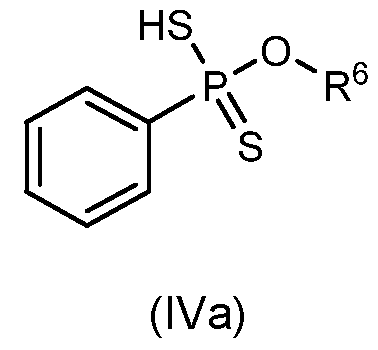


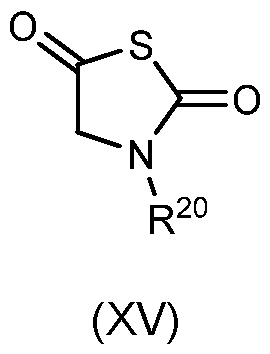
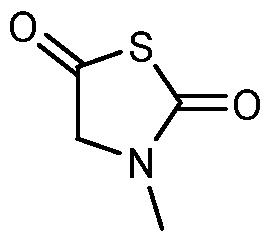


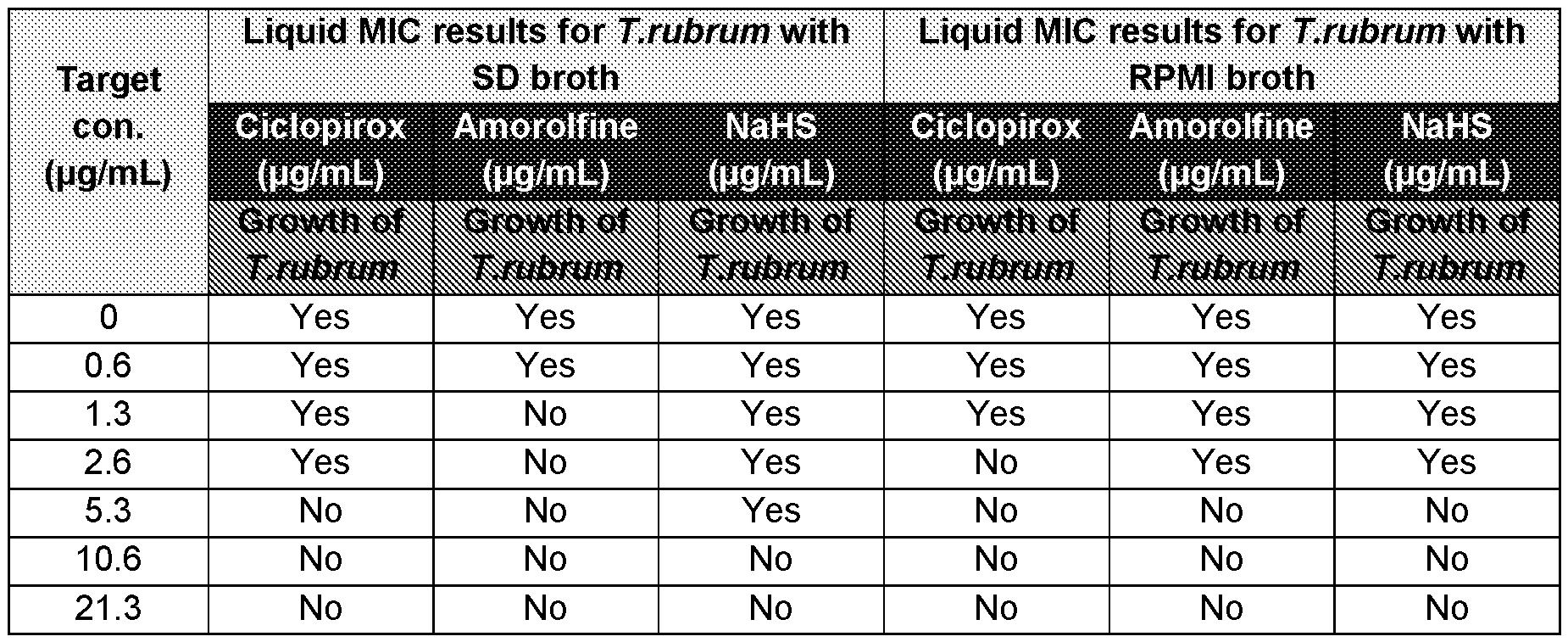


Claims
Priority Applications (4)
| Application Number | Priority Date | Filing Date | Title |
|---|---|---|---|
| KR1020267004358A KR20260040436A (en) | 2023-07-18 | 2024-07-17 | Hydrogen sulfide for the local treatment of nail infections |
| IL325809A IL325809A (en) | 2023-07-18 | 2024-07-17 | Hydrogen sulphide for topical treatment of nail infection |
| AU2024292014A AU2024292014A1 (en) | 2023-07-18 | 2024-07-17 | Hydrogen sulphide for topical treatment of nail infection |
| CN202480046961.8A CN121532176A (en) | 2023-07-18 | 2024-07-17 | Hydrogen sulfide for topical treatment of nail infections |
Applications Claiming Priority (2)
| Application Number | Priority Date | Filing Date | Title |
|---|---|---|---|
| GBGB2311007.5A GB202311007D0 (en) | 2023-07-18 | 2023-07-18 | Treatment |
| GB2311007.5 | 2023-07-18 |
Publications (1)
| Publication Number | Publication Date |
|---|---|
| WO2025017299A1 true WO2025017299A1 (en) | 2025-01-23 |
Family
ID=87758625
Family Applications (1)
| Application Number | Title | Priority Date | Filing Date |
|---|---|---|---|
| PCT/GB2024/051864 Pending WO2025017299A1 (en) | 2023-07-18 | 2024-07-17 | Hydrogen sulphide for topical treatment of nail infection |
Country Status (6)
| Country | Link |
|---|---|
| KR (1) | KR20260040436A (en) |
| CN (1) | CN121532176A (en) |
| AU (1) | AU2024292014A1 (en) |
| GB (1) | GB202311007D0 (en) |
| IL (1) | IL325809A (en) |
| WO (1) | WO2025017299A1 (en) |
Citations (10)
| Publication number | Priority date | Publication date | Assignee | Title |
|---|---|---|---|---|
| US7572998B2 (en) | 2004-05-28 | 2009-08-11 | Mohamed Abdel-Aleam H | Method and device for creating a micro plasma jet |
| US20110015588A1 (en) * | 2005-07-28 | 2011-01-20 | Weinfield Todd A | Apparatus and method for treatment of infected nail |
| WO2014132083A2 (en) * | 2013-03-01 | 2014-09-04 | Aston University | Hydrogen sulphide compounds |
| WO2016020407A1 (en) | 2014-08-05 | 2016-02-11 | Linde Aktiengesellschaft | Plasma treatment of an infected nail or infected skin |
| CN106539818A (en) * | 2015-09-20 | 2017-03-29 | 复旦大学 | Hydrogen sulfide and its donor sodium hydrosulfide are preparing the purposes promoted in hemopoietic medicine |
| WO2017062311A1 (en) * | 2015-10-07 | 2017-04-13 | Huizenga Joel | Resetting biological pathways for defending against and repairing deterioration from human aging |
| WO2018073605A1 (en) * | 2016-10-21 | 2018-04-26 | Ucl Business Plc. | Crystalline diethylamine tetrathiomolybdate and its pharmaceutical uses |
| WO2018175327A1 (en) | 2017-03-21 | 2018-09-27 | DeviceFarm Inc. | Onychomycosis treatment system and method |
| HUP1800016A1 (en) * | 2018-01-16 | 2019-07-29 | Debreceni Laszlo Dr | Process for preparing anti-onychomycotic composition containing potassium (poly)sulfide |
| US20220072007A1 (en) * | 2015-08-05 | 2022-03-10 | Cmpd Licensing, Llc | Compositions and methods for treating an infection |
-
2023
- 2023-07-18 GB GBGB2311007.5A patent/GB202311007D0/en not_active Ceased
-
2024
- 2024-07-17 CN CN202480046961.8A patent/CN121532176A/en active Pending
- 2024-07-17 AU AU2024292014A patent/AU2024292014A1/en active Pending
- 2024-07-17 WO PCT/GB2024/051864 patent/WO2025017299A1/en active Pending
- 2024-07-17 KR KR1020267004358A patent/KR20260040436A/en active Pending
- 2024-07-17 IL IL325809A patent/IL325809A/en unknown
Patent Citations (10)
| Publication number | Priority date | Publication date | Assignee | Title |
|---|---|---|---|---|
| US7572998B2 (en) | 2004-05-28 | 2009-08-11 | Mohamed Abdel-Aleam H | Method and device for creating a micro plasma jet |
| US20110015588A1 (en) * | 2005-07-28 | 2011-01-20 | Weinfield Todd A | Apparatus and method for treatment of infected nail |
| WO2014132083A2 (en) * | 2013-03-01 | 2014-09-04 | Aston University | Hydrogen sulphide compounds |
| WO2016020407A1 (en) | 2014-08-05 | 2016-02-11 | Linde Aktiengesellschaft | Plasma treatment of an infected nail or infected skin |
| US20220072007A1 (en) * | 2015-08-05 | 2022-03-10 | Cmpd Licensing, Llc | Compositions and methods for treating an infection |
| CN106539818A (en) * | 2015-09-20 | 2017-03-29 | 复旦大学 | Hydrogen sulfide and its donor sodium hydrosulfide are preparing the purposes promoted in hemopoietic medicine |
| WO2017062311A1 (en) * | 2015-10-07 | 2017-04-13 | Huizenga Joel | Resetting biological pathways for defending against and repairing deterioration from human aging |
| WO2018073605A1 (en) * | 2016-10-21 | 2018-04-26 | Ucl Business Plc. | Crystalline diethylamine tetrathiomolybdate and its pharmaceutical uses |
| WO2018175327A1 (en) | 2017-03-21 | 2018-09-27 | DeviceFarm Inc. | Onychomycosis treatment system and method |
| HUP1800016A1 (en) * | 2018-01-16 | 2019-07-29 | Debreceni Laszlo Dr | Process for preparing anti-onychomycotic composition containing potassium (poly)sulfide |
Non-Patent Citations (48)
| Title |
|---|
| ABE ET AL.: "The possible role of hydrogen sulfide as an endogenous neuromodulator", J. NEUROSCI., vol. 16, 1996, pages 1066 - 1071, XP003005350 |
| ATTRI ET AL.: "Atmospheric pressure plasma jet using a DC-powered microplasma torch: The operating characteristics.", PLASMA SOURCES SCIENCE AND TECHNOLOGY, vol. 22, no. 2, 2013, pages 025003 |
| BARAN R ET AL.: "Topical antifungal drugs for the treatment of onychomycosis: An overview of current strategies for monotherapy and combination therapy", J. EUR. ACAD. DERMATOLOGY VENEREOL, vol. 19, no. 1, 2005, pages 21 - 95 |
| BRANÝ, D. ET AL.: "Cold Atmospheric Plasma: A Powerful Tool for Modern Medicine.", INT. J. MOL. SCI., vol. 21, 2020, pages 2932, XP055958664, DOI: 10.3390/ijms21082932 |
| BULSON ET AL.: "Non-thermal atmospheric plasma treatment of onychomycosis in an in vitro human nail model.", MYCOSES, vol. 63, 2020, pages 225 - 232 |
| CAIRNS, T.L. ET AL., J. AM. CHEM. SOC., vol. 74, 1952, pages 3982 - 3989 |
| CERDA MM ET AL.: "Applications of Synthetic Organic Tetrasulfides as H2S Donors", ORG LETT., vol. 19, no. 9, 2017, pages 2314 - 2317 |
| CHADWICK ET AL.: "A Review of Hydrogen Sulfide (H S) Donors: Chemistry and Potential Therapeutic Applications", BIOCHEM. PHARMACOL., vol. 149, March 2018 (2018-03-01), pages 110 - 123 |
| CHADWICK R ET AL., JOURNAL OF THE AMERICAN CHEMICAL SOCIETY, vol. 138, no. 41, 2016, pages 13477 - 13480 |
| CSABA SZABÓ ET AL: "Hydrogen sulphide and angiogenesis: mechanisms and applications", BRITISH JOURNAL OF PHARMACOLOGY, WILEY-BLACKWELL, UK, vol. 164, no. 3, 8 September 2011 (2011-09-08), pages 853 - 865, XP071170967, ISSN: 0007-1188, DOI: 10.1111/J.1476-5381.2010.01191.X * |
| FOSTER J,. C ET AL.: "S-aroylthiooximes: a facile route to hydrogen sulfide releasing compounds with structure-dependent release kinetics", ORG LETT., vol. 16, no. 6, 2014, pages 1558 - 1561 |
| FRIDMAN ET AL.: "Applied plasma medicine.", PLASMA PROCESSES AND POLYMERS, vol. 5, no. 6, 2008, pages 503 - 533, XP002617381, DOI: 10.1002/PPAP.200700154 |
| FU ET AL.: "An antifungal role of hydrogen sulfide on the postharvest pathogens Aspergillus niger and Penicillium italicum.", PLOS ONE., vol. 9, 7 August 2014 (2014-08-07), pages 8 |
| GUPTA AK ET AL.: "Ciclopirox nail lacquer topical solution 8% in the treatment of toenail onychomycosis", J. AM. ACAD. DERMATOL, vol. 43, 29 October 2000 (2000-10-29), pages S70 - 80 |
| GUPTA AK ET AL.: "The Growing Problem of Antifungal Resistance in Onychomycosis and Other Superficial Mycoses", AM. J. CLIN. DERMATOL., vol. 22, no. 2, March 2021 (2021-03-01), pages 149 - 1574 |
| HEATHER D ET AL.: "Assessment of the nail penetration of antifungal agents, with different physico-chemical properties", PLOS ONE, vol. 15, no. 2, 2020, pages e0229414 |
| J. AM. ACAD. DERMATOL., vol. 73, no. 1, 2015, pages 62 - 98 |
| JERRY MARCH: "Advanced Organic Chemistry", 2001, JOHN WILEY AND SONS, pages: 131 - 133 |
| JOURNAL OF APPLIED MICROBIOLOGY, vol. 125, 2018, pages 398 - 408 |
| K. GUTSOL ET AL.: "Plasma assisted dissociation of hydrogen sulfide", INTERNATIONAL JOURNAL OF HYDROGEN ENERGY, vol. 37, no. 2, 2012, pages 1335 - 1347, XP028437595, DOI: 10.1016/j.ijhydene.2011.10.048 |
| KEITA S ET AL.: "The low keratin affinity of efinaconazole contributes to its nail penetration and fungicidal activity in topical onychomycosis treatment", ANTIMICROB AGENTS CHEMOTHER, vol. 58, no. 7, 2014, pages 3837 - 3842, XP055689441, DOI: 10.1128/AAC.00111-14 |
| KONG, M. G.: "Plasma medicine: An introductory review.", NEW JOURNAL OF PHYSICS, vol. 11, no. 11, 2019, pages 115012, XP020169363 |
| LAROUSSI, M.LU, X.: "Atmospheric pressure plasma jet for biomedical applications.", PLASMA SCIENCE, IEEE TRANSACTIONS ON, vol. 33, no. 2, 2005, pages 745 - 753 |
| LIANG DONG ET AL: "Cyclic polysulphide 1,2,4-trithiolane from stinky bean (Parkia speciosaseeds) is a slow releasing hydrogen sulphide (H2S) donor", JOURNAL OF FUNCTIONAL FOODS, ELSEVIER BV, NL, vol. 35, 25 May 2017 (2017-05-25), pages 197 - 204, XP085116415, ISSN: 1756-4646, DOI: 10.1016/J.JFF.2017.05.040 * |
| LING LI ET AL: "Endogenous hydrogen sulphide deficiency and exogenous hydrogen sulphide supplement regulate skin fibroblasts proliferation via necroptosis", EXPERIMENTAL DERMATOLOGY, BLACKWELL MUNSGAARD, COPENHAGEN; DK, vol. 33, no. 1, 17 November 2023 (2023-11-17), pages n/a, XP072576116, ISSN: 0906-6705, DOI: 10.1111/EXD.14972 * |
| LORIZZO M ET AL.: "Ciclopirox 8% HPCH nail lacquer in the treatment of mild-to-moderate onychomycosis: A randomized, double-blind amorolfine controlled study using a blinded evaluator", SKI APPENDAGE DISORD., pages 20157 |
| LUX ET AL.: "Inactivation of Dermatophytes Causing Onychomycosis and Its Therapy Using Non-Thermal Plasma.", J. FUNGI, vol. 6, 2020, pages 214 |
| MAGLI ET AL.: "H S Donors and Their Use in Medicinal Chemistry", BIOMOLECULES, vol. 11, 2021, pages 1899 |
| MARTELLI A ET AL.: "Arylthioamides as H S Donors: I-Cysteine-Activated Releasing Properties and Vascular Effects in Vitro and in Vivo.", ACS MED CHEM LETT, vol. 4, no. 10, 2013, pages 904 - 908 |
| MAYS SR ET AL.: "Cutaneous fungal infections in the oncology patient: recognition and management", AM. J. CLIN. DERMATOL., vol. 7, no. 1, 2006, pages 31 - 432 |
| MCAULEY WJ ET AL.: "An investigation of how fungal infection influences drug penetration through onychomycosis patient's nail plates", EUR. J. PHARM. BIOPHARM., vol. 102, 2016, pages 178 - 84, XP029487953, DOI: 10.1016/j.ejpb.2016.03.008 |
| MIAOMIAO HE ET AL: "A H2S-Evolving Alternately-Catalytic Enzyme Bio-Heterojunction with Antibacterial and Macrophage-Reprogramming Activity for All-Stage Infectious Wound Regeneration", ADVANCED MATERIALS, VCH PUBLISHERS, DE, vol. 36, no. 35, 6 July 2024 (2024-07-06), pages n/a, XP072693901, ISSN: 0935-9648, DOI: 10.1002/ADMA.202405659 * |
| MING-JIE WANG ET AL: "Mechanisms of angiogenesis: Role of hydrogen sulphide", CLINICAL AND EXPERIMENTAL PHARMACOLOGY AND PHYSIOLOGY, WILEY-BLACKWELL PUBLISHING ASIA, AU, vol. 37, no. 7, 10 February 2010 (2010-02-10), pages 764 - 771, XP071594487, ISSN: 0305-1870, DOI: 10.1111/J.1440-1681.2010.05371.X * |
| NATHER A ET AL.: "Epidemiology of diabetic foot problems and predictive factors for limb loss", J. DIABETES COMPLICATIONS, vol. 22, no. 2, 2008, pages 77 - 823, XP022479516, DOI: 10.1016/j.jdiacomp.2007.04.004 |
| PAWLAT ET AL.: "Possibility of Humid Municipal Wastes Hygienisation Using Gliding Arc Plasma Reactor.", WATER, vol. 13, no. 2, 2021, pages 194 |
| RICARDO JW ET AL.: "Safety of current therapies for onychomycosis", EXPERT OPINION ON DRUG SAFETY., vol. 19, no. 11, 2020, pages 1395 - 14081 |
| ROGER T ET AL.: "New biologically active hydrogen sulfide donors.", CHEMBIOCHEM., vol. 14, no. 17, 2013, pages 2268 - 2271, XP055355131, DOI: 10.1002/cbic.201300552 |
| STAHLWERMUTH: "Handbook of Pharmaceutical Salts: Properties, Selection, and Use", 2002, WILEY-VCH |
| STEIN ET AL.: "Redox biology of hydrogen sulfide: Implications for physiology, pathophysiology, and pharmacology", REDOX BIOLOGY, vol. 1, no. 1, 2013, pages 32 - 39, XP055378425, DOI: 10.1016/j.redox.2012.11.006 |
| TSCHEN EH ET AL.: "Efinaconazole solution in the treatment of toenail onychomycosis: a phase 2, multicenter, randomized, double-blind study", J. DRUGS DERMATOL., vol. 12, no. 2, 2013, pages 186 - 92, XP009194092 |
| UMAIR ET AL.: "Recent advances in plasma technology: Influence of atmospheric cold plasma on spore inactivation.", FOOD REV. INT., vol. 1, no. 1, 2021, pages 1 - 23 |
| WANG ET AL.: "Two's company, three's a crowd: can H S be the third endogenous gaseous transmitter?", FASEB J, vol. 16, no. 13, 2002, pages 1792 - 8 |
| WESTERBERG DPVOYACK MJ ET AL.: "Onychomycosis: Current trends in diagnosis and treatment", AM. FAM. PHYSICIAN, vol. 88, no. 11, 2013, pages 762 - 70 |
| ZAORSKA ET AL.: "Hydrogen Sulfide in Pharmacotherapy, Beyond the Hydrogen Sulfide-Donors", BIOMOLECULES, vol. 10, 2020, pages 323, XP055916759, DOI: 10.3390/biom10020323 |
| ZHANG YUE ET AL: "pH-responsive hierarchical H2S-releasing nano-disinfectant with deep-penetrating and anti-inflammatory properties for synergistically enhanced eradication of bacterial biofilms and wound infection", JOURNAL OF NANOBIOTECHNOLOGY, vol. 20, no. 1, 29 January 2022 (2022-01-29), XP009557452 * |
| ZHAO Y ET AL.: "Hydrogen Sulfide Donors Activated by Reactive Oxygen Species.", ANGEW CHEM INT ED ENGL., vol. 55, no. 47, 14 November 2016 (2016-11-14), pages 14638 - 14642, XP072097612, DOI: 10.1002/anie.201608052 |
| ZHENG Y ET AL.: "Esterase-Sensitive Prodrugs with Tunable Release Rates and Direct Generation of Hydrogen Sulfide.", ANGEW CHEM INT ED ENGL., vol. 55, no. 14, 24 March 2016 (2016-03-24), pages 4514 - 8 |
| ZHOU, Z. M ET AL.: "Thioglycine and L-thiovaline: Biologically active H S donors.", BIOORGANIC & MEDICINAL CHEMISTRY, vol. 20, no. 8, 2012, pages 2675 - 2678 |
Also Published As
| Publication number | Publication date |
|---|---|
| IL325809A (en) | 2026-03-01 |
| GB202311007D0 (en) | 2023-08-30 |
| AU2024292014A1 (en) | 2026-02-12 |
| CN121532176A (en) | 2026-02-13 |
| KR20260040436A (en) | 2026-03-24 |
Similar Documents
| Publication | Publication Date | Title |
|---|---|---|
| JP7046793B2 (en) | Compositions Containing Penetration Promoters for Drug Delivery | |
| ES2957559T3 (en) | Iodine compositions | |
| RU2014111445A (en) | ANTIMICROBIAL COMPOSITIONS AND METHODS OF APPLICATION | |
| JP2018528260A (en) | Antibacterial therapeutics and preventives | |
| ZA200604744B (en) | Endoparasiticidal agents for topical application | |
| CN105031609B (en) | The disinfectant and its preparation and use of the Cbf-14 containing antibacterial peptide | |
| EA028177B1 (en) | Composition comprising octenidine | |
| EP2753613A1 (en) | Derivatives of xanthone compounds | |
| US20240366735A1 (en) | Ocular antimicrobial compositions and methods of use thereof | |
| CN107638304A (en) | A kind of α black bearberry glycoside compositions of high Skin Cell infiltration and its preparation method and application | |
| CN117100681A (en) | Penetration-enhancing composition of ionic liquid and sponge spicules and its active composition and application | |
| AU2024292014A1 (en) | Hydrogen sulphide for topical treatment of nail infection | |
| Li et al. | Cyclodextrin-based self-assembling hydrogel for Photothermal-controlled nitric oxide release in stage-specific treatment of MRSA-induced arthritis | |
| Liu et al. | Strong infiltrative HHC36 antimicrobial peptide/silver nanoparticles-loaded carboxymethyl chitosan/sodium alginate hydrogel for acne vulgaris therapy | |
| CN102688257A (en) | Liquid molecular iodine disinfectant, preparation method and used container | |
| US12138309B2 (en) | Topical formulations containing phthalocyanine photosensitizers | |
| JP2009019017A (en) | Dermal preparation | |
| JP5854469B2 (en) | Method for producing transdermal absorbent | |
| CN119523962B (en) | Application of chlorogenic acid and blue light in the preparation of anti-photoaging products and thermosensitive transdermal delivery hydrogel loaded with chlorogenic acid | |
| JP2007197349A (en) | Transdermal absorption type pharmaceutical | |
| RU2595852C1 (en) | Antibacterial suppositories | |
| RU2617238C1 (en) | Method for preparation of drug with amber acid and cetylpyridinium chloride with local action | |
| Pedro | Formulações à Base de Solventes Eutécticos Profundos para o Desenvolvimento de Sistemas de Administração de Fármacos | |
| Nasereddin et al. | Topical Hydrosulphide Ion Gels: A Paradigm Shift in Onychomycosis Treatment | |
| CA2853013C (en) | Use of an albumin to stabilize chlorin e6 in aqueous solution |
Legal Events
| Date | Code | Title | Description |
|---|---|---|---|
| 121 | Ep: the epo has been informed by wipo that ep was designated in this application |
Ref document number: 24748693 Country of ref document: EP Kind code of ref document: A1 |
|
| WWE | Wipo information: entry into national phase |
Ref document number: 325809 Country of ref document: IL |
|
| WWE | Wipo information: entry into national phase |
Ref document number: AU2024292014 Country of ref document: AU |
|
| REG | Reference to national code |
Ref country code: BR Ref legal event code: B01A Ref document number: 112026001050 Country of ref document: BR |
|
| WWE | Wipo information: entry into national phase |
Ref document number: 202617007630 Country of ref document: IN |
|
| WWP | Wipo information: published in national office |
Ref document number: 325809 Country of ref document: IL |
|
| ENP | Entry into the national phase |
Ref document number: 1020267004358 Country of ref document: KR Free format text: ST27 STATUS EVENT CODE: A-0-1-A10-A15-NAP-PA0105 (AS PROVIDED BY THE NATIONAL OFFICE) |
|
| WWE | Wipo information: entry into national phase |
Ref document number: 1020267004358 Country of ref document: KR |
|
| ENP | Entry into the national phase |
Ref document number: 2024292014 Country of ref document: AU Date of ref document: 20240717 Kind code of ref document: A |
|
| WWE | Wipo information: entry into national phase |
Ref document number: 2024748693 Country of ref document: EP |
|
| NENP | Non-entry into the national phase |
Ref country code: DE |
|
| WWP | Wipo information: published in national office |
Ref document number: 1020267004358 Country of ref document: KR |