WO2025004381A1 - 優先度変更装置、優先度変更システム、および、優先度変更方法 - Google Patents
優先度変更装置、優先度変更システム、および、優先度変更方法 Download PDFInfo
- Publication number
- WO2025004381A1 WO2025004381A1 PCT/JP2023/024515 JP2023024515W WO2025004381A1 WO 2025004381 A1 WO2025004381 A1 WO 2025004381A1 JP 2023024515 W JP2023024515 W JP 2023024515W WO 2025004381 A1 WO2025004381 A1 WO 2025004381A1
- Authority
- WO
- WIPO (PCT)
- Prior art keywords
- data
- priority
- change
- processing
- relevance
- Prior art date
- Legal status (The legal status is an assumption and is not a legal conclusion. Google has not performed a legal analysis and makes no representation as to the accuracy of the status listed.)
- Ceased
Links
Images






Classifications
-
- G—PHYSICS
- G06—COMPUTING OR CALCULATING; COUNTING
- G06F—ELECTRIC DIGITAL DATA PROCESSING
- G06F9/00—Arrangements for program control, e.g. control units
- G06F9/06—Arrangements for program control, e.g. control units using stored programs, i.e. using an internal store of processing equipment to receive or retain programs
- G06F9/46—Multiprogramming arrangements
- G06F9/48—Program initiating; Program switching, e.g. by interrupt
- G06F9/4806—Task transfer initiation or dispatching
- G06F9/4843—Task transfer initiation or dispatching by program, e.g. task dispatcher, supervisor, operating system
- G06F9/4881—Scheduling strategies for dispatcher, e.g. round robin, multi-level priority queues
-
- G—PHYSICS
- G06—COMPUTING OR CALCULATING; COUNTING
- G06F—ELECTRIC DIGITAL DATA PROCESSING
- G06F9/00—Arrangements for program control, e.g. control units
- G06F9/06—Arrangements for program control, e.g. control units using stored programs, i.e. using an internal store of processing equipment to receive or retain programs
- G06F9/46—Multiprogramming arrangements
- G06F9/48—Program initiating; Program switching, e.g. by interrupt
Definitions
- the technology disclosed in this specification relates to technology for changing the priority of data processing.
- Patent Document 1 data processing priorities are set based on the changing trends of the data, preventing overload conditions.
- the technology disclosed in this specification was developed in consideration of the problems described above, and is a technology that ensures the processing of high-priority data while reducing the load caused by data processing.
- the priority change device which is a first aspect of the technology disclosed in the present specification, is a priority change device that changes the priority of processing multiple data, and for each of the data, the priority of the data and a degree of relevance indicating the degree of relevance of the data with other data are set, and the device is equipped with a priority change unit for changing the priority of the data, and a data selection unit for selecting, from the multiple data, the data for which processing is to be reduced based on the priority, the priority change unit changes the priority of priority-related data, which is the data related to the priority change data, based on the degree of relevance of the priority change data, which is the data for which the priority has been changed, and the data selection unit selects, from the multiple data including the priority change data and the priority-related data, the data for which processing is to be reduced based on the priority.
- FIG. 1 is a diagram conceptually illustrating an example of the configuration of a monitoring and control system corresponding to a priority change system according to an embodiment.
- 11 is a flowchart illustrating an example of an operation of a priority change unit according to the embodiment.
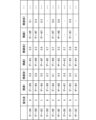
- FIG. 13 is a diagram illustrating an example of data in a priority model management database.
- 10 is a flowchart illustrating an example of an operation of a load level adjusting unit according to the embodiment.
- FIG. 13 is a diagram illustrating an example of data in a priority model management database.
- 10 is a flowchart illustrating another example of the operation of the load level adjusting unit according to the embodiment.
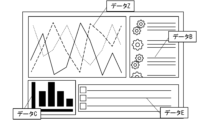
- FIG. 13 is a diagram showing an example of display of image data on a display device.
- FIG. 11 is a diagram showing another example of the display of image data on the display device.
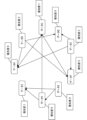
- FIG. 13 is a diagram illustrating an example of model management in a priority model management database.
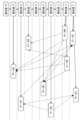
- FIG. 11 is a diagram illustrating another example of model management in the priority model management database.
- 2 is a diagram illustrating a schematic example of a hardware configuration when the priority changing system illustrated in FIG. 1 is actually operated;
- FIG. 2 is a diagram illustrating a schematic example of a hardware configuration when the priority changing system illustrated in FIG. 1 is actually operated;
- FIG. 1 is a diagram conceptually showing an example of the configuration of a monitoring and control system compatible with a priority changing system according to this embodiment.
- the monitoring control system 1 includes a priority change unit 10 that receives a priority change command 100, a priority model management database 12 that records the priority and relevance of monitoring data processing, a load level adjustment unit 14 that adjusts the load level resulting from data processing based on the priority (specifically, selects the data to be processed), a monitoring data management database 18 that records the monitoring data itself, a display data creation unit 16 that retrieves the data selected by the load level adjustment unit 14 from the monitoring data management database 18 and creates display data, and a display device 20 that displays the created display data.
- the priority model management database 12, the priority change unit 10, or the load level adjustment unit 14 may be provided in and operate on the cloud. In this way, the processing load can be distributed.
- the functional group consisting of the priority change unit 10, the priority model management database 12, and the load level adjustment unit 14 is also referred to as the monitoring control device 2 (corresponding to the priority change device).
- the priority model management database 12 may be provided outside the monitoring control device 2 and may access the priority change unit 10 and the load level adjustment unit 14 as appropriate.
- the load on the system caused by data processing can be reduced by selecting data to be processed based on priority in the load level adjustment unit 14.
- the priority that is the basis for the load level adjustment unit 14 to select data is dynamically changed by the priority change unit 10 in response to a priority change command 100, and is recorded in the priority model management database 12.
- a preset priority for the processing of each data item and a preset relevance value indicating the degree of relevance of each data item with other data items are recorded in association with the corresponding data item.
- a data priority is set for each data item and is indicated by a value from 1 to 10, for example, with a higher value indicating that the processing of the data item is given higher priority.
- Data relevance is set to one or more values for each data item and is indicated by a value from 0 to 1 (including decimals), for example. A higher value indicates that the data item is more strongly related to other data items (each of the data items when a relationship with multiple data items is assumed).
- the data relevance can be set by the user, and can also be changed as appropriate based on the similarity of the data item's change trends (i.e., setting a higher priority for data items with similar change trends).
- the degree of association between data is a value calculated from, for example, the relationship between configurations of facilities or equipment (including the relationship between installation locations), the relationship in the distribution flow of a power system, relationships such as superior-subordinate relationships in a processing flow (including the relationship between the flow of materials such as the processing flow of water treatment), relationships such as trains on the same track in traffic management, relationships between parts on a display screen to which data has been assigned, relationships resulting from the input tendencies of users (workers) on a display screen, and system relationships such as configurations provided from the same data source.
- the relationships between data managed by the priority model management database 12 may be held as a tree structure, or may be held as a graph database in which the relationships between data are described as node connections.
- data whose priority has been changed priority-changed data
- related data priority-related data
- the priority change command 100 is information generated by an alarm that is issued when an abnormality occurs in other equipment within the monitoring and control system 1 or in related equipment outside the monitoring and control system 1, an alarm that is issued when the amount of data processing exceeds a threshold, or feedback from an operator via the display device 20.
- the priority change command 100 includes information for identifying the data for which the priority is to be changed, information regarding the amount of change in priority, and information regarding the reason why the priority needed to be changed (such as the equipment in which the abnormality occurred).
- the priority change unit 10 dynamically changes the priority of each data recorded in the priority model management database 12 based on the priority change command 100. For example, the priority of data related to an abnormal device is changed to a higher priority depending on the reason for the need to change the priority. However, in cases where the processing load on the priority change unit 10 becomes large, the priority change operation of the priority change unit 10 may be such that only a change flag is added to the priority of the priority change data and the priority related data recorded in the priority model management database 12, and the load level adjustment unit 14 converts the changed priority based on the change flag (including rewriting the actual numerical value).
- the load level adjustment unit 14 can later change the priority of other data by tracing the relationship from several data with high priority, thereby reducing the processing load on the priority change unit 10.
- the priority change unit 10 can also change the priority of data (priority related data) related to that data (priority change data) according to the degree of relevance (simultaneously or sequentially in time).
- the priority of data (priority related data) related to that data is also changed as a result of the priority change operation of the certain data (priority change data).
- the load level adjustment unit 14 selects data to be sent to the display device 20 while taking into consideration the priority of the data by referring to the priority model management database 12. Specifically, the load level adjustment unit 14 selects data for reducing the load of data processing (data for which processing is reduced by excluding it from normal processing targets). In addition, the load level adjustment unit 14 considers the relationship (degree of association) between data when selecting data to be sent to the display device 20.
- the load level adjustment unit 14 determines that, of data A and data ⁇ , which have the same priority, data A has a higher priority because its related data has a higher priority (in this case, the sum of the priorities of the related data is larger), and selects it.
- the sum of the priorities of the related data is used as the criterion for judgment, but if the number of related data is different, the average priority may be used, or the priorities of the related data may be converted by weighting them according to the degree of relevance.
- Fig. 2 is a flowchart showing an example of the operation of the priority change unit 10 according to the present embodiment.
- the priority change unit 10 judges whether or not a priority change command 100 has been issued (step ST01 in FIG. 2). If the priority change command 100 has been issued, the process proceeds to step ST02. On the other hand, if the priority change command 100 has not been issued, step ST01 is repeated.
- the priority change unit 10 increases the priority of the data collected by that device.
- the priority change unit 10 changes the priority of the target data according to a specified amount input by the user together with the priority change command 100.
- Such data whose priority is changed according to the priority change command 100 is called priority change data.
- the priority change unit 10 obtains the degree of association between the priority change data, which is data whose priority is changed by the priority change command 100, and the priority related data, which is data related to the priority change data, from the priority model management database 12 (step ST02 in FIG. 2).
- the priority change unit 10 changes the priority of the priority change data and the priority of the priority related data (step ST03 in FIG. 2).
- the amount of change in the priority of the priority related data is determined according to the degree of relevance with the priority change data.
- the priority change unit 10 can multiply this difference by the relevance of the priority related data with the priority change data (in this case, the relevance is assumed to be in the range of 0 to 1.0) and determine this value as the difference in the priority change of the priority related data.
- the priority change unit 10 changes the priority of each of the priority change data and its priority related data.
- the priority change unit 10 then waits until the next priority change command 100 is received (step ST04 in FIG. 2).
- the priority change command 100 may be issued again, for example, when the abnormality in the device is resolved. In other words, when it is no longer necessary to maintain the high priority of the data related to the device in which the abnormality occurred, the priority change command 100 is issued to assign a priority appropriate to the next state (i.e., when the system is normal) to each piece of data, and as a result, the priority of each piece of data may be reset for each event (such as an abnormality in the device).
- FIG. 3 is a diagram showing an example of data in the priority model management database 12. As shown in the example in FIG. 3, one priority is set for each data (data A to data Z), and further, data related to each data and its degree of relevance are shown in order. The number of data related to each data is not all the same; there may be only one, or there may be no relevant data.
- the priority change unit 10 changes data F based on the priority change command 100
- the priority change unit 10 also changes the priorities of data B, data C, and data E according to their relevance to data F, with reference to FIG. 3.
- priority is defined in the range of 1 to 10
- relevance is defined in the range of 0 to 1.0, with higher numbers indicating higher priority and relevance.
- Fig. 4 is a flowchart showing an example of the operation of the load level adjusting unit 14 according to this embodiment.
- the above system load level refers to the load on the system (including the monitoring and control system 1) involved in data processing, and may be, for example, the CPU load of the monitoring and control system 1, or the drawing load of the display device.
- the system load does not cause problems during normal processing as long as all data is processed normally, but the load may become high when the amount of data requiring processing increases due to an abnormality or other reason.
- the load level adjustment unit 14 judges whether the system load level is high or not (step ST11). For this judgment, for example, a method of setting a threshold value for the CPU load or the drawing load, etc., and detecting whether the threshold value has been exceeded can be considered. If the system load is not high, the operation is terminated.
- the load level adjustment unit 14 selects data (processing reduction data) that has the lowest priority from the priority model management database 12 and therefore reduces processing (step ST12). Note that the processing reduction data selected by the load level adjustment unit 14 at this time also includes the priority change data whose priority has been changed by the priority change command 100 and the priority related data.
- the load level adjustment unit 14 determines whether there are multiple pieces of data with the lowest priority (processing reduction data) (step ST13).
- the load level adjustment unit 14 further searches the priority model management database 12 for data related to those pieces of data (processing reduction related data, which is data that has a degree of association with the processing reduction data). Then, of the multiple pieces of processing reduction data, those pieces of processing reduction related data with high priority are removed from the selection candidates (step ST14). On the other hand, if there are not multiple pieces of data with the lowest priority (processing reduction data), the process proceeds to step ST15.
- the above process is repeated until one piece of processing reduction data is selected by the load level adjustment unit 14. However, depending on the data processing capacity of the system, multiple pieces of processing reduction data may be selected, or no processing reduction data may be selected (the load level adjustment unit 14 may not perform a data selection operation).
- the load level adjustment unit 14 then reduces the load imposed on the processing of the selected reduced processing data (step ST15). Specifically, this can involve lengthening the processing interval for the reduced processing data, or excluding the reduced processing data from the targets of data processing.
- reduced processing data refers to data that is excluded from normal processing targets that are not reduced and has its processing reduced, and does not refer only to data that is completely excluded from the targets of data processing. For example, in the case of screen drawing processing, this can involve lowering the resolution, excluding the data from targets for screen refreshing, etc. Then, the process returns to step ST11.
- FIG. 5 is a diagram showing an example of data in the priority model management database 12.
- each data is arranged in descending order of priority, and data C and data Z (both with a priority of 1) and data B and data E (both with a priority of 2) are shown, which are set with the same priority (priority 1).
- the load level adjustment unit 14 can select one of the processing reduction data from data C and data Z, as shown in step ST14 above.
- the load level adjustment unit 14 first refers to FIG. 3 and determines that the processing reduction related data for data C are data A, data F, and data Y, and that the processing reduction related data for data Z are data X and data Y. The load level adjustment unit 14 then confirms that the average priority value of data A, data F, and data Y is higher than the average priority value of data X and data Y. The load level adjustment unit 14 can then select data Z as the processing reduction data.
- the load level adjustment unit 14 can select one of the processing reduction data from data B and data E, as shown in step ST14 above.
- the load level adjustment unit 14 first refers to FIG. 3 and determines that the processing reduction-related data for data B is data A, data D, and data F, and that the processing reduction-related data for data E is data A, data D, and data F. The load level adjustment unit 14 then confirms that the priority of the processing reduction-related data for data B and data E is the same. In such a case, the load level adjustment unit 14 can further refer to the relevance of the processing reduction-related data, and select data E, which has a low relevance to the processing reduction-related data with the highest priority (data A), as the processing reduction data.
- FIG. 6 is a flowchart showing another example of the operation of the load level adjustment unit 14 according to this embodiment.
- the load level adjustment unit 14 judges whether the system load level is high or not (step ST21). For this judgment, for example, a method of setting a threshold value for the CPU load or the drawing load, etc., and detecting whether the threshold value has been exceeded can be considered. If the system load is not high, the operation is terminated.
- the load level adjustment unit 14 selects data (processing reduction data) whose priority is lower than a predetermined threshold from the priority model management database 12 (step ST22). Note that the processing reduction data selected by the load level adjustment unit 14 at this time also includes priority change data whose priority has been changed by the priority change command 100 and priority related data.
- the load level adjustment unit 14 reduces the load imposed on the processing of the one or more pieces of processing reduction data (step ST23).
- the load level adjustment unit 14 determines whether the system load level is lower than the threshold value (step ST24). If the system load level is lower than the threshold value, the process proceeds to step ST25. On the other hand, if the system load level is higher than the threshold value, the process returns to step ST21.
- step ST25 the load level adjustment unit 14 cancels the measure to reduce the processing load starting from the data with the highest priority among the processing reduction data until the system load level reaches the threshold value (i.e., performs normal data processing). Then, when the system load level reaches the threshold value, the process returns to step ST21.
- the threshold value i.e., performs normal data processing
- the above operation can reduce the load on processing data with a lower priority than the threshold in one go, shortening the time required to reduce the load and simplifying the operations required to reduce the load.
- ⁇ Display example on the display device 20> 7 is a diagram showing an example of image data displayed on the display device 20.
- data B, data C, data E, and data Z in Fig. 3 are displayed on the display device 20.
- FIG. 8 is a diagram showing another example of the display of image data on the display device 20.
- FIG. 8 shows an example of a display in which the display processing of data with a lower priority than the threshold value is reduced in the operation shown in FIG. 6.
- none of data B, data C, data E, and data Z in FIG. 3 are displayed on the display device 20.
- Fig. 9 is a diagram showing an example of model management in the priority model management database 12.
- Fig. 9 shows a directed graph in which each node indicates data and its priority, and edges between nodes indicate the degree of association between data.
- FIG. 10 is a diagram showing another example of model management in the priority model management database 12.
- a directed graph is shown in which each node indicates data and its priority, and edges between nodes indicate the degree of association between data.
- priority nodes are arranged in descending order of priority.
- the priority of data may be changed temporarily in response to an alarm or the like, or may be changed permanently after learning input trends on the display device 20 by the user.
- AI may be used to learn user input trends and to determine whether or not to make the priority changes permanent. By using AI to learn from large amounts of data, more accurate decisions can be made quickly. AI on the cloud may be used.
- Events that cause a change in priority include feedback from user input, and the resulting change in priority includes changes in the display method, such as the screen display magnification, the size of the display area, or a change in the display orientation.
- ⁇ Hardware configuration of the priority change system> 11 and 12 are diagrams illustrating an example of a hardware configuration when the priority changing system shown in FIG. 1 is actually operated.
- a configuration illustrated in FIG. 1 is made up of multiple hardware configurations illustrated in FIG. 11 and FIG. 12; a configuration illustrated in FIG. 1 corresponds to a portion of a hardware configuration illustrated in FIG. 11 and FIG. 12; and further, multiple configurations illustrated in FIG. 1 are provided in a single hardware configuration illustrated in FIG. 11 and FIG. 12.
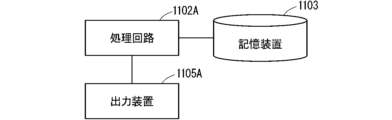
- FIG. 11 the hardware configuration for realizing the priority change unit 10, priority model management database 12, load level adjustment unit 14, display data creation unit 16, monitoring data management database 18, etc. in FIG. 1 is shown, which includes a processing circuit 1102A that performs calculations, a storage device 1103 that can store information, and an output device 1105A that can output information, such as a display, liquid crystal display device, or lamp.
- a processing circuit 1102A that performs calculations
- a storage device 1103 that can store information
- an output device 1105A that can output information, such as a display, liquid crystal display device, or lamp.
- FIG. 12 the hardware configuration for realizing the priority change unit 10, priority model management database 12, load level adjustment unit 14, display data creation unit 16, monitoring data management database 18, etc. in FIG. 1 is shown, which includes a processing circuit 1102B that performs calculations, and an output device 1105B that can output information, such as a display, liquid crystal display device, or lamp.
- the priority model management database 12 and the monitoring data management database 18 are realized by the storage device 1103 or another storage device (not shown here).
- the storage device 1103 may be, for example, a hard disk drive (HDD), random access memory (RAM), read only memory (ROM), flash memory, erasable programmable read only memory (EPROM), electrically erasable programmable read-only memory (EEPROM), or other volatile or non-volatile semiconductor memory, a magnetic disk, a flexible disk, an optical disk, a compact disk, a mini disk, or a DVD, or any other memory device to be used in the future.
- HDD hard disk drive
- RAM random access memory
- ROM read only memory
- EPROM erasable programmable read only memory
- EEPROM electrically erasable programmable read-only memory
- the processing circuit 1102A may execute a program stored in the storage device 1103, an external CD-ROM, an external DVD-ROM, or an external flash memory. That is, the processing circuit 1102A may be, for example, a central processing unit (CPU), a microprocessor, a microcomputer, or a digital signal processor (DSP).
- CPU central processing unit
- DSP digital signal processor
- the priority change unit 10, the load level adjustment unit 14, and the display data creation unit 16 are realized by software, firmware, or a combination of software and firmware in which the program stored in the storage device 1103 is executed by the processing circuit 1102A.
- the functions of the priority change unit 10, the load level adjustment unit 14, and the display data creation unit 16 may be realized, for example, by multiple processing circuits working together.
- the software and firmware may be written as a program and stored in the storage device 1103.
- the processing circuit 1102A realizes the above functions by reading and executing the program stored in the storage device 1103.
- the storage device 1103 may store a program that, when executed by the processing circuit 1102A, results in the above functions being realized.
- the processing circuit 1102B may also be dedicated hardware, i.e., a single circuit, a composite circuit, a programmed processor, a parallel programmed processor, an application specific integrated circuit (ASIC), a field-programmable gate array (FPGA), or a combination of these.
- dedicated hardware i.e., a single circuit, a composite circuit, a programmed processor, a parallel programmed processor, an application specific integrated circuit (ASIC), a field-programmable gate array (FPGA), or a combination of these.
- the priority change unit 10, the load level adjustment unit 14, and the display data creation unit 16 are realized by the operation of the processing circuit 1102B. Note that the functions of the priority change unit 10, the load level adjustment unit 14, and the display data creation unit 16 may be realized by separate circuits or by a single circuit.
- the functions of the priority change unit 10, the load level adjustment unit 14, and the display data creation unit 16 may be partly realized in a processing circuit 1102A that executes a program stored in a storage device 1103, and partly realized in a processing circuit 1102B that is dedicated hardware.
- the display device 20 is realized by the output device 1105A or the output device 1105B.
- the priority change device includes a priority change unit 10 and a data selection unit.
- the data selection unit corresponds to, for example, the load level adjustment unit 14.
- the priority change unit 10 changes the priority of the data.
- the load level adjustment unit 14 selects data for which processing is to be reduced from a plurality of pieces of data based on the priority.
- the priority change unit 10 changes the priority of priority-related data, which is data related to the priority change data, based on the degree of relevance of the priority change data, which is data whose priority has been changed. Then, the load level adjustment unit 14 selects data for which processing is to be reduced based on the priority from a plurality of pieces of data including the priority change data and the priority-related data.
- the priority change device includes a processing circuit 1102A that executes a program, and a storage device 1103 that stores the program to be executed. Then, the processing circuit 1102A executes the program, thereby realizing the following operations.
- a priority and a relevance indicating the degree of relevance with other data are set for each data. Then, the priority of the data is changed. Then, data for which processing is to be reduced is selected from the multiple data based on the priority.
- changing the priority means changing the priority of priority-related data, which is data related to the priority-changed data, based on the relevance of the priority-changed data, which is the data whose priority has been changed.
- selecting data means selecting data for which processing is to be reduced based on the priority from the multiple data including the priority-changed data and the priority-related data.
- the priority change device includes a processing circuit 1102B, which is dedicated hardware.
- the processing circuit 1102B which is dedicated hardware, performs the following operations.
- the processing circuit 1102B which is dedicated hardware, sets a priority and a relevance indicating the degree of relevance with other data for each piece of data. Then, the priority of the data is changed. Then, from among the multiple pieces of data, data for which processing is to be reduced is selected based on the priority.
- changing the priority means changing the priority of priority-related data, which is data related to priority-changed data, based on the relevance of the priority-changed data, which is data whose priority has been changed.
- selecting data means selecting data for which processing is to be reduced based on priority from among multiple pieces of data including the priority-changed data and priority-related data.
- the priority change device includes a database for recording the priority and relevance of each piece of data.
- the database corresponds to, for example, the priority model management database 12.
- the priority change unit 10 changes the priority of the data recorded in the priority model management database 12. According to this configuration, by changing the priority of the priority change data and the priority related data, it is possible to ensure the processing of high priority data while reducing the processing of low priority data.
- the priority model management database 12 is configured as a table that stores priority and relevance in association with each other, a directed graph in which each node indicates data and its priority and edges between nodes indicate relevance, or a tree structure in which each node indicates data and its priority and edges indicate relevance.
- the priority change unit 10 increases the amount of change in priority of the priority related data the higher the relevance to the priority change data.
- the higher the relevance of the priority related data to the priority change data the same amount of change in priority as the priority change data, so that important related data can be reliably processed.
- the load level adjustment unit 14 selects data for which processing is to be reduced based on the priority of the data related to each piece of data.
- the relevance can be changed based on an external input or the similarity of the change trends of the corresponding data.
- the accuracy of the relevance can be improved.
- the priority change system includes a first database, a priority change unit 10, a load level adjustment unit 14, a second database, and a display unit.
- the first database corresponds to, for example, the priority model management database 12 or the like.
- the second database corresponds to, for example, the monitoring data management database 18 or the like.
- the display unit corresponds to, for example, the display device 20 or the like.
- a priority and a degree of association indicating the degree of association with other data are set for each data.
- the priority model management database 12 records the priority and the degree of association for each data.
- the priority change unit 10 changes the priority of the data recorded in the priority model management database 12.
- the load level adjustment unit 14 selects data for which processing is to be reduced from the multiple data based on the priority.
- the monitoring data management database 18 records each data.
- the display device 20 acquires and displays data other than the selected data from the monitoring data management database 18.
- the priority change unit 10 changes the priority of the priority related data, which is data related to the priority change data, based on the relevance of the priority change data, which is data whose priority has been changed.
- the load level adjustment unit 14 selects data for which processing is to be reduced, based on priority, from among multiple data including the priority change data and the priority related data.
- a priority and a relevance indicating the degree of relevance with other data are set for each data. Then, the priority of the data is changed. Then, data for which processing is to be reduced is selected from the multiple data based on the priority.
- changing the priority means changing the priority of priority-related data, which is data related to the priority-changed data, based on the relevance of the priority-changed data, which is the data whose priority has been changed.
- selecting data means selecting data for which processing is to be reduced based on the priority from the multiple data including the priority-changed data and the priority-related data.
- each of the components described in the above embodiments is assumed to be software or firmware, and also corresponding hardware, and in the case of software, it is referred to as, for example, a "unit,” and in the case of hardware, it is referred to as, for example, a "processing circuit.”
- 1 monitoring and control system 2 monitoring and control device, 5 priority, 10 priority change unit, 12 priority model management database, 14 load level adjustment unit, 16 display data creation unit, 18 monitoring data management database, 20 display device, 100 priority change command, 1102A processing circuit, 1102B processing circuit, 1103 storage device, 1105A output device, 1105B output device.
Landscapes
- Engineering & Computer Science (AREA)
- Software Systems (AREA)
- Theoretical Computer Science (AREA)
- Physics & Mathematics (AREA)
- General Engineering & Computer Science (AREA)
- General Physics & Mathematics (AREA)
- Information Retrieval, Db Structures And Fs Structures Therefor (AREA)
Priority Applications (4)
| Application Number | Priority Date | Filing Date | Title |
|---|---|---|---|
| PCT/JP2023/024515 WO2025004381A1 (ja) | 2023-06-30 | 2023-06-30 | 優先度変更装置、優先度変更システム、および、優先度変更方法 |
| CN202380099511.0A CN121359122A (zh) | 2023-06-30 | 2023-06-30 | 优先级变更装置、优先级变更系统以及优先级变更方法 |
| DE112023006201.3T DE112023006201T5 (de) | 2023-06-30 | 2023-06-30 | Prioritätsniveau-Änderungseinrichtung, Prioritätsniveau-Änderungssystem und Prioritätsniveau-Änderungsverfahren |
| JP2025529404A JPWO2025004381A1 (https=) | 2023-06-30 | 2023-06-30 |
Applications Claiming Priority (1)
| Application Number | Priority Date | Filing Date | Title |
|---|---|---|---|
| PCT/JP2023/024515 WO2025004381A1 (ja) | 2023-06-30 | 2023-06-30 | 優先度変更装置、優先度変更システム、および、優先度変更方法 |
Publications (1)
| Publication Number | Publication Date |
|---|---|
| WO2025004381A1 true WO2025004381A1 (ja) | 2025-01-02 |
Family
ID=93938434
Family Applications (1)
| Application Number | Title | Priority Date | Filing Date |
|---|---|---|---|
| PCT/JP2023/024515 Ceased WO2025004381A1 (ja) | 2023-06-30 | 2023-06-30 | 優先度変更装置、優先度変更システム、および、優先度変更方法 |
Country Status (4)
| Country | Link |
|---|---|
| JP (1) | JPWO2025004381A1 (https=) |
| CN (1) | CN121359122A (https=) |
| DE (1) | DE112023006201T5 (https=) |
| WO (1) | WO2025004381A1 (https=) |
Cited By (1)
| Publication number | Priority date | Publication date | Assignee | Title |
|---|---|---|---|---|
| CN120541276A (zh) * | 2025-05-23 | 2025-08-26 | 北京百融睿博科技有限公司 | 优先级分配方法、回复规则匹配方法、装置、电子设备及程序产品 |
Citations (3)
| Publication number | Priority date | Publication date | Assignee | Title |
|---|---|---|---|---|
| JP2015207798A (ja) * | 2014-04-17 | 2015-11-19 | 株式会社 日立産業制御ソリューションズ | 映像データ管理方法及び監視カメラ装置及び監視カメラシステム |
| US20180321052A1 (en) * | 2015-11-05 | 2018-11-08 | Intercept Ip Ltd | Controller |
| JP2020028005A (ja) * | 2018-08-10 | 2020-02-20 | 日本電信電話株式会社 | 保守管理システムおよびデータ処理方法 |
-
2023
- 2023-06-30 JP JP2025529404A patent/JPWO2025004381A1/ja not_active Ceased
- 2023-06-30 DE DE112023006201.3T patent/DE112023006201T5/de not_active Withdrawn
- 2023-06-30 CN CN202380099511.0A patent/CN121359122A/zh active Pending
- 2023-06-30 WO PCT/JP2023/024515 patent/WO2025004381A1/ja not_active Ceased
Patent Citations (3)
| Publication number | Priority date | Publication date | Assignee | Title |
|---|---|---|---|---|
| JP2015207798A (ja) * | 2014-04-17 | 2015-11-19 | 株式会社 日立産業制御ソリューションズ | 映像データ管理方法及び監視カメラ装置及び監視カメラシステム |
| US20180321052A1 (en) * | 2015-11-05 | 2018-11-08 | Intercept Ip Ltd | Controller |
| JP2020028005A (ja) * | 2018-08-10 | 2020-02-20 | 日本電信電話株式会社 | 保守管理システムおよびデータ処理方法 |
Cited By (1)
| Publication number | Priority date | Publication date | Assignee | Title |
|---|---|---|---|---|
| CN120541276A (zh) * | 2025-05-23 | 2025-08-26 | 北京百融睿博科技有限公司 | 优先级分配方法、回复规则匹配方法、装置、电子设备及程序产品 |
Also Published As
| Publication number | Publication date |
|---|---|
| DE112023006201T5 (de) | 2026-03-05 |
| CN121359122A (zh) | 2026-01-16 |
| JPWO2025004381A1 (https=) | 2025-01-02 |
Similar Documents
| Publication | Publication Date | Title |
|---|---|---|
| US8396917B2 (en) | Storage management system, storage hierarchy management method, and management server capable of rearranging storage units at appropriate time | |
| US12080362B2 (en) | Method and apparatus for providing wear leveling | |
| US10503145B2 (en) | System and method for asset fleet monitoring and predictive diagnostics using analytics for large and varied data sources | |
| US20180157427A1 (en) | Memory system and operating method thereof | |
| EP3879470B1 (en) | Data management system and data management method | |
| KR20110087192A (ko) | 데이터 요소 배치 제공 방법 및 컴퓨터 프로그램 제품 | |
| CN110032480A (zh) | 一种服务器异常检测方法、装置及设备 | |
| US11507484B2 (en) | Ethod and computer storage node of shared storage system for abnormal behavior detection/analysis | |
| JP4896593B2 (ja) | 性能監視方法、計算機及び計算機システム | |
| US12067251B2 (en) | Data automation and predictive modeling for planning and procuring solid state drive replacements | |
| US20160026646A1 (en) | Recording medium having data recorded therein in data file format structure for visualization of large capacity cfd parallel data and method for generating said data file format structure | |
| JP2020052459A (ja) | 故障予知方法、故障予知装置および故障予知プログラム | |
| WO2025004381A1 (ja) | 優先度変更装置、優先度変更システム、および、優先度変更方法 | |
| US10657199B2 (en) | Calibration technique for rules used with asset monitoring in industrial process control and automation systems | |
| US8990524B2 (en) | Management of data elements of subgroups | |
| KR102096595B1 (ko) | 모니터 지원 장치, 모니터 지원 방법 및 모니터 지원 프로그램 | |
| CN114465957A (zh) | 一种数据写入方法及装置 | |
| US9558783B2 (en) | System and method for displaying tape drive utilization and performance data | |
| JP2021157339A (ja) | 情報処理方法、及び情報処理プログラム | |
| CN119276944A (zh) | 一种云资源实例调度方法、装置及设备 | |
| CN109828718B (zh) | 一种磁盘存储负载均衡方法及装置 | |
| JP7830925B2 (ja) | 制御装置、ロギング方法およびプログラム | |
| JP7151230B2 (ja) | 制御システム、監視装置および監視プログラム | |
| WO2016171967A1 (en) | Systematic approach to power throttling for equipment protection in data centers or other locations | |
| JP7559429B2 (ja) | 記録媒体管理装置、記録媒体管理方法、およびプログラム |
Legal Events
| Date | Code | Title | Description |
|---|---|---|---|
| 121 | Ep: the epo has been informed by wipo that ep was designated in this application |
Ref document number: 23943768 Country of ref document: EP Kind code of ref document: A1 |
|
| WWE | Wipo information: entry into national phase |
Ref document number: 2025529404 Country of ref document: JP |
|
| WWE | Wipo information: entry into national phase |
Ref document number: 112023006201 Country of ref document: DE |
|
| WWP | Wipo information: published in national office |
Ref document number: 112023006201 Country of ref document: DE |