WO2025004184A1 - 情報処理装置、情報処理方法、プログラム - Google Patents
情報処理装置、情報処理方法、プログラム Download PDFInfo
- Publication number
- WO2025004184A1 WO2025004184A1 PCT/JP2023/023815 JP2023023815W WO2025004184A1 WO 2025004184 A1 WO2025004184 A1 WO 2025004184A1 JP 2023023815 W JP2023023815 W JP 2023023815W WO 2025004184 A1 WO2025004184 A1 WO 2025004184A1
- Authority
- WO
- WIPO (PCT)
- Prior art keywords
- information processing
- relational expression
- type
- processing device
- event
- Prior art date
- Legal status (The legal status is an assumption and is not a legal conclusion. Google has not performed a legal analysis and makes no representation as to the accuracy of the status listed.)
- Ceased
Links
Images


Classifications
-
- G—PHYSICS
- G06—COMPUTING OR CALCULATING; COUNTING
- G06Q—INFORMATION AND COMMUNICATION TECHNOLOGY [ICT] SPECIALLY ADAPTED FOR ADMINISTRATIVE, COMMERCIAL, FINANCIAL, MANAGERIAL OR SUPERVISORY PURPOSES; SYSTEMS OR METHODS SPECIALLY ADAPTED FOR ADMINISTRATIVE, COMMERCIAL, FINANCIAL, MANAGERIAL OR SUPERVISORY PURPOSES, NOT OTHERWISE PROVIDED FOR
- G06Q10/00—Administration; Management
- G06Q10/06—Resources, workflows, human or project management; Enterprise or organisation planning; Enterprise or organisation modelling
- G06Q10/063—Operations research, analysis or management
- G06Q10/0631—Resource planning, allocation, distributing or scheduling for enterprises or organisations
Definitions
- This disclosure relates to an information processing device, an information processing method, and a program.
- Patent Document 1 describes how to calculate the amount of emissions of environmental load factors caused by equipment and other possessions owned by business operators.
- a business operator may introduce new equipment and other objects or replace them depending on the business situation, which may result in changes in the objects they own.
- Patent Document 1 it is difficult to recognize the amount of emissions of environmental load factors due to changes in the objects they own.
- a problem arises in that it is difficult to plan the introduction of objects while taking the environment into consideration.
- the purpose of this disclosure is therefore to resolve the issue mentioned above, that is, the difficulty of planning events while taking the environment into account.
- An information processing device includes: A storage unit that stores a relational expression using the quantity for each type of event and the emission amount of a predetermined substance set for each type of event; A calculation unit that calculates a quantity of each of the types of the event based on the relational expression; Equipped with The structure is as follows.
- an information processing method includes: calculating the quantity of each type of event based on a relational expression using the quantity of each type of event and the emission amount of a predetermined substance set according to each type of event; The structure is as follows.
- a program includes: calculating the quantity of each type of event based on a relational expression using the quantity of each type of event and the emission amount of a predetermined substance set according to each type of event;
- the structure is as follows.
- this disclosure can assist in planning events while taking the environment into account.
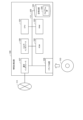
- FIG. 1 is a block diagram showing a configuration of a first information processing device according to the present disclosure.
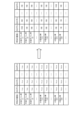
- FIG. 2 is a diagram showing a process performed by a first information processing device according to the present disclosure.
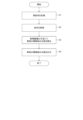
- 5 is a flowchart showing a processing operation of the first information processing device according to the present disclosure.
- FIG. 2 is a block diagram showing a hardware configuration of a second information processing device according to the present disclosure.
- FIG. 2 is a block diagram showing a configuration of a second information processing device according to the present disclosure.
- the information processing device 10 in this embodiment is used to support the planning of possible events, such as the introduction of objects and the implementation of measures, by business operators, in order to contribute to the reduction of the environmental load of business operators.
- a case is taken as an example where the business operator is an operator who uses vehicles to carry out delivery business, visiting service business, etc.
- the business operator will own multiple vehicles in carrying out the business, but it may become necessary to replace multiple vehicles depending on the business situation and the passage of time. For this reason, the business operator will plan the introduction of vehicles while taking the environment into consideration, and in this embodiment, a case will be described in which the information processing device 10 supports the planning of the introduction of vehicles (objects).
- the possession of vehicles of each type according to a preset classification is treated as an event, and the number of vehicles of each type is taken as the quantity of the event.
- the quantity of the event is not limited to the number of objects such as vehicles of each type owned, and may be the number or amount of actions, measures, etc. that the business operator can take.
- the information processing device 10 is composed of one or more information processing devices each having a calculation device and a storage device. As shown in FIG. 1, the information processing device 10 is equipped with an acquisition unit 11, a calculation unit 12, and an output unit 13. The functions of the acquisition unit 11, the calculation unit 12, and the output unit 13 can be realized by the calculation device executing a program for realizing each function stored in the storage device.
- the information processing device 10 is also equipped with a relational equation storage unit 16.
- the relational equation storage unit 16 is composed of a storage device. Each component will be described in detail below.
- the relational equation storage unit 16 stores relational equations relating to the number of vehicles of each type that are used when supporting business operators in developing vehicle introduction plans.
- two relational equations a first relational equation and a second relational equation, are stored.
- the first relational equation represents the relationship between the number of vehicles of each type (object) and the amount of carbon dioxide (predetermined substance) emitted from the vehicles.
- the second relational equation represents the relationship between the number of vehicles of each type (object) and the cost of energy used by the vehicles (evaluation value).
- the first relational expression is expressed by the linear expression shown in the following formula 1.
- the objective variable yt is the amount of carbon dioxide ( CO2 ) emissions for each period t.
- the explanatory variable xit indicates the number of vehicles of each type i for each period t.
- the coefficient ait is the amount of carbon dioxide emissions per vehicle of each type i for each period t.
- the coefficient ait is not dependent on the period t, that is, it may be expressed as the coefficient ai .
- y itself does not need to have the subscript t, in which case the subscript t will be removed from both the explanatory variable xit and the coefficient ait , and y will be the total amount of carbon dioxide emissions.
- the vehicle type i is classified according to the energy usage status of the engine or motor, which is the power source (power unit) of the vehicle, and the energy usage status is also classified according to the type of energy and the size of the vehicle (power source).
- the energy type is gasoline, biofuel, and electricity
- the vehicle types based on this include gasoline/diesel vehicles (hereinafter referred to as gasoline vehicles), biofuel vehicles (hereinafter referred to as BIO vehicles), and electric vehicles (hereinafter referred to as EV vehicles).
- the vehicle size is small, medium, large, towing vehicle, etc.
- the vehicle type i is determined by a combination of the energy type and the vehicle size, as shown in FIG. 2, and is set as small gasoline vehicles (1), medium gasoline vehicles (2), large gasoline vehicles (3), ..., small BIO vehicles (11), medium BIO vehicles (12), ..., small EV vehicles (21), medium EV (22), ..., etc.
- the vehicle types are not limited to those exemplified above and may be set in any classification.
- the period t is set to one year in this embodiment, and each year from 2022 to 2030 is set as shown in FIG. 2.
- the number x it of each type of vehicle is expressed differently for each type i and for each period t, as shown in the left diagram of FIG. 2.
- the period is not limited to one year and may be any period. Also, the period does not have to be set, in which case the number of vehicles is represented by x i .
- the coefficient a is the amount of carbon dioxide emitted by one vehicle in one year, and is set in advance according to the type i of the vehicle.
- the coefficient a is a value calculated by "(amount of fuel consumed [kl/vehicle-year]) x (carbon dioxide emission coefficient [t-CO 2 /kl])".
- the amount of fuel consumed is calculated from the mileage and fuel efficiency of a predetermined company for each type i of the vehicle. Therefore, the amount of fuel consumed varies depending on the size of the vehicle.
- the coefficient a is a value calculated by "(amount of fuel consumed [kl/vehicle-year]) x (carbon dioxide emission coefficient [t-CO 2 /kl]) x 0.8".
- the reason why the amount of fuel consumed and the carbon dioxide emission coefficient are multiplied by 0.8 is that the fuel of a BIO vehicle is a mixture of diesel and 20% biofuel, and therefore the amount of carbon dioxide emissions is reduced by that amount.
- the coefficient a in a BIO vehicle may be set appropriately according to the mixture ratio of biofuel.
- the coefficient a is a value calculated by "(power consumption [kWh/vehicle-year]) x (carbon dioxide emission coefficient [t-CO 2 /kWh])".
- the power consumption is calculated, for example, for each vehicle type i from the monthly mileage and electricity cost at a specified operator.
- the coefficient a taking into account the time dependency t can represent, for example, a case where the amount of fuel consumed gradually increases or decreases, or a case where the calculation method of the carbon dioxide emission coefficient gradually increases or decreases.
- the second relational expression is expressed by the linear expression shown in the following formula 2.
- the objective variable y't is the price (cost) of energy (fuel, electricity) for each period t.
- the explanatory variable xit indicates the number of vehicles of each type i for each period t.
- the coefficient bit is the price (cost) of energy (fuel, electricity) per vehicle of each type i for each period t. Note that y' does not need to have the subscript t, in which case y' is the total price.
- coefficient b is the price of energy for one vehicle in one year, and is set in advance depending on the type of vehicle i.
- coefficient b is a value calculated by "(amount of fuel consumed [kl/vehicle-year]) x (fuel price [yen (t)/kl])".
- the fuel price taking into account the time dependency t is obtained from an external database, and the current value and the predicted value for each year are used as is, or the intermediate value is calculated by linearly interpolating the current value and the predicted value for a certain year.
- coefficient b for BIO and EV vehicles is also set according to the price of BIO fuel and electricity price, as above.
- the first and second relational expressions described above are assumed to be created in advance, input to the information processing device 10, and stored in the relational expression storage unit 16. At this time, the coefficients a and b described above may be appropriately corrected and reflected in each relational expression.
- the acquisition unit 11 acquires the above-mentioned first relational equation and second relational equation and conditions for the variables included in these relational equations, which are input by the business operator.
- the conditions are those that should be satisfied by the variables included in the first relational equation and the second relational equation when the calculation unit 12 calculates the number of vehicles of each type using the first relational equation and the second relational equation, as described below.
- the conditions are expressed as those that should be satisfied for the emission amount y, the number of vehicles of each type x, and the cost y'.
- the condition is expressed as follows: ⁇ Minimize the total price (cost) y' for year t (make the second equation smaller) ⁇ Carbon dioxide emissions yt for each year t are set to be equal to or less than the target value set for each year t (the first relational expression is set to be equal to or less than the target value) ⁇ The total number of vehicles x per year t is below a set value (ensuring a number that does not affect business) ⁇ The total number of vehicles of a specific type (gasoline vehicles) x in each year t is below a set value (the number of gasoline vehicles x is reduced with each passing year t) The sum of the number of vehicles x of a specific type (BIO vehicles, EV vehicles) in each year t is greater than or equal to a set value (increase the number x of BIO vehicles and EV vehicles with each passing year t) - Keep the increase in the number of vehicles of a specific type (BIO vehicles, EV vehicles) per year t below a set
- the calculation unit 12 calculates the number of vehicles of each type so as to satisfy the conditions constituted by the first relational expression and the second relational expression described above. At this time, the calculation unit 12 uses a mathematical optimization method (e.g., mixed integer linear programming) to solve the first relational expression so as to satisfy the conditions constituted by the first relational expression and the second relational expression, thereby calculating the number of vehicles of each type that is a solution. For example, the calculation unit 12 determines the number of vehicles of each type for each year so as to set the annual carbon dioxide emission yt to a target value or less in the first relational expression, minimize the total cost y' for each year in the second relational expression, and further satisfy the conditions set for the number of vehicles x.
- a mathematical optimization method e.g., mixed integer linear programming
- the output unit 13 outputs the number of vehicles of each type for each year calculated by the calculation unit 12 so that the business operator can recognize it. For example, as shown in the right diagram of Figure 2, the number of vehicles of each type for each year is displayed.
- the first and second relational expressions described above are input and stored in the information processing device 10 (step S1 in FIG. 3).
- the business operator inputs conditions set according to environmental and business goals into the information processing device 10. Conditions include keeping carbon dioxide emissions below a target value, minimizing costs, the number of vehicles of a specific type, etc. As a result, the information processing device 10 acquires the conditions (step S2 in FIG. 3).
- the information processing device 10 uses a mathematical optimization method (e.g., mixed integer linear programming) to solve the first relational expression, the second relational expression, etc., so as to satisfy the conditions, thereby calculating the number of vehicles of each type for each year (step S3 in FIG. 3). Then, the information processing device 10 outputs the calculated number of vehicles of each type for each year to the business operator (step S4 in FIG. 4).
- a mathematical optimization method e.g., mixed integer linear programming
- the number of vehicles of each type is calculated using the relational equation between the number of each type of vehicle and the amount of carbon dioxide emissions, so that business operators can easily make vehicle introduction plans that take the environment into consideration.
- the number of vehicles of each type is calculated using the relational equation between the number of each type of vehicle and the amount of carbon dioxide emissions, so that business operators can easily make vehicle introduction plans that take the environment into consideration.
- by setting conditions such as keeping carbon dioxide emissions below a target value, minimizing costs, and even setting the number of vehicles it is possible to support the creation of vehicle introduction plans that can achieve environmental and business goals.
- the first and second relational expressions are expressed in linear form as shown in Equation 1 and Equation 2, but the first and second relational expressions may be expressed in nonlinear form.
- the calculation unit 12 may calculate the number of vehicles of each type, which is the solution, by using a method such as exhaustive search, quadratic cone optimization, semidefinite optimization, or polynomial optimization so as to satisfy the conditions.
- the objective variable y in the first relational expression shown in Equation 1 was the amount of carbon dioxide emitted from the vehicle, but this objective variable y is not limited to carbon dioxide and may be the amount of emissions of a specific substance that is an environmental load factor, such as greenhouse gases including other substances or air pollutants such as nitrogen oxides.
- the coefficient a is the amount of emission of a specific substance per vehicle for each type of vehicle, and the condition may be set to be that the annual emission of a specific substance is equal to or less than a target value.
- the objective variable y' in the second relational equation shown in Equation 2 was the price of energy (fuel, electricity), but this objective variable y' may be a value different from the emission amount set in the first relational equation and may be another value (evaluation value) set depending on the vehicle.
- the objective variable y' in the second relational equation may be the price of the vehicle itself.
- the coefficient b may be the purchase price per vehicle for each type of vehicle or the lease price per year.
- a condition may be set such that the total sum y' of the prices of the vehicles themselves per year is minimized.
- the objective variable y' in the second relational equation may be the sales or profit of the business by the operator.
- the coefficient b may be the sales or profit per vehicle for each type of vehicle.
- the condition may be set such that the sales or profit y' is maximized.
- the objective variable y' in the second relational equation may be the time or man-hours required by the business operator to carry out the business.
- the coefficient b may be the time or man-hours required per vehicle for each type of vehicle.
- the condition may be set such that the time or man-hours are minimized.
- the objective variable y' in the second relational equation may be an ESG score, which is an index that evaluates an operator's (company's) efforts in ESG (E: Environment, S: Social, G: governance).
- the coefficient b may be an ESG score that can be calculated per vehicle for each vehicle type.
- a condition may be set such that the ESG score is maximized.
- another evaluation value may be used as the objective variable y' instead of the above ESG score.
- the explanatory variable x may be the quantity of each type of material (wall material, floor material, etc.) used in the building or the equipment (solar panels, hot water equipment, electrical appliances, etc.) to be installed.
- the objective variable y in the first relational equation is the carbon dioxide emission amount as described above, and the coefficient a is the carbon dioxide emission amount per unit amount when the material or equipment is manufactured or used.
- the objective variable y' in the second relational equation may be the introduction cost or running cost of the material or equipment, the energy consumption associated with the use of the material or equipment, the time required for construction, a predetermined evaluation value for the environment, etc., and the coefficient b is a value corresponding to the objective variable y' per unit amount when the material or equipment is manufactured or used.
- the conditions may be set such that the objective variable y in the first relational equation is the carbon dioxide emission amount below a certain value, the objective variable y' in the second relational equation is the cost minimization, and the explanatory variable x is the required quantity of each material or equipment. This allows the information processing device 10 to calculate the quantities of materials and equipment required for a building that can be constructed at low cost and in a short construction period while taking the environment into consideration.
- the explanatory variable x may be the quantity of each type of food (beef, chicken, vegetables, etc.) and tableware (plates, chopsticks, etc.) used in the food and drink.
- the objective variable y in the first relational expression is the amount of carbon dioxide emissions as described above
- the coefficient a is the amount of carbon dioxide emissions per unit quantity when the food and tableware are manufactured or used. For example, for food, this is set based on the amount of carbon dioxide emissions emitted during breeding or cultivation, and for tableware, if the tableware is made of wood, it is set based on the amount of carbon dioxide emissions that may increase due to tree felling.
- the objective variable y' in the second relational expression may be the cost of the food and tableware
- the coefficient b is a value corresponding to the objective variable y' per unit quantity when the food and tableware are manufactured or used.
- the conditions may be set as follows: the objective variable y in the first relational expression is to have carbon dioxide emissions below a certain value, the objective variable y' in the second relational expression is to minimize the cost, the required quantity of each food and tableware, etc. In this way, the information processing device 10 can calculate the quantity of food and tableware required for providing food and drink at low cost while taking the environment into consideration.
- the explanatory variable x when a business uses it to plan transportation for employees, the explanatory variable x may be the presence or absence of use of each type of transportation, such as train, bus, car, bicycle, and walking, and the travel distance.
- the objective variable y in the first relational equation is the carbon dioxide emission amount as described above, and the coefficient a is the carbon dioxide emission amount per unit travel distance when using the transportation means.
- the objective variable y' in the second relational equation may be the cost or travel time due to the use of the transportation means, and the coefficient b is a value corresponding to the objective variable y' per unit travel distance or the unit travel distance when using the transportation means.
- the information processing device 10 can calculate a transportation means that can be used at low cost and in a short time while taking the environment into consideration.
- the information processing device 10 to calculate the number of vehicles of each type while taking the environment into consideration. Note that even when only the first relational expression is used in this way, the objective variable y, the explanatory variable x, and the coefficient a may be appropriately set according to the various businesses described above.
- the information processing device 100 is configured as a typical information processing device, and is equipped with the following hardware configuration, as an example.
- ⁇ CPU Central Processing Unit
- ROM Read Only Memory
- RAM Random Access Memory
- Program group 104 loaded into RAM 103
- a storage device 105 for storing the program group 104
- a drive device 106 that reads and writes data from and to a storage medium 110 outside the information processing device.
- a communication interface 107 that connects to a communication network 111 outside the information processing device
- Input/output interface 108 for inputting and outputting data
- a bus 109 that connects each component
- FIG. 4 shows an example of the hardware configuration of the information processing device 100, and the hardware configuration of the information processing device is not limited to the above-mentioned case.
- the information processing device may be configured with a part of the above-mentioned configuration, such as not having the drive device 106.
- the information processing device may use a GPU (Graphic Processing Unit), a DSP (Digital Signal Processor), an MPU (Micro Processing Unit), an FPU (Floating point number Processing Unit), a PPU (Physics Processing Unit), a TPU (Tensor Processing Unit), a quantum processor, a microcontroller, or a combination of these.
- the information processing device 100 can be equipped with the storage unit 121 and calculation unit 122 shown in FIG. 5 by having the CPU 101 acquire and execute the group of programs 104.
- the group of programs 104 is stored in advance in the storage device 105 or ROM 102, for example, and is loaded into the RAM 103 and executed by the CPU 101 as necessary.
- the group of programs 104 may be supplied to the CPU 101 via the communication network 111, or may be stored in advance in the storage medium 110, and the drive device 106 may read out the programs and supply them to the CPU 101.
- the above-mentioned storage unit 121 and calculation unit 122 may be constructed of dedicated electronic circuits for realizing such means.
- the storage unit 121 stores a relational equation using the quantity of each type of event set in advance and the emission amount of a specified substance set according to each type of event.
- the calculation unit 122 calculates the quantity of each type of event based on the relational equation. At this time, the calculation unit 122 may calculate the quantity of each type of event based on the relational equation so as to satisfy the conditions set for the variables included in the relational equation.
- At least one of the functions of the memory unit 121 and the calculation unit 122 described above may be executed by an information processing device installed and connected anywhere on the network, that is, they may be executed by so-called cloud computing.
- Non-transitory computer readable medium includes various types of tangible storage medium.
- Examples of non-transitory computer readable medium include magnetic recording media (e.g., flexible disks, magnetic tapes, hard disk drives), magneto-optical recording media (e.g., magneto-optical disks), CD-ROM (Read Only Memory), CD-R, CD-R/W, and semiconductor memory (e.g., mask ROM, PROM (Programmable ROM), EPROM (Erasable PROM), flash ROM, RAM (Random Access Memory)).
- the program may also be supplied to a computer by various types of transitory computer readable medium. Examples of transitory computer readable medium include electrical signals, optical signals, and electromagnetic waves.
- the temporary computer-readable medium can supply the program to the computer via a wired communication path, such as an electric wire or optical fiber, or via a wireless communication path.
- the information processing device calculates the quantity of each type of the event based on the relational expression so as to satisfy a condition set for a variable included in the relational expression; Information processing device. (Appendix 3) 3.
- the information processing device according to claim 2 calculates the quantity of each type of the event based on the relational expression so as to satisfy the condition set for the quantity of each type of the event included in the relational expression; Information processing device. (Appendix 5) 2.
- the information processing device stores a second relational expression using a quantity of each of the types of the event and an evaluation value set for each of the types of the event that is different from the emission amount, The calculation unit calculates the quantity of each type of the event based on the relational expression and the second relational expression.
- Information processing device. (Appendix 6) 6.
- the calculation unit calculates the quantity of each of the types of the events based on the relational expression and the second relational expression so as to satisfy a second condition set for a variable included in the second relational expression;
- Information processing device. Appendix 7.
- the calculation unit calculates the quantity of each of the types of the events based on the relational expression and the second relational expression so as to satisfy the second condition set for the evaluation value included in the second relational expression; Information processing device. (Appendix 8) 7.
- the information processing device according to claim 6, the calculation unit calculates the quantity of the type of the event based on the relational expression and the second relational expression so as to satisfy the second condition set for the quantity of the type of the event included in the second relational expression; Information processing device. (Appendix 9) 2.
- the storage unit stores the relational expression using the quantity of each of the types of the event and the emission amount for each predetermined period; the calculation unit calculates the quantity of each type of the event for each period based on the relational expression; Information processing device. (Appendix 10) 6.
- the storage unit stores the relational expression using the quantity of the event for each type and the emission amount for each predetermined period, and stores the second relational expression using the quantity of the event for each type and the evaluation value for each period; the calculation unit calculates the quantity of each type of the event for each period based on the relational expression and the second relational expression; Information processing device. (Appendix 11) 2.
- the information processing device stores the relational expression using the quantity of the events for each type set according to the energy usage status of the events and the emission amount set according to each type of the events.
- Information processing device. (Appendix 12) 12.
- the storage unit stores the relational expression using the number of vehicles owned for each of the types, which is the event, and the emission amount set according to each of the types of the vehicles; Information processing device. (Appendix 13) 6.
- the storage unit stores the relational expression using the quantity of the events for each type set according to the energy usage status of the events and the emission amount set according to each type of the events, and stores the second relational expression using the quantity of the events for each type and the evaluation value set according to each type of the events.
- Information processing device. (Appendix 14) 14 14. The information processing device according to claim 13, the storage unit stores the relational equation using the number of owned vehicles of each type, which is the event, and the emission amount set for each of the types of the vehicles, and stores the second relational equation using the number of vehicles of each type and the cost of the vehicles, which is the evaluation value set for each of the types of the vehicles.
- the information processing method further comprising: calculating a quantity of each of the types of the events based on the relational expression and the second relational expression so as to satisfy a second condition set for a variable included in the second relational expression; Information processing methods.
- Appendix 19 calculating the quantity of each type of event based on a relational expression using the quantity of each type of event and the emission amount of a predetermined substance set according to each type of event;
- a computer-readable storage medium that stores a program for causing a computer to execute a process. (Appendix 20) 20.
- the storage medium of claim 19 Calculating the quantity of each of the types of the event based on a second relational expression using the quantity of each of the types of the event and an evaluation value set according to each of the types of the event different from the emission amount, and the relational expression;
- a computer-readable storage medium that stores a program for causing a computer to execute a process.
- Information processing device 11 Acquisition unit 12 Calculation unit 13 Output unit 14 Relational equation storage unit 100 Information processing device 101 CPU 102 ROM 103 RAM 104 Program group 105 Storage device 106 Drive device 107 Communication interface 108 Input/output interface 109 Bus 110 Storage medium 111 Communication network 121 Storage unit 122 Calculation unit
Landscapes
- Business, Economics & Management (AREA)
- Human Resources & Organizations (AREA)
- Engineering & Computer Science (AREA)
- Strategic Management (AREA)
- Entrepreneurship & Innovation (AREA)
- Economics (AREA)
- Operations Research (AREA)
- Game Theory and Decision Science (AREA)
- Development Economics (AREA)
- Marketing (AREA)
- Educational Administration (AREA)
- Quality & Reliability (AREA)
- Tourism & Hospitality (AREA)
- Physics & Mathematics (AREA)
- General Business, Economics & Management (AREA)
- General Physics & Mathematics (AREA)
- Theoretical Computer Science (AREA)
- Management, Administration, Business Operations System, And Electronic Commerce (AREA)
Priority Applications (2)
| Application Number | Priority Date | Filing Date | Title |
|---|---|---|---|
| JP2025529048A JPWO2025004184A1 (https=) | 2023-06-27 | 2023-06-27 | |
| PCT/JP2023/023815 WO2025004184A1 (ja) | 2023-06-27 | 2023-06-27 | 情報処理装置、情報処理方法、プログラム |
Applications Claiming Priority (1)
| Application Number | Priority Date | Filing Date | Title |
|---|---|---|---|
| PCT/JP2023/023815 WO2025004184A1 (ja) | 2023-06-27 | 2023-06-27 | 情報処理装置、情報処理方法、プログラム |
Publications (1)
| Publication Number | Publication Date |
|---|---|
| WO2025004184A1 true WO2025004184A1 (ja) | 2025-01-02 |
Family
ID=93938056
Family Applications (1)
| Application Number | Title | Priority Date | Filing Date |
|---|---|---|---|
| PCT/JP2023/023815 Ceased WO2025004184A1 (ja) | 2023-06-27 | 2023-06-27 | 情報処理装置、情報処理方法、プログラム |
Country Status (2)
| Country | Link |
|---|---|
| JP (1) | JPWO2025004184A1 (https=) |
| WO (1) | WO2025004184A1 (https=) |
Citations (2)
| Publication number | Priority date | Publication date | Assignee | Title |
|---|---|---|---|---|
| JP2010168205A (ja) * | 2009-01-26 | 2010-08-05 | Daiwa Logistics Co Ltd | 最適配車システム,最適配車装置,最適配車方法及び最適配車プログラム |
| JP2023028550A (ja) * | 2021-08-19 | 2023-03-03 | 株式会社デンソー | 配車計画作成システム |
-
2023
- 2023-06-27 WO PCT/JP2023/023815 patent/WO2025004184A1/ja not_active Ceased
- 2023-06-27 JP JP2025529048A patent/JPWO2025004184A1/ja active Pending
Patent Citations (2)
| Publication number | Priority date | Publication date | Assignee | Title |
|---|---|---|---|---|
| JP2010168205A (ja) * | 2009-01-26 | 2010-08-05 | Daiwa Logistics Co Ltd | 最適配車システム,最適配車装置,最適配車方法及び最適配車プログラム |
| JP2023028550A (ja) * | 2021-08-19 | 2023-03-03 | 株式会社デンソー | 配車計画作成システム |
Also Published As
| Publication number | Publication date |
|---|---|
| JPWO2025004184A1 (https=) | 2025-01-02 |
Similar Documents
| Publication | Publication Date | Title |
|---|---|---|
| Li et al. | Electric vehicle routing problem with battery swapping considering energy consumption and carbon emissions | |
| Ercan et al. | A hybrid life cycle assessment of public transportation buses with alternative fuel options | |
| Awudu et al. | Stochastic production planning for a biofuel supply chain under demand and price uncertainties | |
| Mazmanian et al. | State leadership in US climate change and energy policy: The California experience | |
| Park et al. | Development of a market penetration forecasting model for Hydrogen Fuel Cell Vehicles considering infrastructure and cost reduction effects | |
| Kanzian et al. | Design of forest energy supply networks using multi-objective optimization | |
| Kamboj et al. | The path to 2060: Saudi Arabia's long-term pathway for GHG emission reduction | |
| Sulaiman et al. | An evolutionary optimal green layout design for a production facility by simulated annealing algorithm | |
| Yangmin et al. | Assessing the synergy and sustainability of “Airport-Industry-City"(AIC) system in aerotropolis: Evidence from Zhengzhou Aerotropolis in China | |
| Stasko et al. | Reducing transit fleet emissions through vehicle retrofits, replacements, and usage changes over multiple time periods | |
| Fotis et al. | Risks, obstacles and challenges of the electrical energy transition in Europe: Greece as a case study | |
| WO2025004184A1 (ja) | 情報処理装置、情報処理方法、プログラム | |
| Wu et al. | Driving factors analysis and scenario prediction of CO2 emissions in power industries of key provinces along the Yellow River based on LMDI and BP neural network | |
| Ita et al. | Lifestyle changes overweighing technology improvement in household decarbonization: evidence from Japan during 1990-2020 | |
| Schenk et al. | Macroeconomic and environmental impacts of port electrification: Four port case studies | |
| Ke et al. | Estimating potential employment impact of the charging infrastructure used to support transportation electrification in the united states | |
| Dai et al. | Using LMDI approach to analyze changes in carbon dioxide emissions of China's logistics industry | |
| Forrest et al. | Emissions and air quality implications of enabling on-road vehicles as flexible load through widescale zero emission vehicle deployment in California | |
| Hoshing et al. | Evaluating emissions and sensitivity of economic gains for series plug-in hybrid electric vehicle powertrains for transit bus applications | |
| Li et al. | Train timetable optimization for suppressing traction power fluctuations, especially on mountainous railway lines with long, steep grades | |
| Keiko | The carbon regulation and its accounting in system energy models | |
| Anttila et al. | Could a terminal-based operating model reduce greenhouse-gas emissions in road transport of timber? | |
| Kawtummachai et al. | A hybrid harmony search (hhs) algorithm for a green vehicle routing problem (gvrp) | |
| Goal | Carbon reduction plan | |
| Sexton et al. | Leveling the playing field of transportation fuels: Accounting for indirect emissions of natural gas |
Legal Events
| Date | Code | Title | Description |
|---|---|---|---|
| 121 | Ep: the epo has been informed by wipo that ep was designated in this application |
Ref document number: 23943583 Country of ref document: EP Kind code of ref document: A1 |
|
| ENP | Entry into the national phase |
Ref document number: 2025529048 Country of ref document: JP Kind code of ref document: A |
|
| WWE | Wipo information: entry into national phase |
Ref document number: 2025529048 Country of ref document: JP |
|
| NENP | Non-entry into the national phase |
Ref country code: DE |