WO2024257844A1 - ジンクフィンガーヌクレアーゼ、ベクター並びにこれらを用いたゲノム編集方法及び視細胞製造方法 - Google Patents
ジンクフィンガーヌクレアーゼ、ベクター並びにこれらを用いたゲノム編集方法及び視細胞製造方法 Download PDFInfo
- Publication number
- WO2024257844A1 WO2024257844A1 PCT/JP2024/021600 JP2024021600W WO2024257844A1 WO 2024257844 A1 WO2024257844 A1 WO 2024257844A1 JP 2024021600 W JP2024021600 W JP 2024021600W WO 2024257844 A1 WO2024257844 A1 WO 2024257844A1
- Authority
- WO
- WIPO (PCT)
- Prior art keywords
- zfn
- seq
- zinc finger
- acid sequence
- nucleic acid
- Prior art date
- Legal status (The legal status is an assumption and is not a legal conclusion. Google has not performed a legal analysis and makes no representation as to the accuracy of the status listed.)
- Ceased
Links
Images


Classifications
-
- C—CHEMISTRY; METALLURGY
- C12—BIOCHEMISTRY; BEER; SPIRITS; WINE; VINEGAR; MICROBIOLOGY; ENZYMOLOGY; MUTATION OR GENETIC ENGINEERING
- C12N—MICROORGANISMS OR ENZYMES; COMPOSITIONS THEREOF; PROPAGATING, PRESERVING, OR MAINTAINING MICROORGANISMS; MUTATION OR GENETIC ENGINEERING; CULTURE MEDIA
- C12N15/00—Mutation or genetic engineering; DNA or RNA concerning genetic engineering, vectors, e.g. plasmids, or their isolation, preparation or purification; Use of hosts therefor
- C12N15/09—Recombinant DNA-technology
- C12N15/63—Introduction of foreign genetic material using vectors; Vectors; Use of hosts therefor; Regulation of expression
- C12N15/79—Vectors or expression systems specially adapted for eukaryotic hosts
- C12N15/85—Vectors or expression systems specially adapted for eukaryotic hosts for animal cells
-
- A—HUMAN NECESSITIES
- A61—MEDICAL OR VETERINARY SCIENCE; HYGIENE
- A61K—PREPARATIONS FOR MEDICAL, DENTAL OR TOILETRY PURPOSES
- A61K31/00—Medicinal preparations containing organic active ingredients
- A61K31/70—Carbohydrates; Sugars; Derivatives thereof
- A61K31/7088—Compounds having three or more nucleosides or nucleotides
-
- A—HUMAN NECESSITIES
- A61—MEDICAL OR VETERINARY SCIENCE; HYGIENE
- A61K—PREPARATIONS FOR MEDICAL, DENTAL OR TOILETRY PURPOSES
- A61K35/00—Medicinal preparations containing materials or reaction products thereof with undetermined constitution
- A61K35/12—Materials from mammals; Compositions comprising non-specified tissues or cells; Compositions comprising non-embryonic stem cells; Genetically modified cells
-
- A—HUMAN NECESSITIES
- A61—MEDICAL OR VETERINARY SCIENCE; HYGIENE
- A61K—PREPARATIONS FOR MEDICAL, DENTAL OR TOILETRY PURPOSES
- A61K35/00—Medicinal preparations containing materials or reaction products thereof with undetermined constitution
- A61K35/66—Microorganisms or materials therefrom
- A61K35/76—Viruses; Subviral particles; Bacteriophages
-
- A—HUMAN NECESSITIES
- A61—MEDICAL OR VETERINARY SCIENCE; HYGIENE
- A61P—SPECIFIC THERAPEUTIC ACTIVITY OF CHEMICAL COMPOUNDS OR MEDICINAL PREPARATIONS
- A61P27/00—Drugs for disorders of the senses
- A61P27/02—Ophthalmic agents
-
- C—CHEMISTRY; METALLURGY
- C12—BIOCHEMISTRY; BEER; SPIRITS; WINE; VINEGAR; MICROBIOLOGY; ENZYMOLOGY; MUTATION OR GENETIC ENGINEERING
- C12N—MICROORGANISMS OR ENZYMES; COMPOSITIONS THEREOF; PROPAGATING, PRESERVING, OR MAINTAINING MICROORGANISMS; MUTATION OR GENETIC ENGINEERING; CULTURE MEDIA
- C12N15/00—Mutation or genetic engineering; DNA or RNA concerning genetic engineering, vectors, e.g. plasmids, or their isolation, preparation or purification; Use of hosts therefor
- C12N15/09—Recombinant DNA-technology
- C12N15/63—Introduction of foreign genetic material using vectors; Vectors; Use of hosts therefor; Regulation of expression
-
- C—CHEMISTRY; METALLURGY
- C12—BIOCHEMISTRY; BEER; SPIRITS; WINE; VINEGAR; MICROBIOLOGY; ENZYMOLOGY; MUTATION OR GENETIC ENGINEERING
- C12N—MICROORGANISMS OR ENZYMES; COMPOSITIONS THEREOF; PROPAGATING, PRESERVING, OR MAINTAINING MICROORGANISMS; MUTATION OR GENETIC ENGINEERING; CULTURE MEDIA
- C12N15/00—Mutation or genetic engineering; DNA or RNA concerning genetic engineering, vectors, e.g. plasmids, or their isolation, preparation or purification; Use of hosts therefor
- C12N15/09—Recombinant DNA-technology
- C12N15/87—Introduction of foreign genetic material using processes not otherwise provided for, e.g. co-transformation
- C12N15/90—Stable introduction of foreign DNA into chromosome
-
- C—CHEMISTRY; METALLURGY
- C12—BIOCHEMISTRY; BEER; SPIRITS; WINE; VINEGAR; MICROBIOLOGY; ENZYMOLOGY; MUTATION OR GENETIC ENGINEERING
- C12N—MICROORGANISMS OR ENZYMES; COMPOSITIONS THEREOF; PROPAGATING, PRESERVING, OR MAINTAINING MICROORGANISMS; MUTATION OR GENETIC ENGINEERING; CULTURE MEDIA
- C12N9/00—Enzymes; Proenzymes; Compositions thereof; Processes for preparing, activating, inhibiting, separating or purifying enzymes
- C12N9/14—Hydrolases (3)
- C12N9/16—Hydrolases (3) acting on ester bonds (3.1)
- C12N9/22—Ribonucleases [RNase]; Deoxyribonucleases [DNase]
-
- A—HUMAN NECESSITIES
- A61—MEDICAL OR VETERINARY SCIENCE; HYGIENE
- A61K—PREPARATIONS FOR MEDICAL, DENTAL OR TOILETRY PURPOSES
- A61K48/00—Medicinal preparations containing genetic material which is inserted into cells of the living body to treat genetic diseases; Gene therapy
- A61K48/0091—Purification or manufacturing processes for gene therapy compositions
-
- C—CHEMISTRY; METALLURGY
- C12—BIOCHEMISTRY; BEER; SPIRITS; WINE; VINEGAR; MICROBIOLOGY; ENZYMOLOGY; MUTATION OR GENETIC ENGINEERING
- C12N—MICROORGANISMS OR ENZYMES; COMPOSITIONS THEREOF; PROPAGATING, PRESERVING, OR MAINTAINING MICROORGANISMS; MUTATION OR GENETIC ENGINEERING; CULTURE MEDIA
- C12N2750/00—MICROORGANISMS OR ENZYMES; COMPOSITIONS THEREOF; PROPAGATING, PRESERVING, OR MAINTAINING MICROORGANISMS; MUTATION OR GENETIC ENGINEERING; CULTURE MEDIA ssDNA viruses
- C12N2750/00011—Details
- C12N2750/14011—Parvoviridae
- C12N2750/14111—Dependovirus, e.g. adenoassociated viruses
- C12N2750/14141—Use of virus, viral particle or viral elements as a vector
- C12N2750/14143—Use of virus, viral particle or viral elements as a vector viral genome or elements thereof as genetic vector
-
- C—CHEMISTRY; METALLURGY
- C12—BIOCHEMISTRY; BEER; SPIRITS; WINE; VINEGAR; MICROBIOLOGY; ENZYMOLOGY; MUTATION OR GENETIC ENGINEERING
- C12N—MICROORGANISMS OR ENZYMES; COMPOSITIONS THEREOF; PROPAGATING, PRESERVING, OR MAINTAINING MICROORGANISMS; MUTATION OR GENETIC ENGINEERING; CULTURE MEDIA
- C12N2830/00—Vector systems having a special element relevant for transcription
- C12N2830/20—Vector systems having a special element relevant for transcription transcription of more than one cistron
Definitions
- the present disclosure relates to zinc finger nucleases, vectors, and genome editing methods and cell production methods using the same. More specifically, the present disclosure relates to zinc finger nucleases for genome editing of the rhodopsin (RHO) gene locus.
- RHO rhodopsin
- Human rhodopsin protein is a light-sensitive G protein-coupled receptor (GPCR) specific to rod photoreceptors, consisting of approximately 348 amino acids.
- GPCR G protein-coupled receptor
- the rhodopsin (RHO) gene locus that codes for rhodopsin protein consists of five exons and is approximately 6.7 kb long (chr3:129,528,639-129,535,344) including the intron region. Mutations in the rhodopsin gene cause retinitis pigmentosa, and approximately 110 types of gene mutations have been reported so far.
- Patent Document 1 proposes a technology to treat retinitis pigmentosa caused by mutations in the rhodopsin gene by genome editing using designer nucleases such as TALE nuclease (TALEN), zinc-finger nuclease (ZFN), and Cas nuclease.
- designer nucleases such as TALE nuclease (TALEN), zinc-finger nuclease (ZFN), and Cas nuclease.
- ZFN consists of FokI-ND, a nucleic acid cleavage domain, zinc finger protein (ZFP), a nucleic acid binding domain, and a linker connecting them.
- Patent Document 2 discloses ZFN that contains nucleic acid cleavage domains called nuclease domain 1 (ND1) and nuclease domain 2 (ND2) instead of FokI-ND.
- ND1 is said to be a nuclease domain derived from Bacillus SGD-V-76
- ND2 is said to be a nuclease domain derived from Clostridium botulinum.
- ND1 and ND2 are said to be superior to the conventional FokI-ND in terms of functionality such as cleavage activity, specificity, and target sequence selectivity.
- the primary objective of this disclosure is to provide a technique useful for genome editing of the RHO locus using ZFNs.
- [1] A combination of a pair of zinc finger nucleases (ZFNs) for genome editing of the rhodopsin (RHO) locus, the combination being selected from the following group: (1) A combination of a ZFN having a zinc finger array that recognizes the nucleic acid sequence of SEQ ID NO: 1 and a ZFN having a zinc finger array that recognizes the nucleic acid sequence of SEQ ID NO: 2. (2) A combination of a ZFN having a zinc finger array that recognizes the nucleic acid sequence of SEQ ID NO:5 and a ZFN having a zinc finger array that recognizes the nucleic acid sequence of SEQ ID NO:6.
- ZFNs zinc finger nucleases
- the nucleic acid cleavage domain of ZFN is The amino acid sequence of positions 391 to 585 of SEQ ID NO:52; The amino acid sequence of SEQ ID NO:57; or Amino acid sequence of SEQ ID NO:58; The combination of [4], [6] Any combination of [1] to [4], wherein the RHO locus is a human RHO locus.
- a vector comprising a nucleic acid sequence encoding any one of a pair of ZFNs according to [1] to [6].
- a bidirectional expression vector A nucleic acid sequence encoding a sense strand ZFN and a promoter sequence that controls the transcription of the nucleic acid sequence; A nucleic acid sequence encoding an antisense strand ZFN and a promoter sequence that controls the transcription of the nucleic acid sequence, The vector according to [7], wherein the two promoter sequences are arranged contiguously without a spacer sequence between them.
- the vector according to [8], wherein the two promoters are a CMV promoter and a human EF1a (Elongation Factor alpha-1) promoter.
- a therapeutic agent for a disease caused by the RHO gene comprising any one of the vectors [7]-[9].
- a genome editing method for the RHO locus comprising the step of introducing any one of the vectors according to [7] to [9] into photoreceptor cells in vivo or in vitro, preferably in vitro.
- a method for producing photoreceptor cells having a genome edited RHO gene comprising the step of introducing any one of the vectors [7] to [9] into photoreceptor cells in vivo or in vitro, preferably in vitro.
- This disclosure provides a technology useful for genome editing of the RHO locus using ZFNs.
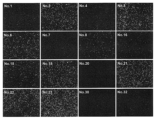
- EGFP fluorescence indicates cleavage of the candidate ZF binding target sequence by ZF-ND1.
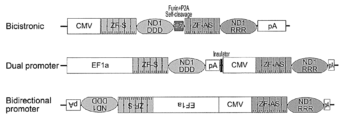
- the structures of bicistronic, dual promoter and bidirectional promoter plasmid vectors are shown. These are EGFP fluorescence images of HEK293 cells transfected with a bicistronic, dual promoter or bidirectional promoter and an EGFP fragment expression plasmid containing a candidate ZF binding target sequence.
- EGFP fluorescence indicates cleavage of the candidate ZF binding target sequence by ZF-ND1.
- the positive control was transfected with a ZF-ND1 expression plasmid (5461S, 5562AS).
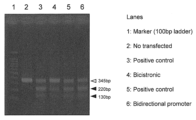
- the results of Cel-I analysis of the target RHO sequence in HEK293 cells transfected with bicistronic or bidirectional promoters are shown.
- the 220 bp and 130 bp bands indicate InDel (Insertion and Deletion).
- the ZF-ND1 expression plasmid (5461S, 5562AS) was used as a positive control.
- Tide Track of Indels by DEcomposition
- the ZF-ND1 expression plasmid (5461S, 5562AS) was used as a positive control.
- Zinc finger nuclease The ZFN according to the present disclosure can be used for genome editing of the rhodopsin (RHO) locus, and is a combination of ZFNs having a zinc finger array that recognizes a specific nucleic acid sequence.
- the zinc finger array is composed of a plurality of zinc fingers (ZFs) that recognize a three-base sequence.
- the zinc finger array may contain two or more ZFs, for example, 3-9, preferably 4-8, more preferably 5-7, typically 6 ZFs.
- the relationship between the amino acid sequence of ZF and the three-base sequence recognized by ZF is publicly known, and for the amino acid sequence of ZF, the amino acid sequence described in, for example, Supplemental Table 1 of Non-Patent Document 1 can be used depending on the three-base sequence to be recognized. Since there are multiple amino acid sequences of ZF that recognize the same three-base sequence, these ZFs that recognize the same three-base sequence can be used interchangeably.
- the ZFNs of the present disclosure have a zinc finger array selected from the following combinations (see Table 1 below). (1) A combination of a ZFN having a zinc finger array that recognizes the nucleic acid sequence of SEQ ID NO: 1 and a ZFN having a zinc finger array that recognizes the nucleic acid sequence of SEQ ID NO: 2. (2) A combination of a ZFN having a zinc finger array that recognizes the nucleic acid sequence of SEQ ID NO:5 and a ZFN having a zinc finger array that recognizes the nucleic acid sequence of SEQ ID NO:6.
- the recognition sequence of the zinc finger array of each ZFN, its sequence number, and the amino acid sequence of the zinc finger array are shown in Table 1.
- the pair of ZFNs in (1) above is a combination of a sense strand ZFN 4350S having a zinc finger array that recognizes the nucleic acid sequence (ATTCTTGGGTGGGAGCAG) of SEQ ID NO: 1 and an antisense strand ZFN 4350AS having a zinc finger array that recognizes the nucleic acid sequence (AAGGCCTGAGCTCAGCCA) of SEQ ID NO: 2.
- ZFN 4350S consists of the amino acid sequence of SEQ ID NO: 59
- ZFN 4350AS consists of the amino acid sequence of SEQ ID NO: 60.
- the ZFN disclosed herein is preferably any combination of the above (2), (4), (5), (10), (12), (13), or (14) due to its high cleavage activity.
- the ZFN disclosed herein recognizes and binds to a nucleic acid sequence upstream of the start codon of exon 1 of the RHO gene (RHO locus 5'UTR) using a zinc finger array at the RHO locus, and causes a DNA double-strand break (DSB) by the nucleic acid cleavage domain.
- the length of the spacer between the nucleic acid sequences recognized by the two zinc finger arrays of the ZFN disclosed herein is not particularly limited, but is, for example, 1-20 bp, preferably 3-8 bp, 5 bps, or 6 bps in length.
- the nucleic acid sequence of the spacer is uniquely defined as the nucleic acid sequence between the nucleic acid sequence recognized by one zinc finger array and the nucleic acid sequence recognized by another zinc finger array.
- the ZFN cleaves the double-stranded DNA within the spacer sequence.
- the pair of ZFNs in (1) above cleaves a double-stranded DNA in the spacer sequence (CGCAGC) between the nucleic acid sequence of SEQ ID NO: 1 (ATTCTTGGGTGGGAGCAG), which is the binding sequence of the sense strand ZFN, and the nucleic acid sequence of SEQ ID NO: 2 (AAGGCCTGAGCTCAGCCA), which is the binding sequence of the antisense strand ZFN.
- the nucleic acid cleavage domain of the ZFN according to the present disclosure is not particularly limited, and may be FokI-ND, ND1 and ND2 described in Patent Document 2, or modified versions thereof.
- the amino acid sequence of a full-length protein (derived from Bacillus SGD-V-76) containing ND1 is shown in SEQ ID NO: 52, and its nucleotide sequence is shown in SEQ ID NO: 53.
- the amino acid sequence of a full-length protein (derived from Clostridium botulinum) containing ND2 is shown in SEQ ID NO: 54, and its nucleotide sequence is shown in SEQ ID NO: 55.
- ND1 is typically a partial peptide corresponding to positions 391 to 585 of SEQ ID NO: 52
- ND2 is typically a partial peptide corresponding to positions 389 to 579 of SEQ ID NO: 54.
- the nucleic acid cleavage domain is preferably ND1.
- the ND1 and ND2 variants may be polypeptides that contain an amino acid sequence in which one or several amino acid residues have been substituted, deleted, inserted or added in the amino acid sequence shown in positions 391 to 585 of SEQ ID NO:52 or positions 389 to 579 of SEQ ID NO:54, and have nuclease activity.
- “one or several” means, for example, 1 to 10, preferably 1 to 6, e.g., 1, 2, 3, 4 or 5.
- the ND1 and ND2 variants may be polypeptides that contain an amino acid sequence having at least 70%, at least 75%, at least 80%, at least 85%, at least 90%, at least 95%, or at least 98% sequence identity to the amino acid sequence shown at positions 391 to 585 of SEQ ID NO:52 or positions 389 to 579 of SEQ ID NO:54, and have nuclease activity.
- sequence identity of an amino acid sequence is determined by comparing two sequences aligned in a state in which the sequence match is maximized. Methods for determining the numerical value (%) of sequence identity are known to those skilled in the art.
- any algorithm known to those skilled in the art e.g., BLAST algorithm, FASTA algorithm, etc.
- the sequence identity of an amino acid sequence is determined, for example, using sequence analysis software such as BLASTP and FASTA.
- ND1 and ND2 variants include variants (DDD type variants) containing aspartic acid (D483, D487, and D496) at positions corresponding to positions 483, 487, and 496 in the amino acid sequence of FokI, and variants (RRR type variants) containing arginine (R483, R487, and R537) at positions corresponding to positions 483, 487, and 537 in the amino acid sequence of FokI.
- DDD type variant of ND1 (ND1DDD) has an amino acid sequence in which the 103rd and 113th amino acids in a partial peptide corresponding to positions 391 to 585 of SEQ ID NO:52 are replaced with aspartic acid (SEQ ID NO:57).
- the RRR type variant of ND1 (ND1RRR) has an amino acid sequence in which the 100th and 154th amino acids in a partial peptide corresponding to positions 391 to 585 of SEQ ID NO:52 are replaced with arginine (SEQ ID NO:58).
- the nucleic acid cleavage domain of the ZFN of the present disclosure may be a polypeptide that includes modified amino acids and/or unnatural amino acids.
- Modified amino acids include, but are not limited to, methylation, esterification, amidation, acetylation, alkylation, halogenation, and the like.
- the modified amino acids and unnatural amino acids can be introduced by known methods.
- the nucleic acid cleavage domain and the zinc finger protein (ZFP) including the zinc finger array may be directly linked or linked via a linker.
- the linker may be composed of, for example, two or more amino acid residues, and may be, for example, 2 to 20 amino acids long, for example, 2, 3, 4, 5, 6, 7, 8, 9, 10, 11, 12, 13, 14, 16, 17, 18, 19, or 20 amino acids long, although the length is not particularly limited.
- the type of linker is also not particularly limited, but an example is TGGS (SEQ ID NO: 56). The presence or absence of a linker and the length and type of the linker are appropriately selected by those skilled in the art, taking into consideration the type of nucleic acid binding domain, etc.
- the ZFNs disclosed herein may have other effector domains instead of a nucleic acid cleavage domain.
- effector domains include cytosine base editor (UGI, APOBEC), adenine base editor (TadA), transcriptional activator (VP16)/repressor (SID), epigenomic editor (DNMT3A, TET1), imaging protein (Dye, fluorescent protein), transposase (PiggyBac), recombinase (Flippase), etc.
- the ZFNs disclosed herein can be produced in vitro or in vivo by methods known in the art. Examples include artificial synthesis based on amino acid sequence information, or artificial synthesis of nucleic acid encoding the ZFN, insertion into an appropriate expression vector, and then introduction into an appropriate host cell to express the ZFN in the cell.
- vector according to the present disclosure comprises a nucleic acid sequence encoding the pair of ZFNs described above.
- the vector according to the present disclosure is a bidirectional expression vector, in which the sense strand ZFN and the antisense strand ZFN of the pair of ZFNs are expressed under the control of separate promoters, and the two promoters are arranged in opposite directions.
- the bidirectional expression vector according to the present disclosure comprises a nucleic acid sequence encoding a sense strand ZFN and a promoter sequence controlling the transcription of the nucleic acid sequence, and a nucleic acid sequence encoding an antisense strand ZFN and a promoter sequence controlling the transcription of the nucleic acid sequence, and it is preferable that the two promoter sequences are arranged consecutively without a spacer sequence between them.
- the two promoters may be any conventionally known promoter, such as a CMV promoter, a human EF1a (Elongation Factor alpha-1) promoter, or a PGK (phosphoglycerate kinase) promoter.
- the two promoters are preferably a CMV promoter and a human EF1a.
- the vectors disclosed herein may contain elements present in conventional gene expression vectors in addition to the nucleic acid sequence encoding the ZFN and the promoter sequence.
- Such elements include, for example, polyA addition sequences (SV40 pA, HGH pA, rabbit globin pA, etc.).
- the vector is not particularly limited and may be selected from vectors used in the field.
- vectors include phage vectors, plasmid vectors, viral vectors, retroviral vectors, chromosomal vectors, episomal vectors, virus-derived vectors (bacterial plasmids, bacteriophages, yeast episomes, etc.), yeast chromosomal elements, viruses (baculoviruses, papovaviruses, vaccinia viruses, adenoviruses, adeno-associated viruses, avian poxviruses, pseudorabies viruses, herpes viruses, lentiviruses, retroviruses, etc.), and vectors derived from combinations of these (cosmids, phagemids, etc.).
- plasmid vectors are preferred from the viewpoint of their versatility.
- viral vectors are preferred, and adeno-associated virus vectors (AAV vectors) are more preferred.
- AAV vectors adeno-associated virus vectors
- Genome editing method, etc. also provides a genome editing method for the RHO locus of photoreceptor cells, including a procedure for introducing the above-mentioned vector into photoreceptor cells in vivo or in vitro, preferably in vitro, as well as a method for producing genome-edited photoreceptor cells.
- a genome editing system using ZFN is composed only of proteins. Therefore, in a genome editing system using ZFN, it is easy to achieve tissue-specific genome editing of the desired tissue by using a tissue-specific promoter, a drug-responsive promoter, or the like.
- Introduction of a vector into photoreceptor cells can be carried out by a conventionally known method.
- the introduction method include, but are not limited to, electroporation, particle gun method, microinjection method, lipofection method, protein transduction method, etc.
- donor DNA may be introduced into the cell together with the vector.
- the donor DNA may be, for example, donor DNA encoding a normal RHO gene.
- the donor DNA may be configured so that the normal RHO gene can be introduced into the gene locus by utilizing a repair mechanism such as nonhomologous endjoining (NHEJ) or homologous recombination (HR) at the site of DNA double-strand break by ZFN.
- NHEJ nonhomologous endjoining
- HR homologous recombination
- the break site is primarily repaired by NHEJ. Because NHEJ is error-prone, deletion, insertion, or substitution of at least one nucleotide, or a combination thereof, may occur during repair of the break. In this way, the RHO locus is modified at the break site.
- the photoreceptor cells may be from humans or non-human animals.
- Non-human animals include even-toed ungulates (such as cattle, wild boars, pigs, sheep, and goats), odd-toed ungulates (such as horses), rodents (such as mice, rats, hamsters, and squirrels), lagomorphs (such as rabbits), and carnivores (such as dogs, cats, and ferrets).
- the present disclosure also provides a therapeutic agent for a disease caused by the RHO gene, comprising the above-mentioned vector.
- the therapeutic agent may comprise a donor DNA encoding the above-mentioned normal RHO gene.
- the genome-edited photoreceptor cells obtained by the above-mentioned genome editing method can be formulated as a cell medicine. Such a cell medicine can also be used as a therapeutic agent for diseases caused by the RHO gene.
- the therapeutic agent can be formulated according to conventional methods. Specifically, it can be formulated by compounding the above-mentioned vector and, optionally, the above-mentioned donor DNA with pharmaceutical additives, or by compounding the genome-edited photoreceptor cells with pharmaceutical additives.
- pharmaceutical additives refers to substances other than the active ingredients contained in the formulation.
- Pharmaceutical additives are included in the formulation for the purpose of facilitating formulation, stabilizing quality, and enhancing usefulness.
- examples of pharmaceutical additives include excipients, binders, disintegrants, lubricants, flow agents (solid prevention agents), colorants, capsule membranes, coating agents, plasticizers, flavoring agents, sweeteners, flavoring agents, solvents, dissolution aids, emulsifiers, suspending agents (adhesives), thickeners, pH adjusters (acidifiers, alkalizers, buffers), wetting agents (solubilizers), antibacterial preservatives, chelating agents, suppository bases, ointment bases, hardeners, softeners, medical water, propellants, stabilizers, preservatives, etc.
- These pharmaceutical additives are readily selected by those skilled in the art according to the intended dosage form and route of administration, as well as standard pharmaceutical practice.
- Therapeutic agents may take any dosage form.
- dosage forms include eye drops, tablets, capsules, oral preparations, topical preparations, suppositories, injections, and inhalants.
- Therapeutic agents may be prescribed as appropriate at the discretion of a physician or medical professional. Furthermore, the dosage and administration schedule of therapeutic agents may also be determined as appropriate at the discretion of a physician or medical professional.
- the administration route of the therapeutic agent is appropriately selected depending on factors such as the dosage form of the therapeutic agent and the type and severity of the disease to be treated.
- Examples of administration routes that are preferably used include subretinal injection, vitreous injection, and suprachoroidal injection.
- Example 1 Identification of target sequences for ZF.
- Search for candidate sequences We searched for a region in which ZFNs could induce double-stranded DNA breaks in the 100-bp region upstream of the start codon of exon 1 of the RHO gene. The 100-bp region was selected as a region with low evolutionary sequence conservation.
- ZFFinger Tools https://www.scripps.edu/barbas/zfdesign/zfdesignhome.php
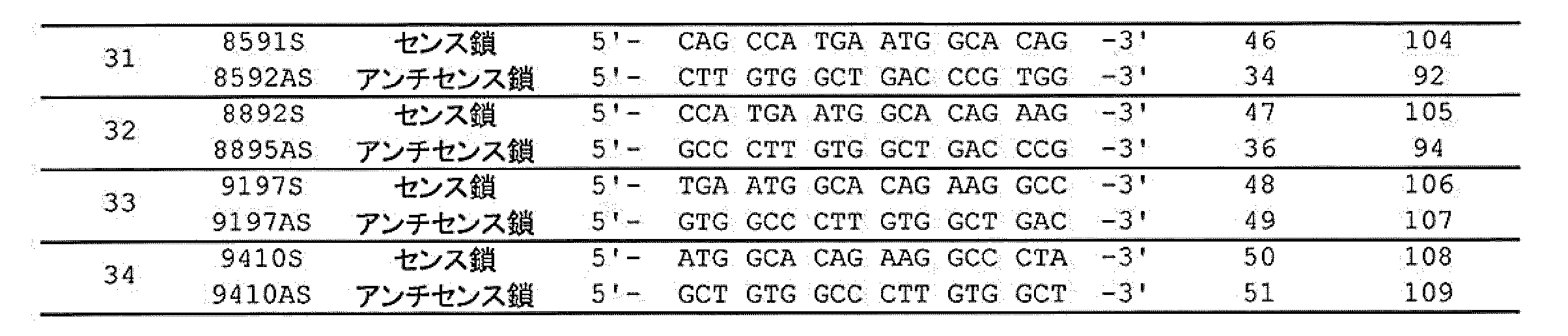
- the binding target sequence of each zinc finger array of the ZFN dimer is 18 bp (composed of 6 ZFs). When the base length between the binding target sequences (spacer) was set to 6 bp or 5 bp, 34 pairs of binding target candidate sequences were presented (see Table 1).
- each ZF was that described in the literature ("Standardized reagents and protocols for engineering zinc finger nucleases by modular assembly", Wright et al., Nature Protocols, 2006, Vol.1, No.3, p.1637-52, Supplemental Table 1).
- a zinc finger array was created by linking one ZF for every three base sequences on the 3' end of the target sequence (total of six).
- the sense strand ZFN 4350S which has a zinc finger array that recognizes the nucleic acid sequence of SEQ ID NO:1 (ATTCTTGGGTGGGAGCAG), has an amino acid sequence in which ZF91, ZF62, ZF106, ZF58, ZF103, and ZF88 (see the above literature, Supplemental Table 1), which recognize CAG, GAG, TGG, GGG, CTT, and ATT, respectively, are linked in order from the N-terminus.
- SSA single strand annealing
- ZF-ND1 expression plasmid (pCMV-ZF-ND1DDD, pCMV-ZF-ND1RRR) This is a plasmid that expresses "ZF-ND1" under the control of the CMV promoter.
- ZF-ND1 indicates one of the sense and antisense strand ZFNs of the 34 ZFN pairs listed in Table 1
- ND1 indicates one of the subunits of the ND1 heterodimer (ND1DDD and ND1RRR).
- ND1DDD was used as the sense strand ZFN
- ND1RRR was used as the antisense strand ZFN.
- EGFP fragment expression plasmid (pCAG-EGxxFP) This is a plasmid that expresses EGFP under the control of the CAG promoter.
- EGxxFP consists of a 1-600 bp fragment of the EGFP gene, a stop codon, a multicloning site, and a 120-720 bp fragment of the EGFP gene, and a candidate binding target sequence is inserted into the multicloning site.
- the pCAG-EGxxFP plasmid is not cleaved by ZF-ND1, it expresses incomplete GFP due to the stop codon immediately after the 1-600bp fragment of the EGFP gene.
- pCMV-ZF-ND1DDD pCMV-ZF-ND1RRR and pCAG-EGxxFP were introduced into HEK293 cells using transfection reagent (FuGene6 (Promega) or Viafect (Promega)) according to the attached protocol. Fluorescence images were taken 48 hours after transfection. The results are shown in Figure 1. Green EGFP fluorescence was observed in 16 pairs (1, 3-8, 16, 18-23, 30, 32) out of 34 pairs of candidate binding target sequences, confirming that cleavage by ZF-ND1 had occurred in the binding target sequences. High fluorescence intensity was observed in pairs 3, 5, 6, 19, and 21-23, confirming particularly high cleavage activity.
- Example 2 Study of high expression vector constructs
- two methods for expressing two types of genes one in which two types of genes are expressed by one promoter (bicistronic expression), and the other in which each gene is expressed by two different promoters.
- a plasmid vector hereinafter referred to as "Bicistronic" was prepared in which ZF-S-ND1DDD and ZF-AS-ND1RRR were linked and incorporated with an autolytic peptide (Furin-P2A) under the control of a CMV promoter.
- a plasmid vector (hereinafter referred to as "Dual promoter") in which a CMV promoter and a human EF1a (Elongation Factor alpha-1) promoter are arranged in the same direction (Dual promoter) and a plasmid vector (hereinafter referred to as "Bidirectional promoter") in which they are arranged in the opposite direction were prepared.
- the structure of each plasmid vector is shown in FIG. 2.
- the Dual promoter and Bidirectional promoter express ZF-S-ND1DDD under the control of the EF1a promoter and express ZF-AS-ND1RRR under the control of the CMV promoter.
- ZF target binding sequence ZF-S, ZF-AS
- the pair 22 5461S, 5562AS
- the dual promoter contains an insulator sequence to prevent interference between the expression of the two genes.
- SSA analysis was performed in the same manner as in Example 1 using the bicistronic, dual promoter, and bidirectional promoter plasmid vectors.
- ZF-ND1 expression plasmid positive control
- the frequency of InDel (Insertion and Deletion) in the target RHO sequence was compared by Cel-I analysis using each of the bicistronic and bidirectional promoter plasmid vectors.
- As a positive control the ZF-ND1 expression plasmid (positive control) pair 22 from Example 1 was used.
- Cel-I analysis was performed using the genomic DNA of HEK293 cells transfected with each plasmid construct, according to the protocol recommended by the GeneArt Genomic Cleavage Detection kit (ThermoFisher Scientific).
- the target RHO sequence amplified by PCR was treated with Cel-I nuclease and electrophoresed, and the results are shown in Figure 4.
- Figure 5 shows a histogram of InDels, where 0 on the X-axis indicates the same sequence as WT (no InDels), the positive direction indicates the number of inserted bases, the negative direction indicates the number of deleted bases, and the Y-axis indicates the frequency (percentage). Total eff indicates the sum of the InDel frequencies (%).
- SEQ ID NO:1 ZFN 4350S zinc finger array recognition sequence
- SEQ ID NO:2 ZFN 4350AS zinc finger array recognition sequence
- SEQ ID NO:3 ZFN 4653S zinc finger array recognition sequence
- SEQ ID NO:4 ZFN 4653AS zinc finger array recognition sequence
- SEQ ID NO:5 ZFN 4956S zinc finger array recognition sequence
- SEQ ID NO:6 ZFN 4956AS zinc finger array recognition sequence
- SEQ ID NO:7 ZFN 5158S zinc finger array recognition sequence
- SEQ ID NO:8 ZFN 5158AS zinc finger array recognition sequence
- SEQ ID NO:9 ZFN 5259S zinc finger array recognition sequence
- SEQ ID NO:10 ZFN 5259AS zinc finger array recognition sequence
- SEQ ID NO:12 ZFN
- SEQ ID NO:13 ZFN 5562S zinc finger array recognition sequence
- SEQ ID NO:14 ZFN 5562AS zinc finger array recognition sequence
- SEQ ID NO:15 ZFN 57
Landscapes
- Health & Medical Sciences (AREA)
- Life Sciences & Earth Sciences (AREA)
- Genetics & Genomics (AREA)
- Engineering & Computer Science (AREA)
- Chemical & Material Sciences (AREA)
- Zoology (AREA)
- Organic Chemistry (AREA)
- Bioinformatics & Cheminformatics (AREA)
- Wood Science & Technology (AREA)
- Biotechnology (AREA)
- Biomedical Technology (AREA)
- General Health & Medical Sciences (AREA)
- General Engineering & Computer Science (AREA)
- Molecular Biology (AREA)
- Medicinal Chemistry (AREA)
- Microbiology (AREA)
- Animal Behavior & Ethology (AREA)
- Pharmacology & Pharmacy (AREA)
- Biochemistry (AREA)
- Public Health (AREA)
- Veterinary Medicine (AREA)
- Physics & Mathematics (AREA)
- Plant Pathology (AREA)
- Biophysics (AREA)
- Epidemiology (AREA)
- Virology (AREA)
- Mycology (AREA)
- Nuclear Medicine, Radiotherapy & Molecular Imaging (AREA)
- Developmental Biology & Embryology (AREA)
- Ophthalmology & Optometry (AREA)
- General Chemical & Material Sciences (AREA)
- Chemical Kinetics & Catalysis (AREA)
- Cell Biology (AREA)
- Immunology (AREA)
- Measuring Or Testing Involving Enzymes Or Micro-Organisms (AREA)
- Micro-Organisms Or Cultivation Processes Thereof (AREA)
- Enzymes And Modification Thereof (AREA)
Abstract
Description
[1] ロドプシン(RHO)遺伝子座のゲノム編集のための、1対のジンクフィンガーヌクレアーゼ(ZFN)の組み合わせであって、以下の群から選択される組み合わせ。
(1)配列番号1の核酸配列を認識するジンクフィンガーアレイを有するZFNと、配列番号2の核酸配列を認識するジンクフィンガーアレイを有するZFNとの組み合わせ。
(2)配列番号5の核酸配列を認識するジンクフィンガーアレイを有するZFNと、配列番号6の核酸配列を認識するジンクフィンガーアレイを有するZFNとの組み合わせ。
(3)配列番号7の核酸配列を認識するジンクフィンガーアレイを有するZFNと、配列番号8の核酸配列を認識するジンクフィンガーアレイを有するZFNとの組み合わせ。
(4)配列番号9の核酸配列を認識するジンクフィンガーアレイを有するZFNと、配列番号10の核酸配列を認識するジンクフィンガーアレイを有するZFNとの組み合わせ。
(5)配列番号11の核酸配列を認識するジンクフィンガーアレイを有するZFNと、配列番号12の核酸配列を認識するジンクフィンガーアレイを有するZFNとの組み合わせ。
(6)配列番号13の核酸配列を認識するジンクフィンガーアレイを有するZFNと、配列番号14の核酸配列を認識するジンクフィンガーアレイを有するZFNとの組み合わせ。
(7)配列番号15の核酸配列を認識するジンクフィンガーアレイを有するZFNと、配列番号16の核酸配列を認識するジンクフィンガーアレイを有するZFNとの組み合わせ。
(8)配列番号31の核酸配列を認識するジンクフィンガーアレイを有するZFNと、配列番号32の核酸配列を認識するジンクフィンガーアレイを有するZFNとの組み合わせ。
(9)配列番号35の核酸配列を認識するジンクフィンガーアレイを有するZFNと、配列番号36の核酸配列を認識するジンクフィンガーアレイを有するZFNとの組み合わせ。
(10)配列番号37の核酸配列を認識するジンクフィンガーアレイを有するZFNと、配列番号6の核酸配列を認識するジンクフィンガーアレイを有するZFNとの組み合わせ。
(11)配列番号38の核酸配列を認識するジンクフィンガーアレイを有するZFNと、配列番号8の核酸配列を認識するジンクフィンガーアレイを有するZFNとの組み合わせ。
(12)配列番号7の核酸配列を認識するジンクフィンガーアレイを有するZFNと、配列番号10の核酸配列を認識するジンクフィンガーアレイを有するZFNとの組み合わせ。
(13)配列番号11の核酸配列を認識するジンクフィンガーアレイを有するZFNと、配列番号14の核酸配列を認識するジンクフィンガーアレイを有するZFNとの組み合わせ。
(14)配列番号15の核酸配列を認識するジンクフィンガーアレイを有するZFNと、配列番号18の核酸配列を認識するジンクフィンガーアレイを有するZFNとの組み合わせ。
(15)配列番号45の核酸配列を認識するジンクフィンガーアレイを有するZFNと、配列番号32の核酸配列を認識するジンクフィンガーアレイを有するZFNとの組み合わせ。
(16)配列番号47の核酸配列を認識するジンクフィンガーアレイを有するZFNと、配列番号36の核酸配列を認識するジンクフィンガーアレイを有するZFNとの組み合わせ。
[2] 以下の群から選択される、[1]の組み合わせ。
(2)配列番号5の核酸配列を認識するジンクフィンガーアレイを有するZFNと、配列番号6の核酸配列を認識するジンクフィンガーアレイを有するZFNとの組み合わせ。
(4)配列番号9の核酸配列を認識するジンクフィンガーアレイを有するZFNと、配列番号10の核酸配列を認識するジンクフィンガーアレイを有するZFNとの組み合わせ。
(5)配列番号11の核酸配列を認識するジンクフィンガーアレイを有するZFNと、配列番号12の核酸配列を認識するジンクフィンガーアレイを有するZFNとの組み合わせ。
(10)配列番号37の核酸配列を認識するジンクフィンガーアレイを有するZFNと、配列番号6の核酸配列を認識するジンクフィンガーアレイを有するZFNとの組み合わせ。
(12)配列番号7の核酸配列を認識するジンクフィンガーアレイを有するZFNと、配列番号10の核酸配列を認識するジンクフィンガーアレイを有するZFNとの組み合わせ。
(13)配列番号11の核酸配列を認識するジンクフィンガーアレイを有するZFNと、配列番号14の核酸配列を認識するジンクフィンガーアレイを有するZFNとの組み合わせ。
(14)配列番号15の核酸配列を認識するジンクフィンガーアレイを有するZFNと、配列番号18の核酸配列を認識するジンクフィンガーアレイを有するZFNとの組み合わせ。
[3] 2つのジンクフィンガーアレイが認識する核酸配列間のスペーサーが5bps又は6bpsである、[1]又は[2]の組み合わせ。
[4] ZFNの核酸切断ドメインが、ND1である、[1]-[3]のいずれかの組み合わせ。
[5] ZFNの核酸切断ドメインが、
配列番号52の391~585位のアミノ酸配列、
配列番号57のアミノ酸配列、又は、
配列番号58のアミノ酸配列、
を含んでなる、[4]の組み合わせ。
[6] RHO遺伝子座が、ヒトRHO遺伝子座である、[1]-[4]のいずれかの組み合わせ。
[8] バイディレクショナル発現ベクターであり、
センス鎖ZFNをコードする核酸配列と該核酸配列の転写を制御するプロモーター配列と、
アンチセンス鎖ZFNをコードする核酸配列と該核酸配列の転写を制御するプロモーター配列と、を含み、
前記2つのプロモーター配列が、それらの間にスペーサー配列を有さずに連続して配列する、[7]のベクター。
[9] 2つのプロモーターが、CMVプロモーターとヒトEF1a(Elongation Factor alpha-1)プロモーターである、[8]のベクター。
[12] [7]-[9]のいずれかのベクターをin vivo又はin vitroで、好ましくはin vitroで、視細胞に導入する手順を含む、RHO遺伝子がゲノム編集された視細胞の製造方法。
本開示に係るZFNは、ロドプシン(RHO)遺伝子座のゲノム編集のために用いられ得るものであり、特定の核酸配列を認識するジンクフィンガーアレイを有するZFNの組み合わせである。ジンクフィンガーアレイは、3塩基配列を認識する1つのジンクフィンガー(ZF)が複数配列されてなる。ジンクフィンガーアレイは、2個以上のZFを含んでいてよく、例えば3-9個、好ましくは4-8個、より好ましくは5-7個、典型的には6個のZFからなるものであってよい。
ZFのアミノ酸配列とZFが認識する3塩基配列との関係は公知であり、ZFのアミノ酸配列には、認識対象とする3塩基配列に応じて例えば非特許文献1のSupplemental Table 1に記載のアミノ酸配列を用いることができる。同一の3塩基配列に対して当該配列を認識するZFのアミノ酸配列は複数存在するため、同一の3塩基配列を認識するこれらのZFは互換的に用いられ得る。
(1)配列番号1の核酸配列を認識するジンクフィンガーアレイを有するZFNと、配列番号2の核酸配列を認識するジンクフィンガーアレイを有するZFNとの組み合わせ。
(2)配列番号5の核酸配列を認識するジンクフィンガーアレイを有するZFNと、配列番号6の核酸配列を認識するジンクフィンガーアレイを有するZFNとの組み合わせ。
(3)配列番号7の核酸配列を認識するジンクフィンガーアレイを有するZFNと、配列番号8の核酸配列を認識するジンクフィンガーアレイを有するZFNとの組み合わせ。
(4)配列番号9の核酸配列を認識するジンクフィンガーアレイを有するZFNと、配列番号10の核酸配列を認識するジンクフィンガーアレイを有するZFNとの組み合わせ。
(5)配列番号11の核酸配列を認識するジンクフィンガーアレイを有するZFNと、配列番号12の核酸配列を認識するジンクフィンガーアレイを有するZFNとの組み合わせ。
(6)配列番号13の核酸配列を認識するジンクフィンガーアレイを有するZFNと、配列番号14の核酸配列を認識するジンクフィンガーアレイを有するZFNとの組み合わせ。
(7)配列番号15の核酸配列を認識するジンクフィンガーアレイを有するZFNと、配列番号16の核酸配列を認識するジンクフィンガーアレイを有するZFNとの組み合わせ。
(8)配列番号31の核酸配列を認識するジンクフィンガーアレイを有するZFNと、配列番号32の核酸配列を認識するジンクフィンガーアレイを有するZFNとの組み合わせ。
(9)配列番号35の核酸配列を認識するジンクフィンガーアレイを有するZFNと、配列番号36の核酸配列を認識するジンクフィンガーアレイを有するZFNとの組み合わせ。
(10)配列番号37の核酸配列を認識するジンクフィンガーアレイを有するZFNと、配列番号6の核酸配列を認識するジンクフィンガーアレイを有するZFNとの組み合わせ。
(11)配列番号38の核酸配列を認識するジンクフィンガーアレイを有するZFNと、配列番号8の核酸配列を認識するジンクフィンガーアレイを有するZFNとの組み合わせ。
(12)配列番号7の核酸配列を認識するジンクフィンガーアレイを有するZFNと、配列番号10の核酸配列を認識するジンクフィンガーアレイを有するZFNとの組み合わせ。
(13)配列番号11の核酸配列を認識するジンクフィンガーアレイを有するZFNと、配列番号14の核酸配列を認識するジンクフィンガーアレイを有するZFNとの組み合わせ。
(14)配列番号15の核酸配列を認識するジンクフィンガーアレイを有するZFNと、配列番号18の核酸配列を認識するジンクフィンガーアレイを有するZFNとの組み合わせ。
(15)配列番号45の核酸配列を認識するジンクフィンガーアレイを有するZFNと、配列番号32の核酸配列を認識するジンクフィンガーアレイを有するZFNとの組み合わせ。
(16)配列番号47の核酸配列を認識するジンクフィンガーアレイを有するZFNと、配列番号36の核酸配列を認識するジンクフィンガーアレイを有するZFNとの組み合わせ。
例えば、上記(1)の1対のZFNは、配列番号1の核酸配列(ATTCTTGGGTGGGAGCAG)を認識するジンクフィンガーアレイを有するセンス鎖ZFN 4350Sと、配列番号2の核酸配列(AAGGCCTGAGCTCAGCCA)を認識するジンクフィンガーアレイを有するアンチセンス鎖ZFN 4350ASの組み合わせである。ZFN 4350Sは配列番号59のアミノ酸配列からなり、ZFN 4350ASは配列番号60のアミノ酸配列からなる。
例えばZFN 4350Sのジンクフィンガーアレイは、CAG, GAG, TGG, GGG, CTT及びATTをそれぞれ認識するZF91, ZF62, ZF106, ZF58, ZF103, ZF88(非特許文献1、Supplemental Table 1参照)をN末端側から順に連結したアミノ酸配列を有する。
本開示に係るベクターは、上述の1対のZFNをコードする核酸配列を含む。本開示に係るベクターは、一実施形態においてバイディレクショナル発現ベクターとされ、1対のZFNのうちセンス鎖ZFNとアンチセンス鎖ZFNとが別個のプロモーターの制御下で発現され、かつ、それら2つのプロモーターが逆向きに配列される。より具体的には、本開示に係るバイディレクショナル発現ベクターは、センス鎖ZFNをコードする核酸配列と該核酸配列の転写を制御するプロモーター配列と、アンチセンス鎖ZFNをコードする核酸配列と該核酸配列の転写を制御するプロモーター配列と、を含み、前記2つのプロモーター配列が、それらの間にスペーサー配列を有さずに連続して配列することが好ましい。
本開示は、上述のベクターをin vivo又はin vitroで、好ましくはin vitroで、視細胞に導入する手順を含む、視細胞のRHO遺伝子座のゲノム編集方法、並びに、ゲノム編集された視細胞の製造方法をも提供する。ZFNによるゲノム編集システムでは、gRNAのユビキタスな発現を伴うCasヌクレアーゼによるゲノム編集システムとは異なり、タンパク質にのみにより構成される。このため、ZFNによるゲノム編集システムでは、組織特異的プロモーターや薬剤応答型プロモーター等を利用することで目的とする組織特異的なゲノム編集を実現し易い。
本開示は、上述のベクターを含む、RHO遺伝子に由来する疾患の治療剤をも提供する。治療剤は、上述した正常なRHO遺伝子をコードするドナーDNAを含み得る。
また、上述のゲノム編集方法により得られたゲノム編集された視細胞は、細胞医薬として製剤化され得る。このような細胞医薬も、RHO遺伝子に由来する疾患の治療剤となり得る。
1.候補配列の検索
RHO遺伝子のエキソン1の開始コドンよりも上流に位置する100bpの領域において、ZFNによる2本鎖DNA切断を生じ得る領域を検索した。100bpの領域は、進化的な配列保存性が低い領域として選択した。
ZFNが結合し得る候補配列の検索にはScripps研究所Barbas研究室より公開されているZFFinger Tools (https://www.scripps.edu/barbas/zfdesign/zfdesignhome.php)を用いた。ZFN2量体のそれぞれのジンクフィンガーアレイの結合標的配列は18bp(6個のZFで構成)である。結合標的配列間(スペーサー)の塩基長を6bpもしくは5bpとした場合、34ペアの結合標的候補配列が提示された(表1参照)。

ヌクレアーゼとして、ND1のDDD型変異体(ND1DDD、配列番号57)及びRRR型変異体(ND1RRR、配列番号58)を用いて、SSA(Single strand annealing)解析により各結合標的候補配列に対する切断活性を評価した。
SSA解析は、細胞内のDNA切断が起きた場合の遺伝子修復機構である遺伝子相同組換えやシングルストランドアニーリング(SSA)を利用して、結合標的配列に対するZFNの切断活性を定量評価するものである。解析には、HEK293細胞と、以下の発現ベクターを用いた。
CMVプロモーターの制御下に「ZF-ND1」を発現するプラスミドである。
「ZF-ND1」との表記において、「ZF」は表1に掲げる34組のZFNペアのセンス鎖及びアンチセンス鎖のZFNの一方を示し、「ND1」はND1ヘテロ2量体のサブユニット(ND1DDD及びND1RRR)の一方を示す。センス鎖ZFNにはND1DDDを用い、アンチセンス鎖ZFNにはND1RRRを用いた。「ZF」の5′側には核移行シグナル(NLS)を結合し、「ZF」と「ND1」はリンカー配列(Thr-Gly- Gly -Ser:配列番号56)で連結した。「ND1」の3′側にはpolyA配列を付加した。polyA配列には、ウサギbeta-globinのpolyA配列を用いた。
CAGプロモーターの制御下にEGFPを発現するプラスミドである。
EGxxFPは、EGFP遺伝子の1-600bpの断片、停止コドン、マルチクローニングサイト、及びEGFP遺伝子の120-720bpの断片で構成され、マルチクローニングサイトに結合標的候補配列が挿入される。
pCAG-EGxxFPプラスミドは、結合標的候補配列がZF-ND1で切断されない場合はEGFP遺伝子の1-600bpの断片直後の停止コドンにより不完全なGFPを発現する。一方、結合標的候補配列がZF-ND1で切断させる場合は、EGFP遺伝子の120-720bpの断片の重複配列間で遺伝子相同組換えやシングルストランドアニーリング(SSA)が起き、完全なEGFP遺伝子が発現し、EGFP蛍光を生じる。
ZFNの高発現プラスミドベクターを検討した。
一般に、2種類の遺伝子を発現させる手法として、1つのプロモーターで2種類の遺伝子を発現させる手法(Bicistronic発現)と、異なる2つのプロモーターでそれぞれの遺伝子を発現させる手法がある。
本実施例では、前者の例としてCMVプロモーターの制御下にZF-S-ND1DDD及びZF-AS-ND1RRRを自己消化ペプチド(Furin-P2A)で連結して組み込んだプラスミドベクター(以下「Bicistronic」と称する)を作成した。また、後者の例として、CMVプロモーターとヒトEF1a(Elongation Factor alpha-1)プロモーターを同一方向(Dual promoter)に配列したプラスミドベクター(以下「Dual promoter」と称する)と、逆方向に配列したプラスミドベクター(以下「Bidirectional promoter」と称する)を作成した。各プラスミドベクターの構成を図2に示す。Dual promoter及びBidirectional promoterは、EF1aプロモーターの制御下にZF-S-ND1DDDを発現し、CMVプロモーターの制御下にZF-AS-ND1RRRを発現する。ZFの標的結合配列(ZF-S, ZF-AS)には、表1の22番のペア(5461S, 5562AS)を用いた。Dual promoterでは、2つの遺伝子発現の干渉を防ぐためのインスレーター配列を配置した。
配列番号2:ZFN 4350ASのジンクフィンガーアレイの認識配列
配列番号3:ZFN 4653Sのジンクフィンガーアレイの認識配列
配列番号4:ZFN 4653ASのジンクフィンガーアレイの認識配列
配列番号5:ZFN 4956Sのジンクフィンガーアレイの認識配列
配列番号6:ZFN 4956ASのジンクフィンガーアレイの認識配列
配列番号7:ZFN 5158Sのジンクフィンガーアレイの認識配列
配列番号8:ZFN 5158ASのジンクフィンガーアレイの認識配列
配列番号9:ZFN 5259Sのジンクフィンガーアレイの認識配列
配列番号10:ZFN 5259ASのジンクフィンガーアレイの認識配列
配列番号11:ZFN 5461Sのジンクフィンガーアレイの認識配列
配列番号12:ZFN 5461ASのジンクフィンガーアレイの認識配列
配列番号13:ZFN 5562Sのジンクフィンガーアレイの認識配列
配列番号14:ZFN 5562ASのジンクフィンガーアレイの認識配列
配列番号15:ZFN 5764Sのジンクフィンガーアレイの認識配列
配列番号16:ZFN 5764ASのジンクフィンガーアレイの認識配列
配列番号17:ZFN 5865Sのジンクフィンガーアレイの認識配列
配列番号18:ZFN 5865ASのジンクフィンガーアレイの認識配列
配列番号19:ZFN 6067Sのジンクフィンガーアレイの認識配列
配列番号20:ZFN 6067ASのジンクフィンガーアレイの認識配列
配列番号21:ZFN 6168Sのジンクフィンガーアレイの認識配列
配列番号22:ZFN 6168ASのジンクフィンガーアレイの認識配列
配列番号23:ZFN 7178Sのジンクフィンガーアレイの認識配列
配列番号24:ZFN 7178ASのジンクフィンガーアレイの認識配列
配列番号25:ZFN 7481Sのジンクフィンガーアレイの認識配列
配列番号26:ZFN 7481ASのジンクフィンガーアレイの認識配列
配列番号27:ZFN 7784Sのジンクフィンガーアレイの認識配列
配列番号28:ZFN 7784ASのジンクフィンガーアレイの認識配列
配列番号29:ZFN 8087Sのジンクフィンガーアレイの認識配列
配列番号30:ZFN 8087ASのジンクフィンガーアレイの認識配列
配列番号31:ZFN 8289Sのジンクフィンガーアレイの認識配列
配列番号32:ZFN 8289ASのジンクフィンガーアレイの認識配列
配列番号33:ZFN 8592Sのジンクフィンガーアレイの認識配列
配列番号34:ZFN 8592ASのジンクフィンガーアレイの認識配列
配列番号35:ZFN 8895Sのジンクフィンガーアレイの認識配列
配列番号36:ZFN 8895ASのジンクフィンガーアレイの認識配列
配列番号37:ZFN 4955Sのジンクフィンガーアレイの認識配列
配列番号38:ZFN 5157Sのジンクフィンガーアレイの認識配列
配列番号39:ZFN 6874Sのジンクフィンガーアレイの認識配列
配列番号40:ZFN 6874ASのジンクフィンガーアレイの認識配列
配列番号41:ZFN 7177Sのジンクフィンガーアレイの認識配列
配列番号42:ZFN 7480Sのジンクフィンガーアレイの認識配列
配列番号43:ZFN 7783Sのジンクフィンガーアレイの認識配列
配列番号44:ZFN 8086Sのジンクフィンガーアレイの認識配列
配列番号45:ZFN 8288Sのジンクフィンガーアレイの認識配列
配列番号46:ZFN 8591Sのジンクフィンガーアレイの認識配列
配列番号47:ZFN 8892Sのジンクフィンガーアレイの認識配列
配列番号48:ZFN 9197Sのジンクフィンガーアレイの認識配列
配列番号49:ZFN 9197ASのジンクフィンガーアレイの認識配列
配列番号50:ZFN 9410Sのジンクフィンガーアレイの認識配列
配列番号51:ZFN 9410ASのジンクフィンガーアレイの認識配列
配列番号52:ND1を含む全長タンパク質(バチルス属SGD-V-76由来)のアミノ酸配列
配列番号53:ND1を含む全長タンパク質(バチルス属SGD-V-76由来)のヌクレオチド配列
配列番号54:ND2を含む全長タンパク質(ボツリヌス菌由来)のアミノ酸配列
配列番号55:ND2を含む全長タンパク質(ボツリヌス菌由来)のアミノ酸配列のヌクレオチド配列
配列番号56:ペプチドリンカーのアミノ酸配列
配列番号57:ND1DDDのアミノ酸配列
配列番号58:ND1RRRのアミノ酸配列
配列番号59:ZFN 4350Sのジンクフィンガーアレイのアミノ酸配列
配列番号60:ZFN 4350ASのジンクフィンガーアレイのアミノ酸配列
配列番号61:ZFN 4653Sのジンクフィンガーアレイのアミノ酸配列
配列番号62:ZFN 4653ASのジンクフィンガーアレイのアミノ酸配列
配列番号63:ZFN 4956Sのジンクフィンガーアレイのアミノ酸配列
配列番号64:ZFN 4956ASのジンクフィンガーアレイのアミノ酸配列
配列番号65:ZFN 5158Sのジンクフィンガーアレイのアミノ酸配列
配列番号66:ZFN 5158ASのジンクフィンガーアレイのアミノ酸配列
配列番号67:ZFN 5259Sのジンクフィンガーアレイのアミノ酸配列
配列番号68:ZFN 5259ASのジンクフィンガーアレイのアミノ酸配列
配列番号69:ZFN 5461Sのジンクフィンガーアレイのアミノ酸配列
配列番号70:ZFN 5461ASのジンクフィンガーアレイのアミノ酸配列
配列番号71:ZFN 5562Sのジンクフィンガーアレイのアミノ酸配列
配列番号72:ZFN 5562ASのジンクフィンガーアレイのアミノ酸配列
配列番号73:ZFN 5764Sのジンクフィンガーアレイのアミノ酸配列
配列番号74:ZFN 5764ASのジンクフィンガーアレイのアミノ酸配列
配列番号75:ZFN 5865Sのジンクフィンガーアレイのアミノ酸配列
配列番号76:ZFN 5865ASのジンクフィンガーアレイのアミノ酸配列
配列番号77:ZFN 6067Sのジンクフィンガーアレイのアミノ酸配列
配列番号78:ZFN 6067ASのジンクフィンガーアレイのアミノ酸配列
配列番号79:ZFN 6168Sのジンクフィンガーアレイのアミノ酸配列
配列番号80:ZFN 6168ASのジンクフィンガーアレイのアミノ酸配列
配列番号81:ZFN 7178Sのジンクフィンガーアレイのアミノ酸配列
配列番号82:ZFN 7178ASのジンクフィンガーアレイのアミノ酸配列
配列番号83:ZFN 7481Sのジンクフィンガーアレイのアミノ酸配列
配列番号84:ZFN 7481ASのジンクフィンガーアレイのアミノ酸配列
配列番号85:ZFN 7784Sのジンクフィンガーアレイのアミノ酸配列
配列番号86:ZFN 7784ASのジンクフィンガーアレイのアミノ酸配列
配列番号87:ZFN 8087Sのジンクフィンガーアレイのアミノ酸配列
配列番号88:ZFN 8087ASのジンクフィンガーアレイのアミノ酸配列
配列番号89:ZFN 8289Sのジンクフィンガーアレイのアミノ酸配列
配列番号90:ZFN 8289ASのジンクフィンガーアレイのアミノ酸配列
配列番号91:ZFN 8592Sのジンクフィンガーアレイのアミノ酸配列
配列番号92:ZFN 8592ASのジンクフィンガーアレイのアミノ酸配列
配列番号93:ZFN 8895Sのジンクフィンガーアレイのアミノ酸配列
配列番号94:ZFN 8895ASのジンクフィンガーアレイのアミノ酸配列
配列番号95:ZFN 4955Sのジンクフィンガーアレイのアミノ酸配列
配列番号96:ZFN 5157Sのジンクフィンガーアレイのアミノ酸配列
配列番号97:ZFN 6874Sのジンクフィンガーアレイのアミノ酸配列
配列番号98:ZFN 6874ASのジンクフィンガーアレイのアミノ酸配列
配列番号99:ZFN 7177Sのジンクフィンガーアレイのアミノ酸配列
配列番号100:ZFN 7480Sのジンクフィンガーアレイのアミノ酸配列
配列番号101:ZFN 7783Sのジンクフィンガーアレイのアミノ酸配列
配列番号102:ZFN 8086Sのジンクフィンガーアレイのアミノ酸配列
配列番号103:ZFN 8288Sのジンクフィンガーアレイのアミノ酸配列
配列番号104:ZFN 8591Sのジンクフィンガーアレイのアミノ酸配列
配列番号105:ZFN 8892Sのジンクフィンガーアレイのアミノ酸配列
配列番号106:ZFN 9197Sのジンクフィンガーアレイのアミノ酸配列
配列番号107:ZFN 9197ASのジンクフィンガーアレイのアミノ酸配列
配列番号108:ZFN 9410Sのジンクフィンガーアレイのアミノ酸配列
配列番号109:ZFN 9410ASのジンクフィンガーアレイのアミノ酸配列
Claims (7)
- ロドプシン(RHO)遺伝子座のゲノム編集のための、1対のジンクフィンガーヌクレアーゼ(ZFN)の組み合わせであって、以下の群から選択される組み合わせ。
(1)配列番号1の核酸配列を認識するジンクフィンガーアレイを有するZFNと、配列番号2の核酸配列を認識するジンクフィンガーアレイを有するZFNとの組み合わせ。
(2)配列番号5の核酸配列を認識するジンクフィンガーアレイを有するZFNと、配列番号6の核酸配列を認識するジンクフィンガーアレイを有するZFNとの組み合わせ。
(3)配列番号7の核酸配列を認識するジンクフィンガーアレイを有するZFNと、配列番号8の核酸配列を認識するジンクフィンガーアレイを有するZFNとの組み合わせ。
(4)配列番号9の核酸配列を認識するジンクフィンガーアレイを有するZFNと、配列番号10の核酸配列を認識するジンクフィンガーアレイを有するZFNとの組み合わせ。
(5)配列番号11の核酸配列を認識するジンクフィンガーアレイを有するZFNと、配列番号12の核酸配列を認識するジンクフィンガーアレイを有するZFNとの組み合わせ。
(6)配列番号13の核酸配列を認識するジンクフィンガーアレイを有するZFNと、配列番号14の核酸配列を認識するジンクフィンガーアレイを有するZFNとの組み合わせ。
(7)配列番号15の核酸配列を認識するジンクフィンガーアレイを有するZFNと、配列番号16の核酸配列を認識するジンクフィンガーアレイを有するZFNとの組み合わせ。
(8)配列番号31の核酸配列を認識するジンクフィンガーアレイを有するZFNと、配列番号32の核酸配列を認識するジンクフィンガーアレイを有するZFNとの組み合わせ。
(9)配列番号35の核酸配列を認識するジンクフィンガーアレイを有するZFNと、配列番号36の核酸配列を認識するジンクフィンガーアレイを有するZFNとの組み合わせ。
(10)配列番号37の核酸配列を認識するジンクフィンガーアレイを有するZFNと、配列番号6の核酸配列を認識するジンクフィンガーアレイを有するZFNとの組み合わせ。
(11)配列番号38の核酸配列を認識するジンクフィンガーアレイを有するZFNと、配列番号8の核酸配列を認識するジンクフィンガーアレイを有するZFNとの組み合わせ。
(12)配列番号7の核酸配列を認識するジンクフィンガーアレイを有するZFNと、配列番号10の核酸配列を認識するジンクフィンガーアレイを有するZFNとの組み合わせ。
(13)配列番号11の核酸配列を認識するジンクフィンガーアレイを有するZFNと、配列番号14の核酸配列を認識するジンクフィンガーアレイを有するZFNとの組み合わせ。
(14)配列番号15の核酸配列を認識するジンクフィンガーアレイを有するZFNと、配列番号18の核酸配列を認識するジンクフィンガーアレイを有するZFNとの組み合わせ。
(15)配列番号45の核酸配列を認識するジンクフィンガーアレイを有するZFNと、配列番号32の核酸配列を認識するジンクフィンガーアレイを有するZFNとの組み合わせ。
(16)配列番号47の核酸配列を認識するジンクフィンガーアレイを有するZFNと、配列番号36の核酸配列を認識するジンクフィンガーアレイを有するZFNとの組み合わせ。 - ZFNの核酸切断ドメインが、ND1である、請求項1に記載の組み合わせ。
- 請求項1に記載の1対のZFNをコードする核酸配列を含むベクター。
- バイディレクショナル発現ベクターであり、
センス鎖ZFNをコードする核酸配列と該核酸配列の転写を制御するプロモーター配列と、
アンチセンス鎖ZFNをコードする核酸配列と該核酸配列の転写を制御するプロモーター配列と、を含み、
前記2つのプロモーターが、それらの間にスペーサー配列を有さずに連続して配列する、請求項3に記載のベクター。 - 請求項3又は4に記載のベクターを含む、RHO遺伝子に由来する疾患の治療剤。
- 請求項3又は4に記載のベクターを視細胞に導入する手順を含む、RHO遺伝子座のゲノム編集方法。
- 請求項3又は4に記載のベクターを視細胞に導入する手順を含む、RHO遺伝子がゲノム編集された視細胞の製造方法。
Priority Applications (4)
| Application Number | Priority Date | Filing Date | Title |
|---|---|---|---|
| CN202480032448.3A CN121263520A (zh) | 2023-06-16 | 2024-06-14 | 锌指核酸酶、载体和应用它们的基因组编辑方法和视细胞制备方法 |
| JP2025527998A JPWO2024257844A1 (ja) | 2023-06-16 | 2024-06-14 | |
| AU2024305470A AU2024305470A1 (en) | 2023-06-16 | 2024-06-14 | Zinc finger nuclease, vector, and method for genome editing and method for visual cell production using said nuclease and vector |
| EP24823457.7A EP4729613A1 (en) | 2023-06-16 | 2024-06-14 | Zinc finger nuclease, vector, and method for genome editing and method for visual cell production using said nuclease and vector |
Applications Claiming Priority (2)
| Application Number | Priority Date | Filing Date | Title |
|---|---|---|---|
| JP2023098875 | 2023-06-16 | ||
| JP2023-098875 | 2023-06-16 |
Publications (1)
| Publication Number | Publication Date |
|---|---|
| WO2024257844A1 true WO2024257844A1 (ja) | 2024-12-19 |
Family
ID=93852160
Family Applications (1)
| Application Number | Title | Priority Date | Filing Date |
|---|---|---|---|
| PCT/JP2024/021600 Ceased WO2024257844A1 (ja) | 2023-06-16 | 2024-06-14 | ジンクフィンガーヌクレアーゼ、ベクター並びにこれらを用いたゲノム編集方法及び視細胞製造方法 |
Country Status (5)
| Country | Link |
|---|---|
| EP (1) | EP4729613A1 (ja) |
| JP (1) | JPWO2024257844A1 (ja) |
| CN (1) | CN121263520A (ja) |
| AU (1) | AU2024305470A1 (ja) |
| WO (1) | WO2024257844A1 (ja) |
Citations (3)
| Publication number | Priority date | Publication date | Assignee | Title |
|---|---|---|---|---|
| US20120204282A1 (en) * | 2011-02-04 | 2012-08-09 | Sangamo Biosciences, Inc. | Methods and compositions for treating occular disorders |
| WO2020045281A1 (ja) | 2018-08-27 | 2020-03-05 | 国立大学法人広島大学 | 新規ヌクレアーゼドメインおよびその利用 |
| WO2021010303A1 (ja) | 2019-07-12 | 2021-01-21 | 国立研究開発法人理化学研究所 | 顕性型変異遺伝子に由来する疾患の治療剤 |
-
2024
- 2024-06-14 JP JP2025527998A patent/JPWO2024257844A1/ja active Pending
- 2024-06-14 WO PCT/JP2024/021600 patent/WO2024257844A1/ja not_active Ceased
- 2024-06-14 CN CN202480032448.3A patent/CN121263520A/zh active Pending
- 2024-06-14 EP EP24823457.7A patent/EP4729613A1/en active Pending
- 2024-06-14 AU AU2024305470A patent/AU2024305470A1/en active Pending
Patent Citations (3)
| Publication number | Priority date | Publication date | Assignee | Title |
|---|---|---|---|---|
| US20120204282A1 (en) * | 2011-02-04 | 2012-08-09 | Sangamo Biosciences, Inc. | Methods and compositions for treating occular disorders |
| WO2020045281A1 (ja) | 2018-08-27 | 2020-03-05 | 国立大学法人広島大学 | 新規ヌクレアーゼドメインおよびその利用 |
| WO2021010303A1 (ja) | 2019-07-12 | 2021-01-21 | 国立研究開発法人理化学研究所 | 顕性型変異遺伝子に由来する疾患の治療剤 |
Non-Patent Citations (3)
| Title |
|---|
| VOGL THOMAS, KICKENWEIZ THOMAS, PITZER JULIA, STURMBERGER LUKAS, WENINGER ASTRID, BIGGS BRADLEY W., KÖHLER EVA-MARIA, BAUMSCHLAGER: "Engineered bidirectional promoters enable rapid multi-gene co-expression optimization", NATURE COMMUNICATIONS, vol. 9, no. 1, 4 September 2018 (2018-09-04), XP093042127, DOI: 10.1038/s41467-018-05915-w * |
| WRIGHT DAVID A; THIBODEAU-BEGANNY STACEY; SANDER JEFFRY D; WINFREY RONNIE J; HIRSH ANDREW S; EICHTINGER MAGDALENA; FU FENGLI; PORT: "Standardized reagents and protocols for engineering zinc finger nucleases by modular assembly.", NATURE PROTOCOLS, NATURE PUBLISHING GROUP, GB, vol. 1, no. 3, GB , pages 1637 - 1652, XP001538671, ISSN: 1750-2799, DOI: 10.1038/nprot.2006.259 * |
| WRIGHT ET AL.: "Standardized reagents and protocols for engineering zinc-finger nucleases by modular assembly", NATURE PROTOCOLS, vol. 1, no. 3, 2006, pages 1637 - 52 |
Also Published As
| Publication number | Publication date |
|---|---|
| CN121263520A (zh) | 2026-01-02 |
| JPWO2024257844A1 (ja) | 2024-12-19 |
| EP4729613A1 (en) | 2026-04-22 |
| AU2024305470A1 (en) | 2026-01-22 |
Similar Documents
| Publication | Publication Date | Title |
|---|---|---|
| US11098094B2 (en) | Artificial DNA-binding proteins and uses thereof | |
| US6632672B2 (en) | Methods and compositions for genomic modification | |
| AU2017336100B2 (en) | Non-human animals having a hexanucleotide repeat expansion in a C9ORF72 locus | |
| EP3325668B1 (en) | Editing mitochondrial dna | |
| US20230329201A1 (en) | Cells and non-human animals engineered to express adar1 and uses thereof | |
| JP6793547B2 (ja) | 最適化機能CRISPR−Cas系による配列操作のための系、方法および組成物 | |
| US12442003B2 (en) | Trans-splicing molecules | |
| KR20200132849A (ko) | CRISPR/Cas 시스템을 사용한 동물에서의 전사 조절 | |
| JP2022518329A (ja) | CRISPR-Cas12j酵素およびシステム | |
| CN112153990A (zh) | 用于常染色体显性疾病的基因编辑 | |
| KR20090031938A (ko) | 방향성 진화로 촉매 작용을 최적화시킨 키메라 징크 핑거 리컴비나제 | |
| US20240108756A1 (en) | Compositions and methods for using alternative splicing to control specificity of gene therapy | |
| KR20230002788A (ko) | 신피질 레이어 5 글루타메이트성 뉴런에서 유전자 발현을 선택적으로 조절하기 위한 인공 발현 작제물 | |
| US20230165976A1 (en) | Htra1 modulation for treatment of amd | |
| CN119256086A (zh) | 工程化基因效应因子、组合物及其使用方法 | |
| JP7609436B2 (ja) | 顕性型変異遺伝子に由来する疾患の治療剤 | |
| CN121263520A (zh) | 锌指核酸酶、载体和应用它们的基因组编辑方法和视细胞制备方法 | |
| US20250382631A1 (en) | Protac-cid systems for use in multiplex gene regulation | |
| US20060183226A1 (en) | Methods for retrotransposing long interspersed elements (lines) | |
| US20230357792A1 (en) | Method of engineering and isolating adeno-associated virus | |
| WO2024257843A1 (ja) | ジンクフィンガータンパク質、ジンクフィンガーヌクレアーゼ、ベクター並びにこれらを用いたゲノム編集方法 | |
| CN118256559B (zh) | 制备射血分数保留的心衰的动物模型的方法 | |
| RU2815514C2 (ru) | Животные, отличные от человека, содержащие гуманизированный локус альбумина | |
| WO2024175015A1 (zh) | CRISPR/Cas效应蛋白及系统 | |
| WO2010028245A2 (en) | Altered phic31 integrases having improved efficiency and specificity and methods of using same |
Legal Events
| Date | Code | Title | Description |
|---|---|---|---|
| 121 | Ep: the epo has been informed by wipo that ep was designated in this application |
Ref document number: 24823457 Country of ref document: EP Kind code of ref document: A1 |
|
| ENP | Entry into the national phase |
Ref document number: 2025527998 Country of ref document: JP Kind code of ref document: A |
|
| WWE | Wipo information: entry into national phase |
Ref document number: 2025527998 Country of ref document: JP |
|
| WWE | Wipo information: entry into national phase |
Ref document number: AU2024305470 Country of ref document: AU |
|
| WWE | Wipo information: entry into national phase |
Ref document number: 2024823457 Country of ref document: EP |
|
| NENP | Non-entry into the national phase |
Ref country code: DE |
|
| ENP | Entry into the national phase |
Ref document number: 2024305470 Country of ref document: AU Date of ref document: 20240614 Kind code of ref document: A |
|
| ENP | Entry into the national phase |
Ref document number: 2024823457 Country of ref document: EP Effective date: 20260116 |
|
| ENP | Entry into the national phase |
Ref document number: 2024823457 Country of ref document: EP Effective date: 20260116 |
|
| ENP | Entry into the national phase |
Ref document number: 2024823457 Country of ref document: EP Effective date: 20260116 |
|
| WWP | Wipo information: published in national office |
Ref document number: 2024823457 Country of ref document: EP |