WO2024252506A1 - 保守支援システム、及び保守支援方法 - Google Patents
保守支援システム、及び保守支援方法 Download PDFInfo
- Publication number
- WO2024252506A1 WO2024252506A1 PCT/JP2023/020923 JP2023020923W WO2024252506A1 WO 2024252506 A1 WO2024252506 A1 WO 2024252506A1 JP 2023020923 W JP2023020923 W JP 2023020923W WO 2024252506 A1 WO2024252506 A1 WO 2024252506A1
- Authority
- WO
- WIPO (PCT)
- Prior art keywords
- unit
- data
- maintenance
- record information
- maintenance record
- Prior art date
- Legal status (The legal status is an assumption and is not a legal conclusion. Google has not performed a legal analysis and makes no representation as to the accuracy of the status listed.)
- Ceased
Links
Images



Classifications
-
- G—PHYSICS
- G06—COMPUTING OR CALCULATING; COUNTING
- G06Q—INFORMATION AND COMMUNICATION TECHNOLOGY [ICT] SPECIALLY ADAPTED FOR ADMINISTRATIVE, COMMERCIAL, FINANCIAL, MANAGERIAL OR SUPERVISORY PURPOSES; SYSTEMS OR METHODS SPECIALLY ADAPTED FOR ADMINISTRATIVE, COMMERCIAL, FINANCIAL, MANAGERIAL OR SUPERVISORY PURPOSES, NOT OTHERWISE PROVIDED FOR
- G06Q10/00—Administration; Management
- G06Q10/20—Administration of product repair or maintenance
Definitions
- This disclosure relates to a maintenance support system and a maintenance support method.
- This disclosure has been made to solve the above problems, and its purpose is to provide a maintenance support system and a maintenance support method that can improve the accuracy of fault diagnosis.
- one aspect of the present disclosure is a maintenance support system that includes a maintenance record information storage unit that stores maintenance record information that is maintenance record information obtained by previously diagnosing a device to be diagnosed, the maintenance record information including data on a plurality of data items and faulty part information; an importance learning unit that divides the maintenance record information stored in the maintenance record information storage unit according to a division condition that is determined in advance based on the data items, learns the relationship between the data items in the maintenance record information and the faulty parts for each division, and generates the importance of the data items for each division condition; a similar case extraction unit that classifies diagnostic data for diagnosing the device to be diagnosed according to the division condition, and extracts similar cases that are similar to the diagnostic data from the maintenance record information storage unit based on the importance of the data items corresponding to the classification; and a faulty part estimation unit that estimates the faulty parts of the device to be diagnosed based on the similar cases extracted by the similar case extraction unit.
- a maintenance record information storage unit that stores maintenance record information that is maintenance record information obtained by previously diagnosing
- An aspect of the present disclosure is a maintenance support method for a maintenance support system including a maintenance record information storage unit that stores maintenance record information, which is maintenance record information used to diagnose a diagnosis target device in the past, including data on a plurality of data items and faulty part information, in which an importance learning unit divides the maintenance record information stored in the maintenance record information storage unit according to a division condition that is determined in advance based on the data items, learns the relationship between the data items in the maintenance record information and the faulty parts for each division, and generates the importance of the data items for each division condition, a similar case extraction unit classifies diagnostic data for diagnosing the diagnosis target device according to the division condition, and extracts similar cases similar to the diagnostic data from the maintenance record information storage unit based on the importance of the data items corresponding to the classification, and a faulty part estimation unit estimates the faulty parts of the diagnosis target device based on the similar cases extracted by the similar case extraction unit.
- maintenance record information storage unit that stores maintenance record information, which is maintenance record information used to diagnose a diagnosis target device in the
- This disclosure makes it possible to improve the accuracy of fault diagnosis.
- FIG. 1 is a functional block diagram showing an example of a maintenance support system according to an embodiment of the present invention.
- 5A and 5B are diagrams illustrating an example of data in a maintenance record information storage unit in the embodiment.
- 5 is a diagram illustrating an example of data in a weight storage unit according to the present embodiment.
- FIG. 5 is a diagram illustrating an example of data in an estimation result storage unit in the present embodiment.
- FIG. 5A and 5B are diagrams illustrating an example of data in an output information storage unit according to the embodiment.
- 4 is a flowchart showing an example of a model learning process of the model learning device in the present embodiment.
- 5 is a flowchart showing an example of a weight learning process of the model learning device in the present embodiment.
- 4 is a flowchart showing an example of a diagnostic process of the diagnostic device in the present embodiment.
- FIG. 2 is a diagram illustrating the hardware configuration of a diagnosis device and a model learning device of the maintenance support system according to the present embodiment.
- FIG. 1 is a functional block diagram showing an example of a maintenance support system 1 according to the present embodiment.
- a maintenance support system 1 includes a diagnosis device 10, a plurality of devices to be diagnosed 20, a plurality of maintenance terminals 30, and a model learning device 40.
- diagnosis target devices 21 devices that have been diagnosed in the past or devices that are in normal operation are described as diagnosis target devices 21, and devices that are currently being diagnosed are described as diagnosis target devices 22. Also, in the maintenance support system 1, when referring to any diagnosis target device or when no particular distinction is made, they are described as diagnosis target devices 20.
- the terminal that has transmitted the maintenance record information, which is the past diagnosis result will be described as the maintenance terminal 31, and the terminal currently performing the diagnosis will be described as the maintenance terminal 32.
- the terminals when referring to any maintenance terminal or when no particular distinction is made, the terminals will be described as the maintenance terminal 30.
- the diagnostic device 10 the multiple devices to be diagnosed 21, the multiple maintenance terminals 30 (31, 32), and the model learning device 40 can be connected to a network NW1 and can communicate with each other via the network NW1.
- the diagnosis target device 22 and the maintenance terminal 32 can be connected to each other via a network NW2, and can communicate with each other via the network NW2.
- the network NW1 is, for example, a wide area network (WAN).
- the network NW2 is, for example, a local area network (LAN) within the building in which the device to be diagnosed 22 is installed.
- WAN wide area network
- LAN local area network
- the diagnosis target device 20 (21, 22) is, for example, a home appliance such as an air conditioner.
- the diagnosis target device 20 (21, 22) is a device that is the subject of a fault diagnosis.
- the maintenance terminal 30 (31, 32) is a terminal device for maintaining the diagnosis target device 20, and is, for example, a smartphone, a tablet terminal, a mobile PC (mobile personal computer), etc.
- the maintenance terminal 30 (31, 32) is a device for a maintenance company to diagnose and maintain the diagnosis target device 20 on-site, or to diagnose the diagnosis target device 20 before heading to the site.
- the maintenance terminal 32 is a terminal that diagnoses the diagnosis target device 22 that is the diagnosis target (maintenance target), and includes a NW (network) communication unit 321, an input unit 322, a display unit 323, a terminal memory unit 324, and a terminal control unit 325.
- NW network
- the NW communication unit 321 is a functional unit realized by a communication device such as a network adapter.
- the NW communication unit 321 is connected to the network NW2 and is capable of communicating with the diagnosis target device 22.
- the NW communication unit 321 is also connected to the network NW1 and is capable of communicating with, for example, the diagnosis device 10.
- the input unit 322 is an input device such as a keyboard, a touch screen, and buttons.
- the input unit 322 accepts various input information in response to operations by a user (maintenance contractor).
- the input unit 322 is used, for example, for the maintenance contractor to input diagnostic data.
- the diagnostic data includes, for example, the model name of the device 22 to be diagnosed, the number of years it has been installed, the installation area, and malfunction symptoms.
- the display unit 323 is, for example, a display device such as a liquid crystal display.
- the display unit 323 displays, for example, an input screen for inputting diagnostic data, and output information received from the diagnostic device 10 described below.
- the output information is, for example, the diagnosis results for the diagnostic data, candidates for faulty parts, etc.
- the terminal storage unit 324 stores various information used by the maintenance terminal 32.
- the terminal storage unit 324 stores input information from the input unit 322, display information on the display unit 323, information sent and received between the diagnostic device 10, etc.
- the terminal control unit 325 is a functional unit that is realized, for example, by having a processor including a CPU (Central Processing Unit) execute a program.
- the terminal control unit 325 transmits, for example, diagnostic data received via the input unit 322 to the diagnostic device 10 via the network NW1.
- the terminal control unit 325 also transmits, for example, operating data acquired from the diagnostic target device 22 via the network NW2 to the diagnostic device 10 via the network NW1.
- the terminal control unit 325 also causes the display unit 323 to display output information received from the diagnostic device 10 via the network NW1.
- the above-mentioned operating data includes detection data from various sensors (not shown) equipped in the diagnosis target device 22, error code information, etc.
- the model learning device 40 is, for example, a server device that can be connected to the network NW1.
- the model learning device 40 executes weight learning processing and learning processing of the faulty part detection model.
- the model learning device 40 also includes a NW communication unit 41, a learning memory unit 42, and a learning processing unit 43.
- the NW communication unit 41 is a functional unit realized by a communication device such as a network adapter.
- the NW communication unit 41 is connected to the network NW1 and is capable of communicating with the diagnosis target device 21, the maintenance terminal 31, and the diagnosis device 10.
- the learning memory unit 42 is, for example, a storage device such as a RAM, a flash memory, or a HDD (Hard Disk Drive), and stores various information used by the model learning device 40.
- the learning memory unit 42 includes a maintenance record information memory unit 421, an operating data memory unit 422, a weight memory unit 423, and a model memory unit 424.
- the maintenance record information storage unit 421 stores maintenance record information collected from multiple maintenance terminals 31.
- the maintenance record information is, for example, a maintenance work report created by a maintenance company.
- the maintenance record information storage unit 421 stores, for example, maintenance record information of a past diagnosis of a diagnosis target device 21, including data of multiple data items and faulty part information.
- FIG. 2 An example of data in the maintenance record information storage unit 421 will be described with reference to FIG. 2.
- FIG. 2 is a diagram showing an example of data stored in the maintenance record information storage unit 421 in this embodiment.
- the maintenance record information storage unit 421 stores maintenance record information in which a NO (number), a model name, years since installation, an area, symptoms, a replacement part P1, and a replacement part P2 are associated with each other.
- NO is an example of individual identification information of the diagnosis target device 21 (20).
- the model name indicates the model name of the diagnosis target device 21 (20).
- the model name is an example of device identification information that identifies the diagnosis target device 21 (20).
- the years installed and the area indicate the years (period) and area in which the diagnosis target device 21 (20) has been installed.
- the symptoms indicate the symptoms of a malfunction or failure that occurred when the diagnosis target device 21 (20) was diagnosed in the past.
- Replacement part P1 and replacement part P2 indicate parts that were replaced in past maintenance work.
- the model name, years installed, area, and symptoms correspond to data items.
- the maintenance record information with a NO of "1" indicates that the model name is "MSZXXX01S” and the number of years installed is "5" (five years). It also indicates that the region is “Tokyo” and the symptom is “not cooling.” It also indicates that replacement parts P1 and P2 are the “compressor” and the “expansion valve.”
- the operation data storage unit 422 stores operation data collected from each diagnosis target device 21 (20).
- the operation data includes detection data from various sensors (not shown) equipped in each diagnosis target device 21 (20), error code information, and the like.
- the operation data storage unit 422 stores, for example, the above-mentioned number and model name in association with the operation data.
- the weight storage unit 423 (an example of an importance storage unit) divides the maintenance record information stored in the maintenance record information storage unit 421 according to predetermined division conditions based on the data items, and stores the learning results obtained by learning the relationship between the data items in the maintenance record information and the faulty parts for each division.
- the learning results indicate the weights (importance) of the data items for each division condition.
- an example of data in the weight storage unit 423 will be described with reference to FIG. 3.
- FIG. 3 is a diagram showing an example of data stored in the weight storage unit 423 in this embodiment.
- the weight storage unit 423 stores data items and weights in association with each other for each division.
- the data items include, for example, the model, the region, the capacity range, and the age.
- the area of the data item is divided into division A, which is the coastal area, and division B, which is the inland area.
- the division condition here is that the area of the data item is either a coastal area or an inland area.
- the model storage unit 424 stores a faulty part detection model that is the result of learning using maintenance record information and operating data as learning data.
- the faulty part detection model is, for example, an estimation model that estimates faulty parts from similar cases of malfunctions (failures) of the diagnosis target device 22 (20).
- the learning processing unit 43 is a functional unit that is realized by, for example, causing a processor including a CPU to execute a program.
- the learning processing unit 43 executes a learning process to learn the weights of data items for each division and a faulty part detection model.
- the learning processing unit 43 includes a maintenance record information collecting unit 431 , an operating data collecting unit 432 , a weight learning unit 433 , and a model learning unit 434 .
- the maintenance record information collection unit 431 collects maintenance record information from the maintenance terminal 31 (30) and stores the collected maintenance record information in the maintenance record information storage unit 421.
- the maintenance record information collected by the maintenance record information collection unit 431 is used as weights for data items and learning data for learning a faulty part detection model.
- the driving data collection unit 432 collects driving data from the diagnosis target device 21 (20) and stores the collected driving data in the driving data storage unit 422.
- the driving data collected by the driving data collection unit 432 may be used as part of the learning data for learning the weights of the data items and the faulty part detection model.
- the weight learning unit 433 (an example of an importance learning unit) divides the maintenance record information stored in the maintenance record information storage unit 421 according to predetermined division conditions based on the data items, learns the relationship between the data items in the maintenance record information and the faulty parts for each division, and generates weights (importance) of the data items for each division condition.
- the weight learning unit 433 uses the past maintenance record information stored in the maintenance record information storage unit 421 and the driving data stored in the driving data storage unit 422 as learning data, for example, using a machine learning method such as LightGBM to calculate the importance of each item of data, to generate weights of the data items for each division condition.
- the weight learning unit 433 may generate weights of the data items for each division condition by using the maintenance record information as learning data without using the driving data.
- the division condition is, for example, whether the area is a coastal area or an inland area in the regional data items as shown in FIG. 3 above.
- the weight learning unit 433 generates weights for each data item in the coastal area (division A) and weights for each data item in the inland area (division B).
- the weight learning unit 433 divides the learning data based on whether the area in which the diagnosis target device 21 (20) is installed is a coastal area (division A) or an inland area (division B), and performs a learning process on each area to generate weights for each data item.
- the division conditions such as the regional data items mentioned above, are determined in advance by the maintenance company, taking into account the maintenance record information and operation data, and are those that will have a large impact on the defective parts (replacement parts).
- the weight learning unit 433 stores the weights of the data items for each division condition in the weight storage unit 423.
- the weight learning unit 433 also transmits, for example, the weights of the data items for each division condition stored in the weight storage unit 423 to the diagnostic device 10 via the NW communication unit 41.
- the model learning unit 434 learns the maintenance record information as learning data and generates a faulty part detection model that infers faulty parts from similar cases.
- the model learning unit 434 generates the faulty part detection model using a machine learning method such as LightGBM or SVM (Support Vector Machine) using, for example, past maintenance record information stored in the maintenance record information storage unit 421 and driving data stored in the driving data storage unit 422 as learning data.
- a machine learning method such as LightGBM or SVM (Support Vector Machine)
- the model learning unit 434 may generate the faulty part detection model using the maintenance record information as learning data without using the driving data.
- the model learning unit 434 stores the generated faulty part detection model in the model storage unit 424. In addition, the model learning unit 434 transmits, for example, the faulty part detection model stored in the model storage unit 424 to the diagnostic device 10 via the NW communication unit 41.
- the diagnostic device 10 is, for example, a server device connectable to the network NW1.
- the diagnostic device 10 estimates a faulty part by using the faulty part detection model generated by the model learning device 40 and the weight (importance) of each data item.
- the diagnostic device 10 estimates a faulty part of the diagnosis target device 22 using diagnostic data and operation data acquired from the maintenance terminal 32 via the network NW1 as input data.
- the diagnostic device 10 also generates a display screen as output information based on the estimation result of the faulty part, and transmits it to the maintenance terminal 32 via the network NW1.
- the diagnostic device 10 also includes a network communication unit 11 , a device storage unit 12 , and a diagnostic processing unit 13 .
- the NW communication unit 11 is a functional unit realized by a communication device such as a network adapter.
- the NW communication unit 11 is connected to the network NW1 and can communicate with the maintenance terminal 32 and the model learning device 40.
- the device storage unit 12 is a storage device such as a RAM, flash memory, or HDD, and stores various information used by the diagnostic device 10.
- the device storage unit 12 includes a diagnostic data storage unit 121, a driving data storage unit 122, a weight storage unit 123, a model storage unit 124, a similar case storage unit 125, an estimation result storage unit 126, and an output information storage unit 127.
- the diagnostic data storage unit 121 stores diagnostic data acquired from the maintenance terminal 32.
- the diagnostic data has the same data items as the input data, excluding the items of replacement parts in the maintenance record information used by the model learning device 40 for the learning process described above.
- the diagnostic data storage unit 121 stores diagnostic data for data items such as model, region, capacity range, and years of use.
- the operation data storage unit 122 stores the operation data of the diagnosis target device 22 acquired from the maintenance terminal 32.
- the operation data has the same data items as the operation data used in the learning process by the model learning device 40 described above.
- the operation data has data items such as detection data from various sensors (indoor temperature, indoor humidity, outdoor temperature, outdoor humidity, etc.) and error codes.
- the weight storage unit 123 stores the weights of the data items for each division condition obtained from the model learning device 40.
- the weight storage unit 123 stores, for example, information similar to that of the weight storage unit 423 shown in FIG. 3.
- the model storage unit 124 stores the faulty part detection model acquired from the model learning device 40.
- the model storage unit 124 stores the same information as the model storage unit 424 of the model learning device 40.
- the similar case storage unit 125 stores information about past similar cases extracted by the similar case extraction unit 133 described below.
- the similar case storage unit 125 stores multiple similar cases (e.g., about 100 similar cases) extracted using the weights of data items obtained from the model learning device 40.
- the estimation result storage unit 126 stores candidates for faulty parts of the diagnosis target device 22 estimated by the faulty part estimation unit 134 described below. For each similar case, the estimation result storage unit 126 stores information associating the candidates for faulty parts estimated by the faulty part estimation unit 134 with the failure probability (likelihood), and the average value of the failure probability for all similar cases, as estimation results estimated using the faulty part detection model.
- the failure probability likelihood
- FIG. 4 is a diagram showing an example of data in the estimation result storage unit 126 in this embodiment. 4, the estimation result storage unit 126 stores candidates for faulty parts and failure probabilities in association with each other for each similar case. The estimation result storage unit 126 further stores an average value of the failure probabilities for all similar cases.
- case EX1 which is a similar case
- the candidates for failed parts are the compressor, four-way valve, coil, fan motor, and electronic board, and the failure probabilities of each are "52.00%, "3.70%, “24.00%, “9.20%, and "4.00%”.
- the average failure probabilities of cases EX1 to EXN which are similar cases, are "58.20%, "2.70%, “23.10%, "11.60%, and "4.10%”.
- the output information storage unit 127 stores the output information generated by the output information generation unit 135, which will be described later.
- the output information storage unit 127 stores output information based on the estimation results, for example, as shown in FIG. 5.
- FIG. 5 is a diagram showing an example of data in the output information storage unit 127 in this embodiment.
- the output information storage unit 127 stores display screen information in which the estimation result is associated with the failure probability.
- the estimation result indicates the top three parts with the highest failure probabilities among the candidates for the failed part.
- the components with the highest average failure probabilities for cases EX1 to EXN of similar cases stored in the estimation result storage unit 126 described above are the “compressor,” “coil,” and “fan motor,” and the respective failure probabilities are "50.20%, "23.10%,” and "11.60%.”
- the diagnostic processing unit 13 is a functional unit that is realized by, for example, having a processor including a CPU execute a program.
- the diagnostic processing unit 13 includes a diagnostic data acquisition unit 131, an operating data acquisition unit 132, a similar case extraction unit 133, a faulty part estimation unit 134, and an output information generation unit 135.
- the diagnostic data acquisition unit 131 acquires diagnostic data from the maintenance terminal 32 via the NW communication unit 11.
- the diagnostic data acquisition unit 131 stores the acquired diagnostic data in the diagnostic data storage unit 121.
- the operation data acquisition unit 132 acquires operation data of the diagnosis target device 22 from the maintenance terminal 32 via the NW communication unit 11.
- the operation data acquisition unit 132 stores the acquired operation data of the diagnosis target device 22 in the operation data storage unit 122.
- the similar case extraction unit 133 classifies the diagnostic data for diagnosing the diagnosis target device 22 according to predetermined division conditions, and extracts similar cases that are similar to the diagnostic data from the maintenance record information storage unit 421 of the model learning device 40 based on the weights of the data items that correspond to the classification (division conditions).
- the similar case extraction unit 133 classifies the acquired diagnostic data and operation data according to the region where the diagnosis target device 22 is installed, for example, whether it corresponds to a coastal region or an inland region. For example, in coastal regions, there is a strong tendency for failures due to metal rust, and the weights (importance) of data items for failure diagnosis differ, so it is considered effective to classify into the above-mentioned divisions (coastal region or inland region).
- the similar case extraction unit 133 obtains the weight of each data item corresponding to the classification (division condition) from the weight storage unit 123, and uses the weight of each data item corresponding to the classification (division condition) to calculate the similarity with past cases stored in the maintenance record information storage unit 421.
- the similar case extraction unit 133 calculates the similarity (Sim n ), for example, using the following formula (1).
- Sim n indicates the similarity of the nth past case
- ⁇ , ⁇ , ... indicate the weight of each data item
- x ⁇ , y ⁇ , ... indicate diagnostic data of the input value of each data item
- x, y, ... indicate diagnostic data of past cases of each data item.
- function f is a function that outputs "1" when the past case and the data of the input item match, and outputs "0" when they do not match.
- a variable having a line through the letter x is represented as x ⁇
- a variable having a line through the letter y is represented as y ⁇ .
- the similar case extraction unit 133 calculates the sum of the degrees of similarity of all items by multiplying the weighting ( ⁇ , ⁇ ) of each data item by the degree of agreement of each data item (using "1" if there is a match and "0" if there is a mismatch) to determine the nth similarity (Sim n ) of past cases.
- the similar case extraction unit 133 extracts, for example, 100 cases as similar cases in descending order of the calculated similarity (Sim n ). In this manner, the similar case extraction unit 133 extracts a plurality of similar cases.
- the similar case extraction unit 133 stores the extracted similar cases in the similar case storage unit 125.
- the failed part estimation unit 134 estimates a failed part of the diagnosis target device 22 based on the similar cases extracted by the similar case extraction unit 133.
- the failed part estimation unit 134 estimates a failed part from the similar cases using the failed part detection model stored in the model storage unit 124.
- the failed part estimation unit 134 estimates failed part candidates and failure probability for each of a plurality of similar cases (e.g., 100 cases) stored in the similar case storage unit 125 using the failed part detection model, for example, as shown in FIG.
- the faulty part estimation unit 134 stores the estimation results (faulty part candidates and failure probability) in the estimation result storage unit 126 .
- the output information generating unit 135 generates output information based on the estimation results estimated by the faulty part estimation unit 134.
- the output information generating unit 135 calculates the average value of the failure probability for the faulty parts in the multiple similar cases stored in the estimation result storage unit 126. For example, as shown in FIG. 4, the output information generating unit 135 stores the calculated average value of the failure probability in the estimation result storage unit 126.
- the output information generating unit 135 also selects a specific number (e.g., three) of candidates for faulty parts in descending order of average failure probability, and generates output information including the selected candidates for faulty parts.
- the output information generating unit 135 generates output information (display screen) such as that shown in FIG. 5, for example, and stores it in the output information storage unit 127.
- the output information generation unit 135 transmits the generated output information to the maintenance terminal 32 via the NW communication unit 11. In this way, the output information generation unit 135 generates output information including the selected candidates for faulty parts and the average value of the failure probability, and transmits the generated output information to the maintenance terminal 32.
- FIG. 6 is a flowchart showing an example of the model learning process of the model learning device 40 in this embodiment.
- the model learning device 40 collects maintenance work reports and operation data via the network NW1 (step S101).
- the maintenance record information collection unit 431 of the model learning device 40 collects maintenance work reports as maintenance record information from the maintenance terminal 31 via the NW communication unit 41, and stores the collected maintenance record information (maintenance work reports) in the maintenance record information storage unit 421.
- the operation data collection unit 432 of the model learning device 40 collects operation data from the diagnosis target device 21 via the NW communication unit 41, and stores the collected operation data in the operation data storage unit 422.
- the model learning unit 434 of the model learning device 40 classifies the input data and output data from the maintenance work report and the operation data (step S102).
- the model learning unit 434 classifies the maintenance record information (maintenance work report) stored in the maintenance record information storage unit 421 and the operation data stored in the operation data storage unit 422 as learning data into input data and output data. For example, in the case shown in FIG. 2, "model name”, “years installed”, “area”, and “symptoms” are classified as input data, and "replacement part P1" and "replacement part P2" are classified as output data.
- the model learning unit 434 learns the relationship between the input data and the output data, and generates a faulty part detection model (step S103).
- the model learning unit 434 generates a faulty part detection model from the above-mentioned learning data using a machine learning method such as LightGBM or SVM.
- the model learning unit 434 stores the generated faulty part detection model in the model storage unit 424.
- the model learning unit 434 transmits the faulty part detection model to the diagnostic device 10 (step S104).
- the model learning unit 434 transmits the faulty part detection model stored in the model storage unit 424 to the diagnostic device 10 via the NW communication unit 41.
- the transmitted faulty part detection model is stored in the model storage unit 124 of the diagnostic device 10.
- the model learning unit 434 ends the model learning process.
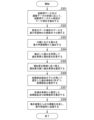
- FIG. 7 is a flowchart showing an example of the weight learning process of the model learning device 40 in this embodiment.
- the model learning device 40 first extracts data items for which the failure tendency differs significantly depending on the division from the maintenance work report and the operation data (step S201).
- the weight learning unit 433 of the model learning device 40 extracts, for example, "region" as a data item for which the failure tendency differs significantly.
- the weight learning unit 433 divides the data of the data items according to the division conditions of the specified data items (step S202).
- the weight learning unit 433 divides the above-mentioned learning data into, for example, coastal areas and inland areas according to the "region" of the specified data item.
- the weight learning unit 433 learns the relationship between the diagnostic data and replacement parts for each division, and calculates a weight for each data item (step S203). For example, the weight learning unit 433 calculates the weight of each data item in the coastal region from the diagnostic data (learning data) whose division condition is the coastal region, using a machine learning method such as LightGBM. The weight learning unit 433 also calculates the weight of each data item in the inland region from the diagnostic data (learning data) whose division condition is the inland region, using a machine learning method such as LightGBM. The weight learning unit 433 stores the calculated weight of each data item for each division condition in the weight storage unit 423, for example, as shown in FIG. 3.
- a machine learning method such as LightGBM
- the weight learning unit 433 transmits the weight for each data item to the diagnostic device 10 (step S204).
- the weight learning unit 433 transmits the weight for each data item for each division condition stored in the weight storage unit 423 to the diagnostic device 10 via the NW communication unit 41.
- the transmitted weight for each data item for each division condition is stored in the weight storage unit 123 of the diagnostic device 10.
- the weight learning unit 433 ends the weight learning process.
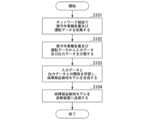
- FIG. 8 is a flowchart showing an example of a diagnostic process of the diagnostic device 10 in this embodiment.
- the diagnostic device 10 first extracts specified data items from the diagnostic data in response to receiving the diagnostic data and driving data (step S301).
- the diagnostic data acquisition unit 131 of the diagnostic device 10 acquires the diagnostic data from the maintenance terminal 32 via the NW communication unit 11, and the driving data acquisition unit 132 acquires the driving data of the diagnosis target device 22 from the maintenance terminal 32 via the NW communication unit 11.
- the similar case extraction unit 133 of the diagnostic device 10 extracts specified data items (e.g., "area") in response to acquiring (receiving) the diagnostic data and driving data.
- the similar case extraction unit 133 classifies the data of the specified data item according to the division conditions used during weight learning (step S302).
- the similar case extraction unit 133 classifies the diagnostic data and driving data into, for example, coastal areas and inland areas.
- the similar case extraction unit 133 extracts weights for the classification from the weight learning results (step S303).
- the similar case extraction unit 133 extracts weights for each data item corresponding to the classification (division condition) obtained by classifying the diagnostic data and the driving data from the weight storage unit 123. For example, if the classification is coastal area, the similar case extraction unit 133 obtains weights for each data item corresponding to coastal area from the weight storage unit 123. Also, for example, if the classification is inland area, the similar case extraction unit 133 obtains weights for each data item corresponding to inland area from the weight storage unit 123.
- the similar case extraction unit 133 uses the extracted weight to calculate the similarity with the past cases (step S304).
- the similar case extraction unit 133 calculates the similarity (Sim n ) between the past cases stored in the maintenance record information storage unit 421 and the diagnostic data and driving data by using the above-mentioned formula (1).
- the similar case extraction unit 133 then sorts the similarities in descending order and selects past cases with high similarity (e.g., 100 cases) (step S305).
- the similar case extraction unit 133 stores the selected past cases with high similarity (e.g., 100 cases) as similar cases in the similar case storage unit 125.
- the faulty part estimation unit 134 of the diagnostic device 10 uses the faulty part detection model to estimate the faulty part for each of the selected past cases (step S306). For each of the similar cases stored in the similar case storage unit 125, the faulty part estimation unit 134 estimates candidates for faulty parts and failure probabilities using the faulty part detection model jointly stored in the model storage unit 124. The faulty part estimation unit 134 stores the estimation results in the estimation result storage unit 126, for example, as case EX1 to case EXN shown in FIG. 4.
- the output information generating unit 135 of the diagnostic device 10 tally up the faulty parts and failure probabilities estimated from each past case (step S307).
- the output information generating unit 135 calculates the average value of the failure probabilities for the faulty parts in multiple past cases (similar cases). For example, as shown in FIG. 4, the output information generating unit 135 calculates the average value of the failure probabilities for each faulty part and stores it in the estimation result storage unit 126.
- the output information generation unit 135 generates output information from the aggregation result and transmits it to the maintenance terminal 32 (step S308).
- the output information generation unit 135 sorts the average failure probability for each faulty part in descending order to determine the top three candidates for faulty parts with the highest average failure probability.
- the output information generation unit 135 generates output information such as that shown in FIG. 5 from the top three candidates for faulty parts with the highest average failure probability.
- the output information generation unit 135 stores the generated output information in the output information storage unit 127 and transmits the output information to the maintenance terminal 32 via the NW communication unit 11. After the processing of step S308, the output information generation unit 135 ends the diagnosis processing of the diagnosis device 10.
- the maintenance support system 1 includes a maintenance record information storage unit 421, a weight learning unit 433 (importance learning unit), a similar case extraction unit 133, and a faulty part estimation unit 134.
- the maintenance record information storage unit 421 stores maintenance record information obtained by previously diagnosing the diagnosis target device 21, which includes data on a plurality of data items and faulty part information.
- the weight learning unit 433 (importance learning unit) divides the maintenance record information stored in the maintenance record information storage unit 421 according to predetermined division conditions (e.g., coastal area or inland area) based on the data items, learns the relationship between the data items in the maintenance record information and the faulty parts for each division, and generates weights (importance) of the data items for each division condition.
- the similar case extraction unit 133 classifies the diagnostic data for diagnosing the diagnosis target device 22 according to the division conditions, and extracts similar cases similar to the diagnostic data from the maintenance record information storage unit 421 based on the importance of the data items corresponding to the classification (division conditions).
- the faulty part estimation unit 134 estimates the faulty part of the diagnosis target device 22 based on the similar cases extracted by the similar case extraction unit 133.
- the maintenance support system 1 extracts similar cases based on the weight (importance) of data items for each division condition divided (classified) according to predetermined division conditions (e.g., coastal area or inland area), and can therefore extract more accurate and appropriate similar cases. Therefore, the maintenance support system 1 according to this embodiment can improve the accuracy of fault diagnosis and can improve the diagnostic quality of maintenance companies.
- predetermined division conditions e.g., coastal area or inland area
- the maintenance support system 1 can extract appropriate similar cases by taking into account differences in failure trends for each data item, such as regionality, and can select replacement part candidates that take regionality into account.
- the maintenance support system 1 also includes a model learning unit 434.
- the model learning unit 434 learns the maintenance record information as learning data and generates a faulty part detection model that infers faulty parts from similar cases.
- the faulty part estimation unit 134 uses the faulty part detection model to infer faulty parts from similar cases.
- the maintenance support system 1 can more appropriately infer faulty parts by using a faulty part detection model to infer faulty parts from similar cases, thereby improving the diagnostic quality of maintenance companies.
- the maintenance support system 1 also includes an output information generation unit 135.
- the output information generation unit 135 generates output information based on the estimation results estimated by the faulty part estimation unit 134.
- the similar case extraction unit 133 extracts a plurality of similar cases.
- the faulty part estimation unit 134 estimates the faulty part and failure probability for each of the plurality of similar cases using a faulty part detection model.
- the output information generation unit 135 calculates the average value of the failure probability for the faulty parts in the plurality of similar cases, selects a specific number of candidates for faulty parts (e.g., the top three) in descending order of the average failure probability, and generates output information including the selected candidates for faulty parts.
- the maintenance support system 1 selects candidates for faulty parts using the average value of the failure probability for faulty parts in multiple similar cases, making it possible to estimate candidates for faulty parts with even greater accuracy. Furthermore, the maintenance support system 1 according to this embodiment outputs a specific number of candidates for faulty parts (e.g., the top three) in order of highest average failure probability, making it possible to provide maintenance personnel with information to help them determine faulty parts and improve diagnostic quality.
- a specific number of candidates for faulty parts e.g., the top three
- the similar case extraction unit 133 extracts similar cases that are similar to the diagnostic data received from the maintenance terminal.
- the output information generation unit 135 generates output information including the selected candidates for the faulty parts and the average value of the failure probability, and transmits the generated output information to the maintenance terminal 32.
- the maintenance support system 1 transmits output information including the selected candidates for faulty parts and the average failure probability to the maintenance terminal 32, providing the maintenance company with information to determine faulty parts.
- the weight learning unit 433 generates weights (importance) of data items for each division condition using learning data including operation data of the diagnosis target device 21 previously collected from the diagnosis target device 21 (e.g., sensor detection data, error codes, etc.) and maintenance record information.
- the model learning unit 434 generates a faulty part detection model using learning data including operation data of the diagnosis target device 21 and maintenance record information.
- the maintenance support system 1 generates weights (importance) of data items for each division condition that take into account operational data (e.g., sensor detection data, error codes, etc.) and a faulty part detection model, making it possible to estimate faulty parts with even greater accuracy.
- operational data e.g., sensor detection data, error codes, etc.
- the weight learning unit 433 divides the maintenance record information according to the region in which the diagnosis target device 21 is installed.
- the similar case extraction unit 133 classifies the diagnostic data by region, and extracts similar cases based on the weights (importance) of the data items corresponding to the classified regions.
- the maintenance support system 1 can extract appropriate similar cases by taking into account differences in regional failure trends, and can appropriately select candidates for replacement parts that take regional differences into account.
- the maintenance support method is a maintenance support method for the maintenance support system 1 including the maintenance record information storage unit 421, and includes a weight learning step, a similar case extraction step, and a faulty part estimation step.
- the maintenance record information storage unit 421 stores maintenance record information obtained by previously diagnosing the diagnosis target device 21, the maintenance record information including data of a plurality of data items and faulty part information.
- the weight learning unit 433 divides the maintenance record information stored in the maintenance record information storage unit 421 according to a division condition determined in advance based on the data items, learns the relationship between the data items in the maintenance record information and the faulty parts for each division, and generates weights (importance) of the data items for each division condition.
- the similar case extraction unit 133 classifies diagnostic data for diagnosing the diagnosis target device 22 of the diagnosis target according to the division condition, and extracts similar cases similar to the diagnostic data from the maintenance record information storage unit 421 based on the weights of the data items corresponding to the classification (division condition).
- the failed part inferring step the failed part inferring section 134 infers a failed part of the diagnosis target device 22 based on the similar cases extracted by the similar case extracting section 133 .
- the maintenance support method according to this embodiment has the same effects as the maintenance support system 1 described above, and can extract appropriate similar cases with greater accuracy, thereby improving the quality of diagnosis.
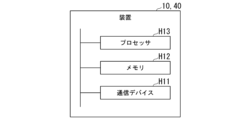
- FIG. 9 is a diagram for explaining the hardware configuration of the diagnosis device 10 and the model learning device 40 of the maintenance support system 1 according to this embodiment.
- FIG. 9 shows the hardware configuration of each device (the diagnosis device 10 and the model learning device 40) in the maintenance support system 1.
- each device (diagnosis device 10 and model learning device 40) of the maintenance support system 1 includes a communication device H11, a memory H12, and a processor H13.
- the communication device H11 is a communication device, such as a LAN card, that can be connected to the network NW1.
- the memory H12 is a storage device such as a RAM, a flash memory, or a HDD, and stores various information and programs used by each device (the diagnosis device 10 and the model learning device 40).
- the processor H13 is a processing circuit including, for example, a CPU.
- the processor H13 executes various processes of each device (the diagnostic device 10 and the model learning device 40) by executing the programs stored in the memory H12.
- the present disclosure is not limited to the above-described embodiments, and can be modified without departing from the spirit and scope of the present disclosure.
- the weight division condition is explained as an example of dividing the data into coastal areas and inland areas according to the data item "area”, but this is not limited to this, and other data items and division conditions may be used.
- data may be divided (classified) into 5 years or more and less than 5 years as a division condition.
- the maintenance support system 1 is described as including the diagnostic device 10 and the model learning device 40, but this is not limited to the above.
- the diagnostic device 10 may include the functions of the model learning device 40 and may be realized by a single device.
- the model learning device 40 may have some of the functions of the diagnostic device 10, or the diagnostic device 10 may have some of the functions of the model learning device 40. Furthermore, the diagnostic device 10 and the model learning device 40 may be realized by three or more devices.
- the similar case extraction unit 133 extracts a specific number of similar cases (e.g., 100 cases), but this is not limited to this, and one past case with the highest similarity may be extracted as the similar case.
- the model learning device 40 generates weights for each data item and a faulty part detection model using maintenance record information and driving data, but this is not limited to this, and the weights for each data item and the faulty part detection model may be generated without using driving data.
- the diagnostic device 10 extracts similar cases from the diagnostic data without using driving data.
- diagnosis target device 20 is described as an example of the diagnosis target device 20, but the diagnosis target device 20 is not limited to this.
- the diagnosis target device 20 may be, for example, other home appliances, IoT devices, etc.
- each of the components of the maintenance support system 1 described above has an internal computer system.
- a program for realizing the functions of each of the components of the maintenance support system 1 described above may be recorded on a computer-readable recording medium, and the program recorded on the recording medium may be read into a computer system and executed to perform processing in each of the components of the maintenance support system 1 described above.
- “reading a program recorded on a recording medium into a computer system and executing it” includes installing a program into a computer system.
- “computer system” includes hardware such as the OS and peripheral devices.
- a "computer system” may include multiple computer devices connected via a network, including communication lines such as the Internet, WAN, LAN, and dedicated lines.
- a "computer-readable recording medium” refers to portable media such as flexible disks, optical magnetic disks, ROMs, and CD-ROMs, as well as storage devices such as hard disks built into a computer system. In this way, the recording medium that stores the program may be a non-transitory recording medium such as a CD-ROM.
- the recording medium also includes internal or external recording media accessible from a distribution server to distribute the program.
- the program may be divided into multiple parts, downloaded at different times, and then combined in each component of the maintenance support system 1, or each divided program may be distributed by a different distribution server.
- "computer-readable recording medium” also includes a recording medium that holds a program for a certain period of time, such as a volatile memory (RAM) inside a computer system that becomes a server or client when a program is transmitted over a network.
- the program may also be a recording medium for implementing part of the above-mentioned functions.
- the program may be a so-called difference file (difference program) that can realize the above-mentioned functions in combination with a program already recorded in the computer system.
Landscapes
- Business, Economics & Management (AREA)
- Human Resources & Organizations (AREA)
- Engineering & Computer Science (AREA)
- Economics (AREA)
- Entrepreneurship & Innovation (AREA)
- Marketing (AREA)
- Operations Research (AREA)
- Quality & Reliability (AREA)
- Strategic Management (AREA)
- Tourism & Hospitality (AREA)
- Physics & Mathematics (AREA)
- General Business, Economics & Management (AREA)
- General Physics & Mathematics (AREA)
- Theoretical Computer Science (AREA)
- Testing And Monitoring For Control Systems (AREA)
- Test And Diagnosis Of Digital Computers (AREA)
Abstract
Description
図1に示すように、本実施形態による保守支援システム1は、診断装置10と、複数の診断対象機器20と、複数の保守用端末30と、モデル学習装置40とを備える。
また、診断対象機器22と、保守用端末32とは、ネットワークNW2により接続可能であり、ネットワークNW2を介して、互いに通信可能である。
図2に示すように、保守記録情報記憶部421は、NO(番号)と、機種名と、設置年数と、地域と、症状と、交換部品P1と、交換部品P2とを対応付けた保守記録情報を記憶する。
図3に示すように、重み記憶部423は、分割ごとに、データ項目と重みとを対応付けて記憶する。データ項目には、例えば、機種、地域、能力帯、及び経年年数、等が含まれる。
学習処理部43は、保守記録情報収集部431と、運転データ収集部432と、重み学習部433と、モデル学習部434とを備える。
また、診断装置10は、NW通信部11と、装置記憶部12と、診断処理部13とを備える。
図4に示すように、推定結果記憶部126は、類似事例ごとに、故障部品の候補と故障確率とを対応付けて記憶する。また、推定結果記憶部126は、さらに、全ての類似事例における故障確率の平均値を記憶する。
図5に示すように、出力情報記憶部127は、推定結果と故障確率とを対応付けた表示画面情報を記憶する。ここで、推定結果は、故障部品の候補のうちの、故障確率が高い上位3つの部品を示している。

なお、本実施形態において、xの文字上に横線を有する変数を、x~と表記し、yの文字上に横線を有する変数を、y~と表記する。
また、故障部品推定部134は、推定結果(故障部品の候補及び故障確率)を、推定結果記憶部126に記憶させる。
図6は、本実施形態におけるモデル学習装置40のモデル学習処理の一例を示すフローチャートである。
図7は、本実施形態におけるモデル学習装置40の重み学習処理の一例を示すフローチャートである。
図8は、本実施形態における診断装置10の診断処理の一例を示すフローチャートである。
これにより、本実施形態による保守支援方法は、上述した保守支援システム1と同様の効果を奏し、より精度の良い適切な類似事例を抽出することができ、診断品質を向上させることができる。
図9に示す装置は、保守支援システム1の各装置(診断装置10及びモデル学習装置40)のハードウェア構成を示している。
メモリH12は、例えば、RAM、フラッシュメモリ、HDD、等の記憶装置であり、各装置(診断装置10及びモデル学習装置40)が利用する各種情報、及びプログラムを記憶する。
例えば、上記の実施形態において、重みの分割条件を、データ項目の“地域”による沿岸地域と、内陸地域とにより分割する例を悦明したが、これに限定されるものではなく、他のデータ項目及び分割条件を用いてもよい。例えば、データ項目に“設置年数”を用いた場合には、例えば、分割条件を5年以上と5年未満とで、データを分割(分類)してもよい。
Claims (7)
- 過去に診断対象機器を診断した保守記録情報であって、複数のデータ項目のデータと故障部品情報とを含む保守記録情報を記憶する保守記録情報記憶部と、
前記保守記録情報記憶部が記憶する前記保守記録情報を、前記データ項目に基づいて予め定められた分割条件により分割し、前記保守記録情報における前記データ項目と故障部品との関係を前記分割ごとに学習して、前記分割条件ごとの前記データ項目の重要度を生成する重要度学習部と、
診断対象の前記診断対象機器を診断するための診断用データを、前記分割条件により分類し、当該分類に対応する前記データ項目の重要度に基づいて、前記保守記録情報記憶部から前記診断用データに類似する類似事例を抽出する類似事例抽出部と、
前記類似事例抽出部が抽出した前記類似事例に基づいて、前記診断対象機器の故障部品を推定する故障部品推定部と
を備える保守支援システム。 - 前記保守記録情報を学習データとして学習し、前記類似事例から前記故障部品を推定する故障部品検知モデルを生成するモデル学習部を備え、
前記故障部品推定部は、前記故障部品検知モデルを用いて、前記類似事例から前記故障部品を推定する
請求項1に記載の保守支援システム。 - 前記故障部品推定部が推定した推定結果に基づいて、出力情報を生成する出力情報生成部を備え、
前記類似事例抽出部は、複数の前記類似事例を抽出し、
前記故障部品推定部は、前記故障部品検知モデルを用いて、複数の前記類似事例のそれぞれに対する前記故障部品及び故障確率を推定し、
前記出力情報生成部は、複数の前記類似事例における前記故障部品に対する前記故障確率の平均値を算出し、前記故障確率の平均値が高い順に特定数の前記故障部品の候補を選定し、選定した前記故障部品の候補を含む前記出力情報を生成する
請求項2に記載の保守支援システム。 - 前記類似事例抽出部は、保守用端末から受信した前記診断用データに類似する前記類似事例を抽出し、
前記出力情報生成部は、選定した前記故障部品の候補及び前記故障確率の平均値を含む前記出力情報を生成し、生成した前記出力情報を前記保守用端末に送信する
請求項3に記載の保守支援システム。 - 前記重要度学習部は、前記診断対象機器から過去に収集した前記診断対象機器の運転データと、前記保守記録情報とを含む前記学習データを用いて、前記分割条件ごとの前記データ項目の重要度を生成し、
前記モデル学習部は、前記診断対象機器の運転データと、前記保守記録情報とを含む前記学習データを用いて、前記故障部品検知モデルを生成する
請求項2から請求項4のいずれか一項に記載の保守支援システム。 - 前記重要度学習部は、前記診断対象機器が設置されている地域により、前記保守記録情報を分割して、前記地域ごとの前記データ項目の重要度を生成し、
前記類似事例抽出部は、前記診断用データを、前記地域により分類し、分類された前記地域に対応する前記データ項目の重要度に基づいて、前記類似事例を抽出する
請求項1から請求項5のいずれか一項に記載の保守支援システム。 - 過去に診断対象機器を診断した保守記録情報であって、複数のデータ項目のデータと故障部品情報とを含む保守記録情報を記憶する保守記録情報記憶部を備える保守支援システムの保守支援方法であって、
重要度学習部が、前記保守記録情報記憶部が記憶する前記保守記録情報を、前記データ項目に基づいて予め定められた分割条件により分割し、前記保守記録情報における前記データ項目と故障部品との関係を前記分割ごとに学習して、前記分割条件ごとの前記データ項目の重要度を生成し、
類似事例抽出部が、診断対象の前記診断対象機器を診断するための診断用データを、前記分割条件により分類し、当該分類に対応する前記データ項目の重要度に基づいて、前記保守記録情報記憶部から前記診断用データに類似する類似事例を抽出し、
故障部品推定部が、前記類似事例抽出部が抽出した前記類似事例に基づいて、前記診断対象機器の故障部品を推定する
保守支援方法。
Priority Applications (4)
| Application Number | Priority Date | Filing Date | Title |
|---|---|---|---|
| DE112023006463.6T DE112023006463T5 (de) | 2023-06-06 | 2023-06-06 | Wartungsassistenzsystem und Wartungsassistenzverfahren |
| JP2025525480A JPWO2024252506A1 (ja) | 2023-06-06 | 2023-06-06 | |
| CN202380094551.6A CN121241357A (zh) | 2023-06-06 | 2023-06-06 | 维护辅助系统以及维护辅助方法 |
| PCT/JP2023/020923 WO2024252506A1 (ja) | 2023-06-06 | 2023-06-06 | 保守支援システム、及び保守支援方法 |
Applications Claiming Priority (1)
| Application Number | Priority Date | Filing Date | Title |
|---|---|---|---|
| PCT/JP2023/020923 WO2024252506A1 (ja) | 2023-06-06 | 2023-06-06 | 保守支援システム、及び保守支援方法 |
Publications (1)
| Publication Number | Publication Date |
|---|---|
| WO2024252506A1 true WO2024252506A1 (ja) | 2024-12-12 |
Family
ID=93795326
Family Applications (1)
| Application Number | Title | Priority Date | Filing Date |
|---|---|---|---|
| PCT/JP2023/020923 Ceased WO2024252506A1 (ja) | 2023-06-06 | 2023-06-06 | 保守支援システム、及び保守支援方法 |
Country Status (4)
| Country | Link |
|---|---|
| JP (1) | JPWO2024252506A1 (ja) |
| CN (1) | CN121241357A (ja) |
| DE (1) | DE112023006463T5 (ja) |
| WO (1) | WO2024252506A1 (ja) |
Citations (5)
| Publication number | Priority date | Publication date | Assignee | Title |
|---|---|---|---|---|
| JP2006350923A (ja) * | 2005-06-20 | 2006-12-28 | Ricoh Co Ltd | 交換部品推定システム、交換部品推定方法および交換部品推定プログラム |
| JP2011227706A (ja) * | 2010-04-20 | 2011-11-10 | Hitachi Ltd | 異常検知・診断方法、異常検知・診断システム、及び異常検知・診断プログラム |
| WO2012090624A1 (ja) * | 2010-12-27 | 2012-07-05 | 株式会社日立製作所 | 異常検知・診断方法、異常検知・診断システム、及び異常検知・診断プログラム並びに企業資産管理・設備資産管理システム |
| WO2020079860A1 (ja) * | 2018-10-18 | 2020-04-23 | 株式会社日立製作所 | 機器故障診断支援システムおよび機器故障診断支援方法 |
| WO2023002897A1 (ja) * | 2021-07-19 | 2023-01-26 | 三菱電機株式会社 | 故障部位・交換用部品推定システム、方法、及び、プログラム |
Family Cites Families (1)
| Publication number | Priority date | Publication date | Assignee | Title |
|---|---|---|---|---|
| JP6825607B2 (ja) | 2018-07-05 | 2021-02-03 | ダイキン工業株式会社 | 部品提示システム |
-
2023
- 2023-06-06 WO PCT/JP2023/020923 patent/WO2024252506A1/ja not_active Ceased
- 2023-06-06 JP JP2025525480A patent/JPWO2024252506A1/ja active Pending
- 2023-06-06 DE DE112023006463.6T patent/DE112023006463T5/de active Pending
- 2023-06-06 CN CN202380094551.6A patent/CN121241357A/zh active Pending
Patent Citations (5)
| Publication number | Priority date | Publication date | Assignee | Title |
|---|---|---|---|---|
| JP2006350923A (ja) * | 2005-06-20 | 2006-12-28 | Ricoh Co Ltd | 交換部品推定システム、交換部品推定方法および交換部品推定プログラム |
| JP2011227706A (ja) * | 2010-04-20 | 2011-11-10 | Hitachi Ltd | 異常検知・診断方法、異常検知・診断システム、及び異常検知・診断プログラム |
| WO2012090624A1 (ja) * | 2010-12-27 | 2012-07-05 | 株式会社日立製作所 | 異常検知・診断方法、異常検知・診断システム、及び異常検知・診断プログラム並びに企業資産管理・設備資産管理システム |
| WO2020079860A1 (ja) * | 2018-10-18 | 2020-04-23 | 株式会社日立製作所 | 機器故障診断支援システムおよび機器故障診断支援方法 |
| WO2023002897A1 (ja) * | 2021-07-19 | 2023-01-26 | 三菱電機株式会社 | 故障部位・交換用部品推定システム、方法、及び、プログラム |
Also Published As
| Publication number | Publication date |
|---|---|
| DE112023006463T5 (de) | 2026-03-26 |
| JPWO2024252506A1 (ja) | 2024-12-12 |
| CN121241357A (zh) | 2025-12-30 |
Similar Documents
| Publication | Publication Date | Title |
|---|---|---|
| Sun et al. | System-level hardware failure prediction using deep learning | |
| JP5278310B2 (ja) | 診断システム | |
| US10733536B2 (en) | Population-based learning with deep belief networks | |
| JP5753286B1 (ja) | 情報処理装置、診断方法、およびプログラム | |
| US20190012553A1 (en) | Diagnostic device, diagnosis method and computer program | |
| Shang et al. | Automated detection of performance regressions using regression models on clustered performance counters | |
| EP3183622B1 (en) | Population-based learning with deep belief networks | |
| US20210263483A1 (en) | Diagnostic device, diagnostic method and program | |
| EP3948438B1 (en) | Method and system for anomaly detection and diagnosis in industrial processes and equipment | |
| JP2019036285A (ja) | 健全性監視及び障害特徴識別の方法及びシステム | |
| JP2018173948A (ja) | 故障診断装置、故障診断方法、及びコンピュータプログラム | |
| US20190310618A1 (en) | System and software for unifying model-based and data-driven fault detection and isolation | |
| US12339641B2 (en) | Distributed system and data transmission method | |
| EP4174601A1 (en) | System, apparatus and method for monitoring condition of an asset in technical installation | |
| JP5193533B2 (ja) | 遠隔監視システム及び遠隔監視方法 | |
| CN117192416A (zh) | 基于bms系统的蓄电池监测系统及方法 | |
| US12608595B2 (en) | Method for reducing bias in deep learning classifiers using ensembles | |
| CN112262354A (zh) | 诊断装置、诊断方法及程序 | |
| WO2024252506A1 (ja) | 保守支援システム、及び保守支援方法 | |
| CN120256176A (zh) | 一种云桌面故障预测和诊断方法、装置、设备及介质 | |
| WO2024257142A1 (ja) | 保守支援システム、及び保守支援方法 | |
| JP2011258261A (ja) | 劣化度判定装置及びコンピュータプログラム及び劣化度判定方法 | |
| US20230084950A1 (en) | System and method for monitoring complex structures | |
| JP7595823B1 (ja) | 情報処理装置、情報処理方法及び情報処理プログラム | |
| CN113757915B (zh) | 异常诊断装置和异常诊断方法 |
Legal Events
| Date | Code | Title | Description |
|---|---|---|---|
| 121 | Ep: the epo has been informed by wipo that ep was designated in this application |
Ref document number: 23940612 Country of ref document: EP Kind code of ref document: A1 |
|
| WWE | Wipo information: entry into national phase |
Ref document number: 2025525480 Country of ref document: JP |
|
| WWE | Wipo information: entry into national phase |
Ref document number: 202527079210 Country of ref document: IN |
|
| WWP | Wipo information: published in national office |
Ref document number: 202527079210 Country of ref document: IN |
|
| WWE | Wipo information: entry into national phase |
Ref document number: 112023006463 Country of ref document: DE |
|
| WWP | Wipo information: published in national office |
Ref document number: 112023006463 Country of ref document: DE |