WO2024237235A1 - 培地監視装置、培地監視方法、及びプログラム - Google Patents
培地監視装置、培地監視方法、及びプログラム Download PDFInfo
- Publication number
- WO2024237235A1 WO2024237235A1 PCT/JP2024/017648 JP2024017648W WO2024237235A1 WO 2024237235 A1 WO2024237235 A1 WO 2024237235A1 JP 2024017648 W JP2024017648 W JP 2024017648W WO 2024237235 A1 WO2024237235 A1 WO 2024237235A1
- Authority
- WO
- WIPO (PCT)
- Prior art keywords
- hue
- culture medium
- change
- time point
- medium
- Prior art date
- Legal status (The legal status is an assumption and is not a legal conclusion. Google has not performed a legal analysis and makes no representation as to the accuracy of the status listed.)
- Ceased
Links
Images


Classifications
-
- C—CHEMISTRY; METALLURGY
- C12—BIOCHEMISTRY; BEER; SPIRITS; WINE; VINEGAR; MICROBIOLOGY; ENZYMOLOGY; MUTATION OR GENETIC ENGINEERING
- C12M—APPARATUS FOR ENZYMOLOGY OR MICROBIOLOGY; APPARATUS FOR CULTURING MICROORGANISMS FOR PRODUCING BIOMASS, FOR GROWING CELLS OR FOR OBTAINING FERMENTATION OR METABOLIC PRODUCTS, i.e. BIOREACTORS OR FERMENTERS
- C12M1/00—Apparatus for enzymology or microbiology
- C12M1/34—Measuring or testing with condition measuring or sensing means, e.g. colony counters
-
- C—CHEMISTRY; METALLURGY
- C12—BIOCHEMISTRY; BEER; SPIRITS; WINE; VINEGAR; MICROBIOLOGY; ENZYMOLOGY; MUTATION OR GENETIC ENGINEERING
- C12N—MICROORGANISMS OR ENZYMES; COMPOSITIONS THEREOF; PROPAGATING, PRESERVING, OR MAINTAINING MICROORGANISMS; MUTATION OR GENETIC ENGINEERING; CULTURE MEDIA
- C12N1/00—Microorganisms; Compositions thereof; Processes of propagating, maintaining or preserving microorganisms or compositions thereof; Processes of preparing or isolating a composition containing a microorganism; Culture media therefor
Definitions
- the present invention relates to a culture medium monitoring device, a culture medium monitoring method, and a program.
- Patent Document 1 discloses a technology for calculating the pH value of a culture solution from the absorption change due to phenol red contained in the culture solution in a method for detecting the presence of contaminating bacteria in the culture solution, which is characterized by detecting the presence of contaminating bacteria in the culture solution from the change in absorption of visible light by the culture solution.
- One of the objectives of the present invention is to provide a culture medium monitoring device, a culture medium monitoring method, and a program that detect abnormalities in the culture medium and help maintain the culture environment.
- a culture medium monitoring device comprises: an acquisition unit that acquires a second hue of the culture medium at a second time point after a predetermined time has elapsed since the start of cell culture, in a cell culture using a culture medium containing a reagent whose hue changes depending on pH; an evaluation unit that evaluates a change in a state of the cell culture at the second time point based on the second color phase; and an output unit that outputs a result of the evaluation.
- the present invention provides a culture medium monitoring device, a culture medium monitoring method, and a program that detect abnormalities in the culture medium and help maintain the culture environment.
- FIG. 1 is a schematic diagram showing an example of the configuration of a culture medium determination system according to the present embodiment.
- 1 is a block diagram showing an example of the configuration of a culture medium monitoring device of the present embodiment.
- FIG. FIG. 1 is a schematic diagram showing the relationship between the optical path length and the change in hue.
- FIG. 11 is a conceptual diagram showing an example of measurement data.
- FIG. 13 is a conceptual diagram showing an example of data obtained by intermittently measuring the hue.
- FIG. 11 is a conceptual diagram showing an example of calibration data.
- FIG. 13 is a conceptual diagram illustrating an example of an evaluation process.
- FIG. 13 is a conceptual diagram illustrating an example of an evaluation process.
- 11A and 11B are conceptual diagrams for explaining one aspect of a sensitivity adjustment process.
- 4 is a flowchart showing an example of processing of the culture medium monitoring device of the present embodiment.
- 10 is a flowchart showing another example of the process of the culture medium monitoring device of the present embodiment.
- the present embodiment an embodiment of the present invention (hereinafter referred to as "the present embodiment") will be described in detail with reference to the drawings as necessary, but the present invention is not limited to this, and various modifications are possible without departing from the gist of the invention.
- the same elements are given the same reference numerals, and duplicated explanations will be omitted.
- positional relationships such as up, down, left, and right will be based on the positional relationships shown in the drawings.
- the dimensional ratios of the drawings are not limited to those shown.
- FIG. 1 is a schematic diagram showing a culture medium evaluation system of the present embodiment. As shown in Fig. 1, in one example of the culture medium evaluation system of the present embodiment, an imaging device 200 is used to acquire information on the hue of a cell culture solution 210 in a container 220, and a culture medium monitoring device 300 evaluates a change in the state of the cell culture based on the information.
- the cell culture medium 210 uses a medium containing a reagent whose hue changes depending on the pH.
- the reagent whose hue changes depending on the pH is not particularly limited, but an example of the reagent is phenol red. Any other reagent that meets the standards for use in cell culture can be used.
- the container 220 is not particularly limited, but examples include a petri dish (Petri dish), a multi-well plate, a culture flask, and a roller bottle.
- the container 220 can be a container in which the amount of cell culture fluid 210 contained therein is determined by the depth of the wells, such as a multi-well plate, or a container in which the amount contained therein is not determined, such as a culture flask, although there is a memory or the like. Either type of container can be used in this embodiment. It is preferable that the container 220 is transparent and has negligible light absorption, or that the light absorption can be specified and does not interfere with measures such as correction in the hue measurement described below.
- the imaging device 200 is not particularly limited as long as it is a conventionally known device, but may be, for example, a device equipped with a color sensor and capable of acquiring the hue of the cell culture fluid 210 as a parameter of any color space such as RGB.
- a light source 240 that emits a predetermined light may be disposed on the stage 230 on which the container 220 is placed. This allows the known light emitted from the light source 240 to pass through the cell culture fluid 210 of a predetermined optical path length and reach the imaging device 200, which can acquire the hue of the cell culture fluid 210.
- the components of the culture medium monitoring device 300 of this embodiment are described in detail below.
- the culture medium monitoring device 300 of the present embodiment includes an acquisition unit 311 that acquires a second hue of a culture medium at a second time point when a predetermined time has elapsed since the start of cell culture, in a cell culture using a culture medium containing a reagent whose hue changes depending on pH, an evaluation unit 314 that evaluates a change in the state of the cell culture at the second time point based on the second hue, and an output unit 315 that outputs a result of the evaluation.
- the acquisition unit may acquire a first hue of the medium at a first time point during cell culture and a second hue of the medium at a second time point a predetermined time after the first time point
- the evaluation unit may evaluate the change in the state of the cell culture according to the rate of change of hue or pH per unit time based on the first hue and the second hue.
- the first time point may be any time point after the start of cell culture, or it may be the start of culture.
- the culture medium monitoring device 300 may include a detection unit 312 that detects the optical path length in the culture medium when acquiring the first hue and/or the second hue, and a correction unit 313 that corrects the first hue and/or the second hue according to the optical path length when the optical path length is equal to or less than a predetermined value.
- the culture medium monitoring device 300 may further include an output unit 315 that outputs the results of the evaluation, a sensitivity adjustment unit 316 that sets the rate of change according to the monitoring sensitivity specified by the user, and an estimation unit 317 that estimates the cause of the change according to the change in hue or pH based on the first hue and the second hue and a specified time.
- the process of acquiring the first hue and/or the second hue by the culture medium monitoring device 300 and the process of evaluating the state change based on the first hue and/or the second hue may be performed only once during cell culture, may be performed intermittently, or may be performed continuously.
- the culture medium monitoring device 300 is not particularly limited as long as it has the above-mentioned functional units, and may be, for example, a desktop, laptop, or other computer.
- the culture medium monitoring device 300 is a general-purpose computer and may be configured as a single computer, or may be configured as multiple computers on a network N.
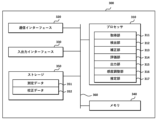
- the culture medium monitoring device 300 includes, for example, a processor 310, a communication interface 320, an input/output interface 330, a memory 340, a storage 350, and one or more communication buses 360 for interconnecting these components.
- Processor 310 executes processes, functions, or methods implemented by code or instructions included in a program stored in storage 350.
- Processor 310 may include, by way of example and not limitation, one or more central processing units (CPUs), MPUs (Micro Processing Units), GPUs (Graphics Processing Units), microprocessors, processor cores, multiprocessors, ASICs (Application-Specific Integrated Circuits), FPGAs (Field Programmable Gate Arrays), etc., and may implement the processes, functions, or methods disclosed in each embodiment by logic circuits (hardware) or dedicated circuits formed in integrated circuits (IC (Integrated Circuit) chips, LSIs (Large Scale Integration)), etc.
- CPUs central processing units
- MPUs Micro Processing Units
- GPUs Graphics Processing Units
- microprocessors processor cores
- multiprocessors multiprocessors
- ASICs Application-Specific Integrated Circuits
- FPGAs Field Programmable Gate Arrays
- the processor 310 executes processes, functions, or methods that are realized by codes or instructions included in a program stored in the storage 350. As shown in FIG. 2A, the processor 310 of this embodiment may be configured to function as an acquisition unit 311, a detection unit 312, a correction unit 313, an evaluation unit 314, an output unit 315, a sensitivity adjustment unit 316, and an estimation unit 317.
- the communication interface 320 transmits and receives various data to and from other devices via the network N.
- the communication may be performed either wired or wirelessly, and any communication protocol may be used as long as the devices can communicate with each other.
- the communication interface 320 is implemented as hardware such as a network adapter, various types of communication software, or a combination of these.
- the network N may be, by way of example and not limitation, an ad hoc network, an intranet, an extranet, a virtual private network (VPN), a local area network (LAN), a wireless LAN (WLAN), a wide area network (WAN), a wireless WAN (WWAN), a metropolitan area network (MAN), a portion of the Internet, a portion of the public switched telephone network (PSTN), a mobile telephone network, Integrated Service Digital Networks (ISDNs), wireless LANs, Long Term Evolution (LTE), Code Division Multiple Access (CDMA), Bluetooth (registered trademark), satellite communications, or any combination thereof.
- a network may include one or more networks.
- the input/output interface 330 includes an input device for inputting various operations to the culture medium monitoring device 300, and an output device for outputting the processing results processed by the culture medium monitoring device 300.
- the input/output interface 330 includes information input devices such as a keyboard, mouse, and touch panel, and information output devices such as a display.
- the culture medium monitoring device 300 may accept a specified input or execute a specified output by connecting an external input/output interface 330.
- the imaging device 200 corresponds to the external information input device.
- Memory 340 temporarily stores programs loaded from storage 350 and provides a working area for processor 310. Memory 340 also temporarily stores various data generated while processor 310 is executing a program. Memory 340 may be, for example, a high-speed random access memory such as DRAM, SRAM, DDR RAM, or other random access solid-state storage device, or a combination of these.
- Storage 350 stores programs, each functional unit, models for various estimation processes, and various data.
- Storage 350 may be, for example, one or more magnetic disk storage devices, optical disk storage devices, flash memory devices, or non-volatile memories such as other non-volatile solid-state storage devices, or may be a combination of these.
- Another example of storage 350 is one or more storage devices installed remotely from processor 310.
- the acquisition unit 311 may acquire a first hue of the medium at an arbitrary first time point during cell culture, and a second hue of the medium at a second time point a predetermined time after the first time point. Specifically, when the imaging device 200 captures an image of the cell culture solution 210 in the container 220, the acquisition unit 311 may acquire information on the first hue and the second hue as parameters of an arbitrary color space such as RGB from the imaging information. In addition, when the imaging device 200 is capable of outputting a signal related to parameters of an arbitrary color space such as RGB by capturing an image of the cell culture solution 210, the acquisition unit 311 may acquire the signal as information on the first hue and the second hue.
- the imaging device 200 continuously captures the hue of the cell culture fluid 210, and the acquisition unit 311 continuously acquires information about the hue from the imaging device 200, and may acquire the hue at any two points in time as the first hue and the second hue.
- the imaging device 200 intermittently captures the hue of the cell culture fluid 210, and the acquisition unit 311 intermittently acquires information about the hue from the imaging device 200, and may acquire the hue at any two points in time as the first hue and the second hue.
- the acquisition unit 311 may record information such as the first hue at the first time point, the second hue at the second time point, and the optical path length h2 as a measurement condition in the measurement data 351.
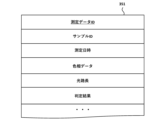
- FIG. 2C shows an example of the measurement data 351.
- the measurement data 351 records the hue obtained by measurement, the measurement conditions, and the evaluation results.
- the "measurement data ID” is an identifier for uniquely identifying the measurement data.
- the “sample ID” is an identifier for uniquely identifying the cell culture fluid being measured.
- the "date and time” records the date and time of the measurement, and the “hue data” records information on the first hue and the second hue, and information on the second hue after correction processing may be recorded as necessary. The correction processing will be described later.
- the "optical path length” records the optical path length h2 as the measurement condition when the hue was measured.
- the “evaluation result” records the change in the state of the cell culture evaluated by the evaluation unit 314.
- the detection unit 312 detects the optical path length in the cell culture fluid 210 when acquiring the first hue and the second hue.
- the imaging device 200 may have a distance sensor capable of measuring a distance h1 between the imaging device 200 and the liquid surface of the cell culture fluid 210.
- the distance sensor is not particularly limited as long as it is a conventionally known sensor, but examples of the distance sensor include a sensor that emits light or sound waves and measures the distance by utilizing the time it takes for the light or sound waves to hit an object and return.
- the detection unit 312 can calculate the optical path length h2 of the light passing through the cell culture fluid 210 from the difference between the distance h1 acquired by the imaging device 200 when acquiring the hue of the cell culture fluid 210 and the predetermined distance h0 between the stage 230 and the imaging device 200. At this time, the detection unit 312 may calculate the optical path length h2 taking into account the thickness of the bottom of the container 220.
- the hue of the cell culture fluid 210 captured by the imaging device 200 differs depending on the optical path length. For example, even with the same cell culture fluid 210, when the optical path length h2 is 1 mm and when the optical path length h2 is 15 mm, the hue of the cell culture fluid 210 is darker when the optical path length h2 is 15 mm, and the hue captured by the imaging device 200 differs.
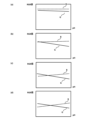
- FIG. 2B shows a schematic diagram of the relationship between the optical path length and the change in hue.
- FIG. 2B(a) shows the relationship between the G and B values and pH when the optical path length h2 is the shortest, 1 mm.
- the optical path length h2 is gradually increased, with the optical path length in FIG. 2B(b) being 5 mm, the optical path length in FIG. 2B(c) being 10 mm, and the optical path length in FIG. 2B(d) being 15 mm.
- the optical path length may change for each measurement, and such differences in optical path length may cause the hue to change, which may prevent the evaluation unit 314 from making an appropriate evaluation. Therefore, in order for the evaluation unit 314 to appropriately evaluate the change in the state of the cell culture based on the hue, it is desirable to take into account information regarding the optical path length in addition to the second hue.
- the correction unit 313 may correct the first hue and/or the second hue according to the optical path length h2.
- the path length is equal to or greater than a predetermined value
- the influence of the optical path length h2 on the hue falls within an allowable error range. Therefore, when the path length is equal to or less than a predetermined value, the correction unit 313 may correct the first hue and the second hue according to the optical path length h2.
- the correction process by the correction unit 313 is not particularly limited, but for example, a relational equation between the optical path length h2 and the hue may be used to calculate the first hue (hereinafter referred to as the "corrected first hue") or the second hue (hereinafter referred to as the "corrected second hue”) when the optical path length h2 at the time of measurement is a predetermined value (e.g., 15 mm) from the optical path length h2 at the time of measurement of the first hue or the second hue and the obtained value of the first hue or the second hue.
- a predetermined value e.g. 15 mm
- the relational equation between the optical path length h2 and the hue can be created based on data obtained by measuring the relationship between the optical path length h2 and the hue in advance, for example, as shown in Figures 2B (a) to (d).
- the relational equation between the optical path length h2 and the hue may be recorded in calibration data 352, which will be described later, and the correction unit 313 may perform the correction process by referring to the calibration data 352.
- the evaluation unit 314 may evaluate the change in state of the cell culture at the second time point based on the second hue or the second pH calculated based on the second hue, or may evaluate the change in state of the culture medium according to the rate of change in hue or pH per unit time based on the first hue and the second hue.
- the first hue and the second hue may be the corrected first hue and the corrected second hue obtained by the correction unit 313.
- FIG. 2D shows an example of data obtained by measuring the hue intermittently.
- FIG. 2D is a graph in which the horizontal axis indicates the time of measurement and the vertical axis indicates the value of the hue at each measurement time.
- FIG. 2D shows an example in which the hue changes up and down at each measurement time, with the change gradually becoming larger.
- the dashed line L shows a straight line whose slope is the rate of change of hue per unit time based on the first hue and the second hue.
- the “change rate threshold” in this embodiment indicates the range of acceptable changes in the medium.
- the change in hue between time points T1 and T2 is within the change rate threshold indicated by shading, while the change in hue between time points 1 and 2 is outside the change rate threshold.
- the change rate can be used as a sign of future changes in the condition of the medium.
- the evaluation unit 314 can determine future changes in the state of the culture medium based on whether the rate of change has exceeded the change rate threshold.
- the change rate threshold may be determined in advance by the user. Note that in FIG. 2D, the dashed line L is shown as a straight line whose slope is the rate of change of the hue, but the dashed line L may also be a straight line whose slope is the rate of change of the pH.
- the "rate of change of pH" can be calculated from the first pH estimated from the first hue and the second pH estimated from the second hue.
- the “absolute value threshold” indicates the range of the hue or pH of the culture medium that is acceptable in such a case. Therefore, the evaluation unit 314 can determine the current change in the state of the culture medium by determining whether the acquired second hue, or the second pH calculated based on the second hue, exceeds or is within the absolute value threshold.
- the absolute value threshold may be predetermined by the user.
- the evaluation unit 314 can execute a process to calculate pH from hue. Next, the process to calculate pH from hue will be described.
- the process by the evaluation unit 314 is not particularly limited, but can be executed by referring to the calibration data 352, for example.
- FIG. 2E shows an example of calibration data 352.
- Calibration data 352 records information on the change in pH and hue for each reagent whose hue changes depending on pH.
- the calibration data ID is an identifier for uniquely identifying the calibration data.
- the colorant name records information for identifying a reagent whose hue changes depending on pH, such as a common name such as phenol red, a compound name, or a CAS number.
- the color data records information on the hue such as RGB measured at a specified optical path length h2 and its change due to pH.
- the optical path length conditions record the conditions of the measured optical path length h2. Note that the color data may record data measured at multiple different optical path lengths h2.
- the calibration data 352 may also include a relationship equation between pH and hue, a relationship equation between the optical path length h2 and hue, etc.
- the evaluation unit 314 can properly evaluate the pH of the cell culture at the second time point, and can evaluate the state change based on that.
- An example of the evaluation process by the evaluation unit 314 is shown below.
- the evaluation unit 314 may evaluate an abnormality in the cell culture at the second time point based on whether the acquired second hue exceeds a predetermined hue range. Specifically, the evaluation unit 314 may evaluate that there is no abnormality when the second hue is within the predetermined hue range, and may evaluate that there is an abnormality when the second hue is outside the predetermined hue range.
- the evaluation unit 314 may evaluate an abnormality in the cell culture at the second time point based on whether the second pH calculated based on the second hue exceeds a predetermined pH range. Specifically, the evaluation unit 314 may evaluate that there is no abnormality when the second pH is within the predetermined pH range, and may evaluate that there is an abnormality when the second pH is outside the predetermined pH range. Note that the evaluation unit 314 may calculate the second pH based on the second hue by using a relational equation between pH and hue by referring to the calibration data 352.
- the evaluation unit 314 may evaluate an abnormality in the cell culture at the second time point based on whether the rate of change of the second hue from the first hue at the first time point exceeds a predetermined hue change range. Specifically, the evaluation unit 314 may evaluate that there is no abnormality when the second hue is within the predetermined change rate range, and may evaluate that there is an abnormality when the second hue is outside the predetermined change rate range.
- the rate of change of the hue can be determined only from the information related to the hue acquired by the acquisition unit 311, and can be evaluated without referring to the calibration data 352.
- the first time point may be the time when the cell culture is started.
- the evaluation unit 314 may evaluate that an abnormality may have occurred in the cell culture. Specifically, as described above, the acquisition process of the second hue by the acquisition unit 311 and the evaluation process by the evaluation unit 314 are performed intermittently or continuously to track changes in the second hue or second pH over time. This allows the evaluation unit 314 to detect that the second hue, its rate of change, or the second pH is approaching the boundary of a range within the predetermined hue range.
- the evaluation unit 314 may also calculate the amount of change ⁇ 2 between the first pH at the first time point and the second pH at the second time point from the amount of change ⁇ 1 between the first hue and the second hue at the first time point based on the relationship between the amount of change in hue and the amount of change in pH, and calculate the second pH based on the calculated amount of change ⁇ 2 and the first pH.
- the acquisition unit 311 may acquire the first pH at the first time point using a pH meter (not shown) or the like.
- the relation between the pH and hue in the calibration data 352 may be used as the "relationship between the amount of change in hue and the amount of change in pH".
- the first time point may be the time when cell culture is started.
- the above method is particularly useful when the cell culture medium 210 is already colored before the addition of a reagent whose hue changes depending on the pH.
- the second hue is a mixture of the color of the cell culture medium 210 before the addition of the reagent and the color of the reagent whose hue changes depending on the pH. In other words, the second hue does not reflect only the color of the reagent whose hue changes depending on the pH.
- the output unit 315 outputs the result of the evaluation.
- the result of the evaluation may be information about the second pH or the second hue, or information about whether the second pH or the second hue is within a predetermined range.
- the output unit 315 may also output information about the timing of medium replacement together with the result of the evaluation, that is, whether the change rate threshold or the absolute value threshold is satisfied.
- the output unit 315 may estimate an estimated time until the change rate threshold or the absolute value threshold is reached based on the change rate of the hue or pH between the first time point and the second time point, or the hue or pH at the second time point, and output information about the timing of medium replacement so that the medium is replaced within the estimated time.
- the output unit 315 may output information predicting a future state change of the culture medium.
- the output unit 315 may output information regarding the current state change of the culture medium.
- the output unit 315 may output the cause estimated by the estimation unit 317 (described later) and a method for resolving the cause, and may output information regarding the first pH, second pH, first hue, and second hue acquired by the acquisition unit 311.
- the output method by the output unit 315 is not particularly limited, and may be output as an image or sound using a display device or speaker, or as a control instruction for other equipment such as a culture device, or may be output as a production record to a process management system that manages the culture work.
- the resolution means output by the output unit 315 may be an instruction for controlling the culture device (incubator). Specifically, if the resolution means is related to the culture environment, such as the culture temperature or CO2 concentration, the output unit 315 may output instruction information to the culture device for controlling the culture environment.
- the sensitivity adjustment unit 316 can set the change rate threshold and/or the measurement interval of the first hue and the second hue according to the monitoring sensitivity specified by the user. This allows the sensitivity according to the change rate to be adjusted. For example, by reducing the change rate threshold, even a slight change in the change rate can be predicted and detected, while also making it easier to detect noise.
- the monitoring sensitivity can also be improved by shortening the measurement interval between the first and second hue.
- the estimation unit 317 estimates the cause of the change in state of the medium.
- the "change in state of the medium” estimated here may include the current change in state of the medium and a future change in state of the medium.
- the estimation unit 317 may estimate the cause to be either the limit of use of the medium or bacterial contamination, depending on the cell occupancy rate of the medium.
- the estimation unit 317 may estimate that the medium has become acidic due to lactic acid released from the cells, causing environmental deterioration. Also, when the medium is acidified and the cell occupancy rate is not high, the estimation unit 317 may estimate that bacteria have proliferated in the medium due to contamination, causing metabolic products (lactic acid) to accumulate and causing acidification. Note that the cell occupancy rate of the medium may be obtained as confluency using the imaging device 200.
- the estimation unit 317 may estimate the cause to be either decomposition of the components of the culture medium, a decrease in the amount of carbon dioxide in the culture medium, an equipment malfunction in the culture equipment, or bacterial contamination, depending on the temperature of the culture medium, the carbon dioxide concentration, or the imaging data of the culture medium.
- the estimation unit 317 may estimate that the decomposition of amino acids such as L-glutamic acid in the medium is accelerated, generating ammonia and the like that exhibits cytotoxicity. If the medium is alkalized and the observed value of the CO2 concentration sensor is low, the estimation unit 317 may estimate that the CO2 concentration in the cell culture atmosphere is too low, causing the medium to lose carbon dioxide and become alkalized.
- the estimation unit 317 may estimate that the medium is alkalized because the CO2 in the medium escapes into the atmosphere due to the medium lid being left open. Furthermore, if the medium is alkalized and none of the above applies, it may estimate that bacteria have released amino acids as ammonium ions into the medium due to contamination, causing the medium to become alkalized.
- the temperature of the culture medium can be measured by a temperature sensor, and the carbon dioxide concentration can be measured by a CO2 sensor. Furthermore, imaging data of the culture medium can be measured by the imaging device 200.
- FIG. 3A shows a flowchart of an example of the processing of the culture medium monitoring device of this embodiment.
- step S10 of FIG. 3A the acquisition unit 311 acquires information about the second hue of the cell culture fluid 210 via the imaging device 200, and records the acquired information in the measurement data 351.
- the acquisition and recording of the second hue may be performed intermittently or continuously.
- step S11 the detection unit 312 detects the optical path length h2 in the cell culture medium 210 when the second hue is acquired based on the distance h0 and the distance h1, and records the acquired information in the measurement data 351.
- the detection of the optical path length h2 may be performed each time the second hue is acquired.
- the correction unit 313 corrects the second hue according to the optical path length h2 from the relational expression between the optical path length h2 and the hue, with reference to the calibration data 352.
- the correction process is not particularly limited as long as it is a process for converting the second hue acquired at an arbitrary optical path length h2 into a corrected second hue when acquired at a unique optical path length h2 (e.g., 15 mm).
- the evaluation unit 314 may evaluate the change in state of the cell culture at the second time point based on the second hue, and the output unit 315 may output the result of the evaluation by the evaluation unit 314. Furthermore, the result of the evaluation and the estimated content may be transmitted to an external process management system.
- FIG. 3B shows a flowchart of another example of the processing of the culture medium monitoring device of this embodiment.
- the acquisition unit 311 acquires information about the first hue and the second hue of the cell culture fluid 210 via the imaging device 200, and records the acquired information in the measurement data 351.
- the acquisition and recording of the first hue and the second hue may be performed intermittently or continuously.
- the detection unit 312 detects the optical path length h2 in the cell culture medium 210 when acquiring the first hue and the second hue based on the distance h0 and the distance h1, and records the acquired information in the measurement data 351.
- the detection of the optical path length h2 may be performed each time the first hue and the second hue are acquired.
- the correction unit 313 also corrects the first hue and the second hue according to the optical path length h2 from the relational expression between the optical path length h2 and the hue by referring to the calibration data 352.
- the correction process is not particularly limited as long as it is a process for converting the first hue and the second hue acquired at an arbitrary optical path length h2 into a corrected first hue and a corrected second hue when acquired at a unique optical path length h2 (e.g., 15 mm).
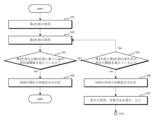
- step S23 the evaluation unit 314 determines whether the second hue or the pH based on the second hue exceeds the absolute value threshold, and determines the current state change of the culture medium. If the absolute value threshold is exceeded, in step S24, the evaluation unit 314 may determine whether the culture medium has changed to an acidic or alkaline state, and whether the current state of the culture medium allows for continued cell culture.
- step S25 the evaluation unit 314 determines whether the rate of change has exceeded the rate of change threshold, and determines the future state change of the culture medium. If the rate of change threshold is exceeded, in step S26, the evaluation unit 314 may determine whether there is a sign that the culture medium will change to acidic or alkaline, and whether the future state of the culture medium will allow for continued cell culture. If the rate of change threshold is not exceeded in step S25, the process may return to step S22 and new information regarding the second hue may be acquired. At this time, the old second hue that has already been acquired may be treated as the new first hue.
- the estimation unit 317 may estimate the cause of the change in hue or pH based on the first hue and the second hue, according to the change in hue or pH and the predetermined time. In this case, the estimation unit 317 may estimate an improvement method in addition to the cause of the change. Specifically, when the change in the medium is estimated to be acidification based on the change in hue or pH, the estimation unit 317 may estimate the cause of either the use limit of the medium or bacterial contamination, according to the cell occupancy rate of the medium.
- the estimation unit 317 may estimate the cause of either the component decomposition of the medium, the decrease in the amount of carbon dioxide in the medium, the equipment abnormality of the culture equipment, or bacterial contamination, according to the temperature, carbon dioxide concentration, or imaging data of the medium.
- the output unit 315 can output the current or future state change of the culture medium, as well as the estimated results of the cause of the change and the method of improvement, obtained as described above. There are no particular limitations on the output method, and the user may be informed of the state change of the culture medium by outputting an image or sound using a display device or speaker, etc. Alternatively, the output unit 315 may output a control instruction to another device, such as a culture device, to improve the state based on the state change. Alternatively, the output unit 315 may output information regarding the state change as a production record to a process management system that records and manages the contents of the culture work from the perspective of quality assurance, etc.
- a culture medium monitoring device executes the steps of acquiring a second hue of a culture medium at a second time point at which a predetermined time has elapsed since the start of cell culture, in a cell culture using a culture medium containing a reagent whose hue changes depending on pH, evaluating a change in state of the cell culture at the second time point based on the second hue, and outputting a result of the evaluation.
- the program of the present embodiment causes the culture medium monitoring device to execute the steps of acquiring a second hue of a culture medium at a second time point at which a predetermined time has elapsed since the start of cell culture, in a cell culture using a culture medium containing a reagent whose hue changes depending on pH, evaluating a change in state of the cell culture at the second time point based on the second hue, and outputting a result of the evaluation.
- the program may be recorded on a readable recording medium. Note that the specific aspects of the processing executed by the program of this embodiment are described above in the operational processing, so a detailed description will be omitted here.
- the present invention has industrial applicability as one of the core technologies related to cell culture.
- 200...imaging device 210...cell culture medium, 220...container, 230...stage, 240...light source, 300...culture medium monitor, 310...processor, 311...acquisition unit, 312...detection unit, 313...correction unit, 314...evaluation unit, 315...output unit, 316...sensitivity adjustment unit, 317...estimation unit, 320...communication interface, 330...input/output interface, 340...memory, 350...storage, 351...measurement data, 352...calibration data, 360...communication bus
Landscapes
- Chemical & Material Sciences (AREA)
- Life Sciences & Earth Sciences (AREA)
- Engineering & Computer Science (AREA)
- Health & Medical Sciences (AREA)
- Bioinformatics & Cheminformatics (AREA)
- Biotechnology (AREA)
- Organic Chemistry (AREA)
- Zoology (AREA)
- Wood Science & Technology (AREA)
- Genetics & Genomics (AREA)
- Medicinal Chemistry (AREA)
- Microbiology (AREA)
- Biomedical Technology (AREA)
- Biochemistry (AREA)
- General Engineering & Computer Science (AREA)
- General Health & Medical Sciences (AREA)
- Virology (AREA)
- Tropical Medicine & Parasitology (AREA)
- Analytical Chemistry (AREA)
- Sustainable Development (AREA)
- Apparatus Associated With Microorganisms And Enzymes (AREA)
Abstract
pHに応じて色相が変化する試薬を含む培地を用いた細胞培養において、細胞培養を開始してから所定の時間が経過した第2時点における前記培地の第2色相を取得する取得部と、前記第2色相に基づいて、前記第2時点における細胞培養の状態変化を評価する評価部と、前記評価の結果を出力する出力部と、を備える、培地監視装置。
Description
本発明は、培地監視装置、培地監視方法、及びプログラムに関する。
近年、医薬品業界では、業務の標準化や生産効率の向上、品質・稼働の安定化などの目的から、開発・生産工程の自動化が求められている。特にバイオ医薬品は生産物の分子量が大きく、構造も非常に複雑であり、開発・生産工程に属人的作業が多く、省人化・自動化のニーズが高い。
例えば、開発・生産工程の一工程である細胞培養においても、必要な作業のほとんどを人手により行っており、品質や生産性低下の課題がある。この点、特許文献1には、培養液による可視光の吸収変化から、培養液中の雑菌の存在を検出することを特徴とする雑菌混入の検出方法において、培養液中に含まれるフェノールレッドによる吸収変化によって培養液のpH値を算出する技術が開示されている。
本発明は、培養液の異常を検知し、培養環境の維持を支援する培地監視装置、培地監視方法、及びプログラムを提供することを一つの目的とする。
本発明の一態様である培地監視装置は、
pHに応じて色相が変化する試薬を含む培地を用いた細胞培養において、細胞培養を開始してから所定の時間が経過した第2時点における前記培地の第2色相を取得する取得部と、
前記第2色相に基づいて、前記第2時点における細胞培養の状態変化を評価する評価部と、
前記評価の結果を出力する出力部と、を備える。
pHに応じて色相が変化する試薬を含む培地を用いた細胞培養において、細胞培養を開始してから所定の時間が経過した第2時点における前記培地の第2色相を取得する取得部と、
前記第2色相に基づいて、前記第2時点における細胞培養の状態変化を評価する評価部と、
前記評価の結果を出力する出力部と、を備える。
本発明によれば、培養液の異常を検知し、培養環境の維持を支援する培地監視装置、培地監視方法、及びプログラムを提供することができる。
以下、必要に応じて図面を参照しつつ、本発明の実施の形態(以下、「本実施形態」という。)について詳細に説明するが、本発明はこれに限定されるものではなく、その要旨を逸脱しない範囲で様々な変形が可能である。なお、図面中、同一要素には同一符号を付すこととし、重複する説明は省略する。また、上下左右などの位置関係は、特に断らない限り、図面に示す位置関係に基づくものとする。さらに、図面の寸法比率は図示の比率に限られるものではない。
1.培地評価システム
図1は、本実施形態の培地評価システムを示す概略図である。図1に示すように、本実施形態の培地評価システムの一例では、撮像装置200を用いて容器220内の細胞培養液210の色相に関する情報を取得し、それに基づいて培地監視装置300が細胞培養の状態変化を評価する。
図1は、本実施形態の培地評価システムを示す概略図である。図1に示すように、本実施形態の培地評価システムの一例では、撮像装置200を用いて容器220内の細胞培養液210の色相に関する情報を取得し、それに基づいて培地監視装置300が細胞培養の状態変化を評価する。
細胞培養液210には、pHに応じて色相が変化する試薬を含む培地が使用されている。pHに応じて色相が変化する試薬としては、特に限定されないが、例えば、フェノールレッドが挙げられる。その他、細胞培養の際に使用可能な基準を満たした試薬であれば使用することができる。
容器220は、特に限定されないが、例えば、シャーレ(ペトリディッシュ)、マルチウェルプレート、培養フラスコ、ローラボトルが挙げられる。容器220には、マルチウェルプレートのように、ウェルの深さなどで細胞培養液210が収容される量が規定される容器と、培養フラスコのようにメモリ等はあるが収容される量が規定されない容器とがある。本実施形態においてはいずれの容器も使用することができる。なお、容器220は、透明であり光の吸収性が無視できるものであるか、光の吸収性を特定でき後述する色相測定において補正をする等の処置により支障のないものであることが好ましい。
撮像装置200は、従来公知のものであれば特に限定されないが、例えば、カラーセンサを搭載し、細胞培養液210の色相を、RGBなどの任意の色空間のパラメータとして取得可能なものであってもよい。また、容器220が置かれるステージ230には、所定の光を発する光源240が配されてもよい。これにより、光源240から発した既知の光が、所定の光路長の細胞培養液210を通過して撮像装置200に到達し、撮像装置200は、細胞培養液210の色相を取得することができる。
以下、本実施形態の培地監視装置300の各構成について詳説する。
2.培地監視装置
本実施形態の培地監視装置300は、pHに応じて色相が変化する試薬を含む培地を用いた細胞培養において、細胞培養を開始してから所定の時間が経過した第2時点における培地の第2色相を取得する取得部311と、第2色相に基づいて、第2時点における細胞培養の状態変化を評価する評価部314と、評価の結果を出力する出力部315と、を備える。
本実施形態の培地監視装置300は、pHに応じて色相が変化する試薬を含む培地を用いた細胞培養において、細胞培養を開始してから所定の時間が経過した第2時点における培地の第2色相を取得する取得部311と、第2色相に基づいて、第2時点における細胞培養の状態変化を評価する評価部314と、評価の結果を出力する出力部315と、を備える。
ここで、取得部は、細胞培養中の第1時点における培地の第1色相と、第1時点から所定の時間が経過した第2時点における培地の第2色相を取得してもよいし、評価部は、第1色相と第2色相に基づく単位時間あたりの色相又はpHの変化率に応じて、細胞培養の状態変化を評価してもよい。
また、第1時点は、細胞培養を開始してから任意の時点であってもよいし、培養開始時点であってもよい。
また、培地監視装置300は、第1色相及び/又は第2色相をより正確に取得する観点から、第1色相及び/又は第2色相を取得する際の培地における光路長を検出する検出部312と、光路長が所定値以下である場合に、光路長に応じて第1色相及び/又は第2色相を補正する補正部313と、を備えてもよい。
さらに、培地監視装置300は、評価の結果を出力する出力部315と、ユーザが指定した監視感度に応じて、変化率を設定する感度調整部316と、第1色相と第2色相に基づく色相又はpHの変化と所定時間とに応じて、該変化の原因を推定する推定部317と、を備えてもよい。
培地監視装置300による第1色相及び/又は第2色相の取得処理及び第1色相及び/又は第2色相に基づく状態変化の評価処理は、細胞培養中に、一回のみ実施してもよいし、断続的に行ってもよいし、連続的に行ってもよい。
培地監視装置300は、上記機能部を有するものであれば特に制限されず、例えば、デスクトップ、ラップトップ、その他コンピュータであってもよい。また、培地監視装置300は、汎用的なコンピュータであり、一台のコンピュータで構成されてもよいし、ネットワークN上の複数台のコンピュータで構成されてもよい。
図2Aを参照しつつ、培地監視装置300のハードウェア構成及び機能構成について説明する。培地監視装置300は、例えば、プロセッサ310、通信インターフェース320、入出力インターフェース330、メモリ340、ストレージ350、及びこれらの構成要素を相互接続するための1つ又は複数の通信バス360を含む。
プロセッサ310は、ストレージ350に記憶されるプログラムに含まれるコード、又は、命令によって実現する処理、機能、又は、方法を実行する。プロセッサ310は、限定でなく例として、1又は複数の中央処理装置(CPU)、MPU(Micro Processing Unit)、GPU(Graphics Processing Unit)、マイクロプロセッサ(microprocessor)、プロセッサコア(processor core)、マルチプロセッサ(multiprocessor)、ASIC(Application-Specific Integrated Circuit)、FPGA(Field Programmable Gate Array)等を含み、集積回路(IC(Integrated Circuit)チップ、LSI(Large Scale Integration))等に形成された論理回路(ハードウェア)や専用回路によって各実施形態に開示されるそれぞれの、処理、機能、又は、方法を実現してもよい。
プロセッサ310は、ストレージ350に記憶されるプログラムに含まれるコード、又は、命令によって実現する処理、機能、又は、方法を実行する。図2Aに示すように、本実施形態のプロセッサ310は、取得部311、検出部312、補正部313、評価部314、出力部315、感度調整部316、及び推定部317として機能するよう構成されてもよい。
通信インターフェース320は、ネットワークNを介して他の装置と各種データの送受信を行う。当該通信は、有線、無線のいずれで実行されてもよく、互いの通信が実行できるのであれば、どのような通信プロトコルを用いてもよい。例えば、通信インターフェース320は、ネットワークアダプタ等のハードウェア、各種の通信用ソフトウェア、又はこれらの組み合わせとして実装される。
ネットワークNは、限定でなく例として、アドホック・ネットワーク(Ad Hoc Network)、イントラネット、エクストラネット、仮想プライベート・ネットワーク(Virtual Private Network:VPN)、ローカル・エリア・ネットワーク(Local Area Network:LAN)、ワイヤレスLAN(Wireless LAN:WLAN)、広域ネットワーク(Wide Area Network:WAN)、ワイヤレスWAN(Wireless WAN:WWAN)、大都市圏ネットワーク(Metropolitan Area Network:MAN)、インターネットの一部、公衆交換電話網(Public Switched Telephone Network:PSTN)の一部、携帯電話網、ISDNs(Integrated Service Digital Networks)、無線LANs、LTE(Long Term Evolution)、CDMA(Code Division Multiple Access)、ブルートゥース(Bluetooth(登録商標))、衛星通信等であってよく、これらが組み合わせられてもよい。ネットワークは、1つまたは複数のネットワークを含むことができる。
入出力インターフェース330は、培地監視装置300に対する各種操作を入力する入力装置、及び、培地監視装置300で処理された処理結果を出力する出力装置を含む。例えば、入出力インターフェース330は、キーボード、マウス、及びタッチパネル等の情報入力装置、及びディスプレイ等の情報出力装置を含む。なお、培地監視装置300は、外付けの入出力インターフェース330を接続することで、所定の入力を受け付けてもよいし、所定の出力を実行してもよい。図1に示す例では、撮像装置200が外付けの情報入力装置にあたる。
メモリ340は、ストレージ350からロードしたプログラムを一時的に記憶し、プロセッサ310に対して作業領域を提供する。メモリ340には、プロセッサ310がプログラムを実行している間に生成される各種データも一時的に格納される。メモリ340は、例えば、DRAM、SRAM、DDR RAM又は他のランダムアクセス固体記憶装置などの高速ランダムアクセスメモリであってよく、これらが組み合わせられてもよい。
ストレージ350は、プログラム、各機能部、各種推定処理用のモデル、及び各種データを記憶する。ストレージ350は、例えば、1つ又は複数の磁気ディスク記憶装置、光ディスク記憶装置、フラッシュメモリデバイス、又は他の不揮発性固体記憶装置などの不揮発性メモリ等であってよく、これらが組み合わせられてもよい。ストレージ350の他の例としては、プロセッサ310から遠隔に設置される1つ又は複数の記憶装置を挙げることができる。
2.1.取得部
取得部311は、細胞培養中の任意の第1時点における培地の第1色相と、第1時点から所定の時間が経過した第2時点における培地の第2色相を取得してもよい。具体的には、撮像装置200が容器220内の細胞培養液210を撮像すると、取得部311はその撮像情報からRGBなどの任意の色空間のパラメータとして第1色相と第2色相に関する情報を取得してもよい。また、撮像装置200が細胞培養液210の撮像によりRGBなどの任意の色空間のパラメータに関する信号を出力可能である場合には、取得部311は当該信号を第1色相及び第2色相に関する情報として取得してもよい。
取得部311は、細胞培養中の任意の第1時点における培地の第1色相と、第1時点から所定の時間が経過した第2時点における培地の第2色相を取得してもよい。具体的には、撮像装置200が容器220内の細胞培養液210を撮像すると、取得部311はその撮像情報からRGBなどの任意の色空間のパラメータとして第1色相と第2色相に関する情報を取得してもよい。また、撮像装置200が細胞培養液210の撮像によりRGBなどの任意の色空間のパラメータに関する信号を出力可能である場合には、取得部311は当該信号を第1色相及び第2色相に関する情報として取得してもよい。
一態様として、撮像装置200は連続的に細胞培養液210の色相を撮像し、取得部311は撮像装置200から連続的に色相に関する情報を取得するとともに、任意の2つの時点の色相を第1色相及び第2色相として取得してもよい。また、他の態様として、撮像装置200は断続的に細胞培養液210の色相を撮像し、取得部311は撮像装置200から断続的に色相に関する情報を取得するとともに、任意の2つの時点の色相を第1色相及び第2色相として取得してもよい。
取得部311は、第1時点の第1色相、第2時点の第2色相、及びその測定条件としての光路長h2等の情報を、測定データ351に記録してもよい。
図2Cに、測定データ351の一例を示す。測定データ351には、測定により取得した色相やその測定条件、評価結果が記録される。「測定データID」は、測定データを一意に特定するための識別子である。「サンプルID」は、測定している細胞培養液を一意に特定するための識別子である。「日時」には、測定をした日時が記録されており、「色相データ」には、第1色相、第2色相に関する情報が記録され、必要に応じて補正処理後の第2色相に関する情報が記録されてもよい。補正処理については後述する。また、「光路長」には、色相を測定したときの測定条件として光路長h2が記録される。さらに、「評価結果」には、評価部314が評価した細胞培養の状態変化が記録される。
2.2.検出部
検出部312は、第1色相と第2色相を取得する際の細胞培養液210における光路長を検出する。その前提として、図1に示すように、撮像装置200は、撮像装置200と細胞培養液210の液面との距離h1を計測可能な距離センサを有していてもよい。距離センサとしては、従来公知のものであれば特に限定されないが、例えば、光や音波などを発射し、それが物体に当たって帰ってくるまでの時間を利用して距離を測定するものが挙げられる。
検出部312は、第1色相と第2色相を取得する際の細胞培養液210における光路長を検出する。その前提として、図1に示すように、撮像装置200は、撮像装置200と細胞培養液210の液面との距離h1を計測可能な距離センサを有していてもよい。距離センサとしては、従来公知のものであれば特に限定されないが、例えば、光や音波などを発射し、それが物体に当たって帰ってくるまでの時間を利用して距離を測定するものが挙げられる。
これにより、検出部312は、撮像装置200が細胞培養液210の色相の取得とともに取得した距離h1と、予め定めたステージ230と撮像装置200との距離h0との差分から、細胞培養液210を通過する光の光路長h2を算出することができる。なお、この際に、検出部312は、容器220の底の厚みを考慮して光路長h2を算出してもよい。
撮像装置200が取得する細胞培養液210の色相は、その光路長に依存して異なる。例えば、同じ細胞培養液210であっても、光路長h2が1mmである場合と、光路長h2が15mmである場合では、光路長h2が15mmである場合のほうが細胞培養液210の色相が濃くなり、撮像装置200が取得する色相が相違する。一例として、図2Bに、光路長と色相の変化の関係の概略図を示す。図2B(a)が最も光路長h2が短く、1mmである場合のG,Bの値とpHの関係を示す図である。図2B(b)~(d)では徐々に光路長h2を長くしており、図2B(b)の光路長は5mm、図2B(c)の光路長は10mm、図2B(d)の光路長は15mmである。
図2B(a)~(d)に示すように光路長h2による色相の変化は顕著である。また、一方で、図2B(c)及び(d)に示すように、一定以上の光路長h2が確保されると、得られる色相は光路長h2に影響しにくくなる。実際、光路長h2が15mm以上であれば光路長h2が色相に与える影響は許容誤差範囲となる。
細胞培養液210が収容される量が規定されない容器を用いる場合には、測定毎に光路長が変化することがあり得るため、このような光路長の違いによって色相が変化し、評価部314による適切な評価が行えない可能性がある。そのため、評価部314が色相に基づいて細胞培養の状態変化を適切に評価するためには、第2色相に加えて光路長に関する情報を考慮することが望ましい。
また、細胞培養液210が収容される量が規定される容器においては、測定毎に光路長が変化することは起こりにくい。しかしながら、評価部314が細胞培養のpHを適切に評価するためには、取得している色相がいずれの光路長条件のもと得られた情報であるかを特定することが望ましい。
2.3.補正部
補正部313は、光路長h2に応じて第1色相及び/又は第2色相を補正してもよい。また、路長が所定値以上の場合には、光路長h2が色相に与える影響は許容誤差範囲となるため、補正部313は、路長が所定値以下の場合に、光路長h2に応じて第1色相と第2色相を補正するようにしてもよい。
補正部313は、光路長h2に応じて第1色相及び/又は第2色相を補正してもよい。また、路長が所定値以上の場合には、光路長h2が色相に与える影響は許容誤差範囲となるため、補正部313は、路長が所定値以下の場合に、光路長h2に応じて第1色相と第2色相を補正するようにしてもよい。
補正部313による補正処理では、特に限定されないが、例えば、光路長h2と色相との関係式を用いて、第1色相又は第2色相の測定時の光路長h2と、得られた第1色相又は第2色相の値から、測定時の光路長h2が所定値(例えば、15mm)である場合の第1色相又は(以下、「補正第1色相」という)第2色相(以下、「補正第2色相」という)を算出してもよい。これにより、評価部314では、常に一定の光路長h2で得た補正第1色相及び/又は補正第2色相に基づいて細胞培養の状態変化を評価することができる。
ここで、光路長h2と色相との関係式は、例えば、図2B(a)~(d)に示すように光路長h2と色相との関係を予め測定したデータに基づいて、作成することができる。光路長h2と色相との関係式は、後述する校正データ352に記録されていてもよく、補正部313は校正データ352を参照して、補正処理を行ってもよい。
2.4.評価部
評価部314は、第2色相又は、第2色相に基づいて算出される第2pHに基づいて、第2時点における細胞培養の状態変化を評価してもよいし、第1色相と第2色相に基づく単位時間あたりの色相又はpHの変化率に応じて、培地の状態変化を評価してもよい。第1色相と第2色相は、補正部313により得られた補正第1色相と補正第2色相であってもよい。以下、「現在の培地の状態変化」と「将来の培地の状態変化」を特に区別しないときは、単に「培地の状態変化」という。
評価部314は、第2色相又は、第2色相に基づいて算出される第2pHに基づいて、第2時点における細胞培養の状態変化を評価してもよいし、第1色相と第2色相に基づく単位時間あたりの色相又はpHの変化率に応じて、培地の状態変化を評価してもよい。第1色相と第2色相は、補正部313により得られた補正第1色相と補正第2色相であってもよい。以下、「現在の培地の状態変化」と「将来の培地の状態変化」を特に区別しないときは、単に「培地の状態変化」という。
図2Dに、断続的に色相を測定したデータの例を示す。図2Dは、横軸に測定時点、縦軸に各測定時点における色相に関する値を示すグラフである。図2Dでは、各測定時点において色相が上下変化し、その変化が徐々に大きくなっている状態を例示する。図2Dにおいて、破線Lは、第1色相と第2色相に基づく単位時間あたりの色相の変化率を傾きとする直線を示す。
本実施形態の「変化率閾値」は、許容可能な培地変化の範囲を示すものである。例えば、図2Dでは、T1時点とT2時点の色相の変化は網掛けで示す変化率閾値内の変化であり、第1時点と第2時点の色相の変化は変化率閾値外の変化であることを示している。図2Dにおける第1時点と第2時点の色相の変化のように、変化率が変化率閾値を超えるとそれ以降培地の状態が急激に悪化する可能性がある。つまり、変化率は将来の培地の状態変化を予兆するものとして使用することができる。
そのため、評価部314は、変化率が変化率閾値を超えたか否かに基づいて、培地の将来の状態変化を判定することができる。変化率閾値はユーザが予め定めてもよい。なお、図2Dでは、破線Lを色相の変化率を傾きとする直線として示すが、破線LはpHの変化率を傾きとする直線であってもよい。「pHの変化率」は、第1色相から推定される第1pHと、第2色相から推定される第2pHにより算出することができる。
また、例えば、変化率閾値内の変化であっても、変化が蓄積することでpHが異常な範囲まで大きく又は小さくなることがある。「絶対値閾値」はそのような場合に許容可能な培地の色相又はpHの範囲を示すものである。そのため、評価部314は、取得した第2色相、又は、第2色相に基づいて算出される第2pHが絶対値閾値を超えたか閾値内にあるか否かを判定することにより、現在の培地の状態変化を判定することができる。絶対値閾値はユーザが予め定めてもよい。
評価部314は、色相からpHを算出する処理を実行することができる。次いで、色相からpHを算出する処理について説明する。評価部314による当該処理は、特に限定されないが、例えば、校正データ352を参照して実行することができる。
図2Eに、校正データ352の一例を示す。校正データ352には、pHに応じて色相が変化する試薬ごとにpHと色相の変化に関する情報が記録されている。校正データIDは、校正データを一意に特定するための識別子である。色材名には、フェノールレッド等の慣用名、化合物名、CAS番号などpHに応じて色相が変化する試薬を特定するための情報が記録される。色データには、所定の光路長h2で測定したRGBなどの色相とそのpHによる変化の情報が記録される。また、光路長条件には、測定した光路長h2の条件が記録される。なお、色データには複数の異なる光路長h2で測定されたデータが記録されてもよい。
この校正データ352を参照することで、試薬ごとに、pHと色相の関係を把握することができる。校正データ352には、pHと色相の関係式、光路長h2と色相との関係式などが記録されていてもよい。
評価部314は、校正データ352を参照することにより、第2時点における細胞培養のpHを適正に評価することができ、それに基づいて状態変化を評価することができる。以下において、評価部314による評価処理の例を示す。
評価部314は、図2Fに示すように、取得した第2色相が予め定めた色相範囲を超えたか否かに基づいて、第2時点における細胞培養の異常を評価してもよい。具体的には、評価部314は、第2色相が予め定めた色相範囲内である場合には異常はないものと評価し、第2色相が予め定めた色相範囲外である場合には異常があるものと評価してもよい。
同様に、評価部314は、図2Fに示すように、第2色相に基づいて算出される第2pHが予め定めたpH範囲を超えたか否かに基づいて、第2時点における細胞培養の異常を評価してもよい。具体的には、評価部314は、第2pHが予め定めたpH範囲内である場合には異常はないものと評価し、第2pHが予め定めたpH範囲外である場合には異常があるものと評価してもよい。なお、評価部314は、校正データ352を参照することにより、pHと色相の関係式を用いて、第2色相に基づく第2pHの算出を行ってもよい。
また、評価部314は、図2Gに示すように、第1時点の第1色相からの第2色相の変化率が、予め定めた色相変化範囲を超えたか否かに基づいて、第2時点における細胞培養の異常を評価してもよい。具体的には、評価部314は、第2色相が予め定めた変化率範囲内である場合には異常はないものと評価し、第2色相が予め定めた変化率範囲外である場合には異常があるものと評価してもよい。色相の変化率は、取得部311が取得した色相に関する情報のみから判断が可能であり、校正データ352を参照せずとも評価することができる。ここで、第1時点は細胞培養を開始した時点であってもよい。
第2色相やその変化率又は第2pHが予め定めた範囲内であるものの範囲の境界に近づいているときは、評価部314は、細胞培養に異常が発生している可能性がある旨の評価をしてもよい。具体的には、上述のとおり取得部311による第2色相の取得処理と、評価部314による評価処理とを断続的または連続的に行うことで、第2色相や第2pHの経時的な変化を追跡する。これにより、評価部314は、第2色相やその変化率又は第2pHが予め定めた色相範囲内であるものの範囲の境界に近づいていることを検知できる。
また、評価部314は、色相の変化量とpHの変化量との関係に基づいて、第1時点の第1色相と第2色相との変化量Δ1から、第1時点の第1pHと第2時点の第2pHとの変化量Δ2を算出し、算出した変化量Δ2と第1pHとに基づいて、第2pHを算出してもよい。このようにして第2pHを算出する際には、取得部311はpH計(不図示)などにより第1時点の第1pHを取得してもよい。この際、「色相の変化量とpHの変化量との関係」としては、校正データ352におけるpHと色相の関係式を用いてもよい。ここで、第1時点は細胞培養を開始した時点であってもよい。
上記方法は、pHに応じて色相が変化する試薬を添加する前の細胞培養液210が既に着色している場合に特に有用となる。試薬添加前の細胞培養液210が何らかの別の試薬や細胞自身の色等により着色している場合には、第2色相は試薬添加前の細胞培養液210の色と、pHに応じて色相が変化する試薬の色との混色となる。言い換えれば、第2色相はpHに応じて色相が変化する試薬の色のみを反映したものではない。
これに対して、上記のように、第1色相と第2色相との変化量Δ1を求めることで、pHに応じて色相が変化する試薬の色変化を適正に評価することができる。そして、変化量Δ1に基づいて、第1時点の第1pHと第2時点の第2pHとの変化量Δ2を算出し、算出した変化量Δ2と第1pHとに基づいて、第2pHを算出することにより、試薬添加前の細胞培養液210が着色していたとしても、第2時点における細胞培養の状態変化をより適正に評価することができる。
2.5.出力部
出力部315は、評価の結果を出力する。評価の結果は、第2pHや第2色相に関する情報であってもよいし、第2pHや第2色相があらかじめ定めた範囲に入っているか否かに関する情報であってもよい。また、出力部315は、変化率閾値や絶対値閾値を満たすかどうかという評価の結果とともに培地交換のタイミングに関する情報を出力してもよい。具体的には、出力部315は、第1時点と第2時点の色相又はpHの変化率や、第2時点の色相又はpHに基づいて、変化率閾値や絶対値閾値に到達するまでの推定時間を推定し、当該推定時間内に培地交換をするよう、培地交換のタイミングに関する情報を出力してもよい。
出力部315は、評価の結果を出力する。評価の結果は、第2pHや第2色相に関する情報であってもよいし、第2pHや第2色相があらかじめ定めた範囲に入っているか否かに関する情報であってもよい。また、出力部315は、変化率閾値や絶対値閾値を満たすかどうかという評価の結果とともに培地交換のタイミングに関する情報を出力してもよい。具体的には、出力部315は、第1時点と第2時点の色相又はpHの変化率や、第2時点の色相又はpHに基づいて、変化率閾値や絶対値閾値に到達するまでの推定時間を推定し、当該推定時間内に培地交換をするよう、培地交換のタイミングに関する情報を出力してもよい。
また、出力部315は、評価部314が、変化率が変化率閾値を超えたと判定したときに、出力部は、培地の将来の状態変化を予兆する情報を出力してもよい。また、評価部314が、取得した第2色相、又は、第2色相に基づいて算出される第2pHが絶対値閾値を超えたと判定したときに、培地の現在の状態変化に関する情報を出力してもよい。
また、出力部315は、判定の結果に加えて、後述する推定部317が推定した原因やその原因の解消方法を出力してもよいし、取得部311が取得した、第1pH、第2pH、第1色相、及び第2色相に関する情報を出力してもよい。
出力部315による出力方法は特に制限されず、表示装置やスピーカーなどによって画像又は音声で出力をしてもよいし、培養装置などの他の装置に対する制御指示であってもよいし、培養作業を管理する工程管理システムに製造記録として出力してもよい。
例えば、出力部315が出力する解消手段は、培養装置(インキュベータ)の制御についての指示であってもよい。具体的には、解消手段が培養温度やCO2濃度などの培養環境に関するものである場合には、出力部315は、培養装置に対してその培養環境を制御する指示情報を出力してもよい。
2.6.感度調整部
感度調整部316は、ユーザが指定した監視感度に応じて、変化率閾値、及び/又は、第1色相と第2色相の測定間隔を設定することができる。これにより、変化率による感度を調整することができる。例えば、変化率閾値を小さくすることで、少しの変化率の変化も予兆して検出することができ、一方で、ノイズも検知しやすくなる。
感度調整部316は、ユーザが指定した監視感度に応じて、変化率閾値、及び/又は、第1色相と第2色相の測定間隔を設定することができる。これにより、変化率による感度を調整することができる。例えば、変化率閾値を小さくすることで、少しの変化率の変化も予兆して検出することができ、一方で、ノイズも検知しやすくなる。
また、図2Hに示すように、色相又はpHの変化が曲線であるとすると、T1時点とT3時点で変化率を判定することと比較して、色相を測定する間隔を短くし、T1時点,T2時点,T3時点で変化率を判定したほうがより急峻な変化率をとらえることが可能となる。したがって、第1色相と第2色相の測定間隔を短くすることによっても、監視感度を向上することができる。
2.7.推定部
推定部317は、培地の状態変化の原因を推定する。ここで推定される「培地の状態変化」には、現在の培地の状態変化と将来の培地の状態変化が含まれてもよい。
推定部317は、培地の状態変化の原因を推定する。ここで推定される「培地の状態変化」には、現在の培地の状態変化と将来の培地の状態変化が含まれてもよい。
具体的には、推定部317は、色相又はpHの変化に基づいて培地における変化が酸性化である場合に、培地の細胞占有率に応じて、培地の使用限界又は細菌のコンタミネーションのいずれかの原因を推定してもよい。
具体的には、培地が酸性化しており細胞占有率が過剰である場合には、推定部317は、細胞から放出される乳酸により培地が酸性化し環境悪化しているものと推定してもよい。また、培地が酸性化しており細胞占有率が高くない場合には、推定部317は、コンタミネーションにより培地中で細菌が増殖し代謝産物(乳酸)が蓄積し酸性化しているものと推定してもよい。なお、ここで、培地の細胞占有率は、撮像装置200を用いてコンフルエンシーとして取得してもよい。
また、推定部317は、色相又はpHの変化に基づいて培地における変化がアルカリ化である場合に、培地の温度、二酸化炭素濃度、又は培地の撮像データに応じて、培地の成分分解、培地中の炭酸量の低下、培養機器の設備異常、又は細菌のコンタミネーションのいずれかの原因を推定してもよい。
具体的には、培地がアルカリ化しており培地を温める手順に問題があったり、培地の温度が設定温度から乖離している場合には、推定部317は、培地中にてLグルタミン酸等のアミノ酸の分解が促進し、細胞毒性示すアンモニア等が生じているものと推定してもよい。また、培地がアルカリ化しておりCO2濃度センサの観測値が低い場合には、推定部317は、細胞培養雰囲気のCO2濃度が低すぎることにより、培地中の炭酸が抜けてアルカリ化しているものと推定してもよい。さらに、培地がアルカリ化しており培地温め手順に問題があったり、培地にふたなどがされていないことを撮像データ等で確認できた場合には、推定部317は、培地のフタの閉め忘れにより、培地中のCO2が大気に逃げることでアルカリ化しているものと推定してもよい。さらに、培地がアルカリ化しており上記のいずれにも該当しない場合には、コンタミネーションにより、細菌がアミノ酸をアンモニウムイオンとして培地中に放出しアルカリ化しているものと推定してもよい。
なお、ここで、培地の温度は温度センサで測定することが可能であり、二酸化炭素濃度もCO2センサで測定することができる。さらに、培地の撮像データは、撮像装置200により測定することができる。
2.8.動作処理
次に、培地監視装置300の動作について説明する。図3Aに、本実施形態の培地監視装置の処理の一例のフローチャートを示す。
次に、培地監視装置300の動作について説明する。図3Aに、本実施形態の培地監視装置の処理の一例のフローチャートを示す。
図3AのステップS10において、取得部311は、撮像装置200を介して細胞培養液210の第2色相に関する情報を取得し、取得した情報を測定データ351に記録する。第2色相の取得と記録は断続的または連続的に行ってもよい。
ステップS11において、検出部312は、距離h0と距離h1に基づいて、第2色相を取得する際の細胞培養液210における光路長h2を検出し、取得した情報を測定データ351に記録する。光路長h2の検出は第2色相の取得毎に行ってもよい。
ステップS12において、補正部313は、校正データ352を参照して光路長h2と色相との関係式から、光路長h2に応じて第2色相を補正する。補正処理は、任意の光路長h2で取得された第2色相を、一意の光路長h2(例えば、15mm)で取得した場合の補正第2色相にする処理であれば特に限定されない。
ステップS13において、評価部314は、第2色相に基づいて、第2時点における細胞培養の状態変化を評価し、出力部315は、評価部314による評価の結果を出力してもよい。さらに、評価の結果や推定内容は、外部の工程管理システムに送信されてもよい。
また、図3Bに、本実施形態の培地監視装置の処理の他の例のフローチャートを示す。
図3BのステップS21,S22において、取得部311は、撮像装置200を介して細胞培養液210の第1色相と第2色相に関する情報を取得し、取得した情報を測定データ351に記録する。第1色相と第2色相の取得と記録は断続的または連続的に行ってもよい。
この際、検出部312は、距離h0と距離h1に基づいて、第1色相と第2色相を取得する際の細胞培養液210における光路長h2を検出し、取得した情報を測定データ351に記録する。光路長h2の検出は第1色相と第2色相の取得毎に行ってもよい。
また、補正部313は、校正データ352を参照して光路長h2と色相との関係式から、光路長h2に応じて第1色相と第2色相を補正する。補正処理は、任意の光路長h2で取得された第1色相と第2色相を、一意の光路長h2(例えば、15mm)で取得した場合の補正第1色相と補正第2色相にする処理であれば特に限定されない。
ステップS23において、評価部314は、第2色相又は第2色相に基づくpHが絶対値閾値を超えたか否かを判定し、培地の現在の状態変化を判定する。そして、絶対値閾値を超えている場合には、ステップS24において、評価部314は、培地が酸性又はアルカリ性に変化しており、培地の現在の状態が細胞培養の続行が可能かどうかについての判定を行ってもよい。
また、絶対値閾値を超えていない場合には、ステップS25において、評価部314は、変化率が変化率閾値を超えたか否かを判定し、培地の将来の状態変化を判定する。そして、変化率閾値を超えている場合には、ステップS26において、評価部314は、培地が酸性又はアルカリ性に変化する予兆があり、培地の将来の状態が細胞培養の続行が可能かどうかについての判定を行ってもよい。ステップS25において変化率閾値を超えていない場合には、ステップS22に戻って新たに第2色相に関する情報を取得してもよい。このとき、既に取得している旧第2色相は、新たな第1色相として扱ってもよい。
ステップS27において、推定部317は、前記第1色相と前記第2色相に基づく色相又はpHの変化と前記所定時間とに応じて、該変化の原因を推定してもよい。この際、推定部317は、変化の原因に加え、改善方法を推定してもよい。具体的には、推定部317は、色相又はpHの変化に基づいて前記培地における前記変化が酸性化であると推定される場合に、前記培地の細胞占有率に応じて、培地の使用限界又は細菌のコンタミネーションのいずれかの原因を推定してもよい。また、前記色相又はpHの変化に基づいて前記培地における前記変化がアルカリ化であると推定される場合に、前記培地の温度、二酸化炭素濃度、又は培地の撮像データに応じて、培地の成分分解、培地中の炭酸量の低下、培養機器の設備異常、又は細菌のコンタミネーションのいずれかの原因を推定してもよい。
出力部315は、上記のようにして得られる、培地の現在又は将来の状態変化、及び、変化の原因や改善方法の推定結果を、出力することができる。出力方法は特に制限されず、表示装置やスピーカーなどによって画像又は音声で出力をして、ユーザに培地の状態変化を知らせてもよい。或いは、出力部315は、培養装置などの他の装置に対して状態変化に基づきその状態を改善するための制御指示を出力してもよい。或いは、出力部315は、品質保証等の観点からその培養作業の内容を記録・管理する工程管理システムに製造記録として状態変化に関する情報を出力してもよい。
3.培地監視方法
本実施形態の培地監視方法は、培地監視装置が、pHに応じて色相が変化する試薬を含む培地を用いた細胞培養において、細胞培養を開始してから所定の時間が経過した第2時点における前記培地の第2色相を取得するステップと、前記第2色相に基づいて、前記第2時点における細胞培養の状態変化を評価するステップと、前記評価の結果を出力するステップと、を実行する。
本実施形態の培地監視方法は、培地監視装置が、pHに応じて色相が変化する試薬を含む培地を用いた細胞培養において、細胞培養を開始してから所定の時間が経過した第2時点における前記培地の第2色相を取得するステップと、前記第2色相に基づいて、前記第2時点における細胞培養の状態変化を評価するステップと、前記評価の結果を出力するステップと、を実行する。
なお、本実施形態の方法の具体的態様については、上記動作処理で述べているため、ここでは詳細な説明は省略する。
4.プログラム
本実施形態のプログラムは、培地監視装置に、pHに応じて色相が変化する試薬を含む培地を用いた細胞培養において、細胞培養を開始してから所定の時間が経過した第2時点における前記培地の第2色相を取得するステップと、前記第2色相に基づいて、前記第2時点における細胞培養の状態変化を評価するステップと、前記評価の結果を出力するステップと、を実行させる。
本実施形態のプログラムは、培地監視装置に、pHに応じて色相が変化する試薬を含む培地を用いた細胞培養において、細胞培養を開始してから所定の時間が経過した第2時点における前記培地の第2色相を取得するステップと、前記第2色相に基づいて、前記第2時点における細胞培養の状態変化を評価するステップと、前記評価の結果を出力するステップと、を実行させる。
プログラムは、読み取り可能な記録媒体に記録された物であってもよい。なお、本実施形態のプログラムが実行する処理の具体的態様については、上記動作処理で述べているため、ここでは詳細な説明は省略する。
本発明は、細胞培養に関する要素技術の一つとして産業上の利用可能性を有する。
200…撮像装置、210…細胞培養液、220…容器、230…ステージ、240…光源、300…培地監視装置、310…プロセッサ、311…取得部、312…検出部、313…補正部、314…評価部、315…出力部、316…感度調整部、317…推定部、320…通信インターフェース、330…入出力インターフェース、340…メモリ、350…ストレージ、351…測定データ、352…校正データ、360…通信バス
Claims (15)
- pHに応じて色相が変化する試薬を含む培地を用いた細胞培養において、細胞培養を開始してから所定の時間が経過した第2時点における前記培地の第2色相を取得する取得部と、
前記第2色相に基づいて、前記第2時点における細胞培養の状態変化を評価する評価部と、
前記評価の結果を出力する出力部と、を備える、
培地監視装置。 - 前記出力部は、前記評価の結果とともに培地交換のタイミングに関する情報を出力する、
請求項1に記載の培地監視装置。 - 前記評価部は、取得した前記第2色相が予め定めた色相範囲を超えたか否かに基づいて、前記第2時点における細胞培養の異常を評価する、
請求項1に記載の培地監視装置。 - 前記評価部は、前記第2色相に基づいて算出される第2pHが予め定めたpH範囲を超えたか否かに基づいて、前記第2時点における細胞培養の異常を評価する、
請求項1に記載の培地監視装置。 - 前記細胞培養の開始時点が、第1時点であり、
前記評価部は、第1時点における前記培地の第1色相と前記第2色相との変化量Δ1から、前記第1時点の第1pHと前記第2時点の第2pHとの変化量Δ2を算出し、算出した前記変化量Δ2と前記第1pHとに基づいて、前記第2pHを算出する、
請求項1に記載の培地監視装置。 - 前記評価部は、取得した前記第2色相、又は、前記第2色相に基づいて算出される第2pHが絶対値閾値を超えたか否かに基づいて、前記培地の現在の状態変化を評価する、
請求項1に記載の培地監視装置。 - 前記取得部が、細胞培養中の第1時点における前記培地の第1色相と、前記第1時点から所定の時間が経過した前記第2時点における前記培地の第2色相を取得し、
前記評価部は、前記第1色相と前記第2色相に基づく単位時間あたりの色相又はpHの変化率に応じて、前記細胞培養の状態変化を評価する、
請求項1に記載の培地監視装置。 - 前記評価部は、前記変化率が変化率閾値を超えたか否かに基づいて、前記培地の将来の状態変化を評価する、
請求項7に記載の培地監視装置。 - ユーザが指定した監視感度に応じて、変化率閾値、及び/又は、前記第1色相と前記第2色相の測定間隔を設定する感度調整部を有する、
請求項7に記載の培地監視装置。 - 前記培地の状態変化の原因を推定する推定部をさらに有する、
請求項1に記載の培地監視装置。 - 前記推定部は、前記培地の状態変化が酸性化である場合に、前記培地の細胞占有率に応じて、培地の使用限界又は細菌のコンタミネーションのいずれかの原因を推定する、
請求項10に記載の培地監視装置。 - 前記推定部は、前記培地の状態変化がアルカリ化である場合に、前記培地の温度、二酸化炭素濃度、又は培地の撮像データに応じて、培地の成分分解、培地中の炭酸量の低下、培養機器の設備異常、又は細菌のコンタミネーションのいずれかの原因を推定する、
請求項10に記載の培地監視装置。 - 前記第2色相を取得する際の前記培地における光路長を検出する検出部と、
前記光路長が所定値以下である場合に、前記光路長に応じて第2色相を補正する補正部と、を有する、
請求項1に記載の培地監視装置。 - 培地監視装置が、
pHに応じて色相が変化する試薬を含む培地を用いた細胞培養において、細胞培養を開始してから所定の時間が経過した第2時点における前記培地の第2色相を取得するステップと、
前記第2色相に基づいて、前記第2時点における細胞培養の状態変化を評価するステップと、
前記評価の結果を出力するステップと、を実行する、
培地監視方法。 - 培地監視装置に、
pHに応じて色相が変化する試薬を含む培地を用いた細胞培養において、細胞培養を開始してから所定の時間が経過した第2時点における前記培地の第2色相を取得するステップと、
前記第2色相に基づいて、前記第2時点における細胞培養の状態変化を評価するステップと、
前記評価の結果を出力するステップと、を実行させる、
プログラム。
Applications Claiming Priority (4)
| Application Number | Priority Date | Filing Date | Title |
|---|---|---|---|
| JP2023082412 | 2023-05-18 | ||
| JP2023-082412 | 2023-05-18 | ||
| JP2023147125 | 2023-09-11 | ||
| JP2023-147125 | 2023-09-11 |
Publications (1)
| Publication Number | Publication Date |
|---|---|
| WO2024237235A1 true WO2024237235A1 (ja) | 2024-11-21 |
Family
ID=93519666
Family Applications (1)
| Application Number | Title | Priority Date | Filing Date |
|---|---|---|---|
| PCT/JP2024/017648 Ceased WO2024237235A1 (ja) | 2023-05-18 | 2024-05-13 | 培地監視装置、培地監視方法、及びプログラム |
Country Status (1)
| Country | Link |
|---|---|
| WO (1) | WO2024237235A1 (ja) |
Citations (6)
| Publication number | Priority date | Publication date | Assignee | Title |
|---|---|---|---|---|
| JPS62115297A (ja) * | 1985-11-14 | 1987-05-26 | Sumitomo Electric Ind Ltd | 細胞培養液のpH測定方法 |
| JP2007175029A (ja) * | 2005-12-28 | 2007-07-12 | Toyota Central Res & Dev Lab Inc | 有機酸生産酵母の培養方法 |
| CN206157171U (zh) * | 2016-08-18 | 2017-05-10 | 南京诺尔曼生物技术有限公司 | 一种基于血液透析器的细胞培养装置 |
| JP2019180342A (ja) * | 2018-04-13 | 2019-10-24 | 国立大学法人 熊本大学 | インキュベータ装置、細胞培養環境制御システム及び細胞培養環境制御方法 |
| WO2021005652A1 (ja) * | 2019-07-05 | 2021-01-14 | オリンパス株式会社 | 検査方法、及び、システム |
| CN115317377A (zh) * | 2022-08-26 | 2022-11-11 | 南通市第一人民医院 | 一种胃管系统 |
-
2024
- 2024-05-13 WO PCT/JP2024/017648 patent/WO2024237235A1/ja not_active Ceased
Patent Citations (6)
| Publication number | Priority date | Publication date | Assignee | Title |
|---|---|---|---|---|
| JPS62115297A (ja) * | 1985-11-14 | 1987-05-26 | Sumitomo Electric Ind Ltd | 細胞培養液のpH測定方法 |
| JP2007175029A (ja) * | 2005-12-28 | 2007-07-12 | Toyota Central Res & Dev Lab Inc | 有機酸生産酵母の培養方法 |
| CN206157171U (zh) * | 2016-08-18 | 2017-05-10 | 南京诺尔曼生物技术有限公司 | 一种基于血液透析器的细胞培养装置 |
| JP2019180342A (ja) * | 2018-04-13 | 2019-10-24 | 国立大学法人 熊本大学 | インキュベータ装置、細胞培養環境制御システム及び細胞培養環境制御方法 |
| WO2021005652A1 (ja) * | 2019-07-05 | 2021-01-14 | オリンパス株式会社 | 検査方法、及び、システム |
| CN115317377A (zh) * | 2022-08-26 | 2022-11-11 | 南通市第一人民医院 | 一种胃管系统 |
Similar Documents
| Publication | Publication Date | Title |
|---|---|---|
| US8005629B2 (en) | Method for monitoring sensor function | |
| CN102474968B (zh) | 预测刻蚀率均匀性以评测校正等离子体腔的方法和装置 | |
| US9870690B2 (en) | Methods and systems for a universal wireless platform for asset monitoring | |
| US10394973B2 (en) | Methods and apparatus for using analytical/statistical modeling for continued process verification (CPV) | |
| US9823100B2 (en) | Method and apparatus for determining a state of a measuring transducer integrated in a process container | |
| JP2006506800A5 (ja) | ||
| JP2022102666A (ja) | 検査装置、検査方法、機械学習装置、及び機械学習方法 | |
| JP2011128455A (ja) | 炭酸系塩類濃度測定装置、アルカリ現像液管理システム、及び、炭酸系塩類濃度測定方法 | |
| CN113065538B (zh) | 基于图像识别的压力传感器检测方法、装置及设备 | |
| JP6467181B2 (ja) | 動的ワークフロー優先順位付けおよびタスキングのための方法およびシステム | |
| KR102248777B1 (ko) | 총 측정 불확도의 정량화 및 감소 | |
| US10067105B2 (en) | Method for operating a measuring site | |
| WO2017107402A1 (zh) | Rtk定位精度的预报方法及系统 | |
| CN115062273A (zh) | 工业互联网的光电传感器精度控制方法及系统 | |
| JP6510046B2 (ja) | 新規較正方法 | |
| JP2021107823A (ja) | クレアチニン濃度測定装置の較正方法 | |
| CN116878728A (zh) | 一种压力传感器故障检测分析处理系统 | |
| US20170357238A1 (en) | Method and system for gauging and auto correcting geometric tolerances | |
| CN118820843A (zh) | 基于标识解析的应用于生产执行系统的设备故障预测方法 | |
| WO2026061979A1 (en) | Monitoring and/or controlling a chemical and/or biological process | |
| CN115183805B (zh) | 基于人工智能的仪器自动化计量检定方法及系统 | |
| CN119086608A (zh) | 一种基于数据分析的模具无损检测方法及系统 | |
| WO2025134914A1 (ja) | 情報処理装置、情報処理方法、及びプログラム | |
| CN118914134A (zh) | 一种利用散射光强检测变压器油中微水含量的方法及系统 | |
| US20190107510A1 (en) | Method for monitoring the function of a sensor |
Legal Events
| Date | Code | Title | Description |
|---|---|---|---|
| 121 | Ep: the epo has been informed by wipo that ep was designated in this application |
Ref document number: 24807187 Country of ref document: EP Kind code of ref document: A1 |
|
| NENP | Non-entry into the national phase |
Ref country code: DE |
|
| 122 | Ep: pct application non-entry in european phase |
Ref document number: 24807187 Country of ref document: EP Kind code of ref document: A1 |