WO2024237121A1 - 効率的な接続設定情報の管理のための基地局装置、端末装置、制御方法、及びプログラム - Google Patents
効率的な接続設定情報の管理のための基地局装置、端末装置、制御方法、及びプログラム Download PDFInfo
- Publication number
- WO2024237121A1 WO2024237121A1 PCT/JP2024/016874 JP2024016874W WO2024237121A1 WO 2024237121 A1 WO2024237121 A1 WO 2024237121A1 JP 2024016874 W JP2024016874 W JP 2024016874W WO 2024237121 A1 WO2024237121 A1 WO 2024237121A1
- Authority
- WO
- WIPO (PCT)
- Prior art keywords
- config
- configuration
- delta
- information
- terminal device
- Prior art date
- Legal status (The legal status is an assumption and is not a legal conclusion. Google has not performed a legal analysis and makes no representation as to the accuracy of the status listed.)
- Ceased
Links
Images




Classifications
-
- H—ELECTRICITY
- H04—ELECTRIC COMMUNICATION TECHNIQUE
- H04W—WIRELESS COMMUNICATION NETWORKS
- H04W36/00—Hand-off or reselection arrangements
- H04W36/08—Reselecting an access point
-
- H—ELECTRICITY
- H04—ELECTRIC COMMUNICATION TECHNIQUE
- H04W—WIRELESS COMMUNICATION NETWORKS
- H04W36/00—Hand-off or reselection arrangements
- H04W36/0005—Control or signalling for completing the hand-off
- H04W36/0055—Transmission or use of information for re-establishing the radio link
- H04W36/0061—Transmission or use of information for re-establishing the radio link of neighbour cell information
-
- H—ELECTRICITY
- H04—ELECTRIC COMMUNICATION TECHNIQUE
- H04W—WIRELESS COMMUNICATION NETWORKS
- H04W36/00—Hand-off or reselection arrangements
- H04W36/0005—Control or signalling for completing the hand-off
- H04W36/0055—Transmission or use of information for re-establishing the radio link
- H04W36/0069—Transmission or use of information for re-establishing the radio link in case of dual connectivity, e.g. decoupled uplink/downlink
-
- H—ELECTRICITY
- H04—ELECTRIC COMMUNICATION TECHNIQUE
- H04W—WIRELESS COMMUNICATION NETWORKS
- H04W36/00—Hand-off or reselection arrangements
- H04W36/34—Reselection control
- H04W36/36—Reselection control by user or terminal equipment
-
- H—ELECTRICITY
- H04—ELECTRIC COMMUNICATION TECHNIQUE
- H04W—WIRELESS COMMUNICATION NETWORKS
- H04W36/00—Hand-off or reselection arrangements
- H04W36/34—Reselection control
- H04W36/36—Reselection control by user or terminal equipment
- H04W36/362—Conditional handover
-
- H—ELECTRICITY
- H04—ELECTRIC COMMUNICATION TECHNIQUE
- H04W—WIRELESS COMMUNICATION NETWORKS
- H04W48/00—Access restriction; Network selection; Access point selection
- H04W48/08—Access restriction or access information delivery, e.g. discovery data delivery
-
- H—ELECTRICITY
- H04—ELECTRIC COMMUNICATION TECHNIQUE
- H04W—WIRELESS COMMUNICATION NETWORKS
- H04W92/00—Interfaces specially adapted for wireless communication networks
- H04W92/16—Interfaces between hierarchically similar devices
- H04W92/20—Interfaces between hierarchically similar devices between access points
Definitions
- the present invention relates to a technology for efficiently managing wireless connection settings.
- a handover technique is used to switch the connection destination of a terminal device depending on the movement of the terminal device.
- a standard handover method after the communication quality of the connected wireless link in the terminal device deteriorates, a setting process for handover on the core network side is started, and an instruction message is sent from the base station device to the terminal device.
- the time during which communication is not possible or communication quality is insufficient may be prolonged.
- the Third Generation Partnership Project (3GPP (registered trademark)) is discussing a method of performing this setting process in advance and switching the connection destination cell without receiving an instruction message from the base station device when a certain condition is satisfied in the terminal device (see Non-Patent Document 1).
- the certain condition includes, for example, a case in which the wireless quality of the adjacent cell becomes better than the wireless quality of the connected cell by a certain level or more in the terminal device, or a case in which the wireless quality of the connected cell becomes equal to or lower than a certain value.
- the handover setup process on the core network side is completed before a deterioration in communication quality occurs that would require handover to be performed, so the time during which communication is not possible or communication quality is insufficient can be significantly reduced.
- This type of handover is called a conditional handover, or CHO.
- the setting process can be performed in advance, and when a certain condition is satisfied in the terminal device, the terminal device can add or change the secondary cell without receiving an instruction message from the base station device.
- this conditional addition or change of a secondary cell may be referred to as CPAC.
- the present invention provides a method for efficiently performing configuration processing using reference config and delta config for conditional handover in a terminal device and conditional addition or modification of a secondary cell.
- a base station device has an acquisition means for acquiring information for generating configuration information for a plurality of cells for a conditional handover (CHO) or a conditional secondary cell addition or change (CPAC) in a connected terminal device, the information including a reference config common to two or more of the plurality of cells and assigned with identification information that uniquely identifies the reference config, a delta config unique to each of the two or more cells, and the identification information of the reference config to which the delta config should be combined, a provision means for providing the terminal device with the information and the conditions for executing the CHO or the CPAC, and an instruction means for specifying at least one of the reference config and the delta config and instructing the terminal device to delete or change the reference config and the delta config when at least one of the reference config and the delta config should be deleted or changed.
- CHO conditional handover
- CPAC conditional secondary cell addition or change
- a terminal device has an acquisition means for acquiring information for generating configuration information for a plurality of cells for conditional handover (CHO) or conditional secondary cell addition or change (CPAC) from a connected base station device, the information including a reference config common to two or more of the plurality of cells and a delta config specific to each of the two or more cells, and a condition for executing the CHO or the CPAC; a generation means for generating configuration information for communication in at least one of the two or more cells using the delta config and the reference config when a deletion or change instruction specifying at least one of the reference config and the delta config is received, an execution means for executing the deletion or change of at least one of the specified reference config and the delta config, and an execution means for executing the CHO or the CPAC using the generated configuration information in response to the condition being satisfied.
- CHO conditional handover
- CPAC conditional secondary cell addition or change
- FIG. 1 is a diagram illustrating an example of the configuration of a wireless communication system.
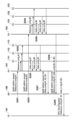
- FIG. 2 is a diagram showing an example of a flow of processes executed in the wireless communication system.
- FIG. 3 is a diagram showing an example of a flow of processes executed in the wireless communication system.
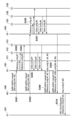
- FIG. 4 is a diagram showing an example of a flow of processes executed in the wireless communication system.
- FIG. 5 is a diagram illustrating an example of the flow of a process for updating setting information.
- FIG. 6 is a diagram showing an example of the flow of a process for determining the appropriateness of setting information.
- FIG. 1 is a diagram illustrating an example of the configuration of a wireless communication system.
- FIG. 2 is a diagram showing an example of a flow of processes executed in the wireless communication system.
- FIG. 3 is a diagram showing an example of a flow of processes executed in the wireless communication system.
- FIG. 4 is a diagram showing an example of a flow of processes executed in the wireless communication system.
- FIG. 5 is
- FIG. 7 is a diagram showing an example of the flow of a process for determining the appropriateness of setting information.
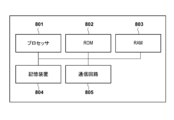
- FIG. 8 is a diagram showing an example of the hardware configuration of the MN, the SN, and the terminal device.
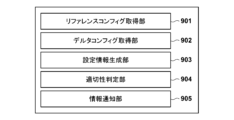
- FIG. 9 is a diagram illustrating an example of a functional configuration of a terminal device.
- FIG. 10 is a diagram illustrating an example of the functional configuration of the MN.
- FIG. 11 is a diagram illustrating an example of the functional configuration of the SN.
- FIG. 1 shows an example of the configuration of a wireless communication system according to this embodiment.
- This wireless communication system is, for example, a cellular communication system that complies with a cellular communication standard such as the fifth generation (5G) standard defined by the Third Generation Partnership Project (3GPP (registered trademark)).
- 5G fifth generation
- 3GPP Third Generation Partnership Project
- a base station device provides wireless communication services to a terminal device 151.
- the terminal device 151 can connect to two or more cells in parallel. Of these two or more cells, the cell that controls the communication of the terminal device 151 is called a primary cell, and the cell that connects to the terminal device 151 under the control of the base station device of the primary cell (master node: MN100) is called a secondary cell. Note that in this embodiment, for simplicity of explanation, it is assumed that the terminal device 151 is connected to MN100 and additionally connects to a secondary cell.
- the example of FIG. 1 shows an example in which cells that are candidates for connection destinations as secondary cells for the terminal device 151 are provided by two base station devices (secondary nodes: SN101 and SN102).
- the base station device may be composed of a central unit (CU) and a distributed unit (DU).
- the DU includes, for example, an antenna and a radio frequency signal processing function, and functions as an interface for transmitting and receiving radio signals with terminal devices.
- Each DU forms at least one cell.
- the CU is configured to accommodate one or more DUs and control the communications performed by those DUs. For example, the CU generates setting information when a terminal device connects to each DU and notifies the terminal device.
- SN 101 has the function of a CU, and can provide cells 131 to 133 by DU 111 to DU 113, respectively.
- Terminal device 151 is configured to receive wireless communication services by connecting to at least one of these cells and transmitting and receiving wireless signals in the cell to which it is connected.
- the terminal device 151 connects to a base station device that configures a cell that includes the location where the terminal device 151 itself is located, and in the following, this will be referred to as "connecting to a cell (provided by that base station device)."
- a pre-setting for adding or changing a secondary cell is performed.
- the state in which the pre-setting is performed here is a state in which the setting of parameters and the like in the case where the terminal device 151 connects to a candidate cell to which the terminal device 151 is to be connected is completed, and the terminal device 151 does not actually establish a connection to that cell.
- the pre-setting includes a condition for connecting to a cell for changing or adding a cell to which the terminal device 151 is to be connected, and when the terminal device 151 determines that the condition is satisfied, the terminal device 151 establishes synchronization with a new cell to which the terminal device 151 is to be connected and attempts to connect.
- the terminal device 151 performs a process of disconnecting from the secondary cell from which the terminal device 151 is connected.
- CPAC conditional secondary cell addition or change
- conditional handover The process of autonomously switching the primary cell of the connection destination in response to the terminal device 151 determining that the conditions are met is called conditional handover (CHO).
- CPAC conditional handover
- the following embodiment will be described with a focus on CPAC, but it can also be applied to CHO. That is, the following discussion can be applied to CHO by replacing the CPAC conditions with CHO conditions and the pre-settings for CPAC with pre-settings for CHO.
- the types of messages may differ between CHO and CPAC, but a person skilled in the art can replace them with appropriate messages as appropriate.
- the connected MN 100 sends a secondary cell addition request message (SgNB Addition Request) to other base station devices that provide cells that are candidates for the secondary cell to be added or changed.
- SgNB Addition Request a secondary cell addition request message
- this secondary cell addition request may be initiated, for example, in response to a specific message (e.g., SgNB Change Required) being notified to the connected MN 100 from the base station device that provides the secondary cell to which the terminal device 151 is currently connected.
- the MN 100 may be configured to send the above-mentioned secondary cell addition request in response to receiving the specific message.
- this base station device may be referred to as a "candidate base station"
- this base station device includes information such as communication parameters to be used when the terminal device 151 adds or changes the secondary cell in a response message (SGNB Addition Request Acknowledge) to that message and transmits it to the MN 100.
- the candidate base station holds the transmitted information such as communication parameters as pre-configuration information.
- the MN 100 or the candidate base station determines the conditions that should be satisfied when adding or changing the secondary cell.
- the MN 100 notifies the terminal device 151 of the pre-configuration information including information on communication parameters to be used when the secondary cell is added or changed with the cell provided by the candidate base station as the secondary cell and the conditions for such connection.
- This notification can be performed, for example, using a radio resource control (RRC) message.
- RRC radio resource control
- pre-configuration information is notified to the terminal device 151 via an RRC Reconfiguration message.
- the information of the pre-configuration information may include a reference configuration information (reference config) that serves as a reference, and configuration information (delta config) that is the difference between each configuration information of the secondary cell candidate and the reference config.
- the reference config is configuration information common to multiple cells
- the delta config is information about the part of the configuration information of each cell that differs from the reference config.
- the delta config is configuration information unique to each cell.
- the terminal device 151 uses the setting values specified in the reference config for the setting items not included in the delta config that are specified to be maintained in the reference config (specified as "Need M”), and may not use the setting values for other setting items. Furthermore, for configuration items that are not included in the delta config and that are specified in the reference config as requiring an operation related to the configuration item to be performed only once (designated as "Need N"), the terminal device 151 may receive information from the MN 100 to determine whether to perform the operation related to the configuration item only once according to the setting value of the reference config, or to interpret the setting value of the reference config as an intention to delete and determine not to perform the operation related to the configuration item.
- the MN 100 and the terminal device 151 may be configured in advance to perform one of the operations in a fixed manner without requiring notification of the information.
- the amount of data of the configuration information notified to the terminal device 151 can be reduced. That is, the setting information common to N cells is notified to the terminal device 151 only once for the multiple cells as the reference config, and the setting information specific to each cell is notified to each cell by the delta config, so that the notification of the part of the setting information corresponding to the reference config among the setting information for (N-1) cells is omitted, and the data amount of the setting information to be notified can be reduced.
- the MN 100 can use the setting information of one cell among the multiple candidate cells as the reference config, or use the setting information of the serving cell currently used for communication (if multiple cells are used as serving cells, any one of the multiple cells) as the reference config, or use the setting information of a cell other than the candidate cell or the serving cell as the reference config. In that case, the MN 100 can notify the terminal device 151 of information for identifying which cell's setting information to use as the reference config.
- the configuration information to be used as the reference configuration can be efficiently specified using existing identification information such as CellGroupId, SCellIndex, and condReconfigId that are uniquely assigned to the configuration information.
- the delta config is composed of the configuration items in the configuration information of each cell that contain different setting values than those in the reference config. Therefore, the smaller the difference between the configuration information of each cell and the reference config, the fewer the number of configuration items included in the delta config, and the smaller the overall amount of data in the delta config. On the other hand, if there is a large discrepancy between the configuration information of each cell and the reference config, the number of configuration items included in the delta config will increase, and the amount of data will also increase. In some cases, almost all of the configuration items in the reference config will be replaced by the configuration items in the delta config, which may result in an increase in the overall amount of data in the configuration information.
- a plurality of reference configurations can be set, and the terminal device 151 is notified of the plurality of reference configurations, as well as information indicating which of the plurality of reference configurations the delta configuration for each candidate cell is based on.
- the terminal device 151 is notified of information in the above format.
- the reference config ID is identification information capable of uniquely identifying one reference config.
- the information on the first reference config and the second reference config is notified to the terminal device 151 as an information element such as ReferenceConfigAddModlist.
- the information on the delta config unique to each cell is notified to the terminal device 151 as a CondReconfigToAddMod information element.
- the CondReconfigToAddMod information element is prepared, for example, for each candidate cell.
- the CondReconfigToAddMod information element includes identification information (condReconfigId) unique to the information element, a cell identifier for each cell, a reference config ID, a condition under which CPAC should be performed, and information indicating the delta config of the cell.
- CPAC refers to the conditional addition and change of a secondary cell, but different conditions may be prepared for the addition of a secondary cell and the change of a secondary cell.
- the terminal device 151 may generate configuration information for the cell 143 using the second reference config and the sixth delta config. According to such a configuration, even if the setting information for connection between cell 131, cell 132, and cell 143 is significantly different, for example, it is possible to eliminate the disadvantage of using a common reference config.
- the reference config itself may be used as the setting information for that cell.
- the setting information of any of the cells may be used as the reference config.
- the setting information of cell 131 may be used as the first reference config
- the setting information of cell 143 may be used as the second reference config.
- the terminal device 151 is notified of information in the above format.
- the setting information of each cell includes not only communication parameters but also CPAC conditions (condExecutionCond, conditions for adding/changing a cell, and an identifier for specifying a separately defined execution condition).
- a different reference configuration may be used for each SN, or a common reference configuration may be used for multiple SNs and another reference configuration may be used for one or more other SNs. Also, multiple reference configurations may be used within one SN.
- a group of cells using such a common reference configuration may be determined, for example, by MN 100 to which terminal device 151 is connected, or may be determined by the SN, or such a group of cells may be determined between MN 100 and SN 101 and SN 102. Also, a group using a common reference configuration may be determined in advance.
- MN 100 determines a reference config.
- MN 100 determines a reference config
- it notifies the SN that provides the cell that uses that reference config of the reference config.
- the SN determines the difference between the setting information in each cell that it provides and the notified reference config as the delta config of that cell and notifies MN 100.
- the SN may reject the use of the notified reference config.
- the SN may notify MN 100 of another reference config to be used instead of the notified reference config and a delta config generated based on the other reference config.
- MN 100 may notify the SN of identification information (reference config ID) of the reference config to be notified to the SN and one or more identification information that can be assigned to another reference config when the use of the reference config is rejected.
- SN may notify MN 100 of the identification information assigned to that other reference configuration.
- MN100 sends an SgNB addition request including a first reference configuration (Reference config #1) to SN101 (S201).
- SN101 may accept the use of this first reference configuration and notify each subordinate DU (DU111 to DU113) of this first reference configuration to generate a delta configuration (S202).
- Each DU prepares configuration information for UE151's connection to its own device and notifies SN101 of the delta configuration, which is the difference information between the configuration information and the first reference configuration (S205).
- SN101 may request each DU to notify the configuration information for UE151's connection, and the DU may notify SN101 of the configuration information.
- SN 101 may generate a delta config for each DU from the first reference config and the notified setting information.
- SN 101 may notify MN 100 of the delta config information (S207).
- SN 101 may notify MN 100 that it is using the first reference config notified from MN 100.
- the notification from SN to MN 100 may be performed, for example, using an information element in an SgNB addition request ACK.
- information may be notified by CG-CandidateList.
- a newly defined information element other than CG-CandidateList may be used. This information exchange may be performed by any message that can be used for information exchange by the Xn interface between MN 100 and SN.
- MN100 sends an SgNB addition request to SN102 including the second reference configuration (Reference config #2) (S203).
- SN102 may reject the use of this second reference configuration and notify each subordinate DU (DU121 to DU123) of the third reference configuration to generate a delta configuration (S204).
- Each DU prepares configuration information for connecting UE151 to its own device and notifies SN102 of the delta configuration, which is the difference information between the configuration information and the third reference configuration (S206).
- each DU may notify SN102 of the configuration information itself, and SN102 may generate a delta configuration using the third reference configuration.
- SN 102 acquires the delta config for each DU, it can notify MN 100 of the delta config information (S208). In this case, SN 102 notifies MN 100 of the third reference config that is being used instead of the second reference config.
- the transmission and reception of information between the CU and DU of the SN may be performed using information elements (IEs) related to the CPAC included in the UE context setup request, UE context setup request response, UE context release request, UE context release command, UE context release complete, UE context modification request, or UE context modification response.
- IEs information elements
- a new IE for communication configuration using the reference configuration may be prepared, or a new message for the F1 interface may be prepared. This also applies to the following description.
- Information from the CU to the DU may be notified using the CU to DU RRC information information element, and information from the DU to the CU may be notified using the DU to CU RRC information information element.
- information specifying which cell the information being transmitted and received relates to may also be transmitted and received between the DU and CU.
- MN 100 transmits an SgNB addition request to SN 101 and SN 102.
- MN 100 may notify the SNs that a reference configuration and a delta configuration should be generated.
- MN 100 may notify each SN of a usable reference configuration ID. This may define the maximum number of reference configurations that can be set in an SN.
- the reference config ID is notified from MN 100 to ensure that MN 100 and the SNs have the same understanding of the reference config ID, and to prevent the reference config IDs used in each SN from overlapping.
- the same ID may be set in multiple SNs.
- a group of cells may be defined, and one reference configuration may be specified based on the identification information of the group of cells and the reference configuration ID.
- the group of cells may be multiple cells under multiple SNs.
- a cell under one SN may belong to one group, or one or more cells under one SN may belong to a first group, and another cell under the SN may belong to a second group.
- two or more reference configurations set in two or more groups can be specified only by the reference configuration ID, but by using the reference configuration ID in combination with the identification information of the group, it is possible to uniquely specify one reference configuration.
- the MN 100 may specify a maximum number of SNs that provide candidate cells.
- the MN 100 may instruct the SNs to use normal configuration information (full config) as is for the SNs exceeding the maximum number, without using reference config and delta config.
- the SN may instruct its subordinate DUs to provide full config instead of delta config.
- a numerical value indicating the maximum number of reference configs that can be set in that SN may be notified to each SN.
- a numerical value indicating the maximum number of reference configs that can be set in each SN may be notified.
- MN 100 may hold the maximum number of reference configs that can be set in terminal device 151, and determine the number of reference configs that can be further set in terminal device 151 from the number of reference configs currently being set (notified) and this maximum number.
- MN 100 may then determine the above-mentioned maximum number to notify each SN based on this number. MN 100 may also notify the SN only that a reference config and a delta config should be generated, without notifying the numerical value indicating the maximum number or the reference config ID. For example, if the maximum number of reference configs is predefined in the SN, it is sufficient to be notified that only the reference config and delta config should be generated.
- Each SN sets a reference config within the maximum number of reference configs that can be set for each SN.
- the SN can then notify each of its subordinate DUs of the reference config and instruct them to generate a delta config (S302, S303, S305).
- the DU generates a delta config based on the notified reference config and notifies the SN of the generated delta config (S306, S307).
- the SN aggregates the delta configs generated in each DU and notifies MN 100 of all the set reference configs and delta configs (S308, S309).
- the delta config is notified to MN 100 together with information indicating which reference config it is associated with.
- the SN generates a reference config, notifies the DU of the generated reference config, and the DU generates a delta config, but this is not limited to the above example.
- the SN may request the DU to provide configuration information to be notified to the terminal device 151, aggregate the configuration information, and generate a reference config based on the configuration information.
- the SN may generate a reference config that minimizes the total amount of data for the delta config and the reference config by using a common reference config for multiple configuration information.
- MN 100 when MN 100 does not have a reference config, it can instruct SN 100 to generate a reference config and a delta config, and when MN 100 has a reference config, it can notify SN 100 of the reference config and instruct SN 101 to generate a delta config.
- MN 100 instructs SN 101 to generate a reference config and a delta config (S401).
- S401 instructs SN 101 to generate a reference config and a delta config
- S401 a reference config
- SN 101 can generate a reference config, for example, within its own device, and instruct DU 111 to DU 113 to generate a delta config (S402). Note that in the example of FIG.
- SN 101 generates a reference config, notifies DU 111 to DU 113 of the generated reference config, and DU 111 to DU 113 generate a delta config, but this is not limited to the above example.
- SN 101 may request DUs 111-113 to provide configuration information to be notified to terminal device 151, and then aggregate that configuration information to generate a reference config. In either case, SN 101 notifies MN 100 of the acquired reference config and the delta config for the cells formed by each DU (S403, S404).
- MN 100 instructs SN 102 to generate a delta config (S405).
- MN 100 since MN 100 has the reference config notified by SN 101, it can notify SN 102 of the reference config and instruct it to generate a delta config.
- SN 102 may accept or reject the use of this reference config.
- SN 102 notifies DU 121 to DU 123 of this different reference config (S406), and DU 121 to DU 123 generate a delta config based on the different reference config.
- SN 102 may collect delta configs from DU 121 to DU 123 (S407) and notify MN 100 of the delta configs (S408).
- SN 102 may, for example, collect setting information from each of DU 121 to DU 123 and generate a delta config candidate that is the difference between the setting information and the reference config notified by MN 100.
- SN 102 may generate a different reference config if the amount of data in the delta config exceeds a predetermined value. Note that this is just one example, and the criteria for SN 102 to generate a different reference config may be determined arbitrarily.
- MN 100 notifies terminal device 151 of the reference config it holds and the collected delta config (S409).
- MN 100 will hold the first reference config used by SN 101 and the second reference config used by SN 102. After this, when MN 100 is to pre-configure yet another cell as a secondary cell candidate, it can notify the SN of the first reference config and the second reference config and instruct the SN to generate a delta config. In this way, MN 100 can notify the SN of all of the reference configs it holds and instruct the SN to generate a delta config. However, this is just one example, and MN 100 may, for example, notify the SN of only a portion of the reference configs it holds and instruct the SN to generate a delta config.
- the terminal device 151 can obtain the reference config and the delta config for a plurality of cells that are candidates for addition or change as secondary cells.
- the MN 100 may transmit an instruction to the terminal device 151 to activate only a portion of the plurality of cells. For example, the MN 100 may activate pre-settings for cells within a predetermined distance from the position of the terminal device 151 as the terminal device 151 moves, and may disable the pre-settings for the other cells.
- the terminal device 151 may reproduce and hold the setting information for the cells for which the pre-settings are activated, using the reference config and the delta config.
- the terminal device 151 may perform measurement of the wireless quality for the activated cells, and may not measure the wireless quality for the cells that are not activated.
- the MN 100 may specify the cells to be activated/inactivated, using, for example, identification information (condReconfigId) that is unique to the information element for each cell.
- identification information condReconfigId
- a reference config when a reference config is partially valid, information indicating valid or invalid is specified for each delta config that uses the reference config, and when a reference config is fully valid, all delta configs that use the reference config are valid.
- the reference config may be set to "valid", and in that case, the valid/invalid status may always be indicated individually for each delta config that uses the reference config.
- MN 100 or SN connected to terminal device 151 may decide to delete the reference config set in terminal device 151, for example, in response to a change or addition of a secondary cell candidate, or in response to the setting of new communication parameters based on the reference config and delta config.
- MN 100 or SN connected to terminal device 151 may be referred to as the "network.”
- a network node other than MN 100 or SN may decide to delete the reference config set in terminal device 151, and a deletion instruction may be sent to terminal device 151 via MN 100 or SN.
- the network may decide to delete one of the reference configurations when the number of set reference configurations reaches (exceeds) the maximum number.
- the network may, for example, send an instruction to the terminal device 151 to delete the oldest reference configuration.
- the network may also determine the reference configuration to be deleted based on the measurement results of the wireless quality in the terminal device 151. For example, the network may determine to delete the reference configuration with the lowest maximum value (or the reference configuration not used in the cell whose wireless quality can be determined to be good) by identifying the maximum wireless quality of the cells using each of the multiple reference configurations.
- the network may also delete delta configurations for cells that are a predetermined distance or more away from the position of the terminal device 151, for example, as the terminal device 151 moves, and may decide to delete the specific reference configuration when all delta configurations that refer to the specific reference configuration are deleted.
- the network may also instruct the terminal device 151 that has set a reference configuration to delete the reference configuration, and allow the terminal device 151 to select which reference configuration to delete. In this case, the terminal device 151 may select and delete a reference configuration, and notify the network of the reference configuration ID of the deleted reference configuration.
- the network removes the cell that generated the delta configuration using the reference configuration to be deleted from the secondary cell candidates of the terminal device 151.
- the MN 100 may send an SgNB Release Request to an SN that has a cell using the reference configuration to be deleted, instructing it to delete the configuration information related to the cell. If a specific reference configuration is deleted and a delta configuration that references the specific reference configuration is maintained, the delta configuration is also deleted. The cell corresponding to the delta configuration is removed from the secondary cell candidates. If a specific reference configuration is deleted and a delta configuration that references the specific reference configuration is maintained, the delta configuration may be reconfigured based on another reference configuration. In this case, the MN 100 may specify another reference configuration and instruct an SN that has a cell using the delta configuration to update the delta configuration.
- the SN may be forced to use a different reference configuration. That is, the SN may not be allowed to refuse to use the different reference configuration.
- the reference configuration being used in any cell may not be deleted.
- the reference config and delta config may not be deleted unless there is an explicit instruction from the MN 100.
- this is not limited to the above.
- the reference config generated in the handover source MN 100 may be deleted.
- the reference config generated in the SN may not be deleted.
- the handover source MN 100 may notify the handover destination MN 100 of the reference config ID and the corresponding reference config contents, the SN that generated the reference config, information on the candidate cell for the secondary cell, etc.
- the handover source MN 100 may notify the handover destination MN 100 of information on the delta config that references the reference config (delta config ID, delta config contents, and conditions for adding/changing a cell corresponding to the delta config). This eliminates the need to re-execute the configuration process for adding/changing the secondary cell in the MN 100 at the handover destination.
- the terminal device 151 can voluntarily delete the reference config and/or the delta config without waiting for an explicit instruction from the MN 100.
- the dynamic memory for holding the reference config on the network side can be reduced, and the process of sharing the reference config and the delta config with other base station devices is no longer necessary, so that the implementation on the network side can be simplified.
- a "delta reference config” may be used, which indicates only the configuration items in the reference config that should be changed.
- the reference config may be changed based on the value of that configuration item, and for other configuration items, the reference config may be maintained.
- the delta config may also be changed.
- a "delta-delta config” may be used, which indicates only the configuration items in the delta config that should be changed.
- the delta config may be changed based on the value of that configuration item, and for other configuration items, the delta config may be maintained.
- the reference configuration or delta configuration when the reference config (and delta config) is changed, only the difference value is exchanged between the MN 100, the SN, and the terminal device, making it possible to update the configuration information with a small amount of data.
- the delta-reference configuration or delta-delta configuration when the reference configuration or delta configuration is significantly changed, the delta-reference configuration or delta-delta configuration may not be used, and the reference configuration or delta configuration that was used up until that point may be replaced with the newly generated reference configuration or delta configuration. In other words, the reference configuration or delta configuration that was used up until that point may be deleted, and the newly generated reference configuration or delta configuration may be stored in the terminal device 151.
- the network When changing the reference configuration, the network notifies the terminal device 151 of either (1) the delta reference configuration or (2) a newly generated reference configuration.
- the terminal device 151 When the terminal device 151 receives the delta reference configuration, it replaces the configuration items of the currently used reference configuration that are specified by the delta reference configuration with the configuration values of the delta reference configuration.
- the terminal device 151 receives a newly generated reference configuration, it replaces the entire reference configuration that it holds with the newly generated reference configuration.
- the terminal device 151 changes the configuration item for that cell and updates the configuration information. In such a configuration, even if a change is made to the reference configuration, there may be cases where the configuration information for each cell is not updated due to the delta configuration.
- the terminal device 151 maintains the updated reference configuration in order to use it for generating configuration information using the delta configuration of another cell thereafter.
- the reference config to be updated may be specified using a reference config ID.
- the updated reference config may inherit the reference config ID of the reference config before the update, or a new reference config ID may be assigned to the updated reference config.
- the network notifies the terminal device 151 of either (1) the delta-delta config or (2) a newly generated delta config.
- the terminal device 151 receives the delta-delta config for a specific cell, it replaces the configuration items specified by the delta-delta config among the configuration items of the delta config currently used for that cell with the configuration values of the delta-delta config.
- the terminal device 151 receives a newly generated delta config for a specific cell, it replaces the entire delta config of the cell that it holds with the newly generated delta config.
- the delta config to be updated can be specified by the cell identifier or condReconfigId.
- the terminal device 151 updates the configuration information of the cell that uses that delta config.
- the terminal device 151 updates the configuration information by changing the configuration items of the updated delta config among the configuration information of the cell corresponding to the updated delta config to match the update of the delta config.
- the network may notify the terminal device 151 of a delta reference configuration for the existing first reference configuration and may instruct the terminal device 151 to maintain the first reference configuration as is when sending an instruction to generate a second reference configuration.
- a new second reference configuration based on the existing first reference configuration may be generated and the first reference configuration may be maintained.
- a new reference configuration ID may be assigned to the second reference configuration, and the reference configuration ID may be notified to the terminal device 151.
- the MN 100 may instruct the SN using the reference configuration to change the reference configuration in the same manner as the notification to the terminal device 151 described above. Furthermore, if the SN decides to change the reference configuration, the SN requests the MN 100 to specify the reference configuration and change it, and if the request is permitted, the MN 100 can change the reference configuration. In this case, if the MN 100 permits the change of the reference configuration, it notifies the SN of information indicating the permission, and also notifies the terminal device 151 of the permitted reference configuration.
- both the reference config and the delta config may be updated, for example as shown in FIG. 5. That is, it is determined whether the reference config or the delta config should be updated (S501, S503). Then, if the reference config should be updated (YES in S501), the delta-reference config or a newly prepared reference config is provided to the terminal device (and SN if necessary) (S502). Similarly, if the delta config should be updated (YES in S503), the delta-delta config or a newly prepared delta config is provided to the terminal device (and SN if necessary) (S504).
- the terminal device 151 may generate configuration information for each cell based on the acquired reference config and delta config, but it is necessary to check whether the configuration information is appropriate. For example, the terminal device 151 may determine that the configuration information is inappropriate if the configuration information includes parameters that exceed the capabilities of the terminal device itself (i.e., the terminal device 151 cannot execute). The terminal device 151 may also determine that the configuration information is inappropriate if the configuration information does not include necessary parameters or if the terminal device 151 cannot interpret the contents of the configuration information. For example, if the reference config is mistakenly deleted, the necessary parameters may not exist with only the delta config, and the configuration information is determined to be inappropriate.
- the terminal device 151 when the terminal device 151 acquires the reference config and delta config for a secondary cell candidate (S601), it uses the information to generate configuration information for the cell (S602) and can determine whether the configuration information is appropriate (S603). That is, the terminal device 151 determines whether the configuration information can be used for a cell in which the environment for preparing the configuration information (reference config and delta config are available) is created. Then, if the configuration information generated by combining the reference config and delta config is appropriate, the terminal device 151 maintains the configuration information.
- the terminal device 151 notifies the network (the connected MN 100 or SN) of the reference config ID and the identification information (condReconfigId) of the delta config (S604).
- This notification is performed, for example, by an RRC Reconfiguration Complete message.
- information indicating that an error has occurred is notified to the network.
- This notification can be performed, for example, by setting the failure type in the message to srb3-IntegrityFailure or scg-reconfigFailure.
- the network receives this notification, it notifies the terminal device 151 of the reference config, delta config, and reference config ID based on the identification information of the reference config ID and delta config.
- the terminal device 151 may determine which of the reference config part and the delta config part is inappropriate, and notify the network to transmit the config that caused the inappropriateness. If a parameter that cannot be used by the terminal device 151 is set, the network may instruct the SN to reconfigure the reference config or delta config. In this way, the terminal device 151 can determine the appropriateness of the configuration information before actually adding/changing a secondary cell, and prepare appropriate configuration information in advance.
- the terminal device 151 may not generate configuration information at the time of acquiring the reference configuration and the delta configuration, but may generate configuration information for a cell whose wireless quality measurement results satisfy a predetermined condition (S701, S702). In this case, the terminal device 151 checks the appropriateness of the generated configuration information (S703). If the terminal device 151 determines that the generated configuration information is inappropriate, it may subsequently generate configuration information for another cell whose wireless quality measurement results satisfy a predetermined condition. Note that even if there is no secondary cell whose wireless quality measurement results satisfy a predetermined condition, if there is another cell whose wireless quality is better than the current secondary cell and the configuration information in that cell is appropriate, the terminal device 151 may switch the connection to that cell.
- the terminal device 151 may notify the network of the inappropriate configuration information as described above (S704).
- the terminal device 151 may use UE assistance information to notify the network of the reference configuration ID and delta configuration identification information (condReconfigId) corresponding to the inappropriate configuration information.
- the network modifies the reference configuration and delta configuration based on the reference configuration ID and delta configuration identification information, and notifies the terminal device 151 of the reference configuration, delta configuration, and reference configuration ID again.
- the memory capacity for holding the configuration information in the terminal device 151 can be reduced.
- the configuration information of the serving cell may be changed between the time when the reference configuration and delta configuration are acquired and the time when the measurement result of the wireless quality of one of the candidate cells satisfies a predetermined condition.
- the reference configuration will also be changed, so the generated configuration information may be different between the case where the configuration information of the cell is generated using the information at the time when the reference configuration and delta configuration are acquired and the case where the configuration information of the cell is generated at the time when the measurement result of the wireless quality of the candidate cell satisfies a predetermined condition. Therefore, the network and the terminal device 151 need to agree on the time when the cell configuration information is generated.
- information specifying the timing at which the cell configuration information is generated may be notified from the network to the terminal device 151.
- the network and the terminal device 151 may be preconfigured to generate the cell configuration information at a fixed timing that is arbitrarily preconfigured without notifying the information.
- the terminal device 151 may store the serving cell configuration information held by the terminal device 151 as the reference config at the time when the reference config and delta config are acquired.
- the reference config may not be stored at the time when the reference config and delta config are acquired, but the serving cell configuration information at that time may be stored as the reference config in response to the satisfaction of a predetermined condition such as a wireless quality condition.
- the terminal device 151 when the terminal device 151 stores the serving cell configuration information as the reference config at the time when the terminal device 151 acquires the reference config and delta config, it is expected that the serving cell configuration information and the contents of the reference config will no longer match if a serving cell configuration change instruction is received from the network after the reference config is saved. Therefore, in order to prevent this mismatch, when a serving cell setting change instruction is received from the network after the reference config is saved, an instruction may be transmitted from the network to the terminal device 151 to make the same changes to both the serving cell and the reference config.
- the network may instruct the terminal device 151 to make only the serving cell setting change, and the terminal device 151 may spontaneously make the same changes to the reference config as the serving cell setting without any explicit instruction.
- a mandatory (essential) setting item is not notified to the terminal device 151, the setting information is determined to be inappropriate. For this reason, a message format for notifying conventional setting information related to a cell that does not use a reference config must include mandatory (essential) setting items.
- mandatory (essential) items may be notified by including them in the delta config rather than in the reference config. In this case, mandatory (essential) setting items may be omitted in the reference config.
- FIG. 8 is a diagram showing an example of the hardware configuration of the MN 100, SN, and terminal device 151 described above.
- the MN 100, SN, and terminal device 151 are configured to include a processor 801, a ROM 802, a RAM 803, a storage device 804, and a communication circuit 805.
- the processor 801 is a computer configured to include one or more processing circuits, such as a general-purpose CPU (Central Processing Unit) or an ASIC (Application Specific Integrated Circuit), and executes the overall processing of the MN 100, SN, and terminal device 151 and each processing described below by reading and executing programs stored in the ROM 802 and storage device 804.
- a general-purpose CPU Central Processing Unit
- ASIC Application Specific Integrated Circuit
- the ROM 802 is a read-only memory that stores information such as programs and various parameters related to the processing executed by the MN 100, SN, and terminal device 151.
- the RAM 803 functions as a workspace when the processor 801 executes a program, and is a random access memory that stores temporary information.
- the storage device 804 is, for example, a removable external storage device.
- the communication circuit 805 is a communication circuit including a wired interface or a wireless interface for the MN 100, the SN, and the terminal device 151 to communicate with each other.
- FIG. 9 is a diagram outlining an example of the functional configuration of the terminal device 151.
- each functional unit shown in FIG. 9 may be realized, for example, by the processor 801 executing a program stored in the ROM 802 or the like, or dedicated hardware for realizing each function may be prepared.
- FIG. 9 particularly shows functions related to the processing according to this embodiment, and the terminal device 151 may naturally have the functions of a normal terminal device that performs communication in accordance with the cellular communication standard of 3GPP (registered trademark), for example.
- two or more functional blocks shown in FIG. 9 may be integrated and realized as one functional block, or one functional block may be divided into multiple functional blocks.
- the terminal device 151 includes, for example, a reference configuration acquisition unit 901, a delta configuration acquisition unit 902, a setting information generation unit 903, an appropriateness determination unit 904, and an information notification unit 905 as its functions. Note that, although the functions are described here as those of a secondary cell, the terminal device 151 may also have similar functions for candidate cells to which the primary cell is to be handed over.
- the reference configuration acquisition unit 901 acquires, for example, a reference configuration that can be used for the configuration information of a candidate cell for adding/changing a secondary cell from the MN 100.
- the reference configuration acquisition unit 901 acquires information associating a reference configuration with its reference configuration ID.
- the delta configuration acquisition unit 902 acquires a delta configuration used to generate configuration information for each of the above-mentioned candidate cells.
- the delta configuration is information specific to a cell, and is acquired in a format associated with a reference configuration ID to indicate which reference configuration it should be used in combination with. Note that the reference configuration and delta configuration can be acquired together (within one message) from the MN 100, but this is not necessarily limited to this.
- the reference configuration may be acquired in a first message, and the delta configuration may be acquired in a second message different from the first message. Also, when the configuration information is updated, only either the reference configuration or the delta configuration may be notified to the terminal device 151.
- the setting information generating unit 903 combines the acquired delta config with a reference config having a reference config ID with which the delta config is associated, and generates setting information for a candidate cell associated with the delta config.
- the setting information generating unit 903 may generate setting information at the time when the reference config and the delta config are acquired, or may generate setting information for a cell whose wireless quality measured in the terminal device 151 satisfies a predetermined condition, and may not generate setting information unless the predetermined condition is satisfied.
- the appropriateness determining unit 904 evaluates whether the setting information generated by the setting information generating unit 903 is usable by the terminal device 151, whether there is a missing required parameter, whether the terminal device 151 can interpret, and the like, and determines whether the setting information is appropriate. If the setting information is not appropriate, the information notifying unit 905 performs a predetermined notification to the MN 100 and SN currently connected. Thereafter, when at least one of the reference config and the delta config is updated, the information is acquired by the reference config acquisition unit 901 or the delta config acquisition unit 902, and the setting information can be updated.
- FIG. 10 is a diagram outlining an example of the functional configuration of MN100.
- Each functional unit shown in FIG. 10 may be realized, for example, by processor 801 executing a program stored in ROM 802 or the like, or dedicated hardware may be provided to realize each function.
- FIG. 10 particularly shows functions related to the processing according to this embodiment, and MN100 may naturally have the functions of a normal base station device that performs communication in accordance with the 3GPP (registered trademark) cellular communication standard.
- Two or more functional blocks shown in FIG. 10 may be integrated into one functional block, or one functional block may be divided into multiple functional blocks.
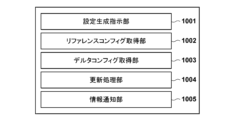
- MN100 includes, as its functions, a setting generation instruction unit 1001, a reference configuration acquisition unit 1002, a delta configuration acquisition unit 1003, an update processing unit 1004, and an information notification unit 1005. Note that although we will explain the secondary cell here, MN100 may also have similar functions for candidate cells as handover destinations for the primary cell.
- the configuration generation instruction unit 1001 instructs an SN having a secondary cell candidate cell under its control to generate configuration information for connection to the cell.
- the configuration generation instruction unit 1001 instructs the SN to generate configuration information, for example, in the form of a combination of a reference config and a delta config.
- the configuration generation instruction unit 1001 can instruct the SN to generate a full config so that no new reference configs are set thereafter.
- the reference config acquisition unit 1002 can generate a reference config in its own device, for example. Also, the reference config acquisition unit 1002 can receive, for example, a reference config generated in an SN from that SN.
- the delta config acquisition unit 1003 acquires a delta config unique to each of the cells under the SN from the SN.
- the delta config is associated with a reference config ID indicating which reference config it should be combined with.
- the update processing unit 1004 transmits an instruction to the SN to generate a new reference config and delta config in response to the need to update at least one of the reference config and delta config.
- the update processing unit 1004 transmits this instruction, at least one of the updated reference config and delta config is acquired by the reference config acquisition unit 1002 or delta config acquisition unit 1003.
- the information notification unit 1005 provides the acquired reference config and delta config to the terminal device 151.
- the information notification unit 1005 can notify the terminal device 151 of information including a reference config ID indicating which reference config the delta config should be combined with.
- FIG. 11 is a diagram outlining an example of the functional configuration of SN101 and SN102.
- Each functional unit shown in FIG. 11 may be realized, for example, by the processor 801 executing a program stored in the ROM 802 or the like, or dedicated hardware may be prepared to realize each function.
- FIG. 11 particularly shows functions related to the processing according to this embodiment, and SN101 and SN102 may naturally have the function of a normal base station device that performs communication in accordance with the cellular communication standard of 3GPP (registered trademark).
- Two or more functional blocks shown in FIG. 11 may be integrated and realized as one functional block, or one functional block may be divided into multiple functional blocks.
- SN101 and SN102 include, for example, an instruction receiving unit 1101, a reference configuration acquisition unit 1102, a delta configuration acquisition unit 1103, and an information notification unit 1104 as their functions.
- an instruction receiving unit 1101 a reference configuration acquisition unit 1102
- a delta configuration acquisition unit 1103 a delta configuration acquisition unit 1103
- an information notification unit 1104 as their functions.
- base station devices that are candidates for MNs can have similar functions with respect to candidate cells for handover destinations of the primary cell.
- the instruction receiving unit 1101 receives an instruction from the MN. For example, the instruction receiving unit 1101 may receive a message from the MN instructing the MN to generate a delta config. The instruction receiving unit 1101 may further receive an instruction from the MN indicating that a reference config should be generated. For example, when the instruction receiving unit 1101 receives an instruction including a reference config generated by the MN, it may identify that the instruction is an instruction to generate a delta config. When the instruction receiving unit 1101 receives an instruction not including a reference config, it may identify that the instruction is an instruction to generate a reference config and a delta config. The instruction receiving unit 1101 may receive an instruction to update at least one of the reference config and the delta config from the MN.
- the reference config acquisition unit 1102 may acquire the reference config included in the instruction received by the instruction receiving unit 1101, for example. Also, the reference config acquisition unit 1102 generates and acquires a new reference config when, for example, the instruction received by the instruction receiving unit 1101 does not include a reference config or when the use of the reference config included in the instruction is rejected.
- the delta config acquisition unit 1103 acquires, as a delta config, a difference between setting information for communication in a subordinate cell and the reference config acquired by the reference config acquisition unit 1102. Note that, for example, the delta config acquisition unit 1103 may cause a subordinate DU to generate a delta config and acquire the generated delta config from the DU.
- the information notification unit 1104 notifies the MN of information on the acquired delta config. Note that, when a reference config is generated in an SN, the information notification unit 1104 notifies the MN of the reference config. In addition, the information notification unit 1104 associates a reference configuration ID, which indicates which reference configuration the delta configuration should be combined with, with the delta configuration and notifies the MN.
- the functions of the MN described above may be performed by the SN to which the terminal device 151 is connected.
Landscapes
- Engineering & Computer Science (AREA)
- Computer Networks & Wireless Communication (AREA)
- Signal Processing (AREA)
- Computer Security & Cryptography (AREA)
- Mobile Radio Communication Systems (AREA)
Abstract
Description
・第1のリファレンスコンフィグ(リファレンスコンフィグID=1)
・第2のリファレンスコンフィグ(リファレンスコンフィグID=2)
・セル131の情報(第1のデルタコンフィグ、リファレンスコンフィグID=1)
・セル132の情報(第2のデルタコンフィグ、リファレンスコンフィグID=1)
・・・
・セル142の情報(第5のデルタコンフィグ、リファレンスコンフィグID=2)
・セル143の情報(第6のデルタコンフィグ、リファレンスコンフィグID=2)
のような形式の情報を端末装置151へ通知する。ここで、リファレンスコンフィグIDは、1つのリファレンスコンフィグを一意に特定可能な識別情報である。これらの情報のうち、第1のリファレンスコンフィグ及び第2のリファレンスコンフィグの情報は、ReferenceConfigAddModlistなどの情報要素として、端末装置151へ通知される。また、各セルに固有のデルタコンフィグの情報は、CondReconfigToAddMod情報要素として、端末装置151へ通知される。CondReconfigToAddMod情報要素は、例えば、候補セルごとに用意される。CondReconfigToAddMod情報要素は、その情報要素に固有の識別情報(condReconfigId)と、各セルについての、セル識別子と、リファレンスコンフィグIDと、CPACが行われるべき条件と、そのセルのデルタコンフィグとを示す情報を含む。なお、CPACは、条件付きのセカンダリセルの追加及び変更を指すが、セカンダリセルの追加とセカンダリセルの変更とで、それぞれ異なる条件が用意されうる。端末装置151は、例えば、セル131に関して、受信した情報の中から、リファレンスコンフィグID=1の情報を用いて第1のリファレンスコンフィグを抽出し、その第1のリファレンスコンフィグと、第1のデルタコンフィグとに基づいて、セル131の設定情報を生成しうる。同様に、端末装置151は、第2のリファレンスコンフィグと第6のデルタコンフィグとを用いて、セル143の設定情報を生成することができる。このような構成によれば、例えば、セル131やセル132と、セル143とでその接続のための設定情報が大きく異なる場合であっても共通のリファレンスコンフィグを用いることの不利益を解消することができる。なお、いずれかのセルにおいて、リファレンスコンフィグそのものを、そのセルの設定情報として使用してもよい。換言すれば、いずれかのセルの設定情報を、リファレンスコンフィグとして使用しうる。例えば、セル131の設定情報を、第1のリファレンスコンフィグとして使用し、及び/又は、セル143の設定情報を第2のリファレンスコンフィグとして使用してもよい。この場合、例えば、MN100は、
・第1のリファレンスコンフィグ(セル131、リファレンスコンフィグID=1)
・第2のリファレンスコンフィグ(セル143、リファレンスコンフィグID=2)
・セル132の情報(第2のデルタコンフィグ、リファレンスコンフィグID=1)
・・・
・セル142の情報(第5のデルタコンフィグ、リファレンスコンフィグID=2)
のような形式の情報を端末装置151へ通知する。なお、これは一例であり、端末装置151が各セルの設定情報を構成可能な範囲において、他の形式の情報が端末装置151へ通知されてもよい。なお、各セルの設定情報は、通信パラメータのみならず、CPACの条件(condExecutionCond、セルの追加/変更を行う条件や、別途定義された実行条件を指定するための識別子)を含む。
・SN=101のリファレンスコンフィグ
・・第1のリファレンスコンフィグ(リファレンスコンフィグID=1)
・・第2のリファレンスコンフィグ(リファレンスコンフィグID=2)
・SN=102のリファレンスコンフィグ
・・第3のリファレンスコンフィグ(リファレンスコンフィグID=1)
・SN=101のデルタコンフィグ
・・セル131の情報(第1のデルタコンフィグ、リファレンスコンフィグID=1)
・・セル132の情報(第2のデルタコンフィグ、リファレンスコンフィグID=1)
・・セル133の情報(第3のデルタコンフィグ、リファレンスコンフィグID=2)
・SN=102のデルタコンフィグ
・・セル141の情報(第4のデルタコンフィグ、リファレンスコンフィグID=1)
・・セル142の情報(第5のデルタコンフィグ、リファレンスコンフィグID=1)
・・セル143の情報(第6のデルタコンフィグ、リファレンスコンフィグID=1)
のような情報が、MN100から端末装置151へ通知される(S310)。端末装置151は、例えば、セル132の設定情報を取得する際には、SN=101とリファレンスコンフィグID=1に基づいて、第1のリファレンスコンフィグを抽出する。そして、端末装置151は、その第1のリファレンスコンフィグと第2のデルタコンフィグとを用いて、セル132の設定情報を取得することができる。一方で、端末装置151は、例えば、セル143の設定情報を取得する際には、SN=102とリファレンスコンフィグID=1に基づいて、第3のリファレンスコンフィグを抽出する。そして、端末装置151は、その第3のリファレンスコンフィグと第6のデルタコンフィグとを用いて、セル143の設定情報を取得することができる。なお、上述の例では、各SNの識別情報とリファレンスコンフィグIDとを組み合わせることにより、1つのリファレンスコンフィグを特定する例について説明したが、これに限られない。例えば、より一般化して、セルのグループを定義し、そのセルのグループの識別情報とリファレンスコンフィグIDとに基づいて、1つのリファレンスコンフィグが特定されるようにしてもよい。ここで、セルのグループは、複数のSNの配下の複数のセルでありうる。ここで、1つのSNの配下のセルは1つのグループに属するようにしてもよいし、1つのSNの配下の1つ以上のセルが第1のグループに属し、そのSNの配下の別のセルが第2のグループに属するようにしてもよい。この構成においても、リファレンスコンフィグIDのみによれば、2つ以上のグループにおいてそれぞれ設定された、2つ以上のリファレンスコンフィグが特定されうるが、グループの識別情報と組み合わせてリファレンスコンフィグIDを用いることにより、1つのリファレンスコンフィグを一意に特定することが可能となる。
・リファレンスコンフィグID=1:無効
・リファレンスコンフィグID=2:一部有効
・・condReconfigId=A:有効
・・condReconfigId=B:無効
・リファレンスコンフィグID=3:全部有効
などのような情報が、端末装置151に通知されうる。なお、上述の例では、リファレンスコンフィグを一部有効とする場合に、そのリファレンスコンフィグを使用するデルタコンフィグのそれぞれについて有効又は無効を示す情報が指定され、リファレンスコンフィグを全部有効とする場合に、そのリファレンスコンフィグを使用するデルタコンフィグの全てが有効であるものとした。ただし、これに限られず、リファレンスコンフィグを使用するデルタコンフィグの一部のみを有効とする場合と全部を有効とする場合との両方において、リファレンスコンフィグを「有効」とし、その場合にはそのリファレンスコンフィグを使用するデルタコンフィグのそれぞれについて、常に個別に有効/無効が示されるようにしてもよい。
Claims (19)
- 基地局装置であって、
接続中の端末装置における条件付きハンドオーバ(CHO)または条件付きセカンダリセルの追加または変更(CPAC)のための複数のセルに関する設定情報を生成するための情報であって、前記複数のセルのうちの2つ以上のセルに共通のリファレンスコンフィグであって当該リファレンスコンフィグを一意に特定する識別情報が割り当てられた前記リファレンスコンフィグと、当該2つ以上のセルのそれぞれに固有のデルタコンフィグと、前記デルタコンフィグが組み合わせられるべきリファレンスコンフィグの前記識別情報と、を含む前記情報を取得する取得手段と、
前記情報と前記CHOまたは前記CPACを実行する条件とを前記端末装置へ提供する提供手段と、
前記リファレンスコンフィグと前記デルタコンフィグとの少なくともいずれかを削除または変更を行うべき場合に、当該リファレンスコンフィグと当該デルタコンフィグとの少なくともいずれかを指定して削除または変更を前記端末装置へ指示する指示手段と、
を有する基地局装置。 - 前記指示手段は、前記リファレンスコンフィグを指定するために、前記識別情報を用いる、請求項1に記載の基地局装置。
- 前記指示手段は、前記デルタコンフィグを指定するために、当該デルタコンフィグが用いられるセルのセル識別子、又は、前記CHO又は前記CPACのための前記条件と前記デルタコンフィグと当該デルタコンフィグと組み合わせられるべきかを示すリファレンスコンフィグの前記識別情報を組み合わせた情報要素を特定する情報を用いる、請求項1に記載の基地局装置。
- 前記指示手段は、前記リファレンスコンフィグと組み合わせられるべき前記デルタコンフィグがない場合に、当該リファレンスコンフィグの削除を指示する、請求項1に記載の基地局装置。
- 前記指示手段は、前記リファレンスコンフィグ又は前記デルタコンフィグの変更を指示する場合に、当該リファレンスコンフィグ又は当該デルタコンフィグのうちの変更されるべき設定項目を示す差分の情報を前記端末装置へ通知する、請求項1に記載の基地局装置。
- 前記指示手段は、前記リファレンスコンフィグ又は前記デルタコンフィグの変更を指示する場合に、置き換えられるべき当該リファレンスコンフィグ又は当該デルタコンフィグを前記端末装置へ通知する、請求項1に記載の基地局装置。
- 端末装置であって、
接続中の基地局装置から、条件付きハンドオーバ(CHO)または条件付きセカンダリセルの追加または変更(CPAC)のための複数のセルに関する設定情報を生成するための情報であって、前記複数のセルのうちの2つ以上のセルに共通のリファレンスコンフィグと、当該2つ以上のセルのそれぞれに固有のデルタコンフィグと、を含む前記情報と、前記CHOまたは前記CPACを実行する条件と、を取得する取得手段と、
前記2つ以上のセルの少なくともいずれかのセルについて、前記デルタコンフィグと、前記リファレンスコンフィグとを用いて、当該セルでの通信のための設定情報を生成する生成手段と、
前記リファレンスコンフィグと前記デルタコンフィグとの少なくともいずれかを指定した削除または変更の指示を受信した場合に、指定された当該リファレンスコンフィグと当該デルタコンフィグとの少なくともいずれかの削除または変更を実行する実行手段と、
前記条件が満たされたことに応じて、生成した前記設定情報を用いて前記CHOまたは前記CPACを実行する実行手段と、
を有する端末装置。 - 前記リファレンスコンフィグには、当該リファレンスコンフィグを一意に特定する識別情報が割り当てられており、前記情報は、前記デルタコンフィグが組み合わせられるべきリファレンスコンフィグの前記識別情報をさらに含む、請求項7に記載の端末装置。
- 前記削除または変更の指示は、前記リファレンスコンフィグを指定する情報として、前記識別情報を含む、請求項7に記載の端末装置。
- 前記削除または変更の指示は、前記デルタコンフィグを指定する情報として、当該デルタコンフィグが用いられるセルのセル識別子、又は、前記CHO又は前記CPACのための前記条件と前記デルタコンフィグと当該デルタコンフィグと組み合わせられるべきかを示すリファレンスコンフィグの前記識別情報を組み合わせた情報要素を特定する情報を含む、請求項7に記載の端末装置。
- 前記リファレンスコンフィグの削除が指示された場合、当該リファレンスコンフィグを削除すると共に、当該リファレンスコンフィグと組み合わせられるべき前記デルタコンフィグを削除する、請求項7に記載の端末装置。
- 前記リファレンスコンフィグ又は前記デルタコンフィグの変更の指示は、当該リファレンスコンフィグ又は当該デルタコンフィグのうちの変更されるべき設定項目を示す差分の情報を含む、請求項7に記載の端末装置。
- 前記リファレンスコンフィグ又は前記デルタコンフィグの変更の指示は、置き換えられるべき当該リファレンスコンフィグ又は当該デルタコンフィグを含む、請求項7に記載の端末装置。
- 前記実行手段は、前記端末装置が、接続中状態からアイドル状態へと遷移する場合に、自発的に、前記リファレンスコンフィグと前記デルタコンフィグとを削除する、請求項7に記載の端末装置。
- 前記接続中の基地局装置からの指示がなく、セカンダリセルの使用を停止した場合に、前記リファレンスコンフィグと前記デルタコンフィグとを削除する、請求項7に記載の端末装置。
- 基地局装置によって実行される制御方法であって、
接続中の端末装置における条件付きハンドオーバ(CHO)または条件付きセカンダリセルの追加または変更(CPAC)のための複数のセルに関する設定情報を生成するための情報であって、前記複数のセルのうちの2つ以上のセルに共通のリファレンスコンフィグであって当該リファレンスコンフィグを一意に特定する識別情報が割り当てられた前記リファレンスコンフィグと、当該2つ以上のセルのそれぞれに固有のデルタコンフィグと、前記デルタコンフィグが組み合わせられるべきリファレンスコンフィグの前記識別情報と、を含む前記情報を取得することと、
前記情報と前記CHOまたは前記CPACを実行する条件とを前記端末装置へ提供することと、
前記リファレンスコンフィグと前記デルタコンフィグとの少なくともいずれかを削除または変更を行うべき場合に、当該リファレンスコンフィグと当該デルタコンフィグとの少なくともいずれかを指定して削除または変更を前記端末装置へ指示することと
を含む制御方法。 - 端末装置によって実行される制御方法であって、
接続中の基地局装置から、条件付きハンドオーバ(CHO)または条件付きセカンダリセルの追加または変更(CPAC)のための複数のセルに関する設定情報を生成するための情報であって、前記複数のセルのうちの2つ以上のセルに共通のリファレンスコンフィグと、当該2つ以上のセルのそれぞれに固有のデルタコンフィグと、を含む前記情報と、前記CHOまたは前記CPACを実行する条件と、を取得することと、
前記2つ以上のセルの少なくともいずれかのセルについて、前記デルタコンフィグと、前記リファレンスコンフィグとを用いて、当該セルでの通信のための設定情報を生成することと、
前記リファレンスコンフィグと前記デルタコンフィグとの少なくともいずれかを指定した削除または変更の指示を受信した場合に、指定された当該リファレンスコンフィグと当該デルタコンフィグとの少なくともいずれかの削除または変更を実行することと、
前記条件が満たされたことに応じて、生成した前記設定情報を用いて前記CHOまたは前記CPACを実行することと、
を含む制御方法。 - コンピュータを、請求項1から6のいずれか1項に記載の基地局装置として機能させるためのプログラム。
- コンピュータを、請求項7から15のいずれか1項に記載の端末装置として機能させるためのプログラム。
Priority Applications (3)
| Application Number | Priority Date | Filing Date | Title |
|---|---|---|---|
| EP24807074.0A EP4712575A1 (en) | 2023-05-12 | 2024-05-02 | Base station device, terminal device, control method, and program for efficient management of connection configuration information |
| CN202480030909.3A CN121058293A (zh) | 2023-05-12 | 2024-05-02 | 用于高效的连接设定信息的管理的基站装置、终端装置、控制方法以及程序 |
| US19/378,901 US20260059419A1 (en) | 2023-05-12 | 2025-11-04 | Terminal apparatus for efficient management of connection setting information, control method, and computer-readable storage medium |
Applications Claiming Priority (2)
| Application Number | Priority Date | Filing Date | Title |
|---|---|---|---|
| JP2023079348A JP7759912B2 (ja) | 2023-05-12 | 2023-05-12 | 効率的な接続設定情報の管理のための端末装置、制御方法、及びプログラム |
| JP2023-079348 | 2023-05-12 |
Related Child Applications (1)
| Application Number | Title | Priority Date | Filing Date |
|---|---|---|---|
| US19/378,901 Continuation US20260059419A1 (en) | 2023-05-12 | 2025-11-04 | Terminal apparatus for efficient management of connection setting information, control method, and computer-readable storage medium |
Publications (1)
| Publication Number | Publication Date |
|---|---|
| WO2024237121A1 true WO2024237121A1 (ja) | 2024-11-21 |
Family
ID=93519097
Family Applications (1)
| Application Number | Title | Priority Date | Filing Date |
|---|---|---|---|
| PCT/JP2024/016874 Ceased WO2024237121A1 (ja) | 2023-05-12 | 2024-05-02 | 効率的な接続設定情報の管理のための基地局装置、端末装置、制御方法、及びプログラム |
Country Status (5)
| Country | Link |
|---|---|
| US (1) | US20260059419A1 (ja) |
| EP (1) | EP4712575A1 (ja) |
| JP (2) | JP7759912B2 (ja) |
| CN (1) | CN121058293A (ja) |
| WO (1) | WO2024237121A1 (ja) |
Citations (1)
| Publication number | Priority date | Publication date | Assignee | Title |
|---|---|---|---|---|
| JP2023079348A (ja) | 2021-11-29 | 2023-06-08 | 中部クリーン株式会社 | 水溶性切削油、水溶性切削油管理装置、および水溶性切削油管理方法 |
-
2023
- 2023-05-12 JP JP2023079348A patent/JP7759912B2/ja active Active
-
2024
- 2024-05-02 CN CN202480030909.3A patent/CN121058293A/zh active Pending
- 2024-05-02 WO PCT/JP2024/016874 patent/WO2024237121A1/ja not_active Ceased
- 2024-05-02 EP EP24807074.0A patent/EP4712575A1/en active Pending
-
2025
- 2025-10-14 JP JP2025173075A patent/JP2026004603A/ja active Pending
- 2025-11-04 US US19/378,901 patent/US20260059419A1/en active Pending
Patent Citations (1)
| Publication number | Priority date | Publication date | Assignee | Title |
|---|---|---|---|---|
| JP2023079348A (ja) | 2021-11-29 | 2023-06-08 | 中部クリーン株式会社 | 水溶性切削油、水溶性切削油管理装置、および水溶性切削油管理方法 |
Non-Patent Citations (7)
| Title |
|---|
| CECILIA EKLOF, ERICSSON: "NR-DC with selective activation", 3GPP DRAFT; R2-2301340; TYPE DISCUSSION; NR_MOB_ENH2-CORE, 3RD GENERATION PARTNERSHIP PROJECT (3GPP), MOBILE COMPETENCE CENTRE ; 650, ROUTE DES LUCIOLES ; F-06921 SOPHIA-ANTIPOLIS CEDEX ; FRANCE, vol. RAN WG2, no. Athens, GR; 20230227 - 20230303, 16 February 2023 (2023-02-16), Mobile Competence Centre ; 650, route des Lucioles ; F-06921 Sophia-Antipolis Cedex ; France, XP052245977 * |
| DAVID LECOMPTE, HUAWEI, HISILICON: "NR-DC selective activation of SCG", 3GPP DRAFT; R2-2301360; TYPE DISCUSSION; NR_MOB_ENH2-CORE, 3RD GENERATION PARTNERSHIP PROJECT (3GPP), MOBILE COMPETENCE CENTRE ; 650, ROUTE DES LUCIOLES ; F-06921 SOPHIA-ANTIPOLIS CEDEX ; FRANCE, vol. RAN WG2, no. Athens, GR; 20230227 - 20230303, 17 February 2023 (2023-02-17), Mobile Competence Centre ; 650, route des Lucioles ; F-06921 Sophia-Antipolis Cedex ; France, XP052245997 * |
| NOKIA, NOKIA SHANGHAI BELL: "Title of the Contribution", 3GPP DRAFT; R2-2303191, 3RD GENERATION PARTNERSHIP PROJECT (3GPP), MOBILE COMPETENCE CENTRE ; 650, ROUTE DES LUCIOLES ; F-06921 SOPHIA-ANTIPOLIS CEDEX ; FRANCE, vol. 3GPP RAN 2, no. Elbonia; 20230417 - 20230426, 7 April 2023 (2023-04-07), Mobile Competence Centre ; 650, route des Lucioles ; F-06921 Sophia-Antipolis Cedex ; France, XP052365457 * |
| PUNYASLOK PURKAYASTHA, QUALCOMM INCORPORATED: "Report of [Post121][044][eMob] SCG Selective Activation in NR-DC Signalling interaction", 3GPP DRAFT; R2-2302934; TYPE DISCUSSION, 3RD GENERATION PARTNERSHIP PROJECT (3GPP), MOBILE COMPETENCE CENTRE ; 650, ROUTE DES LUCIOLES ; F-06921 SOPHIA-ANTIPOLIS CEDEX ; FRANCE, vol. RAN WG2, no. Online; 20230417 - 20230426, 7 April 2023 (2023-04-07), Mobile Competence Centre ; 650, route des Lucioles ; F-06921 Sophia-Antipolis Cedex ; France, XP052289340 * |
| See also references of EP4712575A1 |
| SRINIVASAN SELVAGANAPATHY, NOKIA, NOKIA SHANGHAI BELL: "Discussion on configuration management and procedure aspects of selective activation", 3GPP DRAFT; R2-2212103; TYPE DISCUSSION, 3RD GENERATION PARTNERSHIP PROJECT (3GPP), MOBILE COMPETENCE CENTRE ; 650, ROUTE DES LUCIOLES ; F-06921 SOPHIA-ANTIPOLIS CEDEX ; FRANCE, vol. RAN WG2, no. Toulouse, FR; 20221114 - 20221118, 4 November 2022 (2022-11-04), Mobile Competence Centre ; 650, route des Lucioles ; F-06921 Sophia-Antipolis Cedex ; France, XP052216189 * |
| YI GUO, INTEL CORPORATION: "Discussion on selective activation of cell groups", 3GPP DRAFT; R2-2302734; TYPE DISCUSSION; NR_MOB_ENH2-CORE, 3RD GENERATION PARTNERSHIP PROJECT (3GPP), MOBILE COMPETENCE CENTRE ; 650, ROUTE DES LUCIOLES ; F-06921 SOPHIA-ANTIPOLIS CEDEX ; FRANCE, vol. RAN WG2, no. Online; 20230417 - 20230426, 7 April 2023 (2023-04-07), Mobile Competence Centre ; 650, route des Lucioles ; F-06921 Sophia-Antipolis Cedex ; France, XP052289142 * |
Also Published As
| Publication number | Publication date |
|---|---|
| JP7759912B2 (ja) | 2025-10-24 |
| JP2024163595A (ja) | 2024-11-22 |
| CN121058293A (zh) | 2025-12-02 |
| JP2026004603A (ja) | 2026-01-14 |
| US20260059419A1 (en) | 2026-02-26 |
| EP4712575A1 (en) | 2026-03-18 |
Similar Documents
| Publication | Publication Date | Title |
|---|---|---|
| AU2018315286B2 (en) | Communication method, source base station, target base station, core network device, and terminal device | |
| CN112567686A (zh) | 管理第一接入网络节点的方法、设备、5g网络的广义节点、非暂时计算机可读介质 | |
| JP7785137B2 (ja) | 効率的な接続先変更処理のための端末装置、制御方法、及びプログラム | |
| JP7759912B2 (ja) | 効率的な接続設定情報の管理のための端末装置、制御方法、及びプログラム | |
| JP7785038B2 (ja) | 効率的な接続処理のための基地局装置、端末装置、制御方法、及びプログラム | |
| US20260046736A1 (en) | Configuration of l1 beam measurement for lower layer mobility | |
| US20260129544A1 (en) | Base station apparatus for efficient connection processing, terminal apparatus, and control method | |
| JP7617353B2 (ja) | 接続先変更処理を高度化する基地局装置、端末装置、制御方法、及びプログラム | |
| WO2023109857A1 (zh) | 一种配置动态小区集的方法和通信装置 | |
| CN114071602A (zh) | 一种节点切换配置方法及装置 | |
| JP7709992B2 (ja) | 基地局装置、制御方法、及びプログラム | |
| JP2019134225A (ja) | 端末装置、中継装置、制御方法、及びプログラム | |
| JP2019068159A (ja) | 無線通信システム、基地局、無線通信方法、およびプログラム | |
| CN113727442A (zh) | 一种信息配置方法、装置、设备及可读存储介质 | |
| WO2019146203A1 (ja) | 端末装置、制御装置、制御方法、及びプログラム |
Legal Events
| Date | Code | Title | Description |
|---|---|---|---|
| 121 | Ep: the epo has been informed by wipo that ep was designated in this application |
Ref document number: 24807074 Country of ref document: EP Kind code of ref document: A1 |
|
| WWE | Wipo information: entry into national phase |
Ref document number: 2024807074 Country of ref document: EP |
|
| NENP | Non-entry into the national phase |
Ref country code: DE |
|
| ENP | Entry into the national phase |
Ref document number: 2024807074 Country of ref document: EP Effective date: 20251212 |
|
| ENP | Entry into the national phase |
Ref document number: 2024807074 Country of ref document: EP Effective date: 20251212 |
|
| ENP | Entry into the national phase |
Ref document number: 2024807074 Country of ref document: EP Effective date: 20251212 |
|
| ENP | Entry into the national phase |
Ref document number: 2024807074 Country of ref document: EP Effective date: 20251212 |
|
| ENP | Entry into the national phase |
Ref document number: 2024807074 Country of ref document: EP Effective date: 20251212 |
|
| ENP | Entry into the national phase |
Ref document number: 2024807074 Country of ref document: EP Effective date: 20251212 |
|
| ENP | Entry into the national phase |
Ref document number: 2024807074 Country of ref document: EP Effective date: 20251212 |
|
| ENP | Entry into the national phase |
Ref document number: 2024807074 Country of ref document: EP Effective date: 20251212 |
|
| ENP | Entry into the national phase |
Ref document number: 2024807074 Country of ref document: EP Effective date: 20251212 |
|
| WWP | Wipo information: published in national office |
Ref document number: 2024807074 Country of ref document: EP |