WO2024232170A1 - 通信装置及びその制御方法、並びにプログラム - Google Patents
通信装置及びその制御方法、並びにプログラム Download PDFInfo
- Publication number
- WO2024232170A1 WO2024232170A1 PCT/JP2024/011606 JP2024011606W WO2024232170A1 WO 2024232170 A1 WO2024232170 A1 WO 2024232170A1 JP 2024011606 W JP2024011606 W JP 2024011606W WO 2024232170 A1 WO2024232170 A1 WO 2024232170A1
- Authority
- WO
- WIPO (PCT)
- Prior art keywords
- sta
- interface
- channel
- function
- communication
- Prior art date
- Legal status (The legal status is an assumption and is not a legal conclusion. Google has not performed a legal analysis and makes no representation as to the accuracy of the status listed.)
- Ceased
Links
Images


Classifications
-
- H—ELECTRICITY
- H04—ELECTRIC COMMUNICATION TECHNIQUE
- H04W—WIRELESS COMMUNICATION NETWORKS
- H04W76/00—Connection management
- H04W76/10—Connection setup
- H04W76/15—Setup of multiple wireless link connections
-
- H—ELECTRICITY
- H04—ELECTRIC COMMUNICATION TECHNIQUE
- H04W—WIRELESS COMMUNICATION NETWORKS
- H04W72/00—Local resource management
- H04W72/02—Selection of wireless resources by user or terminal
-
- H—ELECTRICITY
- H04—ELECTRIC COMMUNICATION TECHNIQUE
- H04W—WIRELESS COMMUNICATION NETWORKS
- H04W72/00—Local resource management
- H04W72/04—Wireless resource allocation
- H04W72/044—Wireless resource allocation based on the type of the allocated resource
- H04W72/0453—Resources in frequency domain, e.g. a carrier in FDMA
-
- H—ELECTRICITY
- H04—ELECTRIC COMMUNICATION TECHNIQUE
- H04W—WIRELESS COMMUNICATION NETWORKS
- H04W72/00—Local resource management
- H04W72/04—Wireless resource allocation
- H04W72/044—Wireless resource allocation based on the type of the allocated resource
- H04W72/0457—Variable allocation of band or rate
-
- H—ELECTRICITY
- H04—ELECTRIC COMMUNICATION TECHNIQUE
- H04W—WIRELESS COMMUNICATION NETWORKS
- H04W88/00—Devices specially adapted for wireless communication networks, e.g. terminals, base stations or access point devices
- H04W88/02—Terminal devices
- H04W88/06—Terminal devices adapted for operation in multiple networks or having at least two operational modes, e.g. multi-mode terminals
-
- H—ELECTRICITY
- H04—ELECTRIC COMMUNICATION TECHNIQUE
- H04W—WIRELESS COMMUNICATION NETWORKS
- H04W84/00—Network topologies
- H04W84/02—Hierarchically pre-organised networks, e.g. paging networks, cellular networks, WLAN [Wireless Local Area Network] or WLL [Wireless Local Loop]
- H04W84/10—Small scale networks; Flat hierarchical networks
- H04W84/12—WLAN [Wireless Local Area Networks]
Definitions
- the present invention relates to a communication device capable of performing multi-link communication using multiple parallel links, a control method thereof, and a program.
- the IEEE 802.11 series of standards is known as a wireless local area network (wireless LAN or WLAN) communication standard formulated by the IEEE (Institute of Electrical and Electronics Engineers).
- the IEEE 802.11 series of standards includes IEEE 802.11a/b/g/n/ac/ax standards, etc.
- the IEEE 802.11ax standard uses OFDMA (Orthogonal Frequency Division Multiple Access) to standardize technology that not only achieves a high peak throughput of up to 9.6 gigabits (Gbps) per second, but also improves communication speeds under congested conditions (see Patent Document 1).
- OFDMA Orthogonal Frequency Division Multiple Access
- Multi-link communication technology is a technology in which a communication device (multi-link device (MLD)) on the access point (AP) side communicates with a communication device (MLD) on the station (STA) side by establishing multiple parallel links via multiple different frequency channels.
- MLD multi-link device
- STA station
- STR Simultaneous Transmit and Receive
- a communication device as described above, it may be the case that multiple communication interfaces (e.g., a communication interface that causes the communication device to operate as an access point (AP) and a communication interface that causes the communication device to operate as a station (STA)) that can be used to communicate with different opposing devices are operated in parallel, with each communication interface performing multi-link communication.
- AP access point
- STA station
- the links for each communication interface determine the frequency channel to be used for each link without causing adverse effects such as interference to the links for other communication interfaces, thereby stabilizing communication.
- This disclosure provides a technology that, when multiple communication interfaces are operated in parallel in a communication device capable of performing multi-link communication, more appropriately determines the frequency channel to be used for each link, thereby enabling stable communication.
- a communication device is a communication device capable of performing multi-link communication using multiple parallel links each established via a different frequency channel, and includes a first and second interface that are communication interfaces that can be used to communicate with a different opposing device, a selection means that, when starting operation of the second interface while the first interface is performing the multi-link communication, selects at least a portion of multiple frequency channels used by the first interface in each of the multiple links as frequency channels to be used in the links of the second interface, and a control means that controls the second interface to communicate with the opposing device using the frequency channel selected by the selection means.
- the frequency channel to be used for each link can be more appropriately determined, thereby enabling stable communication.
- FIG. 1 shows an example of a network configuration.
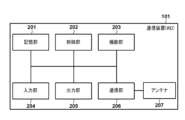
- FIG. 2 is a block diagram illustrating an example of a hardware configuration of the communication device.
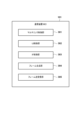
- FIG. 3 is a block diagram illustrating an example of a functional configuration of the communication device.
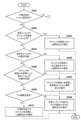
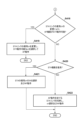
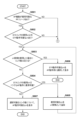
- FIG. 4A is a flowchart illustrating a procedure for determining an operating channel of an AP function in the first embodiment.
- FIG. 4B is a flowchart illustrating a procedure for determining an operating channel of an AP function in the first embodiment.
- FIG. 4C is a flowchart illustrating a procedure for determining an operating channel of an AP function in the first embodiment.
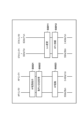
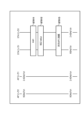
- FIG. 5 is a sequence diagram illustrating an example of an operation of the communication device according to the first embodiment.
- FIG. 5 is a sequence diagram illustrating an example of an operation of the communication device according to the first embodiment.
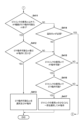
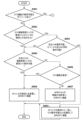
- FIG. 6A is a flowchart illustrating a procedure for determining an operating channel of an AP function in the second embodiment.
- FIG. 6B is a flowchart illustrating a procedure for determining an operating channel of an AP function in the second embodiment.
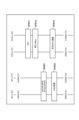
- FIG. 7A is a sequence diagram illustrating an example of an operation of the communication device according to the second embodiment.
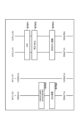
- FIG. 7B is a sequence diagram illustrating an example of an operation of the communication device according to the second embodiment.
- FIG. 7C is a sequence diagram illustrating an example of an operation of the communication device according to the second embodiment.
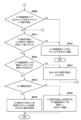
- FIG. 8A is a flowchart illustrating a procedure for displaying a setting screen for AP operation in the third embodiment.
- FIG. 8B is a flowchart illustrating a procedure for displaying the setting screen for AP operation in the third embodiment.
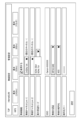
- FIG. 9 shows an example of a setting screen for AP operation.
- FIG. 1 shows an example of the configuration of a wireless network according to an embodiment of the present disclosure.
- Communication apparatuses 101 to 103 shown in Fig. 1 are wireless devices (WDs) having a wireless communication function for performing wireless communication with external apparatuses.
- the communication device 101 can operate as an access point (AP) that has the role of constructing a wireless network.
- the communication device 101 can also operate as a station (STA) that has the role of participating in a wireless network constructed by other APs. That is, the communication device 101 is configured as a wireless device having an AP function for operating the communication device 101 as an AP and an STA function for operating the communication device 101 as an STA.
- the communication device 102 is configured as a wireless device having an AP function, and the communication device 102 is configured as a wireless device having an STA function.
- the communication device 101 is also referred to as WD101, the communication device 102 as AP102, and the communication device 103 as STA103. Note that, although AP102 and STA103 are shown as separate communication devices in the example of FIG. 1, they may be implemented as AP and STA functions in the same communication device.
- WD101 uses its STA function to wirelessly connect to AP102 as a STA, thereby participating in the wireless network established by AP102.
- WD101 also uses its AP function to establish a wireless network.
- STA103 uses its AP function to wirelessly connect to WD101 as a STA, thereby participating in the wireless network established by WD101's AP function. Therefore, wireless communication is performed between WD101 and AP102 by signals transmitted and received by WD101 as a STA. Also, wireless communication is performed between WD101 and STA103 by signals transmitted and received by WD101 as an AP.
- the communication devices 101 to 103 are compatible with the IEEE 802.11be (EHT: Extremely High Throughput or Extreme High Throughput) standard, which is the successor to the IEEE 802.11ax (HE: High Efficiency) standard, as a wireless LAN communication standard.
- EHT Extremely High Throughput or Extreme High Throughput
- HE High Efficiency
- Each communication device is capable of wireless communication compliant with the IEEE 802.11be standard.
- Each communication device is configured to be able to perform wireless communication in multiple frequency bands (in this embodiment, the 2.4 GHz band, the 5 GHz band, and the 6 GHz band).
- the frequency bands that each communication device can use are not limited to these, and each communication device may be able to use different frequencies, such as the 60 GHz band.
- Each communication device is configured to be able to communicate using bandwidths such as 20 MHz, 40 MHz, 80 MHz, 160 MHz, and 320 MHz.
- the bandwidth that each communication device can use is not limited to this, and different bandwidths may be available, such as 240 MHz and 4 MHz.
- the communication devices 101 to 103 are compatible with at least the IEEE 802.11be standard of the IEEE 802.11 standard series.
- the communication devices 101 to 103 may also be compatible with at least one legacy standard that is an IEEE 802.11 standard that predates the IEEE 802.11be standard.
- the legacy standard is the IEEE 802.11a/b/g/n/ac/ax standard.
- the communication devices 101 to 103 may also support other communication standards such as Bluetooth (registered trademark), NFC (Near Field Communication), UWB (Ultra Wide Band), Zigbee, MBOA (Multi Band OFDM Alliance), etc.
- UWB includes Wireless USB, Wireless 1394, Winet, etc.
- the communication devices 101 to 103 may also support communication standards for wired communication such as wired LAN.
- Communication devices 101 to 103 are multi-link devices (MLDs) that have the function of performing multi-link communication, which establishes multiple links (transmission paths) via multiple frequency channels, respectively, for communication.
- An AP that performs multi-link communication is also called an AP MLD
- an STA that performs multi-link communication is also called a Non-AP MLD or STA MLD.
- multi-link communication multiple links are established and used between the AP MLD and the STA MLD.
- the frequency channel is a frequency channel defined in the IEEE 802.11 standard series, and refers to a frequency channel capable of performing wireless communication conforming to the IEEE 802.11 standard series.
- multiple frequency channels are defined in each of the 2.4 GHz, 5 GHz, 6 GHz, and 60 GHz frequency bands.
- the bandwidth of each frequency channel is defined as 20 MHz. Note that a bandwidth of 40 MHz or more may be used in one frequency channel by bonding one frequency channel with an adjacent frequency channel.
- two links L1 and L2 are established in parallel between WD 101 and AP 102.
- two links L3 and L4 are established in parallel between WD 101 and STA 103.
- WD 101 establishes a link via a first frequency channel in the 5 GHz band as link L1, and establishes a link via a second frequency channel in the 5 GHz band as link L2.
- This allows WD 101 to communicate with AP 102 via both links L1 and L2.
- WD 101 maintains link L2 via the second frequency channel in parallel with link L1 via the first frequency channel.
- WD101 can improve the throughput in communication with AP102 by establishing multiple links with AP102, each via multiple frequency channels, to perform multi-link communication.
- WD101 can improve the throughput in communication with STA103 by establishing multiple links with STA103 (links L3 and L4 in the example of FIG. 1), each via multiple frequency channels, to perform multi-link communication.
- multiple links established between communication devices for multi-link communication may be multiple links each via a different frequency band (e.g., a link in the 5 GHz band and a link in the 6 GHz band).
- multiple links may be established each via a different channel included in the same frequency band.
- two links may be established each via 7ch and 207ch in the 6 GHz band.
- the multiple links established for multi-link communication may include a mixture of multiple links in the same frequency band and links in different frequency bands. For example, two links via 36ch and 149ch in the 5GHz band, respectively, and one link via 15ch in the 6GHz band may be established. In this way, by establishing multiple links via different frequency bands between communication devices, even if one frequency band is congested, it is possible to prevent a decrease in throughput and communication delays by communicating via links established in other frequency bands.
- the communication devices 101 to 103 may be, for example, but are not limited to, a wireless LAN router, a personal computer (PC), a camera, a tablet terminal, a PC, a smartphone, a mobile phone, a headset, or a video camera.
- the communication devices 101 to 103 may also be information processing devices equipped with a wireless chip capable of wireless communication conforming to the IEEE 802.11be standard.
- FIG. 1 shows, as an example, an example in which the WD 101 is a printer, the AP 102 is a wireless LAN router, and the STA 103 is a smartphone.
- the WD 101 of this embodiment performs communication using link L1 and communication using link L3 using a common RF (radio frequency) resource (RF unit).
- RF unit radio frequency resource
- ⁇ Hardware configuration of communication device> 2 is a block diagram showing an example of a hardware configuration of the communication device 101 (WD 101).
- the WD 101 has a storage unit 201, a control unit 202, a function unit 203, an input unit 204, an output unit 205, a communication unit 206, and one or more antennas 207.
- the AP 102 and the STA 103 may have the same hardware configuration as the WD 101.
- the storage unit 201 is composed of one or more memories, such as a ROM (Read Only Memory) and/or a RAM (Random Access Memory).
- the storage unit 201 stores various information, such as computer programs for performing various operations described below, and communication parameters for wireless communication.
- other types of storage media such as a flexible disk, a hard disk, an optical disk, a magneto-optical disk, a CD-ROM, a CD-R, a magnetic tape, a non-volatile memory card, a DVD, etc., may be used for the one or more memories constituting the storage unit 201.
- the storage unit 201 may also be equipped with multiple memories, etc.
- the control unit 202 is configured with one or more processors, such as a CPU (Central Processing Unit) and/or an MPU (Micro Processing Unit).
- the control unit 202 controls the entire WD 101 by reading and executing computer programs stored in the storage unit 201.
- the control unit 202 may be configured to control the entire WD 101 in cooperation with the computer programs and an OS (operating system) stored in the storage unit 201.
- the control unit 202 may also be configured to include multiple processors, such as multi-core processors, and to control the entire WD 101 using the multiple processors.
- the control unit 202 generates data or signals (wireless frames) to be transmitted in communication with other communication devices.
- the control unit 202 further controls the functional unit 203 to execute predetermined processes such as wireless communication, imaging, printing, and projection.
- the functional unit 203 is hardware that enables the WD 101 to execute predetermined processes.
- the input unit 204 accepts various operations from the user.
- the output unit 205 outputs various types of information to the user via a monitor screen or a speaker.
- the output from the output unit 205 can be one or more of a display on a monitor screen, audio output from a speaker, and vibration output.
- the input unit 204 and the output unit 205 may be realized as a single module, such as a touch panel display.
- the input unit 204 and the output unit 205 may each be configured integrally with the WD 101, or may be provided separately from the WD 101.
- the communication unit 206 controls wireless communication conforming to the IEEE 802.11be standard.
- the communication unit 206 controls one or more antennas 207 to transmit and receive signals for wireless communication generated by the control unit 202.
- the WD 101 transmits and receives various data such as image data, document data, and video data by communicating with the communication device 102 via the communication unit 206.
- the communication unit 206 may be configured to control wireless communication conforming to other IEEE 802.11 standards in addition to the IEEE 802.11be standard, and to control wired communication such as a wired LAN.
- the WD 101 supports the NFC standard and Bluetooth standard in addition to the IEEE 802.11be standard, it may also be configured to control wireless communication conforming to these communication standards.
- the WD 101 is configured to be able to perform wireless communication conforming to multiple communication standards, it may have individual communication units and antennas corresponding to the different communication standards.
- the one or more antennas 207 are antennas capable of communication in a predetermined frequency band (in this embodiment, the 2.4 GHz band, the 5 GHz band, and the 6 GHz band).
- the WD 101 may have an individual antenna for each frequency band. Furthermore, if the WD 101 has multiple antennas, it may have a corresponding communication unit 206 for each antenna.
- the antenna 207 may be provided separately from the communication unit 206 as shown in FIG. 2, or may be configured together with the communication unit 206 as a single module.
- the above-mentioned AP function and STA function are implemented as separate communication interfaces that can be used to communicate with different counterpart devices.
- the communication unit 206 is configured to include multiple such communication interfaces.
- ⁇ Functional configuration of communication device> 3 is a block diagram showing an example of a functional configuration of the communication device 101 (WD 101) in this embodiment.
- the WD 101 has a multilink control unit 301, a UI (user interface) control unit 302, an IF (interface) control unit 303, a frame generation unit 304, and a frame transmission/reception unit 305 as functional units.
- the multilink control unit 301 performs control related to multilink communication. For example, the multilink control unit 301 controls connection processing for establishing one or more links used for wireless communication with an opposing AP (e.g., AP 102) using the STA function, or for wireless communication with an opposing STA (e.g., STA 103) using the AP function. The multilink control unit 301 further controls processing for adding or deleting links after communication starts, and communication termination processing for deleting all links. Specifically, the connection processing includes authentication processing, association processing, and 4-way handshake (4WHS: 4-Way-Hand-Shake) processing.
- WTS 4-Way-Hand-Shake
- the UI control unit 302 controls the input unit 204 and the output unit 205 to accept user operations via a touch panel or the like, and to output information to the user (such as displaying a screen or outputting audio). For example, the UI control unit 302 accepts touch panel operations from the user using a screen displayed by the output unit 205 via the input unit 204. The UI control unit 302 makes various settings in accordance with the accepted user operations, and stores setting data indicating the settings in the storage unit 201.
- the IF control unit 303 controls individual communication interfaces (communication IFs) that can be used to communicate with different opposing devices. For example, the IF control unit 303 controls the start and stop of each communication IF (AP function or STA function). The IF control unit 303 also manages the IP addresses used by each communication IF, and determines the radio frequency (frequency channel) based on user settings.
- communication IFs communication interfaces
- the IF control unit 303 controls the start and stop of each communication IF (AP function or STA function).
- the IF control unit 303 also manages the IP addresses used by each communication IF, and determines the radio frequency (frequency channel) based on user settings.
- the frame generation unit 304 generates MAC frames including management frames such as Beacon, Probe Request, Probe Response, Authentication Request, or Association Request, and data frames.
- the frame transmission/reception unit 305 transmits wireless frames including the MAC frames generated by the frame generation unit 304, and receives wireless frames from the other device (opposing device).
- Examples 1 to 3 will be described as examples of processing procedures executed by the above-mentioned WD 101.
- Examples 1 and 2 show examples of processing for determining an operating channel for a function to be started when one of the STA function and the AP function (communication IF) is already operating while the other function (communication IF) is still started in the WD 101.
- Example 3 shows an example of processing for displaying a setting screen for AP operation corresponding to Example 1, and the displayed setting screen.
- Example 1 In the first embodiment, an example will be described in which the STA function is activated first and then the AP function is activated. Therefore, in this embodiment, the STA function corresponds to a first communication IF (first interface) that is activated first, and the AP function corresponds to a second communication IF (second interface) that is activated later.
- first communication IF first interface
- second communication IF second interface
- FIGS. 4A to 4C are flowcharts showing the procedure for the process of determining the operating channel of the AP function when WD101 activates the AP function while already connected to an opposing AP (AP102 in this example) via the STA function.
- This procedure is executed when WD101 is connected to another AP via the STA function when activating the AP function, for example, in response to turning on the power or wireless function (wireless LAN function) of WD101, or receiving an instruction to start AP operation of WD101.
- this procedure may also be executed when changing the operating channel after AP operation has started, for example, due to a deterioration in the radio wave environment.
- WD101 if WD101 is performing STA operation when the AP function is started, WD101 first determines whether or not a frequency band/channel for AP operation (in this specification, the term "frequency band/channel” refers to a frequency band or channel (frequency channel)) has been specified. If a frequency band/channel for AP operation has been specified, WD101 advances the process to S402, and if not, WD101 advances the process to S411.
- a frequency band/channel for AP operation in this specification, the term "frequency band/channel” refers to a frequency band or channel (frequency channel)
- the WD 101 checks the frequency band and channel in use for the STA link (link for connecting to the opposing AP) and judges whether they are the same as the frequency band and channel specified for AP operation. In this judgment, when a frequency band for AP operation is specified, the criterion used is whether the specified frequency band includes a channel in use for the STA link. In addition, when a channel for AP operation is specified, the criterion used is whether the specified channel matches the channel in use for the STA link.
- the STA function of WD101 establishes multiple links (STA links) with AP102 to perform multi-link communication, and that the AP function of WD101 also performs multi-link communication.
- similar processing can be performed even when either the STA function or the AP function uses a single link (for example, when the STA function is connected to AP102 via a single link and multiple frequency bands/channels are specified for AP operation, or when the STA function is connected to AP102 via multiple links and a single frequency band/channel is specified for AP operation). Similar processing can also be performed when it is specified to select one of multiple frequency bands/channels for AP operation.
- WD101 proceeds to S403.
- WD101 prioritizes a channel from among the channels in use for the STA link that is designated for AP operation and that is capable of STR (Simultaneous Transmit and Receive) operation, which allows simultaneous transmission and reception on multiple links when performing multi-link communication, as the channel for AP operation, and starts AP operation.
- STR indicates that reception (transmission) on link 2 is possible in parallel with transmission (reception) on link 1 during a common period.
- NSTR Non-STR indicates that only reception (transmission) is possible on link 2 while transmission (reception) is performed on link 1 during a common period.
- WD101 does not select a channel on which AP operation is restricted, even if the channel is capable of STR operation. For example, if the channel being used by the STA link is included in a band required for DFS (Dynamic Frequency Selection) and the AP function does not support DFS, that channel may be excluded from the selection in S403. As an example, if the 5 GHz band is specified for AP operation and the channel being used by the STA link requires DFS, it may be determined in S402 that the 5 GHz band specified for AP operation is not the same as the frequency band being used by the STA link.
- DFS Dynamic Frequency Selection
- WD101 selects a frequency channel to be used in the link of the AP function from the designated frequency channels.
- WD101 advances the process to S404.
- S404 WD101 determines whether AP operation is possible in a frequency band/channel (additional frequency band/channel) that is not being used for the STA link and that is designated for AP operation, in addition to the channel being used for the STA link. For example, if the 5 GHz band and 6 GHz band are designated as frequency bands for AP operation while the STA function is operating in 2.4 GHz 1ch and 5 GHz 36ch, in S404 it is determined whether AP operation in the 6 GHz band is possible.
- WD101 proceeds to S405.
- S405 WD101 selects a channel capable of STR operation from among the channel being used by the STA link and the additional frequency band/channel as the channel for AP operation, and starts AP operation.
- STR operation is possible using 36ch at 5 GHz and 71ch at 6 GHz
- 36ch at 5 GHz and 71ch at 6 GHz are selected as the operating channels for the AP function. This makes it possible to simultaneously perform STA operation using 1ch at 2.4 GHz and 36ch at 5 GHz, and AP operation using 36ch at 5 GHz and 71ch at 6 GHz.
- WD101 selects a frequency channel to be used in the AP function link from the designated frequency channel that is capable of STR operation and from the multiple frequency channels.
- WD101 proceeds to S406. For example, if STR operation using the specified frequency band/channel is not possible due to hardware limitations such as RF resource limitations, it is determined that AP operation is not possible in the additional frequency band/channel.
- WD 101 determines whether or not the AP function will be operable in the frequency band/channel designated for AP operation when the channel used in the STA link for connecting to AP 102 is changed. If the AP function will be operable in the frequency band/channel designated for AP operation by changing one or more channels used in the STA link, WD 101 proceeds to S407. In S407, WD 101 changes the channel used in one or more STA links to another channel so as to satisfy the condition for AP operation (STR operation is possible). In other words, WD 101 changes the frequency channel used in one or more links by the STA function so that a frequency channel capable of STR operation can be selected. WD 101 further selects a channel capable of STR operation from among the channels used in the STA link after the change as a channel for AP operation, and starts AP operation.
- STR operation condition for AP operation
- the opposing AP has three links, and one of the three links uses 6 GHz channel 7.
- WD101 changes the channel used by the STA link that uses 5 GHz channel 36 to 6 GHz channel 7.
- WD101 is connected to AP102 by an STA link that uses 2.4 GHz channel 1 and an STA link that uses 6 GHz channel 7.
- WD101 then starts AP operation using 2.4 GHz channel 1 and 6 GHz channel 7, which are the same channels as those being used by the STA links.
- the opposing AP has a link on 71ch in the 6 GHz band in addition to the 2.4 GHz and 5 GHz bands, and WD101 is capable of STR operation using 40ch in the 5 GHz band and 71ch in the 6 GHz band.
- WD101 changes the channel used by the STA link that uses 36ch in the 5GHz band to 71ch in the 6GHz band (S407). This causes the STA function to operate on 1ch in the 2.4GHz band and 71ch in the 6GHz band. As a result, the STA function no longer uses 36ch, and the AP function can perform STR operation using 40ch. Therefore, WD101 further selects 1ch in the 2.4GHz band and 40ch in the 5GHz band to enable STR operation, and starts AP operation.
- the WD 101 proceeds to the process of S408. For example, in the following cases, even if the channel used in the STA link is changed, the AP function does not become operable in the frequency band/channel designated for AP operation. - The AP 102 has no other links. - Even if the AP 102 has other links, the WD 101 cannot perform STR operation on the other links. - If the AP 102 has other links, but these other links are in frequency bands/channels that are not designated for the AP operation of the WD 101.
- WD101 determines which function (interface) of the STA function or the AP function should be prioritized with respect to the frequency band and channel designation and related operations.
- the determination in S408 may be made, for example, according to the type or use case of the application being executed, or according to a user's selection of which function (interface) of the STA function or the AP function should be prioritized.
- a selection may be made of the link that is prioritized for continued connection or the link that is to be disconnected.
- the WD 101 advances the process from S408 to S409.
- the WD 101 displays a warning message on the operation screen of the WD 101 and Of the frequency bands/channels designated for AP operation, only those in use for STA links are selected as channels for AP operation, and AP operation is started.
- the STA function operates on 1ch in the 2.4 GHz band and 36ch in the 5 GHz band, but the 2.4 GHz band and 6 GHz band are specified as frequency bands for AP operation.
- the WD101 starts AP operation using only 1ch in the 2.4 GHz band that is being used by the STA link.
- WD101 does not perform AP operation.
- WD101 may start AP operation using, for example, an undesignated 2.4 GHz channel.
- WD101 advances the process from S408 to S410.
- S410 WD101 first disconnects or changes to a disabled state any STA links currently connected to the opposing AP (AP102) that prevent AP operation from starting, and then selects a channel for AP operation and starts AP operation.
- AP102 opposing AP
- the STA function operates on 1ch in the 2.4 GHz band and 36ch in the 5 GHz band, but the 2.4 GHz band and 6 GHz band are specified as frequency bands for AP operation.
- WD101 disconnects the STA link using the 5 GHz band or changes it to a disabled state (by canceling the TID allocation). After that, WD101 starts AP operation using 1ch in the 2.4 GHz band and, for example, 7ch in the 6 GHz band.
- WD101 temporarily disconnects the STA link.
- WD101 uses, for example, only 36ch in the 5 GHz band out of the specified 5 GHz band and 6 GHz band.
- WD101 changes the channel used in the 6 GHz band for the STA link from 7ch to 71ch, and STR operation using 36ch in the 5 GHz band and 71ch in the 6 GHz band becomes possible, WD101 leaves the STA link using 36ch in the 5 GHz band in a connected state, and disconnects or changes the STA link for the 7ch in the 6 GHz band to a disabled state. After that, WD101 starts AP operation using 36ch in the 5 GHz band and 71ch in the 6 GHz band. The same applies if the 2.4 GHz band is specified for AP operation instead of the 6 GHz band.
- the WD 101 advances the process from S401 to S411 when the frequency band/channel for AP operation is not specified.
- the WD 101 first determines whether or not there is a channel on which the AP function can perform STR operation other than the channel being used by the STA link, and whether or not there is an RF resource available for the operation. If the WD 101 determines "YES” in S411, it advances the process to S412, and if the WD 101 determines "NO" in S411, it advances the process to S414.
- STA function is operating on 1ch in the 2.4 GHz band and 36ch in the 5 GHz band.
- S411 is determined as "YES”.
- S411 is determined as "NO”.
- RF resources are unavailable, S411 is determined as "NO”. The same applies when the STA function is operating using only a single link.
- WD101 judges whether or not the number of channels capable of STR operation is sufficient for the number of channels (links) required for AP operation when AP operation is performed using a channel capable of STR operation other than the channel being used by the STA link. If the number of channels capable of STR operation is insufficient for the required number of channels, WD101 advances the process to S415. In this case, the use of the channel being used by the STA link is also taken into consideration, while if the number of channels capable of STR operation is sufficient for the required number of channels, WD101 advances the process to S413. In S413, WD101 starts AP operation using a channel capable of STR operation other than the channel being used by the STA link. On the other hand, WD101
- WD101 determines whether or not additional channels are required for AP operation in addition to the channels or frequency bands being used by the STA links. For example, if the number of STA links is less than the number of links required for AP operation, additional channels are required for AP operation. If additional channels are required for AP operation, WD101 proceeds to S418, otherwise proceeds to S415.
- WD101 determines whether AP operation is possible using the channel being used by the STA link, and if it is possible, proceeds to S417, and if it is not possible, proceeds to S418. For example, if a channel requires DFS or bandwidth restrictions are applied only to AP operation, it may not be possible to perform AP operation using the channel being used by the STA link. If the number of STA links is less than the number of links required for AP operation, WD101 determines that AP operation is not possible using the channel being used by the STA link, and proceeds to S418.
- WD 101 determines whether the AP function can perform STR operation using the channel being used by the STA link. If the AP function can perform STR operation, WD 101 proceeds to S417, and if the AP function cannot perform STR operation, WD 101 proceeds to S418. In S417, WD 101 selects (determines) the channel being used by the STA link as the channel for AP operation and starts AP operation. WD 101 may select the channel for AP operation, for example, by scanning each channel being used by the STA link and selecting a combination with a low amount of communication among combinations of channels capable of STR operation. Alternatively, WD 101 may preferentially select a channel in a frequency band that is more likely to be supported by the opposing STA (STA 103).
- WD 101 determines whether or not the AP function will be able to perform STR operation if the channel used in the STA link for connecting to AP 102 is changed. If the AP function will be able to perform STR operation, WD 101 proceeds to S419, and if not, proceeds to S420. For example, if changing the channel used in the STA link increases the number of channels on which the AP function can perform STR operation, WD 101 proceeds to S419. On the other hand, if there is no other link to which the STA can move, or if there are other links but there are no surplus RF resources to perform AP operation using those other links, WD 101 proceeds to S420.
- the STA function operates on channel 1 in the 2.4 GHz band and channel 161 in the 5 GHz band, and as long as the STA function operates on channel 161 in the 5 GHz band, there are no channels in the 5 GHz and 6 GHz bands on which the AP function can perform STR operation.
- the AP function will be able to perform STR operation using 36ch in the 5 GHz band. It is also assumed that there are surplus RF resources available.
- WD101 changes the channel used for the STA link from 161ch in the 5 GHz band to 71ch in the 6 GHz band, selects 1ch in the 2.4 GHz band and 36ch in the 5 GHz band for AP operation, and starts AP operation.
- This enables WD101 to perform STR operation using multiple STA links each established via the selected channels, and mutual interference between the AP function and STA function in WD101 can be suppressed.
- WD101 changes the channel used for the STA link (or changes the link to Disabled and the new link to Enable), then selects a channel for AP operation and starts AP operation.
- WD101 determines, in a manner similar to S408, which function (interface) of the STA function or the AP function should be prioritized with respect to the designation of the frequency band and channel and related operations. If the STA function is to be prioritized, WD101 advances the process to S421, and if the AP function is to be prioritized, the process advances to S422.
- WD101 selects only those channels capable of AP operation from among those being used by the STA link as channels for AP operation, and starts AP operation. In other words, WD101 starts only links via the selected channels, and does not start links via other channels. Note that if all channels being used by the STA link can only be used for NSTR operation, WD101 may refrain from starting the AP function.
- WD101 temporarily disconnects or changes to a disabled state any STA link currently connected to the opposing AP (AP102) that prevents STR operation by the AP function. Furthermore, WD101 selects a channel for AP operation from among the channels currently being used by the STA link and starts AP operation.
- FIG. 5 is a sequence diagram showing an example of the operation of the WD 101 in accordance with the procedures of FIGS. 4A to 4C.
- AP102 which is the opposing AP for the STA function of WD101, has multiple links that use 1ch in the 2.4 GHz band, 36ch in the 5 GHz band, 7ch in the 6 GHz band, and 71ch in the 6 GHz band.
- the STA function in WD101 is activated first, and links are established via 7ch in the 6 GHz band and 71ch in the 6 GHz band as STA links with AP102.
- operation in the 2.4 GHz band and 5 GHz band are specified as operating conditions for the AP function.
- WD101 When WD101 receives an AP startup instruction requesting that AP operation be started in the two frequency bands mentioned above (2.4 GHz band and 5 GHz band) in S5021, WD101 performs a determination process in S5022 to determine the operating channel to be used for AP operation according to the procedures in Figures 4A to 4C. In this example, as a result of the determination process in Figures 4A to 4C, WD101 changes the channel to be used for the STA link to another channel, and performs a process to start AP operation on the channel specified in the AP startup instruction (S407). This allows the STA link connection to continue while satisfying the operating requirements specified in the AP startup instruction.
- WD101 sends a notification to the opposing AP (AP102) to change the channel used by the STA link.
- the TID-to-Link Mapping may be updated to temporarily change two links (links 1 and 2) to a Disabled state, and a TID may be assigned to another link to enable that other link, or the currently connected link may be disconnected.
- WD 101 reconnects the STA link to satisfy the operating conditions specified in the AP startup instruction. Also, in S5023, WD 101 starts the AP function and starts AP operation using the channel to be newly used in the STA link. Note that the processes of S5023 and S5012 may be executed either first, or simultaneously. If the AP function is started first, WD 101 may wait for a connection from the opposing STA (STA 103), for example, before reconnecting the STA function. This makes it possible to confirm that STA 103 can reliably connect to WD 101. On the other hand, if the STA function is reconnected first, WD 101 can shorten the period during which the disconnection between AP 102 and WD 101 continues.
- STA 103 opposing STA
- the WD101 (communication device) of this embodiment is configured to include a first and a second communication IF (STA function and AP function), which are communication IFs that can be used to communicate with different opposing devices.
- STA function first communication IF
- AP function second communication IF
- the STA function first communication IF
- the WD101 selects at least a part of the multiple frequency channels used by the STA function (first communication IF) in the multiple links as frequency channels to be used in the links of the AP function (second communication IF).
- the WD101 further controls the AP function (second communication IF) to communicate with the opposing device using the selected frequency channel.
- the WD101 can also be configured to preferentially select a frequency channel capable of STR operation from among the multiple frequency channels used by the STA function (first communication IF).
- the result of S401 may be "NO.”
- the user can leave operations that are not necessarily required for connection to the communication device (WD101), making it easier to establish a connection between the communication device and the opposing device.
- Example 2 In the first embodiment, an example is shown in which the STA function is started first to connect to the opposing AP, and then the AP function is started to operate simultaneously with the STA function.
- the AP function In the second embodiment, an example is described in which the AP function is started first, and then the STA function is started to connect to the opposing AP. Therefore, in this embodiment, the AP function corresponds to the first communication IF (first interface) that is started first, and the STA function corresponds to the second communication IF (second interface) that is started later.
- FIGS. 6A and 6B are flow charts showing an example of a procedure for a process to determine an operating channel for the STA function when WD101 activates the AP function first and then activates the STA function to connect to an opposing AP (AP102) as a STA.
- This procedure is executed, for example, when WD101 is connected to another AP by the STA function when activating the AP function in response to turning on the power or wireless function (wireless LAN function) of WD101, or receiving an instruction to start AP operation of WD101.
- this procedure may also be executed when changing the operating channel after AP operation has started, for example, due to a deterioration in the radio wave environment.
- WD101 first determines whether there are any RF resources (RF units) available for the STA function to use when activating the STA function other than the RF resources (RF units) being used by the AP function. If there are no RF resources available for the STA function to use (i.e., the AP function is using all RF resources), WD101 proceeds to S602. On the other hand, if there are RF resources available for the STA function to use, WD101 proceeds to S609.
- RF resources RF units
- the WD 101 judges whether or not the STR operation is possible on all of the channels used in the connection candidate links provided by the opposing AP (AP 102) and the channels used in the AP link (link for connection with the opposing STA) that the AP function has. If the STR operation is possible on all of the channels used in the connection candidate links for STA operation and the AP link for AP operation, the WD 101 proceeds to processing in S610, and if not, proceeds to processing in S611. In S610, the WD 101 connects to the opposing AP (AP 102) using the connection candidate links for STA operation and the AP link.
- WD101 determines whether the number of channels (links) capable of STR operation is sufficient for the number of links required for STA operation, even if STR operation is possible for some but not all links (channels). If the number of channels capable of STA operation is sufficient for the required number of channels, WD101 proceeds to S610 and performs the above-mentioned processing, and if the number of channels capable of STA operation is insufficient for the required number of channels, WD101 proceeds to S612.
- WD101 determines whether the channels in use in the connection candidate links for STA operation include the same channel as the channel in use for AP operation. If the channels in use in the connection candidate links for STA operation include the same channel as the channel in use for AP operation, WD101 proceeds to S613, regards the channel as a channel capable of STR operation, and returns to S611. In this case, if processing proceeds to S610, WD101 will perform STR operation using the same channel for STA operation as the channel in use for AP operation and RF resources allocated for the STA function.
- WD101 proceeds from S612 to S614.
- WD101 determines, in a manner similar to S408, which function (interface) of the STA function or the AP function should be prioritized with respect to the frequency band and channel designation and related operations. If the STA function is to be prioritized, WD101 advances the process to S615, and if the AP function is to be prioritized, WD101 advances the process to S616.
- WD101 suspends activation or operates by NSTR operation for links that correspond to channels that cannot perform STR operation with channels that are being used by AP links and are being used by connection candidate links for STA operation.
- WD101 notifies the opposing STA (STA103) that it is changing the channel for AP operation, thereby changing the channel on which the opposing STA operates.
- WD101 may check whether it is possible to change to a channel that the opposing STA supports.
- WD101 selects a link using a channel that is capable of STR operation with the channel being used by the AP link from among the candidate links for connection with the opposing AP (AP102), and connects to the opposing AP via that link.
- the WD 101 judges whether the channels used in the connection candidate links for STA operation provided by the opposing AP (AP 102) include the same channel as the channel used in the AP link. If the channels used in the connection candidate links include the same channel as the channel used in the AP link, the WD 101 proceeds to S603, and if not, proceeds to S605. In S603, the WD 101 judges whether the same channel can be selected as a channel for the connection candidate link and whether the STA operation and the AP operation can be performed simultaneously. In addition, in Fig. 6A and Fig. 6B, whether the STA operation and the AP operation can be performed simultaneously refers to a case where the AP operation is not established when multiple connection candidate links for STA operation are selected.
- the WD101 does not support STA operation in the 6 GHz band.
- the AP function is operating on 149ch in the 5 GHz band and the opposing AP is providing links on 36ch in the 5 GHz band, 149ch in the 5 GHz band, and 71ch in the 6 GHz band, it is assumed.
- two or more links should be prepared for STA operation, but only NSTR operation is possible when any other channel is selected in combination with 149ch, which matches the operating channel of the AP function.
- the WD101 judges "NO" in S603 and proceeds to S605.
- WD 101 determines "YES” in S603, it proceeds to S604.
- WD 101 selects a channel that matches the channel being used by the AP link and that is capable of STR operation among the channels being used by the connection candidate links for STA operation, and connects to the opposing AP.
- WD101 determines whether the opposing STA (STA103) currently connected to the AP function can operate on the same channel as the channel currently being used in the connection candidate link for STA operation. If the opposing STA can operate on at least some of the channels currently being used in the connection candidate link, WD101 advances the process to S608. In S608, WD101 sends a notification to the opposing STA to change channels other than the channels on which the opposing STA can operate to channels on which the opposing STA can operate, changes the channel currently being used in the AP link, and connects to the opposing AP using the STA function.
- WD101 advances the process to S606.
- S606 WD101 determines, in a manner similar to S408, which function (interface) to prioritize, the STA function or the AP function, with regard to the frequency band and channel designation and related operations. If STA function is prioritized, WD101 advances the process to S608, and if AP function is prioritized, WD101 advances the process to S607.
- WD101 changes the channel in use for the AP link to a channel on which the opposing STA can operate among the connection candidate links for STA operation (provided by the opposing AP), and connects to the opposing AP (AP102) using the STA function.
- the AP function is given priority
- WD101 disconnects the connection with the opposing STA using the AP function, and then connects to the opposing AP using the STA function.
- WD101 may change the channel in use for some of the AP links, and connect to the opposing AP using the STA function.
- ⁇ Sequence example> 7A to 7C are sequence diagrams showing an example of the operation of the WD 101 in accordance with the procedures of FIGS. 6A and 6B.
- FIG. 7A shows an example of a sequence in which the processing of S604 or S610 is performed in the procedure of FIG. 6A and FIG. 6B.
- WD 101 operates the AP function on 1ch in the 2.4 GHz band and 7ch in the 6 GHz band to construct a wireless network.
- WD 101 executes a surrounding scan in order to connect to the opposing AP (AP 102) using the STA function in S7011.
- AP 102 the STA function
- WD 101 acquires information other than the link information obtained by the scan by MLD setup in S7012.
- WD 101 confirms that the opposing AP is constructing a wireless network using the same channel (1ch in the 2.4 GHz band and 7ch in the 6 GHz band) as the channel being used by the link provided by WD 101.
- WD 101 starts STA operation by connecting to the opposing AP using the STA function using the confirmed channel in S7013.
- AP operation remains the same as before STA operation began, and AP operation and STA operation can be executed in parallel.
- FIG. 7B shows an example sequence in which processing of S608 or S615 is performed in the procedure of FIG. 6A and FIG. 6B.
- STA operation of WD101 is the same as that of FIG. 7A.
- the opposing AP AP102
- the opposing AP AP102
- NSTR operation will be performed (STR operation cannot be performed).
- RF resources are insufficient and other channels cannot be selected.
- WD101 notifies (the opposing STA) of a change in the channel for AP operation in order to change the channel to match the channel being used for STA operation. This is done, for example, by using a channel switch announcement message defined in the IEEE 802.11 standard. After sending the notification in S7021, WD101 changes the channel for AP operation in S7022 and resumes AP operation. As a result, WD101 will perform AP operation on channels 11 in the 2.4 GHz band and 71 in the 6 GHz band, which are the channels used by STA links 1 and 2, respectively.
- FIG. 7C shows an example sequence in the case where the process of S615 is carried out via the process of S613 in the procedure of FIG. 6A and FIG. 6B.
- WD101 operates the AP function on ch1 in the 2.4 GHz band and ch7 in the 6 GHz band to build a wireless network.
- WD101 executes a scan (S7011) and MLD setup (S7012) to connect to the opposing AP (AP102) using the STA function.
- S7011 scan
- S7012 MLD setup
- WD101 confirms that the opposing AP has built a wireless network using ch36 in the 5 GHz band and ch71 in the 6 GHz band.
- WD101 confirms that if it continues to use 6 GHz band 7ch as a channel for AP operation, it will not be able to perform STR operation with the candidate channels used for each link for STA operation, and that there are insufficient RF resources to operate on individual channels. Therefore, WD101 stops using 6 GHz band 7ch as a channel for AP operation, and changes that channel to 6 GHz band 71ch, which is a candidate channel to be used for STA operation.
- WD101 starts STA operation by connecting to the opposing AP using the STA function on channel 36 in the 5 GHz band and channel 71 in the 6 GHz band. Meanwhile, WD101 continues to use channel 1 in the 2.4 GHz band that is currently being used for AP operation, because STR operation is possible for that channel. However, WD101 cannot continue to use channel 7 in the 6 GHz band, so in S7021 it notifies (the opposing STA) of a change in the channel for AP operation. After making the notification in S7021, WD101 changes the channel for AP operation in S7022 and resumes AP operation.
- WD101 in order to change the channel, WD101 first disconnects the existing channel and then resumes AP operation. In this case, in the example of Figure 7B, since there will be a period during which WD101 loses connection with the opposing STA (STA103), WD101 may execute the channel change notification and the resumption of AP operation at different times for each link. This makes it possible to change the channel for AP operation while partially maintaining the connection with the opposing STA.
- the WD101 (communication device) of this embodiment is configured to include a first and a second communication IF (AP function and STA function), which are communication IFs that can be used to communicate with different opposing devices.
- AP function and STA function are communication IFs that can be used to communicate with different opposing devices.
- the WD101 starts the operation of the STA function (second communication IF) while the AP function (first communication IF) is performing multi-link communication
- the WD101 selects at least a part of the multiple frequency channels used by the AP function (first communication IF) in the multiple links as frequency channels to be used in the links of the STA function (second communication IF).
- the WD101 further controls the STA function (second communication IF) to communicate with the opposing device using the selected frequency channel.
- the WD101 can also be configured to preferentially select a frequency channel capable of STR operation from among the multiple frequency channels used by the AP function (first communication IF).
- Example 3 in relation to the first embodiment, an example of a process for displaying a screen (setting screen) for accepting settings for operating the AP function from the user is described.
- a process for appropriately narrowing the options is performed. This makes it possible to prevent the user from selecting a frequency band/channel in which the AP function cannot operate or which may temporarily impede communication.
- the following mainly describes the parts that are different from the first embodiment.
- FIGS. 8A and 8B are flowcharts showing the steps of a process for displaying a setting screen for AP operation, which is executed in WD 101.
- the steps of FIG. 8A and FIG. 8B are executed when AP operation is started while STA operation is being executed.
- the steps of FIG. 8A and FIG. 8B may be executed when a user operation is performed to display a setting screen for AP operation (as illustrated in FIG. 9) while STA operation is being executed, or when a channel is selected during execution of a specific application.
- WD 101 determines whether there are any RF resources available for the AP function other than the RF resources being used by the STA function. If there are no RF resources available for the AP function, WD 101 proceeds to S808. On the other hand, if there are RF resources available for the AP function, WD 101 proceeds to S802.
- WD101 determines whether there is a channel capable of STR operation when the channel being used for STA operation is also to be used for AP operation. If there is no channel capable of STR operation, WD101 proceeds to S808, and if there is a channel capable of STR operation, WD101 proceeds to S803. In S803, WD101 determines whether there are sufficient links for AP operation when using the candidate channels described below for the RF resources used for AP operation. If there are sufficient links, WD101 proceeds to S806 and displays the channels capable of STR operation as selectable channels that can be used for AP operation.
- WD101 proceeds from S803 to S804 and determines whether any of the channels being used for STA operation can be used for AP operation.
- the STA function may be operating on a DFS channel, but the AP function may not support DFS.
- the STA function may be operating in a band that the STA function supports but the AP function does not. In this way, if the channel being used for STA operation cannot be used for AP operation, WD101 proceeds to S807.
- WD101 displays channels that can be used for AP operation as selectable, although the number of links is less than the number of links for AP operation, and is limited to the number of selectable links.
- WD101 advances the process to S805.
- S805 WD101 adds the channel being used for STA operation that can be used for AP operation as a candidate channel for AP operation, and increases the number of compatible links by 1 by assuming that the corresponding RF resources are shared with the STA function, and returns the process to S803.
- WD101 again determines whether or not there are sufficient links for AP operation when using the candidate channels described below for the RF resources to be used for AP operation. If there are sufficient links, WD101 advances the process to S806 and displays the channels capable of STR operation as selectable channels available for AP operation.
- the shared RF resources may be displayed as being used in a fixed manner.
- the number of links is sufficient if the STA function operates on 1ch of 2.4 GHz and 44ch of 5 GHz, and the AP function shares 1ch of 2.4 GHz.
- the WD101 may display the 2.4 GHz channel as being fixedly selected, and display a 6 GHz channel as selectable for the other link.
- WD101 performs the process of S808. In this case, WD101 selects a channel for AP operation from among the channels in use for the STA link.
- WD 101 determines whether the channels being used by the STA link include at least one that can be used for AP operation. If the channels being used by the STA link do not include any that can be used for AP operation, the process proceeds to S809. In S809, WD 101 displays that the AP function is currently not available. Alternatively, WD 101 may display that the STA link must be temporarily disconnected in order to perform AP operation.
- the process proceeds to S810.
- WD 101 determines whether or not all of the channels that can be used for AP operation are channels that are capable of STR operation. If all of the channels that can be used for AP operation are channels that are capable of STR operation, WD 101 proceeds to S814. In S814, WD 101 displays such channels as selectable as channels that can be used for multi-link communication.
- WD 101 advances the process to S811.
- WD 101 determines whether some of the channels available for AP operation are channels that are capable of STR operation. If some of the channels are channels that are capable of STR operation, WD 101 advances the process to S813. In S813, WD 101 displays a combination of channels that are capable of STR operation as selectable channels that are capable of AP operation in multi-link communication. On the other hand, if none of the channels are capable of STR operation, WD 101 advances the process to S812. In S812, WD 101 displays the channels being used for the STA link as selectable channels that are operable in multi-link communication to which NSTR operation is applied, or as selectable channels that are operable in a single link.
- Figure 9 shows an example of a configuration screen for AP operation, in which the user has limited options for selecting a frequency band/channel as a result of the processes of Figures 8A and 8B.
- the STA function is operating on 1ch in the 2.4 GHz band, 36ch in the 5 GHz band, and 7ch in the 6 GHz band, and the number of links when the AP function is operating is 2.
- the setting screen displays selectable candidates for the channels to be used by links 1 and 2, limited to the channels being used by the STA link.
- the setting screen in FIG. 9 is configured to limit the selectable channels, it may also be configured to limit the selectable frequency bands. For example, assume that even if a communication device is capable of operating in the 2.4 GHz, 5 GHz, and 6 GHz bands, the STA function operates only in the 2.4 GHz and 5 GHz bands. In this case, the frequency band candidates selectable for AP operation may be displayed limited to only the 2.4 GHz and 5 GHz bands.
- the user can more appropriately select a channel for AP operation.
- one of the conditions for AP operation is that the STR operation is possible on the operating channel, but the operating condition is not limited to this.
- the operating channel of the AP may be selected according to the channel being used by the STA link.
- WD101 may also use one link for the AP function and the STA function, or three or more links. For example, if the STA function uses multiple links and the AP function uses one link, a channel capable of STR operation from among the channels in use by the STA function may be selected as the channel for AP operation. Conversely, if the STA function uses one link and the AP function uses multiple links, one of the channels on which the STA function is operating and a channel sufficiently distant in frequency from the channel on which the STA function is operating may be selected as the channel for AP operation.
- the present invention can also be realized by supplying a program that realizes one or more of the functions of the above-mentioned embodiments to a system or device via a network or storage medium, and having one or more processors in the computer of the system or device read and execute the program. It can also be realized by a circuit (e.g., an ASIC) that realizes one or more functions.
- a circuit e.g., an ASIC
Landscapes
- Engineering & Computer Science (AREA)
- Computer Networks & Wireless Communication (AREA)
- Signal Processing (AREA)
- Mobile Radio Communication Systems (AREA)
Abstract
Description
図1は、本開示の実施形態に係る無線ネットワークの構成例を示す。図1に示す通信装置101~103は、外部装置と無線通信を行う無線通信機能を有する無線デバイス(WD)である。
図2に、通信装置101(WD101)のハードウェア構成例を示すブロック図である。WD101は、記憶部201、制御部202、機能部203、入力部204、出力部205、通信部206及び1つ以上のアンテナ207を有する。なお、AP102及びSTA103は、WD101と同様のハードウェア構成を有しうる。
図3は、本実施形態における通信装置101(WD101)の機能構成例を示すブロック図である。WD101は、機能ユニットとして、マルチリンク制御部301、UI(ユーザインタフェース)制御部302、IF(インタフェース)制御部303、フレーム生成部304、及びフレーム送受信部305を有する。
以下では、上述のWD101によって実行される処理手順の例として、実施例1~3について説明する。実施例1及び2では、WD101において、STA機能及びAP機能のうちの一方の機能(通信IF)が先に動作している間に、他方の機能(通信IF)を更に起動する場合の、起動対象の機能用の動作チャネルを決定する処理の例を示している。実施例3では、実施例1に対応する、AP動作用の設定画面を表示する処理、及び表示される設定画面の例を示している。
実施例1では、STA機能を先に起動した後に、AP機能を起動する例について説明する。このため、本実施例では、STA機能が、先に起動される第1通信IF(第1インタフェース)に相当し、AP機能が、後に起動される第2通信IF(第2インタフェース)に相当する。
S402で、WD101は、STAリンク(対向APとの接続用のリンク)で使用中の周波数帯及びチャネルを確認し、AP動作用に指定された周波数帯及びチャネルと同一であるか否かを判定する。この判定では、AP動作用の周波数帯が指定されている場合には、指定された周波数帯に、STAリンクで使用中のチャネルが含まれるか否かを判定基準として用いる。また、AP動作用のチャネルが指定されている場合には、指定されたチャネルが、STAリンクで使用中のチャネルと一致するか否かを判定基準として用いる。
‐AP102が他のリンクを有していない。
‐AP102が他のリンクを有していても、WD101が当該他のリンクでSTR動作を行えない。
‐AP102が他のリンクを有していても、当該他のリンクが、WD101のAP動作用に指定されていない周波数帯/チャネルに含まれる場合。
AP動作用に指定された周波数帯/チャネルのうち、STAリンクで使用中のもののみを、AP動作用のチャネルとして選択し、AP動作を開始する。
WD101は、AP動作用の周波数帯/チャネルが指定されていない場合には、S401からS411へ処理を進める。S411で、WD101は、まず、STAリンクで使用中のチャネル以外に、AP機能がSTR動作を行うことが可能なチャネルがあり、かつ、当該動作に使用可能なRFリソースがあるか否かを判定する。WD101は、S411において「YES」と判定した場合にはS412へ処理を進め、「NO」と判定した場合にはS414へ処理を進める。
図5は、図4A乃至図4Cの手順に従ったWD101の動作の例を示すシーケンス図である。
実施例1では、STA機能を先に起動して対向APと接続した後に、AP機能を起動してSTA機能と同時に動作させる例を示した。実施例2では、AP機能を先に起動した後に、STA機能を起動して対向APと接続する例について説明する。このため、本実施例では、AP機能が、先に起動される第1通信IF(第1インタフェース)に相当し、STA機能が、後に起動される第2通信IF(第2インタフェース)に相当する。以下では、実施例1と異なる部分を中心に説明する。
S609で、WD101は、対向AP(AP102)が提供する接続候補リンクで使用中のチャネルと、AP機能が有するAPリンク(対向STAとの接続用のリンク)で使用中のチャネルとの全てで、STR動作が可能か否かを判定する。WD101は、STA動作用の接続候補リンクで使用中のチャネルと、AP動作用のAPリンクで使用中のチャネルとの全てで、STR動作が可能である場合には、S610へ処理を進め、可能ではない場合には、S611へ処理を進める。S610で、WD101は、STA動作用の接続候補リンクと、APリンクとを用いて、対向AP(AP102)に接続する。
S602で、WD101は、対向AP(AP102)が提供する、STA動作用の接続候補リンクで使用中のチャネルに、APリンクで使用中のチャネルと同じものが含まれるか否かを判定する。WD101は、接続候補リンクで使用中のチャネルに、APリンクで使用中のチャネルと同じチャネルが含まれている場合、S603へ処理を進め、含まれていない場合、S605へ処理を進める。S603で、WD101は、当該同じチャネルを接続候補リンク用のチャネルとして選択可能であり、かつ、STA動作とAP動作とを同時に実行可能であるか否かを判定する。なお、図6A及び図6Bにおいて、STA動作とAP動作とを同時に実行可能であるか否かとは、STA動作用の複数の接続候補リンクを選択するとAP動作が成立しなくなる場合を示す。
図7A乃至図7Cは、図6A及び図6Bの手順に従ったWD101の動作の例を示すシーケンス図である。
実施例3では、実施例1に関連して、AP機能を動作させるための設定をユーザから受け付けるための画面(設定画面)を表示する処理の例について説明する。本処理では、ユーザが周波数帯/チャネルを選択する際に、その選択肢を適切に狭めるための処理を行う。これにより、ユーザが、AP機能が動作できない、又は通信を一時的にでも阻害してしまう周波数帯/チャネルを選択することを防止できるようになる。以下では、実施例1と異なる部分を中心に説明する。
図9は、AP動作用の設定画面の例を示す。図9の設定画面では、図8A及び図8Bの処理の結果として、ユーザが周波数帯/チャネルを選択するための選択肢が限定されている。
上述の各実施例では、動作チャネルでSTR動作が可能であることが、AP動作の条件の1つとしたが、当該動作条件はこれに限定されない。例えば、AP機能がSTR動作を行えなくても、STAリンクで使用中のチャネルに合わせてAPの動作チャネルを選択してもよい。
Claims (12)
- それぞれ異なる周波数チャネルを介して確立される並列の複数のリンクを用いるマルチリンク通信を実行可能な通信装置であって、
それぞれ異なる対向装置と通信するために使用可能な通信インタフェースである第1及び第2インタフェースと、
前記第1インタフェースが前記マルチリンク通信を行っている状態において前記第2インタフェースの動作を開始させる際に、前記第1インタフェースによって複数のリンクでそれぞれ使用されている複数の周波数チャネルの少なくとも一部を、前記第2インタフェースのリンクで使用する周波数チャネルとして選択する選択手段と、
前記選択手段によって選択された周波数チャネルを用いて対向装置と通信するよう、前記第2インタフェースを制御する制御手段と、
を備える、通信装置。 - 前記選択手段は、前記第1インタフェースによって使用されている前記複数の周波数チャネルのうち、前記マルチリンク通信を行う場合に複数のリンクで送信及び受信を同時に行うSTR動作が可能な周波数チャネルを優先して選択する、
請求項1に記載の通信装置。 - 前記選択手段は、前記第2インタフェースの動作用に指定された周波数チャネルが、前記第1インタフェースによって使用されている前記複数の周波数チャネルに含まれる場合、当該指定された周波数チャネルから、前記第2インタフェースのリンクで使用する周波数チャネルを選択する、
請求項2に記載の通信装置。 - 前記選択手段は、前記第2インタフェースの動作用に指定された周波数チャネルが、前記第1インタフェースによって使用されている前記複数の周波数チャネルに含まれていない場合、当該指定された周波数チャネルであって前記STR動作が可能な周波数チャネルと、前記複数の周波数チャネルとから、前記第2インタフェースのリンクで使用する周波数チャネルを選択する、
請求項2又は3に記載の通信装置。 - 前記選択手段による、前記STR動作が可能な周波数チャネルの選択が可能となるように、前記第1インタフェースによって1つ以上のリンクで使用される周波数チャネルを変更する変更手段を更に備える、
請求項2乃至4のいずれか一項に記載の通信装置。 - 前記第1インタフェースは、前記通信装置を、外部のアクセスポイントに接続するステーションとして動作させる機能を有し、
前記第2インタフェースは、前記通信装置を、外部のステーションからの接続を受け付けるアクセスポイントとして動作させる機能を有する、
請求項1乃至5のいずれか一項に記載の通信装置。 - 前記第1インタフェースは、前記通信装置を、外部のステーションからの接続を受け付けるアクセスポイントとして動作させる機能を有し、
前記第2インタフェースは、前記通信装置を、外部のアクセスポイントに接続するステーションとして動作させる機能を有する、
請求項1乃至5のいずれか一項に記載の通信装置。 - 前記選択手段は、前記第2インタフェースの起動指示に応じて、前記第2インタフェースのリンクで使用する周波数チャネルの選択を行い、
前記起動指示は、前記第2インタフェースの動作用の周波数チャネルの指定を含む、
請求項3乃至5のいずれか一項に記載の通信装置。 - 前記第2インタフェースの動作用の設定画面であって、ユーザによる周波数チャネルの選択を受け付けるための設定画面を表示する表示手段を更に備え、
前記表示手段は、前記第1インタフェースによって複数のリンクでそれぞれ使用されている複数の周波数チャネルのうちで前記STR動作が可能な周波数チャネルを、前記設定画面に選択可能に表示し、
前記選択手段は、前記設定画面を介してユーザによって選択された周波数チャネルを、前記第2インタフェースのリンクで使用する周波数チャネルとして決定する、
請求項3乃至5のいずれか一項に記載の通信装置。 - 前記通信装置は、IEEE802.11規格に準拠したマルチリンク通信を実行可能である、請求項1乃至9のいずれか1項に記載の通信装置。
- それぞれ異なる周波数チャネルを介して確立される並列の複数のリンクを用いるマルチリンク通信を実行可能であり、それぞれ異なる対向装置と通信するために使用可能な通信インタフェースである第1及び第2インタフェースを備える通信装置の制御方法と、
前記第1インタフェースが前記マルチリンク通信を行っている状態において前記第2インタフェースの動作を開始させる際に、前記第1インタフェースによって複数のリンクでそれぞれ使用されている複数の周波数チャネルの少なくとも一部を、前記第2インタフェースのリンクで使用する周波数チャネルとして選択することと、
前記選択された周波数チャネルを用いて対向装置と通信するよう、前記第2インタフェースを制御することと、
を含む、制御方法。 - 請求項11に記載の制御方法を、通信装置のコンピュータに実行させるためのプログラム。
Priority Applications (4)
| Application Number | Priority Date | Filing Date | Title |
|---|---|---|---|
| EP24803285.6A EP4712636A1 (en) | 2023-05-11 | 2024-03-25 | Communication device, method for controlling same, and program |
| CN202480031754.5A CN121128283A (zh) | 2023-05-11 | 2024-03-25 | 通信装置、其控制方法及程序 |
| KR1020257035896A KR20250168519A (ko) | 2023-05-11 | 2024-03-25 | 통신장치 및 그 제어방법과, 프로그램 |
| US19/365,241 US20260046965A1 (en) | 2023-05-11 | 2025-10-22 | Communication device, method for controlling the same, and storage medium |
Applications Claiming Priority (2)
| Application Number | Priority Date | Filing Date | Title |
|---|---|---|---|
| JP2023-078699 | 2023-05-11 | ||
| JP2023078699A JP2024162793A (ja) | 2023-05-11 | 2023-05-11 | 通信装置及びその制御方法、並びにプログラム |
Related Child Applications (1)
| Application Number | Title | Priority Date | Filing Date |
|---|---|---|---|
| US19/365,241 Continuation US20260046965A1 (en) | 2023-05-11 | 2025-10-22 | Communication device, method for controlling the same, and storage medium |
Publications (1)
| Publication Number | Publication Date |
|---|---|
| WO2024232170A1 true WO2024232170A1 (ja) | 2024-11-14 |
Family
ID=93431525
Family Applications (1)
| Application Number | Title | Priority Date | Filing Date |
|---|---|---|---|
| PCT/JP2024/011606 Ceased WO2024232170A1 (ja) | 2023-05-11 | 2024-03-25 | 通信装置及びその制御方法、並びにプログラム |
Country Status (6)
| Country | Link |
|---|---|
| US (1) | US20260046965A1 (ja) |
| EP (1) | EP4712636A1 (ja) |
| JP (1) | JP2024162793A (ja) |
| KR (1) | KR20250168519A (ja) |
| CN (1) | CN121128283A (ja) |
| WO (1) | WO2024232170A1 (ja) |
Citations (5)
| Publication number | Priority date | Publication date | Assignee | Title |
|---|---|---|---|---|
| JP2012129734A (ja) * | 2010-12-14 | 2012-07-05 | Canon Inc | 通信装置、その処理方法及びプログラム |
| JP2018050133A (ja) | 2016-09-20 | 2018-03-29 | キヤノン株式会社 | 通信装置、制御方法、及びプログラム |
| WO2022239328A1 (ja) * | 2021-05-14 | 2022-11-17 | ソニーグループ株式会社 | 無線通信装置、無線通信端末、および無線通信方法 |
| JP2023047136A (ja) * | 2021-09-24 | 2023-04-05 | キヤノン株式会社 | 通信装置およびその制御方法、プログラム |
| JP2023078699A (ja) | 2021-11-26 | 2023-06-07 | 京楽産業.株式会社 | 遊技機 |
-
2023
- 2023-05-11 JP JP2023078699A patent/JP2024162793A/ja active Pending
-
2024
- 2024-03-25 KR KR1020257035896A patent/KR20250168519A/ko active Pending
- 2024-03-25 WO PCT/JP2024/011606 patent/WO2024232170A1/ja not_active Ceased
- 2024-03-25 EP EP24803285.6A patent/EP4712636A1/en active Pending
- 2024-03-25 CN CN202480031754.5A patent/CN121128283A/zh active Pending
-
2025
- 2025-10-22 US US19/365,241 patent/US20260046965A1/en active Pending
Patent Citations (5)
| Publication number | Priority date | Publication date | Assignee | Title |
|---|---|---|---|---|
| JP2012129734A (ja) * | 2010-12-14 | 2012-07-05 | Canon Inc | 通信装置、その処理方法及びプログラム |
| JP2018050133A (ja) | 2016-09-20 | 2018-03-29 | キヤノン株式会社 | 通信装置、制御方法、及びプログラム |
| WO2022239328A1 (ja) * | 2021-05-14 | 2022-11-17 | ソニーグループ株式会社 | 無線通信装置、無線通信端末、および無線通信方法 |
| JP2023047136A (ja) * | 2021-09-24 | 2023-04-05 | キヤノン株式会社 | 通信装置およびその制御方法、プログラム |
| JP2023078699A (ja) | 2021-11-26 | 2023-06-07 | 京楽産業.株式会社 | 遊技機 |
Also Published As
| Publication number | Publication date |
|---|---|
| KR20250168519A (ko) | 2025-12-02 |
| CN121128283A (zh) | 2025-12-12 |
| EP4712636A1 (en) | 2026-03-18 |
| JP2024162793A (ja) | 2024-11-21 |
| US20260046965A1 (en) | 2026-02-12 |
Similar Documents
| Publication | Publication Date | Title |
|---|---|---|
| JP7673265B2 (ja) | 通信装置、通信方法、およびプログラム | |
| JP2024175131A (ja) | 通信装置、通信方法、およびプログラム | |
| WO2020203190A1 (ja) | 通信装置、通信方法、及び、プログラム | |
| KR102948684B1 (ko) | 통신 장치, 제어 방법 및 프로그램 | |
| JP2024109687A (ja) | 通信装置、制御方法、およびプログラム | |
| JP2024038809A (ja) | 通信装置およびその制御方法 | |
| JP7668632B2 (ja) | 通信装置、制御方法、およびプログラム | |
| KR20230014769A (ko) | 통신 장치, 통신 방법 및 기억 매체 | |
| WO2024232170A1 (ja) | 通信装置及びその制御方法、並びにプログラム | |
| EP4568416A1 (en) | Communication device, communication method, and program | |
| WO2024232171A1 (ja) | 通信装置及びその制御方法、並びにプログラム | |
| JP2022150563A (ja) | 通信装置、通信方法、およびプログラム | |
| US20250113400A1 (en) | Information processing apparatus, control method thereof, and storage medium | |
| EP4679874A1 (en) | Communication device, control method, and program | |
| WO2024219360A1 (ja) | 通信装置、制御方法、及び、プログラム | |
| EP4686315A1 (en) | Communication apparatus, communication method, and program | |
| JP2025078540A (ja) | 通信装置、制御方法、及び、プログラム | |
| WO2025197420A1 (ja) | 通信装置及びその制御方法、並びにプログラム | |
| WO2024106145A1 (ja) | 無線通信装置、制御方法、及び、プログラム | |
| WO2024262447A1 (ja) | 通信装置、制御方法、およびプログラム | |
| JP2025183078A (ja) | 通信装置、制御方法、プログラム | |
| TW202541528A (zh) | 用於並行網路的通道管理方法及無線裝置 | |
| WO2024106144A1 (ja) | 通信装置、制御方法、及び、プログラム | |
| WO2024214564A1 (ja) | 通信装置、通信装置の制御方法、およびプログラム |
Legal Events
| Date | Code | Title | Description |
|---|---|---|---|
| 121 | Ep: the epo has been informed by wipo that ep was designated in this application |
Ref document number: 24803285 Country of ref document: EP Kind code of ref document: A1 |
|
| ENP | Entry into the national phase |
Ref document number: 1020257035896 Country of ref document: KR Free format text: ST27 STATUS EVENT CODE: A-0-1-A10-A15-NAP-PA0105 (AS PROVIDED BY THE NATIONAL OFFICE) |
|
| WWE | Wipo information: entry into national phase |
Ref document number: KR1020257035896 Country of ref document: KR |
|
| WWE | Wipo information: entry into national phase |
Ref document number: 202547107482 Country of ref document: IN |
|
| WWE | Wipo information: entry into national phase |
Ref document number: CN2024800317545 Country of ref document: CN |
|
| WWP | Wipo information: published in national office |
Ref document number: 202547107482 Country of ref document: IN |
|
| WWE | Wipo information: entry into national phase |
Ref document number: 2024803285 Country of ref document: EP |
|
| NENP | Non-entry into the national phase |
Ref country code: DE |
|
| ENP | Entry into the national phase |
Ref document number: 2024803285 Country of ref document: EP Effective date: 20251211 |
|
| ENP | Entry into the national phase |
Ref document number: 2024803285 Country of ref document: EP Effective date: 20251211 |
|
| ENP | Entry into the national phase |
Ref document number: 2024803285 Country of ref document: EP Effective date: 20251211 |
|
| ENP | Entry into the national phase |
Ref document number: 2024803285 Country of ref document: EP Effective date: 20251211 |
|
| ENP | Entry into the national phase |
Ref document number: 2024803285 Country of ref document: EP Effective date: 20251211 |
|
| ENP | Entry into the national phase |
Ref document number: 2024803285 Country of ref document: EP Effective date: 20251211 |
|
| ENP | Entry into the national phase |
Ref document number: 2024803285 Country of ref document: EP Effective date: 20251211 |
|
| ENP | Entry into the national phase |
Ref document number: 2024803285 Country of ref document: EP Effective date: 20251211 |
|
| ENP | Entry into the national phase |
Ref document number: 2024803285 Country of ref document: EP Effective date: 20251211 |
|
| WWP | Wipo information: published in national office |
Ref document number: 2024803285 Country of ref document: EP |