WO2024214446A1 - 予測モデル及び男性不妊症のリスク判定方法 - Google Patents
予測モデル及び男性不妊症のリスク判定方法 Download PDFInfo
- Publication number
- WO2024214446A1 WO2024214446A1 PCT/JP2024/008821 JP2024008821W WO2024214446A1 WO 2024214446 A1 WO2024214446 A1 WO 2024214446A1 JP 2024008821 W JP2024008821 W JP 2024008821W WO 2024214446 A1 WO2024214446 A1 WO 2024214446A1
- Authority
- WO
- WIPO (PCT)
- Prior art keywords
- subject
- value
- prediction model
- male infertility
- risk
- Prior art date
- Legal status (The legal status is an assumption and is not a legal conclusion. Google has not performed a legal analysis and makes no representation as to the accuracy of the status listed.)
- Ceased
Links
Images






Classifications
-
- G—PHYSICS
- G01—MEASURING; TESTING
- G01N—INVESTIGATING OR ANALYSING MATERIALS BY DETERMINING THEIR CHEMICAL OR PHYSICAL PROPERTIES
- G01N33/00—Investigating or analysing materials by specific methods not covered by groups G01N1/00 - G01N31/00
- G01N33/48—Biological material, e.g. blood, urine; Haemocytometers
- G01N33/50—Chemical analysis of biological material, e.g. blood, urine; Testing involving biospecific ligand binding methods; Immunological testing
- G01N33/68—Chemical analysis of biological material, e.g. blood, urine; Testing involving biospecific ligand binding methods; Immunological testing involving proteins, peptides or amino acids
- G01N33/689—Chemical analysis of biological material, e.g. blood, urine; Testing involving biospecific ligand binding methods; Immunological testing involving proteins, peptides or amino acids related to pregnancy or the gonads
-
- G—PHYSICS
- G01—MEASURING; TESTING
- G01N—INVESTIGATING OR ANALYSING MATERIALS BY DETERMINING THEIR CHEMICAL OR PHYSICAL PROPERTIES
- G01N33/00—Investigating or analysing materials by specific methods not covered by groups G01N1/00 - G01N31/00
- G01N33/48—Biological material, e.g. blood, urine; Haemocytometers
- G01N33/50—Chemical analysis of biological material, e.g. blood, urine; Testing involving biospecific ligand binding methods; Immunological testing
- G01N33/74—Chemical analysis of biological material, e.g. blood, urine; Testing involving biospecific ligand binding methods; Immunological testing involving hormones or other non-cytokine intercellular protein regulatory factors such as growth factors, including receptors to hormones and growth factors
- G01N33/76—Human chorionic gonadotropin including luteinising hormone, follicle stimulating hormone, thyroid stimulating hormone or their receptors
-
- G—PHYSICS
- G16—INFORMATION AND COMMUNICATION TECHNOLOGY [ICT] SPECIALLY ADAPTED FOR SPECIFIC APPLICATION FIELDS
- G16H—HEALTHCARE INFORMATICS, i.e. INFORMATION AND COMMUNICATION TECHNOLOGY [ICT] SPECIALLY ADAPTED FOR THE HANDLING OR PROCESSING OF MEDICAL OR HEALTHCARE DATA
- G16H10/00—ICT specially adapted for the handling or processing of patient-related medical or healthcare data
- G16H10/40—ICT specially adapted for the handling or processing of patient-related medical or healthcare data for data related to laboratory analysis, e.g. patient specimen analysis
-
- G—PHYSICS
- G16—INFORMATION AND COMMUNICATION TECHNOLOGY [ICT] SPECIALLY ADAPTED FOR SPECIFIC APPLICATION FIELDS
- G16H—HEALTHCARE INFORMATICS, i.e. INFORMATION AND COMMUNICATION TECHNOLOGY [ICT] SPECIALLY ADAPTED FOR THE HANDLING OR PROCESSING OF MEDICAL OR HEALTHCARE DATA
- G16H50/00—ICT specially adapted for medical diagnosis, medical simulation or medical data mining; ICT specially adapted for detecting, monitoring or modelling epidemics or pandemics
- G16H50/20—ICT specially adapted for medical diagnosis, medical simulation or medical data mining; ICT specially adapted for detecting, monitoring or modelling epidemics or pandemics for computer-aided diagnosis, e.g. based on medical expert systems
-
- G—PHYSICS
- G16—INFORMATION AND COMMUNICATION TECHNOLOGY [ICT] SPECIALLY ADAPTED FOR SPECIFIC APPLICATION FIELDS
- G16H—HEALTHCARE INFORMATICS, i.e. INFORMATION AND COMMUNICATION TECHNOLOGY [ICT] SPECIALLY ADAPTED FOR THE HANDLING OR PROCESSING OF MEDICAL OR HEALTHCARE DATA
- G16H50/00—ICT specially adapted for medical diagnosis, medical simulation or medical data mining; ICT specially adapted for detecting, monitoring or modelling epidemics or pandemics
- G16H50/30—ICT specially adapted for medical diagnosis, medical simulation or medical data mining; ICT specially adapted for detecting, monitoring or modelling epidemics or pandemics for calculating health indices; for individual health risk assessment
-
- G—PHYSICS
- G16—INFORMATION AND COMMUNICATION TECHNOLOGY [ICT] SPECIALLY ADAPTED FOR SPECIFIC APPLICATION FIELDS
- G16H—HEALTHCARE INFORMATICS, i.e. INFORMATION AND COMMUNICATION TECHNOLOGY [ICT] SPECIALLY ADAPTED FOR THE HANDLING OR PROCESSING OF MEDICAL OR HEALTHCARE DATA
- G16H50/00—ICT specially adapted for medical diagnosis, medical simulation or medical data mining; ICT specially adapted for detecting, monitoring or modelling epidemics or pandemics
- G16H50/70—ICT specially adapted for medical diagnosis, medical simulation or medical data mining; ICT specially adapted for detecting, monitoring or modelling epidemics or pandemics for mining of medical data, e.g. analysing previous cases of other patients
-
- G—PHYSICS
- G01—MEASURING; TESTING
- G01N—INVESTIGATING OR ANALYSING MATERIALS BY DETERMINING THEIR CHEMICAL OR PHYSICAL PROPERTIES
- G01N2800/00—Detection or diagnosis of diseases
- G01N2800/36—Gynecology or obstetrics
- G01N2800/367—Infertility, e.g. sperm disorder, ovulatory dysfunction
Definitions
- the present invention relates to a method for determining the risk of male infertility regardless of the total motile sperm count determined by semen testing.
- Infertility is defined as when a man and woman of reproductive age wish to become pregnant and have continued normal sexual intercourse without contraception for a certain period of time (for example, one year) but are unable to conceive.
- a WHO survey has shown that approximately 50% of infertility cases are due to male factors.
- male infertility or male infertility
- a semen analysis is a test in which semen is collected and the semen volume, sperm concentration, and sperm motility are measured.
- a semen analysis requires equipment and devices such as a semen collection room to manually collect the entire amount of semen, a Maclar sperm counting chamber, and a sperm measuring device, and it is difficult to perform the test in an environment without these facilities and devices.
- semen testing Another characteristic of semen testing is that accurate results cannot be obtained unless it is performed within a short period of time after the semen is collected (a few hours at most). Furthermore, there is resistance to semen testing itself on the part of men.
- Patent Document 1 discloses that mutations in specific genes can be used to diagnose male infertility.
- genetic testing is not a simple test, and currently no simple method for determining the risk of male infertility is known.
- the present invention aims to provide a method for determining the risk of male infertility from hormone concentration values in body fluids.
- the inventors discovered that the risk of male infertility can be determined from hormone concentrations in bodily fluids by machine learning using the results of hormone measurement in bodily fluids and semen test results obtained from male infertility patients, and thus completed the present invention.
- the present invention encompasses the following: (1) A predictive model for determining a risk of male infertility, comprising: the prediction model is a trained model created by performing machine learning using training data that is a pair of feature values including a concentration value of a follicle-stimulating hormone in the body fluid of the subject and status information indicating the status of the total motile sperm count of the subject;
- the prediction model is characterized by causing a computer to function to calculate status information indicating the status of a subject's total motile sperm count when features including the concentration value of follicle-stimulating hormone in the subject's body fluids are input.
- the method for determining the risk of male infertility according to the present invention measures the concentration of follicle-stimulating hormone in body fluids and uses the concentration of follicle-stimulating hormone in body fluids to determine the risk of male infertility.
- the method for determining the risk of male infertility according to the present invention can be performed easily, unlike semen testing, which requires special facilities and equipment.
- FIG. 1 is a diagram showing an outline of the configuration of a computer that realizes the male infertility risk assessment device according to the first embodiment.
- FIG. 1 is a flowchart of a method for determining a risk of male infertility according to the first embodiment.
- 11 is a flowchart of a method for determining a risk of male infertility according to a second embodiment.
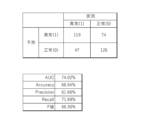
- This is a confusion matrix that shows the relationship between actual values and predicted values in a binary classification problem. This is the confusion matrix and evaluation index obtained when the blood concentration of follicle-stimulating hormone in blood samples was used as training data (threshold: 0.3).
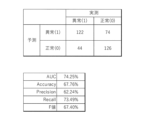
- the confusion matrix and evaluation index obtained when the blood concentrations of follicle-stimulating hormone and luteinizing hormone in blood samples were used as training data (threshold: 0.3).
- the confusion matrix and evaluation index obtained when the blood concentrations of follicle-stimulating hormone and testosterone in blood samples were used as training data (threshold: 0.33).
- the confusion matrix and evaluation index were obtained when predicting normal (0) or abnormal (1) from similar features for evaluation data of 88 cases in which the patients were azoospermic. This is the confusion matrix and evaluation index obtained when predicting normal (0) or abnormal (1) from features containing only the FSH level in the blood. This is the confusion matrix and evaluation index obtained when predicting normal (0) or abnormal (1) from features including blood FSH and LH levels. This is the confusion matrix and evaluation index obtained when predicting normal (0) or abnormal (1) from features including blood FSH and T values. This is the confusion matrix and evaluation index obtained when predicting normal (0) or abnormal (1) from features including blood FSH, T, and LH levels.
- Fig. 1 is a diagram for explaining the male infertility risk assessment device according to the first embodiment, which uses the prediction model according to the first embodiment.
- Fig. 2 is a diagram for showing the configuration of a computer for realizing the male infertility risk assessment device according to the first embodiment.
- the male infertility risk assessment device 10 includes an input unit 2, a memory unit 4, a processing unit 6 including a prediction unit 6a, and an output unit 8.
- the risk assessment device 10 is realized, for example, by a computer 100 shown in FIG. 2.
- the computer 100 includes a processing device (calculator) 110, a storage device 120, an input device 130, an output device 140, and an input/output interface (I/F) 150, etc.
- the input unit 2 of the risk assessment device 10 inputs the characteristic quantities of a subject to be assessed for risk of male infertility.
- the characteristic quantities of the subject to be assessed include the concentration value of follicle stimulating hormone (FSH) (FSH value), concentration value of luteinizing hormone (LH) (LH value), concentration value of testosterone (Testosterone: T) (T value), concentration value of female hormone (Estradiol: E2) (E2 value), concentration value of prolactin (Prolactin: PRL) (PRL value), T/E2 value, and the age of the subject to be assessed.
- the memory unit 4 stores a prediction model 4a and other data 4b according to the first embodiment.
- the prediction model 4a is a prediction model for determining the risk of male infertility.
- the prediction model 4a is a trained model created by performing machine learning using multiple sets of teacher data acquired from multiple subjects to be trained.
- the teacher data is a set of features of the subject to be trained and a classification label of a binary classification (normal (0): total motile sperm count is equal to or greater than the normal lower limit, abnormal (1): total motile sperm count is less than the normal lower limit, status information indicating the status of the subject's total motile sperm count) that classifies whether the total motile sperm count of the subject to be trained is equal to or greater than the normal lower limit (e.g., 9.408 ⁇ 10 6 ).
- the features of the subject to be trained include the FSH value, LH value, T value, E2 value, and PRL value, T/E2 value in the blood (body fluid) of the subject to be trained, as well as the age of the subject to be trained.
- the prediction model 4a causes the computer 100 to function so as to calculate state information when a feature amount is input.
- the prediction unit 6a of the processing unit 6 uses the prediction model 4a to predict whether or not the total motile sperm count of the subject to be evaluated is equal to or higher than the normal lower limit, based on the feature values of the subject to be evaluated input via the input unit 2.
- the output unit 8 outputs the prediction result by the prediction unit 6a of the processing unit 6.
- the male infertility risk assessment method according to the first embodiment will be described.
- the male infertility risk assessment method according to the first embodiment is a method for assessing the risk of male infertility by using the prediction model 4a according to the first embodiment in the risk assessment device 10 according to the first embodiment.
- Figure 3 is a flowchart of the male infertility risk assessment method according to the first embodiment.
- the male infertility risk assessment method As shown in FIG. 3, first, blood (body fluid) is collected from a subject to be assessed for risk of male infertility, and the age is asked (collection of blood and asking about age). Next, the FSH, LH, T, E2, and PRL values in the collected blood are measured (measurement of hormone concentration values in blood). Next, the T/E2 value is calculated by dividing the T value by the E2 value. In this way, features including the FSH, LH, T, E2, and PRL values in the collected blood, the T/E2 value, and the asked age are acquired as features of the subject to be assessed (acquisition of features).
- the characteristic quantities of the subject to be assessed are input via the input unit 2 of the risk assessment device 10 (input of characteristic quantities).
- the input characteristic quantities are stored in the memory unit 4 by the processing unit 6.
- the prediction unit 6a of the processing unit 6 of the risk assessment device 10 uses the prediction model 4a to predict whether the total motile sperm count of the subject to be assessed is equal to or greater than the normal lower limit (e.g., 9.408 ⁇ 10 6 ) from the characteristic quantities of the subject to be assessed (prediction of the state of the total motile sperm count).
- the characteristic quantities of the subject to be assessed are input to the computer 100, and the prediction model 4a is used to cause the computer 100 to calculate a classification label for classifying whether the total motile sperm count of the subject to be assessed is equal to or greater than the normal lower limit.
- the output unit 8 of the risk assessment device 10 outputs the prediction result (output of prediction result). As a result, it is determined whether or not the subject is at risk of male infertility depending on the prediction result.
- the hormone concentrations such as FSH, LH, T, E2, and PRL
- the risk of male infertility of the subject can be assessed from the hormone concentrations and the age of the subject to be assessed. Therefore, unlike semen testing, which requires special facilities and equipment, the male infertility risk assessment method can be performed easily.
- the prediction model according to the second embodiment is used in the male infertility risk assessment device according to the second embodiment.
- the male infertility risk assessment device according to the second embodiment is the same device as the male infertility risk assessment device according to the first embodiment, except for the prediction model.
- the prediction model according to the second embodiment is a prediction model for assessing the risk of male infertility, and is a trained model created by performing machine learning using multiple sets of training data obtained from multiple subjects to be trained.
- the training data according to the second embodiment is a set of a feature amount of the training subject and a classification label of a binary classification (normal ( 0 ): total motile sperm count is equal to or greater than the normal lower limit, abnormal (1): total motile sperm count is less than the normal lower limit, status information indicating the status of the subject's total motile sperm count).
- the feature amount of the subject to be trained according to the second embodiment is different from the feature amount of the subject to be trained according to the first embodiment, and includes the FSH value, LH value, T value, E2 value, PRL value, T/E2 value in the saliva (body fluid) of the subject to be trained, and the age of the subject to be trained.
- the prediction model according to the second embodiment causes a computer to function to calculate condition information when the feature amount is input.
- the male infertility risk assessment method according to the second embodiment is a method for assessing the risk of male infertility by using the prediction model according to the second embodiment in the risk assessment device according to the second embodiment.
- Figure 4 is a flowchart of the male infertility risk assessment method according to the second embodiment.
- saliva body fluid
- body fluid saliva
- the age is asked (collection of saliva and asking about age).
- the FSH value, LH value, T value, E2 value, and PRL value in the collected saliva are measured (measurement of hormone concentration values in saliva).
- the T value is divided by the E2 value to calculate the T/E2 value.
- features including the FSH value, LH value, T value, E2 value, and PRL value in the collected saliva, the T/E2 value, and the asked age are acquired as features of the subject to be assessed (acquisition of features).
- the features of the subject to be assessed are input via the input section of the risk assessment device (feature input).
- the input features are stored in the memory section by the processing section.
- the prediction section of the processing section of the risk assessment device uses a prediction model to predict whether the total motile sperm count of the subject to be assessed is equal to or above the normal lower limit from the features of the subject to be assessed (prediction of the state of the total motile sperm count).
- the features of the subject to be assessed are input to computer 100, and computer 100 is caused to calculate a classification label that classifies whether the total motile sperm count of the subject to be assessed is equal to or above the normal lower limit using prediction model 4a.
- the output section of the risk assessment device outputs the prediction result (output of prediction result). As a result, it is determined whether or not the subject is at risk of male infertility, depending on the prediction result.
- hormone concentration values such as FSH, LH, T, E2, and PRL values in the saliva of the subject to be assessed are measured, and the risk of male infertility of the subject can be assessed from the hormone concentration values and the age of the subject to be assessed. Therefore, unlike semen testing, which requires special facilities and equipment, the male infertility risk assessment method can be performed easily. Furthermore, compared to the first embodiment, where hormone concentration values in the blood of the subject to be assessed are measured and the risk of male infertility of the subject is assessed, risk can be assessed by simply collecting saliva instead of blood from the subject, making it less invasive.
- the prediction model is a prediction model for determining the risk of male infertility, and is a trained model created by machine learning using training data that is a set of features including the concentration value (FSH value) of follicle stimulating hormone (FSH) in the subject's body fluids and status information indicating the state of the subject's total motile sperm count.
- FSH value concentration value
- FSH follicle stimulating hormone
- the features (explanatory variables) in the training data are not particularly limited as long as they include the FSH value in the subject's body fluids, but examples include those which further include at least one selected from the group consisting of the concentration value of luteinizing hormone (LH) (LH value), the concentration value of testosterone (T) (T value), the concentration value of female hormone (estradiol: E2) (E2 value), and the concentration value of prolactin (PRL) (PRL value), the T/E2 value, and the subject's age in the subject's body fluids.
- LH concentration value of luteinizing hormone
- T concentration value of testosterone
- E2 value concentration value of female hormone
- PRL prolactin
- those which further include the LH value, T value, and E2 value in the subject's body fluids, and the subject's age are preferred, and in particular those which further include the T/E2 value are preferred.
- the T/E2 value is calculated by dividing the T value in the subject's body fluids by the E2 value in the subject's body fluids.
- Follicle-stimulating hormone is a glycoprotein with a molecular weight of about 33,000, consisting of ⁇ and ⁇ subunits.
- Luteinizing hormone is a glycoprotein with a molecular weight of about 29,000, consisting of ⁇ and ⁇ subunits.
- Testosterone is a steroid hormone with the molecular formula C 19 H 28 O 2 , belonging to the androgen family, for example, total testosterone.
- Female hormones follicular hormones (estradiol)
- Prolactin is a hormone secreted from the pituitary gland.
- Types of bodily fluids in which the concentration values of hormones included in the feature quantities (FSH value, LH value, T value, E2 value, PRL value) are measured include, for example, blood, saliva, urine, etc., and among these, saliva and urine are preferred, as this allows for less invasiveness.
- the subject's blood includes whole blood, serum, and plasma.
- whole blood serum, and plasma.
- drawn blood, serum, and plasma can be used.
- any conventionally known method can be applied, and the commonly used electrochemiluminescence immunoassay (ECLIA) can be used.
- ECLIA electrochemiluminescence immunoassay
- methods that utilize antibodies against follicle-stimulating hormone such as the enzyme antibody method, chemiluminescent enzyme immunoassay (CLEIA), chemiluminescent immunoassay (CLIA), enzyme-linked immunosorbent assay (ELISA), fluorescence enzyme immunoassay (FEIA), fluorescence immunoassay (FIA), latex agglutination (LA), latex agglutination immunoassay (LA), and radioimmunoassay (RIA) can also be used as appropriate.
- CLIA chemiluminescent enzyme immunoassay
- CLIA chemiluminescent immunoassay
- ELISA enzyme-linked immunosorbent assay
- FIA fluorescence enzyme immunoassay
- FIA fluorescence immunoassay
- Any conventionally known method may be used to measure the concentration values of hormones other than follicle-stimulating hormone in the blood (LH value [mIU/mL], T value [ng/mL], E2 value [pg/mL], and PRL value [ng/mL]), and the methods listed above as methods for measuring follicle-stimulating hormone may be used as appropriate.
- methods using antibodies against follicle-stimulating hormone such as enzyme antibody method, chemiluminescence enzyme immunoassay, chemiluminescence immunoassay, enzyme immunoassay, fluorescent enzyme immunoassay, fluorescent immunoassay, latex agglutination reaction, latex agglutination turbidimetry, and radioimmunoassay, may also be used as appropriate.
- Examples of devices used to measure hormone concentrations in a subject's saliva include the Salivary EIA Kit manufactured by Salimetrics LLC (e.g., Testosterone Salivary Immunoassay Kit, Estradiol ELISA Kit) and the Expanded Male Hormone Panel manufactured by DiagnosTechs, Inc.
- the total motile sperm count of a subject is a value obtained by multiplying the subject's semen volume (mL), sperm concentration (pieces/ml), and sperm motility (%) (semen volume x sperm concentration x sperm motility).
- the subject's semen volume, sperm concentration, and sperm motility are measured by a semen test of the subject.
- the type of state information (objective variable) indicating the state of the subject's total motile sperm count in the teacher data is not particularly limited, and may be the subject's total motile sperm count itself, but for example, a classification label that classifies whether the subject's total motile sperm count is equal to or greater than the normal lower limit (e.g., 9.408 ⁇ 10 6 , WHO laboratory manual for the examination and processing of human semen, 6th ed (2021)). is preferable.
- Methods for creating predictive models by performing machine learning using training data include, but are not limited to, neural networks, SVMs (support vector machines), decision tree regression, random forests, etc.
- Software products and services for creating predictive models by performing machine learning using training data include Prediction One from Sony Network Communications Inc. and Google Cloud AutoML Tables from Google LLC.
- the prediction model causes the computer to function so as to calculate status information indicating the state of the total motile sperm count of a subject when feature amounts including the concentration value of follicle-stimulating hormone in the subject's body fluids are input.
- the prediction model is used to predict the state of the total motile sperm count from the feature amounts.
- the feature amounts input to the computer are the same as the feature amounts in the training data, so a description thereof will be omitted here.
- the status information calculated by the computer is the same as the status information in the training data, so a description thereof will be omitted here.
- the male infertility risk assessment method is a method for assessing the risk of male infertility by using a prediction model according to an embodiment, and is characterized by comprising: an acquisition step of measuring a concentration value (FSH value) of follicle stimulating hormone (FSH) in a body fluid of a subject and acquiring a feature value including the concentration value of follicle stimulating hormone in the body fluid; and a prediction step of predicting the state of the total motile sperm count of the subject from the feature value including the concentration value of follicle stimulating hormone in the body fluid by using the prediction model.
- FSH value concentration value
- FSH follicle stimulating hormone
- the acquisition process is not particularly limited as long as it is a process as described above, but is preferably a process of further measuring at least one selected from the group consisting of luteinizing hormone concentration value (LH value), testosterone concentration value (T value), female hormone concentration value (E2 value), and prolactin concentration value (PRL value) in the subject's body fluids, and among these, a process of further measuring the LH value and/or T value in the subject's body fluids and a process of further measuring the E2 value in the subject's body fluids are preferred, and a process of further measuring the LH value, T value, and E2 value in the subject's body fluids is particularly preferred.
- LH value luteinizing hormone concentration value
- T value testosterone concentration value
- E2 value female hormone concentration value
- PRL value prolactin concentration value
- the features acquired in the acquisition process are similar to the features in the training data described in "1. Prediction model” above, and therefore a description thereof will be omitted here.
- the types of bodily fluids for which hormone concentration values (FSH value, LH value, T value, E2 value, PRL value) are measured in the acquisition process include the same types of bodily fluids as those described in “1. Prediction model” above.
- the method and device for measuring hormone concentration values in bodily fluids in the acquisition process are similar to the method and device described in "1. Prediction model” above, and therefore a description thereof will be omitted here.
- the type of state of the subject's total motile sperm count predicted in the prediction process is not particularly limited, and may be, for example, the state indicated by the state information in the teacher data described in the "1. Prediction model" section above. Specifically, it may be the subject's total motile sperm count itself, but it is preferable that the subject's total motile sperm count is equal to or above the normal lower limit.
- a method for assessing the risk of male infertility for example, as in the first and second embodiments, a method is preferred in which the types of body fluids in which the hormone concentration values contained in the features are measured match between the features in the training data used to create the prediction model and the features acquired in the acquisition process, and the types of hormone concentration values and other information contained in the features match. This is because the risk of male infertility can be assessed more accurately.
- the method for assessing the risk of male infertility may be a method in which the types of bodily fluids in which the hormone concentration values included in the features are measured do not match between the features in the teacher data used to create the prediction model and the features acquired in the acquisition process, but the types of hormone concentration values and other information included in the features match.
- the prediction model may be created by machine learning using teacher data that is a pair of features including hormone concentration values in the subject's blood and status information indicating the state of the total motile sperm count of the subject, while the feature acquired in the acquisition process may include the concentration value of the same type of hormone in the subject's saliva, not in the blood.
- the hormone concentration value in saliva included in the feature acquired in the acquisition process is corrected to an approximate value of the hormone concentration value in blood based on the correlation between the hormone concentration values in blood and the hormone concentration values in saliva, which has been publicly known in the past, and the state of the total motile sperm count is predicted from the corrected feature in the prediction process.
- the correlation between hormone concentrations in blood and saliva has been reported, for example, by S G Johnson et al., Direct assay for testosterone in saliva: relationship with a direct serum free testosterone assay, Clin Chim Acta. 1987 Mar 30;163(3):309-18. and Jozef Vittek et al. ., Direct radioimmunoassay (RIA) of salivary testosterone: correlation with free and total serum testosterone, Life Sci.
- the type of status information in the teacher data used when creating the prediction model and the type of status predicted in the prediction process may or may not match, but are usually matched.
- the type of status information in the teacher data used when creating the prediction model is the subject's total motile sperm count itself
- the type of status predicted in the prediction process is the subject's total motile sperm count itself.
- the type of status information in the teacher data used when creating the prediction model is a classification label that classifies whether or not the subject's total motile sperm count is above the normal lower limit
- the type of status predicted in the prediction process is whether or not the subject's total motile sperm count is above the normal lower limit.
- the follicle-stimulating hormone contained in a blood sample from a subject is measured, and the risk of male infertility is determined based on the blood concentration of the follicle-stimulating hormone.
- the fact that the risk of male infertility can be determined based on the blood concentration of the follicle-stimulating hormone is described in detail in the Examples, but this is derived as a result of constructing a machine learning model that predicts and analyzes the total motile sperm count (semen volume x sperm concentration x sperm motility rate) from the clinical data of male infertility patients.
- assessing the risk of male infertility means, in other words, assessing the risk that the subject's total motile sperm count is below the normal lower limit (e.g., 9.408 x 10 6 , WHO laboratory manual for the examination and processing of human semen, 6th ed (2021)).
- the blood concentration of follicle-stimulating hormone in the subject is higher than the reference value, it indicates that there is a risk of male infertility.
- the blood concentration of follicle-stimulating hormone in the subject is higher than the reference value, it indicates that there is a risk that the total motile sperm count is below the normal lower limit.
- the upper limit (8.30 [mIU/mL] in the test by SRL Co., Ltd.) of the reference value in a normal blood test (2.00 to 8.30 [mIU/mL] in the test by SRL Co., Ltd.) may be adopted, but a value obtained from clinical data may also be used as the reference value.
- the blood concentration of follicle-stimulating hormone was higher than 8.81 [mIU/mL]
- the total motile sperm count was below the normal lower limit
- the blood concentration of follicle-stimulating hormone was lower than 4.00 [mIU/mL]
- the reference values for blood concentrations of follicle-stimulating hormone may be 4.00 [mIU/mL], 4.50 [mIU/mL], 5.00 [mIU/mL], 5.50 [mIU/mL], 6.00 [mIU/mL], 6.50 [mIU/mL], 7.00 [mIU/mL], 7.50 [mIU/mL], 8.00 [mIU/mL], 8.50 [mIU/mL], or 9.00 [mIU/mL].
- the subject's blood concentrations of luteinizing hormone and/or testosterone, in addition to the follicle-stimulating hormone can be used to assess the subject's risk of male infertility.
- the blood concentration of luteinizing hormone in the subject exceeds the reference range, it indicates that there is a risk of male infertility. In other words, if the blood concentration of luteinizing hormone in the subject exceeds the reference range, it indicates that there is a risk that the total motile sperm count is below the normal lower limit.
- the reference range of the blood concentration of luteinizing hormone in this method the range of reference values in a normal blood test (0.79 to 5.72 [mIU/mL] in the test by SRL Co., Ltd.) may be adopted, but the value obtained from clinical data may also be used as the reference range.
- the total motile sperm count is normal, and if it is outside this range, the total motile sperm count is below the normal lower limit.
- the range of reference values for blood luteinizing hormone concentrations may have lower limits of 0.85 [mIU/mL], 1.00 [mIU/mL], 1.50 [mIU/mL], 2.00 [mIU/mL], 2.50 [mIU/mL], 3.00 [mIU/mL], or 3.10 [mIU/mL], and upper limits of 5.50 [mIU/mL], 5.30 [mIU/mL], 5.00 [mIU/mL], or 4.70 [mIU/mL].
- this method indicates that there is a risk of male infertility when the blood concentration of testosterone in the subject is lower than the reference value.
- the blood concentration of testosterone in the subject is lower than the reference value, it indicates that there is a risk that the total motile sperm count is below the normal lower limit.
- the lower limit (1.31 [ng/mL] in the test by SRL Co., Ltd.) of the reference value in a normal blood test (1.31 to 8.71 [ng/mL] in the test by SRL Co., Ltd.) may be adopted, but the range of the reference value may also be a value obtained from clinical data. According to the clinical data used in the examples described later, when the blood concentration of testosterone is lower than 3.68 [ng/mL], the total motile sperm count is below the normal lower limit, and when the blood concentration of testosterone is higher than 4.59 [ng/mL], the total motile sperm count is normal.
- the reference values for blood testosterone concentrations may be 4.59 [ng/mL], 4.50 [ng/mL], 4.30 [ng/mL], 4.00 [ng/mL], 3.80 [ng/mL], and 3.70 [ng/mL].
- the blood concentrations of the above-mentioned follicle-stimulating hormone, as well as the blood concentrations of luteinizing hormone and testosterone are each compared with a standard value, and a high score may be calculated when there is a large difference from the standard value. Then, the risk of male infertility may be assessed according to the total score.
- the blood sample used in this method is the same as the blood (blood sample) described above in “1. Prediction model,” so a detailed description will be omitted here.
- the method for measuring hormone concentrations (FSH concentration, LH concentration, T concentration) in blood samples in this method is the same as the method for measuring hormone concentrations in blood described above in “1. Prediction model,” so a detailed description will be omitted here.
- Example 1 ⁇ Patient background> The research described in this example was conducted with the approval of the Ethics Committee of Toho University Omori Hospital (approval number: M22267 20104 [Research topic: Cross-sectional clinical study on male infertility]).
- the subjects were men aged 18 years or older who visited the Urological Reproduction Center between January 1, 2011 and December 31, 2020 and underwent semen and hormone tests. All semen tests were performed using semen obtained by ejaculation in the hospital. Hormonal tests were based on the standard values of SRL Co., Ltd.
- data for verifying the AI model created in this embodiment data for the first visit date, age, semen test, and hormone test were extracted from the medical information from January 1, 2021 to December 31, 2021 and from January 1, 2022 to December 31, 2022, and evaluation data was created in the same manner as the data for creating a prediction model (learning).
- T/E2 was calculated from the T and E2 values contained in the above-mentioned prediction model creation (learning) data, and added to the prediction model creation (learning) data. It has been reported that T/E2 is an indicator of sperm quality and sexual desire compared to testosterone alone (Abhyankar, N. et al. F&S 106(3):e239-e240, 2016).
- the total motile sperm count was calculated from the values of semen volume, sperm concentration, and motility rate contained in the prediction model creation (learning) data. The total motile sperm count is the product of semen volume, sperm concentration, and motility rate.
- the normal lower limit was calculated as 9.408 ⁇ 106 (1.4 ⁇ 16 ⁇ 106 ⁇ 0.42) based on the semen volume of 1.4 mL, sperm concentration of 16 ⁇ 106 /mL, and motility rate of 42% specified in the WHO laboratory manual for the examination and processing of human semen, 6th ed ( 2021 ).
- a total motile sperm count above 9.408 ⁇ 106 was defined as normal (0), and a total motile sperm count below 9.408 ⁇ 106 was defined as abnormal (1).
- the AI model was created using Prediction One (Sony Network Communications Inc., Tokyo, Japan).
- the predictive model creation (learning) data described above was used to create the AI model.
- Prediction One was used to create an AI model using a binary classification to predict normal (0) or abnormal (1).
- Prediction One randomly selected 3,296 of the 3,662 cases as learning data to create the AI model, and 366 cases were used as evaluation data.
- an AI model was created using Google's Google Cloud AutoML Tables with a binary classification system that predicts normal (0) or abnormal (1).
- TP True Positive
- FP Fale Positive
- TN Fale Negative
- FN Fale Negative
- the AUC Absolute Under the Curve
- Accuracy is calculated as (TP+TN)/(TP+TN+FP+FN).
- Precision is calculated as (TP)/(TP+FP).
- Recall is calculated as (TP)/(TP+FN).
- F-measure is the harmonic mean of Precision and Recall, and is calculated as (2 Precision ⁇ Recall)/(Precision + Recall).
- AUC is calculated as the area under the ROC curve drawn with TPR (True Positive Rate) on the vertical axis and FPR (False Positive Rate) on the horizontal axis. Note that TPR is the same as Recall, and FPR is calculated as (FP)/(FP+TN).
- Figure 8 shows the confusion matrix and evaluation index obtained when follicle stimulating hormone: FSH and testosterone: T were used as the learning data from the data for creating a prediction model (learning).
- the AUC value is 75.24%, which can be evaluated as the most excellent prediction accuracy compared to the results shown in Figures 6 and 7. From this result, it is clear that the values of follicle stimulating hormone: FSH and testosterone: T measured in blood samples can be used as data to predict the total motile sperm count with the highest accuracy.
- Figure 8 also shows the confusion matrix and evaluation index for the part where the threshold value is 0.33.
- Example 2 The method for assessing risk of male infertility according to the embodiment was carried out on 354 cases of evaluation data different from the above-mentioned 366 cases of evaluation data. Specific explanation will be given below.
- the total motile sperm count was calculated from the values of the semen volume, sperm concentration, and motility rate. If the total motile sperm count was equal to or greater than the lower limit of normal (9.408 ⁇ 10 6 ), the value of the binary classification label was set to normal (0), and if the total motile sperm count was below the lower limit of normal, the value of the binary classification label was set to abnormal (1). Then, the T/E2 value, total motile sperm count, and classification label values were added to the extracted data of each case to obtain evaluation data for each case. As a result, evaluation data for 354 cases was created.
- the evaluation data for each case included the FSH value, LH value, T value, E2 value, and PRL value in the patient's blood, the T/E2 value, and the patient's age (information constituting the feature amount), as well as the semen volume, sperm concentration, motility rate, total motile sperm count, and classification label (normal (0): total motile sperm count equal to or greater than the lower limit of normal, abnormal (1): total motile sperm count less than the lower limit of normal).
- the prediction model was created by machine learning using Prediction One, using the data for creating the prediction model (3296 examples of learning data) as training data, in the same way as the prediction model (AI model) in Example 1.
- a prediction model was created that causes a computer to calculate a classification label that classifies whether or not a patient's total motile sperm count is above the normal lower limit when the features of the evaluation data are input.
- a prediction model was created by performing machine learning using a set of features including the patient's blood FSH value, LH value, T value, E2 value, PRL value, T/E2 value, and patient's age in the training data, and a classification label (normal (0) or abnormal (1)) that classifies whether the patient's total motile sperm count in the training data is above the normal lower limit, as training data, and a prediction model was used to predict whether the patient's total motile sperm count is above the normal lower limit (normal (0) or abnormal (1)) from the same features for 354 evaluation data.
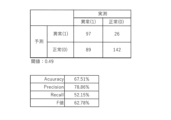
- the AUC value of the created prediction model was 74.42%. In the prediction results, the accuracy was 67.51% when the threshold was 0.49, which maximizes the F value.
- Figure 10A shows the confusion matrix and evaluation index when the threshold in this prediction result is 0.49.
- 88 cases of evaluation data in which the patients had azoospermia 35 cases: obstructive azoospermia, 52 cases: non-obstructive azoospermia, 1 case: hypogonadotropic hypogonadism
- Figure 10B shows the confusion matrix and evaluation index when the threshold value in this prediction result is 0.49. When the threshold value in this prediction result is 0.49, the accuracy was 100% for the 52 cases of non-obstructive azoospermia.
- a prediction model was created by performing machine learning using a set of training data features including only the FSH levels in the patient's blood and classification labels (normal (0) or abnormal (1)) that classify whether the patient's total motile sperm count in the training data is above the lower limit of normal as training data, and the model was used to predict normal (0) or abnormal (1) from the same features for 354 cases of evaluation data.
- the AUC value of the created prediction model was 74.02%.
- the accuracy was 67.51% when the threshold was 0.54, which maximizes the F-measure.
- Figure 11 shows the confusion matrix and evaluation indexes in this prediction result when the threshold was 0.54.
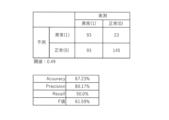
- a prediction model was created by performing machine learning using pairs of features including the FSH and LH levels in the patient's blood in the training data and classification labels (normal (0) or abnormal (1)) that classify whether the patient's total motile sperm count in the training data is above the lower limit of normal as training data, and the model was used to predict normal (0) or abnormal (1) from the same features for 354 cases of evaluation data.
- the AUC value of the created prediction model was 74.25%.
- the accuracy was 67.23% when the threshold was 0.49, which maximizes the F-measure.
- Figure 12 shows the confusion matrix and evaluation indexes in this prediction result when the threshold is 0.49.
- a prediction model was created by performing machine learning using pairs of features including the FSH and T values in the patient's blood in the training data and classification labels (normal (0) or abnormal (1)) that classify whether the patient's total motile sperm count in the training data is above the lower limit of normal as training data, and the model was used to predict normal (0) or abnormal (1) from the same features for 354 cases of evaluation data.
- the AUC value of the created prediction model was 75.24%.
- the accuracy was 66.67% when the threshold was 0.49, which maximizes the F-measure.
- Figure 13 shows the confusion matrix and evaluation indexes in this prediction result when the threshold is 0.49.
- a prediction model was created by machine learning using pairs of features including the FSH, T, and LH values in the patient's blood in the training data and classification labels (normal (0) or abnormal (1)) that classify whether the patient's total motile sperm count in the training data is above the lower limit of normal as training data, and the model was used to predict normal (0) or abnormal (1) from the same features for 354 cases of evaluation data.
- the AUC value of the created prediction model was 74.53%.
- the accuracy was 67.23% when the threshold was 0.49, which maximizes the F-measure.
- Figure 14 shows the confusion matrix and evaluation index when the threshold in this prediction result is 0.49.
- the present invention includes the following embodiments. (1) measuring follicle stimulating hormone (FSH) in a blood sample collected from a subject; A method for determining the risk of male infertility, wherein the blood concentration value of follicle-stimulating hormone indicates the risk of male infertility in the subject. (2) The method according to (1), further comprising measuring luteinizing hormone (LH) and/or testosterone (T) contained in the blood sample, and the blood concentration of luteinizing hormone and/or testosterone indicates the risk of male infertility in the subject. (3) The method according to (1), characterized in that a blood concentration of the follicle-stimulating hormone exceeding 4.00 [mIU/mL] indicates a risk of male infertility.
- FSH follicle stimulating hormone
Landscapes
- Health & Medical Sciences (AREA)
- Engineering & Computer Science (AREA)
- Life Sciences & Earth Sciences (AREA)
- Biomedical Technology (AREA)
- Medical Informatics (AREA)
- Public Health (AREA)
- General Health & Medical Sciences (AREA)
- Pathology (AREA)
- Molecular Biology (AREA)
- Primary Health Care (AREA)
- Data Mining & Analysis (AREA)
- Hematology (AREA)
- Chemical & Material Sciences (AREA)
- Urology & Nephrology (AREA)
- Immunology (AREA)
- Epidemiology (AREA)
- Databases & Information Systems (AREA)
- Cell Biology (AREA)
- Biotechnology (AREA)
- Microbiology (AREA)
- Reproductive Health (AREA)
- Endocrinology (AREA)
- Food Science & Technology (AREA)
- Medicinal Chemistry (AREA)
- Physics & Mathematics (AREA)
- Analytical Chemistry (AREA)
- Biochemistry (AREA)
- General Physics & Mathematics (AREA)
- Gynecology & Obstetrics (AREA)
- Pregnancy & Childbirth (AREA)
- Proteomics, Peptides & Aminoacids (AREA)
- Investigating Or Analysing Biological Materials (AREA)
Priority Applications (2)
| Application Number | Priority Date | Filing Date | Title |
|---|---|---|---|
| EP24788476.0A EP4697025A1 (en) | 2023-04-12 | 2024-03-07 | Prediction model and risk determination method for male infertility |
| JP2025513829A JPWO2024214446A1 (https=) | 2023-04-12 | 2024-03-07 |
Applications Claiming Priority (2)
| Application Number | Priority Date | Filing Date | Title |
|---|---|---|---|
| JP2023065013 | 2023-04-12 | ||
| JP2023-065013 | 2023-04-12 |
Publications (1)
| Publication Number | Publication Date |
|---|---|
| WO2024214446A1 true WO2024214446A1 (ja) | 2024-10-17 |
Family
ID=93059462
Family Applications (1)
| Application Number | Title | Priority Date | Filing Date |
|---|---|---|---|
| PCT/JP2024/008821 Ceased WO2024214446A1 (ja) | 2023-04-12 | 2024-03-07 | 予測モデル及び男性不妊症のリスク判定方法 |
Country Status (3)
| Country | Link |
|---|---|
| EP (1) | EP4697025A1 (https=) |
| JP (1) | JPWO2024214446A1 (https=) |
| WO (1) | WO2024214446A1 (https=) |
Citations (4)
| Publication number | Priority date | Publication date | Assignee | Title |
|---|---|---|---|---|
| JP2007024822A (ja) * | 2005-07-21 | 2007-02-01 | Aska Pharmaceutical Co Ltd | 男性の更年期又はうつ病の鑑別方法 |
| JP2018513983A (ja) * | 2015-04-06 | 2018-05-31 | ブルーダイアグノスティックス・インコーポレイテッドBludiagnostics, Inc. | 唾液試料中の分析物を検出するための試験装置および使用方法 |
| JP2022542649A (ja) | 2020-07-07 | 2022-10-06 | 浙江大学 | Ccdc157遺伝子及びその変異遺伝子の分子マーカーとしての男性不妊症診断への使用 |
| JP2023065013A (ja) | 2021-10-27 | 2023-05-12 | 楽天モバイル株式会社 | 携帯情報端末ケース |
-
2024
- 2024-03-07 EP EP24788476.0A patent/EP4697025A1/en active Pending
- 2024-03-07 WO PCT/JP2024/008821 patent/WO2024214446A1/ja not_active Ceased
- 2024-03-07 JP JP2025513829A patent/JPWO2024214446A1/ja active Pending
Patent Citations (4)
| Publication number | Priority date | Publication date | Assignee | Title |
|---|---|---|---|---|
| JP2007024822A (ja) * | 2005-07-21 | 2007-02-01 | Aska Pharmaceutical Co Ltd | 男性の更年期又はうつ病の鑑別方法 |
| JP2018513983A (ja) * | 2015-04-06 | 2018-05-31 | ブルーダイアグノスティックス・インコーポレイテッドBludiagnostics, Inc. | 唾液試料中の分析物を検出するための試験装置および使用方法 |
| JP2022542649A (ja) | 2020-07-07 | 2022-10-06 | 浙江大学 | Ccdc157遺伝子及びその変異遺伝子の分子マーカーとしての男性不妊症診断への使用 |
| JP2023065013A (ja) | 2021-10-27 | 2023-05-12 | 楽天モバイル株式会社 | 携帯情報端末ケース |
Non-Patent Citations (6)
| Title |
|---|
| JOHNSON ET AL.: "Direct assay for testosterone in saliva: relationship with a direct serum-free testosterone assay", CLIN. CHIM. ACTA., vol. 163, no. 3, 30 March 1987 (1987-03-30), pages 309 - 18 |
| JOZEF VITTEK ET AL.: "Direct radioimmunoassay (ria) of salivary testosterone: correlation with free and total serum testosterone", LIFE SCI., vol. 37, no. 8, 26 August 1985 (1985-08-26), pages 711 - 6 |
| KRENZ HENRIKE, SANSONE ANDREA, FUJARSKI MICHAEL, KRALLMANN CLAUDIA, ZITZMANN MICHAEL, DUGAS MARTIN, KLIESCH SABINE, VARGHESE JULIA: "Machine learning based prediction models in male reproductive health: Development of a proof‐of‐concept model for Klinefelter Syndrome in azoospermic patients", ANDROLOGY, SCRIPTOR PUBLISHER APS, HOBOKEN, USA, vol. 10, no. 3, 1 March 2022 (2022-03-01), Hoboken, USA, pages 534 - 544, XP093222239, ISSN: 2047-2919, DOI: 10.1111/andr.13141 * |
| See also references of EP4697025A1 |
| SHUHEI IZAWA ET AL.: "The Comparison of Salivary Cortisol Immunoassay Kits", JAPANESE JOURNAL OF COMPLEMENTARY AND ALTERNATIVE MEDICINE, vol. 4, no. 3, October 2007 (2007-10-01), pages 113 - 118 |
| ZHAO WEI, JING JUN, SHAO YONG, ZENG RONG, WANG CENCEN, YAO BING, HANG DONG: "Circulating sex hormone levels in relation to male sperm quality", BMC UROLOGY, BIOMED CENTRAL, LONDON, GB, vol. 20, no. 1, 1 December 2020 (2020-12-01), GB , XP093222236, ISSN: 1471-2490, DOI: 10.1186/s12894-020-00674-7 * |
Also Published As
| Publication number | Publication date |
|---|---|
| EP4697025A1 (en) | 2026-02-18 |
| JPWO2024214446A1 (https=) | 2024-10-17 |
Similar Documents
| Publication | Publication Date | Title |
|---|---|---|
| Broekmans et al. | A systematic review of tests predicting ovarian reserve and IVF outcome | |
| Van Calster et al. | Managing pregnancy of unknown location based on initial serum progesterone and serial serum hCG levels: development and validation of a two‐step triage protocol | |
| Wijnberger et al. | The accuracy of lamellar body count and lecithin/sphingomyelin ratio in the prediction of neonatal respiratory distress syndrome: a meta-analysis | |
| CN105229470B (zh) | 用于治疗和诊断系统性红斑狼疮的方法 | |
| Tremellen et al. | Serum anti‐Mullerian hormone assessment of ovarian reserve and polycystic ovary syndrome status over the reproductive lifespan | |
| Metcalfe et al. | Prediction of obstetrical risk using maternal serum markers and clinical risk factors | |
| US20230221335A1 (en) | A method of assessing a female's risk of having pcos as well as products and uses relating thereto | |
| JP2024095733A (ja) | 試料の品質評価方法 | |
| Li et al. | Age‐specific reference ranges of serum anti‐müllerian hormone in healthy women and its application in diagnosis of polycystic ovary syndrome: a population study | |
| Lokken et al. | Association between bacterial vaginosis and fecundability in Kenyan women planning pregnancies: a prospective preconception cohort study | |
| KR20250123158A (ko) | 다낭성 난소 증후군의 선별 시스템 및 방법 | |
| WO2016198749A1 (en) | Diagnostic biomarkers, clinical variables, and techniques for selecting and using them | |
| CN119694566A (zh) | 基于Ai的脓毒血症的化学指标检测系统 | |
| Pérez et al. | How to interpret diagnostic tests | |
| Jaques et al. | Uptake of prenatal diagnostic testing and the effectiveness of prenatal screening for Down syndrome | |
| WO2024214446A1 (ja) | 予測モデル及び男性不妊症のリスク判定方法 | |
| Heerink et al. | Are the latest point-of-care D-dimer devices ready for use in general practice? A prospective clinical evaluation of five test systems with a capillary blood feature for suspected venous thromboembolism | |
| CN113160989A (zh) | 基于支持向量机算法的卵巢功能年龄计算系统及其方法与应用 | |
| CN106568977A (zh) | 血清中sIL‑7R在诊断系统性红斑狼疮肾炎中的应用 | |
| Zhang et al. | A diagnostic model to improve the predictability of natural pregnancy potential in patients with oligoasthenospermia | |
| Castello et al. | Comparison of the SwimCount home diagnostic test with conventional sperm analysis | |
| Raymond et al. | Sensitivity and specificity of placental proteins for gestational age screening: an exploratory study | |
| US20170261511A1 (en) | Method for determining the risk of preterm birth | |
| CN113945724B (zh) | 一种阈下抑郁风险预测装置及其试剂盒和应用 | |
| RU2825506C1 (ru) | Способ прогнозирования развития прогрессирующего течения рассеянного склероза |
Legal Events
| Date | Code | Title | Description |
|---|---|---|---|
| 121 | Ep: the epo has been informed by wipo that ep was designated in this application |
Ref document number: 24788476 Country of ref document: EP Kind code of ref document: A1 |
|
| ENP | Entry into the national phase |
Ref document number: 2025513829 Country of ref document: JP Kind code of ref document: A |
|
| WWE | Wipo information: entry into national phase |
Ref document number: 2025513829 Country of ref document: JP |
|
| WWE | Wipo information: entry into national phase |
Ref document number: 2024788476 Country of ref document: EP |
|
| NENP | Non-entry into the national phase |
Ref country code: DE |
|
| ENP | Entry into the national phase |
Ref document number: 2024788476 Country of ref document: EP Effective date: 20251112 |
|
| ENP | Entry into the national phase |
Ref document number: 2024788476 Country of ref document: EP Effective date: 20251112 |
|
| ENP | Entry into the national phase |
Ref document number: 2024788476 Country of ref document: EP Effective date: 20251112 |
|
| ENP | Entry into the national phase |
Ref document number: 2024788476 Country of ref document: EP Effective date: 20251112 |
|
| ENP | Entry into the national phase |
Ref document number: 2024788476 Country of ref document: EP Effective date: 20251112 |
|
| ENP | Entry into the national phase |
Ref document number: 2024788476 Country of ref document: EP Effective date: 20251112 |
|
| ENP | Entry into the national phase |
Ref document number: 2024788476 Country of ref document: EP Effective date: 20251112 |
|
| ENP | Entry into the national phase |
Ref document number: 2024788476 Country of ref document: EP Effective date: 20251112 |
|
| ENP | Entry into the national phase |
Ref document number: 2024788476 Country of ref document: EP Effective date: 20251112 |
|
| WWP | Wipo information: published in national office |
Ref document number: 2024788476 Country of ref document: EP |