WO2024209681A1 - 電源装置 - Google Patents
電源装置 Download PDFInfo
- Publication number
- WO2024209681A1 WO2024209681A1 PCT/JP2023/014394 JP2023014394W WO2024209681A1 WO 2024209681 A1 WO2024209681 A1 WO 2024209681A1 JP 2023014394 W JP2023014394 W JP 2023014394W WO 2024209681 A1 WO2024209681 A1 WO 2024209681A1
- Authority
- WO
- WIPO (PCT)
- Prior art keywords
- circuit
- voltage
- switch element
- power supply
- smoothing
- Prior art date
- Legal status (The legal status is an assumption and is not a legal conclusion. Google has not performed a legal analysis and makes no representation as to the accuracy of the status listed.)
- Ceased
Links
Images








Classifications
-
- H—ELECTRICITY
- H02—GENERATION; CONVERSION OR DISTRIBUTION OF ELECTRIC POWER
- H02M—APPARATUS FOR CONVERSION BETWEEN AC AND AC, BETWEEN AC AND DC, OR BETWEEN DC AND DC, AND FOR USE WITH MAINS OR SIMILAR POWER SUPPLY SYSTEMS; CONVERSION OF DC OR AC INPUT POWER INTO SURGE OUTPUT POWER; CONTROL OR REGULATION THEREOF
- H02M7/00—Conversion of AC power input into DC power output; Conversion of DC power input into AC power output
- H02M7/02—Conversion of AC power input into DC power output without possibility of reversal
- H02M7/04—Conversion of AC power input into DC power output without possibility of reversal by static converters
- H02M7/06—Conversion of AC power input into DC power output without possibility of reversal by static converters using discharge tubes without control electrode or semiconductor devices without control electrode
Definitions
- This relates to a power supply device equipped with a rectifying and smoothing circuit that rectifies and smoothes AC voltage, and in particular to a power supply device equipped with a smoothing circuit consisting of multiple smoothing capacitors connected in series with each other.
- the smoothing circuit of a power supply unit may also be configured with a low-voltage, large-capacity smoothing capacitor.
- capacitor element When connecting multiple smoothing capacitors in series, normally one type of capacitor element (with the same capacitance and withstand voltage Vdc) is used. For example, when connecting two capacitors in series, if the capacitance of each smoothing capacitor is the same, when the voltage across the smoothing circuit is Vx, the voltage Vc of each smoothing capacitor will be Vx/2, so elements with the same withstand voltage Vdc can be used. Furthermore, even if the nominal capacitance of each smoothing capacitor is the same, if there is a possibility that the voltage division ratio will vary due to individual differences in capacitance or leakage current, balancing resistors of the same resistance are connected in parallel to each smoothing capacitor to suppress fluctuations in the voltage division ratio.
- Aluminum electrolytic capacitors are often used as smoothing capacitors.
- Aluminum electrolytic capacitors are designed to prevent explosions by opening an explosion-proof valve on the casing when a voltage exceeding the withstand voltage Vdc is applied.
- the explosion-proof valve opens, the electrolyte inside the casing is released in the form of a mist, which may adhere to surrounding electronic devices and cause other malfunctions.
- power supplies are used in clean rooms, etc., it can be a major problem if the electrolyte is released into the air. Therefore, when using aluminum electrolytic capacitors, it is necessary to protect the aluminum electrolytic capacitor so that a voltage exceeding the withstand voltage Vdc is not applied to it even when an abnormality occurs in the power supply.
- a power supply circuit that includes a rectifier circuit (bridge rectifier circuit) that rectifies the input AC voltage, a fuse (overcurrent protection circuit) inserted in the front stage of the rectifier circuit, and a smoothing circuit that smoothes the voltage output by the rectifier circuit and is made up of two smoothing capacitors (first and second capacitors) connected in series with each other.
- This power supply circuit has two voltage detection circuits provided for each smoothing capacitor, a switch circuit that shorts and opens between the input terminal of the rectifier circuit and the ground, and a current limiting resistor (resistor 103) that limits the current flowing through the switch circuit.
- the switch circuit turns on, causing a large current to flow through the fuse and switch circuit, melting the fuse, cutting off the input, and protecting the smoothing capacitor.
- the switch circuit and current limiting resistor must be constructed from expensive circuit elements with high power ratings, which is a problem.
- the present invention was made in consideration of the above background technology, and aims to provide a power supply device that can easily prevent excessive voltage from being applied to the multiple smoothing capacitors that make up the smoothing circuit, and can reliably protect each smoothing capacitor.
- the present invention provides a rectifier circuit which rectifies an AC voltage input to an input terminal, a fuse inserted between the input terminal and the rectifier circuit, and a circuit which smoothes a voltage output by the rectifier circuit, the smoothing circuit being made up of n (n ⁇ 2) smoothing capacitors connected in series with each other, and n overvoltage protection circuits provided for each of the smoothing capacitors, the overvoltage protection circuit having a thermistor with a negative temperature characteristic and a switch element connected in series with the thermistor, when one of the n smoothing capacitors is designated as a specific smoothing capacitor and the overvoltage protection circuit corresponding to the specific smoothing capacitor is designated as a specific overvoltage protection circuit, one end of a series circuit of the thermistor and the switch element of the specific overvoltage protection circuit is connected to an output terminal of the rectifier circuit and the other end is connected to one end on a low-voltage side of the smoothing circuit,
- the specific overvoltage protection circuit is a power supply device that holds
- the specific overvoltage protection circuit preferably includes a drive circuit for driving the switch element, the switch element being an element that switches from off to on upon receiving a signal from the drive circuit, the drive circuit having a threshold voltage Vth corresponding to the reference value Vr, detecting the voltage Vc of the specific smoothing capacitor or a voltage corresponding thereto, and outputting a signal to hold the switch element on when the detected value exceeds the threshold voltage Vth.
- the n overvoltage protection circuits may each be configured to share a set of the thermistor and the switch element as their own thermistor and switch element.
- a boost chopper consisting of an inductor, a switching element, and a rectifier diode is provided between the output terminal of the rectifier circuit and one end of the high-voltage side of the smoothing circuit, and the rectifier diode operates as the auxiliary diode, and the smoothing circuit smoothes the voltage output by the boost chopper.
- the present invention provides a rectifier circuit which rectifies an AC voltage input to an input terminal, a fuse inserted between the input terminal and the rectifier circuit, and a circuit which smoothes a voltage output by the rectifier circuit, the smoothing circuit being made up of n (n ⁇ 2) smoothing capacitors connected in series with each other, and n overvoltage protection circuits provided for each of the smoothing capacitors, the overvoltage protection circuit having a thermistor with a negative temperature characteristic and a switch element connected in series with the thermistor, when one of the n smoothing capacitors is designated as a specific smoothing capacitor and the overvoltage protection circuit corresponding to the specific smoothing capacitor is designated as a specific overvoltage protection circuit, a series circuit of the thermistor and the switch element of the specific overvoltage protection circuit is connected in parallel to both ends of the specific smoothing capacitor,
- the specific overvoltage protection circuit is a power supply device that holds the switch element in an on state when the voltage Vc of the specific smoothing capacitor exceeds a reference
- the specific overvoltage protection circuit includes a drive circuit that drives the switch element, and the switch element is an element that switches from off to on upon receiving a signal from the drive circuit, and the drive circuit preferably has a threshold voltage Vth that corresponds to the reference value Vr, detects the voltage Vc of the specific smoothing capacitor or a voltage corresponding thereto, and outputs a signal to hold the switch element on when the detected value exceeds the threshold voltage Vth.
- the switch element may be an element that has a threshold voltage Vth that corresponds to the reference value Vr, and switches from high impedance to low impedance when the voltage across it exceeds the threshold voltage Vth, and holds the low impedance state.
- the present invention provides a rectifier circuit which rectifies an AC voltage input to an input terminal, a fuse inserted between the input terminal and the rectifier circuit, and a circuit which smoothes a voltage output by the rectifier circuit, the smoothing circuit being made up of n (n ⁇ 2) smoothing capacitors connected in series with each other, and n overvoltage protection circuits provided for each of the smoothing capacitors, the overvoltage protection circuit having a thermistor with a negative temperature characteristic and a switch element connected in series with the thermistor,
- a series circuit of the thermistor and the switch element of the specific overvoltage protection circuit has one end connected to an end on the high voltage side of the smoothing circuit and the other end connected to an end on the low voltage side of the specific smoothing capacitor, or has one end connected to an end on the high voltage side of the specific smoothing
- the specific overvoltage protection circuit preferably includes a drive circuit that drives the switch element, the switch element being an element that switches from off to on upon receiving a signal from the drive circuit, the drive circuit having a threshold voltage Vth that corresponds to the reference value Vr, detecting the voltage Vc of the specific smoothing capacitor or a voltage corresponding thereto, and outputting a signal that holds the switch element on when the detected value exceeds the threshold voltage Vth.
- balancing resistors are connected in parallel to the n smoothing capacitors in order to stabilize the voltage division ratio determined by the capacitance ratio of each of the smoothing capacitors. It is preferable that each of the n overvoltage protection circuits is provided with an alarm output circuit that outputs an alarm signal when the switch element is turned on.
- the power supply device of the present invention is equipped with a switch element that turns on when a voltage exceeding a reference value occurs in each smoothing capacitor that constitutes a smoothing circuit, and is configured to limit the current flowing through the switched-on switch element by a thermistor with a negative temperature characteristic. Therefore, it is possible to easily prevent the switch element and thermistor from being damaged in open mode, and each smoothing capacitor can be reliably protected. Inexpensive elements with a relatively small power rating can be used for the switch element and thermistor.
- the power supply circuit of the present invention has many design parameters, and the threshold for turning on the switch element and thermistor characteristics (resistance value and temperature coefficient) can be freely adjusted or changed, allowing for greater design freedom than in the past. Therefore, it can be easily applied to a smoothing circuit with three or more smoothing capacitors connected in series.
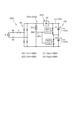
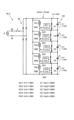
- FIG. 1 is a circuit diagram showing an example of numerical values (constants of each element, voltages of each part during normal operation) for explaining the circuit configuration and operation of a first embodiment of a power supply device of the present invention
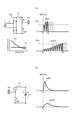
- FIG. 13 is a diagram showing the difference in current limiting characteristics between a thermistor and a resistor, in which (a) shows a first model circuit and its operating waveforms, and (b) shows a second model circuit and its operating waveforms.
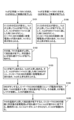
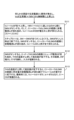
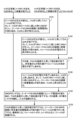
- 2A is a flowchart showing an operation when an abnormality mode 1 occurs in the power supply device of FIG. 1
- FIG. 2B is a flowchart showing an operation when an abnormality mode 2 occurs.
- FIG. 1 is a circuit diagram showing an example of numerical values (constants of each element, voltages of each part during normal operation) for explaining the circuit configuration and operation of a first embodiment of a power supply device of the present invention
- FIG. 13 is a diagram showing the difference in current limiting characteristics between a thermistor and a resistor
- FIG. 11 is a circuit diagram showing a first modified example of the power supply device of the first embodiment, and showing examples of numerical values (constants of each element, and voltages of each part during normal operation) for explaining the circuit configuration and operation of the first modified example.
- 5A is a flowchart showing the operation when an abnormality mode 1 occurs in the power supply device of FIG. 4, and
- FIG. 5B is a flowchart showing the operation when an abnormality mode 2 occurs.
- FIG. 13 is a diagram showing a second modified example of the power supply device of the first embodiment, in which FIG. 13A is a circuit diagram showing example numerical values (constants of each element, and voltages of each part during normal operation) for explaining the circuit configuration and operation of the second modified example, and FIG.
- FIG. 13B is a circuit diagram showing the circuit configuration of a boost chopper.
- FIG. 11 is a circuit diagram showing a third modified example of the power supply device of the first embodiment, and showing examples of numerical values (constants of each element, and voltages of each part during normal operation) for explaining the circuit configuration and operation of the third modified example.
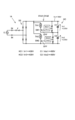
- FIG. 11 is a circuit diagram showing an example of numerical values (constants of each element, voltages of each part during normal operation) for explaining the circuit configuration and operation of a power supply device according to a second embodiment of the present invention.
- 9 is a flowchart showing an operation when abnormality mode 1 occurs in the power supply device of FIG. 8.
- 10 is a flowchart showing an operation when abnormality mode 2 occurs in the power supply device of FIG. 8.
- FIG. 9 is a flowchart showing an operation when abnormality mode 1 occurs in the power supply device of FIG. 8.
- 11 is a circuit diagram showing a first modified example of the power supply device of the second embodiment, and showing examples of numerical values (constants of each element, and voltages of each part during normal operation) for explaining the circuit configuration and operation of the first modified example.
- 12 is a flowchart showing an operation when abnormality mode 1 occurs in the power supply device of FIG. 11.
- 12 is a flowchart showing an operation when abnormality mode 2 occurs in the power supply device of FIG. 11.
- FIG. 13 is a diagram showing second and third modified examples of the power supply device of the second embodiment, in which (a) is a circuit diagram showing an example of numerical values (constants of each element, voltage of each part during normal operation) for explaining the circuit configuration and operation of the second modified example, and (b) is a circuit diagram showing an example of numerical values (constants of each element, voltage of each part during normal operation) for explaining the circuit configuration and operation of the third modified example.
- FIG. 11 is a circuit diagram showing an example of numerical values (constants of each element, voltages of each part during normal operation) for explaining the circuit configuration and operation of a third embodiment of a power supply device of the present invention.
- 16 is a flowchart showing an operation when abnormality mode 1 occurs in the power supply device of FIG. 15.
- FIG. 16 is a flowchart showing an operation when abnormality mode 2 occurs in the power supply device of FIG. 15.
- FIG. 13 is a circuit diagram showing a first modified example of the power supply device of the third embodiment, and showing examples of numerical values (constants of each element, and voltages of each part during normal operation) for explaining the circuit configuration and operation of the first modified example.
- 20 is a flowchart showing an operation when abnormality mode 1 occurs in the power supply device of FIG. 18.
- 20 is a flowchart [part 1] showing the operation when abnormality mode 2 occurs in the power supply device of FIG. 18.
- 20 is a flowchart [part 2] showing the operation when abnormal mode 2 occurs in the power supply device of FIG. 18.
- FIG. 13 is a diagram showing second and third modified examples of the power supply device of the third embodiment, in which (a) is a circuit diagram showing an example of numerical values (constants of each element, voltage of each part during normal operation) for explaining the circuit configuration and operation of the second modified example, and (b) is a circuit diagram showing an example of numerical values (constants of each element, voltage of each part during normal operation) for explaining the circuit configuration and operation of the third modified example.
- a power supply device 10 of this embodiment is a device that rectifies and smoothes an AC voltage such as a commercial AC voltage to generate a DC voltage Vx and outputs it to a downstream device (e.g., a DC-DC converter, etc.) not shown.
- a downstream device e.g., a DC-DC converter, etc.
- the power supply device 10 includes an input terminal IN, a rectifier circuit SS, a fuse F, a smoothing circuit HC, and overvoltage protection circuits OBa1 and OBa2.
- the input terminal IN is a terminal to which an AC power source E is externally connected.
- the rectifier circuit SS rectifies the AC voltage input to the input terminal IN, and is configured to perform full-wave rectification by connecting four diodes in a bridge configuration.
- the fuse F is an element inserted between the input terminal IN and the rectifier circuit SS, and melts to cut off the input when the fuse current If exceeds the melting current Icut.
- the smoothing circuit HC is a circuit that smoothes the voltage output by the rectifier circuit SS, and is composed of two smoothing capacitors C1 and C2 connected in series.
- the smoothing capacitors C1 and C2 have the same capacitance and also the same withstand voltages Vdc1 and Vdc2.
- the smoothing capacitor C1 may be composed of a single capacitor element, or may be composed of multiple capacitor elements connected in parallel. The same applies to the smoothing capacitor C2.
- a balancing resistor (not shown) is connected in parallel to the smoothing capacitors C1 and C2 to stabilize the voltage division ratio, which is determined by the capacitance ratio of the smoothing capacitors C1 and C2.
- An overvoltage protection circuit is provided for each of the smoothing capacitors C1 and C2.
- the overvoltage protection circuit OBa1 for the smoothing capacitor C1 operates when the voltage Vc1 of the smoothing capacitor C1 exceeds the reference value Vr1
- the overvoltage protection circuit OBa2 for the smoothing capacitor C2 operates when the voltage Vc2 of the smoothing capacitor C2 exceeds the reference value Vr2.
- the overvoltage protection circuit OBa1 is composed of a thermistor TH1 with a negative temperature characteristic, a switch element SW1 connected in series to the thermistor TH1, and a drive circuit KC1 that drives the switch element SW1.
- the switch element SW1 is an element that switches from off to on upon receiving a signal from the drive circuit KC1, and can be, for example, a thyristor, a triac, a transistor, or a relay.
- One end of the series circuit of the thermistor TH1 and the switch element SW1 is connected to the output terminal of the rectifier circuit SS, and the other end is connected to one end of the low-voltage side of the smoothing circuit HC.
- the drive circuit KC1 has a threshold voltage Vth1 corresponding to the reference value Vr1, detects the voltage Vc1 of the smoothing capacitor C1 or a voltage corresponding to this, and outputs a signal to hold the switch element SW1 on when the detected value exceeds the threshold voltage Vth1.
- Vth1 a threshold voltage corresponding to the reference value Vr1
- detects the voltage Vc1 of the smoothing capacitor C1 or a voltage corresponding to this and outputs a signal to hold the switch element SW1 on when the detected value exceeds the threshold voltage Vth1.
- two resistors for detecting the voltage Vc1 are shown outside the block labeled "KC1", but these two resistors are part of the drive circuit KC1.
- the overvoltage protection circuit OBa2 has the same configuration as the overvoltage protection circuit OBa1, and is composed of a thermistor TH2 with negative temperature characteristics, a switch element SW2 connected in series to thermistor TH2, and a drive circuit KC2 that drives the switch element SW2.
- Thermistor TH1 functions to limit the current that flows through TH1 and SW1 when switch element SW1 is turned on
- thermistor TH2 functions to limit the current that flows through TH2 and SW2 when switch element SW2 is turned on.
- One of the major features of the overvoltage protection circuits OBa1 and OBa2 is that they limit the current using a thermistor TH, whose resistance value changes with temperature, rather than using resistor R to limit the current as in conventional circuits.
- resistor R is replaced with a thermistor TH, which has a negative temperature characteristic.
- a thermistor TH is used whose resistance is greater than resistor R at low temperatures (e.g., 25°C) and smaller than resistor R at high temperatures (e.g., 70 to 100°C).
- the large current Ic (R) instantly applies a large power stress to resistor R and switch element SW, causing intense heat generation and a sudden rise in temperature, which may cause damage in open mode due to thermal shock.
- the current Ic (R) discharging the smoothing capacitor C1 instantly becomes zero and the voltage Vc is maintained at a constant value.
- resistor R is replaced with thermistor TH, which has a negative temperature characteristic.
- resistor R is replaced with thermistor TH, as shown in the lower time chart in Figure 2(b), immediately after switch element SW is turned on at time T1, a relatively small current Ic(TH) is generated and flows into thermistor TH and switch element SW. Thermistor TH then heats up, its resistance value gradually decreases, and a predetermined amount of current Ic(TH) continues to flow, eventually resulting in Vc ⁇ zero and Ic(TH) ⁇ zero.
- thermoistor TH when thermistor TH is used, although a certain amount of power stress is applied to thermistor TH and switch element SW when switch element SW is turned on, it is possible to avoid open mode damage due to thermal shock and to reliably reduce voltage Vc.
- the power supply device 10 has a circuit configuration that combines the first and second model circuits, and the thermistors TH1 and TH2 are used to limit the current of the switches SW1 and SW2 in order to obtain the same effect when the overvoltage protection circuits OBa1 and OBa2 are activated.
- the specific operation of the overvoltage protection circuits OBa1 and OBa2 will be described later in the operation explanation.
- the rated voltages Vdc1 and Vdc2 of the smoothing capacitors C1 and C2 are each 450V, and the reference values Vr1 and Vr2 (reference values at which the switch elements SW1 and SW2 are switched on) determined by the settings of the threshold voltages Vth1 and Vth2 of the drive circuits KC1 and KC2 are each 430V.
- the voltage Vx of the smoothing circuit HC is 750V
- the voltages Vc1 and Vc2 of the smoothing capacitors C1 and C2 are each approximately 375V ( ⁇ 750V/2). Note that these values are merely examples.
- abnormal mode 1 occurs in the power supply device 10, the operation shown in FIG. 3(a) is performed.
- steps S11 to S13 it is assumed that the voltage Vc1 during normal operation is slightly higher than the voltage Vc2, but even if the voltage Vc2 is higher, the flow is similar to steps S11 to S13 and the final result is the same.
- Power supply device 10 stops operating with fuse F blown and the input cut off.
- the operation shown in FIG. 3(b) is performed.
- the smoothing capacitors C1 and C2 are safely protected.
- the power supply device 10 stops operating with the fuse F blown and the input cut off.
- a power supply unit 10(1) which is a first modified example of the power supply unit 10, will be described with reference to Figures 4 and 5.
- the same components as those in the power supply unit 10 are given the same reference numerals and the description thereof will be omitted.
- the power supply device 10(1) comprises an input terminal IN, a rectifier circuit SS, a fuse F, a smoothing circuit HC (smoothing capacitors C1 to C5), and overvoltage protection circuits OBa1 to OBa5. It differs from the power supply device 10 in that it has five smoothing capacitors connected in series, and accordingly five overvoltage protection circuits.
- Smoothing capacitors C1 to C5 have the same capacitance and the same withstand voltages Vdc1 to Vdc5. Balancing resistors (not shown) are connected in parallel to smoothing capacitors C1 to C5 to stabilize the voltage division ratio, which is determined by the capacitance ratio of smoothing capacitors C1 to C5.
- the overvoltage protection circuit OVa(k) will operate when the voltage Vc(k) of the smoothing capacitor C(k) exceeds the reference value Vr(k).
- the overvoltage protection circuit OBa(k) is composed of a thermistor TH(k) with negative temperature characteristics, a switch element SW(k) connected in series to the thermistor TH(k), and a drive circuit KC(k) that drives the switch element SW(k).
- One end of the series circuit of the thermistor TH(k) and switch element SW(k) is connected to the output terminal of the rectifier circuit SS, and the other end is connected to one end on the low-voltage side of the smoothing circuit HC.
- the drive circuit KC(k) has a threshold voltage Vth(k) that corresponds to the reference value Vr(k), and detects the voltage Vc(k) of the smoothing capacitor C(k) or a voltage corresponding to this. When the detected value exceeds the threshold voltage Vth(k), it outputs a signal to hold the switch element SW(k) on.
- the voltage Vx of the smoothing circuit HC is 750V
- the voltages Vc1 to Vc5 of the smoothing capacitors C1 to C5 are each approximately 150V ( ⁇ 750V/5). These values are merely examples.
- abnormal mode 1 occurs in power supply device 10(1), the operation shown in FIG. 5(a) is performed.
- steps S31 to S33 it is assumed that voltage Vc1 during normal operation is slightly higher than voltages Vc2 to Vc5, but if a voltage other than voltage Vc1 is high, the flow will be similar to steps S31 to S33 and the final result will be the same.
- one of the five smoothing capacitors C1 to C5 has deteriorated and its capacity has decreased.
- Power supply device 10(1) stops operating with fuse F blown and the input cut off.
- a power supply unit 10(2) which is a second modified example of the power supply unit 10 will be described with reference to Fig. 6.
- the same components as those of the power supply unit 10 are given the same reference numerals and the description thereof will be omitted.
- the power supply unit 10(2) is configured by adding a known boost chopper SYC to the power supply unit 10.
- the boost chopper SYC is inserted between the output terminal of the rectifier circuit SS and one end of the high-voltage side of the smoothing circuit HC.
- the boost chopper SYC is composed of an inductor L, a switching element TR, and a rectifier diode DI.
- One end of the inductor L is connected to the output end of the rectifier circuit SS, and the switching element TR is connected between the other end of the inductor L and one end of the low-voltage side of the smoothing circuit HC.
- the rectifier diode DI has an anode connected to the connection point between the inductor L and the switching element, and a cathode connected to one end of the high-voltage side of the smoothing circuit HC.
- the boost chopper chops the pulsating voltage Vss generated at the output end of the rectifier circuit SS, which is smoothed by the smoothing circuit HC to generate a DC voltage Vx.
- the boost chopper SYC is provided to generate a voltage Vx higher than the peak value of the voltage Vss, and to further improve the power factor.
- steps S11 to S13 shown in Fig. 3(a) are performed, but in the case of the power supply unit 10(2), the content of the operation of each step is slightly different.
- Step S12 is performed in a similar manner. That is, when the switch element SW1 is turned on, the fuse current If starts to flow through the path E ⁇ F ⁇ TH1, SW1, the temperature of thermistor TH1 rises, and the resistance value drops. As a result, the fuse current If increases, fuse F melts, and the input is cut off.
- step S13 the discharge current Ic flows from C1, C2 to the balancing resistor (not shown) instead of from C1, C2 to TH1, SW1, and the voltages Vc1 and Vc2 gradually decrease. Eventually, Vc1 and Vc2 become nearly zero, and Ic becomes nearly zero, protecting the smoothing capacitors C1 and C2.
- the power supply device 10(2) is characterized in that the discharge current Ic does not flow through the thermistor TH1 and the switch element SW1, reducing the power stress applied to these elements, making it easier to prevent thermistor TH1 and the switch element SW1 from being damaged in open mode.
- steps S21 to S23 shown in Figure 3(b) are performed, but in the case of power supply unit 10(2), the content of the operation of each step is slightly different.
- the discharge current Ic in the path from C1, C2 ⁇ TH1, SW1 does not flow due to the presence of rectifier diode DI.
- Step S22 is performed in a similar manner. That is, when the switch element SW1 is turned on, the fuse current If starts to flow through the path E ⁇ F ⁇ TH1, SW1, the temperature of thermistor TH1 rises, and the resistance value drops. As a result, the fuse current If increases, fuse F melts, and the input is cut off.
- step S23 the discharge current Ic flows from C1, C2 to the balancing resistor (not shown) instead of from C1, C2 to TH1, SW1, and the voltages Vc1 and Vc2 gradually decrease. Eventually, Vc1 and Vc2 become nearly zero, and Ic becomes nearly zero, protecting the smoothing capacitors C1 and C2.
- the power supply device 10(2) is characterized in that a large discharge current Ic does not flow through the thermistor TH1 and the switch element SW1, so the power stress on these elements can be reduced, making it easier to prevent thermistor TH1 and the switch element SW1 from being damaged in open mode.
- Power supply unit 10(3) is a modified version of power supply unit 10(2), with the thermistor TH1 and switch element SW1 of overvoltage protection circuit OBa1 also serving as the thermistor and switch element of overvoltage protection circuit OBa2, thereby reducing the number of components.
- the operation of power supply unit 10(3) is similar to that of power supply unit 10(2).
- the power supply device 10 is configured to include a switch element SW(k) that turns on when an overvoltage exceeding a reference value Vr(k) occurs in each smoothing capacitor C(k), and to limit the current flowing through the switch element SW(k) that has been turned on by a thermistor TH(k) with a negative temperature characteristic. Therefore, the switch element (k) and thermistor TH(k) can be easily prevented from being damaged in the open mode, and each smoothing capacitor C(k) can be reliably protected. Inexpensive elements with relatively small power ratings can be used for the switch element SW(k) and thermistor TH(k).
- the power supply unit 10 has many design parameters, and the threshold value for turning on the switch element and the thermistor characteristics (resistance value and temperature coefficient) can be freely adjusted or changed, allowing for greater design freedom than in the past. Therefore, it can be easily applied to a smoothing circuit with three or more smoothing capacitors in series, as in the power supply unit 10(1).
- the boost chopper SYC Even if the boost chopper SYC is not provided, the same effect can be obtained by inserting a single diode element (auxiliary diode) between the rectifier circuit SS and the smoothing circuit HC in the same orientation as the rectifier diode DI.
- auxiliary diode auxiliary diode
- power supply unit 10(3) it is also possible to configure one set of thermistor TH1 and switch element SW1 to serve as multiple sets of thermistors and switch elements, thereby achieving the same effects as power supply units 10, 10(1), and 10(2) and further reducing the number of parts.
- the power supply device 12 of this embodiment is a device that rectifies and smoothes an AC voltage such as a commercial AC voltage to generate a DC voltage Vx and outputs it to a downstream device (e.g., a DC-DC converter, etc.) not shown.
- a downstream device e.g., a DC-DC converter, etc.
- the power supply device 12 includes an input terminal IN, a rectifier circuit SS, a fuse F, a smoothing circuit HC, and overvoltage protection circuits OVb1 and OVb2.
- the power supply device 12 differs from the power supply circuit 10 in that the overvoltage protection circuits OBa1 and OBa2 are replaced with overvoltage protection circuits OVb1 and OVb2.
- the overvoltage protection circuit OVb like the overvoltage protection circuit OBa1, is composed of a thermistor TH1 with negative temperature characteristics, a switch element SW1 connected in series to the thermistor TH1, and a drive circuit KC1 that drives the switch element SW1, but differs in that the series circuit of thermistor TH1 and switch element SW1 is connected in parallel to both ends of the smoothing capacitor C1.
- the overvoltage protection circuit OVb2 has the same configuration as the overvoltage protection circuit OVb1, and is composed of a thermistor TH2 with negative temperature characteristics, a switch element SW2 connected in series to thermistor TH2, and a drive circuit KC2 that drives the switch element SW2.
- abnormal mode 1 occurs in the power supply device 12, the operation shown in FIG. 9 is performed.
- the fuse current If starts to flow through the path E ⁇ F ⁇ TH1, SW1, TH2, SW2, the temperature of thermistors TH1 and TH2 rises and the resistance value drops. As a result, the fuse current If increases and fuse F melts, cutting off the input. [Step S53]. As the fuse current If increases, the power stress of thermistors TH1, TH2 and switch elements SW1 and SW2 gradually increases, but because fuse F melts quickly, the thermistors TH1, TH2 and switch elements SW1 and SW2 are not damaged.
- steps S51 to S54 it is assumed that voltage Vc1 during normal operation is slightly higher than voltage Vc2, but even if voltage Vc2 is higher, a similar flow to steps S51 to S54 will occur, and ultimately the same results will be achieved.
- the operation shown in FIG. 10 is performed.
- the fuse current If starts to flow through the path E ⁇ F ⁇ TH1, SW1, TH2, SW2, the temperature of thermistors TH1 and TH2 rises and the resistance value drops. As a result, the fuse current If increases and fuse F melts, cutting off the input. [Step S64]. As the fuse current If increases, the power stress of thermistors TH1, TH2 and switch elements SW1 and SW2 gradually increases, but because fuse F melts quickly, the thermistors TH1, TH2 and switch elements SW1 and SW2 are not damaged.
- steps S61 to S65 it is assumed that the capacitance of smoothing capacitor C1 has decreased, but if the capacitance of smoothing capacitor C2 has decreased, the flow will be similar to steps S61 to S65 and the final result will be the same.
- a power supply device 12(1) which is a first modified example of the power supply device 12, will be described with reference to Figures 11 to 13.
- the same components as those in the power supply device 12 are given the same reference numerals and the description thereof will be omitted.
- the power supply device 12(1) includes an input terminal IN, a rectifier circuit SS, a fuse F, a smoothing circuit HC (smoothing capacitors C1 to C5), and overvoltage protection circuits OVb1 to OVb5.
- the difference from the power supply device 12 is that the number of smoothing capacitors connected in series is five, and accordingly the number of overvoltage protection circuits is five.
- the smoothing capacitors C1 to C5 have the same capacitance and the same withstand voltages Vdc1 to Vdc5. Balancing resistors (not shown) are connected in parallel to the smoothing capacitors C1 to C5 to stabilize the voltage division ratio determined by the capacitance ratio of the smoothing capacitors C1 to C5. If one of the smoothing capacitors C1 to C5 is designated C(k) and the corresponding overvoltage protection circuit is OVb(k), the overvoltage protection circuit OVb(k) will operate when the voltage Vc(k) of the smoothing capacitor C(k) exceeds a reference value Vr(k).
- the overvoltage protection circuit OVb(k) is composed of a thermistor TH(k) with negative temperature characteristics, a switch element SW(k) connected in series to the thermistor TH(k), and a drive circuit KC(k) that drives the switch element SW(k).
- the series circuit of the thermistor TH(k) and the switch element SW(k) is connected in parallel to both ends of the smoothing capacitor C(k).
- the drive circuit KC(k) has a threshold voltage Vth(k) that corresponds to a reference value Vr(k), and detects the voltage Vc(k) of the smoothing capacitor C(k) or a voltage corresponding to this. When the detected value exceeds the threshold voltage Vth(k), it outputs a signal to hold the switch element SW(k) on.
- thermistor TH(k) is at a low temperature and has a large resistance, the peak value of discharge current Ic(k) is appropriately limited, thermistor TH(k) and switching element SW(k) are not damaged, and a conductive state is maintained.
- the fuse current If starts to flow through the path E ⁇ F ⁇ TH1, SW1, ..., TH5, SW5, causing the temperature of thermistors TH1 to TH5 to rise and the resistance value to fall.
- the fuse current If increases and fuse F melts, cutting off the input.
- the fuse current If increases, the power stress of thermistors TH1 to TH5 and switch elements SW1 to SW5 gradually increases, but because fuse F melts quickly, the thermistors TH1 to TH5 and switch elements SW1 to SW5 are not damaged.
- steps S71 to S74 it is assumed that voltage Vc1 during normal operation is slightly higher than voltages Vc2 to Vc5, but if a voltage other than voltage Vc1 is high, the flow is similar to steps S71 to S74 and ultimately the same result will be achieved.
- Power supply device 10 stops operating with fuse F blown and the input cut off.
- one of the five smoothing capacitors C1 to C5 has deteriorated and its capacity has decreased.
- a power supply unit 12(2) which is a second modified example of the power supply unit 12 will be described with reference to Fig. 14(a).
- the same components as those of the power supply unit 12 will be given the same reference numerals and the description thereof will be omitted.
- the power supply device 12(2) is configured by replacing the overvoltage protection circuits OVb1 and OVb2 of the power supply device 12 with new overvoltage protection circuits OVc1 and OVc2.
- the overvoltage protection circuit OVc1 is composed of a thermistor TH1 with negative temperature characteristics and a switch element SW1x connected in series to the thermistor TH1, and does not have a drive circuit.
- the series circuit of the thermistor TH1 and the switch element SW1x is connected in parallel to both ends of the smoothing capacitor C1.
- the switch element SW1x has a threshold voltage Vth1 that corresponds to the reference value Vr1, and when the voltage across it exceeds the threshold voltage Vth, it switches from high impedance to low impedance and maintains the low impedance state.
- Examples include varistors and Zener diodes that switch to short mode when the voltage across them exceeds a specified value, and arresters that allow current to flow by discharging between electrodes when the voltage across them exceeds a specified value.
- a composite element may be used in which a Zener diode is connected between the anode and gate of a thyristor, and the thyristor turns on and allows current to flow when the anode-cathode voltage of the thyristor exceeds a specified value. If such a switch element SW1x is used, a drive circuit is not required.
- the overvoltage protection circuit OVc2 has the same configuration as the overvoltage protection circuit OVc1, and is composed of a thermistor TH2 with negative temperature characteristics and a switch element SW2x connected in series to thermistor TH2.
- Power supply device 12(2) replaces the switch elements SW1, SW2 and drive circuits KC1, KC2 of power supply device 12 with switch elements SW1x, SW2x of different configurations, thereby reducing the number of parts.
- the operation of power supply device 12(2) is the same as that of power supply device 12.
- a power supply unit 12(3) which is a third modified example of the power supply unit 12, will be described with reference to FIG. 14(b).
- the power supply unit 12(3) is the same as the power supply unit 12(2) except that a boost chopper SYC is added to it.
- the position at which the boost chopper SYC is inserted is slightly different.
- the boost chopper SYC is inserted between one end of the parallel circuit of TH1, SW1, TH2, SW2, and one end of the high-voltage side of the smoothing circuit HC.
- the boost chopper SYC is inserted between the output end of the rectifier circuit SS and one end of the series circuit of TH1, SW1, TH2, SW2.
- power supply unit 12(3) when an abnormality occurs is the same as that of power supplies 12 and 12(2).
- power supply unit 12(3) since TH1, SW1 and TH2, SW2 are connected in series, in order to smoothly operate in abnormal modes 1 and 2 shown in Figures 9 and 10, it is necessary to insert boost chopper SYC in the position shown in Figure 14(b).
- Power supply units 12, 12(1)-12(3) have a slightly different circuit configuration than power supply units 10, 10(1)-10(3) described above, but provide substantially the same operational effects.
- the power supply device 12(2) has the advantage of being able to significantly reduce the number of parts because it does not require a drive circuit for the switching element.
- Vth threshold voltage
- the power supply device 14 of this embodiment is a device that rectifies and smoothes an AC voltage such as a commercial AC voltage to generate a DC voltage Vx and outputs it to a downstream device (e.g., a DC-DC converter, etc.) not shown.
- a downstream device e.g., a DC-DC converter, etc.
- the power supply device 14 includes an input terminal IN, a rectifier circuit SS, a fuse F, a smoothing circuit HC, and overvoltage protection circuits OVd1 and OVd2.
- the power supply device 14 differs from the power supply circuit 10 in that the overvoltage protection circuits OBa1 and OBa2 are replaced with overvoltage protection circuits OVd1 and OVd2.
- the overvoltage protection circuit OVd like the overvoltage protection circuit OBa1, is composed of a thermistor TH1 with negative temperature characteristics, a switch element SW1 connected in series to the thermistor TH1, and a drive circuit KC1 that drives the switch element SW1.
- thermistor TH1 with negative temperature characteristics
- switch element SW1 connected in series to the thermistor TH1
- drive circuit KC1 that drives the switch element SW1.
- one end of the series circuit of thermistor TH1 and switch element SW1 is connected to one end on the high voltage side of the smoothing circuit HC, and the other end is connected to one end on the low voltage side of the smoothing capacitor C1.
- the overvoltage protection circuit OVd2 has the same configuration as the overvoltage protection circuit OVd1, and is composed of a thermistor TH2 with negative temperature characteristics, a switch element SW2 connected in series to thermistor TH2, and a drive circuit KC2 that drives the switch element SW2.
- abnormal mode 1 occurs in the power supply device 14, the operation shown in FIG. 16 is performed.
- step S95 is performed instead of steps S91 and S92.
- discharge current Ic begins to flow through the path C1, C2 ⁇ TH1, SW1, suppressing the rise in voltages Vc1 and Vc2 [step S95].
- steps S93 and S94 described above are performed to protect smoothing capacitors C1 and C2.
- the operation shown in FIG. 17 is performed.
- step S106 is performed instead of steps S101 to S103.
- a power supply device 14(1) which is a first modified example of the power supply device 14, will be described with reference to Figures 18 to 21.
- the same components as those in the power supply device 14 are given the same reference numerals and the description thereof will be omitted.
- the power supply device 14(1) includes an input terminal IN, a rectifier circuit SS, a fuse F, a smoothing circuit HC (smoothing capacitors C1 to C5), and overvoltage protection circuits OVd1 to OVd5. It differs from the power supply device 14 in that it has five smoothing capacitors connected in series, and accordingly five overvoltage protection circuits.
- Smoothing capacitors C1 to C5 have the same capacitance and the same withstand voltages Vdc1 to Vdc5. Balancing resistors (not shown) are connected in parallel to smoothing capacitors C1 to C5 to stabilize the voltage division ratio, which is determined by the capacitance ratio of smoothing capacitors C1 to C5.
- the overvoltage protection circuit OVd(k) will operate when the voltage Vc(k) of the smoothing capacitor C(k) exceeds the reference value Vr(k).
- the overvoltage protection circuit OVd(k) is composed of a thermistor TH(k) with negative temperature characteristics, a switch element SW(k) connected in series to the thermistor TH(k), and a drive circuit KC(k) that drives the switch element SW(k).
- One end of the series circuit of the thermistor TH(k) and switch element SW(k) is connected to one end of the high voltage side of the smoothing circuit HC, and the other end is connected to one end of the low voltage side of the smoothing capacitor C(k).
- the drive circuit KC(k) has a threshold voltage Vth(k) that corresponds to the reference value Vr(k), and detects the voltage Vc(k) of the smoothing capacitor C(k) or a voltage corresponding to this, and when the detected value exceeds the threshold voltage Vth(k), it outputs a signal to hold the switch element SW(k) on.
- step S111 ends when switch element SW5 turns on, even if not all switch elements SW1 to SW5 are turned on.
- a discharge current Ic begins to flow through the path C1 to C5 ⁇ TH5, SW5, suppressing the rise in all voltages Vc1 to Vc5.
- one of the five smoothing capacitors C1 to C5 has deteriorated and its capacity has decreased.
- the power supply device 14(1) operates differently depending on which of the smoothing capacitors C1 to C5 has a reduced capacity.
- the capacity of the smoothing capacitor C5 has reduced.
- the voltage division ratio of the smoothing capacitors C1 to C5 changes, the voltage Vc5 rises, and the voltages Vc1 to Vc4 fall.
- the switch element SW5 turns on, and the discharge current Ic starts to flow through the path C1 to C5 ⁇ TH5, SW5, suppressing the increase in the voltages Vc1 to Vc5 [step S121].
- the thermistor TH5 is low temperature and has a large resistance value, so the peak value of the discharge current Ic is appropriately limited, the thermistor TH5 and the switch element SW5 are not damaged, and the conductive state is maintained.
- smoothing capacitor C(k) we will refer to one of the smoothing capacitors C2 to C4 as smoothing capacitor C(k), and explain the case where the capacity of smoothing capacitor C(k) drops.
- the voltage division ratio of smoothing capacitors C1 to C5 changes, voltage Vc(k) rises, and the others drop.
- SW(k) turns on, and discharge current Ic starts to flow through the path C1 to C(k) ⁇ TH(k), SW(k), suppressing the rise in the total voltage of voltages Vc1 to Vc(k) [step S124].
- thermistor TH(k) is low temperature and has a large resistance, so the peak value of discharge current Ic is appropriately limited, and thermistor TH(k) and switch element SW(k) are not damaged and maintain a conductive state.
- a power supply unit 14(2) which is a second modified example of the power supply unit 14, will be described with reference to Fig. 22(a).
- the same components as those in the power supply unit 14 are given the same reference numerals and the description thereof will be omitted.
- the power supply device 14(2) is obtained by replacing the overvoltage protection circuits OVd1 and OVd2 of the power supply device 14 with new overvoltage protection circuits OVe1 and OVe2.
- the overvoltage protection circuit OVe1 is composed of a thermistor TH1 with negative temperature characteristics, a switch element SW1 connected in series to the thermistor TH1, and a drive circuit KC1 that drives the switch element SW1.
- the overvoltage protection circuit OVe1 differs in that one end of the series circuit of thermistor TH1 and switch element SW1 is connected to one end on the high-voltage side of the smoothing capacitor C1, and the other end is connected to one end on the low-voltage side of the smoothing circuit HC.
- the overvoltage protection circuit OVe2 has the same configuration as the overvoltage protection circuit OVe1, and is composed of a thermistor TH2 having a negative temperature characteristic, a switch element SW2 connected in series to the thermistor TH2, and a drive circuit KC2 that drives the switch element SW2.
- the operations of power supply device 14(2) and power supply device 14 are very similar. In other words, when switch element SW1 is turned on in power supply device 14(2), the same operation is performed as when switch element SW2 is turned on in power supply device 14, and when switch element SW2 is turned on in power supply device 14(2), the same operation is performed as when switch element SW1 is turned on in power supply device 14, ultimately resulting in the same results.
- a power supply unit 14(3) which is a third modified example of the power supply unit 14, will be described with reference to FIG. 22(b).
- the power supply unit 14(3) is configured by adding a step-up chopper SYC to the power supply unit 14. The operation of the power supply unit 14(3) when an abnormality occurs is the same as that of the power supply unit 14.
- Power supply units 14, 14(1)-14(3) have a slightly different circuit configuration than power supply units 10, 10(1)-10(3) and 12, 12(1)-12(3) described above, but provide substantially the same operational effects.
- the power supply device of the present invention is not limited to the above embodiment.
- the internal configuration of the drive circuit (the configuration of a block that detects the voltage of a smoothing capacitor, the configuration of a block that generates a signal that turns on a switch element, etc.) is not particularly limited.
- the order in which the thermistor and the switch element are connected in series is also free.
- the number of smoothing capacitors in the smoothing circuit and the number of overvoltage protection circuits are two or five, but they may be three, four, six or more if the constants of each element can be set to ensure the safety of each smoothing capacitor.
- the constants of each element may be set so that the fuses do not melt when the above abnormal modes 1 and 2 occur, as long as the safety of each smoothing capacitor is ultimately ensured.
- each of the n overvoltage protection circuits with an alarm output circuit that outputs an alarm signal when the switch element is turned on.
- an alarm output circuit that outputs an alarm signal when the switch element is turned on.
Landscapes
- Engineering & Computer Science (AREA)
- Power Engineering (AREA)
- Dc-Dc Converters (AREA)
Priority Applications (2)
| Application Number | Priority Date | Filing Date | Title |
|---|---|---|---|
| JP2025512374A JPWO2024209681A1 (https=) | 2023-04-07 | 2023-04-07 | |
| PCT/JP2023/014394 WO2024209681A1 (ja) | 2023-04-07 | 2023-04-07 | 電源装置 |
Applications Claiming Priority (1)
| Application Number | Priority Date | Filing Date | Title |
|---|---|---|---|
| PCT/JP2023/014394 WO2024209681A1 (ja) | 2023-04-07 | 2023-04-07 | 電源装置 |
Publications (1)
| Publication Number | Publication Date |
|---|---|
| WO2024209681A1 true WO2024209681A1 (ja) | 2024-10-10 |
Family
ID=92973057
Family Applications (1)
| Application Number | Title | Priority Date | Filing Date |
|---|---|---|---|
| PCT/JP2023/014394 Ceased WO2024209681A1 (ja) | 2023-04-07 | 2023-04-07 | 電源装置 |
Country Status (2)
| Country | Link |
|---|---|
| JP (1) | JPWO2024209681A1 (https=) |
| WO (1) | WO2024209681A1 (https=) |
Citations (4)
| Publication number | Priority date | Publication date | Assignee | Title |
|---|---|---|---|---|
| JPH0479769A (ja) * | 1990-07-20 | 1992-03-13 | Mitsubishi Electric Corp | 倍電圧用平滑回路 |
| JPH04111289U (ja) * | 1991-03-06 | 1992-09-28 | テイーデイーケイ株式会社 | 電源回路 |
| JPH05252648A (ja) * | 1992-03-03 | 1993-09-28 | Oki Electric Ind Co Ltd | 保護回路付き整流装置 |
| JPH0632753Y2 (ja) * | 1988-08-26 | 1994-08-24 | サンケン電気株式会社 | 直流電源装置 |
-
2023
- 2023-04-07 JP JP2025512374A patent/JPWO2024209681A1/ja active Pending
- 2023-04-07 WO PCT/JP2023/014394 patent/WO2024209681A1/ja not_active Ceased
Patent Citations (4)
| Publication number | Priority date | Publication date | Assignee | Title |
|---|---|---|---|---|
| JPH0632753Y2 (ja) * | 1988-08-26 | 1994-08-24 | サンケン電気株式会社 | 直流電源装置 |
| JPH0479769A (ja) * | 1990-07-20 | 1992-03-13 | Mitsubishi Electric Corp | 倍電圧用平滑回路 |
| JPH04111289U (ja) * | 1991-03-06 | 1992-09-28 | テイーデイーケイ株式会社 | 電源回路 |
| JPH05252648A (ja) * | 1992-03-03 | 1993-09-28 | Oki Electric Ind Co Ltd | 保護回路付き整流装置 |
Also Published As
| Publication number | Publication date |
|---|---|
| JPWO2024209681A1 (https=) | 2024-10-10 |
Similar Documents
| Publication | Publication Date | Title |
|---|---|---|
| US8068324B2 (en) | Circuit and method for protecting energy-storage device | |
| US20080304298A1 (en) | System Interconnection Inverter | |
| CN118805323A (zh) | 功率转换器和用于保护功率转换器的方法 | |
| US9979286B2 (en) | Power converting device | |
| US12308752B2 (en) | Soft start circuit and power supply circuit | |
| JP2008228538A (ja) | スイッチング電源装置 | |
| CN203072197U (zh) | Led驱动保护电路 | |
| EP3713074B1 (en) | Converter cell for a voltage source converter | |
| CN107112777A (zh) | 用于改进电池平衡以及电池故障检测的系统和方法 | |
| US9018931B2 (en) | Control system for providing circuit protection to a power supply | |
| CN106533141A (zh) | 通过恒定电流使支持电容器放电 | |
| CN101350516A (zh) | 保护储能装置的电路及方法 | |
| CN103493320B (zh) | 用于监视dc电路状态的装置 | |
| JP6797533B2 (ja) | Led電源装置 | |
| WO2024209681A1 (ja) | 電源装置 | |
| JP2002186174A (ja) | 電源回路の保護回路 | |
| JP7154439B2 (ja) | 直流給電対応空気調和機の突入電流抑制回路 | |
| US9913346B1 (en) | Surge protection system and method for an LED driver | |
| CN204669213U (zh) | 一种变频器充电保护电路 | |
| CN105981251A (zh) | 一种带漏电流切断的过电压保护装置 | |
| US6816393B2 (en) | Switching power supply | |
| JP7373767B2 (ja) | 過負荷検出回路 | |
| US20210305891A1 (en) | Power device with protection circuit | |
| JP2000134794A (ja) | 電源装置 | |
| JP7785308B1 (ja) | 直流給電システムとの接続に適した電源装置 |
Legal Events
| Date | Code | Title | Description |
|---|---|---|---|
| 121 | Ep: the epo has been informed by wipo that ep was designated in this application |
Ref document number: 23932091 Country of ref document: EP Kind code of ref document: A1 |
|
| WWE | Wipo information: entry into national phase |
Ref document number: 2025512374 Country of ref document: JP |
|
| NENP | Non-entry into the national phase |
Ref country code: DE |
|
| 122 | Ep: pct application non-entry in european phase |
Ref document number: 23932091 Country of ref document: EP Kind code of ref document: A1 |