WO2024202749A1 - キャピラリ電気泳動装置 - Google Patents
キャピラリ電気泳動装置 Download PDFInfo
- Publication number
- WO2024202749A1 WO2024202749A1 PCT/JP2024/006416 JP2024006416W WO2024202749A1 WO 2024202749 A1 WO2024202749 A1 WO 2024202749A1 JP 2024006416 W JP2024006416 W JP 2024006416W WO 2024202749 A1 WO2024202749 A1 WO 2024202749A1
- Authority
- WO
- WIPO (PCT)
- Prior art keywords
- capillary
- fiber
- detection
- cartridge
- groove
- Prior art date
- Legal status (The legal status is an assumption and is not a legal conclusion. Google has not performed a legal analysis and makes no representation as to the accuracy of the status listed.)
- Ceased
Links
Images






Classifications
-
- G—PHYSICS
- G01—MEASURING; TESTING
- G01N—INVESTIGATING OR ANALYSING MATERIALS BY DETERMINING THEIR CHEMICAL OR PHYSICAL PROPERTIES
- G01N27/00—Investigating or analysing materials by the use of electric, electrochemical, or magnetic means
- G01N27/26—Investigating or analysing materials by the use of electric, electrochemical, or magnetic means by investigating electrochemical variables; by using electrolysis or electrophoresis
- G01N27/416—Systems
- G01N27/447—Systems using electrophoresis
-
- G—PHYSICS
- G01—MEASURING; TESTING
- G01N—INVESTIGATING OR ANALYSING MATERIALS BY DETERMINING THEIR CHEMICAL OR PHYSICAL PROPERTIES
- G01N27/00—Investigating or analysing materials by the use of electric, electrochemical, or magnetic means
- G01N27/26—Investigating or analysing materials by the use of electric, electrochemical, or magnetic means by investigating electrochemical variables; by using electrolysis or electrophoresis
- G01N27/416—Systems
- G01N27/447—Systems using electrophoresis
- G01N27/44704—Details; Accessories
- G01N27/44717—Arrangements for investigating the separated zones, e.g. localising zones
- G01N27/44721—Arrangements for investigating the separated zones, e.g. localising zones by optical means
Definitions
- This disclosure relates to a capillary electrophoresis device, and in particular to a device that optically detects an analyte in a capillary.
- the sample to be analyzed is injected into a capillary filled with a separation medium, and a voltage is applied to both ends to separate the samples based on the difference in mobility.
- a voltage is applied to both ends to separate the samples based on the difference in mobility.
- one method involves electrophoresis of DNA labeled with a fluorescent dye in a capillary filled with a polymer, and separation according to chain length. Excitation light is irradiated onto a detection site on the capillary, and the resulting fluorescence is detected. DNA molecules in the sample move through the capillary and pass the detection site at different times depending on their chain length. As a result, the chain length distribution of DNA molecules in the sample is obtained as a fluorescence intensity waveform.
- the inner diameter of the capillary that separates the sample is generally several tens of ⁇ m.
- the fluorescent excitation light be irradiated with as little loss as possible onto the inner diameter of the capillary through which the sample passes. Therefore, it is desirable that the excitation light is focused to a size equal to or smaller than the inner diameter of the capillary and irradiated onto the inner diameter of the capillary.
- the position of the capillary and the focused excitation light must be adjusted with a positional accuracy equal to or greater than the size of the inner diameter of the capillary.
- the excitation light when multiple capillaries are arranged in a row and excitation light is incident from the side to excite all the capillaries at once, the excitation light must pass through the inner diameter of all the capillaries with as little loss as possible, so the requirements for positional accuracy become stricter, and the position error must be kept to approximately 10 ⁇ m or less.
- the generated fluorescence is introduced into a spectroscopic optical system, where the wavelengths are separated and then measured by an imaging element.
- the spectrum is performed using a grating, but in this case, if the position of the light-emitting point in the capillary changes in the direction of wavelength separation, the wavelength of the fluorescence appears to have shifted on the detector. Since the type of emitted fluorescent dye is identified from the spectral shape of the measured light, a shift in the fluorescent wavelength reduces the accuracy of fluorescent dye identification. A decrease in the accuracy of dye identification is undesirable, as it can lead to the erroneous detection of DNA strands that do not actually exist in DNA analysis, for example.
- the positional relationships of the three components - the excitation light irradiation optical system, the capillary, and the detection optical system - must be precisely adjusted with an error of less than a few tens of micrometers. Furthermore, it is undesirable for the detection performance of the device to change, and it is desirable for this positional relationship to be maintained even when the device is used over a long period of time or when it is moved.
- the capillary electrophoresis the capillary is a consumable item that deteriorates after a certain number of measurements and must be replaced. For this reason, the above positional precision must be maintained even when the capillary is replaced. From the perspective of user convenience, it is desirable for this capillary replacement to be easy to perform.
- the capillaries used in electrophoresis, the optical system that irradiates the capillaries with light, and the optical system that detects the light are usually built into and fixed in an electrophoresis device.
- the positions of each component and the optical elements inside them can change due to vibrations and shocks transmitted from the outside, such as when the device is moved.
- the positions of the optical elements can change due to the expansion and contraction of each component due to the external environment, particularly temperature changes.
- Replacing the capillaries can also cause changes in position.
- the position of the capillaries can change from before replacement due to the tolerance of the outer diameter of the capillary to be installed, errors in the fixing position caused by the capillary fixing mechanism, etc.
- the capillary array is often supplied to the user with the capillaries fixed on a fixing member, but the position of the capillary array can change due to errors in the assembly of the fixing member and the main body.
- Patent Document 1 discloses a method in which an optical fiber for excitation and detection is installed on a flow path chip, and a consumable capillary is attached to the flow path chip, so that the relative positional relationship of the detection optical system does not change even if the capillary is replaced.
- this method has a problem that the separation performance of electrophoresis is adversely affected when an event occurs in which a gap is formed between the flow paths at the joint between the capillary and the flow path chip, or the central axis positions of the two are misaligned.
- Patent Document 2 describes a method for reducing the alignment accuracy required when replacing a capillary by providing a cartridge in which optical components such as an optical fiber and a lens are attached to the capillary.
- a detection fiber array including a light source such as an LED and a lens is connected to a capillary cartridge containing an illumination fiber.
- the position adjustment accuracy of the capillary and the detection fiber array, and the light source and the illumination fiber when replacing the cartridge depends on the accuracy of the detachable mechanical fixing mechanism.
- the mechanical fixing mechanism needs to be inexpensive.
- this mechanical fixing mechanism needs to be robust against external vibrations and impacts, and needs to always keep the positional relationship of each component constant.
- Patent Document 2 does not disclose that the fixing mechanism described meets the above requirements.
- Non-Patent Document 1 describes a method of performing detection by fixing the capillary and the irradiation and detection fibers onto a plate with grooves formed from polydimethylsiloxane.
- the capillary and optical element are fixed onto the same base, so that the optical element is less likely to become misaligned due to vibration or impact.
- it does not describe a method for replacing the capillary, nor does it describe a method for adjusting the relative positional relationship between the capillary and the optical system when replacing the capillary.
- problems similar to those described in Patent Document 1 can arise.
- the capillary in capillary electrophoresis, the capillary must be uniformly temperature regulated.
- the temperature of the capillary is kept at around 60°C so that electrophoresis can be performed while the DNA is denatured.
- the entire capillary must be at a uniform temperature with minimal temperature fluctuations. This temperature regulation mechanism must also achieve both temperature control performance and ease of replacing the capillary.
- Patent Document 1 and Patent Document 2 each describe a method for capillary temperature control, but do not mention any particular advantage of the disclosed structure for temperature control.
- Non-Patent Document 1 does not describe capillary temperature control.
- An example of a capillary electrophoresis apparatus includes: A capillary electrophoresis device having a light source, a first illumination fiber for guiding light from the light source, a detector for detecting light from the capillary, and a first detection fiber for guiding light to the detector, a capillary cartridge having a capillary, a second illumination fiber, and a second detection fiber is attached to a capillary electrophoresis device by connecting the first illumination fiber to the second illumination fiber and the first detection fiber to the second detection fiber;
- the capillary cartridge is characterized in that the optical axes of the second illumination fiber and the second detection fiber are fixed so as to intersect in the inner cavity of the capillary.
- the capillary electrophoresis device disclosed herein can make the light detection optical system in the capillary electrophoresis device less susceptible to changes in the external environment, shocks, and vibrations.
- optical system of the main body and the capillary cartridge can be connected by optical fiber connection, so the capillary cartridge can be easily attached and detached.
- the detection window of the capillary can be structured to be isolated from the external environment. This allows the temperature of the entire capillary, including the measurement window, to be precisely controlled.
- the configuration of the present disclosure can be expanded to cases where there are multiple capillaries, and by adopting a configuration in which excitation light is irradiated from the side of the capillary array, it is possible to prevent a decrease in excitation light power due to splitting of the excitation light even when there are a large number of capillaries.
- FIG. 1 is a configuration diagram of an electrophoretic device 100 according to a first embodiment of the present disclosure.
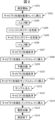
- 1 is a diagram showing a procedure of measurement by an electrophoresis device 100 according to a first embodiment of the present disclosure.
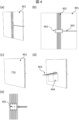
- This is a method for fixing the capillary 111 and the cartridge side irradiation fiber 114 at the detection site 116.
- This is a method for fixing the cartridge side detection fiber 115 at the detection site 116.
- 2 is a schematic diagram showing a connection portion of the capillary cartridge 110.
- FIG. 4 is a schematic diagram showing a method for adjusting the temperature of the capillary 111.
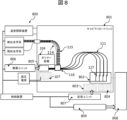
- FIG. 8 is a configuration diagram of an electrophoretic device 800 according to a second embodiment of the present disclosure.
- FIG. 8 is a structural diagram of an electrophoresis apparatus 800 and a capillary cartridge 801 according to a second embodiment of the present disclosure.
- 10 is a schematic diagram showing a method for fixing a detection portion 116.
- FIG. 13 is a diagram showing the structure of a detection site 116 according to a third embodiment of the present disclosure.
- FIG. FIG. 13 is a diagram showing the arrangement of optical fibers when both fluorescence measurement and absorbance measurement are performed.
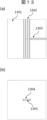
- 13 is a diagram showing the structure of a fixed substrate 1301 according to a fourth embodiment of the present disclosure.
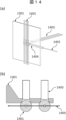
- FIG. 14 is a diagram showing the arrangement of a capillary 1401, an illumination fiber 1402, and a detection fiber 1403 relative to a fixed substrate 1301.
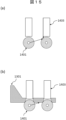
- FIG. 13 is a diagram showing the cause of inter-capillary crosstalk.
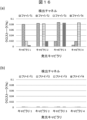
- 13 is a diagram showing the effect of reducing inter-capillary crosstalk by a fixed substrate 1301.
- FIG. 1 is a configuration diagram of an electrophoresis apparatus 100 according to a first embodiment of the present disclosure. This embodiment shows an example in which fluorescence detection is adopted as a detection method. Although DNA is considered as a sample to be measured, the sample is not limited to this.
- the electrophoresis apparatus 100 is provided with an irradiation optical system 101 that generates fluorescent excitation light for fluorescence measurement, and a detection optical system 102 that detects fluorescence.
- the apparatus is provided with a high-voltage power supply 103, a polymer container 104 that holds a polymer as a separation medium, a pump unit 105 that fills the polymer, a temperature control device 106 that controls the temperature of the capillary, a buffer container 107 that holds a buffer that is electrically connected to both ends of the capillary and applies the voltage of the high-voltage power supply to the capillary, and an autosampler unit 108.
- Each of these components is controlled by a control device 109.
- a capillary cartridge 110 which is a consumable item, is connected to the electrophoresis apparatus 100.
- the capillary cartridge has a capillary 111 inside.
- a high voltage power supply 103 applies a voltage to both ends of the capillary 111 via a buffer.
- the illumination optical system 101 inside the electrophoresis device 100 has a body-side illumination fiber 112 for guiding the generated excitation light
- the detection optical system 102 has a body-side detection fiber 113 for guiding the fluorescence.
- the capillary cartridge 110 has a cartridge-side illumination fiber 114 for guiding the excitation light to the capillary, and a cartridge-side detection fiber 115 for guiding the fluorescence generated in the capillary.
- the capillary 111, cartridge-side illumination fiber 114, and cartridge-side detection fiber 115 are adjusted in their relative positions at the detection site 116 and fixed.
- the body-side illumination fiber 112 and cartridge-side illumination fiber 114, and the body-side detection fiber 113 and cartridge-side detection fiber 115 are connected by a fiber connector 117.
- the pump unit 105 consists of a flow path block 118, a syringe 119, a check valve 120, and a valve 121.
- the check valve 120 is installed so that the fluid flows only from the polymer container 104 to the flow path block 118.
- the autosampler unit 108 consists of a buffer tray 122, a cleaning water tray 123, a waste liquid tray 124, a sample tray 125, and a stage 126 that controls their positions.
- An electrode 127 is provided near the sample injection end of the capillary 111, and the end of the capillary 111 and the high-voltage power supply 103 are electrically connected when the buffer tray 122 and the sample tray 125 are installed near the injection end.
- Excitation light generated in the irradiation optical system 101 is introduced into the main body side irradiation fiber 112, and then introduced into the cartridge side irradiation fiber 114 by the fiber connector 117.
- the excitation light reaches the detection site 116 by the cartridge side irradiation fiber 114, and is irradiated onto the inner diameter of the capillary 111.
- Fluorescence generated at the excitation light irradiation site of the capillary 111 is collected by the cartridge side detection fiber 115, and passed to the main body side detection fiber 113 by the fiber connector 117.
- the fluorescence is then detected by the detection optical system 102 and converted into an electrical signal. This signal is recorded by the control device 109.
- electrophoresis device 100 of the present disclosure performs sample analysis by electrophoresis.
- electrophoresis analysis is performed in the following order: polymer injection into the capillary, pre-electrophoresis, sample injection, and sample electrophoresis.
- the operational steps of the device in electrophoresis analysis are shown in Figure 2.
- the pump unit 105 fills the capillary 111 with polymer.
- the waste tray 124 is placed at the end of the capillary 111 (S202), and the valve 121 is closed (S203). With the valve 121 closed, the syringe 119 is made negative pressure, and the polymer is filled into the syringe 119 from the polymer container 104 (S204).
- the inner diameter of the capillary 111 is about several tens of ⁇ m, which is sufficiently smaller than the flow path diameter of the flow path block 118, and the resistance is large, so that the buffer does not flow from the capillary 111 to the syringe 119.
- the syringe 119 is pressurized, and the capillary 111 is filled with polymer (S205). After that, the valve 121 is opened, and the end of the capillary 111 is electrically connected to the high-voltage power supply 103 (S206).
- a preliminary run is performed.
- the wash water tray 123 moves to the sample introduction end of the capillary 111 to wash the tip (S207).
- the buffer tray 122 is placed at the sample introduction end of the capillary 111 (S208), and a high voltage is applied by the high-voltage power supply 103 for several minutes to perform a preliminary run (S209).
- the preliminary run before sample injection removes impurity ions from the polymer filled in the capillaries.
- the sample is injected into the capillary 111.
- the cleaning water tray 123 moves to the sample introduction end of the capillary 111 to clean the tip (S210).
- the sample tray 125 is placed at the sample introduction end of the capillary 111 (S211), and the sample is electrically injected into the capillary 111 by applying a short voltage of about a few seconds to both ends of the capillary 111 from the high-voltage power supply (S212). This step results in the sample being injected only into a small area at the end of the capillary 111.
- the cleaning water tray 123 moves again to the sample introduction end of the capillary 111 to clean the tip, and excess sample adhering to the outer wall of the capillary 111 is removed (S213). Then, the buffer tray 122 is placed at the sample introduction end of the capillary 111 (S214).
- Figures 3 and 4 show detailed examples of the structure of the detection site 116.
- the detection site 116 can be formed by fixing the capillary 111, the cartridge side illumination fiber 114, and the cartridge side detection fiber 115 onto a substrate in which a V-groove is formed.
- Figure 3(a) shows the structure of a fixed substrate 301 that fixes the capillary 111 and the cartridge side illumination fiber 114.
- the fixed substrate 301 includes a capillary fixing groove 302 and a fiber fixing groove 303.
- Figure 3(b) is an enlarged view of the vicinity of the intersection of the capillary fixing groove 302 and the fiber fixing groove 303.
- the fiber fixing groove 303 has a lens fixing groove 304 just before its intersection with the capillary fixing groove 302.
- a through hole 305 is provided at the intersection of the fiber fixing groove 303 and the capillary fixing groove 302.
- the through hole 305 is provided so that the laser light emitted from the cartridge side irradiation fiber 114 fixed in the fiber fixing groove 303 is not blocked by the wall surface of the capillary fixing groove 302.
- the through hole 305 penetrates the substrate, but it may be a recess that does not penetrate the substrate.
- a substrate having the shape of Figure 3(a) can be formed, for example, by anisotropic etching of silicon.
- Figure 3(c) is a diagram showing the case where the capillary 111, cartridge side illumination fiber 114, and ball lens 306 are placed on the fixed substrate 301.
- the capillary 111 is generally coated with a coating such as polyimide, and this coating is removed around the through hole 305 because it interferes with optical measurement.
- the excitation light guided by the cartridge side illumination fiber 114 is collimated by the ball lens 306.
- the collimated excitation light passes through the four capillaries 111 and excites the phosphor inside the capillary 111.
- the outer diameter, inner diameter, and spacing of the capillaries 111 can be set so that the excitation light propagates through each capillary in sequence due to the capillary lens effect.
- the capillary 111, cartridge side illumination fiber 114, and ball lens 306 have different outer diameters, but the axial alignment of each element can be achieved by adjusting the depth of the V-groove that fixes each of them so that the central axis of each element coincides with the substrate surface.
- ball lens 306 is used to collimate the excitation light emitted from cartridge side illumination fiber 114, but collimation may be achieved using other methods such as a GRIN lens or lensed fiber. Also, when there is only one capillary, there is also the option of not performing collimation.
- Figure 4 shows a method of attaching the cartridge side detection fiber 115 to the fixed substrate 301 to which the capillary 111 and cartridge side illumination fiber 114 shown in Figure 3 are fixed.
- a holding substrate 401 ( Figure 4(b)), which has a similar structure to the fixed substrate 301, is attached to the fixed substrate 301 ( Figure 4(a)) on which each component has already been installed.
- the holding substrate 401 has the same capillary fixing groove 302 and fiber fixing groove 303 as the fixed substrate 301. However, its structure differs from that of the fixed substrate 301 in that it has a detection fiber array mounting hole 402.
- the fixed substrate 301 and the holding substrate 401 are fixed with their grooves facing each other ( Figure 4(c)).
- the capillary fixing groove 302 and fiber fixing groove 303 of the holding substrate 401 are grooves in which, when the capillary 111 and cartridge side irradiation fiber 114 are installed in the same manner as in the structure of the fixed substrate 301, their central axes are positioned on the substrate surface.
- the capillary 111 and cartridge side irradiation fiber 114 are fixed by sandwiching them between the fixed substrate 301 and the holding substrate 401.
- the ball lens 306 only comes into contact with the fixed substrate 301, so it is necessary to fix it with an adhesive or the like, but it is possible to glue and fix it to the cartridge side irradiation fiber 114 with a transparent adhesive in advance, or to increase the distance between the ball lens 306 and the capillary 111 and install the ball lens 306 in a position sandwiched between the substrates.
- the cartridge side detection fiber 115 is fixed to a V-groove formed in another substrate, forming a detection fiber array 403.
- the detection fiber array 403 is fixed in a state where it is inserted into the detection fiber array mounting hole 402 (Fig. 4(d)).
- the array fixing member 404 can be held down and fixed to the substrate 401 with adhesive or the like, and the detection fiber array 403 can be fixed to the array fixing member 304 with adhesive or the like.
- the alignment of the fiber array 403 and the capillaries 111 can be performed by a number of means.
- the size of the fiber array 403 and the size of the fiber array mounting hole 402 may be adjusted to match, and the fiber array 403 may be adjusted so that when it is fitted, the cartridge side detection fibers 115 are fixed facing the excitation light irradiation sites on the capillaries 111.
- the detection fiber array mounting holes 402 may be holes opened at the central axis positions of the capillaries, the number of which is equal to the number of capillaries (FIG. 4(e)), and the cartridge side detection fibers 115 may be inserted into these holes to achieve alignment.
- the alignment of the fiber array 403 may be performed using some kind of observation means.
- the capillary 111 and the fiber array 403 may be observed through the through hole 305 with a camera, and the fiber array 403 may be fixed with the capillary 111 and the fiber array 403 aligned.
- water or an aqueous solution of a fluorescent dye may be injected into the capillary 111, and the Raman signal, fluorescent signal, etc. output from the cartridge side detection fiber 115 may be monitored while irradiating it with excitation light.
- the position of the fiber array 403 may be adjusted and fixed so that these signals are maximized.
- FIG. 3 and 4 an example in which there are four capillaries is shown, but any number of capillaries can be used.
- two cartridge-side detection fibers 115 may be provided to equalize the power of the excitation light irradiated to each capillary, and the excitation light may be irradiated from both sides of the capillary array.
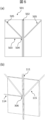
- FIG. 5 (a) shows an example of the structure of a fixed substrate 501 when the number of capillaries is two.
- the fixed substrate 501 has a capillary fixing groove 502, an illumination fiber fixing groove 503, a ball lens fixing hole 504, and a detection fiber fixing groove 505.
- These grooves are formed, for example, by dry etching a silicon substrate to dig a groove with a square cross section. When the groove is square, the depth or width of the groove is adjusted so that the central axes of the capillary 111, cartridge side illumination fiber 114, ball lens 306, and cartridge side detection fiber 115 are on the same plane.
- FIG. 5(b) shows the capillary 111, cartridge side illumination fiber 114, ball lens 306, and cartridge side detection fiber 115 mounted on a fixed substrate 501. Each element is aligned using grooves and then fixed in place using adhesive or the like. As with the example in FIG. 3, the coating of the capillary 111 is removed at the detection position.
- the structure of the detection site 116 is not limited to the above-mentioned configuration, and other configurations may be used as long as the relative positions of the capillary 111, cartridge-side illumination fiber 114, and cartridge-side detection fiber 115 can be fixed. Alignment does not necessarily have to be performed using a structure and groove on the substrate, and a method in which the capillary and fiber are positioned on the substrate using a jig or the like and fixed with adhesive may also be used.
- the cartridge side illumination fiber 114 and the cartridge side detection fiber 115 do not necessarily need to be arranged so that their central axes face the detection point on the capillary 111.
- a reflector provided on the fixed substrate 501 may be used to guide the light emitted from the cartridge side illumination fiber 114 to the detection point on the capillary 111, and the fluorescence emitted from the detection point on the capillary 111 may be incident on the cartridge side detection fiber 115.
- optical fiber arrangement are also applicable when elements other than reflectors are present on the fixed substrate 501.
- a ray of light is assumed to be emitted from the end face of the optical fiber in the direction of the central axis of the optical fiber, and the optical elements on the fixed substrate 501 are assumed to have optical effects such as reflection, refraction, and diffraction on this ray of light.
- the trajectory of this ray of light is then defined as the optical axis of the optical fiber.
- To detect fluorescence emitted from a substance inside the capillary it is sufficient that the optical axes of the cartridge side illumination fiber 114 and the cartridge side detection fiber 115 intersect in the lumen of the capillary 111. Note that the above optical axes do not need to intersect strictly in the lumen of the capillary 111, and some error is permitted as long as it is within the range in which fluorescence is incident on the cartridge side detection fiber 115.
- FIG. 6 is a diagram explaining the connection when installing a capillary cartridge 110 in an electrophoresis device 100.
- the capillary array needs to be connected to a pump unit 105 in order to inject polymer into the capillary array and to electrically connect to the electrodes in a buffer tank 107.
- the capillaries 111 are bundled together at a connection point and connected to the pump unit 105 using a fitting 601 or the like.
- the high-voltage power supply 103 and the electrode 127 are connected by an electrical connector 602.
- the temperature control device 106 is also connected via a temperature control connector 603.
- the temperature control connector 603 is an electrical connector.
- the temperature control connector 603 is a connector for connecting the flow path.
- the fiber connector 117 can be a commonly used SC connector, FC connector, LC connector, etc. If a large number of fibers are to be connected, a multi-core connector such as an MPO connector can be used. Alternatively, a specially designed fiber connector can be used.
- the structure in which the optical system of the electrophoresis device 100 and the capillary cartridge 110 are connected by connecting the main body side illumination fiber 112 and the cartridge side illumination fiber 114, and the main body side detection fiber 113 and the cartridge side detection fiber 115, makes it possible to achieve both ease of replacement of the capillary cartridge 110 and resistance to vibration and changes in the external environment.
- the user can attach and remove the fiber cartridge 110 by simply attaching and detaching the fiber connector 117 regarding the optical system.
- light is transmitted by optical fiber, it is robust against the effects of vibration and changes in the external environment.
- the allowable angular variation of the beam is only ⁇ 0.01 or less.
- the holding structure of the optical system must be made of a strong material with little thermal expansion that does not deform due to vibration or impact, resulting in a large and heavy device.
- transmission is performed via optical fiber, it is sufficient that the rigidity of the sections from the light source to the fiber and from the fiber to the capillary is kept high.
- the tolerance for beam angle changes caused by deformation of the holding structure also increases.
- the above-mentioned effects relate to optical fiber optical systems in general, but in particular, in the structure disclosed herein, the capillary 111, the cartridge side illumination fiber 114, and the cartridge side detection fiber 115 are fixed on a substrate, and a separate connection point with the outside is provided, making it easy to achieve both ease of attachment and detachment and fixing accuracy in the connection between the electrophoresis device 100 and the capillary cartridge 110.
- the fixing structure of the fiber array must be both easy to attach and detach and fixing accuracy, which raises concerns that the attachment and detachment mechanism will be complex and expensive.
- the ease of attachment and detachment and fixing accuracy for external connections are ensured by the fiber connector, which is a commonly used part, and it is sufficient that the requirements for fixing accuracy are met between the capillary and the fiber, so that the attachment and detachment mechanism can be avoided from becoming complicated and expensive.
- FIG. 7 illustrates a method for adjusting the temperature of the capillary 111 in the capillary cartridge 110 of the present disclosure.
- FIG. 7(a) illustrates an example in which the temperature of the capillary 111 is adjusted by a heating element such as a sheet heater 701.
- the capillary 111 and the detection site 116 are arranged so as to be in contact with the sheet heater 701.
- the sheet heater 701 receives power from the electrophoresis device 100 via a temperature adjustment connector 603.
- the sheet heater 701 may be provided with a temperature sensor for feedback control.
- FIG. 7(b) shows an example of adjusting the temperature of the capillary 111 by supplying a fluid such as temperature-adjusted air or an inert liquid to the cartridge.
- the temperature adjustment connector 603 consists of a fluid supply port 702 and a fluid outlet 703. Temperature-adjusted fluid is supplied from the fluid supply port 702.
- a partition wall 704 is provided inside the cartridge, allowing the fluid to flow without stagnation inside, adjusting the temperature of the capillary 111. The fluid then returns to the electrophoresis device 100 from the fluid outlet 703.
- the refractive index of the liquid is different from that of air, and therefore the optical adjustment state may change when the liquid enters the detection site 116.
- the detection site 116 may be sealed to prevent liquid from entering the interior, or the detection site 116 may be designed to allow liquid to enter, and the optical design may be performed assuming that measurement is performed with the light passing site filled with liquid.
- the temperature of most of the capillary can be regulated as a whole.
- the mobility of the sample changes depending on the temperature of the separation medium, so it is desirable to minimize the temperature distribution of the capillary and temperature fluctuations over time in order to obtain stable measurement results. It is desirable to keep the temperature of the capillary constant not only when the device is in a constant environment, but also when the temperature around the device changes.
- capillary electrophoresis devices have a problem in that the detection site 116 is more susceptible to spatial distribution and temporal fluctuations in temperature than other parts of the capillary.
- excitation light must be irradiated onto the capillary 111 and the generated fluorescence must be guided to a detector.
- an opening must be provided through which the excitation light and fluorescence pass, and a temperature control mechanism cannot be provided for this opening.
- the capillary array must be fixed to the optical measurement mechanism inside the device, so heat is conducted through the fixing part, causing a change in temperature.
- Measures that can be taken to address the spatial distribution and temporal fluctuations of temperature caused by the opening include providing a transparent, highly insulating window at the opening, and providing an individual temperature control mechanism at the opening.
- the installation of a transparent window can lead to a decrease in optical performance due to reflections from the window, and non-uniform heat conduction still exists due to the difference in the material and structure of the window and the surrounding material and structure.
- heating and cooling are performed taking into account the thermal conduction state near the opening, but the structure and control required to keep the temperature uniform with other parts can be complex.
- the opening still has more heat exchange with the outside than other parts, the problem of the capillary temperature being more susceptible to changes in temperature due to changes in the temperature of the external environment remains.
- the structure disclosed herein exchanges excitation light and fluorescence light via optical fiber, so the measurement window portion can be almost completely isolated from the outside.
- the temperature of the entire capillary 111 including the detection site 116 using a method such as that shown in FIG. 7, it is possible to uniformly adjust the temperature of all parts as a whole, except for the sample injection end of the capillary, which must be in contact with the outside due to its structure, and the connection part with the pump unit 105.
- the capillary 111, cartridge side illumination fiber 114, and cartridge side detection fiber 115 are fixed in position within the detection site 116, the entire capillary 111 including the detection site 116 does not need to be firmly fixed to the cartridge 110 or electrophoresis device 100. For this reason, in order to reduce heat transfer with the surrounding areas, it is possible to fix the detection site 116 so as to avoid contact with the housing of the capillary cartridge 110 as much as possible, and to install heaters and heat insulating materials around the entire capillary 111 including the detection site 116.
- the electrophoresis device 100 includes an irradiation optical system 101 and a main body side irradiation fiber 112, a detection optical system 102 and a main body side detection fiber 113, and a capillary cartridge 110 includes a cartridge side irradiation fiber 114 and a cartridge side detection fiber 115.
- the capillary 111, the cartridge side irradiation fiber 114, and the cartridge side detection fiber 115 are adjusted in relative positions at a detection site 116 and fixed.
- the main body side irradiation fiber 112 and the cartridge side irradiation fiber 114, and the main body side detection fiber 113 and the cartridge side detection fiber 115 are connected by a fiber connector 117.
- the temperature distribution of the capillary can be made uniform, and temperature fluctuations can be reduced.
- FIG. 8 is a configuration diagram of an electrophoresis device 800 according to the second embodiment of the present disclosure.
- the components of the electrophoresis device 800 according to the second embodiment are the same as those of the electrophoresis device 100 according to the first embodiment.
- the electrophoresis device 800 according to the second embodiment is different from the first embodiment in that consumables such as polymers, buffers, and cleaning solutions and a channel structure for flowing these consumables are integrated into a capillary cartridge 801.
- the capillary cartridge includes a capillary 111, a cartridge side irradiation fiber 114, a cartridge side detection fiber 115, and a detection site 116 inside, as in the first embodiment.
- a sample injection side channel 802 is provided at the sample injection end of the capillary 111.
- a solution tank 803 and a waste liquid tank 804 are connected to the sample side injection channel 802.
- An electrode 127 is installed in the sample injection side channel 802.
- a buffer, a cleaning solution, and the like are stored in the solution tank.
- the opposite end of the capillary 111 is connected to a polymer injection channel 805.
- a polymer container 104 and a buffer container 107 are connected to the polymer injection channel 805.
- the polymer injection flow path 805 has a structure similar to that of the pump unit 105, and injects the polymer into the capillary 111 (S202 to S206).
- the drive unit 806 that drives the mechanism equivalent to the syringe 119 is provided on the electrophoresis device 800 side.
- Cleaning of the capillary (S207, S210, S213) and electrical connection of the capillary tip and electrode by injecting a buffer (S208, S214) are performed by sending cleaning liquid and buffer from a solution tank to the sample injection side flow path 802.
- Each solution is stored in a syringe, and the liquid may be sent by pushing the syringe, or a mechanism for sending the liquid may be incorporated separately.
- a liquid sending unit 807 that supplies power for sending the liquid is provided on the electrophoresis device 800 side.
- the waste liquid is disposed of in a waste liquid tank 804.
- Sample injection is performed by injecting the sample from outside into the sample injection side flow path 802.
- the sample is held in the sample cartridge 808, and the sample is injected into the sample injection side flow path 802 by the sample cartridge control unit 809.
- the sample cartridge 808 may simply hold the sample introduced by the user temporarily and send the sample to the sample injection side flow path 802 at the timing of sample injection (S212), or it may perform pre-processing such as purification of the sample and mixing with a reagent in addition to sending the sample.
- the sample cartridge control unit 809 controls the overall process such as sending and mixing various necessary reagents.
- consumables are built into the capillary cartridge 801, so it is not possible to replace each consumable, such as the capillary, polymer, or buffer, individually depending on the state of wear.
- each consumable such as the capillary, polymer, or buffer
- the ease of maintenance of the device, including replacement of consumables is emphasized.
- This configuration is particularly suitable for use by users who are not familiar with operating the device. It is therefore expected that replacement of the capillary cartridge 801 can be easily performed without requiring special procedures.
- FIG. 9 shows an example of a structure for installing a capillary cartridge 801 in an electrophoresis device 800 according to embodiment 2.
- FIG. 9(a) shows an electrophoresis device 800, a capillary cartridge 801, a sample cartridge 808, and a control device 109.
- the capillary cartridge 801 is connected by being inserted into a capillary cartridge insertion portion 901 provided in the electrophoresis device 800.
- the sample cartridge 808 is connected by being inserted into a sample cartridge insertion portion 902 provided in the electrophoresis device 800.
- the screen of the control device 109 in FIG. 9(a) is shown, it may be a tablet PC, a notebook PC, a desktop PC, or the like, and may also be integrated into the electrophoresis device 800.
- FIG 9(b) shows an example of the structure of the capillary cartridge 801. The functions and operations of each component are as described above.
- the temperature of the capillary is regulated by a heater 903.
- the heater 903 is installed below the capillary 111, but it may be arranged so as to sandwich the capillary 111 in order to improve the accuracy of temperature regulation, or a heat insulating material may be installed on the upper surface of the capillary 111.
- the connector 904. has an electrical connector and an optical connector built in. If the temperature of the capillary is adjusted by circulating a fluid, a connector for connecting the flow path is provided.
- the supply of external force from the drive unit 806 and the liquid delivery unit 807 is performed, for example, by a mechanical mechanism provided in the electrophoresis device 800 applying force to the liquid delivery mechanism 905 from above the cartridge.
- the liquid delivery mechanism 905 has a syringe-like structure, and delivers liquid by being moved up and down by the electrophoresis device 800.
- the valve 906 is also opened and closed by a mechanical force from the electrophoresis device 800.
- the structure shown in FIG. 9 allows the user to easily attach and detach the sample cartridge 801 to and from the electrophoresis device 800.
- the connector 904 electrically and optically connects the sample cartridge 801 and the electrophoresis device 800.
- the mechanism for applying mechanical force to the liquid delivery mechanism 905, valve 906, etc. is accessed from the top of the sample cartridge 801.
- the mechanical mechanism is installed so as not to interfere with the attachment and detachment of the sample cartridge 801, or is moved to a position where it does not interfere when attaching and detaching.
- the sample cartridge 801 is a consumable item and needs to be replaced with a new sample cartridge 801 after a certain number of uses, so there is an advantage in being able to attach and detach it easily.
- the optical connection using optical fiber and optical connectors makes the optical section robust against vibrations and changes in the external environment, as mentioned above.
- the sample cartridge 801 When the sample cartridge 801 is attached to the electrophoresis device 800, it is mechanically fixed to the electrophoresis device 800 so that it does not fall off.
- This fixing mechanism is provided in the housing of the sample cartridge 801.
- commercially available optical connectors generally have a built-in fixing mechanism for fixing to an adapter.
- the fixing mechanism of the sample cartridge 801 and the fixing mechanism of the optical connector may be fixed simultaneously when attached to the electrophoresis device 800.
- the optical connector may not have a built-in fixing mechanism, and the sample cartridge 801 may be fixed only by the fixing mechanism of the sample cartridge 801.
- the optical system of the electrophoresis device 800 disclosed herein is robust against vibrations and changes in the external environment due to the use of optical fibers and optical connectors.
- the position of the optical components may change and the components may be damaged.
- One method of protecting against strong impacts is to attach a cushioning material to the object to be protected. In a configuration in which a light beam is propagated in free space, the relative positions of the excitation light irradiation optical system, the capillary, and the detection optical system must be fixed.
- the excitation light irradiation optical system, the capillary, and the detection optical system to the same structural support, and to protect the structural support with a cushioning material.
- the part to be protected includes the light source, the detection system, the structural support, etc., and has a certain weight. It is necessary to install an interference mechanism that can support this weight and has sufficient cushioning performance.
- the irradiation optical system 101, the detection optical system 102, and the detection part 116 are connected by optical fibers. Because optical fibers are flexible, the irradiation optical system 101, the detection optical system 102, and the detection part 116 can be individually protected by cushioning material.
- the detection part 116 includes the capillary 111 from which the coating has been removed, the cartridge-side irradiation fiber 114, and the cartridge-side detection fiber 115, and since the positional accuracy between these three is important for measurement performance, it requires protection especially against impacts.
- the detection site 116 can be fixed to a structural support 1001 such as the inner wall of the capillary cartridge 801 via a cushioning material 1002.
- the detection site 116 is lightweight, containing only lightweight members such as the capillary 111, the cartridge-side illumination fiber 114, and the cartridge-side detection fiber 115. Therefore, sufficient cushioning performance can be obtained with a simple configuration such as simply using a soft member such as rubber as the cushioning material 1002 and gluing and fixing the structural support 1001, the cushioning material 1002, and the detection site 116.
- a detection fiber array is connected to a capillary array contained in a capillary cartridge.
- a connection mechanism including fibers is connected to the capillary inside the cartridge, it is possible to protect the cartridge and connection mechanism as a single unit from impact.
- the configuration disclosed herein can reduce the weight of the detection part 116 compared to the above structure. This works to the advantage in terms of protection against vibration and impact.
- the electrophoresis device 800 according to the second embodiment has similar components to the electrophoresis device 100 according to the first embodiment and performs similar operations, but differs in that consumables such as polymers and buffers are installed inside the capillary cartridge 801.
- consumables such as polymers and buffers
- electrical and fluid connectors are installed in the capillary cartridge 801, and when the capillary cartridge 801 is inserted into the electrophoresis device 800, these connectors connect the two.
- a mechanical force is supplied from the electrophoresis device 800.
- the detection site 116 is fixed to the structural support 1001 via a buffer material 1002.
- FIG. 11 shows the details of the structure of the detection site 116 in embodiment 3.
- light emitted from the cartridge-side illumination fiber 114 must be irradiated onto the capillary 111, passed through the capillary 111, and then collected by the cartridge-side detection fiber 115.
- this is achieved by configuring the cartridge-side illumination fiber 114 and the cartridge-side detection fiber 115 to face each other with the capillary 111 in between.
- FIG. 11(a) shows the structure of a fixed substrate 1101 for fixing the capillary 111, the cartridge side illumination fiber 114, and the cartridge side detection fiber 115 onto the substrate to achieve the above configuration.
- the fixed substrate 1101 is provided with a capillary fixing groove 1102, an illumination fiber fixing groove 1103, and a detection fiber fixing groove 1104.
- FIG. 11(b) shows the capillary 111, the cartridge side illumination fiber 114, and the cartridge side detection fiber 115 fixed onto the fixed substrate 1101.
- optical elements other than optical fibers are used, but optical elements other than optical fibers may be placed on the fixed substrate 1101 as necessary.
- multiple structures shown in FIG. 11 may be arranged in parallel, or a structure similar to that shown in FIGS. 3 and 4 may be used, with the illumination and detection fiber arrays sandwiching the capillary array.
- an illumination fiber 1201 for measuring absorbance and a detection fiber 1202 for measuring absorbance are provided for the capillary 111, and an illumination fiber 1203 for measuring fluorescence and a detection fiber 1204 for measuring fluorescence are arranged at a 45 degree angle to the illumination fiber 1201 for measuring absorbance and the detection fiber 1202 for measuring absorbance.
- a cartridge-side illumination fiber 114 and a cartridge-side detection fiber 115 are fixed opposite each other with a capillary 111 in between. Light emitted from the cartridge illumination fiber 114 passes through the capillary 111 and then enters the cartridge-side detection fiber 115, thereby performing absorbance measurement.
- FIG. 13 shows the structure of the fixed substrate 1301 according to the fourth embodiment.
- FIG. 13(a) shows the front surface of the fixed substrate 1301
- FIG. 13(b) shows the rear surface of the fixed substrate 1301.
- the fixed substrate 130 like the fixed substrate 301 according to the first embodiment, fixes four capillaries, one illumination fiber, and four detection fibers.
- the front surface of the fixed substrate 1301 is provided with a capillary fixing groove 1302 for positioning the four capillaries, and an illumination fiber fixing groove 1303 for positioning the one illumination fiber.
- the rear surface is provided with a through-hole forming groove 1304 formed in a direction perpendicular to the capillary fixing groove 1302.
- a through-hole 1305 is formed at the intersection of the capillary fixing groove 1302 and the through-hole forming groove 1304.
- the four detection fibers are positioned by being inserted into the through-hole 1305.
- the positioning method for the capillary, illumination fiber, and detection fiber is similar to the positioning method for the substrate shown in FIG. 4(e) of embodiment 1. However, it is different in that in the substrate shown in FIG. 4(e), the capillary fixing groove is formed and then the through hole is formed by a different means, whereas in the substrate of this embodiment, grooves are formed on both the front and back surfaces, so that the fixing groove and the through hole are formed simultaneously.
- the method of forming the through hole is described in detail below.
- the capillary fixing groove 1302 and the through hole forming groove 1304 are each formed to a depth that does not penetrate the substrate (groove depth ⁇ substrate thickness). Meanwhile, the sum of the depths of the capillary fixing groove 1302 and the through hole forming groove 1304 is set to be greater than the thickness of the substrate. At this time, the bottom of the capillary fixing groove 1302 and the through hole forming groove 1304 overlap, and the overlapping portion becomes the grooves that are connected to form the through hole 1305 that penetrates the substrate. By using this method, it is possible to simultaneously form the groove and the through hole at a position along the groove.
- the substrate material is silicon
- a groove having a V-shaped cross section is formed by anisotropic etching of silicon.
- a thermal oxide film is formed on the front and back surfaces of a silicon substrate having 100 faces.
- a resist is applied, exposed, developed, and then etched with hydrofluoric acid to remove the oxide film in the portion where the V-groove is to be formed.
- the oxide film in the portions corresponding to the capillary fixing groove 1302, the irradiation fiber fixing groove 1303, and the through-hole forming groove 1304 is removed.
- the substrate is anisotropically etched with an alkaline solution such as an aqueous potassium hydroxide solution to form the V-groove.
- the capillary fixing groove 1302, the irradiation fiber fixing groove 1303, and the through-hole forming groove 1304 are formed by etching.
- a through-hole 1305 is formed.
- the size of the through-hole can be adjusted by adjusting the width of the through-hole forming groove 1304 and the etching time.
- the remaining oxide film is removed. Note that the mask material used in the anisotropic etching and the solution used for etching may be different from those described above.
- the distances of the irradiating fiber and capillaries from the substrate surface must be aligned to an accuracy of less than 10 ⁇ m.
- anisotropic etching of silicon the width and angle of the V-groove can be controlled with high precision, and the heights of the capillaries and irradiating fiber from the substrate surface can be aligned with high precision.
- the substrate of embodiment 4 does not necessarily need to be made of silicon, and the fixing groove formation method does not need to be anisotropic etching. It is sufficient that the grooves for fixing the capillaries, illumination fiber, and detection fiber can be formed with sufficient precision, and that the grooves can be formed deep enough to form through-holes in the substrate by etching from the front and back sides.
- Figure 14(a) is a structural diagram of a fixed substrate 1301 to which a capillary 1401, an illumination fiber 1402, and a detection fiber 1403 are attached
- Figure 14(b) is a cross-sectional view of the structure in Figure 14(a) cut at a plane perpendicular to the capillary fixing groove 1302 at the position of the through-hole.
- the capillary 1401 is fixed by the capillary fixing groove 1302 so that the central axis of the capillary 1401 is positioned at a certain distance from the surface of the fixed substrate 1301. This can be done, for example, by pressing the capillary 1401 against the capillary fixing groove 1302 using a capillary holding substrate (not shown) and fixing it with an adhesive or the like.
- the irradiation fiber 1402 is fixed to the fixed substrate 1301 while being inserted into the position adjustment part 1404.
- the position adjustment part 1404 is a cylindrical part, and has a hole in the center for inserting the irradiation fiber 1402.
- a portion for inserting a lens that collimates the excitation light emitted from the irradiation fiber 1402 is provided at the end of the position adjustment part 1404 on the capillary side. By inserting a lens into this portion, the optical axis of the irradiation fiber 1402 and the lens is adjusted.
- a conical hole may be provided at the end of the position adjustment part 1404, a ball lens may be fitted into this conical hole, and the end of the ball lens may be fixed with adhesive or the like.
- the distance between the irradiation fiber 1402 and the lens may be adjusted while checking the spot shape of the light imaged by the lens while irradiating light from the irradiation fiber 1402.
- a lens may not necessarily be used.
- the lens does not necessarily have to be fixed using the position adjustment member 1404; a method such as providing a recess on the fixed substrate 1301 for mounting the lens may also be used.
- the detection fiber 1403 is inserted into the through hole 1305 and fixed in place. At this time, the excitation light 1405 and the detection fiber 1403 are arranged to intersect at right angles, as shown in FIG. 14(b).
- the fixed substrate of embodiment 4 also has the effect of reducing crosstalk between capillaries when there are multiple capillaries.
- the fluorescence emitted from one capillary may enter the optical fiber intended to detect a different capillary. In such a case, the fluorescence from one capillary may be mistaken for that emitted by another capillary (crosstalk).
- crosstalk exists, the fluorescence caused by component a of sample A being analyzed by one capillary may be mistaken for a signal from a capillary analyzing another sample B, which may lead to an erroneous analysis result that component a is contained in sample B.
- Crosstalk between capillaries can occur, for example, along the path shown in Figure 15(a).
- a fluorescent light ray (arrow) generated in the capillary on the left is reflected off the surface of the capillary on the right and enters the detection fiber that detects the capillary on the right.
- the occurrence of crosstalk along the above path is suppressed by the structure of the fixed substrate of embodiment 4.
- the area other than the part where the grooves for fixing the capillaries are formed becomes a wall separating the capillaries.
- the path of crosstalk occurrence shown in Figure 15(a) is blocked by this wall.
- Figure 16 shows the results of a simulation that shows the crosstalk suppression effect of a fixed substrate.
- four capillaries with an inner diameter of 50 ⁇ m and an outer diameter of 343 ⁇ m are arranged at intervals of 1 mm, and fluorescence is detected by an optical fiber with a core diameter of 200 ⁇ m and NA of 0.5.
- a 50 ⁇ m long area of the inner diameter of one of the four capillaries is made to emit light, and the proportion of fluorescence that enters the detection fibers of the other capillaries, i.e. the proportion of crosstalk, is calculated.
- Figure 16(a) shows the crosstalk value when there is no fixed substrate.
- the horizontal axis of the graph represents the emitting fiber, and each bar graph represents the crosstalk observed in fibers other than the fiber detecting the emitting capillary.
- crosstalk When there is no fixed substrate, crosstalk of about 0.08% is observed in the optical fiber detecting the capillary adjacent to the emitting capillary.
- Figure 16(b) shows the crosstalk when there is a fixed substrate. When there is a fixed substrate, the observed crosstalk is about 0.002%, which shows that the crosstalk rate is reduced to about 1/40.
- a fixed substrate 1301 according to the fourth embodiment has a capillary fixing groove 1302 and an irradiation fiber fixing groove 1303 on the front surface of the substrate, and a through-hole forming groove 1304 on the rear surface.
- a through-hole 1305 is formed at the intersection of the capillary fixing groove 1302 and the through-hole forming groove 1304. The region where the capillary fixing groove 1302 is not formed becomes a wall separating adjacent capillaries, reducing crosstalk between the capillaries.
- the present disclosure is not limited to the above-described embodiments, and includes various modified examples.
- the above-described embodiments have been described in detail to clearly explain the present disclosure, and are not necessarily limited to those having all of the configurations described.
- it is possible to replace a part of the configuration of one embodiment with the configuration of another embodiment and it is also possible to add the configuration of another embodiment to the configuration of one embodiment.
- Electrophoresis device 101 Irradiation optical system 102 Detection optical system 103 High voltage power supply 104 Polymer container 105 Pump unit 106 Temperature control device 107 Buffer container 108 Autosampler unit 109 Control device 110 Capillary cartridge 111 Capillary 112 Body side irradiation fiber 113 Body side detection fiber 114 Cartridge side irradiation fiber 115 Cartridge side detection fiber 116 Detection site 117 Fiber connector 118 Flow path block 119 Syringe 120 Check valve 121 Valve 122 Buffer tray 123 Washing water tray 124 Waste liquid tray 125 Sample tray 126 Stage 127 Electrode 301 Fixing substrate 302 Capillary fixing groove 303 Fiber fixing groove 304 Lens fixing groove 305 Through hole 306 Ball lens 401 Holder substrate 402 Detection fiber array mounting hole 403 Detection fiber array 404 Array fixing member 501 Fixing substrate 502 Capillary fixing groove 503 Irradiation fiber fixing groove 504 Ball lens fixing hole 505 Detection fiber fixing groove 601
Landscapes
- Health & Medical Sciences (AREA)
- Life Sciences & Earth Sciences (AREA)
- Molecular Biology (AREA)
- Chemical & Material Sciences (AREA)
- Chemical Kinetics & Catalysis (AREA)
- Electrochemistry (AREA)
- Physics & Mathematics (AREA)
- Analytical Chemistry (AREA)
- Biochemistry (AREA)
- General Health & Medical Sciences (AREA)
- General Physics & Mathematics (AREA)
- Immunology (AREA)
- Pathology (AREA)
- Investigating, Analyzing Materials By Fluorescence Or Luminescence (AREA)
Priority Applications (4)
| Application Number | Priority Date | Filing Date | Title |
|---|---|---|---|
| JP2025509962A JPWO2024202749A1 (https=) | 2023-03-24 | 2024-02-22 | |
| DE112024000232.3T DE112024000232T5 (de) | 2023-03-24 | 2024-02-22 | Kapillarelektrophoresevorrichtung |
| CN202480005124.0A CN120283162A (zh) | 2023-03-24 | 2024-02-22 | 毛细管电泳装置 |
| GB2508777.6A GB2640985A (en) | 2023-03-24 | 2024-02-22 | Capillary electrophoresis device |
Applications Claiming Priority (2)
| Application Number | Priority Date | Filing Date | Title |
|---|---|---|---|
| JP2023047898 | 2023-03-24 | ||
| JP2023-047898 | 2023-03-24 |
Publications (1)
| Publication Number | Publication Date |
|---|---|
| WO2024202749A1 true WO2024202749A1 (ja) | 2024-10-03 |
Family
ID=92905132
Family Applications (1)
| Application Number | Title | Priority Date | Filing Date |
|---|---|---|---|
| PCT/JP2024/006416 Ceased WO2024202749A1 (ja) | 2023-03-24 | 2024-02-22 | キャピラリ電気泳動装置 |
Country Status (5)
| Country | Link |
|---|---|
| JP (1) | JPWO2024202749A1 (https=) |
| CN (1) | CN120283162A (https=) |
| DE (1) | DE112024000232T5 (https=) |
| GB (1) | GB2640985A (https=) |
| WO (1) | WO2024202749A1 (https=) |
Citations (7)
| Publication number | Priority date | Publication date | Assignee | Title |
|---|---|---|---|---|
| JPH05196565A (ja) * | 1991-07-17 | 1993-08-06 | Millipore Corp | 測光装置 |
| JPH0915205A (ja) * | 1995-06-29 | 1997-01-17 | Shimadzu Corp | キャピラリー電気泳動装置 |
| JP2004117302A (ja) * | 2002-09-27 | 2004-04-15 | Nippon Sheet Glass Co Ltd | マイクロ化学システム |
| JP2004521334A (ja) * | 2001-01-26 | 2004-07-15 | バイオカル テクノロジー,インコーポレイティド | マルチチャネル生物分離システムにおける光学的検出 |
| JP2012093350A (ja) * | 2010-09-27 | 2012-05-17 | Arkray Inc | 分析装置 |
| JP2013518290A (ja) * | 2010-01-28 | 2013-05-20 | ディー アミルカニアン ヴァロウ | 球状端の入射および出力光ファイバを使用したバイオアナリシス |
| WO2022034670A1 (ja) * | 2020-08-13 | 2022-02-17 | 株式会社日立ハイテク | キャピラリ電気泳動装置 |
Family Cites Families (1)
| Publication number | Priority date | Publication date | Assignee | Title |
|---|---|---|---|---|
| JP5196565B2 (ja) * | 2008-11-28 | 2013-05-15 | シチズン電子株式会社 | 光源装置及び電子機器 |
-
2024
- 2024-02-22 JP JP2025509962A patent/JPWO2024202749A1/ja active Pending
- 2024-02-22 WO PCT/JP2024/006416 patent/WO2024202749A1/ja not_active Ceased
- 2024-02-22 DE DE112024000232.3T patent/DE112024000232T5/de active Pending
- 2024-02-22 GB GB2508777.6A patent/GB2640985A/en active Pending
- 2024-02-22 CN CN202480005124.0A patent/CN120283162A/zh active Pending
Patent Citations (7)
| Publication number | Priority date | Publication date | Assignee | Title |
|---|---|---|---|---|
| JPH05196565A (ja) * | 1991-07-17 | 1993-08-06 | Millipore Corp | 測光装置 |
| JPH0915205A (ja) * | 1995-06-29 | 1997-01-17 | Shimadzu Corp | キャピラリー電気泳動装置 |
| JP2004521334A (ja) * | 2001-01-26 | 2004-07-15 | バイオカル テクノロジー,インコーポレイティド | マルチチャネル生物分離システムにおける光学的検出 |
| JP2004117302A (ja) * | 2002-09-27 | 2004-04-15 | Nippon Sheet Glass Co Ltd | マイクロ化学システム |
| JP2013518290A (ja) * | 2010-01-28 | 2013-05-20 | ディー アミルカニアン ヴァロウ | 球状端の入射および出力光ファイバを使用したバイオアナリシス |
| JP2012093350A (ja) * | 2010-09-27 | 2012-05-17 | Arkray Inc | 分析装置 |
| WO2022034670A1 (ja) * | 2020-08-13 | 2022-02-17 | 株式会社日立ハイテク | キャピラリ電気泳動装置 |
Non-Patent Citations (1)
| Title |
|---|
| AMIRKHANIAN VAROUJAN; TSAI SHOU-KUAN: "Disposable pen-shaped capillary gel electrophoresis cartridge for fluorescence detection of bio-molecules", vol. 8976, 6 March 2014 (2014-03-06), pages 897610 - 897610-12, XP060034673, DOI: 10.1117/12.2034036 * |
Also Published As
| Publication number | Publication date |
|---|---|
| GB202508777D0 (en) | 2025-07-16 |
| GB2640985A (en) | 2025-11-12 |
| CN120283162A (zh) | 2025-07-08 |
| JPWO2024202749A1 (https=) | 2024-10-03 |
| DE112024000232T5 (de) | 2025-09-04 |
Similar Documents
| Publication | Publication Date | Title |
|---|---|---|
| US8043493B2 (en) | Multi-capillary array electrophoresis device | |
| EP0616211B1 (en) | Optical detection arrangement for small volume chemical analysis of fluid samples | |
| EP2434272B1 (en) | Analyzing apparatus | |
| CN102105800B (zh) | 微型模件以及分析装置 | |
| JPH08285775A (ja) | 化学物質の分析測定のための光学的検出器 | |
| US9025142B1 (en) | Flow cell assembly for liquid sample analyzer | |
| CN117491459A (zh) | 用于样品分离的光学系统和方法 | |
| US20040200723A1 (en) | Capillary electrophoresis apparatus | |
| US9581491B2 (en) | Flow cell modules and liquid sample analyzers and methods including same | |
| KR101712691B1 (ko) | 볼엔드 입출력 광섬유를 이용한 생체분석 장치 및 방법 | |
| JP3824224B2 (ja) | マイクロ化学システム | |
| JP6361516B2 (ja) | キャピラリ電気泳動装置及びそれに用いるキャピラリカセット | |
| WO2024202749A1 (ja) | キャピラリ電気泳動装置 | |
| US7339677B2 (en) | Microchemical system, and photothermal conversion spectroscopic analysis method | |
| CN101614652B (zh) | 一种自对准光纤荧光检测池及阵列荧光检测池 | |
| JP3701283B2 (ja) | 電気泳動システムのためのエネルギービームガイド | |
| JP2005077293A (ja) | キャピラリ電気泳動装置 | |
| EP1432650B1 (en) | Multi-capillary array electrophoresis device | |
| JP4506375B2 (ja) | 吸光度測定ユニット | |
| AU2002327802A1 (en) | Multi-capillary array electrophoresis device | |
| JPWO2024202749A5 (https=) | ||
| JP4474257B2 (ja) | 電気泳動装置 | |
| CN119422056A (zh) | 电泳装置和毛细管阵列 | |
| JP2003270179A (ja) | マイクロ化学システム |
Legal Events
| Date | Code | Title | Description |
|---|---|---|---|
| 121 | Ep: the epo has been informed by wipo that ep was designated in this application |
Ref document number: 24778892 Country of ref document: EP Kind code of ref document: A1 |
|
| WWE | Wipo information: entry into national phase |
Ref document number: 2025509962 Country of ref document: JP |
|
| WWE | Wipo information: entry into national phase |
Ref document number: 202480005124.0 Country of ref document: CN |
|
| ENP | Entry into the national phase |
Ref document number: 202508777 Country of ref document: GB Kind code of ref document: A Free format text: PCT FILING DATE = 20240222 |
|
| WWE | Wipo information: entry into national phase |
Ref document number: 2508777.6 Country of ref document: GB |
|
| WWE | Wipo information: entry into national phase |
Ref document number: 112024000232 Country of ref document: DE |
|
| WWP | Wipo information: published in national office |
Ref document number: 202480005124.0 Country of ref document: CN |
|
| WWP | Wipo information: published in national office |
Ref document number: 112024000232 Country of ref document: DE |
|
| WWE | Wipo information: entry into national phase |
Ref document number: 11202504057W Country of ref document: SG |
|
| WWP | Wipo information: published in national office |
Ref document number: 11202504057W Country of ref document: SG |
|
| WWP | Wipo information: published in national office |
Ref document number: 2508777.6 Country of ref document: GB |
|
| 122 | Ep: pct application non-entry in european phase |
Ref document number: 24778892 Country of ref document: EP Kind code of ref document: A1 |