WO2024202321A1 - ガス充填装置 - Google Patents
ガス充填装置 Download PDFInfo
- Publication number
- WO2024202321A1 WO2024202321A1 PCT/JP2023/045738 JP2023045738W WO2024202321A1 WO 2024202321 A1 WO2024202321 A1 WO 2024202321A1 JP 2023045738 W JP2023045738 W JP 2023045738W WO 2024202321 A1 WO2024202321 A1 WO 2024202321A1
- Authority
- WO
- WIPO (PCT)
- Prior art keywords
- filling
- abnormality
- gas
- nozzle
- pressure
- Prior art date
- Legal status (The legal status is an assumption and is not a legal conclusion. Google has not performed a legal analysis and makes no representation as to the accuracy of the status listed.)
- Ceased
Links
Images


Classifications
-
- F—MECHANICAL ENGINEERING; LIGHTING; HEATING; WEAPONS; BLASTING
- F17—STORING OR DISTRIBUTING GASES OR LIQUIDS
- F17C—VESSELS FOR CONTAINING OR STORING COMPRESSED, LIQUEFIED OR SOLIDIFIED GASES; FIXED-CAPACITY GAS-HOLDERS; FILLING VESSELS WITH, OR DISCHARGING FROM VESSELS, COMPRESSED, LIQUEFIED, OR SOLIDIFIED GASES
- F17C13/00—Details of vessels or of the filling or discharging of vessels
- F17C13/02—Special adaptations of indicating, measuring, or monitoring equipment
-
- F—MECHANICAL ENGINEERING; LIGHTING; HEATING; WEAPONS; BLASTING
- F17—STORING OR DISTRIBUTING GASES OR LIQUIDS
- F17C—VESSELS FOR CONTAINING OR STORING COMPRESSED, LIQUEFIED OR SOLIDIFIED GASES; FIXED-CAPACITY GAS-HOLDERS; FILLING VESSELS WITH, OR DISCHARGING FROM VESSELS, COMPRESSED, LIQUEFIED, OR SOLIDIFIED GASES
- F17C5/00—Methods or apparatus for filling containers with liquefied, solidified, or compressed gases under pressures
- F17C5/06—Methods or apparatus for filling containers with liquefied, solidified, or compressed gases under pressures for filling with compressed gases
Definitions
- This disclosure relates to a gas filling device (fuel gas filling device, fuel gas supply device) that fills (supplies) a gas (fuel gas) such as hydrogen gas into a tank (fuel tank, filling tank) of a vehicle (automobile), for example.
- a gas filling device fuel gas filling device, fuel gas supply device
- Patent Document 1 describes a hydrogen gas filling device that fills a vehicle's fuel tank with hydrogen gas.
- This hydrogen gas filling device is equipped with a hydrogen gas supply path, a flow meter, a temperature sensor, a pressure sensor, a flow control valve, a filling nozzle, etc.
- This hydrogen gas filling device adjusts the opening of the flow control valve, etc. using a preset control method (constant pressure rise control method, constant flow control method, etc.) while monitoring the measurement results of each detector such as the flow meter, pressure sensor, and temperature sensor. In this way, the pressure and flow rate of the hydrogen gas supplied to the hydrogen gas supply path are controlled to an appropriate flow state.
- a preset control method constant pressure rise control method, constant flow control method, etc.
- each of the multiple fuel filling paths is provided with a detector (e.g., a flow meter, a temperature sensor, a pressure sensor, etc.) that detects the state of the fuel gas in order to control the filling of the fuel gas and/or to detect abnormalities in the filling control. If these detectors fail, normal filling control or abnormality detection will not be possible. For this reason, it is important to be able to detect (determine) whether or not an abnormality has occurred in each detector.
- a detector e.g., a flow meter, a temperature sensor, a pressure sensor, etc.
- One of the objectives of the present invention is to provide a gas filling device that can detect (determine) whether or not there is an abnormality in the detector.
- the present invention is preferably a gas filling device including a plurality of gas filling paths for filling a fuel gas into a filling target, a detector provided in each of the plurality of gas filling paths for detecting the state of the fuel gas in the gas filling path, a filling control unit for controlling the filling of the fuel gas from the plurality of gas filling paths into the filling target, and an abnormality determination means for determining the presence or absence of an abnormality in the detector based on a comparison between the detection value of the detector provided in one gas filling path and the detection value of the detector provided in the other gas filling paths in the plurality of gas filling paths.
- the present invention makes it possible to detect (determine) whether or not there is an abnormality in the detector.
- FIG. 1 is an overall configuration diagram showing a gas filling device according to an embodiment
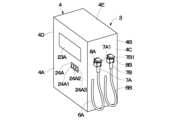
- FIG. 2 is a perspective view showing a dispenser unit.
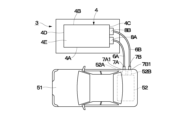
- 1 is a plan view showing a vehicle equipped with a fuel tank having two filling ports, and a dispenser unit filling the fuel tank of the vehicle with gas.
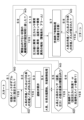
- 2 is a flowchart showing a process performed by a control device in FIG. 1 .
- 10 is a flowchart showing a process of a control device according to a modified example.
- FIGS. 1 to 4 show an embodiment.
- the hydrogen gas filling device 1 is a fuel gas filling device (fuel gas supply device) for a vehicle that fills (supplies) compressed hydrogen gas (gas) to a fuel tank 52 (hereinafter referred to as tank 52) of a vehicle 51 such as a fuel cell vehicle (FCV).
- the hydrogen gas filling device 1 is installed, for example, in a facility (fuel supply station) called a hydrogen gas supply station (hydrogen station).
- the hydrogen gas filling device 1 is configured to include a gas accumulator 2 as a gas storage section (storage tank) that stores highly compressed hydrogen gas, a dispenser unit 3 as a filling mechanism (hydrogen dispenser) that fills the tank 52 of the vehicle 51 with hydrogen gas from the gas accumulator 2, and gas supply pipes 5A and 5B that extend from the gas accumulator 2 to inside the dispenser housing 4 of the dispenser unit 3.
- a gas accumulator 2 as a gas storage section (storage tank) that stores highly compressed hydrogen gas
- a dispenser unit 3 as a filling mechanism (hydrogen dispenser) that fills the tank 52 of the vehicle 51 with hydrogen gas from the gas accumulator 2
- gas supply pipes 5A and 5B that extend from the gas accumulator 2 to inside the dispenser housing 4 of the dispenser unit 3.
- the dispenser unit 3 includes two gas supply lines 5A and 5B, that is, a first gas supply line 5A as a first gas supply path constituting one gas supply system (system A) and a second gas supply line 5B as a second gas supply path constituting the other gas supply system (system B).
- the gas accumulator 2 is connected to both the first gas supply line 5A and the second gas supply line 5B.
- the gas accumulator 2 is configured to be able to supply hydrogen gas to the system A (first gas supply line 5A) and the system B (second gas supply line 5B) of the dispenser unit 3.
- the gas accumulator 2 branches into the first gas supply line 5A and the second gas supply line 5B within the dispenser unit 3.
- the gas accumulator connected to the first gas supply line constituting the A system and the gas accumulator connected to the second gas supply line constituting the B system may be separately provided.
- the gas supply line may not be branched midway, but the first gas accumulator may be connected to the first gas supply line, and a second gas accumulator separate from the first gas accumulator may be connected to the second gas supply line separate from the first gas supply line.
- the gas accumulator 2 is a hydrogen gas supply source that stores hydrogen gas compressed to high pressure.
- the gas accumulator 2 constitutes a gas storage section that stores hydrogen gas compressed to high pressure on the upstream side of the gas supply lines 5A and 5B.
- the gas supply lines 5A and 5B extend from the gas accumulator 2 toward the dispenser unit 3 and are disposed within the dispenser housing 4 of the dispenser unit 3.
- the gas supply lines 5A and 5B are connected to the tank 52 of the vehicle 51 via the hoses 6A and 6B and nozzles 7A and 7B of the dispenser unit 3.
- FIG. 1 shows a state in which the first gas supply line 5A constituting the A system is connected to the tank 52 of the vehicle 51 via the first hose 6A and the first nozzle 7A of the A system.
- FIG. 3 shows a state in which both the first gas supply line 5A constituting the A system and the second gas supply line 5B constituting the B system are connected to the tank 52 of the vehicle 51 via the first hose 6A and the first nozzle 7A of the A system and the second hose 6B and the second nozzle 7B of the B system.
- the dispenser unit 3 includes a dispenser housing 4, a first hose 6A, a first nozzle 7A, a first nozzle hanger 8A, a first flow control valve 12A, a first shutoff valve 13A, a first flow meter 14A, a first heat exchanger 16A, a first pressure sensor 20A, a first temperature sensor 21A, and a control device 22.
- the dispenser unit 3 also includes a second hose 6B, a second nozzle 7B, a second nozzle hanger 8B, a second flow control valve 12B, a second shutoff valve 13B, a second flow meter 14B, a second heat exchanger 16B, a second pressure sensor 20B, and a second temperature sensor 21B.
- the dispenser housing 4 constitutes a box that forms the outer shape of the dispenser unit 3. As shown in FIG. 2 and FIG. 3, the dispenser housing 4 is formed, for example, in a substantially rectangular parallelepiped shape having a front surface 4A, a back surface 4B, a pair of side surfaces 4C, 4D, and a top surface 4E.
- One side surface 4C of the pair of side surfaces 4C, 4D is the side surface 4C on which the first nozzle hanger 8A and the second nozzle hanger 8B are provided, that is, the nozzle hanger side surface 4C.
- the front surface 4A is provided with a first display 23A that displays information to be notified, such as the filling amount, and operation buttons 24A (for example, a single/double switch button 24A1, a filling start button 24A2, and a filling stop button 24A3) that serve as operation switches.
- the back surface 4B is also provided with a second display 23B that displays information to be notified, such as the filling amount, and operation buttons 24B (for example, a single/double switch button 24B1, a filling start button 24B2, and a filling stop button 24B3) that serve as operation switches.
- a first nozzle hanger 8A and a second nozzle hanger 8B are provided on the nozzle hanger side 4C of the dispenser housing 4.
- the nozzle hangers 8A, 8B correspond to holding parts that hold the nozzles 7A, 7B.
- the nozzles 7A, 7B are hung on the nozzle hangers 8A, 8B when hydrogen gas is not being filled (i.e., when waiting for the filling operation).
- the nozzle hangers 8A, 8B hold the nozzles 7A, 7B except when hydrogen gas is being filled into the tank 52 of the vehicle 51.
- the nozzles 7A, 7B are removed from the nozzle hangers 8A, 8B by the worker performing the filling operation.
- the dispenser housing 4 contains a first gas supply line 5A, a first inlet valve 11A, a first flow control valve 12A, a first shutoff valve 13A, a first flow meter 14A, a first heat exchanger 16A, a first depressurization line 18A, a first depressurization valve 19A, a first pressure sensor 20A, a first temperature sensor 21A, a second gas supply line 5B, a second inlet valve 11B, a second flow control valve 12B, a second shutoff valve 13B, a second flow meter 14B, a second heat exchanger 16B, a second depressurization line 18B, a second depressurization valve 19B, a second pressure sensor 20B, a second temperature sensor 21B, a control device 22, and the like.
- Gas supply lines 5A and 5B are disposed within dispenser housing 4 and supply pressurized hydrogen gas from gas accumulator 2 toward hoses 6A and 6B. Gas supply lines 5A and 5B are arranged such that the gas accumulator 2 side is the upstream side and the hoses 6A and 6B side is the downstream side.
- a first hose 6A is connected to the downstream end of first gas supply line 5A as a gas supply connection line that extends outside dispenser housing 4 to the outside of dispenser housing 4.
- a second hose 6B is connected to the downstream end of second gas supply line 5B as a gas supply connection line that extends outside dispenser housing 4 to the outside of dispenser housing 4.
- the hoses 6A and 6B are flexible hoses for filling hydrogen gas.
- pressure-resistant hoses are used for the hoses 6A and 6B.
- the base ends of the hoses 6A and 6B, which are filling hoses, are connected to the downstream ends of the gas supply lines 5A and 5B.
- emergency release couplings are provided at the upstream ends of the hoses 6A and 6B.
- the emergency release couplings connect, for example, the hoses 6A and 6B to the gas supply lines 5A and 5B.
- the emergency release couplings are safety devices that separate in an emergency.
- the hoses 6A and 6B are pulled with a strong force, and are separated.
- the emergency release couplings are provided with valve bodies (shutoff valves) inside to prevent hydrogen gas from being released from the hoses 6A and 6B when they are separated.
- nozzles 7A and 7B are provided at the ends of hoses 6A and 6B, which are connected to filling port 52A (52B) of tank 52.
- the gas filling path (gas supply path) is a path (pipe) for filling (supplying) gas (hydrogen gas) to tank 52 mounted on vehicle 51, which runs on gas (hydrogen gas) as fuel.
- the nozzles 7A and 7B which are filling nozzles, are connected in an airtight state to the tip side of the hoses 6A and 6B, constituting a so-called filling coupling.
- the first nozzle 7A is connected to the first gas supply line 5A by the first hose 6A.
- the second nozzle 7B is connected to the second gas supply line 5B by the second hose 6B.
- An on-off valve (not shown) is built into the nozzles 7A and 7B. The on-off valve is switched between an "open position” that allows the flow of hydrogen gas and a "closed position” that blocks the flow of hydrogen gas.
- the nozzles 7A and 7B may be provided with a check valve instead of or in addition to the on-off valve.
- the check valve allows the flow of hydrogen gas from the nozzles 7A and 7B to the tank 52 and prevents the flow of hydrogen gas from the tank 52 to the nozzles 7A and 7B.
- connection coupler 7A1, 7B1 is detachably connected to the filling port 52A (52B) which is the connection port (receptacle) of the tank 52. That is, the connection coupler 7A1, 7B1 of the nozzles 7A, 7B is detachably connected in an airtight state to the filling port 52A (52B) of the tank 52 when hydrogen gas is supplied to the tank 52 of the vehicle 51 through the pipes (not shown) in the nozzles 7A, 7B.
- the nozzles 7A, 7B are provided with a locking mechanism (not shown) which is detachably locked to the filling port 52A (52B) of the tank 52. This makes it possible to prevent the nozzles 7A, 7B from accidentally coming off the filling port 52A (52B) when filling hydrogen gas.
- the high-pressure hydrogen gas in the gas accumulator 2 is filled into the tank 52 of the vehicle 51 through the gas supply lines 5A, 5B, hoses 6A, 6B, and nozzles 7A, 7B, with the nozzles 7A, 7B locked to the filling port 52A (52B) of the tank 52 by a locking mechanism. That is, the hydrogen gas filling device 1 is equipped with nozzles 7A, 7B, and uses these nozzles 7A, 7B to fill the tank 52 of the vehicle 51 with hydrogen gas.
- inlet valves 11A, 11B, flow control valves 12A, 12B, and shutoff valves 13A, 13B are provided in the gas supply pipelines 5A, 5B.
- the inlet valves 11A, 11B are located upstream of the flow control valves 12A, 12B.
- the inlet valves 11A, 11B are manually opened and closed. Note that the inlet valves 11A, 11B are installed as necessary, and may be omitted if not required.
- the flow rate control valves 12A, 12B are located downstream of the inlet valves 11A, 11B.
- the flow rate control valves 12A, 12B adjust the flow rate of hydrogen gas flowing through the gas supply pipes 5A, 5B by adjusting the valve opening degree by the control device 22. That is, the flow rate control valves 12A, 12B control the flow of hydrogen gas to the tank 52 of the vehicle 51.
- the flow rate control valves 12A, 12B are, for example, electromagnetic valve devices, and are controlled to open based on control signals Cf1, Cf2 from the control device 22.
- the flow rate control valves 12A, 12B are controlled to an arbitrary valve opening degree by commands based on the control program of the control device 22, and variably control the flow rate and hydrogen gas pressure of hydrogen gas flowing through the gas supply pipes 5A, 5B. That is, the flow rate control valves 12A, 12B are adjusted to the required opening degree by controlling the valve opening degree by the control signals Cf1, Cf2 from the control device 22.
- Shut-off valves 13A, 13B are located downstream of flow rate control valves 12A, 12B.
- Shut-off valves 13A, 13B are opened and closed by control device 22 to allow or block the flow of hydrogen gas in gas supply lines 5A, 5B. That is, shut-off valves 13A, 13B are electromagnetic or pneumatically operated valve devices provided at intermediate locations in gas supply lines 5A, 5B (for example, between heat exchangers 16A, 16B and temperature sensors 21A, 21B).
- Shut-off valves 13A, 13B are opened and closed based on control signals Cs1, Cs2 from control device 22 to allow or block the flow of hydrogen gas in gas supply lines 5A, 5B.
- Flowmeters 14A, 14B are located upstream of flow control valves 12A, 12B.
- Flowmeters 14A, 14B are, for example, Coriolis-type flowmeters that measure the mass flow rate of the measured fluid.
- Flowmeters 14A, 14B measure the flow rate (mass flow rate) of hydrogen gas flowing in gas supply pipes 5A, 5B between inlet valves 11A, 11B and flow control valves 12A, 12B.
- Flowmeters 14A, 14B output the measurement results (detection signals F1, F2) to control device 22.
- Control device 22 calculates the amount of hydrogen gas filled into tank 52 of vehicle 51, and displays the amount of hydrogen gas fuel dispensed on displays 23A, 23B, etc. This notifies, for example, customers, etc. of the displayed content.
- the cooler 15 is a cooling device for cooling the hydrogen gas flowing in the gas supply lines 5A and 5B.
- the cooler 15 cools the hydrogen gas at an intermediate position in the gas supply lines 5A and 5B to suppress a rise in temperature of the hydrogen gas filled in the tank 52. That is, the cooler 15 cools the hydrogen gas supplied to the vehicle 51 (tank 52) through the gas supply lines 5A and 5B.
- the cooler 15 includes heat exchangers 16A and 16B and a chiller unit (not shown) equipped with a drive mechanism (not shown) such as a compressor and a pump.
- the heat exchangers 16A and 16B are provided at intermediate positions in the gas supply lines 5A and 5B (between the flow control valves 12A and 12B and the shutoff valves 13A and 13B).
- the chiller unit is connected to the heat exchangers 16A and 16B via refrigerant lines.
- the chiller unit circulates a refrigerant between the heat exchangers 16A and 16B via the refrigerant pipes.
- the heat exchangers 16A and 16B exchange heat between the refrigerant and the hydrogen gas flowing in the gas supply pipes 5A and 5B.
- the cooler 15 lowers the temperature of the hydrogen gas supplied to the hoses 6A and 6B to a specified temperature (e.g., -33 to -40°C).
- depressurization lines 18A, 18B Downstream of the shutoff valves 13A, 13B of the gas supply lines 5A, 5B, depressurization lines 18A, 18B are provided branching off to release gas pressure, for example, from the hoses 6A, 6B side.
- Depressurization valves 19A, 19B which are, for example, electromagnetic or pneumatically operated valve devices, are provided midway along the depressurization lines 18A, 18B.
- the depressurization valves 19A, 19B are opened and closed based on control signals Cd1, Cd2 from the control device 22 when the hydrogen gas filling operation using the hoses 6A, 6B (nozzles 7A, 7B) is completed and the shutoff valves 13A, 13B are closed.
- connection couplers 7A1, 7B1 of the nozzles 7A, 7B when removing the connection couplers 7A1, 7B1 of the nozzles 7A, 7B from the filling port 52A (52B) of the tank 52, it is necessary to reduce the pressure inside the hoses 6A, 6B to atmospheric pressure. For this reason, when the gas filling operation is completed, the depressurization valves 19A, 19B are temporarily opened to open the tip side of the depressurization lines 18A, 18B to the atmosphere. This releases the hydrogen gas on the hoses 6A, 6B side to the outside and reduces the pressure inside the hoses 6A, 6B to atmospheric pressure. As a result, the connection couplers 7A1, 7B1 of the nozzles 7A, 7B can be removed from the filling port 52A (52B) of the tank 52.
- the pressure sensors 20A, 20B are provided in the gas supply pipelines 5A, 5B downstream of the shutoff valves 13A, 13B (i.e., on the nozzle 7A, 7B side).
- the pressure sensors 20A, 20B detect the pressure of the hydrogen gas supplied from the gas accumulator 2 (the pressure midway through the pipeline).
- the pressure sensors 20A, 20B measure the pressure in the gas supply pipelines 5A, 5B near the nozzles 7A, 7B.
- the pressure sensors 20A, 20B output detection signals P1, P2 corresponding to the measured pressure to the control device 22.
- the temperature sensors 21A, 21B are located in the gas supply lines 5A, 5B between the shutoff valves 13A, 13B and the pressure sensors 20A, 20B.
- the temperature sensors 21A, 21B detect the temperature of the hydrogen gas flowing in the gas supply lines 5A, 5B.
- the temperature sensors 21A, 21B output the detection results (detection signals T1, T2) to the control device 22.
- the positional relationship between the temperature sensors 21A, 21B and the pressure sensors 20A, 20B is not limited to the position shown in FIG. 1, and may be reversed, for example.
- the flow rate control valves 12A, 12B, the shutoff valves 13A, 13B, and the depressurization valves 19A, 19B constitute control devices that control the flow (flow rate, pressure) of hydrogen gas in the gas supply pipelines 5A, 5B.
- the flow meters 14A, 14B, the pressure sensors 20A, 20B, and the temperature sensors 21A, 21B constitute measurement devices that measure the state (flow rate, pressure, temperature) of the hydrogen gas flowing through the gas supply pipelines 5A, 5B.
- the arrangement (order) of the flow meters 14A, 14B, the flow rate control valves 12A, 12B, and the shutoff valves 13A, 13B, which are arranged from the upstream side to the downstream side of the gas supply pipelines 5A, 5B, is not limited to the order shown in FIG. 1.
- the control device 22 constitutes a controller (control unit) that controls the flow rate adjustment valves 12A, 12B, the shutoff valves 13A, 13B, the depressurization valves 19A, 19B, the displays 23A, 23B, etc.
- the control device 22 controls the supply of fuel to the tank 52 to be filled by controlling the flow rate adjustment valves 12A, 12B and the shutoff valves 13A, 13B.
- the control device 22 is a control circuit, and is constituted by, for example, a microcomputer having a CPU (arithmetic unit), a memory 22A (storage device), a timer, etc.
- the memory 22A stores (stores) a processing program for executing, for example, the processing flow shown in FIG. 4 described below.
- the input side of the control device 22 is connected to the flow meters 14A, 14B, pressure sensors 20A, 20B, temperature sensors 21A, 21B, humidity sensors (not shown), operation buttons 24A, 24B, nozzle detectors 25A, 25B as nozzle detection means, etc.
- the output side of the control device 22 is connected to the flow rate adjustment valves 12A, 12B, shutoff valves 13A, 13B, depressurization valves 19A, 19B, displays 23A, 23B, etc.
- FIG. 1 shows a configuration in which one control device 22 is shared by system A and system B, it may also be configured to have two control devices, for example a first control device for system A and a second control device for system B. That is, it may be configured to have a first control device connected to the control devices (flow control valve 12A, shutoff valve 13A, depressurization valve 19A) and measuring devices (flowmeter 14A, pressure sensor 20A, temperature sensor 21A) of system A, and a second control device connected to the control devices (flow control valve 12B, shutoff valve 13B, depressurization valve 19B) and measuring devices (flowmeter 14B, pressure sensor 20B, temperature sensor 21B) of system B.
- the first control device and the second control device are connected so that they can send and receive necessary signals (control signals, command signals, detection signals, etc.) to each other.
- Displays 23A and 23B are provided on the dispenser housing 4.
- the first display 23A is provided on the front 4A side of the dispenser housing 4
- the second display 23B is provided on the back 4B side of the dispenser housing 4.
- Displays 23A and 23B are positioned at a height that is easily visible to the worker performing the hydrogen gas filling operation, and display information necessary for the hydrogen gas filling operation.
- the operation buttons 24A, 24B are provided on the dispenser housing 4.
- the operation buttons 24A, 24B are provided on the front 4A and back 4B of the dispenser housing 4, respectively.
- the operation buttons 24A, 24B are, for example, switches (button switches) that can be manually operated by an operator at a fuel supply station (hydrogen station).
- the operation buttons 24A, 24B include, for example, single/double changeover buttons 24A1, 24B1, filling start buttons 24A2, 24B2, and filling stop buttons 24A3, 24B3.
- the single/double switching buttons 24A1, 24B1 are buttons (switches) for selecting whether to perform single filling or double filling.
- Single filling is selected when hydrogen gas is filled through one of the first gas supply line 5A and the second gas supply line 5B.
- Double filling is selected when hydrogen gas is filled through both the first gas supply line 5A and the second gas supply line 5B.
- the fill start buttons 24A2, 24B2 are operated when starting to fill hydrogen gas.
- the fill stop buttons 24A3, 24B3 are operated when stopping filling hydrogen gas during filling. Note that the operation buttons 24A, 24B are configured to be provided on the front 4A and back 4B of the dispenser housing 4, respectively, but are not limited to this, and may be configured to be provided on either the front 4A or back 4B.
- single filling is selected by pressing the single/double switch button 24A1 on the front 4A side.
- hydrogen gas can be filled into the tank 52 of the vehicle 51 ( Figure 1) parked on the front 4A side through system A (first gas supply pipeline 5A, first hose 6A, and first nozzle 7A).
- single filling is selected by pressing the single/double switch button 24B1 on the rear 4B side.
- hydrogen gas can be filled into the tank of the vehicle parked on the rear 4B side through system B (second gas supply pipeline 5B, second hose 6B, and second nozzle 7B).
- double filling is selected by the single/double switch button 24A1 on the front 4A side.
- the filling start button 24A2 on the front 4A side when the filling start button 24A2 on the front 4A side is operated, hydrogen gas can be filled through both the A system and the B system into the tank 52 of a vehicle 51 ( Figure 3) that has two filling ports 52A, 52B and is parked on the front 4A side.
- double filling is selected by the single/double switch button 24B1 on the rear 4B side. In this case, when the filling start button 24B2 on the rear 4B side is operated, hydrogen gas can be filled through both the A system and the B system into the tank of a vehicle that has two filling ports and is parked on the rear 4B side.
- the operation buttons 24A, 24B each output a signal according to the operation state to the control device 22.
- the control device 22 opens or closes the shutoff valves 13A and 13B in response to these signals.
- the nozzle detectors 25A and 25B are provided on the nozzle hangers 8A and 8B.
- the nozzle detectors 25A and 25B detect whether the nozzles 7A and 7B are hung or not.
- the nozzle detectors 25A and 25B are nozzle detection means that detect the presence or absence of the nozzles 7A and 7B.
- the nozzle detectors 25A and 25B are configured as switches (nozzle switches), for example, two-position switches, and are connected to the control device 22. For example, when the nozzles 7A and 7B are hung on the nozzle hangers 8A and 8B, the nozzle detectors 25A and 25B are pushed by the nozzles 7A and 7B and switch from the OFF state to the ON state. When the nozzles 7A and 7B are removed (or detached) from the nozzle hangers 8A and 8B, the nozzle detectors 25A and 25B switch from the ON state to the OFF state.
- the nozzle detectors 25A, 25B output detection signals N1, N2 (OFF signal or ON signal) corresponding to whether the nozzles 7A, 7B are hooked to the nozzle hangers 8A, 8B to the control device 22.
- the relationship between on (ON: energized) and off (OFF: not energized) may be reversed. That is, the state may change from off (OFF) to on (ON) when the nozzles 7A, 7B are removed from the nozzle hangers 8A, 8B.
- the nozzle detectors 25A, 25B are not limited to those provided on the nozzle hangers 8A, 8B on the dispenser housing 4 side, but may also be provided on the nozzle 7A, 7B side.
- the nozzles 7A, 7B are held by the nozzle hangers 8A, 8B of the dispenser unit 3. That is, when the filling operation of filling the tank 52 of the vehicle 51 with hydrogen gas is completed, the nozzles 7A and 7B are returned to the nozzle hangers 8A and 8B and are kept in a stored state.
- the vehicle 51 which runs on hydrogen gas as fuel, is, for example, a four-wheeled automobile (passenger car) as shown in Figs. 1 and 3.
- the vehicle 51 is equipped with a drive unit (not shown) including, for example, a fuel cell and an electric motor, and a tank 52 shown by dashed lines in Figs. 1 and 3.
- the tank 52 is configured as a pressure-resistant container filled with hydrogen gas.
- the tank 52 is mounted, for example, on the rear side of the vehicle 51.
- the tank 52 is not limited to being located on the rear side of the vehicle 51, and may be located on the front side or center side.
- the tank 52 is provided with filling ports 52A, 52B (receptacles) to which the connection coupler 7A1 (or connection coupler 7B1) of the nozzle 7A (or nozzle 7B) is detachably attached.
- FIG. 1 illustrates a vehicle 51 having one filling port 52A.
- FIG. 3 illustrates a vehicle 51 having two filling ports 52A, 52B.
- the first nozzle 7A and the second nozzle 7B can be connected to the two filling ports 52A, 52B to fill the gas.
- hydrogen gas is filled into the tank 52 of the vehicle 51 with the nozzle 7A and/or nozzle 7B airtightly connected (connected) to the filling port 52A and/or filling port 52B.
- the dispenser unit 3 uses a pressure difference to fill the tank 52 of the vehicle 51 with cooled hydrogen gas.
- the filling ports 52A and 52B are provided with check valves inside. The check valves allow the flow of hydrogen gas from the nozzles 7A and 7B to the tank 52 of the vehicle 51, and prevent the flow of hydrogen gas from the tank 52 to the nozzles 7A and 7B.
- the gas filling path is provided with detectors such as sensors (e.g., pressure sensors, temperature sensors, flow meters). These detectors are provided to control the filling of fuel gas and/or to detect abnormalities in the filling control. For this reason, if an abnormality occurs in a detector, normal filling control or abnormality detection will not be possible. It is therefore important to be able to detect (determine) whether or not an abnormality has occurred in each detector.
- detector abnormalities are easy to detect if the detector output changes significantly, for example, due to a broken wire.
- the presence or absence of an abnormality in the detector is detected (determined) when simultaneous filling is performed in which hydrogen gas is filled through both system A and system B. That is, in this embodiment, when simultaneous filling is performed, the presence or absence of an abnormality is detected (determined) based on the difference (difference) between the detection value of a detector in either system A or system B (e.g., pressure sensor, temperature sensor) and the detection value of a detector in the other system (e.g., pressure sensor, temperature sensor). In this way, in this embodiment, an abnormality is detected (determined) based on the difference (difference) in the detection values, so that an abnormality can be detected (determined) by capturing slight changes in the detection values. Detection (determination) of the presence or absence of an abnormality in the detector will be explained in detail below.
- the dispenser unit 3 constituting the hydrogen gas filling device 1 includes multiple gas supply lines 5A, 5B and hoses 6A, 6B.
- the gas supply lines 5A, 5B and hoses 6A, 6B correspond to a gas filling path for filling a tank 52 to be filled with hydrogen gas as a fuel gas.
- the dispenser unit 3 also includes pressure sensors 20A, 20B and temperature sensors 21A, 21B as detectors, and a control device 22 as a filling control unit and abnormality determination means.
- the pressure sensors 20A, 20B and temperature sensors 21A, 21B are provided in each of the multiple gas supply lines 5A, 5B, and detect the state of the hydrogen gas in the gas supply lines 5A, 5B.
- the first pressure sensor 20A is provided downstream of the first shutoff valve 13A in the first gas supply line 5A.
- the first pressure sensor 20A detects the pressure of hydrogen gas downstream of the first shutoff valve 13A in the first gas supply line 5A.
- the second pressure sensor 20B is provided downstream of the second shutoff valve 13B in the second gas supply line 5B.
- the second pressure sensor 20B detects the pressure of hydrogen gas downstream of the second shutoff valve 13B in the second gas supply line 5B.
- the first temperature sensor 21A is provided downstream of the first shutoff valve 13A in the first gas supply line 5A.
- the first temperature sensor 21A detects the temperature of hydrogen gas downstream of the first shutoff valve 13A in the first gas supply line 5A.
- the second temperature sensor 21B is provided downstream of the second shutoff valve 13B in the second gas supply line 5B.
- the second temperature sensor 21B detects the temperature of the hydrogen gas downstream of the second shutoff valve 13B in the second gas supply line 5B.
- the positional relationship of each sensor (pressure sensors 20A, 20B, temperature sensors 21A, 21B) to the supply lines (gas supply lines 5A, 5B) is the same. Therefore, the state (numerical value, etc.) of the hydrogen gas detected by the sensor will be the same as long as the sensor is normal.
- the control device 22 has a filling control unit that controls the filling of hydrogen gas from the multiple gas supply lines 5A and 5B to the tank 52. That is, the control device 22 fills the tank 52 with hydrogen gas through one or both of the multiple gas supply lines 5A and 5B.
- the control device 22 adjusts the opening degree of the first flow control valve 12A and the like using a preset control method (constant pressure rise control method, constant flow control method, etc.) while monitoring the measurement results of the first flow meter 14A, the first pressure sensor 20A, and the first temperature sensor 21A.
- the control device 22 also adjusts the opening degree of the second flow control valve 12B and the like using a preset control method (constant pressure rise control method, constant flow control method, etc.) while monitoring the measurement results of the second flow meter 14B, the second pressure sensor 20B, and the second temperature sensor 21B.
- a preset control method constant pressure rise control method, constant flow control method, etc.
- the control device 22 when double filling is performed on the same tank 52 through both the first gas supply line 5A and the second gas supply line 5B, the control device 22 performs the same control (control of the same filling protocol) on systems A and B.
- system B when filling control using the constant pressure rise control method is performed on system A, system B also performs filling control using the constant pressure rise control method.
- system B also performs filling control using the constant flow rate control method.
- control device 22 has an abnormality determination means for determining whether or not there is an abnormality in the detectors (pressure sensors 20A, 20B, temperature sensors 21A, 21B) in the multiple gas supply lines 5A, 5B. That is, the control device 22 determines whether or not there is an abnormality in the detectors (pressure sensors 20A, 20B, temperature sensors 21A, 21B) based on a comparison between the "detection value of the detector (e.g., first pressure sensor 20A, first temperature sensor 21A) provided in one gas filling path (e.g., first gas supply line 5A)" and the "detection value of the detector (e.g., second pressure sensor 20B, second temperature sensor 21B) provided in another gas filling path (e.g., second gas supply line 5B)".
- the detector e.g., first pressure sensor 20A, first temperature sensor 21A
- the control device 22 judges whether or not there is an abnormality in the first pressure sensor 20A and the second pressure sensor 20B based on a comparison between the detection value of the first pressure sensor 20A and the detection value of the second pressure sensor 20B. For example, the control device 22 judges that there is an abnormality in the pressure sensors 20A, 20B when the difference (diff) between the detection value of the first pressure sensor 20A and the detection value of the second pressure sensor 20B exceeds a preset threshold (pressure threshold). When the control device 22 judges that there is an abnormality in the pressure sensors 20A, 20B, it notifies the fact (for example, by displaying a warning, sounding an alarm, turning on a lamp, or blinking).
- control device 22 judges that there is an abnormality, it stops (ends) the filling of hydrogen gas. That is, when the abnormality judgment means judges that an abnormality has occurred, the control device 22 (filling control unit) stops (ends) the filling of both the A system and the B system.
- the pressure threshold can be determined in advance as a value (judgment value) that can properly judge that an abnormality has occurred in pressure sensors 20A and 20B.
- the control device 22 also determines whether or not there is an abnormality in the first temperature sensor 21A and the second temperature sensor 21B based on a comparison between the detection value of the first temperature sensor 21A and the detection value of the second temperature sensor 21B. For example, the control device 22 determines that there is an abnormality in the temperature sensors 21A, 21B when the difference (diff) between the detection value of the first temperature sensor 21A and the detection value of the second temperature sensor 21B exceeds a preset threshold (temperature threshold). When the control device 22 determines that there is an abnormality in the temperature sensors 21A, 21B, it notifies the fact (for example, by displaying a warning, sounding an alarm, turning on a lamp, or blinking).
- control device 22 determines that there is an abnormality, it stops (ends) the filling of hydrogen gas. That is, when the abnormality determination means determines that an abnormality has occurred, the control device 22 (filling control unit) stops (ends) the filling of both the A system and the B system.
- the temperature threshold can be determined in advance as a value (judgment value) that can properly judge whether an abnormality has occurred in the temperature sensors 21A and 21B.
- FIG. 4 is a flow chart showing the control process for double filling performed by the control device 22.
- the process in FIG. 4 is repeatedly executed at a predetermined control period.
- Double filling is started by operating the filling start button 24A2, 24B2 when double filling is selected by the single/double switch button 24A1, 24B1 and both the first nozzle 7A and the second nozzle 7B are removed from the first nozzle hanger 8A and the second nozzle hanger 8B.
- the first nozzle detector 25A and the second nozzle detector 25B can detect that both the first nozzle 7A and the second nozzle 7B have been removed from the first nozzle hanger 8A and the second nozzle hanger 8B.
- the control device 22 can determine that both the first nozzle 7A and the second nozzle 7B have been removed from the first nozzle hanger 8A and the second nozzle hanger 8B when both the first nozzle detector 25A and the second nozzle detector 25B, which are nozzle switches, are activated.
- the combined amount of hydrogen gas supplied through both system A (first gas supply line 5A) and system B (second gas supply line 5B) is displayed on both the first display 23A and the second display 23B. This allows the operator to know the total amount of hydrogen gas being filled into the vehicle during double filling by checking either the first display 23A or the second display 23B.
- the control device 22 determines whether or not the changeover switch is set to double fill. That is, in S1, it determines whether or not double fill has been selected by the single/double changeover buttons 24A1, 24B1. If S1 returns "NO", that is, if it is determined that double fill has not been selected by the single/double changeover buttons 24A1, 24B1, then return. In this case, the control device 22 proceeds to other control processes, such as a control process for single fill (not shown), and repeatedly executes various control processes including the double fill process and the single fill process at a predetermined control cycle.
- a control process for single fill not shown
- S1 is "YES”, that is, if it is determined that double filling has been selected by the single/double switching button 24A1 (24B1)
- the process proceeds to S2.
- S2 it is determined whether or not both the first nozzle 7A, which is the filling nozzle of the A system, and the second nozzle 7B, which is the filling nozzle of the B system, have been removed. This determination can be made based on the detection signals (ON signal, OFF signal) of the first nozzle detector 25A and the second nozzle detector 25B. If S2 is "NO", that is, if it is determined that both the first nozzle 7A and the second nozzle 7B have not been removed, the process of S2 is repeated.
- S2 is "YES"
- the process proceeds to S3.
- the shutoff valves 13A and 13B are opened to start filling.
- both the first shutoff valve 13A and the second shutoff valve 13B are opened to start double filling.
- the filling start button 24A2 (24B2) is operated to start filling in both the A system and the B system, and a filling control process is performed. That is, in S4, the filling start button 24A2 (24B2) is operated to perform a double filling control process.
- the first flow rate adjustment valve 12A and the second flow rate adjustment valve 12B are opened, and hydrogen gas is filled.
- S6 it is determined whether or not filling has ended. That is, in S6, it is determined whether or not the set pressure (end filling pressure) set as the pressure at which filling ends has been reached, and whether or not the fill stop button 24A3, 24B3 has been operated. The pressure is detected by pressure sensors 20A, 20B. If S6 returns "NO", that is, if it is determined that filling has not ended, the process returns to before S5 while continuing double filling control, and the processes from S5 onwards are repeated. If the pressure detected by pressure sensors 20A, 20B has not reached the set pressure (end filling pressure) and the fill stop button 24A3, 24B3 has not been operated, double filling continues.
- S6 returns "YES"
- the process proceeds to S7.
- the process of controlling the end of the double filling is performed. That is, the first flow rate control valve 12A, the second flow rate control valve 12B, the first shutoff valve 13A, and the second shutoff valve 13B are closed, and the first depressurization valve 19A and the second depressurization valve 19B are opened to reduce the pressure of the first nozzle 7A and the second nozzle 7B to atmospheric pressure level.
- the amount of hydrogen gas filled (supplied) through the A system (first gas supply pipe 5A) and the amount of hydrogen gas filled (supplied) through the B system (second gas supply pipe 5B) are added together.
- S8 it is determined whether the first nozzle 7A and the second nozzle 7B have been returned to the first nozzle hook 8A and the second nozzle hook 8B. If S8 returns "NO", i.e., if it is determined that both the first nozzle 7A and the second nozzle 7B have not been returned to the first nozzle hook 8A and the second nozzle hook 8B, the process of S8 is repeated. On the other hand, if S8 returns "YES", i.e., if it is determined that both the first nozzle 7A and the second nozzle 7B have been returned to the first nozzle hook 8A and the second nozzle hook 8B, return is made.
- S9 determines whether the duration of the state not within the threshold has reached a specified time.
- the specified time is determined in advance as a value (determination value) that can appropriately distinguish between "temporary threshold exceedance” and "exceeding the threshold due to an abnormality".
- a notification is issued that an abnormality has occurred in the pressure sensors 20A and 20B (for example, a warning display, an alarm sound is issued, a lamp is turned on, or a flashing light is displayed).
- a notification is issued that an abnormality has occurred in the temperature sensors 21A and 21B (for example, a warning display, an alarm sound is issued, a lamp is turned on, or a flashing light is displayed).
- the display 23A, 23B displays the sum of the filling amount of the A system and the B system as the filling amount of double filling.
- filling control is performed based on the detection values of the pressure sensors 20A, 20B and the detection values of the temperature sensors 21A, 21B.
- the same control is performed for the A system and the B system.
- filling control is also performed by the constant pressure rise control method in the B system.
- filling control is also performed by the constant flow rate control method in the B system.
- the control device 22 detects (determines) abnormalities in the sensors 20A, 20B, 21A, and 21B from the detection values of the sensors 20A and 21A in the A system and the detection values of the sensors 20B and 21B in the B system. That is, during double filling, the control device 22 determines that the pressure sensors 20A and 20B are abnormal if the difference between the detection value of the first pressure sensor 20A in the A system and the detection value of the second pressure sensor 20B in the B system exceeds a certain threshold value for a certain time (specified time). In this case, the control device 22 issues an alarm indicating that the pressure sensors 20A and 20B are abnormal, and ends double filling.
- control device 22 determines that the temperature sensors 21A and 21B are abnormal if the difference between the detection value of the first temperature sensor 21A in the A system and the detection value of the second temperature sensor 21B in the B system exceeds a certain threshold value for a certain time (specified time). In this case, the control device 22 issues an alarm indicating that the temperature sensors 21A and 21B are abnormal, and ends double filling.
- the hydrogen gas filling device 1 has the configuration described above. Next, the hydrogen gas filling operation using the hydrogen gas filling device 1 will be described.
- a vehicle 51 having one filling port 52A is parked on the front 4A side of the dispenser unit 3 (dispenser housing 4).
- the worker performing the filling operation removes the first nozzle 7A of the A system from the first nozzle hanger 8A.
- the first nozzle 7A is connected to the filling port 52A of the tank 52 and the connection part is locked.
- the control device 22 outputs an open valve signal to the first flow rate adjustment valve 12A and the first shutoff valve 13A. That is, the control device 22 opens the first flow rate adjustment valve 12A and the shutoff valve 13A.
- the hydrogen gas in the gas accumulator 2 is filled into the tank 52 of the vehicle 51 through system A, i.e., the first gas supply pipeline 5A, the first hose 6A and the nozzle 7A.
- the control device 22 adjusts the opening degree of the first flow control valve 12A, etc., using a preset control method (constant pressure rise control method, constant flow control method, etc.) while monitoring the measurement results of, for example, the first flow meter 14A, the first pressure sensor 20A and the first temperature sensor 21A. This makes it possible to control the pressure and flow rate of the hydrogen gas supplied into the first gas supply pipeline 5A to an appropriate flow state.
- the control device 22 calculates the amount (mass) of hydrogen gas filled by integrating the flow pulses from the first flow meter 14A, and determines whether the amount of hydrogen gas filled has reached a preset target amount, or whether the pressure of the hydrogen gas detected by the first pressure sensor 20A has reached a preset target filling pressure.
- a signal from the control device 22 closes the first flow control valve 12A and the first shutoff valve 13A, and filling of hydrogen gas into the tank 52 is terminated. Filling is also terminated when the operator operates the filling stop buttons 24A3, 24B3.
- the control device 22 executes a filling completion control process.
- a signal from the control device 22 controls the first depressurization valve 19A to open from a closed state.
- the first depressurization valve 19A opens, the first depressurization line 18A is opened to the atmosphere, and the gas on the first nozzle 7A side is released to the outside and the pressure of the first nozzle 7A is reduced to atmospheric pressure.
- the operator can remove the connection coupler 7A1 of the first nozzle 7A from the filling port 52A of the tank 52.
- the first nozzle 7A removed from the filling port 52A of the tank 52 is returned to the first nozzle hanger 8A by the operator and manually latched.
- the first nozzle detector 25A attached to the first nozzle hanger 8A detects whether the first nozzle 7A has been returned to the first nozzle hanger 8A.
- a detection signal from the first nozzle detector 25A is output to the control device 22. This causes the control device 22 to determine that the filling operation using the first nozzle 7A has ended, and the device goes into a standby state for the next filling operation.
- Such single filling can be performed not only on vehicles 51 parked on the front 4A side of the dispenser unit 3 (dispenser housing 4), but also on vehicles parked on the back 4B side of the dispenser unit 3.
- single filling can be performed on a vehicle parked on the back 4B side of the dispenser unit 3 through the second gas supply pipe 5B, second hose 6B and second nozzle 7B, which constitute system B.
- Single filling can be performed simultaneously on vehicles 51 parked on both the front 4A side and the back 4B side of the dispenser unit 3.
- a vehicle 51 having two filling ports 52A, 52B is parked on the front 4A side of the dispenser unit 3 (dispenser housing 4).
- the worker performing the filling operation removes the first nozzle 7A from the first nozzle hanger 8A.
- the second nozzle 7B is removed from the second nozzle hanger 8B.
- the first nozzle 7A and the second nozzle 7B are connected to the two filling ports 52A, 52B of the vehicle 51, and the connection part is locked.
- the control device 22 outputs a valve open signal to the first flow control valve 12A, the second flow control valve 12B, the first shutoff valve 13A, and the second shutoff valve 13B. That is, the control device 22 opens the first flow control valve 12A, the second flow control valve 12B, the first shutoff valve 13A, and the second shutoff valve 13B.
- the hydrogen gas in the gas accumulator 2 is filled into the tank 52 of the vehicle 51 through the A system, i.e., the first gas supply line 5A, the first hose 6A, the nozzle 7A, and the filling port 52A, and is filled into the tank 52 of the vehicle 51 through the B system, i.e., the second gas supply line 5B, the second hose 6B, the nozzle 7B, and the filling port 52B.
- a system i.e., the first gas supply line 5A, the first hose 6A, the nozzle 7A, and the filling port 52A
- B system i.e., the second gas supply line 5B, the second hose 6B, the nozzle 7B, and the filling port 52B.
- the control device 22 adjusts the opening degree of the first flow control valve 12A, etc., using a preset control method (e.g., a constant pressure rise control method or a constant flow control method) while monitoring the measurement results of, for example, the first flow meter 14A, the first pressure sensor 20A, and the first temperature sensor 21A.
- the control device 22 adjusts the opening degree of the second flow control valve 12B, etc., using a preset control method (e.g., a constant pressure rise control method or a constant flow control method) while monitoring the measurement results of, for example, the second flow meter 14B, the second pressure sensor 20B, and the second temperature sensor 21B.
- the control device 22 uses the same control method to fill the A and B systems. This allows the pressure and flow rate of the hydrogen gas supplied to the first gas supply line 5A and the second gas supply line 5B to be controlled to an appropriate flow state.
- the control device 22 determines whether or not there is an abnormality in the detectors (sensors 20A, 20B, 21A, 21B) based on a comparison between the detection values of the detectors of system A (first pressure sensor 20A and first temperature sensor 21A) and the detection values of the detectors of system B (second pressure sensor 20B and second temperature sensor 21B). That is, the control device 22 determines that there is an abnormality in the pressure sensors 20A and 20B when, during double filling, the difference between the detection value of the first pressure sensor 20A and the detection value of the second pressure sensor 20B exceeds the pressure threshold and the duration of the state in which this pressure threshold is exceeded reaches a specified time.
- the control device 22 determines that there is an abnormality in the temperature sensors 21A and 21B when, during double filling, the difference between the detection value of the first temperature sensor 21A and the detection value of the second temperature sensor 21B exceeds the temperature threshold and the duration of the state in which this temperature threshold is exceeded reaches a specified time. If the control device 22 determines that there is an abnormality in the sensors 20A, 20B, 21A, or 21B, it ends double filling.
- control device 22 can perform filling control of the A system (control of the first flow rate control valve 12A) based on the A system sensors (first pressure sensor 20A, first temperature sensor 21A), and can perform filling control of the B system (control of the second flow rate control valve 12B) based on the B system sensors (second pressure sensor 20B, second temperature sensor 21B).
- filling control of both the A system and the B system may be performed using the detection value of either the A system sensor (first pressure sensor 20A, first temperature sensor 21A) or the B system sensor (second pressure sensor 20B, second temperature sensor 21B). That is, during double filling, the detection value of the sensor in one system may be used for filling control, and the detection value of the sensor in the other system may be used to compare with the detection value of the sensor in the other system (i.e., to detect sensor abnormalities).
- the control device 22 calculates the amount (mass) of hydrogen gas filled by integrating the flow pulses from the first flow meter 14A and the second flow meter 14B, and determines whether the amount of hydrogen gas filled reaches a preset target amount, or whether the pressure of the hydrogen gas detected by the first pressure sensor 20A and/or the second pressure sensor 20B reaches a preset target filling pressure.
- the first flow control valve 12A, the second flow control valve 12B, the first shutoff valve 13A, and the second shutoff valve 13B are closed by a signal from the control device 22, and the filling of hydrogen gas into the tank 52 is terminated.
- filling is also terminated when the operator operates the filling stop buttons 24A3 and 24B3. Furthermore, filling is also terminated when it is determined that there is an abnormality in the sensors 20A, 20B, 21A, and 21B.
- double filling for example, filling through one of the systems A and B may be stopped before filling is completed (the shutoff valve of one system may be closed), and full filling may be completed through the other system.
- the control device 22 executes a filling completion control process.
- the first release valve 19A and the second release valve 19B are controlled to open from a closed state by a signal from the control device 22.
- the first release valve 19A opens to the atmosphere, and the gas on the first nozzle 7A side is discharged to the outside and the pressure of the first nozzle 7A is reduced to atmospheric pressure.
- the second release valve 19B opens to the atmosphere, and the gas on the second nozzle 7B side is discharged to the outside and the pressure of the second nozzle 7B is reduced to atmospheric pressure.
- the operator can remove the connection coupler 7A1 of the first nozzle 7A and the connection coupler 7B1 of the second nozzle 7B from the filling ports 52A and 52B of the tank 52.
- the first nozzle 7A and the second nozzle 7B removed from the filling port 52A, 52B of the tank 52 are returned to the first nozzle hanger 8A and the second nozzle hanger 8B by the worker and are manually latched.
- the nozzle detectors 25A, 25B detect whether the nozzles 7A, 7B have been returned to the nozzle hangers 8A, 8B.
- a detection signal from the nozzle detectors 25A, 25B is output to the control device 22. This causes the control device 22 to determine that the double filling operation using the nozzles 7A, 7B has been completed, and the control device 22 goes into a standby state for the next filling operation.
- This double filling can also be performed on a vehicle parked on the rear 4B side of the dispenser unit 3 (dispenser housing 4).
- the control device 22 determines whether or not there is an abnormality in the detectors (sensors 20A, 20B, 21A, 21B) based on a comparison of the detection values of the detectors of the A system (first pressure sensor 20A, first temperature sensor 21A) with the detection values of the detectors of the B system (second pressure sensor 20B, second temperature sensor 21B). Therefore, the control device 22 can detect (determine) whether or not there is an abnormality in the sensors 20A, 20B, 21A, 21B.
- a "single filling start button” and a “double filling start button” are provided on the front 4A and back 4B of the dispenser unit 3 (dispenser housing 4). More specifically, single/double switch buttons 24A1, 24B1 and filling start buttons 24A2, 24B2 are provided as buttons corresponding to the "single filling start button” and the "double filling start button”. Therefore, the worker who fills the vehicle 51 with hydrogen gas can operate the single/double switch buttons 24A1, 24B1 and the filling start buttons 24A2, 24B2 from the side where the vehicle 51 is parked, whether starting single filling for a vehicle 51 having one filling port 52A or starting double filling for a vehicle 51 having two filling ports 52A, 52B. This improves the ease of operation for the worker.
- double filling is started when the "double filling start button" is operated and the nozzle detectors 25A, 25B detect that there are no nozzles 7A, 7B in both the first nozzle hook 8A and the second nozzle hook 8B. That is, when double filling is selected by the single/double switch button 24A1, 24B1 and the nozzle detectors 25A, 25B detect that there are no nozzles 7A, 7B in the nozzle hooks 8A, 8B, the filling start button 24A2, 24B2 is operated, double filling is started.
- an example has been described in which, when an abnormality is detected (determined) in the pressure sensors 20A, 20B and/or the temperature sensors 21A, 21B, a notification to that effect (e.g., a warning display, an alarm sound, a light on, a flashing lamp) is issued and filling is automatically stopped.
- a notification to that effect e.g., a warning display, an alarm sound, a light on, a flashing lamp
- filling may not be stopped and only a notification that there is an abnormality in the detector (e.g., a warning display, an alarm sound, a light on, a flashing lamp) may be issued.
- filling is stopped by the operator operating the filling stop button 24A3, 24B3 based on the notification of the abnormality.
- an example has been described in which an abnormality is detected (determined) in the pressure sensors 20A, 20B and the temperature sensors 21A, 21B.
- the flow chart in FIG. 5 shows the processing of the control device 22 according to a modified example. In this modified example, it is determined whether an abnormality has occurred in one of the sensors 20A, 20B, 21A, 21B.
- the control device 22 has an abnormality determination means for determining whether or not an abnormality has occurred in the detectors (pressure sensors 20A, 20B, temperature sensors 21A, 21B) in the multiple gas supply pipes 5A, 5B, as in the embodiment.
- the control device 22 determines which detector (pressure sensor 20A, 20B, temperature sensor 21A, 21B) has an abnormality based on the detection values of the detectors (pressure sensors 20A, 20B, temperature sensors 21A, 21B).
- the control device 22 determines which of the first pressure sensor 20A and the second pressure sensor 20B has an abnormality based on the detection values of the first pressure sensor 20A and the second pressure sensor 20B.
- the control device 22 also determines which of the first temperature sensor 21A and the second temperature sensor 21B has an abnormality based on the detection values of the first temperature sensor 21A and the second temperature sensor 21B.
- the control device 22 determines which detector (pressure sensors 20A, 20B, temperature sensors 21A, 21B) has an abnormality based on the rate of change of the detection value. More specifically, the control device 22 (abnormality determination means) determines that the detector (pressure sensors 20A, 20B, temperature sensors 21A, 21B) with a large rate of change of the detection value is the detector in which an abnormality has occurred (pressure sensors 20A, 20B, temperature sensors 21A, 21B).
- control device 22 determines that the detector (pressure sensors 20A, 20B, temperature sensors 21A, 21B) with a rate of change of the detection value that exceeds a predetermined value is the detector in which an abnormality has occurred (pressure sensors 20A, 20B, temperature sensors 21A, 21B).
- the control device 22 calculates the rate of change of the detection value of the first pressure sensor 20A and the rate of change of the detection value of the second pressure sensor 20B, and compares the rate of change of the detection value of the first pressure sensor 20A with the rate of change of the detection value of the second pressure sensor 20B.
- the control device 22 determines that the pressure sensor 20A, 20B with a large rate of change is the pressure sensor 20A, 20B in which an abnormality has occurred.
- the control device 22 can determine that the pressure sensor 20A, 20B with a large rate of change and which exceeds a predetermined value (predetermined pressure value) is the pressure sensor 20A, 20B in which an abnormality has occurred.
- the control device 22 calculates the rate of change of the detection value of the first temperature sensor 21A and the rate of change of the detection value of the second temperature sensor 21B, and compares the rate of change of the detection value of the first temperature sensor 21A with the rate of change of the detection value of the second temperature sensor 21B.
- the control device 22 determines that the temperature sensor 21A, 21B with a large rate of change is the temperature sensor 21A, 21B in which an abnormality has occurred.
- the control device 22 can determine that the temperature sensor 21A, 21B in which the rate of change is large and exceeds a predetermined value (predetermined temperature value) is the temperature sensor 21A, 21B in which an abnormality has occurred.
- the predetermined values predetermined pressure value, predetermined temperature value
- the control device 22 also has a filling control unit that controls the filling of hydrogen gas from the multiple gas supply lines 5A, 5B to the tank 52, as in the embodiment.
- the control device 22 (filling control unit) stops filling through the gas filling path (first gas supply line 5A or second gas supply line 5B) in which a detector (pressure sensor 20A, 20B, temperature sensor 21A, 21B) is provided that is determined by the abnormality determination means to have an abnormality.
- the rate of change of the detection value of the first pressure sensor 20A is greater than the rate of change of the detection value of the second pressure sensor 20B and the rate of change of the detection value of the first pressure sensor 20A exceeds a predetermined pressure value, it is determined that there is an abnormality in the first pressure sensor 20A, and filling through system A is stopped and filling through system B is continued.
- the rate of change of the detection value of the second pressure sensor 20B is greater than the rate of change of the detection value of the first pressure sensor 20A and the rate of change of the detection value of the second pressure sensor 20B exceeds the specified pressure value, it is determined that there is an abnormality in the second pressure sensor 20B, filling via the B system is stopped, and filling via the A system is continued.
- the rate of change of the detection value of the first temperature sensor 21A is greater than the rate of change of the detection value of the second temperature sensor 21B and exceeds a predetermined temperature value, it is determined that there is an abnormality in the first temperature sensor 21A, filling via system A is stopped, and filling via system B is continued.
- the rate of change of the detection value of the second temperature sensor 21B is greater than the rate of change of the detection value of the first temperature sensor 21A and exceeds the predetermined temperature value, it is determined that there is an abnormality in the second temperature sensor 21B, filling via system B is stopped, and filling via system A is continued.
- S5 returns "NO" that is, if it is determined that the difference between the detection values of the pressure sensors 20A and 20B or the temperature sensors 21A and 21B is not within the threshold, proceed to S11.
- S11 it is determined whether the rate of change in the detection value of the sensor (pressure sensors 20A and 20B or temperature sensors 21A and 21B) whose detection value difference is not within the threshold is within a predetermined value. For example, if it is determined in S5 that the difference between the detection values of the pressure sensors 20A and 20B is not within the threshold, it is determined whether the rate of change in the detection values of the pressure sensors 20A and 20B is within a predetermined value.
- predetermined pressure value it is determined whether the larger of the rate of change in the detection value of the first pressure sensor 20A and the rate of change in the detection value of the second pressure sensor 20B is within a predetermined value (predetermined pressure value). Also, for example, if it is determined in S5 that the difference between the detection values of the temperature sensors 21A and 21B is not within the threshold, it is determined whether the rate of change in the detection values of the temperature sensors 21A and 21B is within a predetermined value. In this case, it is determined whether the larger of the rate of change of the detection value of the first temperature sensor 21A and the rate of change of the detection value of the second temperature sensor 21B is within a predetermined value (predetermined pressure value).
- the predetermined values can be set as a predetermined value for the rate of change of pressure (predetermined pressure value) and a predetermined value for the rate of change of temperature (predetermined temperature value).
- the predetermined value for the rate of change of pressure is determined in advance as a value (determination value) that can appropriately determine whether or not an abnormality has occurred in the pressure sensors 20A, 20B from the rate of change of the detection values of the pressure sensors 20A, 20B.
- the predetermined value for the rate of change of temperature is determined in advance as a value (determination value) that can appropriately determine whether or not an abnormality has occurred in the temperature sensors 21A, 21B from the rate of change of the detection values of the temperature sensors 21A, 21B.
- S11 returns "YES”, that is, if it is determined that the rate of change in the detection value of a sensor (pressure sensors 20A, 20B or temperature sensors 21A, 21B) whose detection value difference is not within the threshold is within the predetermined value, the process returns to before S5 and repeats the process from S5 onwards. On the other hand, if S11 returns "NO”, that is, if it is determined that the rate of change in the detection value of a sensor (pressure sensors 20A, 20B or temperature sensors 21A, 21B) whose detection value difference is not within the threshold is not within the predetermined value, the process proceeds to S12.
- shutoff valves 13A, 13B (and flow control valves 12A, 12B) of the system in which the sensor (pressure sensors 20A, 20B or temperature sensors 21A, 21B) whose detection value change rate is not within the predetermined value is installed is closed.
- the first shutoff valve 13A (and the first flow rate adjustment valve 12A) is closed to stop the filling by the A system.
- the second shutoff valve 13B (and the second flow rate adjustment valve 12B) is closed to stop the filling by the B system.
- the first shutoff valve 13A (and the first flow rate adjustment valve 12A) is closed to stop the filling by the A system.
- the second shutoff valve 13B (and the second flow rate adjustment valve 12B) is closed to stop the filling by the B system. In either case, the filling of the system in which the filling is not stopped continues. If necessary, the system will also notify you (for example, by displaying a warning, sounding an alarm, or turning on or blinking a lamp) that an abnormality has occurred in the sensor and that filling of one system has been stopped.
- S13 it is determined whether or not filling has finished. That is, in S13, it is determined whether or not the set pressure (filling end pressure) set as the pressure at which filling ends has been reached, and whether or not the filling stop button 24A3, 24B3 has been operated. If S13 returns "NO”, i.e., it is determined that filling has not finished, the process returns to before S13 while continuing filling in the systems where filling has not been stopped, and the process from S13 onwards is repeated. On the other hand, if S13 returns "YES”, i.e., it is determined that filling has finished, the process proceeds to S7.
- set pressure filling end pressure
- the modified example uses the control process shown in FIG. 5 to determine which detector (pressure sensors 20A, 20B, temperature sensors 21A, 21B) has an abnormality, and its basic function is not particularly different from that of the embodiment described above.
- the modified example can also detect (determine) the presence or absence of an abnormality in the detectors (pressure sensors 20A, 20B, temperature sensors 21A, 21B).
- the modified example it is determined which of the sensors 20A, 20B, 21A, 21B has an abnormality based on the detection values of the pressure sensors 20A, 20B and the temperature sensors 21A, 21B. Then, filling is stopped using the system (system A or system B) in which the sensor 20A, 20B, 21A, 21B in which it has been determined that an abnormality has occurred is provided. This makes it possible to prevent the continuation of filling using the sensor 20A, 20B, 21A, 21B in which an abnormality has occurred. In addition, it is possible to continue filling using the system (system B or system A) in which the sensor 20A, 20B, 21A, 21B in which no abnormality has occurred is provided. Therefore, stable filling can be continued even if an abnormality occurs in the sensor 20A, 20B, 21A, 21B.
- the sensor 20A, 20B, 21A, 21B it is determined which of the sensors 20A, 20B, 21A, 21B has an abnormality based on the rate of change of the detection value.
- the sensor 20A, 20B, 21A, 21B with a large rate of change of the detection value is determined to be the sensor 20A, 20B, 21A, 21B in which an abnormality has occurred.
- the sensor 20A, 20B, 21A, 21B with a rate of change of the detection value exceeding a predetermined value is determined to be the sensor 20A, 20B, 21A, 21B in which an abnormality has occurred. This improves the accuracy of detecting (determining) abnormalities in the sensors 20A, 20B, 21A, 21B.
- the case where the filling of the system in which the abnormal sensor 20A, 20B, 21A, 21B is installed is stopped has been described as an example.
- double filling may be continued using the detection values of the sensors 20A, 20B, 21A, 21B in which no abnormality has occurred.
- the filling of the system in which the abnormal sensor 20A, 20B, 21A, 21B is installed before the end of filling may be stopped, and filling may be performed in the system in which the abnormal sensor 20A, 20B, 21A, 21B in which no abnormality has occurred is installed, thereby completing full filling.
- the case where the pressure sensors 20A, 20B and the temperature sensors 21A, 21B are detected (determined) as abnormalities is described as an example.
- this is not limited to the above, and for example, in addition to the pressure sensors 20A, 20B and the temperature sensors 21A, 21B, the flow meters 14A, 14B may be detected (determined) as abnormalities.
- the control device 22 determines whether or not there is an abnormality in the first flow meter 14A and the second flow meter 14B based on a comparison between the detection value of the first flow meter 14A and the detection value of the second flow meter 14B.
- the control device 22 determines that there is an abnormality in the flow meters 14A, 14B when the difference between the detection value of the first flow meter 14A and the detection value of the second flow meter 14B exceeds a preset threshold value (flow threshold value).
- flow threshold value a preset threshold value
- the control device 22 determines that there is an abnormality in the flow meters 14A, 14B, it notifies the fact (warning display, alarm).
- the control device 22 determines that an abnormality has occurred, it can stop (terminate) the filling of hydrogen gas.
- the flow rate threshold can be determined in advance as a value (determination value) that can appropriately determine that an abnormality has occurred in the flow meters 14A and 14B.
- the control device 22 may also determine whether an abnormality has occurred in the first flowmeter 14A or the second flowmeter 14B from the detection value of the first flowmeter 14A and the detection value of the second flowmeter 14B. In this case, the control device 22 calculates the rate of change of the detection value of the first flowmeter 14A and the rate of change of the detection value of the second flowmeter 14B, and compares the rate of change of the detection value of the first flowmeter 14A with the rate of change of the detection value of the second flowmeter 14B. The control device 22 can determine that the flowmeter 14A, 14B with a large rate of change is the flowmeter 14A, 14B in which an abnormality has occurred.
- control device 22 can determine that the flowmeter 14A, 14B with a large rate of change and that this rate of change exceeds a predetermined value (predetermined flow rate value) is the flowmeter 14A, 14B in which an abnormality has occurred.
- the predetermined value can be determined in advance as a value (determination value) that can appropriately determine (separate) that an abnormality has occurred in the flowmeter 14A, 14B.
- the determination (detection) of abnormalities in the detectors may be performed for three types of detectors (pressure sensors 20A, 20B, temperature sensors 21A, 21B, and flow meters 14A, 14B), or may be performed for one or two of these three types of detectors. Furthermore, the determination (detection) of abnormalities is not limited to these detectors, and may be performed for detectors other than the pressure sensors 20A, 20B, the temperature sensors 21A, 21B, and the flow meters 14A, 14B. Furthermore, the detectors are not limited to the detectors provided in the gas supply pipes 5A, 5B, but may be detectors provided in the hoses 6A, 6B.
- an example has been described in which a detector abnormality is determined based on the difference in detection values.
- a detector in which an abnormality has occurred is determined based on the rate of change in detection values.
- this is not limited to this, and various determination methods can be used to determine an abnormality in a detector by comparing detection values of detectors of the same type. Also, to determine which detector in which an abnormality has occurred, various determination methods can be used to identify the detector in which an abnormality has occurred by comparing detection values of detectors of the same type.
- the gas accumulator 2 is used as an example of a hydrogen gas supply source that stores hydrogen gas compressed to a high pressure.
- the gas accumulator may be composed of a plurality of gas accumulators, and as the filling process progresses, the gas accumulator that supplies hydrogen gas may be switched from a low-pressure gas accumulator (low-pressure bank) to a high-pressure gas accumulator (high-pressure bank) to fill the gas (bank switching).
- the detection value of the detector may change significantly. If the detector is judged to have an abnormality as it is, it may be judged to have an abnormality even when no abnormality has occurred in the detector.
- the detector may not be judged to have an abnormality while the switch is being performed (during the switch).
- the abnormality judgment based on the detection value at that time may be canceled (cancelled).
- the abnormality determination may be resumed. This also applies to the modified example.
- the "single fill start button” and “double fill start button” are configured to include single/double switch buttons 24A1, 24B1 and fill start buttons 24A2, 24B2. That is, in the embodiment, the operation buttons 24A, 24B are configured to include “single/double switch buttons 24A1, 24B1", “fill start buttons 24A2, 24B2", and “fill stop buttons 24A3, 24B3". However, this is not limited to the above, and the operation buttons may be configured to include, for example, a "single fill start button", a "double fill start button”, and a "fill stop button” without the single/double switch button. The same applies to the modified example.
- the display may be, for example, a dedicated display provided for each supply system. In this case, regardless of the supply system, for example, the flow rate (filling amount) may be displayed on the display of the system of the nozzle removed from the nozzle hanger. This also applies to the modified example.
- the capacity of the fuel tank may be calculated by supplying a small amount of hydrogen gas to the fuel tank at the beginning of filling, and when the capacity of the fuel tank is calculated to be large, it may be determined that double filling is occurring. In other words, various determination methods can be used to determine whether double filling is occurring.
- an automobile is used as an example of the vehicle 51 on which the tank 52 is mounted.
- the vehicle is not limited to this, and may be a work vehicle such as a forklift.
- the automobile may also be, for example, a passenger vehicle such as a bus, or a freight vehicle such as a truck. This also applies to the modified example.
- the present invention is not limited to this, and can also be used when filling various filling objects with hydrogen gas, such as tanks of machines and equipment other than vehicles, and gas containers other than tanks.
- the dispenser unit 3 of the hydrogen gas filling device 1 may also be installed midway along a pipeline (hydrogen supply pipeline) for supplying hydrogen gas to other locations.
- hydrogen gas has been described as an example of gas (fuel gas)
- the gas filling device may be configured to use gas (fuel gas) other than hydrogen gas, such as natural gas (NG) or propane gas (LPG). The same applies to the modified examples.
- the multiple gas supply paths are configured to include two systems (paths), a first gas supply line 5A and a second gas supply line 5B.
- this is not limited to this, and the configuration may include, for example, three or more gas supply paths. The same applies to the modified example.
- the presence or absence of a detector abnormality is determined based on a comparison between "the detection value of a detector provided in one gas filling path" and "the detection value of a detector provided in another gas filling path". Therefore, the presence or absence of a detector abnormality can be detected (determined). In this case, the presence or absence of a detector abnormality can be detected (determined) without duplicating the detector in one gas filling path. This makes it possible to suppress increases in costs.
- the embodiment it is determined which detector has an abnormality based on the detection values of the detectors, and filling through the gas filling path in which the detector determined to have an abnormality is installed is stopped. This makes it possible to prevent the continuation of filling using the detector in which an abnormality has occurred. Also, filling can be continued through the gas filling path in which a detector that is not abnormal is installed. Therefore, stable filling can be continued even if an abnormality occurs in a detector.
- the detector with a large rate of change of the detection value is determined to be the detector in which an abnormality has occurred.
- the detector with a rate of change of the detection value exceeding a predetermined value is determined to be the detector in which an abnormality has occurred. This improves the accuracy of detection (determination) of detector abnormalities.
- Hydrogen gas filling device gas filling device
- Dispenser unit filling mechanism
- First gas supply line gas filling path
- Second gas supply line gas filling path
- First hose gas filling path
- Second hose gas filling path
- First flow meter detector
- Second pressure sensor detector
- 21A First temperature sensor
- 21B Second temperature sensor (detector)
- Control device filling control unit, abnormality determination means
Landscapes
- Engineering & Computer Science (AREA)
- Mechanical Engineering (AREA)
- General Engineering & Computer Science (AREA)
- Filling Or Discharging Of Gas Storage Vessels (AREA)
Priority Applications (1)
| Application Number | Priority Date | Filing Date | Title |
|---|---|---|---|
| JP2025509740A JPWO2024202321A1 (https=) | 2023-03-27 | 2023-12-20 |
Applications Claiming Priority (2)
| Application Number | Priority Date | Filing Date | Title |
|---|---|---|---|
| JP2023049315 | 2023-03-27 | ||
| JP2023-049315 | 2023-03-27 |
Publications (1)
| Publication Number | Publication Date |
|---|---|
| WO2024202321A1 true WO2024202321A1 (ja) | 2024-10-03 |
Family
ID=92904693
Family Applications (1)
| Application Number | Title | Priority Date | Filing Date |
|---|---|---|---|
| PCT/JP2023/045738 Ceased WO2024202321A1 (ja) | 2023-03-27 | 2023-12-20 | ガス充填装置 |
Country Status (2)
| Country | Link |
|---|---|
| JP (1) | JPWO2024202321A1 (https=) |
| WO (1) | WO2024202321A1 (https=) |
Cited By (1)
| Publication number | Priority date | Publication date | Assignee | Title |
|---|---|---|---|---|
| EP4660515A1 (en) * | 2024-06-07 | 2025-12-10 | Toyota Jidosha Kabushiki Kaisha | Hydrogen filling method and hydrogen supply apparatus |
Citations (9)
| Publication number | Priority date | Publication date | Assignee | Title |
|---|---|---|---|---|
| JPH06201496A (ja) * | 1992-12-28 | 1994-07-19 | Fujitsu Ten Ltd | 大気圧センサの異常判定装置 |
| JP2008019996A (ja) * | 2006-07-13 | 2008-01-31 | Tokiko Techno Kk | ガス供給装置 |
| JP2013200019A (ja) * | 2012-03-26 | 2013-10-03 | Honda Motor Co Ltd | 燃料ガス充填方法 |
| JP2015021573A (ja) * | 2013-07-19 | 2015-02-02 | トキコテクノ株式会社 | ガス供給装置 |
| JP2015113949A (ja) * | 2013-12-13 | 2015-06-22 | 株式会社神戸製鋼所 | ガス充填装置及びガス充填方法 |
| JP2017075635A (ja) * | 2015-10-14 | 2017-04-20 | 日立オートモティブシステムズメジャメント株式会社 | ガス充填装置 |
| JP2019190621A (ja) * | 2018-04-27 | 2019-10-31 | 日立オートモティブシステムズメジャメント株式会社 | ガス充填装置 |
| JP2021055686A (ja) * | 2019-09-27 | 2021-04-08 | トキコシステムソリューションズ株式会社 | ガス充填装置 |
| JP2021196051A (ja) * | 2020-06-10 | 2021-12-27 | 株式会社タツノ | 水素充填装置 |
-
2023
- 2023-12-20 WO PCT/JP2023/045738 patent/WO2024202321A1/ja not_active Ceased
- 2023-12-20 JP JP2025509740A patent/JPWO2024202321A1/ja active Pending
Patent Citations (9)
| Publication number | Priority date | Publication date | Assignee | Title |
|---|---|---|---|---|
| JPH06201496A (ja) * | 1992-12-28 | 1994-07-19 | Fujitsu Ten Ltd | 大気圧センサの異常判定装置 |
| JP2008019996A (ja) * | 2006-07-13 | 2008-01-31 | Tokiko Techno Kk | ガス供給装置 |
| JP2013200019A (ja) * | 2012-03-26 | 2013-10-03 | Honda Motor Co Ltd | 燃料ガス充填方法 |
| JP2015021573A (ja) * | 2013-07-19 | 2015-02-02 | トキコテクノ株式会社 | ガス供給装置 |
| JP2015113949A (ja) * | 2013-12-13 | 2015-06-22 | 株式会社神戸製鋼所 | ガス充填装置及びガス充填方法 |
| JP2017075635A (ja) * | 2015-10-14 | 2017-04-20 | 日立オートモティブシステムズメジャメント株式会社 | ガス充填装置 |
| JP2019190621A (ja) * | 2018-04-27 | 2019-10-31 | 日立オートモティブシステムズメジャメント株式会社 | ガス充填装置 |
| JP2021055686A (ja) * | 2019-09-27 | 2021-04-08 | トキコシステムソリューションズ株式会社 | ガス充填装置 |
| JP2021196051A (ja) * | 2020-06-10 | 2021-12-27 | 株式会社タツノ | 水素充填装置 |
Cited By (1)
| Publication number | Priority date | Publication date | Assignee | Title |
|---|---|---|---|---|
| EP4660515A1 (en) * | 2024-06-07 | 2025-12-10 | Toyota Jidosha Kabushiki Kaisha | Hydrogen filling method and hydrogen supply apparatus |
Also Published As
| Publication number | Publication date |
|---|---|
| JPWO2024202321A1 (https=) | 2024-10-03 |
Similar Documents
| Publication | Publication Date | Title |
|---|---|---|
| US10041628B2 (en) | Gas filling apparatus | |
| EP3922902B1 (en) | Hydrogen filling apparatus | |
| JP7242006B2 (ja) | 水素充填装置 | |
| KR102808230B1 (ko) | 차량, 특히 철도 차량의 공기 공급 시스템의 파라미터를 모니터링하고 측정하기 위한 모니터링- 및 측정 장치와 방법 | |
| WO2024202321A1 (ja) | ガス充填装置 | |
| JP7190078B2 (ja) | 水素ガス充填装置 | |
| WO2012071593A4 (en) | Automated compact system and method for bottling gas | |
| WO2022186268A1 (ja) | ガス充填装置 | |
| JP6585497B2 (ja) | 水素ガス充填装置 | |
| JP6645796B2 (ja) | ガス充填装置 | |
| JP7370790B2 (ja) | ガス充填装置 | |
| US10012349B2 (en) | Liquefied natural gas filling device | |
| JP2025091919A (ja) | ガス供給装置 | |
| JP2019525097A (ja) | ガス量の較正可能な検出のための方法および装置 | |
| JP7594494B2 (ja) | 燃料ガス充填装置 | |
| US20090297897A1 (en) | Methods for monitoring hydrogen fueling systems | |
| JP2025067026A (ja) | ガス充填装置 | |
| JP2024049067A (ja) | ガス充填装置 | |
| JP2025057986A (ja) | ガス充填装置 | |
| WO2022059649A1 (ja) | ガス充填装置 | |
| CN116601423A (zh) | 材料供应系统 | |
| WO2024128070A1 (ja) | 燃料ガス供給装置 | |
| JP2020046029A (ja) | ガス充填装置 | |
| JP5876756B2 (ja) | タンクローリ車の荷卸しシステム | |
| US12474018B2 (en) | Fuel supply apparatus and fuel supply method |
Legal Events
| Date | Code | Title | Description |
|---|---|---|---|
| 121 | Ep: the epo has been informed by wipo that ep was designated in this application |
Ref document number: 23930940 Country of ref document: EP Kind code of ref document: A1 |
|
| ENP | Entry into the national phase |
Ref document number: 2025509740 Country of ref document: JP Kind code of ref document: A |
|
| WWE | Wipo information: entry into national phase |
Ref document number: 2025509740 Country of ref document: JP |
|
| NENP | Non-entry into the national phase |
Ref country code: DE |
|
| 122 | Ep: pct application non-entry in european phase |
Ref document number: 23930940 Country of ref document: EP Kind code of ref document: A1 |