WO2024195592A1 - 生体の検査方法、検査システム及び、パッチ - Google Patents
生体の検査方法、検査システム及び、パッチ Download PDFInfo
- Publication number
- WO2024195592A1 WO2024195592A1 PCT/JP2024/009147 JP2024009147W WO2024195592A1 WO 2024195592 A1 WO2024195592 A1 WO 2024195592A1 JP 2024009147 W JP2024009147 W JP 2024009147W WO 2024195592 A1 WO2024195592 A1 WO 2024195592A1
- Authority
- WO
- WIPO (PCT)
- Prior art keywords
- biological
- test subject
- sweat
- information
- biological information
- Prior art date
- Legal status (The legal status is an assumption and is not a legal conclusion. Google has not performed a legal analysis and makes no representation as to the accuracy of the status listed.)
- Ceased
Links
Images







Classifications
-
- G—PHYSICS
- G01—MEASURING; TESTING
- G01N—INVESTIGATING OR ANALYSING MATERIALS BY DETERMINING THEIR CHEMICAL OR PHYSICAL PROPERTIES
- G01N33/00—Investigating or analysing materials by specific methods not covered by groups G01N1/00 - G01N31/00
- G01N33/48—Biological material, e.g. blood, urine; Haemocytometers
- G01N33/50—Chemical analysis of biological material, e.g. blood, urine; Testing involving biospecific ligand binding methods; Immunological testing
- G01N33/68—Chemical analysis of biological material, e.g. blood, urine; Testing involving biospecific ligand binding methods; Immunological testing involving proteins, peptides or amino acids
- G01N33/6881—Chemical analysis of biological material, e.g. blood, urine; Testing involving biospecific ligand binding methods; Immunological testing involving proteins, peptides or amino acids from skin
-
- A—HUMAN NECESSITIES
- A61—MEDICAL OR VETERINARY SCIENCE; HYGIENE
- A61B—DIAGNOSIS; SURGERY; IDENTIFICATION
- A61B10/00—Instruments for taking body samples for diagnostic purposes; Other methods or instruments for diagnosis, e.g. for vaccination diagnosis, sex determination or ovulation-period determination; Throat striking implements
- A61B10/0045—Devices for taking samples of body liquids
- A61B10/0064—Devices for taking samples of body liquids for taking sweat or sebum samples
-
- A—HUMAN NECESSITIES
- A61—MEDICAL OR VETERINARY SCIENCE; HYGIENE
- A61B—DIAGNOSIS; SURGERY; IDENTIFICATION
- A61B5/00—Measuring for diagnostic purposes; Identification of persons
- A61B5/145—Measuring characteristics of blood in vivo, e.g. gas concentration or pH-value ; Measuring characteristics of body fluids or tissues, e.g. interstitial fluid or cerebral tissue
- A61B5/14507—Measuring characteristics of blood in vivo, e.g. gas concentration or pH-value ; Measuring characteristics of body fluids or tissues, e.g. interstitial fluid or cerebral tissue specially adapted for measuring characteristics of body fluids other than blood
- A61B5/14517—Measuring characteristics of blood in vivo, e.g. gas concentration or pH-value ; Measuring characteristics of body fluids or tissues, e.g. interstitial fluid or cerebral tissue specially adapted for measuring characteristics of body fluids other than blood for sweat
-
- A—HUMAN NECESSITIES
- A61—MEDICAL OR VETERINARY SCIENCE; HYGIENE
- A61B—DIAGNOSIS; SURGERY; IDENTIFICATION
- A61B5/00—Measuring for diagnostic purposes; Identification of persons
- A61B5/145—Measuring characteristics of blood in vivo, e.g. gas concentration or pH-value ; Measuring characteristics of body fluids or tissues, e.g. interstitial fluid or cerebral tissue
- A61B5/14546—Measuring characteristics of blood in vivo, e.g. gas concentration or pH-value ; Measuring characteristics of body fluids or tissues, e.g. interstitial fluid or cerebral tissue for measuring analytes not otherwise provided for, e.g. ions, cytochromes
-
- A—HUMAN NECESSITIES
- A61—MEDICAL OR VETERINARY SCIENCE; HYGIENE
- A61B—DIAGNOSIS; SURGERY; IDENTIFICATION
- A61B5/00—Measuring for diagnostic purposes; Identification of persons
- A61B5/145—Measuring characteristics of blood in vivo, e.g. gas concentration or pH-value ; Measuring characteristics of body fluids or tissues, e.g. interstitial fluid or cerebral tissue
- A61B5/1468—Measuring characteristics of blood in vivo, e.g. gas concentration or pH-value ; Measuring characteristics of body fluids or tissues, e.g. interstitial fluid or cerebral tissue using chemical or electrochemical methods, e.g. by polarographic means
- A61B5/1477—Measuring characteristics of blood in vivo, e.g. gas concentration or pH-value ; Measuring characteristics of body fluids or tissues, e.g. interstitial fluid or cerebral tissue using chemical or electrochemical methods, e.g. by polarographic means non-invasive
-
- A—HUMAN NECESSITIES
- A61—MEDICAL OR VETERINARY SCIENCE; HYGIENE
- A61B—DIAGNOSIS; SURGERY; IDENTIFICATION
- A61B5/00—Measuring for diagnostic purposes; Identification of persons
- A61B5/42—Detecting, measuring or recording for evaluating the gastrointestinal, the endocrine or the exocrine systems
- A61B5/4261—Evaluating exocrine secretion production
- A61B5/4266—Evaluating exocrine secretion production sweat secretion
-
- A—HUMAN NECESSITIES
- A61—MEDICAL OR VETERINARY SCIENCE; HYGIENE
- A61B—DIAGNOSIS; SURGERY; IDENTIFICATION
- A61B5/00—Measuring for diagnostic purposes; Identification of persons
- A61B5/48—Other medical applications
- A61B5/4869—Determining body composition
- A61B5/4875—Hydration status, fluid retention of the body
-
- A—HUMAN NECESSITIES
- A61—MEDICAL OR VETERINARY SCIENCE; HYGIENE
- A61B—DIAGNOSIS; SURGERY; IDENTIFICATION
- A61B5/00—Measuring for diagnostic purposes; Identification of persons
- A61B5/68—Arrangements of detecting, measuring or recording means, e.g. sensors, in relation to patient
- A61B5/6801—Arrangements of detecting, measuring or recording means, e.g. sensors, in relation to patient specially adapted to be attached to or worn on the body surface
- A61B5/683—Means for maintaining contact with the body
- A61B5/6832—Means for maintaining contact with the body using adhesives
- A61B5/6833—Adhesive patches
-
- G—PHYSICS
- G01—MEASURING; TESTING
- G01N—INVESTIGATING OR ANALYSING MATERIALS BY DETERMINING THEIR CHEMICAL OR PHYSICAL PROPERTIES
- G01N33/00—Investigating or analysing materials by specific methods not covered by groups G01N1/00 - G01N31/00
- G01N33/48—Biological material, e.g. blood, urine; Haemocytometers
- G01N33/50—Chemical analysis of biological material, e.g. blood, urine; Testing involving biospecific ligand binding methods; Immunological testing
- G01N33/68—Chemical analysis of biological material, e.g. blood, urine; Testing involving biospecific ligand binding methods; Immunological testing involving proteins, peptides or amino acids
- G01N33/6803—General methods of protein analysis not limited to specific proteins or families of proteins
- G01N33/6806—Determination of free amino acids
-
- G—PHYSICS
- G16—INFORMATION AND COMMUNICATION TECHNOLOGY [ICT] SPECIALLY ADAPTED FOR SPECIFIC APPLICATION FIELDS
- G16H—HEALTHCARE INFORMATICS, i.e. INFORMATION AND COMMUNICATION TECHNOLOGY [ICT] SPECIALLY ADAPTED FOR THE HANDLING OR PROCESSING OF MEDICAL OR HEALTHCARE DATA
- G16H50/00—ICT specially adapted for medical diagnosis, medical simulation or medical data mining; ICT specially adapted for detecting, monitoring or modelling epidemics or pandemics
- G16H50/20—ICT specially adapted for medical diagnosis, medical simulation or medical data mining; ICT specially adapted for detecting, monitoring or modelling epidemics or pandemics for computer-aided diagnosis, e.g. based on medical expert systems
Definitions
- the present invention relates to a testing method, a patch used in the testing method, and a testing system for analyzing biological components (amino acids, proteins, bases, lipids, extracellular vesicles, etc.) contained in sweat from a living body and acquiring biological information about the subject.
- biological components amino acids, proteins, bases, lipids, extracellular vesicles, etc.
- biomarkers may be sought from biological molecules in the blood, but blood sampling is invasive and places a great burden on the subject, and it is not easy to collect blood over time.
- urine is a sample that can be collected non-invasively, there is the problem that it is not always possible to collect it.
- sweat samples are a sample that can be collected at any time, and they have attracted attention for component analysis using wearable devices.
- the components measured by wearable sensors are limited to glucose, sodium ions, etc., and many other biological components contained in sweat samples have not been measured, and sufficient knowledge has not been accumulated.
- the present invention has been made in consideration of the above-mentioned circumstances, and its purpose is to make it possible to obtain biometric information of a test subject more easily or more accurately and provide it to a user.
- a living body testing method for providing biological information of a living body test subject by analyzing biological components in the sweat of the test subject comprising the steps of: A collecting step of collecting sweat from a test site of the test subject; a measuring step of measuring a biocomponent profile of the sweat collected in the collecting step; a biological information acquiring step of acquiring biological information of the test subject based on the biological component profile measured in the measuring step; an information providing step of providing the biological information of the test subject acquired in the biological information acquiring step in a predetermined format;
- the present invention relates to a method for examining a living body, comprising the steps of:
- the method of collecting sweat in the above collection process includes, but is not limited to, the use of a patch as described below.
- the biological information of the test subject may include information on the condition of the skin or muscles of the test subject at the test location, which is obtained based on the biological component profile.
- the biological information of the test subject may include information on any one of the following conditions of disease, sleep, and inflammation of the test subject, which is obtained based on the biological component profile.
- the bioinformation of the test subject may include bioinformation of the test subject obtained from the amounts of the biocomponents that make up the biocomponent profile. This makes it possible to more easily obtain the bioinformation of the test subject based on the relationship between the amount of each biocomponent in the biocomponent profile and the bioinformation of the test subject.
- the relationship between the amount of each biocomponent in the biocomponent profile and the bioinformation of the test subject may be determined in advance and stored in a database.
- the biological information of the test subject may include biological information of the test subject obtained by analyzing the biological component profile based on a structural equation modeling method.
- bioinformation profile By analyzing the measured bioinformation profile using structural equation modeling, it is possible to obtain the bioinformation of the test subject that exists behind the biocomponent profile. This makes it possible to analyze the biocomponent profile using statistical methods to obtain more in-depth information related to the physical and mental health of the test subject, and provide this to the user.
- the biometric information of the test subject may include biometric information of the test subject obtained by analyzing the biocomponent profile using machine learning. This also makes it possible to obtain the biometric information of the test subject that exists behind the biometric information profile, and to obtain deeper information related to the physical and mental health condition of the test subject and provide it to the user.
- machine learning also includes the concepts of AI and deep learning.
- the computing device on which machine learning is performed includes, but is not limited to, a PC, a supercomputer, a quantum computer, etc.
- the biological information of the test subject includes amounts of individual biological components constituting the biological component profile
- the information providing step may provide information on at least one of the type of biological component that is deficient or excessive in the test subject and a method for resolving the deficient or excess.
- the user can be provided with information regarding the type of biocomponent that is deficient or in excess in the test subject, and methods for resolving the deficiency or excess.
- Methods for resolving a biocomponent deficiency or excess include the introduction of food ingredients, supplements, etc. that can effectively ingest the deficient or excess biocomponent.
- a storage step of storing the biological information of the test subject in association with the test subject may further include a collective information providing step of providing the biometric information as a set for a group of a plurality of the test subjects.
- the moisture absorbing portion may be moistened with water before the patch is affixed to the test location.
- the inventors have clarified that sweat can be collected more reliably by pre-wetting the moisture absorbing portion of the patch with water before affixing the patch to the test location. This method makes it possible to more reliably collect sweat from the test subject in the collection process.
- the location where the patch is attached in the collection step may be any one of the cheeks, temples, forehead, the back of the mandibular angle, and the back of the neck of the test subject, or a combination of these.
- the components of the sweat collected from the cheeks, temples, and forehead are similar. Therefore, even if there are locations where it is difficult to collect sweat due to the amount of sweat produced by the test subject or the condition of the test location, it is possible to perform highly accurate measurements if sweat can be collected from any location of the cheeks, temples, or forehead.
- the back of the mandibular angle (the so-called jaw) and the back of the neck are locations where foreign matter such as cosmetics, beauty serums, and medicines are unlikely to be attached, or even if they are attached, the test subject will offer relatively little resistance to removing them.
- these locations as sweat collection locations, it is possible to more easily collect sweat that does not contain foreign matter.
- the patch after collecting sweat in the collection step may be attached from the inside to the bottom of a flat, bottomed, cylindrical case with one side closed, and then moved to perform the measurement step.
- This keeps the sweat collected in the moisture absorbing part of the patch sandwiched between the bottom of the case and the adhesive sheet, making it possible to prevent foreign matter from being mixed in.
- cylindrical includes not only a cylindrical shape, but also shapes whose cross section when viewed from the axial direction is other than circular, such as a polygon, ellipse, oval, or other shape.
- the cross section when viewed from the axial direction does not necessarily have to be a closed figure, and it is acceptable for there to be gaps in some parts.
- the biological components may also include at least one of amino acids, proteins, bases, lipids, and extracellular vesicles.
- a sweat collection patch is a patch for collecting sweat from the test site of the test subject in the collection step of the above-mentioned living body testing method, A moisture absorbing portion capable of absorbing liquid; an adhesive sheet having an area larger than the moisture absorbent portion, having an adhesive surface on at least one side thereof, and covering the moisture absorbent portion with the adhesive surface, thereby holding the moisture absorbent portion so as to be affixed to the inspection location;
- the patch may be characterized by comprising:
- sweat is collected by attaching a patch to the area on the skin from which sweat is to be collected and maintaining the patch attached for a predetermined period of time.
- the patch can be peeled off from the skin and collected, making it easier to store and transport the sweat as a sample.
- biological components as amino acids, proteins, bases, lipids, extracellular vesicles, etc.
- the moisture absorption section can be formed from filter paper, water-absorbing polymers, etc.
- the shape may be a sheet, but other shapes are also acceptable.
- the present disclosure may further include a detachment mechanism that facilitates detachment when detaching a portion of the moisture absorbing section to prepare a sample in the measurement process.
- the moisture-absorbing part containing sweat may be, for example, perforations in the moisture-absorbing part and adhesive sheet that have an easy-to-handle shape, such as a circle or a polygon.
- the moisture-absorbing part may have a structure in which filter paper is layered twice, and one of the two overlapping filter papers can be peeled off to separate it for preparing a sample.
- a holding portion may be further provided that can hold the adhesive sheet when peeling it off from the test location.
- the holding portion can be supported and peeled off. This makes it easier to collect sweat using the patch. Also, it is possible to prevent information from finger sweat from being mixed in by a finger touching the moisture absorption portion when peeling off and collecting the patch. As a result, it is possible to more accurately collect only the sweat from the test location.
- the present disclosure provides a base sheet to which the adhesive surface of the adhesive sheet is attached before and after use to protect the moisture absorbing portion; a bag-shaped moisture supply container containing a liquid to be collected, the bag-shaped moisture supply container being disposed between the moisture absorbent and the adhesive sheet, or between the moisture absorbent or the adhesive sheet and the base sheet; Further equipped with When the adhesive sheet and the moisture absorbing portion are peeled off from the base sheet, the moisture supply container may be broken, thereby enabling moisture to be supplied to the moisture absorbing portion.
- the moisture absorbing section can be moistened with the collection liquid to make it easier to collect sweat.
- the collection liquid here can be water, an organic solvent, or a mixed liquid adjusted with other ingredients, or a combination of these.
- the present disclosure also provides a storage container for storing the above patch,
- the storage container may include an adhesive portion that prevents the moisture absorbent portion from drying by contacting the inner surface of the moisture absorbent portion or the adhesive sheet when the storage container is deformed.
- the present disclosure also provides a storage container for storing the above patch,
- the storage container may further include a separation assist mechanism that assists the separation mechanism in separating a portion of the moisture absorbent portion when the storage container is deformed.
- a portion of the moisture absorbing portion can be cut off to form a shape that makes it easy to prepare a sample in the measurement process.
- the present disclosure also provides a living body testing system that provides biological information of a test subject by analyzing biological components in sweat of the test subject, the system comprising: A collector for collecting sweat from a test site of the test subject; A measurement unit that measures a biocomponent profile of the sweat collected by the collector; a biological information acquiring unit that acquires biological information of the test subject based on the biological component profile measured by the measuring unit; an information providing unit that provides the biological information of the test subject acquired by the biological information acquiring unit in a predetermined format;
- the present invention may be directed to a living body inspection system comprising:
- the biological information of the test subject may include information on the condition of the skin or muscles of the test subject, which is obtained based on the biological component profile. Furthermore, the biological information of the test subject may include any of the disease, sleep, and inflammation of the test subject, which is obtained based on the biological component profile.
- the biological information of the test subject may include biological information of the test subject obtained from the amounts of the biological components that constitute the biological component profile. Furthermore, the biological information of the test subject may include biological information of the test subject obtained by analyzing the biological component profile based on a structural equation modeling method. Furthermore, the biological information of the test subject may include biological information of the test subject obtained by analyzing the biological component profile by machine learning.
- the biological information of the test subject includes amounts of individual biological components constituting the biological component profile
- the information providing section may further provide information on at least one of a type of biological component that is deficient or in excess in the test subject and a method for resolving the deficient or excess.
- the living body testing system includes a storage unit that stores the living body information of the test subject in association with the test subject;
- the apparatus may further include a group information providing unit that provides the biometric information for a group of a plurality of test subjects as a set.
- the collector has a moisture absorbing part capable of absorbing liquid
- Sweat may be collected by attaching the collector to the test subject so that the moisture absorbing section, which has absorbed a sample liquid in advance, comes into contact with the test site.
- the biological components may include at least one of amino acids, proteins, bases, lipids, and extracellular vesicles.
- the present invention makes it possible to obtain biometric information of a test subject more easily or more accurately and provide it to the user.
- FIG. 1 is a diagram showing an overview of a biological testing method according to an embodiment of the present disclosure.
- FIG. 1 is a diagram for explaining the importance of amino acids in the health and cosmetic state of the living body.
- 1 is a flowchart of a biological testing method according to an embodiment of the present disclosure.
- 1 is a conceptual diagram of a measurement principle in a liquid chromatograph device according to an embodiment of the present disclosure.
- 1 is an example of an amino acid profile obtained by a liquid chromatograph apparatus according to an embodiment of the present invention.
- FIG. 1 is an example of a path diagram of a structural equation model for acquiring biometric information according to an embodiment of the present invention.
- 1 is an example of information provided so that it can be viewed using a smartphone app in accordance with an embodiment of the present invention.
- FIG. 11 is another example of information provided for viewing on a smartphone app according to an embodiment of the present invention.
- FIG. 1 is a functional block diagram of an embodiment of the present invention when viewed as a biological examination system. 1 is a diagram showing an example of an actual operation form of an inspection method or an inspection system according to an embodiment of the present invention.
- FIG. 2 is a diagram showing a first specific structure of a sweat-absorbing patch according to an embodiment of the present invention.
- FIG. 2 is a diagram showing a second specific structure of a sweat-absorbing patch according to an embodiment of the present invention.
- FIG. 11 is a diagram showing a third specific structure of a sweat-absorbing patch according to an embodiment of the present invention.
- FIG. 2 is a diagram showing a first specific structure of a sweat
- FIG. 11 is a diagram showing a fourth specific structure of a sweat-absorbing patch according to an embodiment of the present invention.
- 11A and 11B are diagrams showing a fifth specific structure and usage mode of the sweat-absorbing patch according to an embodiment of the present invention.
- FIG. 11 is another diagram showing a usage mode of the fifth specific structure of the sweat-absorbing patch according to an embodiment of the present invention.
- 1 is a graph showing the amount of each amino acid detected when the moisture-absorbing sheet according to an embodiment of the present invention is moistened with water before sweat sampling and when it is not moistened.
- FIG. 1 shows amino acid profiles obtained when a moisture-absorbing sheet according to an embodiment of the present invention is moistened with water before sweat collection and when it is not moistened.
- testing a living body in this embodiment means obtaining biological information including information on the nutritional state or metabolism of the living body, or on the potential mental and physical state of the living body.
- the living body that is the test subject 1 is a human.
- the living body that is the test subject 1 is not limited to a human, and may be an animal other than a human.
- sweat from the test subject 1 is collected as a sample.
- sweat is collected from the skin of the test subject 1 using a hygroscopic patch 3.
- hygroscopicity means either water absorption or oil absorption, or both.
- the collected sweat is separated and analyzed in an analysis device 5.
- the analysis device 5 is a device that performs liquid chromatography (liquid chromatograph), but the method of sweat separation and analysis is not limited to liquid chromatography.
- the results of the separation and analysis and associated information are provided to the user in a form as shown on a display screen 7.
- a patch 3 is used as a collector for collecting sweat
- sweat may be collected by other methods.
- a method of directly collecting sweat using a collection liquid is possible.
- the collection liquid means water, an organic solvent, or a mixture prepared with other components. This point is the same in the following description of this specification.
- a sample can be collected at any time and place by simply attaching the patch 3 to the area to be tested (test area) for a few minutes.
- stable results can be obtained because the biological components in sweat are unlikely to fluctuate in the short term.
- the hygroscopic patch is moistened with the collection liquid to collect the biological components in sweat, so both hydrophilic and lipophilic components can be handled depending on the components of the collection liquid.
- the results of the separation analysis are provided to the user by displaying them on a terminal such as a smartphone, but the medium for providing the information is not limited to this. Information may be provided by telephone or paper media.
- the user of this test method does not necessarily match the test subject 1.
- the user may be a third party different from the test subject 1.
- an example of analyzing amino acids in sweat as biological components is described, but the present disclosure also includes collecting and analyzing proteins, bases, lipids, extracellular vesicles, etc. other than amino acids as biological components.
- Proteins ingested by the living body through food etc. are digested and absorbed by the body and become amino acids.
- these amino acids are used to synthesize substances necessary for life activities such as fat, glucose, enzymes, hormones, and antibodies, as well as to generate energy for life activities.
- the body proteins that make up the body are synthesized based on amino acids.
- These amino acids and body proteins within the body are in a state of equilibrium through synthesis and decomposition; for example, if the amount of amino acids in the body decreases, muscles may be broken down and amino acids may be produced.
- amino acids in the body also have a significant impact on the condition of the skin.
- about half of the natural moisturizing factors (NMFs) that moisturize stratum corneum are amino acids.
- NMFs moisturizing factors
- the keratinocytes that support NMF within keratinocytes are also formed from amino acids.
- collagen which provides firmness and elasticity to the skin, is also formed from amino acids.
- FIG. 3 shows a flowchart of the method for testing a living body in this embodiment.
- step S101 which corresponds to the collection process
- sweat as a sample is collected from the test subject 1.
- a patch 3 including a moisture-absorbent sheet such as filter paper, nonwoven fabric, or gauze as a moisture-absorbent part is attached to a predetermined test site (face, hand, etc.) of the test subject 1, and the attached state is maintained for a predetermined time.
- a predetermined test site face, hand, etc.
- the predetermined time may be, for example, about several minutes.
- a sufficiently accurate test can be performed with a sample volume of sweat of, for example, about several ⁇ l.
- the patch 3 when the patch 3 is attached to the face, it is possible to select the location of attachment from the cheeks, temples, forehead, the back of the jaw angle (so-called jaw line), the back of the neck, or a combination of these.
- the components of sweat collected from the cheeks, temples, and forehead are similar.
- the back of the jaw angle (jaw line) and the back of the neck are less likely to have foreign matter such as cosmetics, beauty essences, and medicines attached thereto, or even if they are attached, they are areas where the test subject will have relatively little resistance to removing them, making it easy to collect sweat. Therefore, by attaching the patch 3 to the above-mentioned locations in particular, it is possible to more reliably collect sweat as a sample. The specific structure of the patch 3 will be described later.
- step S102 which corresponds to the measurement process, the patch 3 containing sweat as a sample is used to measure the amino acid profile by the liquid chromatograph 12 as the analyzer 5.
- FIG. 4 shows a conceptual diagram of the measurement principle in the liquid chromatograph 12.
- the column (stationary phase) 120 has a structure in which a carrier such as diatomaceous earth is filled in a container. The components in the collected sweat are fluorescently modified to produce a sample, and the amino acids in the sweat are separated by type by passing the sample path 120a in the column 120.
- a mobile phase 121 which is a liquid for separating the amino acids in the sweat, is passed through the column 120. This mobile phase 121 flows at a constant speed through the column 120 (stationary phase) from the sample introduction section 120b to the detection section 120d by a liquid delivery pump (not shown).
- the sample 122 is injected into the sample introduction section 120b of the column 120 and is placed in the flow of the mobile phase 121 in the column 120.
- the amino acids in the sweat move through the separation section 120c in the column 120 by the flow of the mobile phase 121, but since the moving speed differs depending on the type of amino acid, the amino acids are separated in the separation section 120c.
- Each separated amino acid is detected by detecting the fluorescence generated by each amino acid by the excitation light irradiated from the light source 123 with the light receiving element 124.
- the type of each amino acid is identified by the time at which it is detected in the detection section 120d, and the amount of each amino acid is detected from the fluorescence intensity.
- analysis such as mass spectrometry may be performed in the external detector 125.
- Figure 5 shows an example of an amino acid profile obtained by the liquid chromatograph device 12.
- the horizontal axis in Figure 5 is the time that each type of amino acid is retained in the column 120, and corresponds to the migration speed of each type of amino acid.
- the vertical axis in Figure 5 is the signal intensity (fluorescence intensity, etc.) detected by the detection unit 120d, and corresponds to the amount of each type of amino acid.
- step S102 When the processing of step S102 is completed, the process proceeds to step S103.
- step S103 which corresponds to the bioinformation acquisition process, bioinformation is acquired. More specifically, by analyzing the amino acid profile measured in step S102, the type of amino acid that is deficient or in excess in the test subject 1 and the degree of the deficiency or excess are detected.
- the reference amino acid profile is measured in advance in the liquid chromatograph device 12 using a reference sample containing the amino acid to be detected.
- the peak that appears at the closest time to the peak corresponding to each amino acid in the reference amino acid profile is determined to be the peak of that amino acid. This determination of the peak corresponding to each amino acid may be performed automatically by software using data for each peak in the reference amino acid profile that is stored in advance in the memory of the analyzer.
- reference amino acid profile data that is as recent as possible (for example, at least within two days of the time difference from the actual analysis). This makes it possible to reduce errors due to changes over time in the liquid chromatograph device 12 and changes in the environment, and improve the accuracy of the analysis.
- analysis of the amino acid profile can provide information on the condition of the skin and muscles of the test subject 1, information on the presence or absence of allergies or mental illness, as well as information on diseases, sleep, and inflammation that are hidden behind the amino acid profile (i.e., that are the cause of the obtained amino acid profile).
- FIG. 6 is an example of a path diagram of a structural equation model for acquiring biological information including the mental and physical state of test subject 1, such as diseases hidden behind the amino acid profile of test subject 1.
- the influence relationships between exercise habits, eating habits, types of supplements taken, etc. as observed variables, hidden states (i.e., diseases, etc.) as latent variables, and the amounts of each amino acid as observed variables are identified.
- step S103 the relationships between factors such as exercise habits, eating habits, supplements, etc. identified using this structural equation modeling technique, diseases, etc. as hidden states, and the amounts of each amino acid are learned, and the mental and physical state hidden behind is acquired from factors such as exercise habits, eating habits, supplements, etc. and the amino acid profile.
- step S104 proceed to step S104.
- step S104 which corresponds to the information provision step, the information obtained in S103 is provided to the user.
- the information obtained in S103 is uploaded to a server and can be viewed using an application or a web app provided to the user in advance.
- FIG. 7 shows an example of information provided so that it can be viewed using a smartphone app.
- FIG. 7(a) is an example of a display screen showing the analysis results of the amino acid profile measured in step S102.
- FIG. 7(b) is an example of a display screen including information related to changes in skin age and suggestions on how to replenish missing amino acids.
- information regarding diseases hidden in the background obtained in step S103 may be displayed.
- the format of information provision as exemplified in FIG. 7 corresponds to a predetermined format in this disclosure.
- all of the information exemplified in FIG. 7 is obtained from sweat that has passed through the skin of the test subject, and includes information on the skin condition.
- the oil content, moisture content, skin age, etc. are listed as indicators of the skin condition of the test subject 1, but original indicators such as moisturizing power, anti-sagging power, barrier power, redness, firmness-retaining power, softness, facial muscles, etc. may be used as indicators of skin condition.
- Moisturizing power is related to moisturizing power and refers to the skin's internal basic ability to realize moisture.
- Anti-sagging power refers to the basic ability to support the skin from the inside.
- Barrier power is related to the amount of water evaporated from the skin and refers to the skin's internal basic ability to barrier ultraviolet rays.
- Redness refers to the skin's internal basic ability to suppress inflammation.
- Firmness-retaining power is related to skin elasticity (rebound rate) and refers to the skin's internal basic ability to create firmness.
- Softness is related to skin elasticity (maximum amplitude) and refers to the skin's internal basic ability to realize flexibility.
- sweat from a considerable number of living organisms (people) is used in advance to link and accumulate the results of amino acid component analysis with data measured by other measuring devices, such as moisture content, transpiration rate, hemoglobin concentration, and elasticity.
- This accumulated data is then used to find a correlation equation between the amino acid component ratio and the skin condition of the subject.
- the condition inside the cells is inferred from the components (free amino acids) of the tissue fluid (extracellular fluid) based on knowledge of dermatology and skin medicine. This makes it possible to estimate each indicator with high accuracy even with a small amount of accumulated data from living organisms (people) (approximately 100 people).
- Figure 8 shows an example of information provided to users that can be viewed on a smartphone app for seven indicators: moisturizing power, anti-sagging power, barrier power, redness, firmness, softness, and facial muscles.
- the seven indicators are displayed in the form of a radar chart. It is also possible to compare the results with the average measurement results of women in their twenties.
- users can more intuitively understand the condition of the skin of the subject.
- sweat it is also possible to acquire information on the condition of a specific muscle by moving the muscle and attaching patch 3 near that muscle.
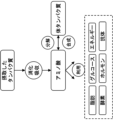
- FIG. 9 shows a functional block diagram of this embodiment when considered as a biological testing system.
- the testing system 10 in this embodiment has a collector 13 that collects sweat as a sample, and a measurement unit 15a that measures the amino acid profile of amino acids contained in the sweat collected by the collector 13. It also has a biological information acquisition unit 15b that acquires biological information such as the type of amino acid that is deficient, the degree of deficiency, and any underlying diseases based on the amino acid profile measured by the measurement unit 15a, and an information provision unit 17 that provides the biological information. It also has a memory unit 19 that stores the measurement data from the measurement unit 15a, the biological information acquired by the biological information acquisition unit 15b, and data on the content provided to the user by the information provision unit 17.
- the collector 13 in FIG. 9 specifically corresponds to a patch 3 or other device for collecting sweat from the test subject 1.
- the measurement unit 15a specifically corresponds to the liquid chromatography device 12.
- the bioinformation acquisition unit 15b specifically corresponds to a server (not shown) or the like having a computing device for performing amino acid profile analysis and analysis using structural equation modeling.
- the information provision unit 17 specifically corresponds to a communication unit in a server (not shown) or the like.
- the storage unit 19 specifically corresponds to an external storage device of a server (not shown) or the like, or a non-volatile storage device such as an external HDD.
- a contract analysis laboratory 50 in the figure is the business entity, and requests the collection of sweat as a sample from a healthcare service store 40, such as a drugstore, training gym, or massage parlor.
- the healthcare service store 40 introduces a sweat analysis service free of charge from the contract analysis laboratory 50.
- An end user, who is the test subject 1, normally uses a healthcare service store 40, such as a training gym, and applies for a free sweat analysis. Then, at the healthcare service store 40, the end user is provided with a patch 3 as a collector 13, and collects sweat by attaching the patch 3 to the test location.
- the healthcare service store 40 that has collected the end user's sweat sends the collected sample to the contracted analysis laboratory 50.
- This sending method may be by any method, such as mail, courier service, or direct collection and delivery by the contracted analysis laboratory 50.
- the contracted analysis laboratory 50 measures the amino acid profile using a liquid chromatograph device 12 as the measurement unit 15a. Furthermore, analysis is performed using a structural equation model using a server or PC in the lab as the bioinformation acquisition unit 15b.
- the contracted analysis laboratory 50 uploads the analysis results to a server, and makes them viewable by the end user using a separately prepared smartphone app or web app.
- the end user launches the smartphone app or web app on a terminal 70 such as a smartphone, and views the results on a display screen such as that described in FIG. 7.
- the contract analysis laboratory 50 also links the analysis result data to the test subject 1 and stores it in the memory unit 19, constructing a database 90.
- the healthcare service store 40 can access this database 90 for a fee.
- a product manufacturer 100 of supplements or the like can sell products to the healthcare service store 40, and can also access the database 90 for a fee as information for their own product development.
- the process of linking the analysis result data to the test subject 1 and storing it in the memory unit 19 corresponds to the storage process.
- the process of accessing the database 90 corresponds to the collective information provision process, and the communication system for accessing the database 90 corresponds to the collective information provision unit.
- the contract analysis laboratory 50 which is the operating entity, can earn revenue by providing the information (big data) in the database 90 built by the free sweat analysis service to the healthcare service store 40 and the product manufacturer 100 for a fee.
- the healthcare service store 40 can enjoy benefits such as an increase in the number of members and increased brand recognition due to the implementation of the free sweat analysis service.
- the product manufacturer 100 can enjoy benefits from the expansion of demand for products such as supplements based on this operating format.
- FIG. 11 shows a schematic diagram of the sweat-absorbing patch 30 as a specific structure of the patch 3 in this embodiment.
- the upper part of FIG. 11(a) is a top view of the sweat-absorbing patch 30, and the lower part is a cross-sectional view from the side.
- the sweat-absorbing patch 30 has an approximately disk shape in a plan view.
- the structure is such that an adhesive sheet 30b covers an absorbent sheet 30a, which is an example of an absorbent part made of a hygroscopic material such as filter paper or a hygroscopic polymer, from above.
- the adhesive sheet 30b has an adhesive surface on the lower side in the figure.
- the adhesive surface of the adhesive surface allows the absorbent sheet 30a and the adhesive sheet 30b to be bonded together, and the sweat-absorbing patch 30 to be attached to the skin of the test subject 1.
- the thickness of the absorbent sheet 30a may be, for example, about several hundred ⁇ m.
- a handle portion 30c protruding outward is provided on the outer periphery of the adhesive sheet 30b.
- the collector grasps the handle portion 30c with his or her fingers and removes it.
- the presence of this handle portion 30c reduces the risk that the collector will touch the moisture-absorbing sheet 30a with their fingers. This prevents the moisture-absorbing sheet 30a from absorbing finger sweat as well, which would reduce the accuracy of the analysis.
- the handle portion 30c corresponds to the holding portion. This is also true for the specific structure shown in the following figure.
- the moisture-absorbing sheet 30a and the adhesive sheet 30b are provided with perforations 30d as a separation mechanism. Furthermore, the adhesive sheet 30b does not have an adhesive surface on the inside of the perforations 30d. Therefore, as shown in FIG. 11(b), during analysis in the liquid chromatograph 12, the analyst can separate the adhesive sheet 30b and the moisture-absorbing sheet 30a from the sweat-absorbing patch 30 separately by separating the adhesive sheet 30b from the sweat-absorbing patch 30 by cutting off the part of the adhesive sheet 30b on the inner periphery of the perforations 30d where no adhesive surface is provided. As a result, only the moisture-absorbing sheet 30a can be easily collected, making it easier to prepare a sample for the liquid chromatograph 12.
- FIG 12 shows a schematic diagram of a sweat-absorbing patch 31 as a second specific structure of patch 3.
- the upper part of Figure 12(a) is a top view of sweat-absorbing patch 31, and the lower part is a cross-sectional view seen from the side.
- sweat-absorbing patch 31 is similar to sweat-absorbing patch 30 in that it is configured to cover moisture-absorbing sheet 31a with adhesive sheet 31b from above, and has a handle portion 31c.
- the sweat-absorbing patch 31 differs from sweat-absorbing patch 30 in the detachment mechanism.
- perforation 30d is not formed. Instead, moisture-absorbing sheet 31a has a double structure. Moisture-absorbing sheet 31a is held overlapping second moisture-absorbing sheet 31d.
- Moisture-absorbing sheet 31a and second moisture-absorbing sheet 31d are weakly bonded to each other. Therefore, as shown in FIG. 12(b), when performing analysis in the liquid chromatograph 12, the analyst can prepare a sample for the liquid chromatograph 12 by peeling off the moisture absorbent sheet 31a from the second moisture absorbent sheet 31d. In this case, as shown in FIG. 12(b), the second moisture absorbent sheet 31d remains on the adhesive sheet 31b side.
- FIG. 13 shows a sweat-absorbing patch 33 as a third specific structure of the patch 3.
- the upper part of FIG. 13(a) is a plan view of the sweat-absorbing patch 33, and the lower part is a cross-sectional view from the side.
- FIG. 13(b) shows the state when in use.
- the sweat-absorbing patch 33 is similar to the sweat-absorbing patch 30 in that it has a structure in which an adhesive sheet 33b covers an absorbent sheet 33a from above.
- the sweat-absorbing patch 33 differs from the sweat-absorbing patch 30 in that the sweat-absorbing patch 33 is stored in a storage case 36.
- This storage case 36 is provided with a sealing zipper 36a having a sealing function.
- the storage case 36 may be structured to be sealed regardless of whether the sealing zipper 36a is opened or closed before sweat collection. In this case, when collecting sweat, the storage case 36 may first be opened with scissors or the like, and then sealed with the sealing zipper 36a.
- the moisture absorbing sheet 33a and the adhesive sheet 33b are stored in the storage case 36 while attached to a base sheet 33e.
- This base sheet 33e prevents the adhesive strength of the adhesive sheet 33b from decreasing before use.
- the sweat absorbing patches 31 and 32 are also maintained in a state of being attached to the base sheet before and after sweat collection.
- a bag-shaped liquid container 33f containing a collection liquid is provided between the adhesive sheet 33b and the base sheet 33e.
- the liquid container 33f breaks, causing the collection liquid to leak out and be absorbed by the moisture-absorbing sheet 33a.
- the collection efficiency of amino acids in sweat is higher if the moisture-absorbing sheet 33a is somewhat moist when collecting sweat.
- the moisture-absorbing sheet can be automatically moistened in the operation of peeling off the moisture-absorbing sheet 33a and the adhesive sheet 33b from the base sheet 33e, making it easier to improve the collection efficiency of amino acids in sweat.
- the liquid container 33f is provided between the adhesive sheet 33b and the base sheet 33e, but it may be provided between the moisture-absorbing sheet 33a and the base sheet 33e, or between the moisture-absorbing sheet 33a and the adhesive sheet 33b.
- FIG. 14 shows a sweat-absorbing patch 34 as a fourth specific structure of the patch 3.
- the sweat-absorbing patch 34 is composed of a moisture-absorbing sheet 34a and an adhesive sheet 34b.
- the sweat-absorbing patch 34 has a circular perforation 34d as viewed from above as a separation mechanism.
- the sweat-absorbing patch 34 is stored in a storage case 37.
- This storage case 37 has a flat cylindrical shape as a whole, and is composed of a substantially disk-shaped base 37a and a lid 37b with a disk-shaped ceiling provided at the upper end of the cylindrical side.
- the sweat-absorbing patch 34 is attached to the base 37a of the storage case 37 by the adhesive force of the adhesive sheet 34b.
- the lid 37b of the storage case 37 is provided with a separation protrusion 37c, which is a sharp protrusion.
- This separation protrusion 37c is formed in a circular shape at a position opposite the perforation 34d as viewed from above. Additionally, a dome-shaped protrusion 37d is provided on the inside of the separation protrusion 37c.
- the top part of FIG. 14(b) shows the state before sweat is collected.
- the base part 37a and the lid part 37b are relatively far apart and weakly bonded.
- the moisture-absorbing sheet 34a and the adhesive sheet 34b of the sweat-absorbing patch 34 are peeled off from the base part 37a and attached to the test site.
- the middle part of FIG. 14(b) shows the state after sweat is collected.
- the sweat-absorbing patch 34 after sweat collection is reattached to the base part 37a.
- the base part 37a is pressed into the lid part 37b, so that the distance between the two is relatively short.
- the detachment protrusion 37c penetrates deeply into the perforation 34d of the sweat-absorbing patch 34, and detaches the perforation 34d.
- This detachment protrusion 37c corresponds to a detachment assistance mechanism.
- protrusion 37d vertically sandwiches the separated moisture-absorbing sheet 34a and adhesive sheet 34b together with base 37a.
- the side of separation protrusion 37c is in contact with the cross section separated at perforation 34d. This more reliably prevents moisture-absorbing sheet 34a from drying out or becoming contaminated with foreign matter after sweat collection. It also prevents air bubbles from becoming mixed into moisture-absorbing sheet 34a.
- Protrusion 37d corresponds to the contact portion.
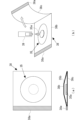
- Figure 15 shows the sweat-absorbing patch 35 as a fifth specific structure of the patch 3.
- the top part of Figure 15(a) is a plan view of the sweat-absorbing patch 35 stored in the packaging seal 38, and the bottom part is a cross-sectional view from the side.
- Figure 15(b) shows the sweat-absorbing patch 35 when it is being prepared for use.
- the sweat-absorbing patch 35 in the initial state, is stored in the packaging seal 38.
- the packaging seal 38 packages the sweat-absorbing patch 35 by sandwiching the sweat-absorbing patch 35 between the sealing portion 38b and the seal mount 38c.
- the surface of the sweat-absorbing patch 35 facing the moisture-absorbing sheet 35a is fixed to the seal mount 38c by the adhesive force of the adhesive sheet 35b.
- the surface of the sweat-absorbing patch 35 opposite the moisture-absorbing sheet 35a is fixed to the sealing portion 38b by the adhesive force of the seal portion 38b.
- the adhesive strength between the surface of the sweat-absorbing patch 35 facing the moisture-absorbing sheet 35a and the sticker mount 38c is weaker than the adhesive strength between the surface of the sweat-absorbing patch 35 opposite the moisture-absorbing sheet 35a and the seal portion 38b. That is, as shown in FIG. 15(b), by grasping and pulling the ends 38a of the seal portion 38b and the sticker mount 38c, it is possible to peel off the surface of the sweat-absorbing patch 35 facing the moisture-absorbing sheet 35a and the sticker mount 38c, thereby exposing the moisture-absorbing sheet 35a.
- the absorbent sheet 35a is moistened using a dropper 39 filled with purified water that is provided to the user together with the sweat-absorbing patch 35.
- the dropper 39 filled with purified water that is provided to the user is filled with the required amount of purified water in advance, and the absorbent sheet 35a can be moistened appropriately by dripping all of the purified water in the dropper 39 filled with purified water onto the absorbent sheet 35a.
- FIG. 16 shows the state of the sweat-absorbing patch 35 after sweat collection when it is collected for measuring the amino acid profile.
- FIG. 16(a) shows the state in which the sweat-absorbing patch 35 after sweat collection is stored in the storage case 43 (hereinafter, this state is also referred to as the patch-stored case 41).
- the upper side of FIG. 16(a) shows a plan view, and the lower side shows a cross-sectional view seen from the side.
- the storage case 43 has a flat, bottomed cylindrical shape with one side closed. By having a bottomed cylindrical shape, sufficient strength can be ensured, and operations such as opening and closing the lid are unnecessary, improving operability.
- the storage case 43 is made of resin, but is not limited to being made of resin.
- the cross section of the storage case 43 seen from the axial direction is not limited to being circular.
- the sweat-absorbing patch 35 is then attached to the inside of the bottom surface 43a of the storage case 43 with the moisture-absorbing sheet 35a side in close contact with it, and is fixed in place by the adhesive force of the adhesive sheet 35b. It has been found that by transporting and storing the sweat-absorbing patch 35 in this state after sweat collection, it is possible to stably maintain the components of the sweat sample for at least one month.
- FIG 16(b) shows the state of the sweat-absorbing patches 35 during transportation.
- multiple patch-containing cases 41 are stored in a collection bag 45.
- the collection bag 45 is sealed and transported.
- parts of the storage case 43 may come into contact with sweat-absorbing patches 35 stored in other storage cases 43, it is possible to prevent the sweat-absorbing patches 35 from coming into contact with each other, and with a simple structure, it is possible to prevent the collected sweat from mixing together.
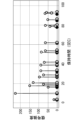
- FIG 17 shows a graph with the type of amino acid on the horizontal axis and the signal intensity obtained by the liquid chromatograph device 12 on the vertical axis.
- black indicates the case without water
- hatched indicates the case with water.
- a significantly higher signal intensity can be obtained when water is present (the moisture-absorbing sheet 35a is moistened with water before attachment) compared to when no water is present.
- FIG. 18 shows examples of amino acid profiles obtained without and with water.
- FIG. 18(a) shows the amino acid profile without water
- FIG. 18(b) shows the amino acid profile with water. Comparing the two profiles, it can be seen that with water, as shown in FIG. 18(b), a larger number of peaks can be detected, enabling more accurate measurements, compared to the case without water. Note that the units of signal intensity in FIGS. 17 and 18 are different from those in FIG. 5, and the signal intensity values in FIGS. 5, 17, 18, etc. cannot be directly compared across figures.
- amino acids closely related to skin conditions include serine, glycine, alanine, etc.
- branched chain amino acids such as valine, leucine, and isoleucine can be exemplified as amino acids closely related to muscle conditions.
- glycine and tryptophan can be exemplified as amino acids closely related to sleep information.
- the free amino acid ornithine can be exemplified as amino acids closely related to recovery information.
- An example of an amino acid closely related to mental conditions is tyrosine, etc.
- examples of biological components that are the subject of analysis in this disclosure include proteins related to bodily conditions, vitamins, which are essential components related to vitality, taurine related to vitality, and hyaluronic acid related to beauty and moisture.
- Other examples include amyloid beta, which is related to dementia, human growth hormone, which is related to metabolism and muscles, L-carnitine, which is related to vitality and metabolism, coenzyme Q10, which is related to vitality and aging, and minoxidil and keratin, which are related to vasodilation and hair growth.
- Further examples include collagen, collagen peptides, elastin, elastin peptides, which are related to muscle and skin tissue, and glucosamine and chondroitin, which are related to cartilage.
- the measurement method for the biocomponent profile in the measurement unit 15a may be a method related to liquid chromatography (LC), such as ultra-high performance liquid chromatography (HPLC) or liquid chromatography/mass spectrometry (LC/MS).
- the detection unit 120d of the liquid chromatograph 12 may detect the biocomponents using a method such as fluorescence detection, ultraviolet absorption spectroscopy, or nuclear magnetic resonance spectroscopy, or may use a method such as mass spectrometry or QCM (quartz crystal microbalance) using the external detector 125.
- Test subject 3 Patch 5: Analysis device 7: Display screen 10: Test system 12: Liquid chromatograph device 13: Sampling device 15a: Measurement unit 15b: Biological information acquisition unit 17: Information provision unit 19: Memory unit 30, 31, 33, 34, 35: Sweat-absorbing patch 37, 43: Storage case
Landscapes
- Health & Medical Sciences (AREA)
- Life Sciences & Earth Sciences (AREA)
- Engineering & Computer Science (AREA)
- Biomedical Technology (AREA)
- Molecular Biology (AREA)
- Physics & Mathematics (AREA)
- Pathology (AREA)
- General Health & Medical Sciences (AREA)
- Medical Informatics (AREA)
- Public Health (AREA)
- Biophysics (AREA)
- Veterinary Medicine (AREA)
- Heart & Thoracic Surgery (AREA)
- Surgery (AREA)
- Animal Behavior & Ethology (AREA)
- Hematology (AREA)
- Chemical & Material Sciences (AREA)
- Urology & Nephrology (AREA)
- Immunology (AREA)
- Optics & Photonics (AREA)
- Analytical Chemistry (AREA)
- Food Science & Technology (AREA)
- General Physics & Mathematics (AREA)
- Biochemistry (AREA)
- Proteomics, Peptides & Aminoacids (AREA)
- Biotechnology (AREA)
- Cell Biology (AREA)
- Medicinal Chemistry (AREA)
- Microbiology (AREA)
- Gastroenterology & Hepatology (AREA)
- Chemical Kinetics & Catalysis (AREA)
- Physiology (AREA)
- General Chemical & Material Sciences (AREA)
- Endocrinology (AREA)
- Bioinformatics & Computational Biology (AREA)
- Bioinformatics & Cheminformatics (AREA)
- Data Mining & Analysis (AREA)
- Databases & Information Systems (AREA)
- Epidemiology (AREA)
- Primary Health Care (AREA)
Priority Applications (2)
| Application Number | Priority Date | Filing Date | Title |
|---|---|---|---|
| JP2025508317A JPWO2024195592A1 (https=) | 2023-03-20 | 2024-03-08 | |
| EP24774731.4A EP4682537A1 (en) | 2023-03-20 | 2024-03-08 | Living body inspection method, inspection system, and patch |
Applications Claiming Priority (2)
| Application Number | Priority Date | Filing Date | Title |
|---|---|---|---|
| JP2023044496 | 2023-03-20 | ||
| JP2023-044496 | 2023-03-20 |
Publications (1)
| Publication Number | Publication Date |
|---|---|
| WO2024195592A1 true WO2024195592A1 (ja) | 2024-09-26 |
Family
ID=92842104
Family Applications (1)
| Application Number | Title | Priority Date | Filing Date |
|---|---|---|---|
| PCT/JP2024/009147 Ceased WO2024195592A1 (ja) | 2023-03-20 | 2024-03-08 | 生体の検査方法、検査システム及び、パッチ |
Country Status (3)
| Country | Link |
|---|---|
| EP (1) | EP4682537A1 (https=) |
| JP (1) | JPWO2024195592A1 (https=) |
| WO (1) | WO2024195592A1 (https=) |
Citations (10)
| Publication number | Priority date | Publication date | Assignee | Title |
|---|---|---|---|---|
| JPH0951877A (ja) * | 1995-08-11 | 1997-02-25 | Nobuyuki Tsutsui | 発汗記録装置 |
| JP2004216020A (ja) * | 2003-01-17 | 2004-08-05 | Iida Kensetsu:Kk | 汗捕集用具 |
| JP2010048791A (ja) | 2008-08-25 | 2010-03-04 | Pico Device:Kk | 汗よりのグリコアルブミン判定方法、および測定方法およびキット |
| JP2015055620A (ja) * | 2013-09-11 | 2015-03-23 | 有限会社ピコデバイス | パーキンソン病の早期診断方法 |
| JP2019124667A (ja) * | 2018-01-19 | 2019-07-25 | アイシン精機株式会社 | 皮膚粘着材、皮膚粘着材を用いる皮膚分泌物の採取方法及び生体成分の測定方法 |
| JP2019132733A (ja) * | 2018-01-31 | 2019-08-08 | シスメックス株式会社 | 生体内成分測定装置及び生体内成分測定方法 |
| JP2020042598A (ja) * | 2018-09-12 | 2020-03-19 | 国立大学法人神戸大学 | 生体信号データからの個体特徴分離による状態予測方法および装置 |
| JP2021120627A (ja) | 2020-01-30 | 2021-08-19 | 株式会社ファーストスクリーニング | 健康状態判定支援装置、健康状態判定支援プログラム、および健康状態判定支援システム |
| WO2022112067A1 (en) * | 2020-11-24 | 2022-06-02 | Koninklijke Philips N.V. | Systems and methods for indicating a need to replace a wearable patch |
| JP2022119774A (ja) | 2007-06-29 | 2022-08-17 | クエスト ダイアグノスティックス インヴェストメンツ インコーポレイテッド | 液体クロマトグラフィー質量分析による体液中のアミノ酸分析 |
Family Cites Families (1)
| Publication number | Priority date | Publication date | Assignee | Title |
|---|---|---|---|---|
| CN115552541A (zh) | 2020-06-02 | 2022-12-30 | 株式会社优卡喜 | 使用尿液试纸的营养状态分析系统 |
-
2024
- 2024-03-08 JP JP2025508317A patent/JPWO2024195592A1/ja active Pending
- 2024-03-08 EP EP24774731.4A patent/EP4682537A1/en active Pending
- 2024-03-08 WO PCT/JP2024/009147 patent/WO2024195592A1/ja not_active Ceased
Patent Citations (10)
| Publication number | Priority date | Publication date | Assignee | Title |
|---|---|---|---|---|
| JPH0951877A (ja) * | 1995-08-11 | 1997-02-25 | Nobuyuki Tsutsui | 発汗記録装置 |
| JP2004216020A (ja) * | 2003-01-17 | 2004-08-05 | Iida Kensetsu:Kk | 汗捕集用具 |
| JP2022119774A (ja) | 2007-06-29 | 2022-08-17 | クエスト ダイアグノスティックス インヴェストメンツ インコーポレイテッド | 液体クロマトグラフィー質量分析による体液中のアミノ酸分析 |
| JP2010048791A (ja) | 2008-08-25 | 2010-03-04 | Pico Device:Kk | 汗よりのグリコアルブミン判定方法、および測定方法およびキット |
| JP2015055620A (ja) * | 2013-09-11 | 2015-03-23 | 有限会社ピコデバイス | パーキンソン病の早期診断方法 |
| JP2019124667A (ja) * | 2018-01-19 | 2019-07-25 | アイシン精機株式会社 | 皮膚粘着材、皮膚粘着材を用いる皮膚分泌物の採取方法及び生体成分の測定方法 |
| JP2019132733A (ja) * | 2018-01-31 | 2019-08-08 | シスメックス株式会社 | 生体内成分測定装置及び生体内成分測定方法 |
| JP2020042598A (ja) * | 2018-09-12 | 2020-03-19 | 国立大学法人神戸大学 | 生体信号データからの個体特徴分離による状態予測方法および装置 |
| JP2021120627A (ja) | 2020-01-30 | 2021-08-19 | 株式会社ファーストスクリーニング | 健康状態判定支援装置、健康状態判定支援プログラム、および健康状態判定支援システム |
| WO2022112067A1 (en) * | 2020-11-24 | 2022-06-02 | Koninklijke Philips N.V. | Systems and methods for indicating a need to replace a wearable patch |
Non-Patent Citations (1)
| Title |
|---|
| See also references of EP4682537A1 |
Also Published As
| Publication number | Publication date |
|---|---|
| JPWO2024195592A1 (https=) | 2024-09-26 |
| EP4682537A1 (en) | 2026-01-21 |
Similar Documents
| Publication | Publication Date | Title |
|---|---|---|
| Davis et al. | The challenges and promise of sweat sensing | |
| Sun et al. | Detection of volatile organic compounds (VOCs) from exhaled breath as noninvasive methods for cancer diagnosis | |
| US20080227210A1 (en) | Home test for glycated albumin in saliva | |
| Yan et al. | Design of a breath analysis system for diabetes screening and blood glucose level prediction | |
| Coyle et al. | Wearable bio and chemical sensors | |
| CA2185555C (en) | Integrated system for biological fluid constituent analysis | |
| US4735777A (en) | Instrument for parallel analysis of metabolites in human urine and expired air | |
| US20100105102A1 (en) | Device, method and apparatus for analyzing skin and hair | |
| Chen et al. | 3D-printed flexible microfluidic health monitor for in situ sweat analysis and biomarker detection | |
| Agrawal et al. | Sweat lipid mediator profiling: a noninvasive approach for cutaneous research | |
| Luo et al. | Monitor for lactate in perspiration | |
| Sun et al. | A low-cost and simple-fabricated epidermal sweat patch based on “cut-and-paste” manufacture | |
| US20100240079A1 (en) | Glucose tolerace test device | |
| WO2015168669A1 (en) | Human health property monitoring system | |
| CN103040475B (zh) | 葡萄糖耐量分析装置、葡萄糖耐量分析系统及存储介质 | |
| van den Brink et al. | Digital resilience biomarkers for personalized health maintenance and disease prevention | |
| Hutter et al. | Point-of-care and self-testing for potassium: recent advances | |
| Upasham et al. | Sweating out the circadian rhythm: a technical review | |
| Yu et al. | Detection of transdermal biomarkers using gradient-based colorimetric array sensor | |
| US11717195B2 (en) | Assay and point of care device utilizing saliva for diagnosis and treatment of neurological conditions affecting brain health | |
| Iitani et al. | Transdermal sensing: in-situ non-invasive techniques for monitoring of human biochemical status | |
| JP2023511325A (ja) | 流体中のバイオマーカー濃度の評価 | |
| Ventura et al. | Cortisol extraction through human skin by reverse iontophoresis | |
| Hubbard | Review on toxicology testing in hair | |
| Khoubnasabjafari et al. | Challenges on determination of malondialdehyde in plant samples |
Legal Events
| Date | Code | Title | Description |
|---|---|---|---|
| 121 | Ep: the epo has been informed by wipo that ep was designated in this application |
Ref document number: 24774731 Country of ref document: EP Kind code of ref document: A1 |
|
| ENP | Entry into the national phase |
Ref document number: 2025508317 Country of ref document: JP Kind code of ref document: A |
|
| WWE | Wipo information: entry into national phase |
Ref document number: 2025508317 Country of ref document: JP |
|
| WWE | Wipo information: entry into national phase |
Ref document number: 2024774731 Country of ref document: EP |
|
| NENP | Non-entry into the national phase |
Ref country code: DE |
|
| WWE | Wipo information: entry into national phase |
Ref document number: 11202506256P Country of ref document: SG |
|
| WWP | Wipo information: published in national office |
Ref document number: 11202506256P Country of ref document: SG |
|
| ENP | Entry into the national phase |
Ref document number: 2024774731 Country of ref document: EP Effective date: 20251017 |
|
| ENP | Entry into the national phase |
Ref document number: 2024774731 Country of ref document: EP Effective date: 20251017 |
|
| ENP | Entry into the national phase |
Ref document number: 2024774731 Country of ref document: EP Effective date: 20251017 |
|
| ENP | Entry into the national phase |
Ref document number: 2024774731 Country of ref document: EP Effective date: 20251017 |
|
| ENP | Entry into the national phase |
Ref document number: 2024774731 Country of ref document: EP Effective date: 20251017 |