WO2024194948A1 - 特許評価装置、特許評価方法、およびプログラム - Google Patents
特許評価装置、特許評価方法、およびプログラム Download PDFInfo
- Publication number
- WO2024194948A1 WO2024194948A1 PCT/JP2023/010689 JP2023010689W WO2024194948A1 WO 2024194948 A1 WO2024194948 A1 WO 2024194948A1 JP 2023010689 W JP2023010689 W JP 2023010689W WO 2024194948 A1 WO2024194948 A1 WO 2024194948A1
- Authority
- WO
- WIPO (PCT)
- Prior art keywords
- attribute information
- unit
- patents
- information
- value
- Prior art date
- Legal status (The legal status is an assumption and is not a legal conclusion. Google has not performed a legal analysis and makes no representation as to the accuracy of the status listed.)
- Ceased
Links
Images



Classifications
-
- G—PHYSICS
- G06—COMPUTING OR CALCULATING; COUNTING
- G06Q—INFORMATION AND COMMUNICATION TECHNOLOGY [ICT] SPECIALLY ADAPTED FOR ADMINISTRATIVE, COMMERCIAL, FINANCIAL, MANAGERIAL OR SUPERVISORY PURPOSES; SYSTEMS OR METHODS SPECIALLY ADAPTED FOR ADMINISTRATIVE, COMMERCIAL, FINANCIAL, MANAGERIAL OR SUPERVISORY PURPOSES, NOT OTHERWISE PROVIDED FOR
- G06Q50/00—Information and communication technology [ICT] specially adapted for implementation of business processes of specific business sectors, e.g. utilities or tourism
- G06Q50/10—Services
- G06Q50/18—Legal services
Definitions
- patent This disclosure relates to a technique for evaluating the value of a patent application or patent right (collectively, hereinafter, "patent").
- This disclosure has been made to solve the above problems, and aims to provide patent evaluations that are more in line with users' interests.
- a patent evaluation device receives attribute information about multiple patents from a user and evaluates the patents using at least weights that depend on the attribute information.
- the patent evaluation device disclosed herein can provide patent evaluations that are more in line with the user's interests.
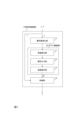
- FIG. 1 is a diagram showing an example of the functional configuration of a patent evaluation device according to this embodiment.
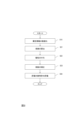
- FIG. 2 is a diagram showing an example of a process flow of the patent evaluation method according to this embodiment.
- FIG. 3 is a diagram for assisting in the explanation of the processing of the coefficient calculation unit 21 and the coefficient correction unit 23 in FIG.
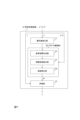
- FIG. 4 is a diagram showing an example of the functional configuration of a patent evaluation device according to the first modified example of this embodiment.
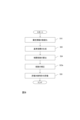
- FIG. 5 is a diagram showing an example of a process flow of the patent evaluation method according to the first modified example of this embodiment.
- FIG. 6 is a diagram for assisting in the explanation of the process of the correlation coefficient calculation unit 24 in FIG.
- FIG. 1 is a diagram showing an example of the functional configuration of a patent evaluation device according to this embodiment.
- FIG. 2 is a diagram showing an example of a process flow of the patent evaluation method according to this embodiment.
- FIG. 3 is a diagram for assisting in the explanation of the processing of the coefficient calculation unit
- FIG. 7 is a diagram showing an example of the functional configuration of a patent evaluation device according to the second modified example of this embodiment.
- FIG. 8 is a diagram showing an example of a process flow of a patent evaluation method according to the second modification of this embodiment.
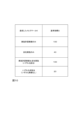
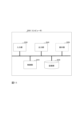
- FIG. 9 is a diagram for assisting in the explanation of the process of the reference indicator generating unit 25 in FIG.
- FIG. 10 is a diagram for assisting in the explanation of the process of the reference indicator generating unit 25 in FIG.
- FIG. 11 is a diagram illustrating an example of the functional configuration of a computer.
- the patent evaluation device receives attribute information (attribute information ⁇ ) about multiple patents from a user, and evaluates the patent to be evaluated (evaluated patent T) using at least a weight (weight W) that depends on the attribute information ⁇ .
- attribute information ⁇ attribute information about multiple patents from a user
- weight W weight
- the user can provide attribute information ⁇ about patents in which they are interested, and this tendency can be reflected in the calculation of the evaluation points for the value evaluation of the patent, making it possible to provide a patent evaluation that is more in line with the user's interests.
- the patent evaluation device 1 which is an example of an embodiment of the present disclosure, is described in detail using figures. Furthermore, below, components having the same functions are given the same numbers, and duplicate explanations are omitted.
- the patent evaluation device 1 is a device that corresponds to the above case. As shown in FIG. 1, the patent evaluation device 1 according to the embodiment of the present disclosure includes an attribute quantification unit 10, a model construction unit 20, and an evaluation unit 30.
- the model construction unit 20 includes a coefficient calculation unit 21, a polarity assignment unit 22, and a coefficient correction unit 23.
- the patent evaluation device 1 performs the patent evaluation method of this embodiment by implementing the processing flow shown in FIG. 2.
- the patent evaluation device 1 receives attribute information ⁇ for multiple patents previously determined by the user and the patent T to be evaluated.
- the attribute information ⁇ is sent to the attribute quantification unit 10 by an input reception unit (not shown), and the patent T to be evaluated is sent to the evaluation unit 30.
- the patent T to be evaluated may be configured to be sent to the evaluation unit 30 via the attribute quantification unit 10, or may be configured to be sent to the evaluation unit 30 via the attribute quantification unit 10 and the model construction unit 20.
- Attribute information ⁇ includes at least attribute items indicating the attribute information items of the patent (for example, information types such as "application number” and “registration number” described below) and attribute data which is data corresponding to the attribute items (for example, data such as "20230315", “2023/03/15", and "2023-03-15" when the application date is March 15, 2023).
- Attribute information ⁇ may include public information and non-public information.
- Public information may include information made public by the Japan Patent Office and information that can be objectively known from that information. Specific examples of public information include (i) to (iii) below, but are not limited to these.
- the information may be obtained from the database to supplement the information entered by the user. For example, if only a registration number is entered, attribute information ⁇ such as the number of claims for the patent corresponding to that registration number may be obtained from a database (not shown) and used for subsequent processing.
- Undisclosed information refers to information about patents other than information made public by the Japan Patent Office.
- Specific examples of undisclosed information include, but are not limited to, the following (iv) to (vii): (iv) Revenue information such as license revenue, damages claimed in patent infringement lawsuits, and settlement money; (v) Rights utilization information such as the presence or absence of licenses and the number of licenses, the presence or absence of licenses to group companies, the presence or absence of licenses to other companies, and the presence or absence and number of license negotiations; (vi) Background information such as the presence or absence of in-house implementation, the presence or absence and priority of development related to the patented invention, and the investment costs leading up to the invention; (vii) Subjective information such as the assessment of the patentability of claims and the possibility of proving implementation, which is manually evaluated by a person in charge.
- the attribute quantification unit 10 quantifies the attribute data included in the attribute information ⁇ of the received multiple patents (step S10).
- the attribute data of the attribute information ⁇ is converted into a numerical value based on, for example, the following ideas (1) to (5), but is not limited to these.
- (2) For information such as presence or absence, "presence" and "absence” are expressed by two arbitrary different values such as 1 and 0, or 1 and -1.
- the attribute quantification unit 10 transmits the converted value corresponding to each quantified attribute information ⁇ to the model construction unit 20.
- Model Construction Unit 20 calculates a weight (weight W) for each piece of attribute information ⁇ from the converted value of the received quantified attribute information ⁇ , and constructs a model (model M) for evaluating patents using the weight W.
- the process of constructing the model M is performed by a coefficient calculation unit 21, a polarity assignment unit 22, and a coefficient correction unit 23.
- the coefficient calculation unit 21 calculates a predetermined coefficient for each of the converted values of the received quantified attribute information ⁇ (step S21).
- a method of calculating the coefficient for each attribute information ⁇ , the standard deviation among the input multiple patents (hereinafter also referred to as a "patent group") is calculated, and the reciprocal is used as the coefficient.
- the number of characters in the claim number of claim characters C
- the number of characters in the specification number of specification characters D
- resources required to arrive at the invention resources R
- the symbols indicating the attribute data of the attribute information ⁇ are written in lowercase letters.
- the attribute data of the attribute information ⁇ are written with subscript numbers. That is, when the attribute data of the attribute information ⁇ of the two patents input by the user are written in the order of (C, D, R), the information input is (c 1 , d 1 , r 1 ) and (c 2 , d 2 , r 2 ).
- the coefficient a C for the number of claim characters C, the coefficient a D for the number of specification characters D, and the coefficient a R for the resource R are calculated as follows.
- a is a coefficient that can be corrected by the coefficient correction unit 23 described later.
- the standard deviation may be calculated by the square root of the mean square of each data as in the above formulas (1) and (2), or may be calculated by the square root of the mean absolute value as in the above formula (3).
- the calculated coefficients aC , aD , and aR are transmitted to the polarity assignment unit 22.
- the polarity assigning unit 22 assigns a predetermined polarity to each of the received coefficients (step S22).
- the assignment of polarity means that a positive or negative sign is assigned to the coefficient of each attribute information ⁇ calculated by the coefficient calculation unit 21.
- assigning polarity when considering the value evaluation of a patent, a positive sign is assigned if it is considered that the value is improved, and a negative sign is assigned if it is considered that the value is decreased.
- the item of the attribute information ⁇ is the number of claim characters C, generally, the shorter the number of claim characters, the wider the scope of rights.
- the coefficient correction unit 23 corrects the coefficients in consideration of the received coefficients and polarity (step S23).
- the method of correcting the coefficients is, for example, to multiply the obtained coefficients (here, coefficients including polarity) by the quantified converted values of each attribute information ⁇ for each patent in the input patent group, and calculate the raw score by taking the sum of each value. Then, the coefficients including polarity are corrected by calculating the above-mentioned constant a and the below-mentioned constant b so that the average value, variance value, or maximum and minimum values become predetermined values, as in the case of deviation value calculation.
- the above-mentioned correction method is one example, and is not limited to this. In addition, whether or not to perform this correction is a matter of choice, and if correction is not performed, the process of step S23 is not necessarily required.
- the above-mentioned correction method will be described in the case where the patent group received by the attribute quantification unit 10 is two patents, patent 1 and patent 2, as shown in Fig. 3.
- the model M to be constructed is defined as the following formula (4).
- equation (4) the evaluation points of the patent value for the two patents given in advance as described above are expressed by the following equation (5) for patent 1 and by the following equation (6) for patent 2.
- the coefficient correction unit 23 performs a process of correcting a and b so that the average value of the above formulas (5) and (6) becomes 50 and the variance value becomes 1.
- the coefficients aC , aD , aR , and b in formula (4) after the values of a and b are determined correspond to the weight W described above, and formula (4) itself after the values of a and b are determined corresponds to the model M constructed by the model construction unit 20.
- formula (4) is merely an example. The definition formula is not limited to this. In other words, the weight W may be defined in other expressions without being limited to a linear model.
- the constructed model M is transmitted to the evaluation unit 30.
- the weight W for each attribute information ⁇ is determined by the coefficient obtained from a group of patents given in advance for each term of the model M. In other words, the weight W depends on the attribute information ⁇ .
- the coefficient changes the degree of change in the evaluation score of the value of the patent when the conversion value of the corresponding attribute information changes also changes.
- the weight W indicates the degree of change in the evaluation score of the value of the patent when the quantified conversion value of the attribute information ⁇ changes.
- Building a model means determining the weight W for each attribute information ⁇ .
- the weight W changes taking into account that difference.
- the polarity of each coefficient is qualitatively determined. In other words, in the example used to explain the processing of the polarity assignment unit 22, the more the value of the patent deviates from the average value in the positive direction, the higher the value of the patent, and the more the value deviates from the average value in the negative direction, the lower the value of the patent.
- the numerical conversion value of attribute information ⁇ is evaluated as 1 or 0, it can be said that the model places more weight on the less frequent event. In other words, in that case, it can be said that a method is adopted in which a higher score is given to an event that is less likely to actually occur.
- the evaluation unit 30 uses the received model M to generate information about the evaluation of the patent (evaluation information V) for the evaluation target patent T, which is the designated patent to be evaluated (step S30).
- the patent evaluation device 1 does not necessarily need to be configured so that one evaluation target patent T, which is the designated patent to be evaluated, is input; multiple patents may be designated.
- the method of inputting the evaluation target patent T may be to designate it from the group of patents for which the attribute information ⁇ has been input, or a new patent separate from this group of patents may be designated.
- the attribute information ⁇ of the patent may also be input by the user when designating the new evaluation target patent T, so that the attribute information ⁇ of the patent is also input into the patent evaluation device 1.
- the configuration may be such that when information that can identify the evaluation target patent T is obtained, it can be obtained by accessing a specific database (not shown).
- evaluation information V includes, but are not limited to, the following (1) to (3): (1) displaying the numerical value of the evaluation score of the patent's value, or outputting the numerical data of the evaluation score of the patent's value, (2) displaying a rank such as A, B, C, etc. according to the numerical value of the evaluation score of the patent's value, or outputting the rank data, (3) if there are multiple patents T to be evaluated, displaying or outputting the ranking according to the evaluation score of the patent's value.
- the user can provide attribute information ⁇ of the patent in which they are interested, and this tendency can be reflected in the calculation of the evaluation score of the patent's value, making it possible to provide a patent evaluation that is more in line with the user's interests.
- the patent evaluation device 1 may be configured as a patent evaluation device 1a having a model construction unit 20a instead of the model construction unit 20.
- a patent evaluation device 1a having a model construction unit 20a instead of the model construction unit 20.
- the patent evaluation device 1a is a device that can handle such a case.
- the model construction unit 20a does not have the coefficient calculation unit 21 and polarity assignment unit 22 of the model construction unit 20, but instead has a correlation coefficient calculation unit 24. Also, the coefficient correction unit 23 has been replaced with a coefficient correction unit 23a.
- the weight W in the model construction unit 20a is calculated by using one piece of attribute information ⁇ designated from the accepted (hereinafter also referred to as "received") attribute information ⁇ as a reference index (reference index ⁇ ) and taking into consideration the degree of correlation of each of the other attribute information ⁇ with respect to the reference index ⁇ .
- the patent evaluation device 1a performs the process flow shown in FIG. 5 to perform the patent evaluation method of this modified example 1.
- step S24 has been added instead of steps S21 and S22 in FIG. 2.
- Step S23 has also been changed to step S23a. Therefore, the following explanation will focus on the processing of steps S24 and S23a, and other explanations will be omitted.
- the patent evaluation device 1a receives attribute information ⁇ for a plurality of patents previously determined by a user, a patent T to be evaluated, and one kind of reference indicator ⁇ , which is information on attribute items of the attribute information ⁇ serving as a reference.
- the attribute information ⁇ is sent to the attribute quantification unit 10
- the reference indicator ⁇ is sent to the model construction unit 20a
- the patent T to be evaluated is sent to the evaluation unit 30 by an input reception unit (not shown).
- the patent T to be evaluated may be sent to the evaluation unit 30 via the attribute quantification unit 10, or may be sent to the evaluation unit 30 via the attribute quantification unit 10 and the model construction unit 20a.
- the reference indicator ⁇ may be sent to the model construction unit 20a via the attribute quantification unit 10.
- the model construction in the model construction unit 20a of this modified example 1 constructs a model in which the linear sum of each attribute information ⁇ is used as the evaluation point of the value of the patent based on the license income amount L for the group of patents given by the user.
- the correlation coefficient calculation unit 24 calculates a coefficient by taking one attribute item designated from the received attribute information ⁇ as a reference index ⁇ and taking into consideration the degree of correlation between each attribute data of the reference index ⁇ and the attribute data of each other attribute information ⁇ (step S24).
- a coefficient calculation method for each attribute information ⁇ , a standard deviation other than the reference index ⁇ is calculated in the input patent group, and its reciprocal is used as the coefficient.
- a new coefficient is calculated by multiplying the above coefficient by the correlation coefficient (correlation coefficient F) between each attribute information ⁇ and the license income amount L, which is the reference index ⁇ .
- the correlation coefficient between the number of claim characters C and the license revenue L is correlation coefficient F C
- the correlation coefficient between the number of description characters D and the license revenue L is correlation coefficient F D
- coefficient a C taking into account correlation coefficient F C and coefficient a D taking into account correlation coefficient F D are calculated as shown in the following formulas (7) and (8).
- the correlation coefficient r can be calculated by the following formula (9): where n is the number of data (x, y), xi is the i-th value of x, yi is the i-th value of y, ⁇ x is the average value of x, and ⁇ y is the average value of y.
- the correlation coefficients F C and F D may be calculated with reference to formula (9).
- a is a coefficient that can be corrected by the coefficient correction unit 23a.
- the standard deviation may be calculated by the square root of the mean square of each data as in the above formulas (7) and (8), or may be calculated by the square root of the mean absolute value as in the above formula (3).
- the calculated coefficients aC and aD are transmitted to the coefficient correction unit 23a.
- the coefficient correction unit 23a corrects the coefficients in consideration of the received coefficients (step S23a).
- the correction method is, for example, to multiply the obtained coefficient by the quantified converted value of each attribute information ⁇ for each patent in the input patent group, and calculate the raw score by taking the sum of each value. Then, the coefficients are corrected by obtaining the above-mentioned constants a and b so that the average, variance, or maximum and minimum values become predetermined values like a deviation value.
- the above-mentioned correction method is one example and is not limited to this. In addition, whether or not to perform this correction is a matter of choice, and if correction is not performed, the process of step S23a is not necessarily required.
- the constructed model M is defined as the following equation (10).
- equation (10) the evaluation points for the patent value assessment of the two patents given in advance as described above are expressed by the following equation (11) for patent 1 and the following equation (12) for patent 2.
- the coefficient correction unit 23a performs a process of correcting a and b so that the average value of the above formulas (11) and (12) becomes 50 and the variance value becomes 1.
- the coefficients aC , aD , and b in formula (10) after the values of a and b are determined correspond to the weight W described above, and formula (10) itself after the values of a and b are determined corresponds to the model M constructed by the model construction unit 20a.
- formula (10) is merely an example. The definition formula is not limited to this. In other words, the weight W may be defined by other expressions without being limited to a linear model.
- the constructed model M is transmitted to the evaluation unit 30.
- the slope of the linear regression line of the number of claim characters against the license income L may be used instead of the ratio of the correlation coefficient F and the standard deviation.
- the coefficients may be calculated using multivariate regression analysis with the license income L as the reference index ⁇ .
- the model M may be a single-layer or multi-layer neural network instead of a linear sum model.
- the model is constructed by updating the parameters of the neural network an appropriate number of times using the backpropagation method or the like so that the output of the neural network with the attribute information ⁇ as input and the actual license income L are close on a predetermined scale.
- the parameters of the resulting neural network will change, and the weight W of each attribute information in the calculation of the evaluation score for the patent value evaluation will change, and the degree of change in the evaluation score for the patent value when the value of the attribute information ⁇ changes at the time of actual evaluation will change.
- a flag indicating whether a license agreement has been reached may be used as an index. In that case, a numerical value such as 1/0 may be used.
- the patent evaluation device 1a may be configured as a patent evaluation device 1b having a model construction unit 20b instead of the model construction unit 20a, as shown in FIG. 7.
- the value of a patent is not necessarily measured by a single clear index such as the license income amount L.
- the relative merits of these milestones may vary depending on the company and the timing of the evaluation of the value of the patent.
- a part of the attribute information is determined in advance as a milestone through interviews with users, and the relative merits of the determined milestones are also determined, thereby generating a reference index (corresponding to the reference index ⁇ in modified example 1) used in model construction of the evaluation points for the value evaluation of the patent.
- the model construction unit 20b has a reference index generation unit 25 as a process before the correlation coefficient calculation unit 24.
- the weight calculation in the model construction unit 20b generates a reference index (reference index Q) that takes into account the merit K, which is a plurality of attribute information items specified from the received attribute information ⁇ , and the order (order P) between the merit indexes K, and this reference index Q is used as the reference index ⁇ of the above-mentioned modified example 1.
- the patent evaluation device 1b performs the process flow shown in FIG. 8 to perform the patent evaluation method of this modified example 2.
- step S25 is added before step S24 in FIG. 5. Therefore, the explanation will be centered on step S25, and the other steps will be omitted.
- the patent evaluation device 1b receives attribute information ⁇ for multiple patents previously determined by the user, the evaluation target patent T, and information on the merit K, which is an attribute item of the multiple attribute information ⁇ that becomes a merit from the attribute information ⁇ , and its order (order P).
- the attribute information ⁇ is sent to the attribute quantification unit 10 by an input reception unit (not shown)
- the merit K and order P are sent to the model construction unit 20b
- the evaluation target patent T is sent to the evaluation unit 30.
- the evaluation target patent T may be sent to the evaluation unit 30 via the attribute quantification unit 10, or may be sent to the evaluation unit 30 via the attribute quantification unit 10 and the model construction unit 20b.
- the merit K and order P may be sent to the model construction unit 20b via the attribute quantification unit 10.
- the merit K is input as attribute data that can be expressed as presence/absence or 1/0, such as contract performance.
- the standard indicator generating unit 25 quantifies each achieved standard indicator K based on the received standard indicator K and ranking P to generate (calculate) a standard indicator Q (step S25). For a company evaluating a patent, this is a numerical representation of the degree to which milestone K achieved by the patent T being evaluated affects the value of the patent.
- a specific example of a method for calculating the reference index Q based on the above rules (1) to (4) is as follows.
- the attribute information ⁇ specified as the milestone K has two attribute items, "licensing history" and "in-house implementation,” and the ranking P between these milestone Ks is input as "licensing history” being 1st and "in-house implementation” being 2nd.
- the licensing history is ranked higher than the in-house implementation.
- the ceiling standard value CR is set to 120 and the point width standard value PR is set to 100 in advance.
- the final generated standard index Q is calculated as shown in FIG.
- the calculation method of the above-mentioned standard index Q is based on the idea that the hurdle for achievement is high for a milestone K that is achieved with a low frequency, and the higher the hurdle for achievement, the greater the impact when achieved. It is possible to simply quantify the achievement rate of each milestone K, but it cannot necessarily be said that important milestone Ks will have a relatively low achievement rate. Therefore, as in rule (1) above, by using the cumulative number of achievements based on the rank P to calculate the quantification, a more intuitive index can be derived. Note that the number of patents and the number of achieved patents mentioned above may be logarithmic. Also, the ceiling reference value CR and the point width reference value PR may be set so that the average, variance, maximum value, minimum value, etc. of the values when a given group of patents is scored are predetermined values.
- the correlation coefficient calculation unit 24 performs the above-mentioned process of step S24 using the received reference index Q and attribute information ⁇ .
- the claim character count C, the specification character count D, and the reference index Q are input for two patents (patent 1 and patent 2).
- the information (c 1 , d 1 , q 1 ) and (c 2 , d 2 , q 2 ) is received from the reference index generation unit 25, and the reference index Q is set as a new reference index ⁇ in the first modification, and the processes of steps S24, S23a, and S30 already described are performed in the same manner.
- step S30 in this modified example 2 when providing information in step S30 in this modified example 2, if it is possible to know whether or not the specified patent has achieved Merkmar K when presenting the evaluation score of the value of the patent, the scoring using Merkmar K used in model construction (the scoring result in which the value of the reference index Q is regarded as the evaluation score) may be presented in parallel.
- the evaluation score of the patent's value output from the model and the score using Merkmar K may be processed into an average, maximum, minimum, etc., and provided as a total score.
- ⁇ Modification 3> When receiving non-public information from a user, it becomes increasingly necessary to ensure security so that information leakage does not occur. On the other hand, if a program for creating an evaluation model is given to a user, there is a risk that the program may be copied. Therefore, the calculations in the above embodiment may be performed in an encrypted state using a secret calculation process that can perform calculations while keeping the data encrypted, so that even if the information received from the user is leaked, a third party cannot view the information.
- the above embodiment, or modified example 1 and modified example 2 can be realized more safely.
- a cipher for which the user holds the key is used.
- the user inputs encrypted attribute information ⁇ (as well as the patent T to be evaluated, the reference indicator ⁇ , the merit K, and the rank P) into a patent evaluation device 2 with a secure calculation function (here, the patent evaluation device 1, the patent evaluation device 1a, or the patent evaluation device 1b with the secure calculation function will be collectively referred to as the "patent evaluation device 2").
- the patent evaluation device 2 uses the received attribute information ⁇ to perform a calculation equivalent to the above embodiment using secure calculation to construct an encrypted model M. Once the model M is constructed, the encrypted attribute information related to the patent specified by the user is input into the encrypted model M, and the encrypted evaluation information V is obtained through the secure calculation process.
- the user uses the key he or she holds to decrypt the encrypted evaluation information V to obtain the information.
- the patent evaluation device 2 and third parties cannot decipher the attribute information ⁇ input by the user (other, the patent to be evaluated T, the reference index ⁇ , the merit K, the rank P), the constructed model M, and the evaluation information V output from the model, so non-public information can be handled with peace of mind.
- the program describing this processing can be recorded on a computer-readable recording medium.
- Examples of computer-readable recording media include magnetic recording devices, optical disks, magneto-optical recording media, and semiconductor memories.
- the program may be distributed, for example, by selling, transferring, or lending portable recording media such as DVDs or CD-ROMs on which the program is recorded. Furthermore, the program may be stored in a storage device of a server computer, and the program may be distributed by transferring the program from the server computer to other computers via a network.
- a computer that executes such a program for example, first stores in its own storage device the program recorded on a portable recording medium or the program transferred from a server computer. Then, when executing a process, the computer reads the program stored on its own recording medium and executes the process according to the read program. As another execution form of the program, the computer may read the program directly from the portable recording medium and execute the process according to the program, or may execute the process according to the received program each time a program is transferred from the server computer to the computer.
- the above-mentioned process may also be executed by a so-called ASP (Application Service Provider) type service that does not transfer the program from the server computer to the computer, but realizes the processing function only by issuing an execution instruction and obtaining the results.
- ASP Application Service Provider
- the program in this form includes information used for processing by an electronic computer that is equivalent to a program (such as data that is not a direct command to the computer but has properties that specify the processing of the computer).
- the device is configured by executing a specific program on a computer, but at least a portion of the processing may be realized by hardware.
- Patent evaluation device 10 Attribute quantification unit 20, 20a, 20b Model construction unit 21 Coefficient calculation unit 22 Polarity assignment unit 23, 23a Coefficient correction unit 24 Correlation coefficient calculation unit 25 Reference index generation unit 30 Evaluation unit C Claim character count CR Ceiling reference value D Specification character count F Correlation coefficient K Merkmal L License income amount M Model P Ranking PR Point width reference value R Resource T Evaluation target patent V Evaluation information W Weight ⁇ Attribute information ⁇ , Q Reference index
Landscapes
- Business, Economics & Management (AREA)
- Tourism & Hospitality (AREA)
- Engineering & Computer Science (AREA)
- Marketing (AREA)
- Health & Medical Sciences (AREA)
- Economics (AREA)
- General Health & Medical Sciences (AREA)
- Human Resources & Organizations (AREA)
- Technology Law (AREA)
- Primary Health Care (AREA)
- Strategic Management (AREA)
- Physics & Mathematics (AREA)
- General Business, Economics & Management (AREA)
- General Physics & Mathematics (AREA)
- Theoretical Computer Science (AREA)
- Management, Administration, Business Operations System, And Electronic Commerce (AREA)
Priority Applications (2)
| Application Number | Priority Date | Filing Date | Title |
|---|---|---|---|
| PCT/JP2023/010689 WO2024194948A1 (ja) | 2023-03-17 | 2023-03-17 | 特許評価装置、特許評価方法、およびプログラム |
| JP2025507928A JPWO2024194948A1 (https=) | 2023-03-17 | 2023-03-17 |
Applications Claiming Priority (1)
| Application Number | Priority Date | Filing Date | Title |
|---|---|---|---|
| PCT/JP2023/010689 WO2024194948A1 (ja) | 2023-03-17 | 2023-03-17 | 特許評価装置、特許評価方法、およびプログラム |
Publications (1)
| Publication Number | Publication Date |
|---|---|
| WO2024194948A1 true WO2024194948A1 (ja) | 2024-09-26 |
Family
ID=92841053
Family Applications (1)
| Application Number | Title | Priority Date | Filing Date |
|---|---|---|---|
| PCT/JP2023/010689 Ceased WO2024194948A1 (ja) | 2023-03-17 | 2023-03-17 | 特許評価装置、特許評価方法、およびプログラム |
Country Status (2)
| Country | Link |
|---|---|
| JP (1) | JPWO2024194948A1 (https=) |
| WO (1) | WO2024194948A1 (https=) |
Cited By (1)
| Publication number | Priority date | Publication date | Assignee | Title |
|---|---|---|---|---|
| CN121391146A (zh) * | 2025-09-28 | 2026-01-23 | 国家铁路局规划与标准研究院 | 一种铁路知识产权成果转化系统及成果转化方法 |
Citations (2)
| Publication number | Priority date | Publication date | Assignee | Title |
|---|---|---|---|---|
| JP2008123362A (ja) * | 2006-11-14 | 2008-05-29 | Takenaka Komuten Co Ltd | 特許の経済価値を評価するためのシステム、方法及びプログラム |
| CN112150180A (zh) * | 2019-06-28 | 2020-12-29 | 中国信息安全测评中心 | 一种专利价值评价方法和装置 |
-
2023
- 2023-03-17 JP JP2025507928A patent/JPWO2024194948A1/ja active Pending
- 2023-03-17 WO PCT/JP2023/010689 patent/WO2024194948A1/ja not_active Ceased
Patent Citations (2)
| Publication number | Priority date | Publication date | Assignee | Title |
|---|---|---|---|---|
| JP2008123362A (ja) * | 2006-11-14 | 2008-05-29 | Takenaka Komuten Co Ltd | 特許の経済価値を評価するためのシステム、方法及びプログラム |
| CN112150180A (zh) * | 2019-06-28 | 2020-12-29 | 中国信息安全测评中心 | 一种专利价值评价方法和装置 |
Non-Patent Citations (1)
| Title |
|---|
| ANONYMOUS: "Use of patent score information", (ACCESSED VIA THE WAYBACK MACHINE), 5 July 2021 (2021-07-05), XP093211401 * |
Cited By (1)
| Publication number | Priority date | Publication date | Assignee | Title |
|---|---|---|---|---|
| CN121391146A (zh) * | 2025-09-28 | 2026-01-23 | 国家铁路局规划与标准研究院 | 一种铁路知识产权成果转化系统及成果转化方法 |
Also Published As
| Publication number | Publication date |
|---|---|
| JPWO2024194948A1 (https=) | 2024-09-26 |
Similar Documents
| Publication | Publication Date | Title |
|---|---|---|
| Hamel et al. | Guidance for using artificial intelligence for title and abstract screening while conducting knowledge syntheses | |
| Chang et al. | Exploring technology diffusion and classification of business methods: Using the patent citation network | |
| Chowdhury et al. | Institutions and entrepreneurship quality | |
| Akbar et al. | Towards roadmap to implement blockchain in healthcare systems based on a maturity model | |
| Dong et al. | Enhancing knowledge sharing intention through the satisfactory context of continual service of knowledge management systems | |
| US11270263B2 (en) | Blockchain-based crowdsourced initiatives tracking system | |
| Wang et al. | The efficacy of trust for the governance of uncertainty and opportunism in megaprojects: The moderating role of contractual control | |
| Yuan et al. | An empirical research on relationships between subjective judgement, technology acceptance tendency and knowledge transfer | |
| US20070219855A1 (en) | Method and System to Decentralize Patent Examination | |
| Liu et al. | Blockchain-based certification for education, employment, and skill with incentive mechanism | |
| US8412564B1 (en) | System and method for identifying excellence within a profession | |
| Hassanen et al. | Risk identification and assessment of mega industrial projects in Egypt | |
| Olanrewaju et al. | Disputes and claim management during the COVID-19 crisis: The lessons learned | |
| Muradi | Systematic selection of blockchain platforms using fuzzy AHP-TOPSIS | |
| Mahdad et al. | The open innovation kaleidoscope: navigating pathways and overcoming failures | |
| Zhu | Research on evolutionary game of digital twin data information sharing based on blockchain technology | |
| Hussain et al. | Predicting factors affecting business operations during pandemic COVID-19 | |
| WO2024194948A1 (ja) | 特許評価装置、特許評価方法、およびプログラム | |
| Saywell et al. | Spreading the Word: Practical guidelines for research dissemination strategies | |
| Charbel et al. | Modeling the Interdependencies between the Risk Factors Contributing to Preconstruction Delays in Construction Projects | |
| Lagura | Towards Digital Governance Divide Index Development: Evaluating City Government Websites in the Philippines | |
| Pearson et al. | Modeling underservedness: An evidence‐based approach to managing access to care | |
| Mahindru | Manager’s perspective on workers’ participation in management: a scenario-based study on Indian organizations | |
| Chen et al. | Judicializing public interests: Administrative performance under the Shadow of Judicial Review | |
| Chiong et al. | Generative AI and job satisfaction: Evidence from Glassdoor employee reviews |
Legal Events
| Date | Code | Title | Description |
|---|---|---|---|
| 121 | Ep: the epo has been informed by wipo that ep was designated in this application |
Ref document number: 23927841 Country of ref document: EP Kind code of ref document: A1 |
|
| ENP | Entry into the national phase |
Ref document number: 2025507928 Country of ref document: JP Kind code of ref document: A |
|
| WWE | Wipo information: entry into national phase |
Ref document number: 2025507928 Country of ref document: JP |
|
| NENP | Non-entry into the national phase |
Ref country code: DE |
|
| 122 | Ep: pct application non-entry in european phase |
Ref document number: 23927841 Country of ref document: EP Kind code of ref document: A1 |