WO2024190815A1 - 抗cdh6抗体-薬物コンジュゲートとvegf阻害剤の組み合わせ - Google Patents
抗cdh6抗体-薬物コンジュゲートとvegf阻害剤の組み合わせ Download PDFInfo
- Publication number
- WO2024190815A1 WO2024190815A1 PCT/JP2024/009716 JP2024009716W WO2024190815A1 WO 2024190815 A1 WO2024190815 A1 WO 2024190815A1 JP 2024009716 W JP2024009716 W JP 2024009716W WO 2024190815 A1 WO2024190815 A1 WO 2024190815A1
- Authority
- WO
- WIPO (PCT)
- Prior art keywords
- antibody
- amino acid
- cancer
- acid sequence
- seq
- Prior art date
- Legal status (The legal status is an assumption and is not a legal conclusion. Google has not performed a legal analysis and makes no representation as to the accuracy of the status listed.)
- Pending
Links
Images








Classifications
-
- A—HUMAN NECESSITIES
- A61—MEDICAL OR VETERINARY SCIENCE; HYGIENE
- A61K—PREPARATIONS FOR MEDICAL, DENTAL OR TOILETRY PURPOSES
- A61K31/00—Medicinal preparations containing organic active ingredients
- A61K31/33—Heterocyclic compounds
- A61K31/395—Heterocyclic compounds having nitrogen as a ring hetero atom, e.g. guanethidine or rifamycins
- A61K31/435—Heterocyclic compounds having nitrogen as a ring hetero atom, e.g. guanethidine or rifamycins having six-membered rings with one nitrogen as the only ring hetero atom
- A61K31/47—Quinolines; Isoquinolines
- A61K31/4738—Quinolines; Isoquinolines ortho- or peri-condensed with heterocyclic ring systems
- A61K31/4745—Quinolines; Isoquinolines ortho- or peri-condensed with heterocyclic ring systems condensed with ring systems having nitrogen as a ring hetero atom, e.g. phenantrolines
-
- A—HUMAN NECESSITIES
- A61—MEDICAL OR VETERINARY SCIENCE; HYGIENE
- A61K—PREPARATIONS FOR MEDICAL, DENTAL OR TOILETRY PURPOSES
- A61K39/00—Medicinal preparations containing antigens or antibodies
- A61K39/395—Antibodies; Immunoglobulins; Immune serum, e.g. antilymphocytic serum
-
- A—HUMAN NECESSITIES
- A61—MEDICAL OR VETERINARY SCIENCE; HYGIENE
- A61K—PREPARATIONS FOR MEDICAL, DENTAL OR TOILETRY PURPOSES
- A61K45/00—Medicinal preparations containing active ingredients not provided for in groups A61K31/00 - A61K41/00
-
- A—HUMAN NECESSITIES
- A61—MEDICAL OR VETERINARY SCIENCE; HYGIENE
- A61K—PREPARATIONS FOR MEDICAL, DENTAL OR TOILETRY PURPOSES
- A61K47/00—Medicinal preparations characterised by the non-active ingredients used, e.g. carriers or inert additives; Targeting or modifying agents chemically bound to the active ingredient
- A61K47/50—Medicinal preparations characterised by the non-active ingredients used, e.g. carriers or inert additives; Targeting or modifying agents chemically bound to the active ingredient the non-active ingredient being chemically bound to the active ingredient, e.g. polymer-drug conjugates
- A61K47/51—Medicinal preparations characterised by the non-active ingredients used, e.g. carriers or inert additives; Targeting or modifying agents chemically bound to the active ingredient the non-active ingredient being chemically bound to the active ingredient, e.g. polymer-drug conjugates the non-active ingredient being a modifying agent
- A61K47/68—Medicinal preparations characterised by the non-active ingredients used, e.g. carriers or inert additives; Targeting or modifying agents chemically bound to the active ingredient the non-active ingredient being chemically bound to the active ingredient, e.g. polymer-drug conjugates the non-active ingredient being a modifying agent the modifying agent being an antibody, an immunoglobulin or a fragment thereof, e.g. an Fc-fragment
-
- A—HUMAN NECESSITIES
- A61—MEDICAL OR VETERINARY SCIENCE; HYGIENE
- A61P—SPECIFIC THERAPEUTIC ACTIVITY OF CHEMICAL COMPOUNDS OR MEDICINAL PREPARATIONS
- A61P13/00—Drugs for disorders of the urinary system
- A61P13/12—Drugs for disorders of the urinary system of the kidneys
-
- A—HUMAN NECESSITIES
- A61—MEDICAL OR VETERINARY SCIENCE; HYGIENE
- A61P—SPECIFIC THERAPEUTIC ACTIVITY OF CHEMICAL COMPOUNDS OR MEDICINAL PREPARATIONS
- A61P15/00—Drugs for genital or sexual disorders; Contraceptives
-
- A—HUMAN NECESSITIES
- A61—MEDICAL OR VETERINARY SCIENCE; HYGIENE
- A61P—SPECIFIC THERAPEUTIC ACTIVITY OF CHEMICAL COMPOUNDS OR MEDICINAL PREPARATIONS
- A61P35/00—Antineoplastic agents
-
- A—HUMAN NECESSITIES
- A61—MEDICAL OR VETERINARY SCIENCE; HYGIENE
- A61P—SPECIFIC THERAPEUTIC ACTIVITY OF CHEMICAL COMPOUNDS OR MEDICINAL PREPARATIONS
- A61P43/00—Drugs for specific purposes, not provided for in groups A61P1/00-A61P41/00
-
- C—CHEMISTRY; METALLURGY
- C07—ORGANIC CHEMISTRY
- C07K—PEPTIDES
- C07K16/00—Immunoglobulins [IGs], e.g. monoclonal or polyclonal antibodies
-
- C—CHEMISTRY; METALLURGY
- C07—ORGANIC CHEMISTRY
- C07K—PEPTIDES
- C07K16/00—Immunoglobulins [IGs], e.g. monoclonal or polyclonal antibodies
- C07K16/18—Immunoglobulins [IGs], e.g. monoclonal or polyclonal antibodies against material from animals or humans
- C07K16/28—Immunoglobulins [IGs], e.g. monoclonal or polyclonal antibodies against material from animals or humans against receptors, cell surface antigens or cell surface determinants
- C07K16/30—Immunoglobulins [IGs], e.g. monoclonal or polyclonal antibodies against material from animals or humans against receptors, cell surface antigens or cell surface determinants from tumour cells
-
- C—CHEMISTRY; METALLURGY
- C07—ORGANIC CHEMISTRY
- C07K—PEPTIDES
- C07K7/00—Peptides having 5 to 20 amino acids in a fully defined sequence; Derivatives thereof
- C07K7/02—Linear peptides containing at least one abnormal peptide link
Definitions
- the present invention relates to a pharmaceutical composition characterized in that a specific anti-CDH6 antibody-drug conjugate and a VEGF inhibitor are administered in combination, and/or a treatment method characterized in that a specific anti-CDH6 antibody-drug conjugate and a VEGF inhibitor are administered in combination to an individual.
- VEGF Vascular endothelial growth factor
- VEGF-A vascular endothelial growth factor
- VEGF inhibitors are known as drugs that inhibit angiogenesis by inhibiting the interaction between VEGF and VEGF receptors and exhibit antitumor effects. Examples of such VEGF inhibitors include anti-VEGF antibodies, anti-VEGF receptor antibodies, fusion proteins containing the VEGF receptor extracellular domain, and bispecific antibodies containing an anti-VEGF binding domain (Non-Patent Documents 1 to 4).
- Antibody-drug conjugates which combine a cytotoxic drug with an antibody that binds to an antigen expressed on the surface of cancer cells and can be internalized into the cells, can selectively deliver drugs to cancer cells, allowing the drug to accumulate in the cancer cells and kill them.
- ADCs Antibody-drug conjugates
- One known antibody-drug conjugate is one whose components are an anti-CDH6 antibody and a derivative of exatecan, a topoisomerase I inhibitor (Patent Document 1).
- anti-CDH6 antibody-drug conjugate used in the present invention has been confirmed to exhibit excellent antitumor effects even as a single agent. However, it is hoped that a treatment method that can comprehensively suppress the proliferation of cancer cells and exert even more excellent antitumor effects by using it in combination with other anticancer drugs with different mechanisms of action will be developed.
- the present invention aims to provide a pharmaceutical composition characterized by administering a combination of a specific anti-CDH6 antibody-drug conjugate and a VEGF inhibitor, and/or a treatment method characterized by administering a combination of a specific anti-CDH6 antibody-drug conjugate and a VEGF inhibitor to an individual.
- the inventors conducted extensive research to solve the above problems and discovered that administering a specific anti-CDH6 antibody-drug conjugate in combination with a VEGF inhibitor provides an excellent combined effect (highly safe and significant antitumor effect), leading to the completion of the present invention.
- a pharmaceutical composition comprising an anti-CDH6 antibody-drug conjugate, the anti-CDH6 antibody-drug conjugate and a VEGF inhibitor are administered in combination;
- the anti-CDH6 antibody-drug conjugate has the formula
- A represents a binding site to an anti-CDH6 antibody or a functional fragment of the antibody.
- an anti-CDH6 antibody or a functional fragment of the antibody are linked via a thioether bond to a drug linker represented by the formula: [2]
- the anti-CDH6 antibody or a functional fragment of the antibody is one of the following (1) to (5): (1) CDRH1 consisting of the amino acid sequence set forth in SEQ ID NO: 2, CDRH2 consisting of the amino acid sequence set forth in SEQ ID NO: 3, and CDRH3 consisting of the amino acid sequence set forth in SEQ ID NO: 4; (2) CDRH1 consisting of the amino acid sequence set forth in SEQ ID NO: 2, CDRH2 consisting of the amino acid sequence set forth in SEQ ID NO: 8, and CDRH3 consisting of the amino acid sequence set forth in SEQ ID NO: 4; (3) CDRH1 consisting of the amino acid sequence set forth in SEQ ID NO: 9, CDRH2 consisting of the amino acid sequence set forth in SEQ ID NO: 10, and CDRH3 consisting of the amino acid sequence set forth in SEQ ID NO: 11; (4) CDRH1 consisting of the amino acid sequence set forth in SEQ ID NO: 15, CDRH2 consisting of the amino acid sequence set forth in SEQ ID NO
- the anti-CDH6 antibody or a functional fragment of the antibody is selected from the following (1) to (5): (1) a heavy chain variable region consisting of the amino acid sequence set forth in SEQ ID NO: 28; (2) a heavy chain variable region consisting of the amino acid sequence set forth in SEQ ID NO: 31; (3) a heavy chain variable region consisting of the amino acid sequence set forth in SEQ ID NO: 34; (4) an amino acid sequence having at least 95% sequence identity to the framework region sequences other than each CDR sequence in the amino acid sequences of (1) to (3); and (5) an amino acid sequence in which one or several amino acids are deleted, substituted, or added in the framework region sequences other than each CDR sequence in the amino acid sequences of (1) to (4); The following (6) to (9): (6) a light chain variable region consisting of the amino acid sequence
- the anti-CDH6 antibody or a functional fragment of the antibody is one of the following (1) to (4): (1) a heavy chain variable region consisting of the amino acid sequence set forth in SEQ ID NO: 28 and a light chain variable region consisting of the amino acid sequence set forth in SEQ ID NO: 37; (2) a heavy chain variable region consisting of the amino acid sequence set forth in SEQ ID NO: 31 and a light chain variable region consisting of the amino acid sequence set forth in SEQ ID NO: 37; (3) a heavy chain variable region consisting of the amino acid sequence set forth in SEQ ID NO: 31 and a light chain variable region consisting of the amino acid sequence set forth in SEQ ID NO: 40, or (4) a heavy chain variable region consisting of the amino acid sequence set forth in SEQ ID NO: 34 and a light chain variable region consisting of the amino acid sequence set forth in SEQ ID NO: 37; any one of the heavy
- the anti-CDH6 antibody or a functional fragment of the antibody is selected from the following (1) to (4): (1) a heavy chain consisting of the amino acid sequence set forth in SEQ ID NO: 29 and a light chain consisting of the amino acid sequence set forth in SEQ ID NO: 38; (2) a heavy chain consisting of the amino acid sequence set forth in SEQ ID NO: 32 and a light chain consisting of the amino acid sequence set forth in SEQ ID NO: 38; (3) a heavy chain consisting of the amino acid sequence set forth in SEQ ID NO: 32 and a light chain consisting of the amino acid sequence set forth in SEQ ID NO: 41, or (4) a heavy chain consisting of the amino acid sequence set forth in SEQ ID NO: 35 and a light chain consisting of the amino acid sequence set forth in SEQ ID NO: 38;
- an anti-CDH6 antibody or a functional fragment of the antibody The pharmaceutical composition according to any one of [1] to [11], wherein the heavy chain or light chain is an antibody or a functional fragment of the antibody, which has been modified by one or more selected from the group consisting of N-linked glycosylation, O-linked glycosylation, N-terminal processing, C-terminal processing, deamidation, isomerization of aspartic acid, oxidation of methionine, addition of a methionine residue to the N-terminus, amidation of proline residues, pyroglutamic oxidation of N-terminal glutamine or N-terminal glutamic acid, and deletion of one or two amino acids at the carboxyl terminus.
- the heavy chain or light chain is an antibody or a functional fragment of the antibody, which has been modified by one or more selected from the group consisting of N-linked glycosylation, O-linked glycosylation, N-terminal processing, C-terminal processing, deamidation, isomer
- the VEGF inhibitor is an anti-VEGF antibody, an anti-VEGF receptor antibody, a fusion protein containing a VEGF receptor extracellular domain, or a multispecific antibody containing an anti-VEGF binding domain.
- the pharmaceutical composition according to [23], wherein the VEGF inhibitor is an anti-VEGF antibody.
- the anti-VEGF antibody is bevacizumab.
- VEGF inhibitor is an anti-VEGF receptor antibody.
- anti-VEGF receptor antibody is ramucirumab.
- VEGF inhibitor is a fusion protein containing a VEGF receptor extracellular domain.
- fusion protein comprising the VEGF receptor extracellular domain is aflibercept.
- VEGF inhibitor is a multispecific antibody comprising an anti-VEGF binding domain.
- the multispecific antibody is a bispecific antibody.
- the pharmaceutical composition described in [39] wherein the ovarian cancer is epithelial ovarian cancer, fallopian tube cancer or primary peritoneal cancer.
- a pharmaceutical composition comprising an anti-CDH6 antibody-drug conjugate, wherein the anti-CDH6 antibody-drug conjugate and a VEGF inhibitor are administered in combination;
- the anti-CDH6 antibody-drug conjugate has the formula
- a pharmaceutical composition comprising an antibody-drug conjugate represented by the formula: [43]
- VEGF inhibitor is an anti-VEGF antibody, an anti-VEGF receptor antibody, or a fusion protein containing a VEGF receptor extracellular domain, or a multispecific antibody containing an anti-VEGF binding domain.
- VEGF inhibitor is an anti-VEGF antibody.
- anti-VEGF antibody is bevacizumab.
- VEGF inhibitor is an anti-VEGF receptor antibody.
- anti-VEGF receptor antibody is ramucirumab.
- VEGF inhibitor is a fusion protein containing a VEGF receptor extracellular domain.
- fusion protein comprising a VEGF receptor extracellular domain is aflibercept.
- VEGF inhibitor is a multispecific antibody comprising an anti-VEGF binding domain.
- multispecific antibody is a bispecific antibody.
- the pharmaceutical composition described in [67] wherein the ovarian cancer is epithelial ovarian cancer, fallopian tube cancer or primary peritoneal cancer.
- A represents a binding site to an anti-CDH6 antibody or a functional fragment of the antibody.
- an anti-CDH6 antibody or a functional fragment of said antibody are linked via a thioether bond to form an antibody-drug conjugate.
- An anti-CDH6 antibody or a functional fragment of the antibody comprising any one of the following (1) to (5): (1) CDRH1 consisting of the amino acid sequence set forth in SEQ ID NO: 2, CDRH2 consisting of the amino acid sequence set forth in SEQ ID NO: 3, and CDRH3 consisting of the amino acid sequence set forth in SEQ ID NO: 4; (2) CDRH1 consisting of the amino acid sequence set forth in SEQ ID NO: 2, CDRH2 consisting of the amino acid sequence set forth in SEQ ID NO: 8, and CDRH3 consisting of the amino acid sequence set forth in SEQ ID NO: 4; (3) CDRH1 consisting of the amino acid sequence set forth in SEQ ID NO: 9, CDRH2 consisting of the amino acid sequence set forth in SEQ ID NO: 10, and CDRH3 consisting of the amino acid sequence set forth in SEQ ID NO: 11; (4) CDRH1 consisting of the amino acid sequence set forth in SEQ ID NO: 15, CDRH2 consisting of the amino acid sequence set forth
- (6) to (9) a light chain variable region consisting of the amino acid sequence set forth in SEQ ID NO: 37; (7) A light chain variable region consisting of the amino acid sequence set forth in SEQ ID NO: 40.
- the therapeutic method according to any one of [71] to [76], wherein the antibody comprises the functional fragment of said antibody.
- An anti-CDH6 antibody or a functional fragment of the antibody comprising any one of the following (1) to (4): (1) a heavy chain variable region consisting of the amino acid sequence set forth in SEQ ID NO: 28 and a light chain variable region consisting of the amino acid sequence set forth in SEQ ID NO: 37; (2) a heavy chain variable region consisting of the amino acid sequence set forth in SEQ ID NO: 31 and a light chain variable region consisting of the amino acid sequence set forth in SEQ ID NO: 37; (3) a heavy chain variable region consisting of the amino acid sequence set forth in SEQ ID NO: 31 and a light chain variable region consisting of the amino acid sequence set forth in SEQ ID NO: 40, or (4) a heavy chain variable region consisting of the amino acid sequence set forth in SEQ ID NO: 34 and a light chain variable region consisting of the amino acid sequence set forth in SEQ ID NO: 37; any one of the heavy chain variable region and the light chain variable region of The therapeutic method according to any one of [71] to [77], wherein the antibody
- the anti-CDH6 antibody or a functional fragment of the antibody is selected from the following (1) to (4): (1) a heavy chain consisting of the amino acid sequence set forth in SEQ ID NO: 29 and a light chain consisting of the amino acid sequence set forth in SEQ ID NO: 38; (2) a heavy chain consisting of the amino acid sequence set forth in SEQ ID NO: 32 and a light chain consisting of the amino acid sequence set forth in SEQ ID NO: 38; (3) a heavy chain consisting of the amino acid sequence set forth in SEQ ID NO: 32 and a light chain consisting of the amino acid sequence set forth in SEQ ID NO: 41, or (4) a heavy chain consisting of the amino acid sequence set forth in SEQ ID NO: 35 and a light chain consisting of the amino acid sequence set forth in SEQ ID NO: 38;
- an anti-CDH6 antibody or a functional fragment of the antibody The method for treatment according to any one of [71] to [81], wherein the heavy chain or light chain is an antibody or a functional fragment of the antibody which has been modified by one or more selected from the group consisting of N-linked glycosylation, O-linked glycosylation, N-terminal processing, C-terminal processing, deamidation, isomerization of aspartic acid, oxidation of methionine, addition of a methionine residue to the N-terminus, amidation of proline residues, pyroglutamic oxidation of N-terminal glutamine or N-terminal glutamic acid, and deletion of one or two amino acids at the carboxyl terminus.
- the heavy chain or light chain is an antibody or a functional fragment of the antibody which has been modified by one or more selected from the group consisting of N-linked glycosylation, O-linked glycosylation, N-terminal processing, C-terminal processing, deamidation, isomerization
- VEGF inhibitor is an anti-VEGF antibody, an anti-VEGF receptor antibody, a fusion protein containing a VEGF receptor extracellular domain, or a fusion protein containing a multispecific antibody containing an anti-VEGF binding domain.
- VEGF inhibitor is an anti-VEGF antibody.
- anti-VEGF antibody is bevacizumab.
- VEGF inhibitor is an anti-VEGF receptor antibody.
- anti-VEGF receptor antibody is ramucirumab.
- VEGF inhibitor is a fusion protein containing a VEGF receptor extracellular domain.
- fusion protein comprising the VEGF receptor extracellular domain is aflibercept.
- VEGF inhibitor is a multispecific antibody comprising an anti-VEGF binding domain.
- the multispecific antibody is a bispecific antibody.
- [107] The method for treating at least one selected from the group consisting of renal cell carcinoma, renal clear cell carcinoma, and papillary renal cell carcinoma, according to any one of [71] to [103].
- the method for treating at least one cancer selected from the group consisting of ovarian cancer, ovarian serous adenocarcinoma, ovarian clear cell carcinoma, endometrioid ovarian cancer, and ovarian mucinous tumor, described in any one of [71] to [103].
- the method of treatment according to [109], wherein the ovarian cancer is epithelial ovarian cancer, fallopian tube cancer or primary peritoneal cancer.
- a method for treatment comprising administering an anti-CDH6 antibody-drug conjugate and a VEGF inhibitor in combination to an individual in need of treatment,
- the anti-CDH6 antibody-drug conjugate has the formula
- the therapeutic method comprises administering to the patient an antibody-drug conjugate as defined above.
- VEGF inhibitor is an anti-VEGF antibody, an anti-VEGF receptor antibody, a fusion protein containing a VEGF receptor extracellular domain, or a fusion protein containing a multispecific antibody containing an anti-VEGF binding domain.
- VEGF inhibitor is an anti-VEGF antibody.
- anti-VEGF antibody is bevacizumab.
- VEGF inhibitor is an anti-VEGF receptor antibody.
- anti-VEGF receptor antibody is ramucirumab.
- VEGF inhibitor is a fusion protein containing a VEGF receptor extracellular domain.
- fusion protein comprising the VEGF receptor extracellular domain is aflibercept.
- VEGF inhibitor is a multispecific antibody containing an anti-VEGF binding domain.
- multispecific antibody is a bispecific antibody.
- [135] The method for treating at least one selected from the group consisting of renal cell carcinoma, renal clear cell carcinoma, and papillary renal cell carcinoma, according to any one of [112] to [131].
- [136] The method for treating at least one selected from the group consisting of ovarian cancer, ovarian serous adenocarcinoma, ovarian clear cell carcinoma, endometrioid ovarian cancer, and ovarian mucinous tumor, described in any one of [112] to [131].
- [137] The therapeutic method described in any one of [112] to [131] for treating ovarian cancer.
- [138] The method of treatment according to [137], wherein the ovarian cancer is epithelial ovarian cancer, fallopian tube cancer or primary peritoneal cancer.
- [139] The method of treatment according to [137] or [138], wherein the ovarian cancer is metastatic.
- [140] The method of any one of [71] to [139], wherein the anti-CDH6 antibody-drug conjugate is raludotatug deruxtecan (DS-6000a).
- A represents a binding site to an anti-CDH6 antibody or a functional fragment of the antibody.
- an anti-CDH6 antibody or a functional fragment of the antibody are linked via a thioether bond.
- the anti-CDH6 antibody or a functional fragment of the antibody is selected from the following (1) to (5): (1) CDRH1 consisting of the amino acid sequence set forth in SEQ ID NO: 2, CDRH2 consisting of the amino acid sequence set forth in SEQ ID NO: 3, and CDRH3 consisting of the amino acid sequence set forth in SEQ ID NO: 4; (2) CDRH1 consisting of the amino acid sequence set forth in SEQ ID NO: 2, CDRH2 consisting of the amino acid sequence set forth in SEQ ID NO: 8, and CDRH3 consisting of the amino acid sequence set forth in SEQ ID NO: 4; (3) CDRH1 consisting of the amino acid sequence set forth in SEQ ID NO: 9, CDRH2 consisting of the amino acid sequence set forth in SEQ ID NO: 10, and CDRH3 consisting of the amino acid sequence set forth in SEQ ID NO: 11; (4) CDRH1 consisting of the amino acid sequence set forth in SEQ ID NO: 15, CDRH2 consisting of the amino acid sequence set forth in SEQ ID NO
- the anti-CDH6 antibody-drug conjugate according to any one of [141] to [145], wherein the anti-CDH6 antibody or a functional fragment of the antibody is a humanized antibody or a functional fragment of the antibody.
- An anti-CDH6 antibody or a functional fragment of the antibody comprising any one of the following (1) to (5): (1) a heavy chain variable region consisting of the amino acid sequence set forth in SEQ ID NO: 28; (2) a heavy chain variable region consisting of the amino acid sequence set forth in SEQ ID NO: 31; (3) a heavy chain variable region consisting of the amino acid sequence set forth in SEQ ID NO: 34; (4) an amino acid sequence having at least 95% sequence identity to the framework region sequences other than each CDR sequence in the amino acid sequences of (1) to (3); and (5) an amino acid sequence in which one or several amino acids are deleted, substituted, or added in the framework region sequences other than each CDR sequence in the amino acid sequences of (1) to (4); The following (6) to (9): (6) A
- a light chain variable region consisting of the amino acid sequence set forth in SEQ ID NO: 40.
- the anti-CDH6 antibody-drug conjugate according to any one of [141] to [146], which is an antibody or a functional fragment of the antibody comprising: [148]
- the anti-CDH6 antibody or a functional fragment of the antibody is selected from the following (1) to (4): (1) a heavy chain variable region consisting of the amino acid sequence set forth in SEQ ID NO: 28 and a light chain variable region consisting of the amino acid sequence set forth in SEQ ID NO: 37; (2) a heavy chain variable region consisting of the amino acid sequence set forth in SEQ ID NO: 31 and a light chain variable region consisting of the amino acid sequence set forth in SEQ ID NO: 37; (3) a heavy chain variable region consisting of the amino acid sequence set forth in SEQ ID NO: 31 and a light chain variable region consisting of the amino acid sequence set forth in SEQ ID NO: 40, or (4) a heavy chain variable region consisting of the amino acid sequence set forth in SEQ ID NO: 34 and a light chain variable region consisting of the amino acid sequence set forth in SEQ
- An anti-CDH6 antibody or a functional fragment of the antibody comprising any one of the following (1) to (4): (1) a heavy chain consisting of the amino acid sequence set forth in SEQ ID NO: 29 and a light chain consisting of the amino acid sequence set forth in SEQ ID NO: 38; (2) a heavy chain consisting of the amino acid sequence set forth in SEQ ID NO: 32 and a light chain consisting of the amino acid sequence set forth in SEQ ID NO: 38; (3) a heavy chain consisting of the amino acid sequence set forth in SEQ ID NO: 32 and a light chain consisting of the amino acid sequence set forth in SEQ ID NO: 41, or (4) a heavy chain consisting of the amino acid sequence set forth in SEQ ID NO: 35 and a light chain consisting of the amino acid sequence set forth in SEQ ID NO: 38;
- the anti-CDH6 antibody-drug conjugate according to any one of [141] to [149], which is an antibody or a functional fragment of the antibody comprising any one of the following: [151]
- an anti-CDH6 antibody or a functional fragment of the antibody The anti-CDH6 antibody-drug conjugate according to any one of [141] to [151], wherein the heavy chain or light chain is an antibody or a functional fragment of the antibody which has been subjected to one or more modifications selected from the group consisting of N-linked glycosylation, O-linked glycosylation, N-terminal processing, C-terminal processing, deamidation, isomerization of aspartic acid, oxidation of methionine, addition of a methionine residue to the N-terminus, amidation of proline residues, pyroglutamic oxidation of N-terminal glutamine or N-terminal glutamic acid, and deletion of one or two amino acids at the carboxyl terminus.
- modifications selected from the group consisting of N-linked glycosylation, O-linked glycosylation, N-terminal processing, C-terminal processing, deamidation, isomerization of aspartic acid, oxidation of methion
- anti-CDH6 antibody-drug conjugate according to any one of [152] to [155], wherein the anti-CDH6 antibody or a functional fragment of the antibody is an antibody or a functional fragment of the antibody in which the proline residue at the carboxyl terminus of the heavy chain is further amidated.
- the VEGF inhibitor is an anti-VEGF antibody.
- the anti-CDH6 antibody-drug conjugate according to [164], wherein the anti-VEGF antibody is bevacizumab.
- the anti-CDH6 antibody-drug conjugate according to [163], wherein the VEGF inhibitor is an anti-VEGF receptor antibody.
- the anti-CDH6 antibody-drug conjugate according to [168], wherein the fusion protein comprising a VEGF receptor extracellular domain is aflibercept.
- the anti-CDH6 antibody-drug conjugate according to any one of [141] to [173], for the treatment of at least one selected from the group consisting of renal cell carcinoma, renal clear cell carcinoma, papillary renal cell carcinoma, ovarian cancer, ovarian serous adenocarcinoma, ovarian clear cell carcinoma, endometrioid ovarian cancer, ovarian mucinous tumor, thyroid cancer, cholangiocarcinoma, lung cancer, non-small cell lung cancer, cervical cancer, brain tumor, head and neck cancer, sarcoma, osteosarcoma, small cell lung cancer, glioblastoma, mesothelioma, uterine cancer, pancreatic cancer, Wilms' tumor, neuroblastoma, colorectal cancer, gastric cancer, endometrial cancer, uterine body cancer, and nasopharyngeal cancer.
- the anti-CDH6 antibody-drug conjugate according to any one of [141] to [173], for the treatment of at least one selected from the group consisting of renal cell carcinoma, renal clear cell carcinoma, papillary renal cell carcinoma, ovarian cancer, ovarian serous adenocarcinoma, ovarian clear cell carcinoma, endometrioid ovarian cancer, ovarian mucinous tumor, thyroid cancer, cholangiocarcinoma, lung cancer, non-small cell lung cancer, cervical cancer, brain tumor, head and neck cancer, sarcoma, osteosarcoma, small cell lung cancer, glioblastoma, mesothelioma, uterine cancer, pancreatic cancer, Wilms' tumor, and neuroblastoma.
- renal cell carcinoma renal clear cell carcinoma
- papillary renal cell carcinoma ovarian cancer
- ovarian cancer ovarian serous adenocarcinoma
- ovarian clear cell carcinoma endometrioid ovarian cancer
- the antibody is an anti-CDH6 antibody
- the drug linker is bound to the antibody via a thioether bond
- n represents the average number of drug linkers bound per antibody.
- the anti-CDH6 antibody-drug conjugate shown in FIG. [183] The anti-CDH6 antibody-drug conjugate according to [182], wherein the anti-CDH6 antibody is an antibody comprising a heavy chain consisting of the amino acid sequence set forth in SEQ ID NO: 29 and a light chain consisting of the amino acid sequence set forth in SEQ ID NO: 38.
- the VEGF inhibitor is an anti-VEGF antibody.
- the anti-CDH6 antibody-drug conjugate according to any one of [182] to [201], for the treatment of at least one selected from the group consisting of renal cell carcinoma, renal clear cell carcinoma, papillary renal cell carcinoma, ovarian cancer, ovarian serous adenocarcinoma, ovarian clear cell carcinoma, endometrioid ovarian cancer, ovarian mucinous tumor, thyroid cancer, cholangiocarcinoma, lung cancer, non-small cell lung cancer, cervical cancer, brain tumor, head and neck cancer, sarcoma, osteosarcoma, small cell lung cancer, glioblastoma, mesothelioma, uterine cancer, pancreatic cancer, Wilms' tumor, neuroblastoma, colorectal cancer, gastric cancer, endometrial cancer, uterine body cancer, and nasopharyngeal cancer.
- the anti-CDH6 antibody-drug conjugate according to any one of [182] to [201], for the treatment of at least one selected from the group consisting of renal cell carcinoma, renal clear cell carcinoma, papillary renal cell carcinoma, ovarian cancer, ovarian serous adenocarcinoma, ovarian clear cell carcinoma, endometrioid ovarian cancer, ovarian mucinous tumor, thyroid cancer, cholangiocarcinoma, lung cancer, non-small cell lung cancer, cervical cancer, brain tumor, head and neck cancer, sarcoma, osteosarcoma, small cell lung cancer, glioblastoma, mesothelioma, uterine cancer, pancreatic cancer, Wilms' tumor, and neuroblastoma.
- renal cell carcinoma renal clear cell carcinoma
- papillary renal cell carcinoma ovarian cancer
- ovarian cancer ovarian serous adenocarcinoma
- ovarian clear cell carcinoma endometrioid ovarian cancer
- A represents a binding site to an anti-CDH6 antibody or a functional fragment of the antibody.
- an anti-CDH6 antibody or a functional fragment of said antibody are linked via a thioether bond.
- the anti-CDH6 antibody or a functional fragment of the antibody is an antibody or a functional fragment of the antibody that specifically binds to the amino acid sequence set forth in SEQ ID NO: 1 and has the ability to be internalized into cells.
- the anti-CDH6 antibody or a functional fragment of the antibody is selected from the following (1) to (5): (1) CDRH1 consisting of the amino acid sequence set forth in SEQ ID NO: 2, CDRH2 consisting of the amino acid sequence set forth in SEQ ID NO: 3, and CDRH3 consisting of the amino acid sequence set forth in SEQ ID NO: 4; (2) CDRH1 consisting of the amino acid sequence set forth in SEQ ID NO: 2, CDRH2 consisting of the amino acid sequence set forth in SEQ ID NO: 8, and CDRH3 consisting of the amino acid sequence set forth in SEQ ID NO: 4; (3) CDRH1 consisting of the amino acid sequence set forth in SEQ ID NO: 9, CDRH2 consisting of the amino acid sequence set forth in SEQ ID NO: 10, and CDRH3 consisting of the amino acid sequence set forth in SEQ ID NO: 11; (4) CDRH1 consisting of the amino acid sequence set forth in SEQ ID NO: 15, CDRH2 consisting of the amino acid sequence set forth in SEQ ID NO
- the anti-CDH6 antibody or a functional fragment of the antibody is selected from the following (1) to (5): (1) a heavy chain variable region consisting of the amino acid sequence set forth in SEQ ID NO: 28; (2) a heavy chain variable region consisting of the amino acid sequence set forth in SEQ ID NO: 31; (3) a heavy chain variable region consisting of the amino acid sequence set forth in SEQ ID NO: 34; (4) an amino acid sequence having at least 95% sequence identity to the framework region sequences other than each CDR sequence in the amino acid sequences of (1) to (3); and (5) an amino acid sequence in which one or several amino acids are deleted, substituted, or added in the framework region sequences other than each CDR sequence in the amino acid sequences of (1) to (4); The following (6) to (9): (6) A light chain variable region consisting of the amino acid sequence
- a light chain variable region consisting of the amino acid sequence set forth in SEQ ID NO: 40.
- the anti-CDH6 antibody or a functional fragment of the antibody is selected from the following (1) to (4): (1) a heavy chain variable region consisting of the amino acid sequence set forth in SEQ ID NO: 28 and a light chain variable region consisting of the amino acid sequence set forth in SEQ ID NO: 37; (2) a heavy chain variable region consisting of the amino acid sequence set forth in SEQ ID NO: 31 and a light chain variable region consisting of the amino acid sequence set forth in SEQ ID NO: 37; (3) a heavy chain variable region consisting of the amino acid sequence set forth in SEQ ID NO: 31 and a light chain variable region consisting of the amino acid sequence set forth in SEQ ID NO: 40, or (4) a heavy chain variable region consisting of the amino acid sequence set forth in SEQ ID NO: 34 and a light chain variable region consisting of the amino acid sequence set forth in SEQ ID NO: 37; any one of the heavy chain variable region and the light chain variable region of The use according to any one of [211] to [217], wherein the antibody comprises the
- anti-CDH6 antibody or a functional fragment of the antibody is an antibody or a functional fragment of the antibody comprising a heavy chain variable region consisting of the amino acid sequence set forth in SEQ ID NO: 28 and a light chain variable region consisting of the amino acid sequence set forth in SEQ ID NO: 37.
- the anti-CDH6 antibody or a functional fragment of the antibody is selected from the following (1) to (4): (1) a heavy chain consisting of the amino acid sequence set forth in SEQ ID NO: 29 and a light chain consisting of the amino acid sequence set forth in SEQ ID NO: 38; (2) a heavy chain consisting of the amino acid sequence set forth in SEQ ID NO: 32 and a light chain consisting of the amino acid sequence set forth in SEQ ID NO: 38; (3) a heavy chain consisting of the amino acid sequence set forth in SEQ ID NO: 32 and a light chain consisting of the amino acid sequence set forth in SEQ ID NO: 41, or (4) a heavy chain consisting of the amino acid sequence set forth in SEQ ID NO: 35 and a light chain consisting of the amino acid sequence set forth in SEQ ID NO: 38;
- an anti-CDH6 antibody or a functional fragment of the antibody The use according to any one of [211] to [221], wherein the heavy chain or light chain is an antibody or a functional fragment of the antibody which has been modified by one or more selected from the group consisting of N-linked glycosylation, O-linked glycosylation, N-terminal processing, C-terminal processing, deamidation, isomerization of aspartic acid, oxidation of methionine, addition of a methionine residue to the N-terminus, amidation of proline residues, pyroglutamic oxidation of N-terminal glutamine or N-terminal glutamic acid, and deletion of one or two amino acids at the carboxyl terminus.
- VEGF inhibitor is an anti-VEGF antibody, an anti-VEGF receptor antibody, a fusion protein containing a VEGF receptor extracellular domain, or a multispecific antibody containing an anti-VEGF binding domain.
- VEGF inhibitor is an anti-VEGF antibody.
- anti-VEGF antibody is bevacizumab.
- VEGF inhibitor is an anti-VEGF receptor antibody.
- anti-VEGF receptor antibody is ramucirumab.
- the VEGF inhibitor is a fusion protein comprising a VEGF receptor extracellular domain.
- the fusion protein comprising the VEGF receptor extracellular domain is aflibercept.
- the VEGF inhibitor is a multispecific antibody comprising an anti-VEGF binding domain.
- the multispecific antibody is a bispecific antibody.
- [242] The use according to any one of [211] to [241], wherein the anti-CDH6 antibody-drug conjugate and the VEGF inhibitor are contained (as active ingredients) in different formulations and are administered simultaneously (almost simultaneously) or at different times.
- [243] The use according to any one of [211] to [241], wherein the anti-CDH6 antibody-drug conjugate and the VEGF inhibitor are contained (as active ingredients) in the same formulation.
- [244] The use of any one of [211] to [243] for the treatment of cancer.
- [245] The use described in any one of [211] to [243] for the treatment of at least one selected from the group consisting of renal cell carcinoma, renal clear cell carcinoma, papillary renal cell carcinoma, ovarian cancer, ovarian serous adenocarcinoma, ovarian clear cell carcinoma, endometrioid ovarian cancer, ovarian mucinous tumor, thyroid cancer, cholangiocarcinoma, lung cancer, non-small cell lung cancer, cervical cancer, brain tumor, head and neck cancer, sarcoma, osteosarcoma, small cell lung cancer, glioblastoma, mesothelioma, uterine cancer, pancreatic cancer, Wilms' tumor, neuroblastoma, colorectal cancer, gastric cancer, endometrial cancer, uterine body cancer, and nasopharyngeal cancer.
- [247] The use described in any one of [211] to [243] for the treatment of at least one selected from the group consisting of renal cell carcinoma, renal clear cell carcinoma, and papillary renal cell carcinoma.
- [248] The use described in any one of [211] to [243] for the treatment of at least one selected from the group consisting of ovarian cancer, ovarian serous adenocarcinoma, ovarian clear cell carcinoma, endometrioid ovarian cancer, and ovarian mucinous tumor.
- [250] The use described in [249], wherein the ovarian cancer is epithelial ovarian cancer, fallopian tube cancer or primary peritoneal cancer.
- [251] The use described in [249] or [250], wherein the ovarian cancer is metastatic.
- the antibody is an anti-CDH6 antibody
- the drug linker is bound to the antibody via a thioether bond
- n represents the average number of drug linkers bound per antibody.
- [254] The use according to [252] or [253], wherein the lysine residue at the carboxyl terminus of the heavy chain of the anti-CDH6 antibody is deleted.
- VEGF inhibitor is a fusion protein containing a VEGF receptor extracellular domain.
- fusion protein comprising the VEGF receptor extracellular domain is aflibercept.
- VEGF inhibitor is a multispecific antibody comprising an anti-VEGF binding domain.
- multispecific antibody is a bispecific antibody.
- [273] The use described in any one of [252] to [271] for the treatment of at least one selected from the group consisting of renal cell carcinoma, renal clear cell carcinoma, papillary renal cell carcinoma, ovarian cancer, ovarian serous adenocarcinoma, ovarian clear cell carcinoma, endometrioid ovarian cancer, ovarian mucinous tumor, thyroid cancer, cholangiocarcinoma, lung cancer, non-small cell lung cancer, cervical cancer, brain tumor, head and neck cancer, sarcoma, osteosarcoma, small cell lung cancer, glioblastoma, mesothelioma, uterine cancer, pancreatic cancer, Wilms' tumor, neuroblastoma, colorectal cancer, gastric cancer, endometrial cancer, uterine body cancer, and nasopharyngeal cancer.
- [274] The use described in any one of [252] to [271] for the treatment of at least one selected from the group consisting of renal cell carcinoma, renal clear cell carcinoma, papillary renal cell carcinoma, ovarian cancer, ovarian serous adenocarcinoma, ovarian clear cell carcinoma, endometrioid ovarian cancer, ovarian mucinous tumor, thyroid cancer, cholangiocarcinoma, lung cancer, non-small cell lung cancer, cervical cancer, brain tumor, head and neck cancer, sarcoma, osteosarcoma, small cell lung cancer, glioblastoma, mesothelioma, uterine cancer, pancreatic cancer, Wilms' tumor, and neuroblastoma.
- renal cell carcinoma renal clear cell carcinoma
- papillary renal cell carcinoma ovarian cancer
- ovarian cancer ovarian serous adenocarcinoma
- ovarian clear cell carcinoma endometrioid ovarian cancer
- ovarian mucinous tumor
- [275] The use described in any one of [252] to [271] for the treatment of at least one selected from the group consisting of renal cell carcinoma, renal clear cell carcinoma, and papillary renal cell carcinoma.
- [276] The use described in any one of [252] to [271] for the treatment of at least one selected from the group consisting of ovarian cancer, ovarian serous adenocarcinoma, ovarian clear cell carcinoma, endometrioid ovarian cancer, and ovarian mucinous tumor.
- [277] The use of any one of [252] to [271] for the treatment of ovarian cancer.
- [278] The use described in [277], wherein the ovarian cancer is epithelial ovarian cancer, fallopian tube cancer or primary peritoneal cancer.
- [279] The use described in [277] or [278], wherein the ovarian cancer is metastatic.
- [280] The use according to any one of [211] to [279], wherein the anti-CDH6 antibody-drug conjugate is raludotatug deruxtecan (DS-6000a).
- [284] The pharmaceutical product according to [281] or [282], wherein the anti-CDH6 antibody-drug conjugate and the VEGF inhibitor are contained (as active ingredients) in the same formulation.
- the pharmaceutical combination according to [285] for the treatment of a disease defined in any one of [34] to [41] and [62] to [69].
- [290] The pharmaceutical combination according to [289] for the treatment of a disease defined in any one of [34] to [41] and [62] to [69].
- [291] The pharmaceutical combination according to [289] or [290], wherein the anti-CDH6 antibody-drug conjugate and the VEGF inhibitor are contained (as active ingredients) in different formulations and are administered simultaneously (almost simultaneously) or at different times.
- [292] The pharmaceutical combination according to [289] or [290], wherein the anti-CDH6 antibody-drug conjugate and the VEGF inhibitor are contained (as active ingredients) in the same formulation.
- [293] Use of an anti-CDH6 antibody-drug conjugate in combination with a VEGF inhibitor for the treatment of a disease, wherein the anti-CDH6 antibody-drug conjugate and the VEGF inhibitor are as defined in any one of [1] to [31], [42] to [59], and [70].
- [294] The use according to [293], wherein the disease is as defined in any one of [34] to [41] and [62] to [69].
- [295] The use according to [293] or [294], characterized in that the anti-CDH6 antibody-drug conjugate and the VEGF inhibitor are contained (as active ingredients) in different formulations and are administered simultaneously (almost simultaneously) or at different times.
- [296] The use according to [293] or [294], wherein the anti-CDH6 antibody-drug conjugate and the VEGF inhibitor are contained (as active ingredients) in the same formulation.
- a pharmaceutical comprising an anti-CDH6 antibody-drug conjugate and a VEGF inhibitor, wherein the anti-CDH6 antibody-drug conjugate and the VEGF inhibitor are administered in combination, and the anti-CDH6 antibody-drug conjugate and the VEGF inhibitor are as defined in any one of [1] to [31], [42] to [59], and [70].
- a pharmaceutical composition comprising (i) an anti-CDH6 antibody-drug conjugate and (ii) a VEGF inhibitor, wherein the anti-CDH6 antibody-drug conjugate and the VEGF inhibitor are administered in combination, and the anti-CDH6 antibody-drug conjugate and the VEGF inhibitor are as defined in any one of [1] to [31], [42] to [59], and [70].
- a kit comprising (i) a first composition comprising an anti-CDH6 antibody-drug conjugate and (ii) a second composition comprising a VEGF inhibitor, wherein the anti-CDH6 antibody-drug conjugate and the VEGF inhibitor are administered in combination, and the anti-CDH6 antibody-drug conjugate and the VEGF inhibitor are as defined in any one of [1] to [31], [42] to [59], and [70].
- a method for treating cancer comprising administering to an individual in need of treatment an anti-CDH6 antibody-drug conjugate and a VEGF inhibitor in combination, wherein the anti-CDH6 antibody-drug conjugate and the VEGF inhibitor are as defined in any one of [1] to [31], [42] to [59], and [70].
- the present invention can provide a pharmaceutical composition characterized in that a specific anti-CDH6 antibody-drug conjugate and a VEGF inhibitor are administered in combination, and/or a treatment method characterized in that a specific anti-CDH6 antibody-drug conjugate and a VEGF inhibitor are administered in combination to an individual.
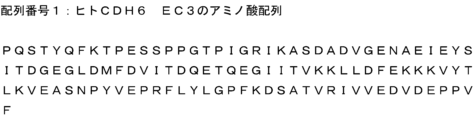
- FIG. 1 shows the amino acid sequence of human CDH6 EC3 (sequence number 1).
- FIG. 1 shows the amino acid sequence of CDRH1 of the anti-CDH6 antibody heavy chain (SEQ ID NO:2).
- FIG. 1 shows the amino acid sequence of CDRH2 of the anti-CDH6 antibody heavy chain (SEQ ID NO:3).
- FIG. 1 shows the amino acid sequence of CDRH3 of the anti-CDH6 antibody heavy chain (SEQ ID NO:4).
- FIG. 1 shows the amino acid sequence of CDRL1 of the anti-CDH6 antibody light chain (SEQ ID NO:5).
- FIG. 1 shows the amino acid sequence of CDRL2 of the anti-CDH6 antibody light chain (SEQ ID NO:6).
- FIG. 1 shows the amino acid sequence of CDRL3 of the anti-CDH6 antibody light chain (SEQ ID NO:7).
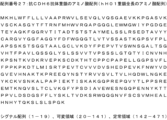
- FIG. 2 shows the amino acid sequence of the anti-CDH6 antibody heavy chain (SEQ ID NO:27).
- FIG. 2 shows the amino acid sequence of the anti-CDH6 antibody heavy chain variable region (SEQ ID NO:28).
- FIG. 2 shows the amino acid sequence of the anti-CDH6 antibody mature heavy chain (SEQ ID NO:29).
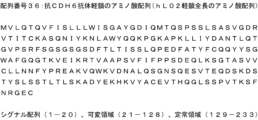
- FIG. 1 shows the amino acid sequence of the anti-CDH6 antibody light chain (SEQ ID NO:36).
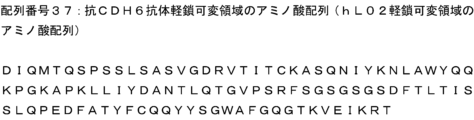
- FIG. 1 shows the amino acid sequence of the anti-CDH6 antibody light chain variable region (SEQ ID NO:37).
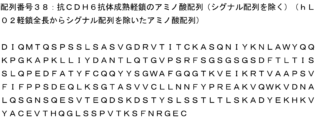
- FIG. 1 shows the amino acid sequence of the anti-CDH6 antibody mature light chain (SEQ ID NO:38).
- FIG. 1 shows the tumor growth inhibitory effects of the anti-CDH6 antibody-drug conjugate (1) and bevacizumab single-agent administration group, and the anti-CDH6 antibody-drug conjugate (1) and bevacizumab combined administration group (Combination) in mice subcutaneously implanted with OV-90 cells.
- FIG. 1 shows the rate of change in mean tumor volume on Day 21 from the baseline mean tumor volume on Day 0 in mice subcutaneously implanted with OV-90 cells, for groups administered single agents of anti-CDH6 antibody-drug conjugate (1) and bevacizumab, and for a group administered in combination of anti-CDH6 antibody-drug conjugate (1) and bevacizumab (Combination).
- Cadherins are glycoproteins present on the cell membrane surface, and function as cell adhesion molecules and signal molecules involved in cell-cell interactions by binding to each other via their N-terminal extracellular domains in a calcium ion-dependent manner.
- cadherin superfamily the group of molecules classified as classic cadherins are single-pass transmembrane proteins that consist of five extracellular domains (EC domains), one transmembrane region, and an intracellular domain.
- CDH6 (Cadherin-6) is a single-pass transmembrane protein consisting of 790 amino acids, classified into the type II cadherin family, with the N-terminus side extracellular and the C-terminus intracellular.
- the human CDH6 gene was first cloned in 1995 (Shimoyama Y, et al., Cancer Research, 2206-2211, 55, May 15, 1995), and can be referenced by accession numbers such as NM_004932 and NP_004923 (NCBI).
- the amino acid sequence described in SEQ ID NO: 1 is the amino acid sequence of the extracellular domain 3 of human CDH6 (also referred to as EC domain 3 or EC3 in this specification).
- the terms “cancer” and “tumor” are used interchangeably.
- the term “gene” includes not only DNA but also its mRNA, cDNA and its cRNA.
- CDH6 may be used interchangeably with CDH6 protein.
- anti-CDH6 antibody refers to an antibody that specifically binds to CDH6 (Cadherin-6).
- the anti-CDH6 antibody is preferably an antibody that has the activity of being internalized into CDH6-expressing cells by binding to CDH6.
- the term "functional fragment of an antibody” is also called "antigen-binding fragment of an antibody” and means a partial fragment of an antibody having binding activity to an antigen, and includes Fab, F(ab')2, Fv, scFv, diabody, linear antibody, and multispecific antibody formed from antibody fragments.
- Fab' which is a monovalent fragment of the variable region of an antibody obtained by treating F(ab')2 under reducing conditions, is also included in the antigen-binding fragment of an antibody.
- these antigen-binding fragments include not only those obtained by treating the full-length molecule of an antibody protein with an appropriate enzyme, but also proteins produced in an appropriate host cell using an antibody gene modified by genetic engineering.
- CDR means a complementarity determining region (CDR). It is known that there are three CDRs in each of the heavy and light chains of an antibody molecule. CDRs are also called hypervariable regions, and are located in the variable regions of the heavy and light chains of an antibody, and are sites with particularly high variability in the primary structure, and are separated into three locations on the primary structure of the heavy and light chain polypeptide chains.
- the CDRs of an antibody are represented as CDRH1, CDRH2, and CDRH3 from the amino terminal side of the heavy chain amino acid sequence, and CDRL1, CDRL2, and CDRL3 from the amino terminal side of the light chain amino acid sequence.
- “resistance” refers to the property of being unresponsive to treatment with an anticancer drug, and can also be expressed as “resistant,””refractory,””unresponsive,” or “refractory.” Furthermore, since tumor growth cannot be prevented due to unresponsiveness, it can also be expressed as “intolerance.” In addition, in the present invention, “resistance” includes cases where a patient's cancer is low sensitive to treatment with an anticancer drug after treatment with an anticancer drug, where cancer cells do not disappear or shrink, where a complete response (CR) or partial response (PR) is not obtained, and/or where cancer progresses early (for example, within 6 months or less in the case of ovarian cancer).
- chemotherapeutic agent refers to an agent for chemotherapy used to treat cancer.
- examples of chemotherapeutic agents include alkylating agents (e.g., mechlorethamine, cyclophosphamide, ifosfamide, melphalan, chlorambucil, hexamethylmelamine, thiotepa, busulfan, carmustine, lomustine, semustine, streptozocin, dacarbazine), metabolic antagonists (e.g., gemcitabine, methotrexate, fluorouracil, doxifluridine, capecitabine, floxuridine, cytarabine, mercaptopurine, thioguanine, pentostatin), vinca alkaloids (e.g., vinblastine, vincristine), epipodophyllotoxins (e.g.,
- antibiotics e.g., dactinomycin, daunorubicin, doxorubicin, bleomycin, plicamycin, mitomycin
- platinum compounds e.g., cisplatin, carboplatin, oxaliplatin
- taxanes e.g., paclitaxel, docetaxel
- anthracenediones e.g., mitoxantrone
- substituted ureas e.g., hydroxyurea
- methylhydrazines e.g., procarbazine hydrochloride
- vitamin A metabolites e.g., tretinoin
- pharma- ceutically acceptable salts thereof but are not particularly limited as long as they are drugs used for chemotherapy.
- platinum-based chemotherapy refers to cancer treatment using one or more platinum-based drugs with or without one or more chemotherapeutic agents other than platinum-based drugs.
- platinum-based drugs refers to platinum compounds used to treat cancer. Platinum-based drugs include, but are not limited to, cisplatin, carboplatin, and oxaliplatin.
- cancer recurrence refers to the return of cancer in the same location as the primary tumor or elsewhere in the body after a period in which the cancer could not be detected. "Cancer recurrence” is defined based on the following references: NCI Dictionaries, “recurrence”, NCI Dictionary of Cancer Terms [online].
- chemotherapeutic regimen refers to a treatment plan for chemotherapy that defines drugs, dosages, frequency, etc.
- chemotherapeutic regimen including a platinum-based agent refers to a chemotherapy regimen that includes administration of a platinum-based agent
- chemotherapeutic regimen including a platinum-based agent and a taxane refers to a chemotherapy regimen that includes administration of a platinum-based agent and a taxane.
- Anti-CDH6 antibody-drug conjugate The anti-CDH6 antibody-drug conjugate used in the present invention has the formula
- A represents a binding site to an anti-CDH6 antibody or a functional fragment of the antibody.
- an anti-CDH6 antibody or a functional fragment of the antibody are linked via a thioether bond.
- the partial structure of the antibody-drug conjugate consisting of a linker and a drug is called the "drug linker.”
- This drug linker is bonded to a thiol group (in other words, the sulfur atom of a cysteine residue) generated at the disulfide bond site between the antibody chains (two sites between the heavy chains and the heavy chains, and two sites between the heavy chains and the light chains).
- the drug linker of the present invention is composed of the topoisomerase I inhibitor exatecan (IUPAC name: (1S,9S)-1-amino-9-ethyl-5-fluoro-1,2,3,9,12,15-hexahydro-9-hydroxy-4-methyl-10H,13H-benzo[de]pyrano[3',4':6,7]indolizino[1,2-b]quinoline-10,13-dione, (chemical name: (1S,9S)-1-amino-9-ethyl-5-fluoro-2,3-dihydro-9-hydroxy-4-methyl-1H,12H-benzo[de]pyrano[3',4':6,7]indolizino[1,2-b]quinoline-10,13(9H,15H)-dione)).
- Exatecan has the formula
- camptothecin derivative with antitumor effects represented by the formula:
- anti-CDH6 antibody-drug conjugate used in the present invention can also be represented by the following formula:
- the antibody is an anti-CDH6 antibody or a functional fragment of the antibody (preferably, an anti-CDH6 antibody), and the drug linker is bound to the antibody via a thioether bond (each drug linker represented by the structure shown in parentheses in the formula is bound to the antibody via a thioether bond).
- n is synonymous with the so-called average number of drug bonds (DAR; Drug-to-Antibody Ratio) and indicates the average number of drug linkers bound per antibody.
- the anti-CDH6 antibody-drug conjugate is raludotatug deruxtecan (also referred to as R-DXd or DS-6000a).
- the anti-CDH6 antibody-drug conjugate used in the present invention is cleaved from the linker after being transferred into cancer cells, and is expressed by the formula
- compound (A) This releases a compound represented by the formula (hereinafter referred to as compound (A).
- the above compound is believed to be the main component of the antitumor activity of the anti-CDH6 antibody-drug conjugate used in the present invention, and has been confirmed to have topoisomerase I inhibitory activity (Ogitani Y. et al., Clinical Cancer Research, 2016, Oct 15;22(20):5097-5108, Epub 2016 Mar 29).
- Topoisomerase I is an enzyme involved in DNA synthesis, which changes the higher-order structure of DNA by breaking and recombining single strands of DNA. Therefore, drugs with topoisomerase I inhibitory effects can inhibit DNA synthesis, thereby halting cell division at the S phase of the cell cycle (the DNA synthesis phase) and inducing cell death by apoptosis, thereby suppressing the proliferation of cancer cells.
- the antibody-drug conjugate used in the present invention is also known to have a bystander antitumor effect (Suzuki H, et al., Molecular Cancer Therapeutics, (2024) 23 (3): 257-271).
- This bystander antitumor effect is achieved when the antibody-drug conjugate used in the present invention is internalized in target-expressing cancer cells, and the compound is then released to exert an antitumor effect on nearby cancer cells that do not express the target.
- This bystander antitumor effect is also exhibited as an excellent antitumor effect when the antibody-drug conjugate of the present invention is used in combination with a VEGF inhibitor.
- anti-CDH6 antibody-drug conjugates are not particularly limited as long as they are anti-CDH6 antibodies to which anti-tumor compounds are bound via linker structure moieties, but examples include those described in CUSP06, BSI-709, WO 2023/102875, and WO 2023/104188.
- the anti-CDH6 antibody in the anti-CDH6 antibody-drug conjugate used in the present invention may be derived from any species, but is preferably an anti-CDH6 antibody derived from human, rat, mouse, or rabbit. When the anti-CDH6 antibody is derived from a species other than human, it is preferably chimerized or humanized using well-known techniques.
- the anti-CDH6 antibody of the present invention may be a polyclonal antibody or a monoclonal antibody, but is preferably a monoclonal antibody.
- the anti-CDH6 antibody in the anti-CDH6 antibody-drug conjugate used in the present invention preferably has the property of targeting cancer cells, and preferably has the ability to recognize cancer cells, the ability to bind to cancer cells, the ability to be taken up and internalized within cancer cells, and/or cytocidal activity against cancer cells.
- Binding of antibodies to cancer cells can be confirmed using flow cytometry. Uptake of antibodies into cancer cells can be confirmed using (1) an assay in which a secondary antibody (fluorescently labeled) that binds to the therapeutic antibody is used to visualize the antibody taken up into the cell using a fluorescent microscope (Cell Death and Differentiation (2008) 15, 751-761), (2) an assay in which a secondary antibody (fluorescently labeled) that binds to the therapeutic antibody is used to measure the amount of fluorescence taken up into the cell (Molecular Biology of the Cell Vol.
- the antitumor activity of an antibody can be confirmed in vitro by measuring its inhibitory activity against cell proliferation.
- a cancer cell line that overexpresses the antibody's target protein can be cultured, and the antibody can be added to the culture system at various concentrations to measure the inhibitory activity against focus formation, colony formation, and spheroid proliferation.
- the antitumor activity can be confirmed by administering the antibody to nude mice transplanted with a cancer cell line that highly expresses the target protein, and measuring changes in the cancer cells.
- the antibody itself has an antitumor effect, but since the antibody-drug conjugate is bound to a compound that exerts an antitumor effect, the antibody itself does not necessarily have an antitumor effect.
- the antibody For the purpose of exerting the cytotoxicity of the antitumor compound specifically and selectively in cancer cells, it is important and preferable that the antibody has the property of being internalized and transferred into the cancer cell.
- the anti-CDH6 antibody in the anti-CDH6 antibody-drug conjugate used in the present invention can be obtained by known means. For example, it can be obtained by immunizing an animal with an antigenic polypeptide and collecting and purifying the antibody produced in the body using a method commonly used in this field.
- the origin of the antigen is not limited to humans, and animals can also be immunized with antigens derived from animals other than humans, such as mice and rats.
- antibodies applicable to human diseases can be selected by testing the cross-reactivity of the obtained antibody that binds to the heterologous antigen with human antigens.
- hybridomas can be established by fusing antibody-producing cells that produce antibodies against an antigen with myeloma cells, thereby obtaining monoclonal antibodies.
- Antigens can be obtained by genetically manipulating a gene that codes for an antigen protein to produce it in a host cell. Specifically, a vector capable of expressing an antigen gene is prepared, introduced into a host cell to express the gene, and the expressed antigen is purified. Antibodies can also be obtained by immunizing an animal with the above genetically engineered antigen-expressing cells or a cell line expressing the antigen.
- the anti-CDH6 antibody in the anti-CDH6 antibody-drug conjugate used in the present invention is preferably a genetically engineered antibody that has been artificially modified for the purpose of reducing xenoantigenicity to humans, such as a chimeric antibody or a humanized antibody, or is preferably an antibody that has only the genetic sequence of an antibody derived from humans, i.e., a human antibody.
- a genetically engineered antibody that has been artificially modified for the purpose of reducing xenoantigenicity to humans, such as a chimeric antibody or a humanized antibody, or is preferably an antibody that has only the genetic sequence of an antibody derived from humans, i.e., a human antibody.
- These antibodies can be produced using known methods.
- Chimeric antibodies include antibodies whose variable and constant regions are heterologous, such as chimeric antibodies in which the variable region of a mouse or rat antibody is joined to a constant region of human origin (Proc. Natl. Acad. Sci. U.S.A., 81, 6851-6855, (1984)).
- Humanized antibodies include antibodies in which only the complementarity determining region (CDR) of a heterologous antibody has been incorporated into a human-derived antibody (Nature (1986) 321, p. 522-525), antibodies in which not only the CDR sequence of a heterologous antibody but also some of the amino acid residues in the framework of the heterologous antibody have been grafted onto a human antibody by the CDR grafting method (WO 90/07861), and antibodies humanized using a gene conversion mutagenesis strategy (U.S. Patent No. 5,821,337).
- CDR complementarity determining region
- the anti-CDH6 antibody in the anti-CDH6 antibody-drug conjugate used in the present invention is preferably an antibody that specifically binds to the amino acid sequence set forth in SEQ ID NO: 1 and has the ability to be internalized into cells.
- anti-CDH6 antibodies include the antibodies (H01L02, H02L02, H02L03, H04L02, etc.) described in International Publication No. 2018/212136.
- An antibody that "specifically binds to the amino acid sequence set forth in SEQ ID NO: 1" means that the antibody binds more strongly to the EC3 domain of CDH6 than to other extracellular domains of CDH6.
- the internalization activity (internalization ability) of an antibody can be evaluated, for example, using a reagent conjugated with a toxin (saporin) that inhibits protein synthesis (e.g., anti-rat IgG reagent Rat-ZAP (ADVANCED TARGETING SYSTEMS), anti-human IgG reagent Hum-ZAP (ADVANCED TARGETING SYSTEMS), etc.) (see International Publication No. WO 2018/212136).
- a reagent conjugated with a toxin e.g., anti-rat IgG reagent Rat-ZAP (ADVANCED TARGETING SYSTEMS), anti-human IgG reagent Hum-ZAP (ADVANCED TARGETING SYSTEMS), etc.
- the anti-CDH6 antibody in the anti-CDH6 antibody-drug conjugate used in the present invention is preferably an antibody that exhibits a viability (expressed as a relative rate assuming that the cell viability in the absence of antibody is 100%) of 80% or less of CDH6-expressing cells administered with the antibody and a saporin-labeled anti-rat IgG antibody or a saporin-labeled anti-human IgG antibody, more preferably an antibody that exhibits a viability of 70% or less, and even more preferably an antibody that exhibits a viability of 60% or less.
- a viability expressed as a relative rate assuming that the cell viability in the absence of antibody is 100%
- the anti-CDH6 antibody in the anti-CDH6 antibody-drug conjugate used in the present invention is preferably one of the following (1) to (5): (1) CDRH1 consisting of the amino acid sequence set forth in SEQ ID NO: 2, CDRH2 consisting of the amino acid sequence set forth in SEQ ID NO: 3, and CDRH3 consisting of the amino acid sequence set forth in SEQ ID NO: 4; (2) CDRH1 consisting of the amino acid sequence set forth in SEQ ID NO: 2, CDRH2 consisting of the amino acid sequence set forth in SEQ ID NO: 8, and CDRH3 consisting of the amino acid sequence set forth in SEQ ID NO: 4; (3) CDRH1 consisting of the amino acid sequence set forth in SEQ ID NO: 9, CDRH2 consisting of the amino acid sequence set forth in SEQ ID NO: 10, and CDRH3 consisting of the amino acid sequence set forth in SEQ ID NO: 11; a heavy chain comprising a CDRH1, CDRH2 and CDRH3 selected from the group consisting of
- the anti-CDH6 antibody in the anti-CDH6 antibody-drug conjugate used in the present invention is more preferably an antibody comprising a heavy chain including a CDRH1 consisting of the amino acid sequence set forth in SEQ ID NO:2, a CDRH2 consisting of the amino acid sequence set forth in SEQ ID NO:3, and a CDRH3 consisting of the amino acid sequence set forth in SEQ ID NO:4, and a light chain including a CDRL1 consisting of the amino acid sequence set forth in SEQ ID NO:5, a CDRL2 consisting of the amino acid sequence set forth in SEQ ID NO:6, and a CDRL3 consisting of the amino acid sequence set forth in SEQ ID NO:7.
- the anti-CDH6 antibody in the anti-CDH6 antibody-drug conjugate used in the present invention is more preferably an antibody comprising a heavy chain including a CDRH1 consisting of the amino acid sequence set forth in SEQ ID NO:2, a CDRH2 consisting of the amino acid sequence set forth in SEQ ID NO:8, and a CDRH3 consisting of the amino acid sequence set forth in SEQ ID NO:4, and a light chain including a CDRL1 consisting of the amino acid sequence set forth in SEQ ID NO:5, a CDRL2 consisting of the amino acid sequence set forth in SEQ ID NO:6, and a CDRL3 consisting of the amino acid sequence set forth in SEQ ID NO:7.
- the anti-CDH6 antibody in the anti-CDH6 antibody-drug conjugate used in the present invention is more preferably an antibody comprising a heavy chain including a CDRH1 consisting of the amino acid sequence set forth in SEQ ID NO:9, a CDRH2 consisting of the amino acid sequence set forth in SEQ ID NO:10, and a CDRH3 consisting of the amino acid sequence set forth in SEQ ID NO:11, and a light chain including a CDRL1 consisting of the amino acid sequence set forth in SEQ ID NO:12, a CDRL2 consisting of the amino acid sequence set forth in SEQ ID NO:13, and a CDRL3 consisting of the amino acid sequence set forth in SEQ ID NO:14.
- the anti-CDH6 antibody in the anti-CDH6 antibody-drug conjugate used in the present invention is more preferably an antibody comprising a heavy chain comprising a CDRH1 consisting of the amino acid sequence set forth in SEQ ID NO: 15, a CDRH2 consisting of the amino acid sequence set forth in SEQ ID NO: 16, and a CDRH3 consisting of the amino acid sequence set forth in SEQ ID NO: 17, and a light chain comprising a CDRL1 consisting of the amino acid sequence set forth in SEQ ID NO: 18, a CDRL2 consisting of the amino acid sequence set forth in SEQ ID NO: 19, and a CDRL3 consisting of the amino acid sequence set forth in SEQ ID NO: 20.
- the anti-CDH6 antibody in the anti-CDH6 antibody-drug conjugate used in the present invention is more preferably an antibody comprising a heavy chain comprising a CDRH1 consisting of the amino acid sequence set forth in SEQ ID NO: 21, a CDRH2 consisting of the amino acid sequence set forth in SEQ ID NO: 22, and a CDRH3 consisting of the amino acid sequence set forth in SEQ ID NO: 23, and a light chain comprising a CDRL1 consisting of the amino acid sequence set forth in SEQ ID NO: 24, a CDRL2 consisting of the amino acid sequence set forth in SEQ ID NO: 25, and a CDRL3 consisting of the amino acid sequence set forth in SEQ ID NO: 26.
- the anti-CDH6 antibody in the anti-CDH6 antibody-drug conjugate used in the present invention is even more preferably a heavy chain selected from the group consisting of the following (1) to (3): (1) the amino acid sequence set forth in SEQ ID NO: 28, 31 or 34, (2) an amino acid sequence having at least 95% or more identity to the amino acid sequence of (1) above (preferably an amino acid sequence having at least 95% or more sequence identity to the sequence of the framework region other than each CDR sequence), and (3) an amino acid sequence in which one or several amino acids have been deleted, substituted or added in the amino acid sequence of (1) above.
- antibodies include a heavy chain including a chain variable region, and a light chain including a light chain variable region described in any combination of the following (4) to (6): (4) the amino acid sequence described in SEQ ID NO: 37 or 40, (5) an amino acid sequence having at least 95% or more identity to the amino acid sequence of (4) above (preferably an amino acid sequence having at least 95% or more sequence identity to the sequence of the framework region other than each CDR sequence), and (6) an amino acid sequence in which one or several amino acids have been deleted, substituted, or added in the amino acid sequence of (4) above.
- the anti-CDH6 antibody in the anti-CDH6 antibody-drug conjugate used in the present invention is an antibody comprising a heavy chain comprising the heavy chain variable region amino acid sequence shown in SEQ ID NO:28, a heavy chain comprising the heavy chain variable region amino acid sequence shown in SEQ ID NO:31, or a heavy chain comprising the heavy chain variable region amino acid sequence shown in SEQ ID NO:34, and a light chain comprising the light chain variable region amino acid sequence shown in SEQ ID NO:37, or a light chain having the light chain variable region amino acid sequence shown in SEQ ID NO:40.
- the anti-CDH6 antibody in the anti-CDH6 antibody-drug conjugate used in the present invention is even more preferably an antibody comprising a heavy chain comprising a heavy chain variable region consisting of the amino acid sequence set forth in SEQ ID NO:28 and a light chain comprising a light chain variable region consisting of the amino acid sequence set forth in SEQ ID NO:37.
- the anti-CDH6 antibody in the anti-CDH6 antibody-drug conjugate used in the present invention is even more preferably an antibody comprising a heavy chain comprising a heavy chain variable region consisting of the amino acid sequence set forth in SEQ ID NO:31 and a light chain comprising a light chain variable region consisting of the amino acid sequence set forth in SEQ ID NO:37.
- the anti-CDH6 antibody in the anti-CDH6 antibody-drug conjugate used in the present invention is even more preferably an antibody comprising a heavy chain comprising a heavy chain variable region consisting of the amino acid sequence set forth in SEQ ID NO:34 and a light chain comprising a light chain variable region consisting of the amino acid sequence set forth in SEQ ID NO:37.
- the anti-CDH6 antibody in the anti-CDH6 antibody-drug conjugate used in the present invention is even more preferably an antibody comprising a heavy chain comprising a heavy chain variable region consisting of the amino acid sequence set forth in SEQ ID NO:31 and a light chain comprising a light chain variable region consisting of the amino acid sequence set forth in SEQ ID NO:40.
- the anti-CDH6 antibody in the anti-CDH6 antibody-drug conjugate used in the present invention is even more preferably an antibody comprising a heavy chain consisting of the amino acid sequence set forth in SEQ ID NO:29 and a light chain consisting of the amino acid sequence set forth in SEQ ID NO:38, or an antibody lacking a lysine residue at the carboxyl terminus of the heavy chain.
- the anti-CDH6 antibody in the anti-CDH6 antibody-drug conjugate used in the present invention is even more preferably an antibody comprising a heavy chain consisting of the amino acid sequence set forth in SEQ ID NO: 32 and a light chain consisting of the amino acid sequence set forth in SEQ ID NO: 38, or an antibody lacking a lysine residue at the carboxyl terminus of the heavy chain.
- the anti-CDH6 antibody in the anti-CDH6 antibody-drug conjugate used in the present invention is even more preferably an antibody comprising a heavy chain consisting of the amino acid sequence set forth in SEQ ID NO: 35 and a light chain consisting of the amino acid sequence set forth in SEQ ID NO: 38, or an antibody lacking a lysine residue at the carboxyl terminus of the heavy chain.
- the anti-CDH6 antibody in the anti-CDH6 antibody-drug conjugate used in the present invention is even more preferably an antibody comprising a heavy chain consisting of the amino acid sequence set forth in SEQ ID NO: 32 and a light chain consisting of the amino acid sequence set forth in SEQ ID NO: 41, or an antibody lacking a lysine residue at the carboxyl terminus of the heavy chain. It is possible to select an antibody having biological activity equivalent to each of the above antibodies by combining sequences that show high identity with the above heavy chain amino acid sequences and light chain amino acid sequences. Such identity is generally 80% or more, preferably 85% or more, more preferably 90% or more, even more preferably 95% or more, and most preferably 99% or more.
- the identity between two amino acid sequences can be determined by aligning the sequences using the default parameters of ClustalW version 2 (Larkin MA, Blackshields G, Brown NP, Chenna R, McGettigan PA, McWilliam H, Valentin F, Wallace IM, Wilm A, Lopez R, Thompson JD, Gibson TJ and Higgins DG (2007), "Clustal W and Clustal X version 2.0", Bioinformatics. 23(21):2947-2948).
- the antibody in the anti-CDH6 antibody-drug conjugate used in the present invention also includes modified antibodies.
- the modified antibody means an antibody according to the present invention that has been chemically or biologically modified. Chemical modifications include those having a chemical moiety bonded to the amino acid backbone, or a chemical moiety bonded to an N- or O-linked carbohydrate chain. Biological modifications include those that have been post-translationally modified (e.g., addition of an N- or O-linked glycan, processing of the N- or C-terminus, deamidation, isomerization of aspartic acid, oxidation of methionine, etc.), and those that have been expressed using a prokaryotic host cell to add a methionine residue to the N-terminus.
- Chemical modifications include those having a chemical moiety bonded to the amino acid backbone, or a chemical moiety bonded to an N- or O-linked carbohydrate chain.
- Biological modifications include those that have been post-translationally modified (e.g.
- modified antibodies are also included in the meaning of such modified antibodies.
- modified antibodies according to the present invention are useful for improving the stability and blood retention of the antibody, reducing antigenicity, and detecting or isolating the antibody or antigen, etc.
- antibody-dependent cellular cytotoxicity can be enhanced by adjusting the sugar chain modification (glycosylation, defucosylation, etc.) attached to the antibody of the present invention.
- sugar chain modification glycosylation, defucosylation, etc.
- Known techniques for adjusting the sugar chain modification of antibodies include, but are not limited to, those described in WO 99/54342, WO 00/61739, WO 02/31140, WO 2007/133855, and WO 2013/120066.
- the antibody of the present invention also includes an antibody in which the sugar chain modification is adjusted.
- the antibody of the present invention includes antibodies and functional fragments of the antibodies that have been modified in this way, and also includes deletion bodies in which one or two amino acids are deleted from the carboxyl terminus of the heavy chain, and deletion bodies that have been amidated (for example, heavy chains in which the proline residue at the carboxyl terminus is amidated).
- deletion bodies in which one or two amino acids are deleted from the carboxyl terminus of the heavy chain and deletion bodies that have been amidated (for example, heavy chains in which the proline residue at the carboxyl terminus is amidated).
- the deletion of the carboxyl terminus of the heavy chain of the antibody of the present invention is not limited to the above types.
- the two heavy chains constituting the antibody of the present invention may be any one type of heavy chain selected from the group consisting of full-length and the above deletions, or may be a combination of any two types.
- the quantitative ratio of each deletion may be influenced by the type and culture conditions of the cultured mammalian cells producing the antibody of the present invention, but the antibody of the present invention preferably has one amino acid residue deleted at the carboxyl terminus of each of the two heavy chains.
- the amino acid deleted at the carboxyl terminus of the heavy chain of the antibody of the present invention is preferably a lysine residue.
- the isotype of the antibody according to the present invention can be, for example, IgG (IgG1, IgG2, IgG3, IgG4), and preferably IgG1, IgG2 or IgG4.
- IgG IgG1, IgG2, IgG3, IgG4
- IgG1, IgG2 or IgG4 In the full-length amino acid sequence of the hH01 heavy chain shown in SEQ ID NO:27, the amino acid sequence consisting of amino acid residues at positions 1 to 19 is a signal sequence, the amino acid sequence consisting of amino acid residues at positions 20 to 141 is a variable region, and the amino acid sequence consisting of amino acid residues at positions 142 to 471 is a constant region.
- the amino acid sequence consisting of amino acid residues at positions 1 to 19 is a signal sequence
- the amino acid sequence consisting of amino acid residues at positions 20 to 141 is a variable region
- the amino acid sequence consisting of amino acid residues at positions 142 to 471 is a constant region.
- the amino acid sequence consisting of amino acid residues at positions 1 to 19 is a signal sequence
- the amino acid sequence consisting of amino acid residues at positions 20 to 141 is a variable region
- the amino acid sequence consisting of amino acid residues at positions 142 to 471 is a constant region.
- the amino acid sequence consisting of the 1st to 20th amino acid residues is a signal sequence
- the amino acid sequence consisting of the 21st to 128th amino acid residues is a variable region
- the amino acid sequence consisting of the 129th to 233rd amino acid residues is a constant region.
- the amino acid sequence consisting of the 1st to 20th amino acid residues is a signal sequence
- the amino acid sequence consisting of the 21st to 128th amino acid residues is a variable region
- the amino acid sequence consisting of the 129th to 233rd amino acid residues is a constant region.
- the antibody in the anti-CDH6 antibody-drug conjugate used in the present invention is raludotatug.
- the above drug linker intermediate is N-[6-(2,5-dioxo-2,5-dihydro-1H-pyrrol-1-yl)hexanoyl]glycylglycyl-L-phenylalanyl-N-[(2- ⁇ [(1S,9S)-9-ethyl-5-fluoro-9-hydroxy-4-methyl-10,13-dioxo-2,3,9,10,13,15-hexahydro-1H,12H-benzo[de]pyrano[3',4': It can be expressed by the chemical name [6,7] indolizino [1,2-b] quinolin-1-yl] amino ⁇ -2-oxoethoxy) methyl] glycinamide, and can be produced with reference to the descriptions in WO 2014/057687, WO 2015/098099, WO 2015/115091, WO 2015/155998, and WO 2019/044947.
- the anti-CDH6 antibody-drug conjugate used in the present invention can be produced by reacting the aforementioned drug linker intermediate with an anti-CDH6 antibody having a thiol group (also called a sulfhydryl group).
- An anti-CDH6 antibody having a sulfhydryl group can be obtained by a method well known to those skilled in the art (Hermanson, G. T, Bioconjugate Techniques, pp.56-136, pp.456-493, Academic Press (1996)).
- a reducing agent such as tris(2-carboxyethyl)phosphine hydrochloride (TCEP) can be used in an amount of 0.3 to 3 molar equivalents per intra-chain disulfide of the antibody, and reacted with the anti-CDH6 antibody in a buffer solution containing a chelating agent such as ethylenediaminetetraacetic acid (EDTA), thereby obtaining an anti-CDH6 antibody having a sulfhydryl group in which the intra-chain disulfides of the antibody have been partially or completely reduced.
- TCEP tris(2-carboxyethyl)phosphine hydrochloride
- 2 to 20 molar equivalents of a drug linker intermediate can be used per anti-CDH6 antibody having a sulfhydryl group to produce an anti-CDH6 antibody-drug conjugate in which 2 to 8 drugs are bound per anti-CDH6 antibody.
- the average number of drugs bound per antibody molecule of the produced anti-CDH6 antibody-drug conjugate can be calculated, for example, by a method in which the UV absorbance of the antibody-drug conjugate and its conjugation precursor are measured at two wavelengths, 280 nm and 370 nm (UV method), or by a method in which the antibody-drug conjugate is treated with a reducing agent, and each of the resulting fragments is quantified by HPLC measurement and calculated (HPLC method).
- Conjugation of the antibody and the drug linker intermediate, and calculation of the average number of drugs bound per antibody molecule in the antibody-drug conjugate can be carried out with reference to the descriptions in WO 2014/057687, WO 2015/098099, WO 2015/115091, WO 2015/155998, WO 2018/135501, WO 2018/212136, etc.
- the average number of drug linkers bound per antibody molecule in the anti-CDH6 antibody-drug conjugate used in the present invention is preferably 1 to 10, more preferably 2 to 8, even more preferably 5 to 8, even more preferably 7 to 8, even more preferably 7.5 to 8, and even more preferably about 8.
- the number of drugs or attached drug linkers per antibody molecule in the anti-CDH6 antibody-drug conjugate used in the present invention is preferably an integer in the range of 2 to 8, more preferably 2, 4, 6 or 8, and even more preferably 8.
- Anti-CDH6 antibody-drug conjugates can be produced with reference to the descriptions in International Publication No. WO 2018/212136 and the like.
- VEGF inhibitor refers to a drug that inhibits the interaction between VEGF and a VEGF receptor.
- the VEGF inhibitor in the present invention is not particularly limited as long as it is a drug having the above-mentioned properties, and may be an antibody, a functional fragment of an antibody, a fusion protein, an immunoadhesin, a nucleic acid, an oligonucleotide, an aptamer, a polypeptide, or a low molecular weight compound.
- the VEGF inhibitor in the present invention is preferably an anti-VEGF antibody, an anti-VEGF receptor antibody, a fusion protein containing a VEGF receptor extracellular domain, or a multispecific antibody containing an anti-VEGF binding domain.
- anti-VEGF antibody refers to an antibody that specifically binds to VEGF or a functional fragment of the antibody.
- anti-VEGF receptor antibody refers to an antibody that specifically binds to a VEGF receptor or a functional fragment of the antibody.
- fusion protein containing a VEGF receptor extracellular domain refers to a fusion protein having a VEGF-binding domain derived from the VEGF receptor extracellular domain (including mutants of the VEGF-binding domain).
- a "multispecific antibody comprising an anti-VEGF-binding domain” refers to an antibody or a functional fragment of said antibody that has binding specificities for at least two different sites, and at least one of the binding specificities is for VEGF, or a functional fragment of said antibody.
- a "bispecific antibody comprising an anti-VEGF-binding domain” refers to an antibody or a functional fragment of said antibody that has binding specificities for two different sites, and at least one of the binding specificities is for VEGF, or a functional fragment of said antibody.
- the VEGF inhibitor of the present invention is more preferably an anti-VEGF antibody.
- the anti-VEGF antibody in the present invention is preferably bevacizumab or sevacizumab, and more preferably bevacizumab.
- the VEGF inhibitor of the present invention is more preferably an anti-VEGF receptor antibody.
- the anti-VEGF receptor antibody in the present invention is preferably ramucirumab.
- the VEGF inhibitor of the present invention is more preferably a fusion protein containing a VEGF receptor extracellular domain.
- the fusion protein containing a VEGF receptor extracellular domain of the present invention is preferably aflibercept.
- the VEGF inhibitor of the present invention is more preferably a multispecific antibody comprising an anti-VEGF-binding domain, and even more preferably a bispecific antibody comprising an anti-VEGF-binding domain.
- the bispecific antibody containing an anti-VEGF binding domain in the present invention is preferably Ivonesimab (Non-Patent Document 3), CTX-009 (also referred to as ABL-001, Non-Patent Document 4), BI836880 (Clin. Exp.
- the pharmaceutical composition of the present invention may be administered as a pharmaceutical composition comprising a pharma- ceutically acceptable carrier, diluent, solubilizer, emulsifier, preservative, adjuvant, etc.
- a pharmaceutical composition comprising a pharma- ceutically acceptable carrier, diluent, solubilizer, emulsifier, preservative, adjuvant, etc.
- the "pharma-ceutically acceptable carrier” etc. may be selected from a wide range of suitable agents depending on the type of target disease and the form of administration of the drug.
- the "pharma-ceutically acceptable carrier” etc. may be, for example, a sterile liquid.
- the liquid may include, for example, water and oil (petroleum, animal, vegetable, or synthetic oil).
- the oil may be, for example, peanut oil, soybean oil, mineral oil, sesame oil, etc. Water is more typical when the pharmaceutical composition is administered intravenously.
- Saline solutions as well as aqueous dextrose and glycerol solutions, may also be used as the liquid, particularly for injectable solutions.
- Suitable pharmaceutical excipients may be selected from those known in the art. Examples of suitable "pharma-ceutically acceptable carriers” etc. are described in "Remington's Pharmaceutical Sciences” by E. W. Martin. The formulation corresponds to the mode of administration.
- the method of administration of the antitumor agent of the present invention can be appropriately selected, but for example, it can be administered by injection, and local injection, intraperitoneal injection, selective intravenous injection, intravenous injection, subcutaneous injection, organ perfusion injection, etc. can be adopted. Administration can be, for example, by infusion or bolus injection.
- the solution for injection can be formulated using a carrier consisting of a salt solution, a glucose solution, or a mixture of salt water and glucose solution, various buffer solutions, etc. Also, it may be formulated in a powder state, and mixed with the liquid carrier at the time of use to prepare an injection solution.
- the antibody-drug conjugate and VEGF inhibitor used in the present invention are administered by injection. Parenteral administration is the preferred administration route.
- oral liquids powders, pills, capsules, tablets, etc.
- oral liquid preparations such as suspensions and syrups can be produced using water, sugars such as sucrose, sorbitol, fructose, glycols such as polyethylene glycol, oils such as sesame oil and soybean oil, preservatives such as alkyl parahydroxybenzoate, flavors such as strawberry flavor and peppermint, etc.
- Powders, pills, capsules, and tablets can be formulated using excipients such as lactose, glucose, sucrose, mannitol, disintegrants such as starch and sodium alginate, lubricants such as magnesium stearate and talc, binders such as polyvinyl alcohol, hydroxypropyl cellulose, gelatin, surfactants such as fatty acid esters, plasticizers such as glycerin, etc. Tablets and capsules are preferred unit dosage forms in that they are easy to administer. When making tablets or capsules, solid pharmaceutical carriers are used.
- compositions comprising anti-CDH6 antibody-drug conjugates used in combination with or administered in combination with a VEGF inhibitor.
- the pharmaceutical composition and treatment method of the present invention may be characterized in that the anti-CDH6 antibody-drug conjugate and the VEGF inhibitor are contained as active ingredients in separate formulations and administered simultaneously (a person skilled in the art will naturally understand that "simultaneously” may or may not mean “almost simultaneously") or at different times, or may be characterized in that the anti-CDH6 antibody-drug conjugate and the VEGF inhibitor are contained as active ingredients in a single formulation and administered.
- composition and treatment method of the present invention can be administered in combination with two or more of the VEGF inhibitors used in the present invention.
- the pharmaceutical composition and treatment method of the present invention can be used for the treatment of cancer, and is preferably used for the treatment of at least one cancer selected from the group consisting of renal cell carcinoma, renal clear cell carcinoma, papillary renal cell carcinoma, ovarian cancer, ovarian serous adenocarcinoma, ovarian clear cell carcinoma, endometrioid ovarian cancer, ovarian mucinous tumor, thyroid cancer, bile duct cancer, lung cancer, non-small cell lung cancer, cervical cancer, brain tumor, head and neck cancer, sarcoma, osteosarcoma, small cell lung cancer, glioblastoma, mesothelioma, uterine cancer, pancreatic cancer, Wilms' tumor, neuroblastoma, colorectal cancer, gastric cancer, endometrial cancer, uterine body cancer, and nasopharyngeal cancer, and is more preferably used for the treatment of at least one cancer selected from the group consisting of renal cell carcinoma, renal clear cell carcinoma, papillar
- the pharmaceutical composition and treatment method of the present invention can even more preferably be used for the treatment of at least one cancer selected from the group consisting of renal cell carcinoma, renal clear cell carcinoma, and papillary renal cell carcinoma.
- the pharmaceutical composition and treatment method of the present invention can be even more preferably used for the treatment of at least one cancer selected from the group consisting of ovarian cancer, ovarian serous adenocarcinoma, ovarian clear cell carcinoma, endometrioid ovarian cancer, and ovarian mucinous tumor, even more preferably used for the treatment of ovarian cancer, and even more preferably used for the treatment of epithelial ovarian cancer, fallopian tube cancer, or primary peritoneal cancer.
- the cancer that is the target of the pharmaceutical composition and treatment method of the present invention is preferably a metastatic cancer.
- the pharmaceutical composition and treatment method of the present invention can be used for the treatment of HRD (also referred to as homologous recombination deficiency, homologous recombination repair deficiency, homologous recombination repair abnormality, etc.) cancer, and can be preferably used for the treatment of HRD ovarian cancer.
- HRD cancer refers to cancer that shows an impairment in the ability to repair DNA double-strand breaks through homologous recombination.
- HRD ovarian cancer refers to ovarian cancer that shows an impairment in the ability to repair DNA double-strand breaks through homologous recombination.
- the pharmaceutical composition and treatment method of the present invention can be used to treat HRP (homologous recombination proficiency, also known as HRD-negative, homologous recombination proficient, etc.) cancer, and can be preferably used to treat HRP ovarian cancer.
- HRP cancer refers to cancer that retains the ability to properly perform DNA repair (also known as homologous recombination DNA repair, homologous recombination repair) through homologous recombination.
- HRP ovarian cancer refers to ovarian cancer that retains the ability to properly carry out DNA repair through homologous recombination (also called homologous recombination DNA repair, or HRR).
- the pharmaceutical compositions and treatment methods of the present invention can be used for the treatment of cancers that are resistant to platinum-based chemotherapy.
- the pharmaceutical compositions and treatment methods of the present invention can be used for the treatment of cancers that are resistant to chemotherapy, including platinum-based drugs and taxanes.
- the pharmaceutical compositions and treatment methods of the present invention can be used for the treatment of cancer that exhibits recurrence prior to administration of the pharmaceutical composition or treatment of the present invention.
- the recurrence of the cancer may occur within six months (or about six months) of completing a chemotherapy regimen that includes a platinum-based agent.
- the recurrence of the cancer may occur less than six months (or about six months) after completion of a chemotherapy regimen that includes a platinum-based agent.
- the recurrence of the cancer may occur within six months (or about six months) of completion of a chemotherapy regimen that includes a platinum-based agent and a taxane.
- the recurrence of the cancer may occur less than six months (or about six months) after completion of a chemotherapy regimen that includes a platinum-based agent and a taxane.
- the recurrence of the cancer may occur more than six months (or about six months) after completion of a chemotherapy regimen that includes a platinum-based agent.
- the recurrence of the cancer may occur more than six months (or about six months) after completion of a chemotherapy regimen that includes a platinum-based agent.
- the recurrence of the cancer may occur more than six months (or about six months) after completion of a chemotherapy regimen that includes a platinum-based agent and a taxane.
- the recurrence of the cancer may occur more than six months (or about six months) after completion of a chemotherapy regimen that includes a platinum-based agent and a taxane.
- the anti-CDH6 antibody-drug conjugate used in the present invention can be suitably used when expression of CDH6 has been confirmed in cancer.
- the presence or absence of the CDH6 tumor marker can be confirmed, for example, by collecting tumor tissue from a cancer patient, examining the formalin-fixed paraffin-embedded specimen (FFPE) at the gene product (protein) level using immunohistochemistry (IHC), a flow cytometer, western blot, or the like, or by examining the gene transcription level using in situ hybridization (ISH), quantitative PCR (q-PCR), microarray analysis, or the like, or by collecting acellular circulating tumor DNA (ctDNA) from a cancer patient and examining it using a method such as next-generation sequencing (NGS).
- FFPE formalin-fixed paraffin-embedded specimen
- IHC immunohistochemistry
- ISH in situ hybridization
- q-PCR quantitative PCR
- ctDNA circulating tumor DNA
- NGS next-generation sequencing
- the pharmaceutical composition and treatment method of the present invention can be preferably used in mammals, but more preferably in humans.
- the antitumor effect of the pharmaceutical composition and treatment method of the present invention can be confirmed, for example, by creating a model in which cancer cells are transplanted into a test animal and measuring the reduction in tumor volume and the life-prolonging effect caused by administering the pharmaceutical composition and treatment method of the present invention.
- the combined effect of the antibody-drug conjugate and VEGF inhibitor used in the present invention can then be confirmed by comparing the antitumor effect with that of the antibody-drug conjugate and VEGF inhibitor used in the present invention when administered alone.
- the antitumor effect of the pharmaceutical composition and treatment method of the present invention can be confirmed in clinical trials by the Response Evaluation Criteria in Solid Tumors (RECIST) evaluation method, the WHO evaluation method, the Macdonald evaluation method, weight measurement, and other methods, and a complete response (CR), partial response (Partial response), etc.
- This can be determined using indicators such as progression (progression rate; PR), progression (progressive disease; PD), objective response rate (ORR), duration of response (DoR), progression-free survival (PFS), and overall survival (OS).
- the above-mentioned method makes it possible to confirm the superiority of the antitumor effect of the pharmaceutical composition and treatment method of the present invention over existing pharmaceutical compositions and treatment methods for cancer treatment.
- the pharmaceutical composition and treatment method of the present invention can slow the growth of cancer cells, inhibit their proliferation, and even destroy them. These actions can relieve cancer patients from symptoms caused by cancer and improve their quality of life, thereby preserving the life of the cancer patient and achieving a therapeutic effect. Even if the cancer cells are not destroyed, the inhibition and control of cancer cell proliferation can enable cancer patients to achieve a higher quality of life and longer survival.
- the pharmaceutical composition of the present invention can be applied to patients as a systemic therapy, or it can be applied locally to cancer tissue to achieve a therapeutic effect.
- the pharmaceutical composition of the present invention may be administered containing one or more pharma- ceutical compatible components.
- the pharma-ceutical compatible components may be appropriately selected from formulation additives and others commonly used in this field depending on the dose and administration concentration of the antibody-drug conjugate and VEGF inhibitor used in the present invention.
- the antibody-drug conjugate used in the present invention may be administered as a pharmaceutical composition containing a buffer such as a histidine buffer, an excipient such as sucrose or trehalose, and a surfactant such as polysorbate 80 or 20.
- a pharmaceutical composition comprising an anti-CDH6 antibody-drug conjugate used in the present invention can be preferably used as an injection, more preferably used as an aqueous injection or a lyophilized injection, and even more preferably used as a lyophilized injection.
- the pharmaceutical composition containing the anti-CDH6 antibody-drug conjugate used in the present invention is an aqueous injection, it can be preferably administered intravenously by drip infusion after diluting with an appropriate diluent.
- the diluent include glucose solution and saline solution, and preferably glucose solution, and more preferably 5% glucose solution.
- the pharmaceutical composition containing the anti-CDH6 antibody-drug conjugate used in the present invention is a lyophilized injection, it can be preferably dissolved in water for injection, diluted with a required amount of an appropriate diluent, and then administered by intravenous drip.
- the diluent include glucose solution and physiological saline solution, and preferably glucose solution, and more preferably 5% glucose solution.
- introduction routes that can be used to administer the pharmaceutical composition of the present invention include intravenous, intradermal, subcutaneous, intramuscular, and intraperitoneal routes, and preferably include the intravenous route.
- the anti-CDH6 antibody-drug conjugate used in the present invention can be administered to a human at intervals of once every 1 to 180 days, preferably once every 1, 2, 3, 4, 5, 6, 7, 8, 9, or 10 weeks, more preferably once every 3 or 4 weeks, and even more preferably once every 3 weeks.
- the anti-CDH6 antibody-drug conjugate used in the present invention can be administered at a dose of about 0.001 to 100 mg/kg per administration, preferably about 0.1 to about 15 mg/kg per administration, more preferably about 0.5 to about 12 mg/kg per administration, even more preferably about 1.0 to about 10 mg/kg per administration, even more preferably about 1.6 to about 9.6 mg/kg per administration, and even more preferably about 4.8 to about 8.0 mg/kg per administration.
- the anti-CDH6 antibody-drug conjugate used in the present invention may be administered at a dose of about 0.1, about 0.2, about 0.3, about 0.4, about 0.5, about 0.6, about 0.7, about 0.8, about 0.9, about 1.0, about 1.1, about 1.2, about 1.3, about 1.4, about 1.5, about 1.6, about 1.7, about 1.8, about 1.9, about 2.0, about 2.1, about 2.2, about 2.3, about 2.4, about 2.5, about 2.6, about 2.7 , about 2.8, about 2.9, about 3.0, about 3.1, about 3.2, about 3.3, about 3.4, about 3.5, about 3.6, about 3.7, about 3.8, about 3.9, about 4.0, about 4.1, about 4.2, about 4.3, about 4.4, about 4.5, about 4.6, about 4.7, about 4.8, about 4.9, about 5.0, about 5.1, about 5.2, about 5.3, about 5.4, about 5.5, about 5.6, about 5.7, about
- the anti-CDH6 antibody-drug conjugate used in the present invention can be preferably administered at about 1.6 mg/kg, about 3.2 mg/kg, about 4.8 mg/kg, about 5.4 mg/kg, about 5.6 mg/kg, about 6.4 mg/kg, about 8.0 mg/kg, or about 9.6 mg/kg per dose, more preferably about 3.2 mg/kg, about 4.8 mg/kg, about 5.4 mg/kg, about 5.6 mg/kg, about 6.4 mg/kg, about 8.0 mg/kg, or about 9.6 mg/kg, and even more preferably about 4.8 mg/kg, about 5.4 mg/kg, about 5.6 mg/kg, about 6.4 mg/kg, or about 8.0 mg/kg.
- the anti-CDH6 antibody-drug conjugate used in the present invention can be administered at a dose of 0.001 to 100 mg/kg per administration, preferably 0.1 to 15 mg/kg per administration, more preferably 0.5 to 12 mg/kg per administration, even more preferably 1.0 to 10 mg/kg per administration, even more preferably 1.6 to 9.6 mg/kg per administration, and even more preferably 4.8 to 8.0 mg/kg per administration.
- the anti-CDH6 antibody-drug conjugate used in the present invention may be administered at 0.1, 0.2, 0.3, 0.4, 0.5, 0.6, 0.7, 0.8, 0.9, 1.0, 1.1, 1.2, 1.3, 1.4, 1.5, 1.6, 1.7, 1.8, 1.9, 2.0, 2.1, 2.2, 2.3, 2.4, 2.5, 2.
- the anti-CDH6 antibody-drug conjugate used in the present invention can be preferably administered at 1.6 mg/kg, 3.2 mg/kg, 4.8 mg/kg, 5.4 mg/kg, 5.6 mg/kg, 6.4 mg/kg, 8.0 mg/kg or 9.6 mg/kg per dose, more preferably at 3.2 mg/kg, 4.8 mg/kg, 5.4 mg/kg, 5.6 mg/kg, 6.4 mg/kg or 8.0 mg/kg, and even more preferably at 4.8 mg/kg, 5.4 mg/kg, 5.6 mg/kg, 6.4 mg/kg or 8.0 mg/kg.
- the anti-CDH6 antibody-drug conjugate used in the present invention can be administered at a dose of about 5 to about 3000 mg per administration, preferably at a dose of about 10 to about 2000 mg, more preferably at a dose of about 100 to about 1500 mg, and even more preferably at a dose of about 200 to about 1000 mg.
- the anti-CDH6 antibody-drug conjugate used in the present invention is preferably administered in a dose of about 200 mg, about 205 mg, about 210 mg, about 215 mg, about 220 mg, about 225 mg, about 230 mg, about 235 mg, about 240 mg, about 245 mg, about 250 mg, about 255 mg, about 260 mg, about 265 mg, about 270 mg, about 275 mg, about 280 mg, about 285 mg, about 290 mg, about 295 mg, about 300 mg, about 305 mg, about 310 mg, about 315 mg, about 320 mg, about 325 mg, about 330 mg, about 335 mg, about 340 mg, about 345 mg, about 350 mg, about 355 mg, about 360 mg, about 365 mg, about 370 mg, about 375 mg, about 3 80mg, about 385mg, about 390mg, about 395mg, about 400mg, about 405mg, about 410mg, about 415mg, about 420m
- the anti-CDH6 antibody-drug conjugate used in the present invention is preferably administered in a dose of 200 mg, 205 mg, 210 mg, 215 mg, 220 mg, 225 mg, 230 mg, 235 mg, 240 mg, 245 mg, 250 mg, 255 mg, 260 mg, 265 mg, 270 mg, 275 mg, 280 mg, 285 mg, 290 mg, 295 mg, 300 mg, 305 mg, 310 mg, 315 mg, 320 mg, 325 mg, 330 mg, 335 mg, 340 mg, 345 mg, 350 mg, 355 mg, 360 mg, 365 mg, 370 mg, 375 mg, 380 mg, 390 mg, 400 mg, 410 mg, 420 mg, 430 mg, 440 mg, 450 mg, 460 mg, 470 mg, 480 mg, 490 mg, 500 mg, 510 mg, 520 mg, 530 mg, 540 mg, 550 mg, 560 mg, 570 mg, 580 mg, 590 mg, 600
- the administration regimen of the anti-CDH6 antibody-drug conjugate used in the present invention may be, for example, 0.1 mg/kg (at 3-week intervals, hereinafter referred to as "q3w"), 0.2 mg/kg (q3w), 0.3 mg/kg (q3w), 0.4 mg/kg (q3w), 0.5 mg/kg (q3w), 0.6 mg/kg (q3w), 0.7 mg/kg (q3w), 0.8 mg/kg (q3w), 0.9 mg/kg (q3w), 1.0 mg/kg (q3w), 1.1 mg/kg (q3w), 1.2 mg/kg (q3w), q3w), 1.3mg/kg (q3w), 1.4mg/kg (q3w), 1.5mg/kg (q3w), 1.6mg/kg (q3w), 1.7mg/kg (q3w), 1.8mg/kg (q3w), 1.9mg/kg (q3w), 2.0 mg/kg (q3w), 2.1
- the administration regimen of the anti-CDH6 antibody-drug conjugate used in the present invention is preferably 1.6 mg/kg (q3w), 3.2 mg/kg (q3w), 4.8 mg/kg (q3w), 5.4 mg/kg (q3w), 5.6 mg/kg (q3w), 6.4 mg/kg (q3w), 8.0 mg/kg (q3w) or 9.6 mg/kg (q3w), and more preferably 3 .
- the administration regimen of the anti-CDH6 antibody-drug conjugate used in the present invention is preferably 200 mg (q3w), 205 mg (q3w), 210 mg (q3w), 215 mg (q3w), 220 mg (q3w), 225 mg (q3w), 230 mg (q3w), 235 mg (q3w), 240 mg (q3w), 245 mg (q3w), 250 mg (q3w), 255 mg (q3w), 260 mg (q3w), 265 mg (q3w), 270 mg (q3w), 275 mg (q3w), 280 mg (q3w), 290 mg (q3w), 300 mg (q3w), 310 mg (q3w), 320 mg (q3w), 330 mg (q3w), 340 mg (q3w), 350 mg (q3w), 360 mg (q3w), 370 mg (q3w), 380 mg (q3w), 390 mg (q3w), 400 mg (q3w), 410
- bevacizumab When the VEGF inhibitor used in the present invention is bevacizumab, the following dosage and administration method can be mentioned as an example, but is not limited to these.
- bevacizumab is intravenously injected at 5 mg/kg (body weight) or 10 mg/kg (body weight) once.
- the administration interval is 2 weeks or more.
- Another dosage regimen is to inject bevacizumab intravenously at a dose of 7.5 mg/kg (body weight) at intervals of at least 3 weeks.
- Another dosage regimen is to inject bevacizumab intravenously at a dose of 15 mg/kg (body weight) at intervals of at least 3 weeks.
- Another dosage regimen is to inject bevacizumab intravenously at a dose of 10 mg/kg (body weight) at least every two weeks.
- bevacizumab is administered intravenously at a dose of 10 mg/kg (body weight) every two weeks or at a dose of 15 mg/kg (body weight) every three weeks.
- bevacizumab is administered intravenously at a dose of 5 mg/kg or 10 mg/kg once every two weeks.
- bevacizumab is administered intravenously at a dose of 15 mg/kg once every three weeks.
- bevacizumab is administered intravenously at a dose of 10 mg/kg once every two weeks.
- ramucirumab is administered by intravenous drip infusion at 8 mg/kg (body weight) once every two weeks over approximately 60 minutes.
- the administration time from the second time onwards can be shortened to 30 minutes.
- Another dosage regimen is to infuse ramucirumab at 10 mg/kg (body weight) intravenously over approximately 60 minutes once every three weeks. After the second dose, administration time can be shortened to 30 minutes.
- Another dosage regimen for ramucirumab is to infuse 10 mg/kg (body weight) of ramucirumab intravenously over approximately 60 minutes once every two weeks.
- aflibercept is administered by intravenous drip infusion over 60 minutes at 4 mg/kg (body weight) once every two weeks.
- Such cancer therapeutic agents are not limited as long as they are drugs having antitumor activity, and examples thereof include irinotecan (CPT-11), cisplatin, carboplatin, oxaliplatin, fluorouracil (5-FU), gemcitabine, capecitabine, doxorubicin, epirubicin, cyclophosphamide, and mitomycin C.
- Tegafur/Gimeracil/Oteracil combination drug Panitumumab, Regorafenib, Trifluridine/Tipiracil combination drug, Gefitinib, Erlotinib, Afatinib, Methotrexate
- the anti-inflammatory agent include at least one selected from the group consisting of methotrexate, pemetrexed, tamoxifen, toremifene, fulvestrant, leuprorelin, goserelin, letrozole, anastrozole, a progesterone formulation, and lapatinib.
- the pharmaceutical composition and treatment method of the present invention can also be used in combination with radiation therapy.
- a cancer patient can receive radiation therapy before and/or after, or simultaneously (almost simultaneously) with, treatment with the pharmaceutical composition of the present invention.
- the pharmaceutical compositions and treatment methods of the present invention may also be used as adjuvant chemotherapy in combination with surgery.
- the pharmaceutical compositions of the present invention may be administered prior to surgery to reduce tumor size (referred to as preoperative adjuvant chemotherapy, or neoadjuvant therapy), or after surgery to prevent tumor recurrence (referred to as postoperative adjuvant chemotherapy, or adjuvant therapy).
- the pharmaceutical compositions and methods of treatment of the present invention can also be used as a maintenance therapy, for example, following an initial chemotherapy treatment to prevent recurrence.
- the present invention includes a method for treating a disease, comprising administering to an individual in need of treatment a combination of an anti-CDH6 antibody-drug conjugate of the present application and a VEGF inhibitor.
- the present invention includes the anti-CDH6 antibody-drug conjugates of the present application for use in combination with a VEGF inhibitor for the treatment of disease.
- the invention includes the use of an anti-CDH6 antibody-drug conjugate of the present application in combination with a VEGF inhibitor in the manufacture of a medicament for the treatment of a disease.
- the present invention includes pharmaceutical products containing the anti-CDH6 antibody-drug conjugate of the present application and a VEGF inhibitor.
- Production Example 1 Production of anti-CDH6 antibody-drug conjugate According to the production method described in WO 2018/212136, a humanized anti-CDH6 antibody (an antibody comprising a heavy chain consisting of the amino acid sequence set forth in SEQ ID NO:29 and a light chain consisting of the amino acid sequence set forth in SEQ ID NO:38) was used to produce a drug conjugate of the formula:
- anti-CDH6 antibody-drug conjugate (1) An antibody-drug conjugate (hereinafter referred to as "anti-CDH6 antibody-drug conjugate (1)”) was produced in which the drug linker represented by the formula: was linked to the anti-CDH6 antibody via a thioether bond.
- the DAR of the anti-CDH6 antibody-drug conjugate (1) was 7.9.
- Tumor volume (mm 3 ) 1/2 ⁇ major axis (mm) ⁇ [minor axis (mm)] 2
- Anti-CDH6 antibody-drug conjugate (1) was diluted with ABS buffer (10 mM acetate buffer (pH 5.5), 5% sorbitol) and administered into the tail vein at a volume of 10 mL/kg.
- Bevacizumab Avastin (registered trademark) 100 mg/4 mL
- Bevacizumab was diluted with saline and administered intraperitoneally at a volume of 10 mL/kg.
- OV-90 cells a human ovarian cancer line purchased from ATCC (American Type Culture Collection), were suspended in a Matrigel basement membrane matrix, and 2.5 x 10 6 cells were subcutaneously transplanted into the right flank of female nude mice, and randomized groups were performed 17 days after transplantation (Day 0).
- Anti-CDH6 antibody-drug conjugate (1) was administered at a dose of 3 mg/kg on Day 0.
- Bevacizumab was administered at a dose of 5 mg/kg on Day 0.
- TGI tumor growth inhibition rate
- TGI (%) [1 - (mean tumor volume of drug-treated group/mean tumor volume of control group)] x 100
- the tumor growth inhibition rate (Tumor Growth Inhibition, TGI) by single-agent administration of bevacizumab at the time of Day 21 was 35%.
- the TGI by single-agent administration of anti-CDH6 antibody-drug conjugate (1) was 79%.
- T/C % was calculated according to the following formula, and T/C of more than 42% was evaluated as “inactive”, T/C of 42% or less was evaluated as “active”, and T/C of less than 10% was evaluated as "highly active”.
Landscapes
- Health & Medical Sciences (AREA)
- Chemical & Material Sciences (AREA)
- Life Sciences & Earth Sciences (AREA)
- Medicinal Chemistry (AREA)
- General Health & Medical Sciences (AREA)
- Organic Chemistry (AREA)
- Veterinary Medicine (AREA)
- Pharmacology & Pharmacy (AREA)
- Public Health (AREA)
- Animal Behavior & Ethology (AREA)
- Engineering & Computer Science (AREA)
- Bioinformatics & Cheminformatics (AREA)
- Immunology (AREA)
- Epidemiology (AREA)
- Chemical Kinetics & Catalysis (AREA)
- General Chemical & Material Sciences (AREA)
- Nuclear Medicine, Radiotherapy & Molecular Imaging (AREA)
- Proteomics, Peptides & Aminoacids (AREA)
- Biophysics (AREA)
- Molecular Biology (AREA)
- Biochemistry (AREA)
- Genetics & Genomics (AREA)
- Cell Biology (AREA)
- Reproductive Health (AREA)
- Urology & Nephrology (AREA)
- Endocrinology (AREA)
- Microbiology (AREA)
- Mycology (AREA)
- Medicines Containing Antibodies Or Antigens For Use As Internal Diagnostic Agents (AREA)
- Peptides Or Proteins (AREA)
- Pharmaceuticals Containing Other Organic And Inorganic Compounds (AREA)
Priority Applications (5)
| Application Number | Priority Date | Filing Date | Title |
|---|---|---|---|
| CN202480018403.0A CN120813389A (zh) | 2023-03-14 | 2024-03-13 | 抗cdh6抗体-药物缀合物和vegf抑制剂的组合 |
| AU2024236246A AU2024236246A1 (en) | 2023-03-14 | 2024-03-13 | Combination of anti-CDH6 antibody-drug conjugate and VEGF inhibitor |
| JP2025506895A JPWO2024190815A1 (enExample) | 2023-03-14 | 2024-03-13 | |
| KR1020257033997A KR20250170141A (ko) | 2023-03-14 | 2024-03-13 | 항 cdh6 항체-약물 콘주게이트와 vegf 저해제의 조합 |
| MX2025010805A MX2025010805A (es) | 2023-03-14 | 2025-09-12 | Combinación de conjugado anticuerpo-fármaco anti-cdh6 e inhibidor de vegf |
Applications Claiming Priority (2)
| Application Number | Priority Date | Filing Date | Title |
|---|---|---|---|
| JP2023-039600 | 2023-03-14 | ||
| JP2023039600 | 2023-03-14 |
Publications (1)
| Publication Number | Publication Date |
|---|---|
| WO2024190815A1 true WO2024190815A1 (ja) | 2024-09-19 |
Family
ID=92755258
Family Applications (1)
| Application Number | Title | Priority Date | Filing Date |
|---|---|---|---|
| PCT/JP2024/009716 Pending WO2024190815A1 (ja) | 2023-03-14 | 2024-03-13 | 抗cdh6抗体-薬物コンジュゲートとvegf阻害剤の組み合わせ |
Country Status (7)
| Country | Link |
|---|---|
| JP (1) | JPWO2024190815A1 (enExample) |
| KR (1) | KR20250170141A (enExample) |
| CN (1) | CN120813389A (enExample) |
| AU (1) | AU2024236246A1 (enExample) |
| MX (1) | MX2025010805A (enExample) |
| TW (1) | TW202444423A (enExample) |
| WO (1) | WO2024190815A1 (enExample) |
Citations (20)
| Publication number | Priority date | Publication date | Assignee | Title |
|---|---|---|---|---|
| WO1990007861A1 (en) | 1988-12-28 | 1990-07-26 | Protein Design Labs, Inc. | CHIMERIC IMMUNOGLOBULINS SPECIFIC FOR p55 TAC PROTEIN OF THE IL-2 RECEPTOR |
| US5821337A (en) | 1991-06-14 | 1998-10-13 | Genentech, Inc. | Immunoglobulin variants |
| WO1999054342A1 (en) | 1998-04-20 | 1999-10-28 | Pablo Umana | Glycosylation engineering of antibodies for improving antibody-dependent cellular cytotoxicity |
| WO2000061739A1 (fr) | 1999-04-09 | 2000-10-19 | Kyowa Hakko Kogyo Co., Ltd. | Methode de regulation de l'activite d'une molecule immunologiquement fonctionnelle |
| WO2002031140A1 (en) | 2000-10-06 | 2002-04-18 | Kyowa Hakko Kogyo Co., Ltd. | Cells producing antibody compositions |
| WO2007133855A2 (en) | 2006-03-27 | 2007-11-22 | University Of Maryland Biotechnology Institute | Glycoprotein synthesis and remodeling by enzymatic transglycosylation |
| WO2013120066A1 (en) | 2012-02-10 | 2013-08-15 | University Of Maryland, Baltimore | Chemoenzymatic glycoengineering of antibodies and fc fragments thereof |
| WO2014057687A1 (ja) | 2012-10-11 | 2014-04-17 | 第一三共株式会社 | 抗体-薬物コンジュゲート |
| WO2015098099A1 (ja) | 2013-12-25 | 2015-07-02 | 第一三共株式会社 | 抗trop2抗体-薬物コンジュゲート |
| WO2015115091A1 (ja) | 2014-01-31 | 2015-08-06 | 第一三共株式会社 | 抗her2抗体-薬物コンジュゲート |
| WO2015155998A1 (en) | 2014-04-10 | 2015-10-15 | Daiichi Sankyo Company, Limited | Anti-her3 antibody-drug conjugate |
| WO2018135501A1 (ja) | 2017-01-17 | 2018-07-26 | 第一三共株式会社 | 抗gpr20抗体及び抗gpr20抗体-薬物コンジュゲート |
| WO2018212136A1 (ja) | 2017-05-15 | 2018-11-22 | 第一三共株式会社 | 抗cdh6抗体及び抗cdh6抗体-薬物コンジュゲート |
| WO2019044947A1 (ja) | 2017-08-31 | 2019-03-07 | 第一三共株式会社 | 抗体-薬物コンジュゲートの改良製造方法 |
| WO2020031936A1 (ja) * | 2018-08-06 | 2020-02-13 | 第一三共株式会社 | 抗体-薬物コンジュゲートとチューブリン阻害剤の組み合わせ |
| WO2020122034A1 (ja) * | 2018-12-11 | 2020-06-18 | 第一三共株式会社 | 抗体-薬物コンジュゲートとparp阻害剤の組み合わせ |
| WO2020130125A1 (ja) * | 2018-12-21 | 2020-06-25 | 第一三共株式会社 | 抗体-薬物コンジュゲートとキナーゼ阻害剤の組み合わせ |
| WO2021182573A1 (ja) * | 2020-03-12 | 2021-09-16 | 東レ株式会社 | 癌の治療及び/又は予防のための医薬品 |
| WO2023102875A1 (en) | 2021-12-10 | 2023-06-15 | Multitude Therapeutics Inc. | Anti-cdh6 antibody drug conjugate |
| WO2023104188A1 (en) | 2021-12-10 | 2023-06-15 | Multitude Therapeutics Inc. | Anti-cdh6 antibodies and antibody-drug conjugates thereof |
-
2024
- 2024-03-13 JP JP2025506895A patent/JPWO2024190815A1/ja active Pending
- 2024-03-13 WO PCT/JP2024/009716 patent/WO2024190815A1/ja active Pending
- 2024-03-13 KR KR1020257033997A patent/KR20250170141A/ko active Pending
- 2024-03-13 CN CN202480018403.0A patent/CN120813389A/zh active Pending
- 2024-03-13 TW TW113109250A patent/TW202444423A/zh unknown
- 2024-03-13 AU AU2024236246A patent/AU2024236246A1/en active Pending
-
2025
- 2025-09-12 MX MX2025010805A patent/MX2025010805A/es unknown
Patent Citations (20)
| Publication number | Priority date | Publication date | Assignee | Title |
|---|---|---|---|---|
| WO1990007861A1 (en) | 1988-12-28 | 1990-07-26 | Protein Design Labs, Inc. | CHIMERIC IMMUNOGLOBULINS SPECIFIC FOR p55 TAC PROTEIN OF THE IL-2 RECEPTOR |
| US5821337A (en) | 1991-06-14 | 1998-10-13 | Genentech, Inc. | Immunoglobulin variants |
| WO1999054342A1 (en) | 1998-04-20 | 1999-10-28 | Pablo Umana | Glycosylation engineering of antibodies for improving antibody-dependent cellular cytotoxicity |
| WO2000061739A1 (fr) | 1999-04-09 | 2000-10-19 | Kyowa Hakko Kogyo Co., Ltd. | Methode de regulation de l'activite d'une molecule immunologiquement fonctionnelle |
| WO2002031140A1 (en) | 2000-10-06 | 2002-04-18 | Kyowa Hakko Kogyo Co., Ltd. | Cells producing antibody compositions |
| WO2007133855A2 (en) | 2006-03-27 | 2007-11-22 | University Of Maryland Biotechnology Institute | Glycoprotein synthesis and remodeling by enzymatic transglycosylation |
| WO2013120066A1 (en) | 2012-02-10 | 2013-08-15 | University Of Maryland, Baltimore | Chemoenzymatic glycoengineering of antibodies and fc fragments thereof |
| WO2014057687A1 (ja) | 2012-10-11 | 2014-04-17 | 第一三共株式会社 | 抗体-薬物コンジュゲート |
| WO2015098099A1 (ja) | 2013-12-25 | 2015-07-02 | 第一三共株式会社 | 抗trop2抗体-薬物コンジュゲート |
| WO2015115091A1 (ja) | 2014-01-31 | 2015-08-06 | 第一三共株式会社 | 抗her2抗体-薬物コンジュゲート |
| WO2015155998A1 (en) | 2014-04-10 | 2015-10-15 | Daiichi Sankyo Company, Limited | Anti-her3 antibody-drug conjugate |
| WO2018135501A1 (ja) | 2017-01-17 | 2018-07-26 | 第一三共株式会社 | 抗gpr20抗体及び抗gpr20抗体-薬物コンジュゲート |
| WO2018212136A1 (ja) | 2017-05-15 | 2018-11-22 | 第一三共株式会社 | 抗cdh6抗体及び抗cdh6抗体-薬物コンジュゲート |
| WO2019044947A1 (ja) | 2017-08-31 | 2019-03-07 | 第一三共株式会社 | 抗体-薬物コンジュゲートの改良製造方法 |
| WO2020031936A1 (ja) * | 2018-08-06 | 2020-02-13 | 第一三共株式会社 | 抗体-薬物コンジュゲートとチューブリン阻害剤の組み合わせ |
| WO2020122034A1 (ja) * | 2018-12-11 | 2020-06-18 | 第一三共株式会社 | 抗体-薬物コンジュゲートとparp阻害剤の組み合わせ |
| WO2020130125A1 (ja) * | 2018-12-21 | 2020-06-25 | 第一三共株式会社 | 抗体-薬物コンジュゲートとキナーゼ阻害剤の組み合わせ |
| WO2021182573A1 (ja) * | 2020-03-12 | 2021-09-16 | 東レ株式会社 | 癌の治療及び/又は予防のための医薬品 |
| WO2023102875A1 (en) | 2021-12-10 | 2023-06-15 | Multitude Therapeutics Inc. | Anti-cdh6 antibody drug conjugate |
| WO2023104188A1 (en) | 2021-12-10 | 2023-06-15 | Multitude Therapeutics Inc. | Anti-cdh6 antibodies and antibody-drug conjugates thereof |
Non-Patent Citations (28)
| Title |
|---|
| "Monoclonal Antibodies", 1980, PLENUM PRESS, pages: 365 - 367 |
| ANALYTICAL BIOCHEMISTRY, vol. 360, 2007, pages 75 - 83 |
| BIO TECHNIQUES, vol. 28, January 2000 (2000-01-01), pages 162 - 165 |
| BISSERY ET AL., CANCER RES., vol. 51, 1991, pages 4845 - 4852 |
| CARMEN, S. ET AL., BRIEFINGS IN FUNCTIONAL GENOMICS AND PROTEOMICS, vol. 1, no. 2, 2002, pages 189 - 203 |
| CELL DEATH AND DIFFERENTIATION, vol. 15, 2008, pages 751 - 761 |
| CLIN. EXP. METASTASIS, vol. 37, no. 6, 2020, pages 637 - 648 |
| ESFANDIARI ET AL., NAT. REV. DRUG DISCOV., vol. 21, no. 6, 2022, pages 411 - 412 |
| GARCIA ET AL., CANCER TREAT. REV., vol. 86, 2020, pages 102017 |
| GEINDREAU ET AL., INT. J. MOL. SCI., vol. 22, no. 9, 2021, pages 4871 |
| HERMANSON, G.T: "Bioconjugate Techniques", 1996, ACADEMIC PRESS, pages: 56 - 493 |
| JOURNAL OF CHROMATOGRAPHY A, vol. 705, 1995, pages 129 - 134 |
| JOURNAL OF CLINICAL ONCOLOGY, vol. 41, no. 16, 1 June 2023 (2023-06-01), pages 2536 - 2536 |
| KOHLERMILSTEIN, NATURE, vol. 256, 1975, pages 495 - 497 |
| KUROIWA, Y. ET AL., NUCL. ACIDS RES., vol. 26, 1998, pages 3447 - 3448 |
| LARKIN MABLACKSHIELDS GBROWN NPCHENNA RMCGETTIGAN PAMCWILLIAM HVALENTIN FWALLACE IMWILM ALOPEZ R: "Clustal W and Clustal X version 2.0", BIOINFORMATICS, vol. 23, no. 21, 2007, pages 2947 - 2948 |
| MOLECULAR BIOLOGY OF THE CELL, vol. 15, December 2004 (2004-12-01), pages 5268 - 5282 |
| NATURE, vol. 321, 1986, pages 522 - 525 |
| OGITANI Y. ET AL., CLINICAL CANCER RESEARCH, vol. 22, no. 20, 29 March 2016 (2016-03-29), pages 5097 - 5108 |
| PROC. NATL. ACAD. SCI. U.S.A., vol. 81, 1984, pages 6851 - 6855 |
| SHIMOYAMA Y ET AL., CANCER RESEARCH, vol. 55, 15 May 1995 (1995-05-15), pages 2206 - 2211 |
| SIRIWARDENA, D. ET AL., OPHTHALMOLOGY, vol. 109, no. 3, 2002, pages 427 - 431 |
| SUZUKI H ET AL., MOLECULAR CANCER THERAPEUTICS, vol. 23, no. 3, 2024, pages 257 - 271 |
| TOMIZUKA, K. ET AL., NATURE GENETICS, vol. 16, 1997, pages 133 - 143 |
| TOMIZUKA, K. ET AL., PROC. NATL. ACAD. SCI. USA, vol. 97, 2000, pages 722 - 727 |
| WORMSTONE, I. M. ET AL., INVESTIGATIVE OPHTHALMOLOGY & VISUAL SCIENCE, vol. 43, no. 7, 2002, pages 2301 - 2308 |
| XU ET AL., CANCER LETT., vol. 538, 2022, pages 215699 |
| YOSHIDA, H. ET AL.: "Animal Cell Technology: Basic and Applied Aspects", vol. 10, 1999, KLUWER ACADEMIC PUBLISHERS, pages: 69 - 73 |
Also Published As
| Publication number | Publication date |
|---|---|
| TW202444423A (zh) | 2024-11-16 |
| MX2025010805A (es) | 2025-11-03 |
| CN120813389A (zh) | 2025-10-17 |
| JPWO2024190815A1 (enExample) | 2024-09-19 |
| AU2024236246A1 (en) | 2025-10-30 |
| KR20250170141A (ko) | 2025-12-04 |
Similar Documents
| Publication | Publication Date | Title |
|---|---|---|
| JP7608164B2 (ja) | 抗体-薬物コンジュゲートとparp阻害剤の組み合わせ | |
| JP7458981B2 (ja) | 抗体-薬物コンジュゲートとチューブリン阻害剤の組み合わせ | |
| KR101941758B1 (ko) | 항 trop2 항체-약물 컨쥬게이트 | |
| JP7769032B2 (ja) | 抗体-薬物コンジュゲート投与による転移性脳腫瘍の治療 | |
| KR20230041023A (ko) | 항체-약물 콘주게이트의 제조 방법 | |
| WO2024190815A1 (ja) | 抗cdh6抗体-薬物コンジュゲートとvegf阻害剤の組み合わせ | |
| WO2024204679A1 (ja) | 抗CDH6抗体-薬物コンジュゲートとHIF-2α阻害剤の組み合わせ | |
| KR102905497B1 (ko) | 항체-약물 컨쥬게이트와 parp 저해제의 조합 | |
| CA3122946C (en) | Combination of antibody-drug conjugate with parp inhibitor | |
| TW202446421A (zh) | 抗b7-h3抗體-藥物結合物與atr抑制劑或atm抑制劑之組合 | |
| WO2024210162A1 (ja) | 抗muc1抗体-薬物コンジュゲート投与による薬剤低感受性がんの治療方法 | |
| HK40064358A (en) | Combination of antibody-drug conjugate with parp inhibitor | |
| CN115884794A (zh) | 抗her2抗体药物缀合物与her二聚化抑制剂的组合 | |
| HK40043732A (en) | Combination of antibody-drug conjugate and tubulin inhibitor |
Legal Events
| Date | Code | Title | Description |
|---|---|---|---|
| 121 | Ep: the epo has been informed by wipo that ep was designated in this application |
Ref document number: 24770920 Country of ref document: EP Kind code of ref document: A1 |
|
| ENP | Entry into the national phase |
Ref document number: 2025506895 Country of ref document: JP Kind code of ref document: A |
|
| WWE | Wipo information: entry into national phase |
Ref document number: 2025506895 Country of ref document: JP Ref document number: 202480018403.0 Country of ref document: CN |
|
| REG | Reference to national code |
Ref country code: BR Ref legal event code: B01A Ref document number: 112025019422 Country of ref document: BR |
|
| WWE | Wipo information: entry into national phase |
Ref document number: AU2024236246 Country of ref document: AU |
|
| ENP | Entry into the national phase |
Ref document number: 1020257033997 Country of ref document: KR Free format text: ST27 STATUS EVENT CODE: A-0-1-A10-A15-NAP-PA0105 (AS PROVIDED BY THE NATIONAL OFFICE) |
|
| WWE | Wipo information: entry into national phase |
Ref document number: KR1020257033997 Country of ref document: KR Ref document number: 202517098639 Country of ref document: IN |
|
| WWE | Wipo information: entry into national phase |
Ref document number: 2024770920 Country of ref document: EP Ref document number: 2025127918 Country of ref document: RU |
|
| NENP | Non-entry into the national phase |
Ref country code: DE |
|
| WWP | Wipo information: published in national office |
Ref document number: 202480018403.0 Country of ref document: CN |
|
| ENP | Entry into the national phase |
Ref document number: 2024236246 Country of ref document: AU Date of ref document: 20240313 Kind code of ref document: A |
|
| ENP | Entry into the national phase |
Ref document number: 2024770920 Country of ref document: EP Effective date: 20251014 |
|
| WWP | Wipo information: published in national office |
Ref document number: 202517098639 Country of ref document: IN |
|
| ENP | Entry into the national phase |
Ref document number: 2024770920 Country of ref document: EP Effective date: 20251014 |
|
| ENP | Entry into the national phase |
Ref document number: 2024770920 Country of ref document: EP Effective date: 20251014 |
|
| ENP | Entry into the national phase |
Ref document number: 2024770920 Country of ref document: EP Effective date: 20251014 |
|
| ENP | Entry into the national phase |
Ref document number: 2024770920 Country of ref document: EP Effective date: 20251014 |