WO2024181548A1 - 播種装置、播種方法、及びプログラム - Google Patents
播種装置、播種方法、及びプログラム Download PDFInfo
- Publication number
- WO2024181548A1 WO2024181548A1 PCT/JP2024/007662 JP2024007662W WO2024181548A1 WO 2024181548 A1 WO2024181548 A1 WO 2024181548A1 JP 2024007662 W JP2024007662 W JP 2024007662W WO 2024181548 A1 WO2024181548 A1 WO 2024181548A1
- Authority
- WO
- WIPO (PCT)
- Prior art keywords
- rocking
- information
- dispersion liquid
- cell dispersion
- culture vessel
- Prior art date
- Legal status (The legal status is an assumption and is not a legal conclusion. Google has not performed a legal analysis and makes no representation as to the accuracy of the status listed.)
- Ceased
Links
Images


Classifications
-
- C—CHEMISTRY; METALLURGY
- C12—BIOCHEMISTRY; BEER; SPIRITS; WINE; VINEGAR; MICROBIOLOGY; ENZYMOLOGY; MUTATION OR GENETIC ENGINEERING
- C12M—APPARATUS FOR ENZYMOLOGY OR MICROBIOLOGY; APPARATUS FOR CULTURING MICROORGANISMS FOR PRODUCING BIOMASS, FOR GROWING CELLS OR FOR OBTAINING FERMENTATION OR METABOLIC PRODUCTS, i.e. BIOREACTORS OR FERMENTERS
- C12M1/00—Apparatus for enzymology or microbiology
- C12M1/26—Inoculator or sampler
-
- C—CHEMISTRY; METALLURGY
- C12—BIOCHEMISTRY; BEER; SPIRITS; WINE; VINEGAR; MICROBIOLOGY; ENZYMOLOGY; MUTATION OR GENETIC ENGINEERING
- C12Q—MEASURING OR TESTING PROCESSES INVOLVING ENZYMES, NUCLEIC ACIDS OR MICROORGANISMS; COMPOSITIONS OR TEST PAPERS THEREFOR; PROCESSES OF PREPARING SUCH COMPOSITIONS; CONDITION-RESPONSIVE CONTROL IN MICROBIOLOGICAL OR ENZYMOLOGICAL PROCESSES
- C12Q1/00—Measuring or testing processes involving enzymes, nucleic acids or microorganisms; Compositions therefor; Processes of preparing such compositions
- C12Q1/02—Measuring or testing processes involving enzymes, nucleic acids or microorganisms; Compositions therefor; Processes of preparing such compositions involving viable microorganisms
- C12Q1/24—Methods of sampling, or inoculating or spreading a sample; Methods of physically isolating an intact microorganisms
Definitions
- the present invention relates to a sowing device, a sowing method, and a program.
- Patent Document 1 discloses a cell culture device that is equipped with a drive means for rotating an incubator in order to homogenize or seed cells in a substantially circular incubator or to spread liquid over the bottom of the incubator, with the aim of providing a cell culture device that can automatically perform operations associated with culture while minimizing the risk of contamination.
- the present invention has been made in consideration of the above points, and aims to provide a sowing device, a sowing method, and a program that can efficiently perform uniform sowing.
- a seeding device comprises: The apparatus has a sensor that acquires information regarding the rocking operation by the technician when rocking a first culture vessel containing a first cell dispersion liquid to seed cells contained in the first cell dispersion liquid into the first culture vessel.
- the present invention provides a seeding device, a seeding method, and a program that can efficiently perform uniform seeding.
- FIG. 2 is a diagram showing an example of the configuration of a seeding device according to the present embodiment.
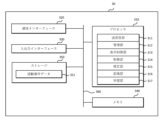
- FIG. 1 is a diagram illustrating an example of a configuration of an information processing device according to an embodiment of the present invention.
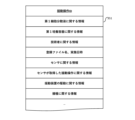
- FIG. 11 is a diagram showing an example of rocking operation data.
- 10 is a flowchart illustrating the operation of the seeding device.
- the present embodiment an embodiment of the present invention (hereinafter referred to as "the present embodiment") will be described in detail with reference to the drawings as necessary, but the present invention is not limited to this, and various modifications are possible without departing from the gist of the invention.
- the same elements are given the same reference numerals, and duplicated explanations will be omitted.
- positional relationships such as up, down, left, and right will be based on the positional relationships shown in the drawings.
- the dimensional ratios of the drawings are not limited to those shown in the drawings.
- the seeding device of this embodiment has a rocking device that rocks a second culture vessel containing a second cell dispersion liquid based on previously acquired information about a rocking operation by a technician, thereby seeding cells contained in the second cell dispersion liquid into the second culture vessel.
- This allows the seeding device of this embodiment to perform a cell seeding operation that mimics the rocking operation by a skilled technician. Therefore, compared to a case where a plurality of technicians with different levels of skill perform the seeding operation, uniform seeding can be performed efficiently.
- the seeding device of this embodiment may further include, in addition to the rocking device, a sensor that acquires information about the rocking operation by the technician when rocking the first culture vessel containing the first cell dispersion liquid to seed the cells contained in the first cell dispersion liquid into the first culture vessel.
- the seeding device of this embodiment may acquire information about the cell seeding operation that imitates the rocking operation by a skilled technician, and drive the rocking device based on the information.
- FIG. 1 shows an example of the configuration of a seeding device.
- the seeding device 1 of this embodiment may have an information processing device 30 that acquires information about the rocking operation from the sensor 10 as necessary and causes the rocking device 20 to execute the rocking operation.
- the rocking device can be driven based on the rocking operation by the engineer acquired by the sensor, thereby enabling uniform sowing to be carried out efficiently.
- the information regarding the rocking operation by the engineer acquired by the sensor in the above manner may be included in rocking operation data 351, which will be described later.
- the information processing device 30 is shown as a general-purpose computer (terminal) attached to operate the rocking device 20, but the information processing device 30 may also be a server.
- information regarding the rocking operation by the engineer may be held by a cloud server, which is one of the information processing devices 30, and a terminal attached to the rocking device 20 may acquire information regarding the rocking operation by the engineer from the cloud server and drive the rocking device 20.
- the sensor 10 acquires information regarding a rocking operation performed by a technician when rocking the first culture vessel containing the first cell dispersion liquid to seed the cells contained in the first cell dispersion liquid into the first culture vessel.
- the sensor may be, for example, a motion sensor such as a three-dimensional acceleration sensor or a gyro sensor installed in the first culture vessel.
- a motion sensor such as a three-dimensional acceleration sensor or a gyro sensor installed in the first culture vessel.
- the sensor when the rocking device in which the first culture vessel is placed is operated with a joystick or other operation interface, the sensor may be, for example, one that detects the movement of the rocking device caused by the joystick or other operation interface. In this way, when a technician uses the operation interface to rock the rocking device to seed the cells contained in the first cell dispersion liquid into the first culture vessel, the motion sensor placed in the first culture vessel can obtain information regarding the rocking operation performed on the first culture vessel.
- an example of a sensor other than the above is an image sensor.
- the image sensor may sense the movement of a person to obtain information regarding the shaking operation performed by the technician on the first incubation vessel.
- the information regarding the rocking operation may include, for example, information regarding the direction, angle, time, etc. at which the bottom surface of the first culture vessel is tilted relative to the horizontal plane.
- the rocking operation may include an operation of seeding small particles in the first culture vessel by tilting the first culture vessel containing the first cell dispersion liquid.
- information regarding the rocking operation may also include, for example, tilt (detection of the direction of gravity), translation (movement/vibration/shock/fall), speed, displacement, etc., acquired by an acceleration sensor.
- the technician is not particularly limited as long as he or she has experience in sowing seeds, and may be an expert.
- the first rocking operation and the second rocking operation do not match perfectly, but in this embodiment, the technician can have the sensor acquire his or her own rocking operation, and then repeatedly reproduce the operation acquired by the sensor using the rocking device. Furthermore, by having the sensor acquire the rocking operation of an expert, even an unexpert can repeatedly reproduce the same rocking operation as the expert using the rocking device.
- the first culture vessel detected by the sensor may be the same as or different from the second culture vessel.
- Examples of the first culture vessel and the second culture vessel include, but are not limited to, a petri dish, a multi-well plate, a culture flask, and a roller bottle.
- the first cell dispersion liquid detected by the sensor may be the same as or different from the second cell dispersion liquid.
- the first cell dispersion liquid and the second cell dispersion liquid are not particularly limited, and may contain, for example, cells and a liquid medium.
- the cells contained in the first cell dispersion liquid and the second cell dispersion liquid may be adherent cells or non-adherent cells. Among these, adherent cells, which are required to be uniformly seeded on the inner surface of the culture vessel, are preferred.
- the rocking device 20 is a device that rocks a second culture vessel containing a second cell dispersion liquid based on information related to the rocking operation acquired by the sensor, thereby seeding cells contained in the second cell dispersion liquid into the second culture vessel.
- the rocking device 20 may include, for example, a stage 21 and a drive mechanism 22 capable of tilting the stage 21 in any direction or angle so as to be able to rock the second culture vessel.
- the rocking device 20 is not particularly limited as long as it is configured to be able to rock the second cell dispersion liquid in the vessel by tilting the second culture vessel in any direction or angle.
- the rocking device 20 without a stage 21 is not particularly limited, but may be, for example, one equipped with a collaborative robot.
- the second culture vessel may be held at the tip of the robot arm, and the second cell dispersion liquid in the second culture vessel may be rocked by the movement of the arm.
- rocking device 20 may not be able to reproduce the information about the rocking operation acquired by the sensor as is due to limitations in the mechanical operating range.
- the rocking device 20 may control the drive mechanism 22 based on a comparison between the rocking operation acquired by the sensor and the mechanical operating range. Specifically, if the rocking operation acquired by the sensor exceeds the operable conditions such as the operating range or operating speed of the rocking device, or if there is a large difference in the operation such as the tilting of the culture vessel when comparing the rocking operation acquired by the sensor with the mechanical operating range, the drive mechanism 22 may be controlled to tilt the stage 21 faster or slower. In this way, in rocking operations that exceed the mechanical operating range, the operation speed, etc. may be controlled so that the effect on the cell dispersion liquid is similar.
- the information processing device 30 may, for example, obtain information on the rocking operation from the sensor 10 and cause the rocking device 20 to execute the rocking operation.
- the information processing device 30 may be a desktop, laptop, or other computer.
- the information processing device 30 is a general-purpose computer and may be configured as a single computer or may be configured as a plurality of computers scattered over a network N.
- the information processing device 30 may be, for example, a desktop, laptop, or other computer.
- the information processing device 30 may also be a general-purpose computer and may be configured as a single computer, or may be configured as multiple computers scattered across the network N.
- FIG. 2A is a diagram showing an example of the hardware configuration and functional configuration of the information processing device 30.
- the information processing device 30 includes, for example, a processor 310, a communication interface 320, an input/output interface 330, a memory 340, a storage 350, and one or more communication buses 360 for interconnecting these components.
- Processor 310 executes processes, functions, or methods implemented by code or instructions included in a program stored in storage 350.
- Processor 310 may include, by way of example and not limitation, one or more central processing units (CPUs), MPUs (Micro Processing Units), GPUs (Graphics Processing Units), microprocessors, processor cores, multiprocessors, ASICs (Application-Specific Integrated Circuits), FPGAs (Field Programmable Gate Arrays), etc., and may implement the processes, functions, or methods disclosed in each embodiment by logic circuits (hardware) or dedicated circuits formed in integrated circuits (IC (Integrated Circuit) chips, LSIs (Large Scale Integration)), etc.
- CPUs central processing units
- MPUs Micro Processing Units
- GPUs Graphics Processing Units
- microprocessors processor cores
- multiprocessors multiprocessors
- ASICs Application-Specific Integrated Circuits
- FPGAs Field Programmable Gate Arrays
- the processor 310 of this embodiment may be configured to function as a transmission/reception unit 311, a management unit 312, a display control unit 313, a control unit 314, an estimation unit 315, a conversion unit 316, and a learning unit 317.
- the communication interface 320 transmits and receives various data to and from other devices via the network N.
- the communication may be performed either wired or wirelessly, and any communication protocol may be used as long as the devices can communicate with each other.
- the communication interface 320 is implemented as hardware such as a network adapter, various types of communication software, or a combination of these.
- the network N may be, by way of example and not limitation, an ad hoc network, an intranet, an extranet, a virtual private network (VPN), a local area network (LAN), a wireless LAN (WLAN), a wide area network (WAN), a wireless WAN (WWAN), a metropolitan area network (MAN), a portion of the Internet, a portion of the public switched telephone network (PSTN), a mobile telephone network, Integrated Service Digital Networks (ISDNs), wireless LANs, Long Term Evolution (LTE), Code Division Multiple Access (CDMA), Bluetooth (registered trademark), satellite communications, or any combination thereof.
- a network may include one or more networks.
- the input/output interface 330 includes an input device for inputting various operations to the information processing device 30, and an output device for outputting the results of processing by the information processing device 30.
- the input/output interface 330 includes information input devices such as a keyboard, mouse, and touch panel, and information output devices such as a display. Note that the information processing device 30 may accept a specified input and execute a specified output by connecting an external input/output interface 330.
- Memory 340 temporarily stores programs loaded from storage 350 and provides a working area for processor 310. Memory 340 also temporarily stores various data generated while processor 310 is executing a program. Memory 340 may be, for example, a high-speed random access memory such as DRAM, SRAM, DDR RAM, or other random access solid-state storage device, or a combination of these.
- Storage 350 stores programs, each functional unit, and various data.
- Storage 350 may be, for example, one or more magnetic disk storage devices, optical disk storage devices, flash memory devices, or non-volatile memories such as other non-volatile solid-state storage devices, or may be a combination of these.
- Another example of storage 350 is one or more storage devices installed remotely from processor 310.
- the transmitter/receiver 311 may function as a transmitter that transmits various types of information to other devices via the communication interface 320 and the network N, or as a receiver that receives various types of information from other devices.
- the management unit 312 manages a plurality of rocking operations acquired by the sensor. Specifically, the management unit 312 may acquire information on the rocking operations acquired by the sensor from the sensor 10 and record it in the rocking operation data 351. At that time, the management unit 312 may record the information on the rocking operation in association with the acquisition date and time, the name of the operator, the type of the first culture vessel used, the cell tumor contained in the first cell dispersion liquid, and the composition of the first cell dispersion liquid.
- FIG. 2B shows an example of the rocking operation data 351.
- the "rocking operation ID" is an ID for uniquely identifying the rocking operation.
- the rocking operation data 351 may also include information about the first cell dispersion liquid, information about the first culture vessel, information about the technician, information about the sensor, information about the registered file name and the date and time of implementation, information about the rocking operation acquired by the sensor 10, information about the operation of the rocking device 20, information about seeding, and the like.
- the information about the first cell dispersion liquid may include information about the dispersed cell tumor, in addition to the composition of the culture medium of the first cell dispersion liquid. Furthermore, instead of the components of the culture medium, information about the product name and manufacturer of the medium may be included. Furthermore, the information about the first culture vessel may include information about the shape and size of the vessel.
- the information about the sensor may include information to identify the sensor used.
- the information regarding the rocking operation acquired by the sensor 10 may record information regarding the rocking operation performed on the first culture vessel acquired by a motion sensor or the like. Furthermore, the information regarding the driving of the rocking device 20 may record information regarding the rocking operation performed on the second culture vessel when the control unit 314 described below drives the rocking device 20.
- the seeding information may include information regarding the evaluation of the seeding, such as the uniformity of the seeding, the proportion of normal cells growing (normal morphology rate), the proportion of abnormal cells growing (abnormal morphology rate), the rate of increase in cell number, and the cell survival rate, and may also include information regarding the culture results of the seeded cells.
- this information can be obtained by culturing the cells shaken in the second culture vessel and observing them under a microscope.
- the second culture vessel is set in an observation device such as a microscope to obtain information regarding the uniformity of the seeding distribution, the cell number, or the cell morphology.
- the second culture vessel may then be left stationary in an incubator to culture the cells for a predetermined period of time, and then set again in an observation device such as a microscope for observation to obtain information regarding the uniformity of the seeding distribution, the cell number, or the cell morphology. In this way, the uniformity of the seeding distribution, the cell number, or the cell morphology can be observed over time.
- a judgment algorithm that can automatically obtain information regarding the culture results of the cells from the microscope images, etc. may be used.
- FIG. 2B also shows rocking operation data 351 that stores data when a first culture vessel containing a first cell dispersion liquid is rocked, but management unit 312 may also accumulate data when a second culture vessel containing a second cell dispersion liquid is rocked in rocking operation data 351. In this case, management unit 312 may record the rocking operation ID referenced when rocking the second culture vessel in association with the data when the second culture vessel was rocked.
- the display control unit 313 controls the display of a plurality of rocking operations so that they can be selected.
- the display control unit 313 may control the display of a rocking operation that corresponds to a predetermined search condition so that it can be selected from the plurality of rocking operations recorded in the rocking operation data 351.
- the display control unit 313 may receive the engineer performing the operation and the composition of the first cell dispersion liquid as search conditions, and control the display of a list of rocking operations that correspond to the search conditions.
- the control unit 314 may drive and control the rocking device 20 based on information related to the rocking operation recorded in the rocking operation data 351. For example, when a user selects a rocking operation whose display has been controlled by the display control unit 313, the control unit 314 may cause the rocking device 20 to execute information related to the selected rocking operation.
- the estimation unit 315 may estimate a more suitable rocking operation from a plurality of rocking operations according to the second cell dispersion liquid. Specifically, the estimation unit 315 may extract information about the first cell dispersion liquid recorded in the rocking operation data 351 that has a high similarity to information about the second cell dispersion liquid, and estimate a suitable rocking operation. In this case, the estimation unit 315 may estimate information about the rocking operation according to the information about the second cell dispersion liquid, using a model that outputs information about the rocking operation from information about the cell dispersion liquid created by the learning unit 317 described later.
- the information about the second cell dispersion liquid is not particularly limited, but may include, for example, the type of cells, the type of culture medium, the amount of culture medium, and viscosity.
- the display control unit 313 may control the display of a form that accepts information about the second cell dispersion liquid, and may control the display of the rocking operation estimated by the estimation unit 315.
- the estimation unit 315 may also estimate a more suitable rocking operation from multiple rocking operations depending on the second incubation vessel.
- Information about the second incubation vessel is not particularly limited, but may include, for example, the type and shape of the vessel, the weight of the vessel, etc.
- the estimation unit 315 may estimate information related to seeding, such as the uniformity of seeding, the proportion of normal cells growing (normal morphology rate), the proportion of abnormal cells growing (abnormal morphology rate), the increase rate of cell count, and the survival rate of cells, based on the information about the oscillation, using a model that outputs information related to seeding from information about oscillation created by the learning unit 317 described below.
- the estimation unit 315 may estimate information related to seeding by further taking into account information about the second cell dispersion liquid. This makes it possible to simulate information related to the culture results of the seeded cells when a specified oscillation operation is performed.
- the conversion unit 316 may convert the information on the rocking operation acquired by the sensor 10 into operation information for rocking the rocking device 20.
- the "information on the rocking operation acquired by the sensor 10" recorded in the rocking operation data 351 may be used as it is as “information on driving the rocking device 20", but there may be cases where the "information on the rocking operation acquired by the sensor 10" cannot be used as it is as “information on driving the rocking device 20" due to restrictions on the movable range of the rocking device 20, and a desired conversion may be applied to the "information on the rocking operation acquired by the sensor 10" to reproduce it on the rocking device 20.
- the conversion unit 316 may use the operation converted based on the "information regarding the rocking operation acquired by the sensor 10" as "information regarding the drive of the rocking device 20."
- the rocking device 20 may seed the cells contained in the second cell dispersion liquid into the second culture vessel by rocking the second culture vessel containing the second cell dispersion liquid based on the operation information converted by the conversion unit 316.
- the conversion method is not particularly limited, but for example, when the "information regarding the rocking operation acquired by the sensor 10" includes a movement that exceeds the range of motion of the rocking device 20, the excess portion is converted to a movement that does not exceed the range of motion of the rocking device 20.
- the conversion unit 316 may convert the rocking motion performed by the rocking device 20 to a slower one from the viewpoint of reducing damage to cells, or, if the motion includes a sudden change in inclination of a predetermined magnitude or more, convert it to a motion that reduces the sudden change in inclination.
- the conversion unit 316 may compress the amount of data by reducing the dimensionality of the "information relating to the rocking operation acquired by the sensor 10", or may increase the dimensionality to enable more complex behavior.
- the conversion unit 316 may perform the desired conversion according to the viscosity of the cell dispersion liquid. Specifically, the slope may be made smaller for a low-viscosity dispersion liquid, or the slope may be made smaller for a high-viscosity dispersion liquid, or the tilt time may be shortened for a low-viscosity dispersion liquid, or the tilt time may be lengthened for a high-viscosity dispersion liquid.
- the conversion unit 316 may refer to the swing operation data 351 to determine the tilt operation for a cell dispersion liquid with a known viscosity, and may interpolate or extrapolate the viscosity to determine the degree of the tilt operation.
- the display control unit 313 described below may display a message indicating that the rocking operation cannot be acquired, and may request the technician to rock the first culture vessel containing the first cell dispersion liquid again. Then, a rocking operation that does not exceed the operating range of the rocking device may be acquired.
- the display control unit 313 displays a message indicating that the rocking operation cannot be acquired
- the display control unit 313 may display a message indicating the reason why the rocking operation cannot be acquired, such as "The tilt exceeds the operating range" or "The seeding operation speed exceeds the operating speed.” The user can see such a message and perform the rocking operation again.
- the drive mechanism 22 may be controlled to tilt the stage 21 faster or slower depending on the portion that exceeds the operating conditions of the rocking device when comparing the rocking operation acquired by the sensor with the mechanical operating range.
- the learning unit 317 may create a model using information on the rocking operation by the technician and information on the seeding of the cells contained in the first cell dispersion liquid by the rocking operation as training data. This allows the learning unit 317 to identify a more appropriate rocking operation among the rocking operations by the technician and to operate the rocking device 20 based on the identified rocking operation.
- the learning unit 317 may obtain information regarding the rocking operation by the engineer not only from information obtained from a single rocking operation by the engineer via a sensor or the like, but also from information obtained from multiple rocking operations via a sensor or the like, by generating average operation data by the engineer using a predetermined algorithm or model.
- rocking motion can be obtained by analyzing or extracting the characteristic quantities of the motion or analyzing or extracting the average motion of the motion based on data from multiple rocking motions. For example, a rocking operation can be performed n times by a technician, and information about the rocking motion can be obtained by averaging the information. Note that if there is a rocking motion that deviates significantly from the average in the n repetitions, the deviating rocking motion does not need to be used to obtain information about the rocking motion.
- the learning unit 317 may also create a model using information about the rocking performed by the rocking device 20 and information about the seeding of cells contained in the second cell dispersion liquid by the rocking as training data. This makes it possible to identify a more appropriate rocking operation among the rocking operations performed by the rocking device 20, and thus to identify a more efficient rocking operation.
- the learning unit 317 may also perform reinforcement learning based on an evaluation function based on the uniformity of sowing, etc. This makes it possible to identify a more appropriate rocking operation among the rocking operations performed by the rocking device 20, and thus to identify a more efficient rocking operation.
- the information regarding the seeding may include information regarding evaluation of the seeding, such as the uniformity of the seeding.
- the information regarding the seeding may also include information regarding the culture results of the seeded cells.
- the seeding device 1 of the present embodiment may have a supply device 40 that supplies the first cell dispersion liquid to the first culture vessel.
- the supply device 40 is not particularly limited, and may have, for example, a pipette unit capable of supplying the first cell dispersion liquid to the first culture vessel, a flow path that supplies the first cell dispersion liquid to the pipette unit, a storage unit that stores the first cell dispersion liquid supplied to the flow path, and a liquid delivery unit that delivers the first cell dispersion liquid to the flow path.
- the amount and speed of the first cell dispersion liquid delivered by the delivery unit of the supply device 40 may be controlled by the control unit 314 of the information processing device 30 of this embodiment.
- the supply device 40 may have a mechanism for setting a tube containing the second cell dispersion liquid and sucking it up with a pipette, and a mechanism for then dripping a predetermined amount of cell liquid from an arbitrary position with the pipette.
- a combination of a horizontal drip position and a vertical drip height may enable uniform dripping without air bubbles.
- the supply device 40 may set a tube containing the second cell dispersion liquid and a container containing a culture medium in a predetermined position, and start a pipetting operation using a robot hand based on information on the type of container, such as a petri dish or well plate, and information on the optimized position and drip amount.
- the optimized position may include information on the horizontal drip position and the vertical drip height. This makes it possible to perform cell supply and culture medium supply operations in a uniform manner, and by combining this with a rocking operation, more stable cell culture can be achieved.
- step S10 when the user selects a new rocking operation to be recorded by the sensor 10 and causes the sensor 10 to detect that operation, the management unit 312 of the seeding device 1 obtains information about the rocking operation obtained by the sensor 10 from the sensor 10 via the transmission/reception unit 311.
- step S11 the management unit 312 of the seeding device 1 records the acquired information regarding the rocking operation in the rocking operation data 351.
- the management unit 312 of the seeding device 1 may record information regarding the first cell dispersion liquid, information regarding the first culture vessel, information regarding the technician, information regarding the sensor, information regarding the registered file name, information regarding the implementation date and time, etc. in association with each other.
- the management unit 312 of the sowing device 1 may record the acquired information regarding the rocking operation as information regarding the driving of the rocking device 20 in the rocking operation data 351.
- the conversion unit 316 of the sowing device 1 may perform a predetermined conversion process on the information regarding the driving of the rocking device 20 in the rocking operation data 351, and record the converted information as information regarding the driving of the rocking device 20.
- the conversion process here may be, for example, the process of converting the information about the acquired rocking operation so that it falls within the range of motion of the rocking device 20, or the process of detecting sudden changes in movement in the acquired rocking operation and converting it into a more gentle movement.
- step S12 the display control unit 313 of the sowing device 1 may refer to the rocking operation data 351 in response to the user's operation and control the display of information on a specified rocking operation. Then, in step S13, the user performs a search or narrows down the results, and selects the rocking operation whose display has been controlled as a result. At this time, the estimation unit 315 of the sowing device 1 may control the display of information on a recommended rocking operation in response to the information input by the user.
- the user may input information regarding the type of container and the optimized position and amount of dripping, and the supply device 40 may supply the second cell dispersion liquid to the second culture container based on that information.
- step S14 when the display control unit 313 of the sowing device 1 receives a rocking operation performed by a user, the control unit 314 of the sowing device 1 drives the rocking device 20 to perform the rocking operation.
- the learning unit 315 may obtain information regarding the seeding evaluation, such as the uniformity of the seeds, the proportion of normal cells growing (normal morphology rate), the proportion of abnormal cells growing (abnormal morphology rate), the rate of increase in cell count, and the survival rate of cells, and use this information as training data.
- the uniformity of the seeds such as the uniformity of the seeds, the proportion of normal cells growing (normal morphology rate), the proportion of abnormal cells growing (abnormal morphology rate), the rate of increase in cell count, and the survival rate of cells.
- the seeding method of this embodiment includes a step of using a rocking device to rock a second culture vessel containing a second cell dispersion liquid based on information about the rocking operation acquired by the sensor, thereby seeding the cells contained in the second cell dispersion liquid into the second culture vessel.
- the seeding method of this embodiment may also include a step of acquiring information about the rocking operation by a technician when rocking a first culture vessel containing a first cell dispersion liquid to seed the cells contained in the first cell dispersion liquid into the first culture vessel.
- Program The program of this embodiment executes a step of seeding cells contained in the second cell dispersion liquid into the second culture vessel by rocking the second culture vessel containing the second cell dispersion liquid, based on information about the rocking operation acquired by the sensor, using the rocking device.
- the program of this embodiment may also execute a step of acquiring information about the rocking operation by a technician when seeding cells contained in the first cell dispersion liquid into the first culture vessel by rocking the first culture vessel containing the first cell dispersion liquid.
- the program may be recorded on a readable recording medium. Note that the specific aspects of the processing executed by the program of this embodiment are described above in the operational processing, so a detailed description will be omitted here.
- the present invention has industrial applicability as one of the core technologies in an automated cell culture system.
- 1...seeding device 10...sensor, 20...oscillating device, 21...stage, 22...driving mechanism, 30...information processing device, 40...supply device, 310...processor, 311...transmitter/receiver unit, 312...management unit, 313...display control unit, 314...control unit, 315...estimation unit, 316...conversion unit, 317...learning unit, 320...communication interface, 330...input/output interface, 340...memory, 350...storage, 351...oscillation operation data, 360...communication bus.
Landscapes
- Chemical & Material Sciences (AREA)
- Health & Medical Sciences (AREA)
- Life Sciences & Earth Sciences (AREA)
- Engineering & Computer Science (AREA)
- Organic Chemistry (AREA)
- Bioinformatics & Cheminformatics (AREA)
- Wood Science & Technology (AREA)
- Zoology (AREA)
- Biotechnology (AREA)
- Genetics & Genomics (AREA)
- Proteomics, Peptides & Aminoacids (AREA)
- Microbiology (AREA)
- Biochemistry (AREA)
- General Engineering & Computer Science (AREA)
- General Health & Medical Sciences (AREA)
- Medicinal Chemistry (AREA)
- Sustainable Development (AREA)
- Pathology (AREA)
- Physics & Mathematics (AREA)
- Analytical Chemistry (AREA)
- Biophysics (AREA)
- Biomedical Technology (AREA)
- Immunology (AREA)
- Molecular Biology (AREA)
- Apparatus Associated With Microorganisms And Enzymes (AREA)
Abstract
Description
第1細胞分散液が入った第1培養容器を揺動することで第1細胞分散液に含まれる細胞を前記第1培養容器内に播種する際に、前記技術者による前記揺動操作に関する情報を取得するセンサを、有する。
本実施形態の播種装置は、予め取得した、技術者による揺動操作に関する情報に基づいて、第2細胞分散液が入った第2培養容器を揺動することで、前記第2細胞分散液に含まれる細胞を前記第2培養容器内に播種する揺動装置を有する。これにより、本実施形態の播種装置は、熟練の技術者による揺動操作を模倣した細胞の播種操作を実行することができる。そのため、熟練度の異なる複数の技術者が播種操作を実行する場合と比べて、均一な播種を効率的に実施できる。
センサ10は、第1細胞分散液が入った第1培養容器を揺動することで第1細胞分散液に含まれる細胞を第1培養容器内に播種する際に、技術者による揺動操作に関する情報を取得する。
揺動装置20は、該センサが取得した揺動操作に関する情報に基づいて、第2細胞分散液が入った第2培養容器を揺動することで、第2細胞分散液に含まれる細胞を第2培養容器内に播種する装置である。
情報処理装置30は、例えば、センサ10から揺動操作に関する情報を取得し、揺動操作を揺動装置20に実行させてもよい。情報処理装置30は、デスクトップ、ラップトップ、その他コンピュータであってもよい。また、情報処理装置30は、汎用的なコンピュータであり、一台のコンピュータで構成されてもよいし、ネットワークN上に雲散する複数台のコンピュータで構成されてもよい。
送受信部311は、例えば、通信インターフェース320とネットワークNを介して、他の装置に各種情報を送信する送信部、又は他の装置から各種情報を受信する受信部として機能してもよい。
管理部312は、センサが取得した複数の揺動操作を管理する。具体的には、管理部312はセンサが取得した揺動操作に関する情報をセンサ10から取得し、揺動操作データ351に記録してもよい。また、その時に、管理部312は、揺動操作に関する情報と、その取得日時、実施者名、使用した第1培養容器の種類、第1細胞分散液に含まれる細胞腫、第1細胞分散液の組成を対応づけて記録してもよい。
表示制御部313は、複数の揺動操作を選択可能に表示制御する。この際に、表示制御部313は、揺動操作データ351に記録された複数の揺動操作の中から、所定の検索条件に対応するものを、選択可能に表示制御してもよい。例えば、操作を行う技術者と第1細胞分散液の組成を検索条件として受付け、その検索条件に対応する揺動操作のリストを表示制御してもよい。
制御部314は、揺動操作データ351に記録された揺動操作に関する情報に基づいて、揺動装置20を駆動制御してもよい。例えば、表示制御部313が表示制御した揺動操作をユーザが選択すると、制御部314は、その選択された揺動操作に関する情報を揺動装置20に実行させてもよい。
推定部315は、第2細胞分散液に応じて、複数の揺動操作からより適した揺動操作を推定してもよい。具体的には、推定部315は、揺動操作データ351に記録された第1細胞分散液に関する情報のうち、第2細胞分散液に関する情報と類似度の高いものを抽出し、適した揺動操作を推定してもよい。この際、推定部315は、後述する学習部317が作成した細胞分散液に関する情報から揺動操作に関する情報を出力するモデルを用いて、第2細胞分散液に関する情報に応じて、揺動操作に関する情報を推定してもよい。
変換部316は、センサ10が取得した揺動操作に関する情報を、揺動装置20を揺動するための動作情報へと変換してもよい。揺動操作データ351に記録された「センサ10が取得した揺動操作に関する情報」は、そのまま「揺動装置20の駆動に関する情報」として用いてもよいが、例えば、揺動装置20の可動域の制限により「センサ10が取得した揺動操作に関する情報」をそのまま「揺動装置20の駆動に関する情報」として用いられない場合、「センサ10が取得した揺動操作に関する情報」に所望の変換を加えて、揺動装置20で再現したい場合などが挙げられる。
学習部317は、技術者による揺動操作に関する情報と、当該揺動操作による第1細胞分散液に含まれる細胞の播種に関する情報と、を教師データとして、モデルを作成してもよい。これにより、技術者による揺動操作のうち、より適切な揺動操作を特定し、それをもとに揺動装置20を操作できる。
本実施形態の播種装置1は、第1細胞分散液を第1培養容器に供給する供給装置40を有してもよい。供給装置40は、特に限定されないが、例えば、第1培養容器に対して、第1細胞分散液を供給可能なピペット部と、ピペット部に対して第1細胞分散液を供給する流路と、流路に供給される第1細胞分散液を貯留する貯留部と、流路に第1細胞分散液を送液する送液部を有してもよい。
次に、播種装置1の動作について説明する。図3にフローチャートを示す。
本実施形態の播種方法は、揺動装置により、該センサが取得した揺動操作に関する情報に基づいて、第2細胞分散液が入った第2培養容器を揺動することで、第2細胞分散液に含まれる細胞を第2培養容器内に播種するステップと、を実行する。また、本実施形態の播種方法は、センサにより、第1細胞分散液が入った第1培養容器を揺動することで第1細胞分散液に含まれる細胞を第1培養容器内に播種する際に、技術者による揺動操作に関する情報を取得するステップを実行してもよい。
本実施形態のプログラムは、揺動装置により、該センサが取得した揺動操作に関する情報に基づいて、第2細胞分散液が入った第2培養容器を揺動することで、第2細胞分散液に含まれる細胞を第2培養容器内に播種するステップと、を実行させる。また、本実施形態のプログラムは、センサにより、第1細胞分散液が入った第1培養容器を揺動することで第1細胞分散液に含まれる細胞を第1培養容器内に播種する際に、技術者による揺動操作に関する情報を取得するステップを実行させてもよい。
Claims (11)
- 予め取得した、技術者による揺動操作に関する情報に基づいて、第2細胞分散液が入った第2培養容器を揺動することで、前記第2細胞分散液に含まれる細胞を前記第2培養容器内に播種する揺動装置を有する、
播種装置。 - 複数の前記揺動操作に関する情報を管理する管理部と、
複数の前記揺動操作を選択可能に表示制御する表示制御部と、を有する、
請求項1に記載の播種装置。 - 複数の前記揺動操作に関する情報を管理する管理部と、
前記第2細胞分散液に関する情報に応じて、複数の前記揺動操作からより適した揺動操作を推定する推定部と、を有する、
請求項1に記載の播種装置。 - 前記第2細胞分散液に含まれる細胞は、接着細胞を含む、
請求項1に記載の播種装置。 - 前記揺動操作に関する情報を、前記揺動装置を揺動するための動作情報へと変換する変換部を有し、
前記揺動装置は、前記動作情報に基づいて、前記第2細胞分散液が入った前記第2培養容器を揺動することで、前記第2細胞分散液に含まれる細胞を前記第2培養容器内に播種する、
請求項1に記載の播種装置。 - 第1細胞分散液が入った第1培養容器を揺動することで第1細胞分散液に含まれる細胞を前記第1培養容器内に播種する際に、前記技術者による前記揺動操作に関する情報を取得するセンサを、有する、
請求項1に記載の播種装置。 - 前記揺動操作に関する情報と、当該揺動操作による第1細胞分散液に含まれる細胞の播種に関する情報と、を教師データとして、細胞分散液に関する情報から前記揺動操作に関する情報を出力するモデルを作成する学習部を有し、
前記第2細胞分散液に関する情報に応じて、前記モデルにより、前記揺動操作に関する情報を推定する推定部を有する、
請求項6に記載の播種装置。 - 前記揺動装置が実行した揺動に関する情報と、当該揺動による前記第2細胞分散液に含まれる細胞の播種に関する情報と、を教師データとして、前記揺動に関する情報から前記播種に関する情報を出力するモデルを作成する学習部を有し、
前記揺動に関する情報に基づいて、前記モデルにより、前記播種に関する情報を推定する推定部を有する、
請求項1に記載の播種装置。 - 前記第1細胞分散液を前記第1培養容器に供給する供給装置40を有する、
請求項1に記載の播種装置。 - 揺動装置により、予め取得した技術者による揺動操作に関する情報に基づいて、第2細胞分散液が入った第2培養容器を揺動することで、前記第2細胞分散液に含まれる細胞を前記第2培養容器内に播種するステップを実行する、
播種方法。 - 揺動装置により、予め取得した、技術者による揺動操作に関する情報に基づいて、第2細胞分散液が入った第2培養容器を揺動することで、前記第2細胞分散液に含まれる細胞を前記第2培養容器内に播種するステップを実行させる、
プログラム。
Priority Applications (1)
| Application Number | Priority Date | Filing Date | Title |
|---|---|---|---|
| JP2025503999A JPWO2024181548A1 (ja) | 2023-03-02 | 2024-03-01 |
Applications Claiming Priority (2)
| Application Number | Priority Date | Filing Date | Title |
|---|---|---|---|
| JP2023-032016 | 2023-03-02 | ||
| JP2023032016 | 2023-03-02 |
Publications (1)
| Publication Number | Publication Date |
|---|---|
| WO2024181548A1 true WO2024181548A1 (ja) | 2024-09-06 |
Family
ID=92589886
Family Applications (1)
| Application Number | Title | Priority Date | Filing Date |
|---|---|---|---|
| PCT/JP2024/007662 Ceased WO2024181548A1 (ja) | 2023-03-02 | 2024-03-01 | 播種装置、播種方法、及びプログラム |
Country Status (2)
| Country | Link |
|---|---|
| JP (1) | JPWO2024181548A1 (ja) |
| WO (1) | WO2024181548A1 (ja) |
Citations (5)
| Publication number | Priority date | Publication date | Assignee | Title |
|---|---|---|---|---|
| JP2006320226A (ja) * | 2005-05-18 | 2006-11-30 | Hitachi Medical Corp | 細胞培養装置 |
| JP2021527440A (ja) * | 2018-06-19 | 2021-10-14 | ステムセル テクノロジーズ カナダ インコーポレイテッド | 細胞の自動培養のためのシステム、方法及び装置 |
| JP2022185038A (ja) * | 2018-02-22 | 2022-12-13 | 株式会社ニコン | 培養支援装置 |
| JP7226556B2 (ja) * | 2019-07-26 | 2023-02-21 | 株式会社島津製作所 | 細胞ピッキング装置 |
| JP7255687B2 (ja) * | 2019-07-26 | 2023-04-11 | 株式会社島津製作所 | 細胞ピッキング装置 |
-
2024
- 2024-03-01 WO PCT/JP2024/007662 patent/WO2024181548A1/ja not_active Ceased
- 2024-03-01 JP JP2025503999A patent/JPWO2024181548A1/ja not_active Withdrawn
Patent Citations (5)
| Publication number | Priority date | Publication date | Assignee | Title |
|---|---|---|---|---|
| JP2006320226A (ja) * | 2005-05-18 | 2006-11-30 | Hitachi Medical Corp | 細胞培養装置 |
| JP2022185038A (ja) * | 2018-02-22 | 2022-12-13 | 株式会社ニコン | 培養支援装置 |
| JP2021527440A (ja) * | 2018-06-19 | 2021-10-14 | ステムセル テクノロジーズ カナダ インコーポレイテッド | 細胞の自動培養のためのシステム、方法及び装置 |
| JP7226556B2 (ja) * | 2019-07-26 | 2023-02-21 | 株式会社島津製作所 | 細胞ピッキング装置 |
| JP7255687B2 (ja) * | 2019-07-26 | 2023-04-11 | 株式会社島津製作所 | 細胞ピッキング装置 |
Also Published As
| Publication number | Publication date |
|---|---|
| JPWO2024181548A1 (ja) | 2024-09-06 |
Similar Documents
| Publication | Publication Date | Title |
|---|---|---|
| US10981270B1 (en) | Operating multiple testing robots based on robot instructions and/or environmental parameters received in a request | |
| EP3819367B1 (en) | Cell culture support device operating program, cell culture support device, and cell culture support device operating method | |
| US7390460B2 (en) | Control device for automatic liquid handling system | |
| CN109643225A (zh) | 用于实验室管理系统中的库存共享的系统和方法 | |
| JP6472868B2 (ja) | 細胞培養加工設備 | |
| CN101903532A (zh) | 细胞观察的图像解析方法、图像处理程序和图像处理装置 | |
| CN1901671A (zh) | 制造与企业级之间的通信模型 | |
| US10449534B2 (en) | Control unit for pipetting machines | |
| EP3456488A1 (en) | Preparation assisting system and preparation method using robot | |
| JP2022185038A (ja) | 培養支援装置 | |
| Rupp | High-throughput crystallography at an affordable cost: the TB Structural Genomics Consortium Crystallization Facility | |
| JP2020508441A (ja) | 自動化システムを動的に制御すること | |
| GB2564326A (en) | Particle simulation device, particle simulation method, and particle simulation program | |
| JP2020512013A (ja) | バイオプリンティングのための方法 | |
| EP3527334A1 (en) | Simulation apparatus, simulation method, and simulation program | |
| CN111465909A (zh) | 用于向容器填充流体和/或操作混合系统的系统和方法 | |
| JP2021018125A (ja) | 分注装置 | |
| US12116560B2 (en) | Adjustable gravity simulator for tissue and organ culturing | |
| JPWO2019131626A1 (ja) | 細胞培養制御方法、細胞培養制御装置、細胞培養装置および細胞培養システム | |
| WO2020012853A1 (ja) | 細胞培養作業支援装置、プログラム、及び作動方法 | |
| JP6792125B1 (ja) | エッジシステム、エッジシステムの制御方法、エッジシステムの制御に用いるコンピュータプログラム、及び、その記録媒体 | |
| US20250224858A1 (en) | Systems, methods, and devices for automated cellular therapy manufacturing through graphical user interface | |
| CN114630575A (zh) | 固体物料的播撒控制方法和装置、播撒机、可移动平台 | |
| CN103631548B (zh) | 影像外接装置及处理影像外接装置的方法 | |
| JP7034156B2 (ja) | 生物反応器組立体 |
Legal Events
| Date | Code | Title | Description |
|---|---|---|---|
| 121 | Ep: the epo has been informed by wipo that ep was designated in this application |
Ref document number: 24764025 Country of ref document: EP Kind code of ref document: A1 |
|
| ENP | Entry into the national phase |
Ref document number: 2025503999 Country of ref document: JP Kind code of ref document: A |
|
| WWE | Wipo information: entry into national phase |
Ref document number: 2025503999 Country of ref document: JP |
|
| NENP | Non-entry into the national phase |
Ref country code: DE |
|
| 122 | Ep: pct application non-entry in european phase |
Ref document number: 24764025 Country of ref document: EP Kind code of ref document: A1 |