WO2024181037A1 - データ処理装置、データ処理方法及びプログラム - Google Patents
データ処理装置、データ処理方法及びプログラム Download PDFInfo
- Publication number
- WO2024181037A1 WO2024181037A1 PCT/JP2024/003609 JP2024003609W WO2024181037A1 WO 2024181037 A1 WO2024181037 A1 WO 2024181037A1 JP 2024003609 W JP2024003609 W JP 2024003609W WO 2024181037 A1 WO2024181037 A1 WO 2024181037A1
- Authority
- WO
- WIPO (PCT)
- Prior art keywords
- data
- input data
- image
- reconstructed
- manifold
- Prior art date
- Legal status (The legal status is an assumption and is not a legal conclusion. Google has not performed a legal analysis and makes no representation as to the accuracy of the status listed.)
- Ceased
Links
Images







Classifications
-
- G—PHYSICS
- G06—COMPUTING OR CALCULATING; COUNTING
- G06N—COMPUTING ARRANGEMENTS BASED ON SPECIFIC COMPUTATIONAL MODELS
- G06N3/00—Computing arrangements based on biological models
- G06N3/02—Neural networks
- G06N3/04—Architecture, e.g. interconnection topology
- G06N3/045—Combinations of networks
- G06N3/0455—Auto-encoder networks; Encoder-decoder networks
-
- G—PHYSICS
- G06—COMPUTING OR CALCULATING; COUNTING
- G06T—IMAGE DATA PROCESSING OR GENERATION, IN GENERAL
- G06T7/00—Image analysis
-
- G—PHYSICS
- G06—COMPUTING OR CALCULATING; COUNTING
- G06V—IMAGE OR VIDEO RECOGNITION OR UNDERSTANDING
- G06V10/00—Arrangements for image or video recognition or understanding
- G06V10/70—Arrangements for image or video recognition or understanding using pattern recognition or machine learning
- G06V10/82—Arrangements for image or video recognition or understanding using pattern recognition or machine learning using neural networks
Definitions
- This disclosure relates to a data processing device, a data processing method, and a program.
- AI Artificial Intelligence
- Patent Document 1 discloses a biosignal analysis system that performs arrhythmia diagnosis based on electrocardiogram information. This system converts electrocardiogram information to generate data for diagnosis, generates restored data by restoring the data for diagnosis using a trained model, and determines whether the data for diagnosis is normal waveform data or arrhythmia waveform data based on the difference between the restored data and the data for diagnosis.
- Patent Document 2 also discloses a method of image clustering based on an autoencoder.
- the autoencoder projects samples from the original image space into a feature space, and the samples are distributed in the feature space in groups by class.
- normal data is compressed to generate compressed data
- the system is trained to reconstruct the data based on that compressed data.
- normal sample data is input into the system, and training is carried out so that the degree of match between the sample data and the reconstructed data is high.
- target data is input into the system, the system compresses the target data, and reconstructs the data based on the compressed data.
- the target data does not contain any data other than that contained in the sample data. Therefore, the target data is determined to be normal.
- the target data contains data that is not contained in the sample data. Therefore, the target data is determined to be abnormal.
- Patent Documents 1 and 2 do not take such system problems into consideration, and simply disclose determination or classification technology, and therefore cannot solve this problem.
- One of the objectives of the present disclosure is to provide a data processing device, a data processing method, and a program that can contribute to determining abnormalities in data. It should be noted that this objective is merely one of multiple objectives that the multiple embodiments disclosed herein attempt to achieve. Other objectives or problems and novel features will become apparent from the description of this specification or the accompanying drawings.
- a data processing device includes a data compression unit that generates compressed data by reducing the dimensionality of input data, a compaction unit that maps at least a portion of the compressed data onto a compact manifold, and a reconstruction unit that generates reconstructed data in which the input data is reconstructed using the compressed data including the data mapped onto the compact manifold.
- a data processing method is executed by a computer.
- the computer generates compressed data by reducing the dimensionality of input data, maps at least a portion of the compressed data onto a compact manifold, and generates reconstructed data in which the input data is reconstructed using the compressed data including the data mapped onto the compact manifold.
- a program causes a computer to generate compressed data by reducing the dimensionality of input data, map at least a portion of the compressed data onto a compact manifold, and generate reconstructed data in which the input data is reconstructed using the compressed data including the data mapped onto the compact manifold.
- This disclosure provides a data processing device, a data processing method, and a program that can contribute to determining abnormalities in data.
- FIG. 1 is a block diagram illustrating an example of a data processing device according to the present disclosure.
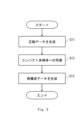
- 1 is a flowchart illustrating an example of a representative process of a data processing device according to the present disclosure.
- 1 is a block diagram showing an example of an abnormality determination device according to the present disclosure.
- FIG. 1 is a diagram showing an example of converting latent variables into values on a compact manifold.
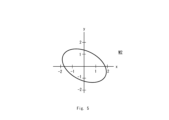
- FIG. 13 is a diagram showing another example of a compact manifold.
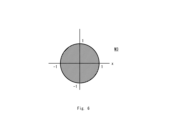
- FIG. 13 is a diagram showing another example of a compact manifold.
- FIG. 13 is a diagram illustrating an example of input data and reconstructed data.
- FIG. 13 is a diagram showing another example of input data and reconstructed data.
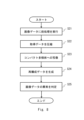
- FIG. 4 is a flowchart illustrating an example of a typical process of the abnormality determination device according to the present disclosure.
- FIG. 13 is a diagram showing a process for determining an anomaly in input data using a related technique.
- 1 is a diagram showing a process of determining an abnormality in input data using an abnormality determination device according to the present disclosure;
- FIG. 2 is a block diagram showing an example of a hardware configuration of an apparatus according to the present disclosure.
- First embodiment 1 is a block diagram showing an example of a data processing device.
- the data processing device 10 includes a data compression unit 11, a compaction unit 12, and a reconstruction unit 13.
- Each unit (means) of the data processing device 10 is controlled by a control unit (controller) (not shown). Each unit will be described below.
- the data compression unit 11 acquires input data and generates compressed data by reducing the dimensions of the input data.
- the input data may be image data such as still images or moving images, text data, or any other type of data.
- the input data may be data from various fields such as security data and medical data.
- Reducing the dimensions of input data means reducing the dimensions of a vector when the input data is expressed as a vector. For example, if the input data is a still image, it means reducing the number of pixels. Therefore, by reducing the dimensions of the input data, the amount of information in the input data is compressed.
- the compactification unit 12 maps at least a portion of the compressed data onto a compact manifold. More specifically, when the compressed data is represented as a number of points existing in a certain space, the compactification unit 12 converts some of the points into points on a compact manifold, which is a subset of Euclidean space.
- a compact manifold is a manifold that has a finite subcover for any open covering.
- the compactification unit 12 can map even points that have extreme numerical values in the space onto a compact manifold.
- a point that has extreme numerical values in the space indicates, for example, data that does not normally appear in the input data, or that appears rarely.
- Mapping a point onto a compact manifold means, as one example, renormalizing a point that has extreme numerical values in the space into a finite region. An example of a compact manifold will be described later in embodiment 2.
- the compactification unit 12 may map a portion of the compressed data onto a compact manifold, or may map all of the compressed data onto a compact manifold.
- the reconstruction unit 13 generates reconstructed data in which the input data is reconstructed using compressed data including the data mapped onto the compact manifold by the compactification unit 12.
- the dimensions of this reconstructed data are the same as the dimensions of the original input data. In other words, the reconstruction unit 13 serves to restore the dimensions reduced by the data compression unit 11.
- the reconstructed data generated by the reconstruction unit 13 is the result of the compactification unit 12 converting points with extreme values in space into points on a compact manifold. Therefore, in the reconstructed data, the occurrence of abnormal data points that appeared in the input data is suppressed.
- At least one of the blocks of the data compression unit 11, the compaction unit 12, and the reconstruction unit 13 may, for example, constitute an AI (Artificial Intelligence) model, or may be configured by the control unit reading in a specified algorithm.
- the data compression unit 11 may be configured as an AI (Artificial Intelligence) model, for example, an encoder network in an autoencoder.
- the reconstruction unit 13 may be configured as an AI model, for example, a decoder network in an autoencoder.
- the encoder network and the decoder network are also simply referred to as the encoder and the decoder.
- FIG. 2 is a flowchart showing an example of a typical process of the data processing device 10, and this flowchart will be used to explain the process of the data processing device 10. Note that the details of each process are as described above, and therefore will not be explained here.
- the data compression unit 11 of the data processing device 10 generates compressed data by reducing the dimensions of the input data (step S11: compressed data generation step).
- the compaction unit 12 maps at least a part of the compressed data onto a compact manifold (step S12: mapping step).
- the reconstruction unit 13 uses the compressed data to generate reconstructed data in which the input data is reconstructed (step S13: reconstruction step).
- the data processing device 10 maps at least a part of the compressed data for generating the reconstructed data onto a compact manifold. At this time, even points having extreme numerical values in space are mapped onto the compact manifold, so that the reconstructed data suppresses the appearance of anomalous data points that appeared in the input data. Therefore, by comparing the reconstructed data with the input data, it is possible to clearly determine the anomalous data points in the input data.
- the data processing device 10 can generate reconstruction data that makes it possible to clearly determine the locations of abnormal data in the input data. Therefore, the data processing device 10 can contribute to determining abnormalities in the input data.
- the processing executed by the data processing device 10 may be distributed and executed by multiple computers. In other words, the processing of the data processing device 10 may be realized in a distributed system. In a distributed system, part or all of the data processing device 10 may be implemented on a cloud. However, the functions of the data processing device 10 may be installed in a single device.
- Embodiment 2 In the following, in the second embodiment, a specific example of the data processing device 10 described in the first embodiment will be disclosed. However, the specific example of the data processing device 10 described in the first embodiment is not limited to the following. Furthermore, the configuration and processing described below are merely examples, and are not limited to these.
- the abnormality determination device 20 is a device that determines an abnormal portion in input data, and includes a preprocessing unit 21, a data compression unit 22, a compaction unit 23, a reconstruction unit 24, and an abnormality determination unit 25.
- the abnormality determination device 20 is used in both the learning phase and the inference phase.
- the data compression unit 22, the compaction unit 23, and the reconstruction unit 24 are each a block that constitutes an AI model, and each block is composed of one or more layers.
- the pre-processing unit 21 to the reconstruction unit 24 are blocks used in the learning phase.
- the data compression unit 22 to the reconstruction unit 24 are blocks that are trained as an AI model in the learning phase.
- an autoencoder technique is used.
- the preprocessing unit 21 After learning, in the inference phase, input data to be subjected to anomaly judgment is input to the preprocessing unit 21. In this inference phase, the preprocessing unit 21 to the anomaly judgment unit 25 are used to judge anomalies in the input data. Details of the above learning and inference phase processing will be described later. Details of the processing of each unit of the anomaly judgment device 20 will be described below.
- the pre-processing unit 21 acquires input data.
- the method by which the pre-processing unit 21 acquires the input data is arbitrary.
- the pre-processing unit 21 may receive input data from a device other than the abnormality determination device 20, such as a camera, or may acquire input data stored in the storage of the abnormality determination device 20.
- the input data acquired by the pre-processing unit 21 is a still image taken of a pedestrian-only area.
- the input data is not limited to this, and may be any data, such as a moving image.
- the pre-processing unit 21 performs pre-processing on the acquired input data so that the time required for processing performed in the data compression unit 22 and subsequent units is shortened or accurate abnormality determination processing is possible.
- the pre-processing unit 21 may convert color image input data into a grayscale image.
- the pre-processing unit 21 may convert large-sized input data into a small size suitable for processing.
- the data compression unit 22 corresponds to the data compression unit 11 according to the first embodiment.
- the data compression unit 22 acquires an image of input data, and generates compressed data by reducing the dimensions of the input data. For example, if there are tens of thousands of pixels in the image of the original input data, the input data is expressed in vector form as information of a string of tens of thousands of numbers.
- the data compression unit 22 can compress this string of numbers into information of a string of several hundred numbers, for example. Each number in this information is defined as a latent variable, and the space into which the latent variables are mapped is defined as a latent space. At this time, the data compression unit 22 performs a process of compressing the latent space into a low-dimensional space.
- the compaction unit 23 corresponds to the compaction unit 12 according to the first embodiment.
- the compaction unit 23 converts points in the latent space of a portion of the compressed data generated by the data compression unit 22 into points on a compact manifold in Euclidean space.
- the definition of a compact manifold is as described in the first embodiment.
- the values of each latent variable are located on a number line that extends to infinity.
- latent variables can take very large or small values (extreme values).
- the compactification unit 23 can convert them into values on a compact manifold.
- Figure 4 shows an example of converting latent variables into values on a compact manifold.
- the compact manifold is defined as follows: ...(1) (1) indicates a circumference with a radius of 1 in a two-dimensional Euclidean space.
- FIG. 4 shows that when a value on a number line L1 is ⁇ , the compactification unit 23 converts ⁇ into a point (cos ⁇ , sin ⁇ ) on a circumference M1, which is a compact manifold in a two-dimensional Euclidean space.
- ...(1) (1) indicates a circumference with a radius of 1 in a two-dimensional Euclidean space.
- FIG. 4 shows that when a value on a number line L1 is ⁇ , the compactification unit 23 converts ⁇ into a point (cos ⁇ , sin ⁇ ) on a circumference M1, which is a compact manifold in a two-dimensional Euclidean space.
- the values of latent variables A1 (value: 0.451) and A2 (value: 2.021) on the number line L1 are converted into B1 (cos(0.451), sin(0.451)) and B2 (cos(2.021), sin(2.021)) on the circumference shown in (1), respectively.
- the compact manifold to which the values in the latent space are transformed is not limited to the above, and can take on various other definitions. Examples are explained below.
- FIG. 5 shows another example of a compact manifold.
- the compact manifold is defined as follows: ... (2) (2) shows the circumference of an ellipse in two-dimensional Euclidean space.
- the circumference of (2) is shown as M2.
- the circumference of the ellipse shown in (2) is a manifold that is homeomorphic to the circumference shown in (1).
- the examples are not limited to those shown in (1) and (2), and the compactification unit 23 can use any manifold that is homeomorphic to the circumference as the compact manifold.
- FIG. 6 shows another example of a compact manifold.
- the compact manifold is defined as follows: ...(3) (3) shows a closed disk with a radius of 1 in two-dimensional Euclidean space.
- Fig. 6 shows the circumference of (2) as M3. Note that the example shown in (3) is not limited to this, and the compactification unit 23 can use any manifold that is homeomorphic to a closed disk as the compact manifold.
- the compactification unit 23 may perform a mapping transformation using a compact manifold that does not have to satisfy the injective condition, or may perform the injective condition.
- the mapping transformation using a compact manifold does not satisfy the injective condition.
- the reconstruction unit 24 corresponds to the reconstruction unit 13 in the first embodiment.
- the reconstruction unit 24 generates reconstructed data in which the input data is reconstructed using compressed data including data mapped onto a compact manifold by the compactification unit 23. For example, if an image of the input data is expressed as information on a string of tens of thousands of digits, and this string of digits is compressed by the data compression unit 22 into information on a string of several hundred digits, the reconstruction unit 24 generates reconstructed data of an image expressed as information on a string of tens of thousands of digits. In this way, the reconstructed data reproduces the same amount of information as the preprocessed input data, and is data that can be compared with the input data.
- the data compression unit 22 and the reconstruction unit 24 respectively constitute the encoder and the decoder in the autoencoder.
- (Learning Phase) In the learning phase, sample input data for learning is input to the preprocessing unit 21 as input data, and the AI models of the data compression unit 22 to the reconstruction unit 24 are simultaneously trained, and the parameters constituting each AI model are optimized. Here, learning is performed so that the reconstructed data output from the reconstruction unit 24 becomes closer to the sample input data preprocessed by the preprocessing unit 21.
- unsupervised learning is performed by setting edge weights in the layers of the data compression unit 22 and the reconstruction unit 24 so that the preprocessed sample input data and the reconstructed data match as closely as possible.
- the data compression unit 22 is trained to extract information necessary for image reconstruction from the input data.
- the reconstruction unit 24 is trained to reconstruct an image that is close to the input data from the compressed data.
- the sample input data is a still image taken of a pedestrian-only area.
- This sample input data image captures objects that are not abnormal for a pedestrian-only area, such as pedestrians and buildings in the area, but does not capture objects that are abnormal for a pedestrian-only area, such as cars, bicycles, or other vehicles.
- the trained AI model from the data compression unit 22 to the reconstruction unit 24 becomes able to accurately restore pedestrians and other objects captured in the input data in the reconstructed data.
- vehicles are not subject to learning. Therefore, even if the trained AI model from the data compression unit 22 to the reconstruction unit 24 acquires input data in which a vehicle is captured in the image, it is assumed that it will not be able to accurately restore the vehicle in the reconstructed data.
- the inference phase an image of input data to be subjected to anomaly judgment is input to the preprocessing unit 21.
- Each of the AI models of the preprocessing unit 21 to the reconstruction unit 24 executes the above-described processing on this input data.
- the reconstruction unit 24 generates reconstruction data according to the input data.
- the reconstruction unit 24 can generate reconstructed data that is similar to the input data. Specifically, assume that the difference between the pixel value of a pixel in the image of the input data and the pixel value of the pixel in the image of the reconstructed data that corresponds to that pixel is calculated. When this difference is added for all or part of the pixels in the image of the input data (or the reconstructed data), if no abnormal object is captured in the image of the input data, the sum of the calculated differences will be less than a predetermined threshold value. This sum of differences is also called the reconstruction error.
- the reconstruction unit 24 will not be able to accurately restore the abnormal object in the reconstructed data.
- the reconstruction error between the input data and the reconstructed data will be equal to or greater than a predetermined threshold.
- Figures 7A and 7B are diagrams showing examples of input data and reconstructed data.
- Figure 7A shows that when a person P appears in the image of input data I1, the person P is accurately restored in reconstructed data I2.
- Figure 7B shows that when a person P and a vehicle V appear in the image of input data I1, the person P is accurately restored in reconstructed data I2, but the vehicle V is not accurately restored. Therefore, the reconstruction error is small in the example of Figure 7A, whereas the reconstruction error is large in the example of Figure 7B.
- the abnormality determination unit 25 calculates the reconstruction error described above for the input data and the reconstructed data, and compares the calculated reconstruction error with a predetermined threshold. Details of the comparative calculation of the magnitude relationship between the reconstruction error and the predetermined threshold, which is performed by the abnormality determination unit 25, are as described above. If this reconstruction error is less than the predetermined threshold, the abnormality determination unit 25 determines that the image of the input data does not include an abnormal object, as in the sample input data. In other words, the abnormality determination unit 25 determines that the image of the input data shows a normal scene. However, if the reconstruction error is equal to or greater than the predetermined threshold, the abnormality determination unit 25 determines that the image of the input data includes an abnormal object that was not included in the sample input data.
- the abnormality determination unit 25 determines that the image of the input data shows an abnormal scene.
- the abnormality determination unit 25 utilizes the characteristics of the trained AI model to function as a block that determines an abnormality in an image taken of a pedestrian-only zone, that is, the presence or absence of an object such as a vehicle.
- the target for which the abnormality determination unit 25 calculates the reconstruction error may be a partial region of the input data or the reconstructed data, or the entire region. Furthermore, the parameters used by the abnormality determination unit 25 when determining the presence or absence of an abnormal object in the input data are not limited to the reconstruction error described above, as long as they reflect the difference between corresponding pixel values in the input data and the reconstructed data.
- the abnormality determination device 20 may further include an alarm unit having a display capable of displaying information and a speaker capable of audio notification.
- an alarm unit having a display capable of displaying information and a speaker capable of audio notification.
- the abnormality determination unit 25 determines that the image of the input data shows a normal scene, it controls the alarm unit not to issue an alarm or to issue an alarm that the image of the input data shows a normal scene.
- the abnormality determination unit 25 determines that the image of the input data shows an abnormal scene, it controls the alarm unit to issue an alarm or to issue an alarm that the image of the input data shows an abnormal scene.
- FIG. 8 is a flowchart showing an example of a typical process of the abnormality determination device 20, and this flowchart will be used to explain the process of the abnormality determination device 20. Note that the details of each process are as described above, and therefore will not be explained here.
- the preprocessing unit 21 of the abnormality determination device 20 acquires input data and performs preprocessing on the input data (step S21: preprocessing step).
- the data compression unit 22 compresses the preprocessed input data to generate compressed data (step S22: compressed data generation step).
- the compaction unit 23 maps a portion of the compressed data onto a compact manifold (step S23: mapping step).
- the reconstruction unit 24 uses the compressed data to generate reconstructed data in which the input data is reconstructed (step S24: reconstruction step).
- step S21 to S24 are executed in common in the learning phase and the inference phase.
- step S25 is also executed.
- the abnormality determination unit 25 determines whether or not there is an abnormality in the image of the input data by comparing the input data preprocessed in step S21 with the reconstructed data generated in step S24 (step S25: reconstruction step).
- an AI model When a system uses an AI model to automatically determine whether an event captured in an image is normal or abnormal, it is necessary to input a large number of images capturing normal or abnormal events when training the AI model.
- various types of abnormal events are anticipated, it is difficult to comprehensively prepare image data capturing abnormal events.
- an abnormal event it is not limited to cars that may enter pedestrian-only areas; other types of vehicles such as bicycles and objects such as skateboards are also anticipated.
- an object falls onto a highway various objects are anticipated to fall. As such, it is believed that there are practical difficulties in training an AI model to determine abnormal events.
- such a trained AI model may be able to accurately reproduce an image even if the image to be judged contains an abnormal event.
- an AI model compresses image data
- the latent variable of the data representing an abnormal event exists at a position separated from the latent variable of the data representing a normal event.
- the original image to be judged may be reproduced with high accuracy (e.g., with small reconstruction error).
- the AI model may be able to reproduce the car with high accuracy in the reconstructed image. This is also referred to as the AI model having excessive expressive capabilities.
- the abnormality determination device 20 is equipped with a compaction unit 23 as a block that suppresses the excessive expressive power of the AI.
- the compaction unit 23 converts points with extreme numerical values in the latent space into points on the compact manifold by mapping a portion of the compressed data onto a compact manifold.
- the compaction unit 23 suppresses the existence of points indicating data on abnormal events in an area in the latent space that is distant from an area in which points indicating data on normal events exist. Therefore, in the reconstructed image, the reproduction of abnormal events that were manifested in the image to be determined is suppressed. This increases the difference between the image to be determined and the reconstructed image. By comparing the two, abnormal events can be detected.
- FIGS. 9A and 9B respectively show the degree of abnormality of an image when the video to be judged is judged using related technology, and the degree of abnormality of an image when the video to be judged is judged using abnormality judgment device 20.
- the horizontal axis of FIGS. 9A and 9B indicates the time in the video, and the vertical axis indicates the degree of abnormality, which is the reconstruction error.
- section A1 in FIG. 9A and section A2 in FIG. 9B each indicate a section in the video where an abnormal event occurred.
- the compaction unit 23 is not provided in the abnormality determination device 20, and learning is performed by executing the unsupervised learning shown in the second embodiment on the abnormality determination device 20.
- FIG. 9A shows the inference result using the abnormality determination device 20.
- the reconstruction error threshold for determining whether something is normal or abnormal is increased, all scenes in the video are determined to be normal, whereas when the reconstruction error threshold is decreased, not only abnormal scenes but also scenes that are actually normal are determined to be abnormal.
- FIG. 9B when comparing the degree of abnormality in section A2 with the degree of abnormality in sections other than section A2, it can be said that the degree of abnormality in section A2 tends to be higher than the degree of abnormality in sections other than section A2. Therefore, by setting the reconstruction error threshold to an appropriate value, it is possible to distinguish and determine normal scenes from abnormal scenes. In the example of FIG. 9B, by setting the reconstruction error threshold to around 0.294, it is possible to prevent normal scenes from being determined to be abnormal and to determine abnormal scenes as abnormal.
- the abnormality determination device 20 may also include an abnormality determination unit 25 that determines an abnormality in the input data by comparing the preprocessed input data with the reconstructed data generated by the reconstruction unit 24. This allows the abnormality determination device 20 to determine an abnormality in the input data by itself.
- the compactification unit 23 may also map only a portion of the compressed data onto a compact manifold, rather than all of the compressed data. This allows the abnormality determination device 20 to further suppress the occurrence of abnormal events in the reconstructed data.
- the compactification unit 23 may also use a manifold that is homeomorphic to a circle as the compact manifold. As another example, the compactification unit 23 may use a manifold that is homeomorphic to a closed disk as the compact manifold. This allows the abnormality determination device 20 to execute characteristic processing using a relatively simple definition, making it easier for the user to configure the abnormality determination device 20.
- this disclosure has been described as a hardware configuration, but this disclosure is not limited to this.
- This disclosure can also be realized by having a processor in a computer execute a computer program to process the inspection management device or each device in the inspection management system described in the above embodiment.
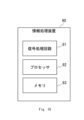
- FIG. 10 is a block diagram showing an example of the hardware configuration of an information processing device in which the processes of the above-described embodiments are executed.
- this information processing device 90 includes a signal processing circuit 91, a processor 92, and a memory 93.
- the signal processing circuit 91 is a circuit for processing signals according to the control of the processor 92.
- the signal processing circuit 91 may include a communication circuit that performs at least one of receiving a signal from a transmitting device and transmitting a signal to a receiving device.
- the processor 92 is connected to the memory 93, and performs the processing of the device described in the above embodiment by reading and executing a computer program from the memory 93.
- a CPU Central Processing Unit
- MPU Micro Processing Unit
- FPGA Field-Programmable Gate Array
- DSP Demand-Side Platform
- ASIC Application Specific Integrated Circuit
- the memory 93 is composed of a volatile memory, a non-volatile memory, or a combination of both.
- the memory 93 is not limited to one, and multiple memories may be provided.
- the volatile memory may be, for example, a RAM (Random Access Memory) such as a DRAM (Dynamic Random Access Memory) or an SRAM (Static Random Access Memory).
- the non-volatile memory may be, for example, a ROM (Read Only Memory) such as a PROM (Programmable Random Only Memory) or an EPROM (Erasable Programmable Read Only Memory), a flash memory, or an SSD (Solid State Drive).
- the memory 93 is used to store one or more instructions.
- the one or more instructions are stored in the memory 93 as a program.
- the processor 92 can read these programs from the memory 93 and execute them to perform the processing described in the above embodiment.
- the memory 93 may include memory built into the processor 92 in addition to memory provided outside the processor 92.
- the memory 93 may also include storage located away from the processors that make up the processor 92.
- the processor 92 can access the memory 93 via an I/O (Input/Output) interface.
- the one or more processors in each device in the above-mentioned embodiments execute one or more programs including a set of instructions for causing a computer to execute the algorithms explained using the drawings. This process realizes the information processing described in each embodiment.
- the program includes instructions or software code that, when loaded into a computer, causes the computer to perform one or more functions described in the embodiments.
- the program may be stored on a non-transitory computer-readable medium or tangible storage medium.
- computer-readable medium or tangible storage medium includes random-access memory (RAM), read-only memory (ROM), flash memory, solid-state drive (SSD) or other memory technology, CD-ROM, digital versatile disk (DVD), Blu-ray® disk or other optical disk storage, magnetic cassette, magnetic tape, magnetic disk storage or other magnetic storage device.
- the program may be transmitted on a transitory computer-readable medium or communication medium.
- transitory computer-readable medium or communication medium includes electrical, optical, acoustic, or other forms of propagated signals.
- (Appendix 1) a data compression unit for generating compressed data by reducing the dimensions of input data; a compactor for mapping at least a portion of the compressed data onto a compact manifold; a reconstruction unit that generates reconstructed data in which the input data is reconstructed, using the compressed data including data mapped onto the compact manifold.
- (Appendix 2) 2. The data processing device according to claim 1, further comprising: a determination unit that determines an abnormality in the input data by comparing the input data with the reconstructed data.
- the determination unit calculates a difference between a pixel value of a predetermined pixel in the image of the input data and a pixel value of a pixel in the image of the reconstructed data corresponding to the predetermined pixel, compares a sum value obtained by adding up the difference for each pixel in the entire or partial area of the image of the input data with a predetermined threshold value, and determines that the image of the input data has an abnormality when the sum value is equal to or greater than the predetermined threshold value.
- a data processing device as claimed in claim 2. (Appendix 4) The data processing device according to claim 2 or 3, further comprising: a notification unit that executes notification depending on whether or not there is an abnormality in the input data.
- the compaction unit maps a portion of the compressed data onto the compact manifold. 5.
- a data processing device according to any one of claims 1 to 4.
- the compactification unit uses a manifold homeomorphic to a circle as the compact manifold; 6.
- a data processing device according to any one of claims 1 to 5.
- the compactification unit uses a manifold homeomorphic to a closed disk as the compact manifold; 6.
- (Appendix 8) Generate compressed data by reducing the dimensionality of the input data; Mapping at least a portion of the compressed data onto a compact manifold; generating reconstructed data in which the input data is reconstructed using the compressed data including the data mapped onto the compact manifold; A computer implemented method of processing data. (Appendix 9) Generate compressed data by reducing the dimensionality of the input data; Mapping at least a portion of the compressed data onto a compact manifold; generating reconstructed data in which the input data is reconstructed using the compressed data including the data mapped onto the compact manifold; A program that causes a computer to do something.
- Data processing device 11 Data compression unit 12 Compaction unit 13 Reconstruction unit 20 Abnormality determination device 21 Preprocessing unit 22 Data compression unit 23 Compaction unit 24 Reconstruction unit 25 Abnormality determination unit
Landscapes
- Engineering & Computer Science (AREA)
- Theoretical Computer Science (AREA)
- Physics & Mathematics (AREA)
- General Physics & Mathematics (AREA)
- Evolutionary Computation (AREA)
- Computing Systems (AREA)
- Health & Medical Sciences (AREA)
- Computer Vision & Pattern Recognition (AREA)
- Artificial Intelligence (AREA)
- Software Systems (AREA)
- General Health & Medical Sciences (AREA)
- Biomedical Technology (AREA)
- Molecular Biology (AREA)
- General Engineering & Computer Science (AREA)
- Data Mining & Analysis (AREA)
- Mathematical Physics (AREA)
- Computational Linguistics (AREA)
- Biophysics (AREA)
- Life Sciences & Earth Sciences (AREA)
- Databases & Information Systems (AREA)
- Medical Informatics (AREA)
- Multimedia (AREA)
- Image Processing (AREA)
Priority Applications (1)
| Application Number | Priority Date | Filing Date | Title |
|---|---|---|---|
| JP2025503694A JPWO2024181037A1 (https=) | 2023-03-01 | 2024-02-05 |
Applications Claiming Priority (2)
| Application Number | Priority Date | Filing Date | Title |
|---|---|---|---|
| JP2023031025 | 2023-03-01 | ||
| JP2023-031025 | 2023-03-01 |
Publications (1)
| Publication Number | Publication Date |
|---|---|
| WO2024181037A1 true WO2024181037A1 (ja) | 2024-09-06 |
Family
ID=92590407
Family Applications (1)
| Application Number | Title | Priority Date | Filing Date |
|---|---|---|---|
| PCT/JP2024/003609 Ceased WO2024181037A1 (ja) | 2023-03-01 | 2024-02-05 | データ処理装置、データ処理方法及びプログラム |
Country Status (2)
| Country | Link |
|---|---|
| JP (1) | JPWO2024181037A1 (https=) |
| WO (1) | WO2024181037A1 (https=) |
Citations (4)
| Publication number | Priority date | Publication date | Assignee | Title |
|---|---|---|---|---|
| JP2018049355A (ja) * | 2016-09-20 | 2018-03-29 | 株式会社東芝 | 異常検知装置、学習装置、異常検知方法、学習方法、異常検知プログラム、および学習プログラム |
| JP2020013449A (ja) * | 2018-07-20 | 2020-01-23 | 日本電信電話株式会社 | 異常検知装置、異常検知方法、およびプログラム |
| JP2021140739A (ja) * | 2020-02-28 | 2021-09-16 | 株式会社Pros Cons | プログラム、学習済みモデルの生成方法、情報処理方法及び情報処理装置 |
| JP2022037623A (ja) * | 2020-08-25 | 2022-03-09 | 株式会社Ye Digital | 異常検知方法、異常検知装置および異常検知プログラム |
-
2024
- 2024-02-05 WO PCT/JP2024/003609 patent/WO2024181037A1/ja not_active Ceased
- 2024-02-05 JP JP2025503694A patent/JPWO2024181037A1/ja active Pending
Patent Citations (4)
| Publication number | Priority date | Publication date | Assignee | Title |
|---|---|---|---|---|
| JP2018049355A (ja) * | 2016-09-20 | 2018-03-29 | 株式会社東芝 | 異常検知装置、学習装置、異常検知方法、学習方法、異常検知プログラム、および学習プログラム |
| JP2020013449A (ja) * | 2018-07-20 | 2020-01-23 | 日本電信電話株式会社 | 異常検知装置、異常検知方法、およびプログラム |
| JP2021140739A (ja) * | 2020-02-28 | 2021-09-16 | 株式会社Pros Cons | プログラム、学習済みモデルの生成方法、情報処理方法及び情報処理装置 |
| JP2022037623A (ja) * | 2020-08-25 | 2022-03-09 | 株式会社Ye Digital | 異常検知方法、異常検知装置および異常検知プログラム |
Also Published As
| Publication number | Publication date |
|---|---|
| JPWO2024181037A1 (https=) | 2024-09-06 |
Similar Documents
| Publication | Publication Date | Title |
|---|---|---|
| US12293502B2 (en) | Image defect detection method, electronic device using the same | |
| TWI638157B (zh) | Inspection device and inspection method | |
| CN112329702B (zh) | 一种快速人脸密度预测和人脸检测方法、装置、电子设备及存储介质 | |
| US10679103B2 (en) | Information processing apparatus and processing method for image data | |
| CN112598579A (zh) | 面向监控场景的图像超分辨率方法、装置及存储介质 | |
| WO2023035425A1 (zh) | 自编码器训练方法及组件,异常图像检测方法及组件 | |
| CN114898273B (zh) | 一种视频监控异常检测方法、装置及设备 | |
| CN112487365A (zh) | 信息隐写方法及信息检测方法及装置 | |
| CN114821414A (zh) | 一种基于改进yolov5的烟火检测方法、系统及电子设备 | |
| CN111259919B (zh) | 一种视频分类方法、装置及设备、存储介质 | |
| CN118583888B (zh) | 印制电路板嵌铜质量分析方法及系统 | |
| JP2022184761A (ja) | 入力データにおける異常を検知するための概念 | |
| US20210099772A1 (en) | System and method for verification of video integrity based on blockchain | |
| CN112802076A (zh) | 反射图像生成模型及反射去除模型的训练方法 | |
| US20230386252A1 (en) | Low-resolution face recognition device and low-resolution face recognizer learning device and method | |
| WO2025118756A1 (zh) | 图像处理方法、装置、设备、存储介质及计算机程序产品 | |
| KR20180064279A (ko) | 영상 데이터의 무결성 검증 장치 및 방법 | |
| WO2024181037A1 (ja) | データ処理装置、データ処理方法及びプログラム | |
| KR20230065125A (ko) | 기계 학습 모델의 트레이닝 방법 및 전자 장치 | |
| JP2004054442A (ja) | 顔検出装置、顔検出方法および顔検出プログラム | |
| TW202329035A (zh) | 用於再訓練預訓練物件分類器之系統、方法及電腦程式 | |
| CN114677584A (zh) | 一种双注意力机制配电站水浸识别方法及系统 | |
| CN113992978A (zh) | 视频防御系统的评估方法、装置、存储介质及处理器 | |
| CN112036380A (zh) | 盗窃事件检测方法和装置 | |
| CN118397274B (zh) | 基于可变形卷积的图像分割方法 |
Legal Events
| Date | Code | Title | Description |
|---|---|---|---|
| 121 | Ep: the epo has been informed by wipo that ep was designated in this application |
Ref document number: 24763521 Country of ref document: EP Kind code of ref document: A1 |
|
| ENP | Entry into the national phase |
Ref document number: 2025503694 Country of ref document: JP Kind code of ref document: A |
|
| WWE | Wipo information: entry into national phase |
Ref document number: 2025503694 Country of ref document: JP |
|
| NENP | Non-entry into the national phase |
Ref country code: DE |
|
| 122 | Ep: pct application non-entry in european phase |
Ref document number: 24763521 Country of ref document: EP Kind code of ref document: A1 |