WO2024181018A1 - コンピュータプログラム、情報処理方法、学習モデルの生成方法及び情報処理装置 - Google Patents
コンピュータプログラム、情報処理方法、学習モデルの生成方法及び情報処理装置 Download PDFInfo
- Publication number
- WO2024181018A1 WO2024181018A1 PCT/JP2024/003405 JP2024003405W WO2024181018A1 WO 2024181018 A1 WO2024181018 A1 WO 2024181018A1 JP 2024003405 W JP2024003405 W JP 2024003405W WO 2024181018 A1 WO2024181018 A1 WO 2024181018A1
- Authority
- WO
- WIPO (PCT)
- Prior art keywords
- information
- administration
- subject
- learning model
- blood circulation
- Prior art date
- Legal status (The legal status is an assumption and is not a legal conclusion. Google has not performed a legal analysis and makes no representation as to the accuracy of the status listed.)
- Ceased
Links
Images







Classifications
-
- G—PHYSICS
- G16—INFORMATION AND COMMUNICATION TECHNOLOGY [ICT] SPECIALLY ADAPTED FOR SPECIFIC APPLICATION FIELDS
- G16H—HEALTHCARE INFORMATICS, i.e. INFORMATION AND COMMUNICATION TECHNOLOGY [ICT] SPECIALLY ADAPTED FOR THE HANDLING OR PROCESSING OF MEDICAL OR HEALTHCARE DATA
- G16H10/00—ICT specially adapted for the handling or processing of patient-related medical or healthcare data
- G16H10/40—ICT specially adapted for the handling or processing of patient-related medical or healthcare data for data related to laboratory analysis, e.g. patient specimen analysis
-
- A—HUMAN NECESSITIES
- A61—MEDICAL OR VETERINARY SCIENCE; HYGIENE
- A61M—DEVICES FOR INTRODUCING MEDIA INTO, OR ONTO, THE BODY; DEVICES FOR TRANSDUCING BODY MEDIA OR FOR TAKING MEDIA FROM THE BODY; DEVICES FOR PRODUCING OR ENDING SLEEP OR STUPOR
- A61M1/00—Suction or pumping devices for medical purposes; Devices for carrying-off, for treatment of, or for carrying-over, body-liquids; Drainage systems
- A61M1/36—Other treatment of blood in a by-pass of the natural circulatory system, e.g. temperature adaptation, irradiation ; Extra-corporeal blood circuits
- A61M1/3672—Means preventing coagulation
-
- A—HUMAN NECESSITIES
- A61—MEDICAL OR VETERINARY SCIENCE; HYGIENE
- A61M—DEVICES FOR INTRODUCING MEDIA INTO, OR ONTO, THE BODY; DEVICES FOR TRANSDUCING BODY MEDIA OR FOR TAKING MEDIA FROM THE BODY; DEVICES FOR PRODUCING OR ENDING SLEEP OR STUPOR
- A61M5/00—Devices for bringing media into the body in a subcutaneous, intra-vascular or intramuscular way; Accessories therefor, e.g. filling or cleaning devices, arm-rests
- A61M5/14—Infusion devices, e.g. infusing by gravity; Blood infusion; Accessories therefor
- A61M5/168—Means for controlling media flow to the body or for metering media to the body, e.g. drip meters, counters ; Monitoring media flow to the body
- A61M5/172—Means for controlling media flow to the body or for metering media to the body, e.g. drip meters, counters ; Monitoring media flow to the body electrical or electronic
- A61M5/1723—Means for controlling media flow to the body or for metering media to the body, e.g. drip meters, counters ; Monitoring media flow to the body electrical or electronic using feedback of body parameters, e.g. blood-sugar, pressure
-
- G—PHYSICS
- G16—INFORMATION AND COMMUNICATION TECHNOLOGY [ICT] SPECIALLY ADAPTED FOR SPECIFIC APPLICATION FIELDS
- G16H—HEALTHCARE INFORMATICS, i.e. INFORMATION AND COMMUNICATION TECHNOLOGY [ICT] SPECIALLY ADAPTED FOR THE HANDLING OR PROCESSING OF MEDICAL OR HEALTHCARE DATA
- G16H20/00—ICT specially adapted for therapies or health-improving plans, e.g. for handling prescriptions, for steering therapy or for monitoring patient compliance
- G16H20/10—ICT specially adapted for therapies or health-improving plans, e.g. for handling prescriptions, for steering therapy or for monitoring patient compliance relating to drugs or medications, e.g. for ensuring correct administration to patients
-
- G—PHYSICS
- G16—INFORMATION AND COMMUNICATION TECHNOLOGY [ICT] SPECIALLY ADAPTED FOR SPECIFIC APPLICATION FIELDS
- G16H—HEALTHCARE INFORMATICS, i.e. INFORMATION AND COMMUNICATION TECHNOLOGY [ICT] SPECIALLY ADAPTED FOR THE HANDLING OR PROCESSING OF MEDICAL OR HEALTHCARE DATA
- G16H20/00—ICT specially adapted for therapies or health-improving plans, e.g. for handling prescriptions, for steering therapy or for monitoring patient compliance
- G16H20/10—ICT specially adapted for therapies or health-improving plans, e.g. for handling prescriptions, for steering therapy or for monitoring patient compliance relating to drugs or medications, e.g. for ensuring correct administration to patients
- G16H20/17—ICT specially adapted for therapies or health-improving plans, e.g. for handling prescriptions, for steering therapy or for monitoring patient compliance relating to drugs or medications, e.g. for ensuring correct administration to patients delivered via infusion or injection
-
- G—PHYSICS
- G16—INFORMATION AND COMMUNICATION TECHNOLOGY [ICT] SPECIALLY ADAPTED FOR SPECIFIC APPLICATION FIELDS
- G16H—HEALTHCARE INFORMATICS, i.e. INFORMATION AND COMMUNICATION TECHNOLOGY [ICT] SPECIALLY ADAPTED FOR THE HANDLING OR PROCESSING OF MEDICAL OR HEALTHCARE DATA
- G16H20/00—ICT specially adapted for therapies or health-improving plans, e.g. for handling prescriptions, for steering therapy or for monitoring patient compliance
- G16H20/40—ICT specially adapted for therapies or health-improving plans, e.g. for handling prescriptions, for steering therapy or for monitoring patient compliance relating to mechanical, radiation or invasive therapies, e.g. surgery, laser therapy, dialysis or acupuncture
-
- G—PHYSICS
- G16—INFORMATION AND COMMUNICATION TECHNOLOGY [ICT] SPECIALLY ADAPTED FOR SPECIFIC APPLICATION FIELDS
- G16H—HEALTHCARE INFORMATICS, i.e. INFORMATION AND COMMUNICATION TECHNOLOGY [ICT] SPECIALLY ADAPTED FOR THE HANDLING OR PROCESSING OF MEDICAL OR HEALTHCARE DATA
- G16H40/00—ICT specially adapted for the management or administration of healthcare resources or facilities; ICT specially adapted for the management or operation of medical equipment or devices
- G16H40/60—ICT specially adapted for the management or administration of healthcare resources or facilities; ICT specially adapted for the management or operation of medical equipment or devices for the operation of medical equipment or devices
- G16H40/63—ICT specially adapted for the management or administration of healthcare resources or facilities; ICT specially adapted for the management or operation of medical equipment or devices for the operation of medical equipment or devices for local operation
-
- G—PHYSICS
- G16—INFORMATION AND COMMUNICATION TECHNOLOGY [ICT] SPECIALLY ADAPTED FOR SPECIFIC APPLICATION FIELDS
- G16H—HEALTHCARE INFORMATICS, i.e. INFORMATION AND COMMUNICATION TECHNOLOGY [ICT] SPECIALLY ADAPTED FOR THE HANDLING OR PROCESSING OF MEDICAL OR HEALTHCARE DATA
- G16H50/00—ICT specially adapted for medical diagnosis, medical simulation or medical data mining; ICT specially adapted for detecting, monitoring or modelling epidemics or pandemics
- G16H50/20—ICT specially adapted for medical diagnosis, medical simulation or medical data mining; ICT specially adapted for detecting, monitoring or modelling epidemics or pandemics for computer-aided diagnosis, e.g. based on medical expert systems
-
- A—HUMAN NECESSITIES
- A61—MEDICAL OR VETERINARY SCIENCE; HYGIENE
- A61M—DEVICES FOR INTRODUCING MEDIA INTO, OR ONTO, THE BODY; DEVICES FOR TRANSDUCING BODY MEDIA OR FOR TAKING MEDIA FROM THE BODY; DEVICES FOR PRODUCING OR ENDING SLEEP OR STUPOR
- A61M2205/00—General characteristics of the apparatus
- A61M2205/33—Controlling, regulating or measuring
- A61M2205/3331—Pressure; Flow
- A61M2205/3334—Measuring or controlling the flow rate
-
- A—HUMAN NECESSITIES
- A61—MEDICAL OR VETERINARY SCIENCE; HYGIENE
- A61M—DEVICES FOR INTRODUCING MEDIA INTO, OR ONTO, THE BODY; DEVICES FOR TRANSDUCING BODY MEDIA OR FOR TAKING MEDIA FROM THE BODY; DEVICES FOR PRODUCING OR ENDING SLEEP OR STUPOR
- A61M2205/00—General characteristics of the apparatus
- A61M2205/33—Controlling, regulating or measuring
- A61M2205/3365—Rotational speed
-
- A—HUMAN NECESSITIES
- A61—MEDICAL OR VETERINARY SCIENCE; HYGIENE
- A61M—DEVICES FOR INTRODUCING MEDIA INTO, OR ONTO, THE BODY; DEVICES FOR TRANSDUCING BODY MEDIA OR FOR TAKING MEDIA FROM THE BODY; DEVICES FOR PRODUCING OR ENDING SLEEP OR STUPOR
- A61M2205/00—General characteristics of the apparatus
- A61M2205/50—General characteristics of the apparatus with microprocessors or computers
- A61M2205/502—User interfaces, e.g. screens or keyboards
-
- A—HUMAN NECESSITIES
- A61—MEDICAL OR VETERINARY SCIENCE; HYGIENE
- A61M—DEVICES FOR INTRODUCING MEDIA INTO, OR ONTO, THE BODY; DEVICES FOR TRANSDUCING BODY MEDIA OR FOR TAKING MEDIA FROM THE BODY; DEVICES FOR PRODUCING OR ENDING SLEEP OR STUPOR
- A61M2230/00—Measuring parameters of the user
- A61M2230/20—Blood composition characteristics
Definitions
- the present invention relates to a computer program, an information processing method, a method for generating a learning model, and an information processing device for predicting test values related to the blood of a subject receiving treatment using medicines and an extracorporeal blood circulation device.
- Patent Document 1 proposes a blood circulation system that includes a blood circulation path connected to the patient and a centrifugal pump that circulates blood between the human body and the heart-lung machine, and adjusts the blood pressure by controlling the increase or decrease in the rotation speed of the centrifugal pump based on the pressure measurement input from a blood pressure measurement means.
- anticoagulants such as heparin are used to prevent blood clots in patients.
- the dosage of anticoagulants can be determined based on the patient's weight and the doctor's experience. Overdosing on anticoagulants increases the risk of developing bleeding complications, while a lack of anticoagulants increases the risk of developing complications due to blood clots.
- an extracorporeal blood circulation device known as ECMO (Extracorporeal Membrane Oxygenation)
- ECMO Extracorporeal blood circulation device
- the present invention has been made in consideration of these circumstances, and its purpose is to provide a computer program, an information processing method, a method for generating a learning model, and an information processing device that are expected to realize predictions of test values related to a subject's blood.
- a computer program causes a computer to execute a process of acquiring administration information regarding the administration of a pharmaceutical product to a subject, acquiring device operation information including the amount of operation of an extracorporeal blood circulation device attached to the subject or the range of said amount of operation, and predicting the test value of the subject within the range or the test value of the subject according to the amount of operation included in the device operation information, based on a learning model that has been machine-learned to accept the administration information and the amount of operation of the extracorporeal blood circulation device as input and output a predicted value of a test value related to the subject's blood a predetermined time after the administration of the pharmaceutical product, and the acquired administration information and device operation information.
- test values related to a subject's blood it is expected that it will be possible to predict test values related to a subject's blood.
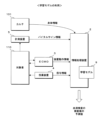
- FIG. 1 is a schematic diagram for explaining an overview of an information processing system according to an embodiment of the present invention
- 1 is a schematic diagram for explaining an overview of an information processing system according to an embodiment of the present invention
- FIG. 2 is a schematic diagram showing an example of a configuration of a learning model.
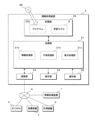
- 1 is a block diagram showing an example of a configuration of an information processing device according to an embodiment of the present invention
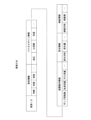
- FIG. 2 is a schematic diagram showing an example of the configuration of a patient DB
- 1 is a block diagram showing an example of a configuration of an information processing device according to an embodiment of the present invention
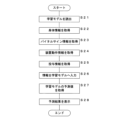
- 11 is a flowchart showing an example of a procedure for a learning model generation process performed by the information processing device according to the present embodiment.
- 10 is a flowchart showing an example of a procedure for predicting a test value performed by an information processing device according to the present embodiment.
- 10 is a flowchart showing an example of a procedure when the information processing device according to the present embodiment performs a control process based on an inspection result.
- 13 is a flowchart showing another example of the procedure of the test value prediction process performed by the information processing device according to the present embodiment.
- 10 is a schematic diagram showing an example of a prediction result displayed by the information processing device according to the present embodiment. FIG. This is an enlarged view of the graph in FIG.
- the information processing system is a system that outputs a predicted value of a blood coagulation activity index such as ACT (Activated Clotting Time) or APTT (Activated Partial Thromboplastin Time) after a predetermined time such as one hour or three hours has elapsed since the administration of an anticoagulant in an ICU or the like for a subject who is fitted with ECMO.
- ACT Activated Clotting Time
- APTT Activated Partial Thromboplastin Time
- the information processing system uses a learning model based on machine learning, so-called AI (Artificial Intelligence), to predict the test value.
- AI Artificial Intelligence
- FIG. 1 and 2 are schematic diagrams for explaining the overview of the information processing system according to this embodiment.
- FIG. 1 shows an overview of the information processing system at the stage of generating a learning model 9 that predicts test values.
- FIG. 2 shows an overview of the information processing system at the stage of predicting test values using the generated learning model 9.
- the information processing system according to this embodiment is configured with information processing devices 1 and 2, ECMO 3, medication device 4, and measurement device 5. Note that in the information processing system according to this embodiment, the information processing device that generates the learning model 9 at the stage of generating the learning model is referred to as information processing device 1, and the information processing device that predicts test values at the stage of using the learning model is referred to as information processing device 2, but the information processing device 1 and the information processing device 2 may be the same device.
- a patient 100 undergoing treatment in an ICU or the like is fitted with an ECMO 3 to perform extracorporeal blood circulation, and an anticoagulant such as heparin is administered by a drug administration device 4.
- the ECMO 3 is a device that extracts blood from the patient 100, gives oxygen to it, and sends the blood back into the patient 100's body.
- the drug administration device 4 is a device that automatically administers drugs to the patient 100 according to the dosage and administration period set by a user such as a doctor or nurse.
- the patient 100 is also fitted with a measuring device 5 that measures vital sign information such as blood pressure and heart rate, and the measurement results of the measuring device 5 can be monitored in real time by a doctor or nurse, for example.
- a blood test is also performed on the patient 100 who has been administered an anticoagulant at a predetermined period, such as once per hour or once every three hours, and test values such as ACT or APTT are obtained.
- vital sign information is information about signs that indicate that a person is alive, and includes information about blood pressure, pulse, body temperature, and respiratory rate.
- the information processing device 1 acquires these various pieces of information about the patient 100 and stores and accumulates them in a patient DB (database) 7.
- the information processing device 1 acquires at least device operation information about the operation of the ECMO 3, administration information about the anticoagulant administered to the patient 100, physical information about the patient 100 recorded in a chart 101 or the like prepared by a doctor or the like, vital sign information about the patient 100 measured by the measuring device 5, and test information including test values from blood tests of the patient 100, and stores this acquired information in the patient DB 7, for example, in association with the identification information of the patient 100.
- the information processing device 1 acquires information on the operation of the ECMO 3, such as the blood flow rate in the extracorporeal blood circulation circuit of the ECMO 3 or the pump rotation speed, and stores this in the patient DB 7. Furthermore, the device operation information acquired and stored by the information processing device 1 may include information on the operating range of the ECMO 3, such as the upper and lower limit values of the setting values that can be set as the rotation speed of the pump of the ECMO 3. The information processing device 1 may acquire device operation information from the ECMO 3, for example, by communicating with the ECMO 3 via a network, or may accept input of setting values from a user, such as a doctor or nurse who has set the operation of the ECMO 3, and acquire this as device operation information.
- the information processing device 1 also acquires information such as the dosage and administration cycle of heparin as administration information of an anticoagulant for the patient 100, and stores the information in the patient DB 7.
- the information processing device 1 can acquire administration information of an anticoagulant from the administration device 4 by communicating with the administration device 4 via a network.
- the information processing device 1 may also accept input of setting values from a user such as a doctor or nurse who has set the operation of the administration device 4, and acquire this as administration information.
- administration of an anticoagulant to a patient may be performed by a user such as a doctor or nurse via drip or injection, rather than by the administration device 4, in which case information such as the dosage may be accepted as input from the user who performed the administration, and acquired as administration information.
- the information processing device 1 also acquires information such as the weight, height, and age of the patient 100 as physical information of the patient 100, and stores it in the patient DB 7.
- information such as the weight, height, and age of the patient 100 as physical information of the patient 100
- the information processing device 1 may also accept input of information such as the weight and age of the patient 100 from a user such as a doctor or nurse in charge of the patient 100, and acquire this as physical information.
- the information processing device 1 acquires test values such as ACT or APTT obtained as a result of a blood test of the patient 100 as test information of the patient 100, and stores them in the patient DB 7.
- the blood test of the patient 100 is performed separately by a user such as a doctor, nurse, or laboratory technician.
- the information processing device 1 accepts input of test information including test values of the blood test from these users, and stores it in the patient DB 7.
- the information processing device 1 also acquires vital sign information of the patient 100, such as blood pressure or heart rate, and stores it in the patient DB 7.
- the information processing device 1 acquires the vital sign information of the patient 100, which is continuously measured by the measuring device 5, by means of communication or the like.
- a doctor or nurse may measure the blood pressure or heart rate of the patient 100 and input the measurement results to the information processing device 1.
- the vital sign information is used for processes such as generating the learning model 9 and predicting test values using the learning model 9, but this is not limited to this, and the vital sign information does not have to be used for these processes.
- the information processing device 1 acquires the above-mentioned device operation information, administration information, physical information, test information, and vital sign information for multiple (as many as possible) patients 100, stores them in the patient DB 7, and performs machine learning processing to generate a learning model 9 using the stored information.
- FIG. 3 is a schematic diagram showing an example of the configuration of the learning model 9.
- the learning model 9 according to this embodiment accepts as input the subject's physical information, the subject's vital sign information, device operation information related to the operation of the ECMO 3 attached to the subject, and administration information related to the administration of an anticoagulant to the subject, and outputs a predicted value of the test value of the subject's blood test after a predetermined time has passed.
- the information processing device 1 uses the physical information, vital sign information, device operation information, and administration information stored in the patient DB 7 as input data, generates learning data (teacher data) in which the test value after a predetermined time has passed since the administration of the anticoagulant is associated as output data (correct answer data), and performs so-called supervised machine learning processing using the generated learning data, thereby generating the learning model 9.
- learning data teacher data
- supervised machine learning processing using the generated learning data, thereby generating the learning model 9.
- various types of learning models may be adopted, such as a deep neural network (DNN), a support vector machine (SVM), logistic regression, or a decision tree. Note that the supervised machine learning processing for these learning models is an existing technology, and therefore a detailed explanation is omitted.
- the information processing device 1 provides information about the learning model 9 generated by machine learning processing, such as information indicating the structure of the learning model 9 and information such as the values of internal parameters determined by machine learning, to the information processing device 2 that performs processing using this learning model 9.
- the information processing device 1 may provide the information about the learning model 9 to the information processing device 2, for example, by communication via a network.
- the information about the learning model 9 may also be transferred manually from the information processing device 1 to the information processing device 2, for example, via a recording medium, by an administrator of the information processing system according to this embodiment.
- the information processing device 1 that generated the learning model 9 may be configured to perform processing using this learning model 9, i.e., the information processing device 1 and the information processing device 2 may be the same device.
- FIG. 2 also shows an overview of the information processing system at the stage of predicting test values using the trained learning model 9.
- the information processing device 2 acquires and stores in advance information related to the learning model 9 generated by the information processing device 1 through machine learning, and can perform a test value prediction process using the learning model 9.
- the information processing device 2 acquires physical information, vital sign information, device operation information, and administration information related to the subject 110 to whom an anticoagulant is to be administered (or who has been administered), and inputs the acquired physical information, vital sign information, device operation information, and administration information into the learning model 9.
- the information processing device 2 acquires a predicted value of the test value after a predetermined time has elapsed since the administration of the anticoagulant output by the learning model 9, and displays the acquired predicted value on the display unit to present the predicted result of the test value to a user such as a doctor or nurse.
- the information processing device 2 may obtain this physical information, vital sign information, device operation information, and administration information, for example, by communicating with a device that manages this information, or may accept it based on input from a user, such as a doctor or nurse.
- the information processing device 2 may predict the test value not based on a single value such as the blood flow rate or pump speed related to the operation of the ECMO 3 as the device operation information of the ECMO 3, but may predict the upper and lower limits of the test value by changing the blood flow rate or pump speed in the ECMO 3 circuit within the operating range, for example, based on the operating range such as the upper and lower limits of the blood flow rate or pump speed related to the operation of the ECMO 3.
- the information processing device 2 can predict the range of the test results of the subject 110 after a predetermined time has passed since the administration of an anticoagulant, and the user can be expected to determine whether the settings for automatic operation of the ECMO 3 are appropriate based on whether this range is within an appropriate range.
- the information processing device 2 may predict a range of upper and lower limits of a test value based on an operating range such as the upper and lower limits of the anticoagulant dose by the medication device 4, rather than predicting a test value based on a single value such as the dose or administration cycle of the anticoagulant to the subject 110 as anticoagulant administration information.
- the information processing device 2 can predict the range of the test results of the subject 110 a predetermined time after the administration of the anticoagulant, and the user can be expected to determine whether the settings for the automatic operation of the medication device 4 are appropriate or whether the dose of the anticoagulant is appropriate based on whether this range is within an appropriate range.
- ⁇ Device Configuration> 4 is a block diagram showing an example of the configuration of the information processing device 1 according to the present embodiment.
- the information processing device 1 according to the present embodiment is a device that collects information such as physical information, device operation information, administration information, and examination information of a patient 100, and performs processing to generate a learning model 9 based on the collected information, and may be configured using a general-purpose computer such as a PC (personal computer) or a server computer.
- the information processing device 1 is configured to include a processing unit 11, a storage unit 12, a communication unit 13, a display unit 14, and an operation unit 15. Note that in this embodiment, the processing is described as being performed by one information processing device 1, but the processing of the information processing device 1 may be distributed among multiple devices.
- the processing unit 11 is configured using an arithmetic processing device such as a CPU (Central Processing Unit), an MPU (Micro-Processing Unit), a GPU (Graphics Processing Unit) or a quantum processor, a ROM (Read Only Memory), and a RAM (Random Access Memory).
- the processing unit 11 reads out and executes a program 12a stored in the memory unit 12 to perform various processes, such as acquiring and collecting physical information, vital sign information, device operation information, administration information, and test information related to the patient 100, and generating a learning model that predicts test values based on this information.
- the storage unit 12 is configured using a large-capacity storage device such as a hard disk.
- the storage unit 12 stores various programs executed by the processing unit 11 and various data necessary for the processing of the processing unit 11.
- the storage unit 12 stores the program 12a executed by the processing unit 11.
- the storage unit 12 also has a patient DB7 that stores and accumulates information such as physical information, vital sign information, device operation information, administration information, and examination information relating to multiple patients 100.
- the program (computer program, program product) 12a is provided in a form recorded on a recording medium 99 such as a memory card or an optical disk, and the information processing device 1 reads the program 12a from the recording medium 99 and stores it in the memory unit 12.
- the program 12a may be written to the memory unit 12, for example, during the manufacturing stage of the information processing device 1.
- the program 12a may be distributed by a remote server device or the like and acquired by the information processing device 1 through communication.
- the program 12a may be read from the recording medium 99 by a writing device and written to the memory unit 12 of the information processing device 1.
- the program 12a may be provided in a form distributed via a network, or may be provided in a form recorded on the recording medium 99.
- the patient DB7 of the memory unit 12 is a database that stores information such as physical information, device operation information, administration information, and examination information acquired regarding the patient 100, in association with identification information such as an ID uniquely assigned to the patient 100.
- FIG. 5 is a schematic diagram showing an example configuration of the patient DB7.
- the patient DB7 in this embodiment stores, in association with each other, for example, "patient ID,” "physical information,” “vital sign information,” “device operation information,” “administration information,” and “examination information.”
- the "patient ID” is identification information uniquely assigned to the patient 100, and may be information consisting of a combination of appropriate letters and numbers, or may be information such as the patient's name.
- the "physical information” may include, for example, information such as the "age,” “weight,” and “height” of the patient 100. This information about the patient 100 may be obtained, for example, from the electronic medical record of the patient 100 stored in a database of a medical institution, or may be obtained by accepting input from a user, such as a doctor or nurse in charge of the patient 100.
- the "vital sign information” may include, for example, information such as the "blood pressure,” “heart rate,” and "body temperature” of the patient 100. This information about the patient 100 is measured by the measuring device 5.
- the information processing device 1 may obtain this information by communicating with the measuring device 5, or may obtain this information by accepting input of the measurement results of the measuring device 5 from a user, such as a doctor or nurse.
- the "operating amount" of the extracorporeal blood circulation device refers to parameters that can be changed, adjusted, or set for the extracorporeal blood circulation device, and amounts related to the extracorporeal blood circulation device that change by changing such parameters.
- the "operating amount” of the extracorporeal blood circulation device may include the pump rotation speed of the extracorporeal blood circulation device, the blood flow rate in the circuit of the extracorporeal blood circulation device, and the "gas flow rate" of a mixed gas of oxygen and air, etc., in the device that performs gas exchange with the blood.
- the "device operation information" of the extracorporeal blood circulation device includes information regarding the amount of operation of the extracorporeal blood circulation device and the range of the amount of operation.
- the “device operation information” may include, for example, information such as the "pump rotation speed” related to the operation of the ECMO 3, the “blood flow rate” in the circuit of the ECMO 3, and the “gas flow rate” of a mixed gas of oxygen and air in the device that performs gas exchange with the blood, as well as an upper or lower limit value of the pump rotation speed of the ECMO 3.
- the information processing device 1 may obtain information such as the "pump rotation speed,” “blood flow rate,” and “gas flow rate” by obtaining an operation history, etc.
- the information processing device 1 may also accept input of information such as the "pump rotation speed,” “blood flow rate,” and “gas flow rate” from a user, such as a doctor or nurse, who has set up the operation of the ECMO 3, and store the information in the patient DB 7.
- the illustrated patient DB7 stores multiple pieces of information such as “pump rotation speed,” “blood flow rate,” and “gas flow rate” as “device operation information,” but this is not limited to this, and it is sufficient that the configuration stores at least one piece of information such as “pump rotation speed,” “blood flow rate,” and “gas flow rate.”
- the “administration information” may include information such as the "administration date and time” and "dosage” of the anticoagulant to the patient 100.
- the “administration date and time” is the date and time when the anticoagulant was administered to the patient 100, and the “dosage” is the amount of the anticoagulant administered at that time. If the patient 100 is administered multiple times, the “administration information” may store information for multiple times.
- the information processing device 1 may acquire information such as the "administration date and time” and the "dosage” by acquiring operation history, etc. from the administration device 4, for example, by communicating with the administration device 4 via a network.
- the information processing device 1 may also accept input of information such as the "administration date and time” and the "dosage” from a user who has set up the operation of the administration device 4, or a user who has administered an anticoagulant without using the administration device 4, and store the information in the patient DB 7.
- information such as the "administration date and time” and the "dosage” from a user who has set up the operation of the administration device 4, or a user who has administered an anticoagulant without using the administration device 4, and store the information in the patient DB 7.
- the illustrated patient DB 7 stores information on the "dosage” as "administration information", but is not limited thereto. Information such as the "administration period” or the “administration rate” may be stored together with the "dosage” or instead of the "dosage”.
- the “test information” may include, for example, information such as the "test date and time” and "test value” related to a blood test performed on the patient 100.
- the "test date and time” is the date and time when the blood test was performed on the patient 100
- the "test value” is a value such as ACT or APTT obtained as a result of the blood test. If multiple tests are performed on the patient 100, information related to the multiple tests may be stored in the "test information”.
- the information processing device 1 accepts input of this information such as the "test date and time” and "test value” from, for example, a user who performed the test, and stores it in the patient DB 7.
- the communication unit 13 of the information processing device 1 transmits and receives data between the information processing device 2, ECMO 3, medication device 4, measurement device 5, and other devices via a network N, such as a LAN (Local Area Network) or the Internet.
- a network N such as a LAN (Local Area Network) or the Internet.
- the communication unit 13 receives device operation information from the ECMO 3, administration information from the medication device 4, and vital sign information from the measurement device 5, and provides these received information to the processing unit 11.
- the communication unit 13 also transmits information provided by the processing unit 11, such as information related to a learning model 9 generated by machine learning, to the information processing device 2.
- the display unit 14 is configured using a liquid crystal display or the like, and displays various images, characters, etc. based on the processing of the processing unit 11.
- the display unit 14 can display, for example, various types of information stored in the patient DB 7, and information related to the generated learning model 9.
- the operation unit 15 accepts user operations and notifies the processing unit 11 of the accepted operations.
- the operation unit 15 accepts user operations through an input device such as a mechanical button or a touch panel provided on the surface of the display unit 14.
- the operation unit 15 may also be an input device such as a mouse and a keyboard, and these input devices may be configured to be removable from the information processing device 1.
- the storage unit 12 may be an external storage device connected to the information processing device 1.
- the information processing device 1 may be a multi-computer including multiple computers, or may be a virtual machine virtually constructed by software.
- the information processing device 1 is not limited to the above configuration, and may not include, for example, the display unit 14 and the operation unit 15.
- the processing unit 11 reads out and executes the program 12a stored in the memory unit 12, whereby the information acquisition unit 11a, learning data generation unit 11b, learning model generation unit 11c, display processing unit 11d, etc. are realized in the processing unit 11 as software functional units.
- the information acquisition unit 11a performs processing to acquire physical information, vital sign information, device operation information, administration information, and examination information related to the patient 100.
- the information acquisition unit 11a extracts and acquires information such as age, weight, and height from the electronic medical record of the patient 100 stored in the database of the medical institution, for example, and stores this information in the patient DB 7 as physical information.
- the information acquisition unit 11a acquires measurement results such as the blood pressure, heart rate, and body temperature of the patient 100, for example, by communicating with the measurement device 5 or by accepting information input from the user, and stores this information in the patient DB 7 as vital sign information.
- the information acquisition unit 11a acquires information related to the operation of the ECMO 3 attached to the patient 100, such as pump rotation speed, blood flow rate, or gas flow rate, for example, by communicating with the ECMO 3 or by accepting information input from the user, and stores this information in the patient DB 7 as device operation information.
- the information acquisition unit 11a acquires information such as the dose and administration date and time of the anticoagulant administered to the patient 100, for example, by communicating with the medication device 4 or by accepting input of information from a user, and stores this acquired information in the patient DB 7 as administration information.
- the information acquisition unit 11a also acquires information such as the test values and test date and time of the blood test of the patient 100, for example, by accepting input of information from a user who performed a blood test on the patient 100, and stores this acquired information in the patient DB 7.
- the learning data generating unit 11b performs a process of generating learning data for machine learning to generate a learning model 9 based on the physical information, vital sign information, device operation information, administration information, and examination information stored in the patient DB7.
- the learning data generating unit 11b can, for example, associate the patient 100's weight included in the physical information, the blood pressure included in the vital sign information, the pump rotation speed of the ECMO 3 included in the device operation information, and the dose of anticoagulant included in the administration information with the test value included in the examination information, and use that as learning data.
- the learning data generating unit 11b acquires the test value after a predetermined time has elapsed since the administration of the anticoagulant to the patient 100 from the patient DB7 based on the administration date and time included in the administration information and the examination date and time included in the examination information, and includes it in the learning data.
- the learning data generating unit 11b repeats the same process for multiple patients stored in the patient DB7 to generate multiple learning data.
- the learning data generating unit 11b stores the generated learning data in the storage unit 12.
- the learning model generating unit 11c performs a process of generating the learning model 9 by performing machine learning using the multiple learning data generated by the learning data generating unit 11b.
- the learning model 9 according to the present embodiment is configured to receive physical information, vital sign information, device operation information, and administration information as input, and output a predicted value of the test value after a predetermined time has passed.
- the learning data generated by the learning data generating unit 11b is data in which physical information, vital sign information, device operation information, administration information, and test information are associated with each other, and among these pieces of information, the physical information, vital sign information, device operation information, and administration information correspond to the input data to the learning model 9, and the test information corresponds to the correct value of the output data of the learning model 9.
- the learning model generating unit 11c performs so-called supervised machine learning processing using the learning data, and generates the learning model 9 by determining the internal parameters of the learning model 9.
- the learning model generating unit 11c may store information related to the generated learning model in the storage unit 12 and transmit it to the information processing device 2 by communication via the network N.
- the learning model 9 generated by the learning model generation unit 11c is a regression model that outputs a predicted value of the test information, but is not limited to this, and the learning model generation unit 11c may generate a learning model 9 of a classification model.
- the classification model learning model 9 accepts physical information, vital sign information, device operation information, and administration information as input, and classifies test values after a predetermined time has passed, for example, into two classes, correct or incorrect.
- the learning model may also classify test values into other classes, such as under-in, over-in, and over.
- the learning data generation unit 11b determines which class the test value falls into based on the test information stored in the patient DB7, and generates learning data that associates input data such as physical information, vital sign information, device operation information, and administration information with the corresponding correct class.
- the display processing unit 11d performs processing to display various characters, images, and the like on the display unit 14.
- the display processing unit 11d displays a screen for inputting this information on the display unit 14.
- the display processing unit 11d may display information such as evaluation values or graphs, such as the accuracy rate or matching rate, regarding the learning model 9 generated by the learning model generation unit 11c.
- FIG. 6 is a block diagram showing an example of the configuration of an information processing device 2 according to this embodiment.
- the information processing device 2 according to this embodiment is a device used by users such as doctors or nurses in ICT at medical institutions, and may be configured using a general-purpose computer such as a PC, smartphone, or tablet terminal device.
- the information processing device 2 is configured to include a processing unit 21, a storage unit 22, a communication unit 23, a display unit 24, and an operation unit 25.
- the processing unit 21 is configured using an arithmetic processing device such as a CPU, MPU, GPU, or quantum processor, a ROM, and a RAM.
- the processing unit 21 reads out and executes a program 22a stored in the memory unit 22 to perform various processes such as acquiring physical information, vital sign information, device operation information, and administration information regarding the subject 110, and predicting test values of a blood test of the subject 110 using a learned learning model 9 based on the acquired information.
- the memory unit 22 is configured using a large-capacity storage device such as a hard disk.
- the memory unit 22 stores the program 22a executed by the processing unit 21. In this embodiment, the memory unit 22 also stores information regarding the learning model 9 generated by the information processing device 1.
- the program (computer program, program product) 12a is provided in a form recorded on a recording medium 98 such as a memory card or optical disk, and the information processing device 2 reads the program 22a from the recording medium 98 and stores it in the storage unit 22.
- the program 22a may be written to the storage unit 22, for example, during the manufacturing stage of the information processing device 2.
- the program 22a may be distributed by a remote server device or the like and acquired by the information processing device 2 via communication.
- the program 22a may be read from the recording medium 98 by a writing device and written to the storage unit 22 of the information processing device 2.
- the program 22a may be provided in a form distributed via a network, or may be provided in a form recorded on the recording medium 98.
- the communication unit 23 transmits and receives data to and from other devices such as the information processing device 1, ECMO 3, medication device 4, and measurement device 5 via the network N.
- the communication unit 23 receives various data transmitted by other devices and provides it to the processing unit 21, and transmits data provided by the processing unit 21 to other devices.
- the display unit 24 is configured using a liquid crystal display or the like, and displays, for example, the predicted test results of the blood test values of the subject 110.
- the operation unit 15 accepts user operations via input devices such as mechanical buttons or a touch panel provided on the surface of the display unit 24, and notifies the processing unit 21 of the accepted operations.
- the operation unit 15 may be input devices such as a mouse and a keyboard, and these input devices may be configured to be removable from the information processing device 2.
- the storage unit 22 may be an external storage device connected to the information processing device 2.
- the information processing device 2 may be a multi-computer including multiple computers, or may be a virtual machine virtually constructed by software.
- the information processing device 2 is not limited to the above configuration, and may not include, for example, the display unit 24 and the operation unit 25.
- the processing unit 21 reads and executes the program 22a stored in the memory unit 22, whereby the information acquisition unit 21a, the prediction processing unit 21b, the display processing unit 21c, and the like are realized in the processing unit 21 as software-based functional units.
- the information acquisition unit 21a performs processing to acquire physical information, vital sign information, device operation information, and administration information regarding the subject 110.
- the information acquisition unit 21a can acquire this information, for example, in a manner similar to that of the information acquisition unit 11a of the information processing device 1. However, the information acquisition unit 21a may acquire information in a manner different from that of the information acquisition unit 11a of the information processing device 1.
- the prediction processing unit 21b performs processing to predict the test value of a blood test a predetermined time after the administration of an anticoagulant to the subject 110, based on the physical information, vital sign information, device operation information, and administration information of the subject 110 acquired by the information acquisition unit 21a, and the learning model 9 stored in the memory unit 22.
- the prediction processing unit 21b inputs, for example, the weight included in the physical information acquired about the subject 110, the blood pressure included in the vital sign information, the pump rotation speed included in the device operation information, and the dosage included in the administration information to the learning model 9.
- the prediction processing unit 21b predicts the test value a predetermined time after the administration of an anticoagulant by acquiring the predicted value of the test value output by the learning model 9 in response to the input of this information.
- the prediction processing unit 21b does not predict the test value for one value of the pump speed as the device operation information of the ECMO 3, for example, but predicts the test value for each pump speed by changing the pump speed within an operating range such as the upper and lower limits of the pump speed, thereby predicting the range of the test value.
- the information acquisition unit 21a acquires information such as the upper and lower limits of the pump speed that can be set for the ECMO 3 and the upper and lower limits of the pump speed set by the user for the ECMO 3 as device operation information.
- the prediction processing unit 21b uses the acquired information such as the upper and lower limits of the operating range and the learning model 9 stored in the memory unit 22 to acquire the predicted value of the test value corresponding to the upper limit of the operating range of the ECMO 3 and the predicted value of the test value corresponding to the lower limit, and can use the range defined by the upper and lower limits as the predicted result of the range of the test value.
- the prediction processing unit 21b can predict test values for multiple doses, for example, in stages of a predetermined amount, rather than predicting test values for a single dose of anticoagulant as administration information for the subject 110.
- the information acquisition unit 21a acquires, as administration information, information on the upper and lower limits of the dose of anticoagulant to be administered to the subject 110 and the number of steps for making the prediction or the predetermined amount for changing the dose in stages.
- the prediction processing unit 21b acquires predicted values of the test values for each of the multiple doses using the learning model 9, and treats the multiple predicted values as prediction results of the test values for the multiple doses. For example, a graph correlating the dose with the test value can be created and displayed on the display unit 14.
- the prediction processing unit 21b may classify the predicted test value output by the learning model 9 into a number of classes based on one or more set thresholds, and provide the prediction result to the user as a class classification. For example, the prediction processing unit 21b may determine the prediction result as "under-threshold” when the APTT value output by the learning model 9 is smaller than a first threshold, determine the prediction result as "appropriate” when the APTT value is between the first and second thresholds, and determine the prediction result as "over-threshold” when the APTT value is larger than the second threshold.
- the number of classes to be classified may be two or four or more.
- the thresholds for classifying the classes are set in advance by an administrator of the information processing system according to this embodiment, or a user who uses the information processing system according to this embodiment, and the set values are stored in the storage unit 22.
- the learning model 9 when the learning model 9 is a classification model, the learning model 9 can predict which of the three classes, "under-level,” “appropriate,” or “over-level,” the APTT value falls into without performing the threshold judgment described above.
- the classification model learning model 9 outputs, for example, three values corresponding to the three classes, "under-level,” “appropriate,” and “over-level,” and the class corresponding to the largest value becomes the prediction result.
- the number of classes classified by the classification model learning model 9 is not limited to the above three classes, and may be two classes or four or more classes.
- the display processing unit 21c performs processing to display various characters, images, and the like on the display unit 24.
- the display processing unit 21c performs processing to display information regarding the results of the prediction of the test values by the prediction processing unit 21b on the display unit 24.
- the display processing unit 21c may, for example, display one value for the predicted test value, or may, for example, display the class names when the predicted test values are classified into a plurality of classes, or may, for example, display the range of test values corresponding to the operating range of ECMO3, or may display a graph that associates the dosage with the test value, or may display the test results in various other forms.
- the form in which the test results are displayed can be set, for example, by the user.
- ⁇ Learning model generation process> 7 is a flowchart showing an example of a procedure for generating a learning model performed by the information processing device 1 according to the present embodiment.
- the information acquisition unit 11a of the processing unit 11 of the information processing device 1 according to the present embodiment acquires physical information, vital sign information, device operation information, and administration information regarding the patient 100 by communicating with the ECMO 3, the drug administration device 4, the measurement device 5, etc., or by accepting input of information from a user (step S1).
- the information acquisition unit 11a stores the information acquired in step S1 in the patient DB 7 of the storage unit 12 in association with information such as the ID of the patient 100 (step S2).
- the learning data generating unit 11b of the processing unit 11 reads out information for one example from the information on the multiple patients 100 stored in the patient DB 7 (step S3). Based on the information for one example read out, the learning data generating unit 11b generates learning data that corresponds, for example, the weight of the patient 100 included in the physical information, the blood pressure included in the vital sign information, the pump rotation speed of the ECMO 3 included in the device operation information, the dosage included in the administration information, and the test value after a predetermined time has elapsed since the administration of the anticoagulant included in the test information (step S4). The learning data generating unit 11b stores the learning data generated in step S4 in the storage unit 12 (step S5).
- the learning data generating unit 11b determines whether the generation of learning data has been completed based on, for example, whether learning data has been generated for all information stored in the patient DB 7 (step S6). If the generation of learning data has not been completed (S6: NO), the learning data generator 11b returns the process to step S3 and repeats the generation of learning data based on other information stored in the patient DB7.
- the learning model generation unit 11c of the processing unit 11 reads out the multiple pieces of learning data generated by the learning data generation unit 11b from the storage unit 12 (step S7).
- the learning model generation unit 11c performs supervised machine learning processing using the multiple pieces of learning data read out in step S7 for an unlearned learning model whose configuration and the like are determined in advance and whose internal parameters are set to initial values (step S8).
- the learning model generation unit 11c stores information about the learning model 9 generated by the machine learning processing in step S8, such as information indicating the configuration of the learning model and information about the determined internal parameters, in the storage unit 12 (step S9).
- the display processing unit 11d of the processing unit 11 displays information about the accuracy of the learning model 9 generated by the learning model generation unit 11c on the display unit 14 (step S10), and ends the processing.
- Information about the learning model 9 previously generated by the information processing device 1 is given to the information processing device 2 which performs the process of predicting the test results.
- the information processing device 2 stores the information about the given learning model 9 in the storage unit 22, and uses this learning model 9 when predicting the test value of the blood test for the subject 110.
- ⁇ Test value prediction process 1> 8 is a flowchart showing an example of the procedure of a prediction process of a test value performed by information processing device 2 according to the present embodiment.
- Processing unit 21 of information processing device 2 according to the present embodiment reads out information on learning model 9 previously stored in storage unit 22 (step S21).
- the information acquisition unit 21a of the processing unit 21 acquires physical information such as the weight of the subject 110, for example, by extracting necessary information from the electronic medical record of the subject 110 or by accepting input of information from the user (step S22).
- the information acquisition unit 21a acquires vital sign information of the subject 100, for example, by communicating with the measuring device 5 or by accepting input of information from the user (step S23).
- the information acquisition unit 21a acquires information on the current operation, for example, by communicating with the ECMO 3, or acquires device operation information such as the pump rotation speed of the ECMO 3 attached to the subject 110, by accepting input of information from the user (step S24).
- the information acquisition unit 21a acquires information such as the current dosage, for example, by communicating with the medication device 4, or acquires administration information such as the dosage of anticoagulant for the subject 110, by accepting input of information from the user (step S25).
- the prediction processing unit 21b of the processing unit 21 inputs the physical information acquired in step S22, the vital sign information acquired in step S23, the device operation information acquired in step S24, and the administration information acquired in step S25 into the learning model 9 read out in step S21 (step S26).
- the prediction processing unit 21b acquires a predicted value of the test value of the blood test after a predetermined time has elapsed since the administration of an anticoagulant to the subject 110, which is output by the learning model 9 in response to the input of this information (step S27).
- the display processing unit 21c of the processing unit 21 displays the predicted value acquired in step S27 as a prediction result on the display unit 24 (step S28), and ends the processing.
- the information processing device 2 can predict the test results of the subject 110 using a learning model 9 generated in advance.
- the information processing device 2 may predict the test results by acquiring information input by a user such as a doctor or nurse, or may predict the test results by acquiring information by communication from a device such as the ECMO 3, the medication device 4, or the measurement device 5.
- the information processing device 2 makes a prediction based on information input by a user, it can determine, for example, based on the prediction result of the information processing device 2 whether the pump speed of the ECMO 3 and the dosage of anticoagulant determined by the user are appropriate.
- the information processing device 2 When the information processing device 2 acquires information from a device and makes a prediction, it can, for example, periodically acquire information from the device and repeat the prediction, and if there is an abnormality in the prediction result, warn the user, or control the device based on the prediction result.
- FIG. 9 is a flowchart showing an example of a procedure when the information processing device 2 according to this embodiment performs control processing based on the test results.
- the processing unit 21 of the information processing device 2 according to this embodiment reads out information about the learning model 9 previously stored in the storage unit 22 (step S31).
- the information acquisition unit 21a of the processing unit 21 acquires physical information such as the weight of the subject 110, for example, by extracting necessary information from the electronic medical record of the subject 110 or by accepting information input from the user (step S32).
- the information acquisition unit 21a communicates with the measuring device 5 via the communication unit 23 and acquires vital sign information such as the current blood pressure of the subject 110 from the measuring device 5 (step S33).
- the information acquisition unit 21a communicates with the ECMO 3 via the communication unit 23 and acquires device operation information such as the current pump rotation speed from the ECMO 3 (step S34).
- the information acquisition unit 21a communicates with the medication device 4 via the communication unit 23 and acquires administration information such as the current dosage from the medication device 4 (step S35).
- the prediction processing unit 21b of the processing unit 21 inputs the physical information acquired in step S32, the vital sign information acquired in step S33, the device operation information acquired in step S34, and the administration information acquired in step S35 to the learning model 9 read out in step S31 (step S36). In response to the input of this information, the prediction processing unit 21b obtains the predicted test value of the blood test after a predetermined time has elapsed since the administration of an anticoagulant to the subject 110, which is output by the learning model 9 (step S37).
- the processing unit 21 determines the operating amount of the ECMO 3 and the dosage of the anticoagulant by the drug administration device 4 based on the predicted value of the test value obtained from the learning model 9 in step S37 (step S38).
- the information processing device 2 pre-stores a table that associates the difference between the appropriate value and the predicted value for the test value such as ACT or APTT with the increase/decrease value of the operating amount of the ECMO 3 and the increase/decrease value of the dosage by the drug administration device 4 according to the difference value.
- the processing unit 21 calculates the difference between the predicted value obtained in step S37 and the predetermined appropriate value, and obtains the increase/decrease value corresponding to the calculated difference value from the table.
- the processing unit 21 can determine the operating amount of the ECMO 3 by applying the increase/decrease value to the current operating amount, and can determine the dosage of the drug administration device 4 by applying the increase/decrease value to the current dosage. An opportunity may be provided to predict the test value again based on the determined dosage to confirm whether the test value is an appropriate value.
- the above method of determining the operating amount and the dosage is merely an example and is not limited thereto, and the information processing device 2 may determine the operating amount of the ECMO 3 and the dosage amount of the medication device 4 in any manner based on the predicted test value results.
- the processing unit 21 controls the operation of the ECMO 3 and the medication administration device 4 based on the amount of operation of the ECMO 3 and the dosage amount of the medication administration device 4 determined in step S38 (step S39). At this time, the processing unit 21 can control the operation of the ECMO 3, for example, by sending information on the determined amount of operation to the ECMO 3 and issuing a command to the ECMO 3 to operate at this amount of operation. Similarly, the processing unit 21 can control the operation of the medication administration device 4, for example, by sending information on the determined dosage amount to the medication administration device 4 and issuing a command to the medication administration device 4 to administer at this dosage amount.
- the processing unit 21 determines whether or not to end the control of the ECMO 3 and the medication device 4 based on, for example, whether an operation to end the control has been performed by the user (step S40). If the control is not to be ended (S40: NO), the processing unit 21 returns to step S33, acquires new vital sign information, device operation information, and administration information, and repeats the control process. If the control is to be ended (S40: YES), the processing unit 21 ends the control process of the ECMO 3 and the medication device 4.
- Test value prediction process 2 the information processing device 2 predicts one test value based on a set of physical information, vital sign information, device operation information, and administration information using the learning model 9. In contrast, in the test value prediction process 2, the information processing device 2 predicts multiple test values based on a combination of the operating range of the ECMO 3 and the dosage setting steps of the medication administration device 4.
- a user such as a doctor or nurse inputs an operating range, for example defined by upper and lower limits, as device operation information into the information processing device 2 for an operating amount such as the pump rotation speed or blood flow rate of the ECMO 3 to be used on the subject 110.
- the device operation information of the ECMO 3 may be input as an operating range, for example with an upper limit of 5000 rpm and a lower limit of 500 rpm.
- the user also inputs an operating range, for example defined by upper and lower limits, as well as an increase or decrease amount by which the setting of the operating amount can be changed, as administration information into the information processing device 2 for an operating amount such as the dosage of the medication device 4 to be used on the subject 110.
- the administration information of the medication device 4 may be input as a combination of an operating range, for example with an upper limit of 10,000 units and a lower limit of 1,000 units, and an increase or decrease amount of 1,000 units.
- the operating range of these devices may be, for example, a range that indicates the limit of the device's operable capacity, or may be, for example, a range that the user can set for the device, or may be, for example, a range that the user appropriately determines within the range that can be set for the device.
- the operating range is not limited to being defined by an upper limit value and a lower limit value, and may be, for example, defined only by an upper limit value, or, for example, defined only by a lower limit value, or may be defined based on values other than these.
- the information processing device 2 can make predictions using the learning model 9 for each of the 14 combinations, for example, to obtain 14 predicted values.
- the information processing device 2 can present the prediction results to the user by creating, for example, a graph or table based on the multiple predicted values obtained for the multiple combinations of device operation information and administration information and displaying them on the display unit 24.
- FIG. 10 is a flowchart showing another example of the procedure for predicting test values performed by the information processing device 2 according to this embodiment.
- the processing unit 21 of the information processing device 2 reads out information related to the learning model 9 previously stored in the memory unit 22 (step S51).
- the information acquisition unit 21a of the processing unit 21 acquires physical information such as the weight of the subject 110, for example, by extracting necessary information from the electronic medical record of the subject 110 or by accepting information input from a user (step S52).
- the information acquisition unit 21a also communicates with the measuring device 5 via the communication unit 23 to acquire vital sign information such as the blood pressure of the subject 110 (step S53).
- the information acquisition unit 21a acquires the operating range of the ECMO 3 attached to the subject 110 as device operation information, for example based on input from the user (step S54). At this time, the information acquisition unit 21a displays a message on the display unit 24 prompting the user to input the operating range, and accepts input of, for example, upper and lower limits as the operating range of the ECMO 3 from the user. However, if the operating range of the ECMO 3 is not information that changes frequently, the information processing device 2 may store, for example, the operating range previously accepted from the user as setting information in the storage unit 22, and in step S54, the information acquisition unit 21a may acquire the setting information from the storage unit 22 to acquire the operating range.
- the information acquisition unit 21a also acquires, as administration information, the operating range and the amount of increase or decrease of the medication administration device 4 that administers an anticoagulant to the subject 110, based on, for example, input from the user (step S55). At this time, the information acquisition unit 21a displays a message on the display unit 24 prompting the user to input the operating range and the amount of increase or decrease, and accepts input of the upper and lower limits of the operating range of the medication administration device 4 and the amount of increase or decrease of the administration amount from the user.
- the information processing device 2 may, for example, store the operating range and amount of increase or decrease previously accepted from the user in the storage unit 22 as setting information, and in step S55, the information acquisition unit 21a may acquire the operating range and amount of increase or decrease by acquiring the setting information from the storage unit 22.
- the prediction processing unit 21b of the processing unit 21 selects one operating amount, for example, either the upper limit or the lower limit, from within the operating range of the ECMO 3 acquired in step S54 (step S56).
- the prediction processing unit 21b also selects one dosage amount from among multiple dosage amounts that can be taken within this operating range, based on the operating range and increase/decrease amount of the medication device 4 acquired in step S55 (step S57).
- the prediction processing unit 21b of the processing unit 21 inputs information such as the physical information acquired in step S52, the vital sign information acquired in step S53, the movement amount selected in step S56, and the dosage selected in step S57 to the learning model 9 read out in step S51 (step S58).
- the prediction processing unit 21b acquires a predicted value of the blood test value after a predetermined time has elapsed since the administration of an anticoagulant to the subject 110, which is output by the learning model 9 in response to the input of this information (step S59).
- the prediction processing unit 21b also classifies the predicted value acquired in step S59 into multiple classes by comparing it with one or more predetermined threshold values (step S60).
- the prediction processing unit 21b determines whether prediction using the learning model 9 has been completed for all dosage amounts that can be selected in step S57 (step S61). If prediction has not been completed for all dosage amounts (S61: NO), the prediction processing unit 21b returns to step S57, selects another dosage amount, and repeats the same process. If prediction has been completed for all dosage amounts (S61: YES), the prediction processing unit 21b determines whether prediction using the learning model 9 has been completed for all movement amounts that can be selected in step S56 (step S62). If prediction has not been completed for all movement amounts (S62: NO), the prediction processing unit 21b returns to step S56, selects another movement amount, and repeats the same process.
- the display processing unit 21c of the processing unit 21 displays a screen presenting the prediction results on the display unit 24 based on the multiple prediction values acquired in step S59 and the classification results performed in step S60 (step S63), and ends the process.
- FIG. 11 is a schematic diagram showing an example of a prediction result displayed by the information processing device 2 according to this embodiment.
- the illustrated example is a prediction result obtained when the information processing device 2 acquires 14 predicted values of APTT as test values based on 14 combinations of the two upper and lower limits of the operating amount of the ECMO 3 and the seven dosage amounts that can be set in the medication device 4.
- the upper limit is input as 7000
- the lower limit is input as 1000
- the increase/decrease amount is input as 1000 for the operating range of the medication device 4, and there are seven dosage amounts: 1000, 2000, 3000, 4000, 5000, 6000, and 7000.
- the information processing device 2 displays a graph of the prediction results in the left area of the screen of the display unit 24, and a table of the prediction results in the right area.
- the graph of the prediction results has the anticoagulant dosage on the horizontal axis and the predicted APTT value on the vertical axis, with the graph corresponding to the upper limit of the ECMO3 operation amount shown in solid lines and the graph corresponding to the lower limit shown in dashed lines.
- the prediction result table classifies 14 predicted values based on seven dosage amounts and two operation amounts into three classes, "too little,” “appropriate,” and “excessive,” and arranges the prediction results in a 2 x 7 matrix.
- the user can determine, for example, the dosage of the anticoagulant for the subject 110. Based on the table shown in FIG. 11, the user can determine that the predicted value is "appropriate” if the dosage is 4,000 units or 5,000 units, regardless of whether the pump rotation of the ECMO3 is at the lower limit or the upper limit.
- FIG. 12 is an enlarged view of the graph in FIG. 11.
- ECMO3 is operated automatically within the range of upper and lower limits of the operating amount such as pump rotation speed.
- ECMO3 can measure, for example, the arterial blood oxygen saturation (SpO2), mixed venous blood oxygen saturation (SvO2), arterial blood oxygen partial pressure (PaO2), arterial blood carbon dioxide partial pressure (PaCO2), or circuit pressure of the subject 110, and feedback control the operating amount such as pump rotation speed within a range of predetermined upper and lower limits.
- the appropriate range of APTT of the subject 110 is the range from Y0 to Y1 shown by the horizontal dashed line in FIG. 12, it can be determined that the dose of anticoagulant to be administered to this subject 110 is in the range from X0 to X1 shown by the vertical dashed line in FIG. 12.
- the user can set the dosage of anticoagulant by the medication device 4 to an appropriate value between X0 and X1 and operate automatically, which is expected to keep the APTT of the subject 110 within the appropriate range between Y0 and Y1 after a specified time has elapsed.
- the administration of anticoagulant may also be performed by the user without using the medication device 4, for example, by infusion or injection, at an appropriate dosage between X0 and X1.
- the information processing device 1 acquires learning data that associates administration information regarding administration of an anticoagulant to the patient 100 and device operation information regarding the amount of operation of the ECMO 3 attached to the patient 100 with test values regarding the blood of the patient 100 after a predetermined time has passed since the administration of the anticoagulant, and generates a learning model 9 by performing supervised machine learning processing using the acquired learning data.
- the learning model 9 receives the administration information and device operation information of the subject as input, and outputs a predicted value of the test value of the subject.
- the predicted value output by the learning model 9 can be within the operating range of the ECMO 3. It is expected that the prediction of the test value regarding the blood of the subject can be realized by using the learning model 9 generated by the information processing device 1. Furthermore, when operating ECMO automatically and the flow rate within the ECMO circuit or the pump rotation speed pattern during treatment are not known in advance, medical personnel can know the range of test values for the subject's blood by predicting the range within the operating range of the ECMO, and can then use this information to appropriately determine the treatment plan for the subject and the settings of the ECMO, medication device, etc.
- the information processing device 2 acquires administration information regarding the administration of an anticoagulant to the subject 110, acquires device operation information including the amount of movement of the ECMO 3 attached to the subject 110 or its range, and predicts a test value according to the amount of movement or a test value within a range of the amount of movement based on the learning model 9, which has been machine-learned in advance, and the acquired administration information and device operation information.
- the learning model 9 receives as input the administration information of the subject 110 and the amount of movement of the ECMO 3 attached to the subject 110, and outputs a predicted value of the test value related to the blood of the subject 110 after a predetermined time has elapsed since the administration of the anticoagulant.
- the information processing system according to this embodiment is expected to realize the prediction of test values related to the blood of the subject 110.
- the information processing device 2 further acquires physical information on the body of the subject 110, and predicts test values based on the learning model 9, which has undergone machine learning in advance, and the acquired administration information, device operation information, and physical information. This allows the information processing system to predict test values taking into account differences in physical information such as the subject's weight, height, or age, and is expected to improve prediction accuracy.
- the information processing device 2 determines the dosage of anticoagulant or the operation amount of the ECMO 3 based on the predicted value of the test value of the subject 110, and controls the operation of the medication device 4 or the ECMO 3 based on these determined amounts.
- the information processing system is expected to realize automatic operation of the ECMO 3 or the medication device 4 that reflects the prediction results of the learning model 9.
- the information processing device 2 classifies the predicted values of the learning model 9 into a number of classes, such as "too little,” “appropriate,” and “excessive.” This allows the information processing system to provide the prediction results of the test values by the learning model 9 not simply as predicted test values, but as a number of classes into which the predicted values are classified, which is expected to make it easier for the user to understand the prediction results.
- the information processing device 2 may also accept from the user a threshold setting for comparison with the predicted values regarding class classification. This allows the information processing system to classify the predicted values under conditions suitable for the user.
- the information processing device 2 predicts test values using the learning model 9 for multiple combinations of anticoagulant dosage and ECMO 3 operation amount, and outputs the correspondence between multiple dosage amounts, operation amounts, and predicted values as a graph or table.
- the multiple combinations may include predicted test result values corresponding to upper limits, lower limits, or median values, etc., for the ECMO 3 operation amount.
- the information processing system is expected to enable the user to understand how the predicted results change within, for example, the operating range of the ECMO 3 or the operating range of the medication administration device 4.
- an anticoagulant such as heparin
- the drug may be, for example, an antiplatelet drug, or various other drugs that may affect blood flow.
- the pump rotation speed has been used as an example of the operating amount of the ECMO3, but this is not limited thereto, and the operating amount of the ECMO3 may be, for example, blood flow rate or gas flow rate, and various other amounts may be used as the operating amount.
- the ACT or APTT has been used as an example of the test value related to the blood test, but this is not limited thereto, and any value may be used as the test value.
- the learning model 9 is configured to accept physical information, vital sign information, device operation information, and administration information as inputs and output predicted test values, but this is not limited to the configuration.
- the learning model 9 may be configured to accept at least device operation information and administration information as inputs, but not to accept physical information and/or vital sign information as inputs. In this case, the information processing devices 1 and 2 do not need to acquire physical information and/or vital sign information.
- Information processing device (computer) 2. Information processing device (computer) 3 ECMO (extracorporeal blood circulation device) 4 Medication device 5 Measurement device 7 Patient DB 9 Learning model 11 Processing unit 11a Information acquisition unit 11b Learning data generation unit 11c Learning model generation unit 11d Display processing unit 12 Storage unit 12a Program (computer program) 13 Communication unit 14 Display unit 15 Operation unit 21 Processing unit 21a Information acquisition unit 21b Prediction processing unit 21c Display processing unit 22 Storage unit 22a Program (computer program) 23 Communication unit 24 Display unit 25 Operation unit 98, 99 Recording medium 100 Patient 101 Medical record 110 Subject N Network
Landscapes
- Health & Medical Sciences (AREA)
- Engineering & Computer Science (AREA)
- Public Health (AREA)
- General Health & Medical Sciences (AREA)
- Medical Informatics (AREA)
- Primary Health Care (AREA)
- Epidemiology (AREA)
- Biomedical Technology (AREA)
- Heart & Thoracic Surgery (AREA)
- Vascular Medicine (AREA)
- Animal Behavior & Ethology (AREA)
- Life Sciences & Earth Sciences (AREA)
- Hematology (AREA)
- Veterinary Medicine (AREA)
- Anesthesiology (AREA)
- Bioinformatics & Cheminformatics (AREA)
- Medicinal Chemistry (AREA)
- Chemical & Material Sciences (AREA)
- Cardiology (AREA)
- Diabetes (AREA)
- Business, Economics & Management (AREA)
- Urology & Nephrology (AREA)
- Surgery (AREA)
- General Business, Economics & Management (AREA)
- Data Mining & Analysis (AREA)
- Databases & Information Systems (AREA)
- Pathology (AREA)
- Nuclear Medicine, Radiotherapy & Molecular Imaging (AREA)
- External Artificial Organs (AREA)
Priority Applications (2)
| Application Number | Priority Date | Filing Date | Title |
|---|---|---|---|
| JP2025503680A JPWO2024181018A1 (https=) | 2023-02-28 | 2024-02-02 | |
| US19/308,078 US20250367356A1 (en) | 2023-02-28 | 2025-08-22 | Medical treatment support apparatus |
Applications Claiming Priority (2)
| Application Number | Priority Date | Filing Date | Title |
|---|---|---|---|
| JP2023-030042 | 2023-02-28 | ||
| JP2023030042 | 2023-02-28 |
Related Child Applications (1)
| Application Number | Title | Priority Date | Filing Date |
|---|---|---|---|
| US19/308,078 Continuation US20250367356A1 (en) | 2023-02-28 | 2025-08-22 | Medical treatment support apparatus |
Publications (1)
| Publication Number | Publication Date |
|---|---|
| WO2024181018A1 true WO2024181018A1 (ja) | 2024-09-06 |
Family
ID=92590329
Family Applications (1)
| Application Number | Title | Priority Date | Filing Date |
|---|---|---|---|
| PCT/JP2024/003405 Ceased WO2024181018A1 (ja) | 2023-02-28 | 2024-02-02 | コンピュータプログラム、情報処理方法、学習モデルの生成方法及び情報処理装置 |
Country Status (3)
| Country | Link |
|---|---|
| US (1) | US20250367356A1 (https=) |
| JP (1) | JPWO2024181018A1 (https=) |
| WO (1) | WO2024181018A1 (https=) |
Citations (3)
| Publication number | Priority date | Publication date | Assignee | Title |
|---|---|---|---|---|
| WO2002053209A1 (fr) * | 2000-12-27 | 2002-07-11 | Philips Japan, Ltd. | Systeme de controle de l'information d'un dispositif de traitement sanguin et de l'information biologique, dispositif de controle de l'information d'un dispositif de traitement sanguin et de l'information biologique, et procede de commande correspondant |
| JP2004094621A (ja) * | 2002-08-30 | 2004-03-25 | Asahi Medical Co Ltd | 医療情報管理システム |
| JP2022066479A (ja) * | 2015-10-07 | 2022-04-28 | マクエット カルディオプルモナリー ゲーエムベーハー | ユーザインターフェース |
-
2024
- 2024-02-02 JP JP2025503680A patent/JPWO2024181018A1/ja active Pending
- 2024-02-02 WO PCT/JP2024/003405 patent/WO2024181018A1/ja not_active Ceased
-
2025
- 2025-08-22 US US19/308,078 patent/US20250367356A1/en active Pending
Patent Citations (3)
| Publication number | Priority date | Publication date | Assignee | Title |
|---|---|---|---|---|
| WO2002053209A1 (fr) * | 2000-12-27 | 2002-07-11 | Philips Japan, Ltd. | Systeme de controle de l'information d'un dispositif de traitement sanguin et de l'information biologique, dispositif de controle de l'information d'un dispositif de traitement sanguin et de l'information biologique, et procede de commande correspondant |
| JP2004094621A (ja) * | 2002-08-30 | 2004-03-25 | Asahi Medical Co Ltd | 医療情報管理システム |
| JP2022066479A (ja) * | 2015-10-07 | 2022-04-28 | マクエット カルディオプルモナリー ゲーエムベーハー | ユーザインターフェース |
Also Published As
| Publication number | Publication date |
|---|---|
| US20250367356A1 (en) | 2025-12-04 |
| JPWO2024181018A1 (https=) | 2024-09-06 |
Similar Documents
| Publication | Publication Date | Title |
|---|---|---|
| US20240395398A1 (en) | System and method for a patient dashboard | |
| CN115551579B (zh) | 用于评估通风患者状况的系统和方法 | |
| US20220157423A1 (en) | Intraoperative clinical decision support system | |
| Brossier et al. | Creating a high-frequency electronic database in the PICU: The perpetual patient | |
| US20190311809A1 (en) | Patient status monitor and method of monitoring patient status | |
| US20200176114A1 (en) | System and method for providing a layer-based presentation of a model-generated patient-related prediction | |
| EP4158647A1 (en) | System and method for predictive weaning of ventilated patients | |
| US11400212B2 (en) | Clinical assessment of an intravenous catheter site | |
| US20230010826A1 (en) | Control of a therapeutic delivery system | |
| WO2024181018A1 (ja) | コンピュータプログラム、情報処理方法、学習モデルの生成方法及び情報処理装置 | |
| KR101808836B1 (ko) | 학습 장치, 학습 시스템, 그리고 이를 이용한 학습 방법 | |
| WO2024122554A1 (ja) | プログラム、情報処理方法及び情報処理装置 | |
| WO2024181019A1 (ja) | コンピュータプログラム、学習モデルの生成方法、情報処理方法及び情報処理装置 | |
| Hu et al. | Easy breathing—definition of a gamification system to support the chronic care of childhood asthma | |
| US20250308703A1 (en) | Methods and systems for metabolic testing | |
| JP2023183748A (ja) | プログラム、情報処理方法、情報処理装置及び学習モデルの生成方法 | |
| US20230377741A1 (en) | Patient monitoring system | |
| WO2026000416A1 (zh) | 医院网络系统、患者诊疗信息系统及信息处理方法 | |
| CN121604927A (zh) | 处理装置、处理程序、处理方法以及处理系统 | |
| KR20260062860A (ko) | 지능형 디지털 트윈을 이용한 임상 결정 지원 장치 및 이의 동작 방법 | |
| Safavi et al. | Remote Surveillance Technologies | |
| Konieczny et al. | 13 From telemedicine to modeling and proactive medicine | |
| CN115868977A (zh) | 用于血糖控制的信息的生成方法、第一用户端 | |
| Kusiak et al. | Mining temporal data sets: Hypoplastic left heart syndrome case study | |
| Clemmer | 24 Introduction to Computers in Monitoring |
Legal Events
| Date | Code | Title | Description |
|---|---|---|---|
| 121 | Ep: the epo has been informed by wipo that ep was designated in this application |
Ref document number: 24763502 Country of ref document: EP Kind code of ref document: A1 |
|
| WWE | Wipo information: entry into national phase |
Ref document number: 2025503680 Country of ref document: JP |
|
| NENP | Non-entry into the national phase |
Ref country code: DE |
|
| 122 | Ep: pct application non-entry in european phase |
Ref document number: 24763502 Country of ref document: EP Kind code of ref document: A1 |