WO2024176703A1 - 二酸化炭素削減促進システム、サービス事業者装置、削減事業者装置、二酸化炭素削減促進方法およびサービス事業者装置プログラム - Google Patents
二酸化炭素削減促進システム、サービス事業者装置、削減事業者装置、二酸化炭素削減促進方法およびサービス事業者装置プログラム Download PDFInfo
- Publication number
- WO2024176703A1 WO2024176703A1 PCT/JP2024/002139 JP2024002139W WO2024176703A1 WO 2024176703 A1 WO2024176703 A1 WO 2024176703A1 JP 2024002139 W JP2024002139 W JP 2024002139W WO 2024176703 A1 WO2024176703 A1 WO 2024176703A1
- Authority
- WO
- WIPO (PCT)
- Prior art keywords
- reduction
- carbon dioxide
- user
- service provider
- unit
- Prior art date
- Legal status (The legal status is an assumption and is not a legal conclusion. Google has not performed a legal analysis and makes no representation as to the accuracy of the status listed.)
- Ceased
Links
Images



Classifications
-
- G—PHYSICS
- G06—COMPUTING OR CALCULATING; COUNTING
- G06Q—INFORMATION AND COMMUNICATION TECHNOLOGY [ICT] SPECIALLY ADAPTED FOR ADMINISTRATIVE, COMMERCIAL, FINANCIAL, MANAGERIAL OR SUPERVISORY PURPOSES; SYSTEMS OR METHODS SPECIALLY ADAPTED FOR ADMINISTRATIVE, COMMERCIAL, FINANCIAL, MANAGERIAL OR SUPERVISORY PURPOSES, NOT OTHERWISE PROVIDED FOR
- G06Q50/00—Information and communication technology [ICT] specially adapted for implementation of business processes of specific business sectors, e.g. utilities or tourism
- G06Q50/10—Services
- G06Q50/26—Government or public services
-
- G—PHYSICS
- G06—COMPUTING OR CALCULATING; COUNTING
- G06Q—INFORMATION AND COMMUNICATION TECHNOLOGY [ICT] SPECIALLY ADAPTED FOR ADMINISTRATIVE, COMMERCIAL, FINANCIAL, MANAGERIAL OR SUPERVISORY PURPOSES; SYSTEMS OR METHODS SPECIALLY ADAPTED FOR ADMINISTRATIVE, COMMERCIAL, FINANCIAL, MANAGERIAL OR SUPERVISORY PURPOSES, NOT OTHERWISE PROVIDED FOR
- G06Q30/00—Commerce
- G06Q30/02—Marketing; Price estimation or determination; Fundraising
- G06Q30/0207—Discounts or incentives, e.g. coupons or rebates
-
- G—PHYSICS
- G06—COMPUTING OR CALCULATING; COUNTING
- G06Q—INFORMATION AND COMMUNICATION TECHNOLOGY [ICT] SPECIALLY ADAPTED FOR ADMINISTRATIVE, COMMERCIAL, FINANCIAL, MANAGERIAL OR SUPERVISORY PURPOSES; SYSTEMS OR METHODS SPECIALLY ADAPTED FOR ADMINISTRATIVE, COMMERCIAL, FINANCIAL, MANAGERIAL OR SUPERVISORY PURPOSES, NOT OTHERWISE PROVIDED FOR
- G06Q40/00—Finance; Insurance; Tax strategies; Processing of corporate or income taxes
- G06Q40/04—Trading; Exchange, e.g. stocks, commodities, derivatives or currency exchange
-
- G—PHYSICS
- G06—COMPUTING OR CALCULATING; COUNTING
- G06Q—INFORMATION AND COMMUNICATION TECHNOLOGY [ICT] SPECIALLY ADAPTED FOR ADMINISTRATIVE, COMMERCIAL, FINANCIAL, MANAGERIAL OR SUPERVISORY PURPOSES; SYSTEMS OR METHODS SPECIALLY ADAPTED FOR ADMINISTRATIVE, COMMERCIAL, FINANCIAL, MANAGERIAL OR SUPERVISORY PURPOSES, NOT OTHERWISE PROVIDED FOR
- G06Q50/00—Information and communication technology [ICT] specially adapted for implementation of business processes of specific business sectors, e.g. utilities or tourism
- G06Q50/10—Services
-
- Y—GENERAL TAGGING OF NEW TECHNOLOGICAL DEVELOPMENTS; GENERAL TAGGING OF CROSS-SECTIONAL TECHNOLOGIES SPANNING OVER SEVERAL SECTIONS OF THE IPC; TECHNICAL SUBJECTS COVERED BY FORMER USPC CROSS-REFERENCE ART COLLECTIONS [XRACs] AND DIGESTS
- Y02—TECHNOLOGIES OR APPLICATIONS FOR MITIGATION OR ADAPTATION AGAINST CLIMATE CHANGE
- Y02C—CAPTURE, STORAGE, SEQUESTRATION OR DISPOSAL OF GREENHOUSE GASES [GHG]
- Y02C20/00—Capture or disposal of greenhouse gases
- Y02C20/40—Capture or disposal of greenhouse gases of CO2
-
- Y—GENERAL TAGGING OF NEW TECHNOLOGICAL DEVELOPMENTS; GENERAL TAGGING OF CROSS-SECTIONAL TECHNOLOGIES SPANNING OVER SEVERAL SECTIONS OF THE IPC; TECHNICAL SUBJECTS COVERED BY FORMER USPC CROSS-REFERENCE ART COLLECTIONS [XRACs] AND DIGESTS
- Y02—TECHNOLOGIES OR APPLICATIONS FOR MITIGATION OR ADAPTATION AGAINST CLIMATE CHANGE
- Y02P—CLIMATE CHANGE MITIGATION TECHNOLOGIES IN THE PRODUCTION OR PROCESSING OF GOODS
- Y02P90/00—Enabling technologies with a potential contribution to greenhouse gas [GHG] emissions mitigation
- Y02P90/80—Management or planning
- Y02P90/84—Greenhouse gas [GHG] management systems
Definitions
- This disclosure relates to a carbon dioxide reduction promotion system, a service provider device, a reduction provider device, a carbon dioxide reduction promotion method, and a service provider device program.
- Patent Document 1 discloses a system that reduces carbon dioxide emissions by earning carbon dioxide credits according to the usage record of energy-saving devices in each residence in an apartment complex.
- Patent Document 2 discloses a system that manages eco-points given to users by associating the amount of CO2 reduction corresponding to the driving distance calculated from the charge amount of an electric vehicle with the user who drives the electric vehicle.
- Patent Document 3 discloses a method of converting and immobilizing carbon dioxide into a harmless substance as a carbonate of a high-valent metal by contacting fine particles or aggregates of fine particles of a substance containing a metal or a low-valent metal in the presence of water.
- the carbon dioxide reduction promotion system includes a user terminal and a service provider device.
- the user terminal includes a usage history sending unit that sends the user's usage history of application software and user identification information unique to the user to the service provider device, and a point receiving unit that receives contribution points corresponding to the usage history from the service provider device.
- the service provider device includes a usage history receiving unit that receives the usage history and the user identification information from the user terminal, a request information creating unit that creates request information for carbon dioxide reduction work based on the usage history, a request information sending unit that sends the request information to the reduction provider device, a reduction value receiving unit that receives a reduction performance value from the reduction provider device, a reduction value sending unit that sends the reduction performance value to a supervisor device, a credit receiving unit that receives carbon dioxide credits corresponding to the reduction performance value from the supervisor device, a point calculating unit that calculates the contribution points based on the carbon dioxide credits and the usage history, and a point sending unit that sends the contribution points to the user terminal.
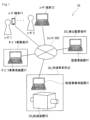
- FIG. 1 is a conceptual diagram illustrating a basic configuration of a carbon dioxide reduction promotion system according to an embodiment.
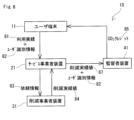
- FIG. 2 is a diagram illustrating the configuration of the carbon dioxide reduction promotion system according to the embodiment.
- FIG. 3 is a diagram illustrating an example of the functional internal configuration of a user terminal.
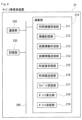
- FIG. 4 is a diagram showing an example of the functional internal configuration of the service provider device.
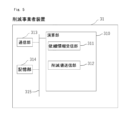
- FIG. 5 is a diagram illustrating an example of the functional internal configuration of the reducing operator device.
- FIG. 6 is a diagram illustrating the configuration of the carbon dioxide reduction promotion system according to the second embodiment.
- FIG. 7 is a diagram showing an example of the functional internal configuration of the service provider device.
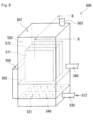
- FIG. 8 is a perspective view illustrating an example of a capture device.
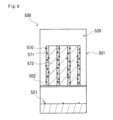
- FIG. 9 is a schematic cross-sectional view of the capturing device shown in FIG. 8 taken along line II-II.
- Patent Documents 1 and 2 are limited to reducing carbon dioxide emissions through the use of energy-saving equipment and electric vehicles. There is no disclosure of reducing the carbon dioxide that is actually present in the atmosphere.
- the purpose of this disclosure is to promote carbon dioxide reduction activities primarily at the individual level by enabling individuals to quantitatively achieve the effects of carbon dioxide reduction, and to promote the reduction of carbon dioxide that actually exists in the atmosphere.
- a carbon dioxide reduction promotion system includes a user terminal and a service provider device.
- the user terminal includes a usage history sending unit that sends a usage history of application software by a user and user identification information unique to the user to the service provider device, and a point receiving unit that receives contribution points according to the usage history from the service provider device.
- the service provider device includes a usage history receiving unit that receives the usage history and the user identification information from the user terminal, a request information creating unit that creates request information for carbon dioxide reduction work based on the usage history, a request information sending unit that sends the request information to the reduction provider device, a reduction value receiving unit that receives a reduction performance value from the reduction provider device, a reduction value sending unit that sends the reduction performance value to a supervisor device, a credit receiving unit that receives carbon dioxide credits according to the reduction performance value from the supervisor device, a point calculating unit that calculates the contribution points based on the carbon dioxide credits and the usage history, and a point sending unit that sends the contribution points to the user terminal.
- the carbon dioxide reduction promotion system described above in (1) promotes reduction activities primarily at the individual level by quantitatively obtaining the effects of carbon dioxide reduction. It also promotes the reduction of carbon dioxide that actually exists in the atmosphere.
- a carbon dioxide reduction promotion system includes a user terminal and a service provider device.
- the user terminal includes a usage history sending unit that sends the user's usage history of application software and user identification information unique to the user to the service provider device, and a credit receiving unit that receives carbon dioxide credits from a supervisor device.
- the service provider device includes a usage history receiving unit that receives the usage history and the user identification information from the user terminal, a request information creating unit that creates request information for carbon dioxide reduction work based on the usage history, a request information sending unit that sends the request information to the reduction provider device, a reduction value receiving unit that receives a reduction actual value from the reduction provider device, a distribution actual value calculation unit that calculates a distribution actual value to be allocated to the user from the reduction actual value, and a distribution actual value sending unit that sends the distribution actual value together with the user identification information to the supervisor device.
- carbon dioxide reduction promotion system described in (2) above, users can directly acquire carbon dioxide credits, which are obtained as official certification. Acquiring carbon dioxide credits promotes carbon dioxide reduction activities, mainly at the individual level. It also promotes the reduction of carbon dioxide that actually exists in the atmosphere.
- the carbon dioxide reduction promotion system may further include a record storage unit that stores the usage record and the user identification information in association with each other. This allows the carbon dioxide reduction promotion system to easily store the usage record and the user identification information.
- the service provider device may further include a record storage unit that stores the usage record and the user identification information in association with each other. This allows the service provider to easily refer to the usage record and the user identification information.
- the carbon dioxide reduction promotion system further includes a capture device that performs the carbon dioxide reduction work, the capture device having a carbon dioxide capture material, a solution in which the carbon dioxide capture material is immersed, a supply unit that supplies the target gas to be treated to the solution, and a storage tank in which the solution is stored, and the carbon dioxide capture material may include at least one of a layered double hydroxide, a basic metal oxide, a basic metal hydroxide, iron, or an iron compound.
- the applicant of the present application is developing a carbon dioxide capture device related to the technology disclosed in Patent Document 3.
- This device uses a carbon dioxide capture material that is a layered double hydroxide, a basic metal oxide, a basic metal hydroxide, iron, or an iron compound to reduce carbon dioxide in the gas as a capture product such as iron carbonate.
- this capture device it is possible to capture and reduce the carbon dioxide that is actually present in gases such as the atmosphere, thereby reducing the amount of carbon dioxide.
- the carbon dioxide reduction promotion system described above in (5) can promote the reduction of carbon dioxide actually present in the atmosphere, and by quantitatively obtaining the effects of carbon dioxide reduction, reduction activities can be promoted primarily at the individual level.
- the service provider device of the present disclosure includes a usage history receiving unit that receives from the user terminal the user's usage history of the application software and user identification information, a request information creation unit that creates request information for carbon dioxide reduction work based on the usage history, a request information sending unit that sends the request information to the reduction business device, a reduction value receiving unit that receives a reduction performance value from the reduction business device, a reduction value sending unit that sends the reduction performance value to a supervisor device, a credit receiving unit that receives carbon dioxide credits corresponding to the reduction performance value from the supervisor device, a point calculation unit that calculates contribution points based on the carbon dioxide credits and the usage history, and a point sending unit that sends the contribution points to the user terminal.
- the service provider device (6) above is used in the configuration of the carbon dioxide reduction promotion system (1) above.
- reduction activities are promoted mainly at the individual level by quantitatively obtaining the effects of carbon dioxide reduction.
- reduction of carbon dioxide actually present in the atmosphere is promoted.
- a service provider device used in a carbon dioxide reduction promotion system includes a usage history receiving unit that receives from a user terminal the usage history of application software by a user and user identification information, a request information creation unit that creates request information for carbon dioxide reduction work based on the usage history, a request information sending unit that sends the request information to the reduction provider device, a reduction value receiving unit that receives a reduction actual value from the reduction provider device, a distribution actual value calculation unit that calculates a distribution actual value to be allocated to the user from the reduction actual value, and a distribution actual value sending unit that sends the distribution actual value together with the user identification information to a supervisor device.
- the service provider device (7) above is used in the configuration of the carbon dioxide reduction promotion system (2) above.
- users can directly acquire carbon dioxide credits, which are obtained as official certification. Acquiring carbon dioxide credits promotes carbon dioxide reduction activities, mainly at the individual level. It also promotes the reduction of carbon dioxide that actually exists in the atmosphere.
- the service provider device of (6) or (7) above may further include a record storage unit that stores the usage record and the user identification information in association with each other. This allows the service provider to easily refer to the record for each user.
- the reduction business device includes a request information receiving unit that receives request information for carbon dioxide reduction work from a service business device, and a reduction value transmitting unit that transmits an actual reduction value to the service business device.
- the reduction business device (9) above is used in the configuration of the carbon dioxide reduction promotion system (1) or (2) above. According to the carbon dioxide reduction promotion system (1) or (2) above, reduction activities are promoted mainly at the individual level by quantitatively obtaining the effects of carbon dioxide reduction. In addition, reduction of carbon dioxide actually present in the atmosphere is promoted.
- a carbon dioxide reduction promotion method is a carbon dioxide reduction promotion method in which a user earns contribution points according to a usage record of application software, the usage record is stored in association with user identification information unique to the user, carbon dioxide reduction work is requested from a carbon dioxide reduction business operator, a reduction record value associated with the completion of the carbon dioxide reduction work is received from the carbon dioxide reduction business operator, the reduction record value is provided to a carbon dioxide emission supervisor, carbon dioxide credits according to the reduction record value are received from the carbon dioxide emission supervisor, and the contribution points calculated based on the carbon dioxide credits and the usage record are granted to the user.
- the method for promoting carbon dioxide reduction described above in (10) promotes reduction activities primarily at the individual level by quantitatively obtaining the effects of carbon dioxide reduction. It also promotes the reduction of carbon dioxide that actually exists in the atmosphere.
- a carbon dioxide reduction promotion method is a carbon dioxide reduction promotion method in which a user earns carbon dioxide credits according to a usage record of application software, the usage record is stored in association with user identification information unique to the user, a carbon dioxide reduction work is requested from a carbon dioxide reduction business operator, a reduction achievement value associated with the completion of the carbon dioxide reduction work is received from the carbon dioxide reduction business operator, a distribution achievement value of the reduction achievement value to be distributed to the user is provided to a carbon dioxide emission supervisor together with the user identification information, and the user receives the carbon dioxide credits according to the distribution achievement value from the carbon dioxide emission supervisor.
- a service provider device program is a service provider device program used in a service provider device included in a carbon dioxide reduction promotion system, and causes the service provider device to function as a usage history receiving unit that receives a usage history of application software by a user and user identification information from the user terminal, a history storage unit that associates and stores the usage history with the user identification information, a request information creation unit that creates request information for carbon dioxide reduction work based on the usage history, a request information transmission unit that transmits the request information to the reduction business device, a reduction value receiving unit that receives a reduction history value from the reduction business device, a reduction value transmission unit that transmits the reduction history value to a supervisor device, a credit receiving unit that receives carbon dioxide credits corresponding to the reduction history value from the supervisor device, a point calculation unit that calculates the contribution points based on the carbon dioxide credits and the usage history, and a point transmission unit that transmits the contribution points to the user terminal.
- the service provider device program (12) above when implemented in the service provider device (6) above, quantitatively obtains the effect of carbon dioxide reduction, thereby promoting reduction activities primarily at the individual level. It also promotes the reduction of carbon dioxide that actually exists in the atmosphere.
- a service provider device program is a service provider device program used in a service provider device included in a carbon dioxide reduction promotion system, and causes the service provider device to function as a usage history receiving unit that receives a usage history of application software by a user and user identification information from a user terminal, a request information creation unit that creates request information for carbon dioxide reduction work based on the usage history, a request information sending unit that sends the request information to the reduction business device, a reduction value receiving unit that receives a reduction actual value from the reduction business device, a distribution actual value calculation unit that calculates a distribution actual value to be allocated to the user from the reduction actual value, and a distribution actual value sending unit that sends the distribution actual value together with the user identification information to a supervisor device.
- the service provider device program (13) above when implemented in the service provider device (7) above, quantitatively obtains the effect of carbon dioxide reduction, promoting reduction activities primarily at the individual level. It also promotes the reduction of carbon dioxide that actually exists in the atmosphere.
- the service provider device program of (12) or (13) above may further include functioning as a record storage unit that associates and stores the usage record with the user identification information. This makes it possible to easily store the usage record and the contents of the user identification information in association with each other.
- Fig. 1 illustrates an example in which there are two users, user 1 and user 2.
- User 1 uses a user terminal 11, and user 2 uses a user terminal 12.
- Application software hereinafter sometimes referred to as "app" provided by or managed by a service provider 20 is installed in the user terminals 11 and 12.
- the term "app” broadly includes software that a user runs on, for example, a user terminal, and software that serves as an interface for providing a service to a user.
- "install” is not limited to software being deployed on a user terminal and running on the user terminal.
- installation is also interpreted as including running software placed on an external server or cloud from an app on a user terminal via a network, thereby making the user terminal available for receiving services.
- using an app on a user terminal includes running the app directly on the user terminal and running the software indirectly through a network.
- two users are given as an example, but the number of users is not limited to this, and the system of this disclosure assumes one or more users.
- the user terminal is, for example, a smartphone, a tablet terminal, a game console, or a personal computer.
- the app may be used on a terminal provided by a service provider.
- Service provider 20 which is a provider or operator of the app, operates service provider device 21.
- Service provider device 21 is a device that performs various data processing related to service provider 20, and is typically a general-purpose computer such as a personal computer, workstation, or server.
- Service provider device 21 can communicate with user terminals 11, 12 via network 50. Through communication between service provider device 21 and user terminals 11, 12, service provider device 21 can grasp the usage status of the app on user terminals 11, 12.
- the carbon dioxide reduction business operator 30 is a business operator that operates the carbon dioxide reduction device 32.
- the carbon dioxide reduction business operator 30 operates the carbon dioxide reduction device 32 upon request from another party and reports the amount of carbon dioxide reduced to the requester.
- the carbon dioxide reduction device 32 is a device that reduces, captures, and reduces carbon dioxide from gases such as the atmosphere and various exhaust gases. Specific examples of the carbon dioxide reduction device 32 will be described later.
- the carbon dioxide reduction business operator 30 operates the reduction business operator device 31.
- the reduction business operator device 31 is a device that processes requests from outside and processes data related to carbon dioxide reduction by the carbon dioxide reduction device 32.
- the reduction business operator device 31 is typically a general-purpose computer such as a personal computer, workstation, or server.
- the reduction business operator device 31 is capable of communicating with other devices via the network 50.
- the carbon dioxide emission supervisor 40 is, for example, a national or local government, or a public institution, or a business operator commissioned by them.
- the carbon dioxide emission supervisor 40 receives declarations of carbon dioxide reductions and emission reductions and certifies them. Certification refers to proving contributions to reductions, etc., and providing compensation according to reductions, etc.
- the carbon dioxide emission supervisor 40 owns and operates a supervisor device 41.
- the supervisor device 41 is a device that processes data related to the above-mentioned certification, etc., and is typically a general-purpose computer.
- the supervisor device 41 is capable of communicating with other devices via a network 50.
- One embodiment of the present disclosure is a carbon dioxide reduction promotion system 10 in which a user 1 who uses an app provided by a service provider 20 on a user terminal 11 earns contribution points from the service provider 20 according to the usage record of the app.
- user 1 will be described as a representative, but there may be multiple users in the embodiment, and the number of users is not limited.
- the service provider device 21 receives the usage record 81 and user identification information 82 of the app from the user terminal 11 by communication with the user terminal 11.
- the usage record 81 is stored in the service provider device 21 in association with the user identification information 82 of the user 1.
- the service provider device 21 creates request information 83.
- the request information 83 includes the amount of work for the carbon dioxide reduction work corresponding to the usage record 81.
- the service provider device 21 transmits the created request information 83 to the reduction provider device 31.
- the service provider device 21 receives from the reduction provider device 31 a reduction performance value 84 associated with the completion of the carbon dioxide reduction work.
- the service provider device 21 transmits the reduction performance value 84 to the supervisor device 41.
- the supervisor device 41 issues a carbon dioxide credit 85 corresponding to the reported reduction performance value 84.
- the service provider device 21 receives the carbon dioxide credit 85 from the supervisor device 41.
- the service provider device 21 calculates a contribution point 86 based on the received carbon dioxide credit 85 and the usage record 81 of the user terminal 11.
- the service provider device 21 transmits the calculated contribution points 86 to the user terminal 11.
- the transmission of contribution points 86 to the user terminal 11 is not limited to the direct transmission of contribution points 86 themselves.
- the points themselves may be virtual numerical values, and may be managed as a numerical value (e.g., a point balance) given to registered users on the server of the business that manages the points.
- the contribution points 86 are considered to have been transmitted to the user terminal 11 when the user terminal 11 is notified of the addition of contribution points 86.
- the transmission of contribution points 86 to the user terminal 11 is not limited to active transmission from the service provider device 21, but may be a notification in the form of a numerical value being returned from the user 1 in response to data reference from the service provider device 21, etc.
- the request information 83 sent from the service provider device 21 to the reduction provider device 31 may be a single request information 83 that consolidates requests related to multiple users.
- the reduction performance value 84 sent from the service provider device 21 to the supervisor device 41, and the carbon dioxide credits 85 received from the supervisor device 41 may also be total values related to multiple users.
- the J-Credit Scheme is a system in which the government certifies the amount of CO2 and other emissions reductions achieved through the introduction of energy-saving equipment and the use of renewable energy, and the amount of CO2 and other emissions reductions achieved through appropriate forest management as "credits”.
- This system is a system that is an evolutionary integration of the domestic credit system and the offset credit (J-VER) system, and is operated by the government.
- the credits created by this system can be used for various purposes, such as achieving the goals of the Keidanren Carbon Neutral Action Plan and carbon offsetting.
- the owner of the credit can obtain economic and social benefits in various ways, such as selling the credits.
- the user 1 is, for example, an individual or a corporation that owns a user terminal 11. Ownership is not limited to a legal relationship, and may be a concept that includes a person who actually receives benefits related to the user terminal 11.
- the user terminal 11 may be a smartphone, tablet terminal, or personal computer used by the user 1.
- the user terminal 11 is configured to be capable of communicating via a network 50.
- an app 110 provided by a service provider 20 is installed in a user terminal 11.
- the user terminal 11 includes a usage history sending unit 120.
- the usage history sending unit 120 sends a usage history 81 of the app 110 and user identification information 82 unique to a user 1 and the user terminal 11 to a service provider device 21 owned by the service provider 20.
- the user terminal 11 also includes a point receiving unit 130 that receives contribution points 86 from the service provider device 21.
- Other basic components that the user terminal 11 originally has as functions are not shown. For example, if the user terminal 11 is a smartphone, the basic components include an input unit, a communication unit, a display unit, etc.
- Usage history sending unit 120 has a function of tallying up usage history 81 of app 110 and sending usage history 81 to service provider device 21 at a predetermined timing.
- Usage history 81 is mainly the time when app 110 was used, and may include specific usage conditions such as the date and time of use, the location of use, and the operation content of app 110.
- the timing of sending usage history 81 is not particularly limited, but may include when use of app 110 ends, at a regular time such as once a day or once an hour, or when specified by the user.
- usage history sending unit 120 sends user identification information 82 unique to user 1 and user terminal 11 to service provider device 21.
- User identification information 82 may be information such as user 1's name or a pre-assigned ID. User identification information 82 may also be a device number unique to user terminal 11, address information, etc.
- the point receiving unit 130 receives the contribution points 86 provided by the service provider 20 from the service provider device 21.
- the contribution points 86 here are not particularly limited as long as they enable the user 1 to enjoy economic benefits directly or indirectly.
- the contribution points 86 may be, for example, points known in various point systems, miles in a mileage system, electronic money, virtual currency, or discount coupons.
- the point receiving unit 130 and the usage history sending unit 120 may be configured as software integrated with the app 110. In other words, the point receiving unit 130 and the usage history sending unit 120 may be configured as part of the functions of the app 110.
- the service provider device 21 is a device operated by the service provider 20.
- the reduction business device 31 is a device operated by the carbon dioxide reduction business 30.
- the service provider device 21 is a device for the service provider 20 to grasp the usage record 81 of the app 110 of the user 1, request the carbon dioxide reduction business 30 to perform carbon dioxide reduction work according to the usage record 81, report the reduction result value 84 to the carbon dioxide emission supervisor 40, receive the carbon dioxide credit 85, and grant the user 1 a contribution point 86 according to the carbon dioxide credit 85.
- the reduction business device 31 is a device for the carbon dioxide reduction business 30 to receive the carbon dioxide reduction request information 83 and send the reduction result value 84 to the service provider device 21.
- the service provider device 21 is a device including at least a calculation unit 210, a communication unit 220, and a memory unit 230.
- the service provider device 21 may include a general display unit, an input unit, etc., but these are not shown in FIG. 4.
- the service provider device 21 can be configured, for example, by a computer including a CPU (Central Processing Unit), a RAM (Random Access Memory), a ROM (Read Only Memory), a communication interface, an input/output interface, etc.
- the calculation unit 210, the communication unit 220, the memory unit 230, etc. are connected to each other via a bus 240.
- the memory unit 230 is configured by a volatile or non-volatile memory element, etc.
- the reduction business operator device 31 is a device that includes at least a calculation unit 310, a communication unit 313, and a storage unit 314.
- the reduction business operator device 31 may include a general display unit, an input unit, etc., but these are not shown in FIG. 5.
- the reduction business operator device 31 can be configured, for example, by a computer that includes a CPU (Central Processing Unit), a RAM (Random Access Memory), a ROM (Read Only Memory), a communication interface, an input/output interface, etc.
- the calculation unit 310, the communication unit 313, the storage unit 314, etc. are connected to each other via a bus 315.
- the storage unit 314 is configured by a volatile or non-volatile memory element, etc. Programs and data are stored in the storage unit 314. For example, a program stored in ROM is expanded into RAM and executed on the CPU to realize the functions of the calculation unit 310.
- the communication unit 313 is configured to transmit and receive Ethernet frames, which are data generated by the calculation unit 310, to and from the outside via the network 50, which is Ethernet (registered trademark).
- Each functional unit of the calculation unit 210 will be described with reference to Figures 2 and 4.
- Each functional unit is stored in the storage unit 230 and is executed by a program executed by the processor.
- the calculation unit 210 includes a usage history receiving unit 211 that receives the usage history 81 and the user identification information 82 from the user terminal 11. The contents of the usage history 81 and the user identification information 82 are as described above.
- the calculation unit 210 includes a history storage unit 212 that stores the usage history 81 and the user identification information 82 in association with each other.
- the history storage unit 212 writes to the storage unit 230, for each user, how much each user used the app 110.
- the service provider device 21 does not need to include the history storage unit 212. In this case, for example, a cloud service or an external storage medium may be used to store the usage history 81 and the user identification information 82 in association with each other.
- the calculation unit 210 includes a request information creation unit 213 that creates request information 83 for carbon dioxide reduction work based on the stored usage history 81.
- the request information 83 is data including the amount of carbon dioxide reduction requested to the carbon dioxide reduction business operator 30, and including general information such as requester information and delivery date.
- the amount of carbon dioxide reduction included in the request information 83 is a value calculated from the usage history 81.
- the amount of carbon dioxide reduction is calculated, for example, as follows. If the usage history 81 is, for example, the usage time of the app 110, an estimated power consumption is calculated from the usage time. A carbon dioxide generation amount corresponding to the power consumption is calculated using a predetermined method. The calculated amount of carbon dioxide generation may be the amount of carbon dioxide reduction to be requested.
- the idea is to calculate the amount of energy consumed by the user 1 or the user terminal 11 according to the use of the app 110, and reduce the amount of carbon dioxide according to the amount of carbon dioxide generation estimated from the amount of energy.
- Various methods for calculating the amount of carbon dioxide reduction from the usage history 81 can be determined and are not limited. These calculations may be performed by calculation using a predetermined formula, or by referencing a table of numerical relationships that is predetermined and stored in the storage unit 230. The calculation method is implemented by a program as a function of the request information creation unit 213. Note that the calculation of the requested carbon dioxide reduction amount may take into account various circumstances, such as a separate purchase request from the user 1 for carbon dioxide reduction amount or the acquisition of carbon dioxide reduction amount in response to an event occurring within the app 110.
- the timing of creating the request information 83 can be determined arbitrarily depending on the timing of the request from the service provider 20 to the carbon dioxide reduction business operator 30 for the work. Furthermore, the request information 83 may include the amount of carbon dioxide reduction corresponding to the usage history 81 for each user, or may include the amount of carbon dioxide reduction corresponding to the total value obtained by aggregating the usage history 81 of multiple users.
- the service provider 20 may create the request information 83 including a predetermined amount of carbon dioxide reduction regardless of the usage history 81.
- the service provider 20 can also request carbon dioxide reduction work using the request information 83 created in advance, and obtain the reduction achievement value 84 at its own timing.
- the request information sending unit 214 performs processing to send the request information 83 to the reduction business operator device 31.
- the reduction value receiving unit 215 performs processing to receive the reduction result value 84 from the reduction business operator device 31.
- the carbon dioxide reduction business operator 30 performs carbon dioxide reduction work by operating the carbon dioxide reduction device 32 in accordance with the request information 83.
- the amount of carbon dioxide that has actually been reduced is stored in the reduction business operator device 31 as the reduction result value 84, and is transmitted from the reduction business operator device 31 to the service provider device 21.
- the calculation unit 310 includes a request information performance receiving unit 311 that receives the request information 83 for carbon dioxide reduction work transmitted from the service provider device 21.
- the calculation unit 310 includes a reduction value transmitting unit 312 that transmits the reduction performance value 84 to the service provider device 21.
- the transmission of information from the service provider device 21 to the reduction business device 31, and the reception of information from the reduction business device 31 by the service provider device 21 are performed by the functions of the communication unit 220 of the service provider device 21.
- These transmissions and receptions are not limited to communication via the Internet by the communication unit 220.
- a method may be used in which the service provider device 21 outputs transmission information created by the request information transmission unit 214 and transmits the output transmission information to the reduction business device 31 via other means.
- a method may be used in which the reduction value receiving unit 215 receives information output from the reduction business device 31 via other input means.
- the calculation unit 210 includes a reduction value transmission unit 216 that transmits the reduction performance value 84 received from the reduction business device 31 to the supervisor device 41.
- the calculation unit 210 also includes a credit reception unit 217 that receives carbon dioxide credits 85 corresponding to the reduction performance value 84 from the supervisor device 41.
- the timing for transmitting the reduction performance value 84 can be determined arbitrarily. Furthermore, the reduction performance value 84 transmitted may be a value corresponding to each piece of request information 83, or may be a total value obtained by aggregating values corresponding to request information 83 transmitted multiple times.
- the carbon dioxide emission supervisor 40 issues carbon dioxide credits 85 according to the actual reduction value 84.
- the issued carbon dioxide credits 85 are stored in the supervisor device 41 and transmitted from the supervisor device 41 to the service provider device 21.
- the transmission of information from the service provider device 21 to the supervisor device 41, and the reception of information from the supervisor device 41 in the service provider device 21 are performed by the functions of the communication unit 220 of the service provider device 21. These transmissions and receptions are not limited to communication via the Internet by the communication unit 220. For example, instead of communication via the Internet, a method may be used in which the service provider device 21 outputs transmission information created by the reduction value transmission unit 216 and transmits the output transmission information to the supervisor device 41 via other means. Instead of communication via the Internet, a method may be used in which the credit receiving unit 217 receives information output from the supervisor device 41 via other input means.
- the calculation unit 210 includes a point calculation unit 218 that calculates contribution points 86 based on the carbon dioxide credits 85 received from the supervisor device 41 and the usage history 81 of the user 1.
- the service provider 20 can determine the relationship between the usage history 81 and the contribution points 86 based on various conditions. In other words, it is not excluded that the contribution points 86 are determined based on conditions other than the usage history 81.
- the calculated contribution points 86 are transmitted to the user terminal 11 by the point transmission unit 219.
- the contribution points 86 transmitted from the service provider device 21 are received by the point reception unit 130 (see FIG. 3) in the user terminal 11.
- user 1 can receive contribution points 86 according to the usage record 81 of the app 110.
- User 1 can display the app 110 on the user terminal 11 and know that he/she has acquired contribution points 86.
- the amount of carbon dioxide emissions estimated from the energy consumption associated with user 1's use of the app 110 corresponds to the amount of carbon dioxide actually reduced from the atmosphere. As a result, carbon dioxide emissions into the atmosphere are offset, and the user can enjoy the benefits of the contribution points 86.
- a second embodiment of the present disclosure is a carbon dioxide reduction promotion system 10 in which a user 1 who uses an application provided by a service provider 20 on a user terminal 11 acquires carbon dioxide credits 85 from a carbon dioxide emission supervisor 40 according to a usage record 81 of the app 110.
- the user 1 will be described as a representative, but there are multiple users in the embodiment and the number of users is not limited. Also, explanations that overlap with the first embodiment will be omitted.
- the service provider device 21 receives the application usage record 81 and user identification information 82 from the user terminal 11 by communication with the user terminal 11.
- the usage record 81 is stored in the service provider device 21 in association with the user identification information 82 of user 1.
- the service provider device 21 creates request information 83.
- the request information 83 includes the amount of work for the carbon dioxide reduction work corresponding to the usage record 81.
- the service provider device 21 transmits the created request information 83 to the reduction provider device 31.
- the service provider device 21 receives from the reduction provider device 31 a reduction actual value 84 associated with the completion of the carbon dioxide reduction work.
- the service provider device 21 calculates a distribution actual value 87 to be distributed to user 1 from the reduction actual value 84 based on the usage record 81 of user 1.
- the service provider device 21 creates data that associates the distribution actual value 87 with the user identification information 82.
- the service provider device 21 transmits the data that associates the distribution actual value 87 with the user identification information 82 to the supervisor device 41.
- the data sent to the supervisor device 41 is a combination of a user identified by user identification information 82 and a distribution actual value 87 to be distributed to that user.
- the supervisor device 41 issues carbon dioxide credits 85 corresponding to each reported distribution actual value 87.
- the supervisor device 41 transmits, to the user terminal 11, the carbon dioxide credits 85 to be given to the user 1 corresponding to the user terminal 11.
- the user terminal 11 receives the carbon dioxide credits 85 from the supervisor device 41.
- the above explanation relates to user 1 and user terminal 11. If there are multiple users, such as user 2, the same applies to each user. If there are multiple users, the request information 83 sent from the service provider device 21 to the reduction provider device 31 may be a single request that consolidates requests related to multiple users.
- the point receiving unit 130 receives carbon dioxide credits 85 from the supervisor device 41. In other words, this can be interpreted as receiving carbon dioxide credits 85 as contribution points 86.
- the service provider device 21 is a device operated by the service provider 20.
- the service provider device 21 is a device for the service provider 20 to carry out a series of operations, such as grasping the usage record 81 of the app 110 of the user 1, requesting the carbon dioxide reduction business operator 30 to carry out carbon dioxide reduction work in accordance with the usage record 81, and organizing the reduction record value 84 as a distribution record value 87 for each user, and then reporting this to the carbon dioxide emission supervisor 40.
- the configuration and function of the reduction business operator device 31 are the same as those of the first embodiment, and therefore a description thereof will be omitted.
- the service provider device 21 is a device including at least a calculation unit 210, a communication unit 220, and a memory unit 230.
- the service provider device 21 may include a general display unit, an input unit, etc., but these are not shown in FIG. 7.
- the service provider device 21 can be configured, for example, by a computer including a CPU (Central Processing Unit), a RAM (Random Access Memory), a ROM (Read Only Memory), a communication interface, an input/output interface, etc.
- the calculation unit 210, the communication unit 220, the memory unit 230, etc. are connected to each other via a bus 240.
- the memory unit 230 is configured by a volatile or non-volatile memory element, etc.
- Programs and data are stored in the memory unit 230.
- a program stored in the ROM is expanded into the RAM and executed on the CPU to realize the function of the calculation unit 210.
- the communication unit 220 is configured to transmit and receive Ethernet frames, which are data generated by the calculation unit 210, etc., to the outside via the network 50, which is Ethernet (registered trademark).
- the functional units of the calculation unit 210 will be described below with reference to Figures 6 and 7. These functional units are stored in the memory unit 230 and executed by a program executed by the processor. Among the functional units of the calculation unit 210, the usage history receiving unit 211, the history storage unit 212, the request information creating unit 213, the request information transmitting unit 214, and the reduction value receiving unit 215 are the same as those in the first embodiment. Descriptions of these functional units will be omitted.
- the calculation unit 210 includes a distribution actual value calculation unit 251 and a distribution actual value transmission unit 252.
- the distribution actual value calculation unit 251 calculates, as a distribution actual value 87, the amount of carbon dioxide reduction to be associated with the usage record 81 of the user terminal 11 from the reduction actual value 84 received from the reduction business operator device 31.
- the distribution actual value transmission unit 252 performs processing to transmit the calculated distribution actual value 87 to the supervisor device 41 together with user identification information 82 that identifies the user terminal 11 to which the distribution actual value 87 is linked.
- the timing for transmitting the distribution actual value 87 can be determined arbitrarily. Furthermore, the distribution actual value 87 transmitted may be a value corresponding to each piece of request information 83, or may be a total value obtained by aggregating values corresponding to multiple pieces of request information 83.
- the carbon dioxide emission supervisor 40 issues carbon dioxide credits 85 according to the individual distribution actual values 87.
- the issued carbon dioxide credits 85 are stored in the supervisor device 41 and transmitted from the supervisor device 41 to the corresponding user terminal 11.
- the transmission of information from the service provider device 21 to the supervisor device 41, and the reception of carbon dioxide credits 85 from the supervisor device 41 at the user terminal 11 are not limited to communication via the Internet.
- a method may be used in which the service provider device 21 outputs transmission information that organizes the data of the user terminal 11 and the actual distribution value 87, and transmits the output transmission information to the supervisor device 41 via other means.
- a method may be used in which the user terminal 11 or the user 1 himself receives the carbon dioxide credits 85 output from the supervisor device 41 via other input means.
- user 1 can receive carbon dioxide credits 85 according to the usage record 81 of app 110.
- the amount of carbon dioxide emissions estimated from the energy consumption associated with user 1's use of app 110 corresponds to the amount of carbon dioxide actually reduced from the atmosphere.
- carbon dioxide emissions into the atmosphere are offset, and the user can receive this contribution in the form of carbon dioxide credits 85.
- the processing of each functional unit in each of the above-mentioned embodiments is realized by a processing circuit including one or more processors.
- the processing circuit may be composed of an integrated circuit or the like that combines one or more memories, various analog circuits, and various digital circuits in addition to one or more processors.
- the one or more memories store programs (instructions) that cause one or more processors to execute each process.
- the one or more processors may execute each process according to a program read from one or more memories, or may execute each process according to a logic circuit designed in advance to execute each process.
- the processor may be various processors suitable for computer control, such as a CPU (Central Processing Unit), a GPU (Graphics Processing Unit), a DSP (Digital Signal Processor), an FPGA (Field Programmable Gate Array), or an ASIC (Application Specific Integrated Circuit).
- a CPU Central Processing Unit
- GPU Graphics Processing Unit
- DSP Digital Signal Processor
- FPGA Field Programmable Gate Array
- ASIC Application Specific Integrated Circuit
- the program may be installed into memory via a network from an external server device, etc., or may be distributed stored on recording media such as CD-ROMs (Compact Disc Read Only Memory), DVD-ROMs (Digital Versatile Disk Read Only Memory), and semiconductor memory, and installed into memory from the recording media.
- CD-ROMs Compact Disc Read Only Memory
- DVD-ROMs Digital Versatile Disk Read Only Memory
- semiconductor memory and installed into memory from the recording media.
- the carbon dioxide reduction device 32 operated by the carbon dioxide reduction business operator 30 will be described.
- the carbon dioxide reduction device 32 is a device that reduces, captures, and reduces carbon dioxide from gases such as the atmosphere and various exhaust gases.
- the carbon dioxide reduction device 32 described in this disclosure is a general term for equipment including a capture device that reduces carbon dioxide, and its associated equipment, piping, control devices, power sources, etc.
- a capture device As an example of a capture device, a device that uses a carbon dioxide capture material in a solution to fix and reduce carbon dioxide as a captured product will be described.
- the capture device applicable to the carbon dioxide reduction promotion system 10 of the present disclosure is not limited to the device described below, and various devices that can separate and reduce carbon dioxide in a gas can be applied.
- the capture device specifically described below is a device that can be applied to the carbon dioxide reduction promotion system 10 of the present disclosure due to its characteristics of being able to reduce and reduce carbon dioxide with a simple configuration and being able to fix and reduce carbon dioxide in a gas as a captured product.
- a gas to be treated 512 which is a gas containing carbon dioxide, is supplied to the capture device 500.
- the carbon dioxide in the gas to be treated 512 is captured in the solution 520 by the action of the carbon dioxide capture material 510.
- the size of the capture device 500 is set appropriately depending on the location and purpose of use.
- the capture device 500 is described in detail below.
- the capture device 500 includes a storage tank 501, a carbon dioxide capture material 510, a solution 520 that covers the carbon dioxide capture material 510, and a supply unit 530 that supplies the gas to be treated 512 containing carbon dioxide to the solution 520. Carbon dioxide becomes carbonate ions in the solution 520.
- the capture device 500 may include a dissolution promotion mechanism 540 that promotes the dissolution of carbon dioxide into the solution 520, a dispersion mechanism 550 that disperses multiple carbon dioxide capture materials 510 in the solution 520, and a porous support 571 on which the carbon dioxide capture materials 510 are arranged.
- the capture device 500 may also include a solution adjustment mechanism 560 that supplies at least one of an acidic substance, a reducing agent, a metal ion sequestering agent, and a builder to the solution 520.
- the carbon dioxide capturing material 510 is in a particulate or powder form.
- the carbon dioxide capturing material 510 is a particle mainly composed of iron or an iron compound.
- the carbon dioxide capturing material 510 mainly composed of iron is, for example, iron or an iron alloy.
- the iron alloy may contain iron and manganese, chromium, molybdenum, aluminum, copper, zinc, nickel, or the like.
- Examples of the iron compound include iron (II) hydroxide and iron (II) hexacyanoferrate (II).
- the carbon dioxide capturing material 510 may be a layered double hydroxide, a basic metal oxide, or a basic metal hydroxide other than iron.
- the carbon dioxide capture material 510 is mainly composed of iron or an iron compound, and is therefore capable of easily capturing carbonate ions and the like in the solution 520. Iron ions are generated in the solution 520 from the iron, etc., of the carbon dioxide capture material 510. The carbonate ions and iron ions present in the solution 520 precipitate as iron carbonate, and are reduced as a captured product.
- the average particle size of the multiple carbon dioxide capture materials 510 may be, for example, 5 nm or more and 500 ⁇ m or less, 10 nm or more and 200 ⁇ m or less, or 15 nm or more and 100 ⁇ m or less.
- a plurality of carbon dioxide capturing materials 510 are arranged on the support 571.
- the carbon dioxide capturing materials 510 can be stably held.
- the captured product which is iron carbonate attached to the carbon dioxide capturing materials 510, can be easily reduced and washed.
- the support 571 in this embodiment is a porous sheet.
- a plurality of carbon dioxide capture materials 510 are arranged on one porous sheet. Because the support 571 is a porous sheet, carbonate ions and the like can be easily and reliably brought into contact with the carbon dioxide capture materials 510. Furthermore, a plurality of carbon dioxide capture materials 510 are arranged at intervals on one porous sheet. By arranging a plurality of carbon dioxide capture materials 510 at intervals from each other, aggregation of the carbon dioxide capture materials 510 is suppressed, and the effect of the carbon dioxide capture materials 510 in capturing carbonate ions and the like is likely to be improved.
- the support 571 is, for example, a cloth, a nonwoven sheet, a woven sheet, a sponge sheet, a cellulose fiber sheet such as washi paper, a carbon fiber sheet, a ceramic fiber sheet such as made of alumina, or a metal fiber sheet such as made of copper or stainless steel.
- the carbon dioxide capture material 510 may be disposed on the surface of the support 571, or may be disposed inside the support 571.
- the support 571 is not limited to a porous sheet, and may be, for example, porous particles or porous threads.
- the multiple supports 571 may be arranged at intervals from each other. This configuration makes it possible to easily and stably hold the multiple carbon dioxide capture materials 510 in a state where they are easily in contact with carbonate ions, etc.
- the supports 571 may be arranged with spacers 572 between them.
- the multiple supports 571 are arranged alternately with the spacers 572 in the thickness direction.
- the spacers 572 are, for example, plate-shaped.
- the spacers 572 are arranged alternately with the supports 571 with their plate surfaces in contact with the supports 571.
- the spacers 572 are porous.
- the spacers 572 being porous form a passage through which carbonate ions and the like reach the carbon dioxide capture material 510.
- the spacers 572 are, for example, mesh and sponge.
- the spacers 572 are not limited to being plate-shaped, and may be rod-shaped members that contact only a portion of the supports 571. By providing the spacers 572, the multiple supports 571 can be easily arranged at high density while maintaining a distance from each other.
- the supply unit 530 supplies the gas to be treated 512, which is a gas containing carbon dioxide, to the solution 520.
- the supply unit 530 includes, for example, a supply pipe capable of supplying the gas containing carbon dioxide into the storage tank 501 from the lower part of the storage tank 501.
- the solution 520 constantly covers the plurality of carbon dioxide capturing materials 510.
- the plurality of carbon dioxide capturing materials 510 are immersed in the solution 520.
- the pH of the solution 520 and the potential of the carbon dioxide capture material 510 may be controlled to a range in which divalent iron ions or divalent iron hydroxide are stable in the potential-pH diagram. In other words, the pH of the solution 520 and the potential of the carbon dioxide capture material 510 may be controlled so as to increase the content of divalent iron ions or divalent iron hydroxide in the solution 520.
- the solution 520 includes water as a solvent.
- the solution 520 may include a dissolution promoter that promotes dissolution of carbon dioxide into the solution 520, or may include a pH buffer.
- the solution 520 may include a salt that exhibits acidity in the solution 520 to reduce the pH of the solution 520.
- the solution 520 may include a carbonation promoter 521 for promoting carbonation of iron ions eluted from the carbon dioxide capture material 510.
- the dissolution promoter is, for example, carbonic anhydrase. Carbonic anhydrase promotes the production of bicarbonate ions (HCO 3 ⁇ ).
- the pH buffer (buffer) makes it easier to maintain the pH of the solution 520 at a desired value.
- pH buffers examples include sodium tartrate, sodium acetate, sodium borate, sodium citrate, ammonium chloride, and sodium phosphate.
- Salts that exhibit acidity in the solution 520 i.e., salts that dissolve in the solution 520 and exhibit acidity, are, for example, sodium hydrogen sulfate, ammonium hydrogen sulfate, sodium dihydrogen phosphate, iron (II) sulfate, and iron (II) chloride.
- the carbonation promoter 521 is in a particulate form.
- the carbonation promoter 521 is mainly composed of iron carbonate or iron hydrogen carbonate.
- the carbonation promoter 521 can serve as seed crystals for carbonating iron ions.
- a gas containing carbon dioxide is supplied to the solution 520 from a supply unit 530.
- carbonate ions (CO 3 2 ⁇ ) or hydrogen carbonate ions (HCO 3 ⁇ ) are generated in the solution 520.
- the dissolution promotion mechanism 540 promotes the dissolution of carbon dioxide into the solution 520.
- the capture device 500 is likely to increase the amount of carbon dioxide in the solution 520. This further improves the efficiency of capturing carbon dioxide.
- the dissolution promotion mechanism 540 is, for example, a bubble generator capable of generating fine bubbles such as nanobubbles and microbubbles in the solution 520, an ultrasonic generator capable of generating cavitation bubbles in the solution 520, or a temperature and pressure control device capable of lowering the water temperature of the solution 520 and increasing the partial pressure of carbon dioxide.
- the capture device 500 is equipped with a bubble generator as the dissolution promotion mechanism 540.
- the bubble generator is disposed in the flow path of the gas containing carbon dioxide from the supply unit 530 to the storage tank 501.
- the bubble generator turns the gas containing carbon dioxide into fine bubbles and supplies them to the solution 520.
- the dispersion mechanism 550 disperses the plurality of carbon dioxide capturing materials 510 in the solution 520.
- the dispersion mechanism 550 maintains the average particle size of the plurality of carbon dioxide capturing materials 510.
- the dispersion mechanism 550 functions particularly effectively when the plurality of carbon dioxide capturing materials 510 are prone to aggregation.
- a device that generates a water flow in the solution 520 can be used, and an ultrasonic generator, a stirrer, or the like can be used.
- FIG. 8 shows an ultrasonic generator as the dispersion mechanism 550.
- a device that attracts, separates, and fixes (fixes at a specific position) the carbon dioxide capturing materials 510 by magnetic force can also be used as the dispersion mechanism 550.
- a device is, for example, a magnetic separation device.
- the solution adjusting mechanism 560 supplies an acidic substance to the solution 520 when, for example, the pH of the solution 520 increases.
- the acidic substance is, for example, the above-mentioned salt or a solution in which this salt is dissolved.
- the storage tank 501 stores the solution 520.
- the capture device 500 also includes a degassing promotion mechanism 503 that discharges gas released from the solution 520.
- the storage tank 501 has a porous membrane 502 for disposing the above-mentioned carbonation promoter 521 at a distance from the carbon dioxide capture material 510 and the support 571.
- the porous membrane 502 separates, for example, the carbonation promoter 521 from the carbon dioxide capturing material 510 and the support 571 vertically within the storage tank 501.
- the carbonation promoter 521 may be disposed below the porous membrane 502, and the carbon dioxide capturing material 510 and the support 571 may be disposed above the porous membrane 502.
- the porous membrane 502 may be configured to suppress the passage of iron carbonate and the like, while allowing carbonate ions and the like to pass through.
- the porous membrane 502 By suppressing the passage of iron carbonate and the like by the porous membrane 502, it is possible to suppress the iron carbonate and the like using the carbonation promoter 521 as seed crystals from coating the carbon dioxide capture material 510, and therefore it is possible to further suppress a decrease in the activity of the carbon dioxide capture material 510.
- the degassing promotion mechanism 503 is disposed at the top of the storage tank 501.
- the degassing promotion mechanism 503 discharges gas that rises in the solution 520 and is released from the liquid surface of the solution 520 to the outside of the capture device 500. Furthermore, the degassing promotion mechanism 503 discharges the gas to the outside of the capture device 500 so as to reduce the pressure of the gas in contact with the solution 520.
- the degassing promotion mechanism 503 reduces the dissolved oxygen content of the solution 520. This reduces the oxidation action caused by the dissolved oxygen in the solution 520, making it easier to maintain a state in which the ratio of divalent iron ions in the solution 520 is increased.
Landscapes
- Business, Economics & Management (AREA)
- Engineering & Computer Science (AREA)
- Strategic Management (AREA)
- Tourism & Hospitality (AREA)
- Physics & Mathematics (AREA)
- Theoretical Computer Science (AREA)
- General Physics & Mathematics (AREA)
- General Business, Economics & Management (AREA)
- Economics (AREA)
- Marketing (AREA)
- Development Economics (AREA)
- Finance (AREA)
- Accounting & Taxation (AREA)
- Health & Medical Sciences (AREA)
- General Health & Medical Sciences (AREA)
- Human Resources & Organizations (AREA)
- Primary Health Care (AREA)
- Entrepreneurship & Innovation (AREA)
- Game Theory and Decision Science (AREA)
- Technology Law (AREA)
- Educational Administration (AREA)
- Management, Administration, Business Operations System, And Electronic Commerce (AREA)
Abstract
Description
二酸化炭素削減の要求はますます高まっている。特許文献1や特許文献2に開示されているように、削減を推進する主体は公共団体や企業にとどまらず、個人レベルでの削減も進められている。近年のスマートフォンおよびパーソナルコンピュータなどの普及により、個人レベルでの電力消費は増加傾向にある。特に、いわゆるエンターテイメント分野である音楽、映像、またはゲームおよびSNSを代表とする各種アプリケーションソフトウエアの利用拡大により、電力消費量は少なからず増加してゆく。アプリケーションソフトウエアの利用者である個人が二酸化炭素削減への貢献を行う対策は、アプリケーションソフトウエアの使用量を削減することで電力消費自体を削減するか、または使用するエネルギーをいわゆるグリーンエネルギーに置き換えるかのいずれかである。
本開示によれば、二酸化炭素削減の効果を定量的に獲得することで主に個人レベルでの二酸化炭素削減活動が促進される。さらに大気中に存在する二酸化炭素の削減が促進される。
[本開示の実施形態の説明]
以下、本開示の実施形態を列記して説明する。
本開示の実施形態について図面を参照しつつ説明する。なお、以下に説明する実施形態は本開示の一具体例を示すものである。以下に説明される数値、形状、材料、構成要素、構成要素の配置と接続形態、手順等は、実施形態の一例である。また、各図は模式図であり、必ずしも厳密に描かれたものではない。図において同一の構成要素には同一の符号を付す。同一の構成要素の機能等については説明を適宜省略する。なお、以下の説明および図示において二酸化炭素をCO2と分子式で表記する場合がある。
(二酸化炭素削減促進システムの基本構成)
図1を参照して、本開示の二酸化炭素削減促進システム10の基本構成を説明する。図1ではユーザとして2人の場合を例示しており、ユーザ1とユーザ2が示されている。ユーザ1はユーザ端末11を利用しており、ユーザ2はユーザ端末12を利用している。ユーザ端末11、12には、それぞれサービス事業者20から提供された、あるいはサービス事業者20が管理するアプリケーションソフトウエア(以下、「アプリ」と記載する場合がある)がインストールされている。
本開示の実施形態の1つは、サービス事業者20により提供されたアプリをユーザ端末11において利用するユーザ1が、サービス事業者20からアプリの利用実績に応じた貢献ポイントを獲得する二酸化炭素削減促進システム10である。以下のシステムの説明においてはユーザ1を代表として説明するが、実施形態におけるユーザは複数であってもよく、ユーザ数は限定されない。
ユーザ1は、例えばユーザ端末11を所有する個人、法人である。所有するとは、法的な関係に限定されず、実質的にユーザ端末11に関する利益を受ける者を含む概念であってよい。ユーザ端末11は、代表的にはユーザ1が使用するスマートフォンやタブレット端末、パーソナルコンピュータであってもよい。ユーザ端末11は、ネットワーク50を介して通信可能に構成されている。
図1に示されるように、サービス事業者装置21は、サービス事業者20が運用する装置である。削減事業者装置31は、二酸化炭素削減事業者30が運用する装置である。図2に示されるように、サービス事業者装置21は、サービス事業者20がユーザ1のアプリ110の利用実績81を把握し、利用実績81に応じた二酸化炭素削減作業を二酸化炭素削減事業者30へ依頼し、削減実績値84を二酸化炭素排出監督者40へ報告して二酸化炭素クレジット85を受信し、二酸化炭素クレジット85に応じた貢献ポイント86をユーザ1に付与するという一連の動作を行うための装置である。削減事業者装置31は、二酸化炭素削減事業者30が二酸化炭素削減の依頼情報83を受け、削減実績値84をサービス事業者装置21に送るという動作を行うための装置である。
本開示の実施形態2は、サービス事業者20により提供されたアプリケーションをユーザ端末11において利用するユーザ1が、アプリ110の利用実績81に応じた二酸化炭素クレジット85を二酸化炭素排出監督者40から獲得する二酸化炭素削減促進システム10である。以下のシステムの説明においてはユーザ1を代表として説明するが、実施形態におけるユーザは複数であってユーザ数は限定されない。また、実施形態1と重複する説明は省略する。
実施形態2におけるユーザ端末11の構成と機能は、実施形態1におけるユーザ端末11と類似する。実施形態1と同じ構成については記載を省略する。図3を参照して、実施形態2においては、ポイント受信部130は、監督者装置41から二酸化炭素クレジット85を受信する。すなわち、貢献ポイント86として二酸化炭素クレジット85を受け取ると読み替えればよい。
サービス事業者装置21は、サービス事業者20が運用する装置である。サービス事業者装置21は、サービス事業者20がユーザ1のアプリ110の利用実績81を把握し、利用実績81に応じた二酸化炭素削減作業を二酸化炭素削減事業者30へ依頼し、削減実績値84をユーザ毎の分配実績値87として整理したうえで二酸化炭素排出監督者40へ報告するという一連の動作を行うための装置である。削減事業者装置31の構成と機能は、実施形態1と同じであり、説明を省略する。
二酸化炭素削減事業者30が運用する二酸化炭素削減装置32について説明する。二酸化炭素削減装置32は、大気や各種排気ガスなどの気体から二酸化炭素を削減・捕捉・削減する装置である。本開示に示す二酸化炭素削減装置32は、二酸化炭素を削減する捕捉装置、およびその付帯設備、配管、制御装置、電源等を含めた設備の総称である。
捕捉装置の例として、溶液中の二酸化炭素捕捉材を用いて二酸化炭素を捕捉産物に固定して削減する装置を説明する。本開示の二酸化炭素削減促進システム10に適用可能な捕捉装置は以下に説明する装置に限定されず、ガス中の二酸化炭素を分離削減可能な種々の装置を適用することができる。以下に具体的に説明する捕捉装置は、簡易な構成により二酸化炭素を削減・削減でき、かつガス中の二酸化炭素を捕捉産物として固定して削減可能な特徴により、本開示の二酸化炭素削減促進システム10に適用できる装置である。
二酸化炭素捕捉材510は、粒子状または粉末状である。本実施形態において、二酸化炭素捕捉材510は、鉄または鉄化合物を主成分とする粒子である。鉄を主成分とする二酸化炭素捕捉材510は例えば、鉄および鉄合金である。鉄合金は、鉄とマンガン、クロム、モリブデン、アルミニウム、銅、亜鉛、ニッケル等を含んでもよい。鉄化合物としては、水酸化鉄(II)、ヘキサシアノ鉄(II)酸鉄(II)等が挙げられる。なお、二酸化炭素捕捉材510は、鉄以外の層状複水酸化物、塩基性金属酸化物、塩基性金属水酸化物であってもよい。
支持体571には、複数の二酸化炭素捕捉材510が配置される。捕捉装置500が支持体571を備えることで、二酸化炭素捕捉材510を安定的に保持することができる。また、二酸化炭素捕捉材510に付着した炭酸鉄である捕捉産物を容易に削減して洗浄することができる。
供給部530は、二酸化炭素を含む気体である処理対象ガス512を溶液520に供給する。供給部530は、例えば貯留槽501の下部から貯留槽501内に二酸化炭素を含む気体を供給可能な供給管を含む。
溶液520は、複数の二酸化炭素捕捉材510を常時覆っている。捕捉装置500では、複数の二酸化炭素捕捉材510が溶液520中に浸漬されている。
溶解促進機構540は、上述のように二酸化炭素の溶液520への溶解を促進する。捕捉装置500は、溶解促進機構540を備えることで、溶液520中の二酸化炭素量を増大しやすい。このため、二酸化炭素の捕捉効率がより向上される。
分散機構550は、複数の二酸化炭素捕捉材510を溶液520中で分散させる。分散機構550は、複数の二酸化炭素捕捉材510の平均粒子径を維持する。分散機構550は、複数の二酸化炭素捕捉材510が凝集しやすい場合に、特に有効に機能する。分散機構550としては、溶液520に水流を発生させるものが使用でき、超音波発生装置、攪拌装置等を用いることができる。図8は分散機構550として超音波発生装置を示している。また、分散機構550として磁力によって二酸化炭素捕捉材510を誘引、分画および固定(特定の位置に固定)する装置も使用できる。このような装置は、例えば磁気分離装置である。
溶液調整機構560は、例えば溶液520のpHが上昇した際に、溶液520に酸性物質を供給する。酸性物質は例えば、上述した塩およびこの塩が溶解した溶液である。
貯留槽501には、溶液520が貯留される。また、捕捉装置500は、溶液520から放出された気体を排出する脱気促進機構503を備える。本実施形態において、貯留槽501は、上述した炭酸化促進剤521を二酸化炭素捕捉材510および支持体571から間隔を空けて配置するための多孔質膜502を有する。
図9に示す通り、多孔質膜502は、例えば炭酸化促進剤521と二酸化炭素捕捉材510および支持体571とを貯留槽501内において上下に隔てる。炭酸化促進剤521が多孔質膜502よりも下側に配置され、二酸化炭素捕捉材510および支持体571が多孔質膜502よりも上側に配置されてもよい。このように多孔質膜502が炭酸化促進剤521と二酸化炭素捕捉材510および支持体571とを隔てることによって、上述した通り、炭酸化促進剤521を種結晶とした炭酸鉄等を容易に削減することができる。
脱気促進機構503は、貯留槽501の上部に配置される。脱気促進機構503は、溶液520中を上昇して溶液520の液面から放出された気体を捕捉装置500の外に排出する。さらに、脱気促進機構503は、溶液520に接する気体の圧力を低減するように、気体を当該捕捉装置500の外に排出する。このように溶液520に接する気体の圧力を低減することで、脱気促進機構503は溶液520の溶存酸素の含有量を低減させる。これにより、溶液520中の溶存酸素による酸化作用が低減され、溶液520中の2価の鉄イオンの比率が増大した状態を維持しやすい。
11、12 ユーザ端末
110 アプリケーション(アプリ)
120 利用実績送信部
130 ポイント受信部
10 二酸化炭素削減促進システム
20 サービス事業者
21 サービス事業者装置
210 演算部
211 利用実績受信部
212 実績記憶部
213 依頼情報作成部
214 依頼情報送信部
215 削減値受信部
216 削減値送信部
217 クレジット受信部
218 ポイント算出部
219 ポイント送信部
251 分配実績値算出部
252 分配実績値送信部
220 通信部
230 記憶部
240 バス
30 二酸化炭素(CO2)削減事業者
31 削減事業者装置
310 演算部
311 依頼情報受信部
312 削減値送信部
313 通信部
314 記憶部
315 バス
32 二酸化炭素(CO2)削減装置
40 二酸化炭素(CO2)排出監督者
41 監督者装置
50 ネットワーク
81 利用実績
82 ユーザ識別情報
83 依頼情報
84 削減実績値
85 二酸化炭素(CO2)クレジット
86 貢献ポイント
87 分配実績値
500 捕捉装置
501 貯留槽
502 多孔質膜
503 脱気促進機構
510 二酸化炭素捕捉材
512 処理対象ガス
520 溶液
521 炭酸化促進剤
530 供給部
540 溶解促進機構
550 分散機構
560 溶液調整機構
571 支持体
572 スペーサ
Claims (14)
- ユーザ端末と、
サービス事業者装置と、を備え、
前記ユーザ端末は、
ユーザによるアプリケーションソフトウエアの利用実績と前記ユーザに固有のユーザ識別情報とを、前記サービス事業者装置へ送信する利用実績送信部と、
前記利用実績に応じた貢献ポイントを前記サービス事業者装置から受信するポイント受信部と、を有し、
前記サービス事業者装置は、
前記ユーザ端末から前記利用実績と前記ユーザ識別情報とを受信する利用実績受信部と、
前記利用実績に基づいて二酸化炭素削減作業の依頼情報を作成する依頼情報作成部と、
前記依頼情報を削減事業者装置へ送信する依頼情報送信部と、
前記削減事業者装置から削減実績値を受信する削減値受信部と、
前記削減実績値を監督者装置へ送信する削減値送信部と、
前記監督者装置から前記削減実績値に応じた二酸化炭素クレジットを受信するクレジット受信部と、
前記二酸化炭素クレジットと前記利用実績とに基づいて、前記貢献ポイントを算出するポイント算出部と、
前記貢献ポイントを前記ユーザ端末へ送信するポイント送信部と、を備える、
二酸化炭素削減促進システム。 - ユーザ端末と、
サービス事業者装置と、を備え、
前記ユーザ端末は、
ユーザによるアプリケーションソフトウエアの利用実績と前記ユーザに固有のユーザ識別情報とを、前記サービス事業者装置へ送信する利用実績送信部と、
監督者装置から二酸化炭素クレジットを受信するクレジット受信部と、を備え、
前記サービス事業者装置は、
前記ユーザ端末から前記利用実績と前記ユーザ識別情報とを受信する利用実績受信部と、
前記利用実績に基づいて二酸化炭素削減作業の依頼情報を作成する依頼情報作成部と、
前記依頼情報を削減事業者装置へ送信する依頼情報送信部と、
前記削減事業者装置から削減実績値を受信する削減値受信部と、
前記削減実績値のうち前記ユーザに配分される分配実績値を算出する分配実績値算出部と、
前記分配実績値を前記ユーザ識別情報とともに前記監督者装置へ送信する分配実績値送信部と、を備える、
二酸化炭素削減促進システム。 - 前記利用実績と前記ユーザ識別情報とを関連付けて記憶する実績記憶部をさらに備える、請求項1または請求項2に記載の二酸化炭素削減促進システム。
- 前記サービス事業者装置は、前記利用実績と前記ユーザ識別情報とを関連付けて記憶する実績記憶部をさらに備える、請求項1または請求項2に記載の二酸化炭素削減促進システム。
- 前記二酸化炭素削減作業を行う捕捉装置をさらに備え、
前記捕捉装置は、
二酸化炭素捕捉材と、前記二酸化炭素捕捉材が浸漬されている溶液と、前記溶液に処理対象ガスを供給する供給部と、前記溶液が貯留される貯留槽と、を有し、
前記二酸化炭素捕捉材は、層状複水酸化物、塩基性金属酸化物、塩基性金属水酸化物、鉄、または鉄化合物の少なくともいずれかを含む、
請求項1から請求項4のいずれか一項に記載の二酸化炭素削減促進システム。 - ユーザ端末からユーザによるアプリケーションソフトウエアの利用実績とユーザ識別情報とを受信する利用実績受信部と、
前記利用実績に基づいて二酸化炭素削減作業の依頼情報を作成する依頼情報作成部と、
前記依頼情報を削減事業者装置へ送信する依頼情報送信部と、
前記削減事業者装置から削減実績値を受信する削減値受信部と、
前記削減実績値を監督者装置へ送信する削減値送信部と、
前記監督者装置から前記削減実績値に応じた二酸化炭素クレジットを受信するクレジット受信部と、
前記二酸化炭素クレジットと前記利用実績とに基づいて、貢献ポイントを算出するポイント算出部と、
前記貢献ポイントを前記ユーザ端末へ送信するポイント送信部と、を備える、
サービス事業者装置。 - ユーザ端末からユーザによるアプリケーションソフトウエアの利用実績とユーザ識別情報とを受信する利用実績受信部と、
前記利用実績に基づいて二酸化炭素削減作業の依頼情報を作成する依頼情報作成部と、
前記依頼情報を削減事業者装置へ送信する依頼情報送信部と、
前記削減事業者装置から削減実績値を受信する削減値受信部と、
前記削減実績値のうち前記ユーザに配分される分配実績値を算出する分配実績値算出部と、
前記分配実績値を前記ユーザ識別情報とともに監督者装置へ送信する分配実績値送信部と、を備える、
サービス事業者装置。 - 前記利用実績と前記ユーザ識別情報とを関連付けて記憶する実績記憶部をさらに備える、請求項6または請求項7に記載のサービス事業者装置。
- サービス事業者装置から二酸化炭素削減作業の依頼情報を受信する依頼情報受信部と、
前記サービス事業者装置へ削減実績値を送信する削減値送信部と、を備える、
削減事業者装置。 - ユーザが、アプリケーションソフトウエアの利用実績に応じた貢献ポイントを獲得する二酸化炭素削減促進方法であって、
前記利用実績を前記ユーザに固有のユーザ識別情報と関連付けて記憶し、
二酸化炭素削減作業を二酸化炭素削減事業者へ依頼し、
前記二酸化炭素削減作業の完了に伴う削減実績値を前記二酸化炭素削減事業者から受領し、
前記削減実績値を二酸化炭素排出監督者へ提供し、
前記二酸化炭素排出監督者から前記削減実績値に応じた二酸化炭素クレジットを受領し、
前記二酸化炭素クレジットと前記利用実績とに基づいて算出される前記貢献ポイントを前記ユーザへ付与する、二酸化炭素削減促進方法。 - ユーザが、アプリケーションソフトウエアの利用実績に応じた二酸化炭素クレジットを獲得する二酸化炭素削減促進方法であって、
前記利用実績を前記ユーザに固有のユーザ識別情報と関連付けて記憶し、
二酸化炭素削減作業を二酸化炭素削減事業者へ依頼し、
前記二酸化炭素削減作業の完了に伴う削減実績値を前記二酸化炭素削減事業者から受領し、
前記削減実績値のうち前記ユーザに配分される分配実績値を前記ユーザ識別情報とともに二酸化炭素排出監督者へ提供し、
前記ユーザは、前記二酸化炭素排出監督者から前記分配実績値に応じた前記二酸化炭素クレジットを受領する、二酸化炭素削減促進方法。 - 二酸化炭素削減促進システムに含まれるサービス事業者装置に用いられるサービス事業者装置プログラムであって、
前記サービス事業者装置を、
ユーザ端末からユーザによるアプリケーションソフトウエアの利用実績とユーザ識別情報とを受信する利用実績受信部と、
前記利用実績と前記ユーザ識別情報とを関連付けて記憶する実績記憶部と、
前記利用実績に基づいて二酸化炭素削減作業の依頼情報を作成する依頼情報作成部と、
前記依頼情報を削減事業者装置へ送信する依頼情報送信部と、
前記削減事業者装置から削減実績値を受信する削減値受信部と、
前記削減実績値を監督者装置へ送信する削減値送信部と、
前記監督者装置から前記削減実績値に応じた二酸化炭素クレジットを受信するクレジット受信部と、
前記二酸化炭素クレジットと前記利用実績とに基づいて、貢献ポイントを算出するポイント算出部と、
前記貢献ポイントを前記ユーザ端末へ送信するポイント送信部と、して機能させる、
サービス事業者装置プログラム。 - 二酸化炭素削減促進システムに含まれるサービス事業者装置に用いられるサービス事業者装置プログラムであって、
前記サービス事業者装置を、
ユーザ端末からユーザによるアプリケーションソフトウエアの利用実績とユーザ識別情報とを受信する利用実績受信部と、
前記利用実績に基づいて二酸化炭素削減作業の依頼情報を作成する依頼情報作成部と、
前記依頼情報を削減事業者装置へ送信する依頼情報送信部と、
前記削減事業者装置から削減実績値を受信する削減値受信部と、
前記削減実績値のうち前記ユーザに配分される分配実績値を算出する分配実績値算出部と、
前記分配実績値を前記ユーザ識別情報とともに監督者装置へ送信する分配実績値送信部と、して機能させる、
サービス事業者装置プログラム。 - さらに、前記利用実績と前記ユーザ識別情報とを関連付けて記憶する実績記憶部として機能させることを含む、請求項12または請求項13に記載のサービス事業者装置プログラム。
Priority Applications (3)
| Application Number | Priority Date | Filing Date | Title |
|---|---|---|---|
| KR1020257022294A KR20250117679A (ko) | 2023-02-22 | 2024-01-25 | 이산화탄소 삭감 촉진 시스템, 서비스 사업자 장치, 삭감 사업자 장치, 이산화탄소 삭감 촉진 방법 및 서비스 사업자 장치 프로그램 |
| JP2025502186A JPWO2024176703A1 (ja) | 2023-02-22 | 2024-01-25 | |
| CN202480007297.6A CN120569751A (zh) | 2023-02-22 | 2024-01-25 | 二氧化碳削减促进系统、服务运营商装置、削减运营商装置、二氧化碳削减促进方法以及服务运营商装置程序 |
Applications Claiming Priority (2)
| Application Number | Priority Date | Filing Date | Title |
|---|---|---|---|
| JP2023026321 | 2023-02-22 | ||
| JP2023-026321 | 2023-02-22 |
Publications (1)
| Publication Number | Publication Date |
|---|---|
| WO2024176703A1 true WO2024176703A1 (ja) | 2024-08-29 |
Family
ID=92500715
Family Applications (1)
| Application Number | Title | Priority Date | Filing Date |
|---|---|---|---|
| PCT/JP2024/002139 Ceased WO2024176703A1 (ja) | 2023-02-22 | 2024-01-25 | 二酸化炭素削減促進システム、サービス事業者装置、削減事業者装置、二酸化炭素削減促進方法およびサービス事業者装置プログラム |
Country Status (5)
| Country | Link |
|---|---|
| JP (1) | JPWO2024176703A1 (ja) |
| KR (1) | KR20250117679A (ja) |
| CN (1) | CN120569751A (ja) |
| TW (1) | TW202439224A (ja) |
| WO (1) | WO2024176703A1 (ja) |
Citations (3)
| Publication number | Priority date | Publication date | Assignee | Title |
|---|---|---|---|---|
| JP2012094077A (ja) * | 2010-10-28 | 2012-05-17 | Toshiba Corp | 家庭用エネルギー管理システム |
| JP2022071518A (ja) * | 2020-10-28 | 2022-05-16 | イビデン株式会社 | Co2回収システム |
| JP2022171104A (ja) * | 2021-04-30 | 2022-11-11 | 株式会社アイシン | 二酸化炭素クレジット取引用管理コンピュータ |
Family Cites Families (3)
| Publication number | Priority date | Publication date | Assignee | Title |
|---|---|---|---|---|
| JP5131721B2 (ja) | 2005-09-15 | 2013-01-30 | 独立行政法人物質・材料研究機構 | 二酸化炭素の固定化方法 |
| JP2012059197A (ja) | 2010-09-13 | 2012-03-22 | Nippon Yunishisu Kk | エコポイント管理システム |
| JP7602198B2 (ja) | 2021-03-11 | 2024-12-18 | 株式会社アイシン | 二酸化炭素排出削減推進システム |
-
2024
- 2024-01-25 CN CN202480007297.6A patent/CN120569751A/zh active Pending
- 2024-01-25 KR KR1020257022294A patent/KR20250117679A/ko active Pending
- 2024-01-25 WO PCT/JP2024/002139 patent/WO2024176703A1/ja not_active Ceased
- 2024-01-25 JP JP2025502186A patent/JPWO2024176703A1/ja active Pending
- 2024-02-16 TW TW113105507A patent/TW202439224A/zh unknown
Patent Citations (3)
| Publication number | Priority date | Publication date | Assignee | Title |
|---|---|---|---|---|
| JP2012094077A (ja) * | 2010-10-28 | 2012-05-17 | Toshiba Corp | 家庭用エネルギー管理システム |
| JP2022071518A (ja) * | 2020-10-28 | 2022-05-16 | イビデン株式会社 | Co2回収システム |
| JP2022171104A (ja) * | 2021-04-30 | 2022-11-11 | 株式会社アイシン | 二酸化炭素クレジット取引用管理コンピュータ |
Also Published As
| Publication number | Publication date |
|---|---|
| TW202439224A (zh) | 2024-10-01 |
| KR20250117679A (ko) | 2025-08-05 |
| CN120569751A (zh) | 2025-08-29 |
| JPWO2024176703A1 (ja) | 2024-08-29 |
Similar Documents
| Publication | Publication Date | Title |
|---|---|---|
| CN107656781A (zh) | 一种基于事件的流程处理方法及系统 | |
| WO2019236471A1 (en) | Decentralized safeguard against fraud | |
| Raihani et al. | Uncertainty, rationality and cooperation in the context of climate change | |
| Barry et al. | Offsetting and risk imposition | |
| US20120109723A1 (en) | Systems and methods for management of credit groups | |
| CN106970846A (zh) | 支付系统消息控制和处理方法、装置 | |
| CN110399409A (zh) | 交易异常监测方法及装置 | |
| CA2684339A1 (en) | System and method for providing job and business growth incentive programs for an area | |
| Petzold et al. | Competing knowledge systems and adaptability to sea‐level rise in The Bahamas | |
| CN111008893A (zh) | 一种基于区块链管理网络贷款的方法、设备及介质 | |
| WO2024176703A1 (ja) | 二酸化炭素削減促進システム、サービス事業者装置、削減事業者装置、二酸化炭素削減促進方法およびサービス事業者装置プログラム | |
| Sullivan | Debate: A Big Society needs an active state | |
| CN110457141B (zh) | 一种业务消息的处理方法、系统、装置及设备 | |
| CN114612117A (zh) | 一种基于溯源区块链的危险化学品供应链溯源方法 | |
| Lopez | Corruption and international aid allocation: a complex dance | |
| US20120271699A1 (en) | Providing advanced rewards in a loyalty program based on historical purchasing performance | |
| Ma et al. | TIMCC: On data freshness in privacy-preserving incentive mechanism design for continuous crowdsensing using reverse auction | |
| CN118354135A (zh) | 视频观看场景下资源兑换方法、装置、设备、介质及程序 | |
| WO2024176743A1 (ja) | 二酸化炭素回収システム、電力事業者装置、および二酸化炭素回収方法 | |
| US20200097332A1 (en) | Distributed monitoring of network computers for dynamically updating assignments of tasks | |
| Smith et al. | An overview of the discussions from IMO’s 82nd Marine Environment Protection Committee | |
| CN110083787A (zh) | 婚恋交友方法、服务器、用户端、婚恋交友系统 | |
| TW201237790A (en) | Reward sharing system and method for community network | |
| Dongtotsang et al. | Mobile Telephony as an Enabler of Environmental Action in the Philippines | |
| Son | Presidential approval ratings and the foreign exchange market: The Korean won under the Park Guen Hye government |
Legal Events
| Date | Code | Title | Description |
|---|---|---|---|
| 121 | Ep: the epo has been informed by wipo that ep was designated in this application |
Ref document number: 24760010 Country of ref document: EP Kind code of ref document: A1 |
|
| WWE | Wipo information: entry into national phase |
Ref document number: 2025502186 Country of ref document: JP |
|
| WWE | Wipo information: entry into national phase |
Ref document number: 1020257022294 Country of ref document: KR |
|
| WWE | Wipo information: entry into national phase |
Ref document number: 202480007297.6 Country of ref document: CN |
|
| WWP | Wipo information: published in national office |
Ref document number: 1020257022294 Country of ref document: KR |
|
| WWP | Wipo information: published in national office |
Ref document number: 202480007297.6 Country of ref document: CN |
|
| NENP | Non-entry into the national phase |
Ref country code: DE |
|
| WWE | Wipo information: entry into national phase |
Ref document number: 11202505589W Country of ref document: SG |
|
| WWP | Wipo information: published in national office |
Ref document number: 11202505589W Country of ref document: SG |
|
| 122 | Ep: pct application non-entry in european phase |
Ref document number: 24760010 Country of ref document: EP Kind code of ref document: A1 |