WO2024172003A1 - エルゴチオネインを含有する筋萎縮抑制用組成物及びSrcチロシンキナーゼ阻害用組成物 - Google Patents
エルゴチオネインを含有する筋萎縮抑制用組成物及びSrcチロシンキナーゼ阻害用組成物 Download PDFInfo
- Publication number
- WO2024172003A1 WO2024172003A1 PCT/JP2024/004718 JP2024004718W WO2024172003A1 WO 2024172003 A1 WO2024172003 A1 WO 2024172003A1 JP 2024004718 W JP2024004718 W JP 2024004718W WO 2024172003 A1 WO2024172003 A1 WO 2024172003A1
- Authority
- WO
- WIPO (PCT)
- Prior art keywords
- ergothioneine
- muscle
- composition
- salt
- tyrosine kinase
- Prior art date
- Legal status (The legal status is an assumption and is not a legal conclusion. Google has not performed a legal analysis and makes no representation as to the accuracy of the status listed.)
- Ceased
Links
Images
Classifications
-
- A—HUMAN NECESSITIES
- A23—FOODS OR FOODSTUFFS; TREATMENT THEREOF, NOT COVERED BY OTHER CLASSES
- A23L—FOODS, FOODSTUFFS OR NON-ALCOHOLIC BEVERAGES, NOT OTHERWISE PROVIDED FOR; PREPARATION OR TREATMENT THEREOF
- A23L33/00—Modifying nutritive qualities of foods; Dietetic products; Preparation or treatment thereof
- A23L33/10—Modifying nutritive qualities of foods; Dietetic products; Preparation or treatment thereof using additives
- A23L33/17—Amino acids, peptides or proteins
- A23L33/175—Amino acids
-
- A—HUMAN NECESSITIES
- A61—MEDICAL OR VETERINARY SCIENCE; HYGIENE
- A61K—PREPARATIONS FOR MEDICAL, DENTAL OR TOILETRY PURPOSES
- A61K31/00—Medicinal preparations containing organic active ingredients
- A61K31/33—Heterocyclic compounds
- A61K31/395—Heterocyclic compounds having nitrogen as a ring hetero atom, e.g. guanethidine or rifamycins
- A61K31/41—Heterocyclic compounds having nitrogen as a ring hetero atom, e.g. guanethidine or rifamycins having five-membered rings with two or more ring hetero atoms, at least one of which being nitrogen, e.g. tetrazole
- A61K31/4164—1,3-Diazoles
- A61K31/4172—Imidazole-alkanecarboxylic acids, e.g. histidine
-
- A—HUMAN NECESSITIES
- A61—MEDICAL OR VETERINARY SCIENCE; HYGIENE
- A61P—SPECIFIC THERAPEUTIC ACTIVITY OF CHEMICAL COMPOUNDS OR MEDICINAL PREPARATIONS
- A61P21/00—Drugs for disorders of the muscular or neuromuscular system
-
- A—HUMAN NECESSITIES
- A61—MEDICAL OR VETERINARY SCIENCE; HYGIENE
- A61P—SPECIFIC THERAPEUTIC ACTIVITY OF CHEMICAL COMPOUNDS OR MEDICINAL PREPARATIONS
- A61P3/00—Drugs for disorders of the metabolism
-
- A—HUMAN NECESSITIES
- A61—MEDICAL OR VETERINARY SCIENCE; HYGIENE
- A61P—SPECIFIC THERAPEUTIC ACTIVITY OF CHEMICAL COMPOUNDS OR MEDICINAL PREPARATIONS
- A61P43/00—Drugs for specific purposes, not provided for in groups A61P1/00-A61P41/00
Definitions
- the present invention relates to a composition for inhibiting muscle atrophy and a composition for inhibiting Src tyrosine kinase that contain ergothioneine.
- Muscle balance is maintained by the muscle protein synthesis and degradation systems, and different factors are involved in each of these systems.
- the synthesis of muscle proteins requires materials such as amino acids and energy, and a diet suitable for muscle proteins is required.
- elderly people have a reduced appetite compared to younger people. Therefore, in order to prevent muscle atrophy in the elderly, it is important to inhibit the muscle protein degradation system, and this is thought to be highly effective.
- Src tyrosine kinase family is an important intracellular signaling protein involved in acute inflammatory responses, and its phosphorylation is one of the major factors that determine the expression and production level of inflammatory mediators. Src tyrosine kinase is expressed in muscle, and inhibiting it suppresses the degradation of muscle cells.
- Ergothioneine is an amino acid found in mushrooms and other organisms, and exists naturally in the L-form.
- Patent Document 1 discloses a composition that contains ergothioneine and promotes muscle differentiation, and in the examples it describes how culturing C2C12 cells in a medium containing ergothioneine promoted the differentiation of C2C12 cells into muscle cells and increased the expression level of MyoD mRNA, which induces muscle differentiation.
- Patent Document 1 does not disclose any effect on muscle atrophy or inhibition of Src tyrosine kinase.
- the present invention aims to provide a composition for inhibiting muscle atrophy. In addition, the present invention aims to provide a composition for inhibiting Src tyrosine kinase.
- L-ergothioneine or a salt thereof has the effect of suppressing muscle atrophy and inhibits Src tyrosine kinase.
- the present invention relates to the following compositions for inhibiting muscle atrophy, etc.
- a composition for inhibiting muscle atrophy comprising ergothioneine or a salt thereof as an active ingredient.
- composition according to any one of [1] to [5] above which is a food or drink.
- composition described in any of [1] to [6] above which is labeled with at least one function selected from the group consisting of "inhibition of muscle loss,””musclemaintenance,””muscleimprovement,””inhibition of muscle weakness,””muscle strength maintenance,””muscle strength improvement,””improvement of walking function,””maintenance of walking function,””improvement of motor function,””maintenance of motor function,””maintenance of muscle weakened by aging,””maintenance of muscle strength weakened by aging,” and “maintenance of physical strength.”
- a method for inhibiting muscle atrophy comprising administering ergothioneine or a salt thereof to a subject.
- a method for inhibiting Src tyrosine kinase which comprises administering ergothioneine or a salt thereof to a subject.
- administering ergothioneine or a salt thereof to a subject.
- a composition for inhibiting muscle atrophy can be provided.
- a composition for inhibiting Src tyrosine kinase can be provided.
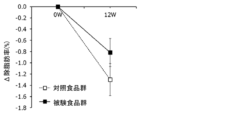
- FIG. 1 is a graph showing the change in lean percentage ( ⁇ lean percentage (%)) in the test food groups and the control food group.
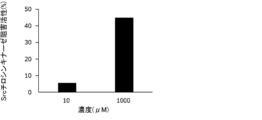
- FIG. 2 is a graph evaluating the inhibitory activity of L-ergothioneine against Src tyrosine kinase.
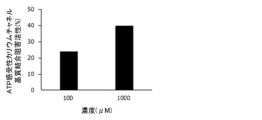
- FIG. 3 is a graph evaluating the substrate binding inhibitory activity of L-ergothioneine to the ATP-sensitive potassium channel.
- the composition for inhibiting muscle atrophy of the present invention contains ergothioneine or a salt thereof as an active ingredient.
- Ergothioneine is a type of sulfur-containing amino acid.
- ergothioneine is preferably L-ergothioneine.
- the salt of ergothioneine is not particularly limited as long as it is a pharmacologically acceptable salt or a salt acceptable for food and drink, and may be either an acid salt or a basic salt.
- acid salts include inorganic acid salts such as hydrochloride, sulfate, nitrate, and phosphate; organic acid salts such as acetate, citrate, maleate, malate, oxalate, lactate, succinate, fumarate, and propionate.
- Examples of basic salts include alkali metal salts such as sodium salt and potassium salt; alkaline earth metal salts such as calcium salt and magnesium salt.
- Ergothioneine or its salts are not limited in any way by their form or manufacturing method. Ergothioneine or its salts may be chemically synthesized or extracted and purified from natural products. L-ergothioneine is found in large amounts in Golden/Yellow Oyster Mushroom (scientific name: Pleurotus cornucopiae var. citrinopileatus), a mushroom of the Pleurotus genus in the Pleurotus family.
- L-ergothioneine is found in white button mushrooms, crimini mushrooms, portabella mushrooms, and other mushrooms (Agaricus bisporus), grey oyster mushrooms (Pleurotus ostreatus), shiitake mushrooms (Lentinula edodes), and maitake mushrooms (Grifola frondosa). dosa), Ganoderma lucidum, Yamabushitake (Hericium erinaceus), Yanagimatsutake (Agrocybe aegerita), Chanterelle (Cantharellus cibarius), Porcini (Boletus edulis), and Morchella esculenta are also found in mushrooms. When obtaining L-ergothioneine from natural products, it is preferable to extract it from Tamogitake mushroom. Ergothioneine or a salt thereof can also be produced by microbial fermentation. Ergothioneine or a salt thereof may be isolated.
- L-ergothioneine or its salts are compounds that are found in natural products and foods and beverages, and are consumed in the diet. For this reason, from the perspective of safety, it is believed that ergothioneine or its salts pose few problems, even when taken over a long period of time. According to the present invention, a highly safe composition for inhibiting muscle atrophy can be provided.
- Muscle atrophy is the loss of muscle. There are two types of muscle atrophy: muscle atrophy caused by disease of the muscle itself (myogenic muscle atrophy) and muscle atrophy caused by damage to the motor nerves that directly transmit motor commands to the muscle (neurogenic muscle atrophy). Even if there is no such disease in the muscle or nerve, the muscle will lose weight if it is not used, and this condition is called disuse muscle atrophy. In addition, the amount of muscle in the entire body decreases with age (age-related muscle atrophy). In one embodiment, the composition of the present invention is preferably used for inhibiting age-related muscle atrophy, and more preferably for preventing age-related muscle atrophy.
- Lean body mass is the weight obtained by subtracting the weight of fat from the body weight, and is an index for knowing the proportion of muscle. By examining the increase or decrease in lean body mass, the increase or decrease in muscle weight can be known. Lean body mass is the ratio of lean body mass to total body weight. A decrease in lean body mass indicates a decrease in muscle mass. Therefore, inhibition of the decrease in lean body mass indicates inhibition of the decrease in muscle mass. Therefore, ergothioneine can be used as an active ingredient for inhibiting muscle atrophy.
- L-ergothioneine inhibited Src tyrosine kinase and inhibited the binding of substrates to the ATP-sensitive potassium (KATP) channel.
- Src tyrosine kinase is expressed in muscles, and it is known that inhibiting it suppresses the decomposition of muscle cells. Therefore, ergothioneine inhibits Src tyrosine kinase, thereby suppressing the decomposition of muscle cells and exhibiting a muscle atrophy suppressing effect.
- K ATP channels are expressed in muscles and are known to be involved in the regulation of muscle atrophy processes, and therefore ergothioneine is believed to have an inhibitory effect on muscle atrophy via ATP-sensitive potassium channels.
- the composition of the present invention is used to inhibit muscle atrophy.
- Inhibition of muscle atrophy includes preventing muscle atrophy, delaying the progression of muscle atrophy, preventing the progression of muscle atrophy, etc.
- Prevention of muscle atrophy includes preventing the onset, delaying the onset, reducing the incidence, reducing the risk of onset, etc.
- Inhibition of muscle atrophy provides effects such as inhibiting the loss of muscle mass and maintaining muscle mass.
- the composition of the present invention may be either an oral composition or a parenteral composition, but is preferably an oral composition.
- Specific examples of the oral composition include food and drink, oral medicine, quasi-drug, feed, etc., and are preferably food and drink or oral medicine, more preferably food and drink.
- the composition of the present invention may be a material or preparation to be used by being blended with food and drink, medicine, quasi-drug, feed, etc.
- compositions of the present invention can be used for either therapeutic (medical) or non-therapeutic (non-medical) purposes.
- Non-therapeutic is a concept that does not include medical procedures, i.e., surgery, treatment, or diagnosis of humans.
- composition of the present invention may contain any additives and any components in addition to ergothioneine or a salt thereof, so long as the effects of the present invention are not impaired. These additives and components may be selected depending on the form of the composition.
- additives that can generally be used in oral compositions such as foods and beverages, pharmaceuticals, quasi-drugs, and feeds may be used.
- the production method thereof is not particularly limited, and they can be produced by a general method.
- the form of the oral composition of the present invention is not particularly limited, and may be a solid (powder, granules, tablet, etc.), liquid, paste, etc.
- various foods and drinks can be made by blending ergothioneine or a salt thereof with ingredients that can be used in foods and drinks (e.g., food ingredients, food additives used as necessary, etc.).
- the foods and drinks are not particularly limited, and examples include general foods and drinks, health foods, health supplements, health drinks, functional foods, foods for specified health uses, and foods and drinks for sick people.
- the above health foods, health supplements, functional foods, foods for specified health uses, etc. can be used in various formulation forms, such as fine granules, tablets, granules, powders, capsules, chewable agents, dry syrups, syrups, liquids, beverages, drinks, and liquid diets.
- composition of the present invention when used as a drug or quasi-drug, for example, ergothioneine or a salt thereof can be mixed with a pharmacologically acceptable carrier and additives added as necessary to produce a drug or quasi-drug in various dosage forms.
- a pharmacologically acceptable carrier such as, for example, ergothioneine or a salt thereof
- Such carriers, additives, etc. may be any pharmacologically acceptable carriers that can be used in drugs or quasi-drugs, and examples of such carriers, additives, etc. include one or more of excipients, binders, disintegrants, lubricants, antioxidants, colorants, etc.
- dosage forms for drugs or quasi-drugs include oral and non-oral (transdermal, transmucosal, enteral, injection, etc.) administration forms.
- composition of the present invention When the composition of the present invention is used as a drug or quasi-drug, it is preferable to use an oral drug or oral quasi-drug.
- dosage forms for oral administration of drugs or quasi-drugs include liquids, tablets, powders, fine granules, granules, sugar-coated tablets, capsules, suspensions, emulsions, chewables, etc.
- Dosage forms for parenteral administration include, for example, injections, drops, ointments, lotions, patches, suppositories, nasal preparations, and pulmonary preparations (inhalants).
- the pharmaceutical product may be a pharmaceutical product for non-human animals.
- feed When the composition of the present invention is used as feed, ergothioneine or a salt thereof may be blended into the feed.
- Feed also includes feed additives. Examples of feed include livestock feed for cows, pigs, chickens, sheep, horses, etc.; small animal feed for rabbits, rats, mice, etc.; and pet food for dogs, cats, small birds, etc.
- the subject to which the composition of the present invention is ingested or administered is not particularly limited, and is preferably a human or a non-human mammal, more preferably a human.
- the subject of administration includes a subject who needs or desires to inhibit muscle atrophy. Examples of such subjects include middle-aged and elderly people.
- the composition of the present invention is suitably used as a composition for inhibiting muscle atrophy for middle-aged and elderly people.
- Middle-aged and elderly people include elderly people.
- Middle-aged and elderly people may be, for example, humans aged 40 years or older.
- Elderly people may be, for example, humans aged 60 years or older or 65 years or older.
- the subject of administration may be a healthy person.
- composition of the present invention can also be used for healthy people, for example, for the purpose of inhibiting muscle atrophy.
- a particularly preferred subject is a healthy human aged 50 years or older and younger than 65 years, and a most preferred subject is a healthy human aged 50 years or older and younger than 55 years.
- the content of ergothioneine or a salt thereof in the composition of the present invention is not particularly limited and can be set depending on the form, etc.
- the content of ergothioneine or a salt thereof in the composition of the present invention, calculated as ergothioneine, is, for example, preferably 0.0001% by weight or more, more preferably 0.001% by weight or more, and is preferably 90% by weight or less, more preferably 50% by weight or less.
- the content of ergothioneine or a salt thereof in the composition of the present invention is preferably 0.0001 to 90% by weight, more preferably 0.001 to 50% by weight, calculated as ergothioneine.
- the content of ergothioneine or a salt thereof can be measured by high performance liquid chromatography (HPLC).
- the amount converted into ergothioneine or a similar expression means the amount of ergothioneine, and in the case of a salt of ergothioneine, means the value obtained by multiplying the number of moles of the salt by the molecular weight of ergothioneine.
- composition of the present invention can be ingested or administered in a suitable manner according to its form.
- the composition of the present invention is preferably ingested orally (administered orally).
- the dosage (which can also be called the intake amount) of the composition of the present invention is not particularly limited as long as it is an amount that can obtain an inhibitory effect on muscle atrophy, and may be set appropriately according to the dosage form, administration method, subject weight, etc.
- the dosage when the composition of the present invention is orally ingested or administered to a human (adult), the dosage is preferably 2 mg or more, more preferably 5 mg or more, even more preferably 7 mg or more, and preferably 50 mg or less, more preferably 25 mg or less, and even more preferably 20 mg or less, per day, as the dosage of ergothioneine or a salt thereof (in ergothioneine equivalent). In one embodiment, the dosage of the composition of the present invention is preferably 2 to 50 mg, more preferably 5 to 25 mg, even more preferably 5 to 20 mg, and even more preferably 7 to 20 mg, per day, as the dosage of ergothioneine or a salt thereof (in ergothioneine equivalent), for a human (adult).
- the above amount it is preferable to ingest or administer the above amount once or more times a day, for example, once a day or in several divided doses (for example, 2 to 3 times). In one embodiment, it is preferable to orally ingest or administer the above amount of ergothioneine or a salt thereof to a human.
- the above dosage may be per 60 kg of body weight. In one embodiment, the composition of the present invention can be used to ingest or administer the above amount of ergothioneine or a salt thereof per 60 kg of body weight per day to a human.
- composition of the present invention preferably contains 2 to 50 mg of ergothioneine or a salt thereof per daily intake for an adult, more preferably 5 to 25 mg, even more preferably 5 to 20 mg, and particularly preferably 7 to 20 mg, of ergothioneine.
- composition of the present invention may be labeled with, for example, an indication of its function of inhibiting muscle atrophy, or an indication of the function exerted by inhibiting muscle atrophy.
- the composition of the present invention may be labeled with at least one function selected from the group consisting of, for example, "inhibition of muscle loss,””musclemaintenance,””muscleimprovement,””inhibition of muscle weakness,””muscle strength maintenance,””muscle strength improvement,””improvement of walking function,””maintenance of walking function,””improvement of motor function,””maintenance of motor function,””maintenance of muscles that weaken with age,””maintenance of muscle strength that weakens with age,” and “maintenance of physical strength.”
- the composition of the present invention is preferably a food or drink to which the above-mentioned label is attached.
- the above-mentioned label may be a label indicating that the composition is used to obtain the above-mentioned function.
- the above-mentioned label may
- ergothioneine or a salt thereof has an Src tyrosine kinase inhibitory effect.
- Ergothioneine or a salt thereof can be used as an active ingredient for inhibiting Src tyrosine kinase.
- the composition of the present invention can also be used as a composition for inhibiting Src tyrosine kinase.
- the composition for inhibiting Src tyrosine kinase containing ergothioneine or a salt thereof as an active ingredient is also one aspect of the present invention.
- the active ingredient, the content and dosage of the active ingredient, the subjects to be administered, and other aspects of the composition for inhibiting Src tyrosine kinase are the same as those of the above-mentioned composition for inhibiting muscle atrophy.
- ergothioneine or a salt thereof inhibits substrate binding to the K ATP channel. Therefore, ergothioneine or a salt thereof can also be used as an active ingredient for inhibiting substrate binding to the K ATP channel.
- a composition for inhibiting substrate binding to the K ATP channel, which contains ergothioneine or a salt thereof as an active ingredient, is also one aspect of the present invention.
- the present invention also encompasses the following methods.
- a method for inhibiting muscle atrophy comprising administering ergothioneine or a salt thereof to a subject.
- a method for inhibiting Src tyrosine kinase comprising administering ergothioneine or a salt thereof to a subject.
- the methods may be therapeutic or non-therapeutic.
- the present invention also encompasses the following uses: Use of ergothioneine or a salt thereof for inhibiting muscle atrophy. Use of ergothioneine or a salt thereof for inhibiting Src tyrosine kinase.
- the use may be a therapeutic use or a non-therapeutic use.
- the preferred embodiment of ergothioneine or a salt thereof is the same as that of the composition of the present invention described above.
- ergothioneine or a salt thereof one type of ergothioneine or a salt thereof may be used, or two or more types may be used.
- the above use is preferably in a human or a non-human mammal, more preferably in a human.
- ergothioneine or a salt thereof may be used in an amount that provides the desired effect (which may also be referred to as an effective amount).
- the preferred dosage and administration subjects of ergothioneine or a salt thereof are the same as those of the composition of the present invention described above.
- Ergothioneine or a salt thereof may be administered as is, or as a composition containing it.
- the composition of the present invention described above may be used.
- the present invention also includes use of ergothioneine or a salt thereof for producing a composition for inhibiting muscle atrophy.
- the present invention also includes the use of ergothioneine or a salt thereof for the manufacture of a composition for inhibiting Src tyrosine kinase.
- the present invention is also ergothioneine, or a salt thereof, for use in inhibiting muscle atrophy.
- a numerical range expressed by a lower limit and an upper limit includes the lower limit and the upper limit.
- a range expressed by "1 to 2" means 1 to 2, including 1 and 2.
- the upper and lower limits may be in any combination.
- Example 1 Evaluation of muscle atrophy in humans
- a placebo-controlled, randomized, double-blind, parallel-group comparative study was conducted in healthy men and women aged 50 to 55 years (12 in the test food group, 11 in the control food group, a total of 23 people) who were asked to take a capsule containing 8 mg of ergothioneine (test food) or a capsule not containing ergothioneine (control food) once daily for 12 weeks.
- the fat-free percentage was evaluated using a DC-430A separate type body composition analyzer (manufactured by Tanita Corporation). First, the subjects' fat-free percentage was evaluated using the body composition analyzer before the start of the study (before starting to take the test food or control food). In addition, the subjects' fat-free percentage was measured again after taking the test food or control food for 12 weeks (12th week test).
- Test food Capsules containing the test substance (8 mg of L-ergothioneine)
- Control food Capsules not containing the test substance
- the raw materials used in each evaluation food include dextrin, calcium stearate, and hydroxypropyl methylcellulose.
- the control food was manufactured using the same raw materials as the test food, except that it did not contain the test substance (L-ergothioneine).
- the average value of the fat-free percentage (%) of the subjects in the test food group was taken as the fat-free percentage of the test food group.
- the average value of the fat-free percentage (%) of the subjects in the control food group was taken as the fat-free percentage of the control food group.
- the change in fat-free percentage ( ⁇ fat-free percentage (%)) was calculated by subtracting the fat-free percentage at the pre-trial test from the fat-free percentage at the 12-week test. The change in fat-free percentage ( ⁇ fat-free percentage (%)) at the pre-trial test was taken as 0.
- FIG. 1 is a graph showing the change in lean percentage ( ⁇ lean percentage (%)) in the test food group and the control food group. As a result, the decrease in lean percentage was suppressed more in the test food group than in the control food group. These results demonstrate that L-ergothioneine suppresses muscle atrophy.
- black squares ( ⁇ ) represent the test food group
- white squares ( ⁇ ) represent the control food group.
- "0W” represents the time of the test before the start of the study
- "12W” represents the time of the test at 12 weeks.
- Example 2 Evaluation of Src tyrosine kinase inhibitory activity
- Src tyrosine kinase inhibitory activity To evaluate the molecular target of L-ergothioneine for maintaining lean mass, an in vitro assay for Src tyrosine kinase was performed. The in vitro assay was conducted under contract to Eurofins Panlabs. The test was performed as follows.
- Src tyrosine kinase expressed in insect cells was used. 0.023 ⁇ g/mL Src tyrosine kinase was preincubated with L-ergothioneine (L-ergothioneine concentration: 10 ⁇ M, 1000 ⁇ M) in HEPES buffer (pH 7.4) at 37° C. for 15 minutes. 0.2 mg/mL poly(Glu:Tyr), 10 ⁇ M ATP, and 0.25 ⁇ M Ci [ ⁇ 32 P]ATP were added to start the reaction, and after 30 minutes of incubation, 3% H 3 PO 4 was added to stop the reaction.
- L-ergothioneine L-ergothioneine concentration: 10 ⁇ M, 1000 ⁇ M
- HEPES buffer pH 7.4
- the inhibitory activity of L-ergothioneine was evaluated using the amount of [ 32 P]Poly(Glu:Tyr) formed in the reaction solution as an index. The smaller the amount of [ 32 P]Poly(Glu:Tyr) formed, the more the activity of Src tyrosine kinase was inhibited.
- FIG. 2 is a graph evaluating the inhibitory activity of L-ergothioneine against Src tyrosine kinase.
- the horizontal axis indicates the concentration ( ⁇ M) of L-ergothioneine.
- the percentage (%) of Src tyrosine kinase inhibitory activity was calculated by the following procedure.
- the amount of [ 32 P]Poly(Glu:Tyr) in the reaction solution to which L-ergothioneine was not added (control) was taken as 100% Src tyrosine kinase activity, and the relative activity (%) of Src tyrosine kinase to the control was calculated from the amount (%) of [ 32 P]Poly(Glu:Tyr) in the reaction solution to which L-ergothioneine was added.
- the inhibitory activity (%) of Src tyrosine kinase was calculated by subtracting the relative activity (%) of Src tyrosine kinase when L-ergothioneine was added from the Src tyrosine kinase activity (100%) of the control.
- L-ergothioneine showed inhibitory activity against Src tyrosine kinase.
- Src tyrosine kinase is expressed in muscle, and it is known that inhibition of Src tyrosine kinase suppresses the decomposition of muscle cells. Therefore, it is presumed that L-ergothioneine inhibits Src tyrosine kinase, thereby suppressing the decomposition of muscle cells, and thereby exhibiting the above-mentioned muscle atrophy inhibitory effect.
- Example 3 (Assessment of substrate binding inhibitory activity of ATP-sensitive potassium channel) To evaluate the molecular target of L-ergothioneine for maintaining lean mass, an in vitro assay for ATP-sensitive potassium channels was performed. The in vitro assay was conducted under contract to Eurofins Panlabs. The test was performed as follows.
- the membrane fraction was filtered and washed, and the substrate binding inhibitory activity of L-ergothioneine was evaluated using radioactivity as an indicator.
- the radioactivity of the membrane fraction increases when there is a large amount of [ 3 H]glibenclamide bound to the K ATP channel.
- Figure 3 is a graph evaluating the substrate binding inhibitory activity of L-ergothioneine on ATP-sensitive potassium channels.
- concentration ( ⁇ M) on the horizontal axis is the concentration of L-ergothioneine.
- the substrate binding inhibitory activity (%) of K ATP channels was calculated by the following procedure.
- the radioactivity of the membrane fraction in the reaction solution not containing L-ergothioneine (control) was set as 100%, and the relative activity (%) when L-ergothioneine was added (100 ⁇ M or 1000 ⁇ M) to the control was calculated from the radioactivity of the membrane fraction in the reaction solution to which L-ergothioneine was added.
- the substrate binding inhibitory activity (%) to K ATP channels was calculated by subtracting the relative activity (%) when L-ergothioneine was added from the radioactivity (100%) of the membrane fraction of the control.
- L-ergothioneine demonstrated binding inhibitory activity of its substrate, glivenclamide, against ATP-sensitive potassium channels.
- ATP-sensitive potassium channels are also expressed in muscles and are known to be involved in regulating the muscle atrophy process. Therefore, it is presumed that L-ergothioneine exhibited the above-mentioned muscle atrophy inhibitory effect via ATP-sensitive potassium channels.
Landscapes
- Health & Medical Sciences (AREA)
- Life Sciences & Earth Sciences (AREA)
- Chemical & Material Sciences (AREA)
- Animal Behavior & Ethology (AREA)
- Pharmacology & Pharmacy (AREA)
- General Health & Medical Sciences (AREA)
- Public Health (AREA)
- Veterinary Medicine (AREA)
- Engineering & Computer Science (AREA)
- Medicinal Chemistry (AREA)
- Organic Chemistry (AREA)
- Chemical Kinetics & Catalysis (AREA)
- Bioinformatics & Cheminformatics (AREA)
- Nuclear Medicine, Radiotherapy & Molecular Imaging (AREA)
- General Chemical & Material Sciences (AREA)
- Physical Education & Sports Medicine (AREA)
- Orthopedic Medicine & Surgery (AREA)
- Neurology (AREA)
- Epidemiology (AREA)
- Proteomics, Peptides & Aminoacids (AREA)
- Mycology (AREA)
- Nutrition Science (AREA)
- Food Science & Technology (AREA)
- Polymers & Plastics (AREA)
- Diabetes (AREA)
- Hematology (AREA)
- Obesity (AREA)
- Pharmaceuticals Containing Other Organic And Inorganic Compounds (AREA)
Priority Applications (2)
| Application Number | Priority Date | Filing Date | Title |
|---|---|---|---|
| JP2025501139A JPWO2024172003A1 (https=) | 2023-02-16 | 2024-02-13 | |
| CN202480011751.5A CN120659607A (zh) | 2023-02-16 | 2024-02-13 | 含有麦角硫因的肌肉萎缩抑制用组合物及Src酪氨酸激酶阻碍用组合物 |
Applications Claiming Priority (2)
| Application Number | Priority Date | Filing Date | Title |
|---|---|---|---|
| JP2023-022661 | 2023-02-16 | ||
| JP2023022661 | 2023-02-16 |
Publications (1)
| Publication Number | Publication Date |
|---|---|
| WO2024172003A1 true WO2024172003A1 (ja) | 2024-08-22 |
Family
ID=92420194
Family Applications (1)
| Application Number | Title | Priority Date | Filing Date |
|---|---|---|---|
| PCT/JP2024/004718 Ceased WO2024172003A1 (ja) | 2023-02-16 | 2024-02-13 | エルゴチオネインを含有する筋萎縮抑制用組成物及びSrcチロシンキナーゼ阻害用組成物 |
Country Status (4)
| Country | Link |
|---|---|
| JP (1) | JPWO2024172003A1 (https=) |
| CN (1) | CN120659607A (https=) |
| TW (1) | TW202448445A (https=) |
| WO (1) | WO2024172003A1 (https=) |
Citations (3)
| Publication number | Priority date | Publication date | Assignee | Title |
|---|---|---|---|---|
| WO2020004014A1 (ja) * | 2018-06-29 | 2020-01-02 | 長瀬産業株式会社 | エルゴチオネイン、アスコルビン酸2-グルコシド、アスコルビン酸、およびそれらの組み合わせの筋分化促進作用 |
| WO2022230493A1 (ja) * | 2021-04-26 | 2022-11-03 | サントリーホールディングス株式会社 | 白血球及び/又は好塩基球増加用組成物 |
| WO2024038821A1 (ja) * | 2022-08-17 | 2024-02-22 | サントリーホールディングス株式会社 | フレイル予防又は改善用組成物、及び、加齢に伴う身体活動能力低下を抑制又は改善するための組成物 |
-
2024
- 2024-02-13 JP JP2025501139A patent/JPWO2024172003A1/ja active Pending
- 2024-02-13 CN CN202480011751.5A patent/CN120659607A/zh active Pending
- 2024-02-13 WO PCT/JP2024/004718 patent/WO2024172003A1/ja not_active Ceased
- 2024-02-16 TW TW113105482A patent/TW202448445A/zh unknown
Patent Citations (3)
| Publication number | Priority date | Publication date | Assignee | Title |
|---|---|---|---|---|
| WO2020004014A1 (ja) * | 2018-06-29 | 2020-01-02 | 長瀬産業株式会社 | エルゴチオネイン、アスコルビン酸2-グルコシド、アスコルビン酸、およびそれらの組み合わせの筋分化促進作用 |
| WO2022230493A1 (ja) * | 2021-04-26 | 2022-11-03 | サントリーホールディングス株式会社 | 白血球及び/又は好塩基球増加用組成物 |
| WO2024038821A1 (ja) * | 2022-08-17 | 2024-02-22 | サントリーホールディングス株式会社 | フレイル予防又は改善用組成物、及び、加齢に伴う身体活動能力低下を抑制又は改善するための組成物 |
Non-Patent Citations (2)
| Title |
|---|
| RODA ELISA, PRIORI ERICA CECILIA, RATTO DANIELA, DE LUCA FABRIZIO, DI IORIO CARMINE, ANGELONE PAOLA, LOCATELLI CARLO ALESSANDRO, D: "Neuroprotective Metabolites of Hericium erinaceus Promote Neuro-Healthy Aging", INTERNATIONAL JOURNAL OF MOLECULAR SCIENCES, MOLECULAR DIVERSITY PRESERVATION INTERNATIONAL (MDPI), BASEL, CH, vol. 22, no. 12, Basel, CH , pages 6379, XP093140764, ISSN: 1422-0067, DOI: 10.3390/ijms22126379 * |
| RODA ELISA, RATTO DANIELA, DE LUCA FABRIZIO DE, DESIDERIO ANTHEA, RAMIERI MARTINO, GOPPA LORENZO, SAVINO ELENA, BOTTONE MARIA GRAZ: "Searching for a Longevity Food, We Bump into Hericium erinaceus Primordium Rich in Ergothioneine: The "Longevity Vitamin" Improves Locomotor Performances during Aging", NUTRIENTS, M D P I AG, CH, vol. 14, no. 6, CH , pages 1177, XP093140769, ISSN: 2072-6643, DOI: 10.3390/nu14061177 * |
Also Published As
| Publication number | Publication date |
|---|---|
| JPWO2024172003A1 (https=) | 2024-08-22 |
| TW202448445A (zh) | 2024-12-16 |
| CN120659607A (zh) | 2025-09-16 |
Similar Documents
| Publication | Publication Date | Title |
|---|---|---|
| JP7764471B2 (ja) | 腎機能の低下抑制又は改善用組成物 | |
| JP7817249B2 (ja) | 免疫細胞の代謝促進用組成物 | |
| CN117202904A (zh) | 红血球及/或血红蛋白增加用组合物 | |
| CN119604289A (zh) | 预防或改善衰弱用组合物,以及用于抑制或改善伴随年龄增长的身体活动能力下降的组合物 | |
| JP7796118B2 (ja) | 白血球及び/又は好塩基球増加用組成物 | |
| WO2024172003A1 (ja) | エルゴチオネインを含有する筋萎縮抑制用組成物及びSrcチロシンキナーゼ阻害用組成物 | |
| US20250017905A1 (en) | Composition for inhibiting histamine-n-methyltransferase | |
| US20240189284A1 (en) | Composition for promoting lipolysis | |
| WO2024172002A1 (ja) | エルゴチオネインを含有する血管拡張用組成物 | |
| WO2024203675A1 (ja) | エルゴチオネイン又はその塩を含有する熱中症又は脱水症を予防、軽減又は改善するための組成物及び細胞内外水分を調節するための組成物 | |
| CN118414094A (zh) | 口服组合物以及抑制来自麦角硫因的苦味的方法 | |
| KR20250043432A (ko) | 경구 조성물과, 에르고티오네인 또는 그의 염에서 유래하는 고미 및 젖 유래 세라마이드 함유 소재에서 유래하는 냄새를 억제하는 방법 | |
| HK40113453A (zh) | 口服组合物以及抑制来自麦角硫因的苦味的方法 | |
| HK40103315A (zh) | 白血球及/或嗜碱细胞增加用组合物 | |
| TW202342008A (zh) | 經口組成物,及,抑制源自麥角硫因之苦味及源自穀類之油或γ-穀維素之臭味之方法 | |
| KR20250037719A (ko) | 경구 조성물, 및 에르고티오네인에 유래하는 고미 및 글루코사민류 화합물에 유래하는 이미를 억제하는 방법 | |
| HK40124129A (zh) | 预防或改善衰弱用组合物,以及用於抑制或改善伴随年龄增长的身体活动能力下降的组合物 | |
| TW202342005A (zh) | 經口組成物,及,抑制源自麥角硫因或其鹽之苦味及源自二十碳五烯酸類之臭味之方法 | |
| HK40111999A (zh) | 组胺n-甲基转移酶阻碍用组合物 | |
| HK40103317A (zh) | 肾功能的降低抑制或改善用组合物 |
Legal Events
| Date | Code | Title | Description |
|---|---|---|---|
| 121 | Ep: the epo has been informed by wipo that ep was designated in this application |
Ref document number: 24756848 Country of ref document: EP Kind code of ref document: A1 |
|
| ENP | Entry into the national phase |
Ref document number: 2025501139 Country of ref document: JP Kind code of ref document: A |
|
| WWE | Wipo information: entry into national phase |
Ref document number: 2025501139 Country of ref document: JP |
|
| WWE | Wipo information: entry into national phase |
Ref document number: 202480011751.5 Country of ref document: CN |
|
| WWP | Wipo information: published in national office |
Ref document number: 202480011751.5 Country of ref document: CN |
|
| NENP | Non-entry into the national phase |
Ref country code: DE |
|
| WWE | Wipo information: entry into national phase |
Ref document number: 11202505297W Country of ref document: SG |
|
| WWP | Wipo information: published in national office |
Ref document number: 11202505297W Country of ref document: SG |
|
| 122 | Ep: pct application non-entry in european phase |
Ref document number: 24756848 Country of ref document: EP Kind code of ref document: A1 |