WO2024166484A1 - 信号処理装置、光通信システムおよび光通信方法 - Google Patents
信号処理装置、光通信システムおよび光通信方法 Download PDFInfo
- Publication number
- WO2024166484A1 WO2024166484A1 PCT/JP2023/041384 JP2023041384W WO2024166484A1 WO 2024166484 A1 WO2024166484 A1 WO 2024166484A1 JP 2023041384 W JP2023041384 W JP 2023041384W WO 2024166484 A1 WO2024166484 A1 WO 2024166484A1
- Authority
- WO
- WIPO (PCT)
- Prior art keywords
- signal
- optical
- optical communication
- gain
- station device
- Prior art date
- Legal status (The legal status is an assumption and is not a legal conclusion. Google has not performed a legal analysis and makes no representation as to the accuracy of the status listed.)
- Ceased
Links
Images





Classifications
-
- H—ELECTRICITY
- H04—ELECTRIC COMMUNICATION TECHNIQUE
- H04B—TRANSMISSION
- H04B10/00—Transmission systems employing electromagnetic waves other than radio-waves, e.g. infrared, visible or ultraviolet light, or employing corpuscular radiation, e.g. quantum communication
- H04B10/07—Arrangements for monitoring or testing transmission systems; Arrangements for fault measurement of transmission systems
- H04B10/075—Arrangements for monitoring or testing transmission systems; Arrangements for fault measurement of transmission systems using an in-service signal
- H04B10/077—Arrangements for monitoring or testing transmission systems; Arrangements for fault measurement of transmission systems using an in-service signal using a supervisory or additional signal
-
- H—ELECTRICITY
- H04—ELECTRIC COMMUNICATION TECHNIQUE
- H04B—TRANSMISSION
- H04B10/00—Transmission systems employing electromagnetic waves other than radio-waves, e.g. infrared, visible or ultraviolet light, or employing corpuscular radiation, e.g. quantum communication
- H04B10/07—Arrangements for monitoring or testing transmission systems; Arrangements for fault measurement of transmission systems
- H04B10/075—Arrangements for monitoring or testing transmission systems; Arrangements for fault measurement of transmission systems using an in-service signal
- H04B10/079—Arrangements for monitoring or testing transmission systems; Arrangements for fault measurement of transmission systems using an in-service signal using measurements of the data signal
-
- H—ELECTRICITY
- H04—ELECTRIC COMMUNICATION TECHNIQUE
- H04B—TRANSMISSION
- H04B10/00—Transmission systems employing electromagnetic waves other than radio-waves, e.g. infrared, visible or ultraviolet light, or employing corpuscular radiation, e.g. quantum communication
- H04B10/50—Transmitters
- H04B10/58—Compensation for non-linear transmitter output
-
- H—ELECTRICITY
- H04—ELECTRIC COMMUNICATION TECHNIQUE
- H04B—TRANSMISSION
- H04B10/00—Transmission systems employing electromagnetic waves other than radio-waves, e.g. infrared, visible or ultraviolet light, or employing corpuscular radiation, e.g. quantum communication
- H04B10/60—Receivers
- H04B10/66—Non-coherent receivers, e.g. using direct detection
- H04B10/69—Electrical arrangements in the receiver
Definitions
- the present disclosure relates to a signal processing device, an optical communication system, and an optical communication method.
- This application claims priority based on Japanese Patent Application No. 2023-15954, filed on February 6, 2023, the disclosure of which is incorporated herein in its entirety.
- Patent document 1 JP Patent Publication 7-264139A discloses the following optical receiving device. That is, the optical receiving device includes an optical/electrical converter that receives a constant level optical output on which a high frequency signal is superimposed via an optical cable of an unspecified length and converts it into a high frequency signal, and a variable gain amplifier that amplifies the output of the optical/electrical converter and outputs a high frequency output signal of a specified level, and includes a current detector that detects the current value of the optical/electrical converter, which changes linearly in response to changes in the level of the unspecified level of received light input to the optical/electrical converter, and a control circuit that provides the variable gain amplifier with a gain control signal that brings the high frequency output signal to a specified level for the detected current value obtained from the current detector, and is configured to compensate for losses proportional to the length of the optical cable so that the high frequency output signal is at the specified level regardless of the length of the optical cable.
- an optical/electrical converter that receives a constant level optical output on which
- Patent Document 2 JP Patent Publication 2004-153758 A discloses an optical receiving device as follows. That is, the optical receiving device is an optical receiving device that converts an optical signal input via an optical fiber into an electrical signal, and includes photoelectric conversion means that converts the optical signal input via the optical fiber into an electrical signal, intensity detection means that detects the intensity of the electrical signal converted by the photoelectric conversion means, and optical signal intensity adjustment means that adjusts the intensity of the optical signal input via the optical fiber so that the intensity of the electrical signal detected by the intensity detection means is constant.
- the signal processing device disclosed herein is a signal processing device used in an optical communication system, and is connectable to an optical module that converts an optical signal received via an optical fiber into an electrical signal.
- the signal processing device includes an adjustment unit that performs at least one of amplifying and attenuating a communication signal included in the electrical signal output from the optical module connected to the signal processing device, and a control unit that acquires, from the optical module, reception level information indicating the reception intensity of the optical signal received by the optical module connected to the signal processing device, and adjusts the gain of the adjustment unit based on the acquired reception level information and a set value of the gain of the communication signal in the optical communication system.
- One aspect of the present disclosure can be realized not only as a signal processing device having such a characteristic processing unit, but also as a program for causing a computer to execute such characteristic processing steps. Furthermore, one aspect of the present disclosure can be realized as a semiconductor integrated circuit that realizes part or all of the signal processing device, or as a system that includes the signal processing device.
- FIG. 1 is a diagram illustrating a configuration of an optical communication system according to a first embodiment of the present disclosure.
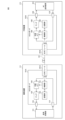
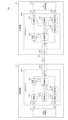
- FIG. 2 is a diagram illustrating the configurations of a master station device and a slave station device in an optical communication system according to the first embodiment of the present disclosure.
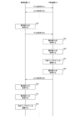
- FIG. 3 is a diagram illustrating an example of a sequence of gain adjustment of the variable ATT in the optical communication system according to the first embodiment of the present disclosure.
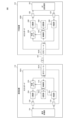
- FIG. 4 is a diagram illustrating configurations of a master station device and a slave station device in an optical communication system according to the second embodiment of the present disclosure.
- FIG. 5 is a diagram illustrating an example of a sequence of gain adjustment of a variable amplifier in a subsequent stage of an optical module in an optical communication system according to the second embodiment of the present disclosure.
- FIG. 6 is a diagram illustrating configurations of a master station device and a slave station device in an optical communication system according to the third embodiment of the present disclosure.
- FIG. 7 is a diagram illustrating an example of a sequence of gain adjustment of a variable amplifier in a front stage of an optical module in an optical communication system according to the third embodiment of the present disclosure.
- FIG. 8 is a diagram illustrating the configurations of a master station device and a slave station device in an optical communication system according to the fourth embodiment of the present disclosure.
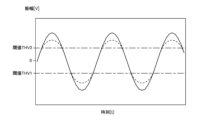
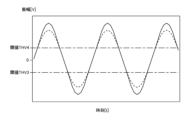
- FIG. 9 is a diagram illustrating an example of distortion correction of an electrical signal in an optical communication system according to the fourth embodiment of the present disclosure.
- FIG. 10 is a diagram illustrating an example of a sequence of distortion correction in an optical communication system according to the fourth embodiment of the present disclosure.
- FIG. 11 is a diagram illustrating the configurations of a master station device and a slave station device in an optical communication system according to the fifth embodiment of the present disclosure.
- FIG. 12 is a diagram illustrating an example of distortion correction of an electrical signal in an optical communication system according to the fifth embodiment of the present disclosure.
- FIG. 13 is a diagram illustrating an example of a sequence of distortion correction in an optical communication system according to the fifth embodiment of the present disclosure.
- the present disclosure has been made to solve the above-mentioned problems, and its purpose is to provide a signal processing device, an optical communication system, and an optical communication method that are capable of constructing an excellent optical communication system that compensates for optical loss according to the length of the optical fiber.
- a signal processing device is a signal processing device used in an optical communication system, and is connectable to an optical module that converts an optical signal received via an optical fiber into an electrical signal.
- the signal processing device includes an adjustment unit that performs at least one of amplification and attenuation of a communication signal included in the electrical signal output from the optical module connected to the signal processing device, and a control unit that acquires, from the optical module, reception level information indicating the reception intensity of the optical signal received by the optical module connected to the signal processing device, and adjusts the gain of the adjustment unit based on the acquired reception level information and a set value of the gain of the communication signal in the optical communication system.
- the signal processing device is configured to obtain reception level information from the optical module, and adjust the gain in the amplification or attenuation of the communication signal contained in the electrical signal output from the optical module based on the reception level information and the set value of the gain of the communication signal.
- the signal processing device compared to a configuration in which an adjustment unit and a control unit are placed in the optical module, for example, the dynamic range of the communication signal is expanded while compensating for optical loss according to the length of the optical fiber without complicating the configuration of the optical module. Therefore, it is possible to construct an excellent optical communication system that compensates for optical loss according to the length of the optical fiber.
- control unit may acquire transmission level information indicating the transmission strength of the optical signal in a device that transmits the optical signal to the optical fiber, and adjust the gain of the adjustment unit further based on the acquired transmission level information.
- This configuration allows for more accurate compensation of optical losses in the optical fiber.
- control unit may obtain the transmission level information from the electrical signal.
- This configuration makes it possible to obtain transmission level information with a simple configuration without requiring a dedicated line to transmit the transmission level information from the optical signal transmitter to the signal processor.
- control unit may adjust the gain of the adjustment unit based on correspondence information that indicates a correspondence relationship between the reception strength and the gain of the adjustment unit, the correspondence information being created based on the set value.
- This configuration makes it easy to adjust the gain of the adjustment unit according to the received strength of the optical signal.
- An optical communication system includes a first optical communication device and a second optical communication device connected to the first optical communication device via an optical fiber, the first optical communication device transmits a first optical signal including a communication signal to the second optical communication device, the second optical communication device converts the first optical signal received from the first optical communication device into an electrical signal and amplifies or attenuates the communication signal included in the electrical signal, and the second optical communication device adjusts the gain in amplifying or attenuating the communication signal based on the reception intensity of the first optical signal and a set value of the gain of the communication signal in the optical communication system.
- the second optical communication device adjusts the gain in the amplification or attenuation of the communication signal contained in the first optical signal based on the reception intensity of the first optical signal received from the first optical communication device and the set value of the gain of the communication signal in the optical communication system.
- This allows the optical loss in the optical communication system to be compensated for according to the length of the optical fiber. Therefore, it is possible to construct an excellent optical communication system that compensates for the optical loss according to the length of the optical fiber.
- the first optical communication device may generate a first control signal including transmission level information indicating the transmission intensity of the first optical signal, and transmit the first optical signal further including the generated first control signal to the second optical communication device, and the second optical communication device may obtain the transmission level information from the first control signal included in the received first optical signal, and further adjust the gain in amplifying or attenuating the communication signal based on the obtained transmission level information.
- This configuration allows for more accurate compensation of optical losses in the optical fiber.
- the first optical communication device may generate the first optical signal by modulating the amplified or attenuated communication signal
- the second optical communication device may generate a second control signal including OMI information indicating the OMI (Optical Modulation Index) of the received first optical signal
- the first optical communication device may obtain the OMI information from the second control signal included in the received second optical signal, and adjust the gain in amplifying or attenuating the communication signal based on the obtained OMI information.
- This configuration makes it possible to compensate for individual variations in the EO conversion curve of the EO element that generates the first optical signal.
- the second optical communication device may acquire characteristic information indicating optical modulation characteristics in the first optical communication device, and correct the communication signal based on the acquired characteristic information.
- This configuration makes it possible to compensate for the nonlinearity of the EO conversion curve in the EO element that generates the first optical signal in the second optical communication device.
- the first optical communication device may acquire characteristic information indicating optical modulation characteristics in the first optical communication device, correct the communication signal based on the acquired characteristic information, and generate the first optical signal by modulating the corrected communication signal.
- This configuration makes it possible to compensate for the nonlinearity of the EO conversion curve in the EO element that generates the first optical signal in the first optical communication device.
- An optical communication method is an optical communication method in an optical communication system including a first optical communication device and a second optical communication device connected to the first optical communication device via an optical fiber, the method including the steps of: the first optical communication device transmitting a first optical signal including a communication signal to the second optical communication device; and the second optical communication device converting the first optical signal received from the first optical communication device into an electrical signal and amplifying or attenuating the communication signal included in the electrical signal, and in the step of the second optical communication device amplifying or attenuating the communication signal, the gain in amplifying or attenuating the communication signal is adjusted based on the reception intensity of the first optical signal and a set value of the gain of the communication signal in the optical communication system.
- the optical communication method is a method in which the second optical communication device adjusts the gain in the amplification or attenuation of the communication signal contained in the first optical signal based on the reception intensity of the first optical signal received from the first optical communication device and the set value of the gain of the communication signal in the optical communication system.
- the optical communication method compensates for optical loss according to the length of the optical fiber. Therefore, it is possible to construct an excellent optical communication system that compensates for optical loss according to the length of the optical fiber.
- FIG. 1 is a diagram illustrating a configuration of an optical communication system according to a first embodiment of the present disclosure.
- an optical communication system 301 includes a master station device 111 and a slave station device 211.
- the master station device 111 and the slave station device 211 are an example of a first optical communication device and an example of a second optical communication device.
- the master station device 111 and the slave station device 211 are connected to each other via an optical fiber 191.
- the optical communication system 301 may include a plurality of slave station devices 211.
- the plurality of slave station devices 211 are connected to the master station device 111 via one optical fiber 191 and an optical coupler.
- the optical communication system 301 is an analog RoF (Radio over Fiber) system.
- the parent station device 111 and the child station device 211 transmit and receive optical signals including communication data via the optical fiber 191.
- the optical signal transmitted from the child station device 211 to the parent station device 111 is also referred to as an upstream optical signal
- the optical signal transmitted from the parent station device 111 to the child station device 211 is also referred to as a downstream optical signal.
- the upstream optical signal and the downstream optical signal are an example of a first optical signal and an example of a second optical signal.
- the parent station device 111 and the child station device 211 may be connected to each other via two optical fibers 191. In this case, the parent station device 111 and the child station device 211 transmit and receive upstream optical signals via the first optical fiber 191, and transmit and receive downstream optical signals via the second optical fiber 191.
- the optical communication system 301 When the optical communication system 301 is applied to mobile wireless communication, for example, the TDD (Time Division Duplex) method is adopted in the mobile wireless communication.
- the TDD Time Division Duplex
- an upstream transmission period for transmitting communication data from the slave station device 211 to the master station device 111 and a downstream transmission period for transmitting communication data from the master station device 111 to the slave station device 211 are switched and alternately repeated.
- the master station device 111 receives an OFDM (Orthogonal Frequency Division Multiplexing) modulated analog signal including communication data from a base station device (not shown).
- the master station device 111 generates an RF (Radio Frequency) signal Srd by frequency converting the received analog signal.
- the master station device 111 transmits a downstream optical signal including the generated RF signal Srd to the slave station device 211 via the optical fiber 191.
- the master station device 111 may be configured to receive the RF signal Srd from the base station device.
- the RF signal Srd is an example of a communication signal.
- the slave station device 211 receives a downstream optical signal from the master station device 111 via the optical fiber 191.
- the slave station device 211 acquires an RF signal Srd from the received downstream optical signal, and transmits the acquired RF signal Srd via an antenna (not shown).
- the slave station device 211 may also be configured to transmit a signal based on the acquired RF signal Srd to another device via a wired connection.
- the slave station device 211 also receives an OFDM-modulated millimeter wave RF signal Sru including communication data via an antenna (not shown). During an upstream transmission period, the slave station device 211 transmits an upstream optical signal including the received RF signal Sru to the master station device 111 via the optical fiber 191. Note that instead of receiving the RF signal Sru via an antenna, the slave station device 211 may be configured to receive a signal including communication data via a wired connection and generate the RF signal Sru based on the received signal.
- the RF signal Sru is an example of a communication signal.
- the parent station device 111 receives an upstream optical signal from the child station device 211 via the optical fiber 191.
- the parent station device 111 acquires an RF signal Sru from the received upstream optical signal, and transmits a signal based on the acquired RF signal Sru to the base station device.
- FIG. 2 is a diagram showing the configuration of a master station device and a slave station device in an optical communication system according to a first embodiment of the present disclosure.
- the master station device 111 includes a host board 101A, an optical module 201A, and a signal processing unit 121.
- the slave station device 211 includes a host board 101B, an optical module 201B, and an RF transceiver unit 221.
- each of the host boards 101A and 101B will also be referred to as a host board 101
- each of the optical modules 201A and 201B will also be referred to as an optical module 201.
- the host board 101 is an example of a signal processing device used in the optical communication system 301.
- Host board 101A includes an input connector 11A, an output connector 12A, a control unit 13A, a variable ATT (Attenuator) 14A, an amplifier 15A, and a memory unit 16A.
- Host board 101B includes an input connector 11B, an output connector 12B, a control unit 13B, a variable ATT 14B, an amplifier 15B, and a memory unit 16B. Note that host board 101A may not include amplifier 15A, and host board 101B may not include amplifier 15B.
- each of the input connectors 11A and 11B will also be referred to as an input connector 11
- each of the output connectors 12A and 12B will also be referred to as an output connector 12
- each of the control units 13A and 13B will also be referred to as a control unit 13
- each of the variable ATTs 14A and 14B will also be referred to as a variable ATT 14
- each of the amplifiers 15A and 15B will also be referred to as an amplifier 15
- each of the memory units 16A and 16B will also be referred to as a memory unit 16.
- the variable ATT 14 is an example of an adjustment unit.
- the variable ATT 14 and the amplifier 15 may be differentially driven or single-endedly driven.
- Part or all of the control unit 13 is realized, for example, by a processing circuit (Circuitry) including one or more processors.
- the memory unit 16 is, for example, a non-volatile memory included in the processing circuit.
- Optical module 201 includes an EO element that converts an electrical signal into an optical signal, and an OE element that converts an optical signal into an electrical signal.
- Optical module 201A and optical module 201B are connected to each other via optical fiber 191.
- optical module 201 is a small pluggable type module, such as SFP (Small Form-factor Pluggable).
- SFP Small Form-factor Pluggable
- optical module 201 is not limited to SFP, and may be QSFP (Quad Small Form-factor Pluggable) or XFP (10 Gigabit Small Form Factor Pluggable).
- the optical module 201 receives an electrical signal via the input connector 11 on the host board 101 and converts the received electrical signal into an optical signal.
- the optical module 201 transmits the converted optical signal to the optical fiber 191.
- the optical module 201 also receives an optical signal via the optical fiber 191 and converts the received optical signal into an electrical signal.
- the host board 101 can be connected to an optical module 201.
- the optical module 201A is connected to the host board 101A
- the optical module 201B is connected to the host board 101B. Note that multiple optical modules 201 may be connected to one host board 101.
- variable ATT 14 and amplifier 15 are arranged outside the optical module 201, thereby making it possible to miniaturize the optical module 201.
- thermal coupling between the EO element and the OE element and the variable ATT 14 and amplifier 15 can be reduced, thereby suppressing the temperature rise of the variable ATT 14 and amplifier 15.
- the signal processor 121 receives an OFDM-modulated analog signal including communication data from a base station (not shown).
- the signal processor 121 generates an RF signal Srd by frequency-converting the received analog signal.
- the signal processor 121 outputs the generated RF signal Srd to the host board 101A during a downstream transmission period.
- the signal processor 121 may be configured to receive the RF signal Srd from the base station and output the received RF signal Srd to the host board 101A.
- the signal processor 121 may also be configured to adjust the level of the signal received from the base station when the level of the signal received from the base station does not match the input level of the optical module 201A.
- the optical module 201A receives the RF signal Srd from the signal processing unit 121 via the input connector 11A on the host board 101A, and generates a downstream optical signal with a wavelength ⁇ 1 by optically modulating the RF signal Srd, which is an electrical signal.
- the optical module 201A transmits the generated downstream optical signal to the optical fiber 191.
- the optical module 201B in the slave station 211 receives the downstream optical signal via the optical fiber 191, generates an electrical signal at a level corresponding to the intensity of the received downstream optical signal, and outputs the generated electrical signal, that is, the RF signal Srd, to the variable ATT 14B.
- the variable ATT 14B attenuates the electrical signal output from the optical module 201B. More specifically, the variable ATT 14B attenuates the RF signal Srd received from the optical module 201B, and outputs the attenuated RF signal Srd to the amplifier 15B.
- the amplifier 15B amplifies the RF signal Srd received from the variable ATTB at a predetermined amplification rate, and outputs the amplified RF signal Srd to the RF transceiver unit 221 via the output connector 12B.
- the RF transceiver 221 receives the RF signal Srd from the optical module 201B, amplifies the received RF signal Srd, and transmits the amplified RF signal Srd via an antenna (not shown).
- the RF transceiver 221 receives an OFDM-modulated millimeter wave RF signal Sru including communication data via an antenna (not shown). During an upstream transmission period, the RF transceiver 221 amplifies the received RF signal Sru and outputs the amplified RF signal Sru to the host board 101B.
- Optical module 201B receives RF signal Sru from RF transceiver 221 via input connector 11B on host board 101B, and generates an upstream optical signal with wavelength ⁇ 2 by optically modulating RF signal Sru, which is an electrical signal. Optical module 201B transmits the generated upstream optical signal to optical fiber 191.
- the optical module 201A in the parent station 111 receives the upstream optical signal via the optical fiber 191, generates an electrical signal at a level corresponding to the intensity of the received upstream optical signal, and outputs the generated electrical signal, the RF signal Sru, to the variable ATT 14A.
- the variable ATT 14A attenuates the electrical signal output from the optical module 201A. More specifically, the variable ATT 14A attenuates the RF signal Sru received from the optical module 201A, and outputs the attenuated RF signal Sru to the amplifier 15A.
- the amplifier 15A amplifies the RF signal Sru received from the variable ATTA at a predetermined amplification rate, and outputs the amplified RF signal Sru to the signal processing unit 121 via the output connector 12A.
- the signal processing unit 121 receives the RF signal Sru from the optical module 201A, and transmits to the base station device an analog signal obtained by frequency-converting, for example down-converting, the received RF signal Sru.
- the signal processing unit 121 may be configured to transmit the RF signal Sru received from the optical module 201A to the base station device without frequency-converting it.
- the signal processing unit 121 may also be configured to adjust the level of the RF signal Sru received from the optical module 201A, and transmit to the base station device a signal obtained by frequency-converting the level-adjusted RF signal Sru, or the level-adjusted RF signal Sru.
- the slave station device 211 adjusts the gain in attenuation of the RF signal Srd based on the reception strength of the downstream optical signal and a set value SVd of the gain of the RF signal Srd in the optical communication system 301.
- the set value SVd is a set value of the gain of the RF signal Srd received by the host board 101A and the RF signal Srd output by the host board 101B.
- control unit 13B in the host board 101B acquires a current value C1d indicating the reception strength of the downstream optical signal received by the optical module 201B from the optical module 201B.
- the control unit 13B adjusts the gain of the variable ATT 14B based on the acquired current value C1d and the set value SVd, for example, at an adjustment timing according to a predetermined cycle.
- the current value C1d is an example of reception level information.
- the optical module 201B includes a PD (photodiode) that receives a downstream optical signal and outputs a current corresponding to the reception intensity of the downstream optical signal.
- the optical module 201A holds a current value C1d that indicates the magnitude of the current output by the PD.
- the control unit 13B on the host board 101B acquires the current value C1d from the optical module 201B.
- the memory unit 16B stores a gain setting table TS1d that indicates the correspondence between the current value C1d and the gain of the variable ATT 14B, which is created based on a predetermined setting value SVd.
- the gain setting table TS1d is an example of correspondence information.
- the control unit 13B adjusts the gain of the variable ATT 14B based on the gain setting table TS1d in the memory unit 16B. More specifically, when the control unit 13B acquires the current value C1d, it refers to the gain setting table TS1d in the memory unit 16B and acquires the gain corresponding to the acquired current value C1d. Then, the control unit 13B sets the gain of the variable ATT 14B to the acquired gain.
- the master station 111 adjusts the gain in attenuation of the RF signal Sru based on the reception strength of the upstream optical signal and a set value SVu of the gain of the RF signal Sru in the optical communication system 301.
- the set value SVu is a set value of the gain of the RF signal Sru received by the host board 101B and the RF signal Sru output by the host board 101A.
- the set value SVu may be the same as or different from the set value SVd.
- control unit 13A in the host board 101A acquires a current value C1u indicating the reception strength of the upstream optical signal received by the optical module 201A from the optical module 201A.
- the control unit 13A adjusts the gain of the variable ATT 14A based on the acquired current value C1u and the set value SVu, for example, at an adjustment timing according to a predetermined cycle.
- the current value C1u is an example of reception level information.
- the optical module 201A includes a PD that receives an upstream optical signal and outputs a current corresponding to the reception strength of the upstream optical signal.
- the optical module 201A holds a current value C1u that indicates the magnitude of the current output by the PD.
- the control unit 13A on the host board 101A obtains the current value C1u from the optical module 201A.
- the memory unit 16A stores a gain setting table TS1u that indicates the correspondence between the current value C1u and the gain of the variable ATT 14A, which is created based on a predetermined setting value SVu.
- the gain setting table TS1u is an example of correspondence information.
- the control unit 13A adjusts the gain of the variable ATT 14A based on the gain setting table TS1u in the memory unit 16A. More specifically, when the control unit 13A acquires the current value C1u, it refers to the gain setting table TS1u in the memory unit 16A and acquires the gain corresponding to the acquired current value C1u. Then, the control unit 13A sets the gain of the variable ATT 14A to the acquired gain.
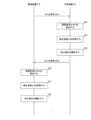
- FIG. 3 is a diagram illustrating an example of a sequence of gain adjustment of the variable ATT in the optical communication system according to the first embodiment of the present disclosure.
- the parent station device 111 transmits a downstream optical signal including the RF signal Srd to the child station device 211 via the optical fiber 191 (step S11).
- the slave station device 211 acquires a current value C1d indicating the reception strength of the downstream optical signal received by the optical module 201B (step S12).
- the slave station device 211 adjusts the gain of the variable ATT 14B based on the acquired current value C1d and the setting value SVd. More specifically, the control unit 13B in the host board 101B refers to the gain setting table TS1d in the memory unit 16B to acquire the gain corresponding to the current value C1d. Then, the control unit 13B sets the gain of the variable ATT 14B to the acquired gain (step S13).
- the slave station device 211 transmits an upstream optical signal including the RF signal Sru to the master station device 111 via the optical fiber 191 (step S14).
- the parent station 111 acquires a current value C1u indicating the reception strength of the upstream optical signal received by the optical module 201A (step S15).
- the parent station device 111 adjusts the gain of the variable ATT 14A based on the acquired current value C1u and the setting value SVu. More specifically, the control unit 13A in the host board 101A refers to the gain setting table TS1u in the memory unit 16A to acquire the gain corresponding to the current value C1u. Then, the control unit 13A sets the gain of the variable ATT 14A to the acquired gain (step S16).
- steps S12, S13 and steps S15, S16 is not limited to the above, and they may be interchanged or performed in parallel.
- the control unit 13A in the host board 101A is configured to adjust the gain of the variable ATT 14A based on the gain setting table TS1u in the memory unit 16A, but this is not limited to the above.
- the control unit 13A may also be configured to acquire a setting value SVu from the optical module 201A, calculate a target value for the gain of the variable ATT 14A based on the acquired setting value SVu and current value C1u, and set the gain of the variable ATT 14A to the calculated target value.
- control unit 13B in the host board 101B of the slave station device 211 may be configured to acquire the setting value SVd from the optical module 201B, calculate a target value for the gain of the variable ATT 14B based on the acquired setting value SVd and current value C1d, and set the gain of the variable ATT 14B to the calculated target value.
- the host board 101A is configured to include a variable ATT 14A and an amplifier 15A, but this is not limited to this.
- the host board 101A may be configured to include a variable amplifier that amplifies the RF signal Sru, and not to include the variable ATT 14A and the amplifier 15A.
- the control unit 13A adjusts the gain of the variable amplifier based on the current value C1u and the set value SVu.
- the host board 101B of the slave station device 211 may be configured to include a variable amplifier that amplifies the RF signal Srd, but not include the variable ATT 14B and the amplifier 15B.
- the control unit 13A adjusts the gain of the variable amplifier based on the current value C1d and the set value SVd.
- optical communication system 301 is described as an analog RoF system, this is not limited to this.
- the optical communication system 301 may be an IFOF (Intermediate Frequency over Fiber) system.
- the signal processing unit 121 outputs an IF signal Srdif of, for example, several GHz to the host board 101A instead of the RF signal Srdif.
- the optical module 201A receives the IF signal Srdif from the signal processing unit 121 via the input connector 11A on the host board 101A, generates a downstream optical signal of wavelength ⁇ 1 in which the IF signal Srdif is optically modulated, and transmits the generated downstream optical signal to the optical fiber 191.
- the IF signal Srdif is an example of a communication signal.
- the optical module 201B in the slave station device 211 receives a downstream optical signal via the optical fiber 191, generates an IF signal Srdif at a level corresponding to the intensity of the received downstream optical signal, and outputs the generated IF signal Srdif to the variable ATT 14B.
- the variable ATT 14B attenuates the IF signal Srdif received from the optical module 201B, and outputs the attenuated IF signal Srdif to the amplifier 15B.
- the amplifier 15B amplifies the IF signal Srdif received from the variable ATTB by a predetermined amplification factor, and outputs the amplified IF signal Srdif to the RF transceiver 221 via the output connector 12B.
- the RF transceiver 221 receives the IF signal Srdif from the optical module 201B, and generates a millimeter wave band RF signal Srd by up-converting the received IF signal Srdif, and amplifies the generated RF signal Srd and transmits it via an antenna not shown.
- the control unit 13B in the slave station device 211 adjusts the gain in attenuation of the IF signal Srdif based on the received strength of the downstream optical signal and the set value SVd of the gain of the IF signal Srdif in the optical communication system 301.
- the RF transceiver 221 also down-converts the RF signal Sru to generate an IF signal Sruif of, for example, several GHz, and outputs the generated IF signal Sruif to the host board 101B.
- the optical module 201B receives the IF signal Sruif from the RF transceiver 221 via the input connector 11B on the host board 101B, generates an upstream optical signal of wavelength ⁇ 2 by optically modulating the received IF signal Sruif, and transmits the generated upstream optical signal to the optical fiber 191.
- the IF signal Sruif is an example of a communication signal.
- the optical module 201A in the parent station 111 receives an upstream optical signal via the optical fiber 191, generates an IF signal Sruif at a level corresponding to the intensity of the received upstream optical signal, and outputs the generated IF signal Sruif to the variable ATT 14A.
- the variable ATT 14A attenuates the IF signal Sruif received from the optical module 201A, and outputs the attenuated IF signal Sruif to the amplifier 15A.
- the amplifier 15A amplifies the IF signal Sruif received from the variable ATT by a predetermined amplification factor, and outputs the amplified IF signal Sruif to the signal processing unit 121 via the output connector 12A.
- the signal processing unit 121 receives the IF signal Sruif from the optical module 201A, and transmits the received IF signal Sruif to the base station device.
- the control unit 13A in the parent station 111 adjusts the gain in attenuation of the IF signal Sruif based on the received strength of the upstream optical signal and the set value SVu of the gain of the IF signal Sruif in the optical communication system 301.
- This embodiment relates to an optical communication system 302 that adjusts the gain of an adjustment unit based on the transmission intensity of an optical signal in addition to the optical communication system 301 according to the first embodiment.
- the contents other than those described below are the same as those of the optical communication system 301 according to the first embodiment.
- FIG. 4 is a diagram showing the configuration of a master station device and a slave station device in an optical communication system according to a second embodiment of the present disclosure.
- optical communication system 302 compared to optical communication system 301, includes master station device 112 instead of master station device 111, and includes slave station device 212 instead of slave station device 211.
- the parent station device 112 has a host board 102A instead of the host board 101A.
- the child station device 212 has a host board 102B instead of the host board 101B.
- each of the host boards 102A and 102B will also be referred to as the host board 102.
- the host board 102 is an example of a signal processing device used in the optical communication system 302.
- host board 102A has a control unit 21A and a memory unit 25A instead of control unit 13A and memory unit 16A. Also, compared to host board 101A, host board 102A does not have a variable ATT 14A and amplifier 15A, and has a multiplexing unit 22A, a variable amplifier 23A, and a separation unit 24A. Compared to host board 101B, host board 102B has a control unit 21B and a memory unit 25B instead of control unit 13B and memory unit 16B. Also, compared to host board 101B, host board 102B does not have a variable ATT 14B and amplifier 15B, and has a multiplexing unit 22B, a variable amplifier 23B, and a separation unit 24B.
- each of the control units 21A and 21B will also be referred to as a control unit 21, each of the multiplexing units 22A and 22B will also be referred to as a multiplexing unit 22, each of the variable amplifiers 23A and 23B will also be referred to as a variable amplifier 23, each of the separation units 24A and 24B will also be referred to as a separation unit 24, and each of the memory units 25A and 25B will also be referred to as a memory unit 25.
- the variable amplifier 23 is an example of an adjustment unit.
- the multiplexing unit 22 and the separation unit 24 are diplexers.
- Part or all of the control unit 21 is realized, for example, by a processing circuit (Circuitry) including one or more processors.
- the memory unit 25 is, for example, a non-volatile memory included in the processing circuit.
- the variable amplifier 23 amplifies the electrical signal output from the optical module 201. More specifically, the variable amplifier 23 amplifies the electrical signal received from the optical module 201, and outputs the amplified electrical signal to the separation unit 24.
- the control unit 21 adjusts the gain of the variable amplifier 23.
- the master station device 112 generates a digital signal Sdd1 including a current value C2d indicating the transmission intensity of the downstream optical signal, and transmits a downstream optical signal further including the generated digital signal Sdd1 to the slave station device 212.
- the master station device 112 transmits a downstream optical signal including an RF signal Srd and a digital signal Sdd1 to the slave station device 212 according to AMCC (Auxiliary Management and Control Channel) technology.
- the current value C2d is an example of transmission level information.
- the digital signal Sdd1 is an example of a first control signal.
- the optical module 201A includes a PD that outputs a current corresponding to the transmission intensity of the generated downstream optical signal.
- the optical module 201A holds a current value C2d that indicates the magnitude of the current output by the PD.
- the control unit 21A in the host board 102A acquires the current value C2d from the optical module 201A.
- the control unit 21A generates a digital signal Sdd1 including the acquired current value C2d, and outputs the generated digital signal Sdd1 to the multiplexing unit 22A.
- the multiplexing unit 22A frequency-multiplexes the RF signal Srd received from the signal processing unit 121 via the input connector 11A and the digital signal Sdd1 received from the control unit 21A.
- the multiplexing unit 22A generates an electrical signal in which the RF signal Srd and the digital signal Sdd1 are frequency-multiplexed, and outputs the electrical signal to the optical module 201A.
- Optical module 201A generates a downstream optical signal with wavelength ⁇ 1 by optically modulating the electrical signal received from multiplexer 22A, and transmits the generated downstream optical signal to optical fiber 191.
- the optical module 201B in the slave station 212 receives the downstream optical signal via the optical fiber 191, generates an electrical signal at a level corresponding to the intensity of the received downstream optical signal, and outputs the generated electrical signal to the variable amplifier 23B.
- variable amplifier 23B amplifies the electrical signal received from the optical module 201B and outputs it to the separation unit 24B.
- the separation unit 24B separates the RF signal Srd and the digital signal Sdd1 contained in the electrical signal received from the variable amplifier 23B, outputs the RF signal Srd to the RF transceiver unit 221 via the output connector 12B, and outputs the digital signal Sdd1 to the control unit 21B.
- the slave station device 212 acquires a current value C2d from the digital signal Sdd1 included in the received downstream optical signal, and adjusts the gain in amplifying the RF signal Srd based on the acquired current value C2d. That is, the slave station device 212 receives a downstream optical signal including the RF signal Srd and the digital signal Sdd1, and adjusts the gain in amplifying the RF signal Srd based on the current value C2d acquired from the digital signal Sdd1.
- control unit 21B in the host board 102B obtains the current value C2d from, for example, the electrical signal output from the optical module 201B.
- the control unit 21B adjusts the gain of the variable amplifier 23B based on the obtained current value C2d.
- control unit 21B obtains a current value C2d from the digital signal Sdd1 received from the separation unit 24B.
- the control unit 21B also obtains a current value C1d from the optical module 201B.
- the control unit 21B then calculates a differential current value Dd by subtracting the current value C1d indicating the reception strength of the downstream optical signal from the current value C2d indicating the transmission strength of the downstream optical signal.
- the memory unit 25B stores a gain setting table TS2d that indicates the correspondence between the differential current value Dd and the gain of the variable amplifier 23B, which is created based on a predetermined setting value SVd.
- the gain setting table TS2d is an example of correspondence information.
- control unit 21B calculates the differential current value Dd, it refers to the gain setting table TS2d in the memory unit 25B and obtains the gain corresponding to the calculated differential current value Dd. Then, the control unit 21B sets the gain of the variable amplifier 23B to the obtained gain.
- the slave station device 212 generates a digital signal Sdu1 including a current value C2u indicating the transmission intensity of an upstream optical signal, and transmits an upstream optical signal further including the generated digital signal Sdu1 to the master station device 112. For example, the slave station device 212 transmits an upstream optical signal including an RF signal Sru and a digital signal Sdu1 to the master station device 112 according to the AMCC technique.
- the current value C2u is an example of transmission level information.
- the digital signal Sdu1 is an example of a first control signal.
- the optical module 201B includes a PD that outputs a current corresponding to the transmission intensity of the generated upstream optical signal.
- the optical module 201B holds a current value C2u that indicates the magnitude of the current output by the PD.
- the control unit 21B in the host board 102B acquires the current value C2u from the optical module 201B.
- the control unit 21B generates a digital signal Sdu1 including the acquired current value C2u, and outputs the generated digital signal Sdu1 to the multiplexing unit 22B.
- the multiplexing unit 22B frequency-multiplexes the RF signal Sru received from the RF transceiver unit 221 via the input connector 11B and the digital signal Sdu1 received from the control unit 21B.
- the multiplexing unit 22B generates an electrical signal in which the RF signal Sru and the digital signal Sdu1 are frequency-multiplexed, and outputs the electrical signal to the optical module 201B.
- Optical module 201B generates an upstream optical signal with wavelength ⁇ 2 by optically modulating the electrical signal received from multiplexer 22B, and transmits the generated upstream optical signal to optical fiber 191.
- the optical module 201A in the parent station 112 receives the upstream optical signal via the optical fiber 191, generates an electrical signal at a level corresponding to the intensity of the received upstream optical signal, and outputs the generated electrical signal to the variable amplifier 23A.
- variable amplifier 23A amplifies the electrical signal received from the optical module 201A and outputs it to the separation unit 24A.
- the separation unit 24A separates the RF signal Sru and the digital signal Sdu1 contained in the electrical signal received from the variable amplifier 23A, outputs the RF signal Sru to the signal processing unit 121 via the output connector 12A, and outputs the digital signal Sdu1 to the control unit 21A.
- the parent station device 112 acquires a current value C2u from the digital signal Sdu1 contained in the received upstream optical signal, and adjusts the gain in amplifying the RF signal Sru based on the acquired current value C2u. In other words, the parent station device 112 receives an upstream optical signal including the RF signal Sru and the digital signal Sdu1, and adjusts the gain in amplifying the RF signal Sru based on the current value C2u acquired from the digital signal Sdu1.
- control unit 21A in the host board 102A obtains the current value C2u from, for example, the electrical signal output from the optical module 201A.
- the control unit 21A adjusts the gain of the variable amplifier 23A based on the obtained current value C2u.
- control unit 21A obtains a current value C2u from the digital signal Sdu1 received from the separation unit 24A.
- the control unit 21A also obtains a current value C1u from the optical module 201A.
- the control unit 21A then calculates a differential current value Du by subtracting the current value C1u indicating the reception strength of the upstream optical signal from the current value C2u indicating the transmission strength of the upstream optical signal.
- the memory unit 25A stores a gain setting table TS2u that indicates the correspondence between the differential current value Du and the gain of the variable amplifier 23A, which is created based on a predetermined setting value SVu.
- the gain setting table TS2u is an example of correspondence information.
- control unit 21A calculates the differential current value Du, it refers to the gain setting table TS2u in the memory unit 25A to obtain the gain corresponding to the calculated differential current value Du. Then, the control unit 21A sets the gain of the variable amplifier 23A to the obtained gain.
- FIG. 5 is a diagram illustrating an example of a sequence of gain adjustment of a variable amplifier in a subsequent stage of an optical module in an optical communication system according to the second embodiment of the present disclosure.
- the parent station device 112 transmits a downstream optical signal including the RF signal Srd to the child station device 212 via the optical fiber 191 (step S21).
- the slave station device 212 transmits an upstream optical signal including the RF signal Sru to the master station device 112 via the optical fiber 191 (step S22).
- the parent station device 112 acquires a current value C2d indicating the transmission intensity of the downstream optical signal transmitted during the downstream transmission period (step S23).
- the parent station device 112 generates a digital signal Sdd1 including the current value C2d, and transmits a downstream optical signal including the generated digital signal Sdd1 and the RF signal Srd to the child station device 212 via the optical fiber 191 (step S24).
- the slave station device 212 obtains the current value C2d from the digital signal Sdd1 contained in the received downstream optical signal (step S25).
- the slave station device 212 acquires a current value C1d indicating the reception strength of the downstream optical signal received by the optical module 201B (step S26).
- the slave station device 212 adjusts the gain of the variable amplifier 23B based on the current value C2d, the current value C1d, and the setting value SVd. More specifically, the control unit 21B in the host board 102B calculates a differential current value Dd by subtracting the current value C1d from the current value C2d. The control unit 21B refers to the gain setting table TS2d in the memory unit 25B and obtains the gain corresponding to the calculated differential current value Dd. The control unit 21B then sets the gain of the variable amplifier 23B to the obtained gain (step S27).
- the slave station device 212 acquires a current value C2u indicating the transmission strength of the upstream optical signal transmitted during the upstream transmission period (step S28).
- the slave station device 212 generates a digital signal Sdu1 including the current value C2u, and transmits an upstream optical signal including the generated digital signal Sdu1 and the RF signal Sru to the master station device 112 via the optical fiber 191 (step S29).
- the parent station 112 obtains the current value C2u from the digital signal Sdu1 contained in the received upstream optical signal (step S30).
- the parent station 112 acquires a current value C1u indicating the reception strength of the upstream optical signal received by the optical module 201A (step S31).
- the parent station device 112 then adjusts the gain of the variable amplifier 23A based on the current value C2u, the current value C1u, and the setting value SVu. More specifically, the control unit 21A in the host board 102A calculates a differential current value Du by subtracting the current value C1u from the current value C2u. The control unit 21A refers to the gain setting table TS2u in the memory unit 25A to obtain a gain corresponding to the calculated differential current value Du. The control unit 21A then sets the gain of the variable amplifier 23A to the obtained gain (step S32).
- steps S23, S24, S25, S26, and S27 and steps S28, S29, S30, S31, and S32 is not limited to the above, and they may be interchanged or performed in parallel.
- control unit 21A in the host board 101A is configured to obtain the current value C2u from the electrical signal output from the optical module 201B, but this is not limited to the configuration.
- control unit 21A may be configured to receive the digital signal Sdu1 from the child station device 212 via a dedicated communication line and obtain the current value C2u from the received digital signal Sdu1.
- control unit 21B on the host board 101B of the slave station device 212 may be configured to receive the digital signal Sdd1 from the master station device 112 via a dedicated communication line and obtain the current value C2d from the received digital signal Sdd1.
- the parent station device 112 is configured to generate a digital signal Sdd1 including a current value C2d, but this is not limited to the above.
- the parent station device 112 may be configured to generate an analog signal Sad1 indicating the current value C2d instead of the digital signal Sdd1, and transmit a downstream optical signal including the RF signal Srd and the analog signal Sad1 to the child station device 212.
- the child station device 212 obtains the current value C2d from the analog signal Sad1 included in the received downstream optical signal, and adjusts the gain in amplifying the RF signal Srd based on the obtained current value C2d.
- the analog signal Sad1 is an example of a first control signal.
- the slave station device 212 is configured to generate a digital signal Sdu1 including a current value C2u, but this is not limited to the above.
- the slave station device 212 may be configured to generate an analog signal Sau1 indicating the current value C2u instead of the digital signal Sdu1, and transmit an upstream optical signal including the RF signal Sru and the analog signal Sau1 to the master station device 112.
- the master station device 112 obtains the current value C2u from the analog signal Sau1 included in the received upstream optical signal, and adjusts the gain in amplifying the RF signal Sru based on the obtained current value C2u.
- the analog signal Sau1 is an example of a first control signal.
- This embodiment relates to an optical communication system 303 that adjusts the gain in amplifying or attenuating an RF signal before optical modulation, as compared with the optical communication system 301 according to the first embodiment. Except for the contents described below, the optical communication system 303 is similar to the optical communication system 301 according to the first embodiment and the optical communication system 302 according to the second embodiment.
- FIG. 6 is a diagram showing the configuration of a master station device and a slave station device in an optical communication system according to a third embodiment of the present disclosure.
- optical communication system 303 compared to optical communication system 302, optical communication system 303 includes master station device 113 instead of master station device 112, and includes slave station device 213 instead of slave station device 212.
- the parent station equipment 113 has a host board 103A instead of the host board 102A.
- the child station equipment 213 has a host board 103B instead of the host board 102B.
- each of the host boards 103A and 103B will also be referred to as the host board 103.
- the host board 103 is an example of a signal processing device used in the optical communication system 303.
- host board 103A has a control unit 31A and a memory unit 33A instead of control unit 21A and memory unit 25A, and further has a variable amplifier 32A.
- host board 103B has a control unit 31B and a memory unit 33B instead of control unit 21B and memory unit 25B, and further has a variable amplifier 32B.
- each of the control units 31A and 31B will also be referred to as a control unit 31
- each of the variable amplifiers 32A and 32B will also be referred to as a variable amplifier 32
- each of the memory units 33A and 33B will also be referred to as a memory unit 33.
- a part or all of the control unit 31 is realized, for example, by a processing circuit including one or more processors.
- the memory unit 33 is, for example, a non-volatile memory included in the processing circuit.
- the variable amplifier 32 receives an electrical signal from the multiplexer 22, amplifies the received electrical signal, and outputs the amplified electrical signal to the optical module 201.
- the controller 31 adjusts the gain of the variable amplifier 32.
- the control unit 31A in the host board 103A of the master station 113 sets the gain of the variable amplifier 32A to a predetermined value when an adjustment timing that follows a predetermined cycle arrives.
- the variable amplifier 32A amplifies the electrical signal received from the multiplexer 22A at a predetermined amplification factor set by the controller 31A, and outputs the amplified electrical signal to the optical module 201A.
- Optical module 201A generates a downstream optical signal with wavelength ⁇ 1 by optically modulating the electrical signal received from variable amplifier 32A, and transmits the generated downstream optical signal to optical fiber 191.
- the slave station device 213 generates a digital signal Sdu2 including an OMI value Vd indicating the OMI of the received downstream optical signal, and transmits an upstream optical signal further including the generated digital signal Sdu2 to the master station device 113.
- the OMI value Vd is an example of OMI information.
- the digital signal Sdu2 is an example of a second control signal.
- Pdmax is the maximum value of the optical power PWd during the monitoring period.
- Pdave is the average value of the optical power PWd during the monitoring period.
- the OMI value Vd is a value that indicates the slope of the electrical-optical conversion curve of the optical module 201A in the parent station 113.
- the control unit 31B generates a digital signal Sdu2 that includes the calculated OMI value Vd, and outputs the generated digital signal Sdu2 to the multiplexing unit 22B.
- the multiplexing unit 22B frequency-multiplexes the RF signal Sru received from the RF transceiver unit 221 via the input connector 11B and the digital signal Sdu2 received from the control unit 31B.
- the multiplexing unit 22B generates an electrical signal in which the RF signal Sru and the digital signal Sdu2 are frequency-multiplexed, and outputs the electrical signal to the variable amplifier 32B.
- the variable amplifier 32B receives an electrical signal from the multiplexer 22B, amplifies the received electrical signal, and outputs it to the optical module 201B.
- Optical module 201B generates an upstream optical signal with wavelength ⁇ 2 by optically modulating the electrical signal received from variable amplifier 32B, and transmits the generated upstream optical signal to optical fiber 191.
- the optical module 201A in the parent station 113 receives the upstream optical signal via the optical fiber 191, generates an electrical signal at a level corresponding to the intensity of the received upstream optical signal, and outputs the generated electrical signal to the variable amplifier 23A.
- variable amplifier 23A amplifies the electrical signal received from the optical module 201A and outputs it to the separation unit 24A.
- the separation unit 24A separates the RF signal Sru and the digital signal Sdu2 contained in the electrical signal received from the variable amplifier 23A, outputs the RF signal Sru to the signal processing unit 121 via the output connector 12A, and outputs the digital signal Sdu2 to the control unit 31A.
- the parent station device 113 obtains the OMI value Vd from the digital signal Sdu2 contained in the received upstream optical signal, and adjusts the gain in amplifying the RF signal Srd based on the obtained OMI value Vd.
- control unit 31A obtains the OMI value Vd from the digital signal Sdu2 received from the separation unit 24A.
- the control unit 31A calculates a differential OMI value Vdd by subtracting the OMI value Vd from a preset target value Vtd of the downstream optical signal OMI.
- the memory unit 33A stores a gain setting table TS3d that indicates the correspondence between the differential OMI value Vdd and the gain of the variable amplifier 32A.
- control unit 31A calculates the differential OMI value Vdd, it refers to the gain setting table TS3d in the memory unit 33A to obtain the gain corresponding to the calculated differential OMI value Vdd. The control unit 31A then sets the gain of the variable amplifier 32A to the obtained gain.
- the gain adjustment of the variable amplifier 32A is repeated until the differential OMI value Vdd calculated by the control unit 31A becomes equal to or less than a predetermined value, and when the differential OMI value Vdd calculated by the control unit 31A becomes equal to or less than the predetermined value, the gain adjustment of the variable amplifier 23A is performed according to the procedure described above.
- a control unit 31B in the host board 103B of the slave station equipment unit 213 sets the gain of a variable amplifier 32B to a predetermined value when an adjustment timing according to a predetermined cycle arrives.
- the variable amplifier 32B amplifies the electrical signal received from the multiplexer 22B at a predetermined amplification factor set by the controller 31B, and outputs the amplified electrical signal to the optical module 201B.
- Optical module 201B generates an upstream optical signal with wavelength ⁇ 2 by optically modulating the electrical signal received from variable amplifier 32B, and transmits the generated upstream optical signal to optical fiber 191.
- the parent station device 113 generates a digital signal Sdd2 including an OMI value Vu indicating the OMI of the received upstream optical signal, and transmits a downstream optical signal including the generated digital signal Sdd2 to the child station device 213.
- the OMI value Vu is an example of OMI information.
- the digital signal Sdd2 is an example of a second control signal.
- Pumax is the maximum value of the optical power PWu during the monitoring period.
- Puave is the average value of the optical power PWu during the monitoring period.
- the OMI value Vu is a value that indicates the slope of the electrical-optical conversion curve of the optical module 201B in the slave station device 213.
- the control unit 31A generates a digital signal Sdd2 that includes the calculated OMI value Vu, and outputs the generated digital signal Sdd2 to the multiplexing unit 22A.
- the multiplexing unit 22A frequency-multiplexes the RF signal Srd received from the signal processing unit 121 via the input connector 11A and the digital signal Sdd2 received from the control unit 31A.
- the multiplexing unit 22A generates an electrical signal in which the RF signal Srd and the digital signal Sdd2 are frequency-multiplexed, and outputs the electrical signal to the variable amplifier 32A.
- the variable amplifier 32A receives an electrical signal from the multiplexer 22A, amplifies the received electrical signal, and outputs it to the optical module 201A.
- Optical module 201A generates a downstream optical signal with wavelength ⁇ 1 by optically modulating the electrical signal received from multiplexer 22A, and transmits the generated downstream optical signal to optical fiber 191.
- the optical module 201B in the slave station 213 receives the downstream optical signal via the optical fiber 191, generates an electrical signal at a level corresponding to the intensity of the received downstream optical signal, and outputs the generated electrical signal to the variable amplifier 23B.
- variable amplifier 23B amplifies the electrical signal received from the optical module 201B and outputs it to the separation unit 24B.
- the separation unit 24B separates the RF signal Srd and the digital signal Sdd2 contained in the electrical signal received from the variable amplifier 23B, outputs the RF signal Srd to the RF transceiver unit 221 via the output connector 12B, and outputs the digital signal Sdd2 to the control unit 31B.
- the slave station device 213 acquires the OMI value Vu from the digital signal Sdd2 contained in the received downstream optical signal, and adjusts the gain in amplifying the RF signal Sru based on the acquired OMI value Vu.
- control unit 31B obtains the OMI value Vu from the digital signal Sdd2 received from the separation unit 24B.
- the control unit 31B calculates a differential OMI value Vdu by subtracting the OMI value Vu from a preset target value Vtu of the OMI of the upstream optical signal.
- the memory unit 33B stores a gain setting table TS3u that indicates the correspondence between the differential OMI value Vdu and the gain of the variable amplifier 32B.
- control unit 31B calculates the differential OMI value Vdu, it refers to the gain setting table TS3u in the memory unit 33B to obtain the gain corresponding to the calculated differential OMI value Vdu. Then, the control unit 31B sets the gain of the variable amplifier 32B to the obtained gain.
- the gain adjustment of the variable amplifier 32B is repeated until the differential OMI value Vdu calculated by the control unit 31B becomes equal to or less than a predetermined value, and when the differential OMI value Vdu calculated by the control unit 31B becomes equal to or less than the predetermined value, the gain adjustment of the variable amplifier 23B is performed according to the procedure described above.
- FIG. 7 is a diagram illustrating an example of a sequence of gain adjustment of a variable amplifier in a front stage of an optical module in an optical communication system according to the third embodiment of the present disclosure.
- the parent station device 113 transmits a downstream optical signal to the child station device 213 via the optical fiber 191 (step S41).
- the slave station device 213 calculates the OMI value Vd indicating the OMI of the received downstream optical signal (step S42).
- the slave station equipment 213 generates a digital signal Sdu2 including the OMI value Vd, and transmits an upstream optical signal including the generated digital signal Sdu2 and the RF signal Sru to the master station equipment 113 via the optical fiber 191 (step S43).
- the parent station device 113 obtains the OMI value Vd from the digital signal Sdu2 contained in the received upstream optical signal (step S44).
- the parent station device 113 then adjusts the gain of the variable amplifier 32A based on the OMI value Vd. More specifically, the control unit 31A in the host board 103A calculates a differential OMI value Vdd by subtracting the OMI value Vd from the target value Vtd. The control unit 31A refers to the gain setting table TS3d in the memory unit 33A to obtain a gain corresponding to the calculated differential OMI value Vdd. The control unit 31A then sets the gain of the variable amplifier 32A to the obtained gain (step S45).
- the parent station 113 calculates an OMI value Vu indicating the OMI of the received upstream optical signal (step S46).
- the parent station device 113 generates a digital signal Sdd2 including the OMI value Vu, and transmits a downstream optical signal including the generated digital signal Sdd2 and the RF signal Srd to the child station device 213 via the optical fiber 191 (step S47).
- the slave station device 213 obtains the OMI value Vu from the digital signal Sdd2 contained in the received downstream optical signal (step S48).
- the slave station device 213 adjusts the gain of the variable amplifier 32B based on the OMI value Vu. More specifically, the control unit 31B in the host board 103B calculates a differential OMI value Vdu by subtracting the OMI value Vu from the target value Vtu. The control unit 31B refers to the gain setting table TS3u in the memory unit 33B to obtain a gain corresponding to the calculated differential OMI value Vdu. The control unit 31B then sets the gain of the variable amplifier 32B to the obtained gain (step S49).
- steps S42, S43, S44, and S45 and steps S46, S47, S48, and S49 is not limited to the above, and they may be interchanged or performed in parallel.
- the slave station device 213 is configured to generate a digital signal Sdu2 including the OMI value Vd, but this is not limited to the above.
- the slave station device 213 may be configured to generate an analog signal Sau2 indicating the OMI value Vd instead of the digital signal Sdu2, and transmit an upstream optical signal including the RF signal Sru and the analog signal Sau2 to the master station device 113.
- the master station device 113 obtains the OMI value Vd from the analog signal Sau2 included in the received upstream optical signal, and adjusts the gain in amplifying the RF signal Srd based on the obtained OMI value Vd.
- the analog signal Sau2 is an example of a second control signal.
- the parent station device 113 is configured to generate a digital signal Sdd2 including the OMI value Vu, but this is not limited to the configuration.
- the parent station device 113 may be configured to generate an analog signal Sad2 indicating the OMI value Vu instead of the digital signal Sdd2, and transmit a downstream optical signal including the RF signal Srd and the analog signal Sad2 to the child station device 213.
- the child station device 213 obtains the OMI value Vu from the analog signal Sad2 included in the received downstream optical signal, and adjusts the gain in amplifying the RF signal Sru based on the obtained OMI value Vu.
- the analog signal Sad2 is an example of a second control signal.
- This embodiment relates to an optical communication system 304 that corrects an electrical signal output from an optical module 201, as compared with the optical communication system 301 according to the first embodiment. Except for the contents described below, the optical communication system 304 is similar to the optical communication system 301 according to the first embodiment, the optical communication system 302 according to the second embodiment, and the optical communication system 303 according to the third embodiment.
- FIG. 8 is a diagram showing the configuration of a master station device and a slave station device in an optical communication system according to a fourth embodiment of the present disclosure.
- optical communication system 304 compared to optical communication system 302, includes master station device 114 instead of master station device 112, and includes slave station device 214 instead of slave station device 212.
- the parent station device 114 has a host board 104A instead of the host board 102A.
- the child station device 214 has a host board 104B instead of the host board 102B.
- each of the host boards 104A and 104B will also be referred to as the host board 104.
- the host board 104 is an example of a signal processing device used in the optical communication system 304.
- host board 104A has a control unit 41A and a memory unit 43A instead of control unit 21A and memory unit 25A, and further has a correction unit 42A.
- host board 104B has a control unit 41B and a memory unit 43B instead of control unit 21B and memory unit 25B, and further has a correction unit 42B.
- each of the control units 41A and 41B will also be referred to as a control unit 41
- each of the correction units 42A and 42B will also be referred to as a correction unit 42
- each of the storage units 43A and 43B will also be referred to as a storage unit 43.
- a part or all of the control unit 41 is realized, for example, by a processing circuit including one or more processors.
- the storage unit 43 is, for example, a non-volatile memory included in the processing circuit.
- the correction unit 42 corrects the analog electrical signal received from the variable amplifier 23. For example, in the initial state, the correction unit 42 outputs the electrical signal received from the variable amplifier 23 to the separation unit 24 without correcting it. When the correction unit 42 receives an instruction to start correction from the control unit 41, it starts correcting the electrical signal received from the variable amplifier 23 and outputs the corrected electrical signal to the separation unit 24.
- the slave station device 214 acquires the harmonic distortion HDd that indicates the optical modulation characteristics in the master station device 114, and corrects the RF signal Srd based on the acquired harmonic distortion HDd.
- the control unit 41B in the host board 104B calculates the harmonic distortion HDd of the electrical signal output from the optical module 201B.
- the harmonic distortion HDd is a value that indicates the nonlinearity of the electrical-to-optical conversion curve of the optical module 201A in the parent station 114.
- the harmonic distortion HDd is an example of characteristic information.
- the memory unit 43B stores a correction table TCd that indicates the correspondence between harmonic distortion HDd and correction coefficient Cd.
- control unit 41B When the control unit 41B calculates the harmonic distortion HDd, it references the correction table TCd in the memory unit 43B to obtain a correction coefficient Cd that corresponds to the calculated harmonic distortion HDd. The control unit 41B then outputs a correction start instruction including the obtained correction coefficient Cd to the correction unit 42B.
- the correction unit 42B receives a correction start instruction from the control unit 41B and holds the correction coefficient Cd included in the received correction start instruction.
- the correction unit 42B uses the correction coefficient Cd to correct the distortion of the electrical signal received from the variable amplifier 23B.
- FIG. 9 is a diagram showing an example of distortion correction of an electrical signal in an optical communication system according to a fourth embodiment of the present disclosure.
- the vertical axis represents the amplitude [V] of the electrical signal
- the horizontal axis represents time [t].
- the dashed line in FIG. 9 indicates the waveform of the electrical signal output from variable amplifier 23B to correction unit 42B.
- the solid line in FIG. 9 indicates the waveform of the electrical signal after correction by correction unit 42B.
- the electrical signal output from optical module 201B has a waveform with a lower amplitude peak due to the nonlinearity of the electrical-to-optical conversion curve of optical module 201A.
- the correction unit 42B performs distortion correction on the electrical signal received from the variable amplifier 23A by multiplying the amplitude values greater than a predetermined threshold THV2 and the amplitude values less than a predetermined threshold THV1 by a correction coefficient Cd, which is a value of 1 or more.
- the correction unit 42B outputs the electrical signal after distortion correction to the separation unit 24B.
- the gain of the variable amplifier 23B is adjusted according to the procedure described above.
- the master station device 114 obtains the harmonic distortion HDu indicating the optical modulation characteristics in the slave station device 214, and corrects the RF signal Sru based on the obtained harmonic distortion HDu.
- control unit 41A in the host board 104A calculates the harmonic distortion HDu of the electrical signal output from the optical module 201A.
- the harmonic distortion HDu is a value that indicates the nonlinearity of the electrical-to-optical conversion curve of the optical module 201B in the slave station device 214.
- the harmonic distortion HDu is an example of characteristic information.
- the memory unit 43A stores a correction table TCu that indicates the correspondence between harmonic distortion HDu and correction coefficient Cu.
- control unit 41A calculates the harmonic distortion HDu, it refers to the correction table TCu in the memory unit 43A to obtain a correction coefficient Cu that corresponds to the calculated harmonic distortion HDu.
- the control unit 41A then outputs a correction start instruction including the obtained correction coefficient Cu to the correction unit 42A.
- the correction unit 42A receives a correction start instruction from the control unit 41A and holds the correction coefficient Cu included in the received correction start instruction.
- the correction unit 42A uses the correction coefficient Cu to perform distortion correction of the electrical signal received from the variable amplifier 23A.
- the correction unit 42A corrects the distortion of the electrical signal received from the variable amplifier 23A by multiplying the amplitude values greater than the threshold THV2 and smaller than the threshold THV1 by a correction coefficient Cu, which is a value equal to or greater than 1.
- the correction unit 42A outputs the electrical signal after distortion correction to the separation unit 24A.
- the gain of the variable amplifier 23A is adjusted according to the procedure described above.
- FIG. 10 is a diagram illustrating an example of a sequence of distortion correction in an optical communication system according to the fourth embodiment of the present disclosure.
- the parent station device 114 transmits a downstream optical signal to the child station device 214 via the optical fiber 191 (step S51).
- the slave station device 214 calculates the harmonic distortion HDd of the electrical signal output from the optical module 201B (step S52).
- the slave station device 214 refers to the correction table TCd in the memory unit 43B to obtain the correction coefficient Cd corresponding to the calculated harmonic distortion HDd (step S53).
- the slave station device 214 starts distortion correction using the correction coefficient Cd. More specifically, the correction unit 42B in the host board 104B starts distortion correction of the electrical signal received from the variable amplifier 23B using the correction coefficient Cd (step S54).
- the slave station device 214 transmits the upstream optical signal to the master station device 114 via the optical fiber 191 (step S55).
- the parent station 114 calculates the harmonic distortion HDu of the electrical signal output from the optical module 201A (step S56).
- the parent station device 114 refers to the correction table TCu in the memory unit 43A to obtain the correction coefficient Cu that corresponds to the calculated harmonic distortion HDu (step S57).
- the parent station device 114 starts distortion correction using the correction coefficient Cu. More specifically, the correction unit 42A in the host board 104A starts distortion correction of the electrical signal received from the variable amplifier 23A using the correction coefficient Cu (step S58).
- steps S52, S53, S54 and steps S56, S57, S58 is not limited to the above, and they may be interchanged or performed in parallel.
- the correction unit 42A in the host board 104A is configured to correct distortion of the analog electrical signal received from the variable amplifier 23A, but this is not limited to the configuration.
- the correction unit 42A may also be configured to correct distortion of the waveform indicated by the electrical signal output from the variable amplifier 23A and converted into digital form.
- the correction unit 42B in the host board 104B of the slave station device 214 may be configured to correct distortion in the waveform indicated by the electrical signal output from the variable amplifier 23B and converted into digital form.
- This embodiment relates to an optical communication system 305 that corrects an electrical signal output to an optical module 201, as compared with the optical communication system 301 according to the first embodiment. Except for the contents described below, the optical communication system 305 is similar to the optical communication system 301 according to the first embodiment, the optical communication system 302 according to the second embodiment, the optical communication system 303 according to the third embodiment, and the optical communication system 304 according to the fourth embodiment.
- FIG. 11 is a diagram showing the configuration of a master station device and a slave station device in an optical communication system according to a fifth embodiment of the present disclosure.
- optical communication system 305 compared to optical communication system 304, optical communication system 305 includes master station device 115 instead of master station device 114, and includes slave station device 215 instead of slave station device 214.
- the parent station device 115 has a host board 105A instead of the host board 104A.
- the child station device 215 has a host board 105B instead of the host board 104B.
- each of the host boards 105A and 105B will also be referred to as the host board 105.
- the host board 105 is an example of a signal processing device used in the optical communication system 305.
- host board 105A has a control unit 51A and a correction unit 52A instead of control unit 41A and correction unit 42A.
- host board 105B has a control unit 51B and a correction unit 52B instead of control unit 41B and correction unit 42B.
- each of the control units 51A and 51B will also be referred to as a control unit 51
- each of the correction units 52A and 52B will also be referred to as a correction unit 52.
- a part or all of the control unit 51 is realized, for example, by a processing circuit including one or more processors.
- the correction unit 52 corrects the electrical signal received from the multiplexing unit 22. For example, in the initial state, the correction unit 52 outputs the electrical signal received from the multiplexing unit 22 to the optical module 201 without correcting it. When the correction unit 52 receives an instruction to start correction from the control unit 51, it starts correcting the electrical signal received from the multiplexing unit 22 and outputs the corrected electrical signal to the optical module 201.
- the master station 115 acquires harmonic distortion HDd that indicates the optical modulation characteristics of the master station 115, and corrects the RF signal Srd based on the acquired harmonic distortion HDd.
- the master station 115 generates a downstream optical signal by modulating the corrected RF signal Srd.
- control unit 51B in the host board 105B acquires the correction coefficient Cd using the procedure described above.
- the control unit 51B generates a digital signal Sdu3 that includes the acquired correction coefficient Cd, and outputs the generated digital signal Sdu3 to the multiplexing unit 22B.
- the multiplexing unit 22B frequency-multiplexes the RF signal Sru received from the RF transceiver unit 221 via the input connector 11B and the digital signal Sdu3 received from the control unit 51B.
- the multiplexing unit 22B generates an electrical signal in which the RF signal Sru and the digital signal Sdu3 are frequency-multiplexed, and outputs the electrical signal to the correction unit 52B.
- the correction unit 52B receives an electrical signal from the multiplexing unit 22B and outputs the received electrical signal to the optical module 201B without correcting it.
- Optical module 201B generates an upstream optical signal with wavelength ⁇ 2 by optically modulating the electrical signal received from correction unit 52B, and transmits the generated upstream optical signal to optical fiber 191.
- the optical module 201A in the parent station 115 receives the upstream optical signal via the optical fiber 191, generates an electrical signal at a level corresponding to the intensity of the received upstream optical signal, and outputs the generated electrical signal to the variable amplifier 23A.
- variable amplifier 23A amplifies the electrical signal received from the optical module 201A and outputs it to the separation unit 24A.
- the separation unit 24A separates the RF signal Sru and the digital signal Sdu3 contained in the electrical signal received from the variable amplifier 23A, outputs the RF signal Sru to the signal processing unit 121 via the output connector 12A, and outputs the digital signal Sdu3 to the control unit 51A.
- the control unit 51A obtains the correction coefficient Cd from the digital signal Sdu3 received from the separation unit 24A.
- the control unit 51A then outputs a correction start instruction including the obtained correction coefficient Cd to the correction unit 52A.
- the correction unit 52A receives a correction start instruction from the control unit 51A and holds the correction coefficient Cd included in the received correction start instruction.
- the correction unit 52A uses the correction coefficient Cd to perform distortion correction on the electrical signal received from the multiplexing unit 22A.
- FIG. 12 is a diagram showing an example of distortion correction of an electrical signal in an optical communication system according to a fifth embodiment of the present disclosure.
- the vertical axis represents the amplitude [V] of the electrical signal
- the horizontal axis represents time [t].
- the dashed line in FIG. 12 indicates the waveform of the electrical signal output from the multiplexing unit 22A to the correction unit 52A.
- the solid line in FIG. 12 indicates the waveform of the electrical signal after correction by the correction unit 52A.
- the correction unit 52A performs distortion correction on the electrical signal received from the multiplexing unit 22A by multiplying the amplitude values greater than a predetermined threshold THV4 and the amplitude values less than a predetermined threshold THV3 by a correction coefficient Cd, which is a value of 1 or more.
- the correction unit 52A outputs the electrical signal after distortion correction to the optical module 201A.
- the gain of the variable amplifier 23A is adjusted according to the procedure described above.
- the slave station device 215 obtains the harmonic distortion HDu indicating the optical modulation characteristics in the slave station device 215, and corrects the RF signal Sru based on the obtained harmonic distortion HDu.
- the slave station device 215 generates an upstream optical signal by modulating the corrected RF signal Sru.
- control unit 51A in the host board 105A acquires the correction coefficient Cu according to the procedure described above.
- the control unit 51A generates a digital signal Sdd3 that includes the acquired correction coefficient Cu, and outputs the generated digital signal Sdd3 to the multiplexing unit 22A.
- the multiplexing unit 22A frequency-multiplexes the RF signal Srd received from the signal processing unit 121 via the input connector 11A and the digital signal Sdd3 received from the control unit 51A.
- the multiplexing unit 22A generates an electrical signal in which the RF signal Srd and the digital signal Sdd3 are frequency-multiplexed, and outputs the electrical signal to the correction unit 52A.
- the correction unit 52A receives an electrical signal from the multiplexing unit 22A, corrects distortion in the received electrical signal, and outputs the corrected electrical signal to the optical module 201B.
- Optical module 201A generates a downstream optical signal with wavelength ⁇ 1 by optically modulating the electrical signal received from correction unit 52A, and transmits the generated downstream optical signal to optical fiber 191.
- the optical module 201B in the slave station 215 receives the downstream optical signal via the optical fiber 191, generates an electrical signal at a level corresponding to the intensity of the received downstream optical signal, and outputs the generated electrical signal to the variable amplifier 23B.
- variable amplifier 23B amplifies the electrical signal received from the optical module 201B and outputs it to the separation unit 24B.
- the separation unit 24B separates the RF signal Srd and the digital signal Sdd3 contained in the electrical signal received from the variable amplifier 23B, outputs the RF signal Srd to the RF transceiver unit 221 via the output connector 12A, and outputs the digital signal Sdd3 to the control unit 51B.
- the control unit 51B obtains the correction coefficient Cu from the digital signal Sdd3 received from the separation unit 24B. The control unit 51B then outputs a correction start instruction including the obtained correction coefficient Cu to the correction unit 52B.
- the correction unit 52B receives a correction start instruction from the control unit 51B and holds the correction coefficient Cu included in the received correction start instruction.
- the correction unit 52B uses the correction coefficient Cu to perform distortion correction on the electrical signal received from the multiplexing unit 22B.
- the correction unit 52B performs distortion correction on the electrical signal received from the multiplexing unit 22B by multiplying the amplitude values greater than the threshold THV4 and the amplitude values less than the threshold THV3 by a correction coefficient Cu, which is a value equal to or greater than 1.
- the correction unit 52B outputs the electrical signal after distortion correction to the optical module 201B.
- the gain of the variable amplifier 23B is adjusted according to the procedure described above.
- FIG. 13 is a diagram illustrating an example of a sequence of distortion correction in an optical communication system according to the fifth embodiment of the present disclosure.
- the parent station device 115 transmits a downstream optical signal to the child station device 215 via the optical fiber 191 (step S61).
- the slave station device 215 calculates the harmonic distortion HDd of the electrical signal output from the optical module 201B (step S62).
- the slave station device 215 refers to the correction table TCd in the memory unit 43B to obtain the correction coefficient Cd corresponding to the calculated harmonic distortion HDd (step S63).
- the slave station device 215 generates a digital signal Sdu3 including the correction coefficient Cd, and transmits an upstream optical signal including the generated digital signal Sdu3 and the RF signal Sru to the master station device 115 via the optical fiber 191 (step S64).
- the parent station device 115 obtains the correction coefficient Cd from the digital signal Sdu3 contained in the received upstream optical signal (step S65).
- the parent station 115 starts distortion correction using the correction coefficient Cd. More specifically, the correction unit 52A in the host board 105A starts distortion correction of the electrical signal received from the multiplexing unit 22A using the correction coefficient Cd (step S66).
- the parent station 115 calculates the harmonic distortion HDu of the electrical signal output from the optical module 201A (step S67).
- the parent station device 115 refers to the correction table TCu in the memory unit 43A to obtain the correction coefficient Cu that corresponds to the calculated harmonic distortion HDu (step S68).
- the parent station device 115 generates a digital signal Sdd3 including the correction coefficient Cu, and transmits a downstream optical signal including the generated digital signal Sdd3 and the RF signal Srd to the child station device 215 via the optical fiber 191 (step S69).
- the slave station device 215 obtains the correction coefficient Cu from the digital signal Sdd3 contained in the received downstream optical signal (step S70).
- the slave station device 215 starts distortion correction using the correction coefficient Cu. More specifically, the correction unit 52B in the host board 105B starts distortion correction of the electrical signal received from the multiplexing unit 22B using the correction coefficient Cu (step S71).
- steps S62, S63, S64, S65, and S66 and steps S67, S68, S69, S70, and S71 is not limited to the above, and they may be interchanged or performed in parallel.
- Each process (each function) in the above-mentioned embodiments is realized by a processing circuit (circuitry) including one or more processors.
- the above-mentioned processing circuit may be composed of an integrated circuit or the like that combines one or more memories, various analog circuits, and various digital circuits in addition to the above-mentioned one or more processors.
- the above-mentioned one or more memories store programs (instructions) that cause the above-mentioned one or more processors to execute each of the above-mentioned processes.
- the above-mentioned one or more processors may execute each of the above-mentioned processes according to the program read from the above-mentioned one or more memories, or may execute each of the above-mentioned processes according to a logic circuit designed in advance to execute each of the above-mentioned processes.
- the processor may be any of various processors suitable for computer control, such as a CPU (Central Processing Unit), a GPU (Graphics Processing Unit), a DSP (Digital Signal Processor), an FPGA (Field Programmable Gate Array), and an ASIC (Application Specific Integrated Circuit).
- the physically separated processors may cooperate with each other to execute the above processes.
- the processors mounted on each of the physically separated computers may cooperate with each other via a network such as a LAN (Local Area Network), a WAN (Wide Area Network), or the Internet to execute the above processes.
- the above program may be installed into the memory from an external server device or the like via the network, or may be distributed in a state stored on a recording medium such as a CD-ROM (Compact Disc Read Only Memory), DVD-ROM (Digital Versatile Disc Read Only Memory), or semiconductor memory, and may be installed into the memory from the recording medium.
Landscapes
- Physics & Mathematics (AREA)
- Electromagnetism (AREA)
- Engineering & Computer Science (AREA)
- Computer Networks & Wireless Communication (AREA)
- Signal Processing (AREA)
- Nonlinear Science (AREA)
- Optical Communication System (AREA)
Priority Applications (2)
| Application Number | Priority Date | Filing Date | Title |
|---|---|---|---|
| CN202380091895.1A CN120548687A (zh) | 2023-02-06 | 2023-11-17 | 信号处理装置、光通信系统以及光通信方法 |
| JP2024576118A JPWO2024166484A1 (https=) | 2023-02-06 | 2023-11-17 |
Applications Claiming Priority (2)
| Application Number | Priority Date | Filing Date | Title |
|---|---|---|---|
| JP2023015954 | 2023-02-06 | ||
| JP2023-015954 | 2023-02-06 |
Publications (1)
| Publication Number | Publication Date |
|---|---|
| WO2024166484A1 true WO2024166484A1 (ja) | 2024-08-15 |
Family
ID=92262949
Family Applications (1)
| Application Number | Title | Priority Date | Filing Date |
|---|---|---|---|
| PCT/JP2023/041384 Ceased WO2024166484A1 (ja) | 2023-02-06 | 2023-11-17 | 信号処理装置、光通信システムおよび光通信方法 |
Country Status (3)
| Country | Link |
|---|---|
| JP (1) | JPWO2024166484A1 (https=) |
| CN (1) | CN120548687A (https=) |
| WO (1) | WO2024166484A1 (https=) |
Citations (6)
| Publication number | Priority date | Publication date | Assignee | Title |
|---|---|---|---|---|
| JPH11122190A (ja) * | 1997-10-15 | 1999-04-30 | Kokusai Electric Co Ltd | 光伝送装置 |
| JP2000216733A (ja) * | 1997-11-28 | 2000-08-04 | Kokusai Electric Co Ltd | 光電気変換方法及び受光回路及び光通信システム |
| JP2011205508A (ja) * | 2010-03-26 | 2011-10-13 | Toyota Central R&D Labs Inc | 光通信システム |
| JP2016122910A (ja) * | 2014-12-24 | 2016-07-07 | 日本オクラロ株式会社 | 光通信装置 |
| JP2017139642A (ja) * | 2016-02-04 | 2017-08-10 | 富士通株式会社 | 光受信器評価方法および光源装置 |
| JP2019208158A (ja) * | 2018-05-30 | 2019-12-05 | 日本電信電話株式会社 | 光トランシーバ |
-
2023
- 2023-11-17 JP JP2024576118A patent/JPWO2024166484A1/ja active Pending
- 2023-11-17 CN CN202380091895.1A patent/CN120548687A/zh active Pending
- 2023-11-17 WO PCT/JP2023/041384 patent/WO2024166484A1/ja not_active Ceased
Patent Citations (6)
| Publication number | Priority date | Publication date | Assignee | Title |
|---|---|---|---|---|
| JPH11122190A (ja) * | 1997-10-15 | 1999-04-30 | Kokusai Electric Co Ltd | 光伝送装置 |
| JP2000216733A (ja) * | 1997-11-28 | 2000-08-04 | Kokusai Electric Co Ltd | 光電気変換方法及び受光回路及び光通信システム |
| JP2011205508A (ja) * | 2010-03-26 | 2011-10-13 | Toyota Central R&D Labs Inc | 光通信システム |
| JP2016122910A (ja) * | 2014-12-24 | 2016-07-07 | 日本オクラロ株式会社 | 光通信装置 |
| JP2017139642A (ja) * | 2016-02-04 | 2017-08-10 | 富士通株式会社 | 光受信器評価方法および光源装置 |
| JP2019208158A (ja) * | 2018-05-30 | 2019-12-05 | 日本電信電話株式会社 | 光トランシーバ |
Also Published As
| Publication number | Publication date |
|---|---|
| JPWO2024166484A1 (https=) | 2024-08-15 |
| CN120548687A (zh) | 2025-08-26 |
Similar Documents
| Publication | Publication Date | Title |
|---|---|---|
| CN107040317A (zh) | 用于分布式光电接收器的方法和系统 | |
| US20220216921A1 (en) | Wavelength Locking Optical Module, Device, And Wavelength Locking Method | |
| US8571414B2 (en) | Optical transmission device, transmission and reception module, optical transmission system, and wavelength dispersion compensation method in optical transmission device | |
| US8320779B2 (en) | Light receiver, optical communication system and method | |
| JP4536770B2 (ja) | オンチップ・リセット信号を生成するバーストモード受信機及びバーストモード受信方法 | |
| JP2018007043A (ja) | 光受信器、これを用いた光トランシーバ、及び光信号の受信制御方法 | |
| CN116827732A (zh) | 基于神经网络非线性判决反馈均衡的光纤通信方法及系统 | |
| JP2000031904A (ja) | 光分散の補償 | |
| WO2024166484A1 (ja) | 信号処理装置、光通信システムおよび光通信方法 | |
| US8565620B2 (en) | Apparatus for receiving optical signal and method of controlling phase offset for differential quadrature phase shift keying | |
| US12567908B2 (en) | Optical receiver | |
| JP2024156019A (ja) | 光伝送システムおよび光伝送システムの設計方法 | |
| JP2000269892A (ja) | 波形等化機能付き光受信器および光受信の等化制御方法 | |
| US11901939B2 (en) | Optical receiver and optical transceiver module | |
| CN117811665A (zh) | 光路管理装置及方法 | |
| US20080124082A1 (en) | Optical power equalizer for passive optical network | |
| JP6897359B2 (ja) | 光受信装置の調整装置 | |
| US20190326999A1 (en) | Optical phase distortion compensating device and method of compensating optical phase distortion | |
| JP3582488B2 (ja) | 光受信器及び光受信方法 | |
| EP2492731B1 (en) | Optical receiving device and communication system | |
| US11606149B2 (en) | Optical transmitter based on optical time division multiplexing | |
| US20250038856A1 (en) | Communication device and communication device method | |
| KR100948829B1 (ko) | 온칩 리셋 신호를 생성하는 버스트 모드 수신기 및 버스트모드 수신 방법 | |
| Yamanaka | Recent advances in integrated silicon photonics engine for coherent optical communications | |
| EP1361684A1 (en) | High-speed burst-mode opto-electronic receiver |
Legal Events
| Date | Code | Title | Description |
|---|---|---|---|
| 121 | Ep: the epo has been informed by wipo that ep was designated in this application |
Ref document number: 23921305 Country of ref document: EP Kind code of ref document: A1 |
|
| WWE | Wipo information: entry into national phase |
Ref document number: 2024576118 Country of ref document: JP |
|
| WWE | Wipo information: entry into national phase |
Ref document number: 202380091895.1 Country of ref document: CN |
|
| WWP | Wipo information: published in national office |
Ref document number: 202380091895.1 Country of ref document: CN |
|
| NENP | Non-entry into the national phase |
Ref country code: DE |
|
| 122 | Ep: pct application non-entry in european phase |
Ref document number: 23921305 Country of ref document: EP Kind code of ref document: A1 |