WO2024161704A1 - ゲームシステム、ゲーム方法、ゲームプログラム、及びゲームサーバ - Google Patents
ゲームシステム、ゲーム方法、ゲームプログラム、及びゲームサーバ Download PDFInfo
- Publication number
- WO2024161704A1 WO2024161704A1 PCT/JP2023/036040 JP2023036040W WO2024161704A1 WO 2024161704 A1 WO2024161704 A1 WO 2024161704A1 JP 2023036040 W JP2023036040 W JP 2023036040W WO 2024161704 A1 WO2024161704 A1 WO 2024161704A1
- Authority
- WO
- WIPO (PCT)
- Prior art keywords
- sleep
- user
- goal
- unit
- information
- Prior art date
- Legal status (The legal status is an assumption and is not a legal conclusion. Google has not performed a legal analysis and makes no representation as to the accuracy of the status listed.)
- Ceased
Links
Images


Classifications
-
- A—HUMAN NECESSITIES
- A63—SPORTS; GAMES; AMUSEMENTS
- A63F—CARD, BOARD, OR ROULETTE GAMES; INDOOR GAMES USING SMALL MOVING PLAYING BODIES; VIDEO GAMES; GAMES NOT OTHERWISE PROVIDED FOR
- A63F13/00—Video games, i.e. games using an electronically generated display having two or more dimensions
- A63F13/30—Interconnection arrangements between game servers and game devices; Interconnection arrangements between game devices; Interconnection arrangements between game servers
- A63F13/35—Details of game servers
-
- A—HUMAN NECESSITIES
- A63—SPORTS; GAMES; AMUSEMENTS
- A63F—CARD, BOARD, OR ROULETTE GAMES; INDOOR GAMES USING SMALL MOVING PLAYING BODIES; VIDEO GAMES; GAMES NOT OTHERWISE PROVIDED FOR
- A63F13/00—Video games, i.e. games using an electronically generated display having two or more dimensions
- A63F13/50—Controlling the output signals based on the game progress
- A63F13/53—Controlling the output signals based on the game progress involving additional visual information provided to the game scene, e.g. by overlay to simulate a head-up display [HUD] or displaying a laser sight in a shooting game
-
- A—HUMAN NECESSITIES
- A63—SPORTS; GAMES; AMUSEMENTS
- A63F—CARD, BOARD, OR ROULETTE GAMES; INDOOR GAMES USING SMALL MOVING PLAYING BODIES; VIDEO GAMES; GAMES NOT OTHERWISE PROVIDED FOR
- A63F13/00—Video games, i.e. games using an electronically generated display having two or more dimensions
- A63F13/60—Generating or modifying game content before or while executing the game program, e.g. authoring tools specially adapted for game development or game-integrated level editor
- A63F13/65—Generating or modifying game content before or while executing the game program, e.g. authoring tools specially adapted for game development or game-integrated level editor automatically by game devices or servers from real world data, e.g. measurement in live racing competition
-
- A—HUMAN NECESSITIES
- A63—SPORTS; GAMES; AMUSEMENTS
- A63F—CARD, BOARD, OR ROULETTE GAMES; INDOOR GAMES USING SMALL MOVING PLAYING BODIES; VIDEO GAMES; GAMES NOT OTHERWISE PROVIDED FOR
- A63F13/00—Video games, i.e. games using an electronically generated display having two or more dimensions
- A63F13/60—Generating or modifying game content before or while executing the game program, e.g. authoring tools specially adapted for game development or game-integrated level editor
- A63F13/69—Generating or modifying game content before or while executing the game program, e.g. authoring tools specially adapted for game development or game-integrated level editor by enabling or updating specific game elements, e.g. unlocking hidden features, items, levels or versions
-
- A—HUMAN NECESSITIES
- A63—SPORTS; GAMES; AMUSEMENTS
- A63F—CARD, BOARD, OR ROULETTE GAMES; INDOOR GAMES USING SMALL MOVING PLAYING BODIES; VIDEO GAMES; GAMES NOT OTHERWISE PROVIDED FOR
- A63F13/00—Video games, i.e. games using an electronically generated display having two or more dimensions
- A63F13/70—Game security or game management aspects
- A63F13/79—Game security or game management aspects involving player-related data, e.g. identities, accounts, preferences or play histories
Definitions
- the present invention relates to a game system, a game method, a game program, and a game server.
- the present invention relates to a game system, a game method, a game program, and a game server in which game progress processing is performed using user sleep information.
- a game server determines whether the sleep pattern of a user's sleep information continuously meets a reference sleep pattern for a predetermined period of time or more based on the user's sleep history, and if it is determined that the sleep pattern based on the sleep history meets the reference sleep pattern for a predetermined period of time or more, generates a bonus event, which is different from a plus event, in a training game (see, for example, paragraph [0064] of Patent Document 1).
- a user can obtain a bonus by sleeping continuously.
- the user's sleep information is different from other information in that there is a limit to the number of times it can be obtained per day. Due to this characteristic, if the user is unable to sleep continuously and is therefore unable to obtain a bonus, this may cause the user a lot of stress. For this reason, it is preferable to encourage the user to sleep continuously, and to devise a way to reduce stress for the user even if they are unable to sleep continuously.
- the object of the present invention is therefore to provide a game system, game method, game program, and game server that can encourage a user to sleep continuously and that makes it easy to continue playing a game even if the user is unable to sleep continuously.
- the present invention provides a game system that executes a game using sleep information related to a user's sleep, the game system comprising: a goal setting unit that sets a sleep goal for the user based on an instruction from the user; a sleep information acquisition unit that acquires the sleep information; and an achievement determination unit that determines whether the sleep goal has been achieved based on the sleep information acquired by the sleep information acquisition unit, and, if the sleep goal has been achieved, associates goal achievement information indicating that the sleep goal has been achieved with the user, and the achievement determination unit reduces the number of achievements corresponding to the number of goal achievement information already associated with the user when a predetermined condition based on the user's operation is met.
- the game system, game method, game program, and game server according to the present invention can encourage users to sleep continuously, and can provide a game system, game method, game program, and game server that makes it easy to continue playing the game even if users are unable to sleep continuously.
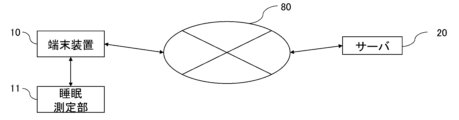
- FIG. 1 is a schematic diagram of a game system according to an embodiment of the present invention.
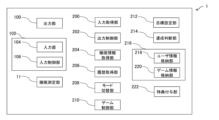
- FIG. 2 is a functional block diagram of the game system according to the present embodiment. 4 is a data configuration diagram of each storage section of the storage unit according to the embodiment.
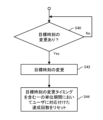
- FIG. FIG. 2 is a flow diagram of processing in the game system according to the present embodiment.
- FIG. 2 is a flow diagram of processing in the game system according to the present embodiment.
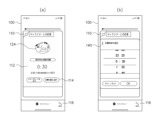
- FIG. 2 is a schematic diagram of a game screen according to the present embodiment.
- FIG. 2 is a schematic diagram of a game screen according to the present embodiment.
- FIG. 1 shows an overview of a game system according to this embodiment.
- the game system 1 includes a user's terminal device 10, a sleep measurement unit 11 that measures the user's sleep state, and a server 20 that executes game processing.
- the terminal device 10 and the server 20 are connected via a communication network 80 to enable two-way communication.
- the server 20 accepts the user's sleep information and progresses the game.
- the game system 1 may be a server-client type game system.
- the sleep measurement unit 11 may be a device separate and independent from the terminal device 10, or may be built into the terminal device 10.
- FIG. 1 shows an example in which one terminal device 10 is connected to the server 20 via the communication network 80
- multiple terminal devices 10 used by different users may each be connected to the server 20 via the communication network 80.
- FIG. 1 shows an example in which one terminal device 10 is connected to the server 20 via the communication network 80
- multiple terminal devices 10 used by different users may each be connected to the server 20 via the communication network 80.
- FIG. 1 shows an example in which one terminal device 10 is connected to the server 20 via the communication network 80
- multiple terminal devices 10 used by different users may each be connected to the server 20 via the communication network 80.
- game system 1 is a system that executes a game (sleep game) that uses sleep information related to the user's sleep.
- Game system 1 allows the user to set a sleep goal before starting the game, and grants the user a specified bonus for each of the user achieving and continuing to achieve the sleep goal by sleeping.
- game system 1 does not impose a penalty on the user if the user is unable to sleep continuously, that is, if the user fails to achieve the sleep goal, but can impose a load on the user that is unlikely to cause significant stress if the user changes the sleep goal.
- the game system 1 manages the progress of the game by dividing it into a plurality of unit periods, and the unit periods are made up of a plurality of periods (hereinafter referred to as "confirmation periods"). That is, the game system 1 manages the time that progresses with the progress of the game by dividing it into predetermined unit periods including a plurality of confirmation periods.
- the game system 1 may manage each unit period and/or each confirmation period independently. For example, the game system 1 manages the progress of the game by treating one day as one confirmation period and using seven confirmation periods, that is, a set of seven days (these seven days do not need to be consecutive), as a unit period.
- the confirmation periods progress sequentially from the xth confirmation period to the x+1th confirmation period (where x is an integer of 1 or more) as the game progresses.
- the game system 1 manages the progress of the game by sequentially progressing the confirmation periods, such as starting the second confirmation period after the first confirmation period, and starting the third confirmation period after the end of the second confirmation period.
- the unit periods progress sequentially from the yth unit period to the y+1th unit period (where y is an integer of 1 or more) as the game progresses.
- the game system 1 manages the progress of the game based on the unit periods, such as starting a second unit period after a first unit period, starting a third unit period after the second unit period ends, etc. In other words, the game system 1 manages the progress of the game in chronological order for each of the multiple confirmation periods and each of the multiple unit periods.
- the game system 1 first accepts input from the user and sets the user's sleep goal (e.g., the time the user intends to go to bed). The game system 1 also acquires the user's sleep information for each confirmation period. The game system 1 then compares the user's sleep information with the sleep goal set by the user for each of the seven-day confirmation periods that make up the unit period to determine whether the sleep goal has been achieved. For days on which the sleep goal has been achieved, the game system 1 associates goal achievement information indicating that the sleep goal has been achieved for that day with the user and grants the user a predetermined benefit (hereinafter, sometimes referred to as the "first benefit").
- first benefit hereinafter, sometimes referred to as the "first benefit”.
- the game system 1 does not associate goal achievement information with the user and does not grant the user the first benefit. In other words, if the user fails to achieve the sleep goal, the game system 1 does not grant the user the first benefit or the second benefit, but does not grant the user other penalties (e.g., penalties such as the disappearance or reduction of a certain item, character, and/or virtual currency in the game, or prohibition of game execution for a certain period of time).
- the game system 1 also manages the number of goal achievement information associated with the user, that is, the number of times the user has achieved the sleep goal (hereinafter referred to as the "achievement count"), in association with the user.
- the game system 1 may grant the user a benefit (hereinafter sometimes referred to as the "second benefit") different from the first benefit, and may not grant the user the second benefit if the user fails to achieve the sleep goal for seven consecutive days in the unit period.
- game system 1 by setting unit periods consisting of multiple confirmation periods, the flow of time in the game can be divided and the progress of the game can be managed. Therefore, even if there is a day when the user fails to achieve their sleep goal (a day that is not achieved), game system 1 can manage the next day when the sleep goal is achieved (the next day that is achieved) by connecting it to the day before the day that the sleep goal was not achieved (the previous day that is achieved) (in other words, even if there is one or more days that are not achieved between the previous day that is achieved and the next day that is achieved, the next day that is achieved can be managed by connecting it to the previous day that is achieved). As a result, game system 1 does not impose any penalty due to the user failing to achieve their sleep goal, so the user can continue playing the game without feeling stressed about not being able to achieve their sleep goal.
- the game system 1 when the user changes the sleep goal, the game system 1 resets or decreases the number of goal achievement information already given to the user in the unit period including the confirmation period when the change was made, that is, the number of achievements.
- the game system 1 may retain the goal achievement information associated with the user as information indicating that the goal was achieved in the past without resetting, erasing, and/or decreasing it, and may reset, erase, or decrease the number of achievements.
- the game system 1 when the user changes the sleep goal at any timing within a certain unit period while the game is in progress, the game system 1 does not change the goal achievement information already associated with the user in that unit period, but resets, erases, or decreases the number of achievements, making it difficult to achieve the condition required for the grant of the second benefit (for example, the number of times that goal achievement information for a total of seven days is associated with the user, that is, the condition that the number of achievements is seven).
- the game system 1 does not make any changes to the goal achievement information and the number of achievements in other unit periods other than the unit period.
- the game system 1 does not give the user any disadvantages, such as erasing or decreasing, for the first and second benefits already granted to the user.
- the game system 1 resets, erases, or decreases only the number of achievements that have already been associated with the user during that unit period.
- the game system 1 prepares a stamp card associated with a user, which is switched and saved for each unit period.
- the stamp card may be image data that can be output to the terminal device 10.
- the stamp card is configured to include areas for multiple confirmation periods, and an area into which a stamp image corresponding to the number of times a sleep goal has been achieved is output when the sleep goal is achieved.
- the stamp card includes seven areas arranged in chronological order, and has a format in which a stamp image can be output in each area.
- the game system 1 judges whether the sleep goal has been achieved based on the sleep information acquired from the user in each confirmation period, and if the sleep goal has been achieved, associates goal achievement information with the user, increases the number of achievements by one, and outputs a stamp in a predetermined area of the stamp card corresponding to the confirmation period in which the sleep goal was achieved.
- the user achieves the sleep goal for the first and second days of a certain unit period, but thinks that it is difficult to continue to maintain the sleep goal (i.e., bedtime).
- the user changes the bedtime as a sleep goal to a different time.
- the game system 1 maintains the goal achievement information associated with the user for the first and second days of the unit period, while resetting the number of achievements (in this case, two times), and erases the stamps for the first and second days that were output to the stamp card. However, the game system 1 retains the goal achievement information and the number of achievements for other unit periods (past unit periods) other than the unit period. Then, the game system 1 erases the stamp and continues the game.
- the game system 1 when the user meets a predetermined condition, that is, when the user changes the sleep goal, only the stamps (i.e., only the number of achievements) within the unit period including the timing of the change are reset, so the user can continue playing the game without feeling excessive stress.
- a predetermined condition that is, when the user changes the sleep goal
- only the stamps i.e., only the number of achievements
- the progress of the game is managed by dividing it into unit periods, and only when the user meets a predetermined condition within a certain unit period, a limited demerit is given to the user, and the benefits already given to the user are not erased.
- the user can change the sleep goal, which improves the continuation rate of the game, while by giving a limited demerit to the user changing the sleep goal, it is possible to motivate the user to achieve the planned sleep goal without changing it in order to avoid the demerit.
- the goal achievement information itself that has been achieved by the user once can be retained without being erased, so the user can check at any time how much of a goal he or she has achieved in the past.
- the game system 1 may have a plurality of game modes as described below.
- a first mode in which sleep information of a user is not acquired (hereinafter referred to as a “non-acquisition mode”)
- a second mode (hereinafter referred to as a "start mode”) in which acquisition of the user's sleep information is started without actively notifying the user of the start of the acquisition.
- a third mode (hereinafter referred to as the “sleep mode”) in which sleep information of the user is acquired and the user is more proactively notified that the sleep information is being acquired than in the start mode.
- a fourth mode (hereinafter referred to as the “wake-up mode”) in which acquisition of the user's sleep information is stopped and a game result determined based on the acquired sleep information is output to the terminal device 10.
- the game system 1 While the user is awake and engaged in daily activities, the game system 1 is operable in the non-acquired mode.
- the user can execute game operations such as, for example, tapping on a character appearing in the game to communicate with the character, giving an item to the character, or placing an item in the virtual space within the game.
- the game system 1 accepts an operation input from the user via the terminal device 10 and starts acquiring sleep information.
- the game system 1 starts acquiring sleep information and continues the acquisition, but does not, for example, need to output to the terminal device 10 that acquisition of sleep information has started.
- the game system 1 outputs useful information, such as information that needs to be communicated to the user in the game before the user goes to sleep and information useful for sleep, to the terminal device 10 during the start mode.
- the game system 1 starts the sleep mode.
- the game system 1 outputs to the terminal device 10 information indicating that the user's sleep information is being acquired (for example, information such as the sleep start time and the duration of sleep).
- the game system 1 starts acquiring sleep information from the start of the start mode and does not notify the user of the start during the start mode, but actively notifies the user from the start of the sleep mode that sleep information is being acquired.
- the game system 1 detects that the user has woken up, it executes the wake-up mode.
- the game system 1 detects that the user has woken up, it stops acquiring the user's sleep information and determines the game result based on the acquired sleep information. Then, the game system 1 outputs the game result to the terminal device 10. Furthermore, after the user has finished checking the game result, the game system 1 ends the wake-up mode and executes the unacquired mode again.
- the game system 1 starts acquiring the user's sleep information in the background at the start of the stage of presenting useful information to the user (start mode), but does not actively notify the user of the start of acquisition of sleep information during the start mode (typically, does not cause output to the terminal device 10).
- the game system 1 then starts the sleep mode when the presentation of useful information has ended or when the user has confirmed the useful information, and changes the manner in which information related to the acquisition of a sleep state is notified between the start mode and the sleep mode so as to actively notify the user that sleep information is being acquired.
- the user can smoothly transition to sleep and can reliably grasp information useful in games and sleep, and the game system 1 can properly acquire the user's sleep information.
- the terminal device 10 may be connected to one or more sleep measurement units 11 by wire or wirelessly. Although one sleep measurement unit 11 is shown in FIG. 1, multiple sleep measurement units 11 may be connected to the terminal device 10. Furthermore, one or more sleep measurement units 11 may be built into the terminal device 10.
- the terminal device 10 is a device that can be operated by a user.
- the terminal device 10 may be, for example, a mobile phone, smartphone, tablet, or other mobile terminal compatible with a mobile communication system.
- the terminal device 10 may be, for example, a stationary personal computer (PC), a laptop PC, a notebook PC, a portable game machine, and/or a home game machine or a dedicated game machine.
- the communication network 80 is a communication network such as a mobile phone network and/or the Internet.
- the communication network 80 may also include communication networks such as a wired LAN and a wireless LAN.
- the game system 1 will be described in detail below, but the names and numbers in the above and following descriptions are merely examples, and it is noted that the present invention is not limited to these proper names and numbers, and that these proper names and numbers do not necessarily relate to real proper names and numbers.
- Fig. 2 shows an example of the functional configuration of the game system according to this embodiment
- Fig. 3 shows an example of the data configuration of each storage section of a storage unit included in the game system according to this embodiment.
- the game system 1 is a system for executing a game using sleep information related to a user's sleep.
- the game system 1 includes an output unit 100 for outputting various information, an input unit 102 for receiving input from a user, a sleep measurement unit 11 for measuring a user's sleep state, an input acquisition unit 200 for acquiring information related to the input received from the user, an output control unit 202 for controlling the output of information to the output unit 100, a sleep information acquisition unit 204 for acquiring the user's sleep information, a history acquisition unit 206 for acquiring a history of the user's operations in the game, a mode switching unit 208 for switching between multiple modes in the game, a game control unit 210 for controlling various processes of the game, a goal setting unit 212 for setting a sleep goal for the user, an achievement determination unit 214 for determining whether the user's sleep information has achieved the sleep goal, a storage unit 216 for storing various information, and a reward granting unit 222 for
- a game is executed on a terminal device 10 used by a user.
- the terminal device 10 is configured to have at least an output unit 100 and an input unit 102.
- the game system 1 may not only have the above-mentioned multiple components in the same device or location physically, but may also have some of the above-mentioned multiple components installed in physically separate locations.
- each component may be connected by a communication network such as the Internet.
- the game system 1 may have an external server perform some of the functions of the components.
- the game system 1 may also be configured as one or more servers. In this case, the game system 1 is configured by combining a terminal device, components of one server, and components of another server.
- each device terminal device, server, etc.
- a collection of each device can be understood as one "information processing device", and the game system 1 may be formed as a collection of multiple information processing devices.
- the method of allocating multiple functions required to realize the game system 1 according to this embodiment to one or multiple pieces of hardware can be appropriately determined in consideration of the processing capacity of each piece of hardware and/or the specifications required for the game system 1.
- the various information stored in the storage unit 216 may be updated based on user instructions and information received via the input unit 102, or may be updated at any time by obtaining specific information from a specific server that exists outside the game system 1.
- a user mainly uses a terminal device 10 (e.g., a smartphone, a tablet terminal, a PC, etc.) to play a game provided by the game system 1.
- the server 20 manages information about the user in the game system 1 and executes game processing. Examples of user information include game characters, game items, and amounts of virtual currency owned by the user (including virtual currency provided to the user free of charge and virtual currency provided to the user for a fee), information about achievement of a sleep goal, information about benefits provided to the user upon achievement of the sleep goal, and sleep information about the user measured by the sleep measurement unit 11.
- the game control unit 210 communicates between the terminal device 10 and the server 20, and controls and manages the progress of the user's gameplay based on the user's sleep information received from the terminal device 10. For example, the game control unit 210 determines game objects such as characters and items to be featured in the user's gameplay by drawing lots to progress the gameplay. The determined characters, items, etc. may appear in the gameplay, not as the user's possessions. This allows the user to have the experience of discovering a new game character based on the sleep information. In addition, the game control unit 210 may draw lots for game objects such as characters and items, and grant them to the user.
- the game control unit 210 receives information on the sleep time and the sleep quality as the user's sleep information from the user's terminal device 10, and draws lots for items based on the user's sleep information and grants them to the user.
- the game control unit 210 may change the lottery table used in the lottery and the number of lotteries according to the user's sleep information. As a result, if the sleep information differs, the lottery algorithm also differs, and the game progress changes when the user wakes up, so that a variety of fun can be provided when the user wakes up.
- the game control unit 210 executes various game processes in response to user operation input received via the input unit 102.
- the game control unit 210 executes game processes such as a process of giving a predetermined item to a character, a process of a character's action in the in-game virtual space when the user specifies a character, a process of the user acquiring items for a fee or free of charge, acquiring virtual currency, and a process of consuming items owned by the user.
- the game system 1 is executed in a number of modes.
- the number of modes includes at least one of an unacquired mode, a start mode, a sleep mode, and a wake-up mode. Each mode is defined below. Note that the game system 1 may include other modes as long as they do not interfere with the processing of the game system 1 according to this embodiment.
- the non-acquired mode is a mode in which the sleep information acquisition unit 204 does not acquire sleep information. That is, in the non-acquired mode, the operation of the sleep measurement unit 11 and/or the sleep information acquisition unit 204 is stopped.
- the non-acquired mode is a mode in which a game screen that the user sees before going to bed is displayed, and a mode in which all game screens that the user sees while awake (for example, during the day) are displayed.
- the non-acquired mode also includes a screen that is first output to the output unit 100 when the game is started on the terminal device 10 (when the user transitions from the game title screen and logs in to the server 20).
- operations such as setting a sleep goal or changing a sleep goal, operations by the user that change game parameters, such as touch operations on characters appearing in the game, and operations in the game such as using and checking items already acquired by the user in the game can also be performed.
- the start mode is a mode in which the sleep information acquisition unit 204 starts acquiring sleep information, but does not actively notify the user of the start of acquisition of sleep information. That is, in the start mode, the operations of the sleep measurement unit 11 and the sleep information acquisition unit 204 are started. On the other hand, in the start mode, for example, the output unit 100 is not actively caused to output a notice that acquisition of sleep information has started, but useful information useful for the game is output to the output unit 100.
- notifying (outputting) in an active manner means that, compared to the manner of notification in sleep mode, no notification is given that sleep information acquisition has started, or that the notification is given in a manner that is difficult for the user to perceive. For example, this means a manner in which no notification is given at all that sleep information acquisition has started, or, even if it is output, that notification is output in a manner that is less noticeable compared to sleep mode. Note that, in start mode, it is preferable not to notify the user at all that sleep information acquisition has started, from the viewpoint of ensuring a flow that allows the user to go to sleep after checking useful information.
- the sleep mode is a mode in which measurement of the user's sleep information is continued and the fact that the sleep information is being measured is output. That is, the sleep mode is a mode in which the sleep information acquisition unit 204 is caused to acquire sleep information, the acquisition of sleep information is continued, and the user is notified of the acquisition of sleep information in a more proactive manner than in the start mode. That is, in the sleep mode, the operation of the sleep measurement unit 11 and the sleep information acquisition unit 204 is continued and the user is notified of the fact.
- the output unit 100 is caused to output the fact that the sleep information is being acquired in a more proactive manner than in the start mode. For example, in the sleep mode, the output unit 100 is caused to explicitly output the fact that the sleep information is being acquired. Note that, unlike the non-acquisition mode, in the sleep mode, a user's operation that changes a game parameter is prohibited.
- the wake-up mode is a mode in which the sleep information acquisition unit 204 stops acquiring sleep information and outputs sleep information (e.g., sleep information such as bedtime, sleep duration, and sleep quality) and a game result (e.g., whether or not a sleep goal has been achieved, a bonus for achieving the sleep goal, changes in parameters in the game, and the result of acquiring an item, etc.) determined based on the user's sleep result indicated by the acquired sleep information. That is, in the wake-up mode, the operation of the sleep measurement unit 11 and/or the sleep information acquisition unit 204 is stopped. In the wake-up mode, a reward according to the game result is awarded to the user along with the output of the sleep result and the game result. Note that a part of the processing executed in the wake-up mode (e.g., whether or not a sleep goal has been achieved, and the bonus for achieving the sleep goal, etc.) may be executed in the non-acquisition mode after the wake-up mode.
- sleep information e.g., sleep information such
- the output unit 100 is controlled by the output control unit 202 and outputs various information related to the execution of the game (for example, text information, image information of still images and videos, audio information, etc.).
- the output unit 100 outputs various processing results and information stored in the storage unit 216 in a manner that allows the user to perceive them.
- the output control unit 202 causes the output unit 100 to output various processing results in each component and information stored in the storage unit 216 as data in a predetermined format, still images, video images, and/or text.
- the output unit 100 may output information received from an external server.
- the output unit 100 may be configured to include a display unit that displays various information, an audio output unit such as a speaker that outputs audio, and the like.
- the display unit may be, for example, a liquid crystal display or an organic EL display.
- the output control unit 202 may change the output mode of the same information as that output in the one mode and output the same information from the output unit 100 in the other mode. For example, when the output control unit 202 causes the output unit 100 to output the first information in the start mode and causes the output unit 100 to output the first information again or continuously in the sleep mode, the output control unit 202 changes the output mode of the first information in the sleep mode from the output mode in the start mode and outputs the information. For example, when the first information is text information, the output control unit 202 changes the font, size, and/or color, output position, etc.
- the output control unit 202 causes the output unit 100 to output text in the sleep mode that is larger than the size of the text in the start mode (for example, text indicating that acquisition of sleep information has started).
- the output control unit 202 may output from the output unit 100 the same information as that output in the one mode, together with additional information in the other mode. For example, the output control unit 202 may cause the output unit 100 to output the text "Sleep measurement in progress" in the start mode, and cause the output unit 100 to output the text "Sleep measurement in progress" as well as information on the time that the sleep measurement is continuing in the sleep mode.
- the output control unit 202 can also cause the output unit 100 to output a specified character in each of the multiple modes.
- the output control unit 202 is controlled by the game control unit 210, and causes the output unit 100 to output a portion of the character information stored in the game information storage unit 220 (described below).
- the output control unit 202 can also cause the output unit 100 to output a character in the start mode that is not output in the unacquired mode.
- the input unit 102 accepts input of a predetermined instruction or operation from a user.
- the input unit 102 supplies the instruction to a predetermined component of the game system 1.
- Each component that accepts the instruction performs a predetermined function.
- the input unit 102 is an input device (for example, a touch panel, a touch pad, a pointing device such as a mouse, a keyboard, a motion sensor, etc.) for accepting an operation input from a user.
- the input unit 102 is a touch panel provided in the terminal device 10. Note that the touch panel may be capable of detecting multi-touch.
- the touch panel as the input unit 102 has an input surface 104 to which an operation from a user is input, and an input control unit 106 that acquires information regarding the operation input to the input surface 104.
- the touch panel is arranged on top of the display unit, which is the output unit 100, and the surface of the touch panel corresponds to the input surface 104.
- an area for accepting a predetermined instruction is displayed on the display unit, and the input surface 104 detects the predetermined instruction at a position specified by a user's operation (e.g., a touch operation, a tap operation, a slide operation, etc.) on that area of the input surface 104.
- the input surface 104 supplies the detected information, i.e., information indicating the predetermined instruction at the detected position, to the input control unit 106.
- the input control unit 106 obtains the information indicating the predetermined instruction from the input surface 104, and supplies the information to a predetermined component of the game system 1.
- the sleep measurement unit 11 acquires information about the sleep of the user of the terminal device 10.
- the sleep measurement unit 11 supplies the acquired information to the sleep information acquisition unit 204.
- the terminal device 10 communicates with the sleep measurement unit 11 by short-range wireless communication such as Bluetooth (registered trademark) or Wi-Fi, and receives the sensing result of the sleep measurement unit 11.
- the sleep measurement unit 11 supports communication standards of mobile communication systems such as 5G and 6G
- the sensing result may be transmitted to the server 20 without using short-range wireless communication.
- the terminal device 10 may receive and store the sleep information acquired by the server 20 that has received the sensing result from the sleep measurement unit 11 from the server 20.
- the sleep measurement unit 11 is realized, for example, by a motion sensor built into the terminal device 10. That is, the terminal device 10 and the sleep measurement unit 11 may be in the same device. In this case, the terminal device 10 also functions as the sleep measurement unit 11.
- the sleep measurement unit 11 may be, for example, a wearable device such as a wristwatch, finger ring, or eye mask that is worn on the user's body, and may be configured to have a motion sensor such as a gyro sensor as a device independent of the terminal device 10.
- the sleep measurement unit 11 may also be a device that is placed on a mattress or pillow on which the user sleeps.
- the motion sensor can include an acceleration sensor, an angular velocity sensor, etc., and senses the movement of the terminal device 10 and outputs the sensing results. For example, by placing the terminal device 10 on the mattress of a bed on which the user sleeps, the motion sensor can detect the movement of the sleeping user when he or she moves on the mattress.
- the sleep information acquisition unit 204 described below can determine whether the user is asleep or awake, and whether the sleeping user is in light sleep, deep sleep, REM sleep, or non-REM sleep, and acquire this as sleep information.
- the user may use two or more sleep measurement units 11 at the same time.
- the user may wear two wristwatch-type sleep measurement units 11, or the user may wear a wristwatch-type sleep measurement unit 11 and use a smartphone as the sleep measurement unit 11.
- This allows the user's body movements while sleeping to be detected by a gyro sensor or the like.
- the sleep information acquisition unit 204 can determine whether the user is asleep, in a light sleep state, in a deep sleep state, in REM sleep, non-REM sleep, etc., and acquire the sleep information. In this way, the quality of the user's sleep can be evaluated by distinguishing the waveforms of REM sleep and non-REM sleep.
- the sleep information acquisition unit 204 has a preset REM sleep and non-REM sleep cycle for good quality sleep, and can evaluate the quality of the user's sleep by comparing it with the waveforms of REM sleep and non-REM sleep during the user's sleep, and acquire it as sleep information.
- the sleep information acquisition unit 204 can also detect that the user has gone to bed (e.g., laying down on the bed) and fallen asleep after going to bed, based on the output of a motion sensor such as the sleep measurement unit 11. Furthermore, the sleep information acquisition unit 204 can also determine whether the user has performed an input operation on the terminal device 10 after going to bed and before falling asleep, and whether the user has perceived information output to the output unit 100 of the terminal device 10. In other words, the sleep information acquisition unit 204 can determine whether a user who is about to go to sleep has operated the terminal device 10 before going to sleep.
- sleep measurement units 11 that are expected to be used in the game system 1 may be managed in a whitelist format. If the sleep information acquisition unit 204 described below acquires sleep information from a sleep measurement unit 11 that is not managed by the game system 1, the sleep information may not be accepted as the sleep measurement unit 11 is not identifiable by the server 20, and subsequent processing may be performed using parameters for the unidentifiable sleep measurement unit 11, etc.
- differences in the type of sleep measurement unit 11 do not necessarily have to be differences in the device.
- the sleep measurement unit 11 may be managed as different sleep measurement units 11 in the game system 1 depending on the type of software or application used before supplying the sleep information to the server 20.
- a different "sleep measurement unit ID" can be used when sleep measurement application A is used to process the sleep information and when sleep measurement application B, which is different from sleep measurement application A, is used to process the sleep information.
- the input acquisition unit 200 acquires a user's operation input. That is, the input acquisition unit 200 acquires information indicating the user's operation input inputted to the input surface 104 via the input control unit 106. The input acquisition unit 200 supplies the information indicating the acquired operation input to other predetermined components.
- the sleep information acquisition unit 204 acquires the sleep information of the user. Specifically, the sleep information acquisition unit 204 acquires information related to the user's sleep acquired by the sleep measurement unit 11, that is, the sleep information from the sleep measurement unit 11. The sleep information acquisition unit 204 also acquires sleep information based on an instruction from the user. In this case, the sleep information may include, for example, the time when the user decides to start sleeping, For example, the output control unit 202 may display a button for accepting the start of sleep (hereinafter, may be referred to as a “sleep” button) in a predetermined area of the output unit 100 as described later.
- a button for accepting the start of sleep hereinafter, may be referred to as a “sleep” button
- the sleep information acquisition unit 204 displays the time when the operation was received (the time when the user started to sleep, i.e., when the user went to bed).
- an external device or information terminal other than the terminal device 10 and the server 20 may acquire the sleep information.
- the external device may be configured to include the sleep information acquisition unit 204 .
- the sleep information acquisition unit 204 supplies the acquired sleep information to the mode switching unit 208, the game control unit 210, the achievement determination unit 214, and the user information storage unit 218.
- the sleep information acquisition unit 204 may supply the acquired sleep information to other components when the wake-up mode or the not-acquired mode is executed.
- the sleep information acquisition unit 204 may supply the acquired sleep information to the achievement determination unit 214 each time the sleep information is acquired, or may supply the acquired sleep information to the achievement determination unit 214 all at once.
- the sleep information acquisition unit 204 may acquire sleep information for each confirmation period, and then store the acquired sleep information in the user information storage unit 218 in association with the user, and supply the stored sleep information to the achievement determination unit 214 all at a predetermined cycle.
- the sleep information acquired during each confirmation period within one unit period may be stored in the external device, and the stored sleep information may be supplied to the achievement determination unit 214 all at once when one unit period ends.
- the history acquisition unit 206 acquires a game history relating to operations in the game by the user, which are at least operations during the not-yet-acquired mode that affect the game result. For example, the history acquisition unit 206 acquires a game history such as an operation of the user granting an item to a character or an operation of consuming an item during the not-yet-acquired mode, which is input to the input unit 102. The history acquisition unit 206 supplies information relating to the acquired game history to the user information storage unit 218.
- the mode switching unit 208 executes a process of switching between a plurality of modes included in a game, and a process of maintaining a switched mode until switching to another mode. That is, the mode switching unit 208 executes a process of switching from one mode to another mode, for example, switching from an unacquired mode to a started mode, switching from a started mode to a sleep mode, switching from a sleep mode to a wake-up mode, and/or switching from a wake-up mode to an unacquired mode.
- the mode switching unit 208 controls the start, continuation, and stop of the operation of the sleep measurement unit 11 and/or the sleep information acquisition unit 204, etc., in response to the switching of the mode.
- the mode switching unit 208 also supplies information indicating that the mode has been switched to the output control unit 202.
- the mode switching unit 208 executes a process of switching from one mode to another mode in response to the user's operation input acquired by the input acquisition unit 200. Note that, after switching from the unacquired mode to the start mode, the mode switching unit 208 may prohibit switching from the start mode to the unacquired mode.
- the output control unit 202 causes the output unit 100 to always output the first operator.
- the first operator is a button or the like that accepts an instruction from the user to start sleeping, such as a button that displays "sleep" (the "sleep" button).
- the input acquisition unit 200 acquires the operation input to the first operator and supplies the instruction by the operation input to the mode switching unit 208.
- the sleep information acquisition unit 204 acquires the time of the user's operation input to the first operator as sleep information (i.e., bedtime).
- the mode switching unit 208 accepts this instruction and switches the unacquired mode to the start mode.
- the mode switching unit 208 does not accept the instruction, it is preferable that the automatic switching from the unacquired mode to the start mode is not executed from the viewpoint of ensuring a smooth movement line of the user. Therefore, in this case, after switching from start mode to sleep mode, it becomes possible to switch to unacquired mode.
- a game executed in the game system 1 can be configured to have a home screen that is displayed after the game is started, and one or more screens (hereinafter referred to as "other screens") that can be moved from the home screen.
- the other screens are, for example, a screen showing an item box in which items owned by the user are stored, or a screen showing information about characters appearing in the game.
- the output control unit 202 causes the output unit 100 to output a first operator at a predetermined position on the home screen.
- the output control unit 202 does not need to cause the output unit 100 to output the first operator on the other screens.
- the output control unit 202 may cause the output unit 100 to output the first operator at a predetermined position on each of the home screen and the other screens, from the viewpoint of making it easy for the user to transition to the start mode from both the home screen and the other screens.
- the mode switching unit 208 starts the operation of the sleep measurement unit 11 and the sleep information acquisition unit 204, and instructs the output control unit 202 to output useful information useful in the game from the output unit 100.
- the output control unit 202 acquires the useful information, for example, from the game information storage unit 220 described below, and outputs it to the output unit 100.
- the mode switching unit 208 instructs the output control unit 202 to not output information about the start of acquisition of sleep information from the output unit 100, or to output it from the output unit 100 in a manner that is less noticeable than in the sleep mode.
- the mode switching unit 208 may instruct the output control unit 202 to first output text such as "Are you going to bed now?" to the output unit 100, and output operators "Yes” and “No” near the text. Then, when the input acquisition unit 200 acquires a user's operation input for the "Yes” operator, the mode switching unit 208 may switch the unacquired mode to the start mode.
- the useful information is, for example, information that the user should be aware of in the game (for example, information about the user's sleep history, such as the previous day's sleep time, the number of consecutive days logged into the game, the number of consecutive days operation input was made to the first operator, a comparison result between the user's previous sleep and the previous sleep, etc.), and useful information and trivia about sleep that is useful to know.
- the useful information may be generated by the game control unit 210 based on the sleep information acquired by the sleep information acquisition unit 204.
- the game control unit 210 For example, if the sleep information includes information such as the date and time when the user slept and the sleep time, the game control unit 210 accumulates the sleep information in association with the date (for example, stores the sleep information in the user information storage unit 218 described later) and generates the useful information based on the accumulated information. The game control unit 210 then stores the generated useful information in the game information storage unit 220.
- the output control unit 202 can cause the output unit 100 to output the useful information in the form of text, image, and/or sound, etc.
- the output control unit 202 can also output text, audio, and/or images, such as a character in a game telling the user useful information.
- the output control unit 202 may also cause the output unit 100 to output useful information generated based on the game history acquired by the history acquisition unit 206 during the non-acquisition mode.
- the game control unit 210 generates useful information using information related to the game history stored in the user information storage unit 218 by the history acquisition unit 206.
- the game control unit 210 generates useful information using information related to the game history, including information such as the user's activity record for the day the game was played and the number of days sleep measurement was performed consecutively. Then, the output control unit 202 causes the output unit 100 to output the generated useful information in the start mode.
- the output control unit 202 causes the output unit 100 to output useful information, and causes the output unit 100 to output a second operator after or together with the output of the useful information.
- the second operator is a button or the like that accepts an instruction that the user has confirmed the useful information, for example, a button that displays "OK" together with the useful information.
- the input acquisition unit 200 acquires the operation input for the second operator and supplies an instruction by the operation input to the mode switching unit 208.
- the mode switching unit 208 accepts this instruction and switches the start mode to the sleep mode.
- the mode switching unit 208 may automatically switch to the sleep mode if no operation input is received from the second operator after a predetermined time has elapsed since switching from the unacquired mode to the start mode.
- the mode switching unit 208 continues the operation of the sleep measurement unit 11 and the sleep information acquisition unit 204, and instructs the output control unit 202 to output information that sleep information is being acquired from the output unit 100.
- the output control unit 202 causes the output unit 100 to output the information in a more noticeable manner than in the start mode. For example, the output control unit 202 causes the output unit 100 to output the text "Sleep measurement in progress" together with the current time.
- the output control unit 202 causes the output unit 100 to output an alarm operator which is an operator for setting an alarm, a sleep induction sound operator which is an operator for causing the output unit 100 to output a sound that helps the user fall asleep, and/or a third operator which accepts an instruction from the user to end sleep (i.e., an operator for waking up), etc.
- the output control unit 202 always causes the output unit 100 to output at least the third operator in the sleep mode.
- the third operator is a button or the like that accepts an instruction that the user has woken up, for example a button that displays "End sleep.”
- the input acquisition unit 200 acquires the operation input for the third operator and supplies an instruction based on the operation input to the mode switching unit 208.
- the mode switching unit 208 accepts this instruction and switches from sleep mode to wake-up mode.
- the mode switching unit 208 may switch from the sleep mode to the unacquired mode without switching from the sleep mode to the wake-up mode.
- the predetermined condition is, for example, a condition that the sleep time is a continuous time equal to or longer than a predetermined time.
- the sleep time is less than a predetermined time (for example, less than 3 hours)
- the wake-up mode is not executed and the game result is not output, so that the user has an incentive to sleep for an appropriate amount of time and to live a healthy life, and can improve sleep habits.
- the mode switching unit 208 stops the operation of the sleep measurement unit 11 and/or the sleep information acquisition unit 204, and supplies the user's sleep information acquired by the sleep information acquisition unit 204 in the start mode and sleep mode to the game control unit 210.
- the game control unit 210 determines the game result based on the received sleep information.
- the output control unit 202 causes the output unit 100 to output the game result determined by the game control unit 210.
- the game control unit 210 determines a reward to be granted to the user based on the sleep information, and grants the determined reward to the user. For example, the game control unit 210 grants the determined reward to the user by storing it in the user information storage unit 218.
- the mode switching unit 208 switches the wake-up mode to the unacquired mode after the game result has been output, or when the mode switching unit 208 receives a user's operation input for switching a specified mode after the game result has been output. Furthermore, when the mode switching unit 208 switches the game mode to the wake-up mode or the unacquired mode, the sleep information acquisition unit 204 supplies the acquired sleep information to the achievement determination unit 214 and the user information storage unit 218.
- the goal setting unit 212 sets the sleep goal of the user based on the instruction by the user.
- the sleep goal is the time when the user goes to bed (bedtime), the time when the user wakes up (wake-up time), etc. From the viewpoint of making it easier for the user to continue playing the game, it is preferable that the sleep goal is a bedtime that is easy for the user to realize at his/her will.
- the output control unit 202 outputs information (setting request information) that prompts the user to set a sleep goal of the game to the output unit 100.
- the output control unit 202 may use information about a specific character stored in the game information storage unit 220 (for example, information such as an image or voice of the character) to cause the output unit 100 to output content that prompts the user to set a sleep goal in the form of making a "promise" between the character and the user.
- the input acquisition unit 200 acquires a setting instruction for the sleep goal as an operation input by the user via the input unit 102.
- the goal setting unit 212 sets the sleep goal based on the setting instruction acquired by the input acquisition unit 200.
- the goal setting unit 212 accepts an instruction from the user at any timing and executes setting or changing of the sleep goal.
- the goal setting section 212 supplies the set or changed sleep goal to the sleep goal achievement determination section 214 and the user information storage section 218 .
- the achievement determination unit 214 determines whether or not the sleep goal has been achieved based on the sleep information acquired by the sleep information acquisition unit 204.
- the achievement determination unit 214 may receive the sleep goal directly from the goal setting unit 212 or may receive the sleep goal based on the sleep information acquired by the sleep information acquisition unit 204.
- the sleep goal stored in the user information storage unit 218 can also be referenced.
- the achievement determination unit 214 determines that the sleep goal has been achieved, it sends goal achievement information indicating that the sleep goal has been achieved to the user. If the user does not achieve the sleep goal, the achievement determination unit 214 does not associate the goal achievement information with the user.
- the sleep information acquired by the sleep information acquisition unit 204 is the time when the user operated the "sleep" button output to the output unit 100 (this time is The achievement determination unit 214 then determines whether or not the sleep goal has been achieved at the start of or after the start of the non-obtainment mode (or the wake-up mode).
- the achievement determination section 214 supplies information indicating the determination result to the user information storage section 218 and the privilege granting section 222 .
- the achievement determination unit 214 may compare the sleep goal with the sleep information, and determine that the sleep goal has been achieved if the difference between the two is within a predetermined range. For example, if the sleep goal is a bedtime, the achievement determination unit 214 compares the time indicated by the sleep information with the time indicated by the sleep goal, and determines that the sleep goal has been achieved if the difference between the two is within a predetermined range (for example, within ⁇ 30 minutes. This time can be set appropriately). If the achievement determination unit 214 determines that the sleep goal has been achieved, it associates the goal achievement information with the user, and stores information indicating that the goal achievement information has been associated with the user (including information regarding the number of achievements) in the user information storage unit 218. Furthermore, if the goal achievement information has been associated with the user, the achievement determination unit 214 causes the output unit 100 to output, via the output control unit 202, that the goal has been achieved.
- the achievement determination unit 214 manages goal achievement information associated with a user for each of a plurality of confirmation periods arranged in chronological order. Then, when the achievement determination unit 214 determines that the sleep goal has been achieved in one confirmation period, it associates the goal achievement information with the user and the one confirmation period and counts the number of achievements. Thereafter, the achievement determination unit 214 determines whether or not the sleep goal has been achieved in the confirmation period following the one confirmation period. That is, the achievement determination unit 214 determines for each confirmation period whether or not the sleep goal has been achieved in each of a plurality of confirmation periods within one unit period.
- the achievement determination unit 214 associates the one confirmation period and the user with the goal achievement information and the number of achievements, and stores information indicating the result in the user information storage unit 218. Then, for example, when the game system 1 employs the above-mentioned stamp card, the achievement determination unit 214 outputs a stamp indicating that the sleep goal has been achieved in an area of a confirmation period corresponding to the day on which the sleep goal was achieved in a stamp card corresponding to one unit period.
- the achievement assessment unit 214 reserves the judgment for the next confirmation period until the user achieves the sleep goal in that confirmation period. For example, if there are multiple confirmation periods within one unit period, such as a first confirmation period (first day), a second confirmation period (second day), and a third confirmation period (third day), and the user fails to achieve the sleep goal in the first confirmation period, the achievement assessment unit 214 does not advance the timing of the judgment for determining whether the sleep goal has been achieved to the second confirmation period until the sleep goal is achieved in the first confirmation period, but keeps the timing of the judgment for whether the sleep goal has been achieved in the first confirmation period.
- first confirmation period first day
- second day second confirmation period
- third confirmation period third day
- the achievement determination unit 214 can erase at least a part of the number of achievements corresponding to the number of goal achievement information already associated with the user.
- the predetermined condition does not include the case where the sleep goal is not achieved, but includes the case where the sleep goal is changed by the user. Specifically, a case where the game progresses based on a unit period consisting of multiple confirmation periods in the game system 1 will be described.
- the achievement determination unit 214 sequentially determines whether the sleep goal has been achieved for each of the multiple confirmation periods, and when a predetermined condition is met at any timing within one unit period, resets or erases a part of the number of achievements, which is the number of goal achievement information associated with the user, and which is already associated with the user within the one unit period. On the other hand, the achievement determination unit 214 does not change the goal achievement information and the number of achievements associated with the user in other unit periods other than the one unit period.
- the achievement determination unit 214 erases all or some of the stamps indicating that the sleep goal has been achieved that have already been output in the confirmation period area corresponding to the day on which the sleep goal was achieved in one stamp card corresponding to the one unit period.
- the number of achievement counts to be erased may be a predetermined number.
- the achievement determination unit 214 resets or reduces the number of achievements already given to the user in the unit period that includes the day on which the target time, which is the sleep goal, was changed and that is before the day on which the target time was changed (when resetting, all the achievement numbers are erased and the number of goal achievements in the unit period is returned to the initial state (for example, zero)). For example, if the unit period consists of a seven-day confirmation period, when the user changes the sleep goal at any time during this unit period, the goal achievement status is returned to the start of this unit period.
- the sleep goal when the number of achievements is associated with the user up to the sixth day of this unit period, if the sleep goal is changed, the number of achievements is six, but these six achievements are erased. Therefore, from the perspective of the load imposed on the user, by changing the sleep goal at the timing when the unit period starts and the last confirmation period included in the unit period ends, the penalty for the user can be substantially eliminated. In other words, if the sleep goal is changed between one unit period and the next unit period of the one unit period, the sleep goal can be changed without any penalty. In other words, the achievement determination unit 214 only erases the achievement count associated with the user within the unit period that includes the day on which the target time was changed, so changing the target time is unlikely to cause significant stress to the user. On the other hand, since changing the target time is given a disadvantage under certain conditions, by not allowing the user to casually change the target time, it is possible to provide motivation for the user to get regular sleep.
- the sleep information acquisition unit 204 can also acquire multiple pieces of sleep information from the terminal device 10 used by the user or from another information processing device different from the terminal device 10. In this case, the sleep information acquisition unit 204 stores the acquired multiple pieces of sleep information in the user information storage unit 218. The achievement determination unit 214 can then determine at once whether or not the sleep goal has been achieved for each of the multiple pieces of sleep information stored in the user information storage unit 218.
- the achievement assessment unit 214 when the achievement assessment unit 214 receives sleep information from the sleep information acquisition unit 204, if the achievement assessment unit 214 has already received sleep information on the same day as the sleep information is supplied, the achievement assessment unit 214 does not perform a judgment on whether or not the sleep goal has been achieved. In other words, if the achievement assessment unit 214 has already received sleep information for one confirmation period of one unit period, even if it receives further sleep information for the same confirmation period, it will not process the subsequently received sleep information.
- the achievement determination unit 214 does not execute a determination as to whether or not the sleep goal has been achieved before the user stops the acquisition of sleep information by the sleep information acquisition unit 204.
- the achievement determination unit 214 does not execute a determination as to whether or not the sleep goal has been achieved before the not-acquired mode (or the wake-up mode) is started by the user.
- the mode switching unit 208 switches the not-acquired mode to the start mode, and further switches the mode to the sleep mode. Then, when the input unit 102 accepts a user operation input to the third operator after the user wakes up, the mode switching unit 208 switches the sleep mode to the wake-up mode. Furthermore, the mode switching unit 208 switches the wake-up mode to the unobtained mode after the game result is output or when a user inputs a predetermined mode switching operation after the game result is output.
- the achievement determination unit 214 does not need to execute a determination as to whether or not the sleep goal has been achieved until the mode switching unit 208 switches the sleep mode to the wake-up mode or until the mode switching unit 208 switches the wake-up mode to the unobtained mode.
- the reward granting unit 222 grants a predetermined reward to the user based on the user's achievement of the sleep goal.
- the reward granting unit 222 grants the reward to the user by storing the reward in the user information storage unit 218 in association with the user.
- the reward granting unit 222 grants a predetermined reward to the user every time the goal achievement information is associated with the user, grants a predetermined other reward to the user when a predetermined number of (e.g., a predetermined number of consecutive) goal achievement information are associated with the user, and does not grant the predetermined other reward to the user when a predetermined number of (e.g., a predetermined number of consecutive) goal achievement information are not associated with the user.
- the reward granting unit 222 grants a first reward to the user every time the sleep goal is achieved in a confirmation period, and grants a second reward different from the first reward to the user when the sleep goal is achieved in all confirmation periods within the unit period. Then, the reward granting unit 222 does not grant any reward to the user when the sleep goal is not achieved in the confirmation period and when the sleep goal is not achieved in at least one confirmation period within the unit period.
- the first reward when the sleep goal is achieved in the yth confirmation period of the xth unit period may be the same as the first reward when the sleep goal is achieved in the yth confirmation period of the x+1th unit period (where x and y are integers equal to or greater than 1). For example, if one unit period is made up of seven confirmation periods, the first reward in the zth confirmation period from the start of one unit period is the same as the first reward in the zth confirmation period from the start of another unit period (where z is an integer between 1 and 7).
- the second reward when the sleep goal is achieved in all confirmation periods of the xth unit period is the same as the second reward when the sleep goal is achieved in all confirmation periods of the x+1th unit period.
- the reward granting unit 222 may grant the second reward to the user when the sleep goal is achieved in all confirmation periods within the nth unit period (where n is an integer equal to or greater than 1), and may grant the user a third reward different from the first reward and the second reward when the sleep goal is achieved in the mth unit period (where m is an integer equal to or greater than 2).
- n an integer equal to or greater than 1
- m an integer equal to or greater than 2
- the reward granting unit 222 may grant the user the third reward together with the second reward (or instead of the second reward) when the sleep goal is achieved in the 50th unit period or the 100th unit period.
- the first, second, and third benefits may be benefits that are beneficial to the user, such as characters that appear in the game, items, or in-game virtual currency (e.g., represented by coins or gems, which can be exchanged for game characters, items, etc.).
- benefits such as characters that appear in the game, items, or in-game virtual currency (e.g., represented by coins or gems, which can be exchanged for game characters, items, etc.).
- the storage unit 216 stores various types of information related to the game system 1. Each storage section of the storage unit 216 supplies predetermined information to a predetermined component of the game system 1 in response to a request from the other component.
- the user information storage unit 218 stores user information, game history information, information on owned items, information on owned characters, sleep information, goal information, the number of achievements, and/or bonus information, etc., in association with a user ID for identifying the user.
- Examples of the user information include a user name, which is a name set by the user, a login ID, and a password.
- the user information may include information on the time of an alarm set by the user.
- Examples of the game history information include information on an operation input performed by the user in the game (typically, an operation input in the unacquired mode).
- Examples of the information on owned items include information on game items owned by the user.
- the game items are, for example, items that the game control unit 210 has awarded to the user by drawing lots based on the user's sleep information.
- the information on owned items also includes information on the type and number of each game item.
- examples of the information on owned characters include information on characters acquired by the user in the game.
- examples of the sleep information include information on the user's sleep measured by the sleep measurement unit 11, and information on the user's sleep start time received via the input unit 102.
- the sleep information may include information such as the user's awake/sleep state, date information, bedtime, wake-up time, sleep duration, and/or sleep quality.
- the goal information is a sleep-related goal (sleep goal) set by the user, such as bedtime, wake-up time, sleep duration, etc.
- the privilege information is information regarding a privilege granted to the user.
- the game information storage unit 220 stores the game information in association with the game information ID.
- the game information include information on characters appearing in the game, information on items, information on item lottery, information on in-game virtual currency, predetermined voice or music information, information on benefits given to users, and/or useful information.
- the game information storage unit 220 stores information on characters as game information
- the character information is stored as the game information in association with a character ID as the game information ID.
- the useful information is stored as the game information in association with a useful information ID as the game information ID.
- various other types of information are stored in association with the IDs of the various types of information.
- the useful information may include useful information generated by the game control unit 210, useful information acquired from an external server or the like, useful information previously stored in the game information storage unit 220, and/or useful information supplied to the game information storage unit 220 by an operation input by a user or the like after the game is first executed.
- FIG. 4 and 5 show an example of a process flow in the game system according to this embodiment.
- FIG. 4 shows an example of a process flow in the game system
- FIG. 5 shows an example of a process flow for changing a sleep goal in the game system.
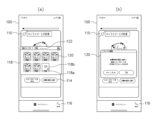
- FIG. 6 and FIG. 7 show an outline of a game screen according to this embodiment.
- FIG. 6(a) shows an example of a confirmation screen for the game system
- FIG. 6(b) shows an example of a goal setting screen for the game system.
- FIG. 7(a) shows an example of information output when a goal of the game system is achieved
- FIG. 7(b) shows an example of a goal change screen for the game system.
- the time at which the user goes to bed that is, going to bed at a specified bedtime
- the "bedtime" may be referred to as the "target time”.
- the game control unit 210 executes and controls the game in the unacquired mode maintained by the mode switching unit 208.
- a predetermined game process such as a process of giving an item to a character, or a game process such as a movement control of a character in a virtual space within the game, in response to an operation input from a user that the input acquisition unit 200 accepts via the input unit 102.
- the output control unit 202 always outputs, for example, a first operator (for example, the sleep start button 116 in FIG. 6(a)) at a predetermined position on a home screen of the game output from the output unit 100. Then, the game control unit 210 continues the game in the unacquired mode until the input unit 102 accepts an operation input from the user to the first operator.
- the output control unit 202 may temporarily stop output of the first operator when there is no operation input from the user to the input unit 102 for a certain period of time.
- the output control unit 202 causes the output unit 100 to output the target time set by the user.
- the output control unit 202 causes the output unit 100 to output a confirmation screen 110 for confirming the target time, etc., as shown in FIG. 6(a) in response to a user's instruction.
- the goal setting unit 212 causes the output unit 100 to output a specific character 124, and also causes the confirmation screen 110 to output the confirmation screen 110 including text and images indicating the target time to the user in the form of an appointment between the character 124 and the user.
- the confirmation screen 110 includes the target time, which is the sleep goal 112, in the vicinity of the image of the specific character 124. As an example, in FIG.
- the character 124 is placed below the text "Appointment with character”, and "0:30" is displayed below the character 124 as the target time, along with text such as "Get a stamp if you sleep between 0:00 and 1:00! and "Get a stamp if you sleep by 0:30!.
- the confirmation screen 110 also includes a setting change button 114 for starting to set the target time. If the user has not set the target time, the output control unit 202 displays the target setting screen 140, which is a setting screen on which the target time can be set, on the output unit 100 in response to a user's instruction to the setting change button 114 received via the input unit 102 (step 10. Hereinafter, step is represented as "S").
- the goal setting unit 212 sets the target time based on the user's instruction received via the input unit 102 (S12). For example, the goal setting unit 212 sets the time specified by the user received via the input unit 102 as the target time on the goal setting screen 140 that the output control unit 202 causes the output unit 100 to output as shown in FIG. 6(b).
- the goal setting unit 212 associates the target time received via the input unit 102 with the user and stores it in the user information storage unit 218 as a sleep goal, and sets the target time as a sleep goal. Furthermore, the goal setting unit 212 may further associate the target time with the character 124 to set a sleep goal.
- the goal setting unit 212 may set a sleep goal by associating the target time with the character 124 based on a user's operation on the character 124.
- the goal setting unit 212 causes the output unit 100, via the output control unit 202, to output a message to the user, such as text or an image encouraging the user to make a specific promise with the character 124 (for example, text or an image indicating whether or not the user will promise the character 124 to go to bed at a time selected by the user), and also causes the output unit 100 to output an operator with which the user can select whether or not to agree to make the specific promise.
- the goal setting unit 212 acquires information indicating the user's agreement received via the input unit 102
- the goal setting unit 212 may set a sleep goal by associating the target time with the character 124.
- the goal setting unit 212 may set the details of the sleep goal according to the type of character. That is, for each of a plurality of characters, a predetermined goal achievement condition determined according to the target time set by the user (for example, a condition in which a predetermined time range is set before and after the target time, and the goal is achieved if the user falls asleep within this time range. The time range is made different depending on the type of character) can be set. Then, when the goal setting unit 212 accepts the setting of the target time based on the user's operation, it executes a lottery for a character. The goal setting unit 212 can set the condition for goal achievement based on the target time according to the type of character determined by the lottery.
- the goal setting unit 212 executes a lottery for a character. It is preferable to execute this lottery once on a day including the time when the user sets the target time. Then, when "Pikachu” is determined as the character by the lottery, for example, the goal setting unit 212 sets the condition for goal achievement to "falling asleep between 12:00 and 1:00". On the other hand, if "Raichu” is selected as the character by lottery, the goal setting unit 212 sets the condition for achieving the goal to "going to bed between 0:15 and 0:45".
- the bonus granting unit 222 may grant a predetermined bonus to the user based on the user achieving the goal achievement condition set by the character selected by lottery. In other words, the bonus granting unit 222 may grant the user a different bonus according to the character selected by lottery. As an example, the bonus granting unit 222 may grant a bonus that is more beneficial to the user when the time range associated with the character selected by lottery is narrower than when the time range is wider.
- the input acquisition unit 200 acquires the operation input for the first operator and supplies an instruction for the operation input to the mode switching unit 208.
- the mode switching unit 208 switches the non-acquisition mode to the start mode and starts the operation of the sleep measurement unit 11 and the sleep information acquisition unit 204 (S16). This starts the acquisition of the user's sleep information.
- the mode switching unit 208 continues to execute the non-acquisition mode until the input unit 102 receives a user operation input for the first operator (No in S14).
- the output control unit 202 causes the output unit 100 to output useful information stored in the game information storage unit 220, useful information generated by the game control unit 210 based on the sleep information acquired by the sleep information acquisition unit 204 and stored in the game information storage unit 220, and/or useful information generated by the game control unit 210 based on the game history acquired by the history acquisition unit 206 and stored in the user information storage unit 218 (S18).
- the mode switching unit 208 instructs the output control unit 202 not to actively cause the output unit 100 to output information that acquisition of sleep information has started (typically, it does not cause it to output at all).
- the output control unit 202 causes the output unit 100 to output a second operator after outputting the useful information or together with outputting the useful information.
- the mode switching unit 208 switches the start mode to the sleep mode.
- the output control unit 202 causes the output unit 100 to output in a proactive manner that it is acquiring the user's sleep information (S24). For example, the output control unit 202 causes the output unit 100 to explicitly output that it is measuring sleep information.
- the mode switching unit 208 continues the start mode until a predetermined time has elapsed since switching to the start mode (No in S22), and when the predetermined time has elapsed, the mode switching unit 208 may switch the start mode to the sleep mode even if there is no user operation input for the second operator (Yes in S22).
- the output control unit 202 causes the output unit 100 to output a third operator that accepts an instruction from the user to end sleep.
- the mode switching unit 208 continues the sleep mode, and the output control unit 202 causes the output unit 100 to constantly output the third operator.
- the mode switching unit 208 switches the sleep mode to the wake-up mode (S28).
- the sleep information acquisition unit 204 stores the acquired sleep information in the user information storage unit 218 and supplies it to the game control unit 210.
- the game control unit 210 determines the game result based on the received sleep information and instructs the output control unit 202 to output the determined result to the output unit 100.
- the game control unit 210 can also grant a predetermined reward to the user based on the sleep information. Information regarding the predetermined reward granted to the user is stored in the user information storage unit 218.
- the achievement determination unit 214 compares the bedtime as the sleep information acquired by the sleep information acquisition unit 204 with the sleep goal set by the user (for example, the sleep goal stored in the user information storage unit 218 in association with the user and/or the character 124) to determine whether the sleep goal has been achieved (S30). When the achievement determination unit 214 determines that the sleep goal has not been achieved (No in S30), the process proceeds to S10.
- the achievement determination unit 214 determines that the sleep goal has been achieved (Yes in S30)
- the achievement determination unit 214 determines that the sleep goal has been achieved for one confirmation period within one unit period, so that the achievement determination unit 214 associates the goal achievement information and the number of achievements with the user for the one confirmation period, stores them in the user information storage unit 218, and supplies information indicating that the goal has been achieved to the bonus granting unit 222 (S32).
- the achievement determination unit 214 also causes the output unit 100 to output the goal achievement information display area 118, superimposed on the confirmation screen 110, as shown in FIG. 7(a), for example.
- the goal achievement information display area 118 is provided with a plurality of confirmation period display areas 118a corresponding to the plurality of confirmation periods included in one unit period, and in one confirmation period display area 118a, the content of the first reward when the sleep goal is achieved in one confirmation period corresponding to the one confirmation period display area 118a is displayed (first reward display 118b).
- a unit period display 122 is provided at the top of the goal achievement information display area 118, and it is displayed which unit period the game being played by the user belongs to.
- "Second promise stamp card” is displayed, so that the user can understand that the game being played by the user belongs to the second unit period.
- the unit period display 122 is configured to include a display (for example, predetermined text information including the number "n") that allows the user to understand that it is the nth unit period.
- the unit period display 122 allows the user to easily understand how many unit periods of the game the user has played since the start of the game.
- the achievement determination unit 214 When the sleep goal has been achieved, the achievement determination unit 214 outputs a stamp as a goal achievement display 120 indicating that the sleep goal has been achieved in a confirmation period display area 118a corresponding to the day on which the sleep goal was achieved in one stamp card corresponding to one unit period (the second unit period in the example of FIG. 7(a)), as shown in FIG. 7(a), for example.
- the achievement determination unit 214 determines that the sleep goal has been achieved, it can cause the output unit 100 to output information about a specific character. For example, the achievement determination unit 214 may determine that the achievement of the sleep goal corresponds to the user keeping a promise with a specific character, and cause the reward granting unit 222 to grant the user an additional reward in addition to the first reward. As an example, when granting the first reward to the user, the reward granting unit 222 grants the user an additional reward.
- the additional reward may be, for example, a specific character (e.g., an image, etc.) in a special position (e.g., a sleeping pose, etc.) or another character, etc.
- the reward granting unit 222 grants the additional reward to the user by storing the additional reward in the user information storage unit 218 in association with the user.
- the achievement determination unit 214 also refers to the information stored in the user information storage unit 218 (i.e., the number of times achieved) to determine whether the user has achieved the sleep goal a predetermined number of times (S36). That is, the achievement determination unit 214 determines whether the sleep goal has been achieved for all of the multiple confirmation periods included in one unit period. If the achievement determination unit 214 determines that the user has not achieved the sleep goal a predetermined number of times (No in S36), the process proceeds to S10. On the other hand, if the achievement determination unit 214 determines that the user has achieved the sleep goal a predetermined number of times (Yes in S36), the bonus granting unit 222 grants the user a second bonus (S38). The second bonus may be a bonus that is rarer than the first bonus. Then, the steps from S10 onwards are repeated (i.e., the game proceeds to the first confirmation period of the next unit period).
- step S20 may be omitted.
- steps S18 and S22 may be omitted, and the process may proceed directly to steps S16 to S24.
- acquisition of user sleep information begins upon switching to the start mode. Therefore, if user operation input for the third operator is accepted, it is possible to acquire user sleep information, and the game control unit 210 can appropriately determine the game result.
- the output control unit 202 displays the goal setting screen 140 shown in FIG. 6(b) on the output unit 100.
- the goal setting unit 212 receives a change to the sleep goal from the user via the input unit 102 on the goal setting screen 140 (Yes in S40) and changes the target time as the sleep goal (S42).
- the goal setting unit 212 stores the changed target time in the user information storage unit 218 in association with the user.
- the goal setting unit 212 updates the target time before the change to the changed target time. On the other hand, if there is no change to the sleep goal from the user, the goal setting unit 212 does not change the sleep goal, and waits for the change process of the sleep goal until there is an instruction to change the sleep goal from the user (No in S40).
- the achievement determination unit 214 determines that a predetermined condition based on the user's operation has been met, and resets the number of achievements corresponding to the number of pieces of goal achievement information already associated with the user in one unit period including the timing of the change of the target time (S44). For example, as shown in FIG. 7(b), the goal setting unit 212 outputs the change confirmation screen 130 to the output unit 100, superimposed on the confirmation screen 110, before executing the sleep goal change process. In the example of FIG.
- the change confirmation screen 130 is output to the output unit 100 together with confirmation text information that "If you reset the target time, the promise stamp card will be reset to the first day.”
- the goal setting unit 212 executes the sleep goal change process, and the achievement determination unit 214 erases (or resets) the number of achievements already associated with the user in the unit period including the confirmation period in which the change of the sleep goal was executed.
- the achievement assessment unit 214 erases all goal achievement displays 120 (i.e., stamps) already displayed in the confirmation period display area 118a in the goal achievement information display area 118 (i.e., the stamp card) as shown in FIG.
- the achievement assessment unit 214 also erases the number of achievements stored in the user information storage unit 218, that is, the number of achievements associated with the user in the unit period that includes the timing when the user changed the sleep goal. This requires the user to aim to achieve the sleep goal for that unit period from the first confirmation period of that unit period (the confirmation period for the first day).
- Each of the components of the game system 1 according to the present embodiment shown in Figures 1 to 7 can be realized by having a processor such as a central processing unit (CPU) execute a program (i.e., a game program), that is, by software processing. Also, each of the components can be realized by writing a program in advance into hardware such as an integrated circuit (IC) or other electronic component. Note that software and hardware can also be used in combination.
- a processor such as a central processing unit (CPU) execute a program (i.e., a game program), that is, by software processing.
- a program i.e., a game program
- each of the components can be realized by writing a program in advance into hardware such as an integrated circuit (IC) or other electronic component. Note that software and hardware can also be used in combination.
- IC integrated circuit
- the game program according to this embodiment can be pre-installed in, for example, an IC or a ROM.
- the game program can also be provided as a computer program by recording it in an installable or executable file format on a computer-readable recording medium such as a magnetic recording medium, optical recording medium, or semiconductor recording medium.
- the recording medium storing the program can be a non-transitory recording medium such as a CD-ROM or DVD.
- the game program can be pre-stored on a computer connected to a communications network such as the Internet, so that it can be provided by downloading it via the communications network.
- the game program acts on the CPU etc. to cause the game program to function as the output unit 100, input unit 102, input surface 104, input control unit 106, input acquisition unit 200, output control unit 202, sleep information acquisition unit 204, history acquisition unit 206, mode switching unit 208, game control unit 210, goal setting unit 212, achievement determination unit 214, storage unit 216, user information storage unit 218, game information storage unit 220, and bonus granting unit 222, all of which are described in Figures 1 to 7.
- the game system 1 allows the user to set a sleep goal for himself, and if he achieves the set sleep goal by sleeping, a specific benefit can be given to the user, but if the sleep goal is not achieved, no penalty is given to the user.
- a sleep game it may be difficult to measure sleep, or an unexpected event may occur on the day of sleep that makes it difficult to go to bed at the set time, but since the game system 1 does not give a penalty to the user if the goal is not achieved, the user can easily continue playing the game.
- the user can change the sleep goal that he or she set.
- a certain load can be applied to the user.
- the game system 1 can provide the user with an advantage for having the game system 1 continuously acquire sleep information, encouraging the user to continue playing the game, and even if the user is unable to continue sleeping, the user is unlikely to be excessively stressed. Therefore, the game system 1 can prevent the user from quitting the game even if the user is unable to continue sleeping, which can greatly contribute to the user's regular sleep habits.
- game progress can be managed by dividing it into unit periods consisting of multiple confirmation periods. This allows the user to eliminate substantial penalties when they wish to change their sleep goal by changing the sleep goal between a certain unit period and the next unit period. Therefore, the user only needs to make an effort to achieve the sleep goal that was initially set, at the very least, for all confirmation periods (typically, seven days) within one unit period, and can set a more lenient sleep goal for the next unit period, and as a result, the user can reduce the number of times the user has achieved the goal in game system 1 at their own will.
- game progress can be managed independently for each unit period, so that the user can change the sleep goal (e.g., the target time) at their own will at the boundary between one unit period and the next unit period without reducing the number of achievements corresponding to the number of goal achievement information pieces (e.g., the number of stamps on the stamp card if a stamp card is used). Also, since changing the sleep goal at a timing other than the boundary between one unit period and the next unit period may result in a penalty, the game system 1 can contribute to the user's regular sleep by encouraging the user to be conscious of avoiding such a penalty.
- the sleep goal e.g., the target time
- a sleep goal can be set in the form of a promise between a specific character and the user. Then, in the game system 1, when the user achieves the sleep goal, the user can be given an additional benefit in the form of having kept the promise with the character. This increases the user's motivation to continue keeping the promise with the character, making it easier for them to continue playing the game.
- a game system that executes a game using sleep information related to a user's sleep, A goal setting unit that sets a sleep goal for the user based on an instruction by the user; an achievement determination unit that determines whether the sleep goal is achieved based on the sleep information, and, if the sleep goal is achieved, associates goal achievement information indicating that the goal is achieved with the user; A game system in which the achievement determination unit erases or reduces at least a portion of the number of achievements corresponding to the number of goal achievement information already associated with the user when the sleep goal is changed by the user.
- a game system that executes a game using sleep information related to a user's sleep, The game is executed in a terminal device having an output unit, A goal setting unit that sets a sleep goal for the user based on an instruction by the user; A sleep information acquisition unit that acquires the sleep information; an achievement determination unit that determines whether the sleep information acquired by the sleep information acquisition unit has achieved the sleep goal at the start of or after the start of a non-acquisition mode in which the sleep information acquisition unit is not caused to acquire the sleep information, and, if the sleep goal has been achieved, associates the user with goal achievement information indicating that the sleep goal has been achieved, and, if the sleep goal has not been achieved, does not associate the goal achievement information with the user; the achievement determination unit erases or reduces at least a part of the number of achievements corresponding to the number of pieces of goal achievement information already associated with the user when a predetermined condition based on an operation of the user is established; the goal setting unit causes the output unit to output a predetermined character, and sets the sleep goal in
Landscapes
- Engineering & Computer Science (AREA)
- Multimedia (AREA)
- Business, Economics & Management (AREA)
- Computer Security & Cryptography (AREA)
- General Business, Economics & Management (AREA)
- Physics & Mathematics (AREA)
- Optics & Photonics (AREA)
- Measurement Of The Respiration, Hearing Ability, Form, And Blood Characteristics Of Living Organisms (AREA)
Applications Claiming Priority (2)
| Application Number | Priority Date | Filing Date | Title |
|---|---|---|---|
| JP2023014144A JP7367243B1 (ja) | 2023-02-01 | 2023-02-01 | ゲームシステム、ゲーム方法、ゲームプログラム、及びゲームサーバ |
| JP2023-014144 | 2023-02-01 |
Publications (1)
| Publication Number | Publication Date |
|---|---|
| WO2024161704A1 true WO2024161704A1 (ja) | 2024-08-08 |
Family
ID=88418502
Family Applications (1)
| Application Number | Title | Priority Date | Filing Date |
|---|---|---|---|
| PCT/JP2023/036040 Ceased WO2024161704A1 (ja) | 2023-02-01 | 2023-10-03 | ゲームシステム、ゲーム方法、ゲームプログラム、及びゲームサーバ |
Country Status (2)
| Country | Link |
|---|---|
| JP (2) | JP7367243B1 (https=) |
| WO (1) | WO2024161704A1 (https=) |
Citations (4)
| Publication number | Priority date | Publication date | Assignee | Title |
|---|---|---|---|---|
| JP2014500740A (ja) * | 2010-11-01 | 2014-01-16 | ナイキ インターナショナル リミテッド | アスレチック機能を有するウェアラブル装置アセンブリ |
| JP2022086546A (ja) * | 2020-11-30 | 2022-06-09 | 株式会社ポケモン | プログラム、方法、情報処理装置 |
| JP2022161264A (ja) * | 2021-04-08 | 2022-10-21 | 株式会社ポケモン | ゲームシステム、ゲーム方法、ゲームプログラム、及び情報処理装置 |
| JP2022161263A (ja) * | 2021-04-08 | 2022-10-21 | 株式会社ポケモン | ゲームシステム、ゲーム方法、ゲームプログラム、及びゲームサーバ |
-
2023
- 2023-02-01 JP JP2023014144A patent/JP7367243B1/ja active Active
- 2023-10-03 WO PCT/JP2023/036040 patent/WO2024161704A1/ja not_active Ceased
- 2023-10-11 JP JP2023175704A patent/JP2024109514A/ja active Pending
Patent Citations (4)
| Publication number | Priority date | Publication date | Assignee | Title |
|---|---|---|---|---|
| JP2014500740A (ja) * | 2010-11-01 | 2014-01-16 | ナイキ インターナショナル リミテッド | アスレチック機能を有するウェアラブル装置アセンブリ |
| JP2022086546A (ja) * | 2020-11-30 | 2022-06-09 | 株式会社ポケモン | プログラム、方法、情報処理装置 |
| JP2022161264A (ja) * | 2021-04-08 | 2022-10-21 | 株式会社ポケモン | ゲームシステム、ゲーム方法、ゲームプログラム、及び情報処理装置 |
| JP2022161263A (ja) * | 2021-04-08 | 2022-10-21 | 株式会社ポケモン | ゲームシステム、ゲーム方法、ゲームプログラム、及びゲームサーバ |
Also Published As
| Publication number | Publication date |
|---|---|
| JP7367243B1 (ja) | 2023-10-23 |
| JP2024109385A (ja) | 2024-08-14 |
| JP2024109514A (ja) | 2024-08-14 |
Similar Documents
| Publication | Publication Date | Title |
|---|---|---|
| JP7330413B1 (ja) | プログラム、方法、情報処理装置、システム | |
| JP7642006B2 (ja) | プログラム、システム、方法、及び情報処理装置 | |
| WO2021054461A1 (ja) | ゲームプログラム、方法、情報処理装置 | |
| CN112439191A (zh) | 信息处理系统、存储介质以及信息处理方法 | |
| JP7703126B2 (ja) | ゲームシステム、ゲーム方法、ゲームプログラム、及びゲームサーバ | |
| JP7561939B1 (ja) | ゲームプログラム、ゲームシステム、情報処理装置、サーバ、及びゲーム方法 | |
| US20260087890A1 (en) | Game program, game system, information processing device, server, game method, and generation method | |
| JP2025129300A (ja) | ゲームシステム、ゲーム方法、ゲームプログラム、及び情報処理装置 | |
| US11052314B2 (en) | Storage medium, information-processing device, information-processing system, and information-processing method | |
| WO2024161704A1 (ja) | ゲームシステム、ゲーム方法、ゲームプログラム、及びゲームサーバ | |
| JP7400143B1 (ja) | ゲームプログラム、ゲームシステム、ゲーム方法、情報処理装置、及び生成方法 | |
| JP7378007B1 (ja) | プログラム、方法、情報処理装置、システム | |
| JP7850219B1 (ja) | 情報処理プログラム、情報処理方法、情報処理システム、ゲーム装置 |
Legal Events
| Date | Code | Title | Description |
|---|---|---|---|
| 121 | Ep: the epo has been informed by wipo that ep was designated in this application |
Ref document number: 23919840 Country of ref document: EP Kind code of ref document: A1 |
|
| NENP | Non-entry into the national phase |
Ref country code: DE |
|
| 122 | Ep: pct application non-entry in european phase |
Ref document number: 23919840 Country of ref document: EP Kind code of ref document: A1 |