WO2024157398A1 - 学習装置、学習方法、プログラム - Google Patents
学習装置、学習方法、プログラム Download PDFInfo
- Publication number
- WO2024157398A1 WO2024157398A1 PCT/JP2023/002311 JP2023002311W WO2024157398A1 WO 2024157398 A1 WO2024157398 A1 WO 2024157398A1 JP 2023002311 W JP2023002311 W JP 2023002311W WO 2024157398 A1 WO2024157398 A1 WO 2024157398A1
- Authority
- WO
- WIPO (PCT)
- Prior art keywords
- learning
- remaining life
- learning model
- data
- remaining
- Prior art date
- Legal status (The legal status is an assumption and is not a legal conclusion. Google has not performed a legal analysis and makes no representation as to the accuracy of the status listed.)
- Ceased
Links
Images



Classifications
-
- G—PHYSICS
- G06—COMPUTING OR CALCULATING; COUNTING
- G06N—COMPUTING ARRANGEMENTS BASED ON SPECIFIC COMPUTATIONAL MODELS
- G06N20/00—Machine learning
Definitions
- This disclosure relates to a learning device, a learning method, and a program.
- Patent Document 1 discloses a machine learning model that predicts the remaining lifespan of a NAND flash memory installed in a numerical control device of a machine tool. Specifically, Patent Document 1 generates a machine learning model through supervised learning using supervised data that includes the actually measured lifespan of the NAND flash memory, i.e., the period until failure.
- the objective of this disclosure is to provide a learning device that can solve the above-mentioned problem of not being able to improve the accuracy of the machine learning model that is generated when it is difficult to obtain supervised data.
- a learning device includes: a pseudo label determination unit that determines a pseudo label that represents the remaining life of the equipment based on an output of a first learning model trained using labeled data in which the remaining life period for the time-series operation data that represents the operation status of the equipment is input as an input; and a prediction label output unit that outputs the unlabeled data input to a second learning model as a prediction label that represents a predicted remaining life of the equipment; a learning unit that learns the second learning model based on the pseudo label and the predicted label; Equipped with The structure is as follows.
- a learning method includes: determining a pseudo label representing the remaining life of the equipment based on an output of a first learning model trained using labeled data in which the remaining life period for the time-series operation data representing the operation status of the equipment is input; The unlabeled data is input to a second learning model, and the output is set as a predicted label representing the predicted remaining life of the equipment; training the second learning model based on the pseudo label and the predicted label;
- the structure is as follows.
- a program includes: determining a pseudo label representing the remaining life of the equipment based on an output of a first learning model trained using labeled data in which the remaining life period for the time-series operation data representing the operation status of the equipment is input; The unlabeled data is input to a second learning model, and the output is set as a predicted label representing the predicted remaining life of the equipment; training the second learning model based on the pseudo label and the predicted label; Have a computer carry out the process,
- the structure is as follows.
- this disclosure can improve the accuracy of the generated machine learning model even when supervised data is difficult to obtain.
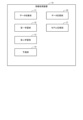
- FIG. 2 is a block diagram showing a configuration of the information processing device disclosed in FIG. 1 .
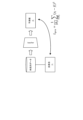
- FIG. 2 is a diagram showing a process performed by the information processing device disclosed in FIG. 1 .
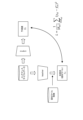
- FIG. 2 is a diagram showing a process performed by the information processing device disclosed in FIG. 1 .
- FIG. 2 is a diagram showing a process performed by the information processing device disclosed in FIG. 1 .
- FIG. 2 is a diagram showing a process performed by the information processing device disclosed in FIG. 1 .
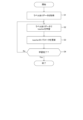
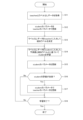
- 2 is a flowchart showing an operation of the information processing device disclosed in FIG. 1 .
- 2 is a flowchart showing an operation of the information processing device disclosed in FIG. 1 .
- FIG. 11 is a block diagram showing a hardware configuration of an information processing device according to a second embodiment of the present disclosure.
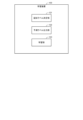
- FIG. 11 is a block diagram showing a configuration of an information processing device according to a second embodiment of the present disclosure.
- Fig. 1 is a diagram for explaining the configuration of an information processing device
- Fig. 2 to Fig. 7 are diagrams for explaining the processing operation of the information processing device.
- the information processing device 10 in this embodiment functions as a learning device for generating a model for predicting the remaining lifespan of various devices, which is the period until a failure occurs, and a prediction device for predicting the remaining lifespan of the devices using the model.
- devices for which the remaining lifespan is predicted include NAND flash memories provided in numerical control devices of machine tools as listed in the above-mentioned Patent Document 1, precision devices that can be installed in information processing devices such as hard disks, and rotating machines such as pumps and fans, but any device may be the subject of the remaining lifespan prediction.
- labeled data consisting of the operation data and remaining life period of the equipment that has actually experienced a failure and reached the end of its life is measured.
- the labeled data includes time-series operation data including measurement values of multiple types of operating status measured during a specified period while the equipment is operating, and the remaining life from when the equipment's operation data was measured until the occurrence of the failure, and is data in which the remaining life is associated with the operation data as a label.
- unlabeled data consisting of operation data of the equipment that has undergone maintenance before the occurrence of the failure is measured.
- the unlabeled data is only time-series operation data including measurement values of multiple types of operating status measured during a specified period while the equipment is operating, and is not labeled with a label such as remaining life.
- the unlabeled data is data in which no failure has occurred, for example, data obtained when a failure is prevented by maintenance.
- the operational data includes, for example, the number of rewrites, the rewrite interval, the number of reads, the temperature, the manufacturer, the production lot, and ECC performance (ECC: error correction coding).
- ECC error correction coding
- the operational data includes operational performance information such as S.M.A.R.T. (Self-Monitoring Analysis and Reporting Technology) information and information about read/write that can be obtained via a RAID controller.
- the operational data includes acceleration, ultrasonic waves, current, motor torque, distortion, and the like.
- the operational data of the device may be any type of data depending on the device.
- the labeled data and unlabeled data as described above are assumed to be stored in a specified storage device.
- the information processing device 10 is composed of one or more information processing devices each having a calculation device and a storage device. As shown in FIG. 1, the information processing device 10 is equipped with a data collection unit 11, a first learning unit 12, a second learning unit 13, and a prediction unit 14. Each function of the data collection unit 11, the first learning unit 12, the second learning unit 13, and the prediction unit 14 can be realized by the calculation device executing a program for realizing each function stored in the storage device.
- the information processing device 10 is also equipped with a data storage unit 16 and a model storage unit 17.
- the data storage unit 16 and the model storage unit 17 are composed of a storage device. Each component will be described in detail below.
- the data collection unit 11 reads and acquires the above-mentioned labeled data and unlabeled data stored in a specified storage device, and stores the labeled data as time-series data and the unlabeled data as maintenance cycle data in the data storage unit 16.
- labeled data is data on equipment that has broken down and reached the end of its life, and the amount of labeled data acquired may be smaller than that of unlabeled data.
- the first learning unit 12 performs machine learning using the time-series data, which is the above-mentioned labeled data, to generate a first learning model called "teacher".
- the first learning unit 12 performs supervised learning using the remaining life corresponding to the operation data at a certain time in the time-series data as teacher data for the operation data.
- the first learning unit 12 learns so that the loss function L pre , as shown in the following formula 1, between the predicted value of the remaining life, which is the output when the operation data at a certain time is input to the teacher, and the teacher data, which is the remaining life corresponding to the operation data at the input time, becomes small, and updates the parameters of the teacher.
- the first learning unit 12 stores data such as parameters constituting the first learning model, which is the learned teacher, in the model storage unit 17.
- the first learning model which is the teacher, is configured to output a predicted value of the remaining life by inputting operation data of a device whose remaining life is unknown.
- the first learning unit 12 may predict the average value ⁇ i of the remaining life and the predicted distribution ⁇ i by the teacher.
- the teacher may be trained using the loss function L pre shown in the following formula 2.
- the second learning unit 13 (pseudo label determination unit, predicted label output unit, learning unit) performs machine learning using the maintenance cycle data, which is the unlabeled data described above, to generate a second learning model called "student".
- the second learning unit 13 uses the first learning model, which is the teacher described above, to generate pseudo labels based on the predicted remaining life, which is the output when operation data at a certain time in the maintenance cycle data is input to the teacher, and performs supervised learning using the pseudo labels as teacher data.
- the second learning unit 13 first sets the parameters of teacher generated as described above to the initial values of the parameters of student, which is the second learning model to be generated. Then, as shown in Fig.
- the second learning unit 13 learns so that the loss function L of the predicted value (predicted label) of the remaining life of the equipment, which is the output when the operation data at a certain time in the maintenance cycle data is input to the student, and the pseudo label generated by inputting the operation data at the same time to the teacher as described above, converges, and updates the parameters of the student.
- the second learning model which is the student, is configured to output a predicted value of the remaining life by inputting the operation data of the equipment whose remaining life is unknown.
- the data storage unit 16 stores a plurality of pseudo label candidates (remaining life candidates) that have been set in advance.
- the pseudo label candidates are data in which the remaining life is set with respect to the elapsed time, and the terminal remaining life, which is the remaining life that can correspond to the latest time, is set differently.
- FIG. 4 shows pseudo label candidates of "terminal remaining life 10 years", “terminal remaining life 30 years”, and "terminal remaining life 80 years” as an example.
- each pseudo label candidate is configured as data in which the above-mentioned terminal remaining life and the remaining life at each time in a predetermined period before the latest time corresponding to the terminal remaining life are set.
- the time set on the horizontal axis of the pseudo label candidate corresponds to the time of the maintenance cycle data.
- the pseudo label candidates are set to have a long and constant remaining life for earlier times further from the latest time, i.e., periods when the equipment is in operation for a short period of time, and are set to have a gradually shorter remaining life for periods closer to the latest time, i.e., periods when the equipment is in operation for a long period of time, as the time approaches the latest time.
- the pseudo label candidates are not limited to those shown in FIG. 4, and other data may be prepared.
- the second learning unit 13 selects one of the pseudo label candidates prepared in advance based on the output of the maintenance cycle data input to the teacher, and determines the pseudo label. Specifically, as shown in FIG. 5, the second learning unit 13 calculates an evaluation value representing the likelihood of each pseudo label candidate as a label for the maintenance cycle data, for each pseudo label candidate. At this time, the second learning unit 13 sets multiple evaluation points P corresponding to each time for the pseudo label candidate for which the evaluation value is to be calculated. As an example, in the example of FIG. 5, multiple evaluation points P are set for each pseudo label candidate for each time indicated by a black circle, and in particular, more evaluation points P are set as the time approaches the latest time corresponding to the terminal remaining lifespan.
- the second learning unit 13 calculates an evaluation value by comparing the remaining lifespan on the pseudo label candidate at the time corresponding to the evaluation point P with the remaining lifespan that is the output of the maintenance data input to the teacher at the time corresponding to the evaluation point P. For example, the second learning unit 13 calculates the error between the remaining life in the pseudo label candidate and the remaining life that is the output when maintenance data is input to the teacher as an evaluation value. As an example, the second learning unit 13 calculates the root mean squared error (RMSE (Root Mean Squared Error)) of the remaining life for all evaluation points P as the evaluation value.
- RMSE Root Mean Squared Error
- the second learning unit 13 selects the pseudo label candidate with the best evaluation value from the evaluation values calculated for each pseudo label candidate, and determines it as the pseudo label.
- the evaluation value is a value that evaluates the quality of the pseudo label.
- the evaluation value may be calculated using the remaining life y pi of each evaluation point of the pseudo label candidate to be evaluated, the average remaining life ⁇ pi by the teacher, and the prediction distribution ⁇ pi in the same manner as the first term of Formula 2, and may be calculated using the following Formula 3.
- the second learning unit 13 evaluates the pseudo label candidates by comparing the predicted remaining life, which is the output when the operation data at each evaluation point P corresponding to a plurality of times of the equipment without a label, which is the maintenance cycle data, is input to the teacher, with the remaining life set in the pseudo label candidate at the evaluation point P, which is the corresponding time.
- the method of determining the pseudo label by the second learning unit 13 is not limited to the above-mentioned method.
- the second learning unit 13 selects a pseudo label candidate from a plurality of pseudo label candidates according to the evaluation value as described above, but may not determine the selected pseudo label candidate as a pseudo label as it is, but may generate a pseudo label by using the selected pseudo label candidate to modify the remaining life of a part of it.
- the terminal remaining lifespan of the selected pseudo label candidate and multiple terminal remaining lifespans centered on that value, both large and small can be fitted to a polynomial with the terminal remaining lifespan value as the explanatory variable and the evaluation value as the objective variable, and the value of the explanatory variable corresponding to the minimum value of the polynomial can be modified to become the terminal remaining lifespan of the selected pseudo label candidate.
- the second learning unit 13 learns to reduce the loss function L as shown in the following equation 4 for the predicted remaining life, which is the output of the maintenance cycle data input to the student, using the pseudo labels determined as described above as training data, and updates the parameters of the student.
- the second learning unit 13 stores data such as parameters constituting the second learning model, which is the learned student, in the model storage unit 17.
- the second learning unit 13 may predict the average value ⁇ si and the predicted distribution ⁇ si of the remaining life span for the student.
- the Gaussian distribution is also learned, and the student may be trained using the loss function L shown in the following formula 5.
- the second learning unit 13 may add a loss term for labeled data shown in the following formula 6 to the loss function L during learning of the student. This makes it possible to prevent the student from over-fitting the unlabeled data, and to stabilize the learning result.
- ⁇ is an adjustment parameter, which is determined in advance or adjusted so that the model evaluation value described later is optimized.
- the second learning unit 13 may select a portion of the maintenance cycle data depending on the evaluation value. For example, when the second learning unit 13 determines that the evaluation value calculated for each evaluation point P in the determined pseudo label is good (e.g., lower than a threshold value) according to a preset criterion, it selects the maintenance cycle data for the time corresponding to the evaluation point P. Then, the second learning unit 13 may input only the selected maintenance cycle data to the student, and use the output, that is, the predicted value of remaining life, to learn the student as described above, and update the parameters of the student.
- the evaluation value calculated for each evaluation point P in the determined pseudo label is good (e.g., lower than a threshold value) according to a preset criterion
- the second learning unit 13 may input only the selected maintenance cycle data to the student, and use the output, that is, the predicted value of remaining life, to learn the student as described above, and update the parameters of the student.
- the second learning unit 13 further evaluates the prediction performance of the student after learning in which the parameters have been updated as described above. For example, the second learning unit 13 evaluates the prediction performance of the student using verification data in which the operation data of the equipment and the remaining life span are associated with each other and which are stored in advance in the data storage unit 16. At this time, the second learning unit 13 compares the predicted value of the remaining life span, which is the output when the operation data of the verification data is input to the student, with the remaining life span of the verification data, and stores a model evaluation value, which is the evaluation value of the model.
- the model evaluation value is the prediction error of the predicted value of the remaining life span, which is the output when the operation data of the verification data is input to the student, relative to the remaining life span of the verification data, and may be the root mean square error.
- the model evaluation value is a value that indicates the quality of the prediction performance of the second learning model, which is the student.
- the second learning unit 13 evaluates the prediction performance of the student as described above every time the parameters of the student are updated, and changes the parameters of the teacher using the parameters of the student based on the evaluation result. For example, the second learning unit 13 compares a model evaluation value newly calculated for the student with a model evaluation value calculated and stored in the past, and when it is determined that the newly calculated model evaluation value has improved from the past, that is, that the model evaluation value has improved according to a preset standard, it updates the parameters ⁇ student of the student using the parameters ⁇ teacher of the teacher as shown in ⁇ new of the following formula 7. However, the second learning unit 13 may update the parameters of the teacher by any method. Then, the second learning unit 13 stores data such as parameters constituting the first learning model, which is the updated teacher, in the model storage unit 17. It is preferable that m is less than 1 and close to 1.
- the second learning unit 13 continues the learning of the student using the teacher as shown in FIG. 3 as described above.
- the second learning unit 13 then repeats the learning of the student described above until the learning is completed a preset number of times or until the improvement of the model evaluation value of the student converges and the learning is completed, and stores the final data of the student in the model storage unit 17.
- the prediction unit 14 predicts the remaining lifespan of the equipment using a second learning model, which is a learned student stored in the model storage unit 17. In other words, the prediction unit 14 inputs the operation data of the equipment whose remaining lifespan is unknown to the student, and obtains a predicted value of the remaining lifespan output from the student.
- a second learning model which is a learned student stored in the model storage unit 17.
- the information processing device 10 acquires time-series data, which is labeled data (step S1), and inputs operation data at a certain time in the time-series data to the teacher. The information processing device 10 then learns to reduce the loss function between the predicted remaining lifespan, which is the output of the teacher, and the teacher data, which is the remaining lifespan corresponding to the operation data at the input time (step S2). After learning, the information processing device 10 updates the teacher's parameters (step S3), and repeats the above-mentioned learning until the learning converges (No in step S4). When the learning converges, the information processing device 10 stores data such as parameters that constitute the first learning model, which is the learned teacher.
- the information processing device 10 acquires the stored teacher and the maintenance cycle data, which is unlabeled data (step S11), and sets the teacher parameters to the initial values of the student parameters, which is the second learning model (step S12).
- the information processing device 10 inputs the maintenance cycle data to the teacher, and determines a pseudo label based on the remaining life predicted by the teacher, which is the output of the teacher (step S13). At this time, the information processing device 10 determines a pseudo label from the pseudo label candidates by comparing and evaluating the remaining life in multiple pseudo label candidates set in advance with the remaining life predicted by the teacher. For example, in the pseudo label candidates in which the terminal remaining life is set differently as shown in FIG. 4, evaluation points P at multiple times are set as shown in FIG. 5, and the remaining life in the pseudo label candidate is compared with the predicted remaining life, which is the output of the input maintenance cycle data, for each evaluation point to evaluate each pseudo label candidate.
- the information processing device 10 determines the pseudo label candidate with the best evaluation value as the pseudo label. In this way, the information processing device 10 determines the pseudo label by calculating an evaluation value representing the quality of the pseudo label using the function for evaluating pseudo labels (pseudo label evaluation unit) of the second learning unit 13 as described above.
- the information processing device 10 also obtains a predicted value of the remaining life of the equipment, which is the output of inputting the operation data in the maintenance cycle data to the student, and trains the student so that the loss function between the predicted value and the pseudo label determined as described above becomes small (step S14).
- the information processing device 10 then updates the parameters of the student after training (step S15).
- the information processing device 10 further evaluates the prediction performance of the student after training with the updated parameters. For example, the information processing device 10 compares the predicted value of the remaining life, which is the output of inputting the operation data of the validation data to the student, with the remaining life period of the validation data, and calculates a model evaluation value from the error between these.
- the information processing device 10 updates the parameters of the teacher using the parameters of the student (step S17). In this way, the information processing device 10 uses the function (model evaluation unit) for evaluating the second learning model, which is the student, of the second learning unit 13 as described above to calculate a model evaluation value that indicates the quality of the prediction performance of the student, and determines whether the student has improved.
- the information processing device 10 repeats the above-mentioned learning until the learning converges (No in step S18).
- the information processing device 10 stores data such as parameters constituting the second learning model, which is the trained student.
- the information processing device 10 predicts the remaining lifespan of the equipment using the second learning model, which is the student stored by learning as described above. In other words, the information processing device 10 inputs the operation data of the equipment whose remaining lifespan is unknown to the student, and obtains the predicted value of the remaining lifespan, which is the output.
- a first learning model such as teacher can be generated from a small amount of labeled data
- a second learning model such as student can be generated from unlabeled data such as maintenance cycle data by using the first learning model as teacher data to obtain pseudo labels, and inputting unlabeled data into student to obtain predicted values, thereby improving the accuracy of the generated model.
- the information processing device 10 can further improve the accuracy of student by using the output of teacher to evaluate pseudo label candidates and determine pseudo labels, as described above, and updating the teacher parameters using the learned student parameters.
- Fig. 8 to Fig. 9 are block diagrams showing the configuration of a learning device in embodiment 2. Note that this embodiment shows an outline of the configuration of the learning device described in the above embodiment.
- the learning device 100 is configured as a general information processing device, and is equipped with the following hardware configuration, as an example.
- ⁇ CPU Central Processing Unit
- ROM Read Only Memory
- RAM Random Access Memory
- Program group 104 loaded into RAM 103
- a storage device 105 for storing the program group 104
- a drive device 106 that reads and writes data from and to a storage medium 110 outside the information processing device.
- a communication interface 107 that connects to a communication network 111 outside the information processing device
- Input/output interface 108 for inputting and outputting data
- a bus 109 that connects each component
- FIG. 8 shows an example of the hardware configuration of the information processing device that is the learning device 100
- the hardware configuration of the information processing device is not limited to the above-mentioned case.
- the information processing device may be configured with a part of the above-mentioned configuration, such as not having the drive device 106.
- the information processing device may use a GPU (Graphic Processing Unit), a DSP (Digital Signal Processor), an MPU (Micro Processing Unit), an FPU (Floating point number Processing Unit), a PPU (Physics Processing Unit), a TPU (Tensor Processing Unit), a quantum processor, a microcontroller, or a combination of these.
- the learning device 100 can be equipped with the pseudo label determination unit 121, the predicted label output unit 122, and the learning unit 123 shown in FIG. 9 by having the CPU 101 acquire and execute the program group 104.
- the program group 104 is stored in the storage device 105 or the ROM 102 in advance, for example, and the CPU 101 loads the program group 104 into the RAM 103 and executes it as necessary.
- the program group 104 may be supplied to the CPU 101 via the communication network 111, or may be stored in the storage medium 110 in advance, and the drive device 106 may read out the program and supply it to the CPU 101.
- the pseudo label determination unit 121, the predicted label output unit 122, and the learning unit 123 described above may be constructed with dedicated electronic circuits for realizing such means.
- the pseudo label determination unit 121 determines a pseudo label representing the remaining life of the equipment based on the output of a first learning model trained using labeled data consisting of time-series operation data representing the equipment's operating status and the remaining life span, the first learning model being trained using labeled data consisting of time-series operation data representing the equipment's operating status and the remaining life span. For example, the pseudo label determination unit 121 determines a pseudo label by evaluating the difference between the output of the first learning model inputting unlabeled data and a pseudo label candidate prepared in advance.
- the predicted label output unit 122 outputs the unlabeled data input to the second learning model as a predicted label representing the predicted remaining life of the equipment.
- the learning unit 123 learns a second learning model based on the pseudo label and the predicted label. At this time, the learning unit 123 may use the parameters of the second learning model after learning to change the parameters of the first learning model and perform further learning.
- a first learning model can be generated from labeled data, even if the amount is small, and this can be used to generate a highly accurate second learning model even from unlabeled data.
- Non-transitory computer readable medium includes various types of tangible storage medium.
- Examples of non-transitory computer readable medium include magnetic recording media (e.g., flexible disks, magnetic tapes, hard disk drives), magneto-optical recording media (e.g., magneto-optical disks), CD-ROM (Read Only Memory), CD-R, CD-R/W, and semiconductor memory (e.g., mask ROM, PROM (Programmable ROM), EPROM (Erasable PROM), flash ROM, RAM (Random Access Memory)).
- the program may also be supplied to a computer by various types of transitory computer readable medium. Examples of transitory computer readable medium include electrical signals, optical signals, and electromagnetic waves.
- the temporary computer-readable medium can supply the program to the computer via a wired communication path, such as an electric wire or optical fiber, or via a wireless communication path.
- the present disclosure has been described above with reference to the above-mentioned embodiments, but the present disclosure is not limited to the above-mentioned embodiments.
- Various modifications that can be understood by those skilled in the art can be made to the configuration and details of the present disclosure within the scope of the present disclosure.
- at least one or more of the functions of the pseudo label determination unit 121, the predicted label output unit 122, and the learning unit 123 described above may be executed by an information processing device installed and connected anywhere on the network, that is, they may be executed by so-called cloud computing.
- (Appendix 1) a pseudo label determination unit that determines a pseudo label that represents the remaining life of the equipment based on an output of a first learning model trained using labeled data in which the remaining life period for the time-series operation data that represents the operation status of the equipment is input; and a prediction label output unit that outputs the unlabeled data input to a second learning model as a prediction label that represents a predicted remaining life of the equipment; a learning unit that learns the second learning model based on the pseudo label and the predicted label;
- a learning device equipped with (Appendix 2) 2.
- the pseudo label determination unit evaluates a plurality of preset remaining life candidates based on an output of the first learning model in which the unlabeled data is input, and determines the pseudo label based on the remaining life candidates in accordance with an evaluation result; Learning device. (Appendix 3) 3.
- the learning device according to claim 2 The plurality of remaining lifespan candidates are set to have different terminal remaining lifespans, which are remaining lifespans that can correspond to the latest operational data among the unlabeled data, and the pseudo label determination unit evaluates a plurality of remaining life candidates based on an output of the first learning model in which the unlabeled data is input, and determines the pseudo label by selecting from the remaining life candidates according to an evaluation result; Learning device. (Appendix 4) 4.
- the learning device according to claim 3,
- the remaining lifespan candidates are set to the terminal remaining lifespan and a remaining lifespan at a time of a predetermined period before a latest time corresponding to the terminal remaining lifespan
- the pseudo label determination unit evaluates the plurality of remaining life candidates based on an output of the first learning model obtained by inputting the unlabeled data at the times corresponding to the plurality of evaluation points and a remaining life set as the remaining life candidate at each of the times corresponding to the evaluation point; Learning device. (Appendix 5) 5.
- the pseudo label determination unit sets a larger number of evaluation points for each of the plurality of remaining life candidates as the evaluation points become closer to the latest time, and evaluates the plurality of remaining life candidates based on an output of the first learning model in which the unlabeled data at the time corresponding to each evaluation point is input.
- Learning device (Appendix 6) 6.
- the pseudo label determination unit evaluates the remaining life candidates at each of the evaluation points and selects the unlabeled data based on the evaluation results; the predicted label output unit inputs the selected unlabeled data to the second learning model and outputs the predicted label; Learning device. (Appendix 7) 7.
- the learning unit evaluates the second learning model based on an output of the operation data, which is previously associated with a remaining life span, input to the second learning model after learning, and the remaining life span associated with the operation data, and changes parameters of the first learning model using parameters set in the second learning model according to a result of the evaluation.
- Learning device (Appendix 8) 8.
- the learning unit changes parameters of the first learning model using parameters set in the second learning model when an evaluation result of the second learning model satisfies a preset criterion; Learning device.
- (Appendix 9) determining a pseudo label representing the remaining life of the equipment based on an output of a first learning model trained using labeled data in which the remaining life period for the time-series operation data representing the operation status of the equipment is input;
- the unlabeled data is input to a second learning model, and the output is set as a predicted label representing the predicted remaining life of the equipment; training the second learning model based on the pseudo label and the predicted label; How to learn.
- (Appendix 10) 10.
- the learning method further comprising:
- the remaining lifespan candidates are set to the terminal remaining lifespan and a remaining lifespan at a time of a predetermined period before a latest time corresponding to the terminal remaining lifespan, evaluating the plurality of remaining life candidates based on an output of the first learning model obtained by inputting the unlabeled data at the times corresponding to the plurality of evaluation points and the remaining lifespans set as the remaining lifespan candidates at the times corresponding to the respective evaluation points; How to learn. (Appendix 13) 13.
- the learning method further comprising: setting a larger number of evaluation points for each of the plurality of remaining life candidates as the evaluation points become closer to the latest time, and evaluating the plurality of remaining life candidates based on an output of the first learning model, which is an input of the unlabeled data at the time corresponding to each of the evaluation points; How to learn. (Appendix 14) 14.
- the learning method according to claim 12 or 13, evaluating the remaining life candidates at each of the evaluation points and selecting the unlabeled data based on the evaluation results; inputting the selected unlabeled data to the second learning model and outputting the predicted label; How to learn.
- (Appendix 17) determining a pseudo label representing the remaining life of the equipment based on an output of a first learning model trained using labeled data in which the remaining life period for the time-series operation data representing the operation status of the equipment is input;
- the unlabeled data is input to a second learning model, and the output is set as a predicted label representing the predicted remaining life of the equipment; training the second learning model based on the pseudo label and the predicted label;
- a computer-readable storage medium that stores a program for causing a computer to execute a process.
Landscapes
- Engineering & Computer Science (AREA)
- Theoretical Computer Science (AREA)
- Software Systems (AREA)
- Data Mining & Analysis (AREA)
- Evolutionary Computation (AREA)
- Medical Informatics (AREA)
- Computer Vision & Pattern Recognition (AREA)
- Physics & Mathematics (AREA)
- Computing Systems (AREA)
- General Engineering & Computer Science (AREA)
- General Physics & Mathematics (AREA)
- Mathematical Physics (AREA)
- Artificial Intelligence (AREA)
- Management, Administration, Business Operations System, And Electronic Commerce (AREA)
Priority Applications (2)
| Application Number | Priority Date | Filing Date | Title |
|---|---|---|---|
| JP2024572738A JPWO2024157398A1 (https=) | 2023-01-25 | 2023-01-25 | |
| PCT/JP2023/002311 WO2024157398A1 (ja) | 2023-01-25 | 2023-01-25 | 学習装置、学習方法、プログラム |
Applications Claiming Priority (1)
| Application Number | Priority Date | Filing Date | Title |
|---|---|---|---|
| PCT/JP2023/002311 WO2024157398A1 (ja) | 2023-01-25 | 2023-01-25 | 学習装置、学習方法、プログラム |
Publications (1)
| Publication Number | Publication Date |
|---|---|
| WO2024157398A1 true WO2024157398A1 (ja) | 2024-08-02 |
Family
ID=91970041
Family Applications (1)
| Application Number | Title | Priority Date | Filing Date |
|---|---|---|---|
| PCT/JP2023/002311 Ceased WO2024157398A1 (ja) | 2023-01-25 | 2023-01-25 | 学習装置、学習方法、プログラム |
Country Status (2)
| Country | Link |
|---|---|
| JP (1) | JPWO2024157398A1 (https=) |
| WO (1) | WO2024157398A1 (https=) |
Cited By (1)
| Publication number | Priority date | Publication date | Assignee | Title |
|---|---|---|---|---|
| CN119416174A (zh) * | 2024-11-04 | 2025-02-11 | 上海交通大学 | 一种基于任务增量元学习的小样本下剩余寿命预测方法 |
Citations (3)
| Publication number | Priority date | Publication date | Assignee | Title |
|---|---|---|---|---|
| JP2017027329A (ja) * | 2015-07-22 | 2017-02-02 | ルネサスエレクトロニクス株式会社 | 故障予測装置および故障予測方法 |
| WO2019035364A1 (ja) * | 2017-08-16 | 2019-02-21 | ソニー株式会社 | プログラム、情報処理方法、および情報処理装置 |
| JP2022056412A (ja) * | 2020-09-29 | 2022-04-08 | インターナショナル・ビジネス・マシーンズ・コーポレーション | 機械学習モデルを選択する方法、システム、およびプログラム(モバイルai) |
-
2023
- 2023-01-25 JP JP2024572738A patent/JPWO2024157398A1/ja active Pending
- 2023-01-25 WO PCT/JP2023/002311 patent/WO2024157398A1/ja not_active Ceased
Patent Citations (3)
| Publication number | Priority date | Publication date | Assignee | Title |
|---|---|---|---|---|
| JP2017027329A (ja) * | 2015-07-22 | 2017-02-02 | ルネサスエレクトロニクス株式会社 | 故障予測装置および故障予測方法 |
| WO2019035364A1 (ja) * | 2017-08-16 | 2019-02-21 | ソニー株式会社 | プログラム、情報処理方法、および情報処理装置 |
| JP2022056412A (ja) * | 2020-09-29 | 2022-04-08 | インターナショナル・ビジネス・マシーンズ・コーポレーション | 機械学習モデルを選択する方法、システム、およびプログラム(モバイルai) |
Non-Patent Citations (1)
| Title |
|---|
| HE RUNDONG; HAN ZHONGYI; LU XIANKAI; YIN YILONG: "Safe-Student for Safe Deep Semi-Supervised Learning with Unseen-Class Unlabeled Data", 2022 IEEE/CVF CONFERENCE ON COMPUTER VISION AND PATTERN RECOGNITION (CVPR), IEEE, 18 June 2022 (2022-06-18), pages 14565 - 14574, XP034193801, DOI: 10.1109/CVPR52688.2022.01418 * |
Cited By (1)
| Publication number | Priority date | Publication date | Assignee | Title |
|---|---|---|---|---|
| CN119416174A (zh) * | 2024-11-04 | 2025-02-11 | 上海交通大学 | 一种基于任务增量元学习的小样本下剩余寿命预测方法 |
Also Published As
| Publication number | Publication date |
|---|---|
| JPWO2024157398A1 (https=) | 2024-08-02 |
Similar Documents
| Publication | Publication Date | Title |
|---|---|---|
| US12032353B2 (en) | Examining apparatus, examining method and recording medium | |
| KR102434460B1 (ko) | 기계학습 기반 예측 모델 재학습 장치 및 그 방법 | |
| JP7566080B2 (ja) | 予測モデルの改良 | |
| CN112449696B (zh) | 时序数据诊断装置、追加学习方法及程序 | |
| US12001180B2 (en) | Condition-based method for malfunction prediction | |
| CN109117566B (zh) | 一种基于产品寿命预测模型的混合维修规划方法 | |
| JP6711323B2 (ja) | プロセスの異常状態診断方法および異常状態診断装置 | |
| CN116089870A (zh) | 基于元学习的小样本条件下工业设备故障预测方法及装置 | |
| CN116736174B (zh) | 电池剩余寿命预测方法、装置、计算机设备和存储介质 | |
| JP2023527237A (ja) | 産業プロセスモデル生成システム | |
| CN116457740B (zh) | 用于自动生成传感器数据的时间序列的训练数据的辅助设备和方法 | |
| WO2024157398A1 (ja) | 学習装置、学習方法、プログラム | |
| TWI557674B (zh) | 品質管理裝置及其管理方法 | |
| JP2024017791A (ja) | ニューラルネットワークの学習方法、特徴選択装置、特徴選択方法、及びコンピュータプログラム | |
| CN109344967B (zh) | 一种基于人工神经网络的智能电表生命周期预测方法 | |
| CN117795805A (zh) | 功耗估计装置、功耗估计方法以及功耗估计程序 | |
| JP2024003643A (ja) | ニューラルネットワークの学習方法、コンピュータプログラム、及び余寿命予測システム | |
| US20210080924A1 (en) | Diagnosis Method and Diagnosis System for a Processing Engineering Plant and Training Method | |
| JP7828695B2 (ja) | 人工知能モデルを訓練する方法、コンピュータシステム、コンピュータプログラム(管理限界を使用して人工知能モデル訓練を早期停止すること) | |
| CN112016598B (zh) | 基于sdae的局部放电模式识别方法、计算机设备和存储介质 | |
| CN113474796B (zh) | 信息处理装置、信息处理方法以及计算机能读取的记录介质 | |
| CN116194945A (zh) | 信息处理装置、信息处理方法和信息处理程序 | |
| US12396126B2 (en) | Fan behavior anomaly detection using neural network | |
| WO2024180648A1 (ja) | 情報処理装置、情報処理方法、プログラム | |
| CN118625087A (zh) | Igbt器件剩余寿命预测方法及系统 |
Legal Events
| Date | Code | Title | Description |
|---|---|---|---|
| 121 | Ep: the epo has been informed by wipo that ep was designated in this application |
Ref document number: 23918363 Country of ref document: EP Kind code of ref document: A1 |
|
| ENP | Entry into the national phase |
Ref document number: 2024572738 Country of ref document: JP Kind code of ref document: A |
|
| WWE | Wipo information: entry into national phase |
Ref document number: 2024572738 Country of ref document: JP |
|
| NENP | Non-entry into the national phase |
Ref country code: DE |
|
| 122 | Ep: pct application non-entry in european phase |
Ref document number: 23918363 Country of ref document: EP Kind code of ref document: A1 |