WO2024106293A1 - シアニン化合物、樹脂組成物、および光学部材 - Google Patents
シアニン化合物、樹脂組成物、および光学部材 Download PDFInfo
- Publication number
- WO2024106293A1 WO2024106293A1 PCT/JP2023/040293 JP2023040293W WO2024106293A1 WO 2024106293 A1 WO2024106293 A1 WO 2024106293A1 JP 2023040293 W JP2023040293 W JP 2023040293W WO 2024106293 A1 WO2024106293 A1 WO 2024106293A1
- Authority
- WO
- WIPO (PCT)
- Prior art keywords
- group
- ring
- cyanine compound
- resin
- wavelength
- Prior art date
- Legal status (The legal status is an assumption and is not a legal conclusion. Google has not performed a legal analysis and makes no representation as to the accuracy of the status listed.)
- Ceased
Links
Images




Classifications
-
- C—CHEMISTRY; METALLURGY
- C07—ORGANIC CHEMISTRY
- C07D—HETEROCYCLIC COMPOUNDS
- C07D209/00—Heterocyclic compounds containing five-membered rings, condensed with other rings, with one nitrogen atom as the only ring hetero atom
- C07D209/56—Ring systems containing three or more rings
- C07D209/58—[b]- or [c]-condensed
- C07D209/60—Naphtho [b] pyrroles; Hydrogenated naphtho [b] pyrroles
-
- C—CHEMISTRY; METALLURGY
- C07—ORGANIC CHEMISTRY
- C07D—HETEROCYCLIC COMPOUNDS
- C07D209/00—Heterocyclic compounds containing five-membered rings, condensed with other rings, with one nitrogen atom as the only ring hetero atom
- C07D209/56—Ring systems containing three or more rings
- C07D209/80—[b, c]- or [b, d]-condensed
- C07D209/90—Benzo [c, d] indoles; Hydrogenated benzo [c, d] indoles
-
- C—CHEMISTRY; METALLURGY
- C07—ORGANIC CHEMISTRY
- C07D—HETEROCYCLIC COMPOUNDS
- C07D277/00—Heterocyclic compounds containing 1,3-thiazole or hydrogenated 1,3-thiazole rings
- C07D277/60—Heterocyclic compounds containing 1,3-thiazole or hydrogenated 1,3-thiazole rings condensed with carbocyclic rings or ring systems
- C07D277/62—Benzothiazoles
- C07D277/64—Benzothiazoles with only hydrocarbon or substituted hydrocarbon radicals attached in position 2
-
- C—CHEMISTRY; METALLURGY
- C08—ORGANIC MACROMOLECULAR COMPOUNDS; THEIR PREPARATION OR CHEMICAL WORKING-UP; COMPOSITIONS BASED THEREON
- C08K—Use of inorganic or non-macromolecular organic substances as compounding ingredients
- C08K5/00—Use of organic ingredients
- C08K5/16—Nitrogen-containing compounds
- C08K5/34—Heterocyclic compounds having nitrogen in the ring
- C08K5/3412—Heterocyclic compounds having nitrogen in the ring having one nitrogen atom in the ring
- C08K5/3415—Five-membered rings
- C08K5/3417—Five-membered rings condensed with carbocyclic rings
-
- C—CHEMISTRY; METALLURGY
- C08—ORGANIC MACROMOLECULAR COMPOUNDS; THEIR PREPARATION OR CHEMICAL WORKING-UP; COMPOSITIONS BASED THEREON
- C08L—COMPOSITIONS OF MACROMOLECULAR COMPOUNDS
- C08L101/00—Compositions of unspecified macromolecular compounds
-
- C—CHEMISTRY; METALLURGY
- C09—DYES; PAINTS; POLISHES; NATURAL RESINS; ADHESIVES; COMPOSITIONS NOT OTHERWISE PROVIDED FOR; APPLICATIONS OF MATERIALS NOT OTHERWISE PROVIDED FOR
- C09B—ORGANIC DYES OR CLOSELY-RELATED COMPOUNDS FOR PRODUCING DYES, e.g. PIGMENTS; MORDANTS; LAKES
- C09B23/00—Methine or polymethine dyes, e.g. cyanine dyes
- C09B23/0008—Methine or polymethine dyes, e.g. cyanine dyes substituted on the polymethine chain
-
- C—CHEMISTRY; METALLURGY
- C09—DYES; PAINTS; POLISHES; NATURAL RESINS; ADHESIVES; COMPOSITIONS NOT OTHERWISE PROVIDED FOR; APPLICATIONS OF MATERIALS NOT OTHERWISE PROVIDED FOR
- C09B—ORGANIC DYES OR CLOSELY-RELATED COMPOUNDS FOR PRODUCING DYES, e.g. PIGMENTS; MORDANTS; LAKES
- C09B23/00—Methine or polymethine dyes, e.g. cyanine dyes
- C09B23/02—Methine or polymethine dyes, e.g. cyanine dyes the polymethine chain containing an odd number of >CH- or >C[alkyl]- groups
- C09B23/08—Methine or polymethine dyes, e.g. cyanine dyes the polymethine chain containing an odd number of >CH- or >C[alkyl]- groups more than three >CH- groups, e.g. polycarbocyanines
-
- C—CHEMISTRY; METALLURGY
- C09—DYES; PAINTS; POLISHES; NATURAL RESINS; ADHESIVES; COMPOSITIONS NOT OTHERWISE PROVIDED FOR; APPLICATIONS OF MATERIALS NOT OTHERWISE PROVIDED FOR
- C09B—ORGANIC DYES OR CLOSELY-RELATED COMPOUNDS FOR PRODUCING DYES, e.g. PIGMENTS; MORDANTS; LAKES
- C09B23/00—Methine or polymethine dyes, e.g. cyanine dyes
- C09B23/14—Styryl dyes
-
- C—CHEMISTRY; METALLURGY
- C09—DYES; PAINTS; POLISHES; NATURAL RESINS; ADHESIVES; COMPOSITIONS NOT OTHERWISE PROVIDED FOR; APPLICATIONS OF MATERIALS NOT OTHERWISE PROVIDED FOR
- C09B—ORGANIC DYES OR CLOSELY-RELATED COMPOUNDS FOR PRODUCING DYES, e.g. PIGMENTS; MORDANTS; LAKES
- C09B57/00—Other synthetic dyes of known constitution
-
- C—CHEMISTRY; METALLURGY
- C09—DYES; PAINTS; POLISHES; NATURAL RESINS; ADHESIVES; COMPOSITIONS NOT OTHERWISE PROVIDED FOR; APPLICATIONS OF MATERIALS NOT OTHERWISE PROVIDED FOR
- C09B—ORGANIC DYES OR CLOSELY-RELATED COMPOUNDS FOR PRODUCING DYES, e.g. PIGMENTS; MORDANTS; LAKES
- C09B67/00—Influencing the physical, e.g. the dyeing or printing properties of dyestuffs without chemical reactions, e.g. by treating with solvents grinding or grinding assistants, coating of pigments or dyes; Process features in the making of dyestuff preparations; Dyestuff preparations of a special physical nature, e.g. tablets, films
- C09B67/006—Preparation of organic pigments
-
- G—PHYSICS
- G02—OPTICS
- G02B—OPTICAL ELEMENTS, SYSTEMS OR APPARATUS
- G02B1/00—Optical elements characterised by the material of which they are made; Optical coatings for optical elements
- G02B1/04—Optical elements characterised by the material of which they are made; Optical coatings for optical elements made of organic materials, e.g. plastics
-
- G—PHYSICS
- G02—OPTICS
- G02B—OPTICAL ELEMENTS, SYSTEMS OR APPARATUS
- G02B1/00—Optical elements characterised by the material of which they are made; Optical coatings for optical elements
- G02B1/10—Optical coatings produced by application to, or surface treatment of, optical elements
- G02B1/11—Anti-reflection coatings
- G02B1/113—Anti-reflection coatings using inorganic layer materials only
- G02B1/115—Multilayers
-
- G—PHYSICS
- G02—OPTICS
- G02B—OPTICAL ELEMENTS, SYSTEMS OR APPARATUS
- G02B3/00—Simple or compound lenses
-
- G—PHYSICS
- G02—OPTICS
- G02B—OPTICAL ELEMENTS, SYSTEMS OR APPARATUS
- G02B5/00—Optical elements other than lenses
- G02B5/20—Filters
- G02B5/22—Absorbing filters
Definitions
- the present invention relates to a cyanine compound, a resin composition and a cyanine compound solution containing the cyanine compound, optical components such as optical filters and optical lenses formed from the resin composition, and an imaging device and a camera unit having the optical components.
- Cyanine compounds are dyes that have an absorption band in the near-infrared region, and various cyanine compounds are known to date (e.g., Patent Documents 1 and 2).
- Cyanine compounds have an absorption range in the near-infrared region, and are expected to be used in near-infrared cut filters and near-infrared absorbing films, taking advantage of their high transparency in the visible light region.
- cyanine compounds When using cyanine compounds for such purposes, it is desirable to handle the cyanine compounds by dissolving them in organic solvents or resins, which improves the handleability and processability of the cyanine compounds.
- cyanine compounds generally have low solubility in organic solvents and resins, and in the case of forming an optical filter from a resin composition containing a cyanine compound, for example, it is necessary to form the optical filter with a certain degree of thickness in order to exhibit the spectral characteristics derived from the cyanine compound.
- electronic devices such as optical filters are required to be made smaller and thinner, it is necessary to have a higher concentration of cyanine compounds in the optical filter in order to form a thinner optical filter.
- the present invention was made in consideration of the above circumstances, and its purpose is to provide a cyanine compound that has excellent solubility in organic solvents.
- a cyanine compound represented by the following formula (1) [In formula (1), R 11 and R 21 each independently represent an alkyl group having 3 or more carbon atoms; R 12 , R 13 , R 22 and R 23 each independently represent a hydrogen atom, a halogen atom or an organic group; R 15 is linked to R 14 to form an aromatic ring, or X 1 represents a carbon atom and is linked to X 1 to form an aromatic ring; When R 15 is linked with R 14 to form an aromatic ring, X 1 represents CR 16 R 17 , and R 16 and R 17 each independently represent a hydrogen atom, a halogen atom, or an organic group; When R 15 is linked with X 1 to form an aromatic ring, R 14 represents an alkyl group having 4 or more carbon atoms or an alkoxy group having 3 or more carbon atoms; R 25 is linked to R 24 to form an aromatic ring, or X 2 represents a
- the cyanine compound of the present invention has excellent solubility in organic solvents.
- the present invention also provides a resin composition containing the cyanine compound of the present invention, a cyanine compound solution, and an optical filter having a resin layer formed from the resin composition.
- R 11 to R 14 , R 21 to R 24 and L are as defined above;
- R b1 and R b2 each independently represent a hydrogen atom, a halogen atom, or an organic group, and multiple R b1s may be the same or different from each other, and multiple R b2s may be the same or different from each other.
- a resin composition comprising the cyanine compound according to any one of [1] to [3] and a resin component.
- a cyanine compound solution comprising the cyanine compound according to any one of [1] to [3] and a solvent.
- An optical filter comprising a resin layer formed from the resin composition according to any one of [4] to [7].
- the present invention also provides the following optical filter having a resin layer capable of cutting light in the near-infrared region over a wide range.
- the above optical filter can cut a wide range of light in the near-infrared region.
- the cyanine compound represented by formula (1) has excellent heat resistance, so that decomposition of the cyanine compound can be suppressed when forming a resin layer, or decomposition of the cyanine compound can be suppressed even when the optical filter is used at high temperatures. Therefore, the optical filter of the present invention is suitable for exhibiting the absorption characteristics derived from the cyanine compound.
- the present invention also provides an imaging device having the optical filter of the present invention.
- the present invention also provides the following resin composition for optical lenses, which has excellent absorption properties for long-wavelength near-infrared light.
- the resin composition for optical lenses of the present invention makes it possible to easily manufacture optical lenses that have excellent absorption properties for long-wavelength near-infrared light.
- This configuration makes it possible to differentiate the target absorption regions for the optical lens and the near-infrared cut filter, making it possible to control the various characteristics required for each of the optical lens and the near-infrared cut filter.
- the present invention also provides an optical lens formed from the resin composition for optical lenses of the present invention, and a camera unit having the optical lens and a near-infrared cut filter.
- the resin composition according to [15] wherein when a concentration of the cyanine compound relative to the thermoplastic resin is adjusted to 0.014% by mass and a smooth molded plate having a thickness of 1 mm is formed, the molded plate has a wavelength ⁇ 50 at which the transmittance is 50% in a wavelength range of 700 nm or more.
- the optical lens according to [17] having a thickness of 30 ⁇ m to 5 mm.
- a camera unit comprising the optical lens according to [17] or [18] and a near-infrared cut filter.
- the near-infrared cut filter contains a near-infrared absorbing dye having an absorption maximum wavelength in the wavelength range of 700 nm to 750 nm.
- R 51 to R 60 each independently represent a hydrogen atom, an organic group, or a polar functional group; R 51 and R 52 , R 52 and R 53 , R 53 and R 54 , R 54 and R 55 , R 56 and R 57 , R 57 and R 58 , R 58 and R 59 , and R 59 and R 60 may be linked to each other to form a ring.
- the camera unit according to any one of [19] to [21], wherein the near-infrared cut filter has a maximum absorption peak in a wavelength range of 700 nm to 750 nm in an absorption spectrum in a wavelength range of 350 nm to 1100 nm, and has a wavelength ⁇ 50 at which the transmittance is 50% in a wavelength range of 620 nm to 660 nm.
- the cyanine compound of the present invention has excellent solubility in organic solvents.
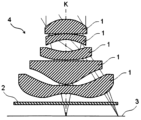
- 1 shows a schematic diagram of a camera unit.
- 3 shows the transmission spectrum of the resin laminate substrate 1 produced in the example.
- 3 shows the transmission spectrum of the resin laminate substrate 2 produced in the example.
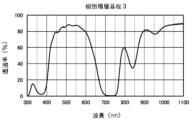
- 3 shows the transmission spectrum of the resin laminate substrate 3 produced in the example.
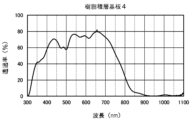
- 3 shows the transmission spectrum of the resin layer of the resin laminate substrate 4 produced in the example.
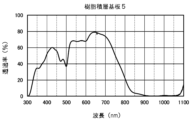
- 3 shows the transmission spectrum of the resin layer of the resin laminate substrate 5 produced in the example.
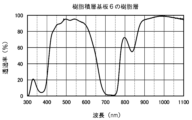
- 3 shows the transmission spectrum of the resin layer of the resin laminate substrate 6 produced in the example.
- 3 shows the transmission spectrum of the resin layer of the resin laminate substrate 7 produced in the example.
- 3 shows the transmission spectrum of the resin layer of the resin laminate substrate 8 produced in the example.
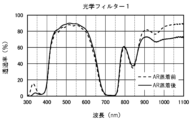
- 1 shows the transmission spectrum of the optical filter 1 produced in the example.
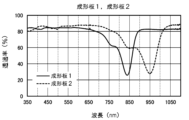
- 1 shows the transmission spectra of molded plates 1 and 2 produced in the examples.
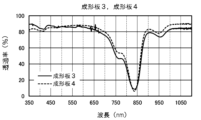
- 4 shows the transmission spectra of molded plates 3 and 4 produced in the examples.
- the cyanine compound of the present invention is represented by the following formula (1).
- R 11 and R 21 each independently represent an alkyl group having 3 or more carbon atoms
- R 12 , R 13 , R 22 and R 23 each independently represent a hydrogen atom, a halogen atom or an organic group
- R 15 forms an aromatic ring together with R 14
- X 1 represents a carbon atom and forms an aromatic ring together with X 1
- X 1 represents CR 16 R 17
- R 16 and R 17 each independently represent a hydrogen atom, a halogen atom or an organic group
- R 15 forms an aromatic ring together with X 1
- R 14 represents an alkyl group having 4 or more carbon atoms or an alkoxy group having 3 or more carbon atoms
- R 25 forms an aromatic ring together with R 24
- X 2 represents a carbon atom and forms an aromatic ring together with X
- R 15 is linked to R 14 to form an aromatic ring or is linked to X 1 , which is a carbon atom, to form an aromatic ring
- R 25 is linked to R 24 to form an aromatic ring or is linked to X 2 , which is a carbon atom, to form an aromatic ring, so that the portions containing the indole ring structure bonded to both sides of L (methine chain L) have high planarity.
- R 11 and R 21 represent an alkyl group having 3 or more carbon atoms
- R 14 is linked to R 15 to form an aromatic ring or represents an alkyl group having 4 or more carbon atoms or an alkoxy group having 3 or more carbon atoms
- R 24 is linked to R 25 to form an aromatic ring or represents an alkyl group having 4 or more carbon atoms or an alkoxy group having 3 or more carbon atoms, so that the groups bonded to both sides of the methine chain L have a long shape in the direction from R 11 to R 14 and in the direction from R 21 to R 24 , and both sides of the longitudinal direction of the group have high affinity for organic solvents.
- the cyanine compound represented by formula (1) has B(C 6 F 5 ) 4 - as a counter anion, and is combined with salt formation, so that the cyanine compound has excellent solubility in organic solvents. Therefore, it is possible to contain a high concentration of the cyanine compound in the resin composition, and even when an optical filter is formed from the resin composition to a thin thickness, the cyanine compound can favorably absorb light in the near infrared region. In addition, it is possible to dissolve the cyanine compound in various solvents. When the cyanine compound is used in ink, the cyanine compound can be contained in the ink at a high concentration, and the color development of the ink can be enhanced.
- R 11 and R 21 each represent an alkyl group having 3 or more carbon atoms, and examples of the alkyl group include linear or branched alkyl groups.
- the number of carbon atoms in the alkyl group of R 11 and R 21 is preferably 4 or more, and is preferably 20 or less, more preferably 12 or less, even more preferably 8 or less, and even more preferably 6 or less.
- Examples of the linear alkyl group of R 11 and R 21 include an n-propyl group, an n-butyl group, an n-pentyl group, an n-hexyl group, an n-heptyl group, an n-octyl group, an n-nonyl group, an n-decyl group, an n-undecyl group, and an n-dodecyl group.
- Examples of the branched alkyl group of R 11 and R 21 include an isopropyl group, an isobutyl group, a tert-butyl group, an isopentyl group, a sec-pentyl group, a 1-ethylpropyl group, a neopentyl group, a tert-pentyl group, an isohexyl group, a sec-hexyl group, a 2-methylpentyl group, a 3-methylpentyl group, a tert-hexyl group, and a 2-ethylhexyl group.
- R 11 and R 21 are preferably linear alkyl groups, which increases the solubility of the cyanine compound in organic solvents and tends to increase the heat resistance. Therefore, decomposition of the cyanine compound is easily suppressed when the cyanine compound is blended with a resin and then heated to form or heat to cure.
- R 12 , R 13 , R 22 and R 23 each independently represent a hydrogen atom, a halogen atom or an organic group.
- halogen atom of R 12 , R 13 , R 22 and R 23 include a fluorine atom (fluoro group), a chlorine atom (chloro group), a bromine atom (bromo group), and an iodine atom (iodo group).
- Examples of the organic group of R 12 , R 13 , R 22 and R 23 in formula (1) include an alkyl group, an alkoxy group, an alkylthio group, an alkoxycarbonyl group, an alkylsulfonyl group, an alkylsulfinyl group, an aryl group, an aralkyl group, an aryloxy group, an arylthio group, an aryloxycarbonyl group, an arylsulfonyl group, an arylsulfinyl group, a heteroaryl group, an amino group, an amide group, a sulfonamide group, a carboxy group (a carboxylic acid group) and a cyano group.
- alkyl group of R 12 , R 13 , R 22 and R 23 examples include linear or branched alkyl groups such as methyl, ethyl, propyl, isopropyl, n-butyl, isobutyl, t-butyl, pentyl, hexyl, heptyl, octyl, nonyl, decyl, undecyl, dodecyl, tridecyl, tetradecyl, pentadecyl, hexadecyl, heptadecyl, octadecyl, nonadecyl and icosyl; and cyclic (alicyclic) alkyl groups such as cyclopropyl, cyclobutyl, cyclopentyl, cyclohexyl, cycloheptyl, cyclooctyl, cyclononyl and cyclodecyl.
- the alkyl group may have a substituent, and examples of the substituent that the alkyl group has include an aryl group, a heteroaryl group, a halogeno group, a hydroxyl group, a carboxyl group, an alkoxyl group, a cyano group, a nitro group, an amino group and a sulfo group.
- Examples of the alkyl group having a halogeno group include a monohalogenoalkyl group, a dihalogenoalkyl group, an alkyl group having a trihalomethyl unit, and a perhalogenoalkyl group.
- halogeno group a fluorine atom, a chlorine atom, or a bromine atom is preferable, and a fluorine atom is particularly preferable.
- the number of carbon atoms of the alkyl group (the number of carbon atoms excluding the substituent) is preferably 1 to 20, and specifically, if it is a linear or branched alkyl group, the number of carbon atoms is preferably 1 to 20, more preferably 1 to 10, and even more preferably 1 to 5, and if it is a cyclic alkyl group, the number of carbon atoms is preferably 4 to 10, and more preferably 5 to 8.
- alkyl group contained in the alkoxy group, alkylthio group, alkoxycarbonyl group, alkylsulfonyl group and alkylsulfinyl group of R 12 , R 13 , R 22 and R 23 see the above description of the alkyl group.
- Examples of the aryl group of R 12 , R 13 , R 22 and R 23 include a phenyl group, a biphenyl group, a naphthyl group, an anthryl group, a phenanthryl group, a pyrenyl group, and an indenyl group.
- the aryl group may have a substituent, and examples of the substituent of the aryl group include an alkyl group, an alkoxy group, a heteroaryl group, a halogeno group, a halogenoalkyl group, a hydroxyl group, a cyano group, a nitro group, an amino group, a thiocyanate group, an acyl group, an alkoxycarbonyl group, an aryloxycarbonyl group, a carbamoyl group, a sulfo group, an alkylsulfinyl group, an arylsulfinyl group, an alkylsulfonyl group, an arylsulfonyl group, and a sulfamoyl group.
- the number of carbon atoms of the aryl group (the number of carbon atoms excluding the substituent) is preferably 6 to 20, and more preferably 6 to 12.
- Examples of the aralkyl group of R 12 , R 13 , R 22 and R 23 include a benzyl group, a phenethyl group, a phenylpropyl group, a phenylbutyl group, a phenylpentyl group, and a naphthylmethyl group.
- the aralkyl group may have a substituent, and examples of the substituent of the aralkyl group include an alkyl group, an alkoxy group, a halogeno group, a halogenoalkyl group, a cyano group, a nitro group, a thiocyanate group, an acyl group, an alkoxycarbonyl group, an aryloxycarbonyl group, a carbamoyl group, a sulfo group, an alkylsulfinyl group, an arylsulfinyl group, an alkylsulfonyl group, an arylsulfonyl group, and a sulfamoyl group.
- the number of carbon atoms of the aralkyl group (the number of carbon atoms excluding the substituent) is preferably 7 to 25, and more preferably 7 to 15.
- aryl group contained in the aryloxy group arylthio group, aryloxycarbonyl group, arylsulfonyl group and arylsulfinyl group of R 12 , R 13 , R 22 and R 23 , see the above description of the aryl group.
- Examples of the heteroaryl group of R 12 , R 13 , R 22 and R 23 include a thienyl group, a thiopyranyl group, an isothiochromenyl group, a pyrrolyl group, an imidazolyl group, a pyrazolyl group, a pyridyl group, a pyraridinyl group, a pyrimidinyl group, a pyridazinyl group, a thiazolyl group, an isothiazolyl group, a furanyl group, a pyranyl group, etc.
- the heteroaryl group may have a substituent, and examples of the substituent of the heteroaryl group include an alkyl group, an alkoxy group, an aryl group, a halogeno group, a halogenoalkyl group, a hydroxyl group, a cyano group, an amino group, a nitro group, a thiocyanate group, an acyl group, an alkoxycarbonyl group, an aryloxycarbonyl group, a carbamoyl group, a sulfo group, an alkylsulfinyl group, an arylsulfinyl group, an alkylsulfonyl group, an arylsulfonyl group, a sulfamoyl group, etc.
- the heteroaryl group preferably has 2 to 20 carbon atoms (the number of carbon atoms excluding the substituent), and more preferably has 3 to 15 carbon atoms.
- R 12 , R 13 , R 22 and R 23 may be represented by the formula -NR c1 R c2 , where R c1 and R c2 are each independently a hydrogen atom, an alkyl group, an alkenyl group, an alkynyl group, an aryl group, an aralkyl group, or a heteroaryl group. Specific examples of the alkyl group, the aryl group, the aralkyl group, and the heteroaryl group are described above, and examples of the alkenyl group and the alkynyl group include the alkyl groups exemplified above in which a part of the carbon-carbon single bond is replaced with a double bond or a triple bond. R c1 and R c2 may be linked together to form a ring.
- the amide group of R 12 , R 13 , R 22 and R 23 is represented by the formula: -NH-C( ⁇ O)-R c3 , and examples thereof include those in which R c3 is an alkyl group, an aryl group, an aralkyl group, a heteroaryl group, etc.
- R c3 is an alkyl group, an aryl group, an aralkyl group, a heteroaryl group, etc.
- the alkyl group, the aryl group, the aralkyl group and the heteroaryl group see the explanations for these groups above.
- the sulfonamide group of R 12 , R 13 , R 22 and R 23 is represented by the formula: --NH--SO 2 --R c4 , where R c4 is an alkyl group, an aryl group, an aralkyl group, a heteroaryl group, etc.
- R c4 is an alkyl group, an aryl group, an aralkyl group, a heteroaryl group, etc.
- the aromatic ring formed by R 15 being linked to R 14 and the aromatic ring formed by R 25 being linked to R 24 include aromatic hydrocarbon rings and aromatic heterocycles.
- aromatic hydrocarbon rings include a benzene ring and a cyclotetradecaheptaene ring.
- the aromatic heterocycle contains one or more atoms selected from N (nitrogen atom), O (oxygen atom) and S (sulfur atom) in the ring structure and has aromaticity, and examples of such rings include a furan ring, a thiophene ring, a pyrrole ring, a pyrazole ring, an imidazole ring, a pyridine ring, a pyridazine ring, a pyrimidine ring, and a pyrazine ring.
- the aromatic ring formed by R 15 linking with R 14 and the aromatic ring formed by R 25 linking with R 24 may have a substituent.
- substituents include a halogeno group (halogen atom) and the organic groups of R 12 , R 13 , R 22 , and R 23 described above.
- X1 represents CR16R17
- R16 and R17 each independently represent a hydrogen atom, a halogen atom, or an organic group.
- X2 represents CR26R27
- R26 and R27 each independently represent a hydrogen atom, a halogen atom, or an organic group.
- the organic groups of R16 , R17 , R26 , and R27 include the organic groups of R12 , R13 , R22 , and R23 described above.
- the aromatic ring formed by R15 linking with R14 and the aromatic ring formed by R25 linking with R24 are preferably aromatic hydrocarbon rings, more preferably benzene rings.
- the cyanine compound of formula (1) is represented by the following formula (2).
- R 11 to R 13 , R 16 to R 17 , R 21 to R 23 , R 26 to R 27 and L have the same meaning as above
- R a1 and R a2 each independently represent a hydrogen atom, a halogen atom or an organic group
- multiple R a1 may be the same or different from each other
- multiple R a2 may be the same or different from each other.
- Examples of the organic group of R a1 and R a2 include the organic groups of R 12 , R 13 , R 22 and R 23 described above.
- R 12 , R 13 , R 16 , R 17 , R 22 , R 23 , R 26 , R 27 , R a1 and R a2 are each independently preferably a hydrogen atom, a halogen atom, an alkyl group, an alkoxy group, an aryl group, an aralkyl group or an amino group, more preferably a hydrogen atom, a halogen atom or an alkyl group.
- the number of carbon atoms of the alkyl group or alkoxy group is preferably 1 to 8, more preferably 1 to 5, and even more preferably 1 to 3, the number of carbon atoms of the aryl group is preferably 6 to 12, more preferably 6 to 10, and the number of carbon atoms of the aralkyl group is preferably 7 to 13, more preferably 7 to 11.
- R 12 , R 13 , R 22 , R 23 , R a1 and R a2 are particularly preferably a hydrogen atom.
- R 16 , R 17 , R and R 27 are further preferably an alkyl group, particularly preferably an alkyl group having 1 to 3 carbon atoms.
- the aromatic ring formed by R 15 linking with X 1 and the aromatic ring formed by R 25 linking with X 2 may have a substituent, and examples of such a substituent include a halogeno group (halogen atom) and the organic groups of R 12 , R 13 , R 22 and R 23 described above.
- R 14 represents an alkyl group having 4 or more carbon atoms or an alkoxy group having 3 or more carbon atoms
- R 25 is linked to X 2 to form an aromatic ring
- R 24 represents an alkyl group having 4 or more carbon atoms or an alkoxy group having 3 or more carbon atoms.
- the alkyl groups of R 14 and R 24 and the alkyl groups contained in the alkoxy groups of R 14 and R 24 include linear or branched alkyl groups.
- the number of carbon atoms of the alkyl groups of R 14 and R 24 is preferably 5 or more, and preferably 20 or less, more preferably 12 or less, even more preferably 8 or less, and even more preferably 7 or less.
- the number of carbon atoms of the alkyl groups contained in the alkoxy groups of R 14 and R 24 is preferably 4 or more, and preferably 20 or less, more preferably 12 or less, even more preferably 8 or less, and even more preferably 6 or less.
- Examples of the linear alkyl groups of R 14 and R 24 and the linear alkyl groups contained in the alkoxy groups of R 14 and R 24 include an n-propyl group (excluding the alkyl groups of R 14 and R 24 ), an n-butyl group, an n-pentyl group, an n-hexyl group, an n-heptyl group, an n-octyl group, an n-nonyl group, an n-decyl group, an n-undecyl group, and an n-dodecyl group.
- Examples of the branched alkyl group of R 14 and R 24 and the branched alkyl group contained in the alkoxy group of R 14 and R 24 include an isopropyl group (excluding the alkyl groups of R 14 and R 24 ), an isobutyl group, a tert-butyl group, an isopentyl group, a sec-pentyl group, a 1-ethylpropyl group, a neopentyl group, a tert-pentyl group, an isohexyl group, a sec-hexyl group, a 2-methylpentyl group, a 3-methylpentyl group, a tert-hexyl group, and a 2-ethylhexyl group.
- the alkyl groups of R 14 and R 24 and the alkyl groups contained in the alkoxy group of R 14 and R 24 are preferably linear alkyl groups, which increases the solubility of the cyanine compound in organic solvents and tends to increase the heat resistance. Therefore, the decomposition of the cyanine compound can be suppressed when the cyanine compound is mixed with a resin and heated to form or heat to harden it. It is more preferable that R 14 and R 24 are alkoxy groups.
- the aromatic ring formed by combining R15 with X1 and the aromatic ring formed by combining R25 with X2 are preferably aromatic hydrocarbon rings, more preferably benzene rings.
- the cyanine compound of formula (1) is represented by the following formula (3).
- R 11 to R 14 , R 21 to R 24 and L are the same as above
- R b1 and R b2 each independently represent a hydrogen atom, a halogen atom or an organic group
- multiple R b1 may be the same or different from each other
- multiple R b2 may be the same or different from each other.
- Examples of the organic group of R b1 and R b2 include the organic groups of R 12 , R 13 , R 22 and R 23 described above.
- R 12 , R 13 , R 22 , R 23 , R b1 and R b2 are each independently preferably a hydrogen atom, a halogen atom, an alkyl group, an alkoxy group, an aryl group, an aralkyl group or an amino group, more preferably a hydrogen atom, a halogen atom or an alkyl group.
- the number of carbon atoms of the alkyl group or alkoxy group is preferably 1 to 8, more preferably 1 to 5, and even more preferably 1 to 3, the number of carbon atoms of the aryl group is preferably 6 to 12, more preferably 6 to 10, and the number of carbon atoms of the aralkyl group is preferably 7 to 13, more preferably 7 to 11. It is particularly preferable that R 12 , R 13 , R 22 , R 23 , R b1 and R b2 are hydrogen atoms.
- Each methine group (i.e., a hydrogen atom on a methine group) contained in the methine chain may independently have a substituent, and the substituents may be linked to each other.
- the substituent that the methine group may have include a halogeno group (halogen atom) and the organic groups R 12 , R 13 , R 22 and R 23 described above.
- the number of carbon atoms in the methine chain means the number of carbon atoms excluding the substituent when the methine group contained in the methine chain has a substituent.
- the methine chain L is preferably one in which an odd number of methine groups are linked, and therefore the methine chain preferably has 5, 7 or 9 carbon atoms, and more preferably has 5, 7 or 9 methine groups linked together.
- the cyanine compound represented by formula (1) is represented by the following formulas (1A) to (1C).
- R 31 to R 39 each independently represent a hydrogen atom, a halogen atom or an organic group.
- the substituent that the methine group may have is preferably a halogeno group, an alkyl group, an alkoxy group, an aryl group, an aralkyl group, or an amino group, and more preferably a halogeno group, an alkyl group, an aryl group, or an amino group.
- the number of carbon atoms of the alkyl group or the alkoxy group is preferably 1 to 8, more preferably 1 to 5, and even more preferably 1 to 3
- the number of carbon atoms of the aryl group is preferably 6 to 12, more preferably 6 to 10
- the number of carbon atoms of the aralkyl group is preferably 7 to 13, more preferably 7 to 11.
- the amino group is preferably represented by the formula: -NR c1 R c2 , and R c1 and R c2 are each independently a hydrogen atom, an alkyl group, or an aryl group, the number of carbon atoms of the alkyl group is preferably 1 to 5, more preferably 1 to 3, and the number of carbon atoms of the aryl group is preferably 6 to 12, more preferably 6 to 10.
- the amino group is represented by the formula: -NRc1Rc2 , and Rc1 and Rc2 may be bonded to form a ring.
- the number of members of the ring is preferably 5 or 6, and the constituent atoms of the ring, other than the nitrogen atom, are preferably carbon atoms, oxygen atoms, and sulfur atoms.
- the ring formed by linking the substituents of the methine groups to each other is preferably a 5- to 8-membered ring, more preferably a 5- to 7-membered ring, even more preferably a 5- or 6-membered ring, and particularly preferably a 6-membered ring.
- the ring formed by linking the substituents of the methine groups to each other is formed by sharing a portion with the methine chain, but may or may not have an unsaturated bond other than the portion shared with the methine chain.
- the ring formed by linking the substituents of the methine groups to each other does not have an unsaturated bond other than the portion shared with the methine chain.
- the ring formed by linking the substituents of the methine groups to each other may have a substituent, and examples of such a substituent include an organic group and a polar functional group.
- a substituent include an organic group and a polar functional group.
- the organic group see the explanation of the organic group of R 12 , R 13 , R 22 and R 23 above.
- the polar functional group include a halogeno group, a hydroxyl group, a nitro group, a sulfo group (sulfonic acid group), and the like, and a halogeno group is preferred.
- examples of the substituent of the ring formed by linking the substituents of the methine groups to each other include a halogeno group, an alkyl group, an alkoxy group, an aryl group, and an amino group.
- the number of carbon atoms of the alkyl group and the alkoxy group is preferably 1 to 5, more preferably 1 to 3, and even more preferably 1 or 2, and the number of carbon atoms of the aryl group is preferably 6 to 12.
- the amino group is represented by the formula: -NRc1Rc2 , and Rc1 and Rc2 are preferably each independently a hydrogen atom, an alkyl group, or an aryl group, the alkyl group preferably having 1 to 5 carbon atoms, and more preferably having 1 to 3 carbon atoms, and the aryl group preferably having 6 to 12 carbon atoms, and more preferably having 6 to 10 carbon atoms.
- the substituent that the methine group may have is preferably bonded to the methine group at the meso position (center) or the adjacent methine group, and other methine groups preferably have no substituent.
- R 32 to R 34 may be a hydrogen atom, an organic group, or a polar functional group, and R 31 and R 35 are preferably hydrogen atoms.
- R 33 to R 35 may be a hydrogen atom, an organic group, or a polar functional group, and R 31 , R 32 , R 36 , and R 37 are preferably hydrogen atoms.
- R 34 to R 36 may be a hydrogen atom, an organic group, or a polar functional group, and R 31 to R 33 and R 37 to R 39 are preferably hydrogen atoms. More preferably, the substituents that do not link together to form a ring are bonded to the methine group at the meso position, and the substituents that link together to form a ring are bonded to the methine group adjacent to the meso position, and are linked together.
- the methine chain L also preferably has no substituents.
- the cation having the above-mentioned cyanine skeleton forms a salt with tetrakis(pentafluorophenyl)borate.
- the cyanine compound of the present invention has excellent heat resistance.
- Particularly preferred cyanine compounds of the present invention are cyanine compounds represented by the following formulae (2A) and (3A).
- R 11 and R 21 have the same meanings as above, and R 16 , R 17 , R 26 and R 27 each independently represent a hydrogen atom or an alkyl group having 1 to 3 carbon atoms.
- R 11 , R 14 , R 21 and R 24 have the same meanings as above.
- the cyanine compound of the present invention preferably has a maximum absorption peak in the wavelength range of 750 nm to 1200 nm in an absorption spectrum in the wavelength range of 600 nm to 1300 nm measured in toluene. That is, when the absorption spectrum of the cyanine compound is measured in toluene, it is preferable that the cyanine compound has a peak with an absorption maximum in the wavelength range of 750 nm to 1200 nm, and that the absorption maximum of the absorption peak has a maximum value in the wavelength range of 600 nm to 1300 nm.
- the absorption maximum wavelength of the maximum absorption peak is referred to as the absorption maximum wavelength ⁇ max.
- the absorption maximum wavelength ⁇ max is more preferably 780 nm or more, even more preferably 800 nm or more, more preferably 1150 nm or less, even more preferably 1100 nm or less, and even more preferably 1050 nm or less.
- the present invention also provides a cyanine compound solution containing a cyanine compound represented by formula (1) and a solvent.
- An organic solvent is preferably used as the solvent, which makes it possible to obtain a cyanine compound solution in which the cyanine compound is dissolved at a higher concentration than in the past.
- the cyanine compound solution of the present invention can effectively absorb light in the near infrared region.
- the cyanine compound solution of the present invention can be applied to, for example, security inks and can be used as an ink composition.
- Solvents for use in the cyanine compound solution include ketones such as methyl ethyl ketone, methyl isobutyl ketone, and cyclohexanone; esters such as ethyl acetate, propyl acetate, and butyl acetate; ethers such as tetrahydrofuran, dioxane, diethyl ether, and dibutyl ether; alcohols such as methanol, ethanol, and isopropanol; glycol derivatives (ether compounds, ester compounds, ether ester compounds, etc.) such as PGMEA (2-acetoxy-1-methoxypropane), ethylene glycol monobutyl ether, ethylene glycol monoethyl ether, and ethylene glycol ethyl ether acetate; amides such as N,N-dimethylacetamide; pyrrolidones such as N-methyl-pyrrolidone; aromatic hydrocarbons such as tolu
- the amount of solvent used may be set appropriately depending on the desired concentration of the cyanine compound in the cyanine compound solution.
- the concentration of the cyanine compound in the cyanine compound solution may be set appropriately within the range of, for example, 0.01 to 10% by mass, and the concentration may be 0.1% by mass or more, 0.5% by mass or more, or 5% by mass or less, or 3% by mass or less.
- the cyanine compound solution may contain only one type of the cyanine compound of the present invention, or two or more types.
- the cyanine compound solution may contain other dyes in addition to the cyanine compound of the present invention, and may contain, for example, at least one type selected from a near-infrared absorbing dye, a visible light absorbing dye, and an ultraviolet absorbing dye.
- a near-infrared absorbing dye a visible light absorbing dye
- an ultraviolet absorbing dye for details of the near-infrared absorbing dye, the visible light absorbing dye, and the ultraviolet absorbing dye, see the explanation of the near-infrared absorbing dye, the visible light absorbing dye, and the ultraviolet absorbing dye that may be contained in the resin composition described below.
- the cyanine compound of the present invention can be mixed with a resin component to form a resin composition.
- the resin composition contains at least the cyanine compound of the present invention and a resin component.
- the resin composition of the present invention can be suitably applied to optical components such as optical filters and optical lenses by forming a resin molded product such as a film.
- the resin molded product can also be applied to near-infrared absorbing films and near-infrared absorbing plates that block heat rays for energy saving, solar cell materials that utilize visible light and near-infrared light, and specific wavelength absorption filters for plasma display panels (PDPs) and CCDs.
- PDPs plasma display panels
- the cyanine compound of the present invention has excellent solubility in organic solvents, when producing a resin composition, the cyanine compound can be dissolved in an organic solvent to prepare a cyanine compound solution, which can then be mixed with a resin component, so that the cyanine compound can be easily present uniformly and at a high concentration in the resin composition. Since the cyanine compound of the present invention also has excellent heat resistance, even when it is blended with a thermoplastic resin or a thermosetting resin and heated to form or heat cure, a cured product that can favorably absorb light in the near-infrared region due to the cyanine compound can be obtained.
- the resin composition and its cured product of the present invention have excellent heat resistance and show high absorption at specific wavelengths, so they can also be applied to welding of resins by laser welding. For example, they can be used by being included in the resin to be welded, or as an absorber of laser light.
- the resin composition may contain only one type of cyanine compound of the present invention, or two or more types. As long as the desired performance according to the application is ensured, the resin composition may contain other dyes in addition to the cyanine compound of the present invention, for example, at least one selected from a near-infrared absorbing dye, a visible light absorbing dye, and an ultraviolet absorbing dye.
- the resin composition further contains a near-infrared absorbing pigment and/or a visible light absorbing pigment
- an optical filter having selective light transmission can be obtained from the resin composition.
- the resin composition contains the cyanine compound of the present invention and a near-infrared absorbing pigment
- it can be used as a resin composition for an optical filter that suppresses the transmission of light in a wide range from red to near-infrared and preferentially transmits light in the visible light range.
- the resin composition contains the cyanine compound of the present invention and a visible light absorbing pigment, it can be used as a resin composition for a colored filter, a blue light reduction filter, etc.
- the near-infrared absorbing dye preferably has an absorption maximum wavelength in the wavelength range of 600 nm to 1100 nm. More preferably, the near-infrared dye has a peak with an absorption maximum in the wavelength range of 600 nm to 1100 nm in the absorption spectrum in the wavelength range of 450 nm to 1100 nm, and the absorption maximum of the absorption peak has a maximum value in the wavelength range of 450 nm to 1100 nm.
- the absorption maximum wavelength is more preferably 630 nm or more, even more preferably 660 nm or more, more preferably 1000 nm or less, even more preferably 900 nm or less, and even more preferably 800 nm or less.
- the visible light absorbing dye that can be used as long as it has a maximum absorption peak in the visible light region (for example, a wavelength range of more than 420 nm and less than 680 nm).
- a visible light absorbing dye that has a maximum absorption peak in the wavelength range of 500 nm or more and less than 680 nm, where visibility is high.
- the near-infrared absorbing dye and the visible light absorbing dye may be organic dyes, inorganic dyes, or organic-inorganic composite dyes (e.g., organic compounds with coordinated metal atoms or ions).
- Examples of the near-infrared absorbing dye and the visible light absorbing dye include cyanine dyes other than the cyanine compound of the present invention, squarylium dyes, croconium dyes, cyclic tetrapyrrole dyes (e.g., porphyrins, chlorines, phthalocyanines, naphthalocyanines, cholines, etc.) that may have copper (e.g., Cu(II)) or zinc (e.g., Zn(II)) as a central metal ion, azo dyes, quinone dyes, xanthene dyes, indoline dyes, arylmethane dyes, quaterrylene dyes, diimonium dyes, perylene dyes,
- These dyes may be used alone or in combination. Among them, it is preferable to use at least one selected from squarylium dyes, croconium dyes, phthalocyanine dyes, cyanine dyes other than the cyanine compound of the present invention, and dipyrromethene dyes as the near-infrared absorbing dye and visible light absorbing dye, because they can effectively absorb light of the desired wavelength. It is preferable to use at least one selected from squarylium dyes, croconium dyes, phthalocyanine dyes, and cyanine dyes other than the cyanine compound of the present invention as the near-infrared absorbing dye. This makes it easy to effectively absorb light in the near-infrared region and increase the visible light transmittance.
- the resin composition may contain, in addition to the cyanine compound of the present invention, a squarylium dye (squarylium compound) represented by, for example, formula (4) or formula (5) below.
- a squarylium dye (squarylium compound) represented by, for example, formula (4) or formula (5) below.
- the squarylium dye represented by formula (4) below has a broad absorption peak in the red to near-infrared region and can cut light in a relatively wide wavelength range.
- the squarylium dye represented by formula (5) below has a sharp absorption peak in the red to near-infrared region and can selectively cut light in the wavelength range corresponding to this absorption peak.
- the squarylium dyes represented by formulas (4) and (5) below also have excellent heat resistance.
- ring A1 and ring A2 represent an aromatic hydrocarbon ring, an aromatic heterocycle, or a condensed ring containing these ring structures, which may have a substituent
- R41 to R46 each independently represent a hydrogen atom, an organic group, or a polar functional group
- R42 and R43 may be bonded to each other to form a ring
- R45 and R46 may be bonded to each other to form a ring.
- R51 to R60 each independently represent a hydrogen atom, an organic group, or a polar functional group
- R51 and R52 , R52 and R53 , R53 and R54 , R54 and R55 , R56 and R57 , R57 and R58 , R58 and R59 , and R59 and R60 may each be bonded to each other to form a ring.
- squarylium dyes have compounds in a resonance relationship with each other, and the squarylium dye represented by the above formula (4) and the squarylium dye represented by the above formula (5) also include these compounds in a resonance relationship.
- Examples of the aromatic hydrocarbon rings of ring A1 and ring A2 include a benzene ring, a naphthalene ring, a phenanthrene ring, an anthracene ring, a fluoranthene ring, and a cyclotetradecaheptaene ring.
- the aromatic hydrocarbon rings of ring A1 and ring A2 may have only one ring structure, or may be condensed with two or more ring structures.
- the aromatic heterocycles of ring A1 and ring A2 are not particularly limited as long as they contain one or more atoms selected from N (nitrogen atom), O (oxygen atom), and S (sulfur atom) in the ring structure and have aromaticity, and examples thereof include a furan ring, a thiophene ring, a pyrrole ring, a pyrazole ring, an oxazole ring, a thiazole ring, an imidazole ring, a pyridine ring, a pyridazine ring, a pyrimidine ring, a pyrazine ring, a purine ring, and a pteridine ring.
- the aromatic heterocycle may have only one ring structure, or may be condensed with two or more ring structures.
- the fused ring containing these ring structures of ring A1 and ring A2 has a structure in which an aromatic hydrocarbon ring and an aromatic heterocycle are condensed, and examples thereof include an indole ring, an isoindole ring, a benzimidazole ring, a quinoline ring, a benzopyran ring, an acridine ring, a xanthene ring, a carbazole ring, etc.
- the ring A1 and the ring A2 may have a substituent, and examples of the substituent include an organic group and a polar functional group.
- the polar functional group is preferably a halogeno group.
- the number of the substituents on each of the ring A1 and the ring A2 is preferably 1 to 3, more preferably 1 to 2, and even more preferably 1.
- the ring A1 and the ring A2 may not have a substituent.
- Each ring formed by R 42 and R 43 , R 45 and R 46 , R 51 to R 55 , and R 56 to R 60 (hereinafter referred to as "ring R") includes a hydrocarbon ring and a heterocycle, and these ring structures may or may not have aromaticity.
- Ring R includes an aromatic hydrocarbon ring, an aromatic heterocycle, a non-aromatic hydrocarbon ring, and a non-aromatic heterocycle.
- the number of ring members of ring R is preferably 5 to 8, more preferably 5 to 7, and even more preferably 5 or 6.
- non-aromatic hydrocarbon ring of ring R examples include aliphatic hydrocarbon rings, such as monocyclic cycloalkanes having 3 to 10 carbon atoms, such as cyclopentane, cyclohexane, and cycloheptane; and monocyclic cycloalkenes having 3 to 10 carbon atoms, such as cyclopentene, cyclopentadiene, cyclohexene, cyclohexadiene (for example, 1,3-cyclohexadiene), cycloheptene, and cycloheptadiene.
- aliphatic hydrocarbon rings such as monocyclic cycloalkanes having 3 to 10 carbon atoms, such as cyclopentane, cyclohexane, and cycloheptane
- monocyclic cycloalkenes having 3 to 10 carbon atoms such as cyclopentene, cyclopentadiene, cyclohexene,
- non-aromatic heterocycle of ring R examples include rings in which one or more of the carbon atoms constituting the above-mentioned aliphatic hydrocarbon ring are replaced with at least one or more atoms selected from N (nitrogen atom), S (sulfur atom), and O (oxygen atom).
- non-aromatic heterocycles include a pyrrolidine ring, a tetrahydrofuran ring, a tetrahydrothiophene ring, a piperidine ring, a tetrahydropyran ring, a tetrahydrothiopyran ring, a morpholine ring, a hexamethyleneimine ring, a hexamethylene oxide ring, a hexamethylene sulfide ring, a heptamethyleneimine ring, etc.
- Ring R may have a condensed ring structure condensed with another ring, and examples of such a ring structure include an indene ring, a fluorene ring, a benzofluorene ring, an indole ring, an isoindole ring, a benzimidazole ring, a quinoline ring, a benzopyran ring, an acridine ring, a xanthene ring, a carbazole ring, a purine ring, a pteridine ring, etc.
- a ring structure include an indene ring, a fluorene ring, a benzofluorene ring, an indole ring, an isoindole ring, a benzimidazole ring, a quinoline ring, a benzopyran ring, an acridine ring, a xanthene ring, a carbazole
- the ring R may have a substituent, and examples of the substituent include an organic group and a polar functional group.
- examples of the substituent include an organic group and a polar functional group.
- the polar functional group is preferably a halogeno group.
- R 41 to R 46 are each preferably independently a hydrogen atom, an alkyl group, an alkoxy group, an alkoxycarbonyl group, an aryl group, or an aralkyl group, and more preferably a hydrogen atom, an alkyl group, or an aryl group.
- Preferred examples of the alkyl group and aryl group of R 41 to R 46 include a methyl group, an ethyl group, an isopropyl group, an isobutyl group, a t-butyl group, a cyclopentyl group, a cyclohexyl group, and a phenyl group.
- the ring formed by combining R 42 and R 43 or R 45 and R 46 is preferably a 4- to 9-membered unsaturated hydrocarbon ring, and more preferably a cycloalkane monoene such as cyclopentene, cyclohexene, cycloheptene, cyclooctene, etc.
- a cycloalkane monoene such as cyclopentene, cyclohexene, cycloheptene, cyclooctene, etc.
- R 51 to R 60 are each independently a hydrogen atom, an alkyl group, an alkoxy group, an aryl group, an aralkyl group, an amide group, or a hydroxyl group.
- R 51 to R 60 it is possible to control the maximum absorption wavelength of the squarylium dye to a desired value.
- R 51 to R 60 are each independently a hydrogen atom, an alkyl group, or an amide group.
- the alkyl group is preferably linear or branched, and the number of carbon atoms is preferably 1 to 6, more preferably 1 to 4, and even more preferably 1 to 3.
- R 52 and R 53 and/or R 53 and R 54 are preferably linked to form a ring, or R 57 and R 58 and/or R 58 and R 59 are preferably linked to form a ring. If the group of formula (5) is configured in this way, the absorption peak in the red to near infrared region becomes sharp.
- the number of ring members of the ring formed by R 52 and R 53 , R 53 and R 54 , R 57 and R 58 , and R 58 and R 59 is preferably 5 or more, more preferably 6 or more, more preferably 10 or less, and even more preferably 8 or less.
- R 53 is preferably an amino group, or R 53 which is an amino group is linked to R 52 and/or R 54 to form a ring
- R 58 is preferably an amino group, or R 58 which is an amino group is linked to R 57 and/or R 59 to form a ring.
- the absorption maximum wavelength shifts to the long wavelength side (for example, 685 nm or more), increasing the transmittance of light in the red region, and making the color of the transmitted light closer to the actual one.
- R 51 or R 55 is an amide group
- R 56 or R 60 is an amide group.
- the squarylium dye represented by formula (5) is preferably represented by the following formula (5A).
- R 51 , R 52 , R 55 , R 56 , R 57 , and R 60 have the same meaning as above, and are preferably independent groups.
- Ring B 1 and ring B 2 represent nitrogen-containing heterocycles, and R 61 and R 62 represent alkyl groups.
- Ring B 1 and ring B 2 have at least one nitrogen atom (specifically, a nitrogen atom bonded to a carbon atom of a benzene ring to which ring B 1 and ring B 2 are condensed) as a heteroatom constituting the ring, and an alkyl group of R 61 or R 62 is bonded to this nitrogen atom.
- Specific examples of the alkyl groups of R 61 and R 62 are described above in the description of the alkyl groups of R 12 , R 13 , R 22 , and R 23 .
- the nitrogen-containing heterocycle of ring B1 and ring B2 may have only one nitrogen atom as a ring-constituting atom, or may have two or more heteroatoms.
- the nitrogen-containing heterocycle of ring B1 and ring B2 preferably has only one nitrogen atom as a ring-constituting heteroatom.
- ring B1 and ring B2 are preferably non-aromatic nitrogen-containing heterocycles, and more preferably, a ring is formed by bonding a carbon atom to a nitrogen atom or bonding carbon atoms to each other through a single bond, except for the carbon-carbon bond condensed with the benzene ring.
- the alkyl group of R 61 or R 62 is preferably a branched alkyl group. This can increase the solubility of the squarylium dye in the resin.
- the branched alkyl group of R 61 or R 62 preferably has 3 or more carbon atoms, and preferably 10 or less, more preferably 8 or less, and even more preferably 6 or less.
- the number of ring members of ring B1 and ring B2 is preferably 5 or more, more preferably 6 or more, more preferably 10 or less, and even more preferably 8 or less.
- the nitrogen-containing heterocycle of ring B1 and ring B2 may have a substituent other than R61 and R62 . Examples of such a substituent include the organic group and polar functional group described above.
- the substituent that ring B1 and ring B2 may have other than R61 and R62 is preferably an alkyl group, an alkoxy group, an aryl group, an aralkyl group, a halogeno group, a halogenoalkyl group, or a hydroxyl group, and more preferably an alkyl group, an aryl group, an aralkyl group, or a halogenoalkyl group. Ring B1 and ring B2 may not have a substituent other than R61 and R62 .
- the number of carbon atoms in the alkyl group of R c3 is preferably 6 or more, more preferably 7 or more, and even more preferably 8 or more.
- the upper limit of the number of carbon atoms in the alkyl group of R c3 is not particularly limited, but is preferably 30 or less, more preferably 25 or less, even more preferably 20 or less, and even more preferably 15 or less.
- the alkyl group of R c3 is preferably linear. If R c3 is a linear alkyl group, the heat resistance of the squarylium dye tends to increase, and decomposition of the squarylium dye is easily suppressed when the squarylium dye is blended with a resin and then heated and molded or heated and cured. Therefore, it is possible to have a high concentration of the squarylium dye even in a resin cured product that has been heated.
- R 52 , R 55 , R 57 and R 60 are preferably not an amide group, and are preferably, for example, a hydrogen atom or an alkyl group.
- Squarylium dyes that can be used include those described in, for example, JP2016-74649A, JP2019-031637A, JP2020-132699A, etc.
- the resin composition may contain a cyanine compound other than the cyanine compound of the present invention (hereinafter referred to as "other cyanine compound”) as a near-infrared absorbing dye.
- a cyanine compound other than the cyanine compound of the present invention hereinafter referred to as "other cyanine compound"
- An example of the other cyanine compound is the cyanine compound represented by the following formula (6).
- the cyanine compound represented by the following formula (6) has excellent heat resistance, and therefore can suppress decomposition of the cyanine compound when it is mixed with a resin and heated for molding or heat curing.
- R 81 to R 85 each independently represent a hydrogen atom, a halogen atom or an organic group, or at least one of R 81 and R 82 , R 82 and R 83 , R 83 and R 84 , and R 84 and R 85 may be bonded to each other to form a ring
- X 11 represents an oxygen atom, a sulfur atom, NR 86 , or CR 86 R 87 , or X 11 represents a carbon atom or a nitrogen atom and may be bonded to R 85 to form a ring
- R 86 and R 87 each independently represent a hydrogen atom, a halogen atom or an organic group, or R 86 and R 87 may be bonded to each other to form a ring
- R 91 to R 95 each independently represent a hydrogen atom, a halogen atom or an organic group, or R 91 and R 92
- the organic groups of R 81 to R 85 and R 91 to R 95 are preferably alkyl groups, alkoxy groups and alkylthio groups, and the organic groups of R 86 to R 87 and R 96 to R 97 are preferably alkyl groups and aryl groups, each of which may have a substituent.
- substituents examples include organic groups and polar functional groups, and alkyl groups, alkoxy groups, aryl groups, aralkyl groups, amino groups, and halogeno groups are preferred, and alkyl groups, alkoxy groups, and halogeno groups are more preferred.
- the number of carbon atoms in the alkyl group and alkoxy group is preferably 1 to 8, more preferably 1 to 5, and even more preferably 1 to 3, the number of carbon atoms in the aryl group is preferably 6 to 12, and more preferably 6 to 10, and the number of carbon atoms in the aralkyl group is preferably 7 to 13, and more preferably 7 to 11.
- the ring formed by combining R 81 and R 82 , R 82 and R 83 , R 83 and R 84 , R 84 and R 85 , R 85 and X 11 , R 91 and R 92 , R 92 and R 93 , R 93 and R 94 , R 94 and R 95 , and R 95 and X 12 does not have a substituent.
- R 81 and R 91 are preferably independent groups without forming a ring, and more preferably an alkyl group.
- the alkyl group include linear or branched alkyl groups. This can increase the solubility of the cyanine compound in an organic solvent.
- the alkyl groups of R 81 and R 91 are preferably unsubstituted.
- the number of carbon atoms in the alkyl groups of R 81 and R 91 is preferably 1 to 20, more preferably 1 to 10, and even more preferably 1 to 6.
- the number of carbon atoms in the alkyl groups of R 81 and R 91 may be 3 or more, or may be 4 or more, which can further increase the heat resistance of the cyanine compound.
- R 81 and R 91 are linear.
- R 81 to R 85 , R 91 to R 95 , X 11 , and X 21 are not bonded to each other to form a ring.
- R 82 to R 85 and R 92 to R 95 are independent groups without forming a ring
- R 82 to R 85 and R 92 to R 95 are preferably a hydrogen atom, an alkyl group, an alkoxy group, an aryl group, an aralkyl group, an amino group, or a halogeno group, and more preferably a hydrogen atom, an alkyl group, an alkoxy group, or a halogeno group.
- the number of carbon atoms of the alkyl group or alkoxy group is preferably 1 to 8, more preferably 1 to 5, and even more preferably 1 to 3, the number of carbon atoms of the aryl group is preferably 6 to 12, more preferably 6 to 10, and the number of carbon atoms of the aralkyl group is preferably 7 to 13, and more preferably 7 to 11. It is also preferable that R 82 to R 85 and R 92 to R 95 are hydrogen atoms.
- R 85 and X 11 may be linked to form a ring, or R 95 and X 12 may be linked to form a ring.
- the ring formed by linking R 85 and X 11 and the ring formed by linking R 95 and X 12 are preferably aromatic, more preferably an aromatic hydrocarbon ring, and even more preferably a benzene ring. This allows the ⁇ electron system of the cyanine compound to be spread over a wide range.
- R 85 and X 11 may not be linked to form a ring, or R 95 and X 12 may not be linked to form a ring.
- R 82 to R 85 and R 92 to R 95 are bonded to each other to form a ring
- R 82 and R 83 are bonded to form a ring
- R 92 and R 93 are bonded to form a ring
- R 83 and R 84 are bonded to form a ring
- R 93 and R 94 are bonded to form a ring.
- the ring formed in this case is preferably an aromatic hydrocarbon ring or an aromatic heterocycle, more preferably an aromatic hydrocarbon ring, and further preferably a benzene ring.
- X 11 is preferably NR 86 or CR 86 R 87 , more preferably CR 86 R 87.
- X 12 is preferably NR 96 or CR 96 R 97 , more preferably CR 96 R 97. It is preferable that R 86 , R 87 , R 96 , and R 97 are alkyl groups, or R 86 and R 87 are combined to form a ring, and R 96 and R 97 are combined to form a ring. This can increase the solubility of the cyanine compound in an organic solvent.
- R 86 , R 87 , R 96 , and R 97 are alkyl groups
- examples of the alkyl groups include linear or branched alkyl groups.
- the alkyl groups are preferably unsubstituted.
- the number of carbon atoms in the alkyl groups of R 86 , R 87 , R 96 , and R 97 is preferably 1 to 6, more preferably 1 to 3, and even more preferably 1 or 2.
- Ring S When R 86 and R 87 are bonded together to form a ring, and when R 96 and R 97 are bonded together to form a ring, the ring (hereinafter referred to as "ring S") may be a hydrocarbon ring or a heterocyclic ring, and the details of these are referred to in the explanation of ring R above.
- Ring S may have a condensed ring structure and may have a substituent.
- substituent that ring S may have, refer to the explanation of the substituent that ring R may have.
- Ring S formed by bonding R 86 and R 87 or R 96 and R 97 to each other is spiro-bonded to the pyrrole ring in the structural formula of formula (6), that is, the pyrrole ring to which the methine chain L is bonded.
- ring S is bonded to the pyrrole ring in a twisted manner, which causes molecular distortion of the cyanine compound, affects the band gap, and can lengthen the absorption wavelength.
- association and aggregation of the cyanine compound are suppressed, and the solubility in organic solvents can be increased.
- a cyanine compound represented by formula (7) or formula (8) below can be preferably used as another cyanine compound represented by formula (6).
- the cyanine compound represented by formula (7) or formula (8) below has excellent solubility in organic solvents, and it is easy to include the cyanine compound in a resin composition at a relatively high concentration. Therefore, when a resin layer for an optical filter is formed from the resin composition, even if the resin layer is formed thin, it can preferably absorb light in the near-infrared region due to the cyanine compound.
- thermoplastic resin or a thermosetting resin since it has excellent heat resistance, for example, even if it is mixed with a thermoplastic resin or a thermosetting resin and this is heated and molded or heat cured, a resin layer that can preferably absorb light in the near-infrared region due to the cyanine compound can be preferably obtained.
- the cyanine compound represented by the following formula (7) is a cyanine compound of formula (6) in which R 81 , R 86 , R 87 , R 91 , R 96 and R 97 are alkyl groups, and R 82 to R 85 and R 92 to R 95 do not form a ring. That is, in formula (7), R 81 , R 86 , R 87 , R 91 , R 96 and R 97 each independently represent an alkyl group, and R 82 to R 85 , R 92 to R 95 and L have the same meaning as above (with the proviso that R 82 to R 85 and R 92 to R 95 do not combine with each other to form a ring).
- the alkyl groups of R 81 , R 86 , R 87 , R 91 , R 96 and R 97 are preferably linear or branched, more preferably linear.
- the number of carbon atoms of the alkyl groups of R 81 , R 86 , R 87 , R 91 , R 96 and R 97 is preferably 1 to 8, more preferably 1 to 6, and even more preferably 1 to 3, and R 81 , R 86 , R 87 , R 91 , R 96 and R 97 are particularly preferably methyl or ethyl.
- R 82 to R 85 and R 92 to R 95 are preferably hydrogen atoms.
- R 82 to R 85 and R 92 to R 95 are preferably a hydrogen atom, a halogen atom, an alkyl group, an alkoxy group, an aryl group, an aralkyl group, or an amino group, and more preferably a hydrogen atom, a halogen atom, an alkyl group, or an alkoxy group.
- the number of carbon atoms of the alkyl group or alkoxy group is preferably 1 to 8, more preferably 1 to 5, and even more preferably 1 to 3, the number of carbon atoms of the aryl group is preferably 6 to 12, more preferably 6 to 10, and the number of carbon atoms of the aralkyl group is preferably 7 to 13, and more preferably 7 to 11. It is particularly preferable that R 82 to R 85 and R 92 to R 95 are hydrogen atoms.
- the cyanine compound represented by the following formula (8) is a cyanine compound of formula (6) in which R 86 and R 87 are bonded to each other to form a ring, R 96 and R 97 are bonded to each other to form a ring, and R 81 and R 91 are alkyl groups. That is, in formula (8), R 81 and R 91 each independently represent an alkyl group, R 82 to R 85 , R 92 to R 95 , and L have the same meanings as above, and ring S 1 and ring S 2 represent a hydrocarbon ring which may have a substituent and/or a condensed ring structure, or a heterocycle which may have a substituent and/or a condensed ring structure.
- ring S 1 and ring S 2 see the above explanation of ring S, and in the following explanation, ring S 1 and ring S 2 are collectively referred to as ring S.
- the alkyl groups of R 81 and R 91 are preferably linear or branched, more preferably linear.
- the number of carbon atoms in the alkyl groups of R 81 and R 91 is preferably 1 to 8, more preferably 1 to 6, and even more preferably 1 to 3. It is particularly preferable that R 81 and R 91 are a methyl group or an ethyl group.
- R 82 to R 85 and R 92 to R 95 are preferably a hydrogen atom, a halogen atom, an alkyl group, an alkoxy group, an aryl group, an aralkyl group, or an amino group, and more preferably a hydrogen atom, a halogen atom, an alkyl group, or an alkoxy group.
- the number of carbon atoms of the alkyl group or alkoxy group is preferably 1 to 8, more preferably 1 to 5, and even more preferably 1 to 3, the number of carbon atoms of the aryl group is preferably 6 to 12, more preferably 6 to 10, and the number of carbon atoms of the aralkyl group is preferably 7 to 13, more preferably 7 to 11. It is particularly preferable that R 82 to R 85 and R 92 to R 95 are hydrogen atoms.
- the number of ring members in ring S is not particularly limited, but the number of ring members in the hydrocarbon ring or heterocycle spiro-bonded to the pyrrole ring is preferably 5 to 8, more preferably 5 to 7, and even more preferably 5 or 6. This makes it easier for ring S1 and ring S2 to twist at a larger angle (closer to 90°) with respect to the pyrrole ring, thereby increasing the molecular distortion of the cyanine compound.
- the hydrocarbon ring or heterocycle spiro-bonded to the pyrrole ring has a ⁇ bond. This makes it easier for the entire ring S to have a twisted configuration with respect to the pyrrole ring, and the molecular distortion of the cyanine compound can be increased.
- the atom next to the carbon spiro-bonded to the pyrrole ring and the atom next to it are connected by a ⁇ bond.
- the ⁇ bond include double bonds, such as a double bond between carbon atoms, a double bond between carbon atoms and nitrogen atoms, and a double bond between nitrogen atoms and nitrogen atoms.
- the ⁇ bond of the hydrocarbon ring or heterocycle spiro-bonded to the adjacent pyrrole ring of the ring S may share a part with the fused ring.
- the hydrocarbon ring or heterocyclic ring that is spiro-bonded to the adjacent pyrrole ring of ring S preferably has 5 or 6 ring members and has a double bond.
- examples of such rings include a cyclopentene ring, a cyclopentadiene ring, a cyclohexene ring, a cyclohexadiene ring, a 2-pyrroline ring, a 3-pyrroline ring, a 2H-pyrrole ring, a 2-pyrazoline ring, a 2-imidazolidine ring, a piperazine ring, a 2H-pyran ring, a 4H-pyran ring, a 2H-thiopyran ring, a 4H-thiopyran ring, a 4H-1,2-oxazine ring, a 6H-1,2-oxazine ring, a 4H-1,3-oxazine ring, a 2H-1
- the ring S is preferably a hydrocarbon ring having a fused ring structure, or a heterocyclic ring having a fused ring structure. This allows the ring S to be formed bulkily in a twisted state with respect to the pyrrole ring, and the molecular distortion of the cyanine compound can be increased.
- the fused ring in the ring S is preferably formed so as to share a bond with the atom one atom away from the carbon atom spiro-bonded to the pyrrole ring and the atom two atoms away from it. This allows the ring S to extend farther in a direction perpendicular to the plane of the pyrrole ring, and the molecular distortion of the cyanine compound can be increased.
- Ring S is particularly preferably a hydrocarbon ring or heterocycle represented by the following formulae (8-1) to (8-4).
- rings C 1 to C 6 each independently represent a hydrocarbon ring which may have a substituent
- Y 1 represents -CH 2 -, -NH-, -O- or -S-
- * represents a spiro bond site with the adjacent pyrrole ring.
- ring S is a hydrocarbon ring or heterocyclic ring represented by the above formula (8-1) to formula (8-4), the atom next to the carbon atom spiro-bonded to the adjacent pyrrole ring and the atom next to it have a ⁇ bond (double bond), and the ring S has a condensed ring structure that shares a part with the ⁇ bond. Therefore, ring S is more likely to take a twisted configuration with respect to the entire pyrrole ring, and ring S spreads farther in the direction perpendicular to the plane direction of the pyrrole ring, which increases the molecular distortion of the cyanine compound.
- Rings C1 to C6 are preferably monocyclic, specifically, preferably a monocyclic cycloalkene or benzene ring having 3 to 10 carbon atoms (preferably 5 to 8 carbon atoms), and more preferably a benzene ring (specifically, a benzene ring condensed with a 5-membered or 6 -membered ring spiro-bonded at the * position).
- the resin composition may contain two or more types of cyanine compounds. This makes it possible to obtain a resin composition that can absorb light in the long-wavelength near-infrared region over a wide wavelength range.
- the resin composition preferably contains, for example, cyanine compound A having an absorption maximum wavelength in the wavelength range of 800 nm to 1100 nm, and cyanine compound B having an absorption maximum wavelength longer than that of cyanine compound A.
- the cyanine compound at least one of cyanine compound A and cyanine compound B may be the cyanine compound of the present invention. In this way, by containing two types of cyanine compounds with different absorption maximum wavelengths in the resin composition, the resin composition can absorb light in the long-wavelength near-infrared region over a wide wavelength range.
- imaging devices such as smartphone cameras are equipped with near-infrared cut filters to reduce angle dependency and optical noise, and blue glass is widely used in the reflection-absorption type near-infrared cut filters that have become mainstream in recent years.
- Blue glass can absorb light in the near-infrared region on the relatively long wavelength side, but its absorption performance for near-infrared light with wavelengths of 1000 nm to 1100 nm is lower than that for near-infrared light on the shorter wavelength side.
- an optical filter can be obtained that can effectively absorb light in the near-infrared region with wavelengths of 1000 nm to 1100 nm.
- Such an optical filter can more effectively suppress optical noise such as flare and ghosts.
- the maximum absorption wavelength of cyanine compound B is preferably at least 30 nm longer than the maximum absorption wavelength of cyanine compound A, more preferably at least 50 nm, even more preferably at least 70 nm, and is preferably at most 200 nm longer, more preferably at most 180 nm, even more preferably at most 150 nm. This allows light in the near infrared region over a wider wavelength range of 800 nm to 1100 nm to be absorbed.
- cyanine compound A has a maximum absorption wavelength in the wavelength range of 800 nm to 1000 nm
- cyanine compound B has a maximum absorption wavelength in the wavelength range of 950 nm to 1100 nm. If cyanine compound A and cyanine compound B have such maximum absorption wavelengths, they can absorb a wider range of near-infrared light in the wavelength range of 800 nm to 1100 nm. In addition, it becomes easier to obtain an optical filter that can favorably absorb near-infrared light in the wavelength range of 1000 nm to 1100 nm, where the absorption rate of blue glass is low.
- the maximum absorption wavelength of cyanine compound A is more preferably 825 nm or more, even more preferably 850 nm or more, and more preferably 975 nm or less.
- the maximum absorption wavelength of cyanine compound B is more preferably 980 nm or more, even more preferably 1000 nm or more, and more preferably 1080 nm or less.
- the ⁇ electron system of the cyanine compound B may extend over a wider range than the ⁇ electron system of the cyanine compound A. Specifically, it is preferable that the number of ⁇ electrons in the ⁇ electron system including the methine chain of the cyanine compound is greater in the cyanine compound A than in the cyanine compound B. For example, the number of carbon atoms in the methine chain of the cyanine compound B may be greater than the number of carbon atoms in the methine chain of the cyanine compound A.
- the number of ⁇ electrons contained in the group bonded to the methine chain of the cyanine compound B and extending from the methine chain may be greater than the number of ⁇ electrons contained in the group bonded to the methine chain of the cyanine compound A and extending from the methine chain.
- the maximum absorption wavelength of the cyanine compound B can be increased by bonding an electron-withdrawing substituent to the ⁇ electron system of the cyanine compound B or bonding a substituent that causes molecular distortion to the cyanine compound B.
- the cyanine compound may be another cyanine compound represented by formula (6) described above.
- the cyanine compound represented by formula (6) has excellent heat resistance, making it easy to manufacture an optical filter having a resin layer that exhibits absorption characteristics derived from the cyanine compound.
- the resin composition may contain an ultraviolet absorbing pigment.
- the ultraviolet absorbing pigment preferably has an absorption maximum in the wavelength range of 300 nm to 400 nm, for example.
- an optical filter having selective light transmission with suppressed transmission of light in the ultraviolet to purple region can be obtained from the resin composition.
- deterioration of the resin composition caused by light in the ultraviolet to purple region can be suppressed, and even if the resin composition is exposed to ultraviolet light during storage or during the manufacture and processing of the optical filter (for example, vapor deposition or mounting), deterioration of the resin component and other components contained in the resin composition, such as the cyanine compound, from the ultraviolet light can be suppressed.
- ultraviolet absorbing dye known ultraviolet absorbers such as benzotriazole compounds, benzophenone compounds, salicylic acid compounds, benzoxazinone compounds, cyanoacrylate compounds, benzoxazole compounds, merocyanine compounds, and triazine compounds can be used. Only one type of ultraviolet absorbing dye may be used, or two or more types may be used.
- ultraviolet absorbing dye ultraviolet absorbing agent
- commercially available substances may be used, such as the Adeka STAB (registered trademark) series manufactured by ADEKA, the TINUVIN (registered trademark) series manufactured by BASF, the DiSlyser (registered trademark) series manufactured by Sankyo Kasei, the Sumisorb (registered trademark) series manufactured by Sumitomo Chemical, the Biosorb (registered trademark) series manufactured by Kyodo Yakuhin, and the Seesorb (registered trademark) series manufactured by Shipro Kasei.
- Adeka STAB registered trademark
- TINUVIN registered trademark
- BASF the DiSlyser
- Sankyo Kasei the DiSlyser (registered trademark) series manufactured by Sankyo Kasei
- Sumisorb registered trademark
- Biosorb registered trademark
- Kyodo Yakuhin the Seesorb (registered trademark) series manufactured by Shipro Kasei.
- a compound having a styrene structure represented by the following formula (9) (hereinafter referred to as a "styrene-based compound”) may be used.
- the styrene-based compound represented by the following formula (9) forms an absorption wavelength range in the wavelength range of 350 nm to 395 nm, and can form a sharp boundary between the absorption wavelength range and the transmission wavelength range on the long wavelength side of the absorption wavelength range.
- it because it has excellent heat resistance, it is possible to suppress decomposition of the styrene-based compound when, for example, the styrene-based compound is blended with a resin and heat-molded or heat-cured.
- R 71 represents a cyano group, an acyl group, a carboxylate group or an amide group
- R 72 represents a hydrogen atom, a cyano group, an acyl group, a carboxylate group, an amide group, a hydrocarbon group or a heteroaryl group, when R 71 and R 72 are both acyl groups, carboxylate groups or amides, R 71 and R 72 may be linked together to form a ring
- R 73 represents a hydrogen atom or an alkyl group
- R 74 represents a hydrogen atom, an organic group or a polar functional group
- a plurality of R 74 may be the same or different from each other
- Z represents a sulfur atom or an oxygen atom
- K represents a hydrogen atom or a divalent or higher linking group
- a represents an integer of 1 or more, when a is 2 or more, a plurality of groups bonded to K may be the same or different from each other.
- Examples of the acyl group (alkanoyl group) of R 71 and R 72 include a methanoyl group, an ethanoyl group, a propanoyl group, a butanoyl group, a pentanoyl group, a hexanoyl group, a heptanoyl group, an octanoyl group, a nonanoyl group, a decanoyl group, an undecanoyl group, a dodecanoyl group, a tridecanoyl group, a tetradecanoyl group, a pentadecanoyl group, a hexadecanoyl group, a heptadecanoyl group, an octadecanoyl group, a nonadecanoyl group, and an eicosanoyl group.
- acyl group a part of the hydrogen atoms may be substituted with an aryl group, an alkoxy group, a halogeno group, a hydroxyl group, or the like.
- the alkyl group in the acyl group may be linear or branched.
- the number of carbon atoms in the acyl group (the number of carbon atoms excluding the substituent) is preferably 2 to 21, more preferably 2 to 11, and even more preferably 2 to 6.
- R d1 is an alkyl group, an aryl group, or an aralkyl group.
- the alkyl group, the aryl group, and the aralkyl group see the explanations of these groups for R 12 , R 13 , R 22 , and R 23 above.
- R d2 is a hydrogen atom or an alkyl group
- R d3 is an alkyl group, an acyl group, an aryl group, or an aralkyl group.
- R 71 and R 72 are both acyl groups and are linked together to form a ring
- R 71 and R 72 are both carboxylate groups and are linked together to form a ring
- R 71 and R 72 are both amide groups and are linked together to form a ring
- R d4 , R d5 and R d7 each independently represent a linear or branched alkylene group
- R d6 and R d8 each independently represent a hydrogen atom or a hydrocarbon group
- the carbon atoms of the carbonyl groups at both ends of the structures shown in these formulas are bonded to the carbon atom of the ethylene double bond of formula (9).
- alkylene groups of R d4 , R d5 and R d7 some of the hydrogen atoms may be substituted with an aryl group, an alkoxy group, a cyano group, a halogeno group, a hydroxyl group, a nitro group or the like.
- the number of carbon atoms (the number of carbon atoms excluding the substituent) of the alkylene groups of R d4 , R d5 and R d7 is preferably 2 to 10, more preferably 3 to 8.
- the hydrocarbon group of R d6 and R d8 is preferably an alkyl group, an aryl group or an aralkyl group, and specific examples of these groups are described above for the alkyl group, aryl group and aralkyl group of R 12 , R 13 , R 22 and R 23 .
- R 73 in formula (9) represents a hydrogen atom or an alkyl group, and specific examples of the alkyl group are described above with reference to the alkyl groups of R 12 , R 13 , R 22 and R 23.
- the alkyl group of R 73 preferably has 1 to 3 carbon atoms, more preferably 1 to 2 carbon atoms.
- R 73 is particularly preferably a hydrogen atom.
- R 74 is preferably one or more selected from a hydrogen atom, an alkyl group, an alkoxy group, an alkylthio group, an aralkyl group, an aryloxy group, and an arylthio group, and is preferably a hydrogen atom or an alkyl group.
- the number of carbon atoms of the alkyl group is preferably 1 to 4, and more preferably 1 to 3.
- R 74 bonded to the benzene ring in formula (9) it is preferable that two or more are hydrogen atoms, more preferably three or more are hydrogen atoms, and it is particularly preferable that all four are hydrogen atoms.
- Z may be bonded to the ortho-position, meta-position, or para-position relative to the ethylene structural portion including R 71 to R 73. From the viewpoint of ease of production of the styrene-based compound, Z is preferably bonded to the para-position relative to the ethylene structural portion.
- examples of the linking group include divalent linking groups such as alkylene groups, arylene groups, heteroarylene groups, -O-, -CO-, -S-, -SO-, -SO 2 -, -NH-, etc.; trivalent linking groups such as methine groups (-CH ⁇ ) and -N ⁇ which may be substituted with an alkyl group; tetravalent linking groups such as >C ⁇ ; and linking groups combining these.
- the alkylene group may be linear, branched, or cyclic.
- the alkylene group and the arylene group may have a hydroxyl group and/or a thiol group.
- a is an integer of 2 or more
- K represents a divalent or higher linking group.
- the linking group K is preferably an alkylene group in which some of the hydrogen atoms may be replaced with hydroxyl groups and/or thiol groups, an arylene group in which some of the hydrogen atoms may be replaced with hydroxyl groups and/or thiol groups, -O-, -S-, and linking groups combining these groups (however, ether bonds and thioether bonds are not consecutive).
- the number of carbon atoms (number of consecutive carbon atoms) of the linear or branched alkylene group is preferably 6 or less, more preferably 4 or less, and even more preferably 3 or less.
- the number of carbon atoms is preferably 4 or more, more preferably 5 or more, and also preferably 10 or less, and more preferably 8 or less.
- the number of carbon atoms of the arylene group is preferably 5 or more, more preferably 6 .
- a styrene-based compound represented by the following formula (9A) is particularly preferred.
- Such a styrene-based compound can effectively absorb light in the near ultraviolet (UVA) to purple region, has excellent stability, and is easy to produce.
- UVA near ultraviolet
- the explanation of R 71a and R 71b can be seen in the explanation of R 71 above
- the explanation of R 72a and R 72b can be seen in the explanation of R 72 above
- the explanation of R 73a and R 73b can be seen in the explanation of R 73 above
- the explanation of Z a and Z b can be seen in the explanation of Z above.
- the content of the cyanine compound in the resin composition is preferably 0.001% by mass or more, more preferably 0.005% by mass or more, and even more preferably 0.01% by mass or more, based on 100% by mass of the solid content of the resin composition, in order to achieve the desired performance.
- the content of the cyanine compound in the resin composition may be 0.03% by mass or more, or 0.1% by mass or more, based on 100% by mass of the solid content of the resin composition.
- the content of the cyanine compound in the resin composition is preferably 25% by mass or less, more preferably 20% by mass or less, and even more preferably 15% by mass or less, based on 100% by mass of the solid content of the resin composition.
- the total content of these is within the above range.
- the solid content of the resin composition means the amount of the resin composition excluding the solvent, when the resin composition contains a solvent. It is preferable that the content of the cyanine compound or dye in the resin cured product, such as the resin layer described later, is also within the above range.
- a known resin can be used as the resin component contained in the resin composition.
- the resin component is preferably one that is highly transparent and capable of dissolving the cyanine compound of the present invention.
- the resin component is preferably one that can also dissolve the other dyes.
- the resin component not only resins in which polymerization has been completed, but also raw resin materials (including resin precursors, raw materials for the precursors, monomers constituting the resin, etc.) that are incorporated into the resin through a polymerization reaction or crosslinking reaction when molding the resin composition can be used.
- any resin is included in the resin component.
- the structure of the cyanine compound may be partially or entirely decomposed by unreacted substances, reactive terminal functional groups, ionic groups, catalysts, acidic/basic groups, etc. present in the reaction liquid obtained by the polymerization reaction. Therefore, if there is such a concern, it is desirable to form the resin composition by blending a cyanine compound with a resin in which polymerization has been completed.
- the resin component may be, for example, a thermoplastic resin or a thermosetting resin.
- the resin component include (meth)acrylic resins, (meth)acrylic urethane resins, polyvinyl chloride resins, polyvinylidene chloride resins, polyolefin resins (e.g., polyethylene resins, polypropylene resins), cycloolefin resins, melamine resins, urethane resins, styrene resins, polyvinyl acetate, polyamide resins (e.g., nylon), aramid resins, polyimide resins, polyamideimide resins, alkyd resins, phenolic resins, epoxy resins, polyester resins (e.g., polybutylene terephthalate (PBT) resins, polyethylene terephthalate
- PBT polybutylene terephthalate
- polyimide resins polyamide-imide resins, (meth)acrylic resins, cycloolefin resins, epoxy resins, polyester resins, polyarylate resins, polyamide resins, polycarbonate resins, polysulfone resins, and fluorinated aromatic polymers are preferred from the viewpoint of excellent transparency and heat resistance.
- Polyimide resin is a polymer containing imide bonds in the repeating units of the main chain, and can be produced, for example, by condensation polymerization of tetracarboxylic dianhydride and diamine to obtain polyamic acid, which is then dehydrated and cyclized (imidized).
- the polyimide resin it is preferable to use an aromatic polyimide in which aromatic rings are linked by imide bonds.
- polyimide resins examples include Neoprim (registered trademark) manufactured by Mitsubishi Gas Chemical Company, Inc., Kapton (registered trademark) manufactured by DuPont, Aurum (registered trademark) manufactured by Mitsui Chemicals, Inc., Merdin (registered trademark) manufactured by Saint-Gobain, and TPS (registered trademark) TI3000 series manufactured by Toray Plastics Seiko Co., Ltd.
- Polyamide-imide resin is a polymer containing amide bonds and imide bonds in the repeating units of the main chain.
- Examples of polyamide-imide resin that can be used include Torlon (registered trademark) manufactured by Solvay Advanced Polymers, Viromax (registered trademark) manufactured by Toyobo Co., Ltd., and TPS (registered trademark) TI5000 series manufactured by Toray Plastics Seiko Co., Ltd.
- (Meth)acrylic resins are polymers having repeating units derived from (meth)acrylic acid or its derivatives, and for example, resins having repeating units derived from (meth)acrylic acid esters, such as poly(meth)acrylic acid ester resins, are preferably used.
- (Meth)acrylic resins are also preferably those having a ring structure in the main chain, and examples of such ring structures include carbonyl group-containing ring structures such as lactone ring structures, glutaric anhydride structures, glutarimide structures, maleic anhydride structures, and maleimide ring structures; and carbonyl group-free ring structures such as oxetane ring structures, azetidine ring structures, tetrahydrofuran ring structures, pyrrolidine ring structures, tetrahydropyran ring structures, and piperidine ring structures.
- the carbonyl group-containing ring structures also include structures containing carbonyl group derivative groups such as imide groups. Examples of (meth)acrylic resins having a carbonyl group-containing ring structure that can be used include those described in JP 2004-168882 A, JP 2008-179677 A, WO 2005/54311 A, and JP 2007-31537 A.
- Cycloolefin resins are polymers obtained by using cycloolefins as at least some of the monomer components and polymerizing them, and are not particularly limited as long as they have an alicyclic structure in part of the main chain.
- Examples of cycloolefin resins that can be used include Topas (registered trademark) manufactured by Polyplastics, APEL (registered trademark) manufactured by Mitsui Chemicals, ZEONEX (registered trademark) and ZEONOR (registered trademark) manufactured by Nippon Zeon, and ARTON (registered trademark) manufactured by JSR Corporation.
- Epoxy resins are resins that can be cured by crosslinking epoxy compounds (prepolymers) in the presence of a curing agent or curing catalyst.
- epoxy compounds include aromatic epoxy compounds, aliphatic epoxy compounds, alicyclic epoxy compounds, and hydrogenated epoxy compounds.
- fluorene epoxy (Oxol (registered trademark) PG-100) manufactured by Osaka Gas Chemicals Co., Ltd.
- bisphenol A type epoxy compound JER (registered trademark) 828EL) and hydrogenated bisphenol A type epoxy compound (JER (registered trademark) YX8000) manufactured by Mitsubishi Chemical Corporation
- alicyclic liquid epoxy compound Celloxide (registered trademark) 2021P) manufactured by Daicel Corporation
- Polyester resins are polymers containing ester bonds in the repeating units of the main chain, and can be obtained, for example, by condensation polymerization of polycarboxylic acids (dicarboxylic acids) and polyalcohols (diols).
- polyester resins include polyethylene terephthalate, polybutylene terephthalate, polytrimethylene terephthalate, polyethylene naphthalate, and polybutylene naphthalate.
- polyester resins examples include the OKP series manufactured by Osaka Gas Chemicals, the TRN series manufactured by Teijin, Teonex (registered trademark), Rynite (registered trademark) manufactured by DuPont, Novapex (registered trademark) manufactured by Mitsubishi Chemical, Novaduran (registered trademark) manufactured by Mitsubishi Engineering Plastics, Lumirror (registered trademark) and Toray (registered trademark) manufactured by Toray Industries, and Elitel (registered trademark) manufactured by Unitika Ltd.
- Polyarylate resin is a polymer obtained by polycondensation of a dihydric phenol compound and a dibasic acid (e.g., an aromatic dicarboxylic acid such as phthalic acid), and has a repeating unit containing an aromatic ring and an ester bond in the repeating unit of the main chain.
- a dihydric phenol compound e.g., an aromatic dicarboxylic acid such as phthalic acid
- a dibasic acid e.g., an aromatic dicarboxylic acid such as phthalic acid
- Vectran registered trademark
- U-Polymer registered trademark
- Unifiner registered trademark
- Polyamide resins are polymers containing amide bonds in the repeating units of the main chain, and can be obtained, for example, by condensation polymerization of diamines and dicarboxylic acids.
- Polyamide resins may have an aliphatic skeleton in the main chain, and nylon, for example, can be used as such an amide resin.
- Polyamide resins may have an aromatic skeleton, and aramid resins are known as such polyamide resins.
- Aramid resins are preferably used because they have excellent heat resistance and high mechanical strength, and examples of such resins that can be used include Twaron (registered trademark) and Conex (registered trademark) manufactured by Teijin Limited, and Kevlar (registered trademark) and Nomex (registered trademark) manufactured by DuPont.
- Examples of polycarbonate resin that can be used include Panlite (registered trademark) manufactured by Teijin Limited, Iupilon (registered trademark), Novarex (registered trademark), and Zanter (registered trademark) manufactured by Mitsubishi Engineering Plastics Corporation, and SD Polyca (registered trademark) manufactured by Sumika Styron Polycarbonate Co., Ltd.
- the polysulfone resin is a polymer having a repeating unit containing an aromatic ring, a sulfonyl group (-SO 2 -), and an oxygen atom.
- Examples of the polysulfone resin that can be used include Sumikaexcel (registered trademark) PES3600P and PES4100P manufactured by Sumitomo Chemical Co., Ltd., and UDEL (registered trademark) P-1700 manufactured by Solvay Specialty Polymers.
- the fluorinated aromatic polymer is a polymer having a repeating unit containing an aromatic ring having one or more fluorine atoms and at least one bond selected from the group consisting of an ether bond, a ketone bond, a sulfone bond, an amide bond, an imide bond and an ester bond, and among these, a polymer essentially containing a repeating unit containing an aromatic ring having one or more fluorine atoms and an ether bond is preferable.
- the fluorinated aromatic polymer for example, those described in JP 2008-181121 A can be used.
- the resin component is preferably highly transparent, which makes it easier to suitably apply the resin composition to optical applications.
- the resin component preferably has a total light transmittance of 75% or more at a thickness of 0.1 mm, more preferably 80% or more, and even more preferably 85% or more.
- the total light transmittance may be 100% or less, but may be, for example, 95% or less.
- the total light transmittance is measured based on JIS K 7105.
- the resin component has a high glass transition temperature (Tg), which can enhance the heat resistance of the resin composition and various molded articles obtained from it.
- the glass transition temperature of the resin component is, for example, preferably 110°C or higher, more preferably 120°C or higher, and even more preferably 130°C or higher.
- the glass transition temperature is, for example, 380°C or lower.
- the glass transition temperature of the resin component is preferably 250°C or lower.
- the resin composition may contain a solvent.
- a solvent for example, if the resin composition is a paint-formed resin composition, the inclusion of a solvent makes it easier to apply the resin composition.
- a resin composition containing a solvent can also be used as an ink composition.
- the solvent may function to dissolve each component contained in the resin composition or may function as a dispersion medium, but is preferably one that dissolves the cyanine compound of the present invention.
- the solvent any of the solvents that can be used for the cyanine compound solution described above can be used.
- the solvent content is, for example, preferably 50% by mass or more, more preferably 70% by mass or more, and preferably less than 100% by mass, more preferably 95% by mass or less, based on 100% by mass of the resin composition.
- the resin composition may contain a surface conditioner, which can suppress appearance defects such as striations and dents from occurring in the resin layer when the resin composition is cured to form a resin layer.
- a surface conditioner which can suppress appearance defects such as striations and dents from occurring in the resin layer when the resin composition is cured to form a resin layer.
- siloxane-based surfactants acetylene glycol-based surfactants, fluorine-based surfactants, acrylic leveling agents, etc.
- surface conditioners that can be used include the BYK (registered trademark) series manufactured by BYK-Chemie and the KF series manufactured by Shin-Etsu Chemical Co., Ltd.
- the resin composition may contain a dispersant, which stabilizes the dispersibility and inhibits re-aggregation of the cyanine compound even if a portion of the cyanine compound is present in a dispersed state in the resin composition.
- the type of dispersant is not particularly limited, and examples that can be used include the EFKA series manufactured by EFKA Additives, the BYK (registered trademark) series manufactured by BYK-Chemie, the Solsperse (registered trademark) series manufactured by Lubrizol Japan, the Disparlon (registered trademark) series manufactured by Kusumoto Chemical Industries, the Ajisper (registered trademark) series manufactured by Ajinomoto Fine-Techno Co., Ltd., the KP series manufactured by Shin-Etsu Chemical Co., Ltd., the Polyflow series manufactured by Kyoeisha Chemical Co., Ltd., the Megafac (registered trademark) series manufactured by DIC Corporation, and the Disper Aid series manufactured by San Nopco.
- the resin composition may contain a silane coupling agent or its hydrolysate or hydrolyzed condensate, which can increase the adhesion of the resin layer to the substrate when the resin composition is cured on the substrate to form a resin layer.
- the resin composition may contain various additives such as plasticizers, surfactants, viscosity modifiers, defoamers, preservatives, and resistivity modifiers, as necessary.
- the resin composition can be cured to a cured product.
- the resin composition may be cured by heating (softening) and cooling, by a reaction of the resin components (for example, a polymerization reaction or a crosslinking reaction), or by removing the solvent contained in the resin composition.
- resin compositions that can be used include thermoplastic resin compositions that can be molded by injection molding, extrusion molding, etc., and resin compositions that have been made into paints so that they can be applied by spin coating, solvent casting, roll coating, spray coating, bar coating, dip coating, screen printing, flexographic printing, inkjet printing, etc.
- a cured product can be obtained by subjecting the resin composition to injection molding, extrusion molding, vacuum molding, compression molding, blow molding, or the like.
- a thermoplastic resin is used as the resin component
- a molded product can be obtained by blending a cyanine compound with the thermoplastic resin and heat molding it.
- a cyanine compound can be added to a powder or pellet of a base resin, heated to about 150°C to 350°C, dissolved, and then molded.
- the shape of the molded product is not particularly limited, but examples include plate-like, sheet-like, granular, powder-like, block-like, particle aggregate-like, spherical, elliptical sphere-like, lens-like, cubic, columnar, rod-like, cone-like, cylindrical, needle-like, fibrous, hollow fiber-like, and porous shapes.
- additives used in normal resin molding such as plasticizers, can be added.
- a liquid or paste-like resin composition containing a cyanine compound can be applied to a substrate (e.g., a resin plate, a film, a glass plate, etc.) to obtain a film-like cured product having a thickness of 200 ⁇ m or less, or a sheet-like product having a thickness of more than 200 ⁇ m.
- a substrate e.g., a resin plate, a film, a glass plate, etc.
- the cured product thus obtained can be peeled off from the substrate and handled as a film or sheet, or can be handled integrally with the substrate.
- the cured product of the resin composition may be composed of a single resin layer (a layer formed by curing the resin composition) or multiple resin layers.
- the cured product may be formed on only one side of the substrate, or on both sides.
- the cured product and substrate may also be integrated by thermocompression bonding or chemical bonding a molded product formed from the resin composition to the substrate.
- the resin composition of the present invention can be preferably used as a resin composition for forming optical members used in various applications such as optical device applications, display device applications, mechanical parts, and electric/electronic parts.
- optical members include optical filters such as near-infrared cut filters.
- the optical filter may be formed from a single or multiple resin layers, or may be formed integrally with a support.
- the optical filter preferably has at least a resin layer formed from the resin composition of the present invention.
- Imaging devices such as mobile phone cameras, digital cameras, car cameras, video cameras, and display elements (LEDs, etc.) typically use imaging elements that convert the light of a subject into electrical signals and output them.
- imaging elements include detection elements (sensors) such as CCDs (Charge Coupled Devices) and CMOSs (Complementary Metal-Oxide Semiconductors) and lenses, and may also include near-infrared cut filters to remove optical noise (e.g. ghosts and flares) that interfere with image processing, etc., in order to achieve high performance.
- Near-infrared cut filters are usually provided with a dielectric (multi-layer) film in which high-refractive index material layers and low-refractive index material layers are alternately stacked, and the dielectric film can cut off light of the desired wavelength range by adjusting the thickness and number of each high-refractive index material layer and low-refractive index material layer.
- the cutoff wavelength range or transmission wavelength range of the dielectric film changes depending on the angle of incidence, and when the angle of incidence changes from vertical to oblique, the cutoff wavelength range or transmission wavelength range shifts to the short wavelength side.
- an absorption layer (resin layer) containing a near-infrared absorbing dye is provided in the near-infrared cut filter.
- the resin layer preferably contains the cyanine compound of the present invention and further contains a near-infrared absorbing dye other than the cyanine compound of the present invention. This allows the resin layer to cut light in the near-infrared region over a wide range.
- the resin layer preferably satisfies the following characteristics: (a) the width of the wavelength band in which the transmittance is continuously 3% or less in the wavelength range of 690 nm to 800 nm is 35 nm or more, and (b) the wavelength ⁇ 50 in which the transmittance is 50% is in the range of 620 nm to 650 nm. Note that the expression "a to b" means "a or more and b or less.”
- the resin layer has absorption characteristics such that the width of the wavelength band (hereinafter sometimes referred to as the "near-infrared absorption wavelength band") where the transmittance is continuously 3% or less in the wavelength range of 690 nm to 800 nm is 35 nm or more, it will have a wide absorption band in the near-infrared region. This makes it possible to effectively cut light in the near-infrared region and effectively remove optical noise that interferes with image processing in the image sensor.
- the wavelength band hereinafter sometimes referred to as the "near-infrared absorption wavelength band”
- the incidence angle dependency of the optical characteristics when a dielectric film is provided on the resin layer can be greatly reduced, and near-infrared light in the desired wavelength range can be cut or changes in the color of the transmitted light can be suppressed even for incidence angles larger than before.
- light in the near-infrared region can be cut over a wide wavelength range even without providing a dielectric film, in which case the incidence angle dependency on the long wavelength side of the visible light region can be almost eliminated.
- the resin layer has an absorption characteristic in which the wavelength ⁇ 50 at which the transmittance is 50% is in the range of 620 nm to 650 nm on the shorter wavelength side than the near-infrared absorption wavelength band, the resin layer can selectively cut light in the near-infrared region while transmitting visible light in the red region with high transmittance. Therefore, the color of the transmitted light can be made closer to the actual color.
- the resin layer does not have a maximum absorption peak at or around the wavelength ⁇ 50 , and it is preferable that no shoulder peak is observed.
- the transmittance (transmission spectrum) of the resin layer monotonically decreases in the wavelength range of 600 nm to 680 nm.
- the resin layer contains the cyanine compound of the present invention and a near-infrared absorbing dye other than the cyanine compound
- the resin layer contains at least two types of near-infrared absorbing dyes because the cyanine compound has an absorption range in the near-infrared region.
- the near-infrared absorption wavelength band may be formed by the cyanine compound of the present invention, may be formed by a near-infrared absorbing dye other than the cyanine compound of the present invention, or may be formed by both. It is preferable that the near-infrared absorption wavelength band is formed by at least a near-infrared absorbing dye other than the cyanine compound of the present invention.
- the near-infrared absorption wavelength band is formed by a near-infrared absorbing dye other than the cyanine compound of the present invention, so that the resin layer absorbs light in a wide wavelength range of the near-infrared region.
- a near-infrared cut filter blue glass may be provided as one of the layer structures, which can suppress the transmission of light on the relatively long wavelength side of the near-infrared region and reduce optical noise, but blue glass is easily broken, so there is a limit to how thin it can be made.
- the resin layer can have a function of replacing blue glass by containing the cyanine compound of the present invention in the resin layer.
- the width of the near-infrared absorption wavelength band is preferably 40 nm or more, more preferably 45 nm or more, and even more preferably 50 nm or more, in order to further reduce the incidence angle dependency of the optical properties.
- the near-infrared absorption wavelength band is formed by the cyanine compound of the present invention and other near-infrared absorbing dyes, it is possible to form a wider near-infrared absorption wavelength band.
- the width of the near-infrared absorption wavelength band may be 60 nm or more, 70 nm or more, 80 nm or more, or 90 nm or more.
- the upper limit of the width of the near-infrared absorption wavelength band is not particularly limited, and may be, for example, 250 nm or less, 200 nm or less, 150 nm or less, 120 nm or less, 100 nm or less, or 80 nm or less.
- the short-wavelength boundary of the near-infrared absorption wavelength band i.e., the shortest wavelength at which the transmittance is 3% or less in the near-infrared absorption wavelength band, is preferably 720 nm or less, more preferably 715 nm or less, and even more preferably 710 nm or less. If the short-wavelength boundary of the near-infrared absorption wavelength band is formed in such a wavelength range, it becomes easier to effectively remove optical noise in image processing regardless of the angle of incidence.
- the lower limit value of the short-wavelength boundary of the near-infrared absorption wavelength band is preferably 675 nm or more, more preferably 680 nm or more.
- the long-wavelength boundary of the near-infrared absorption wavelength band i.e., the longest wavelength at which the transmittance is 3% or less in the near-infrared absorption wavelength band, is preferably 745 nm or more, more preferably 750 nm or more. If the long-wavelength boundary of the near-infrared absorption wavelength band is formed in such a wavelength range, it is possible to suppress changes in color even at larger angles of incidence.
- the upper limit of the long-wavelength boundary of the near-infrared absorption wavelength band is not particularly limited, and may be 800 nm, or may be a shorter or longer wavelength than that.
- the absorption peak derived from the cyanine compound of the present invention may be included in the near-infrared absorption wavelength band, may be formed as a shoulder peak (a peak that does not show an absorption maximum) of the near-infrared absorption wavelength band, or may be formed as a peak that shows an absorption maximum on the long-wavelength side of the near-infrared absorption wavelength band.
- the absorption peak derived from the cyanine compound of the present invention is included in the near-infrared absorption wavelength band, it becomes easier to form a wider near-infrared absorption wavelength band, and the incidence angle dependency of the optical properties can be further reduced.
- the resin layer has one or more absorption maxima in the wavelength range of 800 nm to 1100 nm (more preferably in the wavelength range of 800 nm to 1000 nm). This makes it easier to make the resin layer function as an alternative to blue glass.
- the resin layer preferably has an average transmittance of 80% or more in the wavelength range of 500 nm to 550 nm. This allows the resin layer to transmit light in the visible light range with high transmittance.
- the average transmittance of the resin layer in the wavelength range of 500 nm to 550 nm is more preferably 85% or more, and even more preferably 90% or more.
- the resin layer may further contain an ultraviolet absorbing pigment and have an absorption wavelength range in the near ultraviolet (UVA) to violet region.
- UVA near ultraviolet
- the resin layer has a characteristic that the width of the wavelength band (hereinafter sometimes referred to as the "near ultraviolet absorption wavelength band") where the transmittance is continuously 5% or less in the wavelength range of 350 nm to 395 nm is 10 nm or more. Since an optical filter configured in this way cuts light in the near infrared and near ultraviolet regions, it can reduce the incidence angle dependency on the long wavelength side of the visible light region as well as the incidence angle dependency on the short wavelength side of the visible light region.
- the long-wavelength boundary of the near-ultraviolet absorption wavelength band i.e., the longest wavelength at which the transmittance is 5% or less in the near-ultraviolet absorption wavelength band, is preferably 373 nm or more, more preferably 375 nm or more, and even more preferably 378 nm or more. If the long-wavelength boundary of the near-ultraviolet absorption wavelength band is formed in such a wavelength range, it becomes easier to preferably remove optical noise in image processing regardless of the angle of incidence.
- the lower limit of the long-wavelength boundary of the near-ultraviolet absorption wavelength band is preferably 395 nm or less in order to increase the light transmittance in the visible light region.
- the short-wavelength boundary of the near-ultraviolet absorption wavelength band i.e., the shortest wavelength at which the transmittance is 5% or less in the near-ultraviolet absorption wavelength band, is preferably 368 nm or less, and more preferably 365 nm or less. If the short-wavelength boundary of the near-ultraviolet absorption wavelength band is formed in such a wavelength range, it is possible to suppress changes in color even at larger angles of incidence.
- the lower limit of the short-wavelength boundary of the near-ultraviolet absorption wavelength band is not particularly limited, and may be 350 nm, or may be shorter or longer than that.
- the wavelength ⁇ 50 at which the transmittance is 50% is in the range of 400 nm to 430 nm. If the wavelength ⁇ 50 of the resin layer is in the range of 400 nm to 430 nm, it is possible to selectively cut light in the near-ultraviolet region while transmitting visible light in the purple region with high transmittance, and the color of the transmitted light can be made closer to the actual one. In addition, it is preferable that the resin layer does not have a maximum absorption peak at or around the wavelength ⁇ 50 , and it is preferable that no shoulder peak is observed. For example, it is preferable that the transmittance (transmission spectrum) of the resin layer monotonically increases in the wavelength range of 400 nm to 430 nm.
- the optical filter of the present invention can, for example, reduce the incidence angle dependency in the red to near infrared region to 30 nm or less, or 20 nm or less, in terms of the difference between the wavelength at which the transmittance is 50% at an incidence angle of 0° and the wavelength at which the transmittance is 50% at an incidence angle of 70°.
- the resin layer further contains an ultraviolet absorbing dye
- the incidence angle dependency of the optical filter in the ultraviolet to violet region can be reduced to 15 nm or less, or 10 nm or less, in terms of the difference between the wavelength at which the transmittance is 50% at an incidence angle of 0° and the wavelength at which the transmittance is 50% at an incidence angle of 70°.
- the transmission spectrum of the resin layer is determined by measuring the transmittance at 1 nm measurement intervals in the wavelength range of 300 nm to 1100 nm.
- the transmittance values for wavelengths less than the measurement interval (1 nm) are calculated by linear interpolation from the measured transmittance values at 1 nm intervals.
- the near-infrared absorbing dye when the resin layer contains a near-infrared absorbing dye other than the cyanine compound of the present invention refer to the explanation of the near-infrared absorbing dye that may be contained in the resin composition described above.
- the ultraviolet absorbing dye when the resin layer contains an ultraviolet absorbing dye refer to the explanation of the ultraviolet absorbing dye that may be contained in the resin composition described above.
- the near-infrared absorbing dye contained in the resin layer it is preferable to use, for example, a compound having an absorption maximum wavelength in the wavelength range of 670 nm to 730 nm (hereinafter referred to as "compound A").
- compound A a compound having an absorption maximum wavelength in the wavelength range of 670 nm to 730 nm
- the cyanine compound of the present invention has an absorption maximum wavelength on the longer wavelength side than compound A.
- the near-infrared absorbing dye it is also preferable to use, together with the above-mentioned compound A, a compound (hereinafter referred to as "compound B") having a maximum absorption wavelength in the wavelength range of 710 nm to 760 nm, which is longer than compound A.
- compound B a compound having a maximum absorption wavelength in the wavelength range of 710 nm to 760 nm, which is longer than compound A.
- the absorption maximum wavelength of compound A is preferably 675 nm or more, more preferably 680 nm or more, and preferably less than 720 nm, more preferably less than 715 nm.
- the absorption maximum wavelength of compound B is preferably 715 nm or more, more preferably 720 nm or more, and preferably 755 nm or less, more preferably 750 nm or less.
- the difference between the absorption maximum wavelength of compound A and the absorption maximum wavelength of compound B is preferably 10 nm or more, more preferably 20 nm or more, even more preferably 30 nm or more, and preferably 80 nm or less, more preferably 70 nm or less, and even more preferably 60 nm or less.
- the near-infrared absorbing dye contained in the resin layer it is preferable to use an organic dye or an organic-inorganic composite dye because it is easy to design the molecule so that the desired optical properties are exhibited, and it is preferable to use, for example, a squarylium-based dye because it is easy to effectively absorb light in the near-infrared region and increase the visible light transmittance.
- Preferred examples of squarylium-based dyes include squarylium-based dyes (squarylium compounds) represented by formula (4) or formula (5) described above. It is more preferable that the resin layer contains both the squarylium compound represented by formula (4) above and the squarylium compound represented by formula (5) above as the near-infrared absorbing dye.
- the squarylium compound represented by the above formula (4) is preferably the above compound B, and the squarylium compound represented by the above formula (5) is preferably the above compound A.
- the squarylium compound represented by the above formula (4) forms a broad absorption peak in the red to near infrared region and can cut light in a relatively wide wavelength region, while the squarylium compound represented by the above formula (5) forms a sharp absorption peak in the red to near infrared region and can selectively cut light in the wavelength region corresponding to this absorption peak.
- a cyanine compound other than the cyanine compound of the present invention as the near-infrared absorbing dye contained in the resin layer.
- the resin layer contains the cyanine compound of the present invention and a cyanine compound other than the cyanine compound of the present invention.
- An example of such a cyanine compound is the cyanine compound represented by formula (6) described above. Since the cyanine compound represented by formula (6) has excellent heat resistance, it is possible to suppress decomposition of the cyanine compound when it is mixed with a resin and heated to form or heat to harden, and it becomes easy to manufacture an optical filter having a resin layer that exhibits absorption characteristics derived from the cyanine compound.
- the cyanine compound contained in the resin layer may be two or more types including cyanine compound A having an absorption maximum wavelength in the wavelength range of 800 nm to 1100 nm and cyanine compound B having an absorption maximum wavelength longer than that of cyanine compound A.
- at least one of cyanine compound A and cyanine compound B should be the cyanine compound of the present invention.
- the resin layer contains two or more types of cyanine compounds, cyanine compound A and cyanine compound B, it is possible to obtain an optical filter that can absorb light in the near-infrared region on the longer wavelength side over a wide wavelength range. Such an optical filter can more effectively suppress optical noise such as flare and ghosts.
- the styrene-based compound represented by formula (9) described above may be used as the ultraviolet absorbing dye.
- the styrene-based compound represented by formula (9) above has excellent heat resistance, so that decomposition of the styrene-based compound can be suppressed when it is mixed with a resin and heated to form or heat to harden, and it becomes easy to manufacture an optical filter having a resin layer that exhibits absorption characteristics derived from the styrene-based compound.
- the thickness of the resin layer is not particularly limited, but in order to ensure the desired near-infrared cut performance, it is preferably 0.5 ⁇ m or more, more preferably 1 ⁇ m or more, even more preferably 2 ⁇ m or more, and preferably 1 mm or less, more preferably 500 ⁇ m or less, even more preferably 200 ⁇ m or less.
- the optical filter preferably has a support that supports the resin layer.
- the strength of the optical filter can be ensured by the support, so the thickness of the resin layer can be further reduced.
- the thickness of the resin layer is, for example, preferably 50 ⁇ m or less, more preferably 20 ⁇ m or less, even more preferably 10 ⁇ m or less, and particularly preferably 5 ⁇ m or less.
- the optical filter integrated with the support can be formed, for example, by applying a resin composition to the surface of the support (or, in the case where another layer such as a binder layer is present between the support and the resin layer, to the surface of the other layer) by spin coating or solvent casting, and drying or curing.
- the optical filter may be formed by thermocompression bonding a planar molded body formed from the resin composition to the support.
- the support is preferably a transparent substrate such as a resin plate, a resin film, or a glass plate. Any transparent substrate can be used without restrictions as long as it is transparent to visible light.
- the transparent substrate may transmit only a portion of visible light, and may be colored.
- the transparent substrate preferably has an average transmittance of 85% or more in the wavelength range of 400 nm to 750 nm, more preferably 88% or more, and even more preferably 90% or more.
- the lower limit of the wavelength range is more preferably 370 nm or more, even more preferably 350 nm or more, and the upper limit is more preferably 850 nm or less, and even more preferably 1000 nm or less.
- the resin plate or resin film used for the transparent substrate is preferably formed from the resin components described above. From the viewpoint of increasing the heat resistance of the optical filter, it is preferable to use a glass substrate as the support, and the optical filter thus formed can be mounted on an electronic component, for example, by solder reflow. Furthermore, since the glass substrate is less likely to crack or warp even when exposed to high temperatures, it is easier to ensure adhesion with the resin layer.
- a binder layer formed from, for example, a silane coupling agent or a hydrolyzate thereof may be provided between the support and the resin layer, thereby improving the adhesion between the resin layer and the glass substrate.
- the adhesion between the resin layer and the glass substrate can also be improved by including a silane coupling agent or a hydrolyzate thereof as an adhesion improver in the resin composition forming the resin layer.
- the glass used for the glass substrate may be any known glass such as silicate glass, borosilicate glass, borate glass, or phosphate glass.
- silicon atoms, boron atoms, or phosphorus atoms form a network structure with oxygen atoms to form the main skeleton of the glass, and in addition to these atoms, the glass may also contain atoms or ions of sodium, potassium, calcium, magnesium, barium, aluminum, iron, silver, copper, cobalt, nickel, lead, zinc, fluorine, etc.
- the glass may be colorless and transparent, or colored glass such as blue glass may be used depending on the application.
- the thickness of the transparent substrate is, for example, preferably 0.05 mm or more, more preferably 0.1 mm or more, in terms of ensuring strength, and is preferably 0.4 mm or less, more preferably 0.3 mm or less, in terms of thinning.
- the resin layer may be provided on only one side of the transparent substrate, or on both sides.
- a resin layer containing a near-infrared absorbing dye may be provided on one side of the transparent substrate, and a second resin layer containing an ultraviolet absorbing dye may be provided on the other side, or a resin layer containing a near-infrared absorbing dye and a second resin layer containing an ultraviolet absorbing dye may be laminated on one side of the transparent substrate.
- the transmittance of the resin layer may be obtained by measuring the transmission spectrum of the resin layer alone, or by measuring the transmission spectrum of a resin laminate substrate in which a resin layer is formed on a transparent substrate and the transmission spectrum of the transparent substrate, and correcting the transmission spectrum of the resin laminate substrate with the transmission spectrum of the transparent substrate to obtain the net transmission spectrum of the resin layer.
- the transmission spectrum of the resin laminate substrate and the transmission spectrum of the transparent substrate are each logarithmically (log 10 ) converted, and the difference between them is exponentially converted to obtain the net transmission spectrum of the resin layer.
- the optical filter preferably has an anti-reflection layer.
- an anti-reflection layer By providing an anti-reflection layer to the optical filter, it is possible to impart anti-reflection and anti-glare properties that reduce reflections from fluorescent lights and the like.
- a resin with a high refractive index is used for the resin layer, visible light transmittance decreases due to the difference in refractive index with air, so it is preferable to provide an anti-reflection layer on the surface of the resin layer (the interface between the resin layer and air).
- the optical filter may have a near-infrared reflective layer (for example, a reflective film layer in the wavelength range of 700 nm to 1200 nm). If the optical filter has a near-infrared reflective layer, it is possible to further cut light in the near-infrared region from the light transmitted through the optical filter.
- the optical filter may have an ultraviolet reflective film, and the near-infrared reflective layer may also have an ultraviolet reflective function. These anti-reflection layers, near-infrared reflective layers, and ultraviolet reflective layers are preferably provided on the light incident side of the resin layer.
- the transmittance can be increased by about 5%, for example.
- the visible light transmittance can be increased by an additional 4 to 5%.
- an anti-reflection layer is provided on both interfaces of the optical filter with air (i.e., both sides of the optical filter), it is possible to eliminate about 10% of reflection and bring the average transmittance of the optical filter in the wavelength range of 500 nm to 550 nm as close to 100% as possible by optimizing the optical design of the layer.
- a resin layer made of a resin with a high refractive index is formed on a glass substrate, it is also possible to reduce ripples (waves in the absorption waveform) caused by the interaction of the reflected light of the resin layer and the glass substrate.
- Near-infrared reflective films, ultraviolet reflective films, and anti-reflective films can be made of dielectric films.
- the dielectric film is usually made of a dielectric multilayer film in which high-refractive index material layers and low-refractive index material layers are alternately stacked, but it may be made of only one of the high-refractive index material layers and the low-refractive index material layers.
- a material for the high-refractive index material layer a material with a refractive index of 1.7 or more can be used, and it is preferable to select a material with a refractive index range of 1.7 to 2.5, more preferably 1.8 or more, and even more preferably 2.0 or more.
- Examples of materials for the high-refractive index material layer include oxides such as titanium oxide, zinc oxide, zirconium oxide, lanthanum oxide, yttrium oxide, indium oxide, niobium oxide, tantalum oxide, tin oxide, and bismuth oxide; nitrides such as silicon nitride; mixtures of the above oxides and nitrides, and those doped with metals such as aluminum and copper or carbon (for example, tin-doped indium oxide (ITO), antimony-doped tin oxide (ATO)), etc.
- oxides such as titanium oxide, zinc oxide, zirconium oxide, lanthanum oxide, yttrium oxide, indium oxide, niobium oxide, tantalum oxide, tin oxide, and bismuth oxide
- nitrides such as silicon nitride
- metals such as aluminum and copper or carbon
- ITO tin-doped indium oxide
- ATO antimony-doped
- the low refractive index material layer may be made of a material with a refractive index of less than 1.7, and preferably has a refractive index in the range of 1.2 to 1.6, and more preferably has a refractive index in the range of 1.3 to 1.5.
- the high refractive index material layer is preferably made of titanium oxide
- the low refractive index material layer is preferably made of silicon oxide.
- each of the high refractive index material layer and the low refractive index material layer is preferably adjusted to a range of 0.1 ⁇ to 0.5 ⁇ of the wavelength ⁇ (nm) of the light to be blocked, and more preferably adjusted to a range of 0.2 ⁇ to 0.3 ⁇ .
- the dielectric film can be used to form a near-infrared reflective film, an ultraviolet reflective film, an anti-reflective film (visible light anti-reflective film), etc.
- the ultraviolet reflective film and the near-infrared reflective film may be a single film that has both ultraviolet and near-infrared reflective functions.
- the number of layers in the dielectric film is not particularly limited as long as it is one or more, but from the viewpoint of exerting the desired optical performance as a near-infrared reflective film, an ultraviolet reflective film, an anti-reflection film, etc., it is preferable that it is, for example, 2 to 80 layers.
- the number of layers in the dielectric film may be 5 or more, 10 or more, or 20 or more, and may be 70 or less, or 60 or less.
- the thickness of the dielectric film is not particularly limited, and may be in the range of, for example, 0.01 ⁇ m to 10 ⁇ m, but from the viewpoint of sufficiently cutting off the incidence of light in the desired wavelength range, it is preferably 0.02 ⁇ m or more, and more preferably 0.03 ⁇ m or more, and from the viewpoint of thinning, it is preferably 5 ⁇ m or less, and more preferably 3 ⁇ m or less.
- the optical filter may have an aluminum vapor deposition film, a thin precious metal film, or a resin film in which metal oxide particles containing indium oxide as the main component and a small amount of tin oxide are dispersed.
- the thickness of the optical filter is preferably, for example, 1 mm or less. This makes it possible to fully meet the demand for miniaturization of image sensors, for example.
- the thickness of the optical filter is more preferably 500 ⁇ m or less, even more preferably 300 ⁇ m or less, and even more preferably 150 ⁇ m or less, and is preferably 30 ⁇ m or more, and more preferably 50 ⁇ m or more.
- Optical filters can be used as one of the components of sensors such as image sensors (imaging elements), illuminance sensors, and proximity sensors.
- image sensors are used as electronic components that convert the light of a subject into electrical signals and output the signals, and examples of such sensors include CCDs (Charge Coupled Devices) and CMOSs (Complementary Metal-Oxide Semiconductors).
- Image sensors can be used in mobile phone cameras, digital cameras, car cameras, surveillance cameras, display elements (LEDs, etc.), and the like.
- the sensor includes one or more of the optical filters described above, and may further include other filters (for example, visible light cut filters, infrared cut filters, ultraviolet cut filters, etc.) and lenses as necessary.
- the resin composition of the present invention can also be suitably used as a resin composition for optical lenses.
- the optical lens is installed in, for example, a camera unit. An example of the configuration of the camera unit will be described with reference to FIG. 1.
- the camera unit 4 includes an optical lens 1 and a near-infrared cut filter 2.
- 3 to 5 optical lenses 1 are housed in a camera unit with a thickness of about 5 mm (5 lenses in FIG. 1).
- the light K entering the camera unit 4 passes through the optical lens 1 and the near-infrared cut filter 2 and is detected by the light receiving unit 3.
- the resin composition for optical lenses is a resin composition suitable for this optical lens 1. Note that the resin composition for optical lenses is not necessarily limited to camera unit applications, and can be widely applied to optical lens applications provided in optical instruments such as telescopes, microscopes, and medical instruments.
- the resin composition for optical lenses of the present invention makes it possible to easily manufacture optical lenses that have excellent absorption properties for long-wavelength near-infrared light (e.g., wavelengths of about 750 nm to 1100 nm).
- the target absorption regions can be made different between the optical lens and the near-infrared cut filter, making it possible to control the various characteristics required for each of the optical lens and the near-infrared cut filter.
- Imaging devices such as smartphone cameras are equipped with near-infrared cut filters to reduce angle dependency and optical noise, and blue glass is widely used in the reflective-absorption type near-infrared cut filters that have become mainstream in recent years.
- Blue glass can cut long-wavelength near-infrared light, but it transmits a certain amount of near-infrared light, making it difficult to sufficiently reduce angle dependency.
- Near-infrared cut filters are required to be thin and to have strict control over the absorption spectrum, which can be difficult to achieve at the same time.
- optical lenses to absorb long-wavelength near-infrared light, it is possible to combine these to improve the overall absorption characteristics of light in the near-infrared region.
- the resin composition for optical lenses contains the cyanine compound of the present invention and a resin component.
- a thermoplastic resin is used as the resin component, which allows the optical lens resin composition to be melt-molded to produce an optical lens, making it easy to mold the optical lens into any shape.
- the thermoplastic resin see the explanation of the resin component of the resin composition above.
- the cyanine compound of the present invention has excellent heat resistance by forming a salt with tetrakis(pentafluorophenyl)borate, so that decomposition of the cyanine compound can be suppressed when the optical lens resin composition is melt-molded.
- the resin composition When manufacturing an optical lens, the resin composition is generally melted at 180°C to 270°C to mold the optical lens, and it is desired that the absorption characteristics of the dye contained in the resin composition do not change due to the heat during molding (for example, the maximum absorption peak does not disappear). Since the resin composition for optical lenses has excellent heat resistance, it is suitable for use in manufacturing optical lenses.
- the cyanine compound used in the resin composition for optical lenses preferably has a maximum absorption wavelength in the wavelength range of 750 nm to 1200 nm. This allows for the production of a resin composition for optical lenses that has excellent absorption properties for long-wavelength near-infrared light. Specifically, in the absorption spectrum measured in toluene, it is preferable for the compound to have a maximum absorption peak in the wavelength range of 750 nm to 1200 nm and a maximum absorption wavelength ⁇ max in this wavelength range.
- the maximum absorption wavelength ⁇ max is preferably 770 nm or more, more preferably 790 nm or more, and preferably 1100 nm or less, more preferably 1050 nm or less, and even more preferably 1000 nm or less.
- the decomposition temperature of the cyanine compound is preferably 260°C or higher, more preferably 275°C or higher, even more preferably 300°C or higher, and is preferably 360°C or lower, more preferably 350°C or lower.
- Cyanine compounds having tetrakis(pentafluorophenyl)borate anions tend to have higher decomposition temperatures than cyanine compounds not having tetrakis(pentafluorophenyl)borate anions.
- the content of the cyanine compound of the present invention in the resin composition for optical lenses is preferably 0.001% by mass or more, more preferably 0.005% by mass or more, even more preferably 0.01% by mass or more, and preferably 10% by mass or less, more preferably 1% by mass or less, and even more preferably 0.1% by mass or less, based on 100% by mass of the solid content of the resin composition.
- the cyanine compound contained in the resin composition for optical lenses may be of only one type, or may be of two or more types. When the resin composition for optical lenses also contains other dyes, it is preferable that the total content of these is in the above range. It is also preferable that the content of the cyanine compound or dye of the present invention in the optical lens is in the above range.
- the resin composition for optical lenses may contain a solvent.
- the resin composition for optical lenses preferably contains no more than 30% by mass of the solvent in 100% by mass of the resin composition, more preferably no more than 10% by mass, and even more preferably no more than 1% by mass.
- the resin composition for optical lenses may contain a squarylium-based dye, but the content of the squarylium-based dye is preferably small. Since squarylium-based dyes generally exhibit an absorption peak on the shorter wavelength side than cyanine dyes, it is desirable for the squarylium-based dye to be contained in a near-infrared cut filter described below.
- the content of the squarylium-based dye is preferably 2 times or less, more preferably 1 time or less, and even more preferably 0.2 times or less, of the content of the cyanine compound of the present invention, on a mass basis.
- the resin composition for optical lenses may contain other cyanine compounds together with the cyanine compound of the present invention.
- a molded plate formed from a resin composition for optical lenses preferably has the following properties. That is, when the concentration of the cyanine compound of the present invention relative to a thermoplastic resin is adjusted to 0.014% by mass and a smooth molded plate having a thickness of 1 mm is formed, the molded plate preferably has a wavelength ⁇ 50 at which the transmittance is 50% in a wavelength range of 700 nm or more.
- the wavelength range is more preferably 720 nm to 1100 nm, even more preferably 750 nm to 1050 nm, and even more preferably 800 nm to 1000 nm. This makes it possible to easily produce an optical lens having excellent absorption properties for near-infrared light on the long wavelength side.
- the resin composition of the present invention can also be applied to components of a camera unit other than optical lenses (hereinafter, sometimes referred to as "camera components"), and in this case, the same effects as those of resin compositions for optical lenses can be obtained.
- camera components include components located between the light collecting section and the sensor in a camera unit, such as a cover glass, a near-infrared cut filter, and a light receiving section.
- the resin composition of the present invention can be applied to one or both sides of a cover glass, the resin composition of the present invention can be applied to one or both sides of a near-infrared cut filter, a second near-infrared cut filter can be formed from the resin composition of the present invention, or a resin layer formed from the resin composition of the present invention can be provided in the light receiving section.
- An optical lens can be produced by molding the resin composition for optical lenses.
- the present invention also provides an optical lens formed by molding the resin composition for optical lenses.
- the optical lens can be obtained by curing the resin composition for optical lenses into a lens shape.
- the resin composition for optical lenses may be cured by heating (softening) and cooling, may be cured by a reaction of the resin components (for example, a polymerization reaction or a crosslinking reaction), or may be cured by removing a solvent contained in the resin composition.
- the optical lens is produced by melt molding the resin composition for optical lenses.
- the temperature during melt molding is generally 180°C to 270°C, preferably 200°C to 250°C.
- the heating time is not particularly limited, but is preferably 0.5 minutes to 15 minutes, more preferably 1 minute to 10 minutes, and even more preferably 1.5 minutes to 8 minutes.
- the thickness of the optical lens is generally 30 ⁇ m to 5 mm, preferably 50 ⁇ m to 4 mm, and more preferably 70 ⁇ m to 3 mm.
- one or more optical lenses obtained by molding the resin composition for optical lenses of the present invention are included.
- an example of five optical lenses 1 is shown in FIG. 1, in this case, the optical lens obtained by molding the resin composition for optical lenses of the present invention may be any of the five optical lenses 1.
- the optical lens has a maximum absorption peak in the wavelength range of more than 750 nm and not more than 1100 nm (preferably in the wavelength range of 770 nm to 1000 nm) in the absorption spectrum in the wavelength range of 350 nm to 1100 nm. This improves the absorption characteristics of light in the near infrared region on the long wavelength side in the optical lens.
- the optical lens preferably has a wavelength ⁇ 50 at which the transmittance is 50% in the wavelength range of 700 nm or more, more preferably in the wavelength range of 720 nm to 1100 nm, even more preferably in the wavelength range of 750 nm to 1050 nm, and even more preferably in the wavelength range of 800 nm to 1000 nm.
- the present invention further provides a camera unit including the optical lens of the present invention and a near-infrared cut filter.
- the camera unit can be used as a component of an image sensor (image sensor).
- the camera unit may further include a visible light cut filter, an infrared cut filter, an ultraviolet cut filter, etc.
- the near-infrared cut filter a known near-infrared cut filter can be used.
- the near-infrared cut filter preferably has a maximum absorption peak in the wavelength range of 700 nm to 750 nm in the absorption spectrum in the wavelength range of 350 nm to 1100 nm. Since it is close to visible light, it is preferable to precisely control the absorption characteristics with the near-infrared cut filter. From the same viewpoint, the near-infrared cut filter preferably has a wavelength ⁇ 50 at which the transmittance is 50% in the wavelength range of 620 nm to 660 nm.
- the near-infrared cut filter may contain at least one selected from, for example, a near-infrared absorbing dye, a visible light absorbing dye, and an ultraviolet absorbing dye.
- the near-infrared absorbing dye preferably has a maximum absorption wavelength in the wavelength range of 600 nm to 1100 nm.
- the visible light absorbing dye preferably has a maximum absorption wavelength in the visible light region (for example, a wavelength range of more than 420 nm to less than 680 nm).
- the ultraviolet absorbing dye preferably has a maximum absorption wavelength in the wavelength range of 300 nm to 400 nm.
- near-infrared absorbing dye visible light absorbing dye
- ultraviolet absorbing dye for details of the near-infrared absorbing dye, visible light absorbing dye, and ultraviolet absorbing dye, please refer to the explanations of the near-infrared absorbing dye, visible light absorbing dye, and ultraviolet absorbing dye that may be contained in the resin composition or resin layer described above.
- the near-infrared absorbing dye contained in the near-infrared cut filter preferably has a maximum absorption wavelength in the wavelength range of 700 nm to 750 nm, and more preferably contains a squarylium dye.
- Preferred examples of squarylium dyes include squarylium dyes represented by formula (4) or formula (5) described above.
- the resin contained in the near-infrared cut filter may be any resin with high transparency, and the explanation of the resin components used in the resin composition above can be referred to.
- the near-infrared cut filter may contain various additives such as dispersants, surface conditioners, plasticizers, surfactants, viscosity adjusters, defoamers, preservatives, and resistivity adjusters as necessary.
- Synthesis Example 5 Synthesis of comparative cyanine compound 7 [0221] The procedure of Synthesis Example 1 was repeated except that 2 g of 1-butyl-2-(2-[3-[2-(1-butyl-1H-benzo[cd]indol-2-ylidene)-ethylidene]-2-phenyl-cyclopent-1-enyl]-vinyl)-benzo[cd]indolium tetrafluoroborate (manufactured by Few Chemicals, S0813) was used as the raw material cyanine compound, to obtain 3.4 g of comparative cyanine compound 7 (yield 92.0%).
- the obtained concentrate was placed in a 200 mL four-neck flask, and 11.09 g (0.079 mol) of isobutyl cyanoacetate, 3.32 g (0.039 mol) of piperidine, and 68 g of methanol were added thereto, and reacted for 4 hours under reflux conditions. After the reaction was completed, the solvent was removed using an evaporator, and the resulting concentrate was purified by column chromatography (developing solvent: chloroform) to obtain the ultraviolet absorbing dye A shown in Table 2.
- Cyanine Compound Solution (2-1) Solubility A given amount of each of cyanine compounds 1 to 2 and comparative cyanine compounds 1 to 8 shown in Table 1 was added to toluene in a 10 mL glass sample bottle, and the mixture was stirred at 25° C. The cyanine compounds were added to toluene so that the concentration was 0.1% by mass or 0.5% by mass, and the presence or absence of insoluble matter (turbidity) in the resulting solution was visually confirmed.
- Comparative cyanine compound 1 is a cyanine compound with product number S0712 obtained from Few Chemicals
- comparative cyanine compound 2 is a cyanine compound with product number S2437 obtained from Few Chemicals
- comparative cyanine compound 5 is a cyanine compound with product number S0772 obtained from Few Chemicals
- comparative cyanine compound 6 is a cyanine compound with product code D4773 obtained from Tokyo Chemical Industry Co., Ltd. Cyanine compounds 1 and 2 showed high solubility in toluene.
- the obtained reaction solution was neutralized by adding an aqueous solution of acetic acid, and the pH of the aqueous phase was adjusted to 7, and then the oil phase and the aqueous phase were separated using a separatory funnel.
- the obtained oil phase was dropped into methanol under stirring to reprecipitate the polymer, and the precipitate was collected by filtration and dried in an oven at 80°C to obtain a white solid polyarylate resin.
- the yield was 11.5 g.
- the weight average molecular weight (Mw) of the obtained polyarylate resin was 33,780, and the number average molecular weight (Mn) was 8,130.
- the weight average molecular weight and number average molecular weight of the polyarylate resin are polystyrene-equivalent values obtained by gel permeation chromatography measurement.
- the glass substrate on which resin composition 1 was formed was dried for 1 hour under a nitrogen atmosphere at 190 ° C. using an inert oven (Yamato Scientific, DN610I) to obtain a resin laminated substrate 1 in which a resin layer was formed on a glass substrate.
- the thickness of the resin layer formed on the glass substrate was about 2 ⁇ m.
- the thickness of the resin layer was determined by measuring the thickness of the glass substrate on which the resin layer was formed and the thickness of the glass substrate alone with a micrometer, and calculating the difference between the two thicknesses.
- Production Example 6 Preparation of resin laminated substrate 6 A resin laminated substrate 6 was prepared in the same manner as in Production Example 3, except that 1.0 part by mass of cyanine compound 1 was added, and cyanine compound 2 and the silane hydrolyzate isopropanol solution were not added.
- Production Example 8 Preparation of resin laminated substrate 8 Resin laminated substrate 8 was prepared in the same manner as in Production Example 6, except that cyanine compound 2 was used in addition to cyanine compound 1.
- Spectroscopic Measurement of Resin Laminated Substrate (Optical Filter) (5-1) Measurement Method
- the transmission spectrum was measured at a measurement pitch of 1 nm using a spectrophotometer (Shimadzu Corporation, UV-1800), and the transmittance of light at wavelengths of 300 nm to 1100 nm was obtained.
- the transmission spectra of the resin laminated substrates are shown in Figures 2 to 6.
- the transmission spectra of the resin layer are shown in Figures 7 to 9.
- the transmittance of the resin layer was calculated from the difference between the transmittance of the glass substrate at wavelengths of 300 nm to 1100 nm and the transmittance of the resin laminated substrate (specifically, the transmittance values of the resin laminated substrate and the glass substrate were each logarithmically (log 10 ) converted, and the difference was exponentially converted).
- Resin laminate substrate 1 exhibited an absorption peak having an absorption maximum at 839 nm due to cyanine compound 1
- resin laminate substrate 2 exhibited an absorption peak having an absorption maximum at 953 nm due to cyanine compound 2 (see Figures 2 and 3).
- Resin laminate substrate 3 exhibited absorption peaks due to cyanine compounds 1 and 2, as well as absorption peaks due to near-infrared absorbing dyes A and B, and had a transmittance of 3% or less for light in the wavelength range of 700 nm to 750 nm (see Figure 4).
- Resin laminate substrate 3 further exhibited an absorption peak having an absorption maximum at 368 nm due to ultraviolet absorbing dye A.
- Resin laminate substrate 4 exhibited absorption peaks over a wide wavelength range of 900 nm to 1100 nm due to cyanine compound 2 and comparative cyanine compound 7 (see Figure 5).
- Resin laminate substrate 5 exhibited absorption peaks over a wide wavelength range of 900 nm to 1080 nm due to cyanine compound 2 and comparative cyanine compound 8 (see Figure 6).
- the resin layer of the resin laminate substrate 6 exhibited an absorption wavelength band in which the transmittance in the wavelength range of 699 nm to 753 nm was 3% or less due to the near-infrared absorbing dyes A and B, and also exhibited an absorption peak with an absorption maximum at 835 nm due to the cyanine compound 1 (see FIG. 7).
- the resin layer of the resin laminate substrate 6 further exhibited an absorption wavelength band in which the transmittance in the wavelength range of 365 nm to 379 nm was 5% or less due to the ultraviolet absorbing dye A.
- the resin layer of the resin laminate substrate 7 exhibited an absorption wavelength band in which the transmittance in the wavelength range of 699 nm to 753 nm was 3% or less due to the near-infrared absorbing dyes A and B, and also exhibited an absorption peak with an absorption maximum at 953 nm due to the cyanine compound 2 (see FIG. 8).
- the resin layer of the resin laminate substrate 7 further exhibited an absorption wavelength band in which the transmittance in the wavelength range of 364 nm to 380 nm was 5% or less due to the ultraviolet absorbing dye A.
- the resin layer of the resin laminate substrate 8 exhibited an absorption wavelength band in which the transmittance in the wavelength range of 694 nm to 756 nm was 3% or less, and also exhibited an absorption waveform having an absorption maximum derived from the cyanine compounds 1 and 2 (see FIG. 9).
- the resin layer of the resin laminate substrate 8 further exhibited an absorption wavelength band in which the transmittance in the wavelength range of 355 nm to 388 nm was 5% or less, and the transmittance in the wavelength range of 365 nm to 378 nm was 3% or less, derived from the ultraviolet absorbing dye A.
- the resin layers of the resin laminate substrates 6 to 8 preferably exhibited absorption peaks derived from the cyanine compounds 1 and 2, the near-infrared absorbing dyes A and B, and the ultraviolet absorbing dye A.
- An optical filter 1 having an antireflection film was produced by laminating an antireflection film (AR film) (five layers of TiO2 films and SiO2 films alternately stacked) on the resin layer side of a resin laminated substrate 3 by a vapor deposition method.
- AR film antireflection film
- the optical filter 1 had high durability without any change in the transmission spectrum, appearance, or adhesion even after a high-temperature, high-humidity test.
- Resin composition for optical lenses and molded plates thereof (7-1) Production Example 9: Preparation of molded plate 1 80 g of chloroform was added to 20 g of polycarbonate resin (manufactured by Mitsubishi Engineering Plastics Corporation, Iupilon (registered trademark) HL3003), and the mixture was stirred at 25 ° C for 24 hours to dissolve the resin, thereby obtaining a polycarbonate resin solution having a concentration of 20% by mass.
- polycarbonate resin manufactured by Mitsubishi Engineering Plastics Corporation, Iupilon (registered trademark) HL3003
- cyanine compound 1 0.5 mg was added to 18.2 g of polycarbonate resin solution, and the mixture was homogenized, and about 1 mL was poured into a petri dish having a diameter of 28 mm. The mixture was heated in an oven at 150 ° C for 1 hour to remove the solvent, thereby obtaining an optical lens resin composition. The concentration of the cyanine compound relative to the resin was 0.014% by mass. The resin composition was placed on a hot plate heated to 240 ° C, and melt-molded for 5 minutes to obtain a smooth molded plate 1.
- Production Example 10 Preparation of molded plate 2 Molded plate 2 was prepared in the same manner as in Production Example 9, except that cyanine compound 2 was used instead of cyanine compound 1 in Production Example 9.
- ND at wavelength ⁇ 50 means that there was no absorption peak and the wavelength ⁇ 50 could not be read.
- the transmission spectrum of each molded body is shown in FIG. 11 and FIG. 12. Molded plates 1 to 4 showed absorption peaks derived from cyanine compounds 1 and 2, and were able to absorb light in the near-infrared region on the relatively long wavelength side.
- the cyanine compound of the present invention can be used, for example, in electronic components such as mobile phone cameras, digital cameras, car cameras, surveillance cameras, and display elements (LEDs, etc.), as well as optical lenses and security inks.
- electronic components such as mobile phone cameras, digital cameras, car cameras, surveillance cameras, and display elements (LEDs, etc.), as well as optical lenses and security inks.
Landscapes
- Chemical & Material Sciences (AREA)
- Organic Chemistry (AREA)
- Physics & Mathematics (AREA)
- Optics & Photonics (AREA)
- General Physics & Mathematics (AREA)
- Chemical Kinetics & Catalysis (AREA)
- Health & Medical Sciences (AREA)
- Medicinal Chemistry (AREA)
- Polymers & Plastics (AREA)
- Inorganic Chemistry (AREA)
- Optical Filters (AREA)
- Nitrogen Condensed Heterocyclic Rings (AREA)
- Indole Compounds (AREA)
Abstract
Description
[1] 下記式(1)で表されることを特徴とするシアニン化合物。
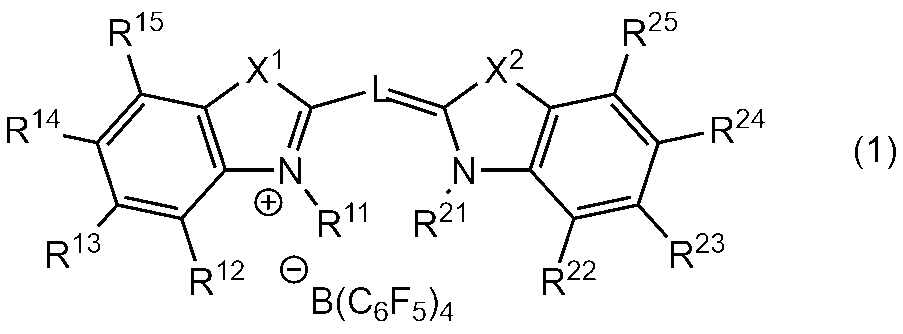
[式(1)中、
R11およびR21はそれぞれ独立して、炭素数3以上のアルキル基を表し、 R12、R13、R22およびR23はそれぞれ独立して、水素原子、ハロゲン原子または有機基を表し、
R15は、R14と連結して芳香環を形成するか、X1が炭素原子を表し、X1と連結して芳香環を形成しており、
R15がR14と連結して芳香環を形成する場合、X1はCR16R17を表し、R16とR17はそれぞれ独立して、水素原子、ハロゲン原子または有機基を表し、
R15がX1と連結して芳香環を形成する場合、R14は炭素数4以上のアルキル基または炭素数3以上のアルコキシ基を表し、
R25は、R24と連結して芳香環を形成するか、X2が炭素原子を表し、X2と連結して芳香環を形成しており、
R25がR24と連結して芳香環を形成する場合、X2はCR26R27を表し、R26とR27はそれぞれ独立して、水素原子、ハロゲン原子または有機基を表し、
R25がX2と連結して芳香環を形成する場合、R24は炭素数4以上のアルキル基または炭素数3以上のアルコキシ基を表し、
Lは、炭素数5以上9以下のメチン鎖を表し、当該メチン鎖に含まれるメチン基はそれぞれ独立して置換基を有していてもよく、当該置換基は互いに連結していてもよい。]
[2] 下記式(2)で表される[1]に記載のシアニン化合物。
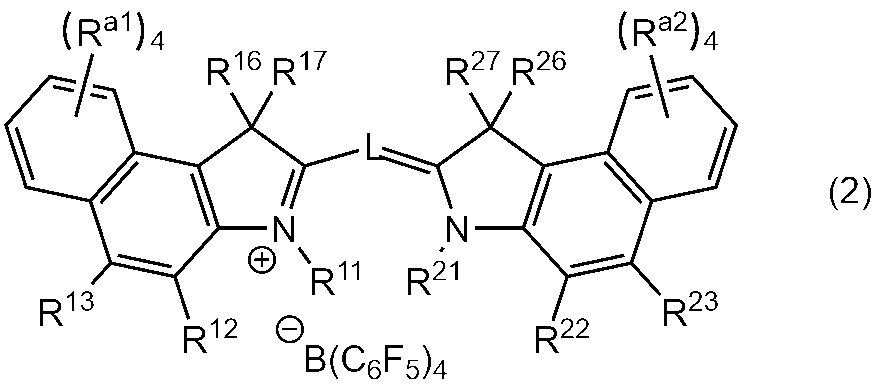
[式(2)中、R11~R13、R16~R17、R21~R23、R26~R27およびLは、上記と同じ意味を表し、
Ra1およびRa2はそれぞれ独立して、水素原子、ハロゲン原子または有機基を表し、複数のRa1は互いに同一または異なっていてもよく、複数のRa2は互いに同一または異なっていてもよい。]
[3] 下記式(3)で表される[1]に記載のシアニン化合物。

[式(3)中、R11~R14、R21~R24およびLは、上記と同じ意味を表し、
Rb1およびRb2はそれぞれ独立して、水素原子、ハロゲン原子または有機基を表し、複数のRb1は互いに同一または異なっていてもよく、複数のRb2は互いに同一または異なっていてもよい。]
[4] [1]~[3]のいずれかに記載のシアニン化合物と樹脂成分とを含有することを特徴とする樹脂組成物。
[5] さらに溶媒を含有する[4]に記載の樹脂組成物。
[6] 前記樹脂組成物は、波長800nm~1100nmの範囲に吸収極大波長を有するシアニン化合物Aと、前記シアニン化合物Aよりも長波長側に吸収極大波長を有するシアニン化合物Bを含有し、前記シアニン化合物Aと前記シアニン化合物Bの少なくとも一方が前記シアニン化合物である[4]または[5]に記載の樹脂組成物。
[7] 前記シアニン化合物Aは、波長800nm~1000nmの範囲に吸収極大波長を有し、前記シアニン化合物Bは、波長950nm~1100nmの範囲に吸収極大波長を有する[6]に記載の樹脂組成物。
[8] [1]~[3]のいずれかに記載のシアニン化合物と溶媒を含有することを特徴とするシアニン化合物溶液。
[9] [4]~[7]のいずれかに記載の樹脂組成物から形成された樹脂層を有することを特徴とする光学フィルター。
[10] 前記樹脂層は、前記シアニン化合物と、前記シアニン化合物以外の近赤外線吸収色素を含有し、下記(a)および(b)を満たす[9]に記載の光学フィルター。
(a)波長690nm~800nmの範囲において、透過率が連続して3%以下となる波長帯の幅が35nm以上
(b)透過率が50%となる波長λ50が620nm~650nmの範囲に存在する
[11] 前記樹脂層は、前記近赤外線吸収色素としてスクアリリウム系色素を含有する[10]に記載の光学フィルター。
[12] さらに透明基板を有する[9]~[11]のいずれかに記載の光学フィルター。
[13] さらに誘電体膜を有する[9]~[12]のいずれかに記載の光学フィルター。
[14] [9]~[13]のいずれかに記載の光学フィルターを有する撮像素子。
[15] 前記シアニン化合物は波長750nm~1200nmの範囲に吸収極大波長を有し、前記樹脂成分は熱可塑性樹脂であり、光学レンズ用である[4]~[7]のいずれかに記載の樹脂組成物。
[16] 前記熱可塑性樹脂に対する前記シアニン化合物の濃度を0.014質量%に調整し、厚さ1mmの平滑な成形板を形成したときに、前記成形板は、波長700nm以上の範囲に透過率が50%となる波長λ50を有する[15]に記載の樹脂組成物。
[17] [15]または[16]に記載の樹脂組成物を成形して形成される光学レンズ。
[18] 厚さが30μm~5mmである[17]に記載の光学レンズ。
[19] [17]または[18]に記載の光学レンズと、近赤外線カットフィルターとを含むカメラユニット。
[20] 前記近赤外線カットフィルターは、波長700nm~750nmの範囲に吸収極大波長を有する近赤外線吸収色素を含有する[19]に記載のカメラユニット。
[21] 前記近赤外線吸収色素は、下記式(4)または下記式(5)で表されるスクアリリウム系色素を含む[20]に記載のカメラユニット。
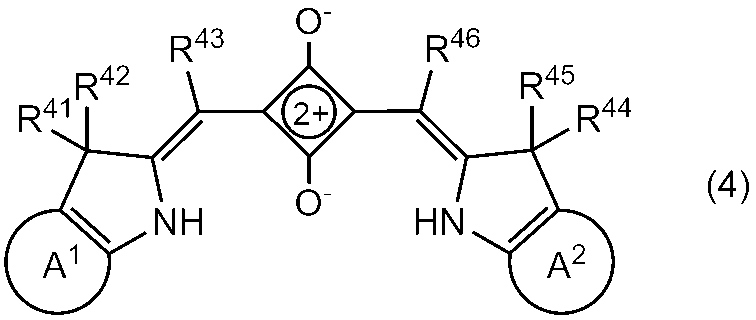
[式(4)中、
環A1および環A2は、置換基を有していてもよい芳香族炭化水素環、芳香族複素環、またはこれらの環構造を含む縮合環を表し、
R41~R46はそれぞれ独立して、水素原子、有機基または極性官能基を表し、
R42とR43は互いに連結して環を形成してもよく、R45とR46は互いに連結して環を形成してもよい。]

[式(5)中、
R51~R60はそれぞれ独立して、水素原子、有機基または極性官能基を表し、
R51とR52、R52とR53、R53とR54、R54とR55、R56とR57、R57とR58、R58とR59、R59とR60はそれぞれ、互いに連結して環を形成していてもよい。]
[22] 前記近赤外線カットフィルターは、波長350nm~1100nmの範囲の吸収スペクトルにおいて、波長700nm~750nmの範囲に最大吸収ピークを有し、波長620nm~660nmの範囲に透過率が50%となる波長λ50を有する[19]~[21]のいずれかに記載のカメラユニット。
本発明のシアニン化合物は、下記式(1)で表されるものである。下記式(1)において、R11およびR21はそれぞれ独立して、炭素数3以上のアルキル基を表し、R12、R13、R22およびR23はそれぞれ独立して、水素原子、ハロゲン原子または有機基を表し、R15は、R14と連結して芳香環を形成するか、X1が炭素原子を表し、X1と連結して芳香環を形成しており、R15がR14と連結して芳香環を形成する場合、X1はCR16R17を表し、R16とR17はそれぞれ独立して、水素原子、ハロゲン原子または有機基を表し、R15がX1と連結して芳香環を形成する場合、R14は炭素数4以上のアルキル基または炭素数3以上のアルコキシ基を表し、R25は、R24と連結して芳香環を形成するか、X2が炭素原子を表し、X2と連結して芳香環を形成しており、R25がR24と連結して芳香環を形成する場合、X2はCR26R27を表し、R26とR27はそれぞれ独立して、水素原子、ハロゲン原子または有機基を表し、R25がX2と連結して芳香環を形成する場合、R24は炭素数4以上のアルキル基または炭素数3以上のアルコキシ基を表し、Lは、炭素数5以上9以下のメチン鎖を表し、当該メチン鎖に含まれるメチン基はそれぞれ独立して置換基を有していてもよく、当該置換基は互いに連結していてもよい。なお、シアニン化合物には、共鳴関係にある化合物が存在する場合があるが、式(1)のシアニン化合物には共鳴関係にある化合物も含まれる。

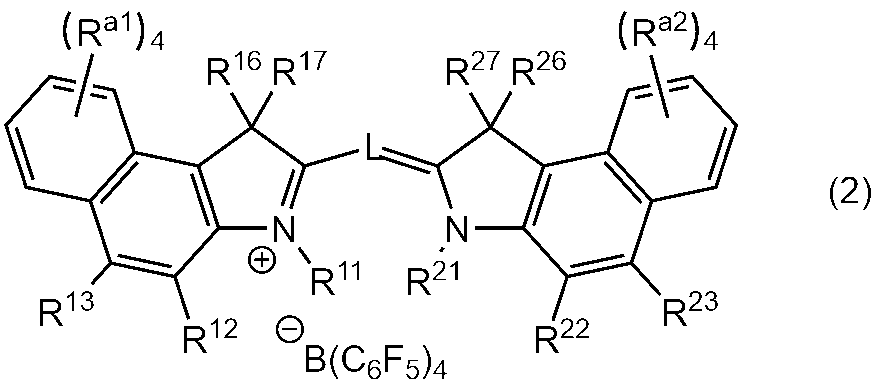

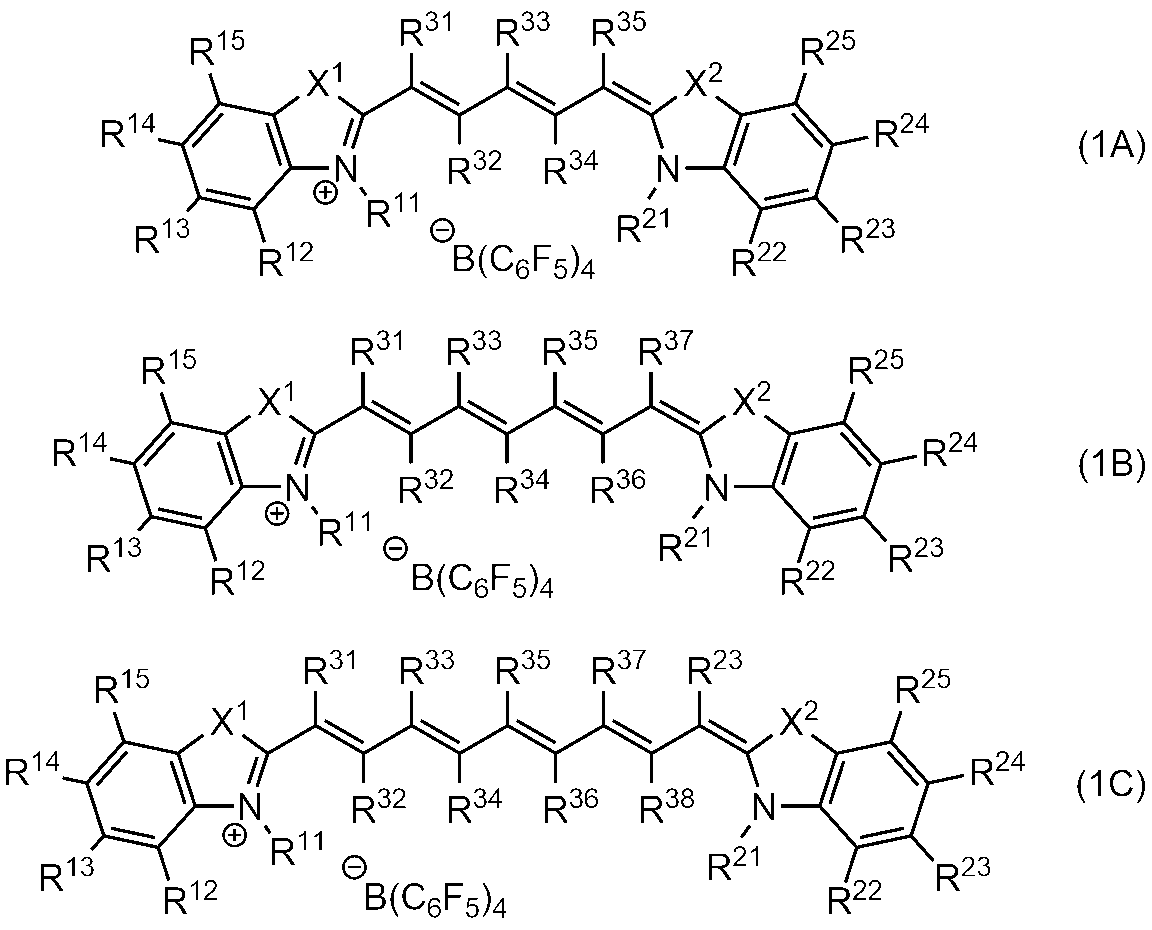
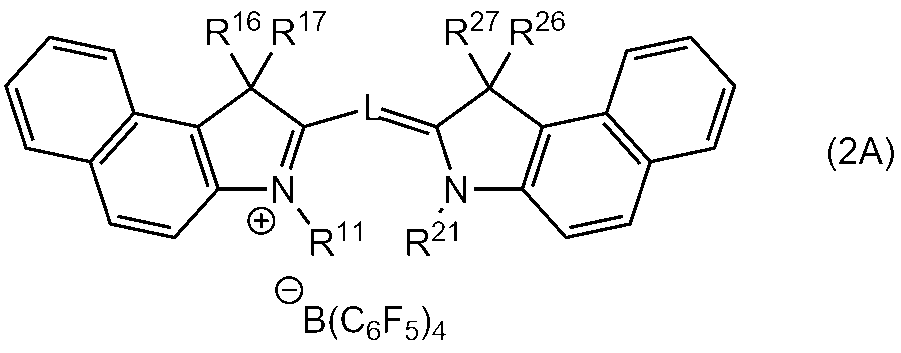
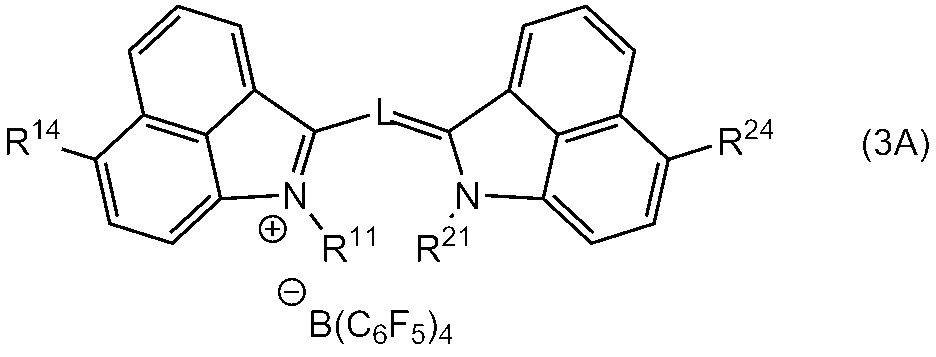
本発明のシアニン化合物は溶媒への溶解性に優れることから、本発明は、式(1)で表されるシアニン化合物と溶媒とを含有するシアニン化合物溶液も提供する。溶媒としては有機溶媒を用いることが好ましく、これにより、従来よりも高濃度でシアニン化合物が溶解したシアニン化合物溶液を得ることができる。本発明のシアニン化合物溶液は、近赤外領域の光を効果的に吸収することができる。本発明のシアニン化合物溶液は、例えばセキュリティインクなどに適用することができ、インク組成物として用いることができる。
本発明のシアニン化合物は、樹脂成分と混合して、樹脂組成物とすることができる。樹脂組成物は、本発明のシアニン化合物と樹脂成分を少なくとも含むものである。本発明の樹脂組成物は、例えばフィルム等の樹脂成形体とすることで、光学フィルターや光学レンズ等の光学部品に好適に適用することができる。樹脂成形体はまた、省エネルギー用に熱線を遮断する近赤外線吸収フィルムや近赤外線吸収板、可視光および近赤外光を利用した太陽電池用材料、プラズマディスプレイパネル(PDP)やCCD用の特定波長吸収フィルター等への適用も可能である。
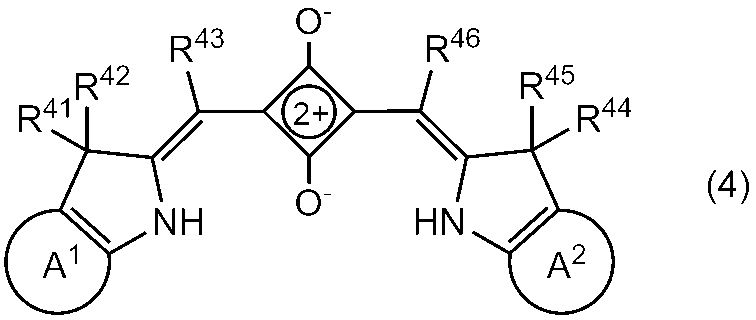
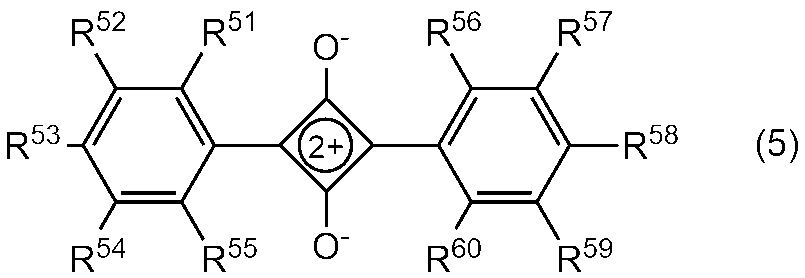

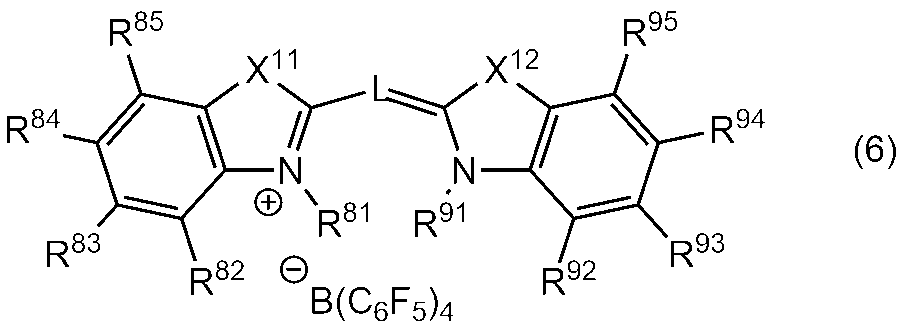

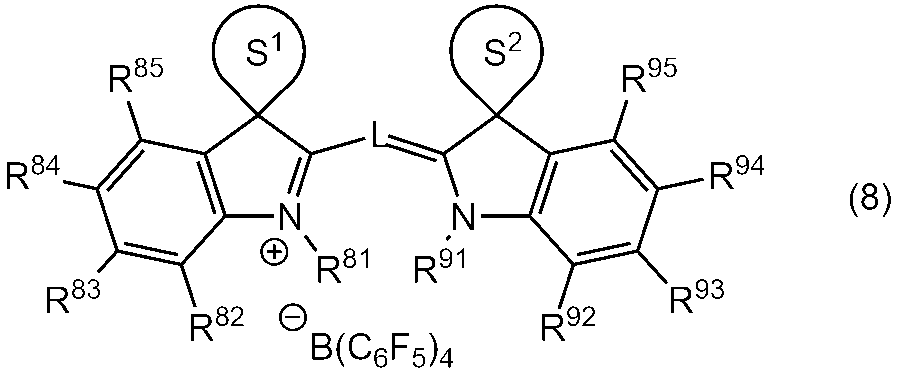
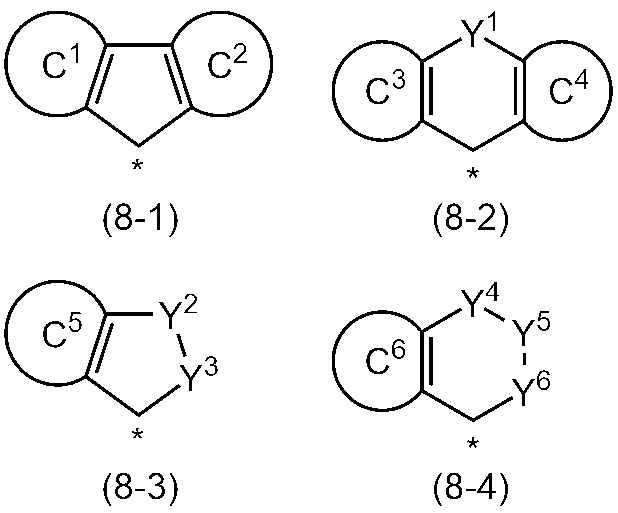
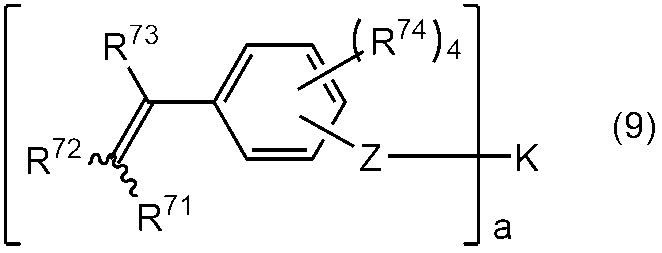
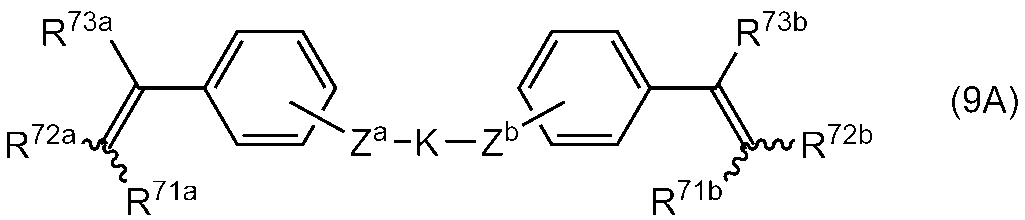
本発明の樹脂組成物は、オプトデバイス用途、表示デバイス用途、機械部品、電気・電子部品等の様々な用途で用いられる光学部材形成用の樹脂組成物として好ましく使用できる。光学部材としては、例えば、近赤外線カットフィルター等の光学フィルターが挙げられる。光学フィルターは、単一または複数の樹脂層から形成されてもよく、支持体と一体化されて形成されてもよい。光学フィルターは、本発明の樹脂組成物から形成された樹脂層を少なくとも有することが好ましい。
本発明の樹脂組成物は、光学レンズ用の樹脂組成物としても好適に用いることができる。光学レンズは、例えばカメラユニットに設置される。カメラユニットの構成例について、図1を参照して説明する。カメラユニット4は、光学レンズ1と近赤外線カットフィルター2を含む。レンズ単品に対する高精度の要求に応じて、光学レンズ1の枚数は増える傾向にあり、近年では厚さ5mm程度のカメラユニットの中に光学レンズ1が3~5枚収容されている(図1では5枚)。カメラユニット4に入光した光Kは、光学レンズ1、近赤外線カットフィルター2を経て、受光部3で感知される。光学レンズ用樹脂組成物は、この光学レンズ1に好適な樹脂組成物である。なお、光学レンズ用樹脂組成物は必ずしもカメラユニット用途に限定されるものではなく、望遠鏡、顕微鏡、医療機器等の光学機器に備えられる光学レンズ用途に幅広く適用できる。
光学レンズ用樹脂組成物を成形することにより、光学レンズを製造することができる。本発明は、光学レンズ用樹脂組成物を成形して形成される光学レンズも提供する。光学レンズは、光学レンズ用樹脂組成物をレンズ状に硬化することにより得ることができる。光学レンズ用樹脂組成物は、加熱(軟化)および冷却することによって硬化するものであってもよく、樹脂成分の反応(例えば、重合反応や架橋反応)によって硬化するものであってもよく、樹脂組成物に含まれる溶媒が除去されて硬化するものであってもよいが、好ましくは、光学レンズは、光学レンズ用樹脂組成物を溶融成形することにより製造される。溶融成形時の温度は、一般的には180℃~270℃であり、好ましくは200℃~250℃である。加熱時間は特に限定されないが、好ましくは0.5分~15分、より好ましくは1分~10分、さらに好ましくは1.5分~8分である。
本発明はさらに、本発明の光学レンズと、近赤外線カットフィルターとを含むカメラユニットも提供する。カメラユニットは、イメージセンサー(撮像素子)の構成部材として用いることができる。カメラユニットはさらに、可視光線カットフィルター、赤外線カットフィルター、紫外線カットフィルター等を有していてもよい。
(1-1)合成例1:シアニン化合物1の合成
原料シアニン化合物として3-ブチル-2-(2-[3-[2-(3-ブチル-1,1-ジメチル-1,3-ジヒドロベンゾ[e]インドール-2-イリデン)エチリデン]-2-クロロ-シクロヘキサ-1-エニル]ビニル)-1,1-ジメチル-1H-ベンゾ[e]インドリウム ヘキサフルオロホスフェート(Few Chemicals社製、S0712、表1に示す比較シアニン化合物1)を用い、当該原料シアニン化合物50.0mg(0.06mmоl)をアセトン5gに溶解させ、ここに40℃に加熱した10.5%テトラキス(ペンタフルオロフェニル)ホウ酸ナトリウム水溶液0.45g(0.07mmol)を加え、室温で2時間撹拌した。次いで、溶媒を留去し、得られた固体をイオン交換水で洗浄し、再結晶(溶媒:クロロホルム、メタノール)させることで、シアニン化合物1を73.5mg得た(収率:86.1%)。
合成例1において、原料シアニン化合物として6-ブトキシ-2-[5-(6-ブトキシ-1-ブチル-1H-ベンゾ[cd]インドール-2-イリデン)-ペンタ-1,3-ジエニル]-1-ブチル-ベンゾ[cd]インドリウム テトラフルオロボレート(Few Chemicals社製、S2437、表1に示す比較シアニン化合物2)を用いたこと以外は、合成例1と同様にしてシアニン化合物2を85.0mg得た(収率:89.8%)。
合成例1において、原料シアニン化合物として1-ブチル-2-[5-(1-ブチル-1H-ベンゾ[cd]インドール-2-イリデン)-ペンタ-1,3-ジエニル]-ベンゾ[cd]インドリウム テトラフルオロボレート(Few Chemicals社製、S0772、表1に示す比較シアニン化合物5)を用い、10.5%テトラキステトラキス(ペンタフルオロフェニル)ホウ酸ナトリウム水溶液を0.64g(0.10mmol)用いたこと以外は、合成例1と同様にして、比較シアニン化合物3を38.0mg得た(収率:37.3%)。
原料シアニン化合物として3,3’-ジエチルチアトリカルボシアニンヨーダイド(東京化成工業社製、表1に示す比較シアニン化合物6)を用い、当該原料シアニン化合物40.0mg(0.07mmоl)をアセトン4gに溶解させ、ここに40℃に加熱した10.5%テトラキス(ペンタフルオロフェニル)ホウ酸ナトリウム水溶液0.54g(0.08mmol)を加え、室温で10分間撹拌した。次いで、イオン交換水を加え、得られた固体をイオン交換水で洗浄および真空乾燥し、再結晶(溶媒:アセトン、水)させることで、比較シアニン化合物4を66.4mg得た(収率:82.0%)。
合成例1において、原料シアニン化合物として1-ブチル-2-(2-[3-[2-(1-ブチル-1H-ベンゾ[cd]インドール-2-イリデン)-エチリデン]-2-フェニル-シクロペンタ-1-エニル]-ビニル)-ベンゾ[cd]インドリウム テトラフルオロボレート(Few Chemicals社製、S0813)を2g用いたこと以外は、合成例1と同様にして比較シアニン化合物7を3.4g得た(収率92.0%)。
合成例1において、原料シアニン化合物として1-ブチル-2-(2-[3-[2-(1-ブチル-1H-ベンゾ[cd]インドール-2-イリデン)-エチリデン]-2-クロロ-シクロヘキサ-1-エニル]-ビニル)-ベンゾ[cd]インドリウム テトラフルオロボレート(Exciton社製、IR1014)を2g用いたこと以外は、合成例1と同様にして比較シアニン化合物8を3.5g得た(収率93.1%)。

特開2016-74649号公報の実施例1-18に記載の方法に従い、表2に示す近赤外線吸収色素Aを合成した。
特開2020-132699号公報の合成例2に従い、表2に示す近赤外線吸収色素Bを合成した。
200mLの4口フラスコに、4-フルオロベンズアルデヒド4.98g(0.039mol)、エチレングリコールビス(2-メルカプトエチル)エーテル3.57g(0.020mol)、炭酸カリウム10.86g(0.079mol)、アセトニトリル74gを仕込み、窒素流通下(10mL/min)、撹拌羽を用いて撹拌しながら60℃で12時間反応させた。反応終了後、減圧ろ過によって不溶分をろ別した後、エバポレーターを用いて溶媒を留去した。得られた濃縮物を200mLの4口フラスコに入れ、そこにシアノ酢酸イソブチル11.09g(0.079mol)、ピペリジン3.32g(0.039mol)、メタノール68gを加え、還流条件下で4時間反応させた。反応終了後、エバポレーターを用いて溶媒を留去し、得られた濃縮物をカラムクロマトグラフィー(展開溶媒:クロロホルム)により精製を行い、表2に示す紫外線吸収色素Aを得た。
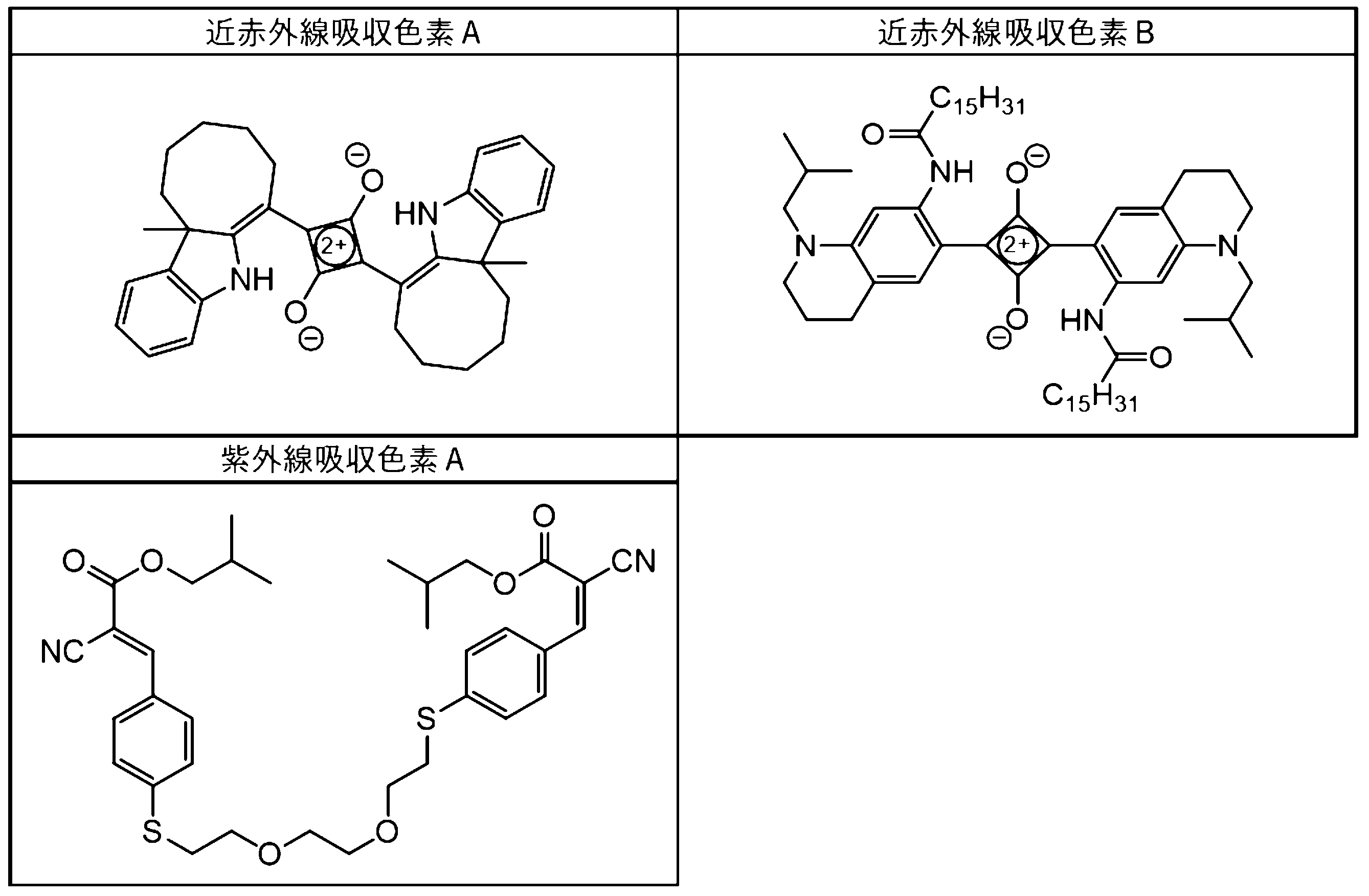
(2-1)溶解性
10mLガラス製サンプル瓶に入れたトルエンに、表1に示したシアニン化合物1~2、比較シアニン化合物1~8を所定量加えて、25℃で撹拌した。シアニン化合物は、濃度が0.1質量%または0.5質量%となるようにトルエンに加え、得られた溶液の不溶分(濁り)の有無を目視にて確認した。濃度0.1質量%で不溶分が認められたときの評価をCとし、濃度0.1質量%で不溶分が認められず濃度0.5質量%で不溶分が認められたときの評価をBとし、濃度0.5質量%で不溶分が認められなかったときの評価をAとした。結果を表3に示す。なお、比較シアニン化合物1はFew Chemicals社から入手した品番S0712のシアニン化合物であり、比較シアニン化合物2はFew Chemicals社から入手した品番S2437のシアニン化合物であり、比較シアニン化合物5はFew Chemicals社から入手した品番S0772のシアニン化合物であり、比較シアニン化合物6は東京化成工業社から入手した製品コードD4773のシアニン化合物である。シアニン化合物1~2は、トルエンに対して高い溶解性を示した。
シアニン化合物1~2、比較シアニン化合物1~8のトルエン溶液を調製し、波長300nm~1100nmにおける吸収スペクトルを測定した。シアニン化合物のトルエン溶液は、吸収極大波長における透過率が10%(±0.05%)となるように濃度を調整し、分光光度計(島津製作所社製、UV-1800)を用いて、測定ピッチ1nmで光線透過率を測定し、波長300nm~1100nmの範囲で吸収が最大となる波長(吸収極大波長λmax)を求めた。結果を表3に示す。

シアニン化合物1,2と比較シアニン化合物1,2について、TG-DTAを用いて重量減少温度を測定した。昇温速度10℃/分、空気雰囲気下、常温から400℃まで昇温し、5%重量が減少した温度を分解温度として求めた。リファレンスにはα-アルミナを用いた。シアニン化合物1の分解温度は279℃、シアニン化合物2の分解温度は336℃、比較シアニン化合物1の分解温度は243℃、比較シアニン化合物2の分解温度は292℃であった。シアニン化合物は、同じシアニン骨格を有するものであっても、テトラキス(ペンタフルオロフェニル)ボレートと塩形成することにより、耐熱性が上がった。
(4-1)ポリアリレート樹脂の合成
撹拌翼を備えた容量2Lの反応容器に、2,2’-ビス(4-ヒドロキシフェニル)プロパン10.0g(0.044モル)、水酸化ナトリウム3.6g(0.090mol)、イオン交換水300gを仕込み、溶解させた後、そこにトリエチルアミン0.89g(0.009mol)を加えて溶解させた。テレフタル酸ジクロリド3.6g(0.021mol)とイソフタル酸ジクロリド3.6g(0.021mol)を500gの塩化メチレンに溶解させた溶液を滴下漏斗に入れ、これを前記反応容器に取り付けた。反応容器中の溶液を20℃に保ちながら撹拌し、滴下漏斗から塩化メチレン溶液を60分間かけて滴下した。さらにそこに、塩化ベンゾイル0.71g(0.005mol)を10gの塩化メチレンに溶解させた溶液を添加し、60分間撹拌した。得られた反応液に酢酸水溶液を加えて中和して、水相のpHを7にしてから分液漏斗を用いて油相と水相を分離した。得られた油相を、撹拌下、メタノールに滴下してポリマーを再沈させ、沈殿をろ過により回収し、80℃オーブンで乾燥して白色固体のポリアリレート樹脂を得た。収量は11.5gであった。得られたポリアリレート樹脂の重量平均分子量(Mw)は33,780、数平均分子量(Mn)は8,130であった。ポリアリレート樹脂の重量平均分子量と数平均分子量は、ゲルパーミエーションクロマトグラフィー測定により求めたポリスチレン換算の値である。
トルエン89.8質量部に、ポリアリレート樹脂を10質量部とシアニン化合物1を0.2質量部加え、40℃の湯浴中、1時間混合した。得られた混合液を孔径0.1μmのフィルター(GLサイエンス社製、非水系13N)でろ過し、樹脂組成物1を得た。樹脂組成物1を、ガラス基板(Schott社製、D263Teco)上に2cc垂らした後、スピンコーター(ミカサ社製、1H-D7)を用いてガラス基板上に樹脂組成物1を成膜した。樹脂組成物1を成膜したガラス基板を、イナートオーブン(ヤマト科学社製、DN610I)を用いて190℃の窒素雰囲気下で1時間乾燥させることにより、ガラス基板上に樹脂層を形成した樹脂積層基板1を得た。ガラス基板上に形成した樹脂層の厚みは約2μmであった。なお、樹脂層の厚みは、樹脂層を形成したガラス基板の厚みとガラス基板単独の厚みをそれぞれマイクロメーターにより測定し、両者の差から求めた。
製造例1において、シアニン化合物1の代わりにシアニン化合物2を用いたこと以外は、製造例1と同様にして樹脂積層基板2を作製した。
トルエン277質量部と1,2,4-トリメチルベンゼン593質量部の混合溶媒にポリアリレート樹脂を99質量部加え、そこに近赤外線吸収色素Aを6.2質量部、近赤外線吸収色素Bを2.5質量部、紫外線吸収色素Aを11質量部、シアニン化合物1を1.3質量部、シアニン化合物2を0.4質量部加え、40℃で1時間撹拌した。次いで、さらにそこに表面調整剤としてビックケミー社製BYK-310(ポリエーテル変性ポリジメチルシロキサン)を0.30質量部、3-グリシドキシプロピルトリメトキシシラン剤(ダウ・東レ社製、OFS-6040)の加水分解反応を進行させて調製したシラン加水分解物イソプロパノール溶液(OFS-6040濃度40%)を10質量部加え、25℃で均一に混合した。これを孔径0.1μmのフィルター(GLサイエンス社製、非水系13N)でろ過して異物を取り除き、樹脂組成物3を得た。樹脂組成物3を、ガラス基板(Schott社製、D263Teco)上に2cc垂らした後、スピンコーター(ミカサ社製、1H-D7)を用いてガラス基板上に樹脂組成物3を成膜した。樹脂組成物3を成膜したガラス基板を、イナートオーブン(ヤマト科学社製、DN610I)を用いて190℃の窒素雰囲気下で1時間乾燥させることにより、ガラス基板上に樹脂層を形成した樹脂積層基板3を得た。ガラス基板上に形成した樹脂層の厚みは約2μmであった。
シクロヘキサノン45.2質量部と4-メチルテトラヒドロピラン45.2質量部の混合溶液に、ポリアリレート樹脂を6.5質量部、シアニン化合物2を1質量部、比較シアニン化合物7を1質量部加え、40℃の湯浴中、1時間混合した。得られた混合液を孔径0.1μmのフィルター(GLサイエンス社製、非水系13N)でろ過し、樹脂組成物4を得た。樹脂組成物4を、ガラス基板(Schott社製、D263Teco)上に2cc垂らした後、スピンコーター(ミカサ社製、1H-D7)を用いてガラス基板上に樹脂組成物4を成膜した。樹脂組成物4を成膜したガラス基板を、イナートオーブン(ヤマト科学社製、DN610I)を用いて190℃の窒素雰囲気下で1時間乾燥させることにより、ガラス基板上に樹脂層を形成した樹脂積層基板4を得た。ガラス基板上に形成した樹脂層の厚みは約2μmであった。
製造例4において、比較シアニン化合物7の代わりに比較シアニン化合物8を用いたこと以外は、製造例4と同様にして樹脂積層基板5を作製した。
製造例3において、シアニン化合物1を1.0質量部加え、シアニン化合物2とシラン加水分解物イソプロパノール溶液を加えなかったこと以外は、製造例3と同様にして樹脂積層基板6を作成した。
製造例6において、シアニン化合物1の代わりにシアニン化合物2を用いたこと以外は、製造例6と同様にして樹脂積層基板7を作製した。
製造例6において、シアニン化合物1に加えてシアニン化合物2を用いたこと以外は、製造例6と同様にして樹脂積層基板8を作製した。
(5-1)測定方法
各樹脂積層基板について、分光光度計(島津製作所社製、UV-1800)を用いて透過スペクトルを測定ピッチ1nmで測定し、波長300nm~1100nmにおける光の透過率を求めた。樹脂積層基板1~5について、樹脂積層基板の透過スペクトルを図2~図6に示した。樹脂積層基板6~8については、樹脂層の透過スペクトルを図7~図9に示した。樹脂層の透過率は、ガラス基板の波長300nm~1100nmにおける透過率を測定し、樹脂積層基板の透過率との差分から(具体的には樹脂積層基板とガラス基板の透過率の値をそれぞれ対数(log10)変換し、その差分を指数変換することにより)算出した。
樹脂積層基板1は、シアニン化合物1に由来して839nmに吸収極大を有する吸収ピークを示し、樹脂積層基板2は、シアニン化合物2に由来して953nmに吸収極大を有する吸収ピークを示した(図2および図3を参照)。樹脂積層基板3は、シアニン化合物1,2に由来する吸収ピークを示すとともに、近赤外線吸収色素A,Bに由来する吸収ピークを示し、波長700nm~750nmの範囲の光の透過率が3%以下となった(図4を参照)。樹脂積層基板3はさらに、紫外線吸収色素Aに由来して368nmに吸収極大を有する吸収ピークを示した。樹脂積層基板4は、シアニン化合物2と比較シアニン化合物7に由来して900nm~1100nmの広い波長範囲にわたる吸収ピークを示した(図5を参照)。樹脂積層基板5は、シアニン化合物2と比較シアニン化合物8に由来して900nm~1080nmの広い波長範囲にわたる吸収ピークを示した(図6を参照)。
樹脂積層基板6の樹脂層は、近赤外線吸収色素A,Bに由来して波長699nm~753nmの範囲の透過率が3%以下となる吸収波長帯を示すとともに、シアニン化合物1に由来して835nmに吸収極大を有する吸収ピークを示した(図7を参照)。樹脂積層基板6の樹脂層はさらに、紫外線吸収色素Aに由来して波長365nm~379nmの範囲の透過率が5%以下となる吸収波長帯を示した。樹脂積層基板7の樹脂層は、近赤外線吸収色素A,Bに由来して波長699nm~753nmの範囲の透過率が3%以下となる吸収波長帯を示すとともに、シアニン化合物2に由来して953nmに吸収極大を有する吸収ピークを示した(図8を参照)。樹脂積層基板7の樹脂層はさらに、紫外線吸収色素Aに由来して波長364nm~380nmの範囲の透過率が5%以下となる吸収波長帯を示した。樹脂積層基板8の樹脂層は、波長694nm~756nmの範囲の透過率が3%以下となる吸収波長帯を示すとともに、シアニン化合物1,2に由来する吸収極大を有する吸収波形を示した(図9を参照)。樹脂積層基板8の樹脂層はさらに、紫外線吸収色素Aに由来して波長355nm~388nmの範囲の透過率が5%以下、波長365nm~378nmの範囲の透過率が3%以下となる吸収波長帯を示した。樹脂積層基板6~8の樹脂層は,シアニン化合物1,2と近赤外線吸収色素A,Bと紫外線吸収色素Aに由来する吸収ピークを好適に示した。
(6-1)反射防止膜の蒸着
樹脂積層基板3の樹脂層側に蒸着法により反射防止膜(AR膜)を積層(TiO2膜とSiO2膜を交互に5層積層)することにより、反射防止膜を有する光学フィルター1を作製した。
樹脂積層基板3と光学フィルター1に対し、分光光度計(島津製作所社製、UV-1800)を用いて透過スペクトルを測定ピッチ1nmで測定し、波長300nm~1100nmにおける光の透過率を求めた。結果を図10に示す。図10では、「AR蒸着前」が樹脂積層基板3の透過スペクトルの測定結果を表し、「AR蒸着後」が光学フィルター1の透過スペクトルの測定結果を表す。光学フィルター1は、反射防止膜の蒸着後においても、樹脂積層基板3の近赤外線領域の吸収を維持し、また樹脂積層基板3と比べて高い可視光透過性を有していた。光学フィルター1は、高温高湿試験後も透過スペクトルの変化や外観や密着性の変化がなく、高い耐久性を有していた。
(7)光学レンズ用樹脂組成物およびその成形板
(7-1)製造例9:成形板1の作製
ポリカーボネート樹脂(三菱エンジニアリングプラスチックス社製、ユーピロン(登録商標)HL3003)20gにクロロホルム80gを加え、25℃で24時間撹拌し、溶解させることにより濃度20質量%のポリカーボネート樹脂溶液を得た。ポリカーボネート樹脂溶液18.2gにシアニン化合物1を0.5mg加え均一にした後、直径28mmのシャーレに約1mLを流し入れた。溶媒を除去するため150℃のオーブンで1時間加熱することにより光学レンズ樹脂組成物を得た。樹脂に対するシアニン化合物の濃度は0.014質量%であった。240℃に加熱したホットプレート上にこの樹脂組成物を置き、5分間溶融成形することで平滑な成形板1を得た。
製造例9において、シアニン化合物1の代わりにシアニン化合物2を用いたこと以外は、製造例9と同様にして成形板2を作製した。
TOPAS(登録商標)樹脂(ポリプラスチックス社製、5013S-04)20gにトルエン80gを加え、25℃で24時間撹拌し、溶解させることにより濃度20質量%のTOPAS樹脂溶液を得た。TOPAS樹脂溶液18.2gにシアニン化合物1を0.83mgとシアニン化合物2を0.25mg加え均一にした後、直径28mmのシャーレに約1mLを流し入れた。溶媒を除去するため150℃のオーブンで1時間加熱することにより光学レンズ用樹脂組成物を得た。樹脂に対するシアニン化合物の濃度は0.03質量%であった。240℃に加熱したホットプレート上にこの樹脂組成物を置き、5分間溶融成形することで平滑な成形板3を得た。
ARTON(登録商標)樹脂(JSR社製、RX4500)20gにトルエン80gを加え、25℃で24時間撹拌し、溶解させることにより濃度20質量%のARTON樹脂溶液を得た。ARTON樹脂溶液18.2gにシアニン化合物1を0.66mgとシアニン化合物2を0.18mg加え均一にした後、直径28mmのシャーレに約1mLを流し入れた。溶媒を除去するため150℃のオーブンで1時間加熱することにより光学レンズ樹脂組成物を得た。樹脂に対するシアニン化合物の濃度は0.023質量%であった。240℃に加熱したホットプレート上にこの樹脂組成物を置き、5分間溶融成形することで平滑な成形板4を得た。
各成形板について、分光光度計(島津製作所社製、UV-1800)を用いて、測定ピッチ1nmで吸収スペクトルを測定し、波長300nm~1100nmにおける透過率を求めた。各成形体の厚み、吸収極大波長の光の吸収の有無、透過率が50%となる波長λ50を表4に示した。表4において、吸収極大波長の光を吸収できたものをAと評価し、吸収極大波長の光を吸収できなかったものをBと評価した。成形板の厚さはデジタルノギス(最小測定単位0.001mm)を用いて測定した。表4において、波長λ50の「ND」、吸収ピークがなく、波長λ50の読み取りができなったことを意味する。また、各成形体の透過スペクトルを図11および図12に示した。成形板1~4は、シアニン化合物1,2に由来する吸収ピークを示し、比較的長波長側の近赤外領域の光を好適に吸収できた。
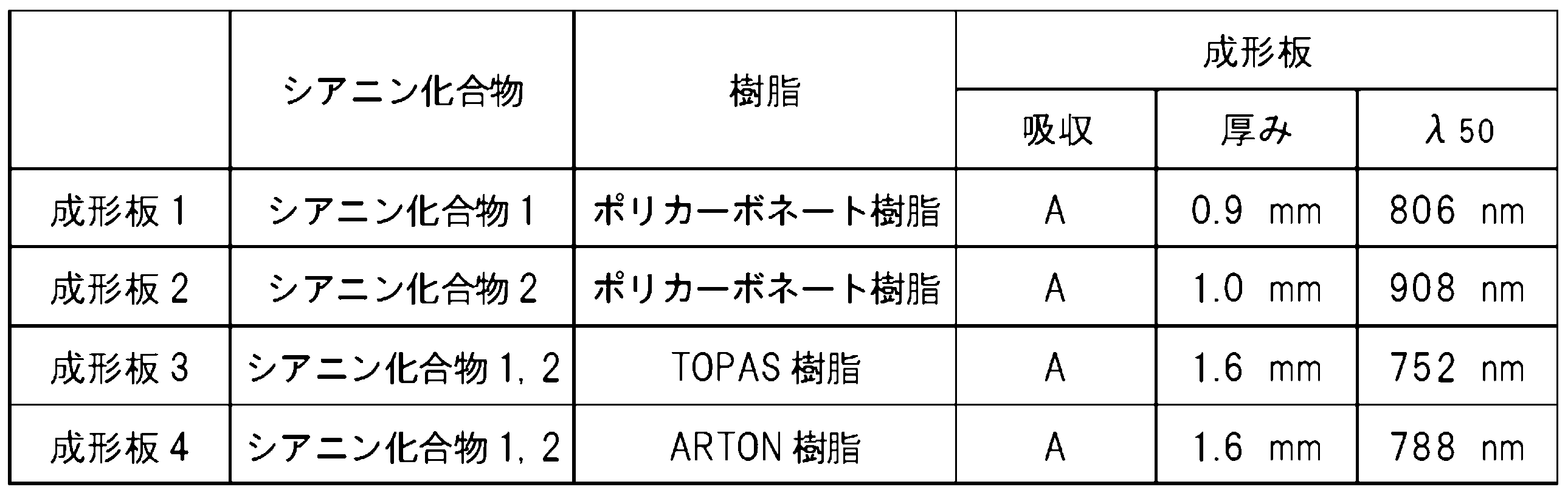
Claims (22)
- 下記式(1)で表されることを特徴とするシアニン化合物。

[式(1)中、
R11およびR21はそれぞれ独立して、炭素数3以上のアルキル基を表し、
R12、R13、R22およびR23はそれぞれ独立して、水素原子、ハロゲン原子または有機基を表し、
R15は、R14と連結して芳香環を形成するか、X1が炭素原子を表し、X1と連結して芳香環を形成しており、
R15がR14と連結して芳香環を形成する場合、X1はCR16R17を表し、R16とR17はそれぞれ独立して、水素原子、ハロゲン原子または有機基を表し、
R15がX1と連結して芳香環を形成する場合、R14は炭素数4以上のアルキル基または炭素数3以上のアルコキシ基を表し、
R25は、R24と連結して芳香環を形成するか、X2が炭素原子を表し、X2と連結して芳香環を形成しており、
R25がR24と連結して芳香環を形成する場合、X2はCR26R27を表し、R26とR27はそれぞれ独立して、水素原子、ハロゲン原子または有機基を表し、
R25がX2と連結して芳香環を形成する場合、R24は炭素数4以上のアルキル基または炭素数3以上のアルコキシ基を表し、
Lは、炭素数5以上9以下のメチン鎖を表し、当該メチン鎖に含まれるメチン基はそれぞれ独立して置換基を有していてもよく、当該置換基は互いに連結していてもよい。] - 下記式(2)で表される請求項1に記載のシアニン化合物。
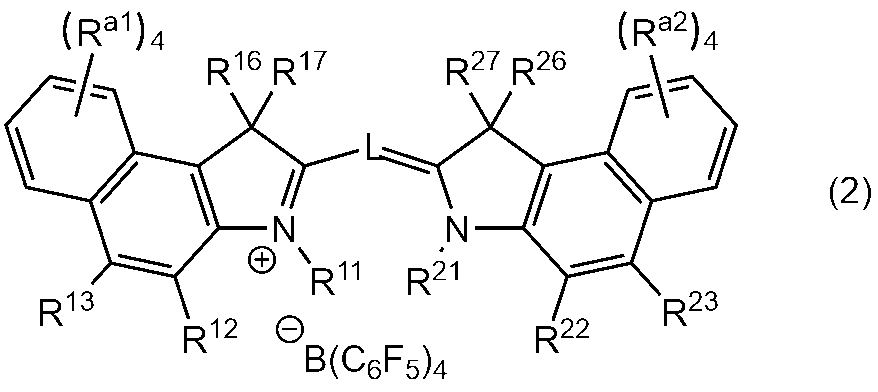
[式(2)中、R11~R13、R16~R17、R21~R23、R26~R27およびLは、上記と同じ意味を表し、
Ra1およびRa2はそれぞれ独立して、水素原子、ハロゲン原子または有機基を表し、複数のRa1は互いに同一または異なっていてもよく、複数のRa2は互いに同一または異なっていてもよい。] - 下記式(3)で表される請求項1に記載のシアニン化合物。
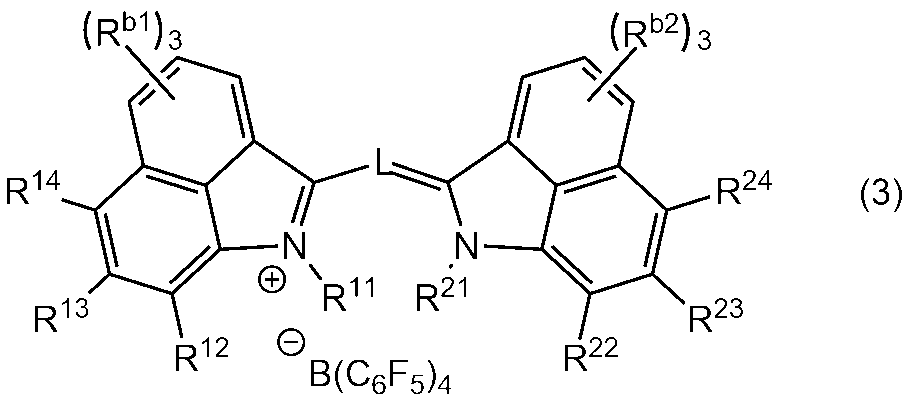
[式(3)中、R11~R14、R21~R24およびLは、上記と同じ意味を表し、
Rb1およびRb2はそれぞれ独立して、水素原子、ハロゲン原子または有機基を表し、複数のRb1は互いに同一または異なっていてもよく、複数のRb2は互いに同一または異なっていてもよい。] - 請求項1~3のいずれか一項に記載のシアニン化合物と樹脂成分とを含有することを特徴とする樹脂組成物。
- さらに溶媒を含有する請求項4に記載の樹脂組成物。
- 前記樹脂組成物は、波長800nm~1100nmの範囲に吸収極大波長を有するシアニン化合物Aと、前記シアニン化合物Aよりも長波長側に吸収極大波長を有するシアニン化合物Bを含有し、
前記シアニン化合物Aと前記シアニン化合物Bの少なくとも一方が前記シアニン化合物である請求項4に記載の樹脂組成物。 - 前記シアニン化合物Aは、波長800nm~1000nmの範囲に吸収極大波長を有し、
前記シアニン化合物Bは、波長950nm~1100nmの範囲に吸収極大波長を有する請求項6に記載の樹脂組成物。 - 請求項1~3のいずれか一項に記載のシアニン化合物と溶媒を含有することを特徴とするシアニン化合物溶液。
- 請求項4に記載の樹脂組成物から形成された樹脂層を有することを特徴とする光学フィルター。
- 前記樹脂層は、前記シアニン化合物と、前記シアニン化合物以外の近赤外線吸収色素を含有し、下記(a)および(b)を満たす請求項9に記載の光学フィルター。
(a)波長690nm~800nmの範囲において、透過率が連続して3%以下となる波長帯の幅が35nm以上
(b)透過率が50%となる波長λ50が620nm~650nmの範囲に存在する - 前記樹脂層は、前記近赤外線吸収色素としてスクアリリウム系色素を含有する請求項10に記載の光学フィルター。
- さらに透明基板を有する請求項9に記載の光学フィルター。
- さらに誘電体膜を有する請求項9に記載の光学フィルター。
- 請求項9に記載の光学フィルターを有する撮像素子。
- 前記シアニン化合物は波長750nm~1200nmの範囲に吸収極大波長を有し、前記樹脂成分は熱可塑性樹脂であり、光学レンズ用である請求項4に記載の樹脂組成物。
- 前記熱可塑性樹脂に対する前記シアニン化合物の濃度を0.014質量%に調整し、厚さ1mmの平滑な成形板を形成したときに、前記成形板は、波長700nm以上の範囲に透過率が50%となる波長λ50を有する請求項15に記載の樹脂組成物。
- 請求項15に記載の樹脂組成物を成形して形成される光学レンズ。
- 厚さが30μm~5mmである請求項17に記載の光学レンズ。
- 請求項17に記載の光学レンズと、近赤外線カットフィルターとを含むカメラユニット。
- 前記近赤外線カットフィルターは、波長700nm~750nmの範囲に吸収極大波長を有する近赤外線吸収色素を含有する請求項19に記載のカメラユニット。
- 前記近赤外線吸収色素は、下記式(4)または下記式(5)で表されるスクアリリウム系色素を含む請求項20に記載のカメラユニット。

[式(4)中、
環A1および環A2は、置換基を有していてもよい芳香族炭化水素環、芳香族複素環、またはこれらの環構造を含む縮合環を表し、
R41~R46はそれぞれ独立して、水素原子、有機基または極性官能基を表し、
R42とR43は互いに連結して環を形成してもよく、R45とR46は互いに連結して環を形成してもよい。]
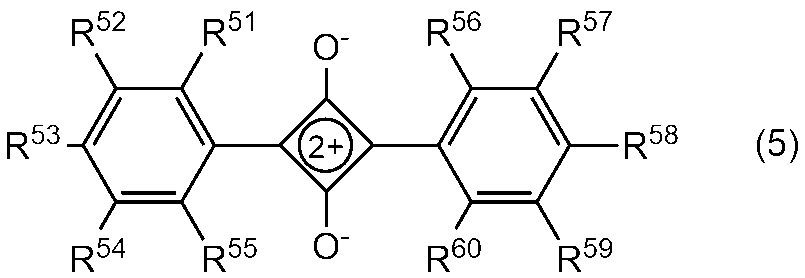
[式(5)中、
R51~R60はそれぞれ独立して、水素原子、有機基または極性官能基を表し、
R51とR52、R52とR53、R53とR54、R54とR55、R56とR57、R57とR58、R58とR59、R59とR60はそれぞれ、互いに連結して環を形成していてもよい。] - 前記近赤外線カットフィルターは、
波長350nm~1100nmの範囲の吸収スペクトルにおいて、波長700nm~750nmの範囲に最大吸収ピークを有し、
波長620nm~660nmの範囲に透過率が50%となる波長λ50を有する請求項19に記載のカメラユニット。
Priority Applications (2)
| Application Number | Priority Date | Filing Date | Title |
|---|---|---|---|
| KR1020257016690A KR20250097875A (ko) | 2022-11-15 | 2023-11-08 | 시아닌 화합물, 수지 조성물 및 광학 부재 |
| CN202380075771.4A CN120129723A (zh) | 2022-11-15 | 2023-11-08 | 花青化合物、树脂组合物以及光学构件 |
Applications Claiming Priority (6)
| Application Number | Priority Date | Filing Date | Title |
|---|---|---|---|
| JP2022-182509 | 2022-11-15 | ||
| JP2022182509 | 2022-11-15 | ||
| JP2022-200581 | 2022-12-15 | ||
| JP2022200581 | 2022-12-15 | ||
| JP2023-008792 | 2023-01-24 | ||
| JP2023008792A JP2024104529A (ja) | 2023-01-24 | 2023-01-24 | 光選択透過フィルター |
Publications (1)
| Publication Number | Publication Date |
|---|---|
| WO2024106293A1 true WO2024106293A1 (ja) | 2024-05-23 |
Family
ID=91084740
Family Applications (1)
| Application Number | Title | Priority Date | Filing Date |
|---|---|---|---|
| PCT/JP2023/040293 Ceased WO2024106293A1 (ja) | 2022-11-15 | 2023-11-08 | シアニン化合物、樹脂組成物、および光学部材 |
Country Status (4)
| Country | Link |
|---|---|
| KR (1) | KR20250097875A (ja) |
| CN (1) | CN120129723A (ja) |
| TW (1) | TW202432721A (ja) |
| WO (1) | WO2024106293A1 (ja) |
Citations (6)
| Publication number | Priority date | Publication date | Assignee | Title |
|---|---|---|---|---|
| JP2015118268A (ja) * | 2013-12-18 | 2015-06-25 | 東洋インキScホールディングス株式会社 | カラーフィルタ用着色組成物、およびカラーフィルタ |
| JP2017031394A (ja) * | 2015-07-28 | 2017-02-09 | Jsr株式会社 | 新規シアニン化合物、光学フィルターおよび光学フィルターを用いた装置 |
| WO2017098996A1 (ja) * | 2015-12-09 | 2017-06-15 | 株式会社Adeka | 熱硬化性樹脂組成物 |
| JP2018515917A (ja) * | 2015-04-27 | 2018-06-14 | ボード オブ トラスティーズ オブ ミシガン ステート ユニバーシティ | 高圧の有機及び透明太陽電池用有機塩 |
| JP2021512748A (ja) * | 2018-01-26 | 2021-05-20 | ユニヴェルシテ・ドゥ・ストラスブールUniversite De Strasbourg | 医療機器用蛍光ポリマーコーティングフィルム |
| JP2023153056A (ja) * | 2022-03-31 | 2023-10-17 | Jsr株式会社 | 組成物、光学部材、固体撮像装置、光学センサー装置および化合物 |
Family Cites Families (2)
| Publication number | Priority date | Publication date | Assignee | Title |
|---|---|---|---|---|
| JP2019151344A (ja) | 2018-02-28 | 2019-09-12 | 株式会社トーモク | トレー及び包装箱 |
| JP7367492B2 (ja) | 2019-11-28 | 2023-10-24 | トヨタ紡織株式会社 | エアクリーナ |
-
2023
- 2023-11-08 WO PCT/JP2023/040293 patent/WO2024106293A1/ja not_active Ceased
- 2023-11-08 CN CN202380075771.4A patent/CN120129723A/zh active Pending
- 2023-11-08 KR KR1020257016690A patent/KR20250097875A/ko active Pending
- 2023-11-14 TW TW112143795A patent/TW202432721A/zh unknown
Patent Citations (6)
| Publication number | Priority date | Publication date | Assignee | Title |
|---|---|---|---|---|
| JP2015118268A (ja) * | 2013-12-18 | 2015-06-25 | 東洋インキScホールディングス株式会社 | カラーフィルタ用着色組成物、およびカラーフィルタ |
| JP2018515917A (ja) * | 2015-04-27 | 2018-06-14 | ボード オブ トラスティーズ オブ ミシガン ステート ユニバーシティ | 高圧の有機及び透明太陽電池用有機塩 |
| JP2017031394A (ja) * | 2015-07-28 | 2017-02-09 | Jsr株式会社 | 新規シアニン化合物、光学フィルターおよび光学フィルターを用いた装置 |
| WO2017098996A1 (ja) * | 2015-12-09 | 2017-06-15 | 株式会社Adeka | 熱硬化性樹脂組成物 |
| JP2021512748A (ja) * | 2018-01-26 | 2021-05-20 | ユニヴェルシテ・ドゥ・ストラスブールUniversite De Strasbourg | 医療機器用蛍光ポリマーコーティングフィルム |
| JP2023153056A (ja) * | 2022-03-31 | 2023-10-17 | Jsr株式会社 | 組成物、光学部材、固体撮像装置、光学センサー装置および化合物 |
Non-Patent Citations (1)
| Title |
|---|
| UEHASHI YUKI , YUKI SAITOU, YASUHIRO KUBOTA, TOSHIYASU INUZUKA, KAZUMASA FUNABIKI: "Excellent Photostability of Aromatic Fluorinated Trimethine Cyanine Dyes Carrying a Fluorine-Containing Borate Anion.", JOURNAL OF THE JAPAN SOCIETY OF COLOUR MATERIAL., vol. 93, no. 9, 1 January 2020 (2020-01-01), pages 274 - 279, XP093170323 * |
Also Published As
| Publication number | Publication date |
|---|---|
| KR20250097875A (ko) | 2025-06-30 |
| CN120129723A (zh) | 2025-06-10 |
| TW202432721A (zh) | 2024-08-16 |
Similar Documents
| Publication | Publication Date | Title |
|---|---|---|
| KR102253364B1 (ko) | 에틸렌 화합물, 자외선 흡수제 및 수지 조성물 | |
| JP7015128B2 (ja) | 光選択透過フィルター | |
| CN112596141B (zh) | 光学滤波器及光学传感装置 | |
| JP2024072264A (ja) | シアニン化合物 | |
| JP6959794B2 (ja) | スクアリリウム化合物 | |
| JP7128633B2 (ja) | 樹脂組成物および光学フィルター | |
| JP2024104529A (ja) | 光選択透過フィルター | |
| JP7231430B2 (ja) | 樹脂組成物、インクおよび光学フィルター | |
| KR20250097875A (ko) | 시아닌 화합물, 수지 조성물 및 광학 부재 | |
| JP2017151176A (ja) | 光選択透過フィルター | |
| WO2026028723A1 (ja) | オキソカーボン系化合物 | |
| JP7807967B2 (ja) | エチレン化合物 | |
| KR20250111365A (ko) | 시아닌 화합물, 함질소 복소환 화합물, 및 함질소 복소환 화합물의 제조방법 | |
| WO2026028724A1 (ja) | スクアリリウム化合物 | |
| WO2026088794A1 (ja) | オキソカーボン系化合物 | |
| JP2024086567A (ja) | 光学レンズ用又はカメラ部材用樹脂組成物、光学レンズ及びカメラユニット | |
| JP6630161B2 (ja) | 光選択透過フィルターおよびその製造方法 | |
| JP2025016004A (ja) | 樹脂組成物、光学フィルターおよび光学フィルターの製造方法 | |
| JP2022158995A (ja) | エチレン化合物 | |
| WO2026063235A1 (ja) | 樹脂組成物 | |
| JP2025102098A (ja) | 樹脂組成物および光学フィルター | |
| WO2025023022A1 (ja) | 樹脂組成物、光学フィルターおよび光学フィルターの製造方法 | |
| JP2018168335A (ja) | スクアリリウム化合物 | |
| WO2025142714A1 (ja) | 樹脂組成物、その製造方法、その用途、成形体の製造方法、及び、撮像素子の製造方法 |
Legal Events
| Date | Code | Title | Description |
|---|---|---|---|
| 121 | Ep: the epo has been informed by wipo that ep was designated in this application |
Ref document number: 23891445 Country of ref document: EP Kind code of ref document: A1 |
|
| WWE | Wipo information: entry into national phase |
Ref document number: 202380075771.4 Country of ref document: CN |
|
| ENP | Entry into the national phase |
Ref document number: 20257016690 Country of ref document: KR Kind code of ref document: A |
|
| WWP | Wipo information: published in national office |
Ref document number: 202380075771.4 Country of ref document: CN |
|
| NENP | Non-entry into the national phase |
Ref country code: DE |
|
| WWP | Wipo information: published in national office |
Ref document number: 1020257016690 Country of ref document: KR |
|
| 122 | Ep: pct application non-entry in european phase |
Ref document number: 23891445 Country of ref document: EP Kind code of ref document: A1 |