WO2024071409A1 - 核酸複合体組成物、遺伝子導入用脂質粒子及びそれを用いた遺伝子導入方法 - Google Patents
核酸複合体組成物、遺伝子導入用脂質粒子及びそれを用いた遺伝子導入方法 Download PDFInfo
- Publication number
- WO2024071409A1 WO2024071409A1 PCT/JP2023/035730 JP2023035730W WO2024071409A1 WO 2024071409 A1 WO2024071409 A1 WO 2024071409A1 JP 2023035730 W JP2023035730 W JP 2023035730W WO 2024071409 A1 WO2024071409 A1 WO 2024071409A1
- Authority
- WO
- WIPO (PCT)
- Prior art keywords
- nucleic acid
- lipid
- complex composition
- polycation
- acid complex
- Prior art date
- Legal status (The legal status is an assumption and is not a legal conclusion. Google has not performed a legal analysis and makes no representation as to the accuracy of the status listed.)
- Ceased
Links
Images








Classifications
-
- A—HUMAN NECESSITIES
- A61—MEDICAL OR VETERINARY SCIENCE; HYGIENE
- A61K—PREPARATIONS FOR MEDICAL, DENTAL OR TOILETRY PURPOSES
- A61K31/00—Medicinal preparations containing organic active ingredients
- A61K31/70—Carbohydrates; Sugars; Derivatives thereof
- A61K31/7088—Compounds having three or more nucleosides or nucleotides
-
- A—HUMAN NECESSITIES
- A61—MEDICAL OR VETERINARY SCIENCE; HYGIENE
- A61K—PREPARATIONS FOR MEDICAL, DENTAL OR TOILETRY PURPOSES
- A61K47/00—Medicinal preparations characterised by the non-active ingredients used, e.g. carriers or inert additives; Targeting or modifying agents chemically bound to the active ingredient
- A61K47/30—Macromolecular organic or inorganic compounds, e.g. inorganic polyphosphates
- A61K47/34—Macromolecular compounds obtained otherwise than by reactions only involving carbon-to-carbon unsaturated bonds, e.g. polyesters, polyamino acids, polysiloxanes, polyphosphazines, copolymers of polyalkylene glycol or poloxamers
-
- A—HUMAN NECESSITIES
- A61—MEDICAL OR VETERINARY SCIENCE; HYGIENE
- A61K—PREPARATIONS FOR MEDICAL, DENTAL OR TOILETRY PURPOSES
- A61K9/00—Medicinal preparations characterised by special physical form
- A61K9/14—Particulate form, e.g. powders, Processes for size reducing of pure drugs or the resulting products, Pure drug nanoparticles
-
- C—CHEMISTRY; METALLURGY
- C07—ORGANIC CHEMISTRY
- C07K—PEPTIDES
- C07K19/00—Hybrid peptides, i.e. peptides covalently bound to nucleic acids, or non-covalently bound protein-protein complexes
-
- C—CHEMISTRY; METALLURGY
- C12—BIOCHEMISTRY; BEER; SPIRITS; WINE; VINEGAR; MICROBIOLOGY; ENZYMOLOGY; MUTATION OR GENETIC ENGINEERING
- C12N—MICROORGANISMS OR ENZYMES; COMPOSITIONS THEREOF; PROPAGATING, PRESERVING, OR MAINTAINING MICROORGANISMS; MUTATION OR GENETIC ENGINEERING; CULTURE MEDIA
- C12N15/00—Mutation or genetic engineering; DNA or RNA concerning genetic engineering, vectors, e.g. plasmids, or their isolation, preparation or purification; Use of hosts therefor
- C12N15/09—Recombinant DNA-technology
- C12N15/87—Introduction of foreign genetic material using processes not otherwise provided for, e.g. co-transformation
- C12N15/88—Introduction of foreign genetic material using processes not otherwise provided for, e.g. co-transformation using microencapsulation, e.g. using amphiphile liposome vesicle
Definitions
- the present invention relates to a nucleic acid complex composition used for gene transfer into cells, a gene-transfer lipid particle, and a gene transfer method using the same.
- nucleic acid molecules into cells for example introduction of DNA molecules into cells, is used as a method to modify the genes of cells and express a desired protein, etc.
- Methods for introducing nucleic acid molecules such as DNA and RNA molecules into cells include complexing these nucleic acid molecules with other molecules to facilitate transport into the cells.
- lipid nanoparticles LNPs
- LNPs lipid nanoparticles
- lipid nanoparticles containing pH-sensitive cationic lipids as constituent lipids have been reported as lipid nanoparticles that serve as carriers for efficiently delivering nucleic acids such as siRNA into target cells (Patent Document 1).
- Lipid nanoparticles such as those described in Patent Document 1 can transport RNA or DNA with a relatively small molecular weight and deliver it to target cells.
- nucleic acids with a large molecular weight such as long-chain DNA of 1 kbp or more
- the gene transfer efficiency transfection efficiency when the target cell is an animal cell
- the reason for this is expected to be that long-chain DNA molecules are not transported as effectively as nucleic acids with a small molecular weight due to their size and charge, but no clear reason or countermeasure has been found so far.
- the introduction of short-chain nucleic acids with small molecular weights there is a strong demand for methods of highly efficient gene introduction due to the demand for the introduction of siRNA and the like.
- the present invention has been made in consideration of the above circumstances, and its purpose is to provide a nucleic acid complex composition, lipid particles for gene transfer, and a gene transfer method using the same, which are capable of efficiently transferring nucleic acid molecules into cells and diffusing into cells, and have high gene transfer efficiency.
- a nucleic acid molecule a polycation having a structure formed by polymerizing cationic molecules each having a molecular chain containing a carbon atom and a nitrogen atom;
- a nucleic acid complex composition comprising:
- nucleic acid complex composition according to [1] or [2], wherein the polycation comprises a compound represented by the following formula (9): (wherein R are the same or different organic substituents)
- nucleic acid complex composition according to [3], wherein the polycation comprises a compound represented by the following formula (10) or (11):
- nucleic acid complex composition according to any one of [1] to [4], wherein the nucleic acid molecule is a long-chain nucleic acid of 1 kbp or more.
- nucleic acid complex composition according to any one of [1] to [4], wherein the nucleic acid molecule is a short-chain nucleic acid of less than 1 kbp.
- nucleic acid complex composition according to any one of [1] to [4], wherein the nucleic acid molecule is siRNA.
- nucleic acid complex composition according to any one of [1] to [8], wherein the complex between the nucleic acid molecule and the polycation has a positive charge.
- a polycation comprising a compound represented by the following formula (9): (wherein R are the same or different organic substituents)
- a lipid particle for gene transfer comprising:
- a method for gene transfer of a nucleic acid molecule into a cell comprising the steps of: A gene transfer method, comprising introducing the lipid particle for gene transfer according to any one of [12] to [14] into a cell.
- a kit for producing the nucleic acid complex composition according to any one of [1] to [9], A kit for producing a nucleic acid complex composition comprising a nucleic acid molecule and a polycation.
- a kit for producing a lipid particle for gene introduction comprising: A kit for producing lipid particles for gene transfer, comprising a nucleic acid molecule, a polycation and a lipid membrane particle.
- a nucleic acid complex composition comprising a long-chain nucleic acid of 1 kbp or more and a polycation having a structure formed by polymerization of cationic molecules composed of molecular chains containing carbon atoms and nitrogen atoms.
- [2A] The nucleic acid complex composition described in [1], wherein the polycation is polyethyleneimine.
- [4A] The nucleic acid complex composition according to any one of [1A] to [3A], in which the complex of the long-chain nucleic acid and the polycation has a positive charge.
- a lipid particle for gene introduction comprising a nucleic acid complex composition according to any one of [1A] to [4A] and a lipid membrane particle.
- [6A] The lipid particle for gene transfer described in [5A], wherein the lipid membrane particle contains a cationic lipid.
- [7A] A lipid particle for gene transfer described in any one of [5A] to [6A], in which the efficiency of gene transfer into cells of the lipid membrane particle exceeds 30%.
- [8A] A method for introducing a long-chain nucleic acid into a cell, comprising introducing a lipid particle for gene introduction described in any one of [5A] to [7A] into the cell.
- the present invention provides a nucleic acid complex composition that allows for high efficiency in introducing nucleic acid molecules into cells and diffusing into cells, and has high gene transfer efficiency, lipid particles for gene transfer, and a gene transfer method using the same.
- FIG. 1 is a graph comparing the transfection efficiency of lipid particles for gene introduction using each polycation in this example.
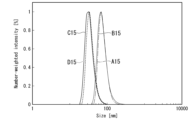
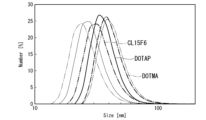
- FIG. 2 is a graph showing the size distribution of each particle in this embodiment.
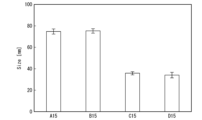
- FIG. 2 is a graph showing a comparison of the average particle sizes in the present embodiment.
- FIG. 4 is a graph showing the charge of each particle in this embodiment.
- FIG. 1 is a graph comparing the Z potentials of DNA and various complexes for C15 in this embodiment.
- FIG. 2 is a photograph of B15 and C15 in this example observed with a transmission electron microscope (TEM).
- FIG. 1 is a diagram showing the results of evaluation of B15 and C15 in this example by small angle X-ray scattering (SAXS).
- SAXS small angle X-ray scattering
- FIG. 2 is a schematic diagram showing the flow of operations performed in this embodiment.
- FIG. 2 is a graph showing the transfection efficiency in this example.
- FIG. 2 is a graph showing cell viability in the transfection test in this example.
- FIG. 13 is a graph showing another transfection efficiency in this example.
- FIG. 13 is a graph showing cell viability in another transfection study in this example.
- FIG. 1 is a photograph showing the uptake of lipid nanoparticles at each mixing ratio in this example into cells, observed with a confocal laser microscope.
- FIG. 1 is a graph showing the localized sites of lipid nanoparticles at each mixing ratio in this example evaluated using a flow cytometer.
- FIG. 2 is a graph showing the size distribution of lipid nanoparticles using each lipid in this example.
- FIG. 1 is a photograph showing the uptake of lipid nanoparticles at each mixing ratio in this example into cells, observed with a confocal laser microscope.
- FIG. 1 is a graph showing the localized sites of lipid nanoparticles at each mixing ratio in this example evaluated
- FIG. 1 is a graph showing the Z charge for each lipid nanoparticle using each lipid in this example.
- FIG. 1 is a graph showing the transfection efficiency for each lipid nanoparticle using each lipid in this example.
- FIG. 2 is a graph showing the transfection efficiency for pDNA of each DNA length in this example.
- FIG. 1 is a graph showing the relationship between the size and quantity of complexes depending on the content ratio of each lipid.
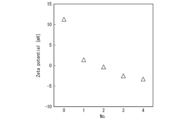
- FIG. 1 is a graph showing the zeta potential of complexes depending on the content ratio of each lipid.
- FIG. 1 is a graph showing the introduction efficiency and survival rate of the complex depending on the content ratio of each lipid.
- FIG. 1 is a graph showing cellular uptake of the complex depending on the content ratio of each lipid.
- FIG. 1 is a graph showing the transfection performance of the complex depending on the content ratio of each lipid.
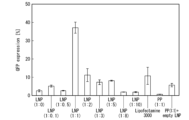
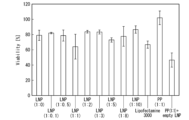
- FIG. 1 is a graph showing the expression rate and survival rate of a nucleic acid complex composition using siRNA.
- FIG. 1 is a graph showing the expression rate and survival rate for each PEI molecular weight of a nucleic acid complex composition using siRNA.
- FIG. 1 is a graph showing the expression rate and survival rate when only a complex of siRNA and PEI is introduced into cells.
- FIG. 1 is a graph showing the expression rate and survival rate of a nucleic acid complex composition using siRNA and a polycationic compound of formula (11).
- FIG. 1 is a graph showing the results of measuring the particle size of each BAC-LNP.
- FIG. 1 is a graph showing the results of measuring transfection efficiency using each BAC-LNP.
- nucleic acid complex composition lipid particles for gene transfer, and gene transfer method using the same according to the present invention, with reference to the following embodiments.
- present invention is not limited to the following embodiments.
- the nucleic acid complex composition of the present embodiment contains a nucleic acid molecule and a polycation having a structure formed by polymerization of cationic molecules composed of molecular chains containing carbon atoms and nitrogen atoms.
- a nucleic acid complex composition is a molecular composition in which nucleic acid molecules are complexed with molecules other than nucleic acid molecules, and the complex is formed mainly through intermolecular forces and electrical bonds.
- the nucleic acid molecules are long-chain nucleic acids, and the molecules other than nucleic acids are polycations.
- the nucleic acid constituting the nucleic acid molecule may be DNA or RNA.
- the nucleic acid molecule that can be used in this embodiment may include short-chain or long-chain nucleic acids.
- a long-chain nucleic acid is a nucleic acid with a base pair of 1 kbp or more. In this embodiment, it is preferably 10 kbp or more, more preferably 12 kbp or more, and even more preferably 15 kbp or more. As a guideline, nucleic acids of 1 to 20 kbp may be used.
- the long-chain nucleic acid may be a DNA of 20 kb or more, or 50 kb or more.
- a pDNA of 200 kbp or more such as an artificial chromosome may be used.
- a bacterial artificial chromosome may be used as the artificial chromosome.
- long-chain DNA which is DNA of 1 kbp or more.
- pDNA i.e., plasmid DNA
- pDNA is preferably used for introduction into cells and transformation.
- the pDNA as a long-chain DNA is preferably a plasmid vector, which is a gene expression vector.
- the plasmid vector may remain circular or may be cut into a linear form in advance.
- the gene expression vector can be designed in a standard manner using commonly used molecular biology tools based on the base sequence information of the gene to be expressed, and can be produced by various known methods.
- a short-chain nucleic acid is a nucleic acid with a base pair of less than 1 kbp. Any short-chain nucleic acid can be selected as long as it is less than 1 kbp.
- siRNA is a double-stranded RNA consisting of 30 base pairs or less, particularly 21 to 25 base pairs.
- siRNA induces the degradation of mRNA by RNA interference (RNAi) and suppresses the expression of a specific gene of the mRNA.
- RNAi RNA interference
- siRNA corresponding to a specific sequence is widely used for inhibition such as gene knockout.
- Polycations are mainly formed by polymerizing cationic molecules (molecules with a positive charge) which are polymerization units.
- Polycations include structures formed by polymerizing one or more types of cationic molecules, which will be described later. They may also have structural units other than cationic molecules, i.e. uncharged atoms, molecules, or negatively charged ions and molecules. Polycations have a positive charge overall.
- the cationic molecule is composed of a molecular chain containing carbon atoms and nitrogen atoms. Specifically, it has a molecular chain composed of various carbon chains and amines, and this molecular chain is linear or branched.
- the carbon chain containing carbon atoms is a so-called aliphatic spacer, and has a structure such as -CH 2 -, -CHR 1 -, -CHR 1 R 2 -, and the molecular chain may also be branched via R 1 and R 2.
- the amine containing a nitrogen atom has a structure such as -NH-, -NHR 1 -, -NR 1 R 2 -, and the molecular chain may also be branched via R 1 and R 2 .
- An example of a cationic molecule having such a structure is a -CH 2 -CH 2 -NH- structure.
- the polycation is preferably polyethyleneimine. That is, it has a structure in which --CH 2 --CH 2 --NH-- structures are polymerized.
- polyethyleneimine is represented by the structure (1) as linear polyethyleneimine in which the amine structure is a secondary amine. -[CH 2 -CH 2 -NH] n - ... (1)
- polyethyleneimine may have a linear, branched, or dendrimer-type structure, and any of these may be used in this embodiment.
- linear polyethyleneimine is mostly composed of secondary amines and contains primary amines at its ends.
- Branched polyethyleneimine contains a moderate amount of primary, secondary, and tertiary amines, is partially branched via tertiary amines, and has a structure with multiple primary amine ends.
- Dendrimer-type polyethyleneimine is mostly branched via tertiary amines and has a structure with primary amine ends, and is branched almost throughout. In this embodiment, it is preferable to use a branched polyethyleneimine.
- the polycation structure the following structures and polymers thereof may also be used.
- the polycation may be selected from the various polycations described below.
- the polycation of this embodiment includes a compound represented by the following formula (9). These polycations can be particularly preferably used as polycations for use in nucleic acid complex compositions.
- R is an organic substituent that may be the same or different. Examples of R may be, for example, a straight or branched chain having 20 or less carbon atoms.
- polycation of this embodiment may be a compound of the following formula (10), formula (11), or formula (12).
- the above synthesis method makes it possible to synthesize polycations efficiently in one pod, quickly and easily, with few side reactions.
- by selecting the type of amine it is possible to easily change the structure and screen for suitable polycations.
- the size (molecular weight, amount of polymerization) of the polycation can be selected from a variety of sizes, because when a complex is formed with a long-chain nucleic acid, as described below, the size and amount can be appropriately adjusted depending on the charge.
- polyethyleneimine when polyethyleneimine is used as the polycation, it is preferable to use one having a molecular weight of 2000 or more, and more preferably one having a molecular weight of 5000 or more. Also, one having a molecular weight of 10000 or more may be used.
- the amount of polycation can be adjusted so that the mass ratio of nucleic acid molecule:polycation is between 1:0.10 and 1:5.
- M c /M D may be greater than 0.25 and less than 5, more preferably 0.5 to 2.0, and most preferably approximately 1.0.
- the complex of a nucleic acid molecule and a polycation is considered to be greatly affected by the molecular structure, charge ratio, etc. of each molecule, which greatly affects the structure, charge, etc. of the complex, and is greatly involved in the introduction into cells and the behavior within the cells. Therefore, although it is not possible to make a general definition due to the various polycation structures, the above mass ratio can be mentioned as an effective guideline.
- the inventors have discovered that, based on the molecular structures of a nucleic acid molecule and a polycation containing a molecular chain of carbon and nitrogen atoms, a high gene transfer efficiency can be achieved when the mass ratio is within the above range.
- the complex of the nucleic acid molecule and the polycation preferably has a positive charge.
- DNA has a negative charge, and as described above, the polycation has a positive charge.
- the complex of the nucleic acid molecule and the polycation preferably has a positive charge overall.
- the lipid particle for gene introduction of this embodiment includes the nucleic acid complex composition and a lipid membrane particle.
- the lipid particle for gene introduction is a particle used for gene introduction into cells (transformation, or transfection in the case of animal cells).
- Lipid particles for gene introduction generally have a structure in which a nucleic acid complex composition is covered with a lipid membrane particle; in other words, a core particle (in this embodiment, the nucleic acid complex composition) is incorporated into the spherical particle made of lipid membrane.
- lipids generally used in forming liposomes can be used. Examples of such lipids include phospholipids, sterols, and saturated or unsaturated fatty acids. These can be used alone or in combination of two or more.
- As the configuration of the lipid membrane particles those described in Patent Document 1, JP-A No. 2022-111798, etc. can generally be used.
- the lipid particles for gene transfer are nano-sized when the lipid membrane particles and the nucleic acid complex composition are combined, they are sometimes called lipid nanoparticles (LNPs).
- the complex between the nucleic acid complex composition and the lipid membrane particle may have a positive charge.
- the lipid membrane particle and the lipid particle for nucleic acid may be configured so that the total charge of the lipid membrane particle and the lipid particle for nucleic acid with the complex composition is positive.
- the range of positive charge can be selected from a zeta potential of +0 to +50 mV.
- the nucleic acid complex composition (core particle) has a positive charge (cationic core particle)
- the charge of the lipid membrane particle can be appropriately selected so that the sum of the charges with the nucleic acid complex composition is positive.
- the lipid membrane particle has a positive charge as a whole.
- the lipids constituting the lipid membrane particle may contain a cationic lipid.
- the cationic lipid may be any lipid that has been used in lipid-mediated transfection (lipofection).
- the reagent for lipofection may be a monocationic or polycationic lipid.
- the lipid membrane particle may be modified to have a positive charge.
- the outside of the particle membrane of the lipid membrane particle may be modified with a component having a positive charge.
- the zeta potential can be selected from +0 to +50 mV.
- the lipid membrane particles may contain anionic lipids so long as the lipid membrane particles have the above-mentioned charge.
- the lipids constituting the lipid membrane particles may be CL15F6 represented by the following formula (1), MC3 represented by the following formula (2), DOTMA represented by the following formula (3), DOTAP represented by the following formula (4), DODMA represented by the following formula (5), DODAP represented by the following formula (6), or mixtures of these.
- DOTMA and DOTAP are cationic lipids having a positive charge, and can increase transfection efficiency, and therefore can be preferably used.
- other lipids such as CL15F6, MC3, DODMA, and DODAP may have a positive charge depending on pH.
- CL15F6 can increase transfection efficiency and can be preferably used as a lipid constituting lipid membrane particles.
- MC3, DODMA, DODAP, etc. can also increase transfection efficiency by modifying the surface of lipid membrane particles or by combining with other lipids, and can be preferably used.
- the lipid membrane particles may be subjected to appropriate surface modification other than those described above as necessary.
- the lipid on the surface of the lipid membrane particles may be modified with a hydrophilic polymer or the like to enhance the blood retention of the lipid membrane particles.
- the surface modification may be performed by using lipids modified with these modifying groups as the constituent lipids of the lipid nanoparticles.
- the lipid nanoparticles may be surface-modified with an oligosaccharide compound having three or more sugars.
- the method for surface-modifying the lipid nanoparticles with an oligosaccharide compound is not particularly limited, but the surface-modifying method described in, for example, liposomes in which the surface of lipid nanoparticles is modified with monosaccharides such as galactose or mannose (WO 2007/102481) may be employed.
- the lipid membrane particles can be endowed with one or more functions, such as temperature change sensitivity, membrane permeability, gene expression, and pH sensitivity.
- the lipid membrane particles may contain a substance that imparts a positive or negative charge.
- the charged substance that imparts a positive charge include saturated or unsaturated aliphatic amines such as stearylamine and oleylamine, and examples of the charged substance that imparts a negative charge include dicetyl phosphate, cholesteryl hemisuccinate, phosphatidylserine (PS, DOPS), phosphatidylinositol, and phosphatidic acid.
- the lipid membrane particles may also contain an antioxidant, such as tocopherol, propyl gallate, ascorbyl palmitate, or butylated hydroxytoluene.
- the lipid membrane particle may also contain a membrane polypeptide. Examples of the membrane polypeptide include a membrane surface polypeptide and an integral membrane polypeptide. The amount of these substances to be added is not particularly limited and can be appropriately selected depending on the purpose.
- lipid membrane particles As a method for producing lipid membrane particles and a method for producing a structure in which a core particle is incorporated into a lipid membrane particle, those described in Patent Document 1, JP-A No. 2022-111798, etc. can generally be used.
- a method for producing lipid membrane particles all lipid components are dissolved in an organic solvent such as chloroform, and then a lipid membrane is formed by drying under reduced pressure using an evaporator or spray drying using a spray dryer.
- an aqueous solvent containing a component to be encapsulated in the lipid nanoparticles, such as nucleic acid is added to the above dried mixture, and further emulsified using an emulsifier such as a homogenizer, an ultrasonic emulsifier, or a high-pressure jet emulsifier.
- an emulsifier such as a homogenizer, an ultrasonic emulsifier, or a high-pressure jet emulsifier.
- Liposomes can also be produced by a method well known for producing liposomes, such as reverse phase evaporation. If it is desired to control the size of lipid nanoparticles, extrusion (extrusion filtration) can be performed under high pressure using a membrane filter with a uniform pore size.
- the composition of the aqueous solvent is not particularly limited, but examples include buffer solutions such as phosphate buffer, citrate buffer, and phosphate buffered saline, physiological saline, and cell culture media.
- aqueous solvents can stably disperse lipid nanoparticles, but they may also contain sugars (aqueous solutions) such as monosaccharides such as glucose, galactose, mannose, fructose, inositol, ribose, and xylose sugars, disaccharides such as lactose, sucrose, cellobiose, trehalose, and maltose, trisaccharides such as raffinose and melezinose, polysaccharides such as cyclodextrin, sugar alcohols such as erythritol, xylitol, sorbitol, mannitol, and maltitol, and polyhydric alcohols (
- lipid nanoparticles dispersed in this aqueous solvent it is desirable to eliminate electrolytes in the aqueous solvent as much as possible from the viewpoint of physical stability such as suppressing aggregation. Also, from the viewpoint of chemical stability of lipids, it is desirable to set the pH of the aqueous solvent to a weak acidic to neutral range (pH 3.0 to 8.0) and/or remove dissolved oxygen by nitrogen bubbling or the like.
- the stability may be improved by using sugars (aqueous solutions) such as monosaccharides such as glucose, galactose, mannose, fructose, inositol, ribose, and xylose; disaccharides such as lactose, sucrose, cellobiose, trehalose, and maltose; trisaccharides such as raffinose and melezinose; polysaccharides such as cyclodextrin; and sugar alcohols such as erythritol, xylitol, sorbitol, mannitol, and maltitol.
- sugars aqueous solutions
- sugars aqueous solutions
- monosaccharides such as glucose, galactose, mannose, fructose, inositol, ribose, and xylose
- disaccharides such as lactose, sucrose, cellobiose, trehalose, and malto
- the stability may be improved by using the above-mentioned sugars or polyhydric alcohols (aqueous solutions) such as glycerin, diglycerin, polyglycerin, propylene glycol, polypropylene glycol, ethylene glycol, diethylene glycol, triethylene glycol, polyethylene glycol, ethylene glycol monoalkyl ether, diethylene glycol monoalkyl ether, and 1,3-butylene glycol.
- sugars or polyhydric alcohols aqueous solutions
- aqueous solutions such as glycerin, diglycerin, polyglycerin, propylene glycol, polypropylene glycol, ethylene glycol, diethylene glycol, triethylene glycol, polyethylene glycol, ethylene glycol monoalkyl ether, diethylene glycol monoalkyl ether, and 1,3-butylene glycol.
- the size of the lipid particles for gene introduction is such that transport efficiency is easily achieved, and therefore the average particle diameter is preferably 500 nm or less, more preferably 20 to 400 nm, even more preferably 20 to 350 nm, and even more preferably 20 to 200 nm.
- the average particle diameter of the lipid membrane particles and lipid particles for gene introduction refers to the number-average particle diameter measured by dynamic light scattering (DLS). Measurement by dynamic light scattering can be performed by standard methods using a commercially available DLS device, etc.
- lipid particles for gene introduction is not particularly limited, but it is preferable that they are dispersed in an aqueous solvent.
- lipids having a hydrophilic structure that are ionic or ionized under pH conditions are used, but hydrophobic compounds may be combined depending on the purpose.
- nanoparticles in which a molecular layer made of a hydrophilic substance is formed on the outer surface (the side in contact with the aqueous solvent) of a layer containing hydrophobic lipids may be used.
- the lipid particles for gene transfer have a gene transfer efficiency into cells of more than 30%.
- the gene transfer efficiency is the transfection efficiency in the case of animal cells.
- the transfection efficiency can be measured by measuring the expression level of transfected cells when the introduced DNA expresses luciferase, GFP, EGFP, etc. Specifically, when GFP or EGFP is expressed, the positive cells are counted with a flow cytometer for the fluorescence of GFP or EGFP, and the percentage of positive cells is determined relative to a certain threshold value. Therefore, in the GFP or EGFP system, the fluorescence level of GFP or EGFP can be substantially evaluated as the expression level. When luciferase (Luc) is expressed, the luminescence intensity is measured using a cell lysate. In this case, the evaluation is performed using the relative luminescence intensity normalized by the amount of protein.
- a gene transfer efficiency of more than 30% means that, for example, in transfection using a Lipofectamine reagent, a transfection efficiency of 10% is obtained with the control reagent, but the lipid particles for gene transfer of this embodiment, due to the above-mentioned configuration, can achieve a transfection efficiency of 30% or more, preferably 40% or more.
- the gene transfer method of the present embodiment is a method for transferring a nucleic acid molecule into a cell, in which the above-mentioned lipid particles for gene transfer are transferred into the cell.
- lipid particles for gene transfer As a method for gene transfer when introducing lipid particles for gene transfer into cells, a conventionally known method for gene transfer can be used.
- a conventionally known method for gene transfer can be used.
- a conventionally known method of transfection using lipids lipofection
- a reagent containing the above-mentioned lipid particles for gene transfer is administered (dosed) to a cell culture solution and cultured for 24 hours or more to transfer the gene.
- the route of administration is not particularly limited, but can be parenteral administration such as intravenous administration, enteral administration, intramuscular administration, subcutaneous administration, transdermal administration, nasal administration, or pulmonary administration.
- the kit for producing a nucleic acid complex composition of the present embodiment is a kit for producing the aforementioned nucleic acid complex composition, and contains a nucleic acid molecule and a polycation.
- the kit for producing the nucleic acid complex composition of this embodiment may contain, in addition to the above-mentioned nucleic acid molecule and polycation, other components used in the production.
- it may contain a pH adjuster, a buffer (such as a salt), a stabilizer, a calibration reagent or component, etc. that are useful for producing a complex of a nucleic acid molecule and a polycation.
- the kit for producing the nucleic acid complex composition of this embodiment may include a flow path structure.
- the flow path structure is a member used in producing a complex between molecules, and has a structure for circulating and, for example, mixing fluids.
- As the flow path structure for example, those described in International Publication WO2018/190423 can be used, but are not limited thereto.
- a specific example of the structure of the flow path structure is a flow path structure having a base and a flow path structure provided therein, the flow path structure having at least two inlet paths, which are independent of each other on the upstream side of the base, a first inlet path for introducing a first fluid and a second inlet path for introducing a second fluid, the inlet paths joining at a joining portion, and a flow path structure having a dilution flow path toward the downstream side of the joining portion.
- an aqueous solution containing nucleic acid can be supplied as a first fluid to the first inlet path, and a solution containing polycations can be supplied as a second fluid to the second inlet path, and a nucleic acid complex composition can be obtained in the dilution flow path.
- a flow channel structure having such a structure is a commercially available microfluidic device (iLiNP).
- the kit for producing lipid particles for gene introduction of the present embodiment is a kit for producing the above-mentioned lipid particles for gene introduction, and includes a nucleic acid molecule, a polycation, and a lipid membrane particle.
- the kit for producing lipid particles for gene introduction may contain, in addition to the above-mentioned nucleic acid molecule, polycation, and lipid particle, other components used in the production.
- it may include a configuration that can be included in a kit for producing the above-mentioned nucleic acid complex composition.
- it may contain components, parts, etc. used for producing the lipid solution.
- it may contain a solvent for adjusting the aqueous or organic solution used in producing the lipid solution, other lipids, a pH adjuster, a buffer (such as a salt), a stabilizer, a calibration reagent or parts, etc.
- the kit for producing lipid particles for gene introduction may include a flow channel structure.
- the flow channel structure may be any of those described above.
- an aqueous solution containing a nucleic acid complex composition may be supplied as a first fluid to the first inlet path, and a solution of a compatible organic solvent containing lipids may be supplied as a second fluid to the second inlet path, and a solution containing lipid particles for gene introduction may be obtained in the dilution flow path.
- the flow path structure may have three or more introduction paths.
- a solution containing nucleic acid may be introduced into the first introduction path
- a solution containing polycation may be introduced into the second introduction path
- a solution containing lipid may be introduced into the third introduction path.
- the solutions supplied to each introduction path are not particularly limited.
- Yet another aspect of this embodiment is the nucleic acid complex composition as described above for use in the gene transfer of a nucleic acid molecule into a cell. Yet another aspect of this embodiment is the use of the nucleic acid complex composition for producing lipid particles for gene transfer. Yet another aspect of this embodiment is a method for producing the lipid particles for gene introduction using the nucleic acid complex composition. Yet another aspect of this embodiment is the lipid particle for gene transfer, for use in gene transfer of a nucleic acid molecule into a cell.
- the nucleic acid complex composition and lipid particles for gene transfer of the present embodiment and the gene transfer method using the same have high efficiency of introducing nucleic acid molecules into cells, diffusing into cells, and transferring them to the nucleus, and can achieve high gene transfer efficiency.
- nucleic acid molecule encapsulated in a lipid nanoparticle and transported can be used for transformation, it is believed that the following steps are required: (1) the lipid nanoparticle fuses with an endosome, is taken up into the cytoplasm, and then escapes the endosome; and (2) the nucleic acid molecule that escapes the endosome diffuses into the cytoplasm. If the nucleic acid molecule is DNA (such as pDNA or BAC (bacterial artificial chromosome)), a further step (3) of the nucleic acid molecule transferring to the cell nucleus is required.
- DNA such as pDNA or BAC (bacterial artificial chromosome)
- step (1) in order to increase the efficiency of gene transfer, in step (1), in order to improve the efficiency of gene transfer of long-chain pDNA into cells, the lipid membrane of the nanoparticle needs to fuse with the endosomal membrane more dynamically than in the case of siRNA, mRNA, and short-chain pDNA.
- step (2) it was thought that the long DNA released into the cytoplasm in step (2) had a slower diffusion rate than short DNA.
- step (3) it was thought that the transfer of long-chain DNA with a large molecular weight to the cell nucleus was slow and unlikely to occur.
- DNA-nanolipid particles negatively charged DNA is encapsulated in a cationic lipid system, or DNA-polycation core particles prepared to be negatively charged are encapsulated in a cationic lipid system.
- This allows efficient DNA loading, but the inside of the particle often forms a lipid multilayer lamellar structure.
- the gene transfer of long-chain DNA it is necessary to release large-sized DNA from the lipid multilayer that forms a lamellar structure.
- encapsulating cationic core particles in a cationic lipid system would avoid the formation of a lamellar structure due to electrostatic interactions, and enable more dynamic fusion with the endosomal membrane and release of pDNA into the cytoplasm. Furthermore, compacting long-chain pDNA with polycations would reduce the apparent molecular size, which is expected to improve the diffusion rate after escape from the endosome and the efficiency of nuclear transfer.
- siRNA even when a short-chain nucleic acid, siRNA, is used as the nucleic acid molecule, high efficiency is exhibited, and knockdown by siRNA can be suitably performed. This is expected to improve the efficiency of siRNA knockdown. Furthermore, high transfection efficiency is also observed when a longer nucleic acid of 200 kbp or more is used as the nucleic acid molecule. For example, high efficiency is also observed when an artificial chromosome or BAC of 200 kbp or more is used as the long-chain nucleic acid.
- Nano-sized lipid particles (lipid nanoparticles, LNP) were prepared by the ethanol dilution method using a microfluidic device (iLiNP). The following solutions were delivered to the microfluidic device at a total flow rate of 500 ⁇ L/min and a flow rate ratio of 6.
- Aqueous solution A polycation solution using 1 mg/mL polycation and 1 mg/mL pDNA as long-chain DNA, which will be described later, were dissolved in 25 mM acetate buffer (pH 4.0) in order to make the pDNA concentration 22 ⁇ g/mL.
- PEI polyethyleneimine
- protamine sulfate protamine sulfate
- R8 STR-R8, 8-polymerized arginine
- Lipid solution A lipid mixture was dissolved in ethanol to prepare a final lipid concentration of 4 mM.
- the lipid composition was CL15F6/DSPC/cholesterol/DMG-PEG2K (60/10/30/1 mol%).
- the LNP suspension was dialyzed against 20 mM MES buffer (pH 6.0) using a dialysis membrane tube (12-14 kDa MW cutoffs, Repligen Corporation, Waltham, MA) for more than 2 hours, and then dialyzed overnight against PBS (pH 7.4) to remove residual ethanol.
- control sample empty LNP (lipid particles only), was prepared under the same conditions as above, except that 25 mM acetate buffer was used as the aqueous solution.
- the polyplex of the control sample was prepared by dissolving 1 mg/mL PEI solution and 1 mg/mL pDNA in PBS to give a pDNA concentration of 22 ⁇ g/mL.
- the weight ratio of pDNA/PEI was 1/1.
- the physical properties of the obtained LNPs were evaluated by measuring the particle size and zeta charge (zeta potential) using a Zeta-sizer Nano ZS ZEN3600 instrument (Malvern, UK).
- the pDNA used as the long-chain DNA is as follows: pNL3.1[Nluc/minP] (3151 kbp) (Promega) pEF1a-2xSV40_NLS-Nluc (6022 kbp) (Plasmid No. 135953, Addgene) HES7-NLuc-2A-tdTomato (10433 kbp) (Plasmid No. 130932, Addgene) pSLIK TT 3xFLAG Luciferase neo (13848 kbp) (Plasmid No.
- DMEM Cell Culture
- the frozen cell stock was added to 4 mL of DMEM (Sigma) (containing inactivated 10% FBS, 100 U/mL penicillin, and 100 ⁇ g/mL streptomycin) (hereinafter referred to as DMEM(+)) in a 15 mL centrifuge tube. After centrifugation (1000 rpm, 5 min), the supernatant was removed and the precipitated cells were suspended in 1 mL of medium and seeded in a 10 cm dish containing 9 mL of medium. When the cells reached 80-90% confluence, they were washed with 5 mL of sterile PBS, detached with 2 mL of 0.0625% trypsin, and added to 8 mL of medium.
- Cell viability measurement Twenty-four hours before the start of dosing, HeLa cells were cultured in a 96-well plate (4,000 cells/well). The culture medium was replaced with 100 ⁇ L DMEM(+) containing nanoparticles containing 0.05 ⁇ g of pDNA, and the cells were incubated at 37° C. for 24 hours. 24 hours after the start of dosing, the medium was replaced with fresh 100 ⁇ L DMEM(+), and cell viability was measured using a CellTiter-blue cell viability measurement kit (Promega).
- Firefly luciferase activity in the cell lysate was measured using the ONE-Glo Luciferase Assay System (Promega), NanoLuc activity was measured using the Nano-Glo® Luciferase Assay System (Promega), and the total protein amount in the cell lysate was measured using a BCA protein assay kit.
- EGFP expression of EGFP was evaluated by flow cytometry (Cyto FLEX, Beckman Coulter). After the culture was completed, the medium was removed, and the cells were washed twice with PBS and then treated with trypsin. The cell suspension was centrifuged (400 g, 4° C., 5 min), and the precipitated cells were suspended in 500 ⁇ L FACS buffer (0.5% BSA, 0.1% NaN 3 in PBS), and then passed through a nylon mesh to remove cell aggregates, followed by measurement. Lipofectamine 3000 (Thermo Fisher Scientific) was used as a positive control, and transfection was performed according to the manufacturer's protocol.
- a core particle and pDNA encoding 15 kbp GFP were prepared using protamine sulfate, R8 (STR-R8, arginine 8 polymer), and polyethyleneimine (PEI) as polycations.
- the prepared core particle was loaded onto lipid nanoparticles consisting of CL15F6, an ionized lipid, DSPC (1,2-distearoyl-sn-glycero-3-phosphocholine), cholesterol (Chol), and PEG-DMG 2k as other lipids, and the transfection efficiency into HeLa cells was evaluated.
- Lipofectamine 3000 the most highly efficient commercially available transfection reagent, was used.
- the molar ratio of CL15F6/DSPC/Chol/PEG was 60/10/30/1. The same applies to the following test examples unless otherwise specified.
- FIG. 1 is a graph comparing the transfection efficiency of lipid particles for gene transfer using each polycation.
- the transfection efficiency of the control Lipofectamine 3000 is 10%.
- the transfection efficiency was less than half that of the control, and high efficiency was not obtained.
- PEI was used as the polycation
- a transfection efficiency of 37% which is 3.7 times that of the control, was obtained.
- Figure 2 is a graph showing the size distribution of each particle. As shown in the figure, the particle size peaks at 75 nm for A15 and B15, and 35 nm for C15 and D15. This indicates that the particle size becomes smaller when the PEI content ratio is larger than a certain level. In addition to the size of the molecule, it is thought that this is related to the charge of the entire particle due to the positive charge of PEI and the negative charge of DNA.
- FIG. 3 is a graph showing a comparison of the average particle sizes.
- the white (hollow) dots represent core particles (long-chain nucleic acid complexes) in which polycations and long-chain DNA are complexed, and the shaded dots represent lipid nanoparticles (lipid particles for gene introduction) in which core particles and lipid membrane particles are complexed.
- the particle size of the lipid nanoparticles A15 and B15 was approximately 80 nm, and the particle size of the lipid nanoparticles C15 and D15 was approximately 40 nm.
- the Z potential of the core particles alone for A15 and B15 is negative (around -50 to -25 mV), but the lipid nanoparticles are approximately 0 mV.
- the Z potential of both the core particles and lipid nanoparticles for C15 and D15 is slightly positive (around +5 to +10 mV).
- Figure 5 is a graph comparing the Z potential of DNA and various complexes for C15.
- the Z potential for C15 indicates pDNA only, PPs (complex of pDNA and PEI), empty NPs (lipid membrane particles only), and PPs + empty LNPs (lipid nanoparticles).
- the Z potential for C15 DNA only, PPs, and lipid nanoparticles is around 10.
- FIG. 6 shows the results of observation of B15 and C15 by a transmission electron microscope (TEM). As shown in the figure above, the diameter of B15 is large, while that of C15 is smaller. In this observation, it is expected that the internal structure of B15 forms multiple lamellae, whereas that of C15 is similar to that of liposomes.
- Fig. 7 shows the results of evaluation of B15 and C15 by small angle X-ray scattering (SAXS).
- B15 a peak was observed at 6.3 nm, and this interplanar spacing is considered to indicate the presence of multiple lamellar structures.
- C15 there was no peak, and no specific periodic structure was observed. From these results, it was confirmed that B15 formed a lipid multilayer and had a periodic lamellar structure with a lattice spacing of 6.3 nm, whereas C15 was found to be a hollow liposome without a layered structure.
- the transfection efficiency of 15 kbp pDNA was compared using particles A15 to D15 and a commercially available transfection reagent, Lipofectamine 3000. 8 is a schematic diagram showing the flow of the procedure carried out. As shown in the figure, HeLa cells cultured for 24 hours before transfection were used as the cells to be transfected, and 0.5 ⁇ g/mL of 15 kbp pDNA was transfected.
- FIG. 9 is a graph showing the transfection efficiency.
- the transfection efficiency of particle A15 which is a normal lipid nanoparticle in which only DNA is introduced into a lipid membrane particle without containing PEI, is about several percent, and B15 and D15 also have almost the same performance.
- Lipofectamine 3000 which is the most highly efficient commercially available transfection reagent, had a transfection efficiency of about 10%.
- the transfection efficiency of particles C15 was about 40%, which was about 10 times that of particles A and about 4 times that of Lipofectamine 3000.
- Figure 10 is a graph showing the cell viability in this transfection test. No significant difference in cell viability was observed for particles A15-D15 and the control Lipofectamine. In other words, it was found that there was no difference in cytotoxicity between the samples.
- Test Example 4 Transfection efficiency 2 for each mixture ratio of DNA and polycation Since a particularly high transfection efficiency was observed with particle C (C15) with a DNA:PEI ratio (weight ratio) of 1:1, the transfection efficiency was further compared at various ratios. Samples with various ratios from 1:0 to 1:10 were used, and the same procedure as in Test Example 3 was performed for the rest.
- Figure 11 is a graph showing the transfection efficiency.
- the transfection efficiency was very high in the case of a sample with a DNA:PEI ratio (weight ratio) of 1:1, which corresponds to particle C (C15) above.
- the 1:2 sample also showed an efficiency of around 12%, exceeding that of the control Lipofectamine.
- a relatively high efficiency was obtained with a PEI ratio of more than 1:0.5 and less than 1:5.
- Figure 12 is a graph showing the cell viability in this transfection test. No significant difference was observed in cell viability for any of the samples. In other words, it was found that there was no difference in cytotoxicity between the samples.
- Figure 14 is a graph showing the localization of lipid nanoparticles at each mixing ratio evaluated using a flow cytometer. Particle C15 was shown to have significantly higher cellular uptake efficiency than B15 and A15.
- FIG. 15 is a graph showing the size distribution of lipid nanoparticles using each lipid.
- 16 is a graph showing the Z charge of each lipid nanoparticle using each lipid.
- the lipid nanoparticles using DOTAP and DOTMA have a charge of +21 to +23 mV.
- Figure 17 is a graph showing the transfection efficiency of lipid nanoparticles using each lipid.
- CL15F6 showed a transfection efficiency of approximately 40%.
- particles using commercially available cationic lipids DOTAP and DOTMA showed transfection efficiency almost the same as particles made using CL15F6.
- the A+ and C+ numbers in the figure indicate A and C particles using DNA with the length indicated by the numbers, respectively.
- Transfection efficiency was examined by expression of Nanoluciferase for pNL3.1[Nluc/minP] and HES7-NLuc-2A-tdTomato, Luciferase for 3xFLAG Luciferase neo, and EGFP for pLV hU6-sgRNA hUbC-dCas9-KRAB-T2a-GFP.
- FIG. 18 is a graph showing the transfection efficiency for pDNA of each DNA length.
- Figure 18(a) shows pNL3.1[Nluc/minP] (3151 bp)
- Figure 18(b) shows HES7-NLuc-2A-tdTomato (10433 bp)
- Figure 18(c) shows pSLIK TT 3xFLAG Luciferase neo (13848 bp)
- Figure 18(d) shows pLV hU6-sgRNA hUbC-dCas9-KRAB-T2a-GFP (15000 bp). Note that the ratio of graph length to the control does not match for each of the results because the efficiency was examined using different plasmids and expression.
- lipid nanoparticles containing ionized or cationic lipids and carrying cationic core particles of pDNA/PEI have smaller particle sizes and do not have a periodic internal structure compared to lipid nanoparticles carrying general anionic core particles. This improves the efficiency of uptake into cells, and since they do not have a periodic structure, long-chain pDNA is easily released into the cytoplasm, and the compaction effect of pDNA is thought to improve the diffusion rate and nuclear transport efficiency. On the other hand, if the PEI ratio is too high, it becomes difficult for pDNA to separate from PEI in the cytoplasm or nucleus, which is thought to reduce the transfection efficiency.
- Figure 19 shows a graph of the relationship between the size and quantity of the complex depending on the content ratio of each lipid.
- the vertical axis shows the normalized quantity, and the horizontal axis shows the size.
- PS0 corresponds to sample No. 0 with 0% DOPS
- PS7 corresponds to sample No. 1 with 7% DOPS
- PS28 corresponds to sample No. 4 with 28% DOPS.
- Figure 20 shows a graph of the zeta potential of the complex depending on the content ratio of each lipid.
- the vertical axis shows the zeta potential
- the horizontal axis shows the sample number in Table 1.
- Sample No. 2 has a zeta potential close to 0, and as the DOPS content decreases, the zeta potential becomes positive, and as the DOPS content increases, the zeta potential becomes negative, with sample No. 4, which contains 28% PS, being approximately -4 mV.
- FIG. 21 A graph of the introduction efficiency and survival rate of the complex depending on the content ratio of each lipid is shown in Figure 21. 15 kbp pDNA was introduced into each complex, and the introduction efficiency is shown as the GFP expression rate % by a circle mark in the figure, and the cell survival rate % by a square mark in the figure. The results showed that the content of anionic lipid (charge of the complex) did not decrease the transfection efficiency depending on the content.
- FIG. 22 shows a graph of the cellular uptake of the complex depending on the content ratio of each lipid.
- FIG. 23 shows the transfection performance of the complex depending on the content ratio of each lipid.
- PS0%, PS7%, and PS28% and the sample numbers is the same as PS0, PS7, and PS28 in FIG. The results showed that the cellular uptake decreased depending on the content ratio of anionic lipid.
- siRNA was used as the nucleic acid
- KD activity was confirmed using siRNA-polycation complexes, and a higher effect was obtained compared to when PEI or DOTAP was used. It is expected that these polycations will be used to verify gene transfer efficiency when combined with lipid nanoparticles, and for highly efficient gene transfer of various other nucleic acids and various cells. It is also expected that knowledge of these structures can be utilized to synthesize and use polycations of still other structures.
- R may be an appropriate organic substituent, and each R in the formula may be the same or different. For example, it may be a straight or branched chain having 20 or less carbon atoms.
- a nucleic acid complex composition and lipid particles for gene transfer were prepared using siRNA as the short nucleic acid, and the effect of transferring siRNA into cells, that is, the knockdown activity by siRNA, was examined.
- the conditions for preparing the nucleic acid complex composition are as follows.
- PEI polyethyleneimine
- Aqueous phase 70 ⁇ g/mL siRNA + PEI in 25 mM acetate buffer (pH 4.0)
- Lipid solution 8 mM DOTAP/DSPC/Cholesterol/DMG-PEG2k (
- Figure 24 is a graph showing the expression rate and survival rate of a nucleic acid complex composition using siRNA. Lipid particles for gene transfer containing 30 nM, 60 nM, and 120 nM of the nucleic acid complex composition were used.
- the vertical axis shows the Luc expression rate (%)
- the horizontal axis shows the ratio of siRNA (siGL4):PEI used when preparing the nucleic acid complex composition.
- the vertical axis shows the cell survival rate (%)
- the horizontal axis shows the ratio of siRNA (siGL4):PEI used when preparing the nucleic acid complex composition.
- Figure 25 is a graph showing the expression rate and survival rate for each PEI molecular weight of the nucleic acid complex composition using siRNA.
- Lipid particles for gene transfer containing nucleic acid complex compositions using W/O PEI and PEI with molecular weights of 600, 1200, 2000, and 10000 were used. Of these, the one with a molecular weight of 10000 is the same as that used in other test examples.
- the vertical axis shows the Luc expression rate (%)
- the horizontal axis shows the ratio of siRNA (siGL4):PEI used when preparing the nucleic acid complex composition.
- the vertical axis shows the cell survival rate (%)
- the horizontal axis shows the ratio of siRNA (siGL4):PEI used when preparing the nucleic acid complex composition.
- 26 is a graph showing the expression rate and survival rate when only the siRNA-PEI complex was introduced into cells, that is, only the nucleic acid complex composition was introduced instead of the above-mentioned lipid particles for gene transfer.
- the vertical axis indicates the Luc expression rate (%), and the horizontal axis indicates the ratio of siRNA (siGL4):PEI used in preparing the nucleic acid complex composition.
- the vertical axis indicates the cell viability (%), and the horizontal axis indicates the ratio of siRNA (siGL4):PEI used in preparing the nucleic acid complex composition.
- the knockdown activity of Luc expression was observed when siRNA:PEI was 1:1, but the knockdown activity was lower than that when lipid particles for gene introduction were used.
- a high knockdown activity was observed when siRNA:PEI was 1:5.
- the cell viability was high when siRNA:PEI was 1:1, but slightly decreased when siRNA:PEI was 1:5.
- FIG. 27 is a graph showing the expression rate and survival rate for a nucleic acid complex composition using siRNA and a polycationic compound of formula (11).
- the vertical axis indicates the expression rate (%) of Luc
- the horizontal axis indicates the ratio of siRNA (siGL4) to polycationic compound used in preparing the nucleic acid complex composition.
- the vertical axis indicates the cell viability (%)
- the horizontal axis indicates the ratio of siRNA (siGL4) to polycationic compound used in preparing the nucleic acid complex composition.
- BAC a 231 kbp long pDNA encoding EGFP was used.
- BAC:PEI was 1:0
- SM102 was used as the lipid at 1:0 (SM102-1:0-LNP) were also prepared.
- Other conditions than those mentioned above were prepared in the same manner as in the process shown in (Preparation of lipid particles for gene transfer) above.
- the particle size and zeta charge (zeta potential) of the produced BAC-LNP were also measured in the same manner as in the process described above.
- Figure 28 shows the results of measuring the particle size of each of the BAC-LNPs mentioned above.
- (a) shows the particle size distribution of CL15F6-1:1-LNP, CL15F6-1:0-LNP, and SM102-1:0-LNP.
- (b) shows the average particle size.
- the transfection efficiency was measured using each BAC-LNP. HeLa cells were used, and the assay conditions were changed to a dose of 1.0 ⁇ g/mL, but the same procedures were carried out as in the case of using 15 kbp DNA in Test Example 3. The other steps were similar to those described above in (Transfection Efficiency Measurement).
- the results of transfection using each of the BAC-LNPs described above are shown in Figure 28.
- (a) shows the transfection efficiency of the prepared particles.
- CL15F6-1:1-complex not using LNP and Lf3k from the transfection kit are shown.
- (b) shows the respective cell viability rates at the time of transfection.
- nucleic acid complex composition lipid particles for gene transfer, and gene transfer method using the same of the present invention, the efficiency of transfer and diffusion of nucleic acid molecules into cells is high, resulting in high gene transfer efficiency.
Landscapes
- Health & Medical Sciences (AREA)
- Chemical & Material Sciences (AREA)
- Life Sciences & Earth Sciences (AREA)
- Genetics & Genomics (AREA)
- General Health & Medical Sciences (AREA)
- Medicinal Chemistry (AREA)
- Organic Chemistry (AREA)
- Engineering & Computer Science (AREA)
- Animal Behavior & Ethology (AREA)
- Public Health (AREA)
- Epidemiology (AREA)
- Molecular Biology (AREA)
- Pharmacology & Pharmacy (AREA)
- Bioinformatics & Cheminformatics (AREA)
- Biochemistry (AREA)
- Veterinary Medicine (AREA)
- Biotechnology (AREA)
- Zoology (AREA)
- Wood Science & Technology (AREA)
- Proteomics, Peptides & Aminoacids (AREA)
- General Engineering & Computer Science (AREA)
- Biophysics (AREA)
- Biomedical Technology (AREA)
- Inorganic Chemistry (AREA)
- Microbiology (AREA)
- Plant Pathology (AREA)
- Physics & Mathematics (AREA)
- Medicines That Contain Protein Lipid Enzymes And Other Medicines (AREA)
- Pharmaceuticals Containing Other Organic And Inorganic Compounds (AREA)
Priority Applications (1)
| Application Number | Priority Date | Filing Date | Title |
|---|---|---|---|
| JP2024550517A JPWO2024071409A1 (https=) | 2022-09-30 | 2023-09-29 |
Applications Claiming Priority (2)
| Application Number | Priority Date | Filing Date | Title |
|---|---|---|---|
| JP2022-158025 | 2022-09-30 | ||
| JP2022158025 | 2022-09-30 |
Publications (1)
| Publication Number | Publication Date |
|---|---|
| WO2024071409A1 true WO2024071409A1 (ja) | 2024-04-04 |
Family
ID=90478187
Family Applications (1)
| Application Number | Title | Priority Date | Filing Date |
|---|---|---|---|
| PCT/JP2023/035730 Ceased WO2024071409A1 (ja) | 2022-09-30 | 2023-09-29 | 核酸複合体組成物、遺伝子導入用脂質粒子及びそれを用いた遺伝子導入方法 |
Country Status (2)
| Country | Link |
|---|---|
| JP (1) | JPWO2024071409A1 (https=) |
| WO (1) | WO2024071409A1 (https=) |
Citations (4)
| Publication number | Priority date | Publication date | Assignee | Title |
|---|---|---|---|---|
| WO2011135905A1 (ja) * | 2010-04-28 | 2011-11-03 | 国立大学法人北海道大学 | 脂質膜構造体 |
| WO2016121942A1 (ja) * | 2015-01-30 | 2016-08-04 | 日油株式会社 | カチオン性脂質 |
| JP2021172597A (ja) * | 2020-04-21 | 2021-11-01 | 国立大学法人北海道大学 | 脂質ナノ粒子 |
| WO2022071582A1 (ja) * | 2020-10-02 | 2022-04-07 | 国立大学法人北海道大学 | 脂質ナノ粒子 |
Family Cites Families (1)
| Publication number | Priority date | Publication date | Assignee | Title |
|---|---|---|---|---|
| JPWO2007037444A1 (ja) * | 2005-09-30 | 2009-04-16 | 国立大学法人 北海道大学 | 目的物質を核内又は細胞内に送達するためのベクター |
-
2023
- 2023-09-29 JP JP2024550517A patent/JPWO2024071409A1/ja active Pending
- 2023-09-29 WO PCT/JP2023/035730 patent/WO2024071409A1/ja not_active Ceased
Patent Citations (4)
| Publication number | Priority date | Publication date | Assignee | Title |
|---|---|---|---|---|
| WO2011135905A1 (ja) * | 2010-04-28 | 2011-11-03 | 国立大学法人北海道大学 | 脂質膜構造体 |
| WO2016121942A1 (ja) * | 2015-01-30 | 2016-08-04 | 日油株式会社 | カチオン性脂質 |
| JP2021172597A (ja) * | 2020-04-21 | 2021-11-01 | 国立大学法人北海道大学 | 脂質ナノ粒子 |
| WO2022071582A1 (ja) * | 2020-10-02 | 2022-04-07 | 国立大学法人北海道大学 | 脂質ナノ粒子 |
Non-Patent Citations (2)
| Title |
|---|
| MATTHIEU SOETE: "Sequence-Encoded Macromolecules with Increased Data Storage Capacity through a Thiol-Epoxy Reaction", ACS MACRO LETTERS, vol. 10, no. 5, 18 May 2021 (2021-05-18), pages 616 - 622, XP093156207, ISSN: 2161-1653, DOI: 10.1021/acsmacrolett.1c00275 * |
| STEFAN MOMMER: "An epoxy thiolactone on stage: four component reactions, synthesis of poly(thioether urethane)s and the respective hydrogels", POLYMER CHEMISTRY, ROYAL SOCIETY OF CHEMISTRY, CAMBRIDGE, vol. 7, no. 12, 1 January 2016 (2016-01-01), Cambridge , pages 2291 - 2298, XP093156196, ISSN: 1759-9954, DOI: 10.1039/C6PY00231E * |
Also Published As
| Publication number | Publication date |
|---|---|
| JPWO2024071409A1 (https=) | 2024-04-04 |
Similar Documents
| Publication | Publication Date | Title |
|---|---|---|
| US20260060927A1 (en) | Liposomal particles, methods of making same and uses thereof | |
| Pinnapireddy et al. | Composite liposome-PEI/nucleic acid lipopolyplexes for safe and efficient gene delivery and gene knockdown | |
| Thanki et al. | Engineering of small interfering RNA-loaded lipidoid-poly (DL-lactic-co-glycolic acid) hybrid nanoparticles for highly efficient and safe gene silencing: A quality by design-based approach | |
| KR101198354B1 (ko) | 핵산 전달용 저밀도 지단백질 유사(LDL-like) 양이온성 나노입자, 그의 제조방법 및 이를 이용한 핵산의 전달 방법 | |
| Podesta et al. | Antitumor activity and prolonged survival by carbon‐nanotube‐mediated therapeutic siRNA silencing in a human lung xenograft model | |
| Navarro et al. | Phospholipid–polyethylenimine conjugate-based micelle-like nanoparticles for siRNA delivery | |
| Haghiralsadat et al. | A novel approach on drug delivery: Investigation of a new nano-formulation of liposomal doxorubicin and biological evaluation of entrapped doxorubicin on various osteosarcoma cell lines | |
| US12496278B2 (en) | Delivery system comprising silicon nanoparticles | |
| Skandrani et al. | Lipid nanocapsules functionalized with polyethyleneimine for plasmid DNA and drug co-delivery and cell imaging | |
| Boloix et al. | Engineering pH‐sensitive stable nanovesicles for delivery of microRNA therapeutics | |
| Tahara et al. | Chitosan-modified poly (D, L-lactide-co-glycolide) nanospheres for improving siRNA delivery and gene-silencing effects | |
| KR102650691B1 (ko) | 폴리락트산염을 포함하는 약물전달용 나노입자 조성물 제조용 키트 | |
| Zhou et al. | Lipid-coated nano-calcium-phosphate (LNCP) for gene delivery | |
| Lee et al. | DNA amplification in neutral liposomes for safe and efficient gene delivery | |
| Momekova et al. | Long-circulating, pH-sensitive liposomes sterically stabilized by copolymers bearing short blocks of lipid-mimetic units | |
| Dreaden et al. | RNA‐peptide nanoplexes drug DNA damage pathways in high‐grade serous ovarian tumors | |
| EP1955695A1 (en) | Nanocapsules of lipophilic complexes of nucleic acids | |
| Briffault et al. | Harnessing extracellular vesicle membrane for gene therapy: EVs-biomimetic nanoparticles | |
| Li et al. | The role of endosome evasion bypass in the reversal of multidrug resistance by lipid/nanoparticle assemblies | |
| US20190328903A1 (en) | Polymer nanoparticle composition for plasmid dna delivery, and preparation method therefor | |
| US20130195962A1 (en) | Lipid membrane structure | |
| CN121102495A (zh) | 一种基于二烃基咪唑阳离子脂质的核酸药物制剂及其制备方法与应用 | |
| JP2001511171A (ja) | 安定化したカチオン性トランスフェクション用物質/核酸粒子の配合物 | |
| WO2024071409A1 (ja) | 核酸複合体組成物、遺伝子導入用脂質粒子及びそれを用いた遺伝子導入方法 | |
| WO2025133684A1 (en) | Liposomal nanoparticles for crispr/cas9 delivery |
Legal Events
| Date | Code | Title | Description |
|---|---|---|---|
| 121 | Ep: the epo has been informed by wipo that ep was designated in this application |
Ref document number: 23872628 Country of ref document: EP Kind code of ref document: A1 |
|
| WWE | Wipo information: entry into national phase |
Ref document number: 2024550517 Country of ref document: JP |
|
| NENP | Non-entry into the national phase |
Ref country code: DE |
|
| 122 | Ep: pct application non-entry in european phase |
Ref document number: 23872628 Country of ref document: EP Kind code of ref document: A1 |