WO2024047770A1 - 情報処理システム、情報処理方法及び記録媒体 - Google Patents
情報処理システム、情報処理方法及び記録媒体 Download PDFInfo
- Publication number
- WO2024047770A1 WO2024047770A1 PCT/JP2022/032672 JP2022032672W WO2024047770A1 WO 2024047770 A1 WO2024047770 A1 WO 2024047770A1 JP 2022032672 W JP2022032672 W JP 2022032672W WO 2024047770 A1 WO2024047770 A1 WO 2024047770A1
- Authority
- WO
- WIPO (PCT)
- Prior art keywords
- image
- gradient
- normalized
- neural network
- information processing
- Prior art date
- Legal status (The legal status is an assumption and is not a legal conclusion. Google has not performed a legal analysis and makes no representation as to the accuracy of the status listed.)
- Ceased
Links
Images





Classifications
-
- G—PHYSICS
- G06—COMPUTING OR CALCULATING; COUNTING
- G06V—IMAGE OR VIDEO RECOGNITION OR UNDERSTANDING
- G06V10/00—Arrangements for image or video recognition or understanding
- G06V10/70—Arrangements for image or video recognition or understanding using pattern recognition or machine learning
- G06V10/82—Arrangements for image or video recognition or understanding using pattern recognition or machine learning using neural networks
-
- G—PHYSICS
- G06—COMPUTING OR CALCULATING; COUNTING
- G06T—IMAGE DATA PROCESSING OR GENERATION, IN GENERAL
- G06T3/00—Geometric image transformations in the plane of the image
- G06T3/40—Scaling of whole images or parts thereof, e.g. expanding or contracting
- G06T3/4053—Scaling of whole images or parts thereof, e.g. expanding or contracting based on super-resolution, i.e. the output image resolution being higher than the sensor resolution
-
- G—PHYSICS
- G06—COMPUTING OR CALCULATING; COUNTING
- G06T—IMAGE DATA PROCESSING OR GENERATION, IN GENERAL
- G06T3/00—Geometric image transformations in the plane of the image
- G06T3/60—Rotation of whole images or parts thereof
-
- G—PHYSICS
- G06—COMPUTING OR CALCULATING; COUNTING
- G06T—IMAGE DATA PROCESSING OR GENERATION, IN GENERAL
- G06T5/00—Image enhancement or restoration
- G06T5/60—Image enhancement or restoration using machine learning, e.g. neural networks
-
- G—PHYSICS
- G06—COMPUTING OR CALCULATING; COUNTING
- G06T—IMAGE DATA PROCESSING OR GENERATION, IN GENERAL
- G06T5/00—Image enhancement or restoration
- G06T5/73—Deblurring; Sharpening
-
- G—PHYSICS
- G06—COMPUTING OR CALCULATING; COUNTING
- G06T—IMAGE DATA PROCESSING OR GENERATION, IN GENERAL
- G06T7/00—Image analysis
-
- G—PHYSICS
- G06—COMPUTING OR CALCULATING; COUNTING
- G06V—IMAGE OR VIDEO RECOGNITION OR UNDERSTANDING
- G06V10/00—Arrangements for image or video recognition or understanding
- G06V10/20—Image preprocessing
- G06V10/32—Normalisation of the pattern dimensions
-
- G—PHYSICS
- G06—COMPUTING OR CALCULATING; COUNTING
- G06V—IMAGE OR VIDEO RECOGNITION OR UNDERSTANDING
- G06V10/00—Arrangements for image or video recognition or understanding
- G06V10/40—Extraction of image or video features
- G06V10/44—Local feature extraction by analysis of parts of the pattern, e.g. by detecting edges, contours, loops, corners, strokes or intersections; Connectivity analysis, e.g. of connected components
-
- G—PHYSICS
- G06—COMPUTING OR CALCULATING; COUNTING
- G06V—IMAGE OR VIDEO RECOGNITION OR UNDERSTANDING
- G06V40/00—Recognition of biometric, human-related or animal-related patterns in image or video data
- G06V40/10—Human or animal bodies, e.g. vehicle occupants or pedestrians; Body parts, e.g. hands
- G06V40/18—Eye characteristics, e.g. of the iris
-
- G—PHYSICS
- G06—COMPUTING OR CALCULATING; COUNTING
- G06V—IMAGE OR VIDEO RECOGNITION OR UNDERSTANDING
- G06V40/00—Recognition of biometric, human-related or animal-related patterns in image or video data
- G06V40/10—Human or animal bodies, e.g. vehicle occupants or pedestrians; Body parts, e.g. hands
- G06V40/18—Eye characteristics, e.g. of the iris
- G06V40/193—Preprocessing; Feature extraction
-
- G—PHYSICS
- G06—COMPUTING OR CALCULATING; COUNTING
- G06T—IMAGE DATA PROCESSING OR GENERATION, IN GENERAL
- G06T2207/00—Indexing scheme for image analysis or image enhancement
- G06T2207/20—Special algorithmic details
- G06T2207/20081—Training; Learning
-
- G—PHYSICS
- G06—COMPUTING OR CALCULATING; COUNTING
- G06T—IMAGE DATA PROCESSING OR GENERATION, IN GENERAL
- G06T2207/00—Indexing scheme for image analysis or image enhancement
- G06T2207/20—Special algorithmic details
- G06T2207/20084—Artificial neural networks [ANN]
Definitions
- the present invention relates to an information processing system, an information processing method, and a recording medium.
- Patent Document 1 discloses that it is possible to distinguish and recognize whether objects corresponding to iris images are the same object, for example, whether they are iris images of the same person, based on iris features corresponding to the iris images.
- An image processing method is disclosed.
- Patent Document 1 states that the iris position, the pupil position, and the corresponding iris image may be input to a neural network that performs iris segmentation, and the neural network may output a mask map corresponding to the iris area in the iris image.
- the neural network that performs the iris segmentation can be trained to determine the iris region in the iris image and generate a corresponding mask map.
- the obtained iris image and the mask map of the detected iris region may have different sizes. Therefore, once a mask map (segmentation result) of the iris position and iris area in the iris image is obtained, the image area and mask map corresponding to the iris position are normalized, and the normalized image area and mask map are set in advance. There is a description in Patent Document 1 that it may be adjusted to the specified standard.
- Patent Document 1 states that multi-scale feature processing may be performed on an image region corresponding to the normalized iris position, and feature accuracy is further improved. According to the description in Patent Document 1, this multi-scale feature processing is the same processing procedure as multi-scale feature extraction, and by performing multi-scale feature extraction etc., an iris feature map corresponding to an iris image is obtained. Can be done.
- This disclosure aims to improve the techniques described in the prior art documents mentioned above.
- a first processing means that performs first processing using a first neural network with the target image as input; normalization means that performs normalization processing using first output information that is a result of the first processing to generate a normalized image regarding the target image; a second processing means that performs second processing using a second neural network with the normalized image as input to extract image feature amounts related to the normalized image;
- An information processing system comprising: modifying means for modifying a first parameter, which is a parameter used in the first neural network, based on information regarding the normalized image.
- one or more computers Performing first processing using a first neural network with the target image as input, performing normalization processing using first output information that is a result of the first processing to generate a normalized image regarding the target image; performing a second process using a second neural network with the normalized image as input to extract image features related to the normalized image;
- An information processing method is provided in which a first parameter, which is a parameter used in the first neural network, is modified based on information regarding the normalized image.
- a recording medium on which a program for executing the program is recorded is provided.
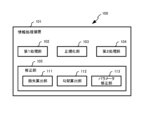
- FIG. 1 is a diagram showing an overview of an information processing system according to a first embodiment
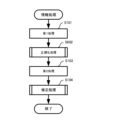
- FIG. 3 is a flowchart showing an overview of information processing according to the first embodiment
- 1 is a diagram illustrating a configuration example of an information processing system according to a first embodiment
- FIG. 3 is a diagram showing an example of a target image according to the first embodiment
- 3 is a diagram illustrating an example of expansion processing according to the first embodiment.
- FIG. 1 is a diagram illustrating an example of a physical configuration of an information processing device according to a first embodiment
- FIG. 7 is a flowchart illustrating a detailed example of correction processing according to the first embodiment.
- FIG. 7 is a diagram for explaining a process of determining a first loss gradient based on a second loss gradient and a normalized gradient in the first embodiment.
- 7 is a diagram illustrating an example of a functional configuration of a parameter correction unit according to a second embodiment.
- FIG. 7 is a flowchart illustrating a detailed example of parameter modification processing according to the second embodiment.
- FIG. 3 is a diagram illustrating a configuration example of an information processing system according to a third embodiment.
- 12 is a flowchart illustrating an example of information processing for authentication according to Embodiment 3.
- FIG. 7 is a diagram illustrating a configuration example of an information processing system according to a fourth embodiment.
- FIG. 12 is a diagram illustrating a configuration example of an information processing system according to a sixth embodiment.
- FIG. 7 is a diagram showing an example of a functional configuration of a normalization unit according to a sixth embodiment.
- 12 is a flowchart illustrating an example of information processing according to Embodiment 6.
- 13 is a flowchart illustrating an example of normalization processing according to Embodiment 6.
- FIG. 1 is a diagram showing an overview of an information processing system 100 according to the first embodiment.
- the information processing system 100 includes a first processing section 102, a normalization section 103, a second processing section 104, and a correction section 105.
- the first processing unit 102 performs first processing using a first neural network with the target image as input.
- the normalization unit 103 performs normalization processing using the first output information that is the result of the first processing, and generates a normalized image regarding the target image.
- the second processing unit 104 receives the normalized image and performs second processing using a second neural network to extract image feature amounts related to the normalized image.
- the modification unit 105 modifies the first parameter, which is a parameter used in the first neural network, based on information regarding the normalized image.
- the first parameter is modified based on information regarding the normalized image. Therefore, by using the chain rate of partial differentials, the first parameter can be modified so as to reduce the loss obtained using a common loss function for the first neural network and the second neural network. Since machine learning of the first neural network and the second neural network can be performed simultaneously using a common loss function, the first parameter can be modified so that image features suitable for authentication can be extracted. Can be done. Therefore, it is possible to improve the accuracy of authentication using the target image.
- FIG. 2 is a flowchart showing an overview of information processing according to the first embodiment.
- the first processing unit 102 performs first processing using the first neural network with the target image as input (step S101).
- the normalization unit 103 performs normalization processing using the first output information that is the result of the first processing, and generates a normalized image regarding the target image (step S102).
- the second processing unit 104 performs second processing using the second neural network with the normalized image as input, and extracts image feature amounts related to the normalized image (step S103).
- the modification unit 105 modifies the first parameter, which is a parameter used in the first neural network, based on the information regarding the normalized image (step S104).
- the first parameter is modified based on information regarding the normalized image. Therefore, by using the chain rate of partial differentials, the first parameter can be modified so as to reduce the loss obtained using a common loss function for the first neural network and the second neural network. Since machine learning of the first neural network and the second neural network can be performed simultaneously using a common loss function, the first parameter can be modified so that image features suitable for authentication can be extracted. Can be done. Therefore, it is possible to improve the accuracy of authentication using the target image.
- Embodiment 1 A detailed example of Embodiment 1 will be described below.
- the image processing method described in Patent Document 1 mentioned above uses a neural network that performs iris segmentation. Further, in general, neural networks are often used in processing for obtaining an iris feature map (multiscale feature processing).
- an example of the purpose of this disclosure is to provide an information processing system, an information processing method, a recording medium, etc. that solve the problem of improving the accuracy of authentication using a target image.
- authentication using a target image means confirming the reliability, validity, etc. of the target shown in the target image.
- Authentication using a target image for example, determines whether the target shown in the target image is the same as a predetermined target (for example, whether the person shown in the iris image is the same as a pre-registered person) This is done by determining the target shown in the target image is the same as a predetermined target (for example, whether the person shown in the iris image is the same as a pre-registered person) This is done by determining the predetermined target (for example, whether the person shown in the iris image is the same as a pre-registered person) This is done by determining the
- FIG. 3 is a diagram illustrating a configuration example of the information processing system 100 according to the first embodiment.
- the information processing system 100 includes an information processing device 101.
- the information processing device 101 functionally includes a first processing section 102, a normalization section 103, a second processing section 104, and a modification section 105.
- the first processing unit 102 performs first processing using a first neural network with the target image as input.
- the target image is an image obtained by photographing a target.
- the first processing unit 102 outputs first output information that is the result of the first processing.
- FIG. 4 is a diagram showing an example of a target image according to the first embodiment.
- the target is a human eye
- the target image is an eye image obtained by photographing the human eye.
- the eye image is an image showing the eye, and includes, for example, one or more images of a pupil, an iris, the white of the eye, and the like.
- the target image is not limited to an eye image, and may be, for example, a face image obtained by photographing a target face (that is, an image showing a face), an image obtained by photographing a target object, or the like.
- the eye images and face images are not limited to those of humans, and may be images showing the eyes and faces of animals. If the target image is an eye image, iris authentication can be performed. If the target image is a face image, face authentication can be performed. In this way, authentication (eg, various types of biometric authentication) can be performed depending on the target image.
- An appropriate neural network such as a convolutional neural network may be adopted as the first neural network.
- the first processing unit 102 preferably acquires the target image in order to input the target image into the first neural network.
- the first processing unit 102 may acquire the target image from a camera (not shown).
- the first processing unit 102 may acquire the target image from another device (not shown) via a network.
- the first processing unit 102 may acquire the target image from a storage unit (not shown) that is built in or connected to the outside.
- the first process is, for example, a process for detecting predetermined feature points of the target in the target image.
- the first output information in this case is information regarding feature points (feature point information).
- the first process is an eye detection process for detecting an iris in an eye image.
- the feature points according to this embodiment are, for example, an iris and a pupil.
- the first output information includes the position of the iris (iris position) detected in the first process as feature point information.
- the iris position includes, for example, a pupil center position, a pupil radius, an iris center position, and an iris radius.
- the pupil center position is information indicating the position of the pupil center.
- the pupil radius is information indicating the radius of the pupil.
- the iris center position is information indicating the position of the iris center.
- the iris radius is information indicating the radius of the iris.
- the first process is not limited to the eye detection process, and may be any other type of process. Examples of the first processing other than the eye detection processing will be described in other embodiments.
- the feature point is not limited to the pupil or the iris, but may be the outer corner of the eye, the inner corner of the eye, etc., for example.
- the feature point information for each of the outer corner and inner corner of the eye is, for example, information indicating the position of the outer corner of the eye and information indicating the position of the inner corner of the eye.
- the normalization unit 103 performs normalization processing using the first output information that is the result of the first processing, and generates a normalized image regarding the target image.
- the normalization unit 103 according to the present embodiment performs normalization processing using the position of the iris detected in the first processing to generate a normalized image regarding the iris included in the eye image.
- the normalization process may include, for example, a process of nonlinearly normalizing the target image (nonlinear normalization process).
- the nonlinear normalization process may be, for example, an expansion process that converts an annular image into a rectangular image.
- An annular image is an image surrounded by two approximately concentric circles.
- a process of converting a polar coordinate system to an orthogonal coordinate system may be performed on the annular image.
- FIG. 5 is a diagram illustrating an example of expansion processing according to the first embodiment.
- the annular image according to this embodiment is, for example, an image of an iris.
- the expansion process involves converting a polar coordinate system consisting of a length R in the radial direction with the origin at the center of the iris and an angle ⁇ between the reference direction and the radius into an XY coordinate system. , is performed on the iris image.
- the normalization unit 103 cuts out the iris image from the target image based on the first output information, and performs the expansion process on this iris image. As a result, the normalization unit 103 generates a normalized image regarding the target image.
- the second processing unit 104 receives the normalized image and performs second processing using a second neural network to extract image feature amounts related to the normalized image.
- This image feature amount may be used for authentication, for example.
- An appropriate neural network such as a convolutional neural network may be adopted as the second neural network.
- the modification unit 105 modifies the first parameter based on information regarding the normalized image.
- the modification unit 105 may further modify the second parameter.
- the information regarding the normalized image includes, for example, the normalized gradient.
- the normalized gradient is a local gradient in the normalization process.
- the first parameter is a parameter used in the first neural network. There is usually a plurality of first parameters, but there may be one.
- the second parameter is a parameter used in the second neural network. There is usually a plurality of second parameters, but there may be one.
- the modification unit 105 functionally includes a loss calculation unit 111, a gradient calculation unit 112, and a parameter modification unit 113.
- the loss calculation unit 111 obtains a loss function for calculating a loss based on the extracted image feature amount and correct data.
- the loss calculation unit 111 acquires correct answer data based on the user's instructions.
- the correct answer data is preferably prepared in advance.
- the loss calculation unit 111 may acquire correct answer data from another device (not shown) via a network.
- the loss calculation unit 111 may acquire the correct answer data from a built-in storage unit or an externally connected storage unit (not shown).
- the loss calculation unit 111 obtains a loss function for calculating the error (loss) between the image feature amount and the correct data. For example, cross entropy (error), mean square error, etc. may be applied to the error (loss).
- the gradient calculation unit 112 calculates a normalized gradient based on the normalized image. For example, the gradient calculation unit 112 calculates a normalized gradient based on the normalized image so that the loss is small. This loss is a value that can be calculated using the loss function determined by the loss calculation unit 111.
- the slope calculation unit 112 may further calculate at least one of the second slope and the first slope so that the loss is reduced.
- the second gradient is a local gradient in the second neural network.
- the gradient calculation unit 112 calculates a second gradient at each node forming the second neural network, for example, based on information regarding the second neural network.
- the first gradient is a local gradient in the first neural network.
- the gradient calculation unit 112 calculates a first gradient at each node forming the first neural network, for example, based on information regarding the first neural network.
- the parameter modification unit 113 modifies the first parameter based on the normalized gradient.
- the parameter modification unit 113 may further obtain a first loss gradient and a second loss gradient.
- the parameter modification unit 113 may further modify the second parameter based on the second gradient.
- the first loss gradient is the gradient of a loss function to be applied to the first neural network.
- the first loss slope is the slope ( ⁇ L/ ⁇ x) of the loss function L with respect to the first parameter x.
- the second loss gradient is a gradient of a loss function to be applied to the second neural network.
- the second loss gradient is the gradient ( ⁇ L/ ⁇ y) of the loss function L with respect to the second parameter y.
- L represents a loss function.
- x is a parameter applied to the first neural network.
- y is a parameter applied to the second neural network.
- the parameter modification unit 113 modifies the second parameter based on the slope of the loss function L and the second slope.
- the parameter modification unit 113 may use, for example, an error backpropagation method to modify the second parameter.
- the parameter correction unit 113 uses, for example, an error backpropagation method to obtain the second loss gradient ( ⁇ L/ ⁇ y).
- the parameter correction unit 113 calculates the first loss gradient ( ⁇ L/ ⁇ x), for example, based on the second loss gradient ( ⁇ L/ ⁇ y) and the normalized gradient ( ⁇ y/ ⁇ x).
- the parameter modification unit 113 modifies the first parameter based on the first loss gradient ( ⁇ L/ ⁇ x) and the first gradient.
- the parameter modification unit 113 may use, for example, an error backpropagation method to modify the first parameter.
- the first loss gradient is determined based on the normalized gradient, as described above. Therefore, the parameter modification unit 113 modifies the first parameter based on the normalized gradient.
- the information processing system 100 is physically composed of an information processing device 101 composed of, for example, one PC (Personal Computer).
- PC Personal Computer
- FIG. 6 is a diagram showing an example of the physical configuration of the information processing device 101 according to the first embodiment.
- the information processing device 101 includes a bus 1010, a processor 1020, a memory 1030, a storage device 1040, a network interface 1050, an input interface 1060, and an output interface 1070.
- the bus 1010 is a data transmission path through which the processor 1020, memory 1030, storage device 1040, network interface 1050, input interface 1060, and output interface 1070 exchange data with each other.
- the method of connecting the processors 1020 and the like to each other is not limited to bus connection.
- the processor 1020 is a processor implemented by a CPU (Central Processing Unit), a GPU (Graphics Processing Unit), or the like.
- the memory 1030 is a main storage device implemented by RAM (Random Access Memory) or the like.
- the storage device 1040 is an auxiliary storage device realized by a HDD (Hard Disk Drive), an SSD (Solid State Drive), a memory card, a ROM (Read Only Memory), or the like.
- the storage device 1040 stores program modules for realizing the functions of the information processing apparatus 101.
- the processor 1020 reads each of these program modules into the memory 1030 and executes them, the functions corresponding to the program modules are realized.
- the network interface 1050 is an interface for connecting the information processing device 101 to a network N configured by wire, wireless, or a combination thereof.
- the input interface 1060 is an interface for the user to input information, and includes, for example, a touch panel, a keyboard, a mouse, and the like.
- the output interface 1070 is an interface for presenting information to the user, and is composed of, for example, a liquid crystal panel, an organic EL (Electro-Luminescence) panel, or the like.
- the information processing device 101 may be physically composed of a plurality of devices (for example, computers) having the physical configuration illustrated in FIG.
- the plurality of devices may be connected so that they can send and receive information to each other, for example, via a wired, wireless, or network configured by a combination of these.
- the information processing system 100 executes information processing.
- the information processing apparatus 101 executes information processing.
- the information processing device 101 performs machine learning of the first neural network using the target image and correct answer data.
- the information processing apparatus 101 further performs machine learning of the second neural network using the target image and the correct data.
- Information processing is started, for example, when the information processing apparatus 101 receives a predetermined start instruction from a user.
- the first processing unit 102, normalization unit 103, and second processing unit 104 execute steps S101, S102, and S103, respectively. Then, as described above, the modification unit 105 modifies the first parameter, which is a parameter used in the first neural network, based on the information regarding the normalized image (step S104).
- FIG. 7 is a flowchart showing a detailed example of the correction process (step S104) according to the first embodiment.
- the loss calculation unit 111 obtains a loss function for calculating a loss based on the extracted image feature amount and correct data (step S141).
- the loss calculation unit 111 acquires correct answer data prepared in advance based on a user's instruction or the like.
- the loss calculation unit 111 obtains a loss function for calculating the error (loss) between the image feature amount and the correct data.
- the slope calculation unit 112 calculates a slope so that the loss obtained from the loss function calculated in step S141 is small (step S142).
- the gradient calculated in step S142 includes a second gradient, a normalized gradient, and a first gradient.
- the parameter modification unit 113 modifies the parameters using the gradient determined in step S142 (step S143).
- the parameters modified in step S143 are, for example, the first parameter and the second parameter.
- the parameter correction unit 113 uses the gradient obtained in step S142 to obtain a first update value and a second update value that reduce the loss.
- the first update value is a value for updating the first parameter.
- the second update value is a value for updating the second parameter.
- the parameter modification unit 113 updates each of the first parameter and the second parameter using the first update value and the second update value.
- the parameter correction unit 113 determines a second update value and a second loss gradient ( ⁇ L/ ⁇ y) that reduce the loss, based on the gradient of the loss function L and the second gradient.
- the parameter correction unit 113 calculates a first loss gradient ( ⁇ L/ ⁇ x) that reduces the loss based on the second loss gradient ( ⁇ L/ ⁇ y) and the normalized gradient ( ⁇ y/ ⁇ x).
- FIG. 8 is a diagram for explaining the process of determining the first loss gradient based on the second loss gradient and the normalized gradient.
- FIG. 8 shows an example in which the first neural network and the second neural network are composed of a plurality of nodes N.
- the parameter correction unit 113 calculates, for example, the product of the normalized gradient ( ⁇ y/ ⁇ x) obtained based on the normalized image and the second loss gradient ( ⁇ L/ ⁇ y). Thereby, the gradient calculation unit 112 calculates the first loss gradient ( ⁇ L/ ⁇ x).
- the parameter correction unit 113 determines a first update value that reduces the loss based on the first loss gradient ( ⁇ L/ ⁇ x) and the first gradient.
- the parameter correction unit 113 After executing step S143, the parameter correction unit 113 returns to the information processing (see FIG. 2) and ends the information processing.
- the first parameter and the second Parameters can be updated simultaneously (end-to-end).
- the information processing system 100 includes the first processing section 102, the normalization section 103, the second processing section 104, and the correction section 105.
- the first processing unit 102 performs first processing using a first neural network with the target image as input.
- the normalization unit 103 performs normalization processing using the first output information that is the result of the first processing, and generates a normalized image regarding the target image.
- the second processing unit 104 performs second processing using the second neural network with the normalized image as input, and extracts image feature amounts related to the normalized image.
- the modification unit 105 modifies the first parameter, which is a parameter used in the first neural network, based on information regarding the normalized image.
- the first parameter is modified based on information regarding the normalized image. Therefore, by using the chain rate of partial differentials, the first parameter can be modified so as to reduce the loss obtained using a common loss function for the first neural network and the second neural network. Since machine learning of the first neural network and the second neural network can be performed simultaneously using a common loss function, the first parameter can be modified so that image features suitable for authentication can be extracted. Can be done. Therefore, it is possible to improve the accuracy of authentication using the target image.
- the normalization process includes a process of nonlinearly normalizing the target image.
- the information regarding the normalized image includes a normalized gradient that is a local gradient in the normalization process.
- the correction unit 105 includes a gradient calculation unit 112 that calculates a normalized gradient based on the normalized image, and a parameter correction unit 113 that calculates the first parameter based on the normalized gradient.
- machine learning of the first neural network and the second neural network can be performed simultaneously using a common loss function, making it possible to extract image features suitable for authentication.
- the first parameter can be modified. Therefore, it is possible to improve the accuracy of authentication using the target image.
- the parameter modification unit 113 further modifies the second parameter, which is a parameter used in the second neural network, based on the second gradient, which is a local gradient in the second neural network. .
- the first parameter and the second parameter are simultaneously set so as to reduce the loss obtained using a common loss function between the first neural network and the second neural network by using the chain rate of partial differentiation. (ie, end-to-end). Since machine learning of the first neural network and the second neural network can be performed simultaneously using a common loss function, the first and second parameters can be and can be corrected at the same time. Therefore, it is possible to improve the accuracy of authentication using the target image.
- the modification unit 105 further includes a loss calculation unit 111 that calculates a loss function for calculating a loss based on the extracted image feature amount and correct data.
- the gradient calculation unit 112 calculates a normalized gradient based on the normalized image so that the loss is small.
- machine learning of the first neural network and the second neural network can be performed simultaneously using a common loss function, making it possible to extract image features suitable for authentication.
- the first parameter can be modified. Therefore, it is possible to improve the accuracy of authentication using the target image.
- the target image is an eye image obtained by photographing an eye.
- the first process is an eye detection process for detecting the iris in the eye image.
- the first output information includes the position of the detected iris.
- the normalization unit 103 performs normalization processing using the detected position of the iris to generate a normalized image regarding the iris included in the eye image.
- the normalization process includes a process of cutting out an iris image (cutting process) and an expansion process.
- the normalization process is not limited to this.
- the normalization process includes, for example, (1) expansion process, (2) cutout process, (3) scale conversion process, (4) parallel movement process, (5) rotation process, (6) size change process, and (7) (8) Shearing treatment.
- the image to be subjected to each process may be a target image, or may be a region of interest image showing a predetermined region, location, etc.
- the expansion process is a process of converting an annular image into a rectangular image.
- the cutting process is a process of cutting out the image of the region of interest from the image.
- the cropping process in the first embodiment is an example of the cropping process when the iris is the region of interest, and can be performed using the iris center position and iris diameter.
- Scale conversion processing is a process of converting an image so that the lengths of predetermined portions related to the image have a predetermined relationship.
- the scale conversion process uses the pupil center position, pupil radius, iris center position, and iris radius to convert the image so that the pupil radius and iris radius have a predetermined relationship (for example, a predetermined ratio). It is processing.
- Parallel movement processing is a process of moving an image in parallel.
- the parallel movement process is a process of parallelly moving an image of an iris specified using the iris center position and radius.
- Rotation processing is processing for rotating an image.
- the rotation process is a process of rotating the eye image using positional information of the outer corner and inner corner of the eye in the target image so that the outer corner and inner corner of the eye in the eye image become horizontal.
- Size change processing is a process of changing (enlarging or reducing) the size of an image.
- the resizing process is a process of enlarging or reducing the eye image, pupil image, etc. so that the iris radius becomes a predetermined size.
- Inversion processing is processing for inverting an image.
- Shear processing is a process of shear mapping an image. Shear mapping means moving parallel to a straight line by an amount proportional to the signed distance from the straight line.
- FIG. 9 is a diagram showing an example of the functional configuration of the parameter modification unit 113 according to the second embodiment.
- the parameter correction section 113 functionally includes a second update section 121, an error propagation section 122, and a first update section 123.
- the second update unit 121 obtains a second update value based on the slope of the loss function L and the second slope.
- the error propagation unit 122 determines the first loss gradient ( ⁇ L/ ⁇ x) based on the second loss gradient ( ⁇ L/ ⁇ y) and the normalized gradient ( ⁇ y/ ⁇ x).
- the first updating unit 123 obtains a first update value based on the first loss gradient ( ⁇ L/ ⁇ x) and the first gradient.
- FIG. 10 is a flowchart showing a detailed example of the parameter correction process (step S143) according to the second embodiment.
- the second update unit 121 obtains a second update value based on the slope of the loss function L and the second slope (step S143a).
- the error propagation unit 122 determines the first loss gradient ( ⁇ L/ ⁇ x) based on the second loss gradient ( ⁇ L/ ⁇ y) and the normalized gradient ( ⁇ y/ ⁇ x) (step S143b). .
- the error propagation unit 122 obtains the product of the second loss gradient ( ⁇ L/ ⁇ y) and the normalized gradient ( ⁇ y/ ⁇ x) as the first loss gradient ( ⁇ L/ ⁇ x).
- the first update unit 123 calculates a first update value based on the first loss gradient ( ⁇ L/ ⁇ x) and the first gradient (step S143c), and returns to the correction process shown in FIG. 7 (step S104). .
- the gradient calculation unit 112 calculates the first gradient, which is the local gradient in the first neural network, and the local gradient in the second neural network, so that the loss is small. A second gradient is further determined.
- the parameter correction unit 113 includes a second update unit 121, an error propagation unit 122, and a first update unit 123.
- the second update unit 121 obtains a second update value for updating the second parameter based on the slope of the loss function L and the second slope.
- the error propagation unit 122 generates a first gradient, which is a gradient of a loss function to be applied to the first neural network, based on the second loss gradient ( ⁇ L/ ⁇ y) and the normalized gradient ( ⁇ y/ ⁇ x). Find the loss gradient ( ⁇ L/ ⁇ x).
- the first update unit 123 obtains a first update value for updating the first parameter based on the first loss gradient ( ⁇ L/ ⁇ x) and the first gradient.
- the first parameter is set so that the loss obtained by using the common loss function for the first neural network and the second neural network is reduced by using the partial differential chain rate. and the second parameter simultaneously (ie, end-to-end). Since machine learning of the first neural network and the second neural network can be performed simultaneously using a common loss function, the first and second parameters can be and can be corrected at the same time. Therefore, it is possible to improve the accuracy of authentication using the target image.
- Embodiment 3 An example in which an information processing system is configured from a plurality of devices will be described. In this embodiment, in order to simplify the explanation, explanations that overlap with those of other embodiments will be omitted as appropriate.
- FIG. 11 is a diagram illustrating a configuration example of an information processing system 300 according to the third embodiment.
- the information processing system 300 includes an information processing device 101 that is functionally and physically similar to that of the first embodiment, and an authentication device 331.
- the information processing device 101 and the authentication device 331 can send and receive information to each other via the network N by being connected via a network N configured by wire, wireless, or a combination of these.
- the authentication device 331 functionally includes a first processing unit 102, a normalization unit 103, a second processing unit 104, and an authentication unit 332, which are similar to those in the first embodiment.
- the authentication unit 332 performs authentication processing using the extracted image feature amount.
- the authentication device 331 may be physically similar to the information processing device 101 according to the first embodiment (see FIG. 6). However, the storage device 1040 of the authentication device 331 preferably stores program modules for realizing the functions of the authentication device 331.
- FIG. 12 is a flowchart illustrating an example of information processing for authentication according to the third embodiment.
- the first processing unit 102, normalization unit 103, and second processing unit 104 of the authentication device 331 respectively execute steps S101, S102, and S103 similar to those in the first embodiment.
- the authentication unit 332 performs authentication processing using the image feature extracted in step S103 (step S305).
- the authentication unit 332 compares the image feature amount registered in advance and the image feature amount extracted in step S103.
- the image feature amount registered in advance corresponds to the image feature amount extracted in step S103, and for example, steps S101, S102, and S103 are executed at the time of registration using a human eye image (registration image). This is the image feature amount of the person obtained by doing this.
- the authentication unit 332 determines whether or not authentication is successful based on the result of comparing the image feature amounts, and outputs the determined result. For example, when the compared image feature amounts match, the authentication unit 332 determines that the person registered in advance and the person photographed to obtain the target image are the same person and that the authentication has been successful. For example, when the compared image feature amounts do not match, the authentication unit 332 determines that the person registered in advance is different from the person photographed to obtain the target image, and that authentication has failed.
- the matching of image feature amounts may mean that the image feature amounts completely match, or may mean that the degree of similarity of the image feature amounts is within a predetermined range.
- action/effect This embodiment also provides the same actions and effects as the first embodiment. Further, according to this embodiment, it becomes possible to perform highly accurate authentication using a target image.
- Embodiment 4 In Embodiment 4, another example in which the information processing system is configured from a plurality of devices will be described. In this embodiment, in order to simplify the explanation, explanations that overlap with those of other embodiments will be omitted as appropriate.
- FIG. 13 is a diagram illustrating a configuration example of an information processing system 400 according to the fourth embodiment.
- the information processing system 400 includes an information processing device 401 and an authentication device 331 that is functionally and physically similar to the third embodiment.
- the information processing device 401 includes a modification unit 105 functionally similar to that of the first embodiment.
- the information processing device 401 may be physically similar to the information processing device 101 according to the first embodiment (see FIG. 6). However, the storage device 1040 of the information processing apparatus 401 preferably stores program modules for realizing the functions of the information processing apparatus 401.
- the information processing system 400 executes information processing similar to that of the first embodiment and information processing for authentication similar to that of the third embodiment.
- steps S101 to S103 in the information processing are executed by each of the first processing unit 102, normalization unit 103, and second processing unit 104 of the authentication device 331.
- step S104 the modification unit 105 (for example, the loss calculation unit 111) obtains the result of step S103 from the authentication device 331, for example, via the network N. Then, the correction unit 105 preferably performs the same process as the correction process (step S104) according to the first embodiment using the obtained result of step S103.
- action/effect This embodiment also provides the same actions and effects as the first embodiment. Further, according to this embodiment, it becomes possible to perform highly accurate authentication using a target image.
- the first process is a process for detecting predetermined feature points (for example, an iris and a pupil) of a target (for example, an eye) in a target image.
- predetermined feature points for example, an iris and a pupil
- a target for example, an eye
- the first process is not limited to this.
- the first process may be, for example, super-resolution processing for generating a super-resolution image, which is an image with higher resolution than the target image, based on the target image.
- the first process may be a sharpening process for generating a clear image, which is an image with higher sharpness than the target image, based on the target image.
- An image with high clarity is defined as an image that has a high sharpness when the target image contains areas that are blurred, for example because the image was out of focus or because the lens was dirty during shooting. This is an elevated image.
- the first process according to the present embodiment is super-resolution processing for generating a super-resolution image, which is an image with higher resolution than the target image, based on the target image.
- the target image may be an eye image obtained by photographing an eye, as in the first embodiment.
- the first output information may include a super-resolution image generated based on the eye image.
- the normalization unit 103 performs normalization processing using a super-resolution image that is an image included in the first output information to generate a normalized image related to the eye image.
- the normalization unit 103 may perform normalization processing using the iris position and the super-resolution image to generate a normalized image regarding the eye image.
- An example of this normalization process is a process of cutting out an iris image based on the iris position from a super-resolution image obtained by performing super-resolution processing on a target image.
- the normalization unit 103 may obtain the iris position based on the user's input, for example.
- the information processing system may further include a third processing unit that performs third processing using a third neural network with the target image as input.
- the third process in this case may be an eye detection process for detecting the iris in the eye image.
- the third output information which is the result of the third processing, preferably includes the position of the iris.
- the modification unit 105 may modify the third parameter based on information regarding the normalized image.
- the third parameter is a parameter used in the third neural network.
- the functional configuration and operation of the information processing system according to the present embodiment may be the same as, for example, the first embodiment.
- the physical configuration of the information processing system according to this embodiment may be the same as, for example, the first embodiment.
- the first process is super-resolution processing for generating a super-resolution image, which is an image with higher resolution than the target image, based on the target image.
- an image suitable for extracting image features can be obtained from the target image, so image features suitable for authentication can be extracted. Therefore, it is possible to improve the accuracy of authentication using the target image.
- the target image is an eye image obtained by photographing an eye.
- the first output information includes a super-resolution image generated based on the eye image.
- the normalization unit 103 performs normalization processing using the super-resolution image to generate a normalized image regarding the eye image.
- an image suitable for extracting image features can be obtained from the target image, so image features suitable for iris authentication can be extracted. Therefore, it is possible to improve the accuracy of authentication using the target image.
- the first process is a sharpening process for generating a clear image, which is an image with higher sharpness than the sharpness of the target image, based on the target image.
- an image suitable for extracting image features can be obtained from the target image, so image features suitable for authentication can be extracted. Therefore, it is possible to improve the accuracy of authentication using the target image.
- FIG. 14 is a diagram illustrating a configuration example of an information processing system 600 according to the sixth embodiment.
- the information processing system 600 includes an information processing device 601.
- the information processing device 601 includes a first processing unit 102, a second processing unit 104, and a modification unit 105 that are functionally similar to those in the first embodiment, and a normalization unit 603 that replaces the normalization unit 103 according to the first embodiment. Equipped with
- the normalization unit 603 preferably performs normalization processing using the first output information that is the result of the first processing to generate a normalized image regarding the target image.
- the normalization process includes the same normalization process as in the first embodiment and a mask process for excluding a predetermined exclusion area from the image.
- FIG. 15 is a diagram showing an example of the functional configuration of the normalization unit 603 according to the sixth embodiment.
- the normalization section 603 includes a first normalization section 603a and a second normalization section 603b.
- the first normalization unit 603a performs first normalization processing.
- the first normalization process is, for example, a mask process for excluding a predetermined exclusion area from the target image.
- the predetermined exclusion area is, for example, an area indicating at least one of eyelids and eyelashes.
- the second normalization unit 603b performs second normalization processing on the target image from which the exclusion area has been excluded.
- the second normalization process is, for example, the same normalization process as in the first embodiment.
- the information processing device 601 may be physically similar to the information processing device 101 according to the first embodiment (see FIG. 6).
- FIG. 16 is a flowchart illustrating an example of information processing according to the sixth embodiment.
- the first processing unit 102 performs step S101 similar to that in the first embodiment.
- the normalization unit 603 performs normalization processing using the first output information that is the result of the first processing, and generates a normalized image regarding the target image (step S602).
- FIG. 17 is a flowchart illustrating an example of the normalization process (step S602) according to the sixth embodiment.
- the first normalization unit 603a performs first normalization processing (step S602a).
- the first normalization process is, for example, a mask process for excluding a predetermined exclusion area indicating at least one of the eyelids, eyelashes, etc. from the target image, as described above.
- the second normalization unit 603b performs a second normalization process on the target image that has been subjected to the first normalization process in step S602a (step S602b).
- the second normalization process is, for example, the same normalization process as in the first embodiment.
- the second normalization unit 603b cuts out an iris image from the target image from which the exclusion region has been excluded, based on the iris position included in the first output information, for example. Then, the second normalization unit 603b performs expansion processing on the cut out iris image, for example.
- the second normalization process includes (1) expansion process, (2) cut-out process, (3) scale conversion process, (4) parallel movement process, and (5) rotation process, as explained in Modification 1. , (6) resizing process, (7) reversing process, and (8) shearing process.
- step S602b After executing step S602b, the second normalization unit 603b returns to the information processing shown in FIG. 16.
- the second processing unit 104 and the modification unit 105 respectively execute steps S103 and S104 similar to those in the first embodiment.
- the modification unit 105 then ends the information processing.
- the normalization process includes a mask process for excluding a predetermined exclusion area from the target image.
- the target image is an eye image obtained by photographing an eye.
- the predetermined exclusion area is an area indicating at least one of eyelids and eyelashes.
- a first processing means that performs first processing using a first neural network with the target image as input; normalization means for performing normalization processing using first output information that is a result of the first processing to generate a normalized image regarding the target image; a second processing means that performs second processing using a second neural network with the normalized image as input to extract image feature amounts related to the normalized image;
- An information processing system comprising: a correction unit that corrects a first parameter that is a parameter used in the first neural network based on information regarding the normalized image.
- the normalization process includes a process of nonlinearly normalizing the target image or the image included in the first output information, 1. The information processing system described in . 3.
- the information regarding the normalized image includes a normalized gradient that is a local gradient in the normalization process
- the correction means includes: gradient calculation means for calculating the normalized gradient based on the normalized image; parameter modification means for modifying the first parameter based on the normalized gradient; 1. Or 2.
- the parameter modification means further modifies a second parameter, which is a parameter used in the second neural network, based on a second gradient, which is a local gradient in the second neural network.
- the correction means further includes a loss calculation unit that calculates a loss function for calculating loss based on the extracted image feature amount and correct data, 4.
- the gradient calculation means calculates the normalized gradient based on the normalized image so that the loss is small.
- the gradient calculation means further calculates a first gradient that is a local gradient in the first neural network and a second gradient that is a local gradient in the second neural network so that the loss is small.
- the parameter modification means includes: a second updating means for calculating a second update value for updating a second parameter based on the slope of the loss function and the second slope; A first loss gradient, which is a slope of a loss function to be applied to the first neural network, based on a second loss gradient, which is a slope of a loss function to be applied to the second neural network, and the normalized gradient. an error propagation means for determining 5.
- a first updating unit that calculates a first update value for updating the first parameter based on the first loss slope and the first slope.5.
- the target image is an eye image obtained by photographing an eye
- the first process is an eye detection process for detecting an iris in the eye image.1. From 6.
- the first output information includes the position of the detected iris, 7.
- the normalization means performs normalization processing using the detected position of the iris to generate a normalized image regarding the iris included in the eye image.
- the first processing is super-resolution processing for generating, based on the target image, a super-resolution image that is an image with higher resolution than the target image.1. From 5.
- the target image is an eye image obtained by photographing an eye
- the first output information includes the super-resolution image generated based on the eye image
- the normalization means performs normalization processing using the super-resolution image to generate a normalized image regarding the eye image.
- the first process is a sharpening process for generating a clear image, which is an image with higher sharpness than the target image, based on the target image.1. From 5.
- the information processing system according to any one of. 12.
- the normalization process includes (1) an expansion process that converts an annular image into a rectangular image, (2) a cutout process that cuts out an image of a region of interest from the image, and (3) a predetermined process related to the image.
- a scale conversion process that converts the image so that the lengths of the parts have a predetermined relationship, (4) A parallel movement process that moves the image in parallel, (5) A rotation process that rotates the image, and (6) A process that changes the size of the image. 1. Includes at least one of the following: resizing processing for changing the image; (7) reversing processing for reversing the image; and (8) shearing processing for shear mapping the image. From 11.
- the normalization process includes a mask process for excluding a predetermined exclusion area from the target image.1. From 12.
- the target image is an eye image obtained by photographing an eye, 13.
- the predetermined exclusion area is an area indicating at least one of eyelids and eyelashes.
- the information processing system described in . 15. one or more computers Performing first processing using a first neural network with the target image as input, performing normalization processing using first output information that is a result of the first processing to generate a normalized image regarding the target image; performing a second process using a second neural network with the normalized image as input to extract image features related to the normalized image; An information processing method, comprising modifying a first parameter that is a parameter used in the first neural network based on information regarding the normalized image. 16.
Landscapes
- Engineering & Computer Science (AREA)
- Theoretical Computer Science (AREA)
- General Physics & Mathematics (AREA)
- Physics & Mathematics (AREA)
- Multimedia (AREA)
- Computer Vision & Pattern Recognition (AREA)
- Health & Medical Sciences (AREA)
- General Health & Medical Sciences (AREA)
- Evolutionary Computation (AREA)
- Human Computer Interaction (AREA)
- Ophthalmology & Optometry (AREA)
- Artificial Intelligence (AREA)
- Computing Systems (AREA)
- Databases & Information Systems (AREA)
- Medical Informatics (AREA)
- Software Systems (AREA)
- Image Analysis (AREA)
Priority Applications (3)
| Application Number | Priority Date | Filing Date | Title |
|---|---|---|---|
| JP2024543670A JP7806912B2 (ja) | 2022-08-30 | 2022-08-30 | 情報処理システム、情報処理方法及びプログラム |
| US18/857,270 US20250265804A1 (en) | 2022-08-30 | 2022-08-30 | Information processing system, information processing method, and non-transitory computer readable medium |
| PCT/JP2022/032672 WO2024047770A1 (ja) | 2022-08-30 | 2022-08-30 | 情報処理システム、情報処理方法及び記録媒体 |
Applications Claiming Priority (1)
| Application Number | Priority Date | Filing Date | Title |
|---|---|---|---|
| PCT/JP2022/032672 WO2024047770A1 (ja) | 2022-08-30 | 2022-08-30 | 情報処理システム、情報処理方法及び記録媒体 |
Publications (1)
| Publication Number | Publication Date |
|---|---|
| WO2024047770A1 true WO2024047770A1 (ja) | 2024-03-07 |
Family
ID=90098926
Family Applications (1)
| Application Number | Title | Priority Date | Filing Date |
|---|---|---|---|
| PCT/JP2022/032672 Ceased WO2024047770A1 (ja) | 2022-08-30 | 2022-08-30 | 情報処理システム、情報処理方法及び記録媒体 |
Country Status (3)
| Country | Link |
|---|---|
| US (1) | US20250265804A1 (https=) |
| JP (1) | JP7806912B2 (https=) |
| WO (1) | WO2024047770A1 (https=) |
Citations (3)
| Publication number | Priority date | Publication date | Assignee | Title |
|---|---|---|---|---|
| WO2019102797A1 (ja) * | 2017-11-21 | 2019-05-31 | 富士フイルム株式会社 | ニューラルネットワークの学習方法、学習装置、学習済みモデル及びプログラム |
| JP2021114186A (ja) * | 2020-01-20 | 2021-08-05 | キヤノン株式会社 | 画像処理装置、画像処理方法、およびプログラム |
| JP2021114180A (ja) * | 2020-01-20 | 2021-08-05 | キヤノン株式会社 | 画像処理装置、画像処理方法、およびプログラム |
-
2022
- 2022-08-30 JP JP2024543670A patent/JP7806912B2/ja active Active
- 2022-08-30 US US18/857,270 patent/US20250265804A1/en active Pending
- 2022-08-30 WO PCT/JP2022/032672 patent/WO2024047770A1/ja not_active Ceased
Patent Citations (3)
| Publication number | Priority date | Publication date | Assignee | Title |
|---|---|---|---|---|
| WO2019102797A1 (ja) * | 2017-11-21 | 2019-05-31 | 富士フイルム株式会社 | ニューラルネットワークの学習方法、学習装置、学習済みモデル及びプログラム |
| JP2021114186A (ja) * | 2020-01-20 | 2021-08-05 | キヤノン株式会社 | 画像処理装置、画像処理方法、およびプログラム |
| JP2021114180A (ja) * | 2020-01-20 | 2021-08-05 | キヤノン株式会社 | 画像処理装置、画像処理方法、およびプログラム |
Also Published As
| Publication number | Publication date |
|---|---|
| JP7806912B2 (ja) | 2026-01-27 |
| US20250265804A1 (en) | 2025-08-21 |
| JPWO2024047770A1 (https=) | 2024-03-07 |
Similar Documents
| Publication | Publication Date | Title |
|---|---|---|
| JP6901802B2 (ja) | イメージ分析に基づいたロバストサーベイランスのための歩行者検出器の学習方法及び学習装置、そしてそれを利用するテスト方法及びテスト装置 | |
| JP4664147B2 (ja) | 虹彩認証装置 | |
| JP6860079B2 (ja) | 異常検知装置、異常検知方法、及びプログラム | |
| CN112464809A (zh) | 一种人脸关键点检测方法、装置、电子设备及存储介质 | |
| JP7698937B2 (ja) | 人工知能ニューラルネットワークの推論または訓練に対する、故意に歪みを制御する撮像装置の利用 | |
| CN114387656B (zh) | 基于人工智能的换脸方法、装置、设备及存储介质 | |
| CN109952596B (zh) | 皮肤信息处理方法及皮肤信息处理装置 | |
| CN110717484B (zh) | 一种图像处理方法和系统 | |
| CN112364738A (zh) | 基于深度学习的人体姿态估计方法、装置、系统及介质 | |
| JP2005242640A (ja) | 対象物検出方法および装置並びにプログラム | |
| CN110008943B (zh) | 一种图像处理方法及装置、一种计算设备及存储介质 | |
| CN114742750A (zh) | 异常细胞检测方法、装置、终端设备及可读存储介质 | |
| US11238267B1 (en) | Distorted fingerprint matching using pose and minutia grouping | |
| JP7806912B2 (ja) | 情報処理システム、情報処理方法及びプログラム | |
| JPWO2021033242A1 (ja) | 画像認識装置、画像認識方法、及び、画像認識プログラム | |
| US20230009181A1 (en) | Authentication method, non-transitory computer-readable storage medium for storing authentication program, and authentication apparatus | |
| JP6996455B2 (ja) | 検出器生成装置、モニタリング装置、検出器生成方法及び検出器生成プログラム | |
| WO2024166600A1 (ja) | 学習モデル生成装置、学習モデル生成方法、及びコンピュータ読み取り可能な記録媒体 | |
| JP7276978B2 (ja) | 画像処理装置、画像処理方法、及びプログラム | |
| CN116453185A (zh) | 基于考场的身份识别方法、装置、电子设备及存储介质 | |
| CN114998483B (zh) | 图像处理方法、装置、设备及存储介质 | |
| US20240404317A1 (en) | Image processing apparatus, image processing method, and non-transitory computer-readable storage medium | |
| US20250342724A1 (en) | Information processing device, information processing system, authentication method, and storage medium | |
| JPWO2024047770A5 (ja) | 情報処理システム、情報処理方法及びプログラム | |
| JP7035912B2 (ja) | 検出器生成装置、モニタリング装置、検出器生成方法及び検出器生成プログラム |
Legal Events
| Date | Code | Title | Description |
|---|---|---|---|
| 121 | Ep: the epo has been informed by wipo that ep was designated in this application |
Ref document number: 22957369 Country of ref document: EP Kind code of ref document: A1 |
|
| WWE | Wipo information: entry into national phase |
Ref document number: 18857270 Country of ref document: US |
|
| WWE | Wipo information: entry into national phase |
Ref document number: 2024543670 Country of ref document: JP |
|
| NENP | Non-entry into the national phase |
Ref country code: DE |
|
| WWP | Wipo information: published in national office |
Ref document number: 18857270 Country of ref document: US |
|
| 122 | Ep: pct application non-entry in european phase |
Ref document number: 22957369 Country of ref document: EP Kind code of ref document: A1 |