WO2024023928A1 - リモート会議システム、サーバ装置、リモート会議方法、およびプログラム - Google Patents
リモート会議システム、サーバ装置、リモート会議方法、およびプログラム Download PDFInfo
- Publication number
- WO2024023928A1 WO2024023928A1 PCT/JP2022/028787 JP2022028787W WO2024023928A1 WO 2024023928 A1 WO2024023928 A1 WO 2024023928A1 JP 2022028787 W JP2022028787 W JP 2022028787W WO 2024023928 A1 WO2024023928 A1 WO 2024023928A1
- Authority
- WO
- WIPO (PCT)
- Prior art keywords
- clients
- server device
- server
- remote conference
- client
- Prior art date
- Legal status (The legal status is an assumption and is not a legal conclusion. Google has not performed a legal analysis and makes no representation as to the accuracy of the status listed.)
- Ceased
Links
Images


Classifications
-
- H—ELECTRICITY
- H04—ELECTRIC COMMUNICATION TECHNIQUE
- H04N—PICTORIAL COMMUNICATION, e.g. TELEVISION
- H04N7/00—Television systems
- H04N7/14—Systems for two-way working
- H04N7/15—Conference systems
Definitions
- One aspect of the present invention relates to a remote conference system, a server device, a remote conference method, and a program in which a plurality of conference participants exchange video and audio with each other via a communication network.
- Non-Patent Document 1 In systems that provide web conferences, there is a known service that reports the quality of the conference on a dashboard after the conference ends (for example, Non-Patent Document 1). Going one step further, there is a strong need to know the quality of conference service (QoE: Quality of Experience, or QoS: Quality of Service) in real time during a conference. In other words, conference participants (users) are concerned about whether their audio and video are properly reaching the other party, and conference organizers want to objectively understand this.
- QoE Quality of Experience
- QoS Quality of Service
- This invention was made with attention to the above-mentioned circumstances, and its purpose is to provide a technology that allows users to recognize the quality of remote conferences for each user.
- a remote conference system includes a server device, a collection section, a calculation section, and a notification section.
- the server device forms a remote conference execution environment in which multiple clients can participate via a network.
- the collection unit collects server status data indicating the operating status of the server device, communication quality data indicating the communication quality of the network between the server device and the plurality of clients, and client status data indicating the operating status of the plurality of clients. collect.
- the calculation unit calculates an index indicating the quality of media related to a remote conference on the client side based on server status data, communication quality data, and client status data.
- the notification unit notifies multiple clients of the index.
- FIG. 1 is a diagram illustrating an example of a remote conference system according to an embodiment.
- FIG. 2 is a block diagram showing an example of the web conference server 10 shown in FIG. 1.
- FIG. 3 is a block diagram showing an example of the web conference server 10 shown in FIG. 2.
- FIG. 4 is a diagram illustrating an example of a web conference environment in the embodiment.
- FIG. 5 is a flowchart illustrating an example of a processing procedure of the web conference server 10 according to the embodiment.
- FIG. 6 is a diagram showing an example of a report matrix.
- FIG. 1 is a diagram illustrating an example of a remote conference system according to an embodiment.
- a web conference system realized as a so-called web service will be discussed.
- This web conference system includes a web conference server 10 that can be accessed from a plurality of clients TM1 to TMn via a network NW.
- the network NW includes, for example, the Internet and its access network.
- Typical access networks include public wireless networks that adopt standards such as 4G or 5G, public optical communication networks, and the like.
- a wireless network such as Wi-Fi (registered trademark) or a wired LAN (Local Area Network) may be used, but the present invention is not limited to these.
- the clients TM1 to TMn communicate with each other via the web conference server 10 or peer-to-peer to exchange media data such as audio and video.
- a VPN Virtual Private Network
- NW Virtual Private Network
- FIG. 2 is a block diagram showing an example of the web conference server 10 shown in FIG. 1.
- the web conference server 10 is a computer and includes a processor 1, a program storage section 2, a data storage section 3, an input/output interface (I/F) section 4, and a bus 5 that interconnects these sections.
- the input/output I/F section 4 sets up a communication link between the Web conference server 10 and the clients TM1 to TMn over the network NW, and exchanges various data.
- the processor 1 is an arithmetic device such as a CPU (Central Processing Unit) or an MPU (Micro Processing Unit), and implements the processing functions of the embodiment according to instructions of a program b stored in the program storage unit 2.
- CPU Central Processing Unit
- MPU Micro Processing Unit
- FIG. 3 is a functional block diagram showing an example of the web conference server 10 shown in FIG. 2.
- the program storage unit 2 is a nonvolatile memory such as an HDD (Hard Disk Drive) or an SSD (Solid State Drive), and in addition to basic software such as an OS (Operating System), it also stores processing related to the embodiment. Memorize the program to achieve this. That is, the program can be installed on the web conference server 10.
- the data storage unit 3 is a semiconductor memory such as a ROM (Read Only Memory) or a RAM (Random Access Memory).
- the data storage unit 3 stores server status data 31, communication quality data 32, client status data 33, and conference quality index 34.
- the processor 1 includes a collection unit 11, a calculation unit 12, and a notification unit 13 as processing functions according to an embodiment of the present invention.
- the collection unit 11, the calculation unit 12, and the notification unit 13 are realized by the processor 1 executing a program stored in the program storage unit 2. That is, the program includes instructions for causing the processor 1 to function as the collection unit 11, instructions for causing the processor 1 to function as the calculation unit 12, and instructions for causing the processor 1 to function as the notification unit 13.
- the collection unit 11 collects server status data 31, communication quality data 32, and client status data 33, and stores them in the data storage unit 3.
- the server status data 31 is data indicating the operating status of the web conference server 10.
- the load on the processor (CPU) or the numerical value of the performance log output from the OS can be used as the server status data 31.
- the communication quality data 32 is data indicating the communication quality of the network NW between the web conference server 10 and the clients TM1 to TMn. For example, communication speed, error rate, alarm frequency, connection stability, etc. can be used as the communication quality data 32.
- the client status data 33 is data indicating the operating status of clients TM1 to TMn.
- the status of a client application for participating in a web conference, the operating rate of the CPU of a client terminal, etc. can be used as the client status data 33.
- the calculation unit 12 calculates an index indicating the quality of media related to the web conference on each client side based on the server status data 31, communication quality data 32, and client status data 33.
- an index for example, a MOS (Mean Opinion Score) value as a quality index expressed by QoE or QoMEX (Quality of Multimedia Experience: Reference [1]) can be used.
- MOS can be said to be a very widely used subjective quality evaluation method.
- MOS evaluation is based on ITU-T Recommendation P.
- the quality of the system to be evaluated is measured by "opinion evaluation" specified in 800.
- FIG. 4 is a diagram illustrating an example of a web conference environment in the embodiment.
- Mr. A, Mr. B, Mr. C, and Mr. D participate in the conference from clients TM1, TM2, TM3, and TM4, respectively.
- Clients TM1 and TM2 communicate with the web conference server 10 via routers R2 and R1 within the network NW.
- Clients TM3 and TM4 communicate with the web conference server 10 via routers R3 and R1.
- each communication section within the network NW is distinguished by a symbol. That is, the interval (A) is between the web conference server 10 and router R1, the interval (A 12 ) is between routers R1 and R2, the interval (A 13 ) is between routers R1 and R3, and the interval (A 13 ) is between router R2 and client.
- TM1 is the section (A A2 )
- router R2 and client TM2 is the section (A B2 )
- router R3 and client TM3 is the section (A C3 )
- router R3 and client TM4 is the section.
- the quality at client TM1 is assumed to be ( MA )
- the quality at client TM2 is ( MB )
- the quality at client TM3 is ( MC )
- the quality at client TM4 is ( MD ).
- FIG. 5 is a flowchart illustrating an example of the processing procedure of the web conference server 10 configured as described above.
- the processor 1 of the web conference server 10 refers to the configuration information of the network NW acquired from the routers R1 to R3, and outputs link information between each user (client) and the web conference server 10 as a graph (step S1).
- the processor 1 obtains server status data 31 from its own device (host), communication quality data 32 from the network NW, and client status data 33 from the terminals of each client TM1 to TMn.
- the processor 1 converts the acquired data into data for each communication section within the network NW (step S2).
- the processor 1 calculates the quality of audio and video alarms, QoE, and server performance for each client TM1 to TMn (step S3).
- the end-to-end quality index values (M A , M B , M C , M D ) of each client TM1 to TM4 are calculated using the product [ ⁇ P ⁇ A ⁇ M (0 ⁇ , ⁇ , ⁇ 1)].
- the processor 1 determines whether the quality M is less than or equal to the threshold value based on the above calculation in step S3 (step S4). That is, if M ⁇ 0.5, the audio/video is OK, and if M ⁇ 0.5, the audio/video is not allowed (NG).
- processor 1 creates a report matrix that reflects each value of calculated M (M A , M B , M C , MD ) (step S5), and notifies each client TM1 to TM4 of the report. (Step S6).
- FIG. 6 is a diagram showing an example of a report matrix.
- each user can recognize, for example, [Audio: No problem] or [Video: No delay, 8PT font legible in PPT].
- information may be presented such that if P ⁇ A B2 ⁇ A 12 ⁇ A 13 ⁇ A C3 ⁇ M B ⁇ M C ⁇ 0.5, the video is OK; otherwise, it is not possible.
- server status data indicating the operating status of the web conference server 10 collects client status data indicating the operating status of TM1 to TMn.
- the web conference server 10 calculates a MOS value such as QoE or QoMEX based on server status data, communication quality data, and client status data.
- the MOS value can be used as an indicator of the quality of media involved in a remote conference on the client side. Then, these MOS values are compiled into a report matrix format and notified to the clients TM1 to TMn.
- information on the web conference server 10 information on the network NW between the web conference server 10 and the clients TM1 to TMn, and information on the clients TM1 to TMn (including the status of the conference application) are linked, and these pieces of information are Based on this, an index that can be used to objectively evaluate whether audio and video data can be properly transmitted and received between users is calculated.
- users participating in the conference can be notified in an easy-to-understand manner, for example, in the form of a report matrix, whether or not audio and video are being properly transmitted and received.
- each data of the web conference server, network NW, and clients TM1 to TMn is linked, and each user is notified of an index indicating whether audio and video data between users is being sent and received appropriately.
- the embodiment it is possible to realize an end-to-end user report function in the web conference system, and for example, it is possible to obtain the effect that the conference progress can be accurately proceeded. Furthermore, it becomes easier to deal with cases where video and audio of a conference cannot be properly transmitted and received. Furthermore, it is possible to notify each user participating in the conference of the audio/video reception level according to their situation. For these reasons, according to the embodiment, it is possible to provide a technology that allows users to recognize the quality of remote conferences for each user.
- the web conference server 10 is not limited to an actual physical server, but may be implemented as a virtual server.
- the web conference is provided in the form of SaaS (Software as a Service).
- SaaS Software as a Service
- Data related to the performance of a vCPU may be used as the server status data.
- the present invention can be embodied by modifying the constituent elements within the scope of the invention at the implementation stage.
- various inventions can be formed by appropriately combining the plurality of components disclosed in the above embodiments. For example, some components may be deleted from all the components shown in the embodiments. Furthermore, components from different embodiments may be combined as appropriate.
Landscapes
- Engineering & Computer Science (AREA)
- Multimedia (AREA)
- Signal Processing (AREA)
- Telephonic Communication Services (AREA)
- Two-Way Televisions, Distribution Of Moving Picture Or The Like (AREA)
- Data Exchanges In Wide-Area Networks (AREA)
Abstract
この発明の一態様に係るリモート会議システムは、サーバ装置と、収集部と、算出部と、通知部とを具備する。サーバ装置は、ネットワークを介して複数のクライアントが参加可能なリモート会議の実行環境を形成する。収集部は、サーバ装置の稼働状態を示すサーバ状態データと、サーバ装置と複数のクライアントとの間のネットワークの通信品質を示す通信品質データと、複数のクライアントの稼働状態を示すクライアント状態データとを収集する。算出部は、クライアント側でのリモート会議に係わるメディアの品質を示す指標を、サーバ状態データと、通信品質データと、クライアント状態データとに基づいて算出する。通知部は、指標を複数のクライアントに通知する。
Description
この発明の一態様は、通信ネットワークを介して複数の会議参加者が映像と音声を授受し合うリモート会議システム、サーバ装置、リモート会議方法、およびプログラムに関する。
リモート会議は、すっかり世の中に定着した。特に、インターネット経由で実施されるWeb会議は、手軽で、会議室に移動せず自席で会議を実施することができ、空間的制約も少なく大変便利である。
Web会議を提供するシステムでは、会議が終わった後に、会議の品質をダッシュボードに報告するというサービスが知られている(例えば非特許文献1)。さらに一歩進めて、会議サービスの品質(QoE:Quality of Experience、あるいはQoS:Quality of Service)を、会議中にリアルタイムで知りたいというニーズは高い。つまり会議の参加者(ユーザ)は、自分の音声や映像が相手にちゃんと届いているかどうかが気になるし、会議の主催者はそれを客観的に把握したい。
"TEAMS Call Quality Dashboard",[online],[令和4年7月20日検索],インターネット,<URL:https://docs.microsoft.com/ja-jp/microsoftteams/cqd-what-is-call-quality-dashboard >
既存の技術では、Web会議における映像・音声の品質は、Web会議システムを提供するサーバの状態やネットワークの状態から間接的に判断できるに過ぎなかった。まして、相手方の端末で映像や音声が適切に出力されているかどうかを、それぞれのユーザは知る由もなかった。
この発明は上記事情に着目してなされたもので、その目的は、リモート会議のユーザごとの品質をユーザの側で認知できる技術を提供することにある。
この発明の一態様に係るリモート会議システムは、サーバ装置と、収集部と、算出部と、通知部とを具備する。サーバ装置は、ネットワークを介して複数のクライアントが参加可能なリモート会議の実行環境を形成する。収集部は、サーバ装置の稼働状態を示すサーバ状態データと、サーバ装置と複数のクライアントとの間のネットワークの通信品質を示す通信品質データと、複数のクライアントの稼働状態を示すクライアント状態データとを収集する。算出部は、クライアント側でのリモート会議に係わるメディアの品質を示す指標を、サーバ状態データと、通信品質データと、クライアント状態データとに基づいて算出する。通知部は、指標を複数のクライアントに通知する。
この発明の一態様によれば、リモート会議のユーザごとの品質をユーザの側で認知できる技術を提供することができる。
<構成>
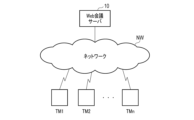
図1は、実施形態に係わるリモート会議システムの一例を示す図である。実施形態では、いわゆるWebサービスとして実現されるWeb会議システムについて採り上げる。このWeb会議システムは、ネットワークNWを経由して、複数のクライアントTM1~TMnからアクセスが可能なWeb会議サーバ10を備える。
図1は、実施形態に係わるリモート会議システムの一例を示す図である。実施形態では、いわゆるWebサービスとして実現されるWeb会議システムについて採り上げる。このWeb会議システムは、ネットワークNWを経由して、複数のクライアントTM1~TMnからアクセスが可能なWeb会議サーバ10を備える。
ネットワークNWは、例えばインターネットとそのアクセスネットワークとを含む。アクセスネットワークとしては、例えば4Gまたは5G等の規格を採用した公衆無線ネットワークや、公衆光通信ネットワーク等が代表的である。このほか、Wi-Fi(登録商標)等の無線ネットワークや有線LAN(Local Area Network)等が使用されてもよく、これらに限るものではない。
クライアントTM1~TMnは、Web会議サーバ10を経由するか、あるいはピアツーピアで相互に通信して、音声・映像などのメディアデータを授受し合う。例えばVPN(Virtual Private Network)をネットワークNWに形成しても良い。
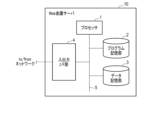
図2は、図1に示されるWeb会議サーバ10の一例を示すブロック図である。Web会議サーバ10は、コンピュータであって、プロセッサ1、プログラム記憶部2、データ記憶部3、入出力インタフェース(I/F)部4、および、これらを相互に接続するバス5を備える。入出力I/F部4は、Web会議サーバ10とクライアントTM1~TMnとの間にネットワークNWで通信リンクを設定し、各種のデータを授受する。プロセッサ1は、CPU(Central Processing Unit)やMPU(Micro Processing Unit)などの演算デバイスであり、プログラム記憶部2に記憶されるプログラムbの命令に従って、実施形態の処理機能を実現する。
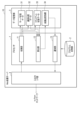
図3は、図2に示されるWeb会議サーバ10の一例を示す機能ブロック図である。図3において、プログラム記憶部2は、HDD(Hard Disk Drive)、またはSSD(Solid State Drive)等の不揮発性メモリであり、OS(Operating System)等の基本ソフトウェアに加えて、実施形態に係る処理を実現するためのプログラムを記憶する。すなわちプログラムは、Web会議サーバ10にインストールされることが可能である。
データ記憶部3は、ROM(Read Only Memory)やRAM(Random Access Memory)等の半導体メモリである。データ記憶部3は、サーバ状態データ31と、通信品質データ32と、クライアント状態データ33と、会議品質指標34とを記憶する。
データ記憶部3は、ROM(Read Only Memory)やRAM(Random Access Memory)等の半導体メモリである。データ記憶部3は、サーバ状態データ31と、通信品質データ32と、クライアント状態データ33と、会議品質指標34とを記憶する。
プロセッサ1は、この発明の一実施形態に係る処理機能として、収集部11、算出部12、および、通知部13を備える。収集部11、算出部12、および、通知部13は、プログラム記憶部2に記憶されたプログラムをプロセッサ1が実行することで実現される。つまりプログラムは、プロセッサ1を、収集部11として機能させる命令と、算出部12として機能させる命令と、通知部13として機能させる命令とを含む。
収集部11は、サーバ状態データ31と、通信品質データ32と、クライアント状態データ33とを収集し、データ記憶部3に記憶させる。ここで、サーバ状態データ31は、Web会議サーバ10の稼働状態を示すデータである。例えば、プロセッサ(CPU)の負荷、あるいはOSから出力されるパフォーマンスログの数値などを、サーバ状態データ31として利用することができる。
通信品質データ32は、Web会議サーバ10とクライアントTM1~TMnとの間のネットワークNWの通信品質を示すデータである。例えば、通信速度やエラー発生率、アラームの発生頻度、コネクションの安定度などを、通信品質データ32として利用することができる。
クライアント状態データ33は、クライアントTM1~TMnの稼働状態を示すデータである。Web会議に参加するためのクライアントアプリケーションの状態や、クライアント端末のCPUの稼働率などを、クライアント状態データ33として利用することができる。
算出部12は、サーバ状態データ31と、通信品質データ32と、クライアント状態データ33とに基づいて、それぞれのクライアント側でのWeb会議に係わるメディアの品質を示す指標を算出する。この種の指標としては、例えばQoE、あるいはQoMEX(Quality of Multimedia Experience:参考文献[1])などで表される、品質指標としてのMOS(Mean Opinion Score)値を利用することができる。
MOSは、非常に広く用いられている主観品質評価法といえる。MOS評価は、ITU-T勧告P.800に規定される「オピニオン評価」により、評価対象系の品質を測定する。
<作用>
次に、上記構成における作用を説明する。
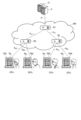
図4は、実施形態におけるWeb会議の環境の一例を示す図である。図4において、Aさん、Bさん、Cさん、Dさんが、それぞれクライアントTM1、TM2、TM3、TM4から会議に参加することを想定する。クライアントTM1、TM2は、ネットワークNW内のルータR2、R1を経由してWeb会議サーバ10と通信する。クライアントTM3、TM4は、ルータR3、R1を経由してWeb会議サーバ10と通信する。
次に、上記構成における作用を説明する。
図4は、実施形態におけるWeb会議の環境の一例を示す図である。図4において、Aさん、Bさん、Cさん、Dさんが、それぞれクライアントTM1、TM2、TM3、TM4から会議に参加することを想定する。クライアントTM1、TM2は、ネットワークNW内のルータR2、R1を経由してWeb会議サーバ10と通信する。クライアントTM3、TM4は、ルータR3、R1を経由してWeb会議サーバ10と通信する。
ここで、ネットワークNW内におけるそれぞれの通信区間を、符号を付して区別する。すなわち、Web会議サーバ10とルータR1との間を区間(A)、ルータR1とR2との間を区間(A12)、ルータR1とR3との間を区間(A13)、ルータR2とクライアントTM1との間を区間(AA2)、ルータR2とクライアントTM2との間を区間(AB2)、ルータR3とクライアントTM3との間を区間(AC3)、ルータR3とクライアントTM4との間を区間(AD3)とする。
さらに、クライアントTM1での品質を(MA)、クライアントTM2での品質を(MB)、クライアントTM3での品質を(MC)、クライアントTM4での品質を(MD)とする。
さらに、クライアントTM1での品質を(MA)、クライアントTM2での品質を(MB)、クライアントTM3での品質を(MC)、クライアントTM4での品質を(MD)とする。
図5は、上記構成のWeb会議サーバ10の処理手順の一例を示すフローチャートである。図5において、Web会議サーバ10のプロセッサ1は、ルータR1~R3から取得したネットワークNWの構成情報を参照し、各ユーザ(クライアント)とWeb会議サーバ10間のリンク情報をグラフとして出力する(ステップS1)。
次に、プロセッサ1は、サーバ状態データ31を自装置(ホスト)から取得し、通信品質データ32をネットワークNWから取得し、クライアント状態データ33を各クライアントTM1~TMnの端末から取得する。プロセッサ1は、取得したデータを、ネットワークNW内における通信区間ごとのデータに変換する(ステップS2)。
次に、プロセッサ1は、各クライアントTM1~TMnごとに、音声および映像のアラーム、QoE、サーバ性能の品質を計算する(ステップS3)。
以下の計算では例えば、Web会議サーバ10のパフォーマンスをPとすると、会議参加者の利用するVM(仮想マシン)のCPU負荷が(0.5~1.0未満)のとき(P=1.0)、CPU負荷が(>1.0以上)のとき、(P=0.5)とする。
ネットワークNWの通信区間におけるアラームをAとすると、アラームなしを(A=1.0)とし、端末、サーバ間NWでのMinorアラームありを(A=0.5)とし、Major警報を(A=0)とする。
クライアントにおける映像、音声(メディア)ごとの品質値QoEをM(MA、MB、MC、MD)とすると、(MOS値2~3)のとき(M=0.5)とし、(MOS値3~5)のとき(M=1.0)とする。
そして、各クライアントTM1~TM4のエンド・ツウ・エンドでの品質指標の値(MA、MB、MC、MD)を、各値の積[αP×βA×ΓM(0<α、β、Γ<1)]で表す。
プロセッサ1は、ステップS3での上記の計算の計算を踏まえ、品質Mが閾値以下であるかどうかを判断する(ステップS4)。すなわち、M≧0.5であれば、音声・映像OKとし、M<0.5であれば、音声・映像不可(NG)とする。
次に、プロセッサ1は、計算されたM(MA、MB、MC、MD)の各値を反映するレポートマトリクスを作成し(ステップS5)、各クライアントTM1~TM4にレポートを通知する(ステップS6)。
図6は、レポートマトリクスの一例を示す図である。レポートマトリクスを参照することで、それぞれのユーザは、例えば[音声:問題なし]を認知できたり、あるいは、[映像:遅れなし、PPTで8PTフォントの判読可能]を認知することができる。レポートマトリクスにおいて、P×AB2×A12×A13×AC3×MB×MC≧0.5であれば、映像OK、そうでなければ不可、といった情報を提示してもよい。
<効果>
以上述べたように、実施形態では、Web会議サーバ10の稼働状態を示すサーバ状態データと、Web会議サーバ10とクライアントTM1~TMnとの間のネットワークNWの通信品質を示す通信品質データと、クライアントTM1~TMnの稼働状態を示すクライアント状態データとを、Web会議サーバ10において収集する。Web会議サーバ10は、サーバ状態データと、通信品質データと、クライアント状態データとに基づいて、QoE、あるいはQoMEXなどのMOS値を算出する。
MOS値は、クライアント側でのリモート会議に係わるメディアの品質を示す指標として用いることができる。そして、このMOS値をレポートマトリクスの形式にまとめ、クライアントTM1~TMnに通知するようにした。
以上述べたように、実施形態では、Web会議サーバ10の稼働状態を示すサーバ状態データと、Web会議サーバ10とクライアントTM1~TMnとの間のネットワークNWの通信品質を示す通信品質データと、クライアントTM1~TMnの稼働状態を示すクライアント状態データとを、Web会議サーバ10において収集する。Web会議サーバ10は、サーバ状態データと、通信品質データと、クライアント状態データとに基づいて、QoE、あるいはQoMEXなどのMOS値を算出する。
MOS値は、クライアント側でのリモート会議に係わるメディアの品質を示す指標として用いることができる。そして、このMOS値をレポートマトリクスの形式にまとめ、クライアントTM1~TMnに通知するようにした。
すなわち実施形態では、Web会議サーバ10の情報、Web会議サーバ10とクライアントTM1~TMn間のネットワークNWの情報、およびクライアントTM1~TMn(会議アプリの状態を含む)の情報を連携させ、これらの情報に基づいて、ユーザ間で音声・映像のデータを適切に送受信できているかを客観的に評価し得る指標を算出するようにした。このようにしたので、例えばレポートマトリクスなどの形式で、音声や映像が適切に送受信できているかを、会議に参加するユーザにわかりやすく通知することができる。
既存の技術では、Web会議を利用する複数のユーザの間で、音声や映像が適切に送受信できているかを客観的に判断することは困難であった。たとえユーザから申告があっても、本当に映像が見えていないのか、音声にノイズが載っているのかを他のユーザから判断することは難しい。
現在、Web会議サービスの利用が増加し、利用する端末環境やネットワーク環境も多様化してきている。このような状況の中、ユーザごとの環境やネットワーク状況は異なり、映像や音声に対する認知の度合いも異なっている。そこで、実施形態では、Web会議サーバ、ネットワークNW、およびクライアントTM1~TMnの各データを連携させ、ユーザ間の音声、映像のデータが適切に送受信できているかを表す指標を、ユーザ一人ひとりに通知する。
これにより、実施形態によれば、Web会議システムにおけるエンド・ツウ・エンドでのユーザレポート機能を実現し、例えば、会議進行を正確に進められるといった効果を得ることができる。また、会議の映像、音声が適切に送受信できていない場合の対処が容易になる。さらには、会議に参加するユーザの一人ひとりの状況に応じた音声・映像の受信レベルを通知することができる。これらのことから実施形態によれば、リモート会議のユーザごとの品質をユーザの側で認知できる技術を提供することが可能になる。
なお、この発明は実施形態の記載に限定されるものではない。例えば、Web会議サーバ10は、実態を持つ物理サーバに限らず、仮想サーバとして実現されてもよい。この場合、Web会議はSaaS(Software as a Service)の形態で提供される。サーバ状態データとしてはvCPU(仮想CPU)のパフォーマンスに係わるデータを利用すればよい。
さらに、本発明は、実施段階ではその要旨を逸脱しない範囲で構成要素を変形して具体化できる。さらに、上記実施形態に開示されている複数の構成要素の適宜な組み合せにより種々の発明を形成できる。例えば、実施形態に示される全構成要素から幾つかの構成要素を削除してもよい。さらに、異なる実施形態に亘る構成要素を適宜組み合せてもよい。
<参考文献>
[1] K. De Moor, S. Arndt, D. Ammar, J. Voigt-Antons, A. Perkis and P. E. Heegaard, "Exploring diverse measures for evaluating QoE in the context of WebRTC," 2017 Ninth International Conference on Quality of Multimedia Experience (QoMEX), 2017, pp. 1-3, doi: 10.1109/QoMEX.2017.7965665.
[1] K. De Moor, S. Arndt, D. Ammar, J. Voigt-Antons, A. Perkis and P. E. Heegaard, "Exploring diverse measures for evaluating QoE in the context of WebRTC," 2017 Ninth International Conference on Quality of Multimedia Experience (QoMEX), 2017, pp. 1-3, doi: 10.1109/QoMEX.2017.7965665.
1…プロセッサ
2…プログラム記憶部
3…データ記憶部
4…入出力I/F部
5…バス
10…Web会議サーバ
11…収集部
12…算出部
13…通知部
31…サーバ状態データ
32…通信品質データ
33…クライアント状態データ
34…会議品質指標
TM1~TMn…クライアント。
2…プログラム記憶部
3…データ記憶部
4…入出力I/F部
5…バス
10…Web会議サーバ
11…収集部
12…算出部
13…通知部
31…サーバ状態データ
32…通信品質データ
33…クライアント状態データ
34…会議品質指標
TM1~TMn…クライアント。
Claims (7)
- ネットワークを介して複数のクライアントが参加可能なリモート会議の実行環境を形成するサーバ装置と、
前記サーバ装置の稼働状態を示すサーバ状態データと、前記サーバ装置と前記複数のクライアントとの間のネットワークの通信品質を示す通信品質データと、前記複数のクライアントの稼働状態を示すクライアント状態データとを収集する収集部と、
クライアント側での前記リモート会議に係わるメディアの品質を示す指標を、前記サーバ状態データと、前記通信品質データと、前記クライアント状態データとに基づいて算出する算出部と、
前記指標を前記複数のクライアントに通知する通知部とを具備する、リモート会議システム。 - 前記算出部は、前記メディアのMOS(Mean Opinion Score)値を算出する、請求項1に記載のリモート会議システム。
- 前記算出部は、前記複数のクライアントのエンド・ツウ・エンドでの前記メディアの指標を算出する、請求項1に記載のリモート会議システム。
- 前記通知部は、前記エンド・ツウ・エンドでの前記指標の値をマトリクスの形式に帳票化して前記複数のクライアントに通知する、請求項3に記載のリモート会議システム。
- ネットワークを介して複数のクライアントが参加可能なリモート会議の実行環境を形成するサーバ装置において、
前記サーバ装置の稼働状態を示すサーバ状態データと、前記サーバ装置と前記複数のクライアントとの間のネットワークの通信品質を示す通信品質データと、前記複数のクライアントの稼働状態を示すクライアント状態データとを収集する収集部と、
クライアント側での前記リモート会議に係わるメディアの品質を示す指標を、前記サーバ状態データと、前記通信品質データと、前記クライアント状態データとに基づいて算出する算出部と、
前記指標を前記複数のクライアントに通知する通知部とを具備する、サーバ装置。 - ネットワークを介して複数のクライアントが参加可能なリモート会議の実行環境を形成するサーバ装置により実行されるリモート会議方法であって、
前記サーバ装置が、当該サーバ装置の稼働状態を示すサーバ状態データと、前記サーバ装置と前記複数のクライアントとの間のネットワークの通信品質を示す通信品質データと、前記複数のクライアントの稼働状態を示すクライアント状態データとを収集する過程と、
前記サーバ装置が、クライアント側での前記リモート会議に係わるメディアの品質を示す指標を、前記サーバ状態データと、前記通信品質データと、前記クライアント状態データとに基づいて算出する過程と、
前記サーバ装置が、前記指標を前記複数のクライアントに通知する過程とを具備する、リモート会議方法。 - ネットワークを介して複数のクライアントが参加可能なリモート会議の実行環境を形成するサーバ装置のプロセッサにより実行可能なプログラムであって、
前記プロセッサに、前記サーバ装置の稼働状態を示すサーバ状態データと、前記サーバ装置と前記複数のクライアントとの間のネットワークの通信品質を示す通信品質データと、前記複数のクライアントの稼働状態を示すクライアント状態データとを収集させる命令と、
前記プロセッサに、クライアント側での前記リモート会議に係わるメディアの品質を示す指標を、前記サーバ状態データと、前記通信品質データと、前記クライアント状態データとに基づいて算出させる命令と、
前記プロセッサに、前記指標を前記複数のクライアントに通知させる命令とを含む、プログラム。
Priority Applications (2)
| Application Number | Priority Date | Filing Date | Title |
|---|---|---|---|
| PCT/JP2022/028787 WO2024023928A1 (ja) | 2022-07-26 | 2022-07-26 | リモート会議システム、サーバ装置、リモート会議方法、およびプログラム |
| JP2024536594A JPWO2024023928A1 (ja) | 2022-07-26 | 2022-07-26 |
Applications Claiming Priority (1)
| Application Number | Priority Date | Filing Date | Title |
|---|---|---|---|
| PCT/JP2022/028787 WO2024023928A1 (ja) | 2022-07-26 | 2022-07-26 | リモート会議システム、サーバ装置、リモート会議方法、およびプログラム |
Publications (1)
| Publication Number | Publication Date |
|---|---|
| WO2024023928A1 true WO2024023928A1 (ja) | 2024-02-01 |
Family
ID=89705629
Family Applications (1)
| Application Number | Title | Priority Date | Filing Date |
|---|---|---|---|
| PCT/JP2022/028787 Ceased WO2024023928A1 (ja) | 2022-07-26 | 2022-07-26 | リモート会議システム、サーバ装置、リモート会議方法、およびプログラム |
Country Status (2)
| Country | Link |
|---|---|
| JP (1) | JPWO2024023928A1 (ja) |
| WO (1) | WO2024023928A1 (ja) |
Citations (3)
| Publication number | Priority date | Publication date | Assignee | Title |
|---|---|---|---|---|
| JP2005244384A (ja) * | 2004-02-25 | 2005-09-08 | Nippon Telegr & Teleph Corp <Ntt> | 受信品質通知方法、受信品質通知装置及び受信品質通知プログラム |
| JP2005277683A (ja) * | 2004-03-24 | 2005-10-06 | Nippon Telegr & Teleph Corp <Ntt> | 多地点コミュニケーションの総合品質推定装置、方法、品質監視装置、および方法 |
| US20090225670A1 (en) * | 2008-03-04 | 2009-09-10 | Microsoft Corporation | Endpoint report aggregation in unified communication systems |
Family Cites Families (1)
| Publication number | Priority date | Publication date | Assignee | Title |
|---|---|---|---|---|
| JP7473807B2 (ja) * | 2020-07-07 | 2024-04-24 | 富士通株式会社 | 通信制御装置、通信制御方法および通信制御プログラム |
-
2022
- 2022-07-26 WO PCT/JP2022/028787 patent/WO2024023928A1/ja not_active Ceased
- 2022-07-26 JP JP2024536594A patent/JPWO2024023928A1/ja active Pending
Patent Citations (3)
| Publication number | Priority date | Publication date | Assignee | Title |
|---|---|---|---|---|
| JP2005244384A (ja) * | 2004-02-25 | 2005-09-08 | Nippon Telegr & Teleph Corp <Ntt> | 受信品質通知方法、受信品質通知装置及び受信品質通知プログラム |
| JP2005277683A (ja) * | 2004-03-24 | 2005-10-06 | Nippon Telegr & Teleph Corp <Ntt> | 多地点コミュニケーションの総合品質推定装置、方法、品質監視装置、および方法 |
| US20090225670A1 (en) * | 2008-03-04 | 2009-09-10 | Microsoft Corporation | Endpoint report aggregation in unified communication systems |
Also Published As
| Publication number | Publication date |
|---|---|
| JPWO2024023928A1 (ja) | 2024-02-01 |
Similar Documents
| Publication | Publication Date | Title |
|---|---|---|
| US12250259B2 (en) | Automatic diagnostics alerts | |
| US9558451B2 (en) | Adapting parameters of a call in progress with a model that predicts call quality | |
| JP2023011867A (ja) | ネットワークのセキュリティモニタリング方法、ネットワークのセキュリティモニタリング装置及びシステム | |
| US7974212B2 (en) | Determining quality monitoring alerts in unified communication systems | |
| CN107277013B (zh) | 对等网络中的直播系统及节点管理方法 | |
| US10630531B2 (en) | Propagating state information to network nodes | |
| US20100228824A1 (en) | Distributed server selection for online collaborative computing sessions | |
| André et al. | Comparative study of WebRTC open source SFUs for video conferencing | |
| US20060020697A1 (en) | System and method for presenting chat QoS indication to user | |
| US9369894B2 (en) | Analysis of a communication event | |
| CN113784081B (zh) | 用于动态选择编解码器的方法、介质和系统 | |
| US20190166361A1 (en) | Videoconference Equipment Monitoring System | |
| US20160043924A1 (en) | System and method for monitoring user activity on a plurality of networked computing devices | |
| US7584182B2 (en) | Determining cardinality of a parameter using hash values | |
| US7743123B2 (en) | Aggregating information from a cluster of peers | |
| CN106790689A (zh) | 基于对等网络的节点推荐方法、服务器和客户端 | |
| JP4460506B2 (ja) | ユーザ体感品質推定装置、方法、およびプログラム | |
| JP4460523B2 (ja) | ユーザ体感品質推定装置、方法、およびプログラム | |
| JP4600324B2 (ja) | ポリシー管理システム、ポリシーマネージャ、ポリシーエージェント、ルール生成方法及びプログラム | |
| JP3910969B2 (ja) | 多地点コミュニケーションの総合品質推定装置、方法、品質監視装置、および方法 | |
| CN114443416B (zh) | 监控变频采样方法、设备、系统及存储介质 | |
| CN116320591B (zh) | 投屏方法、装置、设备以及存储介质 | |
| CN114760191B (zh) | 数据服务质量预警方法、系统、设备与可读存储介质 | |
| JP5033227B2 (ja) | トラヒック制御装置、トラヒック制御方法、およびそのプログラム | |
| CN109327329B (zh) | 数据模型更新方法及装置 |
Legal Events
| Date | Code | Title | Description |
|---|---|---|---|
| 121 | Ep: the epo has been informed by wipo that ep was designated in this application |
Ref document number: 22953025 Country of ref document: EP Kind code of ref document: A1 |
|
| WWE | Wipo information: entry into national phase |
Ref document number: 2024536594 Country of ref document: JP |
|
| NENP | Non-entry into the national phase |
Ref country code: DE |
|
| 122 | Ep: pct application non-entry in european phase |
Ref document number: 22953025 Country of ref document: EP Kind code of ref document: A1 |