WO2024010069A1 - Uv-curable composition, hard coat and hard coated article - Google Patents
Uv-curable composition, hard coat and hard coated article Download PDFInfo
- Publication number
- WO2024010069A1 WO2024010069A1 PCT/JP2023/025161 JP2023025161W WO2024010069A1 WO 2024010069 A1 WO2024010069 A1 WO 2024010069A1 JP 2023025161 W JP2023025161 W JP 2023025161W WO 2024010069 A1 WO2024010069 A1 WO 2024010069A1
- Authority
- WO
- WIPO (PCT)
- Prior art keywords
- acrylate
- meth
- composition
- group
- hard coat
- Prior art date
- Legal status (The legal status is an assumption and is not a legal conclusion. Google has not performed a legal analysis and makes no representation as to the accuracy of the status listed.)
- Ceased
Links
Classifications
-
- C—CHEMISTRY; METALLURGY
- C08—ORGANIC MACROMOLECULAR COMPOUNDS; THEIR PREPARATION OR CHEMICAL WORKING-UP; COMPOSITIONS BASED THEREON
- C08F—MACROMOLECULAR COMPOUNDS OBTAINED BY REACTIONS ONLY INVOLVING CARBON-TO-CARBON UNSATURATED BONDS
- C08F222/00—Copolymers of compounds having one or more unsaturated aliphatic radicals, each having only one carbon-to-carbon double bond, and at least one being terminated by a carboxyl radical and containing at least one other carboxyl radical in the molecule; Salts, anhydrides, esters, amides, imides, or nitriles thereof
- C08F222/10—Esters
- C08F222/1006—Esters of polyhydric alcohols or polyhydric phenols
-
- C—CHEMISTRY; METALLURGY
- C08—ORGANIC MACROMOLECULAR COMPOUNDS; THEIR PREPARATION OR CHEMICAL WORKING-UP; COMPOSITIONS BASED THEREON
- C08F—MACROMOLECULAR COMPOUNDS OBTAINED BY REACTIONS ONLY INVOLVING CARBON-TO-CARBON UNSATURATED BONDS
- C08F220/00—Copolymers of compounds having one or more unsaturated aliphatic radicals, each having only one carbon-to-carbon double bond, and only one being terminated by only one carboxyl radical or a salt, anhydride ester, amide, imide or nitrile thereof
- C08F220/02—Monocarboxylic acids having less than ten carbon atoms; Derivatives thereof
- C08F220/10—Esters
- C08F220/22—Esters containing halogen
- C08F220/24—Esters containing halogen containing perhaloalkyl radicals
-
- C—CHEMISTRY; METALLURGY
- C08—ORGANIC MACROMOLECULAR COMPOUNDS; THEIR PREPARATION OR CHEMICAL WORKING-UP; COMPOSITIONS BASED THEREON
- C08F—MACROMOLECULAR COMPOUNDS OBTAINED BY REACTIONS ONLY INVOLVING CARBON-TO-CARBON UNSATURATED BONDS
- C08F222/00—Copolymers of compounds having one or more unsaturated aliphatic radicals, each having only one carbon-to-carbon double bond, and at least one being terminated by a carboxyl radical and containing at least one other carboxyl radical in the molecule; Salts, anhydrides, esters, amides, imides, or nitriles thereof
- C08F222/10—Esters
- C08F222/1006—Esters of polyhydric alcohols or polyhydric phenols
- C08F222/102—Esters of polyhydric alcohols or polyhydric phenols of dialcohols, e.g. ethylene glycol di(meth)acrylate or 1,4-butanediol dimethacrylate
-
- C—CHEMISTRY; METALLURGY
- C08—ORGANIC MACROMOLECULAR COMPOUNDS; THEIR PREPARATION OR CHEMICAL WORKING-UP; COMPOSITIONS BASED THEREON
- C08F—MACROMOLECULAR COMPOUNDS OBTAINED BY REACTIONS ONLY INVOLVING CARBON-TO-CARBON UNSATURATED BONDS
- C08F222/00—Copolymers of compounds having one or more unsaturated aliphatic radicals, each having only one carbon-to-carbon double bond, and at least one being terminated by a carboxyl radical and containing at least one other carboxyl radical in the molecule; Salts, anhydrides, esters, amides, imides, or nitriles thereof
- C08F222/10—Esters
- C08F222/1006—Esters of polyhydric alcohols or polyhydric phenols
- C08F222/106—Esters of polycondensation macromers
-
- C—CHEMISTRY; METALLURGY
- C08—ORGANIC MACROMOLECULAR COMPOUNDS; THEIR PREPARATION OR CHEMICAL WORKING-UP; COMPOSITIONS BASED THEREON
- C08F—MACROMOLECULAR COMPOUNDS OBTAINED BY REACTIONS ONLY INVOLVING CARBON-TO-CARBON UNSATURATED BONDS
- C08F285/00—Macromolecular compounds obtained by polymerising monomers on to preformed graft polymers
-
- C—CHEMISTRY; METALLURGY
- C08—ORGANIC MACROMOLECULAR COMPOUNDS; THEIR PREPARATION OR CHEMICAL WORKING-UP; COMPOSITIONS BASED THEREON
- C08F—MACROMOLECULAR COMPOUNDS OBTAINED BY REACTIONS ONLY INVOLVING CARBON-TO-CARBON UNSATURATED BONDS
- C08F290/00—Macromolecular compounds obtained by polymerising monomers on to polymers modified by introduction of aliphatic unsaturated end or side groups
- C08F290/02—Macromolecular compounds obtained by polymerising monomers on to polymers modified by introduction of aliphatic unsaturated end or side groups on to polymers modified by introduction of unsaturated end groups
- C08F290/06—Polymers provided for in subclass C08G
-
- C—CHEMISTRY; METALLURGY
- C09—DYES; PAINTS; POLISHES; NATURAL RESINS; ADHESIVES; COMPOSITIONS NOT OTHERWISE PROVIDED FOR; APPLICATIONS OF MATERIALS NOT OTHERWISE PROVIDED FOR
- C09D—COATING COMPOSITIONS, e.g. PAINTS, VARNISHES OR LACQUERS; FILLING PASTES; CHEMICAL PAINT OR INK REMOVERS; INKS; CORRECTING FLUIDS; WOODSTAINS; PASTES OR SOLIDS FOR COLOURING OR PRINTING; USE OF MATERIALS THEREFOR
- C09D4/00—Coating compositions, e.g. paints, varnishes or lacquers, based on organic non-macromolecular compounds having at least one polymerisable carbon-to-carbon unsaturated bond ; Coating compositions, based on monomers of macromolecular compounds of groups C09D183/00 - C09D183/16
- C09D4/06—Organic non-macromolecular compounds having at least one polymerisable carbon-to-carbon unsaturated bond in combination with a macromolecular compound other than an unsaturated polymer of groups C09D159/00 - C09D187/00
Definitions
- the present invention relates to a UV-curable composition, a hard coat which is obtainable by curing this composition, an article which includes the hard coat on a surface thereof and a process for producing the article.
- Coatings including hard coats are conventionally used for covering the surface of a substrate in order to improve the mechanical strength of the substrate, such as scratch or mar resistance.
- Functional coatings impart specific decorative and/or functional properties to the substrate.
- functional additives can be incorporated into the coating formulation to change the surface properties of a substrate, such as corrosion resistance, or haptics and wear resistance, or surface energy of the substrate.
- formulations include a resin component (also referred to as binder), a solvent and further additives.
- Coatings may be applied to substrates using commonly known techniques and are then hardened (cured) by means of high temperature and/or irradiation by light such as UV light.
- Hard coats are selected based on their desired properties for the intended use. For example, decorative hard coats usually need to have good visual appearance, such as colour or gloss, which should be stable against weather conditions.
- a known approach for protection of the visual appearance in commercially available hard coats is the addition of UV-absorbers and/or hindered amine light stabilizers (HALS).
- omniophobic relates to a surface that repels virtually any liquid.
- omniophobic hard coats exhibit both hydrophobicity and oleophobicity and are known as easy to clean.
- commercially available hard coats having omniophobic properties cannot withstand harsh chemical or physical stresses. Specifically, when omniophobic hard coats are subjected to harsh conditions such as chemical agents or weather (e.g., high temperature and/or high humidity), impaired functional surface properties are observed.
- hard coats in automotive sensor or display applications need to meet specific standards regarding e.g. omniphobicity (i.e. both hydrophobicity and oleophobicity), cleaning property and scratch resistance and need to exhibit high durability even under harsh conditions.
- omniphobicity i.e. both hydrophobicity and oleophobicity
- cleaning property and scratch resistance need to exhibit high durability even under harsh conditions.
- composition preferably a UV-curable composition, which allows the formation of a hard coat having excellent surface properties in terms of durable surface functionality and in particular omniophobicity that can be maintained over a long period of time even if the hard coat is exposed to harsh conditions.
- the present invention addresses all the requirements described above, fulfilling them by using a specific combination of components for a UV-curable composition from which a hard coat can be formed which has not been considered in the field of coatings before. In this way, the present invention has been completed.
- the UV-curable composition comprises a combination of (a) 75-95 wt% of a (meth)acrylate-based curable resin composition, comprising (i) 40-60 wt%, based on the total amount of (a), of one or more acrylate ester with 3 or more acrylate groups; and (ii) 40-60 wt%, based on the total amount of (a), of (meth)acrylate-based urethane or (meth)acrylate acid-based ester or (meth)acrylate-based epoxy or (meth)acrylate-based silicone oligomers; and (b) 5-25 wt% of a mixture of (i) 0.5-50.0 wt%, based on the total amount of (b), of a compound having a perfluoropolyether (PFPE) group and a curable moiety; and (ii) 50.0-99.5 wt%, based on the total amount of (b), of at least one di(meth)acrylate monomer which is
- the present invention also provides a hard coat which is obtainable by curing the UV-curable composition with UV light.
- the present invention relates to a surface-treated article which comprises a substrate and the hard coat of the invention on one or more surfaces thereof, as well as a process for producing such article.
- the UV-curable composition in accordance with the present invention comprises (a) 75-95 wt% of a (meth)acrylate-based curable resin composition, comprising (i) 40-60 wt%, based on the total amount of (a), of one or more acrylate ester with 3 or more acrylate groups, and (ii) 40-60 wt%, based on the total amount of (a), of (meth)acrylate-based urethane or (meth)acrylate acid-based ester or (meth)acrylate-based epoxy or (meth)acrylate-based silicone oligomers, and (b) 5-25 wt% of a mixture of (i) 0.5-50.0 wt%, based on the total amount of (b), of a compound having a perfluoropolyether group and a curable moiety, and (ii) 50.0-99.5 wt%, based on the total amount of (b), of at least one di(meth)acrylate mono
- NV non-volatile matter
- the (meth)acrylate-based curable resin composition (a) is present in the UV-curable composition in an amount of 75-95 wt%, based on the total non-volatile matter in the composition.
- the (meth)acrylate-based curable resin composition (a) is present in the UV-curable composition in an amount of 80-90 wt%, based on the non-volatile matter of the UV-curable composition.
- the (meth)acrylate-based curable resin composition (a) comprises (i) one or more acrylate ester with 3 or more acrylate groups.
- the (i) one or more acrylate ester is present in an amount of 40-60 wt%, based on the total amount of the (meth)acrylate-based curable resin composition (a).
- the acrylate esters are one or more selected from pentaerythritol triacrylate (PET3A), pentaerythritol tetraacrylate (PET4a), dipentaerythritol pentaacrylate (DPPA), dipentaerythritol hexaacrylate (DPHA), tripentaerythritol heptaacrylate (TP7A), tripentaerythritol octaacrylate (TPOA) and trimethylolpropane triacrylate (TMPTA).
- PET3A pentaerythritol triacrylate
- PET4a pentaerythritol tetraacrylate
- DPPA dipentaerythritol pentaacrylate
- DPHA dipentaerythritol hexaacrylate
- TP7A tripentaerythritol heptaacrylate
- TPOA tripentaerythrito
- the acrylate ester present in the (meth)acrylate-based curable resin composition (a) may comprise a combination of PET4A and TMPTA.
- the acrylate ester present in the (meth)acrylate-based curable resin composition (a) may comprise a combination of PET3A, PET4A and TPMTA.
- the acrylate ester present in the (meth)acrylate-based curable resin composition (a) may comprise a combination of PET3A, PET4A, DPPA, DPHA, TPOA and TP7A.
- any suitable combination of esters may be comprised in the (meth)acrylate-based curable resin composition (a).
- the (meth)acrylate-based curable resin composition (a) comprises (ii) at least one of (meth)acrylate-based urethane, (meth)acrylate acid-based ester, (meth)acrylate-based epoxy and (meth)acrylate-based silicone oligomers in an amount of 40-60 wt%, based on the total amount of the (meth)acrylate-based curable resin composition (a).
- the oligomer is at least one of a (meth)acrylate-based urethane oligomer, a (meth)acrylate acid-based ester oligomer and a (meth)acrylate-based epoxy oligomer.
- the (meth)acrylate-based curable resin composition (a) may further comprise one or more polymerizable monomers.
- the polymerizable monomers include alkyl vinyl ether, acryloyl group-containing monomers and (meth)acrylate monomers having one or two acrylate groups.
- alkyl vinyl ether examples include cyclohexylmethyl vinyl ether, isobutyl vinyl ether, cyclohexyl vinyl ether, and ethyl vinyl ether, glycidyl vinyl ether, vinyl acetate and vinyl pivalate.
- acryloyl group-containing monomer is (meth)acryloylmorpholine, such as 4-acryloylmorpholine.
- Examples of the (meth)acrylate monomers include methyl (meth)acrylate, ethyl (meth)acrylate, n-propyl (meth)acrylate, isopropyl (meth)acrylate, n-butyl (meth)acrylate, isobutyl (meth)acrylate, sec-butyl (meth)acrylate, t-butyl (meth)acrylate, n-pentyl (meth)acrylate, 3-methyl butyl (meth)acrylate, n-hexyl (meth)acrylate, 2-ethyl-n-hexyl (meth)acrylate, n-octyl (meth)acrylate, cyclohexyl (meth)acrylate, isobornyl (meth)acrylate, benzyl (meth)acrylate, 2-hydroxyethyl (meth)acrylate, 2-hydroxypropyl (meth)acrylate, 3-hydroxypropyl (meth)acryl
- Epoxy (meth)acrylate is one obtained by adding a (meth)acryloyl group(s) to an epoxy group(s), and common ones are those obtained by using bisphenol A, bisphenol F, phenol novolac, or an alicyclic compound as a starting material.
- Examples of polyhydric alcohol constituting a polyester unit of polyester (meth)acrylate include 1,4-butanediol, 1,6-hexanediol, trimethylolpropane, pentaerythritol, and dipentaerythritol, and examples of polybasic acid include phthalic acid, adipic acid, maleic acid, trimellitic acid, itaconic acid, succinic acid, terephthalic acid, and alkenyl succinic acid.
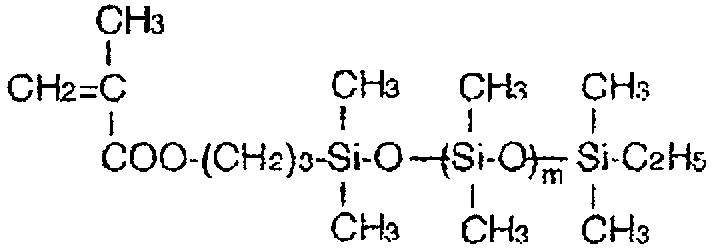
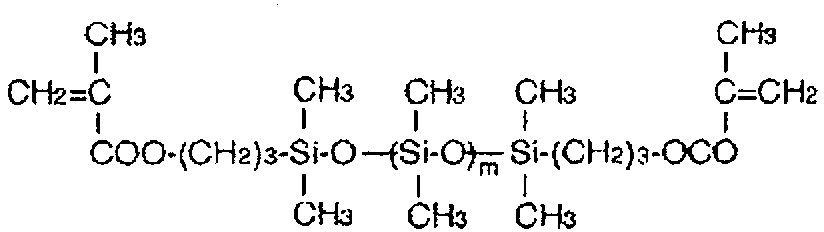
- Silicon (meth)acrylate is dimethyl polysiloxane having a molecular weight of 1,000 to 10,000 and being modified with a (meth)acryloyl group(s) at its one or both terminals, and examples thereof include the following compounds:
- alkoxysilane group-containing (meth)acrylate monomers include 3-(meth)acryloyloxypropyl trichlorosilane, 3-(meth)acryloyloxypropyl trimethoxysilane, 3-(meth)acryloyloxypropyl triethoxysilane, 3-(meth)acryloyloxypropyl triisopropoxysilane, (also referred to as (triisopropoxysilyl) propyl methacrylate (abbreviation: TISMA) and (triisopropoxysilyl) propyl acrylate), 3-(meth)acryloxyisobutyl trichlorosilane, 3-(meth)acryloxyisobutyl triethoxysilane and 3-(meth)acryloxyisobutyl triisopropoxy 3-(meth)acryloxyisobutyl trimethoxysisilane.
- TISMA triisopropoxysilyl propyl methacrylate
- the curable (meth)acrylate-based resin composition (a) is a urethane (meth)acrylate-based resin composition.
- the curable resin composition (a) comprises one or more of the above-mentioned acrylate esters (a)(i) and further comprises (meth)acrylate-based urethane oligomers, as well as optionally polymers and oligomers which are derived from the acrylate monomers.
- the resin composition may comprise further components such as polysiloxane urethane acrylate oligomers.
- UV525 PGM and UV525 M available from Showa Denko Materials Co., Ltd., Japan
- SILFORT* UVHC7400 available from Momentive Performance Materials GmbH, Germany
- Beamset502H, 504H, 505A-6, 550B, 575CB, 577, and 1402 available from Arakawa Chemical Industries, Ltd.
- the (meth)acrylate-based curable resin composition (a) of the present invention does not contain F-based compounds. In the sense of the present invention, this means that no fluorine-based (“F-based”) compounds are contained.
- the UV-curable composition of the present invention comprises in addition to (a) the (meth)acrylate-based curable resin a mixture (b) of (i) a compound having a perfluoropolyether (PFPE) group and a curable moiety, and (ii) a specific di(meth)acrylate monomer.
- PFPE perfluoropolyether
- This mixture (b) is present in the UV-curable composition in an amount of 5-25 wt%, based on the total non-volatile matter in the composition.
- the mixture (b) is present in the UV-curable composition in an amount of 10-20 wt%, based on the total non-volatile matter in the composition.
- the compound having a perfluoropolyether (PFPE) group and a curable moiety (b)(i) is not particularly limited.
- the curable moiety includes but is not limited to an allyl group, a cinnamic acid group, a sorbic acid group, a substituted or unsubstituted acryloyl group and a (meth)acryloyl group.
- the perfluoropolyether group is for example represented by the following formula: -(OC 6 F 12 ) s -(OC 5 F 10 ) t -(OC 4 F 8 ) a -(OC 3 F 6 ) b -(OC 2 F 4 ) c -(OCF 2 ) d -.
- s, t, a, b, c, and d are each independently an integer of 0 or more and 200 or less, and the sum of s, t, a, b, c, and d is at least 1.
- s, t, a, b, c, and d are each independently an integer of 0 or more and 100 or less.
- the sum of s, t, a, b, c, and d is 5 or more, more preferably 10 or more.
- the sum of s, t, a, b, c, and d is 200 or less, more preferably 100 or less, for example, 10 or more and 200 or less, more specifically 10 or more and 100 or less.
- the order of occurrence of the respective repeating units in parentheses with the subscript s, t, a, b, c, or d is not limited in the formula.
- repeating units may be straight or branched, but are preferably straight.
- Examples of the -(OC 6 F 12 )- group include -(OCF 2 CF 2 CF 2 CF 2 CF 2 CF 2 )-, -(OCF(CF 3 )CF 2 CF 2 CF 2 )-, -(OCF 2 CF(CF 3 )CF 2 CF 2 CF 2 )-, -(OCF 2 CF 2 CF(CF 3 )CF 2 CF 2 )-, -(OCF 2 CF 2 CF 2 CF(CF 3 )CF 2 )- and -(OCF 2 CF 2 CF 2 CF(CF 3 ))-, preferably -(OCF 2 CF 2 CF 2 CF 2 CF 2 )-.
- Examples of the -(OC 5 F 10 )- group include -(OCF 2 CF 2 CF 2 CF 2 CF 2 )-, -(OCF(CF 3 )CF 2 CF 2 CF 2 )-, -(OCF 2 CF(CF 3 )CF 2 CF 2 )-, -(OCF 2 CF 2 CF(CF 3 )CF 2 )- and -(OCF 2 CF 2 CF 2 CF(CF 3 ))-, preferably-(OCF 2 CF 2 CF 2 CF 2 CF 2 )-.
- the -(OC 4 F 8 )- group may be any of-(OCF 2 CF 2 CF 2 CF 2 )-, -(OCF(CF 3 )CF 2 CF 2 )-, -(OCF 2 CF(CF 3 )CF 2 )-,-(OCF 2 CF 2 CF(CF 3 ))-, -(OC(CF 3 ) 2 CF 2 )-, -(OCF 2 C(CF 3 ) 2 )-, -(OCF(CF 3 )CF(CF 3 ))-, -(OCF(C 2 F 5 )CF 2 )-, and -(OCF 2 CF(C 2 F 5 ))-, but is preferably -(OCF 2 CF 2 CF 2 CF 2 )-.
- the -(OC 3 F 6 )- group may be, for example, any of -(OCF 2 CF 2 CF 2 )-, -(OCF(CF 3 )CF 2 )-, and-(OCF 2 CF(CF 3 ))-, preferably -(OCF 2 CF 2 CF 2 )-.
- the -(OC 2 F 4 )- group may be any of -(OCF 2 CF 2 )- and -(OCF(CF 3 ))-, but is preferably -(OCF 2 CF 2 )-.
- the compound having a PFPE group and a curable moiety (b)(i) comprises an isocyanate or an isocyanurate structure.
- the compound (b)(i) is a compound of formula (1): wherein R f1 is C 1-16 alkyl optionally substituted by F; R F is a divalent perfluoropolyether group; q is 0 or 1; X a is a single bond or a divalent organic group; R A1 is an OR Ac containing group; R Ac is a (meth)acrylate group; X b is a divalent organic group containing at least two hetero atoms; and R B is R f1 -X a - or R A1 -X b -.
- R f1 is substituted by F, and may be linear or branched C 1-6 alkyl, preferably C 1-2 alkyl. More preferably, R f1 is linear C 1-6 alkyl, and even more preferable C 1-3 alkyl.
- R F is a divalent perfluoropolyether group which has the same definition as described above.
- R F may be represented by one of the following structures (f1), (f2), (f3), (f4) or (f5): -(OC 3 F 6 ) d - (f1) wherein, in formula (f1), d is an integer from 1-200; -(OC 4 F 8 ) c -(OC 3 F 6 ) d -(OC 2 F 4 ) e -(OCF 2 ) f - (f2) wherein, in formula (f2), c and d are independently integers from 0-30, e and f are independently integers from 1-200, the sum of c, d, e and f is an integer from 10-200; and the order of occurrence of the repeating units in parentheses with the subscripts c, d, e or f in parentheses is arbitrary; -(R 6 -R 7 ) g- (
- R A1 is -R A6 -R A4 -OR AC or -R A6 -R A5 -(OR AC ) 2 , wherein R A4 is a C 1-10 alkylene group and preferably C 2-6 alkylene, more preferably C 2-4 alkylene, R A5 is a trivalent C 1-10 hydrocarbon group and preferably a trivalent C 4-6 hydrocarbon group, R A6 is a single bond or -C 1-10 -alkylene-O- and more preferably a single bond, and R Ac is defined as above.
- X b is represented by -X c -X d -, wherein X c is a divalent organic group containing a heteroatom and X d is -CO-NR d2 -, -OCO-NR d2 -, -NR d2 -CO- or -NR d2 COO- and is more preferably -CO-NR d2 -, wherein R d2 is a hydrogen or a C 1-6 alkyl group.
- the compound having a PFPE group and a curable moiety (b)(i) has an isocyanate structure.
- the compound (b)(i) is preferably obtainable by reacting (A) a triisocyanate prepared by trimerizing a diisocyanate and (B) a combination of at least two active hydrogen-containing compounds, which combination comprises (B-1) at least one perfluoropolyether having an active hydrogen and (B-2) at least one monomer having an active hydrogen and a carbon-carbon double bond.
- the reaction of the triisocyanate (A) with the component (B) gives a perfluoropolyether-containing compound having at least one carbon-carbon double bond.
- an active hydrogen refers to a hydrogen atom which is attached to a more electro-negative atom, such as for example a hydrogen of a hydroxyl group.
- the triisocyanate (A) may be a triisocyanate which is prepared by trimerizing a diisocyanate.
- the diisocyanate for preparing the triisocyanate (A) include diisocyanates having aliphatically bonded isocyanate groups, for example, hexamethylene diisocyanate, isophorone diisocyanate, xylylene diisocyanate, hydrogenated xylylene diisocyanate and dicyclohexylmethane diisocyanate; and diisocyanates having aromatically bonded isocyanate groups, for example, tolylene diisocyanate, diphenylmethane diisocyanate, polymethylenepolyphenyl polyisocyanate, tolidine diisocyanate and naphthalene diisocyanate.
- (B-1) is of the general formula CYF 2 -[CF 2 ] a -[O(CF 2 ) 3 ] b -[O(CF 2 ) 2 ] c -COC(CF 3 )CF 2 ] d -[OCF 2 ] e -[O(CF 2 ) 2 ] f -[O(CF 2 ) 3 ] g -OCZF-(CF 2 ) h -CH 2 OH, wherein Y and Z are F or -CF 3 , a is an integer of 1-16, c is an integer of 0-5, b, d, e, f and g are independently an integer of 0-200 and h is an integer of 0-16.
- the monomer (B-2) having an active hydrogen and carbon-carbon double bond is preferably a (meth)acrylate ester or vinyl monomer with an active hydrogen, particularly a hydroxyl group.
- the compound having a PFPE group and a curable moiety (b)(i) which has an isocyanate group is obtainable by commonly known methods, such as the method described in EP 1 411 073 A1.
- the compound having a PFPE group and a curable moiety (b)(i) is present in an amount of 0.5-50.0 wt%, preferably 0.5-25.0 wt%, based on the total amount of (b).
- the compound having a PFPE group and a curable moiety (b)(i) is preferably present in an amount of 0.01-5 wt%, preferably 0.1-2 wt%, based on the total NV matter of the UV-curable composition.
- Di(meth)acrylate monomer (b)(ii) may be a diacrylate monomer, a dimethacrylate monomer or an acrylate-methacrylate monomer.
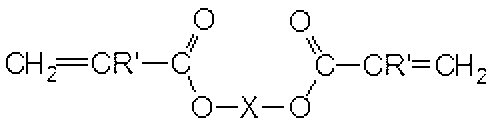
- the di(meth)acrylate monomer (b)(ii) is represented by the formula wherein R' each independently is H, methyl or halogen , and X is linear C 2-16 -alkyl, (CH 2 ) n -C 3-16 -cycloalkyl-(CH 2 ) m, wherein n and m are independently an integer of 1-18, or linear (poly)alkyleneoxide having a methylene group on both terminal ends.
- linear in the sense of the present invention means that the chain connecting the (meth)acrylate is not branched and none of the carbon atoms present in the chain carries substituents other than hydrogen atoms.
- X may be ethylene (CH 2 CH 2 ), n-propylene (CH 2 CH 2 CH 2 ), n-butylene (CH 2 CH 2 CH 2 CH 2 ), n-pentylene (CH 2 CH 2 CH 2 CH 2 CH 2 ) or n-hexylene (CH 2 CH 2 CH 2 CH 2 CH 2 CH 2 ).
- X may be a (poly)alkyleneoxide group having a methylene group on both terminal ends.
- the alkylene in the (poly)alkyleneoxide group may be ethylene or propylene.
- di(meth)acrylate monomer (b)(ii) represented by the above formula examples include 1,6-hexanediol diacrylate, 1,5-pentanediol diacrylate, 1,4-butanediol diacrylate, 1,3-propandiol diacrylate, 1,6-hexanediol dimethacrylate, 1,5-pentanediol dimethacrylate, 1,4-butanediol dimethacrylate, 1,3-propandiol dimethacrylate, ethylene glycol diacrylate, diethylene glycol diacrylate, triethylene glycol diacrylate, tetraethylene glycol diacrylate, poly(ethylene glycol) diacrylate, dipropylene glycol diacrylate, tripropylene glycol diacrylate, poly(propylene glycol) diacrylate, ethylene glycol dimethacrylate, diethylene glycol dimethacrylate, triethylene glycol dimethacrylate, tetra
- HDDA 1,6-hexanediol diacrylate
- the di-(meth)acrylate monomer (b)(ii) is present in an amount of 50.0-99.5 wt%, preferably 75.0-99.5 wt%, based on the total amount of (b).
- the di-(meth)acrylate monomer (b) is preferably present in an amount of 1-20 wt%, more preferably 10-18 wt% and even more preferably 14-16 wt%, based on the total NV matter of the UV-curable composition.
- the present UV-curable composition may contain further components which are commonly known to be useful additives in resin compositions, including but not limited to solvents, photopolymerization initiators, antioxidants, thickening agents, levelling agents, antifoams, antistatics, antifogging agents, ultraviolet absorbers, light stabilizers, pigments, dyes, inorganic fine particles such as silica, fillers such as aluminum paste, talc, glass frit, and metal powder, and polymerization inhibitors such as butylated hydroxytoluene (BHT) and phenothiazine (PTZ).
- solvents solvents
- photopolymerization initiators antioxidants, thickening agents, levelling agents, antifoams, antistatics, antifogging agents, ultraviolet absorbers, light stabilizers, pigments, dyes, inorganic fine particles such as silica, fillers such as aluminum paste, talc, glass frit, and metal powder
- BHT butylated hydroxytoluene
- the UV-curable composition of the invention may further include one or more agents, such as (c) an organic solvent, (d) a photo-polymerization initiator, (e) a UV-absorber (UVA), (f) a hindered amine light stabilizer (HALS), (g) a levelling agent, (h) an anti-foaming agent and (i) wetting agents.
- agents such as (c) an organic solvent, (d) a photo-polymerization initiator, (e) a UV-absorber (UVA), (f) a hindered amine light stabilizer (HALS), (g) a levelling agent, (h) an anti-foaming agent and (i) wetting agents.
- agents such as (c) an organic solvent, (d) a photo-polymerization initiator, (e) a UV-absorber (UVA), (f) a hindered amine light stabilizer (HALS), (g) a levelling agent, (h) an
- the organic solvent (c) which may be present in the UV-curable composition is not particularly limited, but examples include non-fluorinated organic solvents and fluorinated organic solvents, including ketones, esters, amides, sulfoxides, ethers, hydrocarbons, and fluorine-based solvents, such as acetone, methyl ethyl ketone, methyl isobutyl ketone, cyclohexanone, ethyl acetate, butyl acetate, propylene glycol monomethyl ether acetate, dimethylformamide, dimethylacetamide, N-methylpyrrolidone, dimethyl sulfoxide, diethyl ether, diisopropyl ether, 1-methoxy-2-propanol, tetrahydrofuran, dioxane, toluene, xylene, 1,3- tetrahydrofuran, dioxane, toluene, xylene, 1,3
- organic solvents may be used alone or a combination of two or more organic solvents may be used.
- the organic solvent includes 1-methoxy-2-propanol (also referred to as propylene glycol methyl ether, PGME) and/or 1,1,2,2,3,3,4-heptafluorocyclopentane.
- the photo-polymerization initiator (d) which may be present in the UV-curable composition is not particularly limited as long as it functions as a catalyst initiating curing (cross-linking reaction) of a curable moiety (for example, a carbon-carbon double bond).
- the photo-polymerization initiator (d) in the UV-curable composition of the present invention can be appropriately selected depending on the components, a type or irradiation intensity of an active energy ray used (range of wavelength, etc.).
- examples of the initiator include acetophenones, such as acetophenone, chloroacetophenone, diethoxyacetophenone, hydroxyacetophenone, ⁇ -aminoacetophenone, hydroxypropiophenone and 2-methyl-1-[4-(methylthio)phenyl]-2-morpholinopropan-1-one; benzoins, such as benzoin, benzoin methyl ether, benzoin ethyl ether, benzoin isopropyl ether, benzoin isobutyl ether and benzyl dimethyl ketal; benzophenones, such as benzophenone, benzoyl benzoate, methyl benzoyl benzoate, 4-phenyl benzophenone, hydroxy benzophenone, hydroxy-propyl benzophenone, acrylated benzophenone and Michler's ketone; thioxanthones, such as thioxanthone, chlorothioxanthone,
- photo-polymerization initiators such as Omnirad 184 (Registered Trademark) (1-hydroxycyclohexyl-phenyl ketone) or Irgacure 819 (Registered Trademark) (bis(2,4,6-trimethylbenzoyl) phenylphosphine oxide may be used, but the photo-polymerization initiators are not limited thereto.
- the UV-curable composition may further optionally contain (e) a UV-absorber (UVA) and/or (f) a hindered amine light stabilizer (HALS).
- UVA and the HALS are not particularly limited, but examples include Tinuvin 400, Tinuvin 405, Tinuvin 479, Tinuvin 152 and Tinuvin 292 (available from BASF), Hostavin 3400, Hostavin 3206 and Hostavin 3070 (available from Clariant), ADK SATB LA-82 and LA_87 (available from ADEKA Corporation), as well as Ruva-93 (available from Otsuka Chemical Co., Ltd.).
- the UV-curable composition may further optionally contain (g) a levelling agent, such as TEGO RAD 2100, 2200N, 2250, TEGO flow 307 and TEGO GLine 432 (available from Evonik).
- a levelling agent such as TEGO RAD 2100, 2200N, 2250, TEGO flow 307 and TEGO GLine 432 (available from Evonik).
- the UV-curable composition may also contain (h) an anti-foaming agent, such as TEGO Foamex N or TEGO (Registered trademark) Airex 971 (available from Evonik), and/or (i) wetting agents, such as TEGO (Registered trademark) Glide 432, TEGO (Registered trademark) Dispers 652 and TEGO wet 270 (available from Evonik).
- an anti-foaming agent such as TEGO Foamex N or TEGO (Registered trademark) Airex 971 (available from Evonik)
- wetting agents such as TEGO (Registered trademark) Glide 432, TEGO (Registered trademark) Dispers 652 and TEGO wet 270 (available from Evonik).
- the amount of non-volatile matter sums up to 20-50 wt%, preferably 30-45 wt%, more preferably 40 wt%, based on the total of the UV-curable composition.
- Hard coat The present invention further relates to a hard coat which is obtainable by curing the UV-curable composition of the invention with UV-light. Before curing, the volatile matter, including solvents, may be evaporated. The evaporation is preferably carried out in two steps. For example, the evaporation may be performed in a first step by flash evaporation at room temperature for 2-5 min, and a second step by thermal treatment at about 60-90 °C for 5-15 min.
- the hard coat may be obtained by curing the UV-curable composition of the invention using UV-light.
- the curing energy may be suitably selected according to the formulation of the UV-curable composition and may be within the range of 500-10.000 mJ/cm 2 , such as 1000 mJ/cm 2 , 5000 mJ/cm 2 or 7000 mJ/cm 2 .
- the curing is preferably performed under inert gas atmosphere.
- the inert gas may be preferably nitrogen (N 2 ).
- the hard coat compositions of the present invention are preferably radiation-cured by using a Mercury lamp.
- the hard coat of the invention preferably has a water contact angle (WCA) of more than 103°, and/or a n-hexadecane contact angle of more than 55°, and/or a diiodomethane contact angle of more than 83° and/or a surface free energy of less than 20 mN/m.
- WCA water contact angle
- a water contact angle of more than 90° indicates that the surface of the hard coat has hydrophobic properties.
- a n-hexadecane contact angle of 60-80° indicates that the surface of the hard coat exhibits oleophobic properties.
- the present invention further relates to a surface-treated article which comprises a substrate and the hard coat of the invention which is applied on one or more surfaces of the substrate.
- the substrate on which surface the hard coat may be applied is not particularly limited.
- a substrate to be treated include plastic substrates, and preferably a plastic substrate selected from poly(methylmethacrylate) (PPMA), polycarbonate (PC), polyethylene terephthalate (PET) and triacetylcellulose (TAC).
- PPMA poly(methylmethacrylate)
- PC polycarbonate
- PET polyethylene terephthalate
- TAC triacetylcellulose
- a method for producing the surface-treated article comprises applying the UV-curable composition of the present invention on the surface of a substrate and curing the applied composition preferably under nitrogen atmosphere.
- the UV-curable composition may be applied to the substrate by common coating methods such as spray coating, roll-to-roll coating, flow coating, dip coating, spin coating, Gravure coating, micro gravure coating, die coating and screen printing.
- the present disclosure further relates to an optical material having the surface-treating layer as the outermost layer.
- the optical material preferably includes a wide variety of optical materials in addition to optical materials relating to displays and the like as exemplified below: for example, displays such as cathode ray tubes (CRTs; e.g., TV, PC monitors), liquid crystal displays, plasma displays, organic EL displays, inorganic thin-film EL dot matrix displays, rear projection displays, vacuum fluorescent displays (VFDs), field emission displays (FEDs); or protective plates or films for such displays; or those obtained by performing an antireflection film treatment on their surfaces.
- displays such as cathode ray tubes (CRTs; e.g., TV, PC monitors), liquid crystal displays, plasma displays, organic EL displays, inorganic thin-film EL dot matrix displays, rear projection displays, vacuum fluorescent displays (VFDs), field emission displays (FEDs); or protective plates or films for such displays; or those obtained by performing an antireflection film treatment on their surfaces.
- CTRs cathode ray tubes
- LCDs liquid crystal displays
- the article having a surface-treating layer obtained according to the present disclosure may be, but is not limited to, an optical member.
- the optical member include lenses of glasses or the like; front surface protective plates, anti-scattering films, antireflection plates, polarizing plates, and anti-glare plates for displays such as PDPs and LCDs; touch panel sheets for devices such as mobile phones and personal digital assistants; disc surfaces of optical discs such as Blu-ray (registered trademark) discs, DVD discs, CD-Rs, and MOs; and optical fibers.
- examples of the article having the surface-treating layer obtained by the present disclosure include a light detection and ranging (LiDAR) cover member, a sensor member, an instrument panel cover member, an automobile interior member, and the like, and, in particular, these members for automobiles.
- LiDAR light detection and ranging
- Examples 1-3 the following components were used: (a) (meth)acrylate-based curable resin composition: UV525 PGM (available from Showa Denko Materials Co., Ltd., Japan) (b)(i) compound having a PFPE group and a curable moiety: DAC HP (Daikin Industries, Ltd.) (b)(ii) di-(meth)acrylate monomer: 1,6-hexanediol diacrylate (HDDA)(SR 238, available from Sartomer Arkema Group) (c) solvent: 1-methoxy-2-propanol (PGME) (d) photo-polymerization initiator: Irgacure 184 (Omnirad 184)
- the temperature and time period depends on the boiling points of the solvents and monomers.
- the substrate is cleaned for example by alcohol wiping followed by deionization by ionized air; (2) The coating composition is filtered in a filtration step in order to remove insoluble components or any kind contamination such as dust particles, for example by filtration using a 0,2-5 micrometres PTFE filter; (3) The coating composition is then applied on the substrate via a commonly known paint application method, such as flowing, spraying, dipping, bar coating or roll-to-roll; (4) The solvent is then evaporated in two steps including 2-5 min flash off at room temperature, followed by 5-10 min thermal pre-treatment at 70-90°C. (5) The coating is then exposed to UV-irradiation under inert atmosphere (N 2 ). The required curing energy depends on the formulation composition and may be within the range of 500-10.000 mJ/cm 2 as explained above. In Examples 1-3 and Comparative Examples 1 and 2, the curing energy was 1000 mJ/cm 2 .
- hard coats were prepared in the same manner as Examples 1-3 by only using component (a) (Comparative Example 1) and by only using component (a) and (b)(i) (Comparative Example 2), respectively.
- the hydro- and oleophobicity of the hard coat was evaluated by measuring the contact angles using a contact angle meter (LSA200, manufactured by Lauda Scientific).
- the test liquids for measuring the contact angle were water, n-hexadecane and diiodomethane so as to obtain the water contact angle (WCA), the n-hexadecane angle and the diiodomethane contact angle.
- WCA water contact angle
- the contact angle measurements were carried out using 2 microliter of test liquid. The values were measured for the cured hard coat subsequent to its preparation (initial contact angle), as well as after performance of several stress tests as outlined below.
- SFE surface free energy
- adhesion to the substrate was evaluated by cross-cut test.
- the adhesion level is rated based on ASTM D3359 classification, where 0B means the lowest adhesion and 5B means the perfect adhesion.
- Examples 1-3 all show water contact angles of more than 90° which shows that the hard coat’s hydrophobic properties are not impaired after the hard coat is subjected to harsh conditions.
- Examples 2 and 3 both additionally showed good to excellent adhesion after the hydrolysis test.
- Example 3 both the visual appearance of Example 3, as well as the functional properties including adhesion to the substrate and hydrophobicity, as well as oleophobicity were excellent after every resistance test conducted. The properties were even further improved when the coat was cured under nitrogen atmosphere.
- Comparative Example 1 which does not contain components (b)(i) and (b)(ii), as well as Comparative Example 2 which does not contain component (b)(ii) both showed reduced hydrophobicity after the NaOH resistance test, as well as reduced adhesion after hydrolysis. Comparative Example 2 further did not withstand the sun cream test and the hard coat showed significant delamination, thereby impairing both functional and visual property thereof.
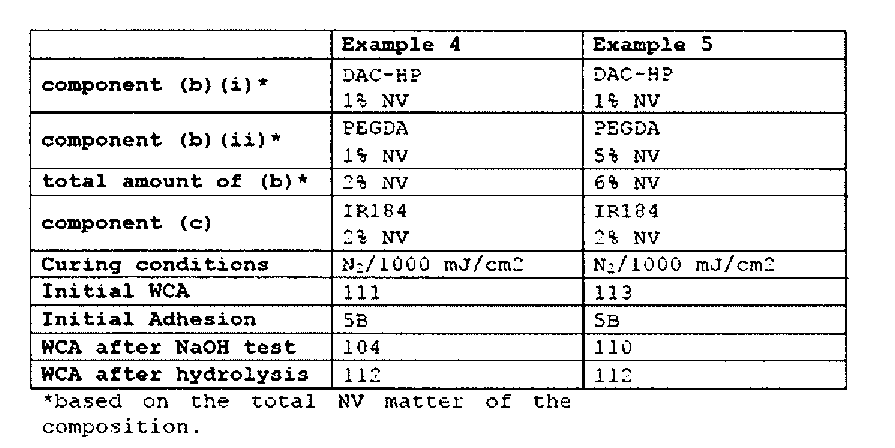
- hard coats of Examples 4 and 5 have been prepared in the same manner as Examples 1-3 above in which poly(ethylene glycol) diacrylate (PEGDA) was used as component (b)(ii).
- PEGDA poly(ethylene glycol) diacrylate
- the evaluation of the water contact angles of the hard coats of Examples 4 and 5 before and after the NaOH resistance test and the hydrolysis test was the same as outlined above for Examples 1-3 and Comparative Examples 1 and 2.
- the compositions and results for Examples 4 and 5 are shown in Table 3 below.
Landscapes
- Chemical & Material Sciences (AREA)
- Organic Chemistry (AREA)
- Polymers & Plastics (AREA)
- Health & Medical Sciences (AREA)
- Chemical Kinetics & Catalysis (AREA)
- Medicinal Chemistry (AREA)
- Materials Engineering (AREA)
- Wood Science & Technology (AREA)
- Engineering & Computer Science (AREA)
- Life Sciences & Earth Sciences (AREA)
- Paints Or Removers (AREA)
- Macromonomer-Based Addition Polymer (AREA)
- Coating Of Shaped Articles Made Of Macromolecular Substances (AREA)
Abstract
Description
(a) 75-95 wt% of a (meth)acrylate-based curable resin composition, comprising
(i) 40-60 wt%, based on the total amount of (a), of one or more acrylate ester with 3 or more acrylate groups; and
(ii) 40-60 wt%, based on the total amount of (a), of (meth)acrylate-based urethane or (meth)acrylate acid-based ester or (meth)acrylate-based epoxy or (meth)acrylate-based silicone oligomers; and
(b) 5-25 wt% of a mixture of
(i) 0.5-50.0 wt%, based on the total amount of (b), of a compound having a perfluoropolyether (PFPE) group and a curable moiety; and
(ii) 50.0-99.5 wt%, based on the total amount of (b), of at least one di(meth)acrylate monomer which is represented by the formula

R' each independently is H, methyl or halogen, and
X is linear C2-16-alkyl, (CH2)n-C3-16-cycloalkyl-(CH2)m, wherein n and m are independently an integer of 1-18, or linear (poly)alkyleneoxide having a methylene group on both terminal ends;
wherein (a) does not contain F-based compounds and the amounts of (a) and (b) sum up to not less than 80 wt% of the total non-volatile matter in the composition.
Description of Embodiments
The UV-curable composition in accordance with the present invention comprises
(a) 75-95 wt% of a (meth)acrylate-based curable resin composition, comprising
(i) 40-60 wt%, based on the total amount of (a), of one or more acrylate ester with 3 or more acrylate groups, and
(ii) 40-60 wt%, based on the total amount of (a), of (meth)acrylate-based urethane or (meth)acrylate acid-based ester or (meth)acrylate-based epoxy or (meth)acrylate-based silicone oligomers, and
(b) 5-25 wt% of a mixture of
(i) 0.5-50.0 wt%, based on the total amount of (b), of a compound having a perfluoropolyether group and a curable moiety, and
(ii) 50.0-99.5 wt%, based on the total amount of (b), of at least one di(meth)acrylate monomer which is represented by the formula
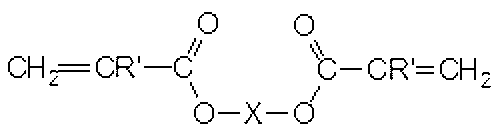
R' each independently is H, methyl or halogen, and
X is linear C2-16-alkyl, (CH2)n-C3-16-cycloalkyl-(CH2)m, wherein n and m are independently an integer of 1-18, or linear (poly)alkyleneoxide having a methylene group on both terminal ends;
wherein (a) does not contain F-based compounds and the amounts of (a) and (b) sum up to not less than 80 wt% of the total non-volatile matter in the composition.
The (meth)acrylate-based curable resin composition (a) is present in the UV-curable composition in an amount of 75-95 wt%, based on the total non-volatile matter in the composition. Preferably, the (meth)acrylate-based curable resin composition (a) is present in the UV-curable composition in an amount of 80-90 wt%, based on the non-volatile matter of the UV-curable composition.

-(OC6F12)s-(OC5F10)t-(OC4F8)a-(OC3F6)b-(OC2F4)c-(OCF2)d-.

-(OC3F6)d- (f1)
wherein, in formula (f1), d is an integer from 1-200;
-(OC4F8)c-(OC3F6)d-(OC2F4)e-(OCF2)f- (f2)
wherein, in formula (f2), c and d are independently integers from 0-30, e and f are independently integers from 1-200, the sum of c, d, e and f is an integer from 10-200; and the order of occurrence of the repeating units in parentheses with the subscripts c, d, e or f in parentheses is arbitrary;
-(R6-R7)g- (f3)
wherein, in formula (f3), R6 is OCF2 or OC2F4; R7 is a group selected from OC2F4, OC3F6, OC4F8, OC5F10 and OC6F12 or combination selected from these groups, and g is an integer from 2-100;
-(OC6F12)a-(OC5F10)b-(OC4F8)c-(OC3F6)d-(OC2F4)e-(OCF2)f- (f4)
wherein, in formula (f4), e is an integer of 1-200 and a, b, c, d and f are independently integers of 0-200, the sum of a, b, c, d, e and f is at least 1, and the order of occurrence of the repeating units in parentheses with the subscript a, b, c, d, e or f is arbitrary in the equation;
-(OC6F12)a-(OC5F10)b-(OC4F8)c-(OC3F6)d-(OC2F4)e-(OCF2)f- (f5)
wherein, in formula (f5), f is an integer of 1-200 and a, b, c, d and e are independently an integer of 0 or more and 200 or less, and a, b, c, d and e, and the sum of a, b, c, d, e and f is at least 1, and the order of occurrence of the repeating units in parentheses with the subscript a, b, c, d, e or f is arbitrary.
The di(meth)acrylate monomer (b)(ii) may be a diacrylate monomer, a dimethacrylate monomer or an acrylate-methacrylate monomer.
The present invention further relates to a hard coat which is obtainable by curing the UV-curable composition of the invention with UV-light. Before curing, the volatile matter, including solvents, may be evaporated. The evaporation is preferably carried out in two steps. For example, the evaporation may be performed in a first step by flash evaporation at room temperature for 2-5 min, and a second step by thermal treatment at about 60-90 °C for 5-15 min.
The present invention further relates to a surface-treated article which comprises a substrate and the hard coat of the invention which is applied on one or more surfaces of the substrate.
Examples
The exemplary UV-curable compositions were prepared as follows:
Mixing the (meth)acrylate-based curable resin composition (a) with the diacrylate monomer (b)(ii);
Dilute (or disperse) other additives (if any) in an organic solvent;
Dissolve a photo initiator in an organic solvent;
Dilute the compound having a PFPE group and a curable moiety (b)(i) in organic solvent;
Mixing all solutions of steps 1-4 under stirring.
(a) (meth)acrylate-based curable resin composition: UV525 PGM (available from Showa Denko Materials Co., Ltd., Japan)
(b)(i) compound having a PFPE group and a curable moiety: DAC HP (Daikin Industries, Ltd.)
(b)(ii) di-(meth)acrylate monomer: 1,6-hexanediol diacrylate (HDDA)(SR 238, available from Sartomer Arkema Group)
(c) solvent: 1-methoxy-2-propanol (PGME)
(d) photo-polymerization initiator: Irgacure 184 (Omnirad 184)
The standard method is thermal gravimetry, by which a certain amount of the composition is heated up for a period of time to let the volatile matter such as solvents evaporate. Then the residue will be weighed again and the NV content is calculated as below:
NV% = (weight after thermal aging) / (initial weight) * 100
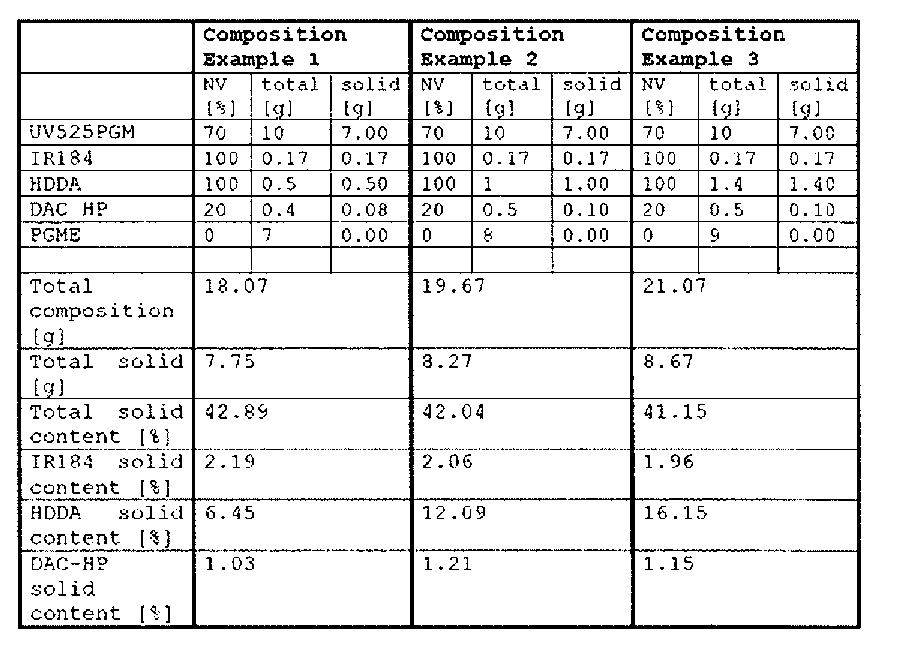
From the above Compositions Examples 1-3, hard coat Examples 1-3 were prepared on a surface of a substrate as followed:
(2) The coating composition is filtered in a filtration step in order to remove insoluble components or any kind contamination such as dust particles, for example by filtration using a 0,2-5 micrometres PTFE filter;
(3) The coating composition is then applied on the substrate via a commonly known paint application method, such as flowing, spraying, dipping, bar coating or roll-to-roll;
(4) The solvent is then evaporated in two steps including 2-5 min flash off at room temperature, followed by 5-10 min thermal pre-treatment at 70-90°C.
(5) The coating is then exposed to UV-irradiation under inert atmosphere (N2). The required curing energy depends on the formulation composition and may be within the range of 500-10.000 mJ/cm2 as explained above. In Examples 1-3 and Comparative Examples 1 and 2, the curing energy was 1000 mJ/cm2.
For the obtained hard coats, the hydro- and oleophobicity of the hard coat was evaluated by measuring the contact angles using a contact angle meter (LSA200, manufactured by Lauda Scientific). In particular, the test liquids for measuring the contact angle were water, n-hexadecane and diiodomethane so as to obtain the water contact angle (WCA), the n-hexadecane angle and the diiodomethane contact angle. The contact angle measurements were carried out using 2 microliter of test liquid. The values were measured for the cured hard coat subsequent to its preparation (initial contact angle), as well as after performance of several stress tests as outlined below.
The surface free energy (SFE) was calculated from the contact angles according to the method of Owens et al. described in J. Appl. Polym. Sci 13 (1969), pp. 1741-1747 (“OWRK method”).
In addition, the adhesion of the hard coat was evaluated by cross-cut test. The adhesion level is rated based on ASTM D3359 classification, where 0B means the lowest adhesion and 5B means the perfect adhesion.
The hardness of the hard coat (scratch resistance) was evaluated by an Erichsen hardness tester using 0,75 mm Bosch tip.
The chemical resistance of the hard coat was evaluated by two different tests:
Resistance to cosmetics (suncream) according to VW-PV-3964
Resistance to alkaline media according to BMW-PR-557
The durability of the hard coat was measured by the following tests:
Condensation atmosphere with constant humidity as per DIN EN ISO 6270-2, test duration 240 h
Hydrolysis aging: 72 h at (90 ±2) °C and (95 ±1)% relative humidity in the climatic chamber
Environmental cycle test: 8 cycles as per test specification VW-PV-1200
Claims (14)
- A UV-curable composition, comprising:
(a) 75-95 wt% of a (meth)acrylate-based curable resin composition, comprising
(i) 40-60 wt%, based on the total amount of (a), of one or more acrylate ester with 3 or more acrylate groups; and
(ii) 40-60 wt%, based on the total amount of (a), of at least one of (meth)acrylate-based urethane, (meth)acrylate acid-based ester, (meth)acrylate-based epoxy and (meth)acrylate-based silicone oligomers;
(b) 5-25 wt% of a mixture of
(i) 0.5-50.0 wt%, based on the total amount of (b), of a compound having a perfluoropolyether (PFPE) group and a curable moiety; and
(ii) 50.0-99.5 wt%, based on the total amount of (b), of at least one di(meth)acrylate monomer which is represented by the formula
wherein
R' each independently is H, methyl or halogen, and
X is linear C2-16-alkyl, (CH2)n-C3-16-cycloalkyl-(CH2)m, wherein n and m are independently an integer of 1-18, or linear (poly)alkyleneoxide having a methylene group on both terminal ends;
wherein (a) does not contain F-based compounds and the amounts of (a) and (b) sum up to not less than 80 wt% of the total non-volatile matter in the composition.
- The composition of claim 1 which further comprises one or more organic solvents, photo-polymerization initiators, UV-absorbers (UVA), hindered amine light stabilizers (HALS), levelling agents, anti-foaming agents and wetting agents.
- The composition of claim 1 or 2 in which the non-volatile matter sums up to 20-50 wt%, based on the total of the composition.
- The composition of any of claims 1-3, wherein (b)(i) comprises an isocyanate or an isocyanurate structure.
- The composition of any of claims 1-4, wherein (b)(i) is a compound of formula (1):
wherein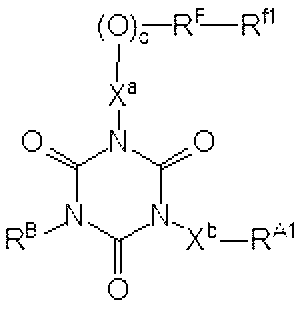
Rf1 is C1-16-alkyl optionally substituted by F;
RF is a divalent perfluoropolyether group;
q is 0 or 1;
Xa is a single bond or a divalent organic group;
RA1 is an ORAc containing group;
RAc is a (meth)acrylate group;
Xb is a divalent organic group containing at least two hetero atoms; and
RB is Rf1-Xa- or RA1-Xb-.
- The composition of any of claims 1-4, wherein (b)(i) is obtainable by reacting
(A) a triisocyanate prepared by trimerizing a diisocyanate, and
(B) a combination of at least two active hydrogen-containing compounds, which combination comprises:
(B-1) at least one perfluoropolyether having an active hydrogen, and
(B-2) at least one monomer having an active hydrogen and a carbon-carbon double bond.
- The composition of any of claims 1-6, wherein (a)(i) is one or more selected from pentaerythritol triacrylate (PET3A), pentaerythritol tetraacrylate (PET4a), dipentaerythritol pentaacrylate (DPPA), dipentaerythritol hexaacrylate (DPHA), tripentaerythritol heptaacrylate (TP7A), tripentaerythritol octaacrylate (TPOA) and trimethylolpropane triacrylate (TMPTA).
- The composition of claims 1-7, wherein, in (b)(ii), each R' is H and X is n-hexylene.
- A hard coat which is obtainable by curing the UV-curable composition of any of claims 1-8 with UV-light.
- The hard coat of claim 9, wherein the curing is performed under inert gas atmosphere, preferably under nitrogen atmosphere.
- The hard coat of claim 9 or 10, which has
(i) a water contact angle of more than 103°, and/or
(ii) a n-hexadecane contact angle of more than 55°, and/or
(iii) a diiodomethane contact angle of more than 83° and
(iv) optionally a surface free energy of less than 20 mN/m.
- A surface-treated article which comprises a substrate and the hard coat of any of claims 9-11 on one or more surfaces of the substrate.
- The surface-treated article of claim 12, wherein the substrate is a plastic substrate, and preferably a plastic substrate selected from poly(methylmethacrylate) (PPMA), polycarbonate (PC), polyethylene terephthalate (PET) and triacetylcellulose (TAC).
- A process for producing the surface-treated article of claim 12 or 13, comprising applying the composition of any of claims 1-9 on the surface of a substrate and curing the applied composition preferably under nitrogen atmosphere.
Priority Applications (3)
| Application Number | Priority Date | Filing Date | Title |
|---|---|---|---|
| JP2024553187A JP7773108B2 (en) | 2022-07-06 | 2023-07-06 | UV-curable composition, hard coat, and article having a hard coat layer |
| CN202380050904.2A CN119452004A (en) | 2022-07-06 | 2023-07-06 | UV curable composition, hard coating and hard coating article |
| KR1020247043334A KR20250016336A (en) | 2022-07-06 | 2023-07-06 | UV-curable compositions, hard coats and hard-coated articles |
Applications Claiming Priority (2)
| Application Number | Priority Date | Filing Date | Title |
|---|---|---|---|
| EP22183317.1A EP4303241B1 (en) | 2022-07-06 | 2022-07-06 | Uv-curable composition, hard coat and hard coated article |
| EP22183317.1 | 2022-07-06 |
Publications (1)
| Publication Number | Publication Date |
|---|---|
| WO2024010069A1 true WO2024010069A1 (en) | 2024-01-11 |
Family
ID=82399424
Family Applications (1)
| Application Number | Title | Priority Date | Filing Date |
|---|---|---|---|
| PCT/JP2023/025161 Ceased WO2024010069A1 (en) | 2022-07-06 | 2023-07-06 | Uv-curable composition, hard coat and hard coated article |
Country Status (6)
| Country | Link |
|---|---|
| EP (1) | EP4303241B1 (en) |
| JP (1) | JP7773108B2 (en) |
| KR (1) | KR20250016336A (en) |
| CN (1) | CN119452004A (en) |
| TW (1) | TW202411359A (en) |
| WO (1) | WO2024010069A1 (en) |
Citations (3)
| Publication number | Priority date | Publication date | Assignee | Title |
|---|---|---|---|---|
| WO2009076389A1 (en) * | 2007-12-12 | 2009-06-18 | 3M Innovative Properties Company | Hardcoats comprising perfluoropolyether polymers with poly(alkylene oxide) repeat units |
| JP2014106275A (en) * | 2012-11-26 | 2014-06-09 | Dic Corp | Hard coat film, decorative film, and protective film |
| JP2021183689A (en) * | 2020-05-22 | 2021-12-02 | ダイキン工業株式会社 | Polymerizable composition |
Family Cites Families (4)
| Publication number | Priority date | Publication date | Assignee | Title |
|---|---|---|---|---|
| EP1411073B1 (en) | 2001-06-27 | 2013-03-20 | Daikin Industries, Ltd. | Surface-treating agent composition and process for producing the same |
| JP5470957B2 (en) * | 2009-03-25 | 2014-04-16 | Dic株式会社 | Active energy ray-curable resin composition for film protective layer |
| JP5885021B2 (en) * | 2011-12-26 | 2016-03-15 | Dic株式会社 | Hard coat film |
| JP6002969B2 (en) * | 2014-06-05 | 2016-10-05 | Dic株式会社 | Protective adhesive film, image display device and portable electronic terminal |
-
2022
- 2022-07-06 EP EP22183317.1A patent/EP4303241B1/en active Active
-
2023
- 2023-07-06 TW TW112125279A patent/TW202411359A/en unknown
- 2023-07-06 WO PCT/JP2023/025161 patent/WO2024010069A1/en not_active Ceased
- 2023-07-06 CN CN202380050904.2A patent/CN119452004A/en active Pending
- 2023-07-06 KR KR1020247043334A patent/KR20250016336A/en active Pending
- 2023-07-06 JP JP2024553187A patent/JP7773108B2/en active Active
Patent Citations (3)
| Publication number | Priority date | Publication date | Assignee | Title |
|---|---|---|---|---|
| WO2009076389A1 (en) * | 2007-12-12 | 2009-06-18 | 3M Innovative Properties Company | Hardcoats comprising perfluoropolyether polymers with poly(alkylene oxide) repeat units |
| JP2014106275A (en) * | 2012-11-26 | 2014-06-09 | Dic Corp | Hard coat film, decorative film, and protective film |
| JP2021183689A (en) * | 2020-05-22 | 2021-12-02 | ダイキン工業株式会社 | Polymerizable composition |
Also Published As
| Publication number | Publication date |
|---|---|
| CN119452004A (en) | 2025-02-14 |
| TW202411359A (en) | 2024-03-16 |
| KR20250016336A (en) | 2025-02-03 |
| EP4303241B1 (en) | 2024-12-04 |
| JP7773108B2 (en) | 2025-11-19 |
| JP2025511492A (en) | 2025-04-16 |
| EP4303241A1 (en) | 2024-01-10 |
Similar Documents
| Publication | Publication Date | Title |
|---|---|---|
| JP7135321B2 (en) | Active energy ray-curable resin composition, resin molded article, and method for producing resin molded article | |
| JP5362430B2 (en) | Active energy ray-curable composition and molded article | |
| TWI450939B (en) | Coating composition for coating onto plastic base material, coating film formed from the same, and coated products thereof | |
| JP5343014B2 (en) | Active energy ray-curable coating composition and molded article having a cured film of the composition | |
| JP5057827B2 (en) | Active energy ray-curable coating composition and molded article having a cured coating of the composition | |
| KR20150029560A (en) | Curable composition, cured product thereof, hard coating material, and hard coating film | |
| CN103890027B (en) | Fluoridize water-oily repellents | |
| JP2013053282A (en) | Vehicular member, and method for manufacturing the same | |
| JP6448367B2 (en) | Fluorinated water and oil repellent | |
| JPWO2015190553A1 (en) | Active energy ray-curable resin composition, resin molded product, and method for producing resin molded product | |
| JP5221159B2 (en) | Active energy ray-curable coating composition and cured product thereof | |
| JP6565276B2 (en) | Curable composition, cured product and laminate | |
| JP5217112B2 (en) | Curable composition, cured film, antireflection film laminate and method for producing cured film | |
| JP2017171726A (en) | Curable composition, cured product thereof, and laminate | |
| EP4303241B1 (en) | Uv-curable composition, hard coat and hard coated article | |
| JPWO2015137279A1 (en) | Active energy ray-curable resin composition and automobile headlamp lens | |
| KR20070089718A (en) | Antireflection film | |
| JP5011663B2 (en) | Curable resin composition, cured film and laminate comprising the same | |
| JP2012031312A (en) | Optical curable coating material composition | |
| JP4952047B2 (en) | Curable resin composition, cured film and antireflection film laminate | |
| KR20070091164A (en) | Antireflection film | |
| KR102584186B1 (en) | Curable composition for light-resistant hard coats | |
| JP2021161235A (en) | Active energy ray-curable composition, cured product thereof, and laminate | |
| JP2007277504A (en) | Curable resin composition and antireflection film | |
| US20260092180A1 (en) | Photocurable coating composition and coated article |
Legal Events
| Date | Code | Title | Description |
|---|---|---|---|
| 121 | Ep: the epo has been informed by wipo that ep was designated in this application |
Ref document number: 23835600 Country of ref document: EP Kind code of ref document: A1 |
|
| WWE | Wipo information: entry into national phase |
Ref document number: 2024553187 Country of ref document: JP |
|
| ENP | Entry into the national phase |
Ref document number: 20247043334 Country of ref document: KR Kind code of ref document: A |
|
| WWE | Wipo information: entry into national phase |
Ref document number: 202380050904.2 Country of ref document: CN |
|
| WWP | Wipo information: published in national office |
Ref document number: 1020247043334 Country of ref document: KR |
|
| NENP | Non-entry into the national phase |
Ref country code: DE |
|
| WWP | Wipo information: published in national office |
Ref document number: 202380050904.2 Country of ref document: CN |
|
| 122 | Ep: pct application non-entry in european phase |
Ref document number: 23835600 Country of ref document: EP Kind code of ref document: A1 |