WO2024010058A1 - 情報処理方法、記録媒体及び情報処理装置 - Google Patents
情報処理方法、記録媒体及び情報処理装置 Download PDFInfo
- Publication number
- WO2024010058A1 WO2024010058A1 PCT/JP2023/025087 JP2023025087W WO2024010058A1 WO 2024010058 A1 WO2024010058 A1 WO 2024010058A1 JP 2023025087 W JP2023025087 W JP 2023025087W WO 2024010058 A1 WO2024010058 A1 WO 2024010058A1
- Authority
- WO
- WIPO (PCT)
- Prior art keywords
- information processing
- evaluation
- item
- plant
- factor
- Prior art date
- Legal status (The legal status is an assumption and is not a legal conclusion. Google has not performed a legal analysis and makes no representation as to the accuracy of the status listed.)
- Ceased
Links
Images




Classifications
-
- G—PHYSICS
- G06—COMPUTING OR CALCULATING; COUNTING
- G06Q—INFORMATION AND COMMUNICATION TECHNOLOGY [ICT] SPECIALLY ADAPTED FOR ADMINISTRATIVE, COMMERCIAL, FINANCIAL, MANAGERIAL OR SUPERVISORY PURPOSES; SYSTEMS OR METHODS SPECIALLY ADAPTED FOR ADMINISTRATIVE, COMMERCIAL, FINANCIAL, MANAGERIAL OR SUPERVISORY PURPOSES, NOT OTHERWISE PROVIDED FOR
- G06Q50/00—Information and communication technology [ICT] specially adapted for implementation of business processes of specific business sectors, e.g. utilities or tourism
- G06Q50/02—Agriculture; Fishing; Forestry; Mining
-
- G—PHYSICS
- G01—MEASURING; TESTING
- G01N—INVESTIGATING OR ANALYSING MATERIALS BY DETERMINING THEIR CHEMICAL OR PHYSICAL PROPERTIES
- G01N33/00—Investigating or analysing materials by specific methods not covered by groups G01N1/00 - G01N31/00
- G01N33/15—Medicinal preparations ; Physical properties thereof, e.g. dissolubility
-
- G—PHYSICS
- G01—MEASURING; TESTING
- G01N—INVESTIGATING OR ANALYSING MATERIALS BY DETERMINING THEIR CHEMICAL OR PHYSICAL PROPERTIES
- G01N33/00—Investigating or analysing materials by specific methods not covered by groups G01N1/00 - G01N31/00
- G01N33/0098—Plants or trees
-
- G—PHYSICS
- G06—COMPUTING OR CALCULATING; COUNTING
- G06Q—INFORMATION AND COMMUNICATION TECHNOLOGY [ICT] SPECIALLY ADAPTED FOR ADMINISTRATIVE, COMMERCIAL, FINANCIAL, MANAGERIAL OR SUPERVISORY PURPOSES; SYSTEMS OR METHODS SPECIALLY ADAPTED FOR ADMINISTRATIVE, COMMERCIAL, FINANCIAL, MANAGERIAL OR SUPERVISORY PURPOSES, NOT OTHERWISE PROVIDED FOR
- G06Q10/00—Administration; Management
- G06Q10/06—Resources, workflows, human or project management; Enterprise or organisation planning; Enterprise or organisation modelling
- G06Q10/063—Operations research, analysis or management
Definitions
- the present invention relates to an information processing method, a recording medium, and an information processing device.
- the technology of the present disclosure aims to provide a new mechanism for appropriately evaluating the effectiveness of materials.
- an information processing device obtains one or more factor items related to biological stimulation factors of a plant that has been given a material that has an effect of increasing resistance to abiotic stress. weighting each measured value of each factor item obtained using each weight, inputting each measured value weighted by each weight to a function related to evaluation of the material. Calculating an evaluation value of the material is performed.
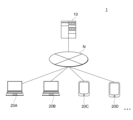
- FIG. 1 is a diagram illustrating an example of a configuration of an information processing system according to an embodiment of the present disclosure.
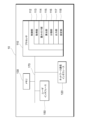
- 1 is a diagram illustrating an example of a configuration of an information processing device according to an embodiment of the present disclosure.
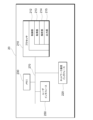
- 1 is a diagram illustrating an example of a configuration of an information processing device according to an embodiment of the present disclosure.
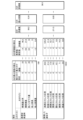
- FIG. 3 is a diagram showing an example of each factor item information (part 1) in the present disclosure. It is a figure showing an example of each factor item information (part 2) in this indication.
- FIG. 2 is a diagram illustrating an example of weighting of each factor item and evaluation value calculation (case 1) in the present disclosure.
- FIG. 7 is a diagram illustrating an example of weighting of each factor item and evaluation value calculation (case 2) in the present disclosure.
- FIG. 2 is a sequence diagram illustrating an example of evaluation processing of the information processing device according to an embodiment of the present disclosure.
- FIG. 2 is a sequence diagram illustrating an example of a rating process of an information processing device according to an embodiment of the present disclosure.
- FIG. 1 is a diagram illustrating an example of the configuration of an information processing system 1 according to an embodiment of the present disclosure.
- the information processing system 1 includes an information processing device 10, and each information processing device 20A, 20B, 20C, and 20D (hereinafter also referred to as "each information processing device 20"), and each information The processing devices 10 and 20 can send and receive data to and from each other via the network N.
- the materials to be evaluated are agricultural materials also called biostimulants (hereinafter also referred to as "BS"), which are biostimulants containing various substances and microorganisms that bring about better physiological conditions for plants and soil.
- BS biostimulants
- This material leverages the natural strengths of plants and their surrounding environment to positively impact plant health, stress tolerance, yield and quality, post-harvest condition, and storage. It is something that can be given.
- BS is usually made from natural ingredients, extracts derived from plants and animals, or metabolic products derived from microorganisms.
- BS may be a single substance or a composite of these.
- BS includes materials that are effective in alleviating abiotic stress.
- the effects of BS include, for example, suppression of active oxygen, activation of photosynthesis, promotion of flowering and fruit set, control of transpiration, regulation of osmotic pressure, improvement of the rhizosphere environment, increase in root mass and improvement of root activity, etc., but they do not necessarily have all the effects.
- the evaluation method of the present disclosure uses items that can be factors of biological stimulation from the viewpoint of the physiological functions of plants, weights the items according to their degree of influence, and obtains an index for evaluating the effectiveness of the material.
- factor items that can be biological stimulation factors. By weighting the factors according to their degree of influence, it becomes possible to appropriately evaluate the effectiveness of materials.
- Each of the information processing devices 10 and 20 shown in FIG. 1 described above is, for example, a personal computer, a mobile terminal such as a smartphone, a tablet terminal, a server device, etc. ) to distinguish between them.
- FIG. 2 is a diagram illustrating an example of the configuration of the information processing device 10 according to an embodiment of the present disclosure.
- FIG. 3 is a diagram illustrating an example of the configuration of the information processing device 20 according to an embodiment of the present disclosure.
- the information processing device 10 includes one or more processors (CPU: Central Processing Unit) 110, one or more network communication interfaces 120, a memory 130, a user interface 150, and one for interconnecting these components. or a plurality of communication buses 170.
- processors CPU: Central Processing Unit
- the user interface 150 includes a display and an input device (a keyboard and/or a mouse, or some other pointing device, etc.), but does not necessarily need to be provided in the information processing device 10, and if provided, it may be connected as an external device. You can.
- an input device a keyboard and/or a mouse, or some other pointing device, etc.
- the memory 130 is, for example, a high speed random access memory (main memory) such as DRAM, SRAM, or other random access solid state storage device.
- Memory 130 may also be non-volatile memory, such as one or more magnetic disk storage devices, optical disk storage devices, flash memory devices, or other non-volatile solid state storage devices.
- the memory 130 may be a computer-readable non-temporary recording medium that stores programs and the like. Further, the memory 130 may be either a main memory (memory) or an auxiliary memory (storage), or may include both.
- memory 130 stores programs, modules and data structures, or a subset thereof, that are executed by processor 110.
- the memory 130 stores data used by the information processing system 1.
- the memory 130 stores information regarding materials, one or more factor items related to plant biostimulation factors, measured values of each factor item, functions used to evaluate materials, evaluation values of each material, etc. , stores information such as standards for classifying materials using evaluation values and standards for grading.
- the processor 110 configures a control unit 112, an acquisition unit 113, a weighting unit 114, a calculation unit 115, a classification unit 116, an output unit 117, and a setting unit 118 by executing a program stored in the memory 130.
- the control unit 112 controls processing related to material evaluation.
- the control unit 112 controls the processing of the acquisition unit 113, the weighting unit 114, the calculation unit 115, the classification unit 116, the output unit 117, and the setting unit 118.
- the acquisition unit 113 acquires, from a plant that has been given a material (eg, BS) that has the effect of increasing resistance to abiotic stress, the measured values of one or more factor items related to the biological stimulation factor of this plant.
- the acquisition unit 113 may perform a process of measuring or analyzing data of each factor item by each information processing device 20, and acquire measured values obtained through this process via the network communication interface 120. good.
- the measurement value is input by the user etc. via the user interface 150, and the acquisition unit 113 acquires the input measurement value. You can.
- the weighting unit 114 weights each measurement value of each factor item acquired by the acquisition unit 113 using each weight. For example, weights are set for each factor item based on priority. Priority is given to each factor item based on, for example, the degree of influence of BS on yield, the degree of influence as a stimulus on plant growth, the order in which plant physiology acts, and the like.
- the calculation unit 115 when the data of the measured values of each factor item for the material is collected at a predetermined value or more, the calculation unit 115 performs an evaluation using a machine learning model that inputs the measured values of each factor item and predicts the evaluation value. It is also possible to calculate the value. As an example, the calculation unit 115 calculates the evaluation value by using a trained model that has undergone supervised learning using training data that includes the measured value of each factor item and the annotated evaluation value. Good too. Further, the calculation unit 115 may calculate a standard deviation as an example of the evaluation value.
- the output unit 117 may output the evaluation value calculated by the calculation unit 115 to be displayed on a display or the like in association with the material.
- the effects of materials can be appropriately evaluated by using the measured values of factor items that can be factors in biological stimulation by materials, such as BS, and weighting them according to the degree of influence of the factor items. It becomes possible.
- each factor item may include at least one of plant phenotype, nutrient absorbed elements, hormonal analysis in response to stimulation, and expressed genes.
- These factor items are factor items that can be analyzed or measured in a laboratory or the like. Note that each factor item related to the laboratory will be described later using FIG. 4.
- each factor item may be subdivided into a plurality of items, and a weight may be assigned to each item.
- one factor item can be divided into large, medium, small, etc. granularity, and one large item can be divided into one or more medium items, and one medium item can be divided into one or more small items. good.
- weights may be given to each of the large items, medium items, and small items.
- the weight of each small item within the same medium item may be set based on the priority of each small item. This makes it possible to appropriately set priority weights based on the degree of influence on yield, the degree of influence on plant growth and stimulation, the order in which plant physiology acts, and the like.
- a given plant may be given a plurality of different materials under different conditions.
- the acquisition unit 113 acquires the measured values of each factor item for each material.
- the acquisition unit 113, the weighting unit 114, and the calculation unit 115 execute processing for each measured value for each material.
- the calculation unit 115 calculates the evaluation value of each material for a predetermined plant. Although it is preferable that each material is given separately under the same environment for comparison purposes, it may be evaluated under different environments such as at different locations and at different times.
- the classification unit 116 classifies each material using the evaluation value of each material.
- the classification unit 116 may use a known clustering method to classify each material into each set depending on the degree of effectiveness of the material indicated by the evaluation value.
- the classification unit 116 may also classify each material using each evaluation value using a machine learning model that performs clustering.
- the classification unit 116 may include classifying each material using the evaluation value for each raw material type of each material.
- the following are the types of raw materials for the main components of materials: 1. Humic substances, organic acid materials (humic acid, fulvic acid) 2. Seaweed and seaweed extracts, polysaccharides3. Amino acids and peptide materials4. Trace minerals and vitamins5.
- Microbial materials Trichoderma fungi, mycorrhizal fungi, yeast, Bacillus subtilis, rhizobia, etc.
- Others Functional ingredients derived from animals and plants, microbial metabolites, microbial activation materials, etc.
- the memory 130 stores material raw material information in which a material name and information for identifying the material (material ID) are associated with raw material type information of the material.
- the classification unit 116 uses the material name and material ID of the material to be classified, refers to the material raw material information, identifies the raw material type of the material, and classifies the materials by raw material type as a first stage classification. Next, as a second stage classification, the classification unit 116 classifies the materials by raw material type using the evaluation values. This makes it possible to classify materials based on their effectiveness for each raw material type, and it becomes possible to identify and recommend highly effective materials for each raw material type. Note that, after classifying each material using the evaluation value, the classification unit 116 may further classify the materials using the raw material type for each set of classifications.
- the acquisition unit 113 may acquire a request regarding classification from a user or the like.
- the classification unit 116 may extract and classify materials having evaluation values corresponding to the conditions included in this user request.
- the user request includes, for example, information regarding the raw material type of the materials described above, information regarding specific factor items, information regarding the environment of the field, and the like. Whether or not the condition included in the user request is met is determined by, for example, if the evaluation value is within a predetermined range of the numerical value included in the condition, or if the evaluation value is greater than or equal to the threshold value or less than the threshold value. You may be judged.
- the numerical value included in the condition may be a value related to a predetermined factor item in addition to a value related to the evaluation value of the material.
- the classification unit 116 may classify each material using the weighted value or evaluation value of the measured value/analysis value for each item of genetic analysis.
- Items for genetic analysis include, for example, high temperature stress response, osmotic stress response, oxidative stress response, drought stress response, and injury stress response.
- the classification unit 116 in response to the request, selects materials with high resistance in the factor item “high temperature stress response” (e.g. Materials whose high temperature stress response weighting value is larger than a threshold value may be classified, and the classified materials may be grouped. Information including the grouped materials is outputted to the producer by the output unit 117.
- high temperature stress response e.g. Materials whose high temperature stress response weighting value is larger than a threshold value may be classified, and the classified materials may be grouped.
- Information including the grouped materials is outputted to the producer by the output unit 117.
- the output unit 117 may output information regarding this material and recommendation information.
- the predetermined condition includes, for example, that the evaluation value exceeds a threshold value. In this case, when the evaluation value calculated by the calculation unit 115 exceeds a predetermined threshold, the output unit 117 may consider that the material is highly effective and output information recommending the material. This makes it possible to use material evaluation indicators to identify highly effective materials and to inform related parties of highly effective materials.
- the predetermined conditions may be conditions related to adaptability to the fertilizer used by the producer.
- the recommendation information may include information on materials that are compatible with the fertilizer used by the producer.
- the predetermined condition may be a condition regarding stress tolerance. For example, stress tolerance may be determined based on a comparison result between an analysis value for a predetermined stress response and a threshold value. In this case, the recommendation information can include information on materials that are resistant to a predetermined stress response.
- the setting unit 118 may use the evaluation values to rank the materials for each set classified by the classification unit 116 or based on the comparison result between the standard deviation of the evaluation values and a threshold value. For example, the setting unit 118 may assign a rank indicating the degree of effectiveness to each material. Thereby, an evaluation result can be assigned to a predetermined material. Further, the above-mentioned recommendation information may include a rating rank.
- the organization that manages the information processing device 10 can provide evaluation indicators to existing materials, it can provide material evaluation services as a material evaluation organization. At this time, the evaluation value can be used as evidence of the evaluation result.
- the technology of the present disclosure it is possible to identify highly effective materials based on appropriate evaluation indicators, so it is possible to grade materials. Furthermore, the organization that manages the information processing device 10 can also license the technical method for calculating this evaluation index.
- FIG. 3 is a diagram illustrating an example of an information processing device 20 according to an embodiment of the disclosure.
- the information processing device 20 includes one or more processors (e.g., CPUs) 210, one or more network communication interfaces 220, a memory 230, a user interface 250, and one or more processors for interconnecting these components.
- processors e.g., CPUs
- User interface 250 includes a display and an input device (such as a keyboard and/or mouse, or some other pointing device).
- an input device such as a keyboard and/or mouse, or some other pointing device.
- the memory 230 is, for example, a high speed random access memory (main memory) such as DRAM, SRAM, or other random access solid state storage device.
- Main memory such as DRAM, SRAM, or other random access solid state storage device.
- Memory 230 may also be non-volatile memory, such as one or more magnetic disk storage devices, optical disk storage devices, flash memory devices, or other non-volatile solid state storage devices.
- the memory 230 may be a computer-readable non-temporary recording medium that stores programs and the like. Further, the memory 230 may be either a main memory (memory) or an auxiliary memory (storage), or may include both.
- the memory 230 stores data and programs used by the information processing system 1.
- the memory 230 stores application programs for mobile terminals in the information processing system 1 and the like.
- the processor 210 configures a control unit 212 that controls processing related to calculation of the evaluation index of the BS on the client side by executing a program stored in the memory 230.
- the control unit 212 includes a web browser or an application related to evaluation index calculation.
- the web browser enables viewing of the web page of the evaluation index calculation platform provided by the information processing device 10.
- the web browser displays and transitions web pages as appropriate, provides information, sends and receives data, and so on.
- the web browser uses a web page to transmit information regarding measurement values set or input by the user to the information processing apparatus 10.
- the information to be transmitted is, for example, information such as the predetermined plant, the material to be evaluated, and the measured values of each factor item.
- control unit 212 may enable execution of functions provided by the evaluation index calculation platform by executing an installed application related to evaluation index calculation for the client.
- the control unit 212 includes an acquisition unit 213, an analysis unit 214, and an output unit 215 in order to execute processing related to evaluation index calculation according to the present disclosure on the client side.
- the acquisition unit 213 acquires data set or input by the user using the user interface 250, or sensing data for each factor item using a sensor or the like.
- the analysis unit 214 performs a predetermined analysis on each measurement value.
- An example of a predetermined analysis is an omics analysis.
- the analysis unit 214 may extract significant measured values using a predetermined statistical method.
- the output unit 215 outputs the measured values of each factor item that have been analyzed or extracted as significant data to the information processing device 10 via the network communication interface 220.
- the analysis unit 214 may be provided in the information processing device 10, and the evaluation index of the present disclosure may be calculated on the information processing device 10 side.
- FIG. 4 is a diagram illustrating an example of each factor item information (part 1) in the present disclosure.
- Each factor item information shown in FIG. 4 includes each factor item that can be measured or analyzed in a laboratory. Furthermore, factor items are classified into purpose (major item), type (medium item), and measurement/analysis (minor item), and are associated with evaluation methods.
- the middle items include “phenotype: high temperature” and “phenotype: normal time”.
- the medium items “phenotype: high temperature” and “phenotype: normal times” are combined with the small items “above-ground part weight,” “above-ground length,” “total biomass amount,” “root weight ratio,” and “root weight.”
- the analysis value or measurement value of each sub-item is stored in the memory 130.
- the evaluation method for the factor item related to "yield” includes, for example, a comparison value (ratio) with a control.
- the phenotype may be evaluated by testing small items for each stress test. For example, for each of the medium items “phenotype: osmotic pressure”, “phenotype: oxidation”, “phenotype: dryness”, “phenotype: injury”, “phenotype: pests”, and “phenotype: element” , small items may be tested and evaluated.
- the middle item includes “expressed genes”.
- the middle item “expressed genes” includes “osmotic stress response,” “pest stress response,” “high temperature stress response,” “elemental stress response,” “drought stress response,” “injury stress response,” and “oxidative stress response.”
- an analytic value is obtained by, for example, omics analysis, and is stored in the memory 130.
- Evaluation methods for factor items related to “stress” include, for example, the number of hits and "weighted average based on P-Value.”
- the sub-items related to “expressed genes” are obtained, for example, by gene expression analysis, and each analysis value is set or input by the user using the user interface 250, for example.
- the middle items include “phytohormone analysis: roots” and “phytohormone analysis: leaves”.
- the middle items "Plant Hormone Analysis: Root” and “Plant Hormone Analysis: Leaf” contain "Salicylic Acid”, “Auxin”, “Gibberellin (GA1)”, “Gibberellin (GA4)”, “Abscisic Acid”, “Cytokinin ( tZ),” “ethylene,” “jasmonic acid,” “strigolactone,” “brassinosteroid,” and “florigen,” and the analyzed or measured values for each sub-item are stored in the memory 130.
- the evaluation method for factor items related to "stimulus response” includes, for example, measured values by analysis.
- the sub-items related to "plant hormone analysis” are obtained, for example, by hormone analysis, and each analysis value is set or input by the user using the user interface 250, for example.
- the middle item includes “elements”.
- the medium item “element” includes “N”, “P”, .
- the evaluation method for factor items related to "nutrient absorption” includes, for example, a comparison value (ratio) with a control.
- the sub-items related to "elements" are obtained by elemental analysis, and each analysis value is set or input by the user using the user interface 250, for example.
- FIG. 5 is a diagram showing an example of each factor item information (part 2) in the present disclosure.
- Each factor item information shown in FIG. 5 includes each factor item that can be measured or analyzed in an actual field test.
- the middle items include “soil chemical analysis”, “soil physical property analysis”, and “soil flora analysis”.
- the middle item “Soil chemical analysis” includes the small items “N”, “P”, “K”, and “Other trace elements”.
- the middle item “Soil physical property analysis” includes the small items “moisture content”, “pH”, “EC (electrical conductivity)", “air permeability”, and “hardness”.
- the middle item ⁇ Soil flora analysis'' includes the small items ⁇ Bacteria type (diversity)'' and ⁇ Bacteria content ratio.'''
- the analytical value or measured value of each sub-item is stored in the memory 130. Evaluation methods for factor items related to "soil improvement" include, for example, comparison with previous years or comparison of target fields.
- small items related to "soil chemical analysis” are obtained by soil analysis based on sample collection
- small items related to "soil physical analysis” are obtained by soil analysis using each sensor
- “soil flora analysis” is obtained by soil analysis using each sensor.
- the sub-items related to the above are acquired by soil nutrient analysis through sample collection, and each analysis value is set or input by the user using the user interface 250, for example.
- the medium items include “various stress tolerance” and "phenotype".
- the medium item ⁇ various stress resistance'' includes small items ⁇ disease resistance,'' ⁇ high temperature resistance,'' ⁇ drought resistance,'' and ⁇ salt damage resistance.''
- the medium item "phenotype” includes the small item “yield”.
- the analytical value or measured value of each sub-item is stored in the memory 130.
- the evaluation method for factor items related to "stable production” includes, for example, comparison with the previous year.
- the sub-items related to “various stress resistance” are obtained using observation and cultivation history data of the production area, and each measurement value is set or input by the user using the user interface 250, for example.
- the sub-items related to "phenotype” are acquired using crop yield and cultivation history data of the production area, and each measurement value is set or input by the user using the user interface 250, for example.
- the medium item includes “metabolite analysis”.
- the middle item ⁇ metabolite analysis'' includes the small items ⁇ sugar content,'' ⁇ functional ingredients,'' ⁇ amino acids,'' ⁇ vitamins,'' ⁇ organic acids,'' and ⁇ bitterness.''
- the analytical value or measured value of each sub-item is stored in the memory 130.
- the evaluation method for factor items related to "profitability” includes, for example, a comparison value (ratio) with a control.
- the sub-items related to “metabolite analysis” are obtained by metabolite analysis, and each analysis value is set or input by the user using the user interface 250, for example.
- Weighting of each factor item and evaluation value calculation in the present disclosure will be explained using a specific example with reference to FIGS. 6 and 7.
- the priority of major factor items is determined based on the degree of influence of materials on yield, degree of influence on plant growth and stimulation, order of action of plant physiology, etc.
- the medium items (category A) within the same large item are arranged in order of priority.
- Small items (category B) within the same medium item are arranged in order of priority. 4.
- the item with the highest priority is used as a reference point, and the relative weight of other medium items is determined.
- the reference point shall be the largest value. 5.
- Set weights for small items Among the small items, the item with the highest priority is used as a reference point, and the relative weights of other small items are determined.
- the reference point shall be the largest value.
- the weight settings described above are just an example, and are not limited to this example.
- FIG. 6 is a diagram illustrating an example of weighting of each factor item and evaluation value calculation (case 1) in the present disclosure.
- the weights are set as 5, 4, 3, 2, and 1 in the order of ⁇ General manager'' and ⁇ Above ground weight.'' The above-mentioned priorities are just examples. Each weight is adjusted so that the maximum value is 1.
- the weighting unit 114 weights the measured values (actual measured values)/analytical values of each factor item of the small items using weights. For example, the weighting unit 114 multiplies the measured value of root weight ratio 1.4 by weight 1 to calculate 1.4, and multiplies the measured value of root weight ratio 0.8 by weight 0.8 to calculate 0.64. Calculate. The weighting unit 114 performs similar processing on other small items.
- the weighting unit 114 adds up all the values in the same medium item and sets it as the evaluation value of that small item (category B). For example, the weighting unit 114 gives an evaluation value of 2.98 for "phenotype at high temperature” and 10.9 for "expressed gene.”
- the weighting unit 114 weights the evaluation value of the middle item using the weight of the middle item. For example, if the weight of "phenotype at high temperature” is 5 and the weight of "expressed gene” is 1, the weighted evaluation value of "phenotype at high temperature” is 2.98 x 5, and the weight of "expressed gene” is The evaluation value is 10.9 ⁇ 1.
- FIG. 7 is a diagram showing an example of weighting of each factor item and evaluation value calculation (case 2) in the present disclosure.
- the total of each weight is adjusted to 100.
- the weighting unit 114 weights the measured values (actual measured values)/analytical values of each factor item of the small items using weights. For example, the weighting unit 114 multiplies the measured value of root weight ratio 1.4 by weight 33 to calculate 46.2, and multiplies the measured value of root weight ratio 0.8 by weight 27 to calculate 21.6. do. The weighting unit 114 performs similar processing on other small items.
- the weighting unit 114 adds up all the values in the same medium item and sets it as the evaluation value of that small item (category B). For example, the weighting unit 114 gives an evaluation value of 99.2 for "high temperature phenotype” and 271.5 for "expressed gene.”
- the weighting unit 114 weights the evaluation value of the middle item using the weight of the middle item. For example, if the weight of "phenotype at high temperature” is 0.24 and the weight of "expressed gene” is 0.05, the weighted evaluation value of "phenotype at high temperature” is 99.2 x 0.24, " The weighted evaluation value of "expressed gene” is 271.5 ⁇ 0.05.
- FIG. 8 is a diagram illustrating an example of ratings in the present disclosure.
- the calculation unit 115 calculates the standard deviation as the evaluation value of each material.
- FIG. 8(A) shows the rating of each material, and
- FIG. 8(B) shows an example of each threshold value used for the rating.
- the standard deviation of material X is 61.3
- the standard deviation of material Y is 42.28
- the standard deviation of material W is 45.43.
- the threshold values used for rating are set in advance such as 60 or more for S rank and 50 or more for A rank.
- the setting unit 118 sets the S rank because the standard deviation (61.3) of material Since it is greater than or equal to the threshold value for B (40) and less than the threshold value for A (50), a B rank is set.
- FIG. 9 is a sequence diagram illustrating an example of evaluation processing of the information processing device 10 according to an embodiment of the present disclosure.
- step S102 the acquisition unit 113 of the information processing device 10 obtains measured values of one or more factor items related to biological stimulation factors of the plant, which have been given materials that have the effect of increasing tolerance to abiotic stress. get.
- step S104 the weighting unit 114 of the information processing device 10 weights each measurement value acquired by the acquisition unit 113 using each weight.
- step S106 the calculation unit 115 of the information processing device 10 calculates the evaluation value of the material by inputting each measurement value weighted using each weight by the weighting unit 114 into a function related to evaluation of the material.
- step S108 the output unit 117 of the information processing device 10 outputs the evaluation value calculated by the calculation unit 115.
- FIG. 10 is a sequence diagram illustrating an example of the rating process of the information processing device 10 according to an embodiment of the present disclosure.
- the classification process is performed and then the ranking process is performed.
- the classification process is not necessarily necessary for the rating process, and the rating process does not need to be performed after the classification process.
- the process shown in FIG. 10 may be executed when the evaluation value is stored in the memory 130 as a predetermined value or more.
- the classification unit 116 of the information processing device 10 classifies each material using the evaluation value of each material. For example, the classification unit 116 clusters the evaluation values using one of the known clustering techniques, and classifies materials corresponding to the evaluation values. The classification unit 116 may classify the evaluation values for each raw material type of the main component of the material, and may classify the materials corresponding to the evaluation values.
- step S204 the setting unit 118 of the information processing device 10 ranks the materials in the clustered set so that the group with the highest evaluation value becomes the highest rank.
- the setting unit 118 may perform the rating by comparing the evaluation value of the material with a threshold value (see, for example, FIG. 8).
- step S206 the output unit 117 of the information processing device 10 outputs the rated information to an external device or display.
Landscapes
- Engineering & Computer Science (AREA)
- Life Sciences & Earth Sciences (AREA)
- Health & Medical Sciences (AREA)
- Business, Economics & Management (AREA)
- Chemical & Material Sciences (AREA)
- Physics & Mathematics (AREA)
- General Physics & Mathematics (AREA)
- Human Resources & Organizations (AREA)
- General Health & Medical Sciences (AREA)
- Economics (AREA)
- Strategic Management (AREA)
- Analytical Chemistry (AREA)
- Biochemistry (AREA)
- Food Science & Technology (AREA)
- Immunology (AREA)
- Pathology (AREA)
- Medicinal Chemistry (AREA)
- Entrepreneurship & Innovation (AREA)
- Theoretical Computer Science (AREA)
- General Business, Economics & Management (AREA)
- Tourism & Hospitality (AREA)
- Marketing (AREA)
- Molecular Biology (AREA)
- Biophysics (AREA)
- Pharmacology & Pharmacy (AREA)
- Bioinformatics & Cheminformatics (AREA)
- Agronomy & Crop Science (AREA)
- Marine Sciences & Fisheries (AREA)
- Development Economics (AREA)
- Operations Research (AREA)
- Educational Administration (AREA)
- Game Theory and Decision Science (AREA)
- Animal Husbandry (AREA)
- Quality & Reliability (AREA)
- Mining & Mineral Resources (AREA)
- Primary Health Care (AREA)
- Botany (AREA)
- Wood Science & Technology (AREA)
- Management, Administration, Business Operations System, And Electronic Commerce (AREA)
- Measuring Or Testing Involving Enzymes Or Micro-Organisms (AREA)
Priority Applications (3)
| Application Number | Priority Date | Filing Date | Title |
|---|---|---|---|
| EP23835589.5A EP4553498A1 (en) | 2022-07-07 | 2023-07-06 | Information processing method, recording medium, and information processing device |
| US18/881,940 US20250347672A1 (en) | 2022-07-07 | 2023-07-06 | Information processing method, recording medium, and information processing device |
| AU2023302271A AU2023302271A1 (en) | 2022-07-07 | 2023-07-06 | Information processing method, recording medium, and information processing device |
Applications Claiming Priority (2)
| Application Number | Priority Date | Filing Date | Title |
|---|---|---|---|
| JP2022109418A JP7295591B1 (ja) | 2022-07-07 | 2022-07-07 | プログラム、情報処理方法、及び情報処理装置 |
| JP2022-109418 | 2022-07-07 |
Publications (1)
| Publication Number | Publication Date |
|---|---|
| WO2024010058A1 true WO2024010058A1 (ja) | 2024-01-11 |
Family
ID=86772768
Family Applications (1)
| Application Number | Title | Priority Date | Filing Date |
|---|---|---|---|
| PCT/JP2023/025087 Ceased WO2024010058A1 (ja) | 2022-07-07 | 2023-07-06 | 情報処理方法、記録媒体及び情報処理装置 |
Country Status (6)
| Country | Link |
|---|---|
| US (1) | US20250347672A1 (https=) |
| EP (1) | EP4553498A1 (https=) |
| JP (2) | JP7295591B1 (https=) |
| AU (1) | AU2023302271A1 (https=) |
| CL (1) | CL2025000025A1 (https=) |
| WO (1) | WO2024010058A1 (https=) |
Citations (6)
| Publication number | Priority date | Publication date | Assignee | Title |
|---|---|---|---|---|
| JP2009131187A (ja) * | 2007-11-29 | 2009-06-18 | Institute Of Physical & Chemical Research | 植物免疫安定化資材の評価方法及びキット |
| WO2013151041A1 (ja) * | 2012-04-03 | 2013-10-10 | 静岡商工会議所 | 植物の環境ストレス耐性向上用組成物及び植物の環境ストレス耐性を向上させる方法 |
| WO2018147440A1 (ja) * | 2017-02-10 | 2018-08-16 | 株式会社 メニコン | 植物浸透圧ストレス耐性誘導剤及び乾燥ストレス緩和方法 |
| JP2019081746A (ja) * | 2017-03-01 | 2019-05-30 | 花王株式会社 | マメ科植物生育促進剤 |
| WO2022019114A1 (ja) * | 2020-07-20 | 2022-01-27 | ソニーグループ株式会社 | 情報処理装置、情報処理方法、及び、プログラム |
| JP2022066901A (ja) | 2020-10-19 | 2022-05-02 | 昭和電工株式会社 | サトイモ科植物の栽培方法及びサトイモ科植物の栽培用の植物活力剤 |
-
2022
- 2022-07-07 JP JP2022109418A patent/JP7295591B1/ja active Active
-
2023
- 2023-04-28 JP JP2023075185A patent/JP2024008835A/ja active Pending
- 2023-07-06 WO PCT/JP2023/025087 patent/WO2024010058A1/ja not_active Ceased
- 2023-07-06 AU AU2023302271A patent/AU2023302271A1/en active Pending
- 2023-07-06 EP EP23835589.5A patent/EP4553498A1/en active Pending
- 2023-07-06 US US18/881,940 patent/US20250347672A1/en active Pending
-
2025
- 2025-01-06 CL CL2025000025A patent/CL2025000025A1/es unknown
Patent Citations (6)
| Publication number | Priority date | Publication date | Assignee | Title |
|---|---|---|---|---|
| JP2009131187A (ja) * | 2007-11-29 | 2009-06-18 | Institute Of Physical & Chemical Research | 植物免疫安定化資材の評価方法及びキット |
| WO2013151041A1 (ja) * | 2012-04-03 | 2013-10-10 | 静岡商工会議所 | 植物の環境ストレス耐性向上用組成物及び植物の環境ストレス耐性を向上させる方法 |
| WO2018147440A1 (ja) * | 2017-02-10 | 2018-08-16 | 株式会社 メニコン | 植物浸透圧ストレス耐性誘導剤及び乾燥ストレス緩和方法 |
| JP2019081746A (ja) * | 2017-03-01 | 2019-05-30 | 花王株式会社 | マメ科植物生育促進剤 |
| WO2022019114A1 (ja) * | 2020-07-20 | 2022-01-27 | ソニーグループ株式会社 | 情報処理装置、情報処理方法、及び、プログラム |
| JP2022066901A (ja) | 2020-10-19 | 2022-05-02 | 昭和電工株式会社 | サトイモ科植物の栽培方法及びサトイモ科植物の栽培用の植物活力剤 |
Also Published As
| Publication number | Publication date |
|---|---|
| CL2025000025A1 (es) | 2025-06-23 |
| JP2024008835A (ja) | 2024-01-19 |
| JP2024007958A (ja) | 2024-01-19 |
| JP7295591B1 (ja) | 2023-06-21 |
| US20250347672A1 (en) | 2025-11-13 |
| AU2023302271A1 (en) | 2025-01-23 |
| EP4553498A1 (en) | 2025-05-14 |
Similar Documents
| Publication | Publication Date | Title |
|---|---|---|
| Rusch et al. | Effect of crop management and landscape context on insect pest populations and crop damage | |
| Meyer et al. | Towards a standardized rapid ecosystem function assessment (REFA) | |
| Knudsen et al. | Characterization factors for land use impacts on biodiversity in life cycle assessment based on direct measures of plant species richness in European farmland in the ‘Temperate Broadleaf and Mixed Forest’biome | |
| Philibert et al. | Assessment of the quality of meta-analysis in agronomy | |
| Martin et al. | An integrated method to analyze farm vulnerability to climatic and economic variability according to farm configurations and farmers’ adaptations | |
| Zhou et al. | Soil quality index evaluation model in responses to six-year fertilization practices in Mollisols | |
| Kumar et al. | Performance of APSIM to simulate the dynamics of winter wheat growth, phenology, and nitrogen uptake from early growth stages to maturity in Northern Europe | |
| Mariyono | The economic performance of Indonesian rice-based agribusiness | |
| Martínez-Martínez et al. | Moisture content prediction in the switchgrass (Panicum virgatum) drying process using artificial neural networks | |
| Gong et al. | Multi-environment evaluations across ecological regions reveal that the kernel oil content of cottonseed is equally determined by genotype and environment | |
| Fritz et al. | Grouping and classification of wheat from organic and conventional production systems by combining three image forming methods | |
| Dirks et al. | Size and reproductive traits rather than leaf economic traits explain plant-community composition in species-rich annual vegetation along a gradient of land use intensity | |
| Polisetty et al. | Statistical assessment of trend analysis on production of wheat crop over India | |
| JP7295591B1 (ja) | プログラム、情報処理方法、及び情報処理装置 | |
| Neuhaus et al. | Relationship between rainfall-adjusted nitrogen nutrition index and yield of wheat in Western Australia | |
| JP7442894B1 (ja) | 情報処理方法、プログラム、及び情報処理装置 | |
| Pittaro et al. | Unraveling the forage productivity puzzle: Comparing fast and slow-growing grasses | |
| Caires et al. | Soybean seed analysis as a nutritional diagnostic tool | |
| Huang et al. | Pesticide reduction, climate change, and food security: evidence from rice production in China | |
| Efisue et al. | Screening early-generation progenies of interspecific rice genotypes for drought-stress tolerance during vegetative phase | |
| Macedo et al. | Agrometeorological and Agronomic Characterization of Megathyrsus Grasses Cultivated in Tropical Humid and Semi-Arid Conditions: A Multivariate Approach | |
| Vagh et al. | Mining temperature profile data for shire-level crop yield prediction | |
| BR112025000185B1 (pt) | Método de processamento de informações, um meio de gravação e um dispositivo de processamento de informações | |
| Omotesho et al. | Analysis of agro-chemical inputs use in maize production among small-scale farmers in Iwo Local Government, Osun State, Nigeria | |
| Pereira et al. | Sample size, range of parameters and time-dependent effects on global sensitivity analysis in sugarcane modelling |
Legal Events
| Date | Code | Title | Description |
|---|---|---|---|
| 121 | Ep: the epo has been informed by wipo that ep was designated in this application |
Ref document number: 23835589 Country of ref document: EP Kind code of ref document: A1 |
|
| WWE | Wipo information: entry into national phase |
Ref document number: 18881940 Country of ref document: US |
|
| WWE | Wipo information: entry into national phase |
Ref document number: AU2023302271 Country of ref document: AU |
|
| ENP | Entry into the national phase |
Ref document number: 2023302271 Country of ref document: AU Date of ref document: 20230706 Kind code of ref document: A |
|
| REG | Reference to national code |
Ref country code: BR Ref legal event code: B01A Ref document number: 112025000185 Country of ref document: BR |
|
| WWE | Wipo information: entry into national phase |
Ref document number: 202517009482 Country of ref document: IN |
|
| WWE | Wipo information: entry into national phase |
Ref document number: 2023835589 Country of ref document: EP |
|
| NENP | Non-entry into the national phase |
Ref country code: DE |
|
| ENP | Entry into the national phase |
Ref document number: 2023835589 Country of ref document: EP Effective date: 20250207 |
|
| WWP | Wipo information: published in national office |
Ref document number: 202517009482 Country of ref document: IN |
|
| WWP | Wipo information: published in national office |
Ref document number: 2023835589 Country of ref document: EP |
|
| REG | Reference to national code |
Ref country code: BR Ref legal event code: B01E Ref document number: 112025000185 Country of ref document: BR Free format text: APRESENTAR NOVAS FOLHAS REFERENTES AO RELATORIO DESCRITIVO TRADUZIDO E AO RESUMO DO PEDIDO, ADAPTADAS AOS ARTS. 26 E 40 DA PORTARIA INPI NO14/2024, UMA VEZ QUE O CONTEUDO ENCAMINHADO ENCONTRA-SE FORA DA NORMA (USO DE EXPRESSAO ADICIONAL ANTES DO TITULO). A EXIGENCIA DEVE SER RESPONDIDA EM ATE 60 (SESSENTA) DIAS DE SUA PUBLICACAO POR MEIO DE PETICAO CODIGO DE SERVICO 207. |
|
| ENP | Entry into the national phase |
Ref document number: 112025000185 Country of ref document: BR Kind code of ref document: A2 Effective date: 20250106 |
|
| WWP | Wipo information: published in national office |
Ref document number: 18881940 Country of ref document: US |