WO2024009487A1 - 推定装置、推定方法、およびプログラム - Google Patents
推定装置、推定方法、およびプログラム Download PDFInfo
- Publication number
- WO2024009487A1 WO2024009487A1 PCT/JP2022/027048 JP2022027048W WO2024009487A1 WO 2024009487 A1 WO2024009487 A1 WO 2024009487A1 JP 2022027048 W JP2022027048 W JP 2022027048W WO 2024009487 A1 WO2024009487 A1 WO 2024009487A1
- Authority
- WO
- WIPO (PCT)
- Prior art keywords
- acceleration
- heart rate
- exercise load
- estimation
- estimation device
- Prior art date
- Legal status (The legal status is an assumption and is not a legal conclusion. Google has not performed a legal analysis and makes no representation as to the accuracy of the status listed.)
- Ceased
Links
Images


Classifications
-
- A—HUMAN NECESSITIES
- A61—MEDICAL OR VETERINARY SCIENCE; HYGIENE
- A61B—DIAGNOSIS; SURGERY; IDENTIFICATION
- A61B5/00—Measuring for diagnostic purposes; Identification of persons
- A61B5/22—Ergometry; Measuring muscular strength or the force of a muscular blow
Definitions
- the present invention relates to an estimation device, an estimation method, and a program for estimating exercise load by analyzing acquired sensor data.
- Appropriate exercise in daily life is important for preventing and preventing the recurrence of diseases such as heart disease.
- Appropriateness of exercise means that the load of the exercise is neither too light nor too heavy for the person. However, it is difficult to determine whether the exercise load is appropriate based on the individual's awareness. Furthermore, evaluations by doctors, physical therapists, etc., not only are difficult, but also have the problem of not being able to take any exercise into account in a non-observation environment.
- Non-Patent Document 1 exercise load is estimated based on sensor data from a three-dimensional acceleration sensor attached to the waist. Specifically, after removing the influence of gravitational acceleration, the type of behavior is first identified based on the magnitude of the acceleration vector before and after passing through the low-pass filter and the ratio of the two magnitudes. Then, the exercise load is estimated using a plurality of equations for converting the exercise load based on acceleration, which are given for each type.
- exercise load is estimated based on sensor data from a heart rate sensor attached to the chest. Specifically, the exercise load is estimated using an exercise load conversion formula based on the amount or rate of increase in heart rate relative to the resting heart rate.
- An object of the present invention is to provide an estimation device, an estimation method, and a program that dynamically and continuously estimate exercise load regardless of the type of activity or exercise, without making any case distinctions.
- an estimating device calculates exercise load using a single calculation formula using information regarding acceleration of a subject and information regarding heart rate of the subject. It includes an exercise load estimator that estimates the exercise load.
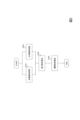
- FIG. 1 is a functional block diagram of an estimation device according to a first embodiment. The figure which shows the example of the process flow of the estimation device based on 1st embodiment.
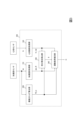
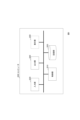
- FIG. 3 is a functional block diagram of an estimation device according to a second embodiment. The figure which shows the example of the process flow of the estimation device based on 2nd embodiment. The figure which shows the example of a structure of the computer to which this method is applied.
- conditional branch that changes the conversion formula refers to a conditional branch where the conversion formula to be applied differs depending on whether a predetermined condition is met, and the value obtained varies greatly depending on the conversion formula to be applied. means. Furthermore, in this embodiment, since conditional branching is not performed, an event that suddenly causes a large drop in estimation accuracy does not occur in an action that is not included in the assumption of case classification.
- ⁇ It is not an inference model like machine learning, but a decision model based on a single transformation formula that requires extremely little amount of calculation, so it is easy to implement on small devices with few resources.
- exercise load is estimated using both information regarding the subject's acceleration and information regarding the subject's heart rate.
- information regarding the subject's acceleration will be obtained after filtering (high-pass filtering and average deviation calculation) is performed on the output value (3D acceleration) of the 3D acceleration sensor to remove the influence of gravitational acceleration and noise. Let it be the norm of the vector (acc_fil).
- the information regarding the subject's heart rate is the increment (hr_net) of the raw output value of the heart rate sensor relative to the resting heart rate.
- RES 1+c 1 ⁇ hr_net ⁇ +c 2 ⁇ acc_fil ⁇ (1- ⁇ ) (1)
- c 1 and c 2 are constants determined in advance through experiments, simulations, etc., and are hyperparameters.
- ⁇ is a function that determines the proportion, and is determined by the heart rate and gravitational acceleration, and ⁇ [0,1]. For example, it can be expressed as follows using the sigmoid function.
- ⁇ sigmoid(a 1 ⁇ (hr_net-a 2 ⁇ acc_fil)- ⁇ ) (2) a 1 , a 2 , and ⁇ are constants determined in advance through experiments, simulations, etc., and are hyperparameters.
- ⁇ HR and ⁇ acc are constants that are added or subtracted for each term of heart rate and acceleration in order to take into account errors in actual measurement, and are constants that are determined in advance through experiments, simulations, etc., and are hyperparameters.
- Equations (1) to (3) used in this embodiment will be explained in more detail.
- changes in exercise load can have a large effect on acceleration, while others have a large effect on heart rate. For example, if you go up and down stairs at the same speed, the exercise load is greater going up.
- heart rate increases on the way up. It may be possible to create a conditional branch to identify these and provide different conversion formulas depending on the type of activity, but if the conditional branch is performed in an unintended manner, the estimation of exercise load will be greatly incorrect. It is not practical in daily life where there are many different types of activities.
- a conditional branch that changes such a conversion formula is not performed, and a function ⁇ that determines the proportional division ratio of terms derived from acceleration and terms derived from heart rate is included in a single conversion formula.
- the value range of the function ⁇ that determines the apportionment ratio is [0, 1], and specifically, when measurement is performed under ideal conditions, it is expressed as in equation (1).
- MET 1+c 1 ⁇ hr_net ⁇ +c 2 ⁇ acc_fil ⁇ (1- ⁇ ) (1)
- the function ⁇ that determines the proportional division ratio is expressed, for example, as in equation (2) by inputting a value representing the magnitude relationship between the constant times the norm of the acceleration vector and the increment of the heart rate into a sigmoid function.
- FIG. 1 is a functional block diagram of the estimation device according to the first embodiment, and FIG. 2 shows its processing flow.
- the estimation device 100 includes an acceleration preprocessing section 110, a heart rate preprocessing section 120, a proportion calculation section 130, and an exercise load estimation section 140.
- the estimation device 100 receives output data from a single-dimensional or multidimensional acceleration sensor and output data from a heartbeat sensor, estimates exercise load using these output data, and outputs an estimation result m.
- the output data of the acceleration sensor is three-dimensional acceleration acc
- the output data of the heart rate sensor is heart rate hr.
- the estimation device 100, the acceleration sensor, and the heartbeat sensor are a single device.
- the acceleration sensor measures 3D acceleration at 25Hz
- the heart rate sensor measures heart rate at 1Hz.
- the estimation device 100, the acceleration sensor, and the heart rate sensor do not need to be in the same device.
- it is possible to acquire acceleration and heart rate with an edge device send the acquired data to a smartphone or cloud using wireless communication such as Bluetooth (registered trademark) or Wi-Fi, and perform data processing on the smartphone or cloud.
- a smartphone or a server device on a cloud that estimates exercise load corresponds to the estimation device 100.
- Various methods can be considered for outputting the estimation results.
- the estimation device 100 may output the estimation result by transmitting it to an external device such as a server device on the cloud or displaying it on a display.
- the obtained three-dimensional acceleration and heart rate may contain missing values depending on the observation environment, so missing value processing is performed as necessary.
- the missing value processing may be performed by any device such as an acceleration sensor, a heartbeat sensor, the estimation device 100, or an external device (not shown).
- processing using interpolation or linear interpolation using the immediately preceding value, immediately following value, or their average value corresponds to missing value processing.
- processing using a moving window will be performed from now on.
- the width of the moving window is, for example, about 10 seconds or 1 minute.
- the step width does not need to match the width of the moving window; for example, it may be 5 seconds or 10 seconds, and the exercise load for that period is estimated for each moving window.
- the estimation device 100 is, for example, a special computer configured by loading a special program into a publicly known or dedicated computer having a central processing unit (CPU), a main memory (RAM), etc. It is a device.
- the estimation device 100 executes each process under the control of a central processing unit, for example.
- the data input to the estimation device 100 and the data obtained through each process are stored, for example, in a main storage device, and the data stored in the main storage device is read out to the central processing unit as needed and used for other purposes. used for processing.
- Each processing unit of the estimation device 100 may be configured at least in part by hardware such as an integrated circuit.
- Each storage unit included in the estimation device 100 can be configured by, for example, a main storage device such as a RAM (Random Access Memory), or middleware such as a relational database or a key-value store.
- a main storage device such as a RAM (Random Access Memory), or middleware such as a relational database or a key-value store.
- middleware such as a relational database or a key-value store.
- each storage unit does not necessarily need to be provided inside the estimation device 100, and may be configured with an auxiliary storage device configured from a hard disk, an optical disk, or a semiconductor memory element such as a flash memory. It may also be configured to be provided outside the.
- the acceleration preprocessing unit 110 receives the three-dimensional acceleration acc as input, performs preprocessing for estimating exercise load (s110), and outputs information regarding the preprocessed acceleration.
- the acceleration preprocessing unit 110 removes the influence of gravitational acceleration from the three-dimensional acceleration acc, removes noise, and integrates the three-dimensional acceleration.
- the acceleration preprocessing unit 110 calculates the average value within the moving window, and subtracts all values within the moving window by the average value. Furthermore, the acceleration preprocessing unit 110 applies a high-pass filter in order to remove noise and estimate the exercise load based on human activity. For example, let the cutoff frequency be 10Hz. After that, the acceleration preprocessing unit 110 subtracts the average value and calculates the average value within the moving window of the absolute value of the value after applying the high-pass filter. The acceleration preprocessing unit 110 calculates the norm of the three-dimensional acceleration vector using the average value of the absolute values as the component of each dimension. The norm acc_fil of the three-dimensional acceleration vector corresponds to information regarding the acceleration after preprocessing.
- the heart rate preprocessing unit 120 receives the heart rate hr, performs preprocessing for estimating exercise load (s120), and outputs information regarding the heart rate after the preprocessing.
- the acceleration preprocessing unit 110 calculates an increment in heart rate as preprocessing.
- the heart rate preprocessing unit 120 calculates the average value within the moving window, and calculates the increment in heart rate by subtracting the average value by the resting heart rate.
- the heart rate increment hr_net corresponds to information regarding the heart rate after preprocessing.
- ⁇ Proportion ratio calculation unit 130 inputs the acceleration vector norm acc_fil and the heart rate increment hr_net, uses these values to calculate the apportionment ratio of the term derived from acceleration and the term derived from heart rate (S130), and outputs the do. For example, a function ⁇ that determines the proportional division ratio between terms derived from acceleration and terms derived from heart rate is calculated. Note that the apportioned proportion is also referred to as a ratio.
- the apportionment ratio calculation unit 130 expresses a two-dimensional linear equation using the acceleration vector norm acc_fil and the heart rate increment hr_net by inputting it into a sigmoid function.
- ⁇ sigmoid(a 1 ⁇ (hr_net-a 2 ⁇ acc_fil)- ⁇ ) (2)
- the exercise load estimating unit 140 inputs the acceleration vector norm acc_fil, the heart rate increment hr_net, and the function ⁇ that determines the proportional division ratio, and uses the acceleration vector norm acc_fil and the heart rate increment hr_net to calculate a single calculation formula.
- the exercise load is estimated (S140), and the estimation result m is output.
- the conversion formula can be expressed as a constant times acc_fil and a constant times hr_net, plus 1, and can be expressed by equation (1).
- Equation (1) takes advantage of the definition of exercise load METs.
- Equation (3) takes into account the effects of actual measurement of heart rate and acceleration, and is corrected by ⁇ HR and ⁇ acc.
- the acceleration vector norm acc_fil and the heart rate increment hr_net are input to the apportionment ratio calculation unit 130 and the exercise load estimation unit 140.
- Other information may be used as long as it is information regarding the heart rate of the subject and information regarding the subject's heart rate.
- the acceleration preprocessing unit 110 and the heart rate preprocessing unit 120 may perform necessary processing to convert the output data of each sensor into information used by the proportion calculation unit 130 and the exercise load estimation unit 140.
- fft_cv is the frequency information of the acceleration data
- a3 is a constant determined in advance through experiments, simulations, etc., and is a hyperparameter. For example, the influence of gravitational acceleration is removed from the three-dimensional acceleration, and the acceleration data that has not passed through the frequency filter is subjected to Fourier transformation for each moving window of a specified size to extract the power spectrum. Then, let fft_cv be the coefficient of variation of the power spectrum. This coefficient of variation fft_cv expresses the complexity of the activity that causes acceleration.
- the movement due to the complexity of the activity can be calculated.
- Changes in load can also be expressed. For example, assuming that measurement is performed under ideal conditions, the exercise load is estimated using the following equation.
- c 3 is a constant determined in advance through experiments, simulations, etc., and is a hyperparameter. Further, for example, when considering the error in actual measurement as in equation (3), the exercise load is estimated using the following equation.
- the second embodiment includes a part that estimates the complexity of an activity.
- FIG. 3 shows a functional block diagram of the estimation device according to the second embodiment
- FIG. 4 shows its processing flow.
- the estimation device 200 includes an acceleration preprocessing section 110, a heart rate preprocessing section 120, a proportion calculation section 230, an exercise load estimation section 240, and a complexity score calculation section 250.
- the complexity score calculation unit 250 receives the three-dimensional acceleration acc as input, calculates a complexity score indicating the complexity of the subject's movement (S250), and outputs it.
- the aforementioned coefficient of variation fft_cv corresponds to the complexity score.
- the complexity score calculation unit 250 first calculates the average value within the moving window in order to remove the influence of gravitational acceleration, and subtracts all the values within the moving window by the average value. Note that a configuration may be adopted in which the subtracted value is received from the acceleration preprocessing section 110. Next, the complexity score calculation unit 250 applies a Hamming window to the subtracted values of each dimension, and then performs Fourier transformation. Further, the complexity score calculation unit 250 calculates the average value and standard deviation of the frequency for the power spectrum obtained by Fourier transform. Furthermore, the complexity score calculation unit 250 calculates the root mean square of each of the mean values and standard deviations calculated for the three dimensions, and divides the root mean square of the standard deviation by the root mean square of the average value.
- the complexity score of the activity within the moving window is calculated as fft_cv.
- the complexity score fft_cv is obtained by dividing the root mean square of the standard deviation by the root mean square of the average value, and can also be said to be expressed by the dispersion of the frequency distribution of the power spectrum.
- ⁇ Proportion ratio calculation unit 230 inputs the acceleration vector norm acc_fil, the heart rate increment hr_net, and the complexity score, and uses these values to calculate the apportionment ratio of the acceleration-derived term and the heart rate-derived term. (S230), output. For example, a function ⁇ that determines the proportional division ratio between terms derived from acceleration and terms derived from heart rate is calculated.
- the apportionment ratio calculation unit 230 expresses a three-dimensional linear equation using the acceleration vector norm acc_fil, the heart rate increment hr_net, and the complexity score fft_cv by inputting it into the sigmoid function.
- ⁇ sigmoid(a 1 ⁇ (hr_net-(a 2 ⁇ acc_fil)/(fft_cv+a 3 ))- ⁇ ) (4)
- the exercise load estimation unit 240 inputs the acceleration vector norm acc_fil, the heart rate increment hr_net, the function ⁇ that determines the proportional division ratio, and the complexity score fft_cv, and uses these values to calculate the exercise load using a single calculation formula. is estimated (S240), and the estimation result m is output.
- the conversion formula is a constant times acc_fil multiplied by the coefficient of variation fft_cv plus a constant c 3 , a constant times hr_net, and It can be expressed as the addition of 1, and can be expressed by equation (5).
- m 1+c 1 ⁇ (hr_net+ ⁇ HR) ⁇ +c 2 ⁇ (acc_fil- ⁇ acc) ⁇ (fft_cv+c 3 ) ⁇ (1- ⁇ ) (6)
- the constant term 1 in equation (6) takes advantage of the definition of exercise load METs. It has been corrected by ⁇ HR and ⁇ acc, taking into account the effects of actual measurements of heart rate and acceleration.
- equations (1) to (3) of the first embodiment are forms that give priority to simplicity, and there is room for detailed adjustment.
- the complexity score is taken into consideration both when calculating the function ⁇ and when estimating the exercise load, but the complexity score may be taken into consideration only in either one. That is, equation (4) and equations (1) and (3) may be combined, or equation (2) and equations (5) and (6) may be combined.
- a program that describes this processing content can be recorded on a computer-readable recording medium.
- the computer-readable recording medium may be of any type, such as a magnetic recording device, an optical disk, a magneto-optical recording medium, or a semiconductor memory.
- this program is performed, for example, by selling, transferring, lending, etc. portable recording media such as DVDs and CD-ROMs on which the program is recorded. Furthermore, this program may be distributed by storing the program in the storage device of the server computer and transferring the program from the server computer to another computer via a network.
- a computer that executes such a program for example, first stores a program recorded on a portable recording medium or a program transferred from a server computer in its own storage device. When executing a process, this computer reads a program stored in its own recording medium and executes a process according to the read program. In addition, as another form of execution of this program, the computer may directly read the program from a portable recording medium and execute processing according to the program, and furthermore, the program may be transferred to this computer from the server computer. The process may be executed in accordance with the received program each time.
- ASP Application Service Provider
- the above-mentioned processing is executed by a so-called ASP (Application Service Provider) service, which does not transfer programs from the server computer to this computer, but only realizes processing functions by issuing execution instructions and obtaining results.
- ASP Application Service Provider
- the present apparatus is configured by executing a predetermined program on a computer, but at least a part of these processing contents may be implemented in hardware.
Landscapes
- Health & Medical Sciences (AREA)
- Life Sciences & Earth Sciences (AREA)
- Heart & Thoracic Surgery (AREA)
- Medical Informatics (AREA)
- Biophysics (AREA)
- Pathology (AREA)
- Engineering & Computer Science (AREA)
- Biomedical Technology (AREA)
- Physical Education & Sports Medicine (AREA)
- Physics & Mathematics (AREA)
- Molecular Biology (AREA)
- Surgery (AREA)
- Animal Behavior & Ethology (AREA)
- General Health & Medical Sciences (AREA)
- Public Health (AREA)
- Veterinary Medicine (AREA)
- Measuring Pulse, Heart Rate, Blood Pressure Or Blood Flow (AREA)
Priority Applications (2)
| Application Number | Priority Date | Filing Date | Title |
|---|---|---|---|
| PCT/JP2022/027048 WO2024009487A1 (ja) | 2022-07-08 | 2022-07-08 | 推定装置、推定方法、およびプログラム |
| JP2024531873A JPWO2024009487A1 (https=) | 2022-07-08 | 2022-07-08 |
Applications Claiming Priority (1)
| Application Number | Priority Date | Filing Date | Title |
|---|---|---|---|
| PCT/JP2022/027048 WO2024009487A1 (ja) | 2022-07-08 | 2022-07-08 | 推定装置、推定方法、およびプログラム |
Publications (1)
| Publication Number | Publication Date |
|---|---|
| WO2024009487A1 true WO2024009487A1 (ja) | 2024-01-11 |
Family
ID=89453125
Family Applications (1)
| Application Number | Title | Priority Date | Filing Date |
|---|---|---|---|
| PCT/JP2022/027048 Ceased WO2024009487A1 (ja) | 2022-07-08 | 2022-07-08 | 推定装置、推定方法、およびプログラム |
Country Status (2)
| Country | Link |
|---|---|
| JP (1) | JPWO2024009487A1 (https=) |
| WO (1) | WO2024009487A1 (https=) |
Citations (4)
| Publication number | Priority date | Publication date | Assignee | Title |
|---|---|---|---|---|
| JP2017042218A (ja) * | 2015-08-24 | 2017-03-02 | オムロンヘルスケア株式会社 | 活動量計 |
| JP2018513722A (ja) * | 2015-04-09 | 2018-05-31 | コーニンクレッカ フィリップス エヌ ヴェKoninklijke Philips N.V. | バイタルサインモニタリングシステム |
| WO2020004102A1 (ja) * | 2018-06-25 | 2020-01-02 | 日本電信電話株式会社 | 機能回復訓練支援システムおよび方法 |
| JP2022019140A (ja) * | 2020-07-17 | 2022-01-27 | エヌ・ティ・ティ・コミュニケーションズ株式会社 | 運動強度算出装置、方法およびプログラム |
-
2022
- 2022-07-08 JP JP2024531873A patent/JPWO2024009487A1/ja active Pending
- 2022-07-08 WO PCT/JP2022/027048 patent/WO2024009487A1/ja not_active Ceased
Patent Citations (4)
| Publication number | Priority date | Publication date | Assignee | Title |
|---|---|---|---|---|
| JP2018513722A (ja) * | 2015-04-09 | 2018-05-31 | コーニンクレッカ フィリップス エヌ ヴェKoninklijke Philips N.V. | バイタルサインモニタリングシステム |
| JP2017042218A (ja) * | 2015-08-24 | 2017-03-02 | オムロンヘルスケア株式会社 | 活動量計 |
| WO2020004102A1 (ja) * | 2018-06-25 | 2020-01-02 | 日本電信電話株式会社 | 機能回復訓練支援システムおよび方法 |
| JP2022019140A (ja) * | 2020-07-17 | 2022-01-27 | エヌ・ティ・ティ・コミュニケーションズ株式会社 | 運動強度算出装置、方法およびプログラム |
Also Published As
| Publication number | Publication date |
|---|---|
| JPWO2024009487A1 (https=) | 2024-01-11 |
Similar Documents
| Publication | Publication Date | Title |
|---|---|---|
| Wang et al. | Integral real-time locomotion mode recognition based on GA-CNN for lower limb exoskeleton | |
| Wouda et al. | Estimation of vertical ground reaction forces and sagittal knee kinematics during running using three inertial sensors | |
| Cheng et al. | GaitTrack: Health monitoring of body motion from spatio-temporal parameters of simple smart phones | |
| CN106210269B (zh) | 一种基于智能手机的人体动作识别系统及方法 | |
| Qian et al. | Wearable computing with distributed deep learning hierarchy: a study of fall detection | |
| TW201443834A (zh) | 平衡監測與跌倒預警方法及裝置 | |
| Brock et al. | Learning to judge like a human: convolutional networks for classification of ski jumping errors | |
| Jiang et al. | Model-based data augmentation for user-independent fatigue estimation | |
| CN111345783A (zh) | 基于惯性传感器的前庭功能紊乱检测系统 | |
| CN114041780A (zh) | 一种基于惯性传感器采集的数据进行呼吸监测的方法 | |
| JP2022173490A (ja) | データ管理サーバ、データ管理方法及びデータ管理プログラム | |
| JP2017143910A (ja) | 運動強度推定装置、運動強度推定方法、プログラム | |
| CN120143990A (zh) | 基于元宇宙的多人智慧运动交互协同方法及系统 | |
| Narayan et al. | Adaptive backstepping sliding mode subject-cooperative control for a pediatric lower-limb exoskeleton robot | |
| Zhang et al. | Integrated sensing and computing for wearable human activity recognition with MEMS IMU and BLE network | |
| Qian et al. | Combining deep learning and model-based method using Bayesian Inference for walking speed estimation | |
| Jin | Design of intelligent perception module based on wireless sensor network and basketball sports attitude | |
| Falbriard et al. | Running speed estimation using shoe-worn inertial sensors: Direct integration, linear, and personalized model | |
| JP7847205B2 (ja) | 医療データに基づくディープラーニングモデルの学習及び推論方法、プログラム及び装置 | |
| WO2024009487A1 (ja) | 推定装置、推定方法、およびプログラム | |
| CN121171479A (zh) | 基于多分支时空融合网络的日常生活活动能力评估方法及系统 | |
| CN112998717B (zh) | 一种量化人体生理状态的分析方法和设备 | |
| KR20120049076A (ko) | 3차원 가속도 센서를 이용한 실시간 칼로리 계산방법 | |
| Hyunho et al. | A time-efficient continuous ramp protocol for data-driven walking energy expenditure estimation across multiple speeds | |
| Zhang | Posture detection of athletes in sports based on posture solving algorithms |
Legal Events
| Date | Code | Title | Description |
|---|---|---|---|
| 121 | Ep: the epo has been informed by wipo that ep was designated in this application |
Ref document number: 22950281 Country of ref document: EP Kind code of ref document: A1 |
|
| WWE | Wipo information: entry into national phase |
Ref document number: 2024531873 Country of ref document: JP |
|
| NENP | Non-entry into the national phase |
Ref country code: DE |
|
| 122 | Ep: pct application non-entry in european phase |
Ref document number: 22950281 Country of ref document: EP Kind code of ref document: A1 |