WO2024004084A1 - 情報処理装置、装着デバイス、情報処理方法、及び、記録媒体 - Google Patents
情報処理装置、装着デバイス、情報処理方法、及び、記録媒体 Download PDFInfo
- Publication number
- WO2024004084A1 WO2024004084A1 PCT/JP2022/025985 JP2022025985W WO2024004084A1 WO 2024004084 A1 WO2024004084 A1 WO 2024004084A1 JP 2022025985 W JP2022025985 W JP 2022025985W WO 2024004084 A1 WO2024004084 A1 WO 2024004084A1
- Authority
- WO
- WIPO (PCT)
- Prior art keywords
- living body
- information
- identification information
- information processing
- wearing
- Prior art date
- Legal status (The legal status is an assumption and is not a legal conclusion. Google has not performed a legal analysis and makes no representation as to the accuracy of the status listed.)
- Ceased
Links
Images








Classifications
-
- G—PHYSICS
- G06—COMPUTING OR CALCULATING; COUNTING
- G06F—ELECTRIC DIGITAL DATA PROCESSING
- G06F21/00—Security arrangements for protecting computers, components thereof, programs or data against unauthorised activity
- G06F21/30—Authentication, i.e. establishing the identity or authorisation of security principals
- G06F21/31—User authentication
- G06F21/32—User authentication using biometric data, e.g. fingerprints, iris scans or voiceprints
-
- G—PHYSICS
- G06—COMPUTING OR CALCULATING; COUNTING
- G06F—ELECTRIC DIGITAL DATA PROCESSING
- G06F21/00—Security arrangements for protecting computers, components thereof, programs or data against unauthorised activity
- G06F21/30—Authentication, i.e. establishing the identity or authorisation of security principals
- G06F21/31—User authentication
- G06F21/36—User authentication by graphic or iconic representation
Definitions
- This disclosure relates to the technical fields of information processing apparatuses, mounting devices, information processing methods, and recording media.
- Patent Document 1 describes a biometric information authentication system that includes a measuring device that measures a subject's biometric information and an authentication device that communicates with the measuring device.
- the measuring device determines whether or not the subject is wearing the measuring device, and when it is determined that the measuring device is being worn by the subject, the light emitting means is set to a predetermined light emitting pattern. to emit light.
- the authentication device simultaneously photographs the subject and a predetermined luminescence pattern, authenticates the subject and the measurement device based on the photographed subject and the predetermined luminescence pattern, and authenticates the measurement device while measuring the subject's biological information. If it is determined that the measuring device has been removed from the subject, the light emitting means will emit light again when the measuring device is reattached to the subject, and if the measuring device notifies that the measuring device has been removed from the subject, Perform authentication again.
- Patent Document 2 discloses various aspects directed to a wearable identity manager system.
- an association state between a user and a wearable identity manager device is ascertained based on whether the wearable identity manager device is being worn by the user, and movement data associated with movement of the wearable identity manager device. will be monitored.
- Authentication data including motion data is then transmitted based on the association state.
- the association state between the user and the wearable identity manager device is again determined based on whether the wearable identity manager device is being worn by the user.
- the wearable identity manager device is paired with the paired device, and authentication data is sent to the paired device based on the association state to facilitate user authentication via the paired device.
- Patent Document 3 discloses a credit payment system that allows member information stored in an electronic commerce database server to be used not only for electronic commerce but also for physical stores.
- an identification processing device reads a member identification code issued from an electronic commerce database server and an indefinite and unique two-dimensional code attached to an identification attachment. Thereby, the member identification code is linked to the identification attachment only within a predetermined period. The member then uses the identification device to conduct business transactions.
- a sales processing device reads the two-dimensional code of the identification equipment and the sales information code issued from the sales tally register.
- the member identification code and sales information code read by both devices are linked via the identification equipment, and the e-commerce database server stores the member information and sales information in a linked manner as credit payment information, thereby processing the credit payment. I do.
- Patent Document 4 describes a technique for preventing unauthorized use of electronic ticket terminals.
- the storage unit stores identification information of a wearable electronic ticket terminal for a user to enter a restricted area, and a face image obtained in advance of the user who owns the wearable electronic ticket terminal. and stored in association with each other.
- the communication unit is capable of communicating with a wearable electronic ticket terminal and a surveillance camera that photographs a surrounding area that the user may pass through when entering the regulated area.
- wearing detection information indicating that the wearable electronic ticket terminal has been detected to be worn on a person is received from the wearable electronic ticket terminal along with identification information
- the face image and surveillance camera corresponding to the stored identification information are received.
- the face image extracted from the captured image is compared with the face image extracted from the captured image.
- An object of this disclosure is to provide an information processing apparatus, a mounting device, an information processing method, and a recording medium that aim to improve the techniques described in prior art documents.
- One aspect of the information processing apparatus includes an association means for associating a living body with a wearable item attached to the living body, a biological information acquisition means for acquiring biological information collected from the living body, and a biological information acquisition means for acquiring biological information collected from the living body, and a biological information acquisition unit for acquiring biological information collected from the living body.
- a wearable object identification information acquisition means for acquiring wearable object identification information that can uniquely identify the wearable object from the wearable object; and determining means for determining whether a wearable item associated with the living body is worn.
- One aspect of the mounting device is a mounting device that is mounted on a living body, and includes a detection means for detecting that the mounting device is removed from the living body, and a detecting means for detecting that the mounting device is removed from the living body, and a detecting means for detecting that the mounting device is removed from the living body. If the first identification information that can uniquely identify the wearing device is presented, and it is detected that the wearing device has been removed from the living body, the presentation of the first identification information is finished, and the wearing device is removed from the living body. and a first presentation means for presenting new identification information different from the first identification information when the device is attached to the living body again.
- One aspect of the information processing method is to associate a living body with a wearable object attached to the living body, acquire biological information collected from the living body, and uniquely identify the wearable object from the wearable object attached to the living body. Wearing object identification information that can be identified by the living body is acquired, and based on the biological information and the wearing object identification information, it is determined whether the living body is wearing a wearing object that is associated with the living body.
- One aspect of the recording medium is to cause a computer to associate a living body with a wearable item attached to the living body, acquire biological information collected from the living body, and extract information from the wearable item attached to the living body.
- Information processing that acquires wearable object identification information that can uniquely identify the living body, and determines whether the living body is wearing a wearable object that is associated with the living body based on the biological information and the wearable object identification information.
- a computer program was recorded to carry out the method.
- FIG. 1 is a block diagram showing the configuration of an information processing apparatus in the first embodiment.
- FIG. 2 is a conceptual diagram of an information processing system in the second embodiment.
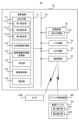
- FIG. 3 is a block diagram showing the configuration of an information processing system in the second embodiment.
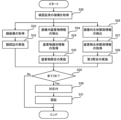
- FIG. 4 is a flowchart showing the flow of information processing operations of the information processing apparatus in the second embodiment.
- FIG. 5 is a block diagram showing the configuration of an information processing system in the third embodiment.
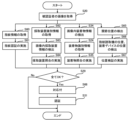
- FIG. 6 is a flowchart showing the flow of information processing operations of the information processing apparatus in the third embodiment.
- FIG. 7 is a block diagram showing the configuration of an information processing system in the fourth embodiment.
- FIG. 8 is a flowchart showing the flow of information processing operations of the information processing apparatus in the fourth embodiment.
- FIG. 1 is a block diagram showing the configuration of an information processing apparatus in the first embodiment.
- FIG. 2 is a conceptual diagram of an information processing system in the second embodiment.
- FIG. 3 is a block diagram showing the configuration of an information processing
- FIG. 9 is a block diagram showing the configuration of an information processing system in the fifth embodiment.
- FIG. 10 is a flowchart showing the flow of information processing operations of the information processing apparatus in the fifth embodiment.
- FIG. 11 is a conceptual diagram of an information processing system in the sixth embodiment.
- FIG. 12 is a block diagram showing the configuration of an information processing system in the sixth embodiment.
- FIG. 13 is a flowchart showing the flow of information processing operations of the information processing apparatus in the sixth embodiment.
- FIG. 14 is a conceptual diagram of an information processing system in the seventh embodiment.
- FIG. 15 is a block diagram showing the configuration of an information processing system in the seventh embodiment.
- FIG. 16 is a block diagram showing the configuration of an information processing system in the eighth embodiment.
- FIG. 17 is a block diagram showing the configuration of an information processing system in the ninth embodiment.
- FIG. 18 is a block diagram showing the configuration of an information processing system in the tenth embodiment.
- a first embodiment of an information processing apparatus, a mounting device, an information processing method, and a recording medium will be described.
- the information processing apparatus, the wearable device, the information processing method, and the first embodiment of the recording medium will be described using the information processing apparatus 10 to which the first embodiment of the information processing apparatus, the wearable device, the information processing method, and the recording medium are applied.
- One embodiment will be described. [1-1: Configuration of information processing device 10]
- FIG. 1 is a block diagram showing the configuration of an information processing device 10 in the first embodiment.
- the information processing device 10 includes a correspondence section 11, a biological information acquisition section 12, a wearable object identification information acquisition section 13, and a determination section 14.
- the association unit 11 associates a living body with an attachment to be attached to the living body.
- the biological information acquisition unit 12 acquires biological information collected from a living body.
- the wearable object identification information acquisition unit 13 acquires from a wearable object attached to a living body, wearable object identification information that can uniquely identify the wearable object.
- the determination unit 14 determines whether the living body is wearing the wearable item that the association unit 11 has associated with the living body, based on the biological information and the wearable item identification information.
- the information processing device 10 in the first embodiment determines whether the living body is wearing the wearable item that the correspondence unit 11 has associated with the living body, so it is possible to ensure that the living body and the wearable item are associated with each other. Can be guaranteed. Since the determining unit 14 makes the determination, the living body in question and a living body other than the living body are replaced, and it is possible to prevent a living body other than the living body from impersonating the living body by wearing an attachment.
- the information processing system S2 to which the second embodiment is applied may be applied, for example, to authentication of workers in a factory. In particular, it may be applied to authentication in cases where it is difficult to collect biometric information, such as when working under a car. It may also be applied to person authentication in an office. In particular, it may be applied to person authentication when handling confidential information that requires strict authentication. Further, for example, the present invention may be applied to authenticate a person who is permitted to use a specific service. Alternatively, the information processing system S2 may be temporarily applied, for example, to authenticate a person who is permitted to act in a specific area such as a theme park. [2-1: Overall configuration of information processing system S2]
- FIG. 2 is a conceptual diagram of the information processing system S2 in the second embodiment.
- the information processing system S2 in the second embodiment may include an information processing device 20, a mounting device D2, a device reading device 300, and a camera CAM.
- the attachment device D2 may be attached to a person to be authenticated as a living body.
- the device reading device 300 may read worn object identification information that can uniquely identify the worn device D2 from the worn device D2 worn by the person to be authenticated.
- the camera CAM may take an image of the person to be authenticated wearing the wearing device D2.
- the information processing device 20 may acquire an image from the camera CAM, acquire wearable object identification information from the device reading device 300, and associate the person to be authenticated with the worn device D2. [Wearing device D2]
- the wearing device D2 as a wearing object includes a first presentation section D21 that presents wearing object identification information that can uniquely identify the wearing device D2.
- the first presentation unit D21 may present wearing object identification information that can uniquely identify the wearing device D2 using radio waves. Further, the first presentation unit D21 may present the wearable object identification information only to the authenticated device.
- the attachment device D2 may be an RF tag worn by the person to be authenticated. RF tags may include those of various standards such as RFID and NFC.
- the mounting device D2 may be a passive RF tag. Passive RF tags do not have a built-in power supply and passively store the ID by obtaining power from the radio waves emitted by the reader and writer, and passively store the ID by obtaining power from the radio waves emitted by the reader and writer. This is an electronic circuit that transmits an ID to a person.
- the wearing device D2 is a passive RF tag, the wearing device D2 does not process information by itself, and does not perform intelligent operations such as stopping transmission of the wearing object identification information or invalidating the wearing object identification information. Good too.
- the attachment device D2 may be an active RF tag.
- An active RF tag is an electronic circuit that has a built-in power source and actively transmits an ID to the surrounding area using radio waves.
- the wearing device D2 is an active RF tag, the wearing device D2 processes information by itself and performs intelligent functions such as stopping transmission of the wearing object identification information and disabling the wearing object identification information according to its own state. You may take action.
- the wearing device D2 may be a device such as a smartphone equipped with a wireless communication function that presents wearing object identification information using radio waves. Furthermore, the attached device D2 may include a radio beacon that can present positional information. [Device reading device 300]
- the device reading device 300 may be an authentic and authenticated device whose wearable object identification information is presented by the wearable device D2.
- the attached device D2 and the device reading device 300 may perform an authentication operation with each other.
- the device reading device 300 may write the attached object identification information to the attached device D2. Conversely, a third party other than the device reading device 300 cannot write the attached object identification information into the attached device D2.
- the device reading device 300 may register the written attachment identification information in the storage medium.
- the device reading device 300 may perform authentication by calculating a complete match between the registered wearable object identification information and the read wearable object identification information. In this case, the device reading device 300 can authenticate instantly, so the person to be authenticated does not have to wait. Further, in this case, the device reading device 300 can perform authentication using an inexpensive built-in CPU.
- the device reading device 300 does not need to be able to read the ID of a forged device.
- the forged device will not be authenticated by the device reader 300.
- a third party cannot read the wearable object identification information from the wearable device D2. This can prevent impersonation of the mounting device D2 and ensure the authenticity of the mounting device D2.
- the wearing device D2 is a passive RF tag
- the person to be authenticated may hold the wearing device D2 over the device reading device 300 in order to have the device reading device 300 read the wearing object identification information.
- the device reading device 300 may receive radio waves transmitted by the mounting device D2 from a position 10 meters or more away from the mounting device D2, for example. In this case, the person to be authenticated does not need to hold the attached device D2 over the device reading device 300. Furthermore, when the mounted device D2 is an active RF tag, the device reading device 300 may measure the transmission position of the radio waves transmitted by the mounted device D2.
- the configuration shown in FIG. 2 is an example, and devices other than those shown in FIG. 2 may be added, or some devices may not be provided. Further, some of the devices may be replaced with other devices having similar functions. Furthermore, some of the functions of this embodiment may be provided by another device via a network. The functions of this embodiment may be distributed and realized by multiple devices. Alternatively, for example, the information processing apparatus 20 may have the function of the device reading apparatus 300. Alternatively, the information processing device 20 may be equipped with a camera CAM. The components included in the information processing system S2, excluding the mounting device D2, may be integrated or may be separate. [2-2: Configuration of information processing device 20]
- FIG. 3 is a block diagram of the information processing device 20 in the second embodiment.
- the information processing device 20 includes a calculation device 21 and a storage device 22.
- the information processing device 20 may include a communication device 23, an input device 24, and an output device 25.
- the information processing device 20 does not need to include at least one of the communication device 23, the input device 24, and the output device 25.
- the arithmetic device 21, the storage device 22, the communication device 23, the input device 24, and the output device 25 may be connected via a data bus 26.
- the arithmetic unit 21 is, for example, at least one of a CPU (Central Processing Unit), a GPU (Graphics Processing Unit), and an FPGA (Field Programmable Gate Array). Including. Arithmetic device 21 reads a computer program. For example, the arithmetic device 21 may read a computer program stored in the storage device 22. For example, the arithmetic device 21 may read a computer program stored in a computer-readable and non-temporary recording medium using a recording medium reading device (not shown) provided in the information processing device 20 (for example, an input device 24 described below). You can also read it using .
- a recording medium reading device not shown
- the arithmetic device 21 may obtain a computer program from a device (not shown) located outside the information processing device 20 via the communication device 23 (or other communication device) (that is, it may not be downloaded). (can be read or read). The arithmetic device 21 executes the loaded computer program. As a result, logical functional blocks for executing the operations that the information processing device 20 should perform are realized in the arithmetic device 21. That is, the arithmetic device 21 can function as a controller for realizing a logical functional block for executing operations (in other words, processing) that the information processing device 20 should perform.
- FIG. 3 shows an example of logical functional blocks implemented within the arithmetic unit 21 to execute information processing operations.
- the computing device 21 includes a mapping section 211, which is a specific example of the "corresponding means” described in the appendix to be described later, and a "biometric information acquisition means" described in the appendix to be described later.
- the biological information acquisition section 212 is a specific example of "wearable object identification information acquisition means” described in the appendix described later
- the wearable article identification information acquisition section 213 is a specific example of "wearable article identification information acquisition means" described in the appendix described later.
- the determination unit 214 is a specific example of the “determination means”
- the image acquisition unit 215 is a specific example of the “image acquisition unit” described in the appendix described below, and the “authentication unit” described in the appendix described later. ” is implemented.
- the arithmetic device 21 does not need to include at least one of the image acquisition section 215 and the authentication section 216. Details of the respective operations of the correspondence unit 211, biological information acquisition unit 212, worn object identification information acquisition unit 213, determination unit 214, image acquisition unit 215, and authentication unit 216 will be described in detail later with reference to FIG. do.
- the storage device 22 can store desired data.
- the storage device 22 may temporarily store a computer program executed by the arithmetic device 21.
- the storage device 22 may temporarily store data that is temporarily used by the arithmetic device 21 when the arithmetic device 21 is executing a computer program.
- the storage device 22 may store data that the information processing device 20 stores for a long period of time.
- the storage device 22 may include at least one of a RAM (Random Access Memory), a ROM (Read Only Memory), a hard disk device, a magneto-optical disk device, an SSD (Solid State Drive), and a disk array device. good. That is, the storage device 22 may include a non-temporary recording medium.
- the communication device 23 is capable of communicating with devices external to the information processing device 20 via a communication network (not shown).
- the information processing device 20 may transmit and receive signals to and from the device reading device 300 and the camera CAM via the communication device 23.
- the input device 24 is a device that accepts input of information to the information processing device 20 from outside the information processing device 20.
- the input device 24 may include an operating device (for example, at least one of a keyboard, a mouse, and a touch panel) that can be operated by the operator of the information processing device 20.
- the input device 24 may include a reading device capable of reading information recorded as data on a recording medium that can be externally attached to the information processing device 20.
- the output device 25 is a device that outputs information to the outside of the information processing device 20.
- the output device 25 may output the information as an image.
- the output device 25 may include a display device (so-called display) capable of displaying an image indicating information desired to be output.
- the output device 25 may output the information as audio.
- the output device 25 may include an audio device (so-called speaker) that can output audio.
- the output device 25 may output information on paper. That is, the output device 25 may include a printing device (so-called printer) that can print desired information on paper. [2-3: Information processing operation performed by the information processing device 20]
- FIG. 4 is a diagram showing the flow of information processing operations performed by the information processing device 20 in the second embodiment.
- the image acquisition unit 215 acquires an image of the person to be authenticated wearing the wearing device D2 (step S20).
- the image acquisition unit 215 may acquire an image captured by the camera CAM via the communication device 23.
- the image acquired by the image acquisition unit 215 may include at least a part of the person to be authenticated from which biometric information has been collected, and a part of the person to be authenticated where the attachment device D2 is attached.
- the biometric information acquisition unit 212 acquires biometric information collected from the person to be authenticated (step S21).
- the biometric information acquisition unit 212 may acquire biometric information collected from the person to be authenticated who is wearing the wearing device D2.
- the biometric information acquisition unit 212 may acquire biometric information collected from the person to be authenticated when the person to be authenticated wears the attachment device D2.
- the biometric information acquisition unit 212 may acquire biometric information collected from the person to be authenticated before wearing the mounting device D2.
- the biometric information acquisition unit 212 may acquire, for example, a face image or an iris image of the person to be authenticated, which is included in the image acquired by the image acquisition unit 215, as the biometric information.
- the first verification unit 2111 performs first verification using biometric information (step S22).
- the first verification unit 2111 may perform biometric authentication using an image of the person to be authenticated who is wearing the wearing device D2 as the first verification.
- the first matching unit 2111 may perform face authentication using a face image or iris authentication using an iris image, for example.
- the first verification unit 2111 may determine that the person to be authenticated is the authenticated person when the first verification is successful.
- the second matching unit 2112 detects the attached object information in the image regarding the attached device D2 included in the image (step S23).
- the in-image attached object information may be information presented by the attached device D2 reflected in the image.
- the in-image attached object information may be information that can uniquely identify the attached device D2.
- the wearing object identification information acquisition unit 213 acquires wearing object identification information that can uniquely identify the wearing device D2 from the wearing device D2 worn by the person to be authenticated (step S24).
- the wearable object identification information acquisition unit 213 may acquire from the device reading device 300 the wearable object identification information that the device reading device 300 has read from the wearing device D2.
- the second matching unit 2112 performs a second matching using the in-image wearing object information and the wearing object identification information (step S25).
- the second matching unit 2112 may check whether the wearing device D2 in the image corresponds to the wearing device D2 that presented the wearing object identification information.
- the second matching unit 2112 may determine that the wearable object identification information is reliable identification information because the identification information acquired by different acquisition methods and different acquisition routes corresponds to each other. If the second verification is successful, the second verification unit 2112 determines that the wearable object identification information acquired by the wearable object identification information acquisition unit 213 is identification information that can uniquely identify the wearable device D2 attached to the living body. You may judge.
- the third matching unit 2113 detects in-image biometric information regarding the person to be authenticated included in the image (step S26).
- the biometric information in the image may include information regarding the part of the person to be authenticated from which biometric information was collected.
- the third verification unit 2113 detects wearable object biological relationship information regarding the wearable object worn by the person to be authenticated (step S27).
- the wearable object biological relationship information may be information regarding both the body of the person to be authenticated and the wearable device D2.
- the wearable object biological relationship information may be information presented by the wearable device D2.
- the third verification unit 2113 performs a third verification using the in-image biological relationship information and the wearable object biological relationship information (step S28). If the third verification is successful, the third verification unit 2113 may guarantee that the wearing device D2 is indeed worn by the person to be authenticated.
- the association unit 211 determines whether all of the first, second, and third verifications are successful (step S29). If all the verifications are successful (Step S29: Yes), the association unit 211 associates the person to be authenticated with the mounting device D2 worn by the person to be authenticated (Step S30). That is, the matching unit 211 identifies the person to be authenticated based on the first matching performed by the first matching unit 2111, the second matching performed by the second matching unit 2112, and the third matching performed by the third matching unit 2113. and the mounting device D2 to be mounted on the person to be authenticated.
- the correspondence unit 211 determines that the person to be authenticated is the authenticated person, that the wearable object identification information presented by the wearing device D2 is reliable identification information, and that the wearing device D2 is indeed worn by the person to be authenticated. , the wearable object identification information presented by the wearable device D2 may be determined to be reliable information equivalent to the biometric information of the person to be authenticated.
- the correspondence unit 211 associates the biometric information collected from the person to be authenticated with wearable object identification information that can uniquely identify the worn device D2, and creates correspondence information 221 that associates the biometric information with the wearable object identification information. It may be stored in the storage device 22.
- the information processing device 20 may manage the association between the person to be authenticated and the attached device D2 using the association information 221.
- the authentication unit 216 authenticates the person to be authenticated using the wearable object identification information (step S31). After the matching by the matching unit 211 is completed, the authentication unit 216 may perform authentication using the wearable object identification information presented by the wearing device D2 that is being worn, as a substitute for biometric authentication. That is, when the association unit 211 guarantees the identity of the wearing device D2 worn by the person to be authenticated, the authentication unit 216 may authenticate the person to be authenticated using the wearable object identification information.
- the operations from step S20 to step S30 may be an authentication operation performed at an entrance to a specific area such as an office or factory before starting work.
- the person to be authenticated Before performing the authentication operation before starting work, the person to be authenticated may wear the mounting device D2.
- the association unit 211 may associate the authenticated person with the authenticated mounting device D2.
- the authentication unit 216 may perform belongings authentication using the attachment identification information of the attachment device D2 received by the device reading device 300, as an alternative to biometric authentication. Further, the information processing device 20 may record the behavior of the person to be authenticated in a specific area such as an office or a factory based on the wearable object identification information received by the device reading device 300.
- the determination unit 214 determines whether the person to be authenticated is identified by the correspondence unit 211 based on an operation similar to at least one of the first verification, second verification, and third verification in the correspondence unit 211. It may also be determined whether the user is wearing the wearing device D2 associated with the authenticator. The determination unit 214 may perform the operation after the association unit 211 associates the living body with the mounting device D2. The determining unit 214 may perform an operation to confirm that the association is maintained. For example, when the person being authenticated wears the wearing device D2 for a long period of time, the determination unit 214 periodically determines whether the combination of the person being authenticated and the wearing device D2 has changed. Good too.
- the wearing device D2 may not operate as expected if the information held by the wearing device D2 is damaged, such as due to a failure of the wearing device D2. There is also a possibility that the attached device D2 cannot guarantee the authentication of the person to be authenticated.
- the operation of the determination unit 214 is useful even in such a case where replacement with a new device is required.
- the correspondence unit 211 and the determination unit 214 can verify the correspondence between the living body and the mounting device D2 when the living body is wearing the mounting device D2. Due to the operations of the association unit 211 and the determination unit 214, there is no risk of impersonation even when there are multiple people around the device reading device 300.
- face authentication and iris authentication are given as examples of the first verification in S22, but the first verification may be fingerprint authentication, palm print authentication, vein authentication, ear acoustic authentication, etc. It's okay.
- the information processing device 20 in the second embodiment can guarantee the identity of the person to be authenticated and the attached device D2.
- the information processing device 20 associates the biometric information collected from the person to be authenticated with the wearable object identification information that can uniquely identify the wearable device D2, so the information processing device 20 associates the wearable object identification information presented by the wearable device D2 with the biometric information of the person to be authenticated. It can be used as reliable information equivalent to.
- Biometric authentication such as face authentication and iris authentication are useful as records that are difficult to forge, and can record evidence that a specific person was present at a certain location.
- biometric authentication there is a trade-off relationship between the accuracy of biometric authentication and the burden on the person to be authenticated. For example, when performing high-precision biometric authentication such as face authentication or iris authentication, the person to be authenticated is required to face the camera for several seconds, which places a large burden on the person to be authenticated.
- biometric authentication is useful as a strict form of authentication, but for businesses that frequently access a variety of confidential information, requiring biometric authentication for each access may reduce operational efficiency and may be difficult to adopt. many.
- biometric authentication devices in various devices and locations imposes a large cost burden. As described above, there is a need for person authentication that does not interfere with the person's movements and has an accuracy equivalent to that of highly accurate biometric authentication.
- the information processing system S2 in the second embodiment guarantees the identity of the person to be authenticated and the wearing device D2, and uses the wearable object identification information presented by the wearing device D2 to match the biometric information of the person to be authenticated. It can be used as reliable information. Therefore, it is possible to realize person authentication having the same accuracy as highly accurate biometric authentication without interfering with the person's movements.
- biometric information such as fingerprint images, face images, and iris images differs from person to person, uniqueness can be guaranteed with sufficient accuracy. That is, the authenticity of biometric information can be guaranteed.
- the authentication since the authentication is realized based on the biometric authentication of the person to be authenticated, it is extremely difficult for a third party to impersonate the person, and the authenticity of the person to be authenticated can be guaranteed.
- This embodiment can realize both the advantages of biometric authentication and guarantee of uniqueness. By linking biometric authentication, which has extremely high authentication accuracy, and belongings authentication using the wearable device D2, which places less of a burden on the person to be authenticated, it achieves highly accurate and convenient personal authentication even in situations where it is difficult to apply biometric authentication. can do. [3: Third embodiment]
- FIG. 5 is a block diagram showing the configuration of the information processing system S3 in the third embodiment.
- the information processing system S3 in the third embodiment differs from the information processing system S2 in the second embodiment in that it includes a mounting device D3 instead of the mounting device D2. .
- the mounting device D3 differs from the mounting device D2 in that it further includes a second presentation section D32.
- the second presentation unit D32 presents in-image attached object identification information as second identification information that can appear in the image and uniquely identify the attached device D3. That is, the wearing device D3 presents the wearing object identification information in an image that uniquely corresponds to the wearing object identification information, in addition to presenting the wearing object identification information using radio waves or the like.
- Other features of the information processing system S3 may be the same as other features of the information processing system S2. Therefore, in the following, parts that are different from each of the embodiments already described will be described in detail, and descriptions of other overlapping parts will be omitted as appropriate.
- the wearing device D3 may be provided with a function of presenting a unique ID that can be reflected in an image as the second presentation section D32 when the device reading device 300 writes the wearing object identification information.
- the device reading device 300 writes, for example, characters, one-dimensional codes such as barcodes, matrix-type two-dimensional codes, etc. on the surface of the wearing device D3.
- the attached object identification information in the image may be printed. Note that a device different from the device reading device 300 may print the intra-image attached object identification information on the surface of the attached device D3.
- the user of the information processing system SYS3 may paste a printed matter on which the intra-image attachment object identification information is printed on the surface of the attachment device D3. [3-1: Information processing operation performed by the information processing device 30]
- FIG. 6 is a diagram showing the flow of information processing operations performed by the information processing device 30 in the third embodiment.
- the image acquisition unit 215 acquires an image of the person to be authenticated wearing the wearing device D3 (step S20).
- the biological information acquisition unit 212 acquires a facial image as biological information from the image acquired in step S20 (step S32).
- the first verification unit 2111 performs face authentication of the person to be authenticated using the face image of the person to be authenticated acquired in step S32 (step S33).
- the second matching unit 2112 detects the in-image attached object identification information presented by the second presentation unit D32 that can uniquely identify the attached device D3, which is reflected in the image acquired in step S20 (step S34).
- the in-image attachment identification information may be, for example, characters presented by the second presentation unit D32, a one-dimensional code such as a barcode, or a matrix-type two-dimensional code.
- the in-image wearing object identification information may be, for example, a flashing light signal presented by the second presentation section D32 that can uniquely identify the wearing device D3.
- the image acquired by the image acquisition unit 215 may be a moving image.
- the wearing object identification information acquisition unit 213 acquires wearing object identification information that can uniquely identify the wearing device D3 from the wearing device D3 worn by the person to be authenticated (step S24).
- the wearable item identification information acquisition unit 213 may acquire the wearable item identification information read by the device reading device 300 and presented by the first presentation unit D21 from the device reading device 300 via the communication device 23.
- the second matching unit 2112 performs wearable object matching as second matching using the in-image wearing object identification information and the wearing object identification information (step S35).
- the second matching unit 2112 may perform matching between the wearing device D3 identified by the in-image wearing object identification information and the wearing device D3 identified by the wearing object identification information. That is, the second matching unit 2112 identifies the wearing device D3 that presented the information reflected in the image acquired by the image acquisition unit 215, and the wearing device that outputted the wearing object identification information acquired by the wearing object identification information acquisition unit 213. It may be determined whether or not D3 is the same thing.
- the third matching unit 2113 detects in-image biometric information regarding the person to be authenticated included in the image (step S26).
- the third verification unit 2113 detects wearable object biological relationship information regarding the wearable object worn by the person to be authenticated (step S27).
- the third verification unit 2113 performs a third verification using the in-image biological relationship information and the wearable object biological relationship information (step S28).
- the correspondence unit 211 determines whether or not all of the face authentication, attachment verification, and third verification are successful (step S29). If all verifications are successful (step S29: Yes), the correspondence unit 211 performs face authentication performed by the first verification unit 2111, wearable item verification performed by the second verification unit 2112, and verification performed by the third verification unit 2113. Based on the third verification, the person to be authenticated is associated with the mounting device D3 worn by the person to be authenticated (step S30). When the association unit 211 associates the person to be authenticated with the wearing device D3, the authentication unit 216 authenticates the person to be authenticated using the wearable object identification information (step S31).
- iris authentication using a face image was performed in step S33, but instead of face authentication, biometric authentication using an image such as iris authentication using an iris image may be performed.
- biometric authentication using an image such as iris authentication using an iris image may be performed.
- the wearing device D3 not only presents a unique ID using radio waves or the like, but also displays information that uniquely corresponds to the unique ID in the form of characters, barcodes, etc. It can also be presented using methods that can be reflected in images, such as dimensional codes, matrix-type two-dimensional codes, and flashing lights. As a result, the intra-image wearing object identification information appears in the image along with the person to be authenticated, so that the association between the person to be authenticated and the wearing device D3 can be verified from the image.
- the information processing system S3 can guarantee the identity of the attachment device D3 attached to the person to be authenticated.
- the information processing system S4 in the fourth embodiment differs from the information processing system S3 in the third embodiment in the operation of the third matching unit 2113.
- Other features of the information processing system S4 may be the same as other features of the information processing system S3. Therefore, in the following, parts that are different from the embodiments already described will be described in detail, and descriptions of other overlapping parts will be omitted as appropriate.
- FIG. 8 is a diagram showing the flow of information processing operations performed by the information processing device 40 in the fourth embodiment.
- the image acquisition unit 215 acquires an image of the person to be authenticated wearing the wearing device D4 (step S20).
- the biological information acquisition unit 212 acquires an iris image as biological information from the image acquired in step S20 (step S40).
- the first verification unit 2111 performs iris authentication of the person to be authenticated using the iris image of the person to be authenticated acquired in step S40 (step S41).
- the second matching unit 2112 detects the in-image wearing object identification information presented by the wearing device D4, which is reflected in the image acquired in step S20 and can uniquely identify the wearing device D4 (step S34).
- the wearing object identification information acquisition unit 213 acquires wearing object identification information that can uniquely identify the wearing device D4 from the wearing device D4 worn by the person to be authenticated (step S24).
- the second matching unit 2112 performs wearable object matching as second matching using the in-image worn object identification information and the worn object identification information (step S35).
- the third matching unit 2113 collects joint position information indicating the position of a predetermined joint of the person to be authenticated included in the image, and a collection position indicating the position at which the iris image as biometric information of the person to be authenticated included in the image was collected. Information coverage is detected (step S42).
- the third matching unit 2113 detects wearing position information that indicates the position where the wearing device D4 is being worn on the person to be authenticated, which is included in the image (step S43).
- the position where the wearing device D4 is worn on the person to be authenticated included in the image may be the position of the wearing object identification information in the image presented by the wearing device D4 detected in step S34.
- the third verification unit 2113 performs position verification using the joint position information, sampling position information, and mounting position information (step S44).
- the third verification unit 2113 may, for example, verify whether the joint position information, sampling position information, and wearing position information have a natural positional relationship.
- the third matching unit 2113 detects a predetermined joint position of the person to be authenticated from the same image, and compares the position of the body part where the biometric authentication was performed and the position of the wearing device D4 to determine the person who has undergone the biometric authentication. It may be verified that the user and the person wearing the mounting device D4 are the same person.
- the correspondence unit 211 determines whether or not all of the iris authentication, worn object verification, and position verification are successful (step S29). If all verifications are successful (step S29: Yes), the correspondence unit 211 performs iris authentication performed by the first verification unit 2111, wearable item verification performed by the second verification unit 2112, and verification performed by the third verification unit 2113. Based on the position verification, the person to be authenticated is associated with the mounting device D4 worn by the person to be authenticated (step S30). When the association unit 211 associates the person to be authenticated with the wearing device D4, the authentication unit 216 authenticates the person to be authenticated using the wearable object identification information (step S31).
- iris authentication using an iris image was performed in step S41, but instead of iris authentication, biometric authentication using an image such as facial authentication using a face image may be performed.
- biometric authentication using an image such as facial authentication using a face image may be performed.
- the information processing system S4 in the fourth embodiment is a person who has undergone biometric authentication based on the predetermined joint positions of the person to be authenticated, the position of the part where biometric authentication has been performed, and the position of the wearing device D4, which are included in the image. It can be verified that the user and the person wearing the mounting device D4 are the same person. [5: Fifth embodiment]
- the information processing system S5 in the fifth embodiment differs from the information processing system S3 in the third embodiment and the information processing system S4 in the fourth embodiment in the operation of the third matching unit 2113.
- the wearing device D5 may be a device capable of measuring pulses, such as a smart watch.
- Other characteristics of the information processing system S5 may be the same as other characteristics of the information processing system S3 or the information processing system S4. Therefore, in the following, parts that are different from the embodiments already described will be described in detail, and descriptions of other overlapping parts will be omitted as appropriate.
- FIG. 10 is a diagram showing the flow of information processing operations performed by the information processing device 50 in the fifth embodiment.
- the image acquisition unit 215 acquires an image of the person to be authenticated wearing the wearing device D5 (step S20).
- the biological information acquisition unit 212 acquires a facial image as biological information from the image acquired in step S20 (step S32).
- the first verification unit 2111 performs face authentication of the person to be authenticated using the face image of the person to be authenticated acquired in step S32 (step S33).
- the second matching unit 2112 detects the in-image wearing object identification information presented by the wearing device D5, which is reflected in the image acquired in step S20 and can uniquely identify the wearing device D5 (step S34).
- the wearing object identification information acquisition unit 213 acquires wearing object identification information that can uniquely identify the wearing device D5 from the wearing device D5 worn by the person to be authenticated (step S24).
- the second matching unit 2112 performs wearable object matching as second matching using the in-image worn object identification information and the worn object identification information (step S35).
- the third verification unit 2113 detects the first pulse of the person to be authenticated based on the image (step S60).
- the third matching unit 2113 may detect the first pulse of the person to be authenticated based on the face image.
- the third matching unit 2113 may detect the first pulse of the person to be authenticated from a change in color of the skin surface of the face, which is the biometric authentication site, in the image.
- the third verification unit 2113 acquires the second pulse of the person to be authenticated, which is detected by the wearing device D5 from the person to be authenticated (Step S61).
- the wearing device D5 may transmit information indicating the second pulse to the information processing device 50 by presenting information that can be reflected in an image, such as emitting blinking light from an LED, or by transmitting a radio signal.
- the device reading device 300 may read the second pulse detected by the wearing device D5, and the third verification unit 2113 may acquire the second pulse of the person to be authenticated from the device reading device 300.
- the third verification unit 2113 performs pulse verification as a third verification using the first pulse and the second pulse (step S62).
- the third verification unit 2113 may verify whether the first pulse and the second pulse match in timing or the like.
- the correspondence unit 211 determines whether or not all of the face authentication, attachment verification, and pulse verification are successful (step S29). If all verifications are successful (step S29: Yes), the correspondence unit 211 performs face authentication performed by the first verification unit 2111, wearable item verification performed by the second verification unit 2112, and verification performed by the third verification unit 2113. Based on the pulse rate verification, the person to be authenticated is associated with the wearing device D5 worn by the person to be authenticated (step S30). When the association unit 211 associates the person to be authenticated with the wearing device D5, the authentication unit 216 authenticates the person to be authenticated using the wearable object identification information (step S31). [5-2: Technical effects of information processing system S5]
- the information processing system S5 in the fifth embodiment verifies that the person who performed the biometric authentication and the person wearing the wearing device D5 are the same person based on pulse verification using the first pulse and the second pulse. can do.
- FIG. 11 is a conceptual diagram of the information processing system S6 in the sixth embodiment.
- the information processing system S6 in the sixth embodiment may include a collection device 400 in addition to the information processing device 60, the attached device D6, the device reading device 300, and the camera CAM. .
- the collection device 400 collects fingerprint information as biometric information.
- the information processing device 60 acquires an image from the camera CAM, acquires attachment identification information from the device reading device 300, and acquires fingerprint information from the collection device 400 and collection device identification information that can uniquely identify the collection device 400.
- the person to be authenticated and the attached device D6 may be associated with each other.
- FIG. 12 is a block diagram showing the configuration of an information processing device 60 in the sixth embodiment.
- the information processing device 60 in the sixth embodiment includes an arithmetic device 21 and a storage device 22, similar to the information processing device 20 in the second embodiment to the information processing device 50 in the fifth embodiment. It is equipped with Furthermore, the information processing device 60 may include the communication device 23, the input device 24, and the output device 25, similarly to the information processing devices 20 to 50. However, the information processing device 60 does not need to include at least one of the communication device 23, the input device 24, and the output device 25. In the information processing device 60 in the sixth embodiment, compared to the information processing device 20 in the second embodiment to the information processing device 50 in the fifth embodiment, the correspondence unit 211 included in the arithmetic device 21 has the fourth matching unit 6114. It differs in that it further includes.
- FIG. 13 is a diagram showing the flow of information processing operations performed by the information processing device 60 in the sixth embodiment.
- the image acquisition unit 215 acquires an image of the person to be authenticated wearing the wearing device D6 (step S20).
- the biometric information acquisition unit 212 obtains fingerprint information from the collection device 400 that collects fingerprint information as biometric information (step S60).
- Collection device 400 may be a fingerprint reader.
- the first verification unit 2111 performs fingerprint authentication (step S61).
- the biometric information acquisition unit 212 acquires collection device identification information that can uniquely identify the collection device 400 from the collection device 400 that collects fingerprint information (step S62). Note that step S60 and step S62 may be performed simultaneously.
- the fourth matching unit 6114 detects collection device information in the image presented by the collection device that can be reflected in the image and can uniquely identify the collection device 400 (step S63).
- the collection device 400 may present the unique ID of the collection device 400 using a method that can be reflected in an image, such as light, text, a one-dimensional code such as a bar code, or a matrix type two-dimensional code.
- the fourth verification unit 6114 performs collection device verification as a fourth verification using the collection device identification information acquired in step S62 and the in-image collection device information detected in step S63 (step S64).
- the second matching unit 2112 detects the in-image wearing object identification information presented by the wearing device D6, which is reflected in the image acquired in step S20 and can uniquely identify the wearing device D6 (step S34).
- the wearing object identification information acquisition unit 213 acquires wearing object identification information that can uniquely identify the wearing device D6 from the wearing device D6 worn by the person to be authenticated (step S24).
- the second matching unit 2112 performs wearable object matching as second matching using the in-image worn object identification information and the worn object identification information (step S35).
- the third matching unit 2113 detects joint position information indicating the position of the joint of the person to be authenticated included in the image (step S65).
- the third matching unit 2113 detects information indicating the position of the collection device 400 included in the image and attachment position information indicating the position where the attachment device D6 is attached to the person to be authenticated included in the image (step S66).
- the position of the collection device 400 included in the image may be the position of the collection device information in the image presented by the collection device 400 detected in step S63.
- the third verification unit 2113 performs position verification using the joint position information, information indicating the position of the collection device 400, and mounting position information (step S67).
- the correspondence unit 211 determines whether or not all of the fingerprint authentication, sampling device verification, attachment verification, and position verification are successful (step S29). If all verifications are successful (step S29: Yes), the correspondence unit 211 performs fingerprint authentication performed by the first verification unit 2111, worn object verification performed by the second verification unit 2112, and verification performed by the third verification unit 2113. Based on the position verification and the collection device verification performed by the fourth verification unit 6114, the person to be authenticated is associated with the mounting device D6 worn by the person to be authenticated (step S68).
- the matching unit 211 performs first matching by the first matching unit 2111, second matching by the second matching unit 2112, third matching by the third matching unit 2113, and Based on the collection device information in the image presented by the collection device that can uniquely identify the collection device 400 and the fourth verification performed by the fourth verification unit 6114 using the collection device identification information,
- the attachment device D6 attached to the attachment device D6 may be associated with the attachment device D6.
- the association unit 211 associates the person to be authenticated with the wearing device D6, the authentication unit 216 authenticates the person to be authenticated using the wearable object identification information (step S31).
- fingerprint authentication using fingerprint information was performed in step S61, but instead of fingerprint authentication, palm print authentication, vein authentication, ear acoustic authentication, etc., extracted from an image captured by the camera CAM, can be used. Authentication other than the authentication using the characteristics of the living body may be performed.
- the information processing system S6 in the sixth embodiment performs an image presented by the collection device that can be reflected in the image and that can uniquely identify the collection device 400. Since the association is made based on the internal collection device information and the fourth comparison by the fourth comparison unit 6114 using the collection device identification information, it is possible to more reliably associate the person to be authenticated with the wearing device D6. [7: Seventh embodiment]
- FIG. 14 is a conceptual diagram of the information processing system S7 in the seventh embodiment.
- the information processing system S7 in the seventh embodiment includes an information processing apparatus 70, an attached device D7, a device reading apparatus 300-1, a device reading apparatus 300-2, and a device reading apparatus 300-N. (hereinafter sometimes referred to as "device reading device 300"), and each of permitting device 500-1, permitting device 500-2, and permitting device 500-N (hereinafter sometimes referred to as "permitting device 500").
- the permission device 500 is a device that performs at least one of the following: permission for a person to be authenticated to enter/exit a specific area, and permission for the person to be authenticated to use a specific service.
- each of the device reading devices 300 may be provided in correspondence with each of the permission devices 500.
- the information processing system S7 corresponds to the permission device 500-1.
- the information processing apparatus includes a device reading device 300-1 corresponding to the permission device 500-2, a device reading device 300-2 corresponding to the permission device 500-2, and a device reading device 300-N corresponding to the permission device 500-N.
- 70 may obtain wearable object identification information from the device reading device 300 and issue an instruction to permit the operation performed by the permission device 500.
- the person to be authenticated approaches the permission device 500 that provides the service or the like that the person wants to use. Then, authentication using the wearable object identification information may be performed, and the user may be able to receive services and the like.
- FIG. 15 is a block diagram showing the configuration of an information processing device 70 in the seventh embodiment.
- the information processing device 70 in the seventh embodiment includes an arithmetic device 21 and a storage device 22, similar to the information processing device 20 in the second embodiment to the information processing device 60 in the sixth embodiment. It is equipped with Furthermore, the information processing device 70 may include a communication device 23, an input device 24, and an output device 25, similarly to the information processing devices 20 to 60. However, the information processing device 70 does not need to include at least one of the communication device 23, the input device 24, and the output device 25.
- the information processing device 70 in the seventh embodiment differs from the information processing device 20 in the second embodiment to the information processing device 60 in the sixth embodiment in that the arithmetic device 21 includes a permission unit 717.
- the permission unit 717 may give at least one permission, including permission to enter and leave a specific area, and permission to use a specific service, to the living body wearing the wearing device D7.
- Other features of the information processing device 70 may be the same as at least one other feature of the information processing devices 20 to 60. Therefore, in the following, parts that are different from each of the embodiments already described will be described in detail, and descriptions of other overlapping parts will be omitted as appropriate. [7-3: Operations performed in information processing system S7]
- the permission device 500-1 may be a device that unlocks a door provided at an entrance to a specific area.
- the device reading device 300-1 reads the wearable object identification information from the wearable device D7 worn by the person to be authenticated who approaches the entrance/exit of the specific area.
- the device reading device 300-1 transmits the attached object identification information to the information processing device 70.
- the authentication unit 216 authenticates the person to be authenticated using the wearable object identification information.
- the permission unit 717 determines whether permission to enter and exit the specific area may be granted to the authenticated person. If the permission unit 717 determines that the person to be authenticated may be permitted to enter/exit the specific area, it issues an instruction to the permission device 500-1 to permit the door unlocking operation.
- the permission device 500-1 unlocks the door provided at the entrance to the specific area, allowing the person to be authenticated to enter and exit the specific area.
- the permission device 500-2 may be a device that uses a specific service.
- the device for using a specific service may be a device for using a service including functions and information.
- a service may be a function, information, etc. that can only be used by authorized persons.
- the device reading device 300-2 reads the wearing object identification information from the wearing device D7 worn by the person to be authenticated who approaches the permission device 500-2.
- the device reading device 300-2 transmits the attachment identification information to the information processing device 70.
- the authentication unit 216 authenticates the person to be authenticated using the wearable object identification information.
- the permission unit 717 determines whether permission to log in to the permission device 500-2 may be granted to the authenticated person.
- the permission unit 717 determines that permission to log in to the permission device 500-2 may be granted to the person to be authenticated, it issues an instruction to the permission device 500-2 to permit login. Further, the permission unit 717 determines which service provided by the permission device 500-2 may be permitted to be used by the authenticated person. The permission unit 717 issues an instruction to the permission device 500-2 to allow the person to be authenticated to use the service for which it has been determined that permission to use may be given. The person to be authenticated can log in to the permission device 500-2 and use the specific service.
- the permission device 500-N may be a device that unlocks any one of a plurality of drawers provided in a specific cabinet.
- the device reading device 300-N reads the wearing object identification information from the wearing device D7 worn by the person to be authenticated who approaches the specific cabinet.
- the device reading device 300-N transmits the attachment identification information to the information processing device 70.
- the authentication unit 216 authenticates the person to be authenticated using the wearable object identification information.
- the permission unit 717 determines whether permission to open or close any drawer may be granted to the authenticated person.
- the permission unit 717 determines that permission to open and close any of the drawers may be granted to the person to be authenticated
- the permission unit 717 causes the permission device 500-N to unlock the drawer for which it has been determined that permission to open and close may be granted to the person to be authenticated. Issue an instruction to allow the operation.
- the permission device 500-N unlocks the drawer for which it has been determined that opening/closing permission may be granted, and the person to be authenticated can open/close the drawer for which it has been determined that opening/closing permission may be granted.
- the information processing device 70 authorizes the person to be authenticated to use the permitted services through authentication using the wearable object identification information presented by the wearable device D7. It's okay. Further, the information processing device 70 may manage the behavior of the person to be authenticated based on the wearable object identification information acquired from the plurality of device reading devices 300. [7-4: Technical effects of information processing system S7]
- the information processing system S7 in the seventh embodiment can provide personal authentication with accuracy equivalent to highly accurate biometric authentication without impairing business productivity.
- the information processing system S7 follows the concept of single sign-on, and when the person is authenticated by biometric authentication only once at the beginning, from then on, by authentication of the wearable identification information corresponding to the person to be authenticated, It is possible to authorize the use of various services. [8: Eighth embodiment]
- an eighth embodiment of an information processing apparatus a mounting device, an information processing method, and a recording medium
- the information processing system S8 to which the eighth embodiment of the information processing apparatus, the wearable device, the information processing method, and the recording medium is applied will be described. Eight embodiments will be described.
- FIG. 16 is a block diagram showing the configuration of the information processing system S8 in the eighth embodiment.
- the attached device D8 has a detection unit D83. It differs in that it also includes additional provisions.
- the detection unit D83 detects that the attached device D8 is removed from the living body.
- Other features of information processing system S8 may be the same as at least one other feature of information processing systems S2 to S7. Therefore, in the following, parts that are different from each of the embodiments already described will be described in detail, and descriptions of other overlapping parts will be omitted as appropriate.
- the first presentation unit D21 presents wearing object identification information that can uniquely identify the wearing device D8 when the wearing device D8 is attached to a living body.
- the device reading device 300 may write the attached object identification information into an electronic circuit included in the mounting device D8.
- the mounting device D8 is removed from the living body when a specific operation is performed.
- the specific operation may be unlocking when the mounting device D8 is locked and mounted, or may be destruction of the mounting device D8.
- the detection unit D83 detects that the attached device D8 is removed from the living body.
- the detection unit D83 may have an electrical contact that detects removal from the living body due to unlocking or destruction.
- the first presentation unit D21 ends the presentation of the wearing object identification information.
- the wearing device D8 includes an active RF tag
- the first presentation section D21 may invalidate the wearing object identification information written in the electronic circuit.
- the mounting device D8 may have a function that ensures that the correspondence between the living body and the mounting device D8 is invalidated when the mounting device D8 is unlocked or removed due to destruction.
- the first presentation section D21 may present new identification information different from the attachment identification information. That is, even if a third party attaches the attachment device D8 again, it may have a function that guarantees that the attachment identification information before being unlocked or destroyed cannot be reproduced.
- the wearable object is removed from the living body, the presentation of the wearable object identification information is terminated, and even if the wearable object is reattached, the same wearable object identification information is not presented, thereby ensuring the sameness at the time of wearing.
- the wearing device D8 may be a paper disposable wristband that includes a passive RF tag.
- the electronic circuit included in the mounting device D8 may be distributed over the entire area of the wristband.
- the wearing device D8 permanently loses its ability to present wearable object identification information. That is, when the wearing device D8 in this case is removed from the living body, it finishes presenting the wearing object identification information and cannot be reattached.
- the association unit 211 invalidates the association between the living body and the wearing device D8 when the wearing device D8 is removed from the living body.
- the detection unit D83 may present removal information indicating this to the information processing device 80 via the device reading device 300.
- the association unit 211 acquires the removal information from the attached device D8, the association unit 211 may invalidate the corresponding information registered in the association information 221. In this case, for example, even if the wearable object identification information acquisition unit 213 acquires the same identification information as the wearable object identification information of the wearable device D8 that was attached to the living body in the past, that identification information and the wearable device There is no need to associate it with the living body wearing the D8.
- the association unit 211 newly associates the living body and the mounting device D8 when the mounting device D8 is mounted on the living body again. For example, when the wearing device D8 is attached to the living body again, the device reading device 300 may write new attachment identification information into an electronic circuit included in the wearing device D8.
- the information processing system S8 in the eighth embodiment enables the association between the living body and the wearing device D8 after the wearing device D8 is attached to the living body until the wearing device D8 is removed from the living body. Can be done. [9: Ninth embodiment]
- the mounting device D9 has a structure that corresponds to the uneven shape of the living body.
- the attachment device D9 may have a mechanical structure, such as handcuffs, a collar, or a leg ring, that utilizes the uneven shape of the living body and cannot be removed from the living body until it is unlocked or destroyed.
- a specific operation such as unlocking or destruction.
- An ID device with a special structure, such as the attachment device D9 may be referred to as an "ID handcuff.”
- the information processing system S9 in the ninth embodiment can guarantee the integrity of the living body and the wearing device D9, in addition to guaranteeing the identity of the wearing device described in the above embodiment.
- the attached device D9 used in the information processing system S9 in the ninth embodiment is attached to a living body and is integrated with the living body, so impersonation using the attached device D9 is not possible. Since the attachment device D9 has guaranteed integrity, it is possible to "guarantee uniqueness" and “guarantee authenticity” similarly to biometric authentication. Additionally, due to its integrity, there is no risk of passing it on to third parties, losing it, or stealing it. Furthermore, the problem of biometric authentication, which is a burden on living organisms, does not arise. [10: 10th embodiment]
- the information processing system S10 in the tenth embodiment differs from the information processing system S3 in the third embodiment to the information processing system S9 in the ninth embodiment in the intra-image attached object identification information presented by the second presentation unit D32. .
- Other features of information processing system S10 may be the same as at least one other feature of information processing systems S3 to S9. Therefore, in the following, parts that are different from the embodiments already described will be described in detail, and descriptions of other overlapping parts will be omitted as appropriate.
- the in-image wearing object identification information is based on at least identification information that can uniquely identify the wearing device D10, and secret information known only to the wearing device D10 and the device that authenticates the wearing device D10. It may also be information indicating a hash value.
- the in-image attached object identification information includes identification information that can uniquely identify the attached device D10, secret information known only to the attached device D10 and the device that authenticates the attached device D10, and information that the attached device D10 uses to identify the attached object in the image.
- the information may also be information indicating a hash value based on the time at which the information is presented.
- the device that authenticates the attached device D10 may be any one of the information processing devices 30 to 90. [Technical effects of information processing system S10]
- the in-image attached object identification information is information that cannot be generated by a third party who does not know the secret information, and verification accuracy can be improved.
- the information used to verify correspondence with biometric authentication changes from moment to moment, by including time-related information in the attached object identification information in the image, it becomes information that cannot be generated by a third party, increasing verification accuracy. be able to.
- an association means for associating a living body with an attachment to be attached to the living body comprising: biological information acquisition means for acquiring biological information collected from the living body; a wearable object identification information acquisition means for acquiring wearable object identification information that can uniquely identify the wearable object attached to the living body; and determining means for determining whether the living body is wearing a wearable item associated with the living body by the association means, based on the biological information and the wearable item identification information.
- [Additional note 2] further comprising image acquisition means for acquiring an image of the living body wearing the attachment,
- the correspondence means is a first verification using the biometric information; second verification using intra-image wearing object identification information regarding the wearing object included in the image and the wearing object identification information; and a third verification using in-image bio-related information regarding the living body included in the image and wearable-biological related information regarding the wearable object attached to the living body.
- the information processing apparatus according to supplementary note 1, further comprising an authentication means for authenticating the living body using the wearable object identification information when the association means matches the living body and the wearable object.
- the information processing device according to supplementary note 1 or 2, wherein the association means associates biological information collected from the living body with wearable object identification information that can uniquely identify the wearable object.
- the in-image attached object identification information is in-image attached object identification information presented by the attached object that can be reflected in the image and can uniquely identify the attached object;
- the information processing device according to supplementary note 2, wherein the second verification is verification using the in-image wearing object identification information and the wearing object identification information.
- the in-image biological relationship information includes joint position information indicating the position of a joint of the living body included in the image, and collection position information indicating a position at which the biological information of the living body included in the image was collected,
- the wearable object living body related information includes wearing position information indicating a position where the wearable object is worn on the living body included in the image,
- the information processing device according to supplementary note 2, wherein the third verification is verification using the joint position information, the collection position information, and the mounting position information.
- the in-image living body related information is a first pulse of the living body detected based on the image
- the wearable object biological relationship information is a second pulse of the living body detected by the wearable object
- the information processing device according to supplementary note 2, wherein the third verification is verification using the first pulse and the second pulse.
- the biological information acquisition means acquires the biological information and collection device identification information that can uniquely identify the collection device from the collection device that collects the biological information
- the matching means includes the first verification, the second verification, the third verification, and a collection device in the image presented by the collection device that can be reflected in the image and that can uniquely identify the collection device.
- the information processing device according to supplementary note 2, wherein the living body and the attachment attached to the living body are associated based on information and a fourth verification using the collection device identification information.
- the attachment is having a structure corresponding to the uneven shape of the living body, The information processing device according to supplementary note 1 or 2, wherein when the attachment is attached to the living body, the attached state to the living body is maintained until a specific operation is received.
- the attachment is removed from the living body when subjected to a specific operation,
- the association means invalidates the association between the living body and the attached object when the attached object is removed from the living body,
- the information processing device according to appendix 1 or 2, wherein when the attachment is attached to the living body again, the association means newly associates the living body and the attachment.
- Supplementary Note 1 The apparatus further comprises permission means for receiving a presentation from the wearable object and giving at least one permission to the living body wearing the wearable object, including permission to enter and leave a specific area, and permission to use a specific service. Or the information processing device according to 2.
- a wearable device attached to a living body Detection means for detecting that the attached device is removed from the living body; When the attached device is attached to the living body, presenting first identification information that can uniquely identify the attached device, If it is detected that the attached device has been removed from the living body, ending the presentation of the first identification information; and a first presenting means for presenting new identification information different from the first identification information when the mounting device is attached to the living body again.
- the mounting device having a structure corresponding to the uneven shape of the living body, The mounting device according to supplementary note 11 or 12, wherein when the mounting device is mounted on the living body, the mounting state on the living body is maintained until a specific operation is received.
- the second identification information is information indicating a hash value based on identification information that can uniquely identify the wearing device and secret information known only to the wearing device and a device that authenticates the wearing device. 13.
- the second identification information includes identification information that can uniquely identify the wearing device, secret information known only to the wearing device and a device that authenticates the wearing device, and the second presentation means The mounted device according to appendix 12, wherein the information indicates a hash value based on the time at which the identification information is presented.
- [Additional note 17] to the computer Correlates the living body and the attachments attached to the living body, acquiring biological information collected from the living body wearing the attachment; obtaining wearable object identification information that can uniquely identify the wearable object from the wearable object attached to the living body; A recording medium on which a computer program for executing an information processing method for determining whether the living body is wearing a wearable item associated with the living body based on the biological information and the wearable item identification information. .
Landscapes
- Engineering & Computer Science (AREA)
- Computer Security & Cryptography (AREA)
- Theoretical Computer Science (AREA)
- Computer Hardware Design (AREA)
- Software Systems (AREA)
- Physics & Mathematics (AREA)
- General Engineering & Computer Science (AREA)
- General Physics & Mathematics (AREA)
- Measurement Of The Respiration, Hearing Ability, Form, And Blood Characteristics Of Living Organisms (AREA)
- Collating Specific Patterns (AREA)
Priority Applications (2)
| Application Number | Priority Date | Filing Date | Title |
|---|---|---|---|
| JP2024530161A JP7827147B2 (ja) | 2022-06-29 | 2022-06-29 | 情報処理装置、装着デバイス、情報処理方法、及び、コンピュータプログラム |
| PCT/JP2022/025985 WO2024004084A1 (ja) | 2022-06-29 | 2022-06-29 | 情報処理装置、装着デバイス、情報処理方法、及び、記録媒体 |
Applications Claiming Priority (1)
| Application Number | Priority Date | Filing Date | Title |
|---|---|---|---|
| PCT/JP2022/025985 WO2024004084A1 (ja) | 2022-06-29 | 2022-06-29 | 情報処理装置、装着デバイス、情報処理方法、及び、記録媒体 |
Publications (1)
| Publication Number | Publication Date |
|---|---|
| WO2024004084A1 true WO2024004084A1 (ja) | 2024-01-04 |
Family
ID=89382396
Family Applications (1)
| Application Number | Title | Priority Date | Filing Date |
|---|---|---|---|
| PCT/JP2022/025985 Ceased WO2024004084A1 (ja) | 2022-06-29 | 2022-06-29 | 情報処理装置、装着デバイス、情報処理方法、及び、記録媒体 |
Country Status (2)
| Country | Link |
|---|---|
| JP (1) | JP7827147B2 (https=) |
| WO (1) | WO2024004084A1 (https=) |
Cited By (1)
| Publication number | Priority date | Publication date | Assignee | Title |
|---|---|---|---|---|
| WO2026053401A1 (ja) * | 2024-09-09 | 2026-03-12 | 日本電気株式会社 | 情報処理装置、二次電池診断データの保存方法および記録媒体 |
Citations (4)
| Publication number | Priority date | Publication date | Assignee | Title |
|---|---|---|---|---|
| JP2017130011A (ja) * | 2016-01-20 | 2017-07-27 | 富士通株式会社 | 生体認証方法および生体認証装置 |
| JP2020149226A (ja) * | 2019-03-12 | 2020-09-17 | 富士ゼロックス株式会社 | 情報処理装置およびプログラム |
| JP2021171960A (ja) * | 2020-04-22 | 2021-11-01 | コニカミノルタ株式会社 | 画像形成装置、課金方法及びプログラム |
| WO2021220423A1 (ja) * | 2020-04-28 | 2021-11-04 | 日本電気株式会社 | 認証装置、認証システム、認証方法および認証プログラム |
Family Cites Families (1)
| Publication number | Priority date | Publication date | Assignee | Title |
|---|---|---|---|---|
| JP2016139967A (ja) | 2015-01-28 | 2016-08-04 | 富士通株式会社 | 着信通知方法、着信通知プログラム及び着信通知装置 |
-
2022
- 2022-06-29 WO PCT/JP2022/025985 patent/WO2024004084A1/ja not_active Ceased
- 2022-06-29 JP JP2024530161A patent/JP7827147B2/ja active Active
Patent Citations (4)
| Publication number | Priority date | Publication date | Assignee | Title |
|---|---|---|---|---|
| JP2017130011A (ja) * | 2016-01-20 | 2017-07-27 | 富士通株式会社 | 生体認証方法および生体認証装置 |
| JP2020149226A (ja) * | 2019-03-12 | 2020-09-17 | 富士ゼロックス株式会社 | 情報処理装置およびプログラム |
| JP2021171960A (ja) * | 2020-04-22 | 2021-11-01 | コニカミノルタ株式会社 | 画像形成装置、課金方法及びプログラム |
| WO2021220423A1 (ja) * | 2020-04-28 | 2021-11-04 | 日本電気株式会社 | 認証装置、認証システム、認証方法および認証プログラム |
Cited By (1)
| Publication number | Priority date | Publication date | Assignee | Title |
|---|---|---|---|---|
| WO2026053401A1 (ja) * | 2024-09-09 | 2026-03-12 | 日本電気株式会社 | 情報処理装置、二次電池診断データの保存方法および記録媒体 |
Also Published As
| Publication number | Publication date |
|---|---|
| JP7827147B2 (ja) | 2026-03-10 |
| JPWO2024004084A1 (https=) | 2024-01-04 |
Similar Documents
| Publication | Publication Date | Title |
|---|---|---|
| US5623552A (en) | Self-authenticating identification card with fingerprint identification | |
| US11055944B2 (en) | Fingerprint sensors and systems incorporating fingerprint sensors | |
| US9418205B2 (en) | Proximity-based system for automatic application or data access and item tracking | |
| US10076920B2 (en) | Card with integrated fingerprint authentication | |
| US9639838B2 (en) | Management of biometric information | |
| JP7026701B2 (ja) | スマートカードおよびスマートカードの制御方法 | |
| US20030132974A1 (en) | Free-space gesture recognition for transaction security and command processing | |
| US20080028230A1 (en) | Biometric authentication proximity card | |
| US8738918B2 (en) | Document evidence and article retrieval and identification system | |
| US11941919B2 (en) | Ticket issuing system, and ticket checking apparatus | |
| US20080172733A1 (en) | Identification and verification method and system for use in a secure workstation | |
| US10593136B2 (en) | Systems and methods for using motion pattern of a user for authentication | |
| US20100054552A1 (en) | Real-Time Remote Image Capture System | |
| US20240281811A1 (en) | System and method for biometric payment | |
| JP2022042577A (ja) | 生体情報記録媒体、生体情報記録媒体発行システム及び生体情報認証システム | |
| Rahkoyo et al. | IoT-based fingerprint attendance system: Enhancing efficiency and security in educational and organizational settings | |
| JP7827147B2 (ja) | 情報処理装置、装着デバイス、情報処理方法、及び、コンピュータプログラム | |
| CN1959750B (zh) | 现金自动存取系统及装置 | |
| JP2005293172A (ja) | 認証システム | |
| JP7767259B2 (ja) | 通行管理プログラム、通行管理方法、および通行管理装置 | |
| CN208506767U (zh) | 一种智能柜指纹识别系统 | |
| WO2021115620A1 (en) | A method and device for identifying a living organism | |
| JP7819777B2 (ja) | 情報処理システム、情報処理方法、及び、コンピュータプログラム | |
| WO2025197072A1 (ja) | 情報処理装置、情報処理方法及び記録媒体 | |
| TW201909024A (zh) | 巡邏簽到系統及其方法 |
Legal Events
| Date | Code | Title | Description |
|---|---|---|---|
| 121 | Ep: the epo has been informed by wipo that ep was designated in this application |
Ref document number: 22949359 Country of ref document: EP Kind code of ref document: A1 |
|
| WWE | Wipo information: entry into national phase |
Ref document number: 2024530161 Country of ref document: JP |
|
| NENP | Non-entry into the national phase |
Ref country code: DE |
|
| 122 | Ep: pct application non-entry in european phase |
Ref document number: 22949359 Country of ref document: EP Kind code of ref document: A1 |