WO2023276932A1 - 偏光フィルムおよび画像表示装置 - Google Patents
偏光フィルムおよび画像表示装置 Download PDFInfo
- Publication number
- WO2023276932A1 WO2023276932A1 PCT/JP2022/025527 JP2022025527W WO2023276932A1 WO 2023276932 A1 WO2023276932 A1 WO 2023276932A1 JP 2022025527 W JP2022025527 W JP 2022025527W WO 2023276932 A1 WO2023276932 A1 WO 2023276932A1
- Authority
- WO
- WIPO (PCT)
- Prior art keywords
- meth
- polarizer
- film
- acrylate
- polarizing
- Prior art date
- Legal status (The legal status is an assumption and is not a legal conclusion. Google has not performed a legal analysis and makes no representation as to the accuracy of the status listed.)
- Ceased
Links
Images

Classifications
-
- B—PERFORMING OPERATIONS; TRANSPORTING
- B32—LAYERED PRODUCTS
- B32B—LAYERED PRODUCTS, i.e. PRODUCTS BUILT-UP OF STRATA OF FLAT OR NON-FLAT, e.g. CELLULAR OR HONEYCOMB, FORM
- B32B27/00—Layered products comprising a layer of synthetic resin
- B32B27/06—Layered products comprising a layer of synthetic resin as the main or only constituent of a layer, which is next to another layer of the same or of a different material
- B32B27/08—Layered products comprising a layer of synthetic resin as the main or only constituent of a layer, which is next to another layer of the same or of a different material of synthetic resin
-
- B—PERFORMING OPERATIONS; TRANSPORTING
- B32—LAYERED PRODUCTS
- B32B—LAYERED PRODUCTS, i.e. PRODUCTS BUILT-UP OF STRATA OF FLAT OR NON-FLAT, e.g. CELLULAR OR HONEYCOMB, FORM
- B32B7/00—Layered products characterised by the relation between layers; Layered products characterised by the relative orientation of features between layers, or by the relative values of a measurable parameter between layers, i.e. products comprising layers having different physical, chemical or physicochemical properties; Layered products characterised by the interconnection of layers
- B32B7/02—Physical, chemical or physicochemical properties
- B32B7/022—Mechanical properties
-
- B—PERFORMING OPERATIONS; TRANSPORTING
- B32—LAYERED PRODUCTS
- B32B—LAYERED PRODUCTS, i.e. PRODUCTS BUILT-UP OF STRATA OF FLAT OR NON-FLAT, e.g. CELLULAR OR HONEYCOMB, FORM
- B32B7/00—Layered products characterised by the relation between layers; Layered products characterised by the relative orientation of features between layers, or by the relative values of a measurable parameter between layers, i.e. products comprising layers having different physical, chemical or physicochemical properties; Layered products characterised by the interconnection of layers
- B32B7/04—Interconnection of layers
- B32B7/12—Interconnection of layers using interposed adhesives or interposed materials with bonding properties
-
- C—CHEMISTRY; METALLURGY
- C09—DYES; PAINTS; POLISHES; NATURAL RESINS; ADHESIVES; COMPOSITIONS NOT OTHERWISE PROVIDED FOR; APPLICATIONS OF MATERIALS NOT OTHERWISE PROVIDED FOR
- C09J—ADHESIVES; NON-MECHANICAL ASPECTS OF ADHESIVE PROCESSES IN GENERAL; ADHESIVE PROCESSES NOT PROVIDED FOR ELSEWHERE; USE OF MATERIALS AS ADHESIVES
- C09J201/00—Adhesives based on unspecified macromolecular compounds
-
- G—PHYSICS
- G02—OPTICS
- G02B—OPTICAL ELEMENTS, SYSTEMS OR APPARATUS
- G02B1/00—Optical elements characterised by the material of which they are made; Optical coatings for optical elements
- G02B1/10—Optical coatings produced by application to, or surface treatment of, optical elements
- G02B1/14—Protective coatings, e.g. hard coatings
-
- G—PHYSICS
- G02—OPTICS
- G02B—OPTICAL ELEMENTS, SYSTEMS OR APPARATUS
- G02B5/00—Optical elements other than lenses
- G02B5/30—Polarising elements
-
- G—PHYSICS
- G02—OPTICS
- G02F—OPTICAL DEVICES OR ARRANGEMENTS FOR THE CONTROL OF LIGHT BY MODIFICATION OF THE OPTICAL PROPERTIES OF THE MEDIA OF THE ELEMENTS INVOLVED THEREIN; NON-LINEAR OPTICS; FREQUENCY-CHANGING OF LIGHT; OPTICAL LOGIC ELEMENTS; OPTICAL ANALOGUE/DIGITAL CONVERTERS
- G02F1/00—Devices or arrangements for the control of the intensity, colour, phase, polarisation or direction of light arriving from an independent light source, e.g. switching, gating or modulating; Non-linear optics
- G02F1/01—Devices or arrangements for the control of the intensity, colour, phase, polarisation or direction of light arriving from an independent light source, e.g. switching, gating or modulating; Non-linear optics for the control of the intensity, phase, polarisation or colour
- G02F1/13—Devices or arrangements for the control of the intensity, colour, phase, polarisation or direction of light arriving from an independent light source, e.g. switching, gating or modulating; Non-linear optics for the control of the intensity, phase, polarisation or colour based on liquid crystals, e.g. single liquid crystal display cells
- G02F1/133—Constructional arrangements; Operation of liquid crystal cells; Circuit arrangements
- G02F1/1333—Constructional arrangements; Manufacturing methods
- G02F1/1335—Structural association of cells with optical devices, e.g. polarisers or reflectors
-
- G—PHYSICS
- G09—EDUCATION; CRYPTOGRAPHY; DISPLAY; ADVERTISING; SEALS
- G09F—DISPLAYING; ADVERTISING; SIGNS; LABELS OR NAME-PLATES; SEALS
- G09F9/00—Indicating arrangements for variable information in which the information is built-up on a support by selection or combination of individual elements
-
- C—CHEMISTRY; METALLURGY
- C09—DYES; PAINTS; POLISHES; NATURAL RESINS; ADHESIVES; COMPOSITIONS NOT OTHERWISE PROVIDED FOR; APPLICATIONS OF MATERIALS NOT OTHERWISE PROVIDED FOR
- C09J—ADHESIVES; NON-MECHANICAL ASPECTS OF ADHESIVE PROCESSES IN GENERAL; ADHESIVE PROCESSES NOT PROVIDED FOR ELSEWHERE; USE OF MATERIALS AS ADHESIVES
- C09J2301/00—Additional features of adhesives in the form of films or foils
- C09J2301/30—Additional features of adhesives in the form of films or foils characterized by the chemical, physicochemical or physical properties of the adhesive or the carrier
Definitions
- the present invention relates to a polarizing film in which a first transparent protective film is laminated on at least one surface of a polarizer via a first adhesive layer.
- the polarizing film can form an image display device such as a mobile phone, a car navigation device, a monitor for a personal computer, or a television as an optical film laminated with the polarizing film alone.
- the present invention has been developed in view of the above circumstances, and provides a polarizing film having a polarizer having a non-polarizing portion and having excellent crack resistance of the polarizer even in a severe temperature environment, and an image display device. With the goal.
- the present invention is a polarizing film in which a first transparent protective film is laminated on one surface of a polarizer with a first adhesive layer interposed therebetween, wherein the polarizer has a non-polarizing portion formed in at least a part thereof.
- E1 (25) (GPa) is the indentation modulus of elasticity (25°C) of the first adhesive layer
- E2 (25) (GPa) is the indentation modulus of elasticity (25°C) of the non-polarizing portion
- E3 (25) (GPa) is the following formula (1); (E1(25) ⁇ E3(25)) (1/2) ⁇ 0.2 ⁇ E2(25) (1) It relates to a polarizing film (1) characterized by satisfying
- a second transparent protective film is laminated on the other surface of the polarizer via a second adhesive layer, and the indentation hardness (25° C.) of the second transparent protective film is H5. (25) (GPa), when the indentation hardness (25 ° C.) of the first transparent protective film is H3 (25) (GPa), H3(25)>H5(25)
- a polarizing film (2) is preferred.
- any one of the polarizing films (1) to (4) when the indentation modulus (80° C.) of the first adhesive layer is E1 (80) (GPa), E1(80)/E1(25)>0.5 A polarizing film (5) is preferred.
- any one of the polarizing films (1) to (5) when the thickness of the adhesive layer between the portion other than the non-polarizing portion of the polarizer and the first transparent protective film is d1 ( ⁇ m), d1 ⁇ 2 A polarizing film (6) is preferred.
- the present invention also relates to an image display device comprising any one of the polarizing films (1) to (6), wherein the non-polarizing portion of the polarizing film is arranged at a position corresponding to the sensor portion.
- the polarizing film according to the present invention includes a polarizer having a non-polarizing portion, the polarizer has excellent crack resistance even under severe temperature environments. The reason why such an effect is obtained can be presumed as follows.
- the indentation modulus (25°C) of the first adhesive layer is E1 (25) (GPa)
- the indentation modulus (25°C) of the non-polarizing portion is E2 (25) (GPa)
- the indentation elastic modulus (25° C.) of the first transparent protective film is E3 (25) (GPa)
- the following formula (1) (E1(25) ⁇ E3(25)) (1/2) ⁇ 0.2 ⁇ E2(25) (1) designed to meet the As a result, even in a polarizing film including a polarizer having a non-polarizing portion, the crack resistance of the polarizer is excellent in a severe temperature environment.
- the above effect can be obtained by This is to satisfy the relational expression (E1(25) ⁇ E3(25)) (1/2) ⁇ 0.2 ⁇ E2(25) (1).
- the product average indentation modulus of the indentation modulus of the first adhesive layer and the indentation modulus of the first transparent protective film that is, (E1(25) ⁇ E3(25)) (1/2)
- the stress applied to the vicinity of the boundary between the non-polarizing portion and the polarizing portion of the polarizer is reduced even under a severe temperature environment.
- the polarizing film according to the present invention has excellent crack resistance of the polarizer even under severe temperature environments.
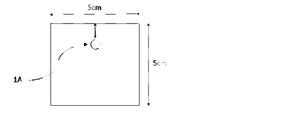
- FIG. 1 shows an example of a cross-sectional schematic diagram of a polarizing film according to one embodiment of the present invention.
- a polarizing film 10 of this embodiment is obtained by laminating a first transparent protective film 3 on one surface of a polarizer 2 with a first adhesive layer 1 interposed therebetween.
- a non-polarizing portion 2A is formed in at least a portion of the polarizer 2.
- a method for forming the non-polarizing portion of the polarizer will be described later.
- the processed surface of the non-polarizing portion is structurally more likely to be recessed than the other portion (polarizing portion) of the polarizer.
- FIG. 1 an example in which recesses 2h are formed on the processed surface of the polarizer 2 is shown.
- only the processed surface has the concave portion 2h, and the lower side of the drawing has no concave portion.
- the polarizer face opposite 2h may be somewhat concave.
- the recess 2h is the one with the greater recess depth (normally, the recess on the side of the surface processed to form the non-polarizing portion in the polarizer).
- the indentation modulus (25° C.) of the first adhesive layer 1 is E1 (25) (GPa)
- the indentation modulus (25° C.) of the non-polarizing portion 2A is E2 (25) ( GPa)
- the indentation elastic modulus (25° C.) of the first transparent protective film 3 is E3(25) (GPa)
- the following formula (1) (E1(25) ⁇ E3(25)) (1/2) ⁇ 0.2 ⁇ E2(25) (1) designed to meet the Therefore, even in the polarizing film 10 including the polarizer 2 having the non-polarizing portion 2A, the crack resistance of the polarizer 2 is excellent under a severe temperature environment.
- the second transparent protective film 5 is laminated on the other surface of the polarizer 2 via the second adhesive layer 4, and the indentation hardness of the second transparent protective film 5 (25° C. ) is H5 (25) (GPa), and the indentation hardness (25 ° C.) of the first transparent protective film 3 is H3 (25) (GPa), the following formula (2); H3(25)>H5(25) (2) is designed to be
- the polarizing film 10 is arranged so that the first transparent protective film 3 side is on the viewing side, even when touching an object with a sharp tip such as a touch pen, the impact transmitted to the polarizer 2 can be reduced, and the stress applied to the vicinity of the boundary between the non-polarizing portion 2A and the polarizing portion of the polarizer 2 can be kept small.
- the non-polarizing portion 2A has the concave portion 2h
- a step occurs on the surface of the polarizer 2 due to the concave portion 2h.
- the transparent protective film 3 is arranged on the concave portion 2h side, dimensional change in the vicinity of the concave portion 2h of the polarizer 2 can be suppressed.
- the polarizing film 10 has excellent polarizer crack resistance even under severe temperature environments. The method of measuring the indentation hardness H3(25) and H5(25) measured at 25°C will be described later.
- the indentation elastic modulus (25 ° C.) of the second transparent protective film 5 is E5 (25) (GPa) and the thickness of the second transparent protective film 5 is d5 ( ⁇ m)
- E5(25) ⁇ d5 ⁇ 200 (3) the following formula (3)
- the polarizing film 10 shown in FIG. 1 when the indentation elastic modulus (25° C.) of the second adhesive layer 4 is E4 (25) (GPa) and the thickness is d4 ( ⁇ m), the following formula (4); E4(25) ⁇ d4 ⁇ 10 (4) is satisfied, the second adhesive layer 4 becomes soft and/or the thickness of the second adhesive layer 4 becomes thin. Transmission to child 2 can be suppressed. As a result, the polarizing film 10 has excellent polarizer crack resistance even under severe temperature environments.
- the indentation elastic modulus E4(25) measured at 25° C. and the method for measuring the thickness d4 will be described later.
- a polarizer included in the polarizing film is composed of a resin film containing a dichroic substance.
- a non-polarizing portion is formed in the polarizer.
- the non-polarizing portion is typically a portion (low-concentration portion) in which the content of the dichroic substance is lower than that of the portion other than the non-polarizing portion of the polarizer.
- the non-polarizing portion in the present invention may be a layer from which the dichroic material is removed from the polarizer, or may be another layer containing no dichroic material, and is not limited to these.
- cracks and delamination can be reduced mechanically (for example, by a method of mechanically removing using an engraving blade punch, plotter, water jet, etc.) compared to the case where through holes are formed. Quality problems such as delamination (delamination) and glue extrusion are avoided.
- Examples of methods for introducing a non-polarizing portion into a polarizer include a method of forming a non-polarizing portion by decolorization by chemical treatment, or a method of forming a non-polarizing portion by decomposing a dichroic substance with laser light or the like.
- the method of forming the non-polarized portion by decolorization by chemical treatment can adjust the content of the dichroic substance itself in the non-polarized portion to be low, and the decomposition of the dichroic substance by laser light or the like.
- the transparency of the non-polarizing portion is favorably maintained, which is preferable.
- the number, arrangement, shape, size, etc. of the non-polarizing portions can be appropriately designed. For example, it is designed according to the position, shape, size, etc. of the camera section of the image display device to be mounted. Specifically, it is designed so that the non-polarizing portion does not correspond to the portion other than the camera of the image display device (for example, the image display portion).
- the transmittance of the non-polarized portion (for example, transmittance measured with light having a wavelength of 550 nm at 23° C.) is preferably 50% or more, more preferably 60% or more, still more preferably 75% or more, and particularly preferably 90% or more. is. With such a transmittance, desired transparency can be ensured. For example, when the non-polarizing portion is associated with the camera portion of the image display device, it is possible to prevent adverse effects on the photographing performance of the camera.
- the polarizer preferably exhibits absorption dichroism in the wavelength range of 380 nm to 780 nm.
- Single transmittance (Ts) of the polarizing portion of the polarizer is preferably 39% or more, more preferably 39.5% or more, still more preferably 40% or more, and particularly preferably 40.5% or more.
- the theoretical upper limit of single transmittance is 50%, and the practical upper limit is 46%.
- the single transmittance (Ts) is the Y value measured with a JIS Z8701 2-degree field of view (C light source) and corrected for visibility. name: V7100).
- the degree of polarization of the polarizing portion of the polarizer is preferably 99.8% or higher, more preferably 99.9% or higher, and even more preferably 99.95% or higher.
- the thickness of the polarizer can be set to any appropriate value.
- the thickness of the polarizer is typically 0.5 ⁇ m to 80 ⁇ m.
- the thickness is preferably 30 ⁇ m or less, more preferably 25 ⁇ m or less, even more preferably 18 ⁇ m or less, particularly preferably 12 ⁇ m or less, and even more preferably less than 8 ⁇ m.
- the thickness is preferably 1 ⁇ m or more. As the thickness of the resin film to be the polarizer is thinner, the content of the dichroic substance can be reduced in a shorter period of time in the step of contacting with the basic solution, which will be described later.
- the thickness of the polarizer is preferably 10 ⁇ m or more.
- the portion (non-polarized portion) in contact with the basic solution tends to wrinkle, and this tendency becomes significant after humidification. Wrinkles that occur in the resin film not only impair the appearance, but may also impair the function of the resulting polarizer.
- the polarizer of the present invention can effectively prevent the occurrence of wrinkles even when the thickness is 10 ⁇ m or more.
- a resin film having a thickness of less than 10 ⁇ m does not cause wrinkles, so a polarizer having an excellent appearance can be provided.
- dichroic substance examples include iodine and organic dyes. These may be used alone or in combination of two or more. Iodine is preferably used. This is because a non-polarized portion can be favorably formed by contact with a basic solution, which will be described later.
- the content of the dichroic substance in the non-polarizing portion is preferably 1.0% by weight or less, more preferably 0.5% by weight or less, and even more preferably 0.2% by weight or less. If the content of the dichroic substance in the non-polarizing portion is within this range, the desired transparency can be sufficiently imparted to the non-polarizing portion. Therefore, for example, when the non-polarizing portion is made to correspond to the camera portion of the image display device, it is possible to realize extremely excellent photographing performance in terms of both brightness and color. On the other hand, the lower limit of the content of the dichroic substance in the non-polarized portion is usually below the detection limit. When iodine is used as the dichroic substance, the iodine content can be obtained from, for example, a calibration curve prepared in advance using standard samples from X-ray intensities measured by fluorescent X-ray analysis.
- the difference between the content of the dichroic substance in other parts and the content of the dichroic substance in the non-polarized part is preferably 0.5% by weight or more, more preferably 1% by weight or more.
- PVA-based resin a polyvinyl alcohol-based resin
- PVA-based resins include polyvinyl alcohol and ethylene-vinyl alcohol copolymers.
- Polyvinyl alcohol is obtained by saponifying polyvinyl acetate.
- An ethylene-vinyl alcohol copolymer is obtained by saponifying an ethylene-vinyl acetate copolymer.
- the saponification degree of the PVA-based resin is usually 85 mol% or more and less than 100 mol%, preferably 95.0 mol% to 99.95 mol%, more preferably 99.0 mol% to 99.93 mol%. be.
- the degree of saponification can be determined according to JIS K 6726-1994. By using a PVA-based resin having such a degree of saponification, a polarizer with excellent durability can be obtained. If the degree of saponification is too high, gelation may occur.
- the average degree of polymerization of the PVA-based resin can be appropriately selected depending on the purpose.
- the average degree of polymerization is usually 1,000 to 10,000, preferably 1,200 to 4,500, more preferably 1,500 to 4,300.
- the average degree of polymerization can be determined according to JIS K 6726-1994.
- a polarizer having a non-polarizing portion can be produced by bringing a resin film containing a dichroic substance into contact with a treatment liquid, such as a basic solution.
- a treatment liquid such as a basic solution.
- the iodine content of the contact portion can be easily reduced by contacting the desired portion of the resin film with a basic solution.
- the contact may allow the basic solution to penetrate into the interior of the resin film.
- the iodine complex contained in the resin film is reduced by the base contained in the basic solution to become iodine ions.
- the iodine converted into iodine ions moves from the resin film into the solvent of the basic solution.
- the non-polarized portion thus obtained can maintain its transparency satisfactorily.
- the iodine complex is destroyed to improve the transmittance, the iodine remaining in the resin film forms an iodine complex again with the use of the polarizer, which may reduce the transmittance. Such problems are prevented when the content is reduced.
- Any appropriate method can be adopted as a method for contacting the basic solution. Examples thereof include a method of dropping, coating, or spraying a basic solution onto a resin film, and a method of immersing a resin film in a basic solution.
- the resin film may be protected with any suitable protective material so that the basic solution does not come into contact with any part other than the desired part (so that the content of the dichroic substance does not decrease) when the basic solution comes into contact.
- protective materials for resin films include protective films and surface protective films.
- the protective film can be used as it is as a protective film for the polarizer.
- a surface protective film is used temporarily during the production of a polarizer. Since the surface protection film is removed from the resin film at any appropriate timing, it is typically attached to the resin film via an adhesive layer.
- Another specific example of the protective material is photoresist.
- any appropriate basic compound can be used as the basic compound.
- Examples of basic compounds include alkali metal hydroxides such as sodium hydroxide, potassium hydroxide and lithium hydroxide, alkaline earth metal hydroxides such as calcium hydroxide, and inorganic alkali metal salts such as sodium carbonate. , organic alkali metal salts such as sodium acetate, aqueous ammonia, and the like.
- alkali metal and/or alkaline earth metal hydroxides are preferably used, and sodium hydroxide, potassium hydroxide and lithium hydroxide are more preferably used. This is because the dichroic substance can be efficiently ionized, and the non-polarization portion can be formed more easily.
- These basic compounds may be used alone or in combination of two or more.
- any appropriate solvent can be used as the solvent for the basic solution.
- Specific examples include water, alcohols such as ethanol and methanol, ethers, benzene, chloroform, and mixed solvents thereof.
- water and alcohol are preferably used because the ionized dichroic substance can be transferred well to the solvent.
- the concentration of the basic solution is, for example, 0.01N to 5N, preferably 0.05N to 3N, more preferably 0.1N to 2.5N. If the concentration is within such a range, the desired non-polarized portion can be formed satisfactorily.
- the liquid temperature of the basic solution is, for example, 20°C to 50°C.
- the contact time of the basic solution is set according to, for example, the thickness of the resin film and the type and concentration of the basic compound contained in the basic solution.
- the contact time is, for example, 5 seconds to 30 minutes, preferably 5 seconds to 5 minutes.
- the surface of the resin film is covered with a surface protective film so that at least a portion thereof is exposed when it comes into contact with a basic solution.
- a surface protective film is produced by bonding a polarizer (resin film) with a surface protective film having small circular through holes, and contacting this with a basic solution.
- the other side of the resin film is also protected.
- the resin film may be elongated.
- roll-to-roll refers to stacking while aligning the longitudinal directions of roll-shaped films while conveying them.
- Through-holes are formed in the elongated surface protective film at predetermined intervals in the longitudinal direction and/or the width direction thereof, for example.
- the method for producing a polarizer using the long resin film and the surface protective film used for producing the long resin film are disclosed in JP-A-2016-027135 and JP-A-2016-027136. , JP-A-2016-027137, JP-A-2016-027138, and JP-A-2016-027139, which are incorporated herein by reference.
- the resin film be in a state where it can be used as a polarizer when it is brought into contact with the basic solution.
- various treatments such as swelling treatment, stretching treatment, dyeing treatment with the dichroic substance, cross-linking treatment, washing treatment, and drying treatment are preferably performed.
- the resin film may be a resin layer formed on a substrate.
- a laminate of a base material and a resin layer can be obtained, for example, by a method of applying a coating liquid containing the resin film-forming material to the base material, a method of laminating a resin film on the base material, or the like.
- the above dyeing treatment is typically performed by adsorbing a dichroic substance.
- the adsorption method include a method of immersing the resin film in a dyeing solution containing a dichroic substance, a method of coating the resin film with the dyeing solution, and a method of spraying the resin film with the dyeing solution.
- a preferred method is to immerse the resin film in a dyeing solution. This is because the dichroic substance can be well adsorbed.
- an iodine aqueous solution is preferably used as the staining solution.
- the amount of iodine compounded is preferably 0.04 to 5.0 parts by weight per 100 parts by weight of water.
- an iodide is preferably used as the iodide.
- the amount of iodide compounded is preferably 0.3 to 15 parts by weight per 100 parts by weight of water.
- the resin film is typically uniaxially stretched 3 to 7 times.
- the stretching direction can correspond to the absorption axis direction of the resulting polarizer.
- the contact surface (non-polarized portion) of the basic solution is recessed compared to the other polarized portion, thereby forming a recess in the non-polarized portion.
- the maximum depth dh of the recess varies depending on the thickness of the polarizer and the contact conditions with the basic solution (temperature, time, etc.), but it is 0.1 to 2.0 ( ⁇ m), particularly 0.1 to 1 When it is 0 ( ⁇ m), visibility of the polarizing film can be easily improved under high temperature and high humidity, which is preferable.
- any appropriate step may be further included as necessary when manufacturing the polarizer used in the present invention. Examples include a step of reducing alkali metals and/or alkaline earth metals, and removing the basic solution. These steps are performed at any appropriate stage of the manufacturing method described above.
- hydroxides of alkali metals and/or alkaline earth metals can remain in the contact area.
- metal salts of alkali metals and/or alkaline earth metals can be generated at the contact portion. These can generate hydroxide ions, and the generated hydroxide ions act (decompose/reduce) dichroic substances (e.g., iodine complexes) present around the contact area, resulting in non-polarized regions (low concentration range) can be widened.
- Specific examples of the method for removing the basic solution and/or the post-crosslinking solution include washing, wiping removal with a waste cloth, suction removal, natural drying, heat drying, air drying, and reduced pressure drying.
- Cleaning liquids used for cleaning include, for example, water (pure water), alcohols such as methanol and ethanol, and mixtures thereof. Water is preferably used.
- the number of washings is not particularly limited, and washing may be performed multiple times.
- the drying temperature is, for example, 20°C to 100°C.
- a transparent protective film is laminated on at least one surface of a polarizer via an adhesive layer.
- the same or different transparent protective film may be further provided via an adhesive layer on the surface of the polarizer opposite to the surface on which the transparent protective film is laminated. .
- thermoplastic resin that is excellent in transparency, mechanical strength, thermal stability, water barrier properties, isotropy, etc.
- thermoplastic resins include cellulose resins such as triacetyl cellulose, polyester resins, polyethersulfone resins, polysulfone resins, polycarbonate resins, polyamide resins, polyimide resins, polyolefin resins, (meth)acrylic resins, cyclic Polyolefin resins (norbornene-based resins), polyarylate resins, polystyrene resins, polyvinyl alcohol resins, and mixtures thereof.
- cellulose resins such as triacetyl cellulose, polyester resins, polyethersulfone resins, polysulfone resins, polycarbonate resins, polyamide resins, polyimide resins, polyolefin resins, (meth)acrylic resins, cyclic Polyolefin resins (norbornene-based resins), polyarylate resins, polystyren
- thermoplastic resin in the transparent protective film is preferably 50 to 100% by weight, more preferably 50 to 99% by weight, still more preferably 60 to 98% by weight, and particularly preferably 70 to 97% by weight. . If the content of the thermoplastic resin in the transparent protective film is 50% by weight or less, the high transparency inherent in the thermoplastic resin may not be sufficiently exhibited.
- the material for forming the transparent protective film a material having excellent transparency, mechanical strength, thermal stability, moisture barrier properties, isotropy, etc. is preferable, and in particular, a material having a moisture permeability of 150 g/m 2 /24h or less. is more preferred, 140 g/m 2 /24h or less is particularly preferred, and 120 g/m 2 /24h or less is even more preferred.
- a functional layer such as a hard coat layer, an antireflection layer, an antisticking layer, a diffusion layer or an antiglare layer can be provided on the surface of the transparent protective film to which the polarizer is not adhered.
- Functional layers such as the hard coat layer, antireflection layer, anti-sticking layer, diffusion layer, and antiglare layer can be provided on the transparent protective film itself, or can be provided separately from the transparent protective film. can also
- the thickness of the transparent protective film can be determined as appropriate, but is generally about 1 to 500 ⁇ m, preferably 1 to 300 ⁇ m, more preferably 5 to 200 ⁇ m, from the viewpoint of strength, workability such as handleability, and thinness. preferable. Further, it is preferably 10 to 200 ⁇ m, more preferably 20 to 80 ⁇ m.
- a retardation film having a front retardation of 40 nm or more and/or a thickness direction retardation of 80 nm or more can be used as the transparent protective film.
- the front retardation is usually controlled in the range of 40-200 nm
- the thickness direction retardation is usually controlled in the range of 80-300 nm.
- a retardation film may be further provided via an adhesive layer on the surface of the polarizer opposite to the surface on which the transparent protective film is laminated.
- the retardation film examples include a birefringent film obtained by uniaxially or biaxially stretching a polymer material, an oriented film of a liquid crystal polymer, and a film in which an oriented layer of a liquid crystal polymer is supported.
- the thickness of the retardation film is not particularly limited, it is generally about 20 to 150 ⁇ m.
- Re [450] and Re [550] are the in-plane retardation values of the retardation film measured with light having wavelengths of 450 nm and 550 nm, respectively, at 23 ° C.
- ⁇ n is the slow phase of the retardation film
- In-plane birefringence that is nx-ny when the refractive indices in the axial direction and the fast axis direction are nx and ny, respectively
- NZ is the refractive index in the thickness direction of the retardation film, (ratio of nx-nz, which is birefringence in the thickness direction, to nx-ny, which is in-plane birefringence) may be used.
- a retardation layer may be provided in the polarizing film according to the present invention.
- the retardation layer may be a single layer or multiple layers, and the retardation layer may also serve as a protective layer for the polarizer.
- a retardation layer may be provided via an adhesive layer on the surface of the polarizer opposite to the surface on which the transparent protective film is laminated. The type, number, combination, arrangement position, and characteristics of the retardation layer can be appropriately set according to the purpose.
- a liquid crystalline compound is preferably used for forming the retardation layer, and a solvent containing the liquid crystalline compound can be applied using, for example, a wire bar, a gap coater, a comma coater, a gravure coater, a slot die, or the like.
- the applied liquid crystalline solution may be dried naturally or dried by heating.
- the liquid crystalline solution is preferably applied at a concentration lower than the isotropic phase-liquid crystal phase transition concentration, that is, in an isotropic phase state. In this case, the orientation can be stably achieved by a method such as rubbing treatment or photo-orientation.
- the first transparent protective film is laminated on one side of the polarizer with the first adhesive layer interposed therebetween.
- a second transparent protective film may be laminated on the other surface of the polarizer via a second adhesive layer.
- the thickness of the first adhesive layer (corresponding to d1 in the polarizing film 10 shown in FIG. 1) is preferably 2 ⁇ m or less, more preferably 1.8 ⁇ m or less, and particularly preferably 1.6 ⁇ m or less.
- the thickness of the second adhesive layer (corresponding to d4 in the polarizing film 10 shown in FIG. 1) is preferably 2 ⁇ m or less, more preferably 1.8 ⁇ m or less, and more preferably 1.6 ⁇ m or less. Especially preferred.
- the lower limit of the thickness of the first adhesive layer and the second adhesive layer can be exemplified by a thickness that can ensure adhesive strength, for example, about 0.5 ⁇ m.
- the first adhesive layer and/or the second adhesive layer can be formed, for example, from a cured product layer of a curable resin composition.
- E1 (25) (GPa) is the indentation modulus of elasticity (25°C) of the first adhesive layer
- E2 (25) ( GPa) the indentation elastic modulus (25° C.) of the first transparent protective film
- E3 (25) (GPa) the following formula (1); (E1(25) ⁇ E3(25))(1/2) ⁇ 0.2 ⁇ E2(25) (1) It is characterized in that it is designed to satisfy
- the material constituting the adhesive layer so as to satisfy the above formula (1) may be only the curable resin composition described later, or the curable resin composition may be used in combination with an easily bonding composition.
- the curable resin composition can be classified into a radically polymerizable curable resin composition and a cationically polymerizable curable resin composition.
- active energy rays with a wavelength range of 10 nm to less than 380 nm are expressed as ultraviolet rays
- active energy rays with a wavelength range of 380 nm to 800 nm are expressed as visible rays.
- Examples of monomer components constituting the radically polymerizable curable resin composition include compounds having radically polymerizable functional groups of carbon-carbon double bonds such as (meth)acryloyl groups and vinyl groups. These monomer components can be either monofunctional radically polymerizable compounds or multifunctional radically polymerizable compounds having two or more polymerizable functional groups. Moreover, these radical polymerizable compounds can be used individually by 1 type or in combination of 2 or more types. As these radically polymerizable compounds, for example, compounds having a (meth)acryloyl group are suitable. In the present invention, (meth)acryloyl means an acryloyl group and/or a methacryloyl group, and "(meth)" has the same meaning below.
- Examples of monofunctional radically polymerizable compounds include (meth)acrylamide derivatives having a (meth)acrylamide group.
- a (meth)acrylamide derivative is preferable in terms of ensuring adhesiveness to a polarizer and various transparent protective films, and in terms of high polymerization rate and excellent productivity.
- (meth)acrylamide derivatives include N-methyl(meth)acrylamide, N,N-dimethyl(meth)acrylamide, N,N-diethyl(meth)acrylamide, N-isopropyl(meth)acrylamide, N - N-alkyl group-containing (meth)acrylamide derivatives such as butyl (meth)acrylamide and N-hexyl (meth)acrylamide; N-methylol (meth)acrylamide, N-hydroxyethyl (meth)acrylamide, N-methylol-N- N-hydroxyalkyl group-containing (meth)acrylamide derivatives such as propane (meth)acrylamide; N-aminoalkyl group-containing (meth)acrylamide derivatives such as aminomethyl (meth)acrylamide and aminoethyl (meth)acrylamide; N-methoxymethyl N-alkoxy group-containing (meth)acrylamide derivatives such as acrylamide and N-ethoxymethylacrylamide; N-mercaptoal
- heterocycle-containing (meth)acrylamide derivative in which the nitrogen atom of the (meth)acrylamide group forms a heterocycle includes, for example, N-acryloylmorpholine, N-acryloylpiperidine, N-methacryloylpiperidine, N-acryloylpyrrolidine etc.
- N-hydroxyalkyl group-containing (meth)acrylamide derivatives are preferred from the viewpoint of adhesion to polarizers and various transparent protective films.
- various (meth)acrylic acid derivatives having a (meth)acryloyloxy group are preferred from the viewpoint of adhesion to polarizers and various transparent protective films.
- Examples of the (meth)acrylic acid derivative include cycloalkyl (meth)acrylates such as cyclohexyl (meth)acrylate and cyclopentyl (meth)acrylate; aralkyl (meth)acrylates such as benzyl (meth)acrylate; 2-isobornyl (meth) acrylate, 2-norbornylmethyl (meth) acrylate, 5-norbornen-2-yl-methyl (meth) acrylate, 3-methyl-2-norbornylmethyl (meth) acrylate, dicyclopentenyl (meth) )
- Polycyclic (meth)acrylates such as acrylate, dicyclopentenyloxyethyl (meth)acrylate, dicyclopentanyl (meth)acrylate; 2-methoxyethyl (meth)acrylate, 2-ethoxy Ethyl (meth) acrylate, 2-methoxymethoxyethyl (meth) acrylate, 3-
- the (meth)acrylic acid derivatives include 2-hydroxyethyl (meth)acrylate, 2-hydroxypropyl (meth)acrylate, 3-hydroxypropyl (meth)acrylate, 2-hydroxybutyl (meth)acrylate, 4- Hydroxyalkyl (meth)acrylates such as hydroxybutyl (meth)acrylate, 6-hydroxyhexyl (meth)acrylate, 8-hydroxyoctyl (meth)acrylate, 10-hydroxydecyl (meth)acrylate and 12-hydroxylauryl (meth)acrylate and hydroxyl group-containing (meth)acrylates such as [4-(hydroxymethyl)cyclohexyl]methylacrylate, cyclohexanedimethanol mono(meth)acrylate, 2-hydroxy-3-phenoxypropyl (meth)acrylate; glycidyl (meth)acrylate, Epoxy group-containing (meth)acrylates such as 4-hydroxybutyl (meth)acrylate glycidyl ether; 2,2,
- alkylaminoalkyl (meth)acrylates such as dimethylaminoethyl (meth)acrylate; 3-oxetanylmethyl (meth)acrylate, 3-methyl-oxetanylmethyl (meth)acrylate, 3-ethyl-oxetanylmethyl (meth)acrylate , 3-Butyl-oxetanylmethyl (meth)acrylate, 3-hexyloxetanylmethyl (meth)acrylate, and other oxetane group-containing (meth)acrylates; Tetrahydrofurfuryl (meth)acrylate, butyrolactone (meth)acrylate, and other heterocycles and (meth) acrylates, hydroxypivalic acid neopentyl glycol (meth) acrylic acid adducts, p-phenylphenol (meth) acrylate and the like.
- examples of monofunctional radically polymerizable compounds include carboxyl group-containing monomers such as (meth)acrylic acid, carboxyethyl acrylate, carboxypentyl acrylate, itaconic acid, maleic acid, fumaric acid, crotonic acid, and isocrotonic acid.
- Examples of monofunctional radically polymerizable compounds include lactam vinyl monomers such as N-vinylpyrrolidone, N-vinyl- ⁇ -caprolactam, and methylvinylpyrrolidone; vinylpyridine, vinylpiperidone, vinylpyrimidine, vinylpiperazine, vinylpyrazine, Vinyl-based monomers having a nitrogen-containing heterocyclic ring such as vinylpyrrole, vinylimidazole, vinyloxazole, and vinylmorpholine are included.
- lactam vinyl monomers such as N-vinylpyrrolidone, N-vinyl- ⁇ -caprolactam, and methylvinylpyrrolidone
- vinylpyridine vinylpiperidone
- vinylpyrimidine vinylpiperazine
- vinylpyrazine vinylpyrazine
- Vinyl-based monomers having a nitrogen-containing heterocyclic ring such as vinylpyrrole, vinylimidazole, vinyloxazole, and vinylmorpholine are included.
- a radically polymerizable compound having an active methylene group can be used as the monofunctional radically polymerizable compound.
- a radically polymerizable compound having an active methylene group is a compound having an active double bond group such as a (meth)acrylic group at the end or in the molecule and an active methylene group.
- Active methylene groups include, for example, an acetoacetyl group, an alkoxymalonyl group, a cyanoacetyl group, and the like.
- the active methylene group is an acetoacetyl group.
- radically polymerizable compounds having an active methylene group include 2-acetoacetoxyethyl (meth)acrylate, 2-acetoacetoxypropyl (meth)acrylate, 2-acetoacetoxy-1-methylethyl (meth)acrylate, and the like.
- the radically polymerizable compound having an active methylene group is preferably acetoacetoxyalkyl (meth)acrylate.
- polyfunctional radically polymerizable compounds having two or more polymerizable functional groups include tripropylene glycol di(meth)acrylate, tetraethylene glycol di(meth)acrylate, and 1,6-hexanediol di(meth)acrylate.
- Aronix M-220 manufactured by Toagosei Co., Ltd.
- light acrylate 1,9ND-A manufactured by Kyoeisha Chemical Co., Ltd.
- light acrylate DGE-4A manufactured by Kyoeisha Chemical Co., Ltd.
- light acrylate DCP-A manufactured by Sartomer
- SR-531 manufactured by Sartomer
- CD-536 manufactured by Sartomer
- epoxy (meth)acrylates, urethane (meth)acrylates, polyester (meth)acrylates, various (meth)acrylate monomers, and the like can also be used as necessary.
- the curable resin composition may contain an acrylic oligomer obtained by polymerizing a (meth)acrylic monomer in addition to the radically polymerizable compound.
- an acrylic oligomer obtained by polymerizing a (meth)acrylic monomer in addition to the radically polymerizable compound.
- an acrylic oligomer obtained by polymerizing a (meth)acrylic monomer should also have a low viscosity.
- the acrylic oligomer which has a low viscosity and can prevent curing shrinkage of the adhesive layer preferably has a weight-average molecular weight (Mw) of 15,000 or less, more preferably 10,000 or less, and particularly 5,000 or less. preferable.
- Mw weight-average molecular weight
- the weight average molecular weight (Mw) of the acrylic oligomer is preferably 500 or more, more preferably 1000 or more.
- the (meth)acrylic monomer constituting the acrylic oligomer include methyl (meth)acrylate, ethyl (meth)acrylate, n-propyl (meth)acrylate, isopropyl (meth)acrylate, 2-methyl- 2-nitropropyl (meth)acrylate, n-butyl (meth)acrylate, isobutyl (meth)acrylate, S-butyl (meth)acrylate, t-butyl (meth)acrylate, n-pentyl (meth)acrylate, t-pentyl (meth) acrylate, 3-pentyl (meth) acrylate, 2,2-dimethylbutyl (meth) acrylate, n-hexyl (meth) acrylate, cetyl (meth) acrylate, n-octyl (meth) acrylate, 2-ethylhexyl ( (Meth)acryl
- acrylic oligomer (E) examples include "ARUFON” manufactured by Toagosei Co., Ltd., “ACT FLOW” manufactured by Soken Chemical Co., Ltd., and "JONCRYL” manufactured by BASF Japan.
- the amount of the acrylic oligomer compounded is usually preferably 15 parts by weight or less with respect to 100 parts by weight of the total amount of the monomer components in the curable resin composition. If the content of the acrylic oligomer in the composition is too high, the reaction rate when the composition is irradiated with an active energy ray will decrease significantly, resulting in poor curing in some cases. On the other hand, in order to sufficiently suppress curing shrinkage of the adhesive layer, the composition preferably contains 3 parts by weight or more of the acrylic oligomer.
- the curable resin composition preferably contains a photopolymerization initiator.
- a photopolymerization initiator is appropriately selected depending on the active energy ray. When curing with ultraviolet light or visible light, a photopolymerization initiator that is cleaved with ultraviolet light or visible light is used.
- photopolymerization initiator examples include benzophenone compounds such as benzyl, benzophenone, benzoylbenzoic acid, and 3,3′-dimethyl-4-methoxybenzophenone; 4-(2-hydroxyethoxy)phenyl(2-hydroxy-2 -propyl)ketone, ⁇ -hydroxy- ⁇ , ⁇ '-dimethylacetophenone, 2-methyl-2-hydroxypropiophenone, ⁇ -hydroxycyclohexylphenylketone and other aromatic ketone compounds; methoxyacetophenone, 2,2-dimethoxy- Acetophenone compounds such as 2-phenylacetophenone, 2,2-diethoxyacetophenone, 2-methyl-1-[4-(methylthio)-phenyl]-2-morpholinopropane-1; benzoin methyl ether, Benzoin ether compounds such as benzoin ethyl ether, benzoin isopropyl ether, benzoin butyl ether, and anisoin methyl ether
- the blending amount of the photopolymerization initiator is 20 parts by weight or less with respect to 100 parts by weight of the total amount of the polymerizable compound A.
- the blending amount of the photopolymerization initiator is preferably 0.01 to 20 parts by weight, more preferably 0.05 to 10 parts by weight, further preferably 0.1 to 5 parts by weight.
- the curable resin composition when used as a visible light-curable type, it is preferable to use a photopolymerization initiator that is particularly sensitive to light of 380 nm or more.
- a photopolymerization initiator highly sensitive to light of 380 nm or more will be described later.
- the photopolymerization initiator a compound represented by the following general formula (1); (wherein R 1 and R 2 represent —H, —CH 2 CH 3 , —iPr or Cl, and R 1 and R 2 may be the same or different), or the general formula ( It is preferable to use the compound represented by 1) together with a photopolymerization initiator highly sensitive to light of 380 nm or longer, which will be described later.
- the adhesiveness is superior to that when a photopolymerization initiator highly sensitive to light of 380 nm or more is used alone.
- diethylthioxanthone in which R 1 and R 2 are —CH 2 CH 3 is particularly preferred.
- the composition ratio of the compound represented by general formula (1) in the curable resin composition is preferably 0.1 to 5% by weight, preferably 0.5 to 5% by weight, based on the total amount of the curable resin composition. It is more preferably 4% by weight, and even more preferably 0.9 to 3% by weight.
- polymerization initiation aids include triethylamine, diethylamine, N-methyldiethanolamine, ethanolamine, 4-dimethylaminobenzoic acid, methyl 4-dimethylaminobenzoate, ethyl 4-dimethylaminobenzoate, and isoamyl 4-dimethylaminobenzoate. and ethyl 4-dimethylaminobenzoate is particularly preferred.
- the amount added is usually 0 to 5% by weight, preferably 0 to 4% by weight, most preferably 0 to 3% by weight, based on the total amount of the curable resin composition. .
- a known photopolymerization initiator can be used together as needed. Since the transparent protective film having UV absorbability does not transmit light of 380 nm or less, it is preferable to use a photopolymerization initiator that is highly sensitive to light of 380 nm or more.
- 2-methyl-1-(4-methylthiophenyl)-2-morpholinopropan-1-one 2-benzyl-2-dimethylamino-1-(4-morpholinophenyl)-butanone-1 , 2-(dimethylamino)-2-[(4-methylphenyl)methyl]-1-[4-(4-morpholinyl)phenyl]-1-butanone, 2,4,6-trimethylbenzoyl-diphenyl-phosphine oxide, bis(2,4,6-trimethylbenzoyl)-phenylphosphine oxide, bis( ⁇ 5-2,4-cyclopentadien-1-yl)-bis(2,6-difluoro-3-(1H-pyrrole- 1-yl)-phenyl) titanium and the like.
- the curable resin composition preferably contains a silane coupling agent.
- the silane coupling agent include vinyltrichlorosilane, vinyltrimethoxysilane, vinyltriethoxysilane, 2-(3,4 epoxycyclohexyl)ethyltrimethoxysilane, and 3-glycide as active energy ray-curable compounds.
- xypropyltrimethoxysilane 3-glycidoxypropylmethyldiethoxysilane, 3-glycidoxypropyltriethoxysilane, p-styryltrimethoxysilane, 3-methacryloxypropylmethyldimethoxysilane, 3-methacryloxypropyltrimethoxysilane silane, 3-methacryloxypropylmethyldiethoxysilane, 3-methacryloxypropyltriethoxysilane, 3-acryloxypropyltrimethoxysilane, and the like.
- the amount of the silane coupling agent is preferably in the range of 0.01 to 20% by mass, preferably 0.05 to 15% by mass, and 0.1 to 10% by mass with respect to the total amount of the adhesive composition. % is more preferred. This is because if the amount exceeds 20% by mass, the storage stability of the adhesive composition deteriorates, and if the amount is less than 0.1% by mass, the effect of adhesive water resistance is not sufficiently exhibited.
- non-active energy ray-curable silane coupling agents other than the above include 3-ureidopropyltriethoxysilane, 3-chloropropyltrimethoxysilane, 3-mercaptopropylmethyldimethoxysilane, and 3-mercaptopropyltrimethoxysilane.
- the curable resin composition if necessary, further contains a compound according to the following general formula (3);
- R 6 and R 7 are each independently a hydrogen atom, an optionally substituted aliphatic hydrocarbon group, an aryl group, or a heterocyclic group represents), preferably a compound according to the general formula (3′);
- the adhesive composition can be incorporated into the adhesive composition.
- the adhesiveness to the polarizer and the transparent protective film may be improved, which is preferable.
- the content of the compound represented by the general formula (3) in the curable water-dispersible composition is 0.001 to 50% by mass. preferably 0.1 to 30% by mass, most preferably 1 to 10% by mass.
- the aliphatic hydrocarbon group is a linear or branched alkyl group which may have a substituent having 1 to 20 carbon atoms, and a substituent having 3 to 20 carbon atoms.
- cyclic alkyl groups which may be substituted, and alkenyl groups having 2 to 20 carbon atoms. optionally substituted naphthyl groups and the like, and examples of heterocyclic groups include 5- or 6-membered ring groups containing at least one heteroatom and optionally having substituents. These may be linked together to form a ring.
- R 6 and R 7 are preferably a hydrogen atom or a linear or branched alkyl group having 1 to 3 carbon atoms, most preferably a hydrogen atom.
- X possessed by the compound represented by the general formula (3) is a functional group containing a reactive group, which is a functional group capable of reacting with the curable component constituting the adhesive layer, and the reactive group contained in X is is, for example, hydroxyl group, amino group, aldehyde group, carboxyl group, vinyl group, (meth)acryl group, styryl group, (meth)acrylamide group, vinyl ether group, epoxy group, oxetane group, ⁇ , ⁇ -unsaturated carbonyl groups, mercapto groups, halogen groups, and the like.
- the reactive group contained in X is a vinyl group, a (meth)acryl group, a styryl group, a (meth)acrylamide group, a vinyl ether group, X is preferably at least one reactive group selected from the group consisting of an epoxy group, an oxetane group and a mercapto group, especially when the adhesive composition constituting the adhesive layer is radically polymerizable.
- the reactive group is preferably at least one reactive group selected from the group consisting of a (meth)acryl group, a styryl group and a (meth)acrylamide group, and the compound represented by the general formula (1) is
- the reactivity is high and the copolymerization rate with the active energy ray-curable resin composition is increased, which is more preferable.
- the (meth)acrylamide group has a high polarity and is excellent in adhesiveness, so that the effect of the present invention can be efficiently obtained.
- the reactive group contained in X is a hydroxyl group, an amino group, an aldehyde, a carboxyl group, a vinyl ether group, an epoxy group, an oxetane group, or a mercapto group. It is preferable to have at least one selected functional group, especially when it has an epoxy group, it is preferable for excellent adhesion between the resulting curable resin layer and the adherend, and when it has a vinyl ether group, the curable resin composition is preferred because of its excellent curability.
- the compound represented by the general formula (3) may be one in which the reactive group and the boron atom are directly bonded.
- the compound represented by is preferably one in which a reactive group and a boron atom are bonded via an organic group, that is, a compound represented by general formula (3′).
- a compound represented by general formula (3) when the compound represented by the general formula (3) is bonded to a reactive group via an oxygen atom bonded to a boron atom, the adhesive water resistance of the polarizing film tends to deteriorate.
- the compound represented by the general formula (3) does not have a boron-oxygen bond, but has a boron-carbon bond and contains a reactive group by bonding a boron atom and an organic group.
- the organic group specifically means an organic group having 1 to 20 carbon atoms which may have a substituent, and more specifically, for example, having a substituent having 1 to 20 carbon atoms.
- a naphthylene group which may have 20 substituents may be mentioned.
- esters of hydroxyethylacrylamide and boric acid in addition to the compounds exemplified above, esters of hydroxyethylacrylamide and boric acid, esters of methylolacrylamide and boric acid, esters of hydroxyethyl acrylate and boric acid, and hydroxybutyl Esters of (meth)acrylates and boric acid can be exemplified, such as esters of acrylate and boric acid.
- the cationically polymerizable compound used in the cationically polymerizable curable resin composition includes a monofunctional cationically polymerizable compound having one cationically polymerizable functional group in the molecule and two or more cationically polymerizable functional groups in the molecule. It is classified into polyfunctional cationic polymerizable compounds with Since the monofunctional cationically polymerizable compound has a relatively low liquid viscosity, the liquid viscosity can be reduced by including it in the cationically polymerizable curable resin composition. In addition, the monofunctional cationically polymerizable compound often has a functional group that exhibits various functions. Various functions can be expressed in the cured product of the curable resin composition.
- the polyfunctional cationically polymerizable compound can three-dimensionally crosslink the cured product of the cationically polymerizable curable resin composition, it is preferably contained in the cationically polymerizable curable resin composition.
- the ratio of the monofunctional cationically polymerizable compound and the polyfunctional cationically polymerizable compound is such that 100 parts by weight of the monofunctional cationically polymerizable compound is mixed with 10 parts by weight to 1000 parts by weight of the polyfunctional cationically polymerizable compound. is preferred.
- Examples of cationic polymerizable functional groups include epoxy groups, oxetanyl groups, and vinyl ether groups.
- Compounds having an epoxy group include aliphatic epoxy compounds, alicyclic epoxy compounds, and aromatic epoxy compounds. It is particularly preferred to contain an alicyclic epoxy compound.
- Alicyclic epoxy compounds include 3,4-epoxycyclohexylmethyl-3,4-epoxycyclohexanecarboxylate, caprolactone-modified products of 3,4-epoxycyclohexylmethyl-3,4-epoxycyclohexanecarboxylate, and trimethylcaprolactone-modified products.
- Compounds having an oxetanyl group improve the curability of the cationic polymerizable adhesive composition
- Compounds having an oxetanyl group include 3-ethyl-3-hydroxymethyloxetane, 1,4-bis[(3-ethyl-3-oxetanyl ) methoxymethyl]benzene, 3-ethyl-3-(phenoxymethyl)oxetane, di[(3-ethyl-3-oxetanyl)methyl]ether, 3-ethyl-3-(2-ethylhexyloxymethyl)oxetane, phenol Aron oxetane OXT-101, Aron oxetane OXT-121, Aron oxetane OXT-211, Aron oxetane OXT-221, Aron oxetane OXT-212 (manufactured by Toagosei Co., Ltd.) and
- a compound having a vinyl ether group has the effect of improving the curability of the cationic polymerizable adhesive composition and lowering the liquid viscosity of the composition, and is therefore preferably contained.
- 2-hydroxyethyl vinyl ether diethylene glycol monovinyl ether, 4-hydroxybutyl vinyl ether, diethylene glycol monovinyl ether, triethylene glycol divinyl ether, cyclohexanedimethanol divinyl ether, cyclohexanedimethanol monovinyl ether, tricyclodecane vinyl ether, cyclohexyl vinyl ether, methoxyethyl vinyl ether , ethoxyethyl vinyl ether, pentaerythritol type tetravinyl ether, and the like.
- the cationically polymerizable curable resin composition contains at least one compound selected from the epoxy group-containing compound, the oxetanyl group-containing compound, and the vinyl ether group-containing compound described above as a curable component.
- a photo cationic polymerization initiator is blended because it is cured by This cationic photopolymerization initiator generates cationic species or Lewis acid upon irradiation with active energy rays such as visible light, ultraviolet rays, X-rays and electron beams, and initiates the polymerization reaction of epoxy groups and oxetanyl groups.
- active energy rays such as visible light, ultraviolet rays, X-rays and electron beams
- a photoacid generator described later is preferably used as the photocationic polymerization initiator.
- a cationic photopolymerization initiator that is particularly sensitive to light of 380 nm or more. Since it is a compound that exhibits maximum absorption in a wavelength region near or shorter than 300 nm, by blending a photosensitizer that exhibits maximum absorption in a wavelength region longer than that, specifically, light with a wavelength longer than 380 nm, this It can respond to light of a wavelength in the vicinity and promote the generation of cationic species or acid from the photocationic polymerization initiator.
- photosensitizers include anthracene compounds, pyrene compounds, carbonyl compounds, organic sulfur compounds, persulfides, redox compounds, azo and diazo compounds, halogen compounds, photoreducible dyes, and the like. You may use it in mixture of 2 or more types.
- Anthracene compounds are particularly preferable because of their excellent photosensitizing effect, and specific examples thereof include Anthracure UVS-1331 and Anthracure UVS-1221 (manufactured by Kawasaki Kasei Co., Ltd.).
- the content of the photosensitizer is preferably 0.1 wt % to 5 wt %, more preferably 0.5 wt % to 3 wt %.
- the polarizing film according to the present invention is produced by, for example, the following production method;
- the polarizer manufacturing process includes a first step of temporarily attaching a surface protective film having through holes to one surface of the polarizer to form a polarizing film laminate, and through the through holes of the surface protective film.
- the method of applying the curable resin composition to the surface of the polarizer treated with the treatment liquid is appropriately selected depending on the viscosity of the composition and the desired thickness. From the viewpoint of properties, it is preferable to use the post-metering coating method.
- Specific examples of the post-metering coating method include gravure roll coating, forward roll coating, air knife coating, and rod/bar coating. Among these, the gravure roll coating method is particularly preferable from the viewpoint of the removal of foreign substances on the surface of the transparent protective film and the coatability.
- an easy-adhesive composition may be coated on the adhesive composition-coated surface of the polarizer.
- a method for applying the easy-adhesive composition to the bonding surface of the polarizer it is preferable to use a post-metering coating method because the same effects as in the coating step are obtained.
- the easy-adhesion composition contains the compound represented by the general formula (3), the adhesive strength between the polarizer and the transparent protective film is increased, which is preferable.
- the pattern formed on the surface of the gravure roll is preferably a honeycomb mesh pattern.
- the cell volume is preferably 1 to 5 cm 3 /m 2 , more preferably 2 to 3 cm 3 /m 2 in order to increase the surface precision of the coated surface after the easy-adhesion composition is applied. is preferred.
- the number of cell lines per inch of the roll is preferably 200 to 3000 lines/inch in order to improve the surface precision of the coated surface after coating with the easy-adhesive composition. Further, it is preferable that the rotation speed ratio of the gravure roll to the traveling speed of the polarizer is 100 to 300%.
- the polarizer and the transparent protective film are bonded together via the curable resin composition coated as described above.
- the bonding of the polarizer and the transparent protective film can be performed using a roll laminator or the like.
- the polarizer and the transparent protective film After bonding the polarizer and the transparent protective film together, they are irradiated with active energy rays (electron beams, ultraviolet rays, visible rays, etc.) to cure the curable resin composition and form an adhesive layer.
- active energy rays electron beams, ultraviolet rays, visible rays, etc.
- the irradiation direction of the active energy rays can be any suitable direction.
- irradiation is performed from the transparent protective film side.
- the polarizer may be deteriorated by active energy rays (electron beams, ultraviolet rays, visible rays, etc.).
- electron beam irradiation preferably has an acceleration voltage of 5 kV to 300 kV, more preferably 10 kV to 250 kV. If the acceleration voltage is less than 5 kV, the electron beam may not reach the adhesive, resulting in insufficient curing. may give The irradiation dose is 5 to 100 kGy, more preferably 10 to 75 kGy.
- the adhesive will be insufficiently cured, and if it exceeds 100 kGy, the transparent protective film and polarizer will be damaged, the mechanical strength will decrease and yellowing will occur, and the desired optical properties will not be obtained.
- Electron beam irradiation is usually carried out in an inert gas, but if necessary, it may be carried out in the air or with a small amount of oxygen introduced. Although it depends on the material of the transparent protective film, by appropriately introducing oxygen, the surface of the transparent protective film that is exposed to the electron beam first is intentionally inhibited by oxygen, and damage to the transparent protective film can be prevented. Efficient electron beam irradiation can be achieved.
- an active energy ray containing visible light with a wavelength range of 380 nm to 450 nm particularly an active energy ray with the highest irradiation amount of visible light with a wavelength range of 380 nm to 450 nm.
- ultraviolet rays and visible rays when using a transparent protective film imparted with ultraviolet absorption ability (ultraviolet-impermeable transparent protective film), it absorbs light with a wavelength shorter than about 380 nm. Light of that wavelength does not reach the adhesive composition and does not contribute to its polymerization reaction.
- the transparent protective film Furthermore, light with a wavelength shorter than 380 nm absorbed by the transparent protective film is converted into heat, and the transparent protective film itself generates heat, causing defects such as curling and wrinkling of the polarizing film. Therefore, when ultraviolet light and visible light are used in the present invention, it is preferable to use a device that does not emit light with a wavelength shorter than 380 nm as an active energy ray generator, and more specifically, an integrated wavelength range of 380 to 440 nm.
- the ratio of illuminance to integrated illuminance in the wavelength range of 250 to 370 nm is preferably 100:0 to 100:50, more preferably 100:0 to 100:40.
- a gallium-encapsulated metal halide lamp and an LED light source emitting light in a wavelength range of 380 to 440 nm are preferable as active energy rays.
- a light source containing visible light can be used, and a band-pass filter can be used to cut off ultraviolet light with a wavelength shorter than 380 nm.
- a gallium-filled metal halide lamp is used, and light with a wavelength shorter than 380 nm can be blocked. It is preferable to use an active energy ray obtained through a bandpass filter or an active energy ray with a wavelength of 405 nm obtained using an LED light source.
- the temperature is preferably 40°C or higher, more preferably 50°C or higher.
- the active energy ray-curable adhesive composition after irradiation with ultraviolet light or visible light (post-irradiation heating). Warming is more preferred.
- the polarizing film of the present invention can be used as an optical film laminated with other optical layers in practical use.
- the optical layer is not particularly limited.
- One or more optical layers may be used.
- a reflective polarizing film or a semi-transmissive polarizing film obtained by further laminating a reflector or a semi-transmitting reflector on the polarizing film of the present invention an elliptical polarizing film or circularly polarized light obtained by further laminating a retardation plate on the polarizing film A film, a wide viewing angle polarizing film obtained by further laminating a viewing angle compensation film on a polarizing film, or a polarizing film obtained by further laminating a brightness enhancement film on a polarizing film are preferable.
- the optical film obtained by laminating the above optical layer on the polarizing film can be formed by a method of sequentially and separately laminating in the manufacturing process of an image display device or the like. It is excellent in stability and assembly work, and has the advantage of being able to improve the manufacturing process of image display devices and the like.
- Appropriate adhesive means such as an adhesive layer can be used for lamination.
- the above-mentioned polarizing film and optical film laminated with at least one layer of polarizing film can also be provided with an adhesive layer for adhering to other members such as liquid crystal cells.
- the pressure-sensitive adhesive that forms the pressure-sensitive adhesive layer is not particularly limited, but for example, an acrylic polymer, silicone-based polymer, polyester, polyurethane, polyamide, polyether, fluorine-based polymer, rubber-based polymer, or the like is appropriately selected. can be used as In particular, those having excellent optical transparency, suitable wettability, cohesiveness, and adhesive properties such as acrylic pressure-sensitive adhesives, and excellent weather resistance and heat resistance can be preferably used.
- the adhesive layer can also be provided on one or both sides of the polarizing film or optical film as a superimposed layer of different compositions or types. Further, when the adhesive layer is provided on both sides, the front and back surfaces of the polarizing film or the optical film may have adhesive layers with different compositions, types, thicknesses, and the like.
- the thickness of the adhesive layer can be appropriately determined according to the purpose of use, adhesive strength, etc., and is generally 1 to 100 ⁇ m, preferably 5 to 30 ⁇ m, particularly preferably 10 to 20 ⁇ m.
- the exposed surface of the adhesive layer is temporarily covered with a separator for the purpose of preventing contamination until it is put into practical use. This prevents contact with the adhesive layer during normal handling conditions.
- a separator excluding the above thickness conditions, suitable thin sheets such as plastic films, rubber sheets, paper, cloth, non-woven fabrics, nets, foam sheets, metal foils, and laminates thereof may be used.
- An appropriate release agent according to the prior art such as one coated with an appropriate release agent such as chain alkyl, fluorine, or molybdenum sulfide, can be used.
- the polarizing film of the present invention can be preferably used for forming various devices such as image display devices. Formation of the image display device can be carried out according to the conventional method. That is, an image display device is generally formed by appropriately assembling components such as a liquid crystal cell, a polarizing film or an optical film, and an illumination system as necessary, and incorporating a driving circuit. There is no particular limitation except that the polarizing film or optical film according to the invention is used, and conventional methods can be applied. As for the liquid crystal cell, any type such as TN type, STN type, or ⁇ type can be used.
- Appropriate image display devices can be formed, such as an image display device in which a polarizing film or an optical film is arranged on one or both sides of a liquid crystal cell, or a device using a backlight or a reflector in an illumination system.
- the polarizing film or optical film according to the present invention can be placed on one side or both sides of the liquid crystal cell.
- polarizing films or optical films are provided on both sides, they may be the same or different.
- appropriate parts such as a diffusion plate, an anti-glare layer, an antireflection film, a protection plate, a prism array, a lens array sheet, a light diffusion plate, a backlight, etc. Two or more layers can be arranged.
- examples of the image display device of the present invention include an organic EL (electroluminescence) display device, a PDP (plasma display panel), an electronic paper, and the like. be done.
- the application of the image display device it can be preferably applied to the application that requires a member that is required to have durability characteristics in a high humidity and heat environment, such as a foldable display device and a vehicle display device.
- the polarizing film according to the present invention has a non-polarizing portion formed on the polarizer, it can be suitably used particularly for an image display device having a sensor function. placed in corresponding positions.
- Example 1-2 As the resin substrate, a long amorphous isophthalic acid-copolymerized polyethylene terephthalate (IPA-copolymerized PET) film (thickness: 100 ⁇ m) with a water absorption of 0.75% and a Tg of 75° C. was used. One side of the substrate was subjected to corona treatment, and the corona-treated side was coated with polyvinyl alcohol (degree of polymerization: 4,200, degree of saponification: 99.2 mol%) and acetoacetyl-modified PVA (degree of polymerization: 1,200, degree of acetoacetyl modification: 4.6).
- polyvinyl alcohol degree of polymerization: 4,200, degree of saponification: 99.2 mol
- acetoacetyl-modified PVA degree of polymerization: 1,200, degree of acetoacetyl modification: 4.6.
- a PVA-based resin layer was formed to produce a laminate.
- the resulting laminate was uniaxially stretched 2.4 times at the free end in the machine direction (longitudinal direction) between rolls with different peripheral speeds in an oven at 120°C (in-air auxiliary stretching).
- the laminate was immersed in an insolubilizing bath (an aqueous boric acid solution obtained by blending 4 parts by weight of boric acid with 100 parts by weight of water) at a liquid temperature of 30° C. for 30 seconds (insolubilizing treatment).
- insolubilizing treatment an aqueous boric acid solution obtained by blending 4 parts by weight of boric acid with 100 parts by weight of water
- it was immersed in a dyeing bath at a liquid temperature of 30° C. while adjusting the iodine concentration and the immersion time so that the polarizing plate had a predetermined transmittance.
- iodine 0.2 parts by weight of iodine was added to 100 parts by weight of water, and 1.5 parts by weight of potassium iodide was added to the resulting iodine aqueous solution for 60 seconds (dyeing treatment). .
- it was immersed for 30 seconds in a cross-linking bath at a liquid temperature of 30°C (an aqueous boric acid solution obtained by blending 3 parts by weight of potassium iodide and 3 parts by weight of boric acid with respect to 100 parts by weight of water). (crosslinking treatment). After that, the laminate is immersed in an aqueous solution of boric acid having a liquid temperature of 70° C.
- Example 1 the easily adhesive composition 2 was applied to the surface of the PVA-based resin layer of the laminate using a gravure roll coating method (coating thickness: 1 ⁇ m). It was air-dried for a minute (thickness after drying: 0.5 ⁇ m).
- adhesive composition 2 or 3 was applied to the bonding surface of the Zeonor-based resin film (thickness 17 ⁇ m) manufactured by Zeon Co., Ltd. constituting the second transparent protective film, and the PVA-based adhesive of the laminate was applied.
- the surface of the resin layer (coating surface of easy-adhesion composition 2 in Example 1) was bonded together, and the following ultraviolet rays were irradiated from the zeonor-based resin film side to cure the adhesive.
- Table 2 shows the thickness of the adhesive layer after curing.
- the interlayer thickness between the polarizer and the transparent protective film is defined as the adhesive layer thickness regardless of whether the adhesive layer is composed only of the adhesive composition or composed of the adhesive composition and the easy-adhesive composition. .
- a method for measuring the thickness of the adhesive layer will be described later.
- Table 1 shows the configurations of adhesive compositions 1-3 and easy-adhesive compositions 1-2.
- the substrate was peeled off from the PVA-based resin layer to obtain a long polarizing film (polarizer/second transparent protective film) having a width of about 1300 mm.
- the polarizer had a thickness of 5 ⁇ m and a single transmittance of 40.8%.
- ACMO acryloylmorpholine
- ACMO acryloylmorpholine
- ACMO 1,9-NDA (1,9-nonanediol diacrylate) manufactured by KJ Chemicals
- Light acrylate 1,9ND-A P2H manufactured by Kyoeisha Chemical Co., Ltd.
- -A phenoxydiethylene glycol acrylate
- P2H-A Kyoeisha Chemical Co., Ltd.
- HEAA hydroxyethyl acrylamide
- HEAA BYK UV3505 (UV curable surface conditioner) manufactured by Kojin Co., Ltd.
- BYK UV3505 manufactured by BYK Chemie Japan Or907 (2-methyl-1-[4-(methylthio)phenyl]-2-morpholinopropan-1-one)
- trade name "Omnirad 907” manufactured by IGMresins DETX (diethylthioxanthone); trade name "KAYACURE DETX-S", manufactured by Nippon Kayaku Co., Ltd.
- UP-1190 (acrylic oligomer obtained by polymerizing (meth)acrylic monomer); trade name "ARUFON UP1190", manufactured by Toagosei Co., Ltd. Or819 (bis(2,4,6-trimethylbenzoyl)phenylphosphine oxide); trade name "Omnirad 819", IGM VPBA (4-vinylphenylboronic acid); trade name "4-vinylphenylboronic acid", manufactured by Tokyo Chemical Industry Co., Ltd. HPAA (hydroxypivalic acid diacrylate); trade name "light acrylate HPPA", manufactured by Kyoeisha Chemical Co., Ltd.
- M5700 (2 -hydroxy-3-phenoxypropyl acrylate); trade name "Aronix M5700”, DEAA (diethylacrylamide) manufactured by Toagosei Co., Ltd.; trade name "DEAA”, EXP4200 manufactured by KJ Chemicals (leveling agent); trade name "OLFINE EXP.4200 , manufactured by Nissin Chemical Industry Co., Ltd.
- ultraviolet rays As an active energy ray, ultraviolet rays (gallium-filled metal halide lamp, irradiation device: Light HAMMER10 manufactured by Fusion UV Systems, Inc., bulb: V bulb, peak illuminance: 1600 mW/cm 2 , cumulative irradiation amount 1000/mJ/cm 2 (wavelength 380-440 nm)) was used. The UV illuminance was measured using a Sola-Check system manufactured by Solatell.
- An adhesive (acrylic adhesive) was applied to one side of an ester resin film (thickness: 38 ⁇ m) with a width of about 1,300 mm so that the thickness would be 5 ⁇ m.
- Through-holes having a diameter of 2.8 mm were formed in this adhesive-attached ester resin film at intervals of 250 mm in the longitudinal direction and at intervals of 400 mm in the width direction using a Pycnal blade.
- the adhesive-attached ester resin film is laminated by roll-to-roll, and this is immersed in a 1 mol / L (1N) sodium hydroxide aqueous solution for 30 seconds, and then , and immersed in 1 mol/L (1N) hydrochloric acid for 10 seconds. Then, it dried at 60 degreeC and formed the non-polarization part in the polarizer.
- the non-polarizing portion was a thin portion having a concave portion with a maximum depth dh of 0.5 ⁇ m on the side of the ester resin film.
- the ester-based resin film was peeled off from the laminate obtained above. Subsequently, for Example 1, the easy-adhesion composition 1 was applied to the release surface using a gravure roll coating method (coating thickness: 1 ⁇ m), and air-dried at 25° C. for 1 minute. (Thickness after drying: 0.7 ⁇ m). Subsequently, the adhesive composition 1 or 3 was applied to an acrylic resin film (thickness 40 ⁇ m) manufactured by Toyo Kohan Co., Ltd. as the first transparent protective film. With respect to the work surface and Example 2, the peeling surface of the ester resin film of the laminate was laminated, and the same ultraviolet rays as described above were applied to cure the adhesive. Table 2 shows the thickness of the adhesive layer after curing.
- a polarizing film having a configuration of first transparent protective film/polarizer/second transparent protective film was produced.
- the first transparent protective film corresponds to the transparent protective film 3 constituting the polarizing film 10 shown in FIG. 1
- the polarizer corresponds to the polarizer 2 constituting the polarizing film 10 shown in FIG.
- the adhesive layer that adheres the protective film and the polarizer corresponds to the adhesive layer 1 that constitutes the polarizing film 10 shown in FIG.
- the second transparent protective film corresponds to the transparent protective film 5 constituting the polarizing film 10 shown in FIG. 1
- the adhesive layer that adheres the second transparent protective film and the polarizer is the polarizing film shown in 10 corresponds to the adhesive layer 4 that constitutes 10 .
- Table 2 shows the thickness of the obtained polarizing film and the measurement results of each physical property.
- the thickness d1 ( ⁇ m) of the first adhesive layer, the thickness d2 ( ⁇ m) of the non-polarizing portion of the polarizer, and the thickness d4 ( ⁇ m) of the second adhesive layer were measured using a scanning electron microscope (ZYGO company, product name "New View 7300").
- the thickness d3 ( ⁇ m) of the first transparent protective film and the thickness d5 ( ⁇ m) of the second transparent protective film were measured using a digital micrometer (manufactured by Anritsu Co., Ltd., product name "KC-351C").
- the center of each part of the polarizing film to be measured (for example, when measuring the indentation elastic modulus E1 of the first adhesive layer, the first adhesive layer The center of the thickness direction) of Berkovich type indenter (manufactured by Bruker Japan, Triboindenter TI-950 indenter (model number TI-0039; Berkovich type diamond indenter, tip opening angle 142.3 °) was pushed into 50 nm, and then removed.
- indentation hardness H3 (25) and H5 (25) measured at 25°C were measured by the following method.
- the center of each part of the polarizing film to be measured (for example, when measuring the indentation hardness H3 of the first transparent protective film, the first transparent protective film
- the maximum load when a Berkovich type indenter (manufactured by Bruker Japan Co., Ltd., Triboindenter TI-950 indenter (model number TI-0039; Berkovich type diamond indenter, tip opening angle 142.3 °) is pushed into the central part in the thickness direction) by 50 nm.
- a pressure-sensitive adhesive layer-attached polarizing film was prepared by providing a pressure-sensitive adhesive layer on the transparent protective film side of the polarizing film of Example 1-2.
- a polarizing film with an adhesive layer in which a non - polarizing portion 1A is formed at a position of 1 cm from the center end as shown in FIG. (Sample size: 5 cm x 5 cm) was cut out and attached to a 0.5 mm thick non-alkaline glass to prepare a sample. After subjecting the sample to an environment of ⁇ 40 to 85° C.
- heat shock test 1 the occurrence of cracks at the boundary between the non-polarizing portion 1A and the polarizing portion was checked. This test is referred to as "heat shock test 1".
- heat shock test 2 the occurrence of cracks at the boundary between the non-polarizing portion 1A and the polarizing portion was confirmed. This test is called “heat shock test 2". "Heat shock test 2" is a more severe test than "heat shock test 1". These tests were performed 5 times, and the crack resistance of the polarizer was evaluated based on the number of samples in which cracks occurred among the number of input samples.
- the irradiation conditions of the CO2 laser are as follows. (Irradiation conditions) Wavelength: 10.6 ⁇ m Laser output: 30W Oscillation mode: Pulse oscillation Diameter of laser beam: 70 ⁇ m Laser irradiation surface: Protective film side
- IPA-copolymerized PET polyethylene terephthalate
- Tg Tg of 75° C.
- One side of the substrate was subjected to corona treatment, and the corona-treated side was coated with polyvinyl alcohol (degree of polymerization: 4,200, degree of saponification: 99.2 mol%) and acetoacetyl-modified PVA (degree of polymerization: 1,200, degree of acetoacetyl modification: 4.6).
- a PVA-based resin layer was formed to produce a laminate.
- the resulting laminate was uniaxially stretched 2.4 times at the free end in the machine direction (longitudinal direction) between rolls with different peripheral speeds in an oven at 120°C (in-air auxiliary stretching).
- the laminate was immersed in an insolubilizing bath (an aqueous boric acid solution obtained by blending 4 parts by weight of boric acid with 100 parts by weight of water) at a liquid temperature of 30° C. for 30 seconds (insolubilizing treatment).
- insolubilizing treatment an aqueous boric acid solution obtained by blending 4 parts by weight of boric acid with 100 parts by weight of water
- it was immersed in a dyeing bath at a liquid temperature of 30° C. while adjusting the iodine concentration and the immersion time so that the polarizing plate had a predetermined transmittance.
- iodine 0.2 parts by weight of iodine was added to 100 parts by weight of water, and 1.5 parts by weight of potassium iodide was added to the resulting iodine aqueous solution for 60 seconds (dyeing treatment). .
- it was immersed for 30 seconds in a cross-linking bath at a liquid temperature of 30°C (an aqueous boric acid solution obtained by blending 3 parts by weight of potassium iodide and 3 parts by weight of boric acid with respect to 100 parts by weight of water). (crosslinking treatment). After that, the laminate is immersed in an aqueous solution of boric acid having a liquid temperature of 70° C.
- Example 3 before bonding the PVA-based resin layer surface of the laminate and the second transparent protective film together, the surface of the PVA-based resin layer of the laminate was easily coated using a gravure roll coating method equipped with a gravure roll.
- Adhesive composition 2 was applied (coating thickness: 1 ⁇ m) and air-dried at 25° C. for 1 minute (thickness after drying: 0.5 ⁇ m).
- the film (2) (acrylic resin film manufactured by Toyo Kohan Co., Ltd. (thickness 40 ⁇ m)
- film (3) triacetyl cellulose resin film manufactured by Fuji Film Co., Ltd.
- the adhesive composition constituting the second adhesive layer was applied to the surface of the PVA-based resin layer of the laminate for Examples 4 and 6 and Comparative Example 1, and the easy-adhesion composition 2 was applied for Example 3.
- the machined surface and the adhesive-coated surface of the second transparent protective film were laminated together, and the following ultraviolet rays were irradiated from the second transparent protective film side to cure the adhesive.
- Table 4 shows the thickness of the adhesive layer after curing.
- Table 3 shows the composition of the adhesive composition that is the raw material of the first adhesive layer and the second adhesive layer.
- the substrate was peeled off from the PVA-based resin layer to obtain a long polarizing film (polarizer/second transparent protective film) having a width of about 1300 mm.
- the polarizer had a thickness of 5 ⁇ m and a single transmittance of 40.8%.
- materials other than the constituent materials listed in Table 1 are as follows.
- FA1DDM unsaturated fatty acid hydroxyalkyl ester-modified ⁇ -caprolactone (monomer component having a hydroxyl group)
- PVAXEL FA1DDM Daicel 9EGA (PEG400 # diacrylate)
- trade name “Light Acrylate 9EG-A” manufactured by Kyoeisha Chemical Co., Ltd.
- ultraviolet rays As an active energy ray, ultraviolet rays (gallium-filled metal halide lamp, irradiation device: Light HAMMER10 manufactured by Fusion UV Systems, Inc., bulb: V bulb, peak illuminance: 1600 mW/cm 2 , cumulative irradiation amount 1000/mJ/cm 2 (wavelength 380-440 nm)) was used. The UV illuminance was measured using a Sola-Check system manufactured by Solatell.
- An adhesive (acrylic adhesive) was applied to one side of an ester resin film (thickness: 38 ⁇ m) with a width of about 1,300 mm so that the thickness would be 5 ⁇ m.
- Through-holes having a diameter of 2.8 mm were formed in this adhesive-attached ester resin film at intervals of 250 mm in the longitudinal direction and at intervals of 400 mm in the width direction using a Pycnal blade.
- the adhesive-attached ester resin film is laminated by roll-to-roll, and this is immersed in a 1 mol / L (1N) sodium hydroxide aqueous solution for 30 seconds, and then , and immersed in 1 mol/L (1N) hydrochloric acid for 10 seconds. Then, it dried at 60 degreeC and formed the non-polarization part in the polarizer.
- the non-polarizing portion was a thin portion having a concave portion with a maximum depth dh of 0.5 ⁇ m on the side of the ester resin film.
- the ester-based resin film was peeled off from the laminate obtained above. Subsequently, for Examples 4 and 6, the easy-adhesion composition 1 was applied to the release surface using a gravure roll coating method (coating thickness 1 ⁇ m), and air-dried at 25° C. for 1 minute. (Thickness after drying: 0.7 ⁇ m). Subsequently, as the first transparent protective film, film (1) (Zeonor resin film (thickness 17 ⁇ m) manufactured by Zeon Corporation), film (2) (acrylic resin film manufactured by Toyo Kohan Co., Ltd.
- the adhesive composition constituting the first adhesive layer was applied to (a triacetyl cellulose resin film (thickness: 25 ⁇ m) manufactured by Fuji Film Co., Ltd.). With respect to the coated surface of 1, Example 3 and Comparative Example 1, the peeling surface of the ester resin film of the laminate is laminated, and the same ultraviolet rays as described above are irradiated from the first transparent protective film side to bond the adhesive. Hardened. Table 4 shows the thickness of the adhesive layer after curing.
- a polarizing film having a configuration of first transparent protective film/polarizer/second transparent protective film was produced.
- the first transparent protective film corresponds to the transparent protective film 3 constituting the polarizing film 10 shown in FIG. 1
- the polarizer corresponds to the polarizer 2 constituting the polarizing film 10 shown in FIG.
- the adhesive layer that adheres the protective film and the polarizer corresponds to the adhesive layer 1 that constitutes the polarizing film 10 shown in FIG.
- the second transparent protective film corresponds to the transparent protective film 5 constituting the polarizing film 10 shown in FIG. 1
- the adhesive layer that adheres the second transparent protective film and the polarizer is the polarizing film shown in 10 corresponds to the adhesive layer 4 that constitutes 10 .
- Table 4 shows the thickness of the obtained polarizing film and the measurement results of each physical property.
- Example 5 First, instead of producing the polarizer/second transparent protective film through the second adhesive layer, a gravure roll coating method equipped with a gravure roll is used to facilitate adhesion to the surface of the PVA-based resin layer of the laminate.
- Composition 1 is applied (coating thickness 1 ⁇ m), air-dried at 25° C. for 1 minute (thickness after drying 0.7 ⁇ m), and the easily adhesive composition 1 formation surface and the first transparent protective film are formed into a first adhesive layer.
- a polarizer/first transparent protective film is produced by laminating through the polarizer, then a non-polarizing portion is formed on the polarizer, and a gravure roll coating method equipped with a gravure roll is used to obtain the non-polarizing film of the polarizer.
- Easy-adhesive composition 2 is applied to the part-forming surface (coating thickness 1 ⁇ m), air-dried at 25 ° C. for 1 minute (thickness after drying 0.5 ⁇ m), and the easy-adhesive composition 2-forming surface and the second transparent protective film
- the second adhesive layer By laminating through the second adhesive layer, except for producing a polarizing film having a configuration of the first transparent protective film / polarizer / second transparent protective film, Examples 3, 4, 6, Comparative A polarizing film was produced in the same manner as in Example 1.
- the indentation elastic modulus E2 of the polarizer, the indentation hardness H3(25) and H5(25) measured at 25° C., and the heat shock test method are the same as in Example 1-2. Measurement and evaluation were carried out by the method of
Landscapes
- Physics & Mathematics (AREA)
- General Physics & Mathematics (AREA)
- Optics & Photonics (AREA)
- Engineering & Computer Science (AREA)
- Chemical & Material Sciences (AREA)
- Nonlinear Science (AREA)
- Mechanical Engineering (AREA)
- Theoretical Computer Science (AREA)
- Organic Chemistry (AREA)
- Mathematical Physics (AREA)
- Crystallography & Structural Chemistry (AREA)
- Polarising Elements (AREA)
Priority Applications (3)
| Application Number | Priority Date | Filing Date | Title |
|---|---|---|---|
| KR1020237031771A KR20240025499A (ko) | 2021-06-30 | 2022-06-27 | 편광 필름 및 화상 표시 장치 |
| CN202280032367.4A CN117242378A (zh) | 2021-06-30 | 2022-06-27 | 偏振膜及图像显示装置 |
| JP2023531923A JPWO2023276932A1 (https=) | 2021-06-30 | 2022-06-27 |
Applications Claiming Priority (2)
| Application Number | Priority Date | Filing Date | Title |
|---|---|---|---|
| JP2021-108909 | 2021-06-30 | ||
| JP2021108909 | 2021-06-30 |
Publications (1)
| Publication Number | Publication Date |
|---|---|
| WO2023276932A1 true WO2023276932A1 (ja) | 2023-01-05 |
Family
ID=84692753
Family Applications (1)
| Application Number | Title | Priority Date | Filing Date |
|---|---|---|---|
| PCT/JP2022/025527 Ceased WO2023276932A1 (ja) | 2021-06-30 | 2022-06-27 | 偏光フィルムおよび画像表示装置 |
Country Status (5)
| Country | Link |
|---|---|
| JP (1) | JPWO2023276932A1 (https=) |
| KR (1) | KR20240025499A (https=) |
| CN (1) | CN117242378A (https=) |
| TW (1) | TW202311042A (https=) |
| WO (1) | WO2023276932A1 (https=) |
Cited By (1)
| Publication number | Priority date | Publication date | Assignee | Title |
|---|---|---|---|---|
| JP2025115244A (ja) * | 2024-01-25 | 2025-08-06 | 日東電工株式会社 | 積層フィルムの製造方法 |
Citations (5)
| Publication number | Priority date | Publication date | Assignee | Title |
|---|---|---|---|---|
| JP2017194568A (ja) * | 2016-04-20 | 2017-10-26 | 日東電工株式会社 | 偏光板およびその製造方法、ならびに該偏光板を用いた画像表示装置 |
| JP2018028563A (ja) * | 2016-08-15 | 2018-02-22 | 日東電工株式会社 | 偏光板およびその製造方法、ならびに該偏光板を用いた画像表示装置 |
| JP2018031954A (ja) * | 2016-08-26 | 2018-03-01 | 日東電工株式会社 | 偏光板およびその製造方法、ならびに該偏光板を用いた画像表示装置 |
| JP2018072545A (ja) * | 2016-10-28 | 2018-05-10 | 日東電工株式会社 | 偏光子およびその製造方法 |
| JP2018156010A (ja) * | 2017-03-21 | 2018-10-04 | 日東電工株式会社 | 偏光子の製造方法 |
Family Cites Families (1)
| Publication number | Priority date | Publication date | Assignee | Title |
|---|---|---|---|---|
| JP6917684B2 (ja) | 2016-07-28 | 2021-08-11 | 住友化学株式会社 | 偏光板 |
-
2022
- 2022-06-27 JP JP2023531923A patent/JPWO2023276932A1/ja active Pending
- 2022-06-27 CN CN202280032367.4A patent/CN117242378A/zh active Pending
- 2022-06-27 WO PCT/JP2022/025527 patent/WO2023276932A1/ja not_active Ceased
- 2022-06-27 KR KR1020237031771A patent/KR20240025499A/ko active Pending
- 2022-06-29 TW TW111124293A patent/TW202311042A/zh unknown
Patent Citations (5)
| Publication number | Priority date | Publication date | Assignee | Title |
|---|---|---|---|---|
| JP2017194568A (ja) * | 2016-04-20 | 2017-10-26 | 日東電工株式会社 | 偏光板およびその製造方法、ならびに該偏光板を用いた画像表示装置 |
| JP2018028563A (ja) * | 2016-08-15 | 2018-02-22 | 日東電工株式会社 | 偏光板およびその製造方法、ならびに該偏光板を用いた画像表示装置 |
| JP2018031954A (ja) * | 2016-08-26 | 2018-03-01 | 日東電工株式会社 | 偏光板およびその製造方法、ならびに該偏光板を用いた画像表示装置 |
| JP2018072545A (ja) * | 2016-10-28 | 2018-05-10 | 日東電工株式会社 | 偏光子およびその製造方法 |
| JP2018156010A (ja) * | 2017-03-21 | 2018-10-04 | 日東電工株式会社 | 偏光子の製造方法 |
Cited By (1)
| Publication number | Priority date | Publication date | Assignee | Title |
|---|---|---|---|---|
| JP2025115244A (ja) * | 2024-01-25 | 2025-08-06 | 日東電工株式会社 | 積層フィルムの製造方法 |
Also Published As
| Publication number | Publication date |
|---|---|
| CN117242378A (zh) | 2023-12-15 |
| KR20240025499A (ko) | 2024-02-27 |
| TW202311042A (zh) | 2023-03-16 |
| JPWO2023276932A1 (https=) | 2023-01-05 |
Similar Documents
| Publication | Publication Date | Title |
|---|---|---|
| JP7265882B2 (ja) | 偏光フィルムの製造方法、易接着層付偏光子、偏光フィルム、光学フィルム、および画像表示装置 | |
| JP7788243B2 (ja) | 偏光フィルム、光学フィルムおよび画像表示装置 | |
| CN109536046B (zh) | 偏振膜用固化型胶粘剂、偏振膜、光学膜和图像显示装置 | |
| JP7297608B2 (ja) | 偏光フィルムの製造方法 | |
| JP7214397B2 (ja) | 偏光子、偏光フィルム、光学フィルム、ならびに画像表示装置 | |
| WO2023276932A1 (ja) | 偏光フィルムおよび画像表示装置 | |
| WO2023276936A1 (ja) | 偏光フィルムおよび画像表示装置 | |
| WO2023157404A1 (ja) | 偏光フィルムの製造方法 | |
| JP7617731B2 (ja) | 偏光フィルム用接着剤組成物、偏光フィルム、光学フィルム、および画像表示装置 | |
| KR102909325B1 (ko) | 편광 필름의 제조 방법 | |
| JP7179802B2 (ja) | 偏光フィルム、光学フィルム、および画像表示装置 | |
| JP2024083675A (ja) | 積層光学フィルムおよび画像表示装置 | |
| WO2023276931A1 (ja) | 偏光フィルムおよび画像表示装置 | |
| TWI917665B (zh) | 偏光薄膜及影像顯示裝置 | |
| TWI917666B (zh) | 偏光薄膜及影像顯示裝置 | |
| JP7213037B2 (ja) | 偏光子、偏光フィルム、光学フィルム、ならびに画像表示装置 | |
| CN112334800A (zh) | 起偏镜、偏振膜、光学膜、以及图像显示装置 | |
| KR20250120964A (ko) | 경화성 조성물, 편광 필름, 광학 필름, 및 화상 표시 장치 | |
| KR20260010673A (ko) | 적층 광학 필름의 제조 방법 | |
| WO2024247412A1 (ja) | 偏光フィルムおよびその製造方法 | |
| WO2025215903A1 (ja) | 積層光学フィルムおよび画像表示装置 | |
| JP2025160070A (ja) | 積層光学フィルムおよび画像表示装置 | |
| WO2025215899A1 (ja) | 積層光学フィルムおよび画像表示装置 | |
| WO2024127722A1 (ja) | 硬化性樹脂組成物、偏光フィルム、積層光学フィルムおよび画像表示装置 | |
| JP2025160069A (ja) | 積層光学フィルムおよび画像表示装置 |
Legal Events
| Date | Code | Title | Description |
|---|---|---|---|
| 121 | Ep: the epo has been informed by wipo that ep was designated in this application |
Ref document number: 22833079 Country of ref document: EP Kind code of ref document: A1 |
|
| ENP | Entry into the national phase |
Ref document number: 2023531923 Country of ref document: JP Kind code of ref document: A |
|
| WWE | Wipo information: entry into national phase |
Ref document number: 202280032367.4 Country of ref document: CN |
|
| NENP | Non-entry into the national phase |
Ref country code: DE |
|
| 122 | Ep: pct application non-entry in european phase |
Ref document number: 22833079 Country of ref document: EP Kind code of ref document: A1 |