WO2023248496A1 - 情報処理方法、情報処理装置及びプログラム - Google Patents
情報処理方法、情報処理装置及びプログラム Download PDFInfo
- Publication number
- WO2023248496A1 WO2023248496A1 PCT/JP2022/044681 JP2022044681W WO2023248496A1 WO 2023248496 A1 WO2023248496 A1 WO 2023248496A1 JP 2022044681 W JP2022044681 W JP 2022044681W WO 2023248496 A1 WO2023248496 A1 WO 2023248496A1
- Authority
- WO
- WIPO (PCT)
- Prior art keywords
- characteristic
- information
- environment
- user
- service
- Prior art date
- Legal status (The legal status is an assumption and is not a legal conclusion. Google has not performed a legal analysis and makes no representation as to the accuracy of the status listed.)
- Ceased
Links
Images






Classifications
-
- G—PHYSICS
- G06—COMPUTING OR CALCULATING; COUNTING
- G06F—ELECTRIC DIGITAL DATA PROCESSING
- G06F16/00—Information retrieval; Database structures therefor; File system structures therefor
- G06F16/90—Details of database functions independent of the retrieved data types
- G06F16/903—Querying
- G06F16/9035—Filtering based on additional data, e.g. user or group profiles
-
- G—PHYSICS
- G06—COMPUTING OR CALCULATING; COUNTING
- G06F—ELECTRIC DIGITAL DATA PROCESSING
- G06F3/00—Input arrangements for transferring data to be processed into a form capable of being handled by the computer; Output arrangements for transferring data from processing unit to output unit, e.g. interface arrangements
- G06F3/01—Input arrangements or combined input and output arrangements for interaction between user and computer
- G06F3/011—Arrangements for interaction with the human body, e.g. for user immersion in virtual reality
-
- G—PHYSICS
- G06—COMPUTING OR CALCULATING; COUNTING
- G06Q—INFORMATION AND COMMUNICATION TECHNOLOGY [ICT] SPECIALLY ADAPTED FOR ADMINISTRATIVE, COMMERCIAL, FINANCIAL, MANAGERIAL OR SUPERVISORY PURPOSES; SYSTEMS OR METHODS SPECIALLY ADAPTED FOR ADMINISTRATIVE, COMMERCIAL, FINANCIAL, MANAGERIAL OR SUPERVISORY PURPOSES, NOT OTHERWISE PROVIDED FOR
- G06Q50/00—Information and communication technology [ICT] specially adapted for implementation of business processes of specific business sectors, e.g. utilities or tourism
- G06Q50/10—Services
Definitions
- the present disclosure relates to a technique for estimating user characteristics.
- Patent Document 1 discloses that a user's personality tendency with respect to behavior associated with substance processing is estimated based on the usage history of equipment for processing substances.
- the present disclosure has been made to solve the above problems, and provides an information processing method that can individually estimate user characteristics depending on whether or not other users exist in the same environment as the user.
- the purpose is to present information processing devices and programs.
- An information processing method is an information processing method for estimating user characteristics in a computer, the information processing method acquiring first information indicating the device operation and behavior of the target user to be estimated, and determining whether the target user is present. acquire second information indicating the presence or absence of another user different from the target user in an environment where the target user is present, and based on the first information and the second information, the target user in the first environment where the other user does not exist; and second operation information indicating at least one of the device operations and behaviors of the target user in a second environment where the other users exist.
- first behavior information estimate a first characteristic that is a characteristic of the target user existing in the first environment; and based on the second behavior information, estimate a first characteristic that is a characteristic of the target user existing in the second environment. and outputs at least one of first characteristic information indicating the first characteristic and second characteristic information indicating the second characteristic.
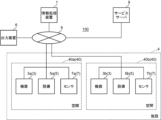
- FIG. 1 is a diagram illustrating an example of the overall configuration of an information processing system according to an embodiment of the present disclosure.
- FIG. 1 is a block diagram showing an example of the configuration of an information processing device.
- 3 is a flowchart illustrating an example of characteristic output processing. It is a figure showing an example of operation information. It is a flowchart which shows an example of characteristic estimation processing.
- FIG. 3 is a diagram showing an example of first characteristic information. It is a figure which shows an example of 2nd characteristic information.
- FIG. 3 is a diagram illustrating an example of first rule information that defines a relationship between one or more candidate characteristics and one or more feature groups indicating characteristics of operation of a device or facility.
- FIG. 6 is a diagram illustrating an example of first rule information that defines a relationship between one or more candidate characteristics and one or more feature groups indicating behavioral characteristics.
- FIG. 7 is a diagram illustrating an example of the relationship between the target user's characteristics before update and the number of executions of the characteristic operation corresponding to each element characteristic.
- FIG. 6 is a diagram illustrating an example of the relationship between the updated target user's characteristics and the number of executions of the characteristic motion corresponding to each element characteristic. It is a figure which shows an example of the change of characteristic information.
- 3 is a flowchart illustrating an example of service provision processing. It is a figure which shows an example of 2nd rule information. It is a figure which shows an example of a part of 3rd rule information. It is a figure which shows an example of a remaining part of 3rd rule information.
- Patent Document 1 discloses a technique for estimating a user's personality tendency based on the user's device usage history in a situation where the user does not actively input information. However, Patent Document 1 does not consider estimating the characteristics of each user individually depending on whether or not other users exist in the same environment as the user.
- the inventors of the present invention have diligently studied techniques for individually estimating user characteristics depending on whether or not other users exist in the same environment as the user, and have developed technologies that correspond to each aspect of the present disclosure described below. reached.
- An information processing method is an information processing method for estimating user characteristics in a computer, which acquires first information indicating device operations and behaviors of a user to be estimated, and Obtain second information indicating the presence or absence of another user different from the target user in an environment where the user exists, and based on the first information and the second information, in the first environment where the other user does not exist.
- first operation information indicating at least one of the target user's device operation and behavior indicating at least one of the target user's device operation and behavior
- second operation information indicating at least one of the target user's device operation and behavior in a second environment where the other user exists
- first behavioral information estimate a first characteristic that is a characteristic of the target user existing in the first environment
- second behavioral information estimate a first characteristic that is a characteristic of the target user existing in the second environment.
- a second characteristic that is a characteristic of the target user is estimated, and at least one of first characteristic information indicating the first characteristic and second characteristic information indicating the second characteristic is output.
- the first characteristic which is the characteristic of the target user who exists in the first environment where no other users exist
- a second characteristic which is a characteristic of the target user existing in the second environment where other users exist
- this configuration can individually estimate the characteristics of the target user depending on whether or not other users exist in the same environment as the target user.
- one or more candidate characteristics and one or more candidate characteristics indicating characteristics of the device operation or behavior of the target user are used.
- the second behavior information includes device operations or actions that indicate one or more second feature groups included in the one or more feature groups, from among the one or more candidate characteristics, One or more second candidate characteristics corresponding to the one or more second feature groups may be specified, and the identified one or more second candidate characteristics may be estimated as the second characteristic.
- the first characteristic includes one or more first element characteristics
- the second characteristic includes one or more second element characteristics
- the number of executions of a second characteristic operation which is a device operation or action indicating a feature group corresponding to The characteristic information may include the intensity of each first element characteristic
- the second characteristic information may include the intensity of each second element characteristic.
- the strength of each first element characteristic included in the first characteristic is set to the number of executions of the first characteristic motion calculated based on the first motion information, and is included in the first characteristic information. Further, the strength of each second element characteristic included in the second characteristic is set to the number of executions of the second characteristic motion calculated based on the second motion information, and is included in the second characteristic information.
- the first characteristic information of this configuration it is possible to grasp not only one or more characteristics of the target user when no other users exist in the same environment as the target user, but also the strength of each of the one or more characteristics. be able to.
- the second characteristic information of this configuration it is possible to grasp not only one or more characteristics of the target user when other users exist in the same environment as the target user, but also the strength of each of the one or more characteristics. Can be done.
- the shared candidate characteristic can be estimated as a shared element characteristic included in both the first characteristic and the second characteristic.
- the shared characteristic motion calculated based on either the first motion information or the second motion information
- the shared characteristic motion calculated based on the first motion information and the second motion information, respectively.
- the sum of the number of executions of characteristic operations can be set as the strength of the shared element characteristic.
- the shared candidate characteristic can be estimated as a shared element characteristic included in both the first characteristic and the second characteristic.
- the sum of the number of executions of the shared characteristic motion calculated based on each of the first motion information and the second motion information is calculated based on the first time that the target user stayed in the first environment and the sum of the number of executions of the shared feature motion calculated based on each of the first motion information and the second motion information
- the intensity of the common element characteristic included in each of the first characteristic and the second characteristic can be set appropriately by proportionally distributing the second time spent in the second characteristic.
- the same elemental characteristic when the same elemental characteristic with similar strength exists between the first characteristic and the second characteristic, the same elemental characteristic is estimated as the shared elemental characteristic. Therefore, the sum of the number of executions of device operations or actions indicating a feature group corresponding to the same elemental characteristic, which is calculated based on each of the first operation information and the second operation information, is calculated based on the first operation information and the second operation information. Can be set as intensity.
- the first information further includes a device operation or behavior indicating any one of the one or more characteristic groups, and the first environment and the If a similar characteristic operation that is a device operation or action that has a similar number of executions per unit time in each of the second environments is included, candidate characteristics corresponding to a feature group indicated by the similar characteristic operation are It may be estimated as an element characteristic.
- the candidate characteristic corresponding to the feature group indicated by the similar characteristic behavior is estimated as the shared element characteristic. Therefore, the sum of the number of executions of the similar feature motions, which is calculated based on each of the first motion information and the second motion information, can be set as the strength of the shared element characteristic.
- the strength of the first element characteristic in which the device operation or action indicating the corresponding feature group has not been performed for a first predetermined period or more It can be reduced by a first reduction rate.
- the second element characteristic is such that the device operation or action indicating the corresponding feature group is not performed for a second predetermined period or more. The intensity can be reduced by a second reduction rate.
- the sum of the strengths of the one or more first element characteristics calculate the ratio of the intensity of each first element characteristic to , set the calculated ratio as the intensity of each first element characteristic, and further, for each of the one or more second element characteristics, The ratio of the strength of each second element characteristic to the total strength of the characteristics may be calculated, and the calculated ratio may be set as the strength of each second element characteristic.
- the ratio of the intensity of each first element characteristic to the sum of the intensities of one or more first element characteristics is set as the intensity of each first element characteristic included in the first characteristic. Therefore, the intensity of one or more first element characteristics included in the first characteristics can be normalized.
- the ratio of the intensity of each second element characteristic to the sum of the intensities of one or more second element characteristics is set as the intensity of each second element characteristic included in the second characteristic. Therefore, the intensity of one or more second element characteristics included in the second characteristic can be normalized.
- each of the one or more first element characteristics the device operation or action indicating the feature group corresponding to each first element characteristic is performed for a first predetermined period of time. If the above is not performed, the device operation or If the action is not performed for a second predetermined time or longer, each second element characteristic may be excluded from the second characteristics.
- the third characteristic which is the characteristic of the target user existing in the third environment where other users of each attribute exist. Therefore, this configuration can individually estimate the characteristics of the target user according to the attributes of other users existing in the same environment as the target user.
- information indicating the device operation and behavior of the target user in the first predetermined period is acquired as the first information, and the information indicates the history of presence or absence of other users in the environment where the target user exists in the first predetermined period.
- Information is obtained as second information. Therefore, based on the first behavior information and second behavior information extracted from the first information based on the second information, the first characteristic and second characteristic of the target user in the first predetermined period are appropriately estimated. be able to.
- this configuration it is determined whether the fourth environment in which the target user currently exists is the first environment or the second environment, and if the fourth environment is the first environment, the first characteristic information is acquired. , when the fourth environment is the second environment, second characteristic information is acquired. When the fourth environment is the first environment, the first service determined based on the first characteristic information is executed, and when the fourth environment is the second environment, the first service determined based on the second characteristic information is executed. A second service is executed. Therefore, this configuration can execute a service suitable for the characteristics of the target user in the environment in which the target user currently exists.
- the first characteristic includes one or more first element characteristics
- the second characteristic includes one or more second element characteristics
- the first characteristic includes one or more second element characteristics
- second rule information defining the relationship between one or more element characteristic groups indicating one or more element characteristics and one or more provided services is acquired, and the second rule information is determined based on the first characteristic.
- first element characteristic groups included in the one or more element characteristic groups specify one or more first provided services corresponding to the one or more first element characteristic groups; If the one or more first provided services that have been provided are determined as the first service, and the second characteristics include one or more second element characteristic groups included in the one or more element characteristic groups, One or more second provided services corresponding to the one or more second element characteristic groups may be specified, and the specified one or more second provided services may be determined as the second service.
- the second rule information is used to execute one or more first provided services corresponding to one or more first element characteristic groups included in the first characteristic when the fourth environment is the first environment. is determined as the first service to be provided. Furthermore, using the second rule information, one or more second provided services corresponding to one or more second element characteristic groups included in the second characteristic are executed when the fourth environment is the second environment. This is determined as the second service. Therefore, this configuration can execute one or more provided services suitable for the characteristics of the target user in the environment in which the target user currently exists.
- this configuration it is determined whether the fourth environment in which the target user currently exists is the first environment or the second environment, and if the fourth environment is the first environment, the first characteristic information is acquired. , when the fourth environment is the second environment, second characteristic information is acquired. When the fourth environment is the first environment, the first service determined based on the first characteristic information is executed, and when the fourth environment is the second environment, the first service determined based on the second characteristic information is executed. A second service is executed. Therefore, this configuration can execute a service suitable for the characteristics of the target user in the environment in which the target user currently exists.
- each of the one or more element characteristics indicated by the element characteristic group corresponding to each first provided service included in the first characteristics A first product, which is the product of the total strength and a coefficient given to each first provided service, is calculated, and one or more of the one or more service fields to which the one or more first provided services belong is calculated. For each of the first service fields, if the sum of the first products calculated for each of the at least one first provided service belonging to each first service field is greater than or equal to the first predetermined value, the at least one first provided service A service is determined as the first service, and for each of the one or more second provided services, one or more element characteristics indicated by the element characteristic group corresponding to each second provided service included in the second characteristics are determined.
- a second product which is the product of the sum of the respective strengths and a coefficient assigned to each second provided service, is calculated, and one of the one or more service fields to which the one or more second provided services belongs is calculated. For each of the above second service fields, if the sum of the second products calculated for each of at least one second provided service belonging to each second service field is greater than or equal to the first predetermined value, then A second provided service may be determined as the second service.
- the at least one first provided service is determined as a first service to be executed when the fourth environment is the first environment.
- this configuration determines whether at least one second provided service belonging to each second service field is determined as the second service for each second service field when the target user exists in the second environment. can be determined.
- each of the plurality of users is used as the target user to provide the second service.
- the determined second services include a plurality of services that automatically control devices existing in the environment where the user exists according to the characteristics of the user, the execution of the plurality of services , parameters used for automatic control of devices by the plurality of services may be averaged and executed.
- each of the plurality of users is used as the target user to provide the second service.
- the determined plurality of second services include a plurality of services that automatically control devices existing in the environment in which the user exists according to the characteristics of the user, each of the plurality of users A priority assigned in advance is obtained, and when executing the plurality of services, the second service is determined to be provided to the user with the highest priority among the plurality of users among the plurality of services. Services may be executed.
- this configuration among the plurality of second services determined when a plurality of users exist in the same environment, there is a plurality of second services that automatically control devices existing in the environment where the user exists according to the characteristics of the user. If the second service is included, among the plurality of services, the service determined as the second service to be provided to the user with the highest priority among the plurality of users is executed. Therefore, this configuration can avoid conflicting automatic control of devices by each service by executing the plurality of services.
- each of the plurality of users is used as the target user to provide the second service.
- the determined second services include a plurality of services that automatically control devices existing in the environment where the user exists according to the characteristics of the user, the execution of the plurality of services , the service with the largest number among the plurality of services may be executed.
- this configuration can avoid conflicting automatic control of devices by each service by executing the plurality of services.
- a program according to another aspect of the present disclosure is a program that causes a computer to function to estimate a user's characteristics
- the program is a program that causes a computer to function to estimate a user's characteristics, the computer being configured to use first information indicating device operations and behaviors of a user to be estimated.
- a first acquisition unit that acquires second information indicating the presence or absence of another user different from the target user in an environment where the target user exists; first operation information indicating at least one of the device operation and behavior of the target user in a first environment where the other user does not exist; and first operation information of the target user in a second environment where the other user exists.
- second operation information indicating at least one of device operation and behavior
- an extraction unit that extracts a first characteristic that is a characteristic of the target user existing in the first environment based on the first operation information.
- an estimating unit that estimates a second characteristic that is a characteristic of the target user existing in the second environment based on the second behavior information; and first characteristic information indicating the first characteristic and the second characteristic. It functions as an output unit that outputs at least one of the second characteristic information indicating the characteristic.
- the operation information includes the date and time when the equipment 3 and the equipment 5 were operated (hereinafter referred to as the "operation date and time”), the identification information of the user who operated the equipment 3 and the equipment 5 (hereinafter referred to as the user ID), and the identification information of the equipment 3 and the equipment 5 (hereinafter referred to as the "user ID”). (hereinafter referred to as “device ID”), information indicating the contents of the operation of the devices 3 and equipment 5 (hereinafter referred to as "operation content information”), and the like. Note that the operation information transmitted by the device 3 and the equipment 5 does not need to include the user ID of the user who operated the device 3 and the equipment 5.
- the controller is, for example, a home controller or an edge server placed in the facility 4.
- the controller is not limited to this, and may be a mobile terminal that can be moved outside the facility 4, such as a smartphone or a tablet terminal.
- the controller is further connected to the equipment 3, the equipment 5, and the sensor 7 via a network 9 or without the network 9 so as to be able to communicate wirelessly.
- the controller transmits information related to control of the equipment 3, equipment 5, and sensor 7 (hereinafter referred to as control information) inputted by a user's operation or instructed from the information processing device 1, to the equipment 3, equipment 5, and sensor 7. Output to.
- the equipment 3, equipment 5, and sensor 7 perform various functions according to the control information. Thereby, the controller remotely controls the equipment 3, equipment 5, and sensor 7.
- the information processing device 1 is composed of a cloud server, a personal computer, and the like. Note that the information processing device 1 may be an edge server placed in the facility 4. The information processing device 1 is connected to an external service server 8 via a network 9 so as to be able to communicate with each other.
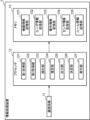
- FIG. 2 is a block diagram showing an example of the configuration of the information processing device 1. As shown in FIG.
- the information processing device 1 includes a communication circuit 11, a processor 12, and a memory 13.
- the communication circuit 11 is a communication interface circuit compatible with a communication method using the network 9 such as Ethernet (registered trademark). Communication circuit 11 connects information processing device 1 to network 9 . The communication circuit 11 outputs various information received via the network 9 to the processor 12. Further, the communication circuit 11 transmits various information to an external device via the network 9 under the control of the processor 12 .
- the processor 12 (computer) is composed of, for example, a CPU.
- the processor 12 stores the operation information that the communication circuit 11 receives from the equipment 3 and the equipment 5 via the network 9 in the operation information storage section 133, which will be described later. Further, the processor 12 stores sensor information that the communication circuit 11 receives from the sensor 7 via the network 9 in a sensor information storage section 134, which will be described later.
- the user information storage unit 132 also includes the user's to-do list, schedule, vital data, subscribed services, favorite external services, identification information of the output device 6 used by the user, and the output device 6. User-specific information such as the IP address of the user is stored.
- the characteristic output process is a process of estimating the characteristics of the user of the information processing system 100 based on the operation information and sensor information, and outputting the user's characteristic information.
- FIG. 3 is a flowchart showing an example of characteristic output processing.
- the characteristic output process is executed at predetermined intervals such as, for example, every day, every week, or every month. However, the present invention is not limited thereto, and the characteristic output process may be executed every time the processor 12 acquires operation information.
- step S100 the first acquisition unit 121 acquires the operation information stored in the operation information storage unit 133 and the sensor information stored in the sensor information storage unit 134 after the end of the previous characteristic output process.
- FIG. 4 is a diagram showing an example of operation information.
- FIG. 4 shows the operation acquired in step S100 of the characteristic output process started at 6 o'clock on September 1, 2021 after the previous characteristic output process started at 6 o'clock on August 31, 2021. Showing information.
- the operation information is, for example, that at 7:05:30 on August 31, 2021, a user with user ID "User A" performed an operation to turn on device 3 with device ID "Lighting 1". It shows.
- step S200 the processor 12 targets each of the users with one or more user IDs included in the operation information acquired in step S100 to estimate the characteristics of the target user (hereinafter referred to as target user).
- Execute estimation processing hereinafter referred to as characteristic estimation processing).
- the characteristics when the target user exists alone in the space 40 are estimated, and the first characteristic information indicating the characteristics is updated.
- the characteristic when another user (another user) different from the target user exists in the space 40 where the target user exists is estimated, and the second characteristic information indicating the characteristic is updated. Details of the characteristic estimation process will be described later.
- FIG. 5 is a flowchart illustrating an example of characteristic estimation processing.
- the processor 12 executes a characteristic estimation process for estimating the characteristics of the target user, using the user with the user ID "user A" included in the operation information as the target user.
- the processor 12 executes a characteristic estimation process for estimating the characteristics of the target user, using the user with the user ID "user B" included in the operation information as the target user.
- the first acquisition unit 121 refers to the device information stored in the device information storage unit 131 and selects the sensor 7 located in the same space 40 as the device 3 or equipment 5 having the device ID included in the operation history information. Get the sensor ID.
- the first acquisition unit 121 acquires sensor information that includes the sensor ID and whose detection date and time match the operation date and time included in the operation history information from among the sensor information acquired in step S100.
- the sensor information indicating the target user's behavior acquired in step S201 will be referred to as behavior history information.
- the second acquisition unit 122 refers to the device information stored in the device information storage unit 131 and determines the space where the sensor 7 with the sensor ID included in the action history information is placed. 40 is acquired as the space ID of the space 40 where the target user exists. The second acquisition unit 122 collates the detection information included in the action history information with the verification data stored in the user information storage unit 132 to identify one or more people who exist in the space 40 where the target user exists. Identify.
- the second acquisition unit 122 uses the detection date and time included in the behavior history information, the space ID of the space 40 where the target user exists, and the information that there is no other user. Information that associates the information shown (hereinafter referred to as a single flag) with the information is acquired as existence history information.
- the second acquisition unit 122 detects the detection date and time included in the behavior history information and the space 40 where the target user exists.
- Information in which the space ID of , the user ID of the different user, and information indicating that another user exists (hereinafter referred to as multiple flag) is obtained as existence history information.
- the second acquisition unit 122 uses the detection date and time included in the behavior history information and the space 40 where the target user exists.
- Information in which a space ID and a plurality of flags are associated is acquired as existence history information.
- step S203 the estimation unit 124 acquires the current characteristic information of the target user. Specifically, the estimation unit 124 acquires the first characteristic information and second characteristic information of the target user stored in the user information storage unit 132.
- FIG. 6 is a diagram showing an example of first characteristic information.
- the first characteristic information is information indicating a characteristic when the target user exists alone in the space 40 (hereinafter referred to as a first characteristic).
- the first characteristic information is information that associates one or more elemental characteristics included in the first characteristic with the strength of each elemental characteristic.
- the first characteristic information shown in FIG. 6 indicates five elemental characteristics “sloppy”, “wasteful”, “beautiful", “nervous”, and “heat sensitive” when the target user exists alone in the space 40. , indicates that the respective intensities of these elemental characteristics are "0.3", “0.2”, “0.3”, “0.1”, and "0.1".
- the first characteristic information shown in FIG. 6 indicates that when the target user exists alone in the space 40, the characteristics of "lazy” and “loves cleanliness” are most strongly exhibited.
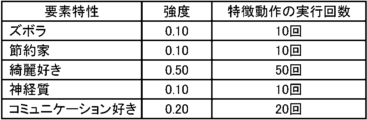
- FIG. 7 is a diagram showing an example of the second characteristic information.
- the second characteristic information is information indicating a characteristic (hereinafter referred to as a second characteristic) when another user exists in the space 40 where the target user exists.
- the second characteristic information is information that associates one or more elemental characteristics included in the second characteristic with the strength of each elemental characteristic.
- the second characteristic information shown in FIG. 7 includes five element characteristics "sloppy", “thrifty”, “beautiful", “nervous” and ⁇ I like communication'' and the strength of each of these elemental characteristics is ⁇ 0.1'', ⁇ 0.1'', ⁇ 0.5'', ⁇ 0.1'', and ⁇ 0.2''. It shows.
- the second characteristic information shown in FIG. 7 indicates that the characteristic of "I like cleanliness" is most strongly expressed when another user exists in the space 40 where the target user exists.
- the extraction unit 123 determines that the single flag is included, the extraction unit 123 extracts the operation history information as information indicating the operation of the device 3 or equipment 5 by the target user in the first environment (hereinafter referred to as first operation history information). On the other hand, if the extraction unit 123 determines that multiple flags are included, the extraction unit 123 extracts the operation history information as information indicating the operation of the device 3 or equipment 5 by the target user in the second environment (hereinafter referred to as second operation history information). do.
- the extraction unit 123 refers to the device information stored in the device information storage unit 131, and selects the detection date and time that matches the detection date and time included in the behavior history information, and the sensor 7 with the sensor ID included in the behavior history information. It is determined whether the existence history information including the space ID of the space 40 where is located includes a single flag or multiple flags.
- the extraction unit 123 determines that the single flag is included, the extraction unit 123 extracts the behavior history information as information indicating the behavior of the target user in the first environment (hereinafter referred to as first behavior history information). On the other hand, if the extraction unit 123 determines that multiple flags are included, the extraction unit 123 extracts the action history information as information indicating the operation of the device 3 or equipment 5 by the target user in the second environment (hereinafter referred to as second action history information). do.
- the first operation history information and the first action history information extracted in step S204 represent an example of the first action information of the present disclosure
- the second operation history information and the second action history information are the first action history information of the present disclosure.
- 2 shows an example of operation information.
- step S205 the estimation unit 124 determines, based on the information extracted in step S204, a first characteristic that is a characteristic of the target user existing in the first environment, and a characteristic that is a characteristic of the target user existing in the second environment.
- a candidate characteristic estimated to be an element characteristic of the second characteristic is extracted.
- FIG. 8 is a diagram showing an example of first rule information that defines the relationship between one or more candidate characteristics and one or more feature groups indicating characteristics of the operation of the device 3 or the equipment 5.
- eight candidate characteristics are associated with a feature group indicating two characteristics of the user's operation of the device 3 or equipment 5, with each candidate characteristic as an element characteristic. There is.
- FIG. 9 is a diagram illustrating an example of first rule information that defines the relationship between one or more candidate characteristics and one or more feature groups indicating behavioral characteristics.
- first rule information shown in FIG. 9 eight candidate characteristics are associated with a feature group indicating two characteristics of user behavior, each of which has each candidate characteristic as an element characteristic.
- the number of features included in the feature group in the first rule information is not limited to two, but may be one or three or more. However, it is preferable that the number of features included in the feature group in the first rule information is two or more. This is because the user's intentions and preferences are not necessarily clearly reflected in a single feature of the user's operation of the device 3 or facility 5 or behavior.
- the estimating unit 124 generates a candidate that is estimated to be an element characteristic of the first characteristic of the target user based on the first operation history information and first action history information extracted in step S204. Extract characteristics.
- a lighting operation indicating the feature "Lighting operation frequency is low” included in the feature group is included at least once, and a refrigerator operation indicating the feature "Refrigerator door is left open for a long time” included in the feature group is included once or more.
- the estimating unit 124 estimates the candidate characteristic "Sloppy" associated with the feature group in the first rule information as an element characteristic of the first characteristic of the target user, and extracts the candidate characteristic "Sloppy". do.
- the estimation unit 124 determines that an action indicating one or more feature groups is included, the estimation unit 124 selects one or more candidate characteristics (first candidate characteristics) that are associated with the one or more feature groups in the first rule information. ). The estimation unit 124 estimates the one or more identified candidate characteristics as an element characteristic of the first characteristic of the target user, and extracts the one or more candidate characteristics.
- the behavior indicating the characteristic "the desk is cluttered” indicates, for example, the behavior in which a predetermined number or more of items remain on the desk for a predetermined time or longer.
- the behavior exhibiting the characteristic "the frequency of folding laundry is low” indicates, for example, a behavior in which the ratio of the number of times the user wears unfolded clothes to the number of times he wears clothes is equal to or higher than a predetermined value.
- step S205 candidate characteristics estimated to be elemental characteristics of the first characteristic are extracted in step S205.
- step S206 if the candidate characteristic is not included in the first characteristic indicated by the first characteristic information, the estimation unit 124 adds the candidate characteristic as an element characteristic of the first characteristic. Then, the estimating unit 124 updates (sets) the strength of each element characteristic included in the first characteristic, and the first characteristic information indicating the updated first characteristic is stored in the user information storage unit 132. The first characteristic information that is currently available is updated.
- the characteristic operation corresponding to each element characteristic indicates the operation or action of the equipment 3 or equipment 5 that indicates a feature group associated with a candidate characteristic indicating each element characteristic in the first rule information.
- the characteristic behavior corresponding to the element characteristic "sloppy” is the two features "lights are not operated often” and “refrigerator” that are associated with the candidate characteristic "sloppy” in the first rule information ( Figure 8).
- the operation of the lights and the operation of the refrigerator are respectively indicated by ⁇ The door is open for a long time.''
- the characteristic actions corresponding to the candidate characteristic "sloppy” are the two features "desk is messy” and “desktop” that are associated with the candidate characteristic "sloppy” in the first rule information ( Figure 9). ⁇ I fold laundry infrequently.''
- the number of executions of the characteristic action corresponding to each elemental characteristic is the minimum number of times of execution of the operation and action of the device 3 or equipment 5 indicating each feature included in the feature group corresponding to the candidate characteristic indicating each elemental characteristic. It is.
- the number of executions of the characteristic operation corresponding to each element characteristic is not limited to this, and the number of executions of the characteristic operation corresponding to each element characteristic is It may be an average value or a maximum value of the number of executions.
- FIG. 11 is a diagram illustrating an example of the relationship between the updated characteristics of the target user and the number of executions of the characteristic operation corresponding to each element characteristic.
- the estimating unit 124 calculates the number of executions of the characteristic motion corresponding to the element characteristic "sloppy”, and converts the number of executions, "one", to the second characteristic shown in FIG. The result of addition to the number of executions of the characteristic motion corresponding to the element characteristic "Sloppy" included in "11 times" is shown.
- the estimation unit 124 sets the strength of each elemental characteristic included in the second characteristic information based on the number of executions of the characteristic operation corresponding to each elemental characteristic included in the second characteristic.
- the estimation unit 124 calculates the characteristic motion corresponding to each elemental characteristic included in the second characteristic with respect to the total number of executions of one or more characteristic motions corresponding to one or more elemental characteristics included in the second characteristic.
- the ratio of the number of executions is set as the strength of each element characteristic.
- the sum of the strengths of each element characteristic included in the second characteristic becomes 1 and is normalized.
- the estimating unit 124 refers to the second operation history information and the second action history information to determine the element indicating the candidate characteristic extracted in step S205, which is included in the second characteristic of the target user.
- the number of executions (second number of executions) of the characteristic operation corresponding to the characteristic per predetermined time (for example, one day) is calculated.
- the characteristic motion corresponding to the element characteristic indicating the candidate characteristic extracted in step S205, which is included in the second characteristic of the target user will be referred to as the target characteristic motion.
- first predetermined time and the second predetermined time are, for example, 3 days, 1 week, 1 month, 3 months, or 1 year.
- the first predetermined time and the second predetermined time may be the same or different.
- the first reduction rate and the second reduction rate are, for example, 10%.
- the first reduction rate and the second reduction rate may be the same or different.
- the first characteristic is updated based on the target user's operation and behavior of the device 3 or equipment 5 in the first environment where other users do not exist, and An example has been described in which the second characteristics are updated based on the operation and behavior of the device 3 or equipment 5 of the target user in the existing second environment.
- step S205 the estimating unit 124 determines whether the shared characteristic motion is included in any of the first operation history information, first action history information, second operation history information, and second action history information. Determine whether
- the estimating unit 124 further calculates the elapsed time from the earliest date and time to the most recent date and time among the operation dates and times included in the first operation history information and the first action history information. , is calculated as the time that the target user stayed in the first environment (hereinafter referred to as the first time). Similarly, the estimating unit 124 calculates the elapsed time from the earliest date and time to the most recent date and time during which the target user stayed in the second environment among the operation dates and times included in the second operation history information and the second action history information. (hereinafter referred to as the second hour).
- the estimation unit 124 uses the first shared execution count stored in association with the first characteristic information, and calculates the shared element characteristic included in the first characteristic. , the common element characteristic included in the first characteristic and the Calculate the strength of each element characteristic.
- the estimating unit 124 uses the second shared execution count stored in association with the second characteristic information, and estimates each other element characteristic included in the second characteristic.
- the strength of the shared element characteristic and each element characteristic included in the second characteristic is calculated using the number of executions of the characteristic operation corresponding to each other candidate characteristic stored in association with the second characteristic information. do.
- the estimation unit 124 may refer to the first characteristic information and second characteristic information of each user stored in the user information storage unit 132 at a predetermined timing, such as once a day. You can also do this. Then, when the same elemental characteristic whose intensity is similar exists between the first characteristic and the second characteristic, the estimation unit 124 adds the same elemental characteristic to both the first characteristic and the second characteristic. It may also be estimated as a shared element characteristic included.
- Identical elemental characteristics with similar intensities refer to identical elemental characteristics whose intensities match within a predetermined range. For example, if the strength of the element characteristic "Zubora" included in the first characteristic and the strength of the element characteristic "Zubora” included in the second characteristic match within a predetermined range (for example, 0.01), the estimation The unit 124 may estimate the element characteristic "Zobora" as a shared element characteristic included in both the first characteristic and the second characteristic.
- each user's operation or action of the equipment 3 or equipment 5 indicates any one of the one or more feature groups included in the first rule information (FIGS. 8 and 9).
- similar characteristic operations (hereinafter referred to as characteristic operations) may be included, which are characteristic operations that have a similar number of executions per unit time in each of the first environment and the second environment.
- the estimation unit 124 may estimate the candidate characteristic corresponding to the feature group indicated by the similar feature operation as a shared element characteristic included in both the first characteristic and the second characteristic of each user.
- the expression that the number of executions per unit time is similar means that the number of executions per unit time matches within a predetermined range. Similar characteristic operations can be specified, for example, as follows.
- the estimation unit 124 acquires operation information (hereinafter referred to as past operation information) including the user ID of each user from the operation information storage unit 133 in the same manner as in step S201, and acquires operation information (hereinafter referred to as past operation information) from the sensor information storage unit 134.
- sensor information hereinafter referred to as past behavior information
- past behavior information including a detection date and time that matches the operation date and time included in the past operation information
- the estimation unit 124 When the estimation unit 124 specifies that only one user exists in the space 40 indicated by the detection information, the estimation unit 124 converts the past behavior information including the detection information into information indicating the behavior of each user in the first environment (hereinafter, the first environment). 1 past action information). On the other hand, the estimation unit 124 determines that each user and a user whose user ID is different from each user exist in the space 40 indicated by the detection information, or that each user and a person who cannot be identified using the verification data exist. Suppose we have determined that it exists. In these cases, the estimation unit 124 acquires past behavior information including the detected information as information indicating the behavior of each user in the second environment (hereinafter referred to as second past behavior information).
- second past behavior information information indicating the behavior of each user in the second environment
- the estimating unit 124 refers to the equipment information stored in the equipment information storage unit 131 and estimates the equipment 3 or equipment 5 located in the same space 40 as the sensor 7 having the sensor ID included in the first past action information.
- the past operation information including the device ID and the operation date and time that matches the detection date and time included in the first past behavior information is used as information indicating the operation of the device 3 or equipment 5 by each user in the first environment (hereinafter, the 1 past operation information).
- the estimating unit 124 refers to the device information stored in the device information storage unit 131 and determines whether the device 3 or Information indicating the operation of each user's device 3 or facility 5 in the second environment ( Hereinafter, the information is acquired as second past operation information).
- the estimation unit 124 corresponds to each feature group included in the first rule information (FIGS. 8 and 9) in the operations and actions of each user in the first environment, which are indicated by the first past operation information and the first past action information.
- the number of times each characteristic motion is executed per unit time is calculated as the number of times each characteristic motion is executed per unit time in the first environment.
- the estimation unit 124 corresponds to each feature group included in the first rule information (FIGS. 8 and 9) in the operations and actions of each user in the second environment, which are indicated by the second past operation information and the second past action information.
- the number of times each characteristic motion is executed per unit time is calculated as the number of times each characteristic motion is executed per unit time in the second environment.
- the second characteristic which is the characteristic of the target user in the second environment where other users exist.
- the target user tends to exhibit the same characteristics as when alone, but if the other user is a user outside the target user's family, It is thought that users tend to show the characteristic of being considerate of other users. In this way, it is considered that the characteristics of the target user in the second environment vary depending on the attributes of other users existing in the second environment.
- the estimation unit 124 estimates the target user in an environment (hereinafter referred to as the third environment) in which other users of each attribute exist in the second environment.
- the characteristics (third characteristics) of the target user existing in the third environment may be estimated based on the operation and behavior of the device 3 or facility 5 .
- the output unit 125 may output information indicating the characteristics of the target user existing in the third environment.
- the characteristics of the target user existing in the third environment are estimated, and the characteristics of the target user are estimated. It may be possible to output information indicating. Furthermore, based on the operation and behavior of the device 3 or equipment 5 of the target user in the third environment where other users with attribute "B" exist, the characteristics of the target user existing in the third environment are estimated, and the characteristics of the target user are estimated. It may be possible to output information indicating.
- This configuration can be realized, for example, as follows.
- step S205 the estimation unit 124 further acquires third operation history information corresponding to each attribute from the second operation history information for each of the one or more attributes of the other user.
- the estimating unit 124 acquires attribute information included in user information of other users different from the target user stored in the user information storage unit 132, and, for example, the estimating unit 124 acquires attribute information included in user information of other users different from the target user. Extract one or more attributes that are
- the estimation unit 124 performs the following processing for each of one or more attributes.
- the estimation unit 124 refers to the user information stored in the user information storage unit 132 and the verification data, and detects information about the space 40 where other users of each attribute exist from the second action history information. Extract sensor information containing information.
- the estimation unit 124 acquires the sensor information as information indicating the behavior of the target user in the second environment where other users of each attribute exist (hereinafter referred to as third behavior history information corresponding to each attribute).
- the estimating unit 124 selects candidate characteristics corresponding to characteristic actions that have been executed once or more, which are included in the third operation history information and third action history information corresponding to each attribute, to other users of each attribute. is estimated as an element characteristic of the characteristics (hereinafter referred to as the third characteristics corresponding to each attribute) of the target user existing in the third environment in which the attribute exists. Further, the estimating unit 124 calculates the strength of each element characteristic included in the third characteristic corresponding to each attribute, and calculates the strength of each element characteristic included in the third characteristic corresponding to each attribute, in the same manner as step S206 (FIG. 5) in the first embodiment. Information indicating the characteristics is stored in the user information storage unit 132 as characteristic information of the target user.
- the processor 12 further functions as a determination unit 126 and an execution unit 127 (FIG. 2).
- the determining unit 126 determines a service to be provided to the user based on the first characteristic information of the user.
- the determining unit 126 determines a service to be provided to the user based on the second characteristic information of the user.
- the execution unit 127 executes the service determined by the determination unit 126.
- the service provision process is a process of providing a user registered in advance as a target of the service provision process with a service suitable for the characteristics of the user in the environment in which the user exists.
- FIG. 13 is a flowchart illustrating an example of service provision processing.
- the service provision process is executed at a predetermined timing.
- the predetermined timing is, for example, every hour, every half day, every day, every week, or every month.
- a target user a user who is a target of service provision processing
- step S400 the determining unit 126 acquires characteristic information of the target user according to the environment in which the target user currently exists.
- the determining unit 126 refers to the verification data including the user ID of the target user stored in the user information storage unit 132, and extracts information from the sensor information storage unit 134 regarding the space 40 where the target user exists. Obtain sensor information including detection information.
- the determining unit 126 converts the sensor information including the most recent detection date and time among the acquired sensor information into information indicating the behavior of the target user in the space 40 (hereinafter referred to as the fourth environment) in which the target user currently exists (hereinafter referred to as the current (environmental information). That is, the current environment information indicates an example of the third information of the present disclosure.
- the determining unit 126 determines whether the fourth environment is the first environment or the second environment based on the current environment information.
- the determining unit 126 collates the test information included in the current environment information and the collation data stored in the user information storage unit 132, thereby determining whether one or more existing environments exist in the fourth environment. Identify a person.
- the determining unit 126 determines that the fourth environment is the first environment, and stores the first characteristic information of the target user from the user information storage unit 132. get.
- the determination unit 126 determines that the fourth environment is the second environment, and the determination unit 126 determines that the fourth environment is the second environment.
- the second characteristic information of the target user is acquired from the information storage unit 132.
- the determination unit 126 determines that the fourth environment is the second environment, and the user The second characteristic information of the target user is acquired from the information storage unit 132.
- the user information storage unit 132 stores third characteristic information corresponding to each attribute.
- the determining unit 126 may refer to attribute information included in user information of a user whose user ID is different from the target user, which is stored in the user information storage unit 132. Then, the determining unit 126 may determine whether the third characteristic information corresponding to the attribute indicated by the attribute information is stored in the user information storage unit 132. If the determining unit 126 determines that the third characteristic information is stored, it determines that the fourth environment is a third environment in which another user with the attribute exists, and the third characteristic information may be acquired from the user information storage unit 132.
- target characteristic information the first characteristic information, second characteristic information, or third characteristic information acquired by the determining unit 126 in step S400. Furthermore, the characteristics of the target user indicated by the target characteristic information are referred to as target characteristics.
- step S500 the determining unit 126 determines a service to be provided to the target user based on the target characteristic information acquired in step S400.
- step S500 the determining unit 126 retrieves a second file from the rule information storage unit 135 that defines the relationship between one or more element characteristic groups indicating one or more element characteristics and one or more provided services. Get rule information.
- FIG. 14 is a diagram showing an example of the second rule information.
- three element characteristic groups indicating two element characteristics are associated with services provided to users of target characteristics including each element characteristic group.
- an element characteristic group indicating two element characteristics, an element characteristic "frugal” and an element characteristic "regular”, and a provided service "prediction of consumption period of consumables” are included. are associated.
- the provided service "Predicting the consumption period of consumables” is a service that predicts the consumption period (life span) of consumables used by the equipment 3 or equipment 5 used in the past by the target user, and outputs information indicating the prediction result. .
- the number of element characteristics included in the element characteristic group associated with the provided service is not limited to two, but may be one or three or more.
- the determining unit 126 identifies and specifies one or more provided services corresponding to the one or more element characteristic groups.
- the one or more provided services are determined as services to be provided to the target user.
- the determining unit 126 determines, in the second rule information shown in FIG. "Prediction" is determined as a service to be provided to the target user.
- the determining unit 126 determines that the provided service ⁇ Life TIPS Proposal'' is associated with the element characteristic group showing two element characteristics ⁇ thrifty person'' and ⁇ beautiful person''. is determined as the service to be provided to the target user.
- the provided service "Life Tips Suggestion” is a service that outputs information related to the space 40 where the target user exists more frequently than a predetermined frequency.
- the method for determining the service in step S500 is not limited to this.
- the determining unit 126 may further determine the service to be provided to the target user based on the strength of each element characteristic included in the target characteristic information.
- step S500 similarly to the above, in the second rule information, the determining unit 126 selects one or more provided services (first provided service, second provided service).
- the determining unit 126 identifies the identified one or more provided services as service candidates (hereinafter referred to as service candidates) to be provided to the target user.
- the determining unit 126 acquires third rule information that associates one or more provided services, a coefficient given to each provided service, and a service field to which each provided service belongs from the rule information storage unit 135.
- FIG. 15 is a diagram showing an example of a portion of the third rule information.
- FIG. 16 is a diagram illustrating an example of the remaining part of the third rule information.
- 13 provided services, the coefficient given to each provided service, and the service field to which each provided service belongs are associated, and the types of each provided service are also corresponded. It is attached.
- the type of provided service "notification”, the provided service "TODO list notification”, the coefficient "0.1” given to the provided service, and the service field to which the provided service belongs.
- “Life (general)” is associated with “life (general)”.
- the provided service “TODO list notification” is a service that outputs the target user's TODO list stored in the user information storage unit 132.
- the five provided services, the coefficient given to each provided service, and the service field to which each provided service belongs are associated, and the types of each provided service are also associated. It is attached.
- the type of provided service is "outsourcing”
- the provided service is “delivery (meal, food)”
- the coefficient "0.1” given to the provided service and the provided service is The service field to which it belongs, "Lifestyle (Food),” is associated with it.
- the provided service “Delivery (meal, food)” is a service that outputs information that guides access to a website for using a delivery service that the target user has used in the past.
- the determining unit 126 determines, for each of the one or more provided services included in the service candidates, one or more of the element characteristics included in the target characteristics and indicated by the element characteristic group corresponding to each provided service.
- the product (first product, second product) of the total strength of each element characteristic and the coefficient given to each provided service is calculated.
- the target characteristics include three elemental characteristics: ⁇ frugal'', ⁇ regular'', and ⁇ like cleanliness''. It is also assumed that the intensities of these elemental characteristics are "0.2", “0.3”, and "0.5”, respectively.
- the determining unit 126 refers to the second rule information and specifies the two provided services, "Prediction of consumption period of consumables" and "Proposal of lifestyle tips", as service candidates.
- the determining unit 126 selects, for the provided service "Prediction of consumables consumption period” included in the service candidates, the element characteristic group corresponding to the provided service "Consumables consumption period prediction” included in the target characteristics.
- the determining unit 126 determines, for the provided service "Lifestyle TIPS Proposal” included in the service candidates, two element characteristics indicated by the element characteristic group corresponding to the provided service “Lifestyle TIPS Proposal” included in the target characteristic information.
- the determining unit 126 refers to the third rule information, and for each of the one or more service fields to which one or more provided services included in the service candidates belong, the determining unit 126 selects at least one service field included in the service candidates that belongs to each service field. If the sum of at least one of the products calculated for the provided service is equal to or greater than the first predetermined value, the at least one provided service is determined as a service to be provided to the target user.
- the service candidates include three provided services: "Alert notification for equipment or facilities,” “Prediction of wear-out period of consumables,” and “Proposal for lifestyle tips.” Further, assume that the products calculated for each of these provided services are “0.03”, “0.05”, and "0.07”, respectively.
- the determining unit 126 selects the two service fields to which the three provided services included in the service candidates, ⁇ device or equipment alert notification,'' ⁇ prediction of consumables consumption period,'' and ⁇ lifestyle tips proposal,'' belong to ⁇
- the sum of at least one of the products calculated for at least one provided service included in the service candidates belonging to each service field is greater than or equal to the first predetermined value.
- the at least one provided service is determined as a service to be provided to the target user.
- the determination unit 126 calculates one service "Life TIPS proposal” included in the service candidates belonging to the service field "Lifestyle (Housework)". If the sum "0.07" of the products "0.07" is greater than or equal to the first predetermined value, the one provided service "Life Tips Suggestion” is determined as the service to be provided to the target user.
- step S600 the execution unit 127 executes one or more provided services determined as services to be provided to the target user in step S500.
- step S ⁇ b>600 the execution unit 127 retrieves a fourth set of information from the rule information storage unit 135 that associates one or more provided services, the execution timing of each provided service, and the execution method of each provided service. Get rule information.
- the execution timing of the provided service includes, for example, the start time of the provided service (e.g., 12 o'clock, immediately, etc.), the time interval at which the provided service is repeated (e.g., every hour), the number of times the provided service is repeated (e.g., 3 times), etc. is included.
- the execution method of the provided service includes, for example, the output destination and output instruction of information output by executing the provided service (hereinafter referred to as output information of the provided service).
- the output information of the provided service includes, for example, information specific to the target user such as the user's TODO list, schedule, and vital data, control information for the equipment 3 or equipment 5, information requesting execution of the service provided by the service server 8, etc. is included.
- the output destination of the output information of the provided service includes, for example, the output device 6 used by the target user, the service server 8, the device 3 or facility 5 indicated by the output information of the provided service, and the like.
- the instructions to output the output information of the provided service include, for example, an instruction to display the output information of the provided service, an instruction to output audio, an instruction to store, an instruction to transfer, an instruction to execute, and the like.
- the execution unit 127 refers to the fourth rule information and executes the execution program of each provided service stored in the memory 13 at the execution timing of each provided service determined in step S500.
- the execution unit 127 refers to the fourth rule information and outputs the output information of each provided service to the output destination specified by the execution method of each provided service together with the output instruction specified by the execution method of each provided service. .
- the output information of each provided service is output at the output destination according to the output instruction.
- the determining unit 126 determines the provided services to be provided to each target user based on the second characteristic information of each target user, among the determined plurality of provided services (second services), Multiple provided services “automatic control of equipment or equipment” may be included.
- the provided service “automatic control of equipment or equipment” is a service that automatically controls the equipment 3 or equipment 5 existing in the space 40 where the user exists according to the characteristics of the user.
- the execution unit 127 executes the plurality of provided services "automatic control of equipment or equipment"
- the determining unit 126 determines the service to be provided to user A as the provided service "automatic control of equipment or equipment” based on the elemental characteristic "heat sensitivity” included in the second characteristic of user A. .
- the determining unit 126 determines the service to be provided to user B as the provided service “automatic control of equipment or equipment” based on the elemental characteristic "feeling cold” included in the second characteristic of user B. .
- the execution unit 127 executes the provided service "automatic control of equipment or equipment” provided to the user A, thereby controlling the user A according to the element characteristic "heat sensitivity". Control information for setting the set temperature of the air conditioner in the space 40 where A exists to 25 degrees is output to the air conditioner. In addition, by executing the provided service "automatic control of equipment or equipment” provided to user B, the execution unit 127 controls the air conditioner in the space 40 where user B exists, depending on the element characteristic "feeling cold" of user B. control information for setting the set temperature to 27 degrees is output to the air conditioner. Therefore, the set temperature, which is a parameter used for automatic control of the air conditioner in the space 40 where users A and B exist, will conflict with each other.
- the execution unit 127 selects the plurality of provided services “equipment or equipment automatic control”.
- the parameters used for automatic control of the equipment 3 or equipment 5 by "automatic control of equipment” may be averaged and executed.
- the execution unit 127 may acquire the priority given in advance to each of the plurality of users to whom the plurality of provided services "automatic control of equipment or facilities" are provided.
- the priority given to each user of the information processing system 100 in advance may be stored in the user information storage unit 132.
- the priority may be such that one or more elemental characteristics included in the user's second characteristics (e.g., lazy, spendthrift) are different from the one or more elemental characteristics (e.g., not lazy, The more difficult it is for users (who are not spendthrift) to tolerate it, the higher the value may be.
- the method of assigning priority to each user is not limited to this.
- the execution unit 127 may acquire, from the user information storage unit 132, the priority assigned in advance to each of the plurality of users to whom the plurality of provided services “automatic control of equipment or facilities” are to be provided.
- the execution unit 127 executes the service determined as the service to be provided to the user with the highest priority among the plurality of users, among the plurality of provided services "automatic control of equipment or equipment". You may also do so.
- the execution unit 127 may execute the service that has the largest number of services among the plurality of provided services "automatic control of equipment or facilities.”
- the determining unit 126 determines the service to be provided to user A as “automatic control of equipment or equipment” based on the elemental characteristic "heat sensitivity” included in the second characteristic of user A, and Assume that the service to be provided to user B is determined to be “automatic control of equipment or equipment” based on the elemental characteristic "feeling cold” included in the second characteristic. Further, the determining unit 126 determines the service to be provided to the user C based on the elemental characteristic “heat sensitivity” included in the second characteristic of the user C who exists in the same environment as the users A and B. Suppose that it has been decided to "automatically control"
- the execution unit 127 selects the service “automatic control of equipment or equipment” that is the largest among the three provided services “automatic control of equipment or equipment”, that is, according to the element characteristic "heat sensitivity”.
- a service may be executed in which control information for setting the set temperature of the air conditioner in the space 40 where the user is present to 25 degrees is output to the air conditioner.
- Each of one or more element characteristic groups included in the second rule information (FIG. 14) may be associated with a priority order in advance.
- the priority order is such that one or more element characteristics (e.g., lazy, spendthrift) indicated by the element characteristic group are different from one or more element characteristics (e.g., not lazy,
- the association may be made so that the lower the value is, the more difficult it is for users (who are not spendthrift) to tolerate it.
- the execution unit 127 when the plurality of provided services determined by the determining unit 126 include a plurality of provided services “automatic control of equipment or equipment”, the execution unit 127 However, priority orders associated with each of one or more element characteristic groups included in the second rule information (FIG. 14) may be acquired.
- the execution unit 127 may execute the following.
- the provided service "automatic control of equipment or equipment” and the priority level “1" are associated with the element characteristic group indicating the two element characteristics “slacker” and “wasteful”.
- the provided service "automatic control of equipment or facilities” and the priority level "2" are associated with the element characteristic group showing the two element characteristics "regular” and "frugal”.
- the execution unit 127 may acquire the priority order associated with each of the one or more element characteristic groups included in the second rule information. Then, among the plurality of provided services “automatic control of equipment or equipment” determined by the determining unit 126, the two element characteristics "sloppy” and “wasteful” having the lowest priority “1” are selected. The execution unit 127 may execute the provided service "automatic control of equipment or equipment” that is associated with the element characteristic group shown.
Landscapes
- Engineering & Computer Science (AREA)
- Theoretical Computer Science (AREA)
- General Engineering & Computer Science (AREA)
- Physics & Mathematics (AREA)
- General Physics & Mathematics (AREA)
- Databases & Information Systems (AREA)
- Business, Economics & Management (AREA)
- Human Computer Interaction (AREA)
- Computational Linguistics (AREA)
- Data Mining & Analysis (AREA)
- Tourism & Hospitality (AREA)
- Health & Medical Sciences (AREA)
- Economics (AREA)
- General Health & Medical Sciences (AREA)
- Human Resources & Organizations (AREA)
- Marketing (AREA)
- Primary Health Care (AREA)
- Strategic Management (AREA)
- General Business, Economics & Management (AREA)
- Information Retrieval, Db Structures And Fs Structures Therefor (AREA)
- Management, Administration, Business Operations System, And Electronic Commerce (AREA)
Priority Applications (3)
| Application Number | Priority Date | Filing Date | Title |
|---|---|---|---|
| CN202280097360.0A CN119487538A (zh) | 2022-06-23 | 2022-12-05 | 信息处理方法、信息处理装置以及程序 |
| JP2024528268A JPWO2023248496A1 (https=) | 2022-06-23 | 2022-12-05 | |
| US18/985,653 US20250123680A1 (en) | 2022-06-23 | 2024-12-18 | Information processing method, information processing device, and non-transitory computer readable storage medium |
Applications Claiming Priority (2)
| Application Number | Priority Date | Filing Date | Title |
|---|---|---|---|
| JP2022101015 | 2022-06-23 | ||
| JP2022-101015 | 2022-06-23 |
Related Child Applications (1)
| Application Number | Title | Priority Date | Filing Date |
|---|---|---|---|
| US18/985,653 Continuation US20250123680A1 (en) | 2022-06-23 | 2024-12-18 | Information processing method, information processing device, and non-transitory computer readable storage medium |
Publications (1)
| Publication Number | Publication Date |
|---|---|
| WO2023248496A1 true WO2023248496A1 (ja) | 2023-12-28 |
Family
ID=89379336
Family Applications (1)
| Application Number | Title | Priority Date | Filing Date |
|---|---|---|---|
| PCT/JP2022/044681 Ceased WO2023248496A1 (ja) | 2022-06-23 | 2022-12-05 | 情報処理方法、情報処理装置及びプログラム |
Country Status (4)
| Country | Link |
|---|---|
| US (1) | US20250123680A1 (https=) |
| JP (1) | JPWO2023248496A1 (https=) |
| CN (1) | CN119487538A (https=) |
| WO (1) | WO2023248496A1 (https=) |
Citations (3)
| Publication number | Priority date | Publication date | Assignee | Title |
|---|---|---|---|---|
| JP2017157159A (ja) * | 2016-03-04 | 2017-09-07 | 三菱電機株式会社 | 嗜好推定装置、嗜好推定方法及び嗜好推定プログラム |
| WO2019087537A1 (ja) * | 2017-10-30 | 2019-05-09 | ダイキン工業株式会社 | 空調制御装置 |
| JP2019185185A (ja) * | 2018-04-03 | 2019-10-24 | 東京瓦斯株式会社 | 画像処理システム及びプログラム |
Family Cites Families (2)
| Publication number | Priority date | Publication date | Assignee | Title |
|---|---|---|---|---|
| JP5085670B2 (ja) * | 2010-02-24 | 2012-11-28 | 株式会社東芝 | 空調制御システムおよび空調制御方法 |
| US11470281B2 (en) * | 2021-01-22 | 2022-10-11 | Sony Group Corporation | Rendering con pent on displays in living environment based on environment outside living environment |
-
2022
- 2022-12-05 JP JP2024528268A patent/JPWO2023248496A1/ja active Pending
- 2022-12-05 WO PCT/JP2022/044681 patent/WO2023248496A1/ja not_active Ceased
- 2022-12-05 CN CN202280097360.0A patent/CN119487538A/zh active Pending
-
2024
- 2024-12-18 US US18/985,653 patent/US20250123680A1/en active Pending
Patent Citations (3)
| Publication number | Priority date | Publication date | Assignee | Title |
|---|---|---|---|---|
| JP2017157159A (ja) * | 2016-03-04 | 2017-09-07 | 三菱電機株式会社 | 嗜好推定装置、嗜好推定方法及び嗜好推定プログラム |
| WO2019087537A1 (ja) * | 2017-10-30 | 2019-05-09 | ダイキン工業株式会社 | 空調制御装置 |
| JP2019185185A (ja) * | 2018-04-03 | 2019-10-24 | 東京瓦斯株式会社 | 画像処理システム及びプログラム |
Also Published As
| Publication number | Publication date |
|---|---|
| JPWO2023248496A1 (https=) | 2023-12-28 |
| US20250123680A1 (en) | 2025-04-17 |
| CN119487538A (zh) | 2025-02-18 |
Similar Documents
| Publication | Publication Date | Title |
|---|---|---|
| EP3702904A1 (en) | Information processing device and information processing method | |
| Strengers et al. | Protection, productivity and pleasure in the smart home: Emerging expectations and gendered insights from Australian early adopters | |
| US20230169118A1 (en) | Information presenting method, recording medium, information presenting system, and terminal device | |
| US8847781B2 (en) | Building management system with privacy-guarded assistance mechanism and method of operation thereof | |
| US8620764B2 (en) | Method for providing a recommendation such as a personalized recommendation, recommender system, and computer program product comprising a recommender computer program | |
| CN105393272B (zh) | 基于用户物联网环境的实时上下文知悉式推荐引擎 | |
| US20180239311A1 (en) | Method and Apparatus for Controlling an Environment Management System within a Building | |
| CN110247892A (zh) | 用于智能住家环境中的住户策略实现的方法和系统 | |
| WO2014185174A1 (ja) | エネルギーマネジメントコントローラ、エネルギーマネジメントシステム、エネルギーマネジメント方法、及び、プログラム | |
| JP6152853B2 (ja) | 制御方法及びプログラム | |
| Sahni et al. | Challenges and opportunities in designing smart spaces | |
| US20220405335A1 (en) | Information presentation method, recording medium, and information presentation system | |
| Bakker et al. | Introduction: Framing peripheral interaction | |
| WO2023248496A1 (ja) | 情報処理方法、情報処理装置及びプログラム | |
| KR20230138865A (ko) | 카페 큐레이션 장치 및 카페 큐레이션 방법 | |
| US11573027B2 (en) | Home automation (HA) system for identifying a health condition based upon user thermostat setting data and related methods | |
| WO2023248497A1 (ja) | 情報処理方法、情報処理装置及びプログラム | |
| WO2020208937A1 (ja) | デジタルインクを管理するホームuiシステム | |
| JP7162087B2 (ja) | 物件情報提供装置、物件情報提供方法、及び物件情報提供プログラム | |
| US11330427B2 (en) | Home automation (HA) system communicating a network address request and network address using first and second wireless protocols and related methods | |
| CN113534674A (zh) | 生活服务方法、控制终端、装置及存储介质 | |
| JP2018162947A (ja) | 環境管理装置、環境管理プログラム及び環境管理方法 | |
| JP2020181257A (ja) | 見守り対象者の心身状態を推定する学習モデルの教師データを生成する方法及びシステム | |
| JP7425027B2 (ja) | 情報提供装置、情報提供方法、および情報提供プログラム | |
| JP2022067691A (ja) | コミュニケーション装置、提案支援システムおよびプログラム |
Legal Events
| Date | Code | Title | Description |
|---|---|---|---|
| 121 | Ep: the epo has been informed by wipo that ep was designated in this application |
Ref document number: 22948055 Country of ref document: EP Kind code of ref document: A1 |
|
| WWE | Wipo information: entry into national phase |
Ref document number: 2024528268 Country of ref document: JP |
|
| WWE | Wipo information: entry into national phase |
Ref document number: 202280097360.0 Country of ref document: CN |
|
| NENP | Non-entry into the national phase |
Ref country code: DE |
|
| WWP | Wipo information: published in national office |
Ref document number: 202280097360.0 Country of ref document: CN |
|
| 122 | Ep: pct application non-entry in european phase |
Ref document number: 22948055 Country of ref document: EP Kind code of ref document: A1 |