WO2023248474A1 - 管理装置、管理方法及び管理プログラム - Google Patents
管理装置、管理方法及び管理プログラム Download PDFInfo
- Publication number
- WO2023248474A1 WO2023248474A1 PCT/JP2022/025364 JP2022025364W WO2023248474A1 WO 2023248474 A1 WO2023248474 A1 WO 2023248474A1 JP 2022025364 W JP2022025364 W JP 2022025364W WO 2023248474 A1 WO2023248474 A1 WO 2023248474A1
- Authority
- WO
- WIPO (PCT)
- Prior art keywords
- configuration information
- hardware
- software
- identifier
- electronic signature
- Prior art date
- Legal status (The legal status is an assumption and is not a legal conclusion. Google has not performed a legal analysis and makes no representation as to the accuracy of the status listed.)
- Ceased
Links
Images



Classifications
-
- G—PHYSICS
- G06—COMPUTING OR CALCULATING; COUNTING
- G06F—ELECTRIC DIGITAL DATA PROCESSING
- G06F21/00—Security arrangements for protecting computers, components thereof, programs or data against unauthorised activity
- G06F21/50—Monitoring users, programs or devices to maintain the integrity of platforms, e.g. of processors, firmware or operating systems
- G06F21/57—Certifying or maintaining trusted computer platforms, e.g. secure boots or power-downs, version controls, system software checks, secure updates or assessing vulnerabilities
-
- G—PHYSICS
- G06—COMPUTING OR CALCULATING; COUNTING
- G06F—ELECTRIC DIGITAL DATA PROCESSING
- G06F21/00—Security arrangements for protecting computers, components thereof, programs or data against unauthorised activity
- G06F21/60—Protecting data
-
- H—ELECTRICITY
- H04—ELECTRIC COMMUNICATION TECHNIQUE
- H04L—TRANSMISSION OF DIGITAL INFORMATION, e.g. TELEGRAPHIC COMMUNICATION
- H04L9/00—Cryptographic mechanisms or cryptographic arrangements for secret or secure communications; Network security protocols
- H04L9/32—Cryptographic mechanisms or cryptographic arrangements for secret or secure communications; Network security protocols including means for verifying the identity or authority of a user of the system or for message authentication, e.g. authorization, entity authentication, data integrity or data verification, non-repudiation, key authentication or verification of credentials
Definitions
- the present invention relates to a management device, a management method, and a management program.
- SBoM Software Bill of Materials
- SBoM Formats such as SPDX, CycloneDX, and SWID have appeared as ways to express SBoM.
- Product development in recent years is often not completed by a single vendor, but rather consists of a supply chain of multiple vendors. Therefore, SBoM contains configuration information from multiple vendors.
- All information is often described in one SBoM file, but CycloneDX and others provide specifications such as Pedigree that refer to external SBoM information.
- the SBoM format will be collectively referred to as the configuration information format.
- NTT and NEC develop technology to address supply chain security risks in information and communication infrastructure”, [online], [searched on May 27, 2020], Internet ⁇ URL: https://group.ntt/jp/newsrelease/2021/10/27/211027b.html>
- Verifiable Credentials is information such as credentials that is digitized and can be verified by a third party.
- a certification issuing organization digitally signs the credentials (electronic file) and hands the file to the user, and when the user wants to prove the credentials, the user presents the electronic file to the other party.
- the credentials include information that does not need to be presented to the other party, there is a problem in that if the signed file is changed, signature verification becomes impossible.
- the present invention has been made in view of the above, and an object of the present invention is to provide a management device, a management method, and a management program that can realize smooth signature verification of configuration information.
- a management device is a management device that manages configuration information of first hardware or first software, and which manages configuration information of first hardware or first software.
- data regarding the first software includes a first identifier that uniquely indicates the first hardware or the first software, and another second identifier that constitutes the first hardware or the first software.
- a generation unit that generates configuration information in a format in which a second identifier that uniquely identifies the hardware or second software is encoded using a one-way function, and an electronic signature for the data. and a management unit that manages the configuration information.
- the management device is a management device that manages configuration information of first hardware or first software, and includes data regarding the first hardware or the first software that includes the first hardware or the first software. a first identifier that uniquely indicates one piece of hardware or the first software; and a first identifier that uniquely indicates the first piece of hardware or the first piece of software; a second identifier that specifies the configuration information, a first electronic signature of the entire configuration information, and a second electronic signature generated based on the configuration information in which some items are kept secret and the first electronic signature.
- the present invention is characterized in that it includes a generation unit that generates configuration information in a format to which , and are added, and a management unit that manages the configuration information.
- the management device is a management device that manages configuration information of first hardware or first software, and includes data regarding the first hardware or first software that includes the first a first identifier that uniquely indicates the hardware or the first software; and a first identifier that uniquely identifies the other second hardware or second software that constitutes the first hardware or the first software.
- a second identifier obtained by encoding a second identifier using a one-way function; a first electronic signature of the entire configuration information; and the configuration information in which some items are kept secret and the first electronic signature. and a second electronic signature generated based on the information, and a management section that manages the configuration information.
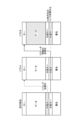
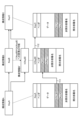
- FIG. 1 is a diagram illustrating the basic structure of configuration information.
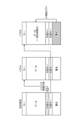
- FIG. 2 is a diagram illustrating requirements for the format of configuration information.
- FIG. 3 is a diagram illustrating a conventional format of configuration information.
- FIG. 4 is a diagram schematically showing an example of the configuration of the management device according to the embodiment.
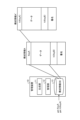
- FIG. 5 is a diagram illustrating the format of the configuration information generated by the generation unit.
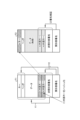
- FIG. 6 is a diagram illustrating the format of configuration information generated by the generation unit.
- FIG. 7 is a diagram illustrating the format of configuration information generated by the generation unit.
- FIG. 8 is a diagram illustrating the format of configuration information generated by the generation unit.
- FIG. 9 is a flowchart showing the processing procedure of management processing according to the embodiment.
- FIG. 9 is a flowchart showing the processing procedure of management processing according to the embodiment.
- FIG. 10 is a diagram illustrating another example of the format of configuration information generated by the generation unit.
- FIG. 11 is a diagram illustrating another example of the format of the configuration information generated by the generation unit.
- FIG. 12 is a diagram illustrating another example of the format of the configuration information generated by the generation unit.
- FIG. 13 is a diagram illustrating an example of a computer that implements a management device by executing a program.
- FIG. 1 is a diagram illustrating the basic structure of configuration information.
- the configuration information includes a key (first identifier), data, zero or more external keys (second identifier), and signature information.
- the key is an identifier that uniquely identifies the first hardware or first software that corresponds to this configuration information.
- the data part includes various information regarding the software.
- the data portion includes licenses, risk investigation information, operational specifications, and the like.
- the foreign key is an identifier that uniquely identifies another second hardware or second software that constitutes the first hardware or first software.
- the foreign key is an identifier of configuration information of another device and/or software that the product (device, software) incorporates, and constitutes a directed acyclic graph.
- FIG. 2 is a diagram illustrating requirements for the format of configuration information.
- the format of configuration information is required to meet the following requirements.
- the essential requirement is that the validity can be verified with a signature (integrity).
- Requirement 1 is that dependent library information can be kept secret.
- Requirement 1 includes requirements 1-1 and 1-2.
- Requirement 1-1 is that the link information is not lost even if the dependent library is kept secret, in other words, even if the link information is not disclosed ((1) and (2) in FIG. 2).
- Requirement 1-2 is that the provided configuration information (link) can be kept confidential; in other words, it is possible to partially conceal the provided configuration information of software A and B while maintaining the validity of the signature. ((3) in Figure 2). For example, this applies when the license prohibits redistribution of configuration information.
- Requirement 2 is that it is possible to set a disclosure level for configuration information data (optional). Requirement 2 includes requirement 2-1.2-2.
- Requirement 2-1 is that when higher level data is provided later, it is possible to verify that it is the same software configuration information.
- Requirement 2-2 is that the confidentiality level of the provided configuration information (data) can be increased.
- Requirement 1 and Requirement 2 are independent requirements.
- FIG. 3 is a diagram illustrating a conventional format of configuration information.
- the management device generates and manages configuration information that satisfies Requirement 1 and/or Requirement 2.
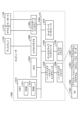
- FIG. 4 is a diagram schematically showing an example of the configuration of the management device according to the embodiment.
- a predetermined program is loaded into a computer or the like including, for example, ROM (Read Only Memory), RAM (Random Access Memory), CPU (Central Processing Unit), etc., and the CPU executes a predetermined process. This is achieved by running the program.
- the management device 10 has a communication interface that transmits and receives various information to and from other devices connected via a network or the like.
- the management device 10 is realized by a general-purpose computer such as a workstation or a personal computer. As shown in FIG. 4, the management device 10 includes a generation unit 11, a management unit 12, and a configuration information database (DB) 13 that stores configuration information.
- DB configuration information database
- the generation unit 11 generates configuration information in a format that satisfies Requirement 1 and/or Requirement 2, and stores it in the configuration information DB 13.
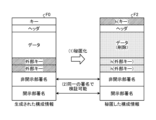
- 5 to 8 are diagrams illustrating the format of the configuration information generated by the generation unit 11.
- the generation unit 11 hashes the “foreign key” (second identifier) ((1) in FIG. 5), and generates the key (first identifier), header, data, and “h (foreign key). '' (encoded second identifier) and an electronic signature for the data is added to generate configuration information in format F1.
- the generation unit 11 generates a format F2 in which an electronic signature for the data is added to the key "h (key)", header, data, "h (foreign key)” as reference destination configuration information of the format F1. Generate configuration information. That is, the generation unit 11 generates configuration information of format F2 in which a key obtained by encoding the key using a one-way function is added to the data instead of the key (first identifier).
- hashing is an example of encoding, and encoding other than hashing may be used as long as the key or foreign key can be made confidential.
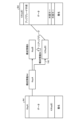
- configuration information A KeyA
- configuration information B KeyB
- configuration information C KeyC
- configuration information A is linked to configuration information C via configuration information B' while keeping configuration information B information secret. can do. Since "KeyC" is written as a foreign key in configuration information B', it is possible to present that configuration information A is linked to configuration information C via configuration information B' (see Figure 6). arrows Y11, Y12). For example, when inspecting software for vulnerabilities, it is possible to indicate that the software is included while keeping the link to the software hidden.
- formats F1 and F2 satisfy requirement 1. Therefore, by adopting formats F1 and F2, the generation unit 11 can generate configuration information having a link structure that allows signature verification without losing link information and that allows keys to be hidden later.
- the generation unit 11 generates two signatures, a disclosing department name (second electronic signature) and a non-disclosing department signature (first electronic signature), for the configuration information, and creates a signature to which the two generated signatures are attached.
- Adopt a method.
- the non-disclosed department signature is the signature of the entire configuration information (key, header, data, h (foreign key)) (arrow Y1 in FIG. 5).
- the disclosing department name is generated based on the configuration information (e.g., key, header, foreign key) in which some items (e.g., the entire data) are kept secret, and the disclosing department name (arrow Y2 in FIG. 5). ).
- the generation unit 11 generates two signatures, a disclosing department name and a non-disclosing department name, for one piece of configuration information.
- the disclosing department name can be verified based on the external key and the disclosing department name ((2) in FIG. 5), and does not necessarily require a data section. Therefore, by adopting the formats F1 and F2, the generation unit 11 can later delete the data part of the configuration information as shown in the format F2.
- formats F1 and F2 satisfy requirement 2. Therefore, by adopting formats F1 and F2, the generation unit 11 signs one configuration information with two signatures: a disclosing department name and a non-disclosing department name, thereby preventing the data part from being deleted later. possible.
- the generation unit 11 may add a non-disclosure department name to the configuration information that conceals only some items of data. Further, the generation unit 11 adds two non-disclosure department names to the configuration information, for example, a non-disclosure department name 1 that conceals the entire data and a non-disclosure department name 2 that conceals some items of the data. You can.
- the level at which configuration information can be disclosed to data can be set by setting the number of data items to be anonymized for each non-disclosure department name.
- the generation unit 11 can conceal data items in stages by attaching a plurality of electronic signatures generated from each piece of configuration information from which items are deleted in stages. Furthermore, according to formats F1 and F2, combinations with group signatures are also possible.
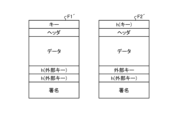
- the generation unit 11 may adopt formats F1' and F2' that satisfy requirement 1 and/or format F2' that satisfies requirement 2 as the format of the configuration information (see FIG. 8).
- Format F1' is a configuration in which the external key of configuration information is concealed by hashing
- format F2' is a configuration in which the key is concealed by hashing.
- the generation unit 11 may adopt the format F0 that satisfies Requirement 2 as the format of the configuration information (see FIG. 7).
- the management device 10 allows other hardware or software to further configure hardware or software without disclosing hidden configuration information. It is possible to disclose information to a person, and verification is possible using a digital signature generated in advance. Further, by adopting formats F1 and F2, the management device 10 can set a level at which data of the configuration information can be disclosed.
- the management unit 12 manages configuration information stored in the configuration information DB 13.
- the management unit 12 receives Key or h (Key) as a query key, it acquires configuration information corresponding to the key from the configuration information DB 13.
- the management unit 12 when the management unit 12 receives "KeyA” as a query key, it acquires configuration information A using "KeyA” as a key. Further, when receiving "h(KeyA)" as a query key, the management unit 12 acquires configuration information A' using "h(KeyA)” as a key. The management unit 12 manages each piece of configuration information so that if the key is unknown, the configuration information cannot be accessed.
- FIG. 9 is a flowchart showing the processing procedure of management processing according to the embodiment.
- the generation unit 11 performs a generation process of generating configuration information of formats F1, F1', F2, F2' and storing the generated configuration information in the configuration information DB 13 ( Step S1).
- the management unit 12 performs management processing to manage the configuration information stored in the configuration information DB 13 (step S2).
- the management unit 12 receives “Key” or “h (Key)” as a query key, it acquires configuration information corresponding to the key from the configuration information DB 13 and outputs it to the request source.
- the management device 10 hashes the "foreign key” and generates configuration information in a format in which a digital signature for the data is added to the key, header, data, and "h (foreign key)". It is possible to verify the validity of configuration information using a signature, and it is also possible to keep information confidential while maintaining the link structure.
- the management device 10 generates two signatures, a disclosing department name and a non-disclosing department name, for the configuration information, and uses a signature method to attach the generated two signatures to the configuration information. This makes it possible to verify the validity of information, and also to classify the level of deletion and disclosure of the data section later.
- the management device 10 can generate and manage configuration information in a format that can ensure transparency, confidentiality, and integrity of the supply chain.
- FIG. 10 is a diagram showing another example of the format of the configuration information generated by the generation unit 11. As shown in FIG. 10, it is also possible to define the confidentiality level in multiple stages by changing the number of times of hashing, such as once, twice, or more than once.
- the generation unit 11 may generate configuration information B1 in which the key is "h (KeyB)" and "KeyC" is described as the foreign key. Via this configuration information B1, it is possible to present that configuration information A is linked to configuration information C (arrows Y21 and Y22 in FIG. 10).
- the generation unit 11 writes "h(KeyA)", which is obtained by hashing "KeyA” once, as a key, and "h(h(KeyB))”, which is obtained by hashing "KeyB” twice, as a foreign key.
- the configuration information A1 is generated.
- the generation unit 11 uses “h(h(KeyB))”, which is obtained by hashing "KeyB” twice, as a key, and "h(h(KeyC))”, which is obtained by hashing "KeyC” twice, as a foreign key.
- the described configuration information B2 is generated.
- the generation unit 11 generates configuration information C2 using “h(h(KeyC))”, which is obtained by hashing “KeyC” twice, as a key.
- the configuration information A1 is linked to the configuration information C2 via the configuration information B2 (arrows Y23 and Y24 in FIG. 10).
- the confidentiality level can also be adjusted by adjusting the number of times the key and/or the foreign key is hashed.
- the secrecy level (number of times of hashing) of the key and/or foreign key may be defined by the user himself or may be defined as appropriate according to a specific common specification.
- [Modification 2] 11 and 12 are diagrams showing other examples of the format of the configuration information generated by the generation unit 11.
- configuration information A3 (first configuration information) includes a hashed foreign key "h (KeyB)" and an upgrade procedure (acquiring second configuration information from third configuration information). method).
- the foreign key "h (KeyB)" of the configuration information A3 is used as the query key, and the configuration information B3 (third configuration information) having "h (KeyB)" as the key is acquired (arrow Y31 in FIG. 11 ).
- the upgrade procedure can be obtained along with the foreign key "h (KeyB)” from the configuration information A3, so by upgrading "h (KeyB)" ((1) in Figure 11), "KeyB” can be obtained. .
- “KeyB” As a key, it becomes possible to obtain configuration information B (second configuration information) whose confidentiality level is higher than that of configuration information B3.
- configuration information B4 (third configuration information) that is a reference destination of configuration information A4 (first configuration information) may include an upgrade procedure.
- the foreign key "h(KeyB)" of the configuration information A4 is used as the query key, and the configuration information B4 having "h(KeyB)” as the key is acquired (arrow Y41 in FIG. 12).
- "KeyB” can be obtained by upgrading "h(KeyB)” ((1) in FIG. 12).
- Each component of the management device 10 is functionally conceptual, and does not necessarily need to be physically configured as illustrated.
- the specific form of distribution and integration of the functions of the management device 10 is not limited to what is shown in the diagram, and all or part of them can be functionally or physically distributed in arbitrary units depending on various loads and usage conditions. It can be configured to be distributed or integrated.
- each process performed in the management device 10 may be realized by a CPU, a GPU (Graphics Processing Unit), or a program that is analyzed and executed by the CPU and GPU.
- each process performed in the management device 10 may be realized as hardware using wired logic.
- FIG. 13 is a diagram illustrating an example of a computer that implements the management device 10 by executing a program.
- Computer 1000 includes, for example, a memory 1010 and a CPU 1020.
- the computer 1000 also includes a hard disk drive interface 1030, a disk drive interface 1040, a serial port interface 1050, a video adapter 1060, and a network interface 1070. These parts are connected by a bus 1080.
- the memory 1010 includes a ROM 1011 and a RAM 1012.
- the ROM 1011 stores, for example, a boot program such as BIOS (Basic Input Output System).
- Hard disk drive interface 1030 is connected to hard disk drive 1090.
- Disk drive interface 1040 is connected to disk drive 1100.
- Serial port interface 1050 is connected to, for example, mouse 1110 and keyboard 1120.
- Video adapter 1060 is connected to display 1130, for example.
- the hard disk drive 1090 stores, for example, an OS (Operating System) 1091, an application program 1092, a program module 1093, and program data 1094. That is, a program that defines each process of the management device 10 is implemented as a program module 1093 in which code executable by the computer 1000 is written.
- Program module 1093 is stored in hard disk drive 1090, for example.
- a program module 1093 for executing processing similar to the functional configuration of the management device 10 is stored in the hard disk drive 1090.
- the hard disk drive 1090 may be replaced by an SSD (Solid State Drive).
- the setting data used in the processing of the embodiment described above is stored as program data 1094 in, for example, the memory 1010 or the hard disk drive 1090. Then, the CPU 1020 reads out the program module 1093 and program data 1094 stored in the memory 1010 and the hard disk drive 1090 to the RAM 1012 as necessary and executes them.
- program module 1093 and program data 1094 are not limited to being stored in the hard disk drive 1090, but may be stored in a removable storage medium, for example, and read by the CPU 1020 via the disk drive 1100 or the like.
- the program module 1093 and the program data 1094 may be stored in another computer connected via a network (LAN (Local Area Network), WAN (Wide Area Network), etc.).
- the program module 1093 and program data 1094 may then be read by the CPU 1020 from another computer via the network interface 1070.
- Management device 11 Management device 12
- Management unit 13 Configuration information database (DB)
Landscapes
- Engineering & Computer Science (AREA)
- Computer Security & Cryptography (AREA)
- Theoretical Computer Science (AREA)
- Software Systems (AREA)
- Computer Hardware Design (AREA)
- General Engineering & Computer Science (AREA)
- Physics & Mathematics (AREA)
- General Physics & Mathematics (AREA)
- Signal Processing (AREA)
- Computer Networks & Wireless Communication (AREA)
- Health & Medical Sciences (AREA)
- Bioethics (AREA)
- General Health & Medical Sciences (AREA)
- Storage Device Security (AREA)
Priority Applications (2)
| Application Number | Priority Date | Filing Date | Title |
|---|---|---|---|
| JP2024528251A JPWO2023248474A1 (cg-RX-API-DMAC7.html) | 2022-06-24 | 2022-06-24 | |
| PCT/JP2022/025364 WO2023248474A1 (ja) | 2022-06-24 | 2022-06-24 | 管理装置、管理方法及び管理プログラム |
Applications Claiming Priority (1)
| Application Number | Priority Date | Filing Date | Title |
|---|---|---|---|
| PCT/JP2022/025364 WO2023248474A1 (ja) | 2022-06-24 | 2022-06-24 | 管理装置、管理方法及び管理プログラム |
Publications (1)
| Publication Number | Publication Date |
|---|---|
| WO2023248474A1 true WO2023248474A1 (ja) | 2023-12-28 |
Family
ID=89379355
Family Applications (1)
| Application Number | Title | Priority Date | Filing Date |
|---|---|---|---|
| PCT/JP2022/025364 Ceased WO2023248474A1 (ja) | 2022-06-24 | 2022-06-24 | 管理装置、管理方法及び管理プログラム |
Country Status (2)
| Country | Link |
|---|---|
| JP (1) | JPWO2023248474A1 (cg-RX-API-DMAC7.html) |
| WO (1) | WO2023248474A1 (cg-RX-API-DMAC7.html) |
Cited By (1)
| Publication number | Priority date | Publication date | Assignee | Title |
|---|---|---|---|---|
| WO2026058561A1 (ja) * | 2024-09-12 | 2026-03-19 | 株式会社日立製作所 | データクレンジングシステム、データクレンジング装置およびデータクレンジング方法 |
Citations (2)
| Publication number | Priority date | Publication date | Assignee | Title |
|---|---|---|---|---|
| JP2007172450A (ja) * | 2005-12-26 | 2007-07-05 | Nippon Telegr & Teleph Corp <Ntt> | ログ監査システム、ログ監査方法、ログ管理装置及びそのプログラム、並びにログ監査装置及びそのプログラム |
| WO2021220642A1 (ja) * | 2020-04-30 | 2021-11-04 | 株式会社日立製作所 | 情報収集管理システム、計算機、及び情報収集管理方法 |
Family Cites Families (3)
| Publication number | Priority date | Publication date | Assignee | Title |
|---|---|---|---|---|
| US5673316A (en) * | 1996-03-29 | 1997-09-30 | International Business Machines Corporation | Creation and distribution of cryptographic envelope |
| US7346580B2 (en) * | 1998-08-13 | 2008-03-18 | International Business Machines Corporation | Method and system of preventing unauthorized rerecording of multimedia content |
| JP6917627B2 (ja) * | 2015-11-05 | 2021-08-11 | 弘 出口 | 管理支援装置および管理支援方法 |
-
2022
- 2022-06-24 WO PCT/JP2022/025364 patent/WO2023248474A1/ja not_active Ceased
- 2022-06-24 JP JP2024528251A patent/JPWO2023248474A1/ja active Pending
Patent Citations (2)
| Publication number | Priority date | Publication date | Assignee | Title |
|---|---|---|---|---|
| JP2007172450A (ja) * | 2005-12-26 | 2007-07-05 | Nippon Telegr & Teleph Corp <Ntt> | ログ監査システム、ログ監査方法、ログ管理装置及びそのプログラム、並びにログ監査装置及びそのプログラム |
| WO2021220642A1 (ja) * | 2020-04-30 | 2021-11-04 | 株式会社日立製作所 | 情報収集管理システム、計算機、及び情報収集管理方法 |
Non-Patent Citations (1)
| Title |
|---|
| DIGLIO ADRIAN: "Generating Software Bills of Materials (SBOMs) with SPDX at Microsoft", ENGINEERING@MICROSOFT, 13 October 2021 (2021-10-13), pages 1 - 3, XP093120007, Retrieved from the Internet <URL:https://devblogs.microsoft.com/engineering-at-microsoft/generating-software-bills-of-materials-sboms-with-spdx-at-microsoft> [retrieved on 20240116] * |
Cited By (1)
| Publication number | Priority date | Publication date | Assignee | Title |
|---|---|---|---|---|
| WO2026058561A1 (ja) * | 2024-09-12 | 2026-03-19 | 株式会社日立製作所 | データクレンジングシステム、データクレンジング装置およびデータクレンジング方法 |
Also Published As
| Publication number | Publication date |
|---|---|
| JPWO2023248474A1 (cg-RX-API-DMAC7.html) | 2023-12-28 |
Similar Documents
| Publication | Publication Date | Title |
|---|---|---|
| US11824970B2 (en) | Systems, methods, and apparatuses for implementing user access controls in a metadata driven blockchain operating via distributed ledger technology (DLT) using granular access objects and ALFA/XACML visibility rules | |
| US11899817B2 (en) | Systems, methods, and apparatuses for storing PII information via a metadata driven blockchain using distributed and decentralized storage for sensitive user information | |
| US10310824B2 (en) | Distributed ledger platform for computing applications | |
| US11973878B2 (en) | Non-fungible token custody chain for multi-component hardware devices | |
| CN110620810B (zh) | 在区块链上的连续资产转移的非链接所有权 | |
| US9836607B2 (en) | Method, system, and program product for remotely attesting to a state of a computer system | |
| US10628578B2 (en) | Systems and methods for determining trust levels for computing components using blockchain | |
| US12579130B2 (en) | Blockchain database management system | |
| US7945596B2 (en) | Programming model for customized data objects | |
| CN111881130B (zh) | 区块链存储结构的冲突解决方案 | |
| JP2022509957A (ja) | ピアツーピアネットワークを介するデータの格納、読み出し、及び通信のためのコンピュータにより実施されるシステム及び方法 | |
| KR20200011435A (ko) | 파라미터화 가능 스마트 계약 | |
| US20210374112A1 (en) | Migration support system, migration support method, and node | |
| US20100146478A1 (en) | Multi-layered storage and management of software components | |
| JP2023528649A (ja) | ファイル検証システムおよび方法 | |
| CN112287033B (zh) | 一种数据同步方法、设备以及计算机可读存储介质 | |
| JP2022534047A (ja) | ブロックチェーントランザクションの中のインスクリプト関数 | |
| CN113901005A (zh) | 一种基于区块链便携式文件存储的方法、系统和介质 | |
| KR20210106532A (ko) | 블록체인을 통해 행해지는 전송의 성능을 제어하거나 강제하기 위한 컴퓨터-구현된 시스템 및 방법 | |
| CN114491647A (zh) | 一种基于区块链的数据检索方法和系统 | |
| JP7443558B2 (ja) | ブロックチェーンの設定可能なオフチェーンストレージに関するコンピューティングシステム | |
| CN110502888B (zh) | 一种基于可信度量的移动软件白名单机制的移动办公方法 | |
| JP2025509037A (ja) | 順序付けられた追記専用データストレージを使用した選択的な存在証明 | |
| US20120166406A1 (en) | Information Integrity Rules Framework | |
| CA3099814C (en) | Distributed ledger platform for computing applications |
Legal Events
| Date | Code | Title | Description |
|---|---|---|---|
| 121 | Ep: the epo has been informed by wipo that ep was designated in this application |
Ref document number: 22948033 Country of ref document: EP Kind code of ref document: A1 |
|
| WWE | Wipo information: entry into national phase |
Ref document number: 2024528251 Country of ref document: JP |
|
| NENP | Non-entry into the national phase |
Ref country code: DE |
|
| 122 | Ep: pct application non-entry in european phase |
Ref document number: 22948033 Country of ref document: EP Kind code of ref document: A1 |