WO2023223418A1 - 免疫状態予測提供システム、免疫状態データ予測方法及びプログラム - Google Patents
免疫状態予測提供システム、免疫状態データ予測方法及びプログラム Download PDFInfo
- Publication number
- WO2023223418A1 WO2023223418A1 PCT/JP2022/020513 JP2022020513W WO2023223418A1 WO 2023223418 A1 WO2023223418 A1 WO 2023223418A1 JP 2022020513 W JP2022020513 W JP 2022020513W WO 2023223418 A1 WO2023223418 A1 WO 2023223418A1
- Authority
- WO
- WIPO (PCT)
- Prior art keywords
- data
- state
- immune
- immune status
- status prediction
- Prior art date
- Legal status (The legal status is an assumption and is not a legal conclusion. Google has not performed a legal analysis and makes no representation as to the accuracy of the status listed.)
- Ceased
Links
Images







Classifications
-
- G—PHYSICS
- G16—INFORMATION AND COMMUNICATION TECHNOLOGY [ICT] SPECIALLY ADAPTED FOR SPECIFIC APPLICATION FIELDS
- G16H—HEALTHCARE INFORMATICS, i.e. INFORMATION AND COMMUNICATION TECHNOLOGY [ICT] SPECIALLY ADAPTED FOR THE HANDLING OR PROCESSING OF MEDICAL OR HEALTHCARE DATA
- G16H50/00—ICT specially adapted for medical diagnosis, medical simulation or medical data mining; ICT specially adapted for detecting, monitoring or modelling epidemics or pandemics
- G16H50/20—ICT specially adapted for medical diagnosis, medical simulation or medical data mining; ICT specially adapted for detecting, monitoring or modelling epidemics or pandemics for computer-aided diagnosis, e.g. based on medical expert systems
-
- G—PHYSICS
- G16—INFORMATION AND COMMUNICATION TECHNOLOGY [ICT] SPECIALLY ADAPTED FOR SPECIFIC APPLICATION FIELDS
- G16H—HEALTHCARE INFORMATICS, i.e. INFORMATION AND COMMUNICATION TECHNOLOGY [ICT] SPECIALLY ADAPTED FOR THE HANDLING OR PROCESSING OF MEDICAL OR HEALTHCARE DATA
- G16H50/00—ICT specially adapted for medical diagnosis, medical simulation or medical data mining; ICT specially adapted for detecting, monitoring or modelling epidemics or pandemics
- G16H50/30—ICT specially adapted for medical diagnosis, medical simulation or medical data mining; ICT specially adapted for detecting, monitoring or modelling epidemics or pandemics for calculating health indices; for individual health risk assessment
-
- G—PHYSICS
- G16—INFORMATION AND COMMUNICATION TECHNOLOGY [ICT] SPECIALLY ADAPTED FOR SPECIFIC APPLICATION FIELDS
- G16H—HEALTHCARE INFORMATICS, i.e. INFORMATION AND COMMUNICATION TECHNOLOGY [ICT] SPECIALLY ADAPTED FOR THE HANDLING OR PROCESSING OF MEDICAL OR HEALTHCARE DATA
- G16H80/00—ICT specially adapted for facilitating communication between medical practitioners or patients, e.g. for collaborative diagnosis, therapy or health monitoring
Definitions
- the present invention relates to an immune status prediction providing system, an immune status data prediction method, and a program.
- Patent Document 1 a system has been disclosed that predicts the history, current state, and future state of lifestyle habits by listening to information about lifestyle habits and comparing the information with the results of a health checkup.
- Patent Document 1 Although it is possible to roughly obtain data on lifestyle habits, which are some of the causes of health conditions, it lacks data on the causes of immune conditions, which is important for health management. It is not possible to determine the individual's immune status.
- the present invention is an immune status prediction providing system that predicts the future immune status from the user's status data, and includes not only conventional health checkups and lifestyle habits, but also sleep status, exercise status, and other factors that affect the immune status.
- the aim is to provide a system that can predict future immune status by understanding status data including lifestyle, lifestyle, work, and dietary conditions.
- the present invention provides the following solution.
- the invention according to the first feature includes: an acquisition unit that acquires at least one of state data regarding the immune state, such as sleep state, exercise state, lifestyle state, living state, work state, and eating state; a learning model creation unit that creates a learning model that generates immune status prediction data from the acquired status data; a prediction unit that predicts immune status prediction data based on the learning model from the newly acquired status data; an analysis unit that generates analysis result data by analyzing differences between the immune status prediction data and implementation data such as health examination results and immunological test results; a first output unit that outputs the predicted immune status prediction data; a second output unit that outputs the generated analysis result data;
- An immune status prediction providing system comprising: a providing unit that provides at least one of the status data, the immune status prediction data, the implementation data, and the analysis result data to a user or a third party.
- a learning model that predicts the future immune state from the acquired state data is created, and based on the learning model, the user's future immune state is calculated from the newly acquired user's state data. It is possible to predict. In addition, by comparing the predicted immune status prediction data with the user's health checkup, immune test, etc. data, it is possible to analyze the cause of the difference between the time the user's status data was acquired and the time the actual data was acquired. It is.
- the invention according to the first characteristic includes a learning model creation unit that creates a learning model that generates immune state prediction data from the implementation data and early state data. .
- the immune status prediction providing system which is the invention related to the first feature, predicts the future immune status of the user by creating a learning model from the status data and the implementation data. By doing so, it is possible to improve the accuracy of predicting the immune status.
- the provision unit provides the third party company with the user attribute data, the state data, and the immune state prediction according to the user attributes preset by the third party company.
- a second aspect of the present invention provides an immune status prediction providing system that provides at least one of data, the implementation data, and the analysis result data.
- the immune status prediction providing system which is the invention according to the second characteristic, can provide data according to the requests of third-party companies.
- the invention according to a fourth feature includes a message generation unit that generates a message regarding joint development to the third party company in response to a request received from the third party company; a message providing unit that provides the message to the third party company; An immune status prediction providing system according to a second feature is provided, further comprising: a message receiving unit that receives the message from the third party.
- the immune status prediction providing system which is the invention according to the second characteristic, further improves the accuracy of predicting the immune status by promoting joint development.
- the invention according to a fifth feature includes a standardized index creation unit that creates a standardized index from the user attribute data, the status data, the immune status prediction data, the implementation data, and the analysis result data;
- the present invention provides an immune status prediction providing system according to either the first or second feature, further comprising a standardized index providing unit that provides the standardized index to the third party company.
- the immune status prediction providing system which is the invention according to either the first or second characteristic, provides a specific standardized index for improving the user's immune status. .
- the invention according to the first feature is in the system category, it is also realized in the method and program categories, and has the configuration, operation, and effect in each category.
- a system, method, and program for providing immune status prediction that enables more effective health management by understanding the user's immune status including the cause and predicting the future immune status. provide.
- FIG. 1 is a schematic diagram of an immune status prediction providing system 1.
- FIG. 2 is a configuration diagram of the immune status prediction providing system 1.
- FIG. 3 is a flowchart showing the procedure of the creation process executed by the computer 2 of the immune status prediction providing system 1.
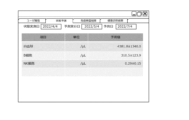
- FIG. 4 is an example of a display screen of the sleep state data of the state data 102 acquired by the computer 2, which is displayed by the user terminal 3.
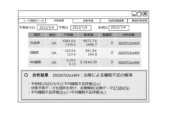
- FIG. 5 is an example of a display screen of the immune status prediction of the immune status prediction data 104 created by the computer 2, which is displayed on the user terminal 3.
- FIG. 6 is a flowchart showing the procedure of analysis result data generation processing executed by the computer 2 of the immune status prediction providing system 1.
- FIG. 1 is a schematic diagram of an immune status prediction providing system 1.
- FIG. 2 is a configuration diagram of the immune status prediction providing system 1.
- FIG. 3 is a flowchart showing the procedure of the creation process executed by the computer 2 of the immune status prediction providing system 1.
- FIG. 4 is an example of a display screen
- FIG. 7 is an example of a display screen of the immune test results of the implementation data 103 acquired by the computer 2, which is displayed by the user terminal 3.
- FIG. 8 is an example of an analysis display screen of the analysis result data 105 created by the computer 2, which is displayed by the user terminal 3.
- FIG. 9 is a flowchart showing the procedure of the learning model improvement process executed by the computer 2 of the immune status prediction providing system 1.
- FIG. 10 is a flowchart showing the procedure of selective data provision processing executed by the computer 2 of the immune status prediction provision system 1.
- FIG. 11 is a flowchart showing the procedure of the joint development promotion process executed by the computer 2 of the immune status prediction providing system 1.
- FIG. 12 is a configuration diagram of the joint development promotion process executed by the computer 2 of the immune status prediction providing system 1.
- FIG. 13 is a flowchart showing the procedure of the standardized index creation process executed by the computer 2 of the immune status prediction providing system 1.
- FIG. 14 is a configuration diagram of the standardized index creation process executed by the computer 2 of the immune
- FIG. 1 is a diagram for explaining an overview of an immune status prediction providing system 1. As shown in FIG. An overview of the immune status prediction providing system 1 will be explained based on FIG. 1.
- the immune status prediction providing system 1 is a computer system that is composed of a computer 2 and a user terminal 3, and is used for predicting the immune status.
- the computer 2 of the immune status prediction providing system 1 may be, for example, a server such as a cloud server, or may be a normal personal computer or a notebook computer.
- the user terminal 3 of the immune status prediction providing system 1 is a terminal for transmitting and receiving status data, implementation data, etc. to the computer 2, and includes a personal computer, a notebook computer, a mobile terminal such as a smartphone or a tablet terminal, and a smart glass. It may also be a head-mounted display, a wearable terminal such as a smart watch, etc.
- the computer 2 of the immune status prediction providing system 1 may be physically realized by one or more computers, or may be realized by a virtual device such as a cloud computer.
- the computer 2 of the immune status prediction providing system 1 may be connected to the user terminal 3 via a network 6 such as a public line network so as to enable data communication, and may transmit and receive necessary data and information.
- a network 6 such as a public line network so as to enable data communication, and may transmit and receive necessary data and information.
- the computer 2 of the immune status prediction providing system 1 includes an acquisition module 201 that acquires at least user attribute data 101, status data 102, and implementation data 103 from the user terminal 3; a learning model creation module 202 that creates a learning model 10 that generates data for predicting future immune status from the status data 102 or from the status data 102 and the implementation data 103; a prediction module 203 that predicts immune status prediction data 104 from the implementation data 103 based on the learning model 10; a first output module 205 that outputs the predicted immune status prediction data 104; an analysis module 204 that analyzes the difference between the output immune status prediction data 104 and the implementation data 103 and generates analysis result data 105; a second output module 206 that outputs the generated analysis result data 105; At least one of the acquired user attribute data 101, status data 102, implementation data 103, outputted immune status prediction data 104, and analysis result data 105 is transmitted to the user 4 via the user terminal 3.
- the user attribute data 101 refers to data that includes at least attribute data such as the user's age, gender, height, weight, hobbies, educational background, work history, and family structure.
- the state data 102 includes sleep state data such as the user's sleeping time during a predetermined period, sleep depth, frequency of waking up during sleep, exercise state data such as step count, exercise frequency, and exercise time, smoking frequency, drinking frequency, Lifestyle status data such as alcohol consumption, living status data such as activity time and bedtime, work status data such as working hours and work content, and dietary status data such as meal content, snack frequency, calorie intake, nutritional balance, etc. At least including.
- the implementation data 103 includes, at a predetermined timing (predetermined period) of the user, health examination data of an actual health check, immune test data of an actual immune test, and treatment data indicating that the user actually received treatment. Contains at least
- the status data 102, implementation data 103, immune status prediction data 104, and analysis result data 105 may be stored inside the computer 2 in association with user attribute data, or may be stored outside the computer 2. good.
- FIG. 2 is a diagram for explaining the system configuration of the immune status prediction providing system 1. The system configuration of the immune status prediction providing system 1 will be explained based on FIG. 2.
- the computer 2 of the immune status prediction providing system 1 includes, as a control unit 300, a CPU (Central Processing Unit), a GPU (Graphics Processing Unit), a RAM (Random Access Memory), and a ROM. (Read Only Memory), etc.
- the control unit 300 realizes an acquisition module 201, a learning model creation module 202, a prediction module 203, an analysis module 204, a first output module 205, a second output module 206, and a provision module 207 in cooperation with the storage unit 310. .
- the computer 2 includes data storage such as a hard disk, a semiconductor memory, a recording medium, a memory card, etc. as a storage unit 310.
- the data storage destination may be a cloud service, a database, or the like.
- the user terminal 3 has a function necessary for operating the computer 2 as an input unit 320.
- input devices that can be used include a liquid crystal display that provides a touch panel function, a keyboard, a mouse, a pen tablet, hardware buttons on the device, and a microphone that performs voice recognition.
- the functionality of the present invention is not particularly limited depending on the input method.
- the above is the system configuration of the immune status prediction providing system 1.
- FIG. 3 is a diagram for explaining the immune status prediction data creation process executed by the computer 2 of the immune status prediction providing system 1.
- FIG. 4 is an example of a display screen of the sleep state data of the state data 102 acquired by the computer 2, which is displayed by the user terminal 3.
- FIG. 5 is an example of a display screen of the immune status prediction of the immune status prediction data 104 created by the computer 2, which is displayed on the user terminal 3.
- the immune status prediction data creation process executed by the computer 2 of the immune status prediction providing system 1 will be explained based on FIGS. 3 to 5.
- the acquisition module 201 of the computer 2 acquires at least the state data 102 (step S11).
- the status data 102 includes at least sleep status data, exercise status data, lifestyle status data, living status data, work status data, and eating status data of the user 4 for a predetermined period.
- the format of the data includes, but is not limited to, all formats such as images, tables, numbers, and text.
- the method for acquiring the status data 102 is not limited to the user terminal 3, and may be acquired from another terminal device via a public line or the like. Further, the timing of acquiring the state data 102 is not limited. For example, the acquisition module 201 of the computer 2 may acquire only the sleep state data of the user for a predetermined period from the user terminal 3.
- the acquired state data 102 may be stored inside the computer 2 or outside the computer 2.
- the learning model creation module 202 of the computer 2 creates the learning model 10 from the state data 102 (step S12).
- the learning model 10 created at this time may be created by adding cases and immune status data related to health conditions including diseases as annotation data.
- Annotation data is teacher data for learning by a machine learning model, and is added as information related to the state data 102 in order to attach meanings and links to the data and combine them with each other.
- the learning model 10 was created based on scientific findings such as the fact that, due to changes in sleep status, there is a significant difference in the number of cells involved in immunity (B cells, some NK cells, white blood cells) in immune test results. This is done by adding changes in the number of cells involved in immunity to the sleep state data of the state data 102 as annotation data for state prediction.
- the method of adding annotation data is not particularly limited, and data may be added manually or by using an automated tagging tool such as an annotation tool.
- the computer 2 Based on the learning model 10, the computer 2 creates immune status prediction data 104 that predicts the future immune status from the acquired status data 102 of the user for a predetermined period (step S13).
- any period or any state data may be selected from the acquired state data 102 to predict the future immune state. Further, the timing for prediction may be set arbitrarily. For example, as shown in FIG. 5, the sleep state data of the state data 102 may be selected to predict the state two months after the actual measurement of the sleep state data.
- the first output module 205 of the computer 2 outputs at least the predicted immune status prediction data 104 to the user terminal 3 (step S14).
- the predicted immune status prediction data 104 may be stored inside the computer 2 or outside the computer 2.
- the above is the immune status prediction data creation process executed by the immune status prediction providing system 1.
- FIG. 6 is a diagram for explaining the analysis result data generation process executed by the computer 2 of the immune status prediction providing system 1.
- FIG. 7 is an example of a display screen of the immune test results of the implementation data 103 acquired by the computer 2, which is displayed by the user terminal 3.
- FIG. 8 is an example of an analysis display screen of the analysis result data 105 created by the computer 2, which is displayed by the user terminal 3. The analysis result data generation process executed by the computer 2 of the immune status prediction providing system 1 will be explained based on FIGS. 6 to 8.
- the immune status prediction data creation process is the same as the immune status prediction data creation process described above, so the explanation thereof will be omitted.
- the acquisition module 201 of the computer 2 acquires at least the implementation data 103 from the user terminal 3 (step S15).
- the implementation data 103 is the implementation data 103 of the same user as the user of the status data 102 acquired in the immune status prediction data creation process described above, and includes the health check results, immune test results, and treatment data of the user.
- the data includes at least For example, FIG. 7 shows actual measured values of the white blood cell count, B cell count, and NK cell count of the immunological test results of the user's implementation data 103.
- the data format of the implementation data 103 includes, but is not limited to, all formats such as images, tables, numerical values, and text. There is no particular limitation on the method of acquiring the implementation data 103, and it may be acquired from another terminal device via a public line or the like. Furthermore, the timing of acquiring the implementation data 103 is not limited.
- the analysis module 204 of the computer 2 analyzes the difference between the acquired implementation data 103 and the created immune status prediction data 104 to generate analysis result data 105 (step S16).
- the immune status prediction data 104 is the immune status prediction data 104 created in the immune status prediction data creation process described above from the user's status data 102 that is the same as the implementation data 103, and the implementation data 103 is generated. Immune status prediction data 104 created from status data 102 acquired before the timing is shown.
- the analysis of the difference between the implementation data 103 and the immune status prediction data 104 refers to the prediction that occurs between the time when the implementation data 103 occurs and the time when the status data 102 used to create the immune status prediction data 104 occurs.
- the aim is to analyze the causes of the discrepancy between the actual situation and the situation over time.
- FIG. 8 analyzes the difference between the actual measured values of white blood cell count, B cell count, and NK cell count of the immunological test results of the user's implementation data 103 and the predicted values of the same items regarding immunity of the immune status prediction data 104. The results are shown, and the analysis results show that the cause of the discrepancy was that the treatment was started after receiving the presentation of the immune status prediction data 104.
- the cause analysis method is not particularly limited; for example, the cause may be analyzed using a rule base or model base based on machine learning, a method such as manual input, or an automated tagging tool such as an annotation tool. You may also analyze the cause based on the method used.
- the second output module 206 of the computer 2 outputs at least the generated analysis result data 105 to the user terminal 3 (step S17).
- the generated analysis result data 105 may be stored inside the computer 2 or outside the computer 2.
- FIG. 9 is a diagram for explaining the learning model improvement process executed by the computer 2 of the immune status prediction providing system 1.
- the learning model improvement process executed by the computer 2 of the immune status prediction providing system 1 will be explained based on FIG. 9.
- the learning model creation process refers to the prediction accuracy by the learning model 10 that generates immune status prediction data that predicts the future immune status, in addition to the method of creating the learning model 10 in the immune status prediction data creation process described above. This is a process to improve the
- the acquisition module 201 of the computer 2 acquires at least the status data 102 and implementation data 103 from the user terminal 3 (step S20).
- the implementation data 103 is implementation data 103 of the same user as the user of the acquired status data 102, and indicates implementation data 103 created after the time when the status data 102 was created.
- the implementation data 103 is data that includes at least the user's health checkup results, immune test results, and treatment data.
- the data format of the implementation data 103 includes, but is not limited to, all formats such as images, tables, numerical values, and text.
- the method for acquiring the implementation data 103 is not particularly limited, and it may be acquired from another terminal device via a public line or the like. Further, the timing of acquiring the implementation data 103 is not limited.
- the learning model creation module 202 of the computer 2 creates the learning model 10 from the acquired state data 102 and implementation data 103 (step S21).
- the state data 102 acquired at this time is data for machine learning.
- the implementation data 103 is teacher data for making the machine learning model learn, and is acquired as annotation data.
- the implementation data 103 serves as annotation data for the prediction module 203 to learn correlations for generating immune status prediction data 104 from the status data 102.
- the state data 102 to which annotation data has been added is subjected to machine learning as the learning model 10.
- the learning model 10 learns from the state data 102 and the implementation data 103 of the same user, the accuracy of predictions made based on the learning model 10 can be improved.
- the accuracy of predictions made based on the learning model 10 can be improved.
- FIG. 10 is a diagram for explaining selective data provision processing executed by the computer 2 of the immune status prediction provision system 1.
- the selective data provision process executed by the computer 2 of the immune status prediction provision system 1 will be described based on FIG. 6.
- the provision module 207 of the computer 2 obtains the data from the user attribute data 101, the status data 102, the implementation data 103, the immune status prediction data 104, and the analysis result data 105 based on the user attributes preset by the third party company 5. At least extract (step S31).
- the setting data, user attribute data 101, status data 102, implementation data 103, immune status prediction data 104, and analysis result data 105 are at least acquired in advance in the storage unit 310 of the computer 2.
- the method of acquiring the setting data is not particularly limited, and the setting data may be acquired from another terminal device via a public line or the like. Further, the timing of acquiring the setting data is not limited.
- the provision module 207 of the computer 2 provides the extracted data to the third party company 5 via the user terminal 3 (step S32).
- the joint development promotion process executed by the immune status prediction providing system 1 is a process for enriching various data by performing joint development with a third party company and improving the accuracy of the immune status prediction providing system 1.
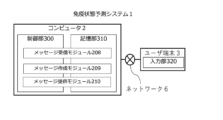
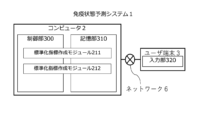
- FIG. 11 is a configuration diagram of the joint development promotion process executed by the computer 2 of the immune status prediction providing system 1.
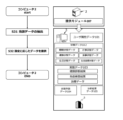
- FIG. 12 is a flowchart showing the procedure of the joint development promotion process executed by the computer 2 of the immune status prediction providing system 1.
- the joint development promotion process executed by the computer 2 of the immune status prediction providing system 1 is realized by the computer 2, the user terminal 3, and the network 6 that connects the computer 2 and the user terminal 3.
- the computer 2 that executes the joint development promotion process of the immune status prediction providing system 1 includes a CPU (Central Processing Unit), a GPU (Graphics Processing Unit), and a RAM (Random Access Memory) as a control unit 300. , ROM (Read Only Memory) Equipped with etc.
- the control unit 300 implements a message reception module 208, a message creation module 209, and a message transmission module 210 in cooperation with the storage unit 310.
- the user terminal 3 has a function necessary for operating the computer 2 as an input unit 320.
- input devices that can be used include a liquid crystal display that provides a touch panel function, a keyboard, a mouse, a pen tablet, hardware buttons on the device, and a microphone that performs voice recognition.
- the functionality of the present invention is not particularly limited depending on the input method.
- the computer 2 includes data storage such as a hard disk, a semiconductor memory, a recording medium, a memory card, etc. as a storage unit 310.
- the data storage destination may be a cloud service, a database, or the like.
- the message receiving module 208 of the computer 2 receives a message for joint development from a terminal of a company that desires joint development (step S41).
- the method of receiving messages for joint development is not particularly limited, and may be received from another terminal device via a public line or the like. Furthermore, the timing of receiving the message is not limited.
- the message creation module 209 of the computer 2 creates a message input from the user terminal 3 in response to the received message for joint development or in response to a request (step S42).
- the input method for creating a message for joint development is not particularly limited, and may be manually input, or a preset standard message may be automatically input.
- the message sending module 210 of the computer 2 sends the created message to the terminal of the third party company (step S43).
- the method of transmitting messages for joint development is not particularly limited, and may be transmitted to other terminal devices via public lines or the like. Furthermore, there is no limitation on the timing of transmitting the message.
- the standardized index creation process executed by the computer 2 of the immune status prediction providing system 1 is a process for creating an index required to evaluate or improve the user's immune status and providing it to a third party company. .
- FIG. 13 is a configuration diagram of the standardized index creation process executed by the computer 2 of the immune status prediction providing system 1.
- FIG. 14 is a flowchart showing the procedure of the standardized index creation process executed by the computer 2 of the immune status prediction providing system 1.
- the standardized index creation process executed by the computer 2 of the immune status prediction providing system 1 is realized by the computer 2, the user terminal 3, and the network 6 that connects the computer 2 and the user terminal 3.
- the computer 2 that executes the joint development promotion process of the immune status prediction providing system 1 includes a CPU (Central Processing Unit), a GPU (Graphics Processing Unit), and a RAM (Random Access Memory) as a control unit 300. , ROM (Read Only Memory) Equipped with etc.
- the control unit 300 realizes a standardized index creation module 211 and a standardized index provision module 212 in cooperation with the storage unit 310.
- the user terminal 3 has a function necessary for operating the computer 2 as an input unit 320.
- input devices that can be used include a liquid crystal display that provides a touch panel function, a keyboard, a mouse, a pen tablet, hardware buttons on the device, and a microphone that performs voice recognition.
- the functionality of the present invention is not particularly limited depending on the input method.
- the computer 2 includes data storage such as a hard disk, a semiconductor memory, a recording medium, a memory card, etc. as a storage unit 310.
- the data storage destination may be a cloud service, a database, or the like.
- the standardized index creation module 211 of the computer 2 at least generates data for creating a standardized index from the user attribute data 101, status data 102, implementation data 103, immune status prediction data 104, and analysis result data 105 stored in the storage unit 310. Extract (step S51).
- the standardized index creation module 211 of the computer 2 creates a standardized index from the extracted data (step S52).
- a standardized index may be created using a rule base or a model base based on machine learning.
- the standardized index providing module 212 of the computer 2 provides the created standardized index to the third party company 5 (step S53).
- the means and functions described above are realized by a computer (including a CPU, an information processing device, and various terminals) reading and executing a predetermined program.
- the program is provided, for example, in the form of a cloud service or software-as-a-service (SaaS) provided via a network from one or more computers. Further, the program is provided, for example, in a form recorded on a computer-readable recording medium.
- the computer reads the program from the recording medium, transfers it to an internal recording device or an external recording device, records it, and executes it.
- the program may be recorded in advance on a recording device (recording medium) such as a magnetic disk, optical disk, or magneto-optical disk, and provided to the computer from the recording device via a communication line.
Landscapes
- Health & Medical Sciences (AREA)
- Engineering & Computer Science (AREA)
- Medical Informatics (AREA)
- Public Health (AREA)
- Biomedical Technology (AREA)
- Epidemiology (AREA)
- General Health & Medical Sciences (AREA)
- Primary Health Care (AREA)
- Data Mining & Analysis (AREA)
- Databases & Information Systems (AREA)
- Pathology (AREA)
- Medical Treatment And Welfare Office Work (AREA)
Priority Applications (3)
| Application Number | Priority Date | Filing Date | Title |
|---|---|---|---|
| PCT/JP2022/020513 WO2023223418A1 (ja) | 2022-05-17 | 2022-05-17 | 免疫状態予測提供システム、免疫状態データ予測方法及びプログラム |
| US18/850,822 US20250273340A1 (en) | 2022-05-17 | 2022-05-17 | System for providing immune status prediction, and method and program for predicting immune status data |
| JP2022549514A JP7365736B1 (ja) | 2022-05-17 | 2022-05-17 | 免疫状態予測提供システム、免疫状態データ予測方法及びプログラム |
Applications Claiming Priority (1)
| Application Number | Priority Date | Filing Date | Title |
|---|---|---|---|
| PCT/JP2022/020513 WO2023223418A1 (ja) | 2022-05-17 | 2022-05-17 | 免疫状態予測提供システム、免疫状態データ予測方法及びプログラム |
Publications (1)
| Publication Number | Publication Date |
|---|---|
| WO2023223418A1 true WO2023223418A1 (ja) | 2023-11-23 |
Family
ID=88372755
Family Applications (1)
| Application Number | Title | Priority Date | Filing Date |
|---|---|---|---|
| PCT/JP2022/020513 Ceased WO2023223418A1 (ja) | 2022-05-17 | 2022-05-17 | 免疫状態予測提供システム、免疫状態データ予測方法及びプログラム |
Country Status (3)
| Country | Link |
|---|---|
| US (1) | US20250273340A1 (https=) |
| JP (1) | JP7365736B1 (https=) |
| WO (1) | WO2023223418A1 (https=) |
Cited By (2)
| Publication number | Priority date | Publication date | Assignee | Title |
|---|---|---|---|---|
| WO2024225058A1 (ja) * | 2023-04-27 | 2024-10-31 | 株式会社Nttドコモ | 推定装置 |
| WO2025203279A1 (ja) * | 2024-03-26 | 2025-10-02 | 振武 曽 | 免疫動態生成装置及び免疫動態生成方法 |
Families Citing this family (1)
| Publication number | Priority date | Publication date | Assignee | Title |
|---|---|---|---|---|
| JP2026027793A (ja) * | 2024-08-06 | 2026-02-19 | Edgewater株式会社 | 免疫状態予測システム、免疫状態予測方法及びプログラム |
Citations (2)
| Publication number | Priority date | Publication date | Assignee | Title |
|---|---|---|---|---|
| WO2019022085A1 (ja) * | 2017-07-24 | 2019-01-31 | アクシオンリサーチ株式会社 | 対象システムの内部状態を推定する支援システム |
| JP7048796B1 (ja) * | 2021-05-31 | 2022-04-05 | 大塚製薬株式会社 | 生活者の健康状態を把握、健康予測モデルでの生活者の健康維持、増進をサポートする方法及び情報提供方法 |
-
2022
- 2022-05-17 JP JP2022549514A patent/JP7365736B1/ja active Active
- 2022-05-17 WO PCT/JP2022/020513 patent/WO2023223418A1/ja not_active Ceased
- 2022-05-17 US US18/850,822 patent/US20250273340A1/en active Pending
Patent Citations (2)
| Publication number | Priority date | Publication date | Assignee | Title |
|---|---|---|---|---|
| WO2019022085A1 (ja) * | 2017-07-24 | 2019-01-31 | アクシオンリサーチ株式会社 | 対象システムの内部状態を推定する支援システム |
| JP7048796B1 (ja) * | 2021-05-31 | 2022-04-05 | 大塚製薬株式会社 | 生活者の健康状態を把握、健康予測モデルでの生活者の健康維持、増進をサポートする方法及び情報提供方法 |
Cited By (2)
| Publication number | Priority date | Publication date | Assignee | Title |
|---|---|---|---|---|
| WO2024225058A1 (ja) * | 2023-04-27 | 2024-10-31 | 株式会社Nttドコモ | 推定装置 |
| WO2025203279A1 (ja) * | 2024-03-26 | 2025-10-02 | 振武 曽 | 免疫動態生成装置及び免疫動態生成方法 |
Also Published As
| Publication number | Publication date |
|---|---|
| US20250273340A1 (en) | 2025-08-28 |
| JPWO2023223418A1 (https=) | 2023-11-23 |
| JP7365736B1 (ja) | 2023-10-20 |
Similar Documents
| Publication | Publication Date | Title |
|---|---|---|
| Zhang et al. | SynTEG: a framework for temporal structured electronic health data simulation | |
| JP7365736B1 (ja) | 免疫状態予測提供システム、免疫状態データ予測方法及びプログラム | |
| Morey et al. | Young adults’ use of communication technology within their romantic relationships and associations with attachment style | |
| Hogeboom et al. | Internet use and social networking among middle aged and older adults | |
| Grose et al. | Community influences on female genital mutilation/cutting in Kenya: norms, opportunities, and ethnic diversity | |
| Cannella et al. | Meta-analyses of predictors of health practices in pregnant women | |
| Shaw et al. | Timing of onset, burden, and postdischarge mortality of persistent critical illness in Scotland, 2005–2014: a retrospective, population-based, observational study | |
| Slean et al. | Aspects of culturally competent care are associated with less emotional burden among patients with diabetes | |
| Smith | Relationships matter: progress and challenges in research on the health effects of intimate relationships | |
| Jasri et al. | Employing PLSSEM Analysis to Examine the Mediation Role of Artificial Intelligence in Physician Experience. An Empirical Study of the Effect of the Medical Smartwatch on Physician Satisfaction | |
| Kiykac Altinbas et al. | Evaluation of quality of life in fertile Turkish women with severe endometriosis | |
| Turk et al. | A predictive internet-based model for COVID-19 hospitalization census | |
| Applebaum et al. | Long-term subjective loneliness in adults after hearing loss treatment | |
| Duval et al. | Estimation of cardiovascular risk from self-reported knowledge of risk factors: insights from the Minnesota Heart Survey | |
| WO2024104169A1 (zh) | 一种健康管理的方法、装置、系统、电子设备及存储介质 | |
| Price | Stepping back to gain perspective: Pregnancy loss history, depression, and parenting capacity in the early childhood longitudinal study, birth cohort (ECLS-B) | |
| Kennedy et al. | He, she, they: Using sex and gender in survey adjustment | |
| Hoang et al. | Concordance between electronic health record‐recorded race/ethnicity and parental report in hospitalized children | |
| Brandenburg et al. | The development and accuracy testing of CommFit™, an iPhone application for individuals with aphasia | |
| Kim et al. | Model-based estimation of individual-level social determinants of health and its applications in All of Us | |
| Brown et al. | The relationship between perceived uncontrollable mortality risk and health effort: replication, secondary analysis, and mini meta-analysis | |
| Nilsson et al. | Psychological factors related to physical, social, and mental dimensions of the SF-36: a population-based study of middle-aged women and men | |
| Hastings | Comparing the self-rated health effects of obesity on the health of African Americans and Caribbean blacks | |
| Bahrami et al. | The chain mediating effect of spousal support and dyadic adjustment in the association between social media addiction and sexual functioning among married women of reproductive age | |
| CN117594240A (zh) | 健康建议生成方法、装置、计算机设备及存储介质 |
Legal Events
| Date | Code | Title | Description |
|---|---|---|---|
| ENP | Entry into the national phase |
Ref document number: 2022549514 Country of ref document: JP Kind code of ref document: A |
|
| 121 | Ep: the epo has been informed by wipo that ep was designated in this application |
Ref document number: 22942623 Country of ref document: EP Kind code of ref document: A1 |
|
| NENP | Non-entry into the national phase |
Ref country code: DE |
|
| 122 | Ep: pct application non-entry in european phase |
Ref document number: 22942623 Country of ref document: EP Kind code of ref document: A1 |
|
| WWP | Wipo information: published in national office |
Ref document number: 18850822 Country of ref document: US |